4743 books match the query 'Religion' and 1168 start with t

cover of The Talmud of the Land of Israel, Volume 17: Sukkah

The Talmud of the Land of Israel, Volume 17

Sukkah

Jacob Neusner, General Editor

University of Chicago Press, 1988

Edited by the acclaimed scholar Jacob Neusner, this thirty-five volume English translation of the Talmud Yerushalmi has been hailed by the Jewish Spectator as a "project...of immense benefit to students of rabbinic Judaism."
[more]
cover of The Talmud of the Land of Israel, Volume 18: Besah and Taanit

The Talmud of the Land of Israel, Volume 18

Besah and Taanit

Jacob Neusner, General Editor

University of Chicago Press, 1987

Edited by the acclaimed scholar Jacob Neusner, this thirty-five volume English translation of the Talmud Yerushalmi has been hailed by the Jewish Spectator as a "project...of immense benefit to students of rabbinic Judaism."
[more]
cover of The Talmud of the Land of Israel, Volume 19: Megillah

The Talmud of the Land of Israel, Volume 19

Megillah

Jacob Neusner, General Editor

University of Chicago Press, 1987

Edited by the acclaimed scholar Jacob Neusner, this thirty-five volume English translation of the Talmud Yerushalmi has been hailed by the Jewish Spectator as a "project...of immense benefit to students of rabbinic Judaism."
[more]
cover of The Talmud of the Land of Israel, Volume 1: Berakhot

The Talmud of the Land of Israel, Volume 1

Berakhot

Jacob Neusner, General Editor

University of Chicago Press, 1989

Edited by the acclaimed scholar Jacob Neusner, this thirty-five volume English translation of the Talmud Yerushalmi has been hailed by the Jewish Spectator as a "project...of immense benefit to students of rabbinic Judaism."
[more]
cover of The Talmud of the Land of Israel, Volume 20: Hagigah and Moed Qatan

The Talmud of the Land of Israel, Volume 20

Hagigah and Moed Qatan

Jacob Neusner, General Editor

University of Chicago Press, 1986

Edited by the acclaimed scholar Jacob Neusner, this thirty-five volume English translation of the Talmud Yerushalmi has been hailed by the Jewish Spectator as a "project...of immense benefit to students of rabbinic Judaism."
[more]
cover of The Talmud of the Land of Israel, Volume 21: Yebamot

The Talmud of the Land of Israel, Volume 21

Yebamot

Jacob Neusner, General Editor

University of Chicago Press, 1987

Edited by the acclaimed scholar Jacob Neusner, this thirty-five volume English translation of the Talmud Yerushalmi has been hailed by the Jewish Spectator as a "project...of immense benefit to students of rabbinic Judaism."
[more]
cover of The Talmud of the Land of Israel, Volume 22: Ketubot

The Talmud of the Land of Israel, Volume 22

Ketubot

Jacob Neusner, General Editor

University of Chicago Press, 1985

Edited by the acclaimed scholar Jacob Neusner, this thirty-five volume English translation of the Talmud Yerushalmi has been hailed by the Jewish Spectator as a "project...of immense benefit to students of rabbinic Judaism."
[more]
cover of The Talmud of the Land of Israel, Volume 23: Nedarim

The Talmud of the Land of Israel, Volume 23

Nedarim

Jacob Neusner, General Editor

University of Chicago Press, 1985

Edited by the acclaimed scholar Jacob Neusner, this thirty-five volume English translation of the Talmud Yerushalmi has been hailed by the Jewish Spectator as a "project...of immense benefit to students of rabbinic Judaism."
[more]
cover of The Talmud of the Land of Israel, Volume 24: Nazir

The Talmud of the Land of Israel, Volume 24

Nazir

Jacob Neusner, General Editor

University of Chicago Press, 1985

Edited by the acclaimed scholar Jacob Neusner, this thirty-five volume English translation of the Talmud Yerushalmi has been hailed by the Jewish Spectator as a "project...of immense benefit to students of rabbinic Judaism."
[more]
cover of The Talmud of the Land of Israel, Volume 25: Gittin

The Talmud of the Land of Israel, Volume 25

Gittin

Jacob Neusner, General Editor

University of Chicago Press, 1985

Edited by the acclaimed scholar Jacob Neusner, this thirty-five volume English translation of the Talmud Yerushalmi has been hailed by the Jewish Spectator as a "project...of immense benefit to students of rabbinic Judaism."
[more]
cover of The Talmud of the Land of Israel, Volume 26: Qiddushin

The Talmud of the Land of Israel, Volume 26

Qiddushin

Jacob Neusner, General Editor

University of Chicago Press, 1984

Edited by the acclaimed scholar Jacob Neusner, this thirty-five volume English translation of the Talmud Yerushalmi has been hailed by the Jewish Spectator as a "project...of immense benefit to students of rabbinic Judaism."
[more]
cover of The Talmud of the Land of Israel, Volume 27: Sotah

The Talmud of the Land of Israel, Volume 27

Sotah

Jacob Neusner, General Editor

University of Chicago Press, 1984

Edited by the acclaimed scholar Jacob Neusner, this thirty-five volume English translation of the Talmud Yerushalmi has been hailed by the Jewish Spectator as a "project...of immense benefit to students of rabbinic Judaism."
[more]
cover of The Talmud of the Land of Israel, Volume 28: Baba Qamma

The Talmud of the Land of Israel, Volume 28

Baba Qamma

Jacob Neusner, General Editor

University of Chicago Press, 1984

Edited by the acclaimed scholar Jacob Neusner, this thirty-five volume English translation of the Talmud Yerushalmi has been hailed by the Jewish Spectator as a "project...of immense benefit to students of rabbinic Judaism."
[more]
cover of The Talmud of the Land of Israel, Volume 29: Baba Mesia

The Talmud of the Land of Israel, Volume 29

Baba Mesia

Jacob Neusner, General Editor

University of Chicago Press, 1984

Edited by the acclaimed scholar Jacob Neusner, this thirty-five volume English translation of the Talmud Yerushalmi has been hailed by the Jewish Spectator as a "project...of immense benefit to students of rabbinic Judaism."
[more]
cover of The Talmud of the Land of Israel, Volume 2: Yerushalmi Peah

The Talmud of the Land of Israel, Volume 2

Yerushalmi Peah

Jacob Neusner, General Editor

University of Chicago Press, 1990

Edited by the acclaimed scholar Jacob Neusner, this thirty-five volume English translation of the Talmud Yerushalmi has been hailed by the Jewish Spectator as a "project...of immense benefit to students of rabbinic Judaism."
[more]
cover of The Talmud of the Land of Israel, Volume 30: Baba Batra

The Talmud of the Land of Israel, Volume 30

Baba Batra

Jacob Neusner, General Editor

University of Chicago Press, 1984

Edited by the acclaimed scholar Jacob Neusner, this thirty-five volume English translation of the Talmud Yerushalmi has been hailed by the Jewish Spectator as a "project...of immense benefit to students of rabbinic Judaism."
[more]
cover of The Talmud of the Land of Israel, Volume 31: Sanhedrin and Makkot

The Talmud of the Land of Israel, Volume 31

Sanhedrin and Makkot

Jacob Neusner, General Editor

University of Chicago Press, 1984

Edited by the acclaimed scholar Jacob Neusner, this thirty-five volume English translation of the Talmud Yerushalmi has been hailed by the Jewish Spectator as a "project...of immense benefit to students of rabbinic Judaism."
[more]
cover of The Talmud of the Land of Israel, Volume 33: Abodah Zarah

The Talmud of the Land of Israel, Volume 33

Abodah Zarah

Jacob Neusner, General Editor

University of Chicago Press, 1982

Edited by the acclaimed scholar Jacob Neusner, this thirty-five volume English translation of the Talmud Yerushalmi has been hailed by the Jewish Spectator as a "project...of immense benefit to students of rabbinic Judaism."
[more]
cover of The Talmud of the Land of Israel, Volume 34: Horayat and Niddah

The Talmud of the Land of Israel, Volume 34

Horayat and Niddah

Jacob Neusner, General Editor

University of Chicago Press, 1982

Edited by the acclaimed scholar Jacob Neusner, this thirty-five volume English translation of the Talmud Yerushalmi has been hailed by the Jewish Spectator as a "project...of immense benefit to students of rabbinic Judaism."
[more]
cover of The Talmud of the Land of Israel, Volume 35: Introduction. Taxonomy

The Talmud of the Land of Israel, Volume 35

Introduction. Taxonomy

Jacob Neusner, General Editor

University of Chicago Press, 1984

Edited by the acclaimed scholar Jacob Neusner, this thirty-five volume English translation of the Talmud Yerushalmi has been hailed by the Jewish Spectator as a "project...of immense benefit to students of rabbinic Judaism."
[more]
cover of The Talmud of the Land of Israel, Volume 3: Demai

The Talmud of the Land of Israel, Volume 3

Demai

Jacob Neusner, General Editor

University of Chicago Press, 1993

Edited by the acclaimed scholar Jacob Neusner, this thirty-five volume English translation of the Talmud Yerushalmi has been hailed by the Jewish Spectator as a "project...of immense benefit to students of rabbinic Judaism."
[more]
cover of The Talmud of the Land of Israel, Volume 4: Kilayim

The Talmud of the Land of Israel, Volume 4

Kilayim

Jacob Neusner, General Editor

University of Chicago Press, 1991
Edited by the acclaimed scholar Jacob Neusner, this thirty-five volume English translation of the Talmud Yerushalmi has been hailed by the Jewish Spectator as a "project...of immense benefit to students of rabbinic Judaism."
[more]
cover of The Talmud of the Land of Israel, Volume 5: Shebiit

The Talmud of the Land of Israel, Volume 5

Shebiit

Jacob Neusner, General Editor

University of Chicago Press, 1991

Edited by the acclaimed scholar Jacob Neusner, this thirty-five volume English translation of the Talmud Yerushalmi has been hailed by the Jewish Spectator as a "project...of immense benefit to students of rabbinic Judaism."
[more]
cover of The Talmud of the Land of Israel, Volume 6: Terumot

The Talmud of the Land of Israel, Volume 6

Terumot

Jacob Neusner, General Editor

University of Chicago Press, 1987

Edited by the acclaimed scholar Jacob Neusner, this thirty-five volume English translation of the Talmud Yerushalmi has been hailed by the Jewish Spectator as a "project...of immense benefit to students of rabbinic Judaism."
[more]
cover of The Talmud of the Land of Israel, Volume 7: Maaserot

The Talmud of the Land of Israel, Volume 7

Maaserot

Jacob Neusner, General Editor

University of Chicago Press, 1987

Edited by the acclaimed scholar Jacob Neusner, this thirty-five volume English translation of the Talmud Yerushalmi has been hailed by the Jewish Spectator as a "project...of immense benefit to students of rabbinic Judaism."
[more]
cover of The Talmud of the Land of Israel, Volume 8: Maaser Sheni

The Talmud of the Land of Israel, Volume 8

Maaser Sheni

Jacob Neusner, General Editor

University of Chicago Press, 1993

Edited by the acclaimed scholar Jacob Neusner, this thirty-five volume English translation of the Talmud Yerushalmi has been hailed by the Jewish Spectator as a "project...of immense benefit to students of rabbinic Judaism."
[more]
cover of The Talmud of the Land of Israel, Volume 9: Hallah

The Talmud of the Land of Israel, Volume 9

Hallah

Jacob Neusner, General Editor

University of Chicago Press, 1991

Edited by the acclaimed scholar Jacob Neusner, this thirty-five volume English translation of the Talmud Yerushalmi has been hailed by the Jewish Spectator as a "project...of immense benefit to students of rabbinic Judaism."
[more]
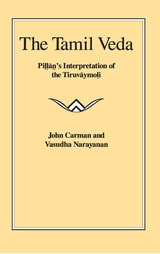
cover of The Tamil Veda: Pillan's Interpretation of the Tiruvaymoli

The Tamil Veda

Pillan's Interpretation of the Tiruvaymoli

John Carman and Vasudha Narayanan

University of Chicago Press, 1989

In this multifaceted work, John Carman and Vasudha Narayanan clarify historical developments in South Asian religion and make important contributions to the methodology of textual interpretation and the comparative study of world religions.
[more]
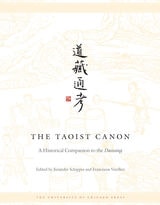
cover of The Taoist Canon, Volume 1 (Replacement Volume): A Historical Companion to the Daozang

The Taoist Canon, Volume 1 (Replacement Volume)

A Historical Companion to the Daozang

Edited by Kristofer Schipper and Franciscus Verellen

University of Chicago Press, 2005

Taoism remains the only major religion whose canonical texts have not been systematically arranged and made available for study. This long-awaited work, a milestone in Chinese studies, catalogs and describes all existing texts within the Taoist canon. The result will not only make the entire range of existing Taoist texts accessible to scholars of religion, it will open up a crucial resource in the study of the history of China.

The vast literature of the Taoist canon, or Daozang, survives in a Ming Dynasty edition of some fifteen hundred different texts. Compiled under imperial auspices and completed in 1445—with a supplement added in 1607—many of the books in the Daozang concern the history, organization, and liturgy of China's indigenous religion. A large number of works deal with medicine, alchemy, and divination.

If scholars have long neglected this unique storehouse of China's religious traditions, it is largely because it was so difficult to find one's way within it. Not only was the rationale of its medieval classification system inoperable for the many new texts that later entered the Daozang, but the system itself was no longer understood by the Ming editors; hence the haphazard arrangement of the canon as it has come down to us.

This new work sets out the contents of the Daozang chronologically, allowing the reader to follow the long evolution of Taoist literature. Lavishly illustrated, the first volume ranges from antiquity through the Middle Ages, while the second spans the modern period. Within this frame, texts are grouped by theme and subject. Each one is the subject of a historical abstract that identifies the text's contents, date of origin, and author. Throughout the first two volumes, introductions outline the evolution of Taoism and its spiritual heritage. A third volume offering biographical sketches of frequently mentioned Taoists, multiple indexes, and an extensive bibliography provides critical tools for navigating this guide to one of the fundamental aspects of Chinese culture.
[more]
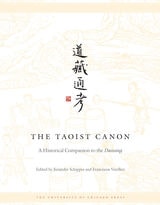
cover of The Taoist Canon, Volume 2 (Replacement Volume): A Historical Companion to the Daozang

The Taoist Canon, Volume 2 (Replacement Volume)

A Historical Companion to the Daozang

Edited by Kristofer Schipper and Franciscus Verellen

University of Chicago Press, 2005

Taoism remains the only major religion whose canonical texts have not been systematically arranged and made available for study. This long-awaited work, a milestone in Chinese studies, catalogs and describes all existing texts within the Taoist canon. The result will not only make the entire range of existing Taoist texts accessible to scholars of religion, it will open up a crucial resource in the study of the history of China.

The vast literature of the Taoist canon, or Daozang, survives in a Ming Dynasty edition of some fifteen hundred different texts. Compiled under imperial auspices and completed in 1445—with a supplement added in 1607—many of the books in the Daozang concern the history, organization, and liturgy of China's indigenous religion. A large number of works deal with medicine, alchemy, and divination.

If scholars have long neglected this unique storehouse of China's religious traditions, it is largely because it was so difficult to find one's way within it. Not only was the rationale of its medieval classification system inoperable for the many new texts that later entered the Daozang, but the system itself was no longer understood by the Ming editors; hence the haphazard arrangement of the canon as it has come down to us.

This new work sets out the contents of the Daozang chronologically, allowing the reader to follow the long evolution of Taoist literature. Lavishly illustrated, the first volume ranges from antiquity through the Middle Ages, while the second spans the modern period. Within this frame, texts are grouped by theme and subject. Each one is the subject of a historical abstract that identifies the text's contents, date of origin, and author. Throughout the first two volumes, introductions outline the evolution of Taoism and its spiritual heritage. A third volume offering biographical sketches of frequently mentioned Taoists, multiple indexes, and an extensive bibliography provides critical tools for navigating this guide to one of the fundamental aspects of Chinese culture.
[more]
cover of The Taoist Canon, Volume 3 (Replacement Volume): A Historical Companion to the Daozang

The Taoist Canon, Volume 3 (Replacement Volume)

A Historical Companion to the Daozang

Edited by Kristofer Schipper and Franciscus Verellen

University of Chicago Press, 2005

Taoism remains the only major religion whose canonical texts have not been systematically arranged and made available for study. This long-awaited work, a milestone in Chinese studies, catalogs and describes all existing texts within the Taoist canon. The result will not only make the entire range of existing Taoist texts accessible to scholars of religion, it will open up a crucial resource in the study of the history of China.

The vast literature of the Taoist canon, or Daozang, survives in a Ming Dynasty edition of some fifteen hundred different texts. Compiled under imperial auspices and completed in 1445—with a supplement added in 1607—many of the books in the Daozang concern the history, organization, and liturgy of China's indigenous religion. A large number of works deal with medicine, alchemy, and divination.

If scholars have long neglected this unique storehouse of China's religious traditions, it is largely because it was so difficult to find one's way within it. Not only was the rationale of its medieval classification system inoperable for the many new texts that later entered the Daozang, but the system itself was no longer understood by the Ming editors; hence the haphazard arrangement of the canon as it has come down to us.

This new work sets out the contents of the Daozang chronologically, allowing the reader to follow the long evolution of Taoist literature. Lavishly illustrated, the first volume ranges from antiquity through the Middle Ages, while the second spans the modern period. Within this frame, texts are grouped by theme and subject. Each one is the subject of a historical abstract that identifies the text's contents, date of origin, and author. Throughout the first two volumes, introductions outline the evolution of Taoism and its spiritual heritage. A third volume offering biographical sketches of frequently mentioned Taoists, multiple indexes, and an extensive bibliography provides critical tools for navigating this guide to one of the fundamental aspects of Chinese culture.
[more]
cover of The Taoist Canon: A Historical Companion to the Daozang

The Taoist Canon

A Historical Companion to the Daozang

Edited by Kristofer Schipper and Franciscus Verellen

University of Chicago Press, 2005

Taoism remains the only major religion whose canonical texts have not been systematically arranged and made available for study. This long-awaited work, a milestone in Chinese studies, catalogs and describes all existing texts within the Taoist canon. The result will not only make the entire range of existing Taoist texts accessible to scholars of religion, it will open up a crucial resource in the study of the history of China.

The vast literature of the Taoist canon, or Daozang, survives in a Ming Dynasty edition of some fifteen hundred different texts. Compiled under imperial auspices and completed in 1445—with a supplement added in 1607—many of the books in the Daozang concern the history, organization, and liturgy of China's indigenous religion. A large number of works deal with medicine, alchemy, and divination.

If scholars have long neglected this unique storehouse of China's religious traditions, it is largely because it was so difficult to find one's way within it. Not only was the rationale of its medieval classification system inoperable for the many new texts that later entered the Daozang, but the system itself was no longer understood by the Ming editors; hence the haphazard arrangement of the canon as it has come down to us.

This new work sets out the contents of the Daozang chronologically, allowing the reader to follow the long evolution of Taoist literature. Lavishly illustrated, the first volume ranges from antiquity through the Middle Ages, while the second spans the modern period. Within this frame, texts are grouped by theme and subject. Each one is the subject of a historical abstract that identifies the text's contents, date of origin, and author. Throughout the first two volumes, introductions outline the evolution of Taoism and its spiritual heritage. A third volume offering biographical sketches of frequently mentioned Taoists, multiple indexes, and an extensive bibliography provides critical tools for navigating this guide to one of the fundamental aspects of Chinese culture.
[more]
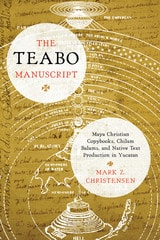
cover of The Teabo Manuscript: Maya Christian Copybooks, Chilam Balams, and Native Text Production in Yucatán

The Teabo Manuscript

Maya Christian Copybooks, Chilam Balams, and Native Text Production in Yucatán

By Mark Z. Christensen

University of Texas Press, 2016

Winner, LASA Mexico Humanities Book Prize, 2017

Among the surviving documents from the colonial period in Mexico are rare Maya-authored manuscript compilations of Christian texts, translated and adapted into the Maya language and worldview, which were used to evangelize the local population. The Morely Manuscript is well known to scholars, and now The Teabo Manuscript introduces an additional example of what Mark Z. Christensen terms a Maya Christian copybook. Recently discovered in the archives of Brigham Young University, the Teabo Manuscript represents a Yucatecan Maya recounting of various aspects of Christian doctrine, including the creation of the world, the Fall of Adam and Eve, and the genealogy of Christ.

The Teabo Manuscript presents the first English translation and analysis of this late colonial Maya-language document, a facsimile and transcription of which are also included in the book. Working through the manuscript section by section, Christensen makes a strong case for its native authorship, as well as its connections with other European and Maya religious texts, including the Morely Manuscript and the Books of Chilam Balam. He uses the Teabo Manuscript as a platform to explore various topics, such as the evangelization of the Maya, their literary compositions, and the aspects of Christianity that they deemed important enough to write about and preserve. This pioneering research offers important new insights into how the Maya negotiated their precontact intellectual traditions within a Spanish and Catholic colonial world.
[more]
cover of The Teacher; The Free Choice of the Will; Grace and Free Will

The Teacher; The Free Choice of the Will; Grace and Free Will

Saint Augustine

Catholic University of America Press, 1968
No description available
[more]
cover of The Templeton Science and Religion Reader

The Templeton Science and Religion Reader

J. Wetzel van Huysssteen

Templeton Press, 2012
Our attempts to understand the world around us are greatly advanced by scientific research, which holds nearly unlimited potential to address our questions of what? and how? Some scientific fields, however, seem to take a hands-off approach to the big question of why? Why does the universe work the way it does? Why do our brains make us think certain thoughts or feel certain sensations? Why did we evolve the way we did? Some fundamental scientific understanding is necessary before one can venture too deeply into these types of inquiries, which almost inevitably involve larger philosophical and theological implications. The Templeton Science and Religion Reader invites readers to explore some of these fascinating questions and offers them the kind of knowledge they’ll need in order to seriously consider possible answers.
 
In the Templeton Science and Religion Series, scientific experts from a wide range of fields have distilled their experience and knowledge into brief tours of their respective specialties. The series was launched in 2008 with the publication of the inaugural volume, Medicine, Religion, and Health. Since that time, the series editors J. Wentzel van Huyssteen and Khalil Chamcham have expanded it to nine titles covering everything from paleontology to neuroscience to technology. Now, in The Templeton Science and Religion Reader, the editors have gathered together the very best chapters from these volumes into a single edited collection.
 
These chapters presuppose no scientific background and are designed to be accessible to the general reader. Each section may have a different focus—a quantum, a star in a galaxy, a bee, or the seat of human intelligence, which some may call the soul—but the editors have done a great service to the reader by juxtaposing these subjects in a way that suggests how each one relates to other entities, including both its own kind and the wider global environment. The end result is a truly cohesive collection that will both broaden and deepen our understanding of these interconnected relations and, in turn, the world around us.
 
Contributors include Denis R. Alexander, Justin L. Barrett, R. J. Berry, Warren S. Brown, Noreen Herzfeld, Malcom Jeeves, Harold G. Koenig, Javier Leach, Joseph Silk, and Ian Tattersall.
[more]
cover of The Territories of Science and Religion

The Territories of Science and Religion

Peter Harrison

University of Chicago Press, 2015

The conflict between science and religion seems indelible, even eternal. Surely two such divergent views of the universe have always been in fierce opposition? Actually, that’s not the case, says Peter Harrison: our very concepts of science and religion are relatively recent, emerging only in the past three hundred years, and it is those very categories, rather than their underlying concepts, that constrain our understanding of how the formal study of nature relates to the religious life.

In The Territories of Science and Religion, Harrison dismantles what we think we know about the two categories, then puts it all back together again in a provocative, productive new way. By tracing the history of these concepts for the first time in parallel, he illuminates alternative boundaries and little-known relations between them—thereby making it possible for us to learn from their true history, and see other possible ways that scientific study and the religious life might relate to, influence, and mutually enrich each other.
A tour de force by a distinguished scholar working at the height of his powers, The Territories of Science and Religion promises to forever alter the way we think about these fundamental pillars of human life and experience.
[more]
cover of The Testimony of Two Nations: How the Book of Mormon Reads, and Rereads, the Bible

The Testimony of Two Nations

How the Book of Mormon Reads, and Rereads, the Bible

Michael Austin

University of Illinois Press, 2024

Understanding the Book of Mormon on its own terms and through its two-way connection with the Bible

Like the Hebrew Bible and the Christian Bible, the Book of Mormon uses narratives to develop ideas and present instruction. Michael Austin reveals how the Book of Mormon connects itself to narratives in the Christian Bible with many of the same tools that the New Testament used to connect itself to the Hebrew Bible to create the Christian Bible. As Austin shows, the canonical context for interpreting the Book of Mormon includes the Christian Bible, the Book of Mormon itself, and other writings and revelations that hold scriptural status in most Restoration denominations. Austin pays particular attention to how the Book of Mormon connects itself to the Christian Bible both to form a new canon and to use the canonical relationship to reframe and reinterpret biblical narratives. This canonical context provides an important and fruitful method for interpreting the Book of Mormon.
[more]
cover of The Textual Transmission of the New Testament: Manuscripts, Variants, and Authority

The Textual Transmission of the New Testament

Manuscripts, Variants, and Authority

Juan Chapa

SBL Press, 2025

Juan Chapa offers nuanced discussions of many topics that currently occupy the field of textual criticism, including debates over the dating of New Testament papyri, the preference for the codex, the liturgical use of texts, the presence of nomina sacra, textual variants, the establishment of the New Testament text, problems with the term original, and the challenge of textual fluidity. His unique approach illustrates how a Catholic perspective, the rule of faith, and the Latin textual tradition can inform our understanding of the origin, preservation, and authority of the New Testament text. Chapa’s work contributes a distinctively Catholic voice to the largely Protestant chorus that has dominated the field, thus filling a lacuna in contemporary text-critical conversations.
[more]
cover of The Theological Foundations of the Mormon Religion

The Theological Foundations of the Mormon Religion

McMurrin

Signature Books, 2000
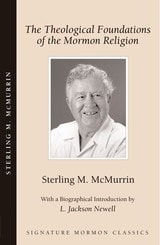
A Philosopher, Sterling M. McMurrin (1914-96) appreciated the similarities between Mormonism and Hellenistic Christianity. For instance, Church Fathers of the fifth century admired Plato, who taught that there is one God, coexistent with such eternal entities as Justice and Loveâ€"to which Joseph Smith added Priesthood and Church. Where Augustine modified Plato, Mormonism would tend to side with his critic, the Stoic-leaning Pelagius. In this broad context, what is Mormonism's contribution to the overall pursuit of life's fundamental, ontological questions? Herein lies McMurrin's intentâ€"an invitation to join him on a wide-ranging search for purpose. He finds his church's synthesis of heresy and orthodoxy to be refreshing and impressive in this light, in its treatment of evil, sin, and free will. Belief in a personal God may run counter to traditional faith, but it is nonetheless emotionally satisfying and accessible to the human imagination.
[more]
cover of The Theological Metaphors of Marx

The Theological Metaphors of Marx

Enrique Dussel

Duke University Press, 2024
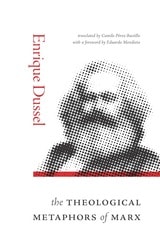
In The Theological Metaphors of Marx, Enrique Dussel provides a groundbreaking combination of Marxology, theology, and ethical theory. Dussel shows that Marx unveils the theology of capitalism in his critique of commodity fetishization. Capitalism constitutes an idolatry of the commodity that undergirds the capitalist expropriation of labor. Dussel examines Marx’s early writings on religion and fetishism and proceeds through what Dussel refers to as the four major drafts of Capital, ultimately situating Marx’s philosophical, economic, ethical, and historical insights in relation to the theological problems of his time. Dussel notes a shift in Marx’s underlying theological schema from a political critique of the state to an economic critique of the commodity fetish as the Devil, or anti-God, of modernity. Marx’s thought, impact, and influence cannot be fully understood without Dussel’s historic reinterpretation of the theological origins and implications of Marx’s critiques of political economy and politics.
[more]
cover of The Theology of Louis Massignon

The Theology of Louis Massignon

Christian Krokus

Catholic University of America Press, 2017
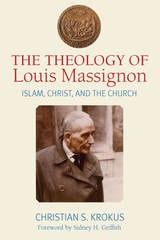
In The Theology of Louis Massignon, author Christian Krokus argues that Louis Massignon’s achievements in Christian-Muslim understanding, his activism on behalf of Muslim immigrants, refugees, and Middle Eastern Christians, as well as his developing understanding of Islam must be understood in the light of his Catholic convictions in relation to God, Christ, and the Church. With ample references to primary works, many translated into English for the first time, Krokus offers a comprehensive account of the main points of Massignon’s religious thought that will prove essential to theologians and historians working on questions of Christian-Muslim dialogue, comparative theology, and religious pluralism.
[more]
cover of The Theology of Marriage

The Theology of Marriage

Cormac Burke

Catholic University of America Press, 2015
Please fill in marketing copy
[more]
cover of The Thomistic Response to the Nouvelle Theologie: Concerning the Truth of Dogma and the Nature of Theology

The Thomistic Response to the Nouvelle Theologie

Concerning the Truth of Dogma and the Nature of Theology

Jon Kirwan

Catholic University of America Press, 2023
The Thomistic Response to the Nouvelle Théologie: Concerning the Truth of Dogma and the Nature of Theology retrieves the most important and largely forgotten exchanges in the mid-20th-century debate surrounding ressourcement thinkers. It makes available new translations of works by the leading Thomists in the exchange: Dominican Fathers Reginald Garrigou-Lagrange, Michel Labourdette, Marie-Joseph Nicolas, and Raymond Bruckberger. In addition to a lengthy historical and theological introduction, the volume contains sixteen articles, thirteen of which have never appeared in English. All the major critical responses of the Dominican Thomists to the nouvelle théologie are here presented chronologically according to the primary debates carried on, respectively, in the journals Revue Thomiste and Angelicum. A lengthy introduction describes the unfolding of the entire debate, article by article, and explains and references the ressourcement interventions. Unfortunately, the history of this important debate is largely surrounded by polemics, half-truths, caricatures, and journalistic soundbites. In the articles gathered in this volume, along with the accompanying introduction, the Toulouse and Roman Dominicans speak in their own voice. The central theses that define the two sides of the debate are sympathetically set forth. However, the texts gathered here show the immense lengths to which the Thomists went to initiate an authentic and fraternal theological dialogue with the nouveaux théologiens. Frs. Labourdette and Nicolas repeatedly argued for the importance of ressourcement work: they applauded its historical efforts, and they were generally sympathetic and complementary (although always pointed and persistent in gently expressing their concerns). Even Fr. Garrigou-Lagrange—whose infamous intervention is remembered as being a theological “atomic bomb”—is revealed as being no more guilty of escalation than the Dominicans’ interlocutors in their own responses to him and Fr. Labourdette. This volume will greatly aid in the task of theological and historical reconstruction and will, undoubtedly, assist in a certain rapprochement between the two sides, as the essential texts, concerns, and theological arguments are made available in their entirety to professional and lay anglophone readers.
[more]
cover of The Three Dynamisms of Faith: Searching for Meaning, Fulfillment, and Truth

The Three Dynamisms of Faith

Searching for Meaning, Fulfillment, and Truth

Louis Roy

Catholic University of America Press, 2017
Is the faith journey a matter of reflection, of emotion, or of obedience? Is there valid and convincing evidence that does enable human beings to assent to Jesus Christ and his message? What is the influence of cognitive assumptions and of affective tende
[more]
cover of The Three Nephites: Saints, Service, and Supernatural Legend

The Three Nephites

Saints, Service, and Supernatural Legend

Julie Swallow, Christopher James Blythe, Eric A. Eliason, and Jill Terry Rudy

University of Illinois Press, 2025
Stories of encounters with the Three Nephites, immortal saint-like figures, dominate the folklore of the Latter-day Saint tradition. The authors of this volume use hundreds of legends collected by the renowned folklorist William A. Wilson from across a lifetime of research, study, and interviews to focus on the different themes exhibited by the Three Nephites and show that LDS culture, beliefs, and values are embodied by and through the Three Nephites. Each chapter focuses on a different theme from Three Nephites lore. “Vanishing Hitchhiker Nephites” addresses stories of the Nephites’ travels. “The Worldwide End of the World” considers the Nephites as harbingers of the Second Coming. “Proclaiming-the-Gospel Stories” examines the interactions of the Three Nephites with missionaries. “Mix-ups, High Jinks, and Jokes” explores Nephite stories aimed at getting laughs. “That Your Joy Might Be Full” analyzes the types of service the Three Nephites render and reflects on the connection to the Church’s injunction to serve others. A one-of-a-kind collection, The Three Nephites allows readers to see the extent that this supernatural legend has played in Latter-day Saint lore.
[more]
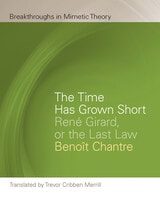
cover of The Time Has Grown Short: René Girard, or the Last Law

The Time Has Grown Short

René Girard, or the Last Law

Benoît Chantre

Michigan State University Press, 2022
The protagonist of Marcel Proust’s In Search of Lost Time observes with wonder the comings and goings of the crows that roost in the belfry of the village church in Combray, his childhood home. For René Girard, one of Proust’s great interpreters, their mysterious flight, first departing from and then returning to the vertical axis of the steeple, suggests the movement of modern history—the crisis of aristocratic models, the growing servitude of individuals possessed by mimetic desire, and the final irruption of authentic transcendence. In this rich exploration of Girard’s insights, his French editor and longtime collaborator Benoît Chantre brings Saint Paul’s Letter to the Romans into dialogue with both Proust and Girard in order to push to its logical endpoint the idea of a back-and-forth movement from chaos to order. History, Chantre argues, has been driven mad by the revelation of its sacrificial engine. The only way out lies in a transformation internal to the crisis itself—only that faith which is capable of hearing the One who speaks in the Law makes it possible to avoid the perpetual ups and downs of rivalry. Acting and revealing Himself at the heart of history, an intimate model “hidden since the foundation of the world” deals a fatal blow to the circle of sin. Authentic transcendence coincides with the eschaton, the moment when—according to Saint Paul—historical time implodes into eternity.
[more]
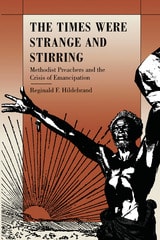
cover of The Times Were Strange and Stirring: Methodist Preachers and the Crisis of Emancipation

The Times Were Strange and Stirring

Methodist Preachers and the Crisis of Emancipation

Reginald F. Hildebrand

Duke University Press, 1995

With the conclusion of the Civil War, the beginnings of Reconstruction, and the realities of emancipation, former slaves were confronted with the possibility of freedom and, with it, a new way of life. In The Times Were Strange and Stirring, Reginald F. Hildebrand examines the role of the Methodist Church in the process of emancipation—and in shaping a new world at a unique moment in American, African American, and Methodist history.
Hildebrand explores the ideas and ideals of missionaries from several branches of Methodism—the African Methodist Episcopal Church, the Colored Methodist Episcopal Church, and the northern-based Methodist Episcopal Church—and the significant and highly charged battle waged between them over the challenge and meaning of freedom. He traces the various strategies and goals pursued by these competing visions and develops a typology of some of the ways in which emancipation was approached and understood.
Focusing on individual church leaders such as Lucius H. Holsey, Richard Harvey Cain, and Gilbert Haven, and with the benefit of extensive research in church archives and newspapers, Hildebrand tells the dramatic and sometimes moving story of how missionaries labored to organize their denominations in the black South, and of how they were overwhelmed at times by the struggles of freedom.
[more]
cover of The Torah/Law Is a Journey: Using Cognitive and Culturally Oriented Linguistics to Interpret and Translate Metaphors in the Hebrew Bible

The Torah/Law Is a Journey

Using Cognitive and Culturally Oriented Linguistics to Interpret and Translate Metaphors in the Hebrew Bible

Ivana Procházková

Karolinum Press, 2022

An analysis of metaphor in the legal texts of the Old Testament using the tools of cognitive and cultural linguistics.
 
The Old Testament is rich in metaphor. Metaphorical expressions appear not only in places where you might expect them, like the poetic verses, but also in the legal texts. They appear in the preambles to collections of laws, in their final summaries, in general considerations on compliance with and violation of the law, in texts concerning the meaning of the law, and those dealing with topics now reserved for legal theory and legal philosophy. These metaphorical expressions reveal how the authors of the relevant Torah/Law texts understood their function in society and what the society of the time preferred in the law.
​
Anchored in cognitive and cultural linguistics, The Torah/Law Is a Journey investigates Hebrew metaphorical expressions concerning the key Old Testament concept of Torah/Law. Ivana Procházková identifies Hebrew conceptual metaphors and explicates the metaphorical expressions. She also uses cognitive linguistic analysis to look at modern translations of selected metaphorical expressions into Czech and English. Procházková closes with an analysis of the metaphors used in the Council of Europe publication Compass: Manual for Human Rights Education with Young People to conceptualize human rights.
[more]
cover of The Transcendent Mystery of God's Word: A Critical Synthesis of Antioch and Alexandria

The Transcendent Mystery of God's Word

A Critical Synthesis of Antioch and Alexandria

John W. Martens

Saint Paul Seminary Press, 2024
Historical-critical methods in biblical scholarship are associated with numerous intellectual movements, such as rationalism, positivism, and historical relativism, that minimize or reject the sacred and revealed nature of Scripture. Ben F. Meyer noted, however, as have official Church documents, that modern biblical techniques are essential for locating the literal, that is, the intended sense of the biblical texts. He likened these modern methods to the ancient Antiochene school’s focus on the literal sense. But to focus on “Antioch” alone does not account for Scripture’s theological depth, religious context, or fulfillment of the promises of God. Biblical interpretation associated with ancient “Alexandria” offers a focus on the transcendent mystery of God’s word, often lacking in current biblical scholarship, but Meyer noted that ancient allegorical interpretation cannot simply be borrowed today since it often lacks a sense of historic change and development. This book is not about patristic reception of the Bible in Antioch and Alexandria, but the need to bring together in critical synthesis historical biblical methods that seek to understand the literal sense in all of its fullness and also incorporate methods of interpretation that take seriously the biblical texts as revelatory of God’s word for our salvation. “Antioch” and “Alexandria” are representative in this book of interpretive stances that pay attention to historical context, change, and development and are open to transcendence in order to offer the salvific power of Scripture to readers in our own day.
[more]
cover of The Transformation of American Religion: How We Actually Live Our Faith

The Transformation of American Religion

How We Actually Live Our Faith

Alan Wolfe

University of Chicago Press, 2005

American religion—like talk of God—is omnipresent. Popular culture is awash in religious messages, from the singing cucumbers and tomatoes of the animated VeggieTales series to the bestselling "Left Behind" books to the multiplex sensation The Passion of the Christ. In The Transformation of American Religion, sociologist Alan Wolfe argues that the popularity of these cartoons, books, and movies is proof that religion has become increasingly mainstream. In fact, Wolfe argues, American culture has come to dominate American religion to such a point that, as Wolfe writes, "We are all mainstream now."

The Transformation of American Religion represents the first systematic effort in more than fifty years to bring together a wide body of literature about worship, fellowship, doctrine, tradition, identity, and sin to examine how Americans actually live their faith. Emphasizing personal stories, Wolfe takes readers to religious services across the nation-an Episcopal congregation in Massachusetts, a Catholic Mass in a suburb of Detroit, an Orthodox Jewish temple in Boston-to show that the stereotype of religion as a fire-and-brimstone affair is obsolete. Gone is the language of sin and damnation, and forgotten are the clear delineations between denominations; they have been replaced with a friendly God and a trend towards sampling new creeds and doctrines. Overall, Wolfe reveals American religion as less radical, less contentious, and less dangerous than it is generally perceived to be.
[more]