Results by title
20 books match the query 'Region'
Archipelagoes of My South
Episodes in the Shaping of a Region, 1830–1965J. Mills Thornton III
University of Alabama Press, 2016
A collection of essays representing forty-five years of reflection on the central problems of southern history bound together by a common concern with defining the crucial interaction of race and class in the formation of southern politics and life
“The tourist archipelagoes of my South / are prisons, too, corruptible” writes the poet Derek Walcott. While Walcott refers to the islands of the Caribbean, the analogous idea of a land made into solitary islands by an imprisoned and inherited corruption is historian J. Mills Thornton III’s American South. The captivating essays in Archipelagoes of My South: Episodes in the Shaping of a Region, 1830–1965 address this overarching and underlying narrative of Alabama politics and the history of the South.
Highlighting events as significant as the role of social and economic conflict in the southern secession movement, various aspects of Reconstruction, and the role of the Ku Klux Klan in the politics of the 1920s, Thornton draws from various points in the southern past in an effort to identify and understand the sources of the region’s power. Moreover, each essay investigates its subject matter and peels back layers with an aim to clarify why the enormous diversity of the southern experience makes that power so great, all the while allowing the reader to see connections that would not otherwise be apparent.
Archipelagoes of My South gathers previously uncollected essays into a single volume covering the entire length and breadth of Thornton’s career. The author’s principal concerns have always been the arc of regional evolution and the significance of the local. Thus, the mechanisms of political and social change and the interrelationships across eras and generations are recurring themes in many of these essays.
Even those who have spent their entire lives in the South may be unaware of the fractured layers of history that lie beneath the landscape they inhabit. For those southern residents who seek to comprehend more of their own past, this landmark compilation of essays on Alabama and southern history endeavors to provide illumination and enlightenment.

Botany and Healing
Medicinal Plants of New Jersey and the RegionCecil C. Still
Rutgers University Press, 1998
Could that weed you just pulled have provided a cure for cancer? Scientists have warned that the destruction of the world’s rain forests may mean that plant species are being lost before we recognize their potential as sources of new medicines. This is equally true for the plants much closer to home. New Jersey, while heavily industrialized and densely populated, is extraordinarily rich in plant resources. Botany and Healing: Medicinal Plants of New Jersey and the Region describes nearly 500 species of plants found in the Garden State and in nearby areas that have been used medicinally.
Cecil Still lists plants by family and, within each family, by genus and species, to underscore the close relationships among medicinally valuable species. This arrangement is familiar to every botanist and easy for the amateur naturalist and herbalist to use as well. For each entry, Still discusses both the natural history and the historical and modern medicinal uses of the plant: scientific and common names, description, habitat, geographic range, and preparations and applications in Native American, European, African, and Asian herbal traditions. Most species are illustrated with Still’s line drawings. The book also contains a helpful index (with cross references by usage, common or scientific name), a glossary of terms, and a list of resources for further reading.
Botany and Healing explains the history and present status of the uses of herbal medicines, explains what makes a plant medicinal (or poisonous), how herbal medicines are prepared for use, and why they should be used only with great caution.
Constitution-Making in the Region of Former Soviet Dominance
Rett R. Ludwikowski
Duke University Press, 1996
Beginning with a review of the constitutional traditions of Eastern and Central Europe, Ludwikowski goes on to offer analysis of the recent process of political change in the region. A second section focuses specifically on the the new constitutions and such issues as the selection of the form of government, concepts of divisions of power, unicameralism vs. bicameralism, the flexibility or rigidity of constitutions as working documents, and the process of reviewing the constitutionality of laws. Individual states as framed in these documents are analyzed in economic, political, and cultural terms. Although it is too soon to fully consider the implementation of these constitutions, special attention is devoted to the effect of reform on human rights protection, a notorious problem of continuing concern in the region. A final section offers an insightful comparative study of constitutional law by reviewing the post-Soviet process of constitution-making against the backdrop of Western constitutional traditions.
Constitution-Making in the Region of Former Soviet Dominance is both a comprehensive study of constitutional developments in the former Soviet bloc and a primary reference tool for scholars of constitutional law, and Eastern European and post-Soviet studies.
Disease And Medical Care In The Mountain West
Essays On Region, History, And PracticeMartha L. Hildreth
University of Nevada Press, 1998
This collection of eight essays examines the health, disease, and medical care of the American West—an area flanked by the Rocky Mountains, Sierra Nevada, and Cascade Mountains. Topics include Mormons and the Thomsonian Movement in the nineteenth century, the silicosis epidemic in hardrock mining, Native American health, frontier nursing, and Chinese medicine.
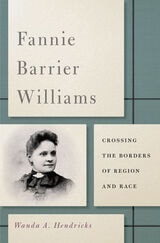
Fannie Barrier Williams
Crossing the Borders of Region and RaceWanda A. Hendricks
University of Illinois Press, 2014
From Borderland to Burgenland
Science, Geopolitics, Identity, and the Making of a RegionFerenc Jankó
Central European University Press, 2024
The area that constitutes the Austrian federal province of Burgenland belonged to the Hungarian part of the Habsburg empire until the end of World War I. This book helps us realize that geographical knowledge does not come ready-made. Instead, it is created by knowledge makers: geographers, historians, statisticians etc. This knowledge-making helped to legitimatize the area transferred between Austria and Hungary, shape the Burgenland identity, and depict its geopolitical role in the rise of national socialism. This book is about how those studying Burgenland, the creators of its geographical knowledge, saw and represented the province. It explores how they grasped the geographical characteristics of the region through their own perspective, influenced by their own professional positions, individual careers, motivations, and by the broader historical and social medium.
The way the area between the provinces of Lower Austria and Styria came about as Burgenland is enthralling, as is how the people there experienced this change of sovereignty and how everyday social and economic relationships were transformed. Tracing the geographical discourses in the interwar period and beyond, the book argues that Burgenland became a successful geographical project, and departs from thoughts of subdivision, unviability, and backwardness, concentrating instead on fertility, unity, and modernization.
Great Lakes Rocks
4 Billion Years of Geologic History in the Great Lakes RegionStephen E. Kesler
University of Michigan Press, 2019
Houses of God
Region, Religion, and Architecture in the United StatesPeter W. Williams
University of Illinois Press, 1997
In Search of the Amazon
Brazil, the United States, and the Nature of a RegionSeth Garfield
Duke University Press, 2013

Marsden Hartley
Race, Region, and NationDonna M. Cassidy
University of New Hampshire Press, 2005
Cassidy, sensitive to the psychological and gender analysis traditionally central to interpretations of Hartley, becomes the first scholar to reassess his late work in light of contemporary American perceptions of race, ethnicity, place, and history. This remarkable new book resonates not only as a seminal Hartley study and a complex art and cultural period history, but as a superb example of applied early twentieth-century American intellectual history informed by an impressive command of primary and secondary interdisciplinary literature. Numerous and rich illustrations, as well as transcriptions of several key essays by Hartley, some never before published, including "This Country of Maine" (1937–38), round out this insightful, nuanced, and revolutionary treatment. Donna M. Cassidy's Marsden Hartley will engage general readers as well as scholars and students.
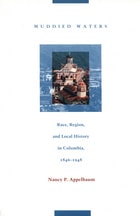
Muddied Waters
Race, Region, and Local History in Colombia, 1846–1948Nancy P. Appelbaum
Duke University Press, 2003
Nineteenth- and twentieth-century Colombian elite intellectuals, Appelbaum contends, mapped race onto their mountainous topography by defining regions in racial terms. They privileged certain places and inhabitants as white and modern and denigrated others as racially inferior and backward. Inhabitants of Riosucio, however, elaborated local narratives about their mestizo and indigenous identities that contested the white mystique of the Coffee Region. Ongoing violent conflicts over land and politics, Appelbaum finds, continue to shape local debates over history and identity. Drawing on archival and published sources complemented by oral history, Muddied Waters vividly illustrates the relationship of mythmaking and racial inequality to regionalism and frontier colonization in postcolonial Latin America.
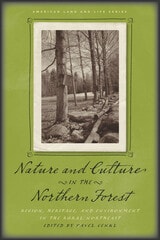
Nature and Culture in the Northern Forest
Region, Heritage, and Environment in the Rural NortheastPavel Cenkl
University of Iowa Press, 2010
Nearly 30 million acres of the Northern Forest stretch across New York, Vermont, New Hampshire, and Maine. Within this broad area live roughly a million residents whose lives are intimately associated with the forest ecosystem and whose individual stories are closely linked to the region’s cultural and environmental history. The fourteen engaging essays in Nature and Culture in the Northern Forest effectively explore the relationships among place, work, and community in this complex landscape. Together they serve as a stimulating introduction to the interdisciplinary study of this unique region.
Each of the four sections views through a different lens the interconnections between place and people. The essayists in “Encounters” have their hiking boots on as they focus on personal encounters with flora and fauna of the region. The energizing accounts in “Teaching and Learning” question our assumptions about education and scholarship by proposing invigorating collaborations between teachers and students in ways determined by the land itself, not by the abstractions of pedagogy. With the freshness of Thoreau’s irreverence, the authors in “Rethinking Place” look at key figures in the forest’s literary and cultural development to help us think about the affiliations between place and citizenship. In “Nature as Commodity,” three essayists consider the ways that writers from the nineteenth and early twentieth centuries thought about nature as a product and, thus, how their conclusions bear on the contemporary retailing of place.
The writers in Nature and Culture in the Northern Forest reveal the rich affinities between a specific place and the literature, thought, and other cultural expressions it has nurtured. Their insightful and stimulating connections exemplify adventurous bioregional thinking that encompasses both natural and cultural realities while staying rooted in the particular landscape of some of the Northeast’s wildest forests and oldest settlements.
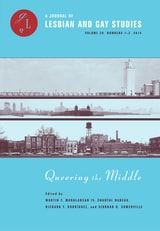
Queering the Middle
Race, Region, and a Queer Midwest, Volume 20Martin Manalansan, Chantal Nadeau, Richard T. Rodríguez, and Siobhan B. Somerville
Duke University Press, 0
The introduction provides a discussion of the theoretical and critical motivations for understanding the middle as a queer vantage, while the six articles focus on social movements, queer community networks, Midwest-based expressive cultures, and local and diasporic rearticulations of racial, gender, and sexual politics.
At the University of Illinois at Urbana-Champaign, Martin Manalansanis Associate Professor in the Department of Anthropology, Chantal Nadeau is Professor and Chair of Gender and Women’s Studies, and Richard T. Rodríguez and Siobhan B. Somerville are Associate Professors in the Department of English.
Saltillo, 1770-1810
Town and Region in the Mexican NorthLeslie S. Offutt
University of Arizona Press, 2001
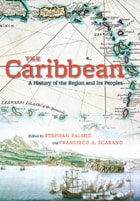
The Caribbean
A History of the Region and Its PeoplesEdited by Stephan Palmié and Francisco A. Scarano
University of Chicago Press, 2011
Combining fertile soils, vital trade routes, and a coveted strategic location, the islands and surrounding continental lowlands of the Caribbean were one of Europe’s earliest and most desirable colonial frontiers. The region was colonized over the course of five centuries by a revolving cast of Spanish, Dutch, French, and English forces, who imported first African slaves and later Asian indentured laborers to help realize the economic promise of sugar, coffee, and tobacco. The Caribbean: A History of the Region and Its Peoples offers an authoritative one-volume survey of this complex and fascinating region.
This groundbreaking work traces the Caribbean from its pre-Columbian state through European contact and colonialism to the rise of U.S. hegemony and the economic turbulence of the twenty-first century. The volume begins with a discussion of the region’s diverse geography and challenging ecology and features an in-depth look at the transatlantic slave trade, including slave culture, resistance, and ultimately emancipation. Later sections treat Caribbean nationalist movements for independence and struggles with dictatorship and socialism, along with intractable problems of poverty, economic stagnation, and migrancy.
Written by a distinguished group of contributors, The Caribbean is an accessible yet thorough introduction to the region’s tumultuous heritage which offers enough nuance to interest scholars across disciplines. In its breadth of coverage and depth of detail, it will be the definitive guide to the region for years to come.
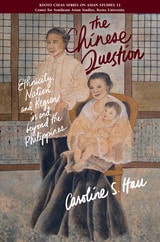
The Chinese Question
Ethnicity, Nation, and Region in and Beyond the PhilippinesCaroline S. Hau
National University of Singapore Press, 2014
With the revaluing of Chineseness has come a repositioning of “Chinese” racial and cultural identity. Philippine mestizos (people of mixed ancestry) form an important sub-group of the Filipino elite, but their Chineseness was occluded as they disappeared into the emergent Filipino nation. In the twentieth century, mestizos defined themselves and based claims to privilege on “white” ancestry, but mestizos are now actively reclaiming their “Chinese” heritage. At the same time, so-called “pure Chinese” are parlaying their connections into cultural, social, symbolic, or economic capital, and leaders of mainland Chinese state companies have entered into politico-business alliances with the Filipino national elite. As the meanings of “Chinese” and “Filipino” evolve, intractable contradictions are appearing in the concepts of citizenship and national belonging.
Through an examination of cinematic and literary works, The Chinese Question shows how race, class, ideology, nationality, territory, sovereignty, and mobility are shaping the discourses of national integration, regional identification, and global cosmopolitanism.
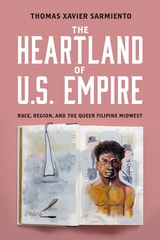
The Heartland of U.S. Empire
Race, Region, and the Queer Filipinx MidwestThomas Xavier Sarmiento
Temple University Press, 2026
Examining Filipinx cultural representations in the Midwest since the early twentieth century, Thomas Sarmiento shrewdly considers the impact of American exceptionalism and U.S. imperialism in a region where white, middle class, heterosexual, and Christian is the norm. The Heartland of U.S. Empire offers a cogent analysis of the 1904 St. Louis World’s Fair and its infamous Philippine Exhibit alongside minor museum displays and archives of Midwesterners in the Philippines. Sarmiento also considers the “exile literature” of Filipino/American writer Bienvenido Santos as well as the TV shows Glee and Superstore, which provide mainstream visibility of the queer Filipinx Midwest.
He employs a queer, decolonial Filipinx methodology that traces how narratives of America’s heartland position Filipinxs in the region as nonnormative due to their racial, gender, sexual, and national statuses. The Heartland of U.S. Empire locates queer Filipinxs in the geographic center of the nation and at the center of cultural narratives, thereby mapping alternative images of diasporic Filipinx identity and experience alongside U.S. regional and national identities, histories, and realities.
In the series Asian American History and Culture
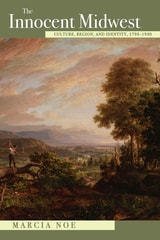
The Innocent Midwest
Culture, Region, and Identity, 1793–1930Marcia Noe
Ohio University Press, 0
The Innocent Midwest delves into one of the most enduring stereotypes in American cultural history: the image of the Midwest as a bastion of innocence. Despite its share of social, political, and economic complexities, the region has long been portrayed as wholesome, virtuous, and peace loving—a perception that has persisted from its pastoral beginnings through industrialization and into the digital age.
This book traces the roots and evolution of that myth, arguing that the Midwest’s innocent image has been carefully cultivated through American popular and high culture. From literature and film to music and visual art, the trope of the innocent Midwesterner has shaped national perceptions of the region for over a century. Focusing on literature from 1793 to the 1920s, the book explores how this character type emerged, evolved, and eventually confronted the disillusionment of the machine age.
Organized thematically, the book examines early frontier narratives, stories of Midwesterners abroad, Progressive Era ideals of neighborliness, immigrant and migrant experiences, and the eventual unraveling of the pastoral dream. It reveals how the myth of innocence was underpinned by a constellation of values—agrarianism, Christian morality, and a belief in education—that supported the Jeffersonian vision of a democratic, virtuous citizenry.
Rather than offering a sweeping theory of regional identity, The Innocent Midwest focuses on the recurring literary figure of the innocent Midwesterner—an individual shaped by the land and striving for self-actualization. The book draws both on canonical authors like Mark Twain, William Dean Howells, Booth Tarkington, Sinclair Lewis, Theodore Dreiser, and Willa Cather and on lesser-known voices such as Maria Susanna Cummins, David Graham Phillips, Elia W. Peattie, William Webb, Chief Luther Standing Bear, and Oscar Micheaux, whose works contributed to the cultural construction of the Midwest.
Through its nuanced exploration of literature and culture, this book offers a compelling account of how the Midwest came to symbolize innocence—and why that image continues to resonate in the American imagination.
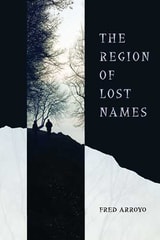
The Region of Lost Names
Fred Arroyo
University of Arizona Press, 2008
Ernest is searching for a place where he can live beyond his past. His family has returned to Puerto Rico, and Ernest remains in the States, desiring only distance from his memories of childhood displacement and work, his parents’ tumultuous relationship, and his own love for Magdalene. Magdalene, too, looks to move beyond her memories as she follows Ernest’s family home, seeking resolution to her mother’s hurtful secrets, her father’s unknown identity, and her love for Ernest.
As Ernest moves through the fields of Michigan, as Magdalene traverses the jungles of Puerto Rico and the shores of the Caribbean, they discover that their dreams and identities are linked within the framework of their families and their pasts. Together, Ernest and Magdalene must come to terms with the secrets and mistakes made by the previous generation, the histories of disloyalty and abandonment, of secrecy and sorrow.
Their struggles take place in a region of lost names, where loves and memories are banished and found. Fred Arroyo writes a story in two voices, following Ernest and Magdalene by turns in prose that is elegant and lyrical. His words evoke another world lush with the scent of salt spray, the taste of mangoes, and the rush of leaves, alive with characters whose ardors and pathos are achingly real. Arroyo explores the ebb and flow between past and present and themes that are enduring. Ultimately, Ernest and Magdalene must live with more than their memories; they must rediscover the intimacies of the region of lost names.
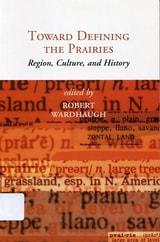
Towards Defining the Prairies
Region, Culture, and HistoryRobert Wardhaugh
University of Manitoba Press, 2001