Results by title
4155 books match the query 'State & Local' and 925 start with t
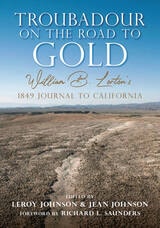
Troubadour on the Road to Gold
William B. Lorton's 1849 Journal to CaliforniaEdited by LeRoy Johnson and Jean Johnson, Foreword by Richard Saunders
University of Utah Press, 2020
Lorton’s work is revealing and entertaining. It captures glimpses of a growing Salt Lake City, the hardships of Death Valley, and the extraordinary and mundane aspects of daily life on the road to gold. With resilience and a droll sense of humor, Lorton shares accounts of life-threatening stampedes, dangerous hailstorms, mysteriously moving rocks, and slithering sidewinders. The inclusion of images, maps, and the editors’ detailed notes make this a volume that will entertain and inform.
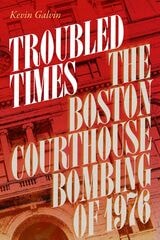
Troubled Times
The Boston Courthouse Bombing of 1976Kevin Galvin
Brandeis University Press, 2026
Interweaves the stories of a revolutionary and a bombing victim to explore the roots and unintended consequences of political violence.
1976. The Vietnam War had ended, but radical political groups still operated clandestinely throughout the United States. Nowhere was the threat of civil unrest greater than in Boston. Racial tensions had been building since a federal judge ordered the desegregation of the Boston Public Schools, and civic leaders were counting on the pageantry of the nation’s Bicentennial to boost both tourism and investment. In April, the Sam Melville-Jonathan Jackson Unit, prison reformers schooled in Marxism and angered by US interventions abroad, bombed the Suffolk County Courthouse, injuring twenty-two people. The site of the blast marked the spot where the lives of two men intersected: a mill town kid who’d been radicalized in Vietnam and prison, and an immigrant waiting in line because he needed to renew a cab license.
Fifty years after the bombing shook the city, Troubled Times tells the story of lives changed by political violence at a time when the American experiment is again in crisis.
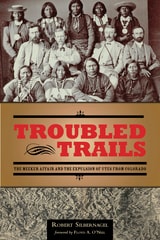
Troubled Trails
The Meeker Affair and the Expulsion of Utes from ColoradoRobert Silbernagel
University of Utah Press, 2011
When U.S. Cavalry troops rode onto the Ute Indian Reservation in northwestern Colorado on September 29, 1879, they triggered a chain of events that cost the Utes their homeland: a deadly battle at Milk Creek, the killing of all men at the Indian agency headed by Nathan Meeker, and the taking of three women and two children who were held hostage for 23 days. The Utes didn’t seek a fight with the whites, most of whom they viewed as friends. However, powerful whites in Colorado wanted the Utes expelled. The Meeker affair was an opportunity to achieve that.
In Troubled Trails, Robert Silbernagel casts new light on the story of the Meeker Affair. Using details from historical interview transcripts and newspaper articles, he reveals the personalities of the major characters—both Indian and non-Indian. He tells the story from many perspectives, including that of Indian Agent Nathan Meeker; the U.S. military; Nicaagat, a leader of the White River Utes; and Josephine Meeker, Nathan Meeker’s daughter, who was held hostage by the Utes. Silbernagel took great pains to tell a complete story, even following on horseback the trail taken by the Utes. As a result, his book paints a multifaceted picture of what took place and, most importantly, his portrayal brings the Ute side of the story into focus.
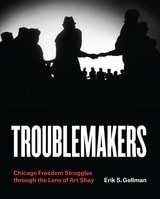
Troublemakers
Chicago Freedom Struggles through the Lens of Art ShayErik S. Gellman
University of Chicago Press, 2019
Troublemakers fuses photography and history to demonstrate how racial and economic inequality gave rise to a decades-long struggle for justice in one American city.
In dialogue with 275 of Art Shay’s photographs, Erik S. Gellman takes a new look at major developments in postwar US history: the Second Great Migration, “white flight,” and neighborhood and street conflicts, as well as shifting party politics and the growth of the carceral state. The result is a visual and written history that complicates—and even upends—the morality tales and popular memory of postwar freedom struggles.
Shay himself was a “troublemaker,” seeking to unsettle society by illuminating truths that many middle-class, white, media, political, and businesspeople pretended did not exist. Shay served as a navigator in the US Army Air Forces during World War II, then took a position as a writer for Life Magazine. But soon after his 1948 move to Chicago, he decided to become a freelance photographer. Shay wandered the city photographing whatever caught his eye—and much did. His lens captured everything from private moments of rebellion to era-defining public movements, as he sought to understand the creative and destructive energies that propelled freedom struggles in the Windy City.
Shay illuminated the pain and ecstasy that sprung up from the streets of Chicago, while Gellman reveals their collective impact on the urban fabric and on our national narrative. This collaboration offers a fresh and timely look at how social conflict can shape a city—and may even inspire us to make trouble today.

True Country
Themes in the Fiction of Flannery O'ConnorCarter W. Martin
Vanderbilt University Press, 1969
Truman and Pendergast
Robert H. Ferrell
University of Missouri Press, 1999
No portion of the political career of Harry S. Truman was more fraught with drama than his relationship with Thomas J. Pendergast. In one of their earliest meetings, the two men were momentarily at odds after Truman, who was then presiding judge of Jackson County, gave a $400,000 road contract to a construction company in South Dakota, and Pendergast, the boss of Kansas City, wasn't very happy about it. He had someone else in mind for the contract. Their association thus had its disagreements, but their common interest in politics was enough to establish a long-lasting relationship.
In 1934, after considering fourteen other men, Pendergast sponsored Truman for the Senate. Although Truman had often cooperated with Pendergast on patronage issues, he had never involved himself in the illegalities that would eventually destroy the Pendergast machine. In fact, Truman had no idea how deeply the Boss had engaged in corruption in his personal affairs, as well as in managing the government of Kansas City. When the Boss was sent to Leavenworth for tax evasion in 1939, Truman was astonished.
Despite Truman's honesty, his relationship with Pendergast almost caused his defeat during the Missouri senatorial primary in August 1940. The main challenger for Truman's Senate seat was the ambitious governor of Missouri, Lloyd C. Stark, who after destroying Truman's sponsor, the Pendergast machine, denounced Truman as "the Pendergast senator." Behind the governor was President Franklin D. Roosevelt, whom Stark turned against Truman. Roosevelt wanted Missouri's electoral votes in his forthcoming bid for a third term, and he believed that Stark could give them to him.
Because of the stigma of Truman's Pendergast connection, the 1940 Democratic primary was the tightest election in his entire political career. He won by fewer than eight thousand votes. In Truman and Pendergast, Robert H. Ferrell masterfully presents Truman's struggle to keep his Senate seat without the aid of Pendergast and despite Stark's enlistment of Roosevelt against him. Ferrell shows that Truman won the election in his typical fashion—going directly to the people, speaking honestly and like one of them.

Trying Home
The Rise and Fall of an Anarchist Utopia on Puget SoundJustin Wadland
Oregon State University Press, 2014
The true story of an anarchist colony on a remote Puget Sound peninsula, Trying Home traces the history of Home, Washington, from its founding in 1896 to its dissolution amid bitter infighting in 1921.
As a practical experiment in anarchism, Home offered its participants a rare degree of freedom and tolerance in the Gilded Age, but the community also became notorious to the outside world for its open rejection of contemporary values. Using a series of linked narratives, Trying Home reveals the stories of the iconoclastic individuals who lived in Home, among them Lois Waisbrooker, an advocate of women’s rights and free love, who was arrested for her writings after the assassination of President McKinley; Jay Fox, editor of The Agitator, who defended his right to free speech all the way to the Supreme Court; and Donald Vose, a young man who grew up in Home and turned spy for a detective agency.
Justin Wadland weaves his own discovery of Home—and his own reflections on the concept of home—into the story, setting the book apart from a conventional history. After discovering the newspapers published in the colony, Wadland ventures beyond the documents to explore the landscape, travelling by boat along the steamer route most visitors once took to the settlement. He visits Home to talk with people who live there now.
Meticulously researched and engagingly written, Trying Home will fascinate scholars and general readers alike, especially those interested in the history of the Pacific Northwest, utopian communities, and anarchism.

Turn Here Sweet Corn
Organic Farming WorksAtina Diffley
University of Minnesota Press, 2013
When the hail starts to fall, Atina Diffley doesn’t compare it to golf balls. She’s a farmer. It’s “as big as a B-size potato.” As her bombarded land turns white, she and her husband Martin huddle under a blanket and reminisce: the one-hundred-mile-per-hour winds; the eleven-inch rainfall (“that broccoli turned out gorgeous”); the hail disaster of 1977. The romance of farming washed away a long time ago, but the love? Never. In telling her story of working the land, coaxing good food from the fertile soil, Atina Diffley reminds us of an ultimate truth: we live in relationships—with the earth, plants and animals, families and communities.
A memoir of making these essential relationships work in the face of challenges as natural as weather and as unnatural as corporate politics, her book is a firsthand history of getting in at the “ground level” of organic farming. One of the first certified organic produce farms in the Midwest, the Diffleys’ Gardens of Eagan helped to usher in a new kind of green revolution in the heart of America’s farmland, supplying their roadside stand and a growing number of local food co-ops. This is a story of a world transformed—and reclaimed—one square acre at a time.
And yet, after surviving punishing storms and the devastating loss of fifth-generation Diffley family land to suburban development, the Diffleys faced the ultimate challenge: the threat of eminent domain for a crude oil pipeline proposed by one of the largest privately owned companies in the world, notorious polluters Koch Industries. As Atina Diffley tells her David-versus-Goliath tale, she gives readers everything from expert instruction in organic farming to an entrepreneur’s manual on how to grow a business to a legal thriller about battling corporate arrogance to a love story about a single mother falling for a good, big-hearted man.
Turn Out the Lights
Chronicles of Texas during the 80s and 90sBy Gary Cartwright
University of Texas Press, 2000
Whether the subject is Jack Ruby, Willie Nelson, or his own leukemia-stricken son Mark, when it comes to looking at the world through another person's eyes, nobody does it better than Gary Cartwright. For over twenty-five years, readers of Texas Monthly have relied on Cartwright to tell the stories behind the headlines with pull-no-punches honesty and wry humor. His reporting has told us not just what's happened over three decades in Texas, but, more importantly, what we've become as a result.
This book collects seventeen of Cartwright's best Texas Monthly articles from the 1980s and 1990s, along with a new essay, "My Most Unforgettable Year," about the lasting legacy of the Kennedy assassination. He ranges widely in these pieces, from the reasons for his return to Texas after a New Mexican exile to profiles of Kris Kristofferson and Willie Nelson. Along the way, he strolls through San Antonio's historic King William District; attends a Dallas Cowboys old-timers reunion and the Holyfield vs. Foreman fight; visits the front lines of Texas' new range wars; gets inside the heads of murderers, gamblers, and revolutionaries; and debunks Viagra miracles, psychic surgery, and Kennedy conspiracy theories. In Cartwright's words, these pieces all record "the renewal of my Texas-ness, a rediscovery of Texas after returning home."
Turning South Again
Re-Thinking Modernism/Re-Reading Booker T.Houston A. Baker Jr.
Duke University Press, 2001
From the holds of slave ships to the peonage of Reconstruction to the contemporary prison system, incarceration has largely defined black life in the United States. Even Washington’s school at Tuskegee, Baker explains, housed and regulated black bodies no longer directly controlled by slave owners. He further implicates Washington by claiming that in enacting his ideas about racial “uplift,” Washington engaged in “mulatto modernism,” a compromised attempt at full citizenship. Combining autobiographical prose, literary criticism, psychoanalytic writing, and, occasionally, blues lyrics and poetry, Baker meditates on the consequences of mulatto modernism for the project of black modernism, which he defines as the achievement of mobile, life-enhancing participation in the public sphere and economic solvency for the majority of African Americans. By including a section about growing up in the South, as well as his recent return to assume a professorship at Duke, Baker contributes further to one of the book’s central concerns: a call to centralize the South in American cultural studies.
Turning the Tide
The University of Alabama in the 1960sEarl H. Tilford
University of Alabama Press, 2014
Earl H. Tilford details the origins of the student movement from within the Student Government Association, whose leaders included Ralph Knowles and future governor Don Siegelman, among others; the participation of key members of “The Machine,” the political faction made up of the powerful fraternities and sororities on campus; and the efforts of more radical non-Greek students like Jack Drake, Ed Still, and Sondra Nesmith. Tilford also details the political maneuverings that drove the cause of social change through multiple administrations at the university. Turning the Tide highlights the contributions of university presidents Frank A. Rose and David Mathews, as well as administrators like the dean of men John L. Blackburn, who supported the student leaders but also encouraged them to work within the system rather than against it.
Based on archival research, interviews with many of the principal participants, and the author’s personal experiences, Tilford’s Turning the Tide is a compelling portrait of a university in transition during the turbulence surrounding the civil rights and anti-war movements of the 1960s.
Tuscaloosa
200 Years in the MakingG. Ward Hubbs
University of Alabama Press, 2019
A lavishly illustrated history of this distinctive city’s origins as a settlement on the banks of the Black Warrior River to its development into a thriving nexus of higher education, sports, and culture
In both its subject and its approach, Tuscaloosa: 200 Years in the Making is an account unlike any other of a city unlike any other—storied, inimitable, and thriving. G. Ward Hubbs has written a lively and enlightening bicentennial history of Tuscaloosa that is by turns enthralling, dramatic, disturbing, and uplifting. Far from a traditional chronicle listing one event after another, the narrative focuses instead on six key turning points that dramatically altered the fabric of the city over the past two centuries.
The selection of this frontier village as the state capital gave rise to a building boom, some extraordinary architecture, and the founding of The University of Alabama. The state’s secession in 1861 brought on a devastating war and the burning of the university by Union cavalry; decades of social adjustments followed, ultimately leading to legalized racial segregation. Meanwhile, town boosters set out to lure various industries, but with varying success.
The decision to adopt new inventions, ranging from electricity to telephones to automobiles, revolutionized the daily lives of Tuscaloosans in only a few short decades. Beginning with radio, and followed by the Second World War and television, the formerly isolated townspeople discovered an entirely different world that would culminate in Mercedes-Benz building its first overseas production plant nearby. At the same time, the world would watch as Tuscaloosa became the center of some pivotal moments in the civil rights movement—and great moments in college football as well.
An impressive amount of research is collected in this accessibly written history of the city and its evolution. Tuscaloosa is a versatile history that will be of interest to a general readership, for scholars to use as a starting point for further research, and for city and county school students to better understand their home locale.
Twelve Hundred Miles by Horse and Burro
J. Stokley Ligon and New Mexico’s First Breeding Bird SurveyHarley G. Shaw and Mara E. Weisenberger
University of Arizona Press, 2011
As it turns out, the trek was Ligon's first job with the US Biological Survey, and it did not go entirely undocumented. The breeding bird population report that eventually resulted from the journey, photographs from glass plate negatives, and—perhaps most enticingly—Ligon's own personal diary from these travels are presented here. Not just a compelling account of the expedition itself, the materials and insights found in this volume also reveal aspects of Ligon's family history, his early interest in wildlife, and the development of the wilderness skills needed to undertake such a survey.
Using his original itinerary and handwritten report, the authors of this book revisited many of the places that Ligon surveyed and in a few cases were even able to locate and repeat Ligon's early photographs. Combined with a discussion of the conditions of birds and other wildlife then and now, this volume serves as a useful tool for understanding how wildlife numbers, distribution, and habitats changed in New Mexico over the course of the twentieth century.
Birding enthusiasts, historians, naturalists, and even armchair adventurers will all find something to love in this chronicle of a young man from a West Texas ranching family with a driving ambition to be a professional naturalist and writer.
Twelve Mormon Homes Revisited
Touring Polygamous Utah with Elizabeth Kane, 1872-1873Lowell C. Bennion
University of Utah Press, 2024
Twelve Twenty-Five
The Life and Times of a Steam LocomotiveKevin P. Keefe
Michigan State University Press, 2016
Pere Marquette 1225 was built in 1941 at the peak of steam locomotive development. The narrative traces the 1225’s regular freight service in Michigan, its unlikely salvation from the scrapyard for preservation at Michigan State University, and the subsequent work to bring it back to steam, first by a student club and later by a railroad museum. Milestones along the way include 1225’s retirement in 1951, its donation to MSU in 1957, its return to steam in 1988, a successful career hauling tens of thousands of excursion riders, and its starring role in the 2004 movie The Polar Express. The massive infrastructure that supported American steam locomotives in their heyday disappeared long ago, forcing 1225’s faithful to make their own spare parts, learn ancient railroad skills, and interpret the entire effort for the public. As such, the continuing career of 1225 is a triumph of historic preservation.
Twenty Miles From A Match
Homesteading In Western NevadaSarah E. Olds
University of Nevada Press, 1978

Twenty-one Texas Short Stories
Edited by William Peery
University of Texas Press, 1954
This is a splendid collection of stories about Texas by Texans—stories that appeared in leading magazines in the first half of the twentieth century.
Authors in this volume:
- Dillon Anderson
- Barry Benefield
- Charles Carver
- Margaret Cousins
- Chester T. Crowell
- Eugene Cunningham
- J. Frank Dobie
- Fred Gipson
- William Goyen
- O. Henry
- Sylvan Karchmer
- Harry Kidd, Jr.
- Mary King O’Donnell
- George Pattullo
- George Sessions Perry
- Katherine Anne Porter
- Winifred Sanford
- John W. Thomason, Jr.
- Thomas Thompson
- John Watson
- John W. Wilson

Twin States, Different Paths
The Politics of New Hampshire and VermontBrian L. Porto
University of Massachusetts Press, 2026
A cultural and policy history that explains why two neighboring states developed divergent attitudes toward government and culture
At first glance, New Hampshire and Vermont seem like mirror images. Separated only by the Connecticut River, the oft-termed “Twin States” share a common history, relatively small populations, and heavily mountainous and forested landscapes dotted with small towns. Yet despite their similarities, they have evolved strikingly different political cultures, with Vermont prizing cooperation and community and New Hampshire celebrating independence and freedom from government. Perhaps nowhere is this divergence in political visions more pronounced than in their respective state mottos: Vermont’s communal "Freedom and Unity" and New Hampshire’s libertarian “Live Free or Die.”
Twin States, Different Paths explores these contrasting political cultures. Brian Porto traces these differences back to the land itself: to the geology and geography that shaped early settlement, patterns of land use, and the distinct ways people built their communities. From these origins emerged two enduring civic philosophies—New Hampshire’s devotion to low taxes and limited government, and Vermont’s emphasis on equality and shared responsibility. Bringing historical and cultural analysis together with contemporary case studies, Porto examines how these traditions influence each state’s approach to today’s policy challenges, including affordable housing and public-school funding. The result is a clear, balanced portrait of how deeply rooted attitudes toward freedom, unity, and governance continue to shape public life in both states.
Written with scholarly rigor yet in an engaging and accessible style, Twin States, Different Paths fills a notable gap in the study of New England politics. It offers insights not only for scholars and students of political culture, history, and public policy, but also for general readers, policymakers, and residents who wish to understand how two neighbors—so similar in geography and spirit—continue to follow such different paths in defining the role of government and community.

Twin Towers
Gillespie, Angus K
Rutgers University Press, 1999
A readable account of both the history of the construction of the Twin Towers and the life of the people who work there.
The Twin Towers of the World Trade Center are more than office buildings. They are symbols of America, just as the Eiffel Tower and Big Ben represent their countries. Commissioned in 1962 and completed in 1976, these edifices are still the tallest man-made structures in New York City. Indeed, the builders intended the towers to make a statement about the importance of the Port of New York and New Jersey. The complex rises like Emerald City, with fountains and sculpture from what was once a dilapidated area of half-abandoned stores.
Folklorist Angus Gillespie takes us on a tour that goes back in time and continues to the present day. He recounts the political maneuvering necessary to get the State of New Jersey to agree to situate the project at its present location. Deftly presenting portraits of the men responsible for mooring the World Trade Center at its present location, Gillespie provides ample evidence that the World Trade Center backers were “second to none in self promotion.”
Twin Towers also demonstrates how engineers prepared the site and solved complex problems (wind patterns, elevator placement, ground-water complications) in order to erect the towers, each with 110 stories. And he discusses the contrast between the architectural community’s almost universal disdain for the towers’ design and the public’s enthusiastic acceptance of the buildings as a symbol of New York.
There is more to the Twin Towers than its architecture, however. People give this complex life, purpose, vibrancy, Gillespie points out. The World Trade Center houses more than 400 businesses and organizations from some 60 different countries engaged in a broad range of international business activities. Through his numerous first-hand interviews conducted with the people who daily work there, Gillespie vividly portrays the world of bankers, shippers, freight forwarders, and traders. With skill and insight, he captures what happens during a normal 24-hour day in the Twin Towers, starting with early morning food deliveries and ending with the patrols of nighttime security guards.
Twin Towers is both a fitting tribute and careful analysis of one of the most resonating symbols in American culture.
Two Stratified Sites on the Door Peninsula of Wisconsin
Ronald J. Mason
University of Michigan Press, 1966
Two Terminal Archaic/Early Woodland Sites in Central Michigan
Scott G. Beld
University of Michigan Press, 1991

Two Vermonts
Geography and Identity, 1865-1910Paul Searls
University of New Hampshire Press, 2006
Two Vermonts establishes a little-known fact about Vermont: that the state's fascination with tourism as a savior for a suffering economy is more than a century old, and that this interest in tourism has always been dogged by controversy. Through this lens, the book is poised to take its place as the standard work on Vermont in the Gilded Age and the Progressive Era. Searls examines the origins of Vermont's contemporary identity and some reasons why that identity ("Who is a Vermonter?") is to this day so hotly contested.
Searls divides nineteenth-century Vermonters into conceptually “uphill,” or rural/parochial, and “downhill,” or urban/cosmopolitan, elements. These two groups, he says, negotiated modernity in distinct and contrary ways. The dissonance between their opposing tactical approaches to progress and change belied the pastoral ideal that contemporary urban Americans had come to associate with the romantic notion of “Vermont.” Downhill Vermonters, espousing a vision of a mutually reinforcing relationship between tradition and progress, unilaterally endeavored to foster the pastoral ideal as a means of stimulating economic development. The hostile uphill resistance to this strategy engendered intense social conflict over issues including education, religion, and prohibition in the late nineteenth and early twentieth centuries. The story of Vermont's vigorous nineteenth-century quest for a unified identity bears witness to the stirring and convoluted forging of today's “Vermont.”
Searls's engaging exploration of this period of Vermont's history advances our understanding of the political, economic, and cultural transformation of all of rural America as industrial capitalism and modernity revolutionized the United States between 1865 and 1910. By the late Progressive Era, Vermont's reputation was rooted in the national yearning to keep society civil, personal, and meaningful in a world growing more informal, bureaucratic, and difficult to navigate. The fundamental ideological differences among Vermont communities are indicative of how elusive and frustrating efforts to balance progress and tradition were in the context of effectively negotiating capitalist transformation in contemporary America.
Two Wheels North
Bicycling the West Coast in 1909Evelyn Gibb
Oregon State University Press, 2000
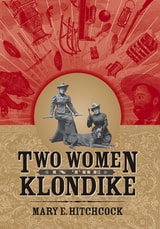
Two Women in the Klondike
Mary Hitchcock
University of Alaska Press, 2025
Two Women in the Klondike created a sensation when it was first published in 1899. The idea that two well-bred socialites could survive the dangers of the north thrilled nineteenth-century readers from San Francisco to New York.
When Mary Hitchcock heard about the discovery of gold in the Klondike in 1898, she left her privileged city life for the wilds of Alaska, planning to stake her own claims. She persuaded her friend Edith Van Buren to accompany her, and the two began preparations for "roughing it." The "necessities" that they brought up the Yukon River to Dawson City, Canada, included a portable bowling alley, an ice cream maker, a Great Dane named Ivan, and a full-size circus tent.
Hitchcock relates the struggles, surprises, and pleasures of traveling in the late nineteenth century in her trademark style. She describes in diary form the people she met and her impressions of rural Alaska and Dawson City. Invaluable for its detailed descriptions of manners, food, and personalities, Hitchcock's account of the Klondike Gold Rush is an outrageous adventure for general readers, armchair travelers, and anyone interested in the lives of American women in the late 1800s.
This new, abridged version includes a map of Hitchcock's northern travels and an introduction by Terrence Cole, professor of history at the University of Alaska Fairbanks.
Two-Party Politics in the One-Party South
Alabama's Hill Country, 1874–1920Samuel L. Webb
University of Alabama Press, 1997
A challenge to the long-held view that the only important and influential politicians in post-Reconstruction Deep South states were Democrats.
In this insightful and exhaustively researched volume, Samuel L. Webb presents new evidence that, contrary to popular belief, voters in at least one Deep South state did not flee en masse from the Republican party after Reconstruction. As Webb demonstrates conclusively, the party gained strength among white voters in Upcountry areas of northern Alabama between 1896 and 1920. Not only did GOP presidential candidates win more than a dozen area counties but Republican congressional candidates made progress in Democratic strongholds, and local GOP officials gained control of several county courthouses.
Nor were these new Republicans simply the descendants of anti-Confederate families, as some historians have claimed. Rather, they were former independents, Greenbackers, and Populists, who, in keeping with the 1890s Populist movement, were reacting against what they perceived as the control of the Democratic party by "moneyed elites" and planter landlords. Webb also breaks with previous historical opinion by showing that ex-Populists in the Hill Country, who had been radical reformers during the 1890s, remained reform minded after 1900.
Webb's ground-breaking reassessment of Alabama state politics from Reconstruction to the 1920s describes a people whose political culture had strong roots in the democratic and egalitarian Jacksonian ideology that dominated north Alabama in the antebellum period. These people carried forward elements of Jacksonianism into the late 19th century, with its tenets continuing to influence them well into the early 20th century.