Results by title
4413 books match the query 'Anthropology' and 750 start with t
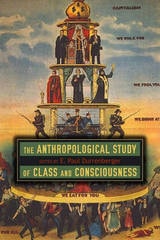
The Anthropological Study of Class and Consciousness
E. Paul Durrenberger
University Press of Colorado, 2012
Five central ideas unify the collection: the objective basis for class in different social orders; people's understanding of class in relation to race and gender; the relation of ideologies of class to realities of class; the U.S. managerial middle-class denial of class and emphasis on meritocracy in relation to increasing economic insecurity; and personal responses to economic insecurity and their political implications.
Anthropologists who want to understand the nature and dynamics of culture must also understand the nature and dynamics of class. The Anthropological Study of Class and Consciousness addresses the role of the concept of class as an analytical construct in anthropology and how it relates to culture. Although issues of social hierarchy have been studied in anthropology, class has not often been considered as a central element. Yet a better understanding of its role in shaping culture, consciousness, and people's awareness of their social and natural world would in turn lead to better understanding of major trends in social evolution as well as contemporary society. This book will be of great interest to students and scholars of anthropology, labor studies, ethnohistory, and sociology.
The Anthropology Of Iceland
E. Paul Durrenberger
University of Iowa Press, 1995
The Anthropology of Iceland presents the first perspectives on Icelandic anthropology from both Icelandic and foreign anthropologists. The thirteen essays in this volume are divided into four themes: ideology and action; kinship and gender; culture, class, and ethnicity; and the Commonwealth period of circa 930 to 1220, which saw the flowering of sagas. Insider and outsider viewpoints on such topics as the Icelandic women's movement, the transformation of the fishing industry, the idea of mystical power in modern Iceland, and archaeological research in Iceland merge to form an international, comparative discourse.
Individually and collectively, by bringing the insights of anthropology to bear on Iceland, the native and foreign authors of this volume carry Iceland into the realm of modern anthropology, advancing our understanding of the island's people and the practice of anthropology.

The Anthropology of Christianity
Fenella Cannell, ed.
Duke University Press, 2006
The contributors examine the contours of Christianity among diverse groups: Catholics in India, the Philippines, and Bolivia, and Seventh-Day Adventists in Madagascar; the Swedish branch of Word of Life, a charismatic church based in the United States; and Protestants in Amazonia, Melanesia, and Indonesia. Highlighting the wide variation in what it means to be Christian, the contributors reveal vastly different understandings and valuations of conversion, orthodoxy, Scripture, the inspired word, ritual, gifts, and the concept of heaven. In the process they bring to light how local Christian practices and beliefs are affected by encounters with colonialism and modernity, by the opposition between Catholicism and Protestantism, and by the proximity of other religions and belief systems. Together the contributors show that it not sufficient for anthropologists to assume that they know in advance what the Christian experience is; each local variation must be encountered on its own terms.
Contributors. Cecilia Busby, Fenella Cannell, Simon Coleman, Peter Gow, Olivia Harris, Webb Keane, Eva Keller, David Mosse, Danilyn Rutherford, Christina Toren, Harvey Whitehouse
The Anthropology of Expeditions
Travel, Visualities, AfterlivesEdited by Joshua A. Bell and Erin L. Hasinoff
Bard Graduate Center, 2015
The Anthropology of Experience
Edited by Victor W. Turner and Edward M. Bruner
University of Illinois Press, 1986
explore how people actually experience their culture and how those experiences are expressed in forms as varied as narrative, literary work, theater, carnival, ritual, reminiscence, and life review. Their studies will be
of special interest for anyone working in anthropological theory, symbolic
anthropology, and contemporary social and cultural anthropology, and useful as well for other social scientists, folklorists, literary theorists, and philosophers.
The Anthropology of Florida
Aleš Hrdlicka
University of Alabama Press, 2007
This volume, originally published in 1922, constitutes the most complete summary of anthropological information on Florida up until that point. Not only does it consider all previous research on Florida archaeology, physical anthropology, and aboriginal history, it also contains Hrdlicka’s analysis of every human bone from Florida that he could find in collections. He made remarkably accurate observations about the general physical types of prehistoric Florida Indians and how they compared to native peoples of surrounding regions.
The Anthropology of Labor Unions
E. Paul Durrenberger
University Press of Colorado, 2010
Union-organized workplaces consistently afford workers higher wages and better pensions, benefits, and health coverage than their nonunion counterparts. In addition, women and minorities who belong to unions are more likely to receive higher wages and benefits than their nonunion peers. Given the economic advantages of union membership, one might expect to see higher rates of organization across industries, but labor affiliation is at an all-time low. What accounts for this discrepancy?
The contributors in this volume provide a variety of perspectives on this paradox, including discussions of approaches to and findings on the histories, cultures, and practices of organized labor. They also address substantive issues such as race, class, gender, age, generation, ethnicity, health and safety concerns, corporate co-optation of unions, and the cultural context of union-management relationships.
The first to bring together anthropological case studies of labor unions, this volume will appeal to cultural anthropologists, social scientists, sociologists, and those interested in labor studies and labor movements.
The Anthropology of Music
Alan P. Merriam
Northwestern University Press, 1964
The study begins with a review of the various approaches in ethnomusicology. He then suggests a useful and simple research model: ideas about music lead to behavior related to music and this behavior results in musical sound. He explains many aspects and outcomes of this model, and the methods and techniques he suggests are useful to anyone doing field work. Further chapters provide a cross-cultural round-up of concepts about music, physical and verbal behavior related to music, the role of the musician, and the learning and composing of music.
The Anthropology of Music illuminates much of interest to musicologists but to social scientists in general as well.

The Anthropology of Security
Perspectives from the Frontline of Policing, Counter-terrorism and Border ControlEdited by Mark Maguire, Catarina Frois, and Nils Zurawski
Pluto Press, 2014
In a post-Cold War world of political unease and economic crisis, processes of securitisation are transforming nation-states, their citizens and non-citizens in profound ways.
The book shows how contemporary Europe is now home to a vast security industry which uses biometric identification systems, CCTV and quasi-military techniques to police migrants and disadvantaged neighbourhoods. This is the first collection of anthropological studies of security with a particular but not exclusive emphasis on Europe.
The Anthropology of Security draws together studies on the lived experiences of security and policing from the perspective of those most affected in their everyday lives. The anthropological perspectives in this volume stretch from the frontlines of policing and counter-terrorism to border control.
The Anthropology of Self and Behavior
Erchak, Gerald M
Rutgers University Press, 1992
Each chapter reviews the literature, not as a scholar would, but rather to provide an overview of central issues in the field. Each chapter also provides case material, some of which is drawn from Erchak's own work on West African socialization, Micronesian social change, family violence, initiation rites, and alcoholism. His examples are drawn from the U.S. as well as non-Western cultures. This book will be of particular interest to teachers looking for new texts for undergraduate courses in anthropology, psychology, and sociology.
The Anthropology of Slavery
The Womb of Iron and GoldClaude Meillassoux
University of Chicago Press, 1991

The Anti-Witch
Jeanne Favret-Saada
HAU, 2015
Jeanne Favret-Saada is arguably one of France’s most brilliant anthropologists, and The Anti-Witch is nothing less than a masterpiece. A synthesis of ethnographic theory and psychoanalytic revelation, where the line between researcher and subject is blurred—if not erased—The Anti-Witch develops the contours of an anthropology of therapy, while deeply engaging with what it means to be caught in the logic of witchcraft. Through an intimate and provocative sharing of the ethnographic voice with Madame Flora, a “dewitcher,” Favret-Saada delivers a critical challenge to some of anthropology’s fundamental concepts.
Sure to be of interest to practitioners of psychoanalysis as well as to anthropologists, The Anti-Witch will bring a new generation of scholars into conversation with the work of a truly innovative thinker.
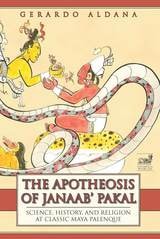
The Apotheosis of Janaab' Pakal
Science, History, and Religion at Classic Maya PalenqueGerardo Aldana
University Press of Colorado, 2007
Aldana follows three lines of investigation: a reading of the hieroglyphic inscriptions of the Classic period (a.d. 250-900), mathematical analysis to recover Classic Maya astronomical practice, and a historiography of Maya astronomy. Quoted hieroglyphs appear throughout the text for cross-examination. Aldana reveals the social and political context of Maya astronomy by explicating the science and calendrical calculations found in the tablets of the Temple of Inscriptions and the Cross Group from the city of Palenque. He offers a compelling interpretation of an 819-day count, demonstrating its utility as an astronumerological tool that Maya scribes used to simplify complex calculations.
During troubled times in Palenque, Aldana contends, Kan Balam II devised a means to preserve the legitimacy of his ruling dynasty. He celebrated a re-creation of the city as a contemporary analogue of a mythical Creation on three levels: monumental construction for a public audience, artistic patronage for an elite audience, and a secret mathematical astronomical language only for rulers-elect. Discussing all of these efforts, Aldana focuses on the recovery of the secret language and its historical context.
The Archaeology of Events
Cultural Change and Continuity in the Pre-Columbian SoutheastZackary I. Gilmore and Jason M. O'Donoughue
University of Alabama Press, 2015
Across the social sciences, gradualist evolutionary models of historical dynamics are giving way to explanations focused on the punctuated and contingent “events” through which history is actually experienced. The Archaeology of Events is the first book-length work that systematically applies this new eventful approach to major developments in the pre-Columbian Southeast.
Traditional accounts of pre-Columbian societies often portray them as “cold” and unchanging for centuries or millennia. Events-based analyses have opened up archaeological discourse to the more nuanced and flexible idea of context-specific, rapidly transpiring, and broadly consequential historical “events” as catalysts of cultural change.
The Archaeology of Events, edited by Zackary I. Gilmore and Jason M. O’Donoughue, considers a variety of perspectives on the nature and scale of events and their role in historical change. These perspectives are applied to a broad range of archeological contexts stretching across the Southeast and spanning more than 7,000 years of the region’s pre-Columbian history. New data suggest that several of this region’s most pivotal historical developments, such as the founding of Cahokia, the transformation of Moundville from urban center to vacated necropolis, and the construction of Poverty Point’s Mound A, were not protracted incremental processes, but rather watershed moments that significantly altered the long-term trajectories of indigenous Southeastern societies.
In addition to exceptional occurrences that impacted entire communities or peoples, southeastern archaeologists are increasingly recognizing the historical importance of localized, everyday events, such as building a house, crafting a pot, or depositing shell. The essays collected by Gilmore and O’Donoughue show that small-scale events can make significant contributions to the unfolding of broad, regional-scale historical processes and to the reproduction or transformation of social structures.
The Archaeology of Events is the first volume to explore the archaeological record of events in the Southeastern United States, the methodologies that archaeologists bring to bear on this kind of research, and considerations of the event as an important theoretical concept.
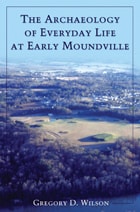
The Archaeology of Everyday Life at Early Moundville
Gregory D. Wilson
University of Alabama Press, 2007
Complex Mississippian polities were neither developed nor sustained in a vacuum. A broad range of small-scale social groups played a variety of roles in the emergence of regionally organized political hierarchies that governed large-scale ceremonial centers. Recent research has revealed the extent to which interactions among corporately organized clans led to the development, success, and collapse of Moundville. These insights into Moundville’s social complexity are based primarily on the study of monumental architecture and mortuary ceremonialism. Less is known about how everyday domestic practices produced and were produced by broader networks of power and inequality in the region.
Wilson’s research addresses this gap in our understanding by analyzing and interpreting large-scale architectural and ceramic data sets from domestic contexts. This study has revealed that the early Mississippian Moundville community consisted of numerous spatially discrete multi-household groups, similar to ethnohistorically described kin groups from the southeastern United States. Hosting feasts, dances, and other ceremonial events were important strategies by which elite groups created social debts and legitimized their positions of authority. Non-elite groups, on the other hand, maintained considerable economic and ritual autonomy through diversified production activities, risk sharing, and household ceremonialism. Organizational changes in Moundville’s residential occupation highlight the different ways kin groups defined and redefined their corporate status and identities over the long term.
The Archaeology of Houses and Households in the Native Southeast
Benjamin A. Steere
University of Alabama Press, 2017
The Archaeology of Houses and Households in the Native Southeast contributes enormously to the study of household archaeology and domestic architecture in the region. This significant volume combines both previously published and unpublished data on communities from the Southeast and is the first systematic attempt to understand the development of houses and households as interpreted through a theoretical framework developed from broad-ranging studies in cultural anthropology and archaeology.
Steere’s major achievement is the compilation of one of the largest and most detailed architectural datasets for the Southeast, including data for 1,258 domestic and public structures from 65 archaeological sites in North Carolina, Georgia, Alabama, Tennessee, Kentucky, and the southern parts of Missouri, Indiana, and Illinois. Rare data from hard-to-find cultural resource management reports is also incorporated, creating a broad temporal and geographic scope and serving as one of many remarkable features of the book, which is sure to be of considerable value to archaeologists and anthropologists interested in comparative studies of architecture.
Similar to other analyses, Steere’s research uses multiple theoretical angles and lines of evidence to answer archaeological questions about houses and the people who built them. However, unlike other examinations of household archaeology, this project spans multiple time periods (Woodland, Mississippian, and Historic); is focused squarely on the Southeast; features a more unified approach, using data from a single, uniform database; and privileges domestic architecture as a line of evidence for reconstructing daily life at major archaeological sites on a much broader scale than other investigations.
The Archaeology of Hybrid Material Culture
Edited by Jeb J. Card
Southern Illinois University Press, 2013
In recent years, archaeologists have used the terms hybrid and hybridity with increasing frequency to describe and interpret forms of material culture. Hybridity is a way of viewing culture and human action that addresses the issue of power differentials between peoples and cultures. This approach suggests that cultures are not discrete pure entities but rather are continuously transforming and recombining. The Archaeology of Hybrid Material Culture discusses this concept and its relationship to archaeological classification and the emergence of new ethnic group identities. This collection of essays provides readers with theoretical and concrete tools for investigating objects and architecture with discernible multiple influences.
The twenty-one essays are organized into four parts: ceramic change in colonial Latin America and the Caribbean; ethnicity and material culture in pre-Hispanic and colonial Latin America; culture contact and transformation in technological style; and materiality and identity. The media examined include ceramics, stone and glass implements, textiles, bone, architecture, and mortuary and bioarchaeological artifacts from North, South, and Central America, Hawai‘i, the Caribbean, Europe, and Mesopotamia. Case studies include Bronze Age Britain, Iron Age and Roman Europe, Uruk-era Turkey, African diasporic communities in the Caribbean, pre-Spanish and Pueblo revolt era Southwest, Spanish colonial impacts in the American Southeast, Central America, and the Andes, ethnographic Amazonia, historic-era New England and the Plains, the Classic Maya, nineteenth-century Hawai‘i, and Upper Paleolithic Europe. The volume is carefully detailed with more than forty maps and figures and over twenty tables.
The work presented in The Archaeology of Hybrid Material Culture comes from researchers whose questions and investigations recognized the role of multiple influences on the people and material they study. Case studies include experiments in bone working in middle Missouri; images and social relationships in prehistoric and Roman Europe; technological and material hybridity in colonial Peruvian textiles; ceramic change in colonial Latin America and the Caribbean; and flaked glass tools from the leprosarium at Kalawao, Moloka‘i. The essays provide examples and approaches that may serve as a guide for other researchers dealing with similar issues.
The Archaeology of Institutional Life
Edited by April M. Beisaw and James G. Gibb
University of Alabama Press, 2008
Institutions pervade social life. They express community goals and values by defining the limits of socially acceptable behavior. Institutions are often vested with the resources, authority, and power to enforce the orthodoxy of their time. But institutions are also arenas in which both orthodoxies and authority can be contested. Between power and opposition lies the individual experience of the institutionalized. Whether in a boarding school, hospital, prison, almshouse, commune, or asylum, their experiences can reflect the positive impact of an institution or its greatest failings. This interplay of orthodoxy, authority, opposition, and individual experience are all expressed in the materiality of institutions and are eminently subject to archaeological investigation.
A few archaeological and historical publications, in widely scattered venues, have examined individual institutional sites. Each work focused on the development of a specific establishment within its narrowly defined historical context; e.g., a fort and its role in a particular war, a schoolhouse viewed in terms of the educational history of its region, an asylum or prison seen as an expression of the prevailing attitudes toward the mentally ill and sociopaths. In contrast, this volume brings together twelve contributors whose research on a broad range of social institutions taken in tandem now illuminates the experience of these institutions. Rather than a culmination of research on institutions, it is a landmark work that will instigate vigorous and wide-ranging discussions on institutions in Western life, and the power of material culture to both enforce and negate cultural norms.
The Archaeology of Kinship
Advancing Interpretation and Contributions to TheoryBradley E. Ensor
University of Arizona Press, 2013
The Archaeology of Kinship supports Ensor’s objectives: to demonstrate the relevance of kinship to major archaeological questions, to describe archaeological methods for kinship analysis independent of ethnological interpretation, to illustrate the use of those techniques with a case study, and to provide specific examples of how diachronic analyses address broader theory. As Ensor shows, archaeological diachronic analyses of kinship are independently possible, necessary, and capable of providing new insights into past cultures and broader anthropological theory. Although it is an old subject in anthropology, The Archaeology of Kinship can offer new and exciting frontiers for inquiry.
Kinship research in general—and prehistoric kinship in particular—is rapidly reemerging as a topical subject in anthropology. This book is a timely archaeological contribution to that growing literature otherwise dominated by ethnology.
The Archaeology of Place and Space in the West
Edited by Emily Dale and Carolyn L. White
University of Utah Press, 2021
Contributors tackle questions of how historical archaeologists theoretically and methodologically define the West, conveying the historical, mythological, and physical manifestations of placemaking. They confront issues of community and how diverse ethnic, racial, gendered, labor-based, and other demographic populations expressed their identities on and in the Western landscape. Authors also address the continued creation and re-creation of the West today, exploring the impact of the past on people in the present and its influence on modern conceptions of the American West.
The Archaeology of Refuge and Recourse
Coast Miwok Resilience and Indigenous Hinterlands in Colonial CaliforniaTsim D. Schneider
University of Arizona Press, 2021
Applying theories of place and landscape, social memory, and mobility to the analysis of six archaeological sites, Tsim D. Schneider argues for a new direction in the archaeology of colonialism. This book offers insight about the critical and ongoing relationships Indigenous people maintained to their homelands despite colonization and systematic destruction of their cultural sites.
Schneider is a citizen of the Federated Indians of Graton Rancheria, the sovereign and federally recognized tribe of Coast Miwok and Southern Pomo people whose ancestral homelands and homewaters are the central focus of The Archaeology of Refuge and Recourse. Viewing this colonial narrative from an Indigenous perspective, Schneider focuses on the nearly one quarter of Coast Miwok people who survived the missions and created outlets within and beyond colonial settlements to resist and endure colonialism.
Fleeing these colonial missions and other establishments and taking refuge around the San Francisco Bay Area, Coast Miwok people sought to protect their identities by remaining connected to culturally and historically significant places. Mobility and a sense of place further enabled Coast Miwok people to find recourse and make decisions about their future through selective participation in colonial projects. In this book, Tsim D. Schneider argues that these distancing and familiarizing efforts contribute to the resilience of Coast Miwok communities and a sense of relevance and belonging to stolen lands and waters. Facing death, violence, and the pervading uncertainty of change, Indigenous people of the Marin Peninsula balanced the pull and persistence of place against the unknown possibilities of a dynamic colonial landscape and the forward-thinking required to survive. History, change, and the future can be read in the story of Coast Miwok people.
The Archaeology of Slavery
A Comparative Approach to Captivity and CoercionEdited by Lydia Wilson Marshall
Southern Illinois University Press, 2014
Plantation sites, especially those in the southeastern United States, have long dominated the archaeological study of slavery. These antebellum estates, however, are not representative of the range of geographic locations and time periods in which slavery has occurred. As archaeologists have begun to investigate slavery in more diverse settings, the need for a broader interpretive framework is now clear.
The Archaeology of Slavery: A Comparative Approach to Captivity and Coercion, edited by Lydia Wilson Marshall, develops an interregional and cross-temporal framework for the interpretation of slavery. Contributors consider how to define slavery, identify it in the archaeological record, and study it as a diachronic process from enslavement to emancipation and beyond.
Essays cover the potential material representations of slavery, slave owners’ strategies of coercion and enslaved people’s methods of resisting this coercion, and the legacies of slavery as confronted by formerly enslaved people and their descendants. Among the peoples, sites, and periods examined are a late nineteenth-century Chinese laborer population in Carlin, Nevada; a castle slave habitation at San Domingo and a more elite trading center at nearby Juffure in the Gambia; two eighteenth-century plantations in Dominica; Benin’s Hueda Kingdom in the seventeenth and eighteenth centuries; plantations in Zanzibar; and three fugitive slave sites on Mauritius—an underground lava tunnel, a mountain, and a karst cave.
This essay collection seeks to analyze slavery as a process organized by larger economic and social forces with effects that can be both durable and wide-ranging. It presents a comparative approach that significantly enriches our understanding of slavery.

The Archeology of New Hampshire
Exploring 10,000 Years in the Granite StateDavid Starbuck
University of New Hampshire Press, 2006
Several states already boast volumes showcasing their archeological history, but not New Hampshire—until now. David R. Starbuck's volume fills that void. Going beyond standard state guides that focus primarily on prehistoric sites, Starbuck also devotes equal time to historic, industrial, and nautical sites. This approach reflects the thinking of most contemporary archeologists who conduct research at a diverse range of sites.
A veteran of thirty years of field research throughout the Granite State, Starbuck revisits some of his own sites, including excavations at the New England Glassworks in Temple, two prehistoric sites on the Merrimack River, the Joseph Hazeltine pottery workshop outside Concord, the Governor Wentworth Estate in Wolfeboro, and his own long-term survey and excavation project at Canterbury Shaker Village. At the same time, though, Starbuck includes the work of other contemporary New Hampshire archeologists, representative sites of “old-timers” whose digs preceded his arrival, and the investigations of avocational diggers.
Starbuck's introduction offers an anecdotal history of archeological research in New Hampshire through the people who shaped it. Part I discusses discoveries that predate white settlement: the Paleo-Indian Period; the Archaic Period; and the Woodland Period. Part II moves from the seventeenth century to the present. Chapters include historical archeology (forts, farms, potters, Shakers); industrial archeology (mills, factories, railroads, dams, and bridges); and nautical archeology (discoveries in the state's lakes and on the seacoast).
In addition to summarizing some of the more interesting finds, Starbuck includes stories about archeologists and the techniques they have used to glean information from the past. Overall, he provides a lively account of what it is like to practice archeology in a small but dynamic New England state.
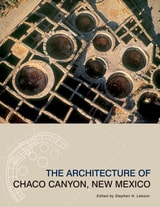
The Architecture of Chaco Canyon, New Mexico
Lekson, Stephen H
University of Utah Press, 2007
The structures of Chaco Canyon, built by native peoples between AD 850 and 1130, are among the most compelling ancient monuments on earth. Recognized as a World Heritage Site, these magnificent ruins are consistently featured in scholarly books and popular media. Yet, like Chaco itself, these buildings are anomalous in Southwestern archaeology and much debated.
In a century of study, our understanding and means of approaching these ruins have grown considerably. Important tree-ring dating, GIS research, and computer imaging point to the need for a new volume on Chaco architecture that unifies older information with the new.
The chapters in this volume focus on Chaco Great Houses and consider three overlapping themes: studies of technology and building types, analyses of architectural change, and readings of the built environment. To aid reconsideration there are over 150 maps, floor plans, elevations, and photos, including a number of color illustrations.
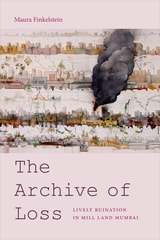
The Archive of Loss
Lively Ruination in Mill Land MumbaiMaura Finkelstein
Duke University Press, 2019

The Art of Life and Death
Radical Aesthetics and Ethnographic PracticeAndrew Irving
HAU, 2016
Encompassing twenty years of working alongside persons living with HIV/AIDS in New York, Irving documents the radical but often unspoken and unvoiced transformations in perception, knowledge, and understanding that people experience in the face of death. By bringing an “experience-near” ethnographic focus to the streams of inner dialogue, imagination, and aesthetic expression that are central to the experience of illness and everyday life, this monograph offers a theoretical, ethnographic, and methodological contribution to the anthropology of time, finitude, and the human condition. With relevance well-beyond the disciplinary boundaries of anthropology, this book ultimately highlights the challenge of capturing the inner experience of human suffering and hope that affect us all—of the trauma of the threat of death and the surprise of continued life.
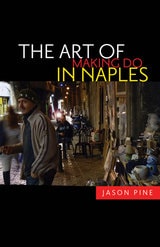
The Art of Making Do in Naples
Jason Pine
University of Minnesota Press, 2012
“In Naples, there are more singers than there are unemployed people.” These words echo through the neomelodica music scene, a vast undocumented economy animated by wedding singers, pirate TV, and tens of thousands of fans throughout southern Italy and beyond. In a city with chronic unemployment, this setting has attracted hundreds of aspiring singers trying to make a living—or even a fortune. In the process, they brush up against affiliates of the region’s violent organized crime networks, the camorra. In The Art of Making Do in Naples, Jason Pine explores the murky neomelodica music scene and finds himself on uncertain ground.
The “art of making do” refers to the informal and sometimes illicit entrepreneurial tactics of some Neapolitans who are pursuing a better life for themselves and their families. In the neomelodica music scene, the art of making do involves operating do-it-yourself recording studios and performing at the private parties of crime bosses. It can also require associating with crime boss-impresarios who guarantee their success by underwriting it with extortion, drug trafficking, and territorial influence. Pine, likewise “making do,” gradually realized that the completion of his ethnographic work also depended on the aid of forbidding figures.
The Art of Making Do in Naples offers a riveting ethnography of the lives of men who seek personal sovereignty in a shadow economy dominated, in incalculable ways, by the camorra. Pine navigates situations suffused with secrecy, moral ambiguity, and fears of ruin that undermine the anthropologist’s sense of autonomy. Making his way through Naples’s spectacular historic center and outer slums, on the trail of charmingly evasive neomelodici singers and unsettlingly elusive camorristi, Pine himself becomes a music video director and falls into the orbit of a shadowy music promoter who may or may not be a camorra affiliate.
Pine’s trenchant observations and his own improvised attempts at “making do” provide a fascinating look into the lives of people in the gray zones where organized crime blends into ordinary life.

The Artificial Ear
Cochlear Implants and the Culture of DeafnessBlume, Stuart
Rutgers University Press, 2009
Part ethnography and part historical study, The Artificial Ear is based on interviews with researchers who were pivotal in the early development and implementation of the new technology. Through an analysis of the scientific and clinical literature, Stuart Blume reconstructs the history of artificial hearing from its conceptual origins in the 1930s, to the first attempt at cochlear implantation in Paris in the 1950s, and to the widespread clinical application of the "bionic ear" since the 1980s.
The Augustinian Person
Peter Burnell
Catholic University of America Press, 2005
The Aztec Kings
The Construction of Rulership in Mexican HistorySusan D. Gillespie
University of Arizona Press, 1989
The Aztec Kings is the first major study to take into account the Aztec cyclical conception of time—which required that history constantly be reinterpreted to achieve continuity between past and present—and to treat indigenous historical traditions as symbolic statements in narrative form. Susan Gillespie focuses on the dynastic history of the Mexica of Tenochtitlan, whose stories reveal how the Aztecs used "history" to construct, elaborate, and reify ideas about the nature of rulership and the cyclical nature of the cosmos, and how they projected the Spanish conquest deep into the Aztec past in order to make history accommodate that event.
By demonstrating that most of Aztec history is nonliteral, she sheds new light on Aztec culture and on the function of history in society. By relating the cyclical structure of Aztec dynastic history to similar traditions of African and Polynesian peoples, she introduces a broader perspective on the function of history in society and on how and why history must change.
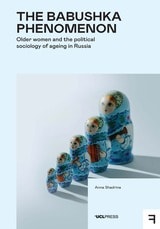
The Babushka Phenomenon
Older Women and the Political Sociology of Ageing in RussiaAnna Shadrina
University College London, 2025
The word “babushka” literally means “grandmother,” but it has come to represent much more since the Soviet era, not least the family caregiver. In her new study, Anna Shadrina explores the marginalization of older women in post-Soviet Russia, shedding light on the complex image of the babushka as both the cornerstone of the family unit and a passive recipient of social benefits. The author argues that this image has been shaped in no small part by welfare cutbacks that shifted the responsibility of family care from the state to individual women, as well as the increasing frustration of working-age people with the post-socialist economic system. Ultimately, she shows that despite being ostracized from society for defying age- and gender-specific social expectations, older women occupy a crucial position as active contributors to the economy.

The Banality of Good
The UN's Global Fight against Human TraffickingLieba Faier
Duke University Press, 2024
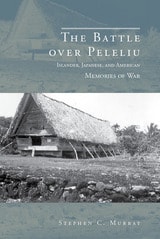
The Battle over Peleliu
Islander, Japanese, and American Memories of WarStephen C. Murray
University of Alabama Press, 2016
The expansionist Japanese empire annexed the inhabited archipelago of Palau in 1914. The airbase built on Peleliu Island became a target for attack by the United States in World War II. The Battle over Peleliu: Islander, Japanese, and American Memories of War offers an ethnographic study of how Palau and Peleliu were transformed by warring great powers and further explores how their conflict is remembered differently by the three peoples who shared that experience.
Author Stephen C. Murray uses oral histories from Peleliu’s elders to reconstruct the island’s prewar way of life, offering a fascinating explanation of the role of land and place in island culture. To Palauans, history is conceived geographically, not chronologically. Land and landmarks are both the substance of history and the mnemonic triggers that recall the past. Murray then offers a detailed account of the 1944 US invasion against entrenched Japanese forces on Peleliu, a seventy-four-day campaign that razed villages, farms, ancestral cemeteries, beaches, and forests, and with them, many of the key nodes of memory and identity.
Murray also explores how Islanders’ memories of the battle as shattering their way of life differ radically from the ways Japanese and Americans remember the engagement in their histories, memoirs, fiction, monuments, and tours of Peleliu. Determination to retrieve the remains of 11,000 Japanese soldiers from the caves of Peleliu has driven high-profile civic groups from across the Japanese political spectrum to the island. Contemporary Japan continues to debate pacifist, right-wing apologist, and other interpretations of its aggression in Asia and the Pacific. These disputes are exported to Peleliu, and subtly frame how Japanese commemoration portrays the battle in stone and ritual. Americans, victors in the battle, return to the archipelago in far fewer numbers. For them, the conflict remains controversial but is most often submerged into the narrative of “the good war.”
The Battle over Peleliu is a study of public memory, and the ways three peoples swept up in conflict struggle to create a common understanding of the tragedy they share.
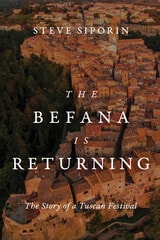
The Befana Is Returning
The Story of a Tuscan FestivalSteve Siporin
University of Wisconsin Press, 2022
The Pigitliano Befanata is distinct in its emphasis on song and strong in its richly symbolic use of food, which is not only consumed at each home but is also carried away as a gift. The characters who make up the squad are unique to the Italian practice. They always include the Befana and her husband, the Befano, but other members of the befanotti vary from place to place over time. Siporin combines fieldwork and archival evidence to introduce the Befanata and its historical and social contexts: what it is, what it means, and how it feels. The Befana Is Returning is a deeply researched, deftly insightful presentation of this living tradition that adds a large missing piece to the array of contemporary ethnographic scholarship on mumming.
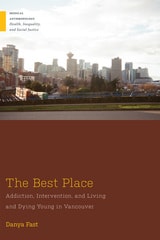
The Best Place
Addiction, Intervention, and Living and Dying Young in VancouverDanya Fast
Rutgers University Press, 2024
Winner of the CASCA Labrecque-Lee Book Prize
In both local and international imaginations, Vancouver, Canada, is often celebrated as one of the world’s most beautiful, cosmopolitan, and livable cities. Simultaneously, the city continues to be ground zero for successive waves of public health emergency and intervention, including a recent and unprecedented drug overdose crisis driven by the proliferation of illicitly manufactured fentanyl and related analogs in the local drug supply. In The Best Place: Addiction, Intervention, and Living and Dying Young in Vancouver, Danya Fast explores these politics of place from the perspectives of young people who use drugs. Those who are the subject of this book were in many ways relegated to the social, spatial, and economic margins of the city. Yet, they were also often at the very center of city life and state projects, including the project of protecting life in the context of the current overdose crisis.
The Bioarchaeology of Virginia Burial Mounds
Debra L. Gold
University of Alabama Press, 2004
Uncovering the stories of Virginia's ancient peoples through the science of bioarchaeology.
By the 14th century more than a dozen accretional burial mounds—reaching heights of 12 to 15 feet—marked the floodplains of interior Virginia. Today, none of these mounds built by the nearly forgotten Monacan Indians remain on the landscape, having been removed over the centuries by a variety of natural and cultural causes. This study uses what remains of the mounds—excavated from the 1890s to the 1980s— to gain a new understanding of the Monacans and to gauge their importance in the realm of the late prehistoric period in the Eastern Woodlands.
Based on osteological examinations of dozens of complete skeletons and thousands of isolated bones and bone fragments, this work constructs information on Monacan demography, diet, health, and mortuary ritual in the 10th through the 15th centuries. The results show an overall pattern of stability and local autonomy among the Late Woodland village societies of interior Virginia in which a mixture of maize farming and the collection of wild food resources were successful for more than 600 years.
This book—uniting biological and cultural aspects of the data for a holistic understanding of everyday life in the period—will be of interest to ethnohistorians, osteologists, bioarchaeologists, and anyone studying Late Woodland, Mississippian, and contact periods, as well as middle range societies, in the Eastern Woodlands.
The Biopolitics of Breast Cancer
Changing Cultures of Disease and ActivismMaren Klawiter
University of Minnesota Press, 2008
For nearly forty years, feminists and patient activists have argued that medicine is a deeply individualizing and depoliticizing institution. According to this view, medical practices are incidental to people’s transformation from patients to patient activists. The Biopolitics of Breast Cancer turns this understanding upside down.
Maren Klawiter analyzes the evolution of the breast cancer movement to show the broad social impact of how diseases come to be medically managed and publicly administered. Examining surgical procedures, adjuvant therapies, early detection campaigns, and the rise in discourses of risk, Klawiter demonstrates that these practices created a change in the social relations-if not the mortality rate-of breast cancer that initially inhibited, but later enabled, collective action. Her research focuses on the emergence and development of new forms of activism that range from grassroots patient empowerment to environmental activism and corporate-funded breast cancer awareness.
The Biopolitics of Breast Cancer opens a window onto a larger set of changes currently transforming medically advanced societies and ultimately challenges our understanding of the origins, politics, and future of the breast cancer movement.
Maren Klawiter holds a PhD in sociology from the University of California, Berkeley. She is currently pursuing a law degree at Yale University.
The Black-Man of Zinacantan
A Central American LegendBy Sarah C. Blaffer
University of Texas Press, 1972
The subject of this work is anomalies—those things that are between one state and another, neither dead nor alive, neither animal nor human. In this instance, they are the "spooks" (espantos) that inhabit the Maya area: the charcoal-cruncher, a disembodied head that goes off into the night to eat charcoal; the characotels, men who have turned into animals in order to steal chickens; and others. The victims chosen by spooks are likewise between two states: they are caught while asleep or drunk; or they may be humans who ignore social conventions and behave in "un-human" manner.
The Black-man of Zinacantan focuses on a small, super-sexed demon who possesses a six-foot-long, death-dealing penis and a penchant for mischief-making. This demon is known in Highland Chiapas as h'ik'al, the Black-man. Although h'ik'al's prototype may have been the bat deity, an ancient Maya god of sacrifice, the demon has been adapted to contemporary life. Sarah Blaffer analyzes the position of anomalies in societies and shows h'ik'al as a norm-offending, yet norm-reinforcing, specter, who by his character and actions demonstrates the proper sex roles for Zinacantec men and women.
The data for the study was recorded in Zinacantan, a Tzotzil-speaking Maya community, and in other Maya towns in southern Mexico and Guatemala; the study includes an analysis of tales recorded and translated by Robert M. Laughlin. The drawings that decorate the text were adapted by Virginia Savage and Joseph Barbieri. Besides being a comprehensive treatment of Maya demonology, the book demonstrates the newer approaches in comparative mythology of Claude Lévi-Strauss and others.
The Blood Libel Legend
A Casebook in Anti-Semitic FolkloreAlan Dundes
University of Wisconsin Press, 1991
Alan Dundes, in this casebook of an anti-Semitic legend, demonstrates the power of folklore to influence thought and history. According to the blood libel legend, Jews murdered Christian infants to obtain blood to make matzah. Dundes has gathered here the work of leading scholars who examine the varied sources and elaborations of the legend. Collectively, their essays constitute a forceful statement against this false accusation.
The legend is traced from the murder of William of Norwich in 1144, one of the first reported cases of ritualized murder attributed to Jews, through nineteenth-century Egyptian reports, Spanish examples, Catholic periodicals, modern English instances, and twentieth-century American cases. The essays deal not only with historical cases and surveys of blood libel in different locales, but also with literary renditions of the legend, including the ballad “Sir Hugh, or, the Jew’s Daughter” and Chaucer’s “The Prioress’s Tale.”
These case studies provide a comprehensive view of the complex nature of the blood libel legend. The concluding section of the volume includes an analysis of the legend that focuses on Christian misunderstanding of the Jewish feast of Purim and the child abuse component of the legend and that attempts to bring psychoanalytic theory to bear on the content of the blood libel legend. The final essay by Alan Dundes takes a distinctly folkloristic approach, examining the legend as part of the belief system that Christians developed about Jews.
This study of the blood libel legend will interest folklorists, scholars of Catholicism and Judaism, and many general readers, for it is both the literature and the history of anti-Semitism.
The Blood of Guatemala
A History of Race and NationGreg Grandin
Duke University Press, 2000
Focusing on Mayan elites in the community of Quetzaltenango, Grandin shows how their efforts to maintain authority over the indigenous population and secure political power in relation to non-Indians played a crucial role in the formation of the Guatemalan nation. To explore the close connection between nationalism, state power, ethnic identity, and political violence, Grandin draws on sources as diverse as photographs, public rituals, oral testimony, literature, and a collection of previously untapped documents written during the nineteenth century. He explains how the cultural anxiety brought about by Guatemala’s transition to coffee capitalism during this period led Mayan patriarchs to develop understandings of race and nation that were contrary to Ladino notions of assimilation and progress. This alternative national vision, however, could not take hold in a country plagued by class and ethnic divisions. In the years prior to the 1954 coup, class conflict became impossible to contain as the elites violently opposed land claims made by indigenous peasants.
This “history of power” reconsiders the way scholars understand the history of Guatemala and will be relevant to those studying nation building and indigenous communities across Latin America.
The Bodo of Assam
Revisiting a Classical Study from 1951Halfdan Siiger
National University of Singapore Press, 2015
The Body Impolitic
Artisans and Artifice in the Global Hierarchy of ValueMichael Herzfeld
University of Chicago Press, 2003
Michael Herzfeld takes us inside a rich variety of small-town Cretan artisans' workshops to show how apprentices are systematically thwarted into learning by stealth and guile. This harsh training reinforces a stereotype of artisans as rude and uncultured. Moreover, the same stereotypes that marginalize artisans locally also operate to marginalize Cretans within the Greek nation and Greece itself within the international community. What Herzfeld identifies as "the global hierarchy of value" thus frames the nation's ancient monuments and traditional handicrafts as evidence of incurable "backwardness."
Herzfeld's sensitive observations offer an intimately grounded way of understanding the effects of globalization and of one of its most visible offshoots, the heritage industry, on the lives of ordinary people in many parts of the world today.
The Book of Cunning and Treachery
Writing, Slavery, and Sovereignty in a Qing Indigenous DomainErik Mueggler
University of Chicago Press, 2027
An ethnographic history of one of the dozens of indigenous domains that occupied China’s border regions during the Qing dynasty and before.
Erik Mueggler’s The Book of Cunning and Treachery is an ethnographic history of a chiefly household that ruled one of the many indigenous domains scattered through upland southwest China during the late Ming and Qing dynasties. The imperial colonization of this region proceeded by way of defeating indigenous polities and absorbing them into a system of indirect governance. In this system, indigenous chieftains inherited power over multiethnic domains, subject to ratification by the imperial court. Mueggler tracks the history of two crucial yet unexamined archives pertaining to this household—a trove of Chinese-language legal, military, and administrative documents, and hundreds of ritual manuals, histories, and morality books written in the indigenous Né script—to show how the chiefly house reproduced itself through these languages, each with its own forms of ritual, recitation, and inscription.
As Mueggler demonstrates, through different forms of access to writing in Chinese and Né, male and female chieftains, domestic slaves, enslaved bondsmen, bonded tenants, chiefly concubines, and more existed in a complex ecology of relations. House and domain were governed through a dynamic process in which residents continuously worked out the status hierarchies that animated their relations with one another as well as the relations between the chiefly house and the local administrative system. This groundbreaking book provides a compelling account of the intertwined problems of writing, slavery, and sovereignty, as well as a vivid portrait of the unique form that indigenous jurisdiction took in this era.
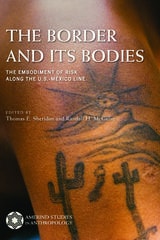
The Border and Its Bodies
The Embodiment of Risk Along the U.S.-México LineEdited by Thomas E. Sheridan and Randall H. McGuire
University of Arizona Press, 2019
The increasingly militarized U.S.-México border is an intensely physical place, affecting the bodies of all who encounter it. The essays in this volume explore how crossing becomes embodied in individuals, how that embodiment transcends the crossing of the line, and how it varies depending on subject positions and identity categories, especially race, class, and citizenship.
Timely and wide-ranging, this book brings into focus the traumatic and real impact the border can have on those who attempt to cross it, and it offers new perspectives on the effects for rural communities and ranchers. An intimate and profoundly human look at migration, The Border and Its Bodies reminds us of the elemental fact that the border touches us all.
Contributors
Bruce E. Anderson
Jared Beatrice
Rebecca Crocker
Jason De León
Linda Green
Randall H. McGuire
Shaylih Muehlmann
Robin Reineke
Olivia T. Ruiz Marrujo
David Seibert
Thomas E. Sheridan
Angela Soler
Ruth M. Van Dyke
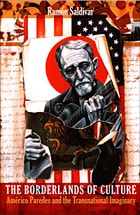
The Borderlands of Culture
Americo Paredes and the Transnational ImaginaryRamón Saldívar
Duke University Press, 2006
Saldívar demonstrates how Paredes’s poetry, prose, and journalism prefigured his later work as a folklorist and ethnographer. In song, story, and poetry, Paredes first developed the themes and issues that would be central to his celebrated later work on the “border studies” or “anthropology of the borderlands.” Saldívar describes how Paredes’s experiences as an American soldier, journalist, and humanitarian aid worker in Asia shaped his understanding of the relations between Anglos and Mexicans in the borderlands of south Texas and of national and ethnic identities more broadly. Saldívar was a friend of Paredes, and part of The Borderlands of Culture is told in Paredes’s own words. By explaining how Paredes’s work engaged with issues central to contemporary scholarship, Saldívar extends Paredes’s intellectual project and shows how it contributes to the remapping of the field of American studies from a transnational perspective.
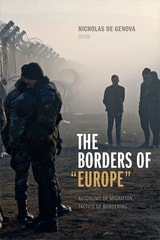
The Borders of "Europe"
Autonomy of Migration, Tactics of BorderingNicholas De Genova, editor
Duke University Press, 2017
Contributors. Ruben Andersson, Nicholas De Genova, Dace Dzenovska, Evelina Gambino, Glenda Garelli, Charles Heller, Clara Lecadet, Souad Osseiran, Lorenzo Pezzani, Fiorenza Picozza, Stephan Scheel, Maurice Stierl, Laia Soto Bermant, Martina Tazzioli
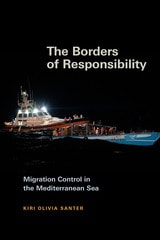
The Borders of Responsibility
Migration Control in the Mediterranean SeaKiri Olivia Santer
Duke University Press, 2026

The Botanical Odyssey of Richard S. Felger
Edited by Benjamin T. Wilder, Bill Broyles, and Thomas Bowen
University of Arizona Press, 2026
This work is a vibrant tribute to Richard Stephen Felger, who was one of the most influential scientists of the American Southwest and northwestern Mexico. Known as a desert botanist, Felger’s work transcended regional boundaries, blending rigorous fieldwork with global ecological vision. This work offers an intimate and multifaceted portrait of a man whose tireless advocacy for biodiversity and biocultural conservation shaped generations of desert scientists..
Edited by Benjamin T. Wilder, Bill Broyles, and Thomas Bowen, this book is both a celebration and a resource. The work is separated into four parts. With humor, insight, and deep empathy, Felger’s own voice leads the journey in part 1, recounting his most memorable field experiences with masterful prose and sly wit. Part 2 brings together heartfelt reflections from colleagues who worked alongside Felger in the field, revealing the eccentric brilliance and relentless curiosity that defined his career. Part 3 explores his family history and the unconventional path that shaped his life’s work, while part 4 presents a comprehensive bibliography of his most important publications. The book contains four maps that help take you around the world on Felger’s journeys, and fifty images selected from the thousands of slides from his archive that further transport and anchor you in the adventure.
Felger’s own voice, paired with reflections from twenty colleagues, creates a rich, multifaceted narrative, offering readers a rare glimpse into the life of a scientific icon whose legacy continues to inspire desert researchers and conservationists across the globe.
Contributors
James Aronson
Thomas Bowen
Bill Broyles
Alberto Búrquez
Susan Davis Carnahan
Mark Alan Dimmitt
Exequiel Ezcurra
Gil Gillenwater
Russ Kleinman
Angelina Martínez-Yrízar
Gregory McNamee
Cathy Moser Marlett
Gary Paul Nabhan
Wallace J. Nichols
William R. Norris
Humberto Romero Morales
Sue Rutman
Silke Schneider
Jeffrey Seminoff
Jane Spinti
Benjamin T. Wilder
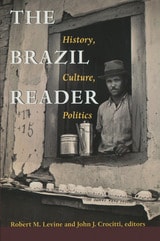
The Brazil Reader
History, Culture, PoliticsRobert M. Levine and John J. Crocitti, eds.
Duke University Press, 1999
Complementing traditional views with fresh ones, The Brazil Reader’s historical selections range from early colonization to the present day, with sections on imperial and republican Brazil, the days of slavery, the Vargas years, and the more recent return to democracy. They include letters, photographs, interviews, legal documents, visual art, music, poetry, fiction, reminiscences, and scholarly analyses. They also include observations by ordinary residents, both urban and rural, as well as foreign visitors and experts on Brazil. Probing beneath the surface of Brazilian reality—past and present—The Reader looks at social behavior, women’s lives, architecture, literature, sexuality, popular culture, and strategies for coping with the travails of life in a country where the affluent live in walled compounds to separate themselves from the millions of Brazilians hard-pressed to find food and shelter. Contributing to a full geographic account—from the Amazon to the Northeast and the Central-South—of this country’s singular multiplicity, many pieces have been written expressly for this volume or were translated for it, having never previously been published in English.
This second book in The Latin America Readers series will interest students, specialists, travelers for both business and leisure, and those desiring an in-depth introduction to Brazilian life and culture.
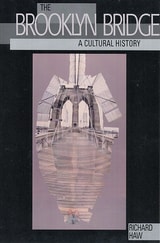
The Brooklyn Bridge
A Cultural HistoryHaw, Richard
Rutgers University Press, 2008
Hailed by some as the Eighth Wonder of the World when it opened in 1883, the Brooklyn Bridge is one of the world’s most recognizable and beloved icons. For over one hundred years it has excited and fascinated with stories of ingenuity and heroism, and it has been endorsed as a flawless symbol of municipal improvement and a prime emblem of American technological progress.
Despite its impressive physical presence, however, Brooklyn’s grand old bridge is much more than a testament of engineering and architectural achievement. As Richard Haw shows in this first of its kind cultural history, the Brooklyn Bridge owes as much to the imagination of the public as it does to the historical events and technical prowess that were integral to its construction.
Bringing together more than sixty images of the bridge that, over the years, have graced postcards, magazine covers, and book jackets and appeared in advertisements, cartoons, films, and photographs, Haw traces the diverse and sometimes jarring ways in which this majestic structure has been received, adopted, and interpreted as an American idea. Haw’s account is not a history of how the bridge was made, but rather of what people have made of the Brooklyn Bridge—in film, music, literature, art, and politics—from its opening ceremonies to the blackout of 2003.
Classic accounts from such writers and artists as H. G. Wells, Charles Reznikoff, Hart Crane, Lewis Mumford, Joseph Pennell, Walker Evans, and Georgia O’Keeffe, among many others, present the bridge as a deserted, purely aestheticized romantic ideal, while others, including Henry James, Joseph Stella, Yun Gee, Ernest Poole, Alfred Kazin, Paul Auster, and Don DeLillo, offer a counter-narrative as they question not only the role of the bridge in American society, but its function as a profoundly public, communal place. Also included are never-before-published photographs by William Gedney and a discussion of Alexis Rockman’s provocative new mural Manifest Destiny.
Drawing on hundreds of cultural artifacts, from the poignant, to the intellectual, to the downright quirky, The Brooklyn Bridge sheds new light on topics such as ethnic and foreign responses to America, nationalism, memory, parade culture, commemoration, popular culture, and post-9/11 America icons. In the end, we realize that this impressive span is as culturally remarkable today as it was technologically and physically astounding in the nineteenth century.