Results by title
1038 books match the query 'Antiquities' and 214 start with t
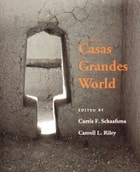
The Casas Grandes World
Curtis Schaafsma
University of Utah Press, 1999
The Casas Grandes World focuses on a remarkable prehistoric culture that extended through parts of present-day Chihuahua, Sonora, New Mexico, Texas, and Arizona, centering on the large Mexican site of Casas Grandes. The thousands of prehistoric sites in this vast area have only recently been considered related to each other, yet it now appears that for more than 200 years, from about AD 1200 to 1425, the people of the region traded with each other, made coursed-adobe pueblos in the desert country, manufactured magnificent pottery, and produced some of the most extraordinary rock art in North America. Casas Grandes was recently designated a World Heritage Site by the United Nations.
During is florescence Casas Grandes served as a conduit or nexus between the Anasazi of the ancient American Southwest and the Mexican civilizations to the south. Using the seminal work of Charles Di Peso as a touchstone, and drawing on significant new archaeological work, this volume offers a reevaluation of the extent, history, and meaning of the great site and its far-reaching connections. It also considers influences on the Hohokam of Arizona and the peoples of west Mexico, positing the existence of a vast sphere of Casas Grandes cultural influence.
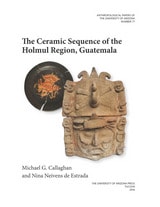
The Ceramic Sequence of the Holmul Region, Guatemala
Michael G. Callaghan and Nina Neivens de Estrada
University of Arizona Press, 2016
The Ceramic Sequence of the Holmul Region, Guatemala illustrates the archaeological ceramics of these prehistoric Maya sites in a study that provides a theoretical starting point for answering questions related to mid- and high-level issues of archaeological method and theory in the Maya area and larger Mesoamerica. The researchers’ ceramic sequence, which uses the method of type:variety-mode classification, spans approximately 1,600 years and encompasses nine ceramic complexes and one sub-complex. The highly illustrated book is formatted as a catalog of the types of ceramics in a chronological framework.
The authors undertook this study with three objectives: to create a temporal-spatial framework for archaeological sites in the politically important Holmul region, to relate this framework to other Maya sites, and to use type:variety-mode data to address specific questions of ancient Maya social practice and process during each ceramic complex.
Specific questions addressed in this volume include the adoption of pottery as early as 800 BC at the sites of Holmul and Cival during the Middle Preclassic period, the creation of the first orange polychrome pottery, the ideological and political influence from sites in Mexico during the Early Classic period, and the demographic and political collapse of lowland Maya polities between AD 800 and AD 830.
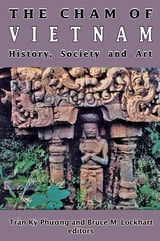
The Cham of Vietnam
History, Society and ArtEdited by Bruce Lockhart and Tran Ky Phuong
National University of Singapore Press, 2011
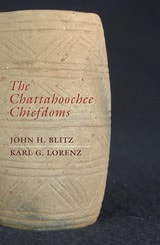
The Chattahoochee Chiefdoms
John H. Blitz and Karl G. Lorenz
University of Alabama Press, 2006
As objects from the mounds were unearthed, occasionally illustrated and discussed in print, attention became focused on the aesthetic qualities of the artifacts, the origins of the remains, and the possible relationship to the Creek Indians. Beginning in the 20th century, new concerns emerged as the developing science of archaeology was introduced to the region. As many of the sites became threatened or destroyed by reservoir construction, trained archaeologists initiated extensive excavations of the mounds. Although classification of artifacts and sites into a chronological progression of cultures was the main objective of this effort, a second concern, sometimes more latent than manifest, was the reconstruction of a past way of life. Archaeologists hoped to achieve a better understanding of the sociopolitical organization of the peoples who built the mounds and of how those organizations changed through time.
Contemporary archaeologists, while in agreement on many aspects of the ancient cultures, debate the causes, forms, and degrees of sociopolitical complexity in the ancient Southeast. Do the mounds mark the capitals of political territories? If so, what was the scale and scope of these ancient “provinces”? What manner of society constructed the mound settlements? What was the sociopolitical organization of these long-dead populations? How can archaeologists answer such queries with the mute and sometimes ordinary materials with which they work: pottery, stone tools, organic residues, and the strata of remnant settlements, buildings, and mounds?
The Cherokees of Tuckaleechee Cove
Jon Marcoux
University of Michigan Press, 2012
The Chinese of Early Tucson
Historic Archaeology from the Tucson Urban Renewal ProjectFlorence C. Lister and Robert H. Lister
University of Arizona Press, 1989
The Chora of Croton 1
The Neolithic Settlement at Capo AlfiereBy Jon Morter
University of Texas Press, 2010
From 1974 to the present, the Institute of Classical Archaeology (ICA) at the University of Texas at Austin has carried out archaeological excavations and surveys in ancient territories (chorae) in southern Italy. This wide-ranging investigation, which covers a large number of sites and a time period ranging from prehistory to the Middle Ages, has unearthed a wealth of new information about ancient rural economies and cultures in the region. These discoveries will be published in two multivolume series (Metaponto and Croton). This volume on the Neolithic settlement at Capo Alfiere is the first in the Croton series.
The Chora of Croton 1 reports the excavation results of a remarkable Neolithic site at Capo Alfiere on the Ionian coast. Capo Alfiere is one of a very few early inhabitation sites in this area to have been excavated extensively, with a full team of scientific specialists providing interdisciplinary studies on early farming and animal husbandry. It provides comprehensive documentation of the economy, material culture, and way of life in the central Mediterranean in the sixth and fifth millennia BC. Most notable are the remains of a wattle-and-daub hut enclosed within a massive stone wall. Unique for this area, this well-preserved structure may have been used for special purposes such as ritual, as well as for habitation. The presence of Stentinello wares shows that the range of this pottery type extended further east than previously thought and casts new light on the development of ceramics in the area.
The Chora of Metaponto 2
Archaeozoology at Pantanello and Five Other SitesStudies by Sándor Bökönyi and Erika Gál
University of Texas Press, 2010
From 1974 to the present, the Institute of Classical Archaeology at the University of Texas at Austin has carried out archaeological excavations in the ancient territory (chora) of Metaponto, now located in the modern province of Basilicata on the southern coast of Italy. This wide-ranging investigation, which covers a number of sites and a time period ranging from prehistory to the Roman Empire, has unearthed a wealth of new information about the ancient rural economy in southern Italy. These discoveries will be published in a multi-volume series titled The Chora of Metaponto. This volume on archaeozoology—the study of animal remains from archaeological sites—is the second in the series, following The Chora of Metaponto: The Necropoleis (1998).
Archaeozoology at Pantanello and Five Other Sites describes the animal remains found throughout Metaponto and discusses what they reveal about ancient practices of hunting and herding, domestication and importation of new breeds, people's attitudes toward animals, and what animal remains indicate about past environments. A chapter devoted to bird bones, which are a relatively rare find because of their fragility, provides high quality information on the environment and methods of fowling, as well as on the beliefs and symbolism associated with birds. The final chapter covers tools—some simple, others sophisticated and richly decorated—made from animal bones.
The Chora of Metaponto 4
The Late Roman Farmhouse at San BiagioBy Erminia Lapadula
University of Texas Press, 2012
This volume in the Institute of Classical Archaeology's series on rural settlements in the countryside (chora) of Metaponto presents the excavation of the Late Roman farmhouse at San Biagio. Located near the site of an earlier Greek sanctuary, this modest but well-appointed structure was an unexpected find from a period generally marked by large landholdings and monumental villas. Description of earlier periods of occupation (Neolithic and Greek) is followed by a detailed discussion of the farmhouse itself and its historical and socioeconomic context. The catalogs and analyses of finds include impressive deposits of coins from the late third and early fourth centuries AD. Use of virtual reality CAD software has yielded a deeper understanding of the architectural structure and its reconstruction. A remarkable feature is the small bath complex, with its examples of window glass. This study reveals the existence of a small but viable rural social and economic entity and alternative to the traditional image of crisis and decline during the Late Imperial period.
The Chora of Metaponto 5
A Greek Farmhouse at Ponte FabrizioBy Elisa Lanza Catti, Keith Swift and Joseph Coleman Carter
University of Texas Press, 2014
This volume in the Institute of Classical Archaeology’s series on rural settlements in the countryside (chora) of Metaponto is a study of the fourth-century BC farmhouse known as Fattoria Fabrizio, located in the heart of the surveyed chora in the Venella valley (at Ponte Fabrizio). This simple structure richly illustrates the life of fourth-century BC Metapontine farmers of modest means.
Thorough interpretations of the farmhouse structure in its wider historical and socioeconomic contexts are accompanied by comprehensive analyses of the archaeological finds. Among them is detailed evidence for the family cult, a rare archaeological contribution to the study of Greek religion in Magna Grecia. The entire range of local Greek ceramics has been studied, along with a limited number of imports. Together they reveal networks within the chora and trade beyond it, involving indigenous peoples of southern Italy, mainland Greeks, and the wider Mediterranean world. Along with the studies of traditional archaeological finds, archaeobotanical analyses have illuminated the rural economy of the farmhouse and the environment of the adjacent chora. Abundant Archaic pottery also documents an important occupation, during the first great flowering of the chora in the sixth century BC. This study provides an ideal complement to the four volumes of The Chora of Metaponto 3: Archaeological Field Survey—Bradano to Basento and an eloquent example of hundreds of farmhouses of this date identified throughout the chora by their surface remains alone.
The Chora of Metaponto 6
A Greek Settlement at Sant'Angelo VecchioBy Francesca Silvestrelli and Ingrid E. M. Edlund-Berry<br>Joseph Coleman Carter, Series Editor
University of Texas Press, 2016
The sixth volume in the Institute of Classical Archaeology’s series on the rural countryside (chora) of Metaponto is a study of the Greek settlement at Sant’Angelo Vecchio. Located on a slope overlooking the Basento River, the site illustrates the extraordinary variety of settlements and uses of the territory from prehistory through the current day. Excavators brought to light a Late Archaic farmhouse, evidence of a sanctuary near a spring, and a cluster of eight burials of the mid-fifth century BC, but the most impressive remains belong to a production area with kilns. Active in the Hellenistic, Late Republican, and Early Imperial periods, these kilns illuminate important and lesser-known features of production in the chora of a Greek city and also chronicle the occupation of the territory in these periods.
The thorough, diachronic presentation of the evidence from Sant’Angelo Vecchio is complemented by specialist studies on the environment, landscape, and artifacts, which date from prehistory to the post-medieval period. Significantly, the evidence spans the range of Greek site types (farmhouse, necropolis, sanctuary, and production center) as well as the Greek dates (from the Archaic to Early Imperial periods) highlighted during ICA’s survey of the Metapontine chora. In this regard, Chora 6 enhances the four volumes of The Chora of Metaponto 3: Archaeological Field Survey—Bradano to Basento and provides further insight into how sites in the chora interacted throughout its history.
The Cochise Cultural Sequence in Southeastern Arizona
E. B. Sayles
University of Arizona Press, 1983

The Collection of Antiquities of the American Academy in Rome
Larissa Bonfante and Helen Nagy, editors
University of Michigan Press, 2016
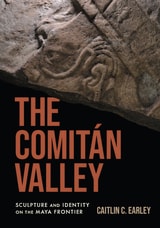
The Comitán Valley
Sculpture and Identity on the Maya FrontierCaitlin C. Earley
University of Texas Press, 2023
A thousand years ago, the Comitán Valley, in the Mexican state of Chiapas, was the western edge of the Maya world. Far from the famous power centers of the Classic period, the valley has been neglected even by specialists. Here, Caitlin C. Earley offers the first comprehensive study of sculpture excavated from the area, showcasing the sophistication and cultural vigor of a region that has largely been ignored.
Supported by the rulers of the valley’s cities, local artists created inventive works that served to construct civic identities. In their depictions of warrior kings, ballgames, rituals, and ancestors, the artists of Comitán made choices that reflected political and religious goals and distinguished the artistic production of the Comitán Valley from that of other Maya locales. After the Maya abandoned their powerful lowland centers, those in Comitán were maintained, a distinction from which Earley draws new insights concerning the Maya collapse. Richly illustrated with never-before-published photographs of sculptures unearthed from key archaeological sites, The Comitán Valley is an illuminating work of art historical recovery and interpretation.

The Compensations of Plunder
How China Lost Its TreasuresJustin M. Jacobs
University of Chicago Press, 2020
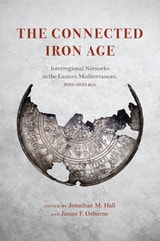
The Connected Iron Age
Interregional Networks in the Eastern Mediterranean, 900-600 BCEEdited by Jonathan M. Hall and James F. Osborne
University of Chicago Press, 2022
The early first millennium BCE marks one of the most culturally diverse periods in the history of the eastern Mediterranean. Surveying the region from Greece to Iraq, one finds a host of cultures and political formations, all distinct, yet all visibly connected in meaningful ways. These include the early polities of Geometric period Greece, the Phrygian kingdom of central Anatolia, the Syro-Anatolian city-states, the seafaring Phoenicians and the biblical Israelites of the southern Levant, Egypt’s Twenty-first through Twenty-fifth Dynasties, the Urartian kingdom of the eastern Anatolian highlands, and the expansionary Neo-Assyrian Empire of northern Mesopotamia. This volume adopts an interdisciplinary approach to understanding the social and political significance of how interregional networks operated within and between Mediterranean cultures during that era.
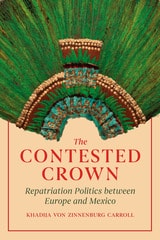
The Contested Crown
Repatriation Politics between Europe and MexicoKhadija von Zinnenburg Carroll
University of Chicago Press, 2022
In The Contested Crown, Khadija von Zinnenburg Carroll meditates on the case of a spectacular feather headdress believed to have belonged to Montezuma, emperor of the Aztecs. This crown has long been the center of political and cultural power struggles, and it is one of the most contested museum claims between Europe and the Americas. Taken to Europe during the conquest of Mexico, it was placed at Ambras Castle, the Habsburg residence of the author’s ancestors, and is now in Vienna’s Welt Museum. Mexico has long requested to have it back, but the Welt Museum uses science to insist it is too fragile to travel.
Both the biography of a cultural object and a history of collecting and colonizing, this book offers an artist’s perspective on the creative potentials of repatriation. Carroll compares Holocaust and colonial ethical claims, and she considers relationships between indigenous people, international law and the museums that amass global treasures, the significance of copies, and how conservation science shapes collections. Illustrated with diagrams and rare archival material, this book brings together global history, European history, and material culture around this fascinating object and the debates about repatriation.
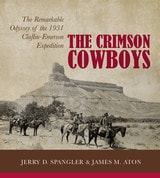
The Crimson Cowboys
The Remarkable Odyssey of the 1931 Claflin-Emerson ExpeditionJerry D. Spangler and James M. Aton
University of Utah Press, 2018
In 1931 a group from Harvard University’s Peabody Museum accomplished something that had never been attempted in the history of American archaeology: a six-week, four-hundred-mile horseback survey of Fremont prehistoric sites through some of the West’s most rugged terrain. The expedition was successful, but a report on the findings was never completed. What should have been one of the great archaeological stories in American history was relegated to boxes and files in the basement of the Peabody Museum at Harvard.
Now, based on over a thousand pages of documents (field journals, correspondence, and receipts) and over four hundred photographs, this book recounts the remarkable day-to-day adventures of this crew of one professor, five students, and three Utah guides who braved heat, fatigue, and the dangerous canyon wilderness to reveal vestiges of the Fremont culture in the Tavaputs Plateau and Uinta Basin areas. To better tell this story, authors Spangler and Aton undertook extensive fieldwork to confirm the sites; their recent photographs and those of the original expedition are shared on these pages. This engaging narrative situates the 1931 survey and its discoveries within the history of American archaeology.
Click here for a podcast with the APEX hour and Jim Aton about The Crimson Cowboys.

The Culture of Property
The Crisis of Liberalism in Modern BritainJordanna Bailkin
University of Chicago Press, 2004
Drawing on court transcripts, gallery archives, exhibition reviews, private correspondence—and a striking series of cartoons and photographs—The Culture of Property traverses the history of gender, material culture, urban life, colonialism, Irish and Scottish nationalism, and British citizenship. This fascinating book challenges recent scholarship in museum studies in light of ongoing culture wars. It should be required reading for cultural policy makers, museum professionals, and anyone interested in the history of art and Britain.
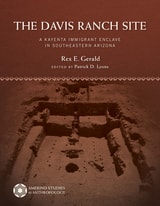
The Davis Ranch Site
A Kayenta Immigrant Enclave in Southeastern ArizonaRex E. Gerald, Edited by Patrick D. Lyons
University of Arizona Press, 2019
Annotations to Gerald’s original manuscript in the archives of the Amerind Museum and newly written material place Gerald’s work in the context of what is currently known regarding the late thirteenth-century Kayenta diaspora and the relationship between Kayenta immigrants and the Salado phenomenon. Data presented by Gerald and other contributors identify the site as having been inhabited by people from the Kayenta region of northeastern Arizona and southeastern Utah.
The results of Gerald’s excavations and Archaeology Southwest’s San Pedro Preservation Project (1990–2001) indicate that the people of the Davis Ranch Site were part of a network of dispersed immigrant enclaves responsible for the origin and spread of Roosevelt Red Ware pottery, the key material marker of the Salado phenomenon.
A companion volume to Charles Di Peso’s 1958 publication on the nearby Reeve Ruin, archaeologists working in the U.S. Southwest and other researchers interested in ancient population movements and their consequences will consider this work an essential case study.

The Dawn of Belief
Religion in the Upper Paleolithic of Southwestern EuropeD. Bruce Dickson
University of Arizona Press, 1990
Based on the premises that all members of Homo sapiens sapiens share basically similar psychological processes and capabilities and that human culture is patterned, the author uses ethnographic analogy, inference from material patterns, and formal analysis to find in prehistoric imagery clues to the cosmology that lay behind them. The resulting book is an intriguing speculation on the nature of paleolithic religion, offering scholars a valuable synthesis of anthropological, archaeological, and sociological research, and general readers an accessible account of how our forebears may have regarded the unknown.
The Development of Southeastern Archaeology
Edited by Jay K. Johnson
University of Alabama Press, 1993
Ten scholars whose specialties range from ethnohistory to remote sensing and lithic analysis to bioarchaeology chronicle changes in the way prehistory in the Southeast has been studied since the 19th century. Each brings to the task the particular perspective of his or her own subdiscipline in this multifaceted overview of the history of archaeology in a region that has had an important but variable role in the overall development of North American archaeology.
Some of the specialties discussed in this book were traditionally relegated to appendixes or ignored completely in site reports more than 20 years old. Today, most are integral parts of such reports, but this integration has been hard won. Other specialties have been and will continue to be of central concern to archaeologists. Each chapter details the way changes in method can be related to changes in theory by reviewing major landmarks in the literature. As a consequence, the reader can compare the development of each subdiscipline.
As the first book of this kind to deal specifically with the region, it be will valuable to archaeologists everywhere. The general reader will find the book of interest because the development of southeastern archaeology reflects trends in the development of social science as a whole.
Contributors include:
Jay K. Johnson, David S. Brose, Jon L. Gibson, Maria O. Smith, Patricia K. Galloway, Elizabeth J. Reitz, Kristen J. Gremillion, Ronald L. Bishop, Veletta Canouts, and W. Fredrick Limp
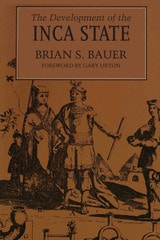
The Development of the Inca State
By Brian S. Bauer
University of Texas Press, 1992
The Inca empire was the largest state in the Americas at the time of the Spanish invasion in 1532. From its political center in the Cuzco Valley, it controlled much of the area included in the modern nations of Ecuador, Peru, Chile, and Bolivia. But how the Inca state became a major pan-Andean power is less certain. In this innovative work, Brian S. Bauer challenges traditional views of Inca state development and offers a new interpretation supported by archaeological, historical, and ethnographic evidence.
Spanish chroniclers of the sixteenth and seventeenth centuries attributed the rapid rise of Inca power to a decisive military victory over the Chanca, their traditional rivals, by Pachacuti Inca Yupanqui. By contrast, Bauer questions the usefulness of literal interpretations of the Spanish chronicles and provides instead a regional perspective on the question of state development. He suggests that incipient state growth in the Cuzco region was marked by the gradual consolidation and centralization of political authority in Cuzco, rather than resulting from a single military victory. Synthesizing regional surveys with excavation, historic, and ethnographic data, and investigating broad categories of social and economic organization, he shifts the focus away from legendary accounts and analyzes more general processes of political, economic, and social change.
The Durango South Project
Archaeological Salvage of Two Basketmaker III Sites in the Durango DistrictEdited by John D. Gooding
University of Arizona Press, 1980
The Early Prehistory of Wadi Faynan, Southern Jordan
Excavations at the Pre-Pottery Neolithic A Site of WF16 and Archaeological Survey of Wadis Faynan, Ghuwayr and Al BustanB. Finlayson
Council for British Research in the Levant, 2007
The East Florida Expeditions of Clarence Bloomfield Moore
Clarence Bloomfield Moore, edited by Jeffrey M. Mitchem
University of Alabama Press, 1999
A Dan Josselyn Memorial Publication
This comprehensive compilation of Moore's archaeological publications on eastern Florida will prove an invaluable primary resource for Florida archaeologists.
Clarence B. Moore (1852-1936), a wealthy Philadelphia socialite, paper company heir, and photographer made the archaeology of the Southeast his passion beginning in the 1870s. This volume collects 17 of Moore's publications on East Florida, originally published between 1892 and 1903. These invaluable and copiously illustrated works document the results of Moore's numerous archaeological expeditions along Florida's eastern coastline from the Georgia border to Lake Okeechobee and focus primarily on sites along the St. Johns River and its tributaries. Moore's archaeological work in East Florida was arguably his best and most thorough research from a modern perspective.
Jeffrey Mitchem's introduction to this volume describes and analyzes Moore's work in East Florida, summarizes what we know about the sites Moore investigated, and surveys subsequent archaeological work conducted in this area since Moore's expeditions. Mitchem's introduction highlights the significance of Moore's work on the shell heaps along the St. Johns River. It led to the earliest recorded instance of a researcher noting the changes in pottery styles in the region, a major key to establishing chronologies.In 1894, Moore wrote of his hope "that the archaeology of Florida may be redeemed from the obscurity that has hitherto characterized it." Over a century later, this Press has aimed to fulfill Moore's wish by reprinting this and other collections of his archaeological publications.
The Emergence of the Moundbuilders
The Archaeology of Tribal Societies in Southeastern OhioElliot M. Abrams
Ohio University Press, 2004
Native American societies, often viewed as unchanging, in fact experienced a rich process of cultural innovation in the millennia prior to recorded history. Societies of the Hocking River Valley in southeastern Ohio, part of the Ohio River Valley, created a tribal organization beginning about 2000 bc.
Edited by Elliot M. Abrams and AnnCorinne Freter, The Emergence of the Moundbuilders: The Archaeology of Tribal Societies in Southeastern Ohio presents the process of tribal formation and change in the region based on analyses of all available archaeological data from the Hocking River Valley. Drawing on the work of scholars in archaeology, anthropology, geography, geology, and botany, the collection addresses tribal society formation through such topics as the first pottery made in the valley, aggregate feasting by nomadic groups, the social context for burying their dead in earthen mounds, the formation of religious ceremonial centers, and the earliest adoption of corn.
Providing the most current research on indigenous societies in the Hocking Valley, The Emergence of the Moundbuilders is distinguished by its broad, comparative overview of tribal life.
The Evolution of Calusa
A Nonagricultural Chiefdom of the Southwest Florida CoastRandolph J. Widmer
University of Alabama Press, 1988
The aims of this study are twofold: compile, for the first time, all the archaeological, environmental, and geological data pertinent to the evolution of the aboriginal inhabitants of southwest Florida; and, using this basis, develop a specific, integrated, and dynamic model of cultural adaptation that will serve as a stimulus for hypotheses that go beyond simple culture-historical concerns for future archaeological research in this region.
The Evolution of Settlement Systems in the Region of Vohémar, Northeast Madagascar
Henry T. Wright, Robert E. Dewar, Chantal Radimilahy, and Lucien Marie Aimé Rakotozafy
University of Michigan Press, 2021

The Fertile Earth and the Ordered Cosmos
Reflections on the Newark Earthworks and World HeritageEdited by M. Elizabeth Weiser, Timothy R. W. Jordan, and Richard D. Shiels
The Ohio State University Press, 2023
The lush photos and wide-ranging essays of The Fertile Earth and the Ordered Cosmos honor this significance, not only to the global community but to local individuals and scholars who have developed intimate connections to the Earthworks. In sharing their experiences with this ancient site, public historians, archaeologists, physicists, architects, and others—including local and Indigenous voices—continue the work of nearly two hundred years of citizen efforts to protect and make accessible the Newark Earthworks after centuries of stewardship by Indigenous people. The resulting volume serves as a rich primer on the site for those unfamiliar with its history and a beautifully produced tribute for those who are already acquainted with its wonders.
The First Rocky Mountaineers
Coloradans before ColoradoMarcel Kornfeld
University of Utah Press, 2013
Chosen by Foreword as the 2014 bronze winner in science.
The Fisher Site
Archaeological, Geological and Paleobotanical Studies at an Early Paleo-Indian Site in Southern Ontario, CanadaPeter L. Storck
University of Michigan Press, 1997
The Folds of Parnassos
Land and Ethnicity in Ancient PhokisBy Jeremy McInerney
University of Texas Press, 2000
Independent city-states (poleis) such as Athens have been viewed traditionally as the most advanced stage of state formation in ancient Greece. By contrast, this pioneering book argues that for some Greeks the ethnos, a regionally based ethnic group, and the koinon, or regional confederation, were equally valid units of social and political life and that these ethnic identities were astonishingly durable.
Jeremy McInerney sets his study in Phokis, a region in central Greece dominated by Mount Parnassos that shared a border with the panhellenic sanctuary at Delphi. He explores how ecological conditions, land use, and external factors such as invasion contributed to the formation of a Phokian territory. Then, drawing on numerous interdisciplinary sources, he traces the history of the region from the Archaic age down to the Roman period. McInerney shows how shared myths, hero cults, and military alliances created an ethnic identity that held the region together over centuries, despite repeated invasions. He concludes that the Phokian koinon survived because it was founded ultimately on the tenacity of the smaller communities of Greece.
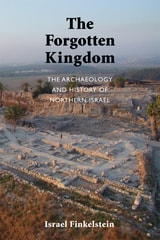
The Forgotten Kingdom
The Archaeology and History of Northern IsraelIsrael Finkelstein
SBL Press, 2013
A new understanding of the history of the northern kingdom from 1350 B.C.E. to 720 B.C.E.
Beginning with the Canaanite city-states, through the Saulide dynasty, to the fall of Israel, Finkelstein presents the first comprehensive history of Israel integrating the analysis of more than thirty years of archaeological work with interpretation of ancient Near Eastern and biblical texts. Though Judah dominates the pages of the Hebrew Bible and contemporary studies, Israel dominates here as Finkelstein reveals the glory of the Omride dynasty, outlines how the two kingdoms of Israel and Judah developed parallel to one another, and highlights Israel’s transformation from kingdom to foundational idea.
Features:
- Archaeological analysis of the region of the northern kingdom
- Primary and secondary textual analysis from the ancient Near East and the biblical narrative
- Maps, tables, and images
- Discussion of Israel’s legacy
The Foxie Otter Site
A Multicomponent Occupation North of Lake HuronChristopher C. Hanks
University of Michigan Press, 1988
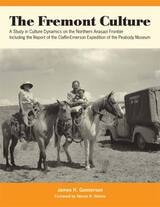
The Fremont Culture
A Study in Culture Dynamics on the Northern Anasazi Frontier, including the Report of the Claflin-Emerson Expedition of the Peabody MuseumJames H Gunnerson
University of Utah Press, 2009
Early expedition surveys and excavations conducted by Noel Morss would lead to a definition of the Fremont culture; later research would augment existing data on the Fremont by adding entirely new traits, disclosing new variations in architecture and basketry, and providing new information on the distribution of previously known traits.
In The Fremont Culture: A Study in Culture Dynamics on the Northern Anasazi Frontier, archaeologist James H. Gunnerson provides the results of his 1950s survey and excavation in the Utah area. He presents a functional synthesis of the Fremont culture and discusses the dynamics of its growth and decline.
Gunnerson’s report also uses the original field notes, maps, plans, photographs, sketches, and unpublished preliminary reports of the Claflin-Emerson expedition. Together, the reports of Morss and Gunnerson offer the most important and complete overview of the expedition available. They are fitting tributes to the men of that expedition, scientists who recognized the importance of an ancient people who once wrested a meager living from the rugged canyon country of the Green and Colorado Rivers.
The Galilean Economy in the Time of Jesus
David A. Fiensy
SBL Press, 2013
The Garnsey Spring Campsite
Late Prehistoric Occupation in Southeastern New MexicoWilliam J. Parry and John D. Speth
University of Michigan Press, 1984
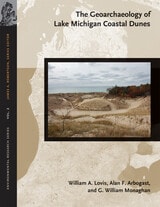
The Geoarchaeology of Lake Michigan Coastal Dunes
William A. Lovis, Alan F. Arbogast, and G. William Monaghan
Michigan State University Press, 2012
Complex sets of environmental factors have interacted over the past 5,000 years to affect how changes in climate, temperature, relative precipitation, and the levels of Lake Michigan influence the preservation of archaeological sites in coastal sand dunes along Lake Michigan. As a collaboration between earth scientists, archaeologists, and geoarchaeologists, this study draws on a wealth of research and multidisciplinary insights to explore the conditions necessary to safeguard ancient human settlements in these landscapes. A variety of contemporary and innovative techniques, including numerous dating methods and approaches, were employed to determine when and for how long sand dunes were active and when and for how long archaeological sites were occupied. Knowledge of dune processes and settlement patterns not only affects archaeological interpretations, but it is also consummately important to land planners responsible for managing heritage archaeological sites in the Lake Michigan coastal zone.
The Geoarchaeology of Whitewater Draw, Arizona
Michael R. Waters
University of Arizona Press, 1986
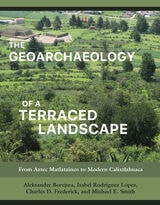
The Geoarchaeology of a Terraced Landscape
From Aztec Matlatzinco to Modern CalixtlahuacaAleksander Borejsza, Isabel Rodríguez López, Charles D. Frederick, and Michael E. Smith
University of Utah Press, 2021
Working at a settlement in the Toluca Valley of central Mexico, the authors used fieldwalking, excavation, soil and artifact analyses, maps, aerial photos, land deeds, and litigation records to reconstruct the changing landscape through time. Exploiting the methodologies and techniques of several disciplines, they bring context to eight centuries of the region’s agrarian history, exploring the effects of the Aztec and Spanish Empires, reform, and revolution on the physical shape of the Mexican countryside and the livelihoods of its people. Accessible to specialists and nonspecialists alike, this well-illustrated and well-organized volume provides a step-by-step guide that can be applied to the study of terraced landscapes anywhere in the world.
The four authors share an interest in terraced landscapes and have worked together and on their own on a variety of archaeological projects in Mesoamerica, the Mediterranean, Poland, and the United Kingdom.
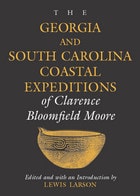
The Georgia and South Carolina Coastal Expeditions of Clarence Bloomfield Moore
Clarence Bloomfield Moore, edited by Lewis Larson
University of Alabama Press, 1998
A Dan Josselyn Memorial Publication
This facsimile edition of Moore's Georgia and South Carolina expeditions includes an extensive new introduction from Georgia's senior archaeologist.
This compilation of Clarence Bloomfield Moore's investigations along the rich coastal and river drainages of Georgia and South Carolina makes
available in a single volume valuable works published a century ago. By modern standards Moore's excavation techniques were crude, but his results were nothing less than spectacular. He recorded data with care, and much information can be learned from his works. In some cases his publications are the only documentation extant for sites that have since been destroyed. In one case, relic collectors had destroyed six mounds at Mason's Plantation—the largest Mississippian center in the Savannah River valley—by the time Moore visited the site in 1897.
Moore also documented prehistoric urn burials, a ritual widely practiced in eastern North America but more frequently on the Gulf Coastal Plain
of Alabama and coastal sites in Georgia and South Carolina. In the introduction, Lewis Larson discusses Moore's investigations within the framework of the current understanding of Georgia and South Carolina coastal archaeological chronology.
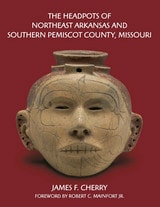
The Headpots of Northeast Arkansas and Southern Pemiscot County, Missouri
James F. Cherry
University of Arkansas Press, 2009
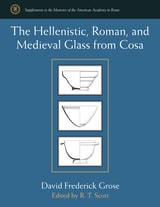
The Hellenistic, Roman, and Medieval Glass from Cosa
David Frederick Grose (R. T. Scott, editor)
University of Michigan Press, 2017
The research and analysis presented here are the work of the late David Frederick Grose, who began this project when no other city site excavations in Italy focused on ancient glass. He confirmed that the Roman glass industry began to emerge in the Julio-Claudian era, beginning in the principate of Augustus. His study traces the evolution of manufacturing techniques from core-formed vessels to free blown glass, and it documents changes in taste and style that were characteristic of the western glass industry throughout its long history.
At the time of Grose’s unexpected passing, his study was complete but not yet published. Nevertheless, the reputation of his work in this area has done much to establish the value and importance of excavating and researching Cosa’s glass. This volume, arranged and edited by R. T. Scott, makes Grose’s essential scholarship on the subject available for the first time.
The Henderson Site Burials
Glimpses of a Late Prehistoric Population in the Pecos ValleyThomas R. Rocek and John D. Speth
University of Michigan Press, 1986
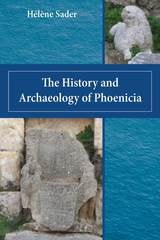
The History and Archaeology of Phoenicia
Hélène Sader
SBL Press, 2019
An insightful historical account of Phoenicia that illustrates its cities, culture, and daily life
Hélène Sader presents the history and archaeology of Phoenicia based on the available contemporary written sources and the results of archaeological excavations in Phoenicia proper. Sader explores the origin of the term Phoenicia; the political and geographical history of the city-states Arwad, Byblos, Sidon, and Tyre; and topography, climate, and natural resources of the Phoenician homeland. Her limited focus on Phoenicia proper, in contrast to previous studies that included information from Phoenician colonies, presents the bare realities of the opportunities and difficulties shaping Phoenician life. Sader’s evaluation and synthesis of the evidence offers a corrective to the common assumption of a unified Phoenician kingdom.
Features
- Historical as well as modern maps with the locations of all relevant archaeological sites
- Faunal and floral analyses that shed light on the Phoenician diet
- Petrographic analysis of pottery that sheds light on trading patterns and developments
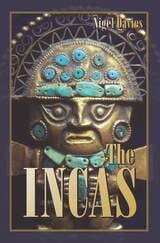
The Incas
Nigel Davies
University Press of Colorado, 1995
In this classic work, Nigel Davies offers a clear view into Inca political history, economy, governance, religion, art, architecture, and daily life. The Incas has become a classic in its many years in print; readers and scholars interested in ancient American cultures will relish this paperback edition.

The Indians of Iowa
Foster, Lance M.
University of Iowa Press, 2009
Foster begins with a history of Lewis and Clark’s travels along the Missouri River adjacent to western Iowa. Next, he focuses on the tribes most connected to Iowa from prehistoric times to the present day: the Ioway, Meskwaki, Sauk, Omaha and Ponca, Otoe and Missouria, Pawnee and Arikara, Potawatomi, Illinois Confederacy, Santee and Yankton Sioux, and Winnebago. In between each tribal account, “closer look” essays provide details on Indian women in Iowa, traditional ways of life, Indian history and spirituality, languages and place-names, archaeology, arts and crafts, and houses and landscapes. Finally, Foster brings readers into the present with chapters called “Going to a Powwow,” “Do You Have Indian Blood?” and “Indians in Iowa Today.” The book ends with information about visiting Native American museums, historic sites, and communities in Iowa as well as tribal contacts and a selection of published and online resources.
The story of the Indians of Iowa is long and complicated. Illustrated with maps and stunning original art, Lance Foster’s absorbing, accessible overview of Iowa’s Indian tribes celebrates the rich native legacy of the Hawkeye State. It is essential reading for students, teachers, and everyone who calls Iowa home.
The Indians of Point of Pines, Arizona
A Comparative Study of Their Physical CharacteristicsKenneth A. Bennett
University of Arizona Press, 1973
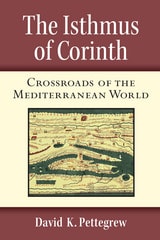
The Isthmus of Corinth
Crossroads of the Mediterranean WorldDavid K. Pettegrew
University of Michigan Press, 2016
David Pettegrew’s book offers a new history of the Isthmus of Corinth from the Romans’ initial presence in Greece during the Hellenistic era to the epic transformations of the Empire in late antiquity. A new interpretation of the extensive literary evidence outlines how the Isthmus became the most famous land bridge of the ancient world, central to maritime interests of Corinth, and a medium for Rome’s conquest, annexation, and administration in the Greek east. A fresh synthesis of archaeological evidence and the results of a recent intensive survey on the Isthmus describe the physical development of fortifications, settlements, harbors, roads, and sanctuaries in the region. The author includes chapters on the classical background of the concept isthmos, the sacking of Corinth and the defeat of the Achaean League, colonization in the Late Roman Republic, the Emperor Nero’s canal project and its failure, the growth of Roman settlement in the territory, and the end of athletic contests at Isthmia. The Isthmus of Corinth offers a powerful case study in the ways that shifting Mediterranean worlds transformed a culturally significant landscape over the course of a millennium.