Results by title
478 books match the query 'Bible' and 124 start with t
The Identity of Israel’s God in Christian Scripture
Don Collett
SBL Press, 2021
A broad, sweeping volume that breaches the walls separating biblical and theological disciplines
Biblical scholars and theologians engage an important question: Who is Israel’s God for Christian readers of the Old Testament? For Christians, Scripture is the Old and New Testament bound together in a single legacy. Contributors approach the question from multiple disciplinary vantage points. Essays on both Testaments focus on figural exegesis, critical exegesis, and the value of diachronic understandings of the Old Testament’s compositional history for the sake of a richer synchronic reading. This collection is offered in celebration of the life and work of Christopher R. Seitz. His rich and wide-ranging scholarly efforts have provided scholars and students alike a treasure trove of resources related to this critical question.
The Inspiration and Truth of Scripture
Testing the Ratzinger ParadigmAaron Pidel, SJ
Catholic University of America Press, 2023
The Intercourse of Knowledge
On Gendering Desire and 'Sexuality' in the Hebrew BibleAthalya Brenner
SBL Press, 2016
Now in paperback!
This groundbreaking book, which builds on the author's earlier work in On Gendering Texts, studies how, by what means, and to what extent human love, desire and sex, and possibly even "sexuality"; are gendered in the Hebrew Bible. The investigation looks into the construction of male and female bodies in language and ideologies; the praxis and ideology of sex, procreation, and contraception; deviation from socio-sexual boundaries (e.g. incest, rape, adultery, homosexuality, prostitution); eroticism and "pornoprophetics."
Features:
- Paperback format of an essential Brill monograph
- A classification and gendering of the linguistic and semantic data
- Discussion of wider sociological and theological implications
The Invention of Hebrew
Seth L. Sanders
University of Illinois Press, 2011
Seth L. Sanders connects the Bible's distinctive linguistic form--writing down a local spoken language--to a cultural desire to speak directly to people, summoning them to join a new community that the text itself helped call into being. Addressing the people of Israel through a vernacular literature, Hebrew texts reimagined their audience as a public. By comparing Biblical documents with related ancient texts in Hebrew, Ugaritic, and Babylonian, this book shows Hebrew's distinctiveness as a self-conscious political language. Illuminating the enduring stakes of Biblical writing, Sanders demonstrates how Hebrew assumed and promoted a source of power previously unknown in written literature: "the people" as the protagonist of religion and politics.
The Jewish Middle Ages
Carol Bakhos
SBL Press, 2023
For many, the Middle Ages in general evokes a sense of the sinister and brings to mind a world of fear, superstition, and religious fanaticism. For Jews it was a period marked by persecutions, pogroms, and expulsions. Yet at the same time, the Middle Ages was also a time of lively cultural exchange and heightened creativity for Jews. In The Jewish Middle Ages, contributors explore the ways in which the stories of biblical women, including, Eve, Sarah, Hagar, Rebekah, Zipporah, Ruth, Esther, and Judith, make their way into the rich tapestry of medieval Jewish literature, mystical texts, and art, particularly in works emanating from Ashkenazic circles. Contributors include Carol Bakhos, Judith R. Baskin, Elisheva Baumgarten, Dagmar Börner-Klein, Constanza Cordoni, Rachel Elior, Meret Gutmann-Grün, Robert A. Harris, Yuval Katz-Wilfing, Sheila Tuller Keiter, Katrin Kogman-Appel, Gerhard Langer, Aurora Salvatierra Ossorio, and Felicia Waldman. These essays give us a glimpse into the role women played and the authority they assumed in medieval Jewish culture beyond the rabbinic centers of Palestine and Babylonia.
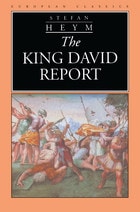
The King David Report
Stefan Heym
Northwestern University Press, 1997
Written by one of Germany's most acclaimed dissident authors, The King David Report is both an analysis of the writer's obligations to truth, and an astute satire on the workings of history and politics in a totalitarian state.
The King James Version at 400
Assessing Its Genius as Bible Translation and Its Literary InfluenceDavid G. Burke
SBL Press, 2013
The Kingdoms of Israel and Judah in the Eighth and Seventh Centuries B.C.E.
Antoon Schoors
SBL Press, 2013
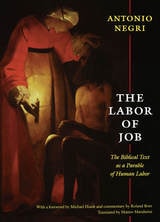
The Labor of Job
The Biblical Text as a Parable of Human LaborAntonio Negri
Duke University Press, 2009
The Labor of Job was first published in Italy in 1990. Negri began writing it in the early 1980s, while he was a political prisoner in Italy, and it was the first book he completed during his exile in France (1983–97). As he writes in the preface, understanding suffering was for him in the early 1980s “an essential element of resistance. . . . It was the problem of liberation, in prison and in exile, from within the absoluteness of Power.” Negri presents a Marxist interpretation of Job’s story. He describes it as a parable of human labor, one that illustrates the impossibility of systems of measure, whether of divine justice (in Job’s case) or the value of labor (in the case of late-twentieth-century Marxism). In the foreword, Michael Hardt elaborates on this interpretation. In his commentary, Roland Boer considers Negri’s reading of the book of Job in relation to the Bible and biblical exegesis. The Labor of Job provides an intriguing and accessible entry into the thought of one of today’s most important political philosophers.
The Last Century in the History of Judah
The Seventh Century BCE in Archaeological, Historical, and Biblical PerspectivesFilip Čapek
SBL Press, 2019
An incomparable interdisciplinary study of the history of Judah
Experts from a variety of disciplines examine the history of Judah during the seventh century BCE, the last century of the kingdom’s existence. This important era is well defined historically and archaeologically beginning with the destruction layers left behind by Sennacherib’s Assyrian campaign (701 BCE) and ending with levels of destruction resulting from Nebuchadnezzar’s Babylonian campaign (588-586 BCE). Eleven essays develop the current ongoing discussion about Judah during this period and extend the debate to include further important insights in the fields of archaeology, history, cult, and the interpretation of Old Testament texts.
Features
- A new chronological frame for the Iron Age IIB-IIC
- Close examinations of archaeology, texts, and traditions related to the reigns of Hezekiah, Manasseh, and Josiah
- An evaluation of the religious, cultic, and political landscape < /UL>
The Mussar Torah Commentary
A Spiritual Path to Living a Meaningful and Ethical LifeRabbi Barry H. Block
Central Conference of American Rabbis, 2020
This Mussar-based commentary is a vital resource for Torah study, offering a thoughtful analysis of each of the 54 weekly parashot. Each essay in this anthology brings a parashah into juxtaposition with one of the Mussar middot (character traits as described within the Jewish school of ethics called Mussar), thereby providing an applied lens of Mussar teachings that helps us to delve deeper into our tradition with increased mindfulness and intention.
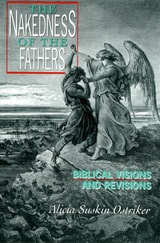
The Nakedness of the Fathers
Biblical Visions and RevisionsOstriker, Alicia Suskin
Rutgers University Press, 1997
In her introduction, "Entering the Tents, " Ostriker defines the need to struggle against a tradition in which women have been silenced and disempowered - and to recover the female power buried beneath the surface of the biblical texts. In "The Garden, " she reinterprets the mythically complex stories of Creation. Then she considers the stories of "The Fathers, " from Abraham and Isaac to Moses, David, and Solomon - and their wives, mothers, and sisters. In "The Return of the Mothers, " she begins with a radical new interpretation of the book of Esther, includes a meditation on the silenced wife of Job and the idea of justice, and concludes with a fable on the death of God and a prayer to the Shekhinah, the feminine aspect of God. Ostriker refuses to dismiss the Bible as meaningless to women. Instead, in this angry, eloquent, visionary book, she attempts to recover what is genuinely sacred in these sacred texts.
The Old Greek of Isaiah
An Analysis of Its Pluses and MinusesMirjam van der Vorm-Croughs
SBL Press, 2014
A concise study of a large number of examples of pluses and minus providing insight into translation from Hebrew to Greek
Van der Vorm-Croughs focuses this translation study on the processes leading to pluses and minuses including linguistic and stylistic aspects (i.e., cases in which elements have been added or omitted for the sake of a proper use of the Greek language), literary aspects (additions and omissions meant to embellish the Greek text), translation technical aspects (e.g., the avoidance of redundancy), and contextual and intertextual exegesis and harmonization. This work also covers the relation between the Greek Isaiah and its possible Hebrew Vorlage to try to determine which pluses and minuses may have been the result of the translator’s use of a different Hebrew text.
Features:
- Eleven categories for the pluses and minuses of the Greek Isaiah
- Examination of translation techniques and translator errors
- Use of Joseph Ziegler’s critical edition
The Old Testament and Christian Spirituality
Theoretical and Practical Essays from a South African PChristo Lombaard
SBL Press, 2012
An engaging anthology that deals with both theory and practice
The emerging discipline of biblical spirituality considers how faith finds expression within the biblical texts and how modern expressions of faith interact with those texts. This volume represents Christo Lombaard’s reflective, analytical, and exegetical contributions to the field in order to explore how biblical texts mediate faith, both ancient and contemporary. It reflects on aspects of the interaction of faith and Scripture, critically approaching both dimensions.
Features:
- Seven previously published papers drawn predominately from South African journals
- Explorations of how biblical texts mediate faith
- Close examination of the discipline of biblical spirituality as part of spirituality studies
The Old Testament for Latter-day Saints
Douglas, Alex
Signature Books, 2023
This book also explores the intriguing ways in which Latter-day Saints have interpreted and engaged with this ancient text and the author navigates their diverse interpretations of it. He examines how individuals have alternately embraced the Old Testament as myth or history, law or legend, wise counsel or sacred scripture. He shows where many traditional interpretations have come from, and offers many ways to encourage a more nuanced understanding of the text.
Drawing from a wealth of scholarly research and his own unique perspective, Douglas presents a compelling and multidimensional analysis of the Old Testament. However readers approach the text, this book sheds light on the complex nature of the Old Testament and its enduring relevance to the Latter-day Saint tradition.
The People beside Paul
The Philippian Assembly and History from BelowJoseph A. Marchal
SBL Press, 2015
Who are the people beside Paul, and what can we know about them?
This volume brings together an international and interdisciplinary group of scholars with a broad range of expertise and a common interest: Philippi in antiquity. Each essay engages one set of contextual particularities for Paul and the ordinary people of the Philippian assembly, while simultaneously placing them in wider settings. This 'people's history' uses both traditional and more cutting-edge methods to reconsider archaeology and architecture, economy and ethnicity, prisons and priestesses, slavery, syncretism, stereotypes of Jews, the colony of Philippi, and a range of communities. The contributors are Valerie Abrahamsen, Richard S. Ascough, Robert L. Brawley, Noelle Damico, Richard A. Horsley, Joseph A. Marchal, Mark D. Nanos, Peter Oakes, Gerardo Reyes Chavez, Angela Standhartinger, Eduard Verhoef, and Antoinette Clark Wire.
Features
- An examination of the social forms and forces that shaped and affected the Philippian church
- Essays offer insight into standard questions about the letter s hymn and audience, Paul's 'opponents,' and the sites of the community and of Paul's imprisonment
- A focused exploration of more marginalized topics and groups, including women, slaves, Jews, and members of localized cults
The Philistines and Other Sea Peoples in Text and Archaeology
Ann E. Killebrew
SBL Press, 2013
The Philo of Alexandria Scripture Index
Sean A. Adams
SBL Press, 2023
The Philo of Alexandria Scripture Index identifies and lists every instance in which Philo of Alexandria cites or alludes to passages from Jewish Scripture. With 7,831 references, this book is the most comprehensive study of its kind to date. Unlike other volumes with a single index of Philo’s citations and allusions organized by biblical book, this volume includes a second index that follows Philo’s treatise order. This second format allows students and scholars easily to examine Philo’s engagement with Scripture in individual treatises and to interrogate how Philo collected and grouped intertexts. In addition to the indices, Sean A. Adams and Zanne Domoney-Lyttle provide an introduction to their methodology and their selection of texts, including Philo’s fragmentary works and those that survive only in the Armenian tradition.
The Politics of Pessimism in Ecclesiastes
A Social-Science PerspectiveMark R. Sneed
SBL Press, 2012
The Politics of Revelation in the English Renaissance
Ester Gilman Richey
University of Missouri Press, 1998
Recognizing that the seventeenth century's volatile debate over apocalyptic interpretation has since become a one-sided discussion, Esther Gilman Richey develops a context that recovers the dynamism so inherent in the writings of the period and provides illuminating details that enhance the prophetic continuum. The Politics of Revelation in the English Renaissance does not ignore the familiar prophetic verse of Spenser and Milton, but it significantly expands the scope of study by examining the interpretations of both men and women who represent a range of ecclesiastical and political perspectives.
Richey rejects Barbara Lewalski's claim that the radical, prophetic writers and metaphysical poets of the seventeenth century drew inspiration from distinct biblical models, the former from the Apocalypse and the latter from the Psalms. Instead she contends that even writers such as Donne and Herbert, whom we have long considered "literary," were in reality using their poetry to participate in the hottest debates of the time.
While the radical writers, such as Spenser and Milton, were immediately responsive to ecclesiastical and political controversies, the conservative, metaphysical poets—Donne, Herbert, and Vaughan—were posing equally politically charged questions: Is the pope Antichrist? Is the Bride of Christ pure? Is the Temple a model of ecclesiastical reform? The writers of the period did not move in divided and distinguished worlds, but in fact constantly responded to one another through poetic and politically charged dialogue.
By drawing from the writings of various individuals, both radical and conformist, male and female, Richey traces the shifting representations of the apocalyptic Bride and Temple over time. Organized chronologically, the chapters of The Politics of Revelation in the English Renaissance reveal the escalating debate among the pacifists, conformists, militants, and feminists. Not only does Richey uncover the prophetic dimension of conformist writers usually described as apolitical and devotional, but she also explores the writings of lesser-known women prophets: Aemilia Lanyer, Mary Cary, Anna Trapnel, and Margaret Fell. In such biblical passages as the apocalyptic "woman clothed with the sun," these early feminists find the authority for their own prophetic speech.
This provocative analysis—at once far-reaching and tightly focused—reveals the complexity of the apocalyptic discourse that transpired among Renaissance writers and poets.
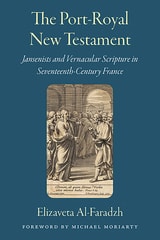
The Port Royal New Testament
Jansenists and Vernacular Scripture in Seventeenth-Century FranceElizaveta Al-Faradzh
Catholic University of America Press, 2026
The Prophets Speak on Forced Migration
Mark J. Boda
SBL Press, 2015
A valuable resource with productive avenues for inquiry
In this collection of essays dealing with the prophetic material in the Hebrew Bible, scholars explore the motifs, effects, and role of forced migration on prophetic literature. Contributors focus on the study of geographical displacement, social identity ethics, trauma studies, theological diversification, hermeneutical strategies in relation to the memory, and the effects of various exilic conditions in order to open new avenues of study into the history of Israelite religion and early Judaism.
Features:
- An introductory essay that presents a history of scholarship and an overview of the collection
- Ten essays examining the rhetoric of exile in the prophets
- Current, thorough approaches to the issues and problems related to historical and cultural features of exile in biblical literature
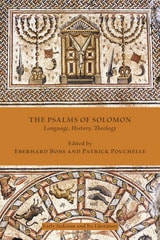
The Psalms of Solomon
Language, History, TheologyEberhard Bons
SBL Press, 2015
A fresh analysis of that sheds new light on the Psalms of Solomon
Researchers whose work focuses on the Psalms of Solomon, experts on the Septuagint, and scholars of Jewish Hellenistic literature take a fresh look at debates surrounding the text. Authors engage linguistic, historical, and theological issues including the original language of the psalms, their historical setting, and their theological intentions with the goal of expanding our understanding of first-century BCE Jewish theology.
Features:
- New methods applied to open questions of authorship and historical context
- Focusd scholarly attention on a work of theological and literary importance
- Revised essays originally presented at the First International Meeting on the Psalms of Solomon
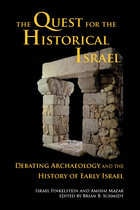
The Quest for the Historical Israel
Debating Archaeology and the History of Early IsraelIsrael Finkelstein
SBL Press, 2007
The Questions on the Octateuch, Volume 1
John F. Theodoret of Cyrus
Catholic University of America Press, 2007
The Questions on the Octateuch, Volume 2
John F. Theodoret of Cyrus
Catholic University of America Press, 2007
The Revelation of Your Words
The New Evangelization and the Role of the Seminary Professor of Sacred ScriptureKevin Zilverberg
Saint Paul Seminary Press, 2021
The Rhetoric of Abraham's Faith in Romans 4
Andrew Kimseng Tan
SBL Press, 2018
Explore Romans 4 from a sociorhetorical perspective
Andrew Kimseng Tan examines Romans using sociorhetorical interpretation to determine how Paul attempted to alleviate dissension between Judean (or “Jewish”) and non-Judean (or “gentile”) Christians. Through his analysis of Paul’s rhetoric, Tan reveals that Paul used Abraham’s faith in Genesis to demonstrate that the both groups were equally children and heirs of Abraham whose acceptance by God was through the same kind of faith that Abraham possessed, not through the Mosaic law, which Judean Christians claimed gave them a special honored status with God.
Features
- A model for the application of sociorhetorical interpretation for analyzing close readings of biblical texts
- A demonstration of the persuasive power of Romans 4 through the use of sociorhetorical interpretation
- Exploration of the relationships between important theological topics such as resurrection, the Mosaic law, the Holy Spirit, righteousness, ethical living, and eschatological salvation
The SBL Commentary on the Septuagint
An IntroductionDirk Büchner
SBL Press, 2017
Explore the groundwork for a new commentary series from SBL Press
This book contains verse by verse commentary on selections from the Greek text of the Hebrew Bible known as the Septuagint. Each chapter is from a different bible book, for which there will eventually be a full commentary published in the Society of Biblical Literature Commentary on the Septuagint. The commentary series focuses on the actual process of translation, so its authors try to describe and explain the kinds of decisions the ancient Alexandrian translators made about how to render Hebrew into Greek.
Features
- Translations from and commentary on Genesis, Exodus, Leviticus, Numbers, Esther, Job, and Psalms Contributions from eight experts on the Septuagint
- Guidelines and procedures used in the production of the translations in the series
The SBL Handbook of Style
SBL Press, 2014
The definitive source for how to write and publish in the field of biblical studies
The long-awaited second edition of the essential style manual for writing and publishing in biblical studies and related fields includes key style changes, updated and expanded abbreviation and spelling-sample lists, a list of archaeological site names, material on qur’anic sources, detailed information on citing electronic sources, and expanded guidelines for the transliteration and transcription of seventeen ancient languages.
Features:
- Expanded lists of abbreviations for use in ancient Near Eastern, biblical, and early Christian studies
- Information for transliterating seventeen ancient languages
- Exhaustive examples for citing print and electronic sources
The Sacred Encounter
Jewish Perspectives on SexualityRabbi Lisa Grushcow, Dphil
Central Conference of American Rabbis, 2014
This wide-ranging anthology takes a close look at the breadth of human sexuality from a Jewish perspective. The essays begin with a look at biblical and rabbinic views on sexuality and then proceed to explorations of sexuality at different moments in the life cycle, sexuality and the marital model, diverse expressions of sexuality, examples of sexuality education, the nexus of sexuality and theology, and the challenges of contemporary sexual ethics. The Sacred Encounter is a thought-provoking and important Jewish resource. Perfect for personal study or for high school or adult classes.
The Samaritan Pentateuch
An Introduction to Its Origin, History, and Significance for Biblical StudiRobert T. Anderson
SBL Press, 2012
The Scribes of the Torah
The Formation of the Pentateuch in Its Literary and Historical ContextsKonrad Schmid
SBL Press, 2023
A revised view of the Pentateuch with consequences for the broader literary history of the Bible
This collection of thirty-one studies on the Pentateuch represents more than twenty years of Konrad Schmid’s research and publications advocating for a new view of the Pentateuch’s formation. Schmid’s essays present the case for a Persian period Priestly document that provided a basic narrative thread to the Torah, which included separate, pre-Priestly components of narratives in Genesis and the Moses story. Schmid’s open discussion includes evidence from various fields, such as literary history, comparative cultural history, historical linguistics, epigraphy, and archaeology. The essays are divided into eight sections usefully structured around the themes of the Pentateuch in the Enneateuch, the history of scholarship, the formation of the Torah, Genesis, the Moses story, the Priestly document, legal texts, and the Pentateuch in the history of ancient Israel’s religion.
The Second Conversation
Interpretive Authority in the Bible ClassroomZiva R. Hassenfeld
Brandeis University Press, 2024
In The Second Conversation, university professor Ziva R. Hassenfeld returns to the middle school classroom to study her own seventh grade Bible class. The book explores dilemmas of practice she encountered around interpretive authority in the classroom. She analyzes the questions that came up in her teaching within the context of the most influential religious education scholarship, literacy scholarship, sociocultural theory and literary theory. She highlights the importance of two conversations about interpretive rules within the classroom, the first about the text’s meaning, and the second about competing conventions for determining its meaning. Instructors of any type of literature will benefit from Hassenfeld’s study, which offers rich ideas about when and how teachers enforce a classroom’s way of reading or follow a student’s line of inquiry toward more flexible interpretation.
The Shape and Shaping of the Book of Psalms
The Current State of ScholarshipNancy L. deClaissé-Walford
SBL Press, 2014
A new and innovative way to approach the Psalter that moves beyond form and cult-functional criticism
Drawing inspiration from Gerald H. Wilson’s The Editing of the Hebrew Psalter, this volume explores questions of the formation of the Psalter from the perspective of canonical criticism. Though called “canonical criticism,” the study actually employs a number of historically traditional and nontraditional approaches to reading the text including form criticism, historical criticism of individual psalms as well as of the whole Psalter, and redaction criticism.
Features:
- Exploration of collections of psalms, theological viewpoints, sovereignty, and the shape and shaping of Psalms
- Examination of the impact of canonical criticism on the study of the Psalter
- Sixteen essays from the Book of Psalms Consultation group and invited scholars
The Social Groups behind the Pentateuch
Jaeyoung Jeon
SBL Press, 2021
A reexamination of the Pentateuch in light of the complex social, religious, and political conflicts of the Persian period
During the last several decades, scholars in pentateuchal studies have suggested new compositional models to replace the Documentary Hypothesis, yet no consensus has emerged. The ten essays in this collection advance the discussion by shifting the focus of pentateuchal studies from the literary stratification of different layers of the texts to the social, economic, religious, and political agendas behind them. Rather than limiting the focus of their studies to scribal and community groups within Persian Yehud, contributors look beyond Yehud to other Judahite communities in the diaspora, including Elephantine and the Samaritan community, establishing a proper academic context for setting the diverse voices of the Pentateuch as we now understand them. Contributors include Olivier Artus, Thomas B. Dozeman, Innocent Himbaza, Jürg Hutzli, Jaeyoung Jeon, Itamar Kislev, Ndikho Mtshiselwa, Dany Noquet, Katharina Pyschny, Thomas Römer, and Konrad Schmid.
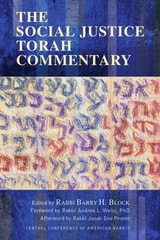
The Social Justice Torah Commentary
Rabbi Barry H. Block
Central Conference of American Rabbis, 2021
What does the Torah have to say about social justice? As the contributors to The Social Justice Torah Commentary demonstrate, a great deal. A diverse array of authors delve deeply into each week's parashah, drawing lessons to inspire tikkun olam. Chapters address key contemporary issues such as racism, climate change, mass incarceration, immigration, disability, women's rights, voting rights, and many more. The result is an indispensable resource for weekly Torah study and for anyone committed to repairing the world.
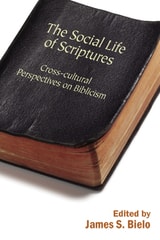
The Social Life of Scriptures
Cross-Cultural Perspectives on BiblicismEdited and with an introduction by James S. Bielo
Rutgers University Press, 2009
Contributors offer a collection of closely analyzed and carefully conducted ethnographic and historical case studies, covering a range of geographic, theological, and cultural territory, including: American evangelicals and charismatics; Jamaican Rastafarians; evangelical and Catholic Mayans; Northern Irish charismatics; Nigerian Anglicans; and Chinese evangelicals in the United States.
The Social Life of Scriptures is the first book to present an eclectic, cross-cultural, and comparative investigation of Bible use. Moreover, it models an important movement to outline a framework for how scriptures are implicated in organizing social structures and meanings, with specific foci on gender, ethnicity, agency, and power.
The Song of Songs and the Ancient Egyptian Love Songs
Michael V. Fox
University of Wisconsin Press, 1985
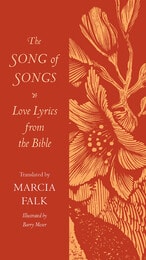
The Song of Songs
Love Lyrics from the BibleMarcia Falk
Brandeis University Press, 2004
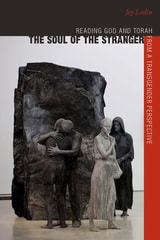
The Soul of the Stranger
Reading God and Torah from a Transgender PerspectiveJoy Ladin
Brandeis University Press, 2018
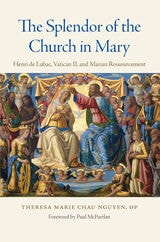
The Splendor of the Church in Mary
Henri de Lubac, Vatican II, and Marian RessourcementTheresa Marie Chau Nguyen
Catholic University of America Press, 2023
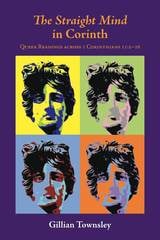
The Straight Mind in Corinth
Queer Readings across 1 Corinthians 11:2-16Gillian Townsley
SBL Press, 2017
A new reading that troubles and transgresses the normal with regard to biblical studies and our understandings of gender and sexuality
Despite its lack of both historical and exegetical clarity, 1 Corinthians 11:2-16 has often been fundamental to understandings of gender and sexuality in many Christian traditions. In particular, a hierarchical model of gender and a heterosexual model of sexuality tend to dominate and are presented as “natural” and “God-ordained.” With the materialist lesbian theory of Monique Wittig providing the theoretical basis for discussion, this book intersects various biblical, theological, and queer lines of inquiry across 1 Corinthians 11:2-16 in order to reveal and challenge these models of gender and sexuality that lie behind both the text itself and its various interpretations.
Features
- Reveals the complex relationship between effeminacy, masculinity and sexual relations in the first century Greco-Roman environment of the New Testament
- Explores the ideologies of sexuality that underlie much of the debate within evangelical circles
- Examines Karl Barth’s theology on the binary pairing of “man and woman” as asymmetrically related to each other and to God through the notion of the imago dei, revealing and challenging the ways in which this reflects androcentric and patriarchal ideologies
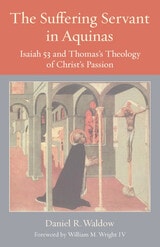
The Suffering Servant in Aquinas
Isaiah 53 and Thomas's Theology of Christ's PassionDaniel R. Waldow
Catholic University of America Press, 2024
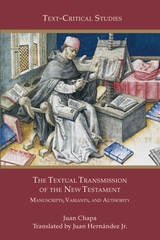
The Textual Transmission of the New Testament
Manuscripts, Variants, and AuthorityJuan Chapa
SBL Press, 2025
Juan Chapa offers nuanced discussions of many topics that currently occupy the field of textual criticism, including debates over the dating of New Testament papyri, the preference for the codex, the liturgical use of texts, the presence of nomina sacra, textual variants, the establishment of the New Testament text, problems with the term original, and the challenge of textual fluidity. His unique approach illustrates how a Catholic perspective, the rule of faith, and the Latin textual tradition can inform our understanding of the origin, preservation, and authority of the New Testament text. Chapa’s work contributes a distinctively Catholic voice to the largely Protestant chorus that has dominated the field, thus filling a lacuna in contemporary text-critical conversations.
The Time Has Grown Short
René Girard, or the Last LawBenoît Chantre
Michigan State University Press, 2022

The Transcendent Mystery of God's Word
A Critical Synthesis of Antioch and AlexandriaJohn W. Martens
Saint Paul Seminary Press, 2024
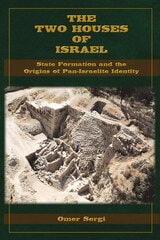
The Two Houses of Israel
State Formation and the Origins of Pan-Israelite IdentityOmer Sergi
SBL Press, 2023
The Two Houses of Israel: State Formation and the Origins of Pan-Israelite Identity bridges the gap between the biblical narrative of the great united monarchy ruled by David and Solomon and archaeological and historical reconstructions of a gradual, independent formation of Israel and Judah. Based on a thorough examination of the material remains and settlement patterns in the southern Levant during the Late Bronze Age and the Iron Age and on a review of the relevant historical sources, this book provides a detailed reconstruction of the ways in which Israel and Judah were formed as territorial polities and specifically how the house of David rose to power in Jerusalem and Judah. Omer Sergi further situates the stories of Saul and David in their accurate social and historical context in order to illuminate the historical conception of the united monarchy and the pan-Israelite ideology out of which it grew. Sergi provides a new history of the early Israelite monarchies, their formation, and the ways in which these social and political developments were commemorated in the cultural memory of generations to come.
The Use of the Old Testament in the New and other essays
studies in honor of William Franklin StinespringJames M. Efird
Duke University Press, 1972
The Vision of the Priestly Narrative
Its Genre and Hermeneutics of TimeSuzanne Boorer
SBL Press, 2016
A fresh look at the Priestly narrative that places less weight on linguistic criteria alone in favor of narrative coherence
Boorer explores the theology of an originally independent Priestly narrative (Pg), extending through Genesis–Numbers, as a whole. In this book she describes the structure of the Priestly narrative, in particular its coherent sequential and parallel patterns. Boorer argues that at every point in the narrative’s sequential and parallel structure, it reshapes past traditions, synthesizing these with contemporary and unique elements into future visions, in a way that is akin to the timelessness of liturgical texts. The book sheds new light on what this material might have sought to accomplish as a whole, and how it might have functioned for, its original audience.
- Solid arguments based on genre and themes, with regard to a once separate Priestly narrative (Pg) that concludes in Numbers 27*
- Thorough discussion of the overall interpretation of the Priestly narrative (Pg), by bringing together consideration of its structure and genre
- Clear illustration of how understanding the genre of the material and its hermeneutics of time is vital for interpreting Pg as a whole