Results by title
5550 books match the query 'Biography & Autobiography' and 1006 start with t
Terrence Malick
Lloyd Michaels
University of Illinois Press, 2008
For a director who has made a limited number of feature films over four-plus decades, Terrence Malick sustains an extraordinary reputation as one of America’s most original and independent directors. Lloyd Michaels analyzes Malick’s first four features in depth, emphasizing both repetitive formal techniques such as voiceover and long lens cinematography as well as recurrent themes drawn from the director’s academic training in modern philosophy. Like Heidegger, Malick seems to regard the human experience of nature as a mystery revealed primarily through moods rather than cognition. Like Wittgenstein, he is less concerned with apprehending the world than with simply acknowledging its beingness
Michaels's critical approach explores Malick’s synthesis of the romance of mythic American experience and the aesthetics of European art film. He pays particular attention to paradigmatic moments: the billboard sequence in Badlands, the opening credits for Days of Heaven, the philosophical colloquies between Witt and Welsh in The Thin Red Line, and the epilogue of The New World. Michaels also sheds light on the two dark decades separating Days of Heaven from The Thin Red Line, when the director mostly lived as an expatriate in Paris. Two 1975 interviews with the famously elusive Malick round out the volume.
Terror in Minnie Vautrin's Nanjing
Diaries and Correspondence, 1937-38Minnie Vautrin. Edited and with an Introduction by Suping Lu
University of Illinois Press, 2007
In December of 1937, the Japanese Imperial Army marched into China's capital city of Nanjing and launched six weeks of carnage that would become known as the Rape of Nanjing. In addition to the deaths of Chinese POWs and civilians, tens of thousands of women were raped, tortured, and killed by Japanese soldiers. In this traumatic environment, both native and foreign-born inhabitants of Nanjing struggled to carry on with their lives.
This volume collects the diaries and correspondence of Minnie Vautrin, a farmgirl from Illinois who had dedicated herself to the education of Chinese women at Ginling College in Nanjing. Faced with the impending Japanese attack, she turned the school into a sanctuary for ten thousand women and girls. Vautrin's firsthand accounts of daily life in Nanjing and the intensifying threat of Japanese invasion reveal the courage of the occupants under siege--Chinese nationals as well as Western missionaries, teachers, surgeons and business people--and the personal costs of violence in wartime.
Thanks to Vautrin's painstaking effort in keeping a day-to-day account, present-day readers are able to examine this episode of history at close range through her eyes. With detailed maps, photographs, and carefully researched in-depth annotations, Terror in Minnie Vautrin's Nanjing: Diaries and Correspondence, 1937-38 presents a comprehensive and detailed daily account of the events and of life during the horror-stricken days within the city walls and in particular on the Ginling campus. Through chronologically arranged diaries, letters, reports, documents, and telegrams, Vautrin bears witness to those terrible events and to the magnitude of trauma that the Nanjing Massacre exacted on the populace.
Terry Sanford
Politics, Progress, and Outrageous AmbitionsHoward E. Covington Jr. and Marion A. Ellis
Duke University Press, 1999
After defeating a segregationist campaign in 1960 to win the governorship, Sanford used his years in office to boost public education and advance race relations. A decade later, at the height of tumult on American campuses, Sanford assumed the presidency of Duke University and led it to its position as one of the top universities in the nation. During his more than fifty years as a public servant he was associated with presidents John F. Kennedy, Lyndon B. Johnson, Richard Nixon, and Jimmy Carter. Sanford was a presidential candidate himself in 1972 and 1976, and he won election to the United States Senate in 1986 where his international commission produced an economic recovery plan for Central America. As one of the last New Deal Democrats in the Senate, he remained passionate about the opportunity for leaders to use government to improve people’s lives.
Terry Sanford draws on Sanford’s considerable private and public archive as well as on the recollections of Sanford himself and his family, colleagues, and friends. This biography offers a unique perspective on North Carolina life, politics, political personalities, and the shifting public allegiances of the second half of the twentieth century that transformed life both in North Carolina and throughout the American South.
Testing Education
A Teacher's MemoirKathy Greeley
University of Massachusetts Press, 2024
Since the 2002 implementation of No Child Left Behind, the American public education system has been fundamentally changed. Excessive testing, standardized curriculums, destructive demands on children, corporate-style evaluations, and top-down mandates have become the norm. In response, record numbers of demoralized educators have quit, and millions of students have been left educationally impoverished. This troubling transformation has been exhaustively critiqued by scholars and commentators. Yet one crucial voice has been missing, until now.
In Testing Education, Kathy Greeley recounts the impact of education reform from a teacher’s point of view. Based on a teaching career spanning nearly forty years, Greeley details how schools went from learning communities infused with excitement, intellectual stimulation, and joy to sterile spaces of stress, intimidation, and fear. In this ultimately hopeful memoir, Greeley asks us to learn from the past to reimagine the future of public education.
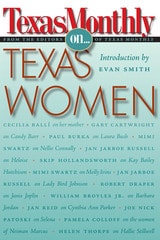
Texas Monthly On . . .
Texas WomenFrom the editors of Texas Monthly
University of Texas Press, 2006
Since 1973, Texas Monthly has spotlighted hundreds of Texans who, for better or worse, make this state like no place else. TEXAS MONTHLY On . . . Texas Women profiles thirteen women who are not only fascinating in their own right, but also representative of the legions of women who have contributed to the character and uniqueness of Texas. They range from First Ladies Laura Bush and Lady Bird Johnson to pop culture icons such as Candy Barr and Janis Joplin—and all of them exemplify the qualities that make Texas women distinctive. The women's profiles originally appeared as articles in the magazine, authored by some of Texas Monthly's notable writers—Cecilia Ballí, Gary Cartwright, Paul Burka, Mimi Swartz, Jan Jarboe Russell, Skip Hollandsworth, Robert Draper, William Broyles Jr., Jan Reid, Joe Nick Patoski, Pamela Colloff, and Helen Thorpe. The writers also introduce their pieces with headnotes that update the stories or, in some cases, tell the story behind the story.
TEXAS MONTHLY On . . . Texas Women is the first in a series of books in which the editors of Texas Monthly will offer the magazine's inimitable perspective on various aspects of Texas culture, including food, politics, travel, and music, among other topics.
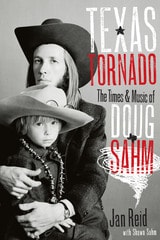
Texas Tornado
The Times and Music of Doug SahmBy Jan Reid, with Shawn Sahm
University of Texas Press, 2010
Doug Sahm was a singer, songwriter, and guitarist of legendary range and reputation. The first American musician to capitalize on the 1960s British invasion, Sahm vaulted to international fame leading a faux-British band called the Sir Douglas Quintet, whose hits included "She's About a Mover," "The Rains Came," and "Mendocino." He made the cover of Rolling Stone magazine in 1968 and 1971 and performed with the Grateful Dead, Dr. John, Willie Nelson, Boz Scaggs, and Bob Dylan.
Texas Tornado is the first biography of this national music legend. Jan Reid traces the whole arc of Sahm's incredibly versatile musical career, as well as the manic energy that drove his sometimes turbulent personal life and loves. Reid follows Sahm from his youth in San Antonio as a prodigy steel guitar player through his breakout success with the Sir Douglas Quintet and his move to California, where, with an inventive take on blues, rock, country, and jazz, he became a star in San Francisco and invented the "cosmic cowboy" vogue. Reid also chronicles Sahm's later return to Texas and to chart success with the Grammy Award–winning Texas Tornados, a rowdy "conjunto rock and roll band" that he modeled on the Beatles and which included Sir Douglas alum Augie Meyers and Tejano icons Freddy Fender and Flaco Jimenez.
With his exceptional talent and a career that bridged five decades, Doug Sahm was a rock and roll innovator whose influence can only be matched among his fellow Texas musicians by Buddy Holly, Roy Orbison, Janis Joplin, and Stevie Ray Vaughan. Texas Tornado vividly captures the energy and intensity of this musician whose life burned out too soon, but whose music continues to rock.
Thabo Mbeki
Adekeye Adebajo
Ohio University Press, 2017
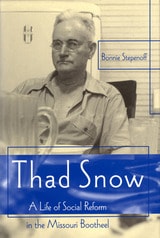
Thad Snow
A Life of Social Reform in the Missouri BootheelBonnie Stepenoff
University of Missouri Press, 2003
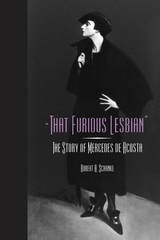
That Furious Lesbian
The Story of Mercedes de AcostaRobert A. Schanke
Southern Illinois University Press, 2004
In this first book-length biography of Mercedes de Acosta, theatre historian Robert A. Schanke adroitly mines lost archival materials and mixes in his own interviews with de Acosta’s intimates to correct established myths and at last construct an accurate, detailed, and vibrant portrait of the flamboyantly uninhibited early-twentieth-century author, poet, and playwright.
Born to wealthy Spanish immigrants, Mercedes de Acosta (1893–1968) lived in opulence and traveled in the same social circles as the Astors and Vanderbilts. Introduced to the New York theater scene at an early age, her dual loves of performance and of women informed every aspect of her life thereafter. Alice B. Toklas’s observation, “Say what you will about Mercedes, she’s had the most important women in the twentieth century,” was well justified, as her romantic conquests included such internationally renowned beauties as Greta Garbo, Marlene Dietrich, Isadora Duncan, and Eva Le Gallienne as well as Alla Nazimova, Tamara Karsavina, Pola Negri, and Ona Munson.
More than a record of her personal life and infamous romances, this account offers the first analysis of the complete oeuvre of de Acosta’s literary works, including three volumes of poetry, two novels, two film scripts, and a dozen plays. Although only two of her plays were ever published during her lifetime, four of them were produced, featuring such stage luminaries as John Gielgud, Ralph Richardson, and Eva Le Gallienne. Critics praised her first volume of poetry, Moods, in 1919 and predicted her rise to literary fame, but the love of other women that fueled her writing also limited her opportunities to fulfill this destiny. Failing to achieve any lasting fame, she died in relative poverty at the age of seventy-five.
De Acosta lived her desires publicly with verve and vigor at a time when few others would dare, and for that, she paid the price of marginalized obscurity. Until now. With “That Furious Lesbian” Schanke at last establishes Mercedes de Acosta’s rightful place as a pioneer—and indeed a champion—in the early struggle for lesbian rights in this country.
Robert A. Schanke has edited a companion to this biography, Women in Turmoil: Six Plays by Mercedes de Acosta,also available from Southern Illinois University Press.
That Self-Forgetful Perfectly Useless Concentration
Alan Shapiro
University of Chicago Press, 2016
In this book, Shapiro brings his characteristic warmth, humor, and many years as both poet and teacher to bear on questions surrounding two preoccupations: the role of conventions—of literary and social norms—in how we fashion our identities on and off the page, and how suffering both requires and resists self-expression. He sketches affectionate portraits of his early teachers, revisits the deaths of his brother and sister, and examines poems that have helped him navigate troubled times. Integrating storytelling and literary analysis so seamlessly that art and life become extensions of each other, Shapiro embodies in his lively prose the very qualities he celebrates in the poems he loves.
Brimming with wit and insight, this is a book for poets, students and scholars of poetry, teachers of literature, and everyone who cares about the literary arts and how they illuminate our personal and public lives.
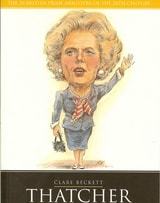
Thatcher
Clare Beckett
Haus Publishing, 2006
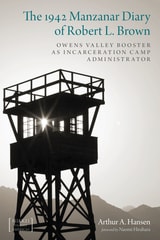
The 1942 Manzanar Diary of Robert L. Brown
Owens Valley Booster as Incarceration Camp AdministratorArthur A. Hansen
University Press of Colorado, 2026
This transcribed and edited wartime diary of Robert L. Brown—a trained journalist who served as public relations staff and assistant director at the Manzanar concentration camp—reveals the thoughts and perspective of the jailer, providing a window into the views of the local population around the presence and experience of a concentration camp for Japanese Americans in their community. In addition to the heavily footnoted diary, the book includes a prologue, introduction, and epilogue from Arthur A. Hansen, providing context for the journal as well as how Hansen came to transcribe the work with Brown’s blessing.
A departure from the typical recovered narratives from incarcerees, Brown’s diary is a historically significant primary source that provides insight into camp administration and local community relationships with Manzanar and a rich primary source for specialists in the field of Japanese American incarceration.
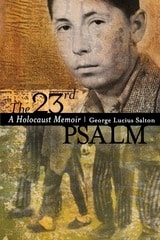
The 23rd Psalm
A Holocaust MemoirGeorge Lucius Salton, with Anna Salton Eisen
University of Wisconsin Press, 2004
The ABC of Modern Biography
Nigel Hamilton
Amsterdam University Press, 2018
The ABC of Modern Biography
Nigel Hamilton
Amsterdam University Press, 2018
This book will fascinate general readers interested in how real lives are approached by biographers today in a multitude of media. It will make a much-needed contribution in academia, as well as providing an important text for students of history, language and literature, the arts, science and media. And, not least, for biographers trying to avoid the pitfalls of ignorance or ineptitude.
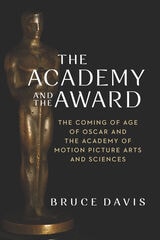
The Academy and the Award
The Coming of Age of Oscar and the Academy of Motion Picture Arts and SciencesBruce Davis
Brandeis University Press, 2026
For all the near-fanatic attention brought each year to the Academy Awards, the organization that dispenses those awards—the Academy of Motion Picture Arts and Sciences—has yet to be understood. To date, no one has ever produced a thorough account of the Academy’s birth and its awkward adolescence, and the few reports on those periods from outside the organization have always had a glancing, cursory quality. Yet the story of the Academy’s creation and development is a critical piece of Hollywood’s history.
Now that story is finally being told. Bruce Davis, executive director of the Academy for over twenty years, was given unprecedented access to its archives, and the result is a revealing and compelling story of the men and women, famous and infamous, who shaped one of the best-known organizations in the world. Davis writes about the Academy with an intimate view of its workings, its awards, and its world-famous membership. Thorough and long overdue, The Academy and the Award fills a crucial gap in Hollywood history. Available now for the first time in paperback.

The Accidental Network
How a Small Company Sparked a Global Broadband TransformationRouzbeh Yassini-Fard
West Virginia University Press, 2025
The Accidental Network shares the untold story of the invention of the cable modem by the small, struggling tech company LANcity in the early 1990s, illustrating how Yassini-Fard overcame a cascade of technical challenges, investment community naysayers, and unnerving business obstacles to create the cable modem technology that has changed the way billions of individuals across the globe now manage their daily lives and commerce. The cable modem delivered broadband, with speeds ranging from 10 megabits per second (Mbps) to 10 gigabits per second (Gbps)—a big leap from the dial-up speeds of 56 kilobits per second (Kbps). This platform, along with the adoption of the DOCSIS (Data Over Cable Service Interface Specification) standard, engendered the modern revolution in broadband Internet access. Shunned by venture capitalists and surviving on a shoestring budget, Yassini-Fard and his colleagues were willing to bet it all (including the deed for Yassini-Fard’s home) on the creation of the cable modem and the pursuit of global adoption.
The Accidental Network is both a valuable history of technology innovation and an engrossing account of business conducted at high speed. The book details Yassini-Fard’s journey from electrical engineer to entrepreneur in the race to secure technology partners, create a wholly new marketplace, and convince cable industry executives that a bold business awaited in transmitting data to households at a time when skepticism about the reach of personal computing was the norm.
Written from the lens of a devoted idealist and WVU alum known as “the father of the cable modem,” this book reveals how a perfect storm of forces—the rise of cable television, the onset of the personal computing era, a growing awareness of the Internet for information and commerce, and the development of the cable modem—converged to usher in the age of broadband access.
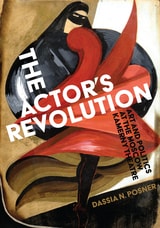
The Actor’s Revolution
Art and Politics at the Moscow Kamerny TheatreDassia N. Posner
Northwestern University Press, 2027
Reclaims the lost history of one of the twentieth century’s most innovative theaters
The Moscow Kamerny Theatre created stage worlds of movement, color, and light. Cofounded in 1914 by Alexander Tairov, a Jewish director from Ukraine, and Alisa Koonen, a Moscow-born actress from an immigrant family, the company celebrated the actor’s virtuosic inventiveness during an era when most theaters imitated daily life or prioritized the autocratic director’s vision. By the 1920s, it had become the most famous Soviet theater in the world, renowned for its actors’ acrobatic grace, its bold collaborations with avant-garde artists, and its revolutionary redefinition of what theater can be. But the accusations of Soviet disloyalty that were used to destroy the Kamerny during Stalin’s post–World War II antisemitic purge have rendered it little known outside Russia today and frequently misunderstood even there.
The Actor’s Revolution vividly reclaims this lost history by reconstructing the theater’s most illustrious premieres, analyzing them within the turbulent artistic and political context of the early Soviet era. Drawing on a decade of archival research, Dassia N. Posner restores Tairov’s legacy as one of history’s most significant directors and celebrates Koonen’s liberatory creative expressiveness as a vital alternative to Konstantin Stanislavsky’s better-known acting system. Building on rich archival sources, from unpublished memoirs to vibrant scenic and costume designs, this timely volume grapples with the entangled histories of art, politics, and erasure and celebrates the radical power of human creativity under—and in spite of—totalitarianism.
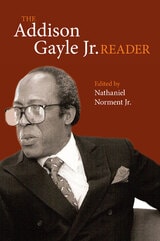
The Addison Gayle Jr. Reader
Edited by Nathaniel Norment Jr.
University of Illinois Press, 2008
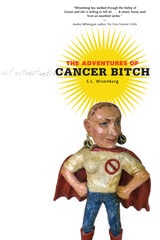
The Adventures of Cancer Bitch
S. L. Wisenberg
University of Iowa Press, 2009
Wisenberg’s writing has been compared to a mix of Leon Wieseltier and Fran Lebowitz, and in this book, she has Wieseltier’s erudition and Lebowitz’s self-deprecating cleverness: “If anybody ever offers you the choice between suffering and depression, take the suffering. And I don't mean physical suffering. I mean emotional suffering. I am hereby endorsing psychic suffering over depression.”
From The Adventures of Cancer Bitch:
I found that when you invite people to a pre-mastectomy party, they show up. Even those with small children. The kids were so young that they didn't notice that most of the food had nipples. . . . I talked to everyone—about what I'm not sure. Probably about my surgery. Everyone told me how well I looked. I felt giddy. I was going to go under, but not yet; I was going to be cut, but not yet; I was going to be bald, but not yet. As my friend who had bladder cancer says: The thing about cancer is you feel great until they start treating you for it.
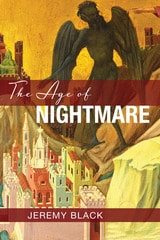
The Age of Nightmare
The Gothic and British Culture, 1750–1900Jeremy Black
St. Augustine's Press, 2022
Black's understanding of the Gothic writer is a remarkable contribution to the legacy of British literature and the novel at large. Once again, in Black thoroughness meets fidelity and the reader is overcome with his own insights into the period on the merit of Black's efforts.
In The Weight of Words Series, Black is devoted to the preservation of the memory of British literary genius, and in so doing he is carving out a niche for himself. As in the Gothic novel where landscapes give quarter to influences that seem to interact with the human fates that freely wander in, reading Black is an experience of suddenly finding oneself in possession of an education, and his allure takes a cue from the horrific Gothic tempt.
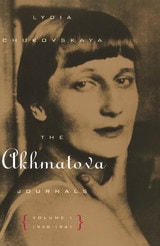
The Akhmatova Journals
Volume 1: 1938-1941Lydia Chukovskaya
Northwestern University Press, 2002
The Algerian Memoirs
Days of Hope and CombatHenri Alleg
Seagull Books, 2011
The personal history of journalist Henri Alleg is tied inextricably to the history of the French-Algerian Conflict. Best known for his book The Question, a first-hand account of his torture by French troops during the Algerian war for independence, Alleg is famous both for having brought the issue of French torture to the public eye and for his passionate work as a writer, a newspaperman, and a communist activist.
The Alphabet in My Hands
A Writing LifeAgosín, Marjorie
Rutgers University Press, 1999
Marjorie Agosín writes of a beloved childhood nanny: "Since I was Jewish she baptized me with holy water brought forth from the fonts of nearby churches. She told me to stay very still so I wouldn't sprout horns. . . . I was somewhere between taciturn and happy gazing into the mirror as if approaching the edge of a cliff . . . and I watched myself in the deep, transparent veil of this night of all nights." Many of the themes expressed in this vignette—cultural dissonance, family, and community—are poetically intertwined throughout The Alphabet in My Hands. Agosín takes us on a personal journey of discovery that is as much internal reflection as it is an exodus across continents and decades.
Agosín's childhood and early adolescence were spent with her Jewish family in Chile. While her family raised her to regard her Jewish heritage with loving awareness, they also participated in the dominant Catholic culture—an aunt organized Easter egg hunts and her mother admired the beauty of Chile's Catholic churches. The young Agosín became keenly aware of her dual identity in her country, both as a participant and an outsider.
The second half of The Alphabet in My Hands recounts the events that forced her family to emigrate to America: the overthrow of Salvador Allende by General Augusto Pinochet. Agosín writes of her new life in Athens, Georgia, of the sudden loss of all that was familiar. Ostracized as an emigrant—a "non-white" with a strange foreign accent—her high school years were made even more painful by the news from Chile: prisoners taken and classmates disappearing or shot.
Years later, Agosín goes back to Chile and she travels there with her own children. As she stares down at her old homeland from the plane, she writes: "Why do I love this place that forced us into exile, that punished my father for being a Jew?" And in the final chapter of The Alphabet in My Hands, this award-winning poet addresses two important topics: her current residence in New England and the central role of writing and literature in her life.
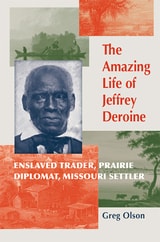
The Amazing Life of Jeffrey Deroine
Enslaved Trader, Prairie Diplomat, and Missouri SettlerGreg Olson
University of Missouri Press, 2026
Though scraps of his life are still present in the historical record, specifics have proven elusive. Still, it is important to tell Deroine’s life story, as it gives us a look both into the life of an enslaved man and the struggles of a free person of color in pre-Civil War Missouri. His life spanned a critical point in the history of the state, and he seems to have spent most of it at the very heart of the action.
Though not well known, the story of Jeffrey Deroine is significant because it illustrates the nuanced intersectionality of lives on the American frontier. Deroine was a man of both French and African descent who lived much of his life among Indigenous people. Born into slavery, he became a free person of color who was a businessman, owned property, and enslaved others. His life defied expectations and stereotypes, and a consideration of it allows us to better understand the history of Missouri and the West.

The American Short Story - American Writers 14
University of Minnesota Pamphlets on American WritersDanforth Ross
University of Minnesota Press, 1961
The American Short Story - American Writers 14 was first published in 1961. Minnesota Archive Editions uses digital technology to make long-unavailable books once again accessible, and are published unaltered from the original University of Minnesota Press editions.
The American Stravinsky
The Style and Aesthetics of Copland's New American Music, the Early Works, 1921-1938Gayle Murchison
University of Michigan Press, 2013
One of the country's most enduringly successful composers, Aaron Copland created a distinctively American style and aesthetic in works for a diversity of genres and mediums, including ballet, opera, and film. Also active as a critic, mentor, advocate, and concert organizer, he played a decisive role in the growth of serious music in the Americas in the twentieth century.
In The American Stravinsky, Gayle Murchison closely analyzes selected works to discern the specific compositional techniques Copland used, and to understand the degree to which they derived from European models, particularly the influence of Igor Stravinsky. Murchison examines how Copland both Americanized these models and made them his own, thereby finding his own compositional voice. Murchison also discusses Copland's aesthetics of music and his ideas about its purpose and social function.
The Angel in the Marketplace
Adwoman Jean Wade Rindlaub and the Selling of AmericaEllen Wayland-Smith
University of Chicago Press, 2020
The Angel in the Marketplace is the story of one of America’s most accomplished advertising executives. It is also the story of how advertisers like Rindlaub sold a postwar American dream of capitalism and a Christian corporate order. Rindlaub was responsible for award-winning, mega sales-generating advertisements for all things domestic, including Oneida silverware, Betty Crocker cake mix, Campbell’s soup, and Chiquita bananas. Her success largely came from embracing, rather than subverting, the cultural expectations of women. She believed her responsibility as an advertiser was not to spring women from their trap, but to make that trap more comfortable.
Rindlaub wasn’t just selling silverware and cakes; she was selling the virtues of free enterprise. By following the arc of Rindlaub’s career from the 1920s through the 1960s, we witness how a range of cultural narratives—advertising chief among them—worked powerfully to shape women’s emotional and economic behavior in support of the free market system. Alongside Rindlaub’s story, Ellen Wayland-Smith provides a riveting history of how women were repeatedly sold the idea that their role as housewives was more powerful, and more patriotic, than any outside the home. And by buying into the image of morality through an unregulated market, many of these women helped fuel backlash against economic regulation and socialization efforts throughout the twentieth century.
The Angel in the Marketplace is a nuanced portrayal of a complex woman, one who both shaped and reflected the complicated cultural, political, and religious forces defining femininity in America at mid-century. This compelling account of one of advertising’s most fervent believers is a tale of a Mad Woman we haven’t been told.
The Annotated Letters of Christopher Smart
Edited by Betty Rizzo and Robert Mahony
Southern Illinois University Press, 1991
The only collection of all known letters of Christopher Smart provides the best psychological explanation to date of that complex and elusive eighteenth-century poet.
The significant characteristics that distinguish Smart’s prose letters from his poetry, Betty Rizzo and Robert Mahony note, are that his letters were requests for assistance while his verses were bequests, gifts in which he set great store. Indeed, it was Smart’s lifelong conviction that he was a poet of major importance.
As Smart biographer Karina Williamson notes, "The splendidly informative and vivaciously written accounts of the circumstances surrounding each letter, or group of letters, add up to what is in effect a miniature biography."
The Apostle of Tennessee
The Indefatigable Life and Ministry of Father Aloysius OrengoJoe Pagetta
Vanderbilt University Press, 2026
When Nashville became a Catholic diocese in 1837, it was mostly an aspirational exercise. The few Catholics scattered throughout the state were ministered to only occasionally by missionary priests who traveled by horseback from Kentucky. It is believed that Hugh Rogan, who arrived in Middle Tennessee in 1780 after working as a surveyor for the Continental Army, did not see a priest for fifty years.
That all changed when the Italian-born Father Aloysius “Luigi” Orengo arrived in Nashville in 1848. He traveled all over the state, sleeping in the woods, using his saddle for a pillow, and eating cheese and crackers. He’s credited with building churches in Franklin, Columbia, Pulaski, East Nashville, Tracy City, Gallatin, Humboldt, Brownsville, Grand Junction, Covington, Jackson, and McEwen.
But as influential as he was, Father Orengo’s story remained untold—until now.
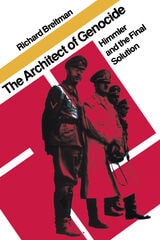
The Architect of Genocide
Himmler and the Final SolutionRichard Breitman
Brandeis University Press, 1992
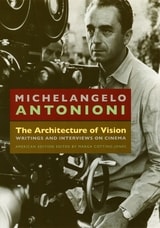
The Architecture of Vision
Writings and Interviews on CinemaMichelangelo Antonioni
University of Chicago Press, 2007
Through autobiographical sketches, theoretical essays, interviews, and conversations with such luminaries as Jean-Luc Godard and Alberto Moravia, this compelling volume explores the director’s unique brand of narrative-defying cinema as well as the motivations and anxieties of the man behind the camera.
“The Architecture of Vision provides a filmmaker’s absorbing reflections and insights on his career. . . . Antonioni’s comments . . . deepen and humanize a sometimes cerebral book.”—Publishers Weekly
“[Antonioni’s] erudition is astonishing . . . few of his peers can match his verbal articulateness.”—Film Quarterly
“This valuable resource offers entrée to material difficult to gain access to under other circumstances.”—Library Journal
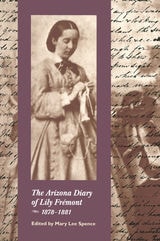
The Arizona Diary of Lily Frémont, 1878–1881
Elizabeth Benton Frémont
University of Arizona Press, 1997
Here, in rich detail, her day-by-day narrative and the editor's annotations bring to life Arizona's territorial capital of Prescott more than one hundred years ago. Lily gives us firsthand accounts of the operation of territorial government; of pressure from Anglo settlers to dispossess Pima Indians from their land; and of efforts by the governor and the army to deal with Indian scares. Here also, underlying her words, are insights into the dynamics of a close-knit Victorian family, shaping the life of an intelligent, educated single woman. As unofficial secretary for her father, Lily was well placed to observe and record an almost constant stream of visitors to the governor's home and office. Observe and record, she did. Her diary is filled with unvarnished images of personalities such as the Goldwaters, General O. B. Willcox, Moses Sherman, Judge Charles Silent, and a host of lesser citizens, politicians, and army officers.
Lily's anecdotes vividly re-create the periodic personality clashes that polarized society (and one full-fledged scandal), the ever-present danger of fire, religious practices (particularly a burial service conducted in Hebrew), and attitudes toward Native Americans and Chinese. On a more personal level, the reader will find intimate accounts of John Frémont's obsession with mining promotion, his complicated business dealings with Judge Silent, and his attempts to recoup his family's sagging fortune. Here especially, Lily outlines a telling profile of her father, a man roundly castigated then and now as a carpetbagger less interested in promoting Arizona's interests than his own.
For students of western history, Lily Frémont's diary provides a wealth of fresh information on frontier politics, mining, army life, social customs, and ethnicity. For all readers, her words from a century ago offer new perspectives on the winning of the West as well as fascinating glimpses of a world that once was and is no more.
The Art of Backscratching in Chicago
Driving with Ed McElroyNeil Steinberg
University of Chicago Press, 2013
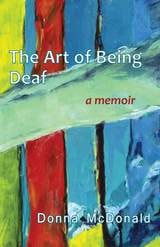
The Art of Being Deaf
A MemoirDonna McDonald
Gallaudet University Press, 2014
Born in 1950s Australia, McDonald was placed in an oral deaf school when she was five. There, she was trained to communicate only in spoken English. Afterwards, she attended mainstream schools where she excelled with speechreading and hard work. Her determination led to achievements that proved her to be “the deaf girl that had made good.” Yet, despite her constant focus on fitting in the hearing world, McDonald soon realized that she missed her deaf schoolmates and desired to explore her closed-off feelings about being deaf.
When she reconnected with her friends, one urged her to write about her experiences to tell all about “the Forgotten Generation, the orally-raised deaf kids that no one wants to talk about.” In writing her memoir, McDonald did learn to reconcile her deaf-self with her “hearing-deaf” persona, and she realized that the art of being deaf is the art of life, the art of love.
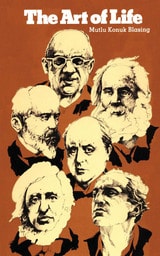
The Art of Life
Studies in American Autobiographical LiteratureBy Mutlu Konuk Blasing
University of Texas Press, 1977
Autobiographical literature especially reveals the processes by which writers convert their own historical experience into fictional form and suggests how literary forms function in life. This volume defines an original theory of autobiographical writing and provides intriguing analyses of major American works of literature.
The Art of Life examines the transformation of history into literature in Walden, "Song of Myself," Henry James's Prefaces, The Education of Henry Adams, Paterson, and the poetry of Frank O'Hara. These works are approached as events in themselves and are analyzed as conversions of form and history, fiction and fact, and even aesthetics and politics. Thus the work of literature is set in the total experience of living, and the writer is seen not only as an artist but also as a person in a historical, political, and cultural environment. As well as a creator of literature, the writer is viewed as a social, psychological, and biological being.
Chapters on the narcissistic economy of Walden, the mythicizing of history and personality in "Song of Myself," the self-conscious relation that makes the Prefaces of Henry James the autobiography of an artist. the comic perspective of The Education of Henry Adams, and the radical innovation of Paterson and O'Hara's poetry provide new readings of major American works. Each chapter contains some distinct critical insight which not only contributes to, but can be relished apart from, the book's overarching theoretical argument.
The Art of Life is a sophisticated theoretical discussion of autobiography with rich psychological, philosophical, and cultural ramifications.
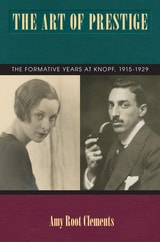
The Art of Prestige
The Formative Years at Knopf, 1915-1929Amy Clements
University of Massachusetts Press, 2014
Capturing the little-known early history of Knopf, The Art of Prestige explores the origins of the company's rise to success during the Jazz Age, when Alfred and Blanche established themselves as literary impresarios on both sides of the Atlantic. Drawing on key archival documents from all phases of the publishing process, Amy Root Clements reconstructs the turning points and rhetorical exchanges that made Knopf's initial books noteworthy, from the acquisitions process to design, consumer marketing, and bookselling.
Lasting cornerstones of the young firm include alliances with pivotal figures in the world of graphic arts and book production and with European publishers who brought numerous Nobel Prize winners to the Borzoi list during the company's first fifteen years. Other featured luminaries include the American authors Willa Cather, Dashiell Hammett, and Langston Hughes. The Art of Prestige also examines Alfred Knopf's ancestry, up-bringing, and formal education at Columbia, as well as his apprenticeships with Frank Nelson Doubleday and Mitchell Kennerley—factors that would influence his business decisions for years to come.
The result is a portrait of innovative branding that seamlessly merged book production with book promotion in a literary landscape that was ripe for transformation.
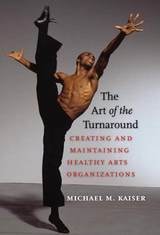
The Art of the Turnaround
Creating and Maintaining Healthy Arts OrganizationsMichael M. Kaiser
Brandeis University Press, 2008
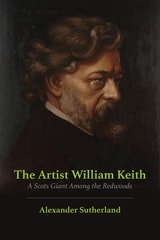
The Artist William Keith
A Scots Giant Among the RedwoodsAlexander Sutherland
Aberdeen University Press, 2026
The Artist William Keith: A Scots Giant Among the Redwoods reveals the rise of William Keith (1838? – 1911), a fatherless child from rural Aberdeenshire, Scotland who rose to an eminent position in the artistic and civic circles of Gold Rush-era San Francisco. Alexander Sutherland’s engaging study traces Keith’s life and artistic achievements, his lively personality and his drive to make a name for himself.
Brought to America in 1851 by his widowed mother, Keith’s initial career in wood engraving was superseded by an interest in painting. He later trained in Europe, being influenced by German Realism and the Barbizon painters in Paris, and studied portraiture in Munich. His major artistic shift came in 1872, when he befriended the conservationist, environmentalist and fellow Scot, John Muir (1838 – 1914). Their thirty-eight-year friendship in the mountains of Yosemite and other wilderness regions inspired Keith’s work as a landscape painter.
Keith’s later years were characterised by cosmopolitan and Suffragist connections in the bohemian art world of California. Although the San Francisco Earthquake of 1906 destroyed much of his life’s work, Keith responded by recommitting to his art, underscoring his remarkable achievements.
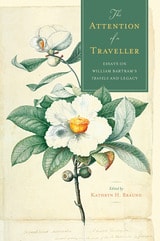
The Attention of a Traveller
Essays on William Bartram's "Travels" and LegacyEdited by Kathryn H. Braund
University of Alabama Press, 2022
An interdisciplinary reevaluation of William Bartram’s Travels, illuminating the natural, cultural, and intellectual landscapes of the eighteenth‑century Southeast through diverse scholarly lenses.
William Bartram, author of Travels through North and South Carolina, Georgia, East and West Florida, the Cherokee Country, the Extensive Territories of the Muscogulees, or Creek Confederacy, and the Country of the Chactaws, was colonial America’s first native born naturalist and artist, and the first author in the modern genre of writers who portrayed nature through personal experience as well as scientific observation. His book, first published in 1791, was based on his journeys through southern Indian nations and Britain’s southern colonies in the years just prior to the American Revolution and provides descriptions of the natural and cultural environments of what would soon become the American South. Scholars and general readers alike have long appreciated Bartram’s lush, vivid prose, his clarity of observation and evident wonder at the landscapes he traversed, and his engagement with the native nations whose lands he traveled through.
The Attention of a Traveller: Essays on William Bartram’s “Travels” and Legacy offers an interdisciplinary assessment of Bartram’s influence and evolving legacy, opening new avenues of research concerning the flora, fauna, and people connected to Bartram and his writings. Featuring 13 essays divided into five sections, contributors to the volume weave together scholarly perspectives from geology, art history, literary criticism, geography, and philosophy, alongside the more traditional Bartram-affiliated disciplines of biology and history. The collection concludes with a comprehensive treatment of the book as a material historical artifact.
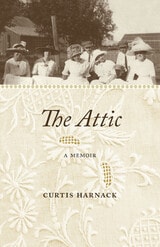
The Attic
A MemoirHarnack, Curtis
University of Iowa Press, 2011
In The Attic, his sequel to the classic We Have All Gone Away, Curtis Harnack returns to his rural Iowa homeplace to sift through an attic full of the trash and treasures left behind by the thirteen children in two generations who grew up in the big farmhouse.
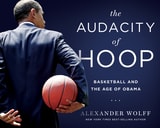
The Audacity of Hoop
Basketball and the Age of ObamaAlexander Wolff
Temple University Press, 2015
While basketball didn’t take up residence in the White House in January 2009, the game nonetheless played an outsized role in forming the man who did. In The Audacity of Hoop, celebrated sportswriter Alexander Wolff examines Barack Obama, the person and president, by the light of basketball. This game helped Obama explore his identity, keep a cool head, impress his future wife, and define himself as a candidate.
Wolff chronicles Obama’s love of the game from age 10, on the campaign trail—where it eventually took on talismanic meaning—and throughout his two terms in office. More than 125 photographs illustrate Obama dribbling, shooting free throws, playing pickup games, cooling off with George Clooney, challenging his special assistant Reggie Love for a rebound, and taking basketball to political meetings. There is also an assessment of Obama’s influence on the NBA, including a dawning political consciousness in the league’s locker rooms.
Sidebars reveal the evolution of the president’s playing style, “Baracketology”—a not-entirely-scientific art of filling out the commander in chief’s NCAA tournament bracket—and a timeline charts Obama’s personal and professional highlights.
Equal parts biographical sketch, political narrative, and cultural history, The Audacity of Hoop shows how the game became a touchstone in Obama’s exercise of the power of the presidency.
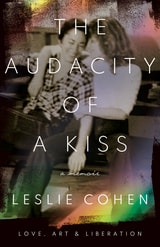
The Audacity of a Kiss
Love, Art, and LiberationLeslie Cohen
Rutgers University Press, 2021
Rendered in bronze, covered in white lacquer, two women sit together on a park bench in Greenwich Village. One of the women touches the thigh of her partner as they gaze into each other’s eyes. The two women are part of George Segal’s iconic sculpture “Gay Liberation,” but these powerful symbols were modeled on real people: Leslie Cohen and her partner (now wife) Beth Suskin.
In this evocative memoir, Cohen tells the story of a love that has lasted for over fifty years. Transporting the reader to the pivotal time when brave gay women and men carved out spaces where they could live and love freely, she recounts both her personal struggles and the accomplishments she achieved as part of New York’s gay and feminist communities. Foremost among these was her 1976 cofounding of the groundbreaking women’s nightclub Sahara, which played host to such luminaries as Betty Friedan, Gloria Steinem, Pat Benatar, Ntozake Shange, Rita Mae Brown, Adrienne Rich, Patti Smith, Bella Abzug, and Jane Fonda. The Audacity of a Kiss is a moving and inspiring tale of how love, art, and solidarity can overcome oppression.
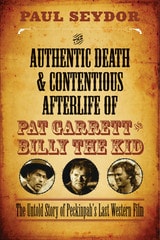
The Authentic Death and Contentious Afterlife of Pat Garrett and Billy the Kid
The Untold Story of Peckinpah's Last Western FilmPaul Seydor
Northwestern University Press, 2015
Long before Sam Peckinpah finished shooting his 1973 Western, Pat Garrett and Billy the Kid, there was open warfare between him and the studio. In this scrupulously researched new book Paul Seydor reconstructs the riveting history of a brilliant director fighting to preserve an artistic vision while wrestling with his own self‑destructive demons. Meticulously comparing the film five extant versions, Seydor documents why none is definitive, including the 2005 Special Edition, for which he served as consultant. Viewing Peckinpah’s last Western from a variety of fresh perspectives, Seydor establishes a nearly direct line from the book Garrett wrote after he killed Billy the Kid to Peckinpah’s film ninety-one years later and shows how, even with directors as singular as this one, filmmaking is a collaborative medium. Art, business, history, genius, and ego all collide in this story of a great director navigating the treacherous waters of collaboration, compromise, and commerce to create a flawed but enduringly powerful masterpiece.
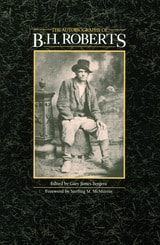
The Autobiography of B. H. Roberts
Gary J. Bergera
Signature Books, 1990
The story-book adventures of Roberts’s life made him a household name during his lifetime. His impassioned speeches incited riots, his reasoned writings defined and codified religious beliefs, and his candid disclosures of Utah history brought him both respect and censure. He is best remembered today as a largely self-educated intellectual. Several of his landmark published works are still in print more than fifty years after his death. His life story, told here in his own words and published for the first time, may well stand as his greatest, most enduring achievement.
For many today, B. H. Roberts is the quintessential Mormon intellectual of the twentieth century. But his theological writings came late in life and his historical views were more subjective than definitive. His autobiography, on the other hand, is a forthright account of the events and acquaintances that contributed to his unique faith and intellectual independence. Troubled by the memory of being abandoned as a child, and of the abusive care of quarrelling and intemperate foster-parents, he survived a stormy youth of poverty and neglect. He describes his nearly ten years as a missionary to the southern United States, his subsequent tenure as an outspoken member of the First Quorum of Seventy, his public opposition to women’s suffrage, and his controversial bid for the U.S. House of Representatives as a Mormon polygamist.
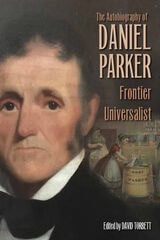
The Autobiography of Daniel Parker, Frontier Universalist
Daniel Parker
Ohio University Press, 2021
A vastly informative and rare early-American pioneer autobiography rescued from obscurity.
In this remarkable memoir, Daniel Parker (1781–1861) recorded both the details of everyday life and the extraordinary historical events he witnessed west of the Appalachian Mountains between 1790 and 1840. Once a humble traveling salesman for a line of newly invented clothes washing machines, he became an outspoken advocate for abolition and education. With his wife and son, he founded Clermont Academy, a racially integrated, coeducational secondary school—the first of its kind in Ohio.
However, Parker’s real vocation was as a self-ordained, itinerant preacher of his own brand of universal salvation. Raised by Presbyterian parents, he experienced a dramatic conversion to the Halcyon Church, an alternative, millenarian religious movement led by the enigmatic prophet Abel Sarjent, in 1803. After parting ways with the Halcyonists, he continued his own biblical and theological studies, arriving at the universalist conclusions that he would eventually preach throughout the Ohio River Valley.
David Torbett has transcribed Parker’s manuscript and publishes it here for the first time, together with an introduction, epilogue, bibliography, and extensive notes that enrich and contextualize this rare pioneer autobiography.
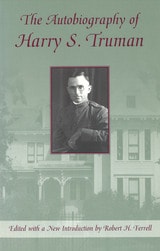
The Autobiography of Harry S. Truman
Edited with a New Introduction by Robert H. Ferrell
University of Missouri Press, 2002
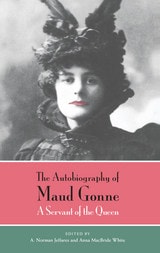
The Autobiography of Maud Gonne
A Servant of the QueenMaud Gonne
University of Chicago Press, 1995
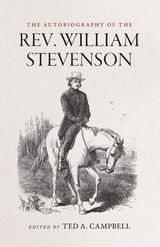
The Autobiography of the Rev. William Stevenson
Ted A. Campbell
Bridwell Press, 2024
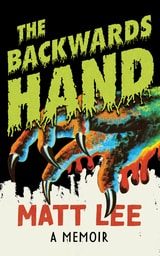
The Backwards Hand
A MemoirMatt Lee
Northwestern University Press, 2024
Told in lyric fragments, The Backwards Hand traces Matt Lee’s experience living in the United States for more than thirty years with a rare congenital defect. Weaving in historical research and pop culture references, Lee dissects how the disabled body has been conflated with impurity, worthlessness, and evil. His voice swirls amid those of artists, criminals, activists, and philosophers. With a particular focus on horror films, Lee juxtaposes portrayals of fictitious monsters with the real-life atrocities of the Nazi regime and the American eugenics movement. Through examining his struggles with physical and mental health, Lee confronts his own beliefs about monstrosity and searches for atonement as he awaits the birth of his son.
The Backwards Hand interrogates what it means to be a cripple in a predominantly ableist society, deconstructing how perceptions of disability are—and are not—reflected in art and media.