Results by title
282 books match the query 'Caribbean & West Indies' and 59 start with t
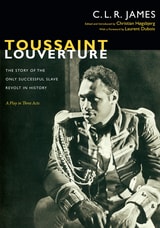
Toussaint Louverture
The Story of the Only Successful Slave Revolt in History; A Play in Three ActsC. L. R. James Edited and Introduced by Christian Høgsbjerg
Duke University Press, 2013
Transatlantic Topographies
Islands, Highlands, JunglesIleana Rodriguez
University of Minnesota Press, 2004
Explores the construction of the Americas by and through European eyes
Transatlantic Topographies was first published in 2004. Minnesota Archive Editions uses digital technology to make long-unavailable books once again accessible, and are published unaltered from the original University of Minnesota Press editions.
Transatlantic Topographies studies the representation of American space during the initial confrontation between Europeans and Amerindians and during the eighteenth, nineteenth, and twentieth centuries. Starting from topographical descriptions of land, islands, highlands, and jungles, Ileana Rodríguez shows how existing systems of knowledge broke down with the discovery of the Americas and had to be reinvented through the interpretation of signs, the accumulation of evidence, material exchange, and, finally, through the learning, teaching, and “kidnapping” of language. Proceeding from the period of exploration to the modern creation of a “twentieth-century frontier,” Rodríguez charts the path that led from island paradise to jungle chaos, from representations of natural beauty to the racialization of the islands. Drawing attention to cross-cultural miscommunication and the riddles of meaning and message it produces, Transatlantic Topographies develops a highly nuanced understanding of the evolving forces of imperialism as they gave way to postcolonialism and then to transnationalism—and newly re-inscribed notions of imperial economic practices.
Trinidad Yoruba
From Mother-Tongue to MemoryMaureen Warner-Lewis
University of Alabama Press, 2009
Maureen Warner-Lewis offers a comprehensive description of the West African language of Yoruba as it has been used on the island of Trinidad in the southern Caribbean. The study breaks new ground in addressing the experience of Africans in one locale of the Africa Diaspora and examines the nature of their social and linguistic heritage as it was successively retained, modified, and discarded in a European-dominated island community.
Triumph of the Expert
Agrarian Doctrines of Development and the Legacies of British ColonialismJoseph Morgan Hodge
Ohio University Press, 2007
The most striking feature of British colonialism in the twentieth century was the confidence it expressed in the use of science and expertise, especially when joined with the new bureaucratic capacities of the state, to develop natural and human resources of the empire.
Triumph of the Expert is a history of British colonial doctrine and its contribution to the emergence of rural development and environmental policies in the late colonial and postcolonial period. Joseph Morgan Hodge examines the way that development as a framework of ideas and institutional practices emerged out of the strategic engagement between science and the state at the climax of the British Empire. Hodge looks intently at the structural constraints, bureaucratic fissures, and contradictory imperatives that beset and ultimately overwhelmed the late colonial development mission in sub-Saharan Africa, south and southeast Asia, and the Caribbean.
Triumph of the Expert seeks to understand the quandaries that led up to the important transformation in British imperial thought and practice and the intellectual and administrative legacies it left behind.

Tropical Zion
General Trujillo, FDR, and the Jews of SosúaAllen Wells
Duke University Press, 2009
Why did a dictator admit these desperate refugees when so few nations would accept those fleeing fascism? Eager to mollify international critics after his army had massacred 15,000 unarmed Haitians, Trujillo sent representatives to Évian, France, in July, 1938 for a conference on refugees from Nazism. Proposed by FDR to deflect criticism from his administration’s restrictive immigration policies, the Évian Conference proved an abject failure. The Dominican Republic was the only nation that agreed to open its doors. Obsessed with stemming the tide of Haitian migration across his nation’s border, the opportunistic Trujillo sought to “whiten” the Dominican populace, welcoming Jewish refugees who were themselves subject to racist scorn in Europe.
The Roosevelt administration sanctioned the Sosúa colony. Since the United States did not accept Jewish refugees in significant numbers, it encouraged Latin America to do so. That prodding, paired with FDR’s overriding preoccupation with fighting fascism, strengthened U.S. relations with Latin American dictatorships for decades to come. Meanwhile, as Jewish organizations worked to get Jews out of Europe, discussions about the fate of worldwide Jewry exposed fault lines between Zionists and Non-Zionists. Throughout his discussion of these broad dynamics, Wells weaves vivid narratives about the founding of Sosúa, the original settlers and their families, and the life of the unconventional beach-front colony.
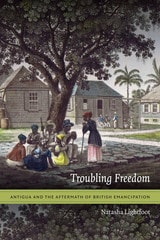
Troubling Freedom
Antigua and the Aftermath of British EmancipationNatasha Lightfoot
Duke University Press, 2016
Trouillot Remixed
The Michel-Rolph Trouillot ReaderMichel-Rolph Trouillot. Edited by Yarimar Bonilla, Greg Beckett, and Mayanthi L. Fernando
Duke University Press, 2021
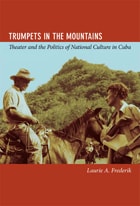
Trumpets in the Mountains
Theater and the Politics of National Culture in CubaLaurie A. Frederik
Duke University Press, 2012
Campesinos inhabit some of the island's most isolated areas, including the mountainous regions in central and eastern Cuba where Laurie A. Frederik conducted research among rural communities and professional theater groups. Analyzing the ongoing dialogue of cultural officials, urban and rural artists, and campesinos, Frederik provides an on-the-ground account of how visions of the nation are developed, manipulated, dramatized, and maintained in public consciousness. She shows that cubanía is defined, and redefined, in the interactive movement between intellectual, political, and everyday worlds.
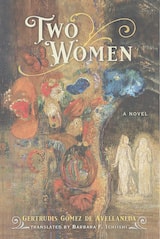
Two Women
A NovelBarbara F. Ichiishi
Bucknell University Press, 2022
This first English translation of the novel captures the lyrical romanticism of its prose and includes a scholarly introduction to the work and its author, Gertrudis Gómez de Avellaneda, a pioneering feminist and anti-slavery activist who based the character of Catalina on her own experience. Two Women is a searing indictment of the stern laws and customs governing marriage in the Hispanic world, brought to life in a spellbinding, tragic love story.