496 books match the query 'Christian Theology' and 141 start with t
cover of The Holy Spirit in Luke-Acts: The Role of the Reader

The Holy Spirit in Luke-Acts

The Role of the Reader

Marco Wittenberg

Central European University Press, 2026
What is the role of the reader in the interpretation of the biblical text. Can he create meaning, or is it the text itself that has the last word and determines the right meaning? This study investigates the role of the reader in the exegesis of passages on the Holy Spirit in Luke and Acts. Using a model of Umberto Eco, the author examines how three writers from different denominational backgrounds – Max M.B. Turner, Robert P. Menzies and William S. Kurz – are personally involved in the interpretation of these passages.
[more]
cover of The Holy Spirit in Puritan Faith and Experience

The Holy Spirit in Puritan Faith and Experience

Geoffrey F. Nuttall

University of Chicago Press, 1992

Geoffrey F. Nuttall establishes the primacy of the doctrines of the Holy Spirit in seventeenth-century English Puritanism and demonstrates the continuity of the Reformation tradition from the more conservative views of Luther to the more radical interpretations of the Quakers. Nuttall illuminates prominent spokesmen, including Richard Sibbes, Richard Baxter, John Owen, Walter Cradock, Morgan Llwyd, and George Fox.

In a new Introduction, Peter Lake discusses the relevance of Nuttall's book to, and its influence on, major works in seventeenth-century English history written since 1946.
[more]
cover of The Ice Broken, volume I: Puritan Influences on the Netherlands in the Seventeenth Century

The Ice Broken, volume I

Puritan Influences on the Netherlands in the Seventeenth Century

Central European University Press, 2026
It has become increasingly apparent to early modern religious, political, cultural and book-historians that translations provide badly neglected but unique and invaluable insights into the processes of cultural change and exchange. This volume provides a wealth of precious insights into the whole process of translation. The articles shed invaluable light on early modern scholarly practices and careers, cultural exchange and relations, the book trade, and the religious politics of the Dutch Republic. They also make quite clear that the Dutch translation of English Puritan works, and the ways in which this was carried out, are  absolutely crucial to understanding the origins, nature and development of the Dutch Further Reformation. If you would like to order the book for delivery outside of the Netherlands, please email orders@aup.nl
[more]
cover of The Ice Broken, volume II: Puritan Influences on the Netherlands in the Seventeenth Century

The Ice Broken, volume II

Puritan Influences on the Netherlands in the Seventeenth Century

Central European University Press, 2026
It has become increasingly apparent to early modern religious, political, cultural and book-historians that translations provide badly neglected but unique and invaluable insights into the processes of cultural change and exchange. This volume provides a wealth of precious insights into the whole process of translation. The articles shed invaluable light on early modern scholarly practices and careers, cultural exchange and relations, the book trade, and the religious politics of the Dutch Republic. They also make quite clear that the Dutch translation of English Puritan works, and the ways in which this was carried out, are  absolutely crucial to understanding the origins, nature and development of the Dutch Further Reformation. If you would like to order the book for delivery outside of the Netherlands, please email orders@aup.nl
[more]
cover of The Identity of Israel’s God in Christian Scripture

The Identity of Israel’s God in Christian Scripture

Don Collett

SBL Press, 2021

A broad, sweeping volume that breaches the walls separating biblical and theological disciplines

Biblical scholars and theologians engage an important question: Who is Israel’s God for Christian readers of the Old Testament? For Christians, Scripture is the Old and New Testament bound together in a single legacy. Contributors approach the question from multiple disciplinary vantage points. Essays on both Testaments focus on figural exegesis, critical exegesis, and the value of diachronic understandings of the Old Testament’s compositional history for the sake of a richer synchronic reading. This collection is offered in celebration of the life and work of Christopher R. Seitz. His rich and wide-ranging scholarly efforts have provided scholars and students alike a treasure trove of resources related to this critical question.
[more]
cover of The Immortality of the Soul; The Magnitude of the Soul; On Music; The Advantage of Believing; On Faith in Things Unseen

The Immortality of the Soul; The Magnitude of the Soul; On Music; The Advantage of Believing; On Faith in Things Unseen

Saint Augustine

Catholic University of America Press, 1947
No description available
[more]
cover of The Indiscrete Image: Infinitude and Creation of the Human

The Indiscrete Image

Infinitude and Creation of the Human

Thomas A. Carlson

University of Chicago Press, 2008

Humanity’s creative capacity has never been more unsettling than it is at our current moment, when it has ushered us into new technological worlds that challenge the very definition of “the human.” Those anxious to safeguard the human against techno-scientific threats often appeal to religious traditions to protect the place and dignity of the human. But how well do we understand both theological tradition and today’s technological culture? In The Indiscrete Image, Thomas A. Carlson challenges our common ideas about both, arguing instead that it may be humanity’s final lack of definition that first enables, and calls for, human creativity and its correlates—including technology, tradition, and their inextricable interplay within religious existence.
Framed in response to Martin Heidegger’s influential account of the relation between technological modernity and theological tradition, The Indiscrete Image builds an understanding of creativity as conditioned by insurmountable unknowing and incalculable possibility through alternative readings of Christian theological tradition and technological culture—and the surprising resonance between these two. Carlson concludes that the always ongoing work of world creation, tied essentially to human self-creation, implies neither an idol’s closure nor an icon’s transcendence, but the “indiscrete image” whose love makes possible—by keeping open—both the human and its world.
[more]
cover of The Inspiration and Truth of Scripture: Testing the Ratzinger Paradigm

The Inspiration and Truth of Scripture

Testing the Ratzinger Paradigm

Aaron Pidel, SJ

Catholic University of America Press, 2023
What does it mean to say that Scripture is God’s Word? And just how true is the Bible? Though sometimes dismissed as “fundamentalist” concerns, these questions also sent twentieth-century Catholic theology searching for a new paradigm of biblical inspiration. Theologians repeatedly attempted to reconcile the traditional conviction that the Bible shares in the omniscience of its divine author with scholarly findings that suggested otherwise. Joseph Ratzinger contributed both negatively and positively to this project, deconstructing the regnant manualist models of inspiration and constructing an alternative inspired by St. Bonaventure. The result is an ecclesial model of surprising comprehensiveness and balance. Indeed, The Inspiration and Truth of Scripture concludes that Ratzinger’s alternative provides the least inadequate paradigm currently on offer today. The Inspiration and Truth of Scripture breaks new ground in several ways. First, it situates Ratzinger within a broader Catholic quest for a theology of inspiration, showing his model offers advantages even relative to those proposed by modern theology’s most eminent minds: John Henry Newman, Pierre Benoit, Karl Rahner, and David Tracy. Secondly, this book shows how Ratzinger’s paradigm generates “tests” for identifying the perennially valid affirmations of Scripture, and thus an approach to resolving disputed biblical questions. Must one who accepts the authority of Scripture believe in the Devil? Are the Marian dogmas really “in” Scripture? To what extent does Jesus’s prohibition of divorce still apply in today’s changed social circumstances? Just how historical are Gospel narratives, like the Last Supper, intended to be? The result is a book that bridges the gap between normative theology and historical exegesis. Overall, The Inspiration and Truth of Scripture presents Ratzinger not as an unimaginative enforcer of doctrinal conclusions but as a creatively faithful theologian, whose reconfiguration of inspiration should serve as the point of departure for all future reflection on the subject.
[more]
cover of The Invention of Sodomy in Christian Theology

The Invention of Sodomy in Christian Theology

Mark D. Jordan

University of Chicago Press, 1997

In this startling original work of historical detection, Mark D. Jordan explores the invention of Sodomy by medieval Christendom, examining its conceptual foundations in theology and gauging its impact on Christian sexual ethics both then and now. This book is for everyone involved in the ongoing debate within organized religions and society in general over moral judgments of same-sex eroticism.

"A crucial contribution to our understanding of the tortured and tortuous relationship between men who love men, and the Christian religion—indeed, between our kind and Western society as a whole. . . . The true power of Jordan's study is that it gives back to gay and lesbian people our place in history and that it places before modern theologians and church leaders a detailed history of fear, inconsistency, hatred and oppression that must be faced both intellectually and pastorally."—Michael B. Kelly, Screaming Hyena

"[A] detailed and disturbing tour through the back roads of medieval Christian thought."—Dennis O'Brien, Commonweal

"Being gay and being Catholic are not necessarily incompatible modes of life, Jordan argues. . . . Compelling and deeply learned."—Virginia Quarterly Review
[more]
cover of The Kingdom and the Garden

The Kingdom and the Garden

Giorgio Agamben

Seagull Books, 2020

In a tour-de-force reinterpretation of the Christian tradition, Agamben shows that the Garden of Eden has always served as a symbol for humanity’s true nature.

What happened to paradise after Adam and Eve were expelled? The question may sound like a theological quibble, or even a joke, but in The Kingdom and the Garden, Giorgio Agamben uses it as a starting point for an investigation of human nature and the prospects for political transformation. In a tour-de-force reinterpretation of the Christian tradition, Agamben shows that the Garden of Eden has always served as a symbol of humanity’s true nature. Where earlier theologians viewed the expulsion as temporary, Augustine’s doctrine of original sin makes it permanent, reimagining humanity as the paradoxical creature that has been completely alienated from its own nature. From this perspective, there can be no return to paradise, only the hope for the messianic kingdom. Yet there have always been thinkers who rebelled against this idea, and Agamben highlights two major examples. The first is the early medieval philosopher John Scotus Eriugena, who argued for a radical unity of humanity with all living things. The second is Dante, whose vision of the earthly paradise points towards the possibility of genuine human happiness in this world. In place of the messianic kingdom, which has provided the model for modern revolutionary movements, Agamben contends that we should place our hopes for political change in a return to our origins, by reclaiming the earthly paradise.
 
[more]
cover of The Letters of St. Patrick and Early Patrician Literature

The Letters of St. Patrick and Early Patrician Literature

Philip Freeman

Catholic University of America Press, 2025
The two fifth-century letters of St. Patrick are the earliest records we have of Christianity in Ireland. Written in Latin in his later years, they are an intimate and revealing look into the life and world of a man who was among the first to spread the Gospel to a land beyond the Roman Empire. Both Patrick's Letter to the Soldiers of Coroticus and his Confession detail his many admitted failings and insecurities but also his passionate faith in God and his mission to the Irish. These letters are presented in this volume with both the Latin originals and translation along with other key texts of early Patrician literature, including Muirchu's Life of St. Patrick, Tírechán's Journey of St. Patrick, The First Synod of St. Patrick, The Hymn of St. Secundinus, and the Old Irish St. Patrick's Breastplate. It includes a detailed introduction, commentary, notes, and other useful tools, along with a complete bibliography. The Letters of St. Patrick and Early Patrician Literature brings together for the first time in a single volume the most important works of the Patrician tradition and allows students and scholars from many different fields the opportunity to explore these rich texts.
[more]
cover of The Making of the Christian Mind: The Adventure of the Paraclete: Volume I: The Waiting World

The Making of the Christian Mind

The Adventure of the Paraclete: Volume I: The Waiting World

James Patrick

St. Augustine's Press, 2020

Dr. James Patrick has spent his life teaching, and in this book he seeks to tell on a larger scale the story of the Christian mind as it developed according to what he refers to as the “adventure” of the Holy Spirit. Indeed, the Christian mind moved from faithful intuition to writing and composing original ideas of concrete truths, and this in turn led to inspired foundations upon which a new kind of world became possible. Patrick does not wish the reader to think the Christian mind has ever intended to create utopia on earth or to proselytize, rather that the dynamic Christian intellect indicates a human heart made new and from this newness still spring horizons of hope and culture. 

This is not a history of dogma or systematic account of the building of doctrine. It is a narrative that follows the major moments wherein the Christian heart so in tune with the Paraclete has rendered the seminal texts and literature of this new culture, from the Didache to the Rule of Saint Benedict and The Consolation of Philosophy. Patrick succeeds in presenting a narrative that reads more like the experience lived by those directly involved in its realization, and although he cannot include every individual accomplishment of the major Christian writers, he illuminates the context in which Christianity was born and how faith grew and allowed itself to be shaped by its participation in the “adventure” and its grasp of objective truth. The Christian mind is, says Patrick, not only inspired and moved by the restless Paraclete, but revolves around the event of Jesus Christ. Christian history is therefore best understood not simply as chronology of events but as the vision of “the new heart in time,” one that strives to be like that of the one who sent the Spirit into history.

Patrick writes with a voice of a teacher, and although this work is very well referenced and accurate he does not intend this work to be a scholarly presentation of data and careful arguments, nor does he include every aspect of this intellectual faith journey of Christianity found in writing. As a comprehensive review, Patrick acknowledges the limitations of his own project to tell a complete story. Nevertheless, The Making of the Christian Mind accomplishes the no less formidable feat of illustrating the vivacious quality of the authentic Christian intellectual life. “Christianity is a survivor, not because it possessed the instruments of power but because, as Jesus of Nazareth said before Pilate, the foundation of the Kingdom is truth, its instruments of conquest are its renewing gifts, its consequences are the substitution of truth for error and ignorance, of faith for skepticism, humility for pride, and of charity and friendship for emulation, all this realized never perfectly but always as possibilities having the power to make all things new.”

This work is divided into three volumes, of which the present work is the first. Highlights of this first volume, The Waiting World, include following revelation as it first moved uncertain hearts to write and then to offer explicit witness. In this first installment, Patrick sets the groundwork for following the faith and history of Israel to Justin Martyr’s great claim that what is true belongs to Christians. 
[more]
cover of The Minor Works

The Minor Works

Catholic University of America Press, 1965
The writings of this author are, together with those of Eusebius, the principal sources for the period of the great persecution of Diocletian and for the first years of the peace of the Church after the Edict of Milan.
[more]
cover of The Miracle of Immortality: What Follows This Earthly Life?

The Miracle of Immortality

What Follows This Earthly Life?

Gerhard Cardinal Muller

Catholic University of America Press, 2026
In The Miracle of Immortality, Gerhard Cardinal Müller tackles some of the great mysteries of human life and hope. The former prefect of the Dicastery for the Doctrine of the Faith is not content merely to present Catholic doc­trine on the afterlife and the last things, although his reflections are always rooted in the teachings and traditions of the Church. Rather, he invites readers to walk with him by the restless sea of human learning, a sea formed by man’s unquenchable thirst for something or someone greater than man himself, by his desire to know the beginning and the end. One who accepts the invitation finds himself in conversation with a mentor whose mind is suffused with scripture and very much sharpened by it. Cherished assumptions are queried or quietly corrected. Slowly but surely he is confronted with the miracle of immortality, without which true happiness is impossible. Cardinal Müller demonstrates in this book that it is entirely possible, and eminently rational, to believe in the miracle of immortality; indeed, that it is ultimately not rational not to believe. The Miracle of Immortality is a work of penetrating theological insight set, chiaroscuro-like, against the darkness of modern and postmodern skepticism. It is at once poetical in spirit and profoundly catechetical in substance, for Müller understands that Christian eschatology cannot be elucidated properly without proclaiming the whole counsel of God. The miracle in question is a miracle for the whole person, accomplished by way of what Paul calls adoption; that is, filiation to the eternal Father through the incarnate Son, effected by the limitless power of the Holy Spirit. It is a miracle that perfects the divine work of creation.
[more]
cover of The Modernist as Philosopher: Selected Writings of Marcel Hebert

The Modernist as Philosopher

Selected Writings of Marcel Hebert

C. J. T. Talar

Catholic University of America Press, 2011

This volume, the first to be published in English about Hébert, is essential for a full understanding of Catholic Modernism.
[more]
cover of The Monastic In Each of Us: Heart, Mind, Body, Soul and Spirit

The Monastic In Each of Us

Heart, Mind, Body, Soul and Spirit

Tim Vivian

Catholic University of America Press, 2026
The Monastic in Each of Us offers eight chapters on early-monastic themes relevant for spiritual seekers today. In August 2024, at the invitation of Abbot James Wiseman, the author gave seven retreat talks for the brothers at St. Anselm’s Abbey in Washington, D.C., on early-monastic spirituality and its relevance for us today. The revised talks here, with an additional chapter, offer more accessible discussions both for a general non-monastic audience and monastic readers. Chapter 1, “The Desert Fathers and Mothers and the Ascetic Tradition,” offers an introduction to the early monastics and their teachings on asceticism and spirituality. Chapters 2 and 3 cover “Ego and Humility & The Path to Transformation” and “Some Monastic and Universal Virtues.” Chapter 4, “A Fire That Burns Without Consuming,” offers an imagined conversation with Mary Margaret Funk, O.S.B, author of Thoughts Matter: Discovering the Spiritual Tradition, on the importance of early-monastic spirituality for today. Chapters 5 and 6 discuss some major themes: asceticism, sin, the passions, thoughts, and the importance of community. Chapter 7 focuses on Poemen, an early monastic, and the theme of judging to discernment to compassion. The concerns these chapters look at, and the practices given and hope offered are human and still speak to us today. The final chapter offers brief discussions of what the early monastics call the eight “principal thoughts”: gluttony/greed, sexual immorality, love of money, gloominess, anger, acedia, self-importance, and excessive pride. Thoughts, and their discernment, are key in early monasticism, and can be for us. As John Chryssavgis stresses, “our thoughts” can “inhibit us in our relationships with others and with God. Disclosing our thoughts to a ‘physician’ is a step in the direction of trust and community. It is less a way of dealing with the past, than of directing our future.”
[more]
cover of The Mystery of Communion

The Mystery of Communion

Giulio Maspero

St. Augustine's Press, 2020

Dr. Giulio Maspero is a priest, theologian and physicist who in this work embarks on a study of the Trinity––the Christian triune God––and in a single narrative pieces together the classical metaphysics, revealed truths and Patristic apologetic theology that directed the development of Trinitarian dogma. Maspero views the importance of this project from several perspectives. It connects us both exegetically and in fellowship to Christianity’s Jewish roots and the living God of shared Scripture. It introduces the reader to a deeper understanding of the historical development of the Trinity, which is especially engaging given the formidable minds and arguments involved in this history, particularly on the part of the Cappadocian Fathers: Gregory of Nyssa, Gregory of Nanzianzus and Basil the Great. Maspero also notes that knowing the Trinity better will offer greater insight into papal descriptions of the human family as necessarily rooted in a Trinitarian foundation, a “communion of persons in the image of the union of the Father, the Son and the Holy Spirit.” 

An approach to Trinitarian theology often favors overly technical language, or undue triteness. Maspero succeeds in leading both scholar and student to see how the unfolding of the mystery of the Trinity and its dogmatic development is a discovery of the “mystery from which all true love flows” in history. This discovery is only possible because of God’s self-revelation and immanence––that is, his heart and his “within.” The revelation of his being wholly and eternally Father and Son and the Love between them has made a more complete unity know to humanity through the perfect unity of divine communion. The foundation of all being and reality is this communion of love, personal unity that is given in relation and not in spite of relation. After a career of studying theology and theoretical physics, Maspero is especially keen on emphasizing the radical nature of this concept. It is an extension of Greek philosophy but ripped open and assigned immeasurable new value in communion and relation. 

The brevity of this work limits the amount of citations and textual references given, and Maspero instead urges the reader to study the book alongside Scripture. His manner of writing respects the impossibility of speaking of God in his immanence, but he nonetheless carves out a place for the Trinity in the human intellect, a place where the Jewish and Christian God might be encountered. As Maspero observes, truth is found in the personal dimension, but “just as in the use of a map for a journey, the cognitive grasp of the Trinity is to prevent us from getting lost, to keep us from reducing and simplifying the Trinity into something we understand merely on a natural level.” A highlight of this work is Maspero’s reliance on Mary, Theotokos, in his presentation of Trinitarian theology, the person who first opened herself to this manner of thinking.
[more]
cover of The Odyssey of a Syriac Christian: A Life of Faith Between East and West

The Odyssey of a Syriac Christian

A Life of Faith Between East and West

Rev. Emmanuel Pataq Siman

Catholic University of America Press, 2026
The author, Emmanuel Pataq Siman, OP, was born on Christmas Day in the Syriac Christian town of Qaraqosh, Iraq. In this book he shares memories of his childhood, of growing up Christian in a Muslim (though secular) Arab society, and of his decision to enter the Dominican order. He shares with the reader the culture shock that attended that decision, his subsequent move to the Convent of Saint Jacques in Paris and, as someone who has experienced life as a member of a religious minority, his admiration for French secularism, or laïcité. He then narrates the history of the Syriac Church, beginning with its roots in ancient Mesopotamia and its close relationship with the Jewish Christian communities of the first century. He observers that the Syriac Church was never politically "established," and therefore was not exposed to imperial amendments in its formative years. And yet, though deprived of state support, the Syriac Church mounted a highly successful missionary effort throughout Central Asia and exercised a decisive influence over the early development of Islam. Siman's book concludes with a first-person, confessionally engaged presentation of the Pentecostal theology that is specific to the Syriac tradition. The result is a book that is eminently readable, yet scholarly, informative, and occasionally provocative. The original French version of the book was awarded the Prix littéraire de l’œuvre d’Orient, which was bestowed on the author beneath the vaults of Notre Dame Cathedral.
[more]
cover of The One Creator God in Thomas Aquinas and Contemporary Theology

The One Creator God in Thomas Aquinas and Contemporary Theology

Michael J. Dodds, OP

Catholic University of America Press, 2020
This book provides a fundamental introduction to Aquinas's theology of the One Creator God. Aimed at making that thought accessible to contemporary audiences, it gives a basic explanation of his theology while showing its compatibility with contemporary science and its relevance to current theological issues. Opening with a brief account of Aquinas’s life, it then describes the purpose and nature of the Summa Theologica and gives a short review of current varieties of Thomism. Without neglecting other works, it then focuses primarily on the discussion of the One God in the first part of the Summa Theologica. God's transcendence and immanence is a recurrent theme in that discussion. Evidence of God's immanent causality in the natural world grounds Aquinas's five arguments for the existence of God (the Five Ways) which then open onto God's transcendence. The subsequent discussion of the divine attributes builds on the modes of God's causality established in the Five Ways. It also shows the need for a language of analogy to preserve God's transcendence and prevent us from reducing God to the level of creatures, even as qualities such as "goodness" and "love," which we first know from creatures, are applied to God. The discussion of God's providence and governance establishes that the transcendent Creator God is most intimately present in creation. God acts in all creatures in a way that does not diminish their proper causality, but is rather its source. As there is no contradiction between God's transcendence and immanence, so there is no competition between the primary causality of God and the secondary causality of creatures. Empirical science, which is limited by its method to the secondary causality of creatures, is shown to be compatible with the broader discipline of theology which also embraces the primary causality of the Creator.
[more]
cover of The One, the Many, and the Trinity: Joseph A. Bracken and the Challenge of Process Metaphysics

The One, the Many, and the Trinity

Joseph A. Bracken and the Challenge of Process Metaphysics

Marc A. Pugliese

Catholic University of America Press, 2011
The One, the Many, and the Trinity analyzes perhaps the most ambitious and robust system of process thought developed from a Roman Catholic perspective, that of Joseph A. Bracken,
[more]
cover of The Only True God: Early Christian Monotheism in Its Jewish Context

The Only True God

Early Christian Monotheism in Its Jewish Context

James F. McGrath

University of Illinois Press, 2012
Monotheism is a powerful religious concept shaped by competing ideas and the problems they raised. Surveying New Testament writings and Jewish sources from before and after the rise of Christianity, James F. McGrath argues that even the most developed Christologies in the New Testament fit within the context of first century Jewish monotheism. McGrath pinpoints when the parting of ways took place over the issue of God's oneness, and explores philosophical ideas such as "creation out of nothing" which caused Jews and Christians to develop differing concepts and definitions about God.
[more]
cover of The Opuscula and the Dispute with Pyrrhus: The Theological and Polemical Works

The Opuscula and the Dispute with Pyrrhus

The Theological and Polemical Works

Kevin M. St. Maximus the Confessor

Catholic University of America Press, 2026
Maximus the Confessor (d. 662), regarded by certain of his contemporaries as a sword of division, has become a bridge between East and West in our time. He lived at a time of theological and political upheaval, coming under intense scrutiny from imperial authorities in the final decades of his life. His conflict with Constantinople led him to engage in a theological and polemical campaign to equip his associates around the Mediterranean to respond to certain innovative doctrines. Maximus saw these new teachings as disconnected from the thought of the approved Fathers and theologically linked with prior heresies. This volume contains significant theological and polemical works— The Small Theological and Polemical Works, also known as the Opuscula, and the Dispute with Pyrrhus—refuting monenergism and monotheletism, the notions that Christ had only one activity or only one will. The Small Theological and Polemical Works are offered here for the first time in a complete English translation, built upon critical scholarship from the past century with key additions from Sergey Epifanovich included. Regarded as the most iconic work associated with Maximus, the famed Dispute with Pyrrhus, the deposed Patriarch of Constantinople, took place in Carthage in July 645. The record of this dialogue reflects Maximus’s mature Christology, while it is also a noteworthy prelude to his journey to Rome, where he worked with Pope Martin at the 649 Lateran Synod, uniting their voices and sealing their fates.
[more]
cover of The Passion of Love in the <i>Summa Theologiae</i> of Thomas Aquinas

The Passion of Love in the <i>Summa Theologiae</i> of Thomas Aquinas

Daniel Joseph Gordon

Catholic University of America Press, 2023
This book is an introduction to three questions on love according to St. Thomas Aquinas (Summa Theologiae I–II, qq. 26–28). These three questions reflect on the nature of love (q. 26), the causes of love (q. 27), and the effects of love (q. 28). It is thus an introduction to the entire phenomenon of love, both as a bodily passion and an act of the will. The purpose is to present the Thomistic and broadly scholastic account of human and divine love from a philosophical and theological perspective. It aims to be a theological and philosophical study of the topic, useful both for a graduate/professional audience, as part of an undergraduate or graduate course, and perhaps for the educated reader. The thesis of the book is that, contrary to contemporary conceptions, not all loves are created equal. Some loves perfect us and some loves corrupt us. The worth of a love depends on its object and end. St. Thomas thus presents an objective and teleological account of human and divine love that is of philosophical and theological interest. The method is broadly exegetical, presenting a careful reading of the text and supplying the philosophical and theological background which the text of Aquinas assumes. The scope of the work is limited to three questions (ST I–II, qq. 26–28). References to interpretative disputes of Aquinas and references to further resources in the secondary literature will be mostly limited to the footnotes, making the body of the text accessible to more readers.
[more]
cover of The Pastoral Theology of the Early Church

The Pastoral Theology of the Early Church

Andrew J. Summerson

Catholic University of America Press, 2026
The experience of the pastoral leaders of the Early Church is wide and deep. In loving obedience to Christ’s command to make disciples, they expand into geographical locations both urban and rural, across linguistic and social boundaries. Their views are refined by the fires of martyrdom, purified by asceticism, and perfected by the pressures that the care of souls lays upon them. Their preaching, teaching, and witness is hard won by these experiences. To fail to engage with them impoverishes the Christian imagination that aims to answer the “how” and “why” of pastoral care. The Pastoral Theology of the Early Church proposes a selection of these early guides in pastoral theology for Christian leaders, both present and future. The selection of Greek, Latin, and Syriac authors from the first millennium treats themes as broad as Christian Initiation, the Church’s relationship to public officials, and the care owed to the families of infants who have died. The Pastoral Theology of the Early Church will aid students preparing for ministry and as well as seasoned pastors and pastoral ministers by offering a close look at the early Church’s perennial wisdom in action across differing pastoral contexts. Scholars and interested readers of the early Church will benefit from the surprising, varied situations and themes these leaders tackled head on for the sake of the Gospel.
[more]
cover of The Personalism of Edith Stein: A Synthesis of Thomism and Phenomenology

The Personalism of Edith Stein

A Synthesis of Thomism and Phenomenology

Robert McNamara

Catholic University of America Press, 2023
Edith Stein’s life and thought intersect with many important movements of life and thought in the twentieth century. Through her life and eventual martyrdom, she gave witness to the primacy of truth and faith in the face of political totalitarianism, and in her philosophical works, she contributed to a synthesis of phenomenological thought with the thought of Aquinas, while also progressively advancing a compelling form of philosophical personalism. As a result, Stein represents one of the most important Catholic thinkers of the twentieth century and is a figure of growing fascination and devotion among believers and nonbelievers alike. The Personalism of Edith Stein is an investigation of Stein’s mature philosophical anthropology, exploring her engagement with the thought of Aquinas and Thomism while maintaining the phenomenological mode of investigation. Through a careful examination of Stein’s later works under the themes of human nature, the human individual, and the human being’s relation to God, McNamara shows that Stein’s mature personalism is considerably expanded and substantiated by her assimilation of key anthropological and metaphysical teachings of Aquinas and Thomism, and, conversely, that Stein significantly develops and deepens these same teachings through a phenomenological reconsideration of each from a personalist perspective. As a whole, the study reveals the profound accord between Stein’s mature thought and the received teachings of Aquinas, while yet carefully attending to the remaining differences between them. Ultimately, the author proposes that Stein imbues the teachings of Aquinas with a fundamental personalization such that her mature anthropology can be understood as a Thomistically informed personalism that represents a significant, original contribution to the anthropological dimension of the philosophia perennis.
[more]
cover of The Political Philosophy of Pierre Manent: Political Form and Human Action

The Political Philosophy of Pierre Manent

Political Form and Human Action

Joseph Wood

Catholic University of America Press, 2024
This book presents and evaluates the understanding of political form in the work of Pierre Manent. The study of political form is Manent’s central philosophical task. He is interested in the nature of man, in the action that makes us human, and thus in politics and political action as privileged windows into human nature and what it is to be human. Manent places himself in the classical political tradition, with its foundations in human nature and in a politics that accords with nature. He also situates himself within a triangle of faith, philosophy, and politics, all of which interest him as part of the reality of things even as he avoids an exclusive commitment to any one vertex in his investigation. The book first examines the major influences on Manent; the overarching questions that guide his work on political form, the “theologico-political question” and the question of the “modern difference” with the ancient view of man and politics; and his two intertwined paths of inquiry into political events and political thought. Manent describes political forms as “the modes of human association that no science has taken as its specific object.” City, empire, Church, national monarchy or nation-state, and modern state are the principal forms that he examines. The book discusses Manent’s thinking on each form in turn together with the tensions that propel the changes or motion in political form that Manent sees as driving and revealing the course of European political development. Using the work of Alasdair MacIntyre, Russell Hittinger, Étienne Gilson, Robert Sokolowski, and Francis Slade, the book evaluates Manent’s insights into the modern state and political condition, which he judges to be exhausted, as well as his call for the preservation of the form of the “nation marked by Christianity.”
[more]
cover of The Political Theology of David Lipscomb: Collected Works

The Political Theology of David Lipscomb

Collected Works

David Lipscomb; Edited by Edward Peter Stringham and Norman R. Horn

Vanderbilt University Press, 2026

Few figures shaped the Stone-Campbell Restoration movement more than David Lipscomb, whose influence on its theology and practice rivaled that of any of his contemporaries. Yet the writings in this volume have long been unavailable to general readers, and most people are no longer familiar with his ideas, including his belief that Christians should not participate in secular politics.

In the early decades of the Stone-Campbell movement, adherents argued their positions in person and in print, and the direction of the movement was decided by these wide-ranging theological discussions. Dissent was built into the discourse and considered a part of the spiritual well-being of the movement. Followers were expected to read and have opinions on all these discussions. And now most of these books and articles have all but vanished from circulation—not just Lipscomb’s but many of the nineteenth-century Campbellite theologians’ writings.

This volume comprises three of Lipscomb’s most important works regarding Christians’ relationship to civil government, along with an introduction by Edward Peter Stringham and Norman R. Horn that explains how Lipscomb’s political writings receded from view within the movement he once shaped.
[more]
cover of The Polkinghorne Reader: Science, Faith, and the Search for Meaning

The Polkinghorne Reader

Science, Faith, and the Search for Meaning

John C. Polkinghorne

Templeton Press, 2010

The Revd. Dr. John Polkinghorne is a world-renowned authority in the field of science and religion. His numerous books in this area, written over the past three decades, have been hugely influential. The Polkinghorne Reader brings together key extracts from his writings on core issues such as the nature of science, the physical world, human nature, love, theology, creation, providence, prayer and miracle, time, evil, Jesus, the resurrection, the Trinity, eschatology, and world faiths.
Ideal for readers who are new to Polkinghorne or who are just beginning to explore the interplay between science and religion, this collection will also be welcomed by all who have read his earlier works but would like one handy resource that presents the major facets of his thought in an accessible and systematic fashion.
[more]
cover of The Pope: His Mission and His Task

The Pope

His Mission and His Task

Gerhard Cardinal Muller

Catholic University of America Press, 2021
This book offers an introduction to the theological and historical aspects of the papacy, an office and institution that is unique in this world. Throughout its history up to our present time, the Petrine ministry is both fascinating and challenging to people, both inside and outside the Catholic Church. Gerhard Cardinal Müller speaks from a particular and personal viewpoint, including his experience of working closely with the pope every day as Prefect of the Congregation for the Doctrine of the Faith. He addresses, in particular, those dimensions of the papal office which are crucial for understanding more deeply the pope as a visible principle of the church’s unity. 500 years after the Protestant reformation, the book offers insights into the ecumenical controversies about the papacy throughout the centuries, in their historical context. The book also exposes prejudices and cliches, and points to the authentic foundation of the Petrine ministry.
[more]
cover of The Power of God: Dynamis in Gregory of Nyssa's Trinitarian Theology

The Power of God

Dynamis in Gregory of Nyssa's Trinitarian Theology

Michel René Barnes

Catholic University of America Press, 2001
This study will be useful for those who study the development of the doctrine of the Trinity, as well as those who are interested in the role of scriptural and philosophical resources in Christian theology. Fi
[more]
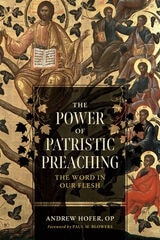
cover of The Power of Patristic Preaching: The Word in Our Flesh

The Power of Patristic Preaching

The Word in Our Flesh

Andrew Hofer, OP

Catholic University of America Press, 2023
The Word made flesh is manifested in the lives of those dedicated to his proclamation. The Power of Patristic Preaching: The Word in Our Flesh presents seven early preachers who show, by life and speech, the divine Word’s power at work in weak human life. The book is inspired by this question preached by Origen, “For what does it profit if I should say that Jesus has come in that flesh alone which he received from Mary and I should not show also that he has come in this flesh of mine?” In seven chapters, The Power of Patristic Preaching studies the exemplars of Origen for holiness, Ephrem for the humility of repentance, Gregory of Nazianzus for purification and faith, John Chrysostom for the hope of salvation, Augustine for love, Leo the Great for love of the poor and the weak, and Gregory the Great for accepting our own weakness.  With an emphasis on the incarnation, deification through the virtues, and proclamation, The Power of Patristic Preaching serves as a resource for those dedicated to the ministry of the Word (clerical, religious, and lay), and as a text for students of early Christian theology and practices. A Catholic work for a broad ecumenical audience, the book gives a cry from the heart in a suffering Church traveling through a world that is passing away.
[more]
cover of The Predestination of Humans: Augustinus, <i>Tome III, Book IX</i>

The Predestination of Humans

Augustinus, <i>Tome III, Book IX</i>

Cornelius Jansen

Catholic University of America Press, 2022

No other theological text polarized the early modern Catholic world as much as Cornelius Jansen's Augustinus. In it the erudite bishop not only reconstructed St. Augustine's teaching on grace and free will, but also boldly claimed that his views were in line with the Council of Trent and the Society of Jesus. For Jansen the latter had marginalized the Church Father's doctrine on divine predestination by overemphasizing human free will. Published after his death in 1640, Jansen's work drew a large crowd of followers and inspired an Augustinian reform movement. Its papal condemnation unintentionally spread this theology, but stifled an impassionate, academic engagement with the Augustinus. This first-ever translation of some of its central chapters enables historians, philosophers and theologians to finally engage with the founding text of Jansenism.
[more]
cover of The Presence of God and Union with God: Creation, Divine Indwelling Through Grace, Incarnation and the Blessed Vision According to Saint Thomas Aquinas

The Presence of God and Union with God

Creation, Divine Indwelling Through Grace, Incarnation and the Blessed Vision According to Saint Thomas Aquinas

Gilles Emery, OP

Catholic University of America Press, 2027
How can one discover or recover the sense of God’s presence, of living union with God? The Bible speaks to us from beginning to end of God’s presence as Creator and Savior: a presence received, a presence loved, a presence for whose fullness we intensely hope. The liturgy of the Church celebrates God present in Christ and in his Spirit who unite us to the Father. Christian existence is lived in faith by the light of this loving presence of the God who has created us, who has saved us, and who calls us to return to him. This book seeks to ponder God’s presence in its length, depth, and breadth: the presence of God in all his creatures, his presence of indwelling through grace, his presence radiating in the Son’s Incarnation, his presence in the gift of the Holy Spirit, and finally his presence in the blessed vision whereby we shall be united immediately to him. The reader is invited to take a “theological journey” in the school of Saint Thomas Aquinas, a journey in five chapters, which constitute as many stages. The first chapter offers a reflection on the relation that all creatures, including human persons, have with the creating God. The second chapter considers God’s presence in grace: the three divine persons come to abide in the just whom they make their temple. The third chapter is consecrated to Christ Jesus: “In him the whole plenitude of the divinity dwells bodily” (Col 2:9). The fourth chapter turns to the Holy Spirit, considering his presence and the gift of grace. And finally, the fifth and closing chapter deals with the consummation of Christian hope: the union with God in the blessed vision.
[more]
cover of The Quest for God and the Good Life

The Quest for God and the Good Life

Mark T. Miller

Catholic University of America Press, 2013
Throughout this introductory text, progress, decline, and redemption constitute a systematic framework for examining the central terms of Catholic theology, as well as key notions in Lonergan's theology. The book provides a firm foundation for students of Lonergan as well as anyone interested in understanding Catholic theology and applying it to ministry, education, and other fields.
[more]
cover of The Quest: History and Meaning in Religion

The Quest

History and Meaning in Religion

Mircea Eliade

University of Chicago Press, 1969

In The Quest Mircea Eliade stresses the cultural function that a study of the history of religions can play in a secularized society. He writes for the intelligent general reader in the hope that what he calls a new humanism "will be engendered by a confrontation of modern Western man with unknown or less familiar worlds of meaning."

"Each of these essays contains insights which will be fruitful and challenging for professional students of religion, but at the same time they all retain the kind of cultural relevance and clarity of style which makes them accessible to anyone seriously concerned with man and his religious possibilities."—Joseph M. Kitagawa, Religious Education
[more]
cover of The Questions on the Octateuch, Volume 1

The Questions on the Octateuch, Volume 1

John F. Theodoret of Cyrus

Catholic University of America Press, 2007
No description available
[more]
cover of The Questions on the Octateuch, Volume 2

The Questions on the Octateuch, Volume 2

John F. Theodoret of Cyrus

Catholic University of America Press, 2007
No description available
[more]
cover of The Reason of Following: Christology and the Ecstatic I

The Reason of Following

Christology and the Ecstatic I

Robert P. Scharlemann

University of Chicago Press, 1991

In the Reason of Following noted scholar Robert P. Scharlemann takes Christology in a radically new direction, suggesting that Christology itself represents a form of reason and an understanding of selfhood. For the first time, Scharlemann establishes a logical place for Christology in philosophical theology.

Scharlemann presents a christological phenomenology of the self, tracing the connections between the "I am" of the God who spoke to Moses, the "I am" of Christ, and the "I am" of autonomous self-identification. How, he asks, can the self that spontaneously responds to Jesus' "Follow me!" be compared with the everyday, autonomous self? What is the nature of "following" on the part of those who answer the summons of one whose name is "I am"? Pursuing these questions, Scharlemann develops a christological phenomenology of the self—an account in which following means not the expression of the self in action or reflection but rather self-discovery in another person.

With a deep sense of both culture and philosophy, Scharlemann distinguishes the forms of reason involved in "following" from those in ethics, aesthetics, and other modes of religious philosophic thought. His penetrating readings of nineteenth- and twentieth-century German theological and philosophical traditions provide an introduction to lesser-known thinkers such as Hermann and Picht as well as a profound critique of major figures such as Descartes, Heidegger, Fichte, and Kant.

Finally Scharlemann outlines a program for a more systematic and rounded presentation of what Christian doctrine might mean in the contemporary world. His work will be of interest to students of theology and philosophy alike.
[more]
cover of The Regensburg Lecture

The Regensburg Lecture

James V. Schall, S.J.

St. Augustine's Press, 2007

[more]
cover of The Reprobation of Humans and Angels: Augustinus, Tome III, Book X

The Reprobation of Humans and Angels

Augustinus, Tome III, Book X

Cornelius Jansen

Catholic University of America Press, 2026
Cornelius Jansen’s masterful Augustinus (1641) has recently been the center of renewed interest in the theological academic community. After the translation and publication of the chapter Jansen devoted in his work to the topic of predestination of human beings and angels, this is the first ever translation in the English language of the last chapter of the Augustinus, addressing the fate of the reprobates. Jansen illustrated the causes and justice of the divine decision to exclude the damned from the beatific vision by mostly drawing from Augustine’s works. The readers will find that Jansen’s treatment on the subject to be balanced and fair, tracing a middle course between the eschatological optimism of Universalism, which claims that all human beings, and possibly angels as well, will one day be restored to fellowship with God, and the exclusivist soteriology typical of some pre-Vatican II Catholic theology and Evangelicalism. This volume builds upon the translation of some of its central chapters in The Predestination of Humans and Angels, also in the Early Modern Catholic Sources series.
[more]
cover of The Retractions

The Retractions

Saint Augustine

Catholic University of America Press, 1999
No description available
[more]
cover of The Rhetoric of Faith: Irenaeus and the Structure of the Adversus Haereses

The Rhetoric of Faith

Irenaeus and the Structure of the Adversus Haereses

Scott D. Moringiello

Catholic University of America Press, 2019

The Rhetoric of Faith argues that the structure of Irenaeus’s opus magnum, the Adversus Haereses, is the argument of the Adversus Haereses. Through a close reading of the Irenaeus’s text, as well as through a comparison with Greco-Roman rhetorical texts, Scott Moringiello argues that Irenaeus structured his argument around the articles of the faith of the Church and that this structure builds on tropes found in the Greco-Roman rhetorical tradition.

The argument focuses on the Adversus Haereses, although it does begin with some discussion to put Irenaeus in the context of second century Christian literature. Moringiello concludes with a discussion of Irenaeus’s Demonstration of the Apostolic Preaching.Other scholars have provided introductions to Irenaeus’s work, and other scholars have argued for the structural unity of the Adversus Haereses. No other scholar, though, has argued that the faith of the Church is the basis of Irenaeus’s argument. This argument, then, presents an important contribution to the field of Irenaeus studies.
[more]
cover of The Roles of Christ's Humanity in Salvation: Insights from Theodore of Mopsuestia

The Roles of Christ's Humanity in Salvation

Insights from Theodore of Mopsuestia

Frederick G. McLeod S.J.

Catholic University of America Press, 2005
This book enables one to judge Theodore's christological statements in the wider context of how he conceives of Christ's roles in salvation.
[more]
cover of The Sacramental Theology of Marriage: One Flesh in One Spirit

The Sacramental Theology of Marriage

One Flesh in One Spirit

Jose Granados

Catholic University of America Press, 2026
The Sacramental Theology of Marriage offers a comprehensive vision of the dogmatic theology of marriage. It takes into account biblical and patristic sources, the teaching of the Magisterium (with particular emphasis on the Councils of Trent and Vatican II), and the most important contemporary theological contributions. It begins with a vision of the sacrament of mar­riage as the sacrament that integrates the order of creation into the order of sacraments. This dual dimension of marriage justifies the division of the book into two parts: marriage as a sacrament of creation and marriage as a sacrament of redemption instituted by Christ. To describe the coordinates of marriage in creation, the book refers to St. Augustine (the goods of marriage), St. Thomas Aquinas (the ends of marriage), and modern personalism as re­flected in the Second Vatican Council (the gifts of marriage). The book also draws on the theology of St. Bonaventure, who emphasized the institution of marriage by God in creation. The presentation of marriage as a sacrament of the new law is rooted in the way Christ lived the various meanings of the body. Marriage’s foundation in the body and in the experience of love sheds new light on the key milestones of its sacramentality: its matter and form, its signification, the grace it transmits, its liturgy and ministers, its indissolubil­ity, its role in building up the Church, and the path of holiness it opens to the spouses. In all of this, marriage emerges as a pivotal sacrament for articulating Christianity’s relationship to the cosmos and to society. The Sacramental The­ology of Marriage includes modern philosophical and theological explorations of the language of the body and the meaning of love (including the proposal of St. John Paul II). It also outlines the main principles for the pastoral care of marriage and family.
[more]
cover of The Sacred Cosmos: Theological, Philosophical, and Scientific Conversations in the Twelfth Century School of Chartres

The Sacred Cosmos

Theological, Philosophical, and Scientific Conversations in the Twelfth Century School of Chartres

Peter Ellard

University of Scranton Press, 2007

The School of Chartres was a bold intellectual movement of the twelfth century that introduced the World Soul and the Chartrian cosmology to Christendom. In his controversial book, The Sacred Cosmos, theologian Peter Ellard analyzes the most radical aspects of Chartrian thought and traces their relation to classical and late-antique philosophers such as Boethius and Plato. In addition, Ellard investigates the Cathedral of Chartres as an important proof and example of Chartrian theology in this essential volume for anyone interested in the intersection of spirituality and philosophy.
[more]
cover of The Second Coming of Christ: Ancient Doctrine and Present Times

The Second Coming of Christ

Ancient Doctrine and Present Times

Françoise Breynaert

St. Augustine's Press, 2022

Compelling theological questions converge with contemporary concerns in Françoise Breynaert's exposition of the doctrine surrounding Christ's second coming. Why must Christ come again? What will become of this earth as the dominion of man is more and more power concentrated in the hands of the few? Ideologies associated with the pursuit of power promise salvation––of the world, the planet, of humanity itself––through politics, technology, and science. But Breynaert draws answers to both questions instead from Scripture and with this book prepares us for what lies ahead. She points to the spiritual journey that is humanity's true destiny, along which man will encounter the temptation to accept the claims of power and its promises of fulfillment in this life, and the traps laid for the man who does not wish to be challenged for the victory of his soul. Breynaert's account of the second coming and the false promises of today's world also remind us of the assurances given in Scripture for mercy and triumph, an optimism that offers much needed strength of spirit. 

The great mystery of Christ's second coming is part of the core of Christian faith. And at long last, here is a book that explains what this truly means. And in doing so, we come to know the revealed meaning of history, which has nourished the hope of Christians through the ages. 
[more]
cover of The Seven Books of History Against the Pagans

The Seven Books of History Against the Pagans

Roy J. Paulus Orosius

Catholic University of America Press, 1964
This work is valuable as history, containing as it does contemporary information on the period after 278 A.D. It was used widely during the Middle Ages, and the existence today of nearly 200 manuscript copies is evidence of its past popularity.
[more]
cover of The Spirit of Soul Food: Race, Faith, and Food Justice

The Spirit of Soul Food

Race, Faith, and Food Justice

Christopher Carter

University of Illinois Press, 2021

Soul food has played a critical role in preserving Black history, community, and culinary genius. It is also a response to--and marker of--centuries of food injustice. Given the harm that our food production system inflicts upon Black people, what should soul food look like today?

Christopher Carter's answer to that question merges a history of Black American foodways with a Christian ethical response to food injustice. Carter reveals how racism and colonialism have long steered the development of US food policy. The very food we grow, distribute, and eat disproportionately harms Black people specifically and people of color among the global poor in general. Carter reflects on how people of color can eat in a way that reflects their cultural identities while remaining true to the principles of compassion, love, justice, and solidarity with the marginalized.

Both a timely mediation and a call to action, The Spirit of Soul Food places today's Black foodways at the crossroads of food justice and Christian practice.
[more]
cover of The Splendor of the Church in Mary: Henri de Lubac, Vatican II, and Marian Ressourcement

The Splendor of the Church in Mary

Henri de Lubac, Vatican II, and Marian Ressourcement

Theresa Marie Chau Nguyen

Catholic University of America Press, 2023
Henri de Lubac, SJ, (1896-1991) is one of the most renowned theologians of the twentieth century. Numerous studies have been undertaken to examine his many contributions to theology, but little attention has been paid to the specific topic of the relationship of the Blessed Virgin Mary and the Church in his writings. This was a topic that gave rise to contentious discussion at the Second Vatican Council, and although the Council fathers approved the integration of Marian doctrine into the Dogmatic Constitution on the Church, this synthesis of Mariology and ecclesiology has been largely neglected in theology today. The Splendor of the Church in Mary retrieves de Lubac’s Marian ecclesiology and revives an understanding and appreciation of its enduring influence at the Vatican Council and beyond. The first part examines de Lubac’s pre-conciliar works which evince a steady biblical and patristic ressourcement of Marian themes. It also explores his writings on Teilhard de Chardin’s Eternal Feminine, Christian mysticism, and Amida Buddhism and discovers in them the essential building blocks of his Marian thought. The second part turns to the Second Vatican Council and post-conciliar developments. Rereading the debates and texts of Lumen Gentium through a Marian lens brings to light the extent of de Lubac’s influence: Méditation sur l’Eglise (1953), his principal work on Mary and the Church, anticipated the structure and content of Lumen Gentium a decade before the Council. De Lubac’s writings provided a theological compass for the Council fathers, and they continue to provide direction and orientation for ecclesiological discourse today. The Splendor of the Church in Mary culminates in a constructive analysis of one of the most pressing pastoral and ecclesiological questions of our times: the question of the relationship of the universal and particular churches. Directly engaging the crucial debate between then-Cardinal Ratzinger and Cardinal Kasper, it proposes that de Lubac’s Mariology effectively offers a new perspective and a refreshing path forward. Attentive to the mystical identification of Mary and the Church, de Lubac’s ressourcement has the potential to re-enchant and advance contemporary theology in new and significant ways.
[more]
cover of The Star of Bethlehem: The Legacy of the Magi

The Star of Bethlehem

The Legacy of the Magi

Molnar, Michael R.

Rutgers University Press, 2013

Could the $50 purchase of an ancient coin by a Rutgers astronomer have unlocked the mystery of the Christmas Star? For years, scientists have looked, with little success, to astronomical records for an explanation of the magical star that guided the Magi to Christ’s manger. Intrigued by the image he found on the latest addition to his coin collection, Michael Molnar thought there might be more to learn by looking, instead, at the teachings of ancient astrologers.

Molnar argues in his book that the Star of Bethlehem was not a star at all, but rather a regal portent centering around the planet Jupiter that was eclipsed by the moon. He bases this theory on the actual beliefs of astrologers, such as the Magi, who lived around the time of Christ. Molnar found some intriguing clues to the mystery while researching the meaning of astrological symbols he found an ancient coin, which bore the image of Aries looking back at a star. He found that Aries was a symbol of Judea at the time, and that ancient astrologers believed that a new king would be born when the moon passed in front of Jupiter. Molnar wondered, could the coin have been issued as a response to the Great Messianic Portent, the Star of Bethlehem?

To match the story of the appearance of the Christmas star, Molnar also knew the event had to happen when Jupiter was “in the east.” Using these criteria and a computer program, he was able to chart an eclipse of Jupiter in Aries on April 17, 6 B.C., a day when Jupiter was precisely “in the east,” which confirmed his theory. Moreover, he found that a Roman astrologer described the conditions of that day as fitting the birth of a “divine and immortal” person.

According to Harvard University Professor Owen Gingerich, “this is the most original and important contribution of the entire 20th century” about the Magi’s star. Using clues from astronomy, astrology, and history, Molnar has created a provocative, fascinating theory on the Christmas Star. He weaves together an intriguing scientific detective story which resolves one of the world’s greatest mysteries: The Star of Bethlehem at the birth of Christ.

[more]