1566 books match the query 'Christianity' and 410 start with t

cover of The Challenge of Catholic-Jewish Theological Dialogue

The Challenge of Catholic-Jewish Theological Dialogue

Matthew Tapie

Catholic University of America Press, 2024
[more]
cover of The Charismatic Gymnasium: Breath, Media, and Religious Revivalism in Contemporary Brazil

The Charismatic Gymnasium

Breath, Media, and Religious Revivalism in Contemporary Brazil

Maria José de Abreu

Duke University Press, 2020
In The Charismatic Gymnasium Maria José de Abreu examines how Charismatic Catholicism in contemporary Brazil produces a new form of total power through a concatenation of the breathing body, theology, and electronic mass media. De Abreu documents a vast religious respiratory program of revival popularly branded as “the aerobics of Jesus.” Pneuma—the Greek term for air, breath, and spirit—is central to this aerobic program, whose goal is to labor on the athletic elasticity of spirit. Tracing the rhetoric, gestures, and spaces that together constitute this new theological community, de Abreu exposes the articulating forces among evangelical Christianity, neoliberal logics, and the rise of right-wing politics. By calling attention to how an ethics of pauperism vitally intersects with the neoliberal ethos of flexibility, de Abreu shows how paradoxes do not hinder but expand the Charismatic gymnasium. The result, de Abreu demonstrates, is the production of a fluid form of totalitarianism and Christianity in Brazil and beyond.
[more]
cover of The Chastity Plot

The Chastity Plot

Lisabeth During

University of Chicago Press, 2021

In The Chastity Plot, Lisabeth During tells the story of the rise, fall, and transformation of the ideal of chastity. From its role in the practice of asceticism to its associations with sovereignty, violence, and the purity of nature, it has been loved, honored, and despised. Obsession with chastity has played a powerful and disturbing role in our moral imagination. It has enforced patriarchy’s double standards, complicated sexual relations, and imbedded in Western culture a myth of gender that has been long contested by feminists. Still not yet fully understood, the chastity plot remains with us, and the metaphysics of purity continue to haunt literature, religion, and philosophy. Idealized and unattainable, sexual renunciation has shaped social institutions, political power, ethical norms, and clerical abuses. It has led to destruction and passion, to seductive fantasies that inspired saints and provoked libertines. As During shows, it should not be underestimated.

Examining literature, religion, psychoanalysis, and cultural history from antiquity through the middle ages and into modernity, During provides a sweeping history of chastity and insight into its subversive potential. Instead of simply asking what chastity is, During considers what chastity can do, why we should care, and how it might provide a productive disruption, generating new ways of thinking about sex, integrity, and freedom.
[more]
cover of The Christian Philosophy of Jacques Maritain

The Christian Philosophy of Jacques Maritain

Jason L.A. West

Catholic University of America Press, 2025
A study of the Christian philosophy of Jacques Maritain (1882-1973), an influential, creative, and prolific writer. He was widely recognized as one of the most prominent Catholic intellectuals during his own lifetime and was widely seen as a spokesman for the Thomistic revival. This study aims to present Maritain’s thought as a dynamic and coherent philosophy in its own right. This is the only book in English to present Maritain’s philosophy on the full range of topics upon which he wrote. It focusses on Maritain as a twentieth-century philosopher, rather than an interpreter of Aquinas. Accordingly, this book presents Maritain’s philosophy in its own context. Finally, this work is also attentive to the religious context of Maritain’s philosophy and highlights his overlooked contributions to theology and other areas of philosophy that are informed by his theological commitments, e.g. mysticism, ecclesiology, education and philosophy of history. Accordingly, The Christian Philosophy of Jacques Maritain aims at providing the reader with a comprehensive presentation of Maritain’s thought and a clear vision of his philosophy as a whole.
[more]
cover of The Christian Religion, as Professed by a Daughter of the Church of England

The Christian Religion, as Professed by a Daughter of the Church of England

Mary Astell

Iter Press, 2013
This book is the most mature and comprehensive statement of Mary Astell’s religious and philosophical views. It also represents the culmination of Astell’s feminist project to teach her fellow women how to lead useful lives of virtue and wisdom. The main purpose of this work is to instruct women about the ultimate nature of reality, the true source of happiness, their duties and obligations to God, and about “how best to live” and how to treat other people. This volume offers the first complete modern version of the 1717 second edition. It provides a fully modernized text, a scholarly introduction, biographical and bibliographical information, general historical-intellectual background, and definitions of obscure and archaic terms.
[more]
cover of The Christian Tradition: A History of the Development of Doctrine, Volume 1: The Emergence of the Catholic Tradition (100-600)

The Christian Tradition

A History of the Development of Doctrine, Volume 1: The Emergence of the Catholic Tradition (100-600)

Jaroslav Pelikan

University of Chicago Press, 1971


The first volume of a magisterial survey of the entire history of the Christian tradition, this volume focusing on the emergence of Catholicism

In this five-volume opus Jaroslav Pelikan traces the development of Christian doctrine from the first century to the twentieth.
 
[more]
cover of The Christian Tradition: A History of the Development of Doctrine, Volume 2: The Spirit of Eastern Christendom (600-1700)

The Christian Tradition

A History of the Development of Doctrine, Volume 2: The Spirit of Eastern Christendom (600-1700)

Jaroslav Pelikan

University of Chicago Press, 1974

The line that separated Eastern Christendom from Western on the medieval map is similar to the "iron curtain" of recent times. Linguistic barriers, political divisions, and liturgical differences combined to isolate the two cultures from each other. Except for such episodes as the schism between East and West or the Crusades, the development of non-Western Christendom has been largely ignored by church historians. In The Spirit of Eastern Christendom, Jaroslav Pelikan explains the divisions between Eastern and Western Christendom, and identifies and describes the development of the distinctive forms taken by Christian doctrine in its Greek, Syriac, and early Slavic expression.

"It is a pleasure to salute this masterpiece of exposition. . . . The book flows like a great river, slipping easily past landscapes of the utmost diversity—the great Christological controversies of the seventh century, the debate on icons in the eighth and ninth, attitudes to Jews, to Muslims, to the dualistic heresies of the high Middle Ages, to the post-Reformation churches of Western Europe. . . . His book succeeds in being a study of the Eastern Christian religion as a whole."—Peter Brown and Sabine MacCormack, New York Review of Books

"The second volume of Professor Pelikan's monumental work on The Christian Tradition is the most comprehensive historical treatment of Eastern Christian thought from 600 to 1700, written in recent years. . . . Pelikan's reinterpretation is a major scholarly and ecumenical event."—John Meyendorff

"Displays the same mastery of ancient and modern theological literature, the same penetrating analytical clarity and balanced presentation of conflicting contentions, that made its predecessor such an intellectual treat."—Virgina Quarterly Review
[more]
cover of The Christian Tradition: A History of the Development of Doctrine, Volume 3: The Growth of Medieval Theology (600-1300)

The Christian Tradition

A History of the Development of Doctrine, Volume 3: The Growth of Medieval Theology (600-1300)

Jaroslav Pelikan

University of Chicago Press, 1978

"A magnificent history of doctrine."—New York Review of Books

"In this volume Jaroslav Pelikan continues the splendid work he has done thus far in his projected five-volume history of the development of Christian doctrine, defined as 'what the Church believes, teaches, and confesses on the basis of the word of God.' The entire work will become an indispensable resource not only for the history of doctrine but also for its reformulation today. Copious documentation in the margins and careful indexing add to its immense usefulness."—E. Glenn Hinson, Christian Century

"This book is based on a most meticulous examination of medieval authorities and the growth of medieval theology is essentially told in their own words. What is more important, however, then the astounding number of primary sources the author has consulted or his sovereign familiarity with modern studies on his subject, is his ability to discern form and direction in the bewildering growth of medieval Christian doctrine, and, by thoughtful emphasis and selection, to show the pattern of that development in a lucid and persuasive narrative. No one interested in the history of Christianity or theology and no medievalist, whatever the field of specialization, will be able to ignore this magnificent synthesis."—Bernhard W. Scholz, History

"The series is obviously the indispensable text for graduate theological study in the development of doctrine, and an important reference for scholars of religious and intellectual history as well. . . . Professor Pelikan's series marks a significant departure, and in him we have at last a master teacher."—Marjorie O'Rourke Boyle, Commonweal
[more]
cover of The Christian Tradition: A History of the Development of Doctrine, Volume 4: Reformation of Church and Dogma (1300-1700)

The Christian Tradition

A History of the Development of Doctrine, Volume 4: Reformation of Church and Dogma (1300-1700)

Jaroslav Pelikan

University of Chicago Press, 1984

This penultimate volume in Pelikan's acclaimed history of Christian doctrine—winner with Volume 3 of the Medieval Academy's prestigious Haskins Medal—encompasses the Reformation and the developments that led to it.

"Only in America, and in this case from a Lutheran scholar, could we expect an examination so lacking in parti pris, a survey so perceptive, so free—and, one must say, the result of so much immense labor, so rewardingly presented."—John M. Todd, New York Times Book Review

"Never wasting a word or losing a plot line, Pelikan builds on an array of sources that few in our era have the linguistic skill, genius or ambition to master."—Martin E. Marty, America

"The use of both primary materials and secondary sources is impressive, and yet it is not too formidable for the intelligent layman."—William S. Barker, Eternity
[more]
cover of The Christian Tradition: A History of the Development of Doctrine, Volume 5: Christian Doctrine and Modern Culture (since 1700)

The Christian Tradition

A History of the Development of Doctrine, Volume 5: Christian Doctrine and Modern Culture (since 1700)

Jaroslav Pelikan

University of Chicago Press, 1989

Jaroslav Pelikan begins this volume with the crisis of orthodoxy that confronted all Christian denominations by the beginning of the eighteenth century and continues through the twentieth century in its particular concerns with ecumenism. The modern period in the history of Christian doctrine, Pelikan demonstrates, may be defined as the time when doctrines that had been assumed more than debated for most of Christian history were themselves called into question: the idea of revelation, the uniqueness of Christ, the authority of Scripture, the expectation of life after death, even the very transcendence of God.

"Knowledge of the immense intellectual effort invested in the construction of the edifice of Christian doctrine by the best minds of each successive generation is worth having. And there can hardly be a more lucid, readable and genial guide to it than this marvellous work."—Economist

"This volume, like the series which it brings to a triumphant conclusion, may be unreservedly recommended as the best one-stop introduction currently available to its subject."—Alister E. McGrath, Times Higher Education Supplement

"Professor Pelikan's series marks a significant departure, and in him we have at last a master teacher."—Marjorie O'Rourke Boyle, Commonweal

"Pelikan's book marks not only the end of a dazzling scholarly effort but the end of an era as well. There is reason to suppose that nothing quite like it will be tried again."—Harvey Cox, Washington Post Book World
[more]
cover of The Christianity Reader

The Christianity Reader

Edited by Mary Gerhart and Fabian Udoh

University of Chicago Press, 2007

Christianity is the world’s most populous religion, with some two billion adherents. As a world religion, Christianity has flourished because it is capable of taking on new forms in new contexts. To understand both the religion’s history and its present state, Mary Gerhart and Fabian Udoh gather original texts—from early Christian writings to contemporary documents on church-related issues—in The Christianity Reader. The most comprehensive anthology of Christian texts ever in English, this is a landmark sourcebook for the study of Christianity’s historical diversity. With newly edited, annotated, and translated primary texts, along with supplemental analytical essays, the volume allows Christianity, at long last, to speak in its many voices.

Focusing on Christianity as a religion, Gerhart and Udoh select texts that illuminate issues such as theology, mysticism, and ritual, while also articulating the stories of previously marginalized groups, as well as those in new and growing epicenters of the religion. With nearly three hundred selections, the texts encompass the entire history of Christian writings excluding the New Testament, from Justin Martyr and Tertullian to Fabien Eboussi Boulaga and Teresa of Calcutta. Eight thematic sections cover biblical traditions and interpretations; early influences; nascent forms; patterns of worship; structures of community; philosophy, theology, and mysticism; twentieth-century issues and challenges; and the contemporary relationship between Christianity and other world religions. The Reader’s contents are arranged chronologically and are supported with introductions and source notes that explain the rationale for their inclusion and their context.

Providing a far richer selection than ever before available in a single volume, The Christianity Reader will be welcomed as both a classroom resource and a work of reference for decades to come.
[more]
cover of The Christology of Erasmus: Christ, Humanity, and Peace

The Christology of Erasmus

Christ, Humanity, and Peace

Terence J. Martin

Catholic University of America Press, 2024
Nothing is more central to the religious thinking of Erasmus of Rotterdam than the reality of Christ—in his eyes, that supreme revelation of divine mercy embodied in the life of Jesus of Nazareth to which Christian scriptures variously testify, but also the divine presence undergirding that life-centering ethic of love and peace, what Erasmus calls the “philosophy of Christ.” The purpose of this book is to distill the Christological elements from his vast corpus in a manner that shows the range, coherence, and value of Erasmus’ thinking on Christological questions. While Erasmus works within the broad parameters of orthodox teaching, his critical skills with languages, accent on rhetoric in theology, keen sense of irony, appreciation for the limits of human knowledge, incipient sense of history, emphasis on the welfare of humanity, and passionate defense of peace, give his work a distinctive stamp and thereby make a singular contribution to the history of Christology. What Erasmus contributes to discussions of the divinity of Christ is a counsel of restraint in metaphysical speculation, an accent on the revelatory breadth of the eternal Word of God, and an invitation to think of Christ incarnate as the eloquent oration of God. But the central impulse of the Christology of Erasmus is the affirmation of the full incarnation of Christ in human existence, abstaining as much as possible from docetic insulation of the divine from the struggles of human experience, in order to highlight the redemptive capacity of Christ for the transformation of human life. With that, the ethical capstone of Erasmus’ reflections on Christ centers on the responsibility to imitate Christ’s love for others, and thus for advancing the cause of peace in personal and social life. This books adds the voice of this remarkable Catholic humanist to the history of theological discussions in the early modern era, while also restoring its rightful place in the broader history of Christology.
[more]
cover of The Church Confronts Modernity

The Church Confronts Modernity

Leslie Woodcock Tentler

Catholic University of America Press, 2007
The Church Confronts Modernity assesses the history of Roman Catholicism since 1950 in the United States, the Republic of Ireland, and the Canadian province of Quebec
[more]
cover of The Church in Iraq

The Church in Iraq

Fernando Cardinal Filoni

Catholic University of America Press, 2017

The persecution of the church in Iraq is one of the great tragedies of the twenty-first century. In this short, yet sweeping account, Cardinal Filoni, the former Papal Nuncio to Iraq, shows us the people and the faith in the land of Abraham and Babylon, a region that has been home to Persians, Parthians, Byzantines, Mongols, Ottomans, and more. This is the compelling and rich history of the Christian communities in a land that was once the frontier between Rome and Persia, for centuries the crossroads of East and West for armies of invaders and merchants, and the cradle of all human civilization. Its unique cultural legacy has, in the past few years, been all but obliterated.

The Church in Iraq is both a diligent record and loving testimonial to a community that is struggling desperately to exist. Filoni guides the reader through almost two thousand years of history, telling the story of a people who trace their faith back to the Apostle Thomas. The diversity of peoples and churches is brought deftly into focus through the lens of their interactions with the papacy, but The Church in Iraq does not shy away from discussing the local political, ethnic, and theological tensions that have resulted in centuries of communion and schism. Never losing his focus on the people to whom this book is so clearly dedicated, Cardinal Filoni has produced a personal and engaging history of the relationship between Rome and the Eastern Churches. This book has much to teach its reader about the church in the near East. Perhaps its most brutal lesson is the ease with which such a depth of history and culture can be wiped away in a few short decades.
[more]
cover of The Church, the Councils, and Reform: The Legacy of the Fifteenth Century

The Church, the Councils, and Reform

The Legacy of the Fifteenth Century

Gerald Christianson

Catholic University of America Press, 2008
The Church, the Councils, and Reform brings together leading authorities in the field of church history to reflect on the importance of the late medieval councils. This is the first book in English to consider the lasting significance of the period from Constance to Trent (1414-1563) when several councils met to heal the Great Schism (1378) and reform the church.
[more]
cover of The Churches of Christ in the 20th Century: Homer Hailey's Personal Journey of Faith

The Churches of Christ in the 20th Century

Homer Hailey's Personal Journey of Faith

David Edwin Harrell

University of Alabama Press, 2002

The story of one of this country's major religious movements is told through the spiritual odyssey of one of its prominent spokesmen. 

When Homer Hailey sparked controversy within Churches of Christ congregations over his stand on divorce and remarriage, he spoke to a movement already sundered. Historian David Edwin Harrell tells Hailey's story as a means of presenting the larger drama of faith and feuding within those churches.

A nondenominational movement of autonomous congregations, Churches of Christ have been among the fastest-growing religious bodies in the 20th century. Throughout the movement's history, church leaders debated issues ranging from missionary societies to the use of instrumental music in worship. Although some disagreements affected only the ties between congregations, others led to the creation of three distinct groups calling themselves Churches of Christ identified by their sociological and theological positions. 

This book shows how the story of the Churches of Christ is reflected by Homer Hailey, a preacher, educator, and author whose life puts in perspective the personal journeys traveled by members in this century. Writing from the perspective of the non-institutional wing within the movement, Harrell avoids mainstream biases to describe the various dissenting views as fully and fairly as possible.

Combining institutional history and biography, Harrell's book is the first to bring the story of the Churches of Christ to century's end. It provides new insight into how this movement realigned itself and shows how one man's career reflected a century of spiritual growth and change for the church as a whole.


[more]
cover of The Classical Moment: Selected Essays on Knowledge and Its Pleasures

The Classical Moment

Selected Essays on Knowledge and Its Pleasures

James V. Schall

St. Augustine's Press, 2014

The essay is one of the great inventions of the human mind. It can talk about anything and everything. It can be lightsome or solemn. It can be witty or informative. Above all, it is short. It likes the passage in which Socrates told Callicles in the Gorgias to make his answers brief. Yet, we can find in essays things we need and want to know. Aquinas often managed to make the most profound arguments in two paragraphs. Samuel Johnson did the same. 
      The Classical Moment is, indeed, a collection of “selected essays.” Such a collection is a classical and beloved form of English letters, the literary form most preferred by Schall. 
     The essays in this book all touch on knowledge and its pleasures. Schall does not tarry on the effort and determination it often takes to say just what we want to say, then say it and know that we have said it. Somehow, when an essay is written, an author simply knows that it is complete, that it is what he wanted to say. He says to himself, “Yes, that is it.” An essayist may well be conscious that when he begins an essay, he really does not know what he will finally say. The writing is the saying. Our writing is our thinking, our thinking-through, our being pleased to know this is it . . . this is the point Schall, one of America’s greatest essayists, makes here.
      The “classical moment” is that intense experience of seeing or hearing or encountering some vista, or song, or person that takes us out of ourselves. We are most ourselves somehow when we are most outside of ourselves, seeing what is not ourselves. We are intended to be more than ourselves in being ourselves, to know with others what is the truth, to know what is.
      These essays originally appeared in regular columns done in various journals, papers, and on-line sources. One can read them in any order. The order of the author or collector does have a certain “logic,” but each essay is also a whole, something contained within itself. 
     The unity of an essay collection is found more in a kind enthrallment that comes to us when we deal with the things that are both important and delightful. At bottom, these essays belong together. Aristotle warned us that if we did not delight in the things that are, we would seek our highest pleasures where they are not really found. 
        We will always seek something to delight in. What civilization is about lies in finding what is really worthy of the capacity of delight that is given to us in our being. The “classical moment” is the perfect phrase that brings us to the threshold of this experience. We have to enter it ourselves, but once inside, we will find so much more than ourselves. And we will rejoice.
 

[more]
cover of The Cleansing of the Heart

The Cleansing of the Heart

Reginald Lynch

Catholic University of America Press, 2017

Recalling the Biblical and Patristic roots of the Church's sacramental identity, the Second Vatican Council calls the Church the 'visible sacrament' of that unity offered through Christ (LG 9). 'Sacrament' in this sense not only describes who the Church is, but what she does. In this regard, the Council Fathers were careful to establish a strong connection between the symbolic nature of the Church's sacraments and their effect on those who received them.

Reginald Lynch is concerned with the cleansing of the heart—a phrase borrowed from St. Augustine and employed by Aquinas, which describes the effects that natural elements such as water or bread have on the human person when taken up by the Church as sacramental signs. Aquinas' approach to sacramental efficacy is unique for its integration of diverse theological topics such as Christology, merit, grace, creation and instrumentality. While all of these topics will be considered to some extent, the primary focus of The Cleansing of the Heart is the sacraments understood as instrumental causes of grace. This volume provides the historical context for understanding the development of sacramental causality as a theological topic in the scholastic period, emphasizing the unique features of Aquinas' response to this question. Following this, relevant texts from Aquinas' early and later work are examined, noting Aquinas' development and integration of the idea of sacramental causality in his later work. The Cleansing of the Heart concludes by contrasting alternatives to Aquinas' theory of sacramental causality that subsequently emerged. The rise of humanism introduced many changes within rhetoric and philosophy of language that had a profound effect on some theologians during the Modern period. This book provides historical context for understanding the most prominent of these theories in contrast to Aquinas, and examines some of their theological implications.
[more]
cover of The Coloniality of the Secular: Race, Religion, and Poetics of World-Making

The Coloniality of the Secular

Race, Religion, and Poetics of World-Making

An Yountae

Duke University Press, 2024

In The Coloniality of the Secular, An Yountae investigates the collusive ties between the modern concepts of the secular, religion, race, and coloniality in the Americas. Drawing on the work of Édouard Glissant, Frantz Fanon, Aimé Césaire, Sylvia Wynter, and Enrique Dussel, An maps the intersections of revolutionary non-Western thought with religious ideas to show how decoloniality redefines the sacred as an integral part of its liberation vision. He examines these thinkers’ rejection of colonial religions and interrogates the narrow conception of religion that confines it within colonial power structures. An explores decoloniality’s conception of the sacred in relation to revolutionary violence, gender, creolization, and racial phenomenology, demonstrating its potential for reshaping religious paradigms. Pointing out that the secular has been pivotal to regulating racial hierarchies under colonialism, he advocates for a broader understanding of religion that captures the fundamental ideas that drive decolonial thinking. By examining how decolonial theory incorporates the sacred into its vision of liberation, An invites readers to rethink the transformative power of decoloniality and religion to build a hopeful future.
[more]
cover of The Common Good of Constitutional Democracy: Essays in Political Philosophy and on Catholic Social Teaching

The Common Good of Constitutional Democracy

Essays in Political Philosophy and on Catholic Social Teaching

Martin Rhonheimer

Catholic University of America Press, 2013
The Common Good of Constitutional Democracy offers a rich collection of essays in political philosophy by Swiss philosopher Martin Rhonheimer. Like his other books in both ethical theory and applied ethics, which have recently been published in English, the essays included are distinguished by the philosophical rigor and meticulous attention to the primary and secondary literature of the various topics discussed
[more]
cover of The Community of St. Cuthbert in the Late Tenth Century: The Chester-le-Street Additions to Durham Cathedral Library A.IV.19

The Community of St. Cuthbert in the Late Tenth Century

The Chester-le-Street Additions to Durham Cathedral Library A.IV.19

Karen Louise Jolly

The Ohio State University Press, 2012

The Community of St. Cuthbert in the Late Tenth Century: The Chester-le-Street Additions to Durham Cathedral Library A.IV.19 reveals the dynamic role a seemingly marginalized community played during a defining period for the emergence of English religious identity. Based on her new critical edition of additions made to Durham Cathedral Library A.IV.19 and by questioning the purpose of those late tenth-century additions, Karen Louise Jolly is able to uncover much about the Chester-le-Street scribes and their tumultuous time, rife as it was with various political tensions, from Vikings and local Northumbrian nobles to an increasingly dominant West Saxon monarchy.

Why, for instance, would a priest laboriously insert an Old English gloss above every Latin word in a collection of prayers intended to be performed in Latin? What motivated the same English scribe to include Irish-derived Christian materials in the manuscript, including prayers invoking the archangel Panchiel to clear birds from a field?
Jolly’s extensive contextual analysis includes a biography of Aldred, the priest and provost of the community primarily responsible for adding these unusual texts. Besides reinterpreting the manuscript's paleography and codicology, she investigates both the drive for reform evidenced by the added liturgical materials and the new importance of Irish-derived encyclopedic and educational materials.
[more]
cover of The Complementarity of Women and Men: Philosophy, Theology, Psychology, and Art

The Complementarity of Women and Men

Philosophy, Theology, Psychology, and Art

Paul C. Vitz

Catholic University of America Press, 2021
The Complementarity of Women and Men provides a Catholic Christian case that men and women are in certain respects quite different but also have a positive, synergistic complementary relationship. Although differences and their mutually supporting relationships are focused on throughout the volume, men and women are assumed to have equal dignity and value. This underlying interpretation comes from the familiar, basic theological position in Genesis that both sexes were made in the image of God. After a cogent philosophical introduction to complementary differences by J. Budziszewski, this position is developed from theological, philosophical, and historical perspectives by Sr. Prudence Allen. Next Deborah Savage, building upon the writings of St. John Paul II, gives a strong theological basis for complementarity. This is followed by Elizabeth Lev’s chapter presenting new and surprising art history evidence from the paintings of Michelangelo in the Sistine Chapel supporting the complementarity interpretation. A final chapter by Paul Vitz documents and summarizes the scientific evidence supporting sexual difference and complementarity in the disciplines of psychology and neuroscience. As a consequence of both the individual chapters and the integrated understanding they present The Complementarity of Women and Men is a significant contribution to the important, complex, contemporary debate about men, women, sex, and gender.
[more]
cover of The Complete Short Stories, Volume 1

The Complete Short Stories, Volume 1

Enid Dinnis

Catholic University of America Press, 2023
Gathered here for the first time are the stories of Enid Dinnis, who lived and wrote in London throughout the first half of the 20th century. Enid Dinnis moved widely in the London literary world but she was also Mother Superior of a ‘hidden’ religious order, The Daughters of the Heart of Mary. Few in London’s literary scene knew that Dinnis was a nun but she lived most of her life in a small convent in Wimbledon with other well-known figures from the period, including Maud Petre. Dinnis wrote Catholic stories for readers of all ages. She is one of the finest lost authors of the Catholic Literary Revival. Dinnis’s intervention in the short story genre is considerable. She weaves together fairy tale, myth, Catholic mysticism, epiphanic dialogue and everyday characterization to produce stories that are both simple and complex, both light-hearted and profound. Always concerned with ‘the wonderful resourcefulness of the love of God’, her stories proclaim the presence and workings of divine grace in the everyday lives of all people—old and young, sceptics and seekers, farmers and priests. Dinnis’s stories show that God’s love is the answer to all human struggles and quests. They illustrate what it means to receive love – human and divine – and to pass it on. Her work is filled with visions and confessions, miracles and conversions – but it is never overly pious or saccharine. Her characters are real people experiencing the truths proclaimed by the Catholic faith, which is always as marvelous as it is every-day. Enid Dinnis’s stories reenchant the post-enlightenment world along Catholic lines. Her stories put the supernatural firmly back into the world in a way more needed than ever.
[more]
cover of The Complete Writings and Selected Correspondence of John Dickinson: Volume 1

The Complete Writings and Selected Correspondence of John Dickinson

Volume 1

Jane E. Calvert

University of Delaware Press, 2011
The Complete Writings and Selected Correspondence of John Dickinson, vol. 1 inaugurates a multivolume documentary edition that will, for the first time ever, provide the complete collection of everything Dickinson published on public affairs over the course of his life. The documents include essays, articles, broadsides, resolutions, petitions, declarations, constitutions, regulations, legislation, proclamations, songs and odes. Among them are many of the seminal state papers produced by the first national congresses and conventions. Also included are correspondences between Dickinson and some of the key figures of his era. This edition should raise Dickinson to his rightful place among America’s founding fathers, rivaled in reputation only by Benjamin Franklin before 1776. Dickinson was celebrated throughout the colonies, as well as in England and France, as the great American spokesman for liberty, and the documents in this edition evidence his tireless political work and unmatched corpus.
[more]
cover of The Complete Writings and Selected Correspondence of John Dickinson: Volume 2

The Complete Writings and Selected Correspondence of John Dickinson

Volume 2

Jane E. Calvert

University of Delaware Press, 2021

John Dickinson’s entry into public life in Delaware and Pennsylvania is a highlight of the ninety-eight documents written over four years printed in Volume Two of The Complete Writings and Selected Correspondence of John Dickinson. The volume opens with Dickinson’s legal notes as he established himself as one of the most prominent and learned lawyers in colonial British North America. His cases dealt with, among other issues, interpretation of wills, disputes over land, sailors suing for wages, a fine on a Quaker who refused military service, and a notorious murder in a prominent Philadelphia family. It concludes with Dickinson offering thoughtful advice to a young man who was considering the arduous work in becoming a lawyer. “I think,” he wrote, “those must be infinitely the most happy, whose fatigues are softend by a conscious Benevolence of mind wishing & endeavouring to [pro]mote the Happiness of others as well as their own.”
 
Dickinson’s hard work on behalf of his clients brought him success in other areas of his public life. In October 1759, he was elected to his first public position as a representative for Kent County, Del., the following year he was elevated to the position of speaker, and in 1762, he became a representative for Philadelphia County, Pa. As a legislator in two colonies, learning his craft as a global war unfolded, he contributed to bills on military and defense, Indian relations, infrastructure improvements and city management, and served on various committees. The death of George II occasioned debates over laws and judges, in which Dickinson participated. This era concludes with Dickinson playing a central role in managing the unfolding Paxton Riots, in which frontiersmen massacred peaceful Indians and threatened the Quaker leadership of Pennsylvania.
 
In private, Dickinson lost the two most prominent male figures in his life in 1760, his father, Samuel, and soon thereafter, his mentor, colleague, and friend, John Moland. In honor of Moland, Dickinson published a poem and became a proxy head to Moland’s large family. Though his extant correspondence during this period is small, he exchanged letters with Mary Cadwalader Dickinson, Israel Pemberton, William Allason, George Read, Thomas McKean, and others. Perhaps most significant, he wrote a lengthy, unpublished essay on the flag-of-truce trade and also maintained commonplace books as he considered his place within the British Empire, opening up the next phase in Dickinson’s life as a leader of the resistance against Britain.

Published by the University of Delaware Press. Distributed worldwide by Rutgers University Press.
[more]
cover of The Complete Writings and Selected Correspondence of John Dickinson: Volume 3

The Complete Writings and Selected Correspondence of John Dickinson

Volume 3

Jane E. Calvert

University of Delaware Press, 2024
During the years 1764 through 1766, John Dickinson became a leading figure in the Pennsylvania Assembly and in the growing American resistance to unjust British taxation. The documents in this volume show that, in both roles, he sought to protect the fundamental rights of ordinary Americans. In the 1764 Assembly, after working to punish those responsible for the slaughter of peaceful Indians, Dickinson challenged Benjamin Franklin and Joseph Galloway in their plan to abolish Pennsylvania’s unique Quaker constitution that secured liberty of conscience and place the colony under the control of the Crown. Then, in 1765, he served as primary draftsman at the Stamp Act Congress in New York, producing the first official American documents of the Revolutionary Era. In his private capacity, Dickinson continued to write through 1765 and 1766, publishing, among other documents, the first practical advice to Americans on how to resist Great Britain. The present volume also contains draft legislation, fascinating case notes from his legal practice, and personal correspondence.
[more]
cover of The Complete Writings and Selected Correspondence of John Dickinson: Volume 4, 1767-1769

The Complete Writings and Selected Correspondence of John Dickinson

Volume 4, 1767-1769

John Dickinson

University of Delaware Press, 0
In 1767, John Dickinson began publishing his twelve Letters from a Farmer in Pennsylvania, which earned him international celebrity as the leader of the American resistance to Britain. They educated Americans about their rights and how to defend them without violence. Importantly, they also taught the colonists to unite and understand themselves first and foremost as Americans rather than as Britons. He followed with letters on religious liberty in the Episcopal controversy and America’s first patriotic song, the “Liberty Song.” This volume documents the overwhelming public response around the Atlantic World to his writings. It was largely positive, with readers paying tribute to him in numerous ways, beginning with the Massachusetts circular letter to the other colonies advocating a nonimportation agreement. Most of the negative responses came from Dickinson’s enemy from the 1764 royal government controversy in Pennsylvania, Joseph Galloway, who orchestrated a smear campaign against “the Farmer.” Dickinson’s legal notes from this period include several interesting cases, such as his defense of a mixed-race servant woman charged with infanticide. Although there is limited extant correspondence, it includes letters concerning his courtship of his future wife, Mary Norris.
[more]
cover of The Concept of <i>Ius</i> and the Nature of Law in Thomas Aquinas

The Concept of <i>Ius</i> and the Nature of Law in Thomas Aquinas

Loic-Marie Le Bot, OP

Catholic University of America Press, 2025
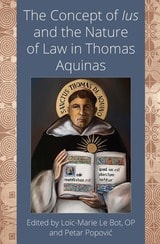
This collection of essays constitutes the fruit of a scholarly conference held in Rome in April 2023, which was organized by the Pontifical University of Saint Thomas Aquinas, the Pontifical University of the Holy Cross, and the Angelicum Thomistic Institute. The essays offer a scholarly reflection on various historical and doctrinal aspects of Aquinas’s concept of ius, and on the extent to which this concept helps to illuminate his account of the nature of law, that is, of the juridical phenomenon. Each essay addresses, from the viewpoint of its specific topic, the implications of the Angelic Doctor’s description of ius as the object of justice, as presented in the Secunda secundae of his Summa theologiae (starting from question 57, article 1). Following Aquinas’s own insights, the focus on the virtue of justice is thus deemed crucial for understanding the essence or the ontological fabric of law. Justice is simultaneously analyzed as always remaining inherently connected to its moral and divine-salvific aspects. The volume is divided in three parts. The first part of the collection contains essays that are dedicated to the analysis of Aquinas’s concept of ius in a historical perspective. The second group of essays in this collection examine some further doctrinal and contextual issues pertinent to the essence of ius. Each attempt to elucidate the ontology of law should be supported by the aptitude of the resulting accounts of law’s nature to provide workable platforms for legal practices. This line of reasoning represents the rationale for the third part of this collection, which focuses on the matters of applying Aquinas’s concept of ius in systemic and practical legal settings of State law and canon law.
[more]
cover of The Consensus of the Church and Papal Infallibility: A Study in the Background of Vatican I

The Consensus of the Church and Papal Infallibility

A Study in the Background of Vatican I

Richard F. Costigan, S.J.

Catholic University of America Press, 2005
After a concise introduction that defines the two schools of theology, Richard Costigan examines the thought of nine major theologians on the subject: Bossuet, Tournely, Orsi, Ballerini, Bailly, Bergier, La Luzerne, Muzzarelli, and Perrone.
[more]
cover of The Controversy of Renaissance Art

The Controversy of Renaissance Art

Alexander Nagel

University of Chicago Press, 2011


Many studies have shown that images—their presence in the daily lives of the faithful, the means used to control them, and their adaptation to secular uses—were at the heart of the Reformation crisis in northern Europe.  But the question as it affects the art of Italy has been raised only in highly specialized studies.

In this book, Alexander Nagel provides the first truly synthetic study of the controversies over religious images that pervaded Italian life both before and parallel to the Reformation north of the Alps. Tracing the intertwined relationship of artistic innovation and archaism, as well as the new pressures placed on the artistic media in the midst of key developments in religious iconography, The Controversy of Renaissance Art offers an important and original history of humanist thought and artistic experimentation from one of our most acclaimed historians of art.
[more]
cover of The Copy Generic: How the Nonspecific Makes Our Social Worlds

The Copy Generic

How the Nonspecific Makes Our Social Worlds

Scott MacLochlainn

University of Chicago Press, 2022

An illuminating look at the concept of the generic and its role in making meaning in the world.

From off-brand products to elevator music, the “generic” is discarded as the copy, the knockoff, and the old. In The Copy Generic, anthropologist Scott MacLochlainn insists that more than the waste from the culture machine, the generic is a universal social tool, allowing us to move through the world with necessary blueprints, templates, and frames of reference. It is the baseline and background, a category that orders and values different types of specificity yet remains inherently nonspecific in itself. Across arenas as diverse as city planning, social media, ethnonationalism, and religion, the generic points to spaces in which knowledge is both overproduced and desperately lacking. Moving through ethnographic and historical settings in the Philippines, Europe, and the United States, MacLochlainn reveals how the concept of the generic is crucial to understanding how things repeat, circulate, and are classified in the world.
[more]
cover of The Correspondence of Theodoret of Cyrus: The Collectio Sirmondiana, Volume 4

The Correspondence of Theodoret of Cyrus

The Collectio Sirmondiana, Volume 4

John F. Theodoret of Cyrus

Catholic University of America Press, 2025
Volumes 4 and 5 of the Library of Early Christianity, The Correspondence of Theodoret of Cyrus: The Collectio Sirmondiana, present a text and translation of the largest of three collections of Theodoret’s letters that have come down to us (first edited by the Jesuit father Jacques Sirmond, Paris 1642). Though pastor of the remote see of Cyrus in Syria, Theodoret was one of the major teachers of the eastern Christian church of the late fourth and early fifth century. These 147 letters place before us the myriad concerns, both spiritual and secular, of a late-antique bishop: Theodoret expounds theological and moral issues for fellow churchmen, begs imperial officials for tax relief for local landowners, provides for the sustenance and safety of refugees from the Vandal war in Africa, thanks a friend for a gift of wine. The edition of the Greek text is the work of John Petruccione. A textual introduction explains the relationships among the manuscripts, and the critical notes the choices made where the text is uncertain. The historical / theological introduction is the work of István Pásztori-Kupán, one of the foremost expositors of the thought of Theodoret and of his Antiochene predecessors and contemporaries. Two maps locate for the reader the place names mentioned in the letters, and three indices (a Scriptural Index, General Index, and Index of Modern Authors) complement the notes attached to the text and translation.
[more]
cover of The Correspondence of Theodoret of Cyrus: The Collectio Sirmondiana, Volume 5

The Correspondence of Theodoret of Cyrus

The Collectio Sirmondiana, Volume 5

John F. Theodoret of Cyrus

Catholic University of America Press, 2025
Volumes 4 and 5 of the Library of Early Christianity, The Correspondence of Theodoret of Cyrus: The Collectio Sirmondiana, present a text and translation of the largest of three collections of Theodoret’s letters that have come down to us (first edited by the Jesuit father Jacques Sirmond, Paris 1642). Though pastor of the remote see of Cyrus in Syria, Theodoret was one of the major teachers of the eastern Christian church of the late fourth and early fifth century. These 147 letters place before us the myriad concerns, both spiritual and secular, of a late-antique bishop: Theodoret expounds theological and moral issues for fellow churchmen, begs imperial officials for tax relief for local landowners, provides for the sustenance and safety of refugees from the Vandal war in Africa, thanks a friend for a gift of wine. The edition of the Greek text is the work of John Petruccione. A textual introduction explains the relationships among the manuscripts, and the critical notes the choices made where the text is uncertain. The historical / theological introduction is the work of István Pásztori-Kupán, one of the foremost expositors of the thought of Theodoret and of his Antiochene predecessors and contemporaries. Two maps locate for the reader the place names mentioned in the letters, and three indices (a Scriptural Index, General Index, and Index of Modern Authors) complement the notes attached to the text and translation.
[more]
cover of The Council of Fifty: A Documentary History

The Council of Fifty

A Documentary History

Jedediah S. Rogers

Signature Books, 2014

Mormon Church founder Joseph Smith had both millennial and temporal aspirations for the organization he called the Council of Fifty, named after the number of men who were intended to comprise it. Organized a few months before Smith’s death in June 1844, it continued under Brigham Young as a secret shadow government until 1851. Minutes from the earliest meetings are closed to researchers but contemporary accounts speak of a deliberative body preparing for Christ’s imminent reign. It also helped to sponsor Smith’s U.S. presidential bid and oversaw the exodus to present-day Utah.

One member downplayed the significance of this secret legislative body in 1849 as “nothing but a debating School.” On the contrary, a typical meeting included decisions regarding irrigation, fencing, and adobe housing, after which the group sang a song written by Parley P. Pratt: “Come ye sons of doubt and wonder; Indian, Moslem, Greek or Jew; … Be to all a friend and brother; Peace on Earth, good will to men.” Two weeks later, the council called for “blood to flow” to enforce its laws.

As the nineteenth century waned and the LDS Church moved toward the American mainstream, ending its emphasis on the imminent End of Days, there was no longer a need for a Church-managed municipal group destined to become the millennial world government. The council became irrelevant but survives today as a historical artifact available in fragmented documentary pieces which are presented here for the first time. 
[more]
cover of The Creation of an Ethnic Identity: Being Swedish American in the Augustana Synod, 1860-1917

The Creation of an Ethnic Identity

Being Swedish American in the Augustana Synod, 1860-1917

Dag Blanck

Southern Illinois University Press, 2006

Analyzing the development of a Swedish American identity

The Creation of an Ethnic Identity: Being Swedish American in the Augustana Synod, 1860–1917 analyzes how Swedish American identity was constructed, maintained, and changed in the late nineteenth and early twentieth centuries. The Augustana Synod, the largest religious-based organization created by Swedish immigrants in the United States, played an important role in establishing what it meant to be Swedish American.

In this study, author Dag Blanck poses three fundamental questions: How did an ethnic identity develop in the Augustana Synod? What was that identity? Why was an ethnic identity formed? Based on primary sources formerly unknown or neglected, The Creation of an Ethnic Identity examines the Lutheran Augustana Synod, Augustana College, and the Augustana Book Concern to provide insights into how ethnic identity is constructed within a major religious body, a central educational institution, and a major publishing house.

Starting from the concept of ethnicity as something created or invented, Blanck goes on to explore how it was possible for a white European immigrant group like the Swedes to use its ethnicity as a tool of integration into American society. The nature of their ethnicity, says Blanck, was both determined by their cultural origins and also the values and nature of American society as they perceived it. Becoming Swedish American was also a way of becoming American.

The volume, which is augmented by illustrations, integrates the most critical scholarship on immigration and ethnicity over the past half century and provides a strong argument about how ethnicity is shaped over time within an immigrant group.
[more]
cover of The Crisis of Western Education (The Works of Christopher Dawson)

The Crisis of Western Education (The Works of Christopher Dawson)

Christopher Dawson

Catholic University of America Press, 2010
The Crisis of Western Education, originally published in 1961, served as a capstone of Christopher Dawson's thought on the Western educational system.
[more]
cover of The Cross of War: Christian Nationalism and U.S. Expansion in the Spanish-American War

The Cross of War

Christian Nationalism and U.S. Expansion in the Spanish-American War

Matthew McCullough

University of Wisconsin Press, 2014
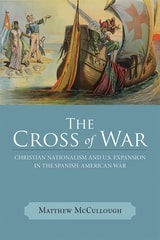
The Cross of War documents the rise of “messianic interventionism”—the belief that America can and should intervene altruistically on behalf of other nations. This stance was first embraced in the Spanish-American War of 1898, a war that marked the dramatic emergence of the United States as an active world power and set the stage for the foreign policy of the next one hundred years. Responding to the circumstances of this war, an array of Christian leaders carefully articulated and defended the notion that America was responsible under God to extend freedom around the world—by force, if necessary. Drawing from a wide range of sermons and religious periodicals across regional and denominational lines, Matthew McCullough describes the ways that many American Christians came to celebrate military intervention as a messianic sacrifice, to trace the hand of God in a victory more painless and complete than anyone had imagined, and to justify the shift in American foreign policy as a divine calling.
[more]
cover of The Cult of the Saints: Its Rise and Function in Latin Christianity

The Cult of the Saints

Its Rise and Function in Latin Christianity

Peter Brown

University of Chicago Press, 1982

Following the fall of the Roman Empire in the West, the cult of the saints was the dominant form of religion in Christian Europe. In this elegantly written work, Peter Brown explores the role of tombs, shrines, relics, and pilgrimages connected with the sacred bodies of the saints. He shows how men and women living in harsh and sometimes barbaric times relied upon the merciful intercession of the holy dead to obtain justice, forgiveness, and to find new ways to accept their fellows. Challenging the common treatment of the cult as an outbreak of superstition among the lower classes, Brown demonstrates how this form of religiousity engaged the finest minds of the Church and elicited from members of the educated upper classes some of their most splendid achievements in poetry, literature, and the patronage of the arts.

"Brown has an international reputation for his fine style, a style he here turns on to illuminate the cult of the saints. Christianity was born without such a cult; it took rise and that rise needs chronicling. Brown has a gift for the memorable phrase and sees what the passersby have often overlooked. An eye-opener on an important but neglected phase of Western development."—The Christian Century

"Brilliantly original and highly sophisticated . . . . [The Cult of the Saints] is based on great learning in several disciplines, and the story is told with an exceptional appreciation for the broad social context. Students of many aspects of medieval culture, especially popular religion, will want to consult this work."—Bennett D. Hill, Library Journal
[more]
cover of The Cult of the Saints: Its Rise and Function in Latin Christianity, Enlarged Edition

The Cult of the Saints

Its Rise and Function in Latin Christianity, Enlarged Edition

Peter Brown

University of Chicago Press, 2014

The classic account of how medieval people engaged with the cult of the saints

In this groundbreaking work, Peter Brown explores how the worship of saints and their corporeal remains became central to religious life in Western Europe after the fall of the Roman Empire. During this period, earthly remnants served as a heavenly connection, and their veneration is a fascinating window into the cultural mood of a region in transition.

Brown challenges the long-held “two-tier” idea of religion that separated the religious practices of the sophisticated elites from those of the superstitious masses, instead arguing that the cult of the saints crossed boundaries and played a dynamic part in both the Christian faith and the larger world of late antiquity. He shows how men and women living in harsh and sometimes barbaric times relied upon the holy dead to obtain justice, forgiveness, and power, and how a single sainted hair could inspire great thinkers and great artists.

An essential text by one of the foremost scholars of European history, this expanded edition includes a new preface from Brown, which presents new ideas based on subsequent scholarship.
[more]
cover of The Cultural Turn in Late Ancient Studies: Gender, Asceticism, and Historiography

The Cultural Turn in Late Ancient Studies

Gender, Asceticism, and Historiography

Dale B. Martin and Patricia Cox Miller, eds.

Duke University Press, 2005

The essays in this provocative collection exemplify the innovations that have characterized the relatively new field of late ancient studies. Focused on civilizations clustered mainly around the Mediterranean and covering the period between roughly 100 and 700 CE, scholars in this field have brought history and cultural studies to bear on theology and religious studies. They have adopted the methods of the social sciences and humanities—particularly those of sociology, cultural anthropology, and literary criticism. By emphasizing cultural and social history and considerations of gender and sexuality, scholars of late antiquity have revealed the late ancient world as far more varied than had previously been imagined.

The contributors investigate three key concerns of late ancient studies: gender, asceticism, and historiography. They consider Macrina’s scar, Mary’s voice, and the harlot’s body as well as Augustine, Jovinian, Gregory of Nazianzus, Julian, and Ephrem the Syrian. Whether examining how animal bodies figured as a means for understanding human passion and sexuality in the monastic communities of Egypt and Palestine or meditating on the almost modern epistemological crisis faced by Theodoret in attempting to overcome the barriers between the self and the wider world, these essays highlight emerging theoretical and critical developments in the field.

Contributors. Daniel Boyarin, David Brakke, Virginia Burrus, Averil Cameron, Susanna Elm, James E. Goehring, Susan Ashbrook Harvey, David G. Hunter, Blake Leyerle, Dale B. Martin, Patricia Cox Miller, Philip Rousseau, Teresa M. Shaw, Maureen A. Tilley, Dennis E. Trout, Mark Vessey
[more]
cover of The Curse of Cain: The Violent Legacy of Monotheism

The Curse of Cain

The Violent Legacy of Monotheism

Regina M. Schwartz

University of Chicago Press, 1997

The Curse of Cain confronts the inherent ambiguities of biblical stories on many levels and, in the end, offers an alternative, inspiring reading of the Bible that is attentive to visions of plenitude rather than scarcity, and to an ethics based on generosity rather than violence.

"[A] provocative and timely examination of the interrelationship of monotheism and violence. . . . This is a refreshing alternative to criticism-biblical and otherwise-that so often confuses interpretation with closure; it is an invitation to an ethic of possibility, plenitude, and generosity, a welcome antidote to violence, as important for its insights into memory, identity, and place as for its criticism of monotheism's violent legacy."—Booklist

"Brilliant and provocative, this is a work demanding close attention from critics, theologians, and all those interested in the imaginative roots of common life."—Rowan Williams, Bishop of Monmouth

"A stunningly important book."—Walter Brueggemann, Theology Today

"Artfully rendered, endlessly provocative."—Lawrence Weschler, New Yorker
[more]
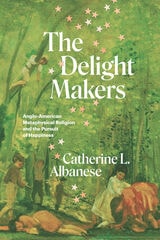
cover of The Delight Makers: Anglo-American Metaphysical Religion and the Pursuit of Happiness

The Delight Makers

Anglo-American Metaphysical Religion and the Pursuit of Happiness

Catherine L. Albanese

University of Chicago Press, 2023

An ambitious history of desire in Anglo-American religion across three centuries.
 
The pursuit of happiness weaves disparate strands of Anglo-American religious history together. In The Delight Makers, Catherine L. Albanese unravels a theology of desire tying Jonathan Edwards to Ralph Waldo Emerson to the religiously unaffiliated today. As others emphasize redemptive suffering, this tradition stresses the “metaphysical” connection between natural beauty and spiritual fulfillment. In the earth’s abundance, these thinkers see an expansive God intent on fulfilling human desire through prosperity, health, and sexual freedom. Through careful readings of Cotton Mather, Andrew Jackson Davis, William James, Esther Hicks, and more, Albanese reveals how a theology of delight evolved alongside political overtures to natural law and individual liberty in the United States.
[more]
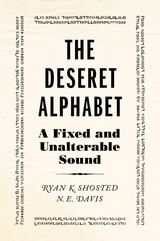
cover of The Deseret Alphabet: A Fixed and Unalterable Sound

The Deseret Alphabet

A Fixed and Unalterable Sound

Ryan K. Shosted and N. E. Davis

University of Illinois Press, 2026

Facing starvation and ruin on Utah’s nineteenth-century frontier, Latter-day Saint pioneers launched an audacious experiment to reshape the English language: the Deseret Alphabet. Ryan K. Shosted and N. E. Davis trace the alphabet’s origins in the linguistic vision of Joseph Smith and Brigham Young; explore its contested social, spiritual, and linguistic functions; and examine its decline and modern-day renewal.

Shosted and Davis draw on a wide range of sources, including previously unpublished archival material, to trace the alphabet’s roots in Joseph Smith’s esoteric translations and its role in shaping Latter-day Saint identity. Their account brings together theology, linguistics, and culture. As they show, the Deseret Alphabet remains relevant as a living artifact of a religion wrestling with its visionary origins and the divine potential of words.

In-depth and up to date, The Deseret Alphabet traces the script’s creation, use, and legacy across Latter-day Saint history.
[more]
cover of The Development of Dogma: A Systematic Account

The Development of Dogma

A Systematic Account

Guy Mansini, OSB

Catholic University of America Press, 2023
The Development of Dogma examines the nature of dogmatic statements and the causes of development. It devotes particular attention to the emergence of the form of dogmatic statements at the Council of Nicaea, but notes how this form is anticipated in the New Testament. It situates dogma and its development within the matrix of the great fundamental theological realities of Scripture, Tradition, and Magisterium. Fr. Mansini examines at some length how the Church comes to recognize a development as a genuine development rather than as a distortion of the word of God. The Development of Dogma is especially valuable today for its discussion and defense of the philosophical presuppositions of dogma, which are often simply presupposed but should not be ignored in a complete account of development. These presuppositions touch on fundamental philosophical issues, including the nature of knowledge, the objectivity and trustworthiness of names, and the various logical forms employed in understanding how development is related to a closed revelation. The historicity of human knowledge is also addressed, and the role of dogma itself in heading off the extreme relativism the historical nature of man is supposed to imply for ecclesial faith and life. The Church's dogma about dogma enunciated at the First Vatican Council is also examined. The role of certain fundamental concepts in understanding the possibility of the irreformability of dogma it speaks of is expressly addressed—concepts in principle accessible to all human beings and that enable a trans-cultural, trans-temporal proposal and reception of revealed truth.
[more]
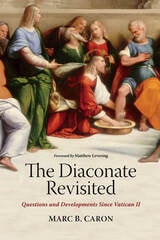
cover of The Diaconate Revisited: Questions and Developments Since Vatican II

The Diaconate Revisited

Questions and Developments Since Vatican II

Marc B. Caron

Catholic University of America Press, 2026
The sacrament of Holy Orders is the only one of the seven sacraments which exists in three ranks arranged hierarchically, that is, bishops, presbyters, and deacons. Deacons are distinct from both bishops and presbyters, yet united with them in one sacrament. Since the Second Vatican Council, various magisterial documents have limited the priestly dimension of holy orders to bishops and presbyters alone. If deacons do not share in the hierarchical priesthood at all, how are they then related to bishops and to presbyters? In the end, is the diaconate even part of the sacrament of holy orders? This book attempts to show how a ministerial dimension to the character received in ordination to each of the three ranks unites the episcopate, the presbyterate, and the diaconate in a single sacrament. According to the theology of the sacrament of holy orders found in Lumen gentium, the bishop receives the fullness of the sacrament, meaning both its sacerdotal and diaconal or ministerial dimensions. The presbyter then receives a lesser portion than the bishop of both sacerdotal and ministerial dimensions of the sacrament. Finally, the deacon receives an even lesser share than that of the presbyter of the ministerial dimension of holy orders alone. This approach makes clear that the bishop is the greatest servant of the Church as well as its high priest. It challenges presbyters to be of greater service to the Body of Christ than even deacons. The baptismal call to holiness of all the faithful can also be described as having both priestly and ministerial or diaconal dimensions as well. With this understanding, it now becomes clearer how the laity can perform certain functions by delegation which the Church normally entrusts to deacons by ordination. Finally, the unity of the diaconate with the two priestly ranks must inform the current discussions taking place about any possible ordination of women to the sacrament of holy orders in the diaconal rank.
[more]
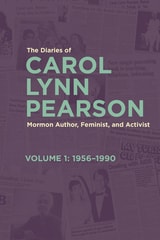
cover of The Diaries of Carol Lynn Pearson—Mormon Author, Feminist, and Activist: Volume 1: 1956–1990

The Diaries of Carol Lynn Pearson—Mormon Author, Feminist, and Activist

Volume 1: 1956–1990

Pearson, Carol Lynn

Signature Books, 2025

“I feel somehow that of all the writing I am doing, my diary is the most important.” So wrote the beloved and bestselling author, poet, and playwright Carol Lynn Pearson in her 1979 diary. Several years before, she recorded, “I feel the imperative of history. . . . Add that to my being a household word to many and I cannot escape the feeling that in many years there might be a number of people interested in these pages.” That time has now come.  

 Unbeknownst to almost everyone but herself, Pearson kept a near-daily diary since she was a teenager, recording her remarkable story in the context of twentieth- and twenty-first-century Mormon America. In this first of a four-volume series, Pearson chronicles her love for her church but also her troubling experiences and concerns with its patriarchy, historic doctrine of polygamy, omission of a feminine divine, and homophobia. Readers will rejoice with her as her first book of poetry, Beginnings, sells an astonishing 150,000+ copies and puts her on the map in the 1960s, empathize with her as she watches her church help kill the Equal Rights Amendment in the 1970s, and mourn with her as her mixed-orientation marriage ends and she cares for her former husband in her home as he dies of AIDS in the 1980s. The sensitive-girl-turned-strong-woman who emerges in these diaries insists that we move from patriarchy into partnership, change our destructive policies towards Queer people, and invite God the Mother back into our heavenly family.
[more]
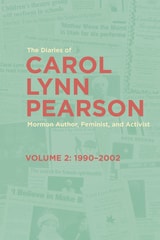
cover of The Diaries of Carol Lynn Pearson—Mormon Author, Feminist, and Activist: Volume 2: 1990–2002

The Diaries of Carol Lynn Pearson—Mormon Author, Feminist, and Activist

Volume 2: 1990–2002

Pearson, Carol Lynn

Signature Books, 2026

Of these years of her life, poet, writer, and feminist Carol Lynn Pearson says, “The plot thickens, as all good plots do. My life and your life—if we are brave enough—move into areas that we had not anticipated. We feel sometimes that we want to run back to safer ground, but life has decided otherwise and so we take those next steps. Volume two of my diaries gives us a closeup of the years 1990 to 2002, bringing us an abundance of both joy and distress.”

Throughout the 1990s, Pearson records and laments her church’s efforts to punish scholars and activists while celebrating the success of her books and one-woman play, Mother Wove the Morning. Along the way, she comforts the suffering, endures terrible personal loss, and witnesses the fall of the Twin Towers on 9/11. “Bless everyone who fights for what is right,” she writes.  Few have fought harder than Carol Lynn Pearson.
[more]
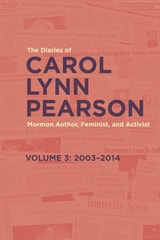
cover of The Diaries of Carol Lynn Pearson—Mormon Author, Feminist, and Activist: Volume 3: 2003–2014

The Diaries of Carol Lynn Pearson—Mormon Author, Feminist, and Activist

Volume 3: 2003–2014

Pearson, Carol Lynn

Signature Books, 2026

Proposition 8, the 2008 California ballot initiative that overturned the state’s legalization of same-sex marriage, looms large in volume 3 of Carol Lynn Pearson’s diaries. The intense lobbying in favor of the measure by the Church of Jesus Christ of Latter-day Saints caused widespread protests against the church and rifts within congregations, families, and friendships that felt like they might never heal. Pearson documented it all. 

When she learned through friends close to church leaders that members of the First Presidency and Quorum of Twelve Apostles were shocked by the backlash, she wondered, “How do 15 prophets, seers, and revelators not see this coming when the rest of us did?”

A lifelong feminist, Pearson’s diaries also reveal her concerns for gender equality. She chronicles her observations of Ordain Women, a movement by a group of Latter-day Saint feminists who lobbied to change the church’s all-male priesthood. At the end of this volume, Pearson takes on yet another issue: the ongoing Mormon doctrine that polygamy is practiced in the eternities. Pearson heard from thousands of women who feared that they would be forced to share their husbands in the afterlife. The pain of these women propelled her forward into her next book project, challenging the doctrine of “eternal polygamy.”

Even as she faced her own struggles, Pearson buoyed up those around her. She took phone calls, answered letters, and comforted visitors who were hurting because of the church’s policies. She was, for many, a symbol of hope. 
[more]
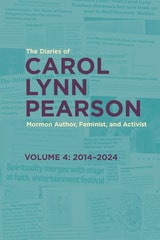
cover of The Diaries of Carol Lynn Pearson—Mormon Author, Feminist, and Activist: Volume 4: 2014–2024

The Diaries of Carol Lynn Pearson—Mormon Author, Feminist, and Activist

Volume 4: 2014–2024

Pearson, Carol Lynn

Signature Books, 2026

This fourth and final volume of The Diaries of Carol Lynn Pearson is full of contradictions as it covers turbulent world events and intimate details in her life. Pearson remains a beacon of light and hope for many, even as she struggles with her own sorrows. 

She embarks on a new project that consumes her: the Latter-day Saint doctrine that polygamy will exist in the afterlife. Pearson also continues to document contemporaneous events in the modern history of the Church of Jesus Christ of Latter-day Saints, including the church’s November 2015 policy that discriminated against LGBTQ+ members and their children. She has both a grassroots perspective as a member of a California congregation and special insight into the decisions of LDS leadership, thanks to friends who keep her informed of what’s happening at the highest levels of the church.

Through it all, Pearson mourns when she says goodbye to longtime friends who die. In July 2026, after she completed her diary project, death finally came for Carol Lynn Pearson after 86 years. Her unique voice cannot be replicated.
[more]
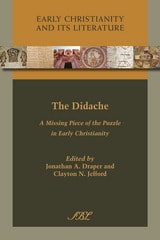
cover of The Didache: A Missing Piece of the Puzzle in Early Christianity

The Didache

A Missing Piece of the Puzzle in Early Christianity

Jonathan A. Draper

SBL Press, 2015

An intriguing dilemma for those who study ancient Christian contexts and literature

This edited volume includes essays and responses from specialists in the Didache and in early church history in general.

Features:

  • Strategies for understanding liturgical constructions and ritual worship found in the text
  • Studies that apply generally to the overall content and background of the Didache
  • Essays on the relationship between the Didache and scripture—particularly with respect to the Gospel of Matthew
[more]