Results by title
303 books match the query 'Church history' and 96 start with t
The Irish Franciscans in Prague 1629-1786
Jan Parez and Hedvika Kucharová
Karolinum Press, 2015
Dealing with a hitherto largely neglected theme, Parez and Kucharová attempt to place the Franciscan College within Bohemian history and to document the activities of its members. This wealth of historical material from the Czech archives, presented in English for the first time, will be of great aid for international researchers, particularly those interested in Bohemia or the Irish diaspora.
The Limits of Ancient Christianity
Essays on Late Antique Thought and Culture in Honor of R. A. MarkusWilliam E. Klingshirn and Mark Vessey, Editors
University of Michigan Press, 1999
William Klingshirn and Mark Vessey have assembled some of the most influential scholars in the study of Late Antiquity to test the limits of Christianity. The sixteen essays in this collection investigate the ways in which the concept of "limits" (temporal, spatial, ideological, social, and cultural) can help us to understand the texture of Christianity during this formative period. Taken together, the essays in this volume constitute as yet the most sustained study of cultural transformations evoked by Robert Markus's phrase "the end of ancient Christianity."
This timely volume will interest students of early Christian history and theology, as well as historians of the Roman empire and early middle ages. Because it examines a formative period of western civilization, it will also speak to anyone who wonders why Christianity takes the form it does today.
Contributors include Gerald Bonner, Peter Brown, Virginia Burrus, John Cavadini, Elizabeth Clark, Paula Fredriksen, Sidney Griffith, David Hunter, Conrad Leyser, Paul Meyvaert, Oliver Nicholson, James O'Donnell, Philip Rousseau, Frederick Russell, Carole Straw, and Robert Wilken.
William E. Klingshirn is Associate Professor of Greek and Latin, The Catholic University of America. Mark Vessey is Associate Professor of English, University of British Columbia.

The Lion and the Cross
Early Christianity in Victorian NovelsRoyal W. Rhodes
The Ohio State University Press, 1900
The Lives of Objects
Material Culture, Experience, and the Real in the History of Early ChristianityMaia Kotrosits
University of Chicago Press, 2020
Maia Kotrosits offers a fresh perspective on objects, looking beyond physical material to consider how collective imagination shapes the formation of objects and the experience of reality. Bringing a psychoanalytic approach to the analysis of material culture, she examines objects of attachment—relationships, ideas, and beliefs that live on in the psyche—and illustrates how people across time have anchored value systems to the materiality of life. Engaging with classical studies, history, anthropology, and literary, gender, and queer studies, Kotrosits shows how these disciplines address historical knowledge and how an expanded definition of materiality can help us make connections between antiquity and the contemporary world.

The Long Arm of Papal Authority
Late Medieval Christian Peripheries and Their Communications with the Holy SeeGerhard Jaritz
Central European University Press, 2005
The Making of Working-Class Religion
Matthew Pehl
University of Illinois Press, 2016
Pehl embarks on an integrative view of working-class faith that ranges across boundaries of class, race, denomination, and time. As he shows, workers in the 1910s and 1920s practiced beliefs characterized by emotional expressiveness, alliance with supernatural forces, and incorporation of mass culture's secular diversions into the sacred. That gave way to the more pragmatic class-conscious religion cultures of the New Deal era and, from the late Thirties on, a quilt of secular working-class cultures that coexisted in competitive, though creative, tension. Finally, Pehl shows how the ideology of race eclipsed class in the 1950s and 1960s, and in so doing replaced the class-conscious with the race-conscious in religious cultures throughout the city.
An ambitiously inclusive contribution to a burgeoning field, The Making of Working-Class Religion breaks new ground in the study of solidarity and the sacred in the American heartland.
The Making of the Christian Mind
The Adventure of the Paraclete: Volume I: The Waiting WorldJames Patrick
St. Augustine's Press, 2020
This is not a history of dogma or systematic account of the building of doctrine. It is a narrative that follows the major moments wherein the Christian heart so in tune with the Paraclete has rendered the seminal texts and literature of this new culture, from the Didache to the Rule of Saint Benedict and The Consolation of Philosophy. Patrick succeeds in presenting a narrative that reads more like the experience lived by those directly involved in its realization, and although he cannot include every individual accomplishment of the major Christian writers, he illuminates the context in which Christianity was born and how faith grew and allowed itself to be shaped by its participation in the “adventure” and its grasp of objective truth. The Christian mind is, says Patrick, not only inspired and moved by the restless Paraclete, but revolves around the event of Jesus Christ. Christian history is therefore best understood not simply as chronology of events but as the vision of “the new heart in time,” one that strives to be like that of the one who sent the Spirit into history.
Patrick writes with a voice of a teacher, and although this work is very well referenced and accurate he does not intend this work to be a scholarly presentation of data and careful arguments, nor does he include every aspect of this intellectual faith journey of Christianity found in writing. As a comprehensive review, Patrick acknowledges the limitations of his own project to tell a complete story. Nevertheless, The Making of the Christian Mind accomplishes the no less formidable feat of illustrating the vivacious quality of the authentic Christian intellectual life. “Christianity is a survivor, not because it possessed the instruments of power but because, as Jesus of Nazareth said before Pilate, the foundation of the Kingdom is truth, its instruments of conquest are its renewing gifts, its consequences are the substitution of truth for error and ignorance, of faith for skepticism, humility for pride, and of charity and friendship for emulation, all this realized never perfectly but always as possibilities having the power to make all things new.”
This work is divided into three volumes, of which the present work is the first. Highlights of this first volume, The Waiting World, include following revelation as it first moved uncertain hearts to write and then to offer explicit witness. In this first installment, Patrick sets the groundwork for following the faith and history of Israel to Justin Martyr’s great claim that what is true belongs to Christians.
The Missouri Mormon Experience
Edited by Thomas M. Spencer
University of Missouri Press, 2010
The Mormon War
Zion and the Missouri Extermination Order of 1838Brandon G. Kinney
Westholme Publishing, 2011
How the Violent Expulsion of the Mormons from Missouri Changed the History of America and the West
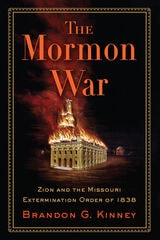
In 1831, Joseph Smith, Jr., the founder of the Church of Christ—later to be renamed the Church of Jesus Christ of Latter Day Saints—revealed that Zion, or “New Jerusalem,” was to be established in Jackson County, Missouri. Smith sent some of his followers to begin the settlement, but they were soon expelled by locals who were suspicious of their religion and their abolitionist sympathies. Smith led an expedition to regain the settlement, but was unsuccessful. Seven years later, in January 1838, Smith fled to Missouri from Ohio to avoid a warrant for his arrest, and joined the Mormon community in the town of Far West, which became the new Zion. The same prejudices recurred and the Mormons found themselves subject to attacks from non-Mormons, including attempts to prevent them from voting. Despite his abhorrence of violence, Smith decided that it was necessary for Mormons to defend themselves, which resulted in a short and sharp conflict known as the Mormon War. A covert Mormon paramilitary unit, the Danites, was formed to pillage non- Mormon towns, while angry rhetoric rose from both sides. After the Missouri state militia was attacked at the Battle of Crooked River, Missouri governor Liburn William Boggs issued Executive Order 44, which called for Mormons to be “exterminated or driven from the State.” Non-Mormons responded by attacking a Mormon settlement at Haun’s Mill, killing men and boys and firing on the women. Following this massacre, the state militia surrounded Far West and arrested Smith and other Mormon leaders. Smith was tried for treason and narrowly avoided execution, but was allowed to go and join the rest of his followers who were forced from Missouri to Illinois, where they founded their next major town, Nauvoo. There, Smith would be murdered and the church would split into several factions, with Brigham Young leading the movement’s largest group to Utah.
In The Mormon War: Zion and the Missouri Extermination Order of 1838, Brandon G. Kinney unravels the complex series of events that led to a religious and ideological war of both blood and words. The Mormon War not only challenged the protection afforded by the First Amendment, it foreshadowed the partisan violence over slavery and states’ rights that would erupt across Missouri and Kansas. The war also fractured Smith’s Church and led ultimately to the unexpected settlement of a vast area of the West as a Mormon homeland. By tracing the life of Joseph Smith, Jr. and his quest for Zion, the author reveals that the religion he founded was destined for conflict—both internal and external—as long as he remained its leader.
The Myth of Pope Joan
Alain Boureau
University of Chicago Press, 2001
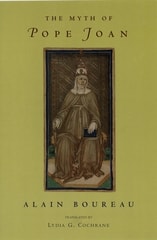
Or so the legend goes—a legend that was fabricated sometime in the thirteenth century, according to Alain Boureau, and which has persisted in one form or another down to the present day. In this fascinating saga of belief and rhetoric, politics and religion, Boureau investigates the historical and ecclesiastical circumstances under which the myth of Pope Joan was constructed and the different uses to which it was put over the centuries. He shows, for instance, how Catholic clerics justified the exclusion of women from the papacy and the priesthood by employing the myth in misogynist moral tales, only to find the popess they had created turned against them in anti-Catholic propaganda during the Reformation.
The Narrative Self in Early Christianity
Essays in Honor of Judith PerkinsJanet E. Spittler
SBL Press, 2019
Essays that explore early Christian texts and the broader world in which they were written
This volume of twelve essays celebrates the contributions of classicist Judith Perkins to the study of early Christianity. Drawing on Perkins's insights related to apocryphal texts, representations of pain and suffering, and the creation of meaning, contributors explore the function of Christian narratives that depict pain and suffering, the motivations of the early Christians who composed these stories, and their continuing value to contemporary people. Contributors also examine how narratives work to create meaning in a religious context. These contributions address these issues from a variety of angles through a wide range of texts.
Features:
- Introductions to and treatments of several largely unknown early Christian texts
- Essays by ten women and two men influenced or mentored by Judith Perkins
- Essays on the Deuterocanon, the New Testament, and early Christian relics
The New Crusades, the New Holy Land
Conflict in the Southern Baptist Convention, 1969-1991David T. Morgan
University of Alabama Press, 1996
Examines the conflict between modern-day Southern Baptists and “liberal” Southern Baptists over control of the Southern Baptist Convention
David Morgan captures the essence of the conflict between some modern-day Southern Baptists, who saw themselves as crusaders for truth, as they sought to redeem a new holy land--the Southern Baptist Convention-- from the control of other Southern Baptists they viewed as "liberals." To the so-called liberals, the crusaders were "fundamentalists" on a mission, not to reclaim the SBC in the name of theological truth but to gain control and redirect its activities according to their narrow political, social, and theological perspectives. The New Crusades provides a comprehensive history of the conflict, taking the reader through the bitter and divisive struggles of the late 1980s, that culminated in the 1991 emergence of a moderate faction within the SBC. The fundamentalists had won.
The Oldest Legend
Acts of the Canonization Process, and Miracles of Saint Margaret of HungaryBence Péterfi
Central European University Press, 2018
The Only True God
Early Christian Monotheism in Its Jewish ContextJames F. McGrath
University of Illinois Press, 2012
The Pastoral Role of the Roman Catholic Church in Pre-Famine Ireland, 1750–1850
Emmet Larkin
Catholic University of America Press, 2006
The People beside Paul
The Philippian Assembly and History from BelowJoseph A. Marchal
SBL Press, 2015
Who are the people beside Paul, and what can we know about them?
This volume brings together an international and interdisciplinary group of scholars with a broad range of expertise and a common interest: Philippi in antiquity. Each essay engages one set of contextual particularities for Paul and the ordinary people of the Philippian assembly, while simultaneously placing them in wider settings. This 'people's history' uses both traditional and more cutting-edge methods to reconsider archaeology and architecture, economy and ethnicity, prisons and priestesses, slavery, syncretism, stereotypes of Jews, the colony of Philippi, and a range of communities. The contributors are Valerie Abrahamsen, Richard S. Ascough, Robert L. Brawley, Noelle Damico, Richard A. Horsley, Joseph A. Marchal, Mark D. Nanos, Peter Oakes, Gerardo Reyes Chavez, Angela Standhartinger, Eduard Verhoef, and Antoinette Clark Wire.
Features
- An examination of the social forms and forces that shaped and affected the Philippian church
- Essays offer insight into standard questions about the letter s hymn and audience, Paul's 'opponents,' and the sites of the community and of Paul's imprisonment
- A focused exploration of more marginalized topics and groups, including women, slaves, Jews, and members of localized cults
The Pew and the Picket Line
Christianity and the American Working ClassEdited by Christopher D. Cantwell, Heath W. Carter, and Janine Giordano Drake
University of Illinois Press, 2016
The Philosophical Life
Arthur P. Urbano
Catholic University of America Press, 2013
The Poisoned Chalice
Eucharistic Grape Juice and Common-Sense Realism in Victorian MethodismJennifer L. Woodruff Tait
University of Alabama Press, 2011
This work examines the introduction of grape juice into the celebration of Holy Communion in the late 19th century Methodist Episcopal Church and reveals how a 1,800-year-old practice of using fermented communion wine became theologically incomprehensible in a mere forty years. Through study of denominational publications, influential exegetical works, popular fiction and songs, and didactic moral literature, Jennifer Woodruff Tait charts the development of opposing symbolic associations for wine and grape juice. She argues that 19th century Methodists, steeped in Baconian models of science and operating from epistemological presuppositions dictated by common-sense realism, placed a premium on the ability to perceive reality accurately in order to act morally. They therefore rejected any action or substance that dulled or confused the senses (in addition to alcohol, this included “bad” books, the theatre, stimulants, etc., which were all seen as unleashing unchecked, ungovernable thoughts and passions incompatible with true religion).
The Politics of Revelation in the English Renaissance
Ester Gilman Richey
University of Missouri Press, 1998
Recognizing that the seventeenth century's volatile debate over apocalyptic interpretation has since become a one-sided discussion, Esther Gilman Richey develops a context that recovers the dynamism so inherent in the writings of the period and provides illuminating details that enhance the prophetic continuum. The Politics of Revelation in the English Renaissance does not ignore the familiar prophetic verse of Spenser and Milton, but it significantly expands the scope of study by examining the interpretations of both men and women who represent a range of ecclesiastical and political perspectives.
Richey rejects Barbara Lewalski's claim that the radical, prophetic writers and metaphysical poets of the seventeenth century drew inspiration from distinct biblical models, the former from the Apocalypse and the latter from the Psalms. Instead she contends that even writers such as Donne and Herbert, whom we have long considered "literary," were in reality using their poetry to participate in the hottest debates of the time.
While the radical writers, such as Spenser and Milton, were immediately responsive to ecclesiastical and political controversies, the conservative, metaphysical poets—Donne, Herbert, and Vaughan—were posing equally politically charged questions: Is the pope Antichrist? Is the Bride of Christ pure? Is the Temple a model of ecclesiastical reform? The writers of the period did not move in divided and distinguished worlds, but in fact constantly responded to one another through poetic and politically charged dialogue.
By drawing from the writings of various individuals, both radical and conformist, male and female, Richey traces the shifting representations of the apocalyptic Bride and Temple over time. Organized chronologically, the chapters of The Politics of Revelation in the English Renaissance reveal the escalating debate among the pacifists, conformists, militants, and feminists. Not only does Richey uncover the prophetic dimension of conformist writers usually described as apolitical and devotional, but she also explores the writings of lesser-known women prophets: Aemilia Lanyer, Mary Cary, Anna Trapnel, and Margaret Fell. In such biblical passages as the apocalyptic "woman clothed with the sun," these early feminists find the authority for their own prophetic speech.
This provocative analysis—at once far-reaching and tightly focused—reveals the complexity of the apocalyptic discourse that transpired among Renaissance writers and poets.
The Possession at Loudun
Michel de Certeau
University of Chicago Press, 2000
Interweaving substantial excerpts from primary historical documents with fascinating commentary, de Certeau shows how the plague of sorceries and possessions in France that climaxed in the events at Loudun both revealed the deepest fears of a society in traumatic flux and accelerated its transformation. In this tour de force of psychological history, de Certeau brings to vivid life a people torn between the decline of centralized religious authority and the rise of science and reason, wracked by violent anxiety over what or whom to believe.
At the time of his death in 1986, Michel de Certeau was a director of studies at the école des hautes études en sciences sociales, Paris. He was author of eighteen books in French, three of which have appeared in English translation as The Practice of Everyday Life,The Writing of History, and The Mystic Fable, Volume 1, the last of which is published by The University of Chicago Press.
"Brilliant and innovative. . . . The Possession at Loudun is [de Certeau's] most accessible book and one of his most wonderful."—Stephen Greenblatt (from the Foreword)
The Power of Sacrifice
Roman and Christian Discourses in ConflictGeorge Heyman
Catholic University of America Press, 2007
The Quaker Community on Barbados
Challenging the Culture of the Planter ClassLarry Gragg
University of Missouri Press, 2009
Gragg has conducted meticulous research on two continents to re-create the Barbados Quaker community. Drawing on wills, censuses, and levy books along with surviving letters, sermons, and journals, he tells how the Quakers sought to implement their beliefs in peace, simplicity, and equality in a place ruled by a planter class that had built its wealth on the backs of slaves. He reveals that Barbados Quakers were a critical part of a transatlantic network of Friends and explains how they established a “counterculture” on the island—one that challenged the practices of the planter class and the class’s dominance in island government, church, and economy.
In this compelling study, Gragg focuses primarily on the seventeenth century when the Quakers were most numerous and active on Barbados. He tells how Friends sought to convert slaves and improve their working and living conditions. He describes how Quakers refused to fund the Anglican Church, take oaths, participate in the militia, or pay taxes to maintain forts—and how they condemned Anglican clergymen, disrupted their services, and wrote papers critical of the established church. By the 1680s, Quakers were maintaining five meetinghouses and several cemeteries, paying for their own poor relief, and keeping their own records of births, deaths, and marriages. Gragg also tells of the severe challenges and penalties they faced for confronting and rejecting the dominant culture.
With their civil disobedience and stand on slavery, Quakers on Barbados played an important role in the early British Empire but have been largely neglected by scholars. Gragg’s work makes their contribution clear as it opens a new window on the seventeenth- and eighteenth-century Atlantic world.
The Reformation of Machismo
Evangelical Conversion and Gender in ColombiaBy Elizabeth E. Brusco
University of Texas Press, 1995
Protestant evangelicalism has spread rapidly in Latin America at the same time that foreign corporations have taken hold of economies there. These concurrent developments have led some observers to view this religious movement as a means of melding converts into a disciplined work force for foreign capitalists rather than as a reflection of conscious individual choices made for a variety of personal, as well as economic, reasons.
In this pioneering study, Elizabeth Brusco challenges such assumptions and explores the intra-household motivations for evangelical conversion in Colombia. She shows how the asceticism required of evangelicals (no drinking, smoking, or extramarital sexual relations are allowed) redirects male income back into the household, thereby raising the living standard of women and children. This benefit helps explain the appeal of evangelicalism for women and questions the traditional assumption that organized religion always disadvantages women.
Brusco also demonstrates how evangelicalism appeals to men by offering an alternative to the more dysfunctional aspects of machismo. Case studies add a fascinating human dimension to her findings.
With the challenges this book poses to conventional wisdom about economic, gender, and religious behavior, it will be important reading for a wide audience in anthropology, women’s studies, economics, and religion. For all students of Latin America, it offers thoughtful new perspectives on a major, grass-roots agent of social change.
The Rise of Newport’s Catholics
From Colonial Outcasts to Gilded Age LeadersJohn F. Quinn
University of Massachusetts Press, 2024
Honorable Mention, 2025 Catholic Media Association Book Awards
Nineteenth-century New England was a hostile place for Catholics. In Massachusetts a mob torched a convent; in Maine a priest was tarred and feathered; and Rhode Island elected an anti-Catholic Know Nothing governor. “No Irish Need Apply” signs were common.
Newport was different. It was a religiously diverse and tolerant city that welcomed Catholic French troops during the American Revolution. Later, as it became the favored summer retreat for America’s Protestant social elite, Irish Catholics arrived to work in construction jobs, the tourist economy, and the grand Gilded Age cottages. By the end of the century, Newport’s Catholic community was flourishing. Moneyed Catholics acquired their own mansions, an Irish Catholic was mayor, and prominent Protestants were helping Catholic neighbors establish new schools and churches. In this deeply researched study, John F. Quinn delves into this rich Catholic history to discover why nineteenth-century Newport was particularly religiously tolerant and accepting.
The Rise to Respectability
Race, Religion, and the Church of God in ChristCalvin White
University of Arkansas Press, 2015
The Road to Renewal
Victor Joseph Reed and Oklahoma Catholicism, 1905–1971Jeremy BONNER
Catholic University of America Press, 2008
The SBL Handbook of Style
SBL Press, 2014
The definitive source for how to write and publish in the field of biblical studies
The long-awaited second edition of the essential style manual for writing and publishing in biblical studies and related fields includes key style changes, updated and expanded abbreviation and spelling-sample lists, a list of archaeological site names, material on qur’anic sources, detailed information on citing electronic sources, and expanded guidelines for the transliteration and transcription of seventeen ancient languages.
Features:
- Expanded lists of abbreviations for use in ancient Near Eastern, biblical, and early Christian studies
- Information for transliterating seventeen ancient languages
- Exhaustive examples for citing print and electronic sources
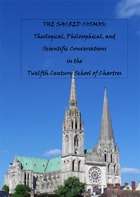
The Sacred Cosmos
Theological, Philosophical, and Scientific Conversations in the Twelfth Century School of ChartresPeter Ellard
University of Scranton Press, 2007
The School of Chartres was a bold intellectual movement of the twelfth century that introduced the World Soul and the Chartrian cosmology to Christendom. In his controversial book, The Sacred Cosmos, theologian Peter Ellard analyzes the most radical aspects of Chartrian thought and traces their relation to classical and late-antique philosophers such as Boethius and Plato. In addition, Ellard investigates the Cathedral of Chartres as an important proof and example of Chartrian theology in this essential volume for anyone interested in the intersection of spirituality and philosophy.
The Sanctity of the Leaders
Holy Kings, Princes, Bishops and Abbots from Central Europe (11th to 13th Centuries)Gábor Klaniczay
Central European University Press, 2023
The latest title in the Central European Medieval Texts series contains the lives of saints who were canonized in the eleventh through thirteenth centuries in the newly Christianized countries of Central and Eastern Europe (Bohemia, Poland, Hungary, and Dalmatia). A rejoinder to the earlier volume in the series, the Saints of the Christianization Age of Central Europe (CEMT, Vol. 6), containing hermits, missionaries, and martyrs, this second volume of hagiography is dominated by political or ecclesiastical leaders who became saintly patrons of their region and were highly venerated throughout the Middle Ages.
The legends in the volume present the two Hungarian holy kings Stephen and Ladislas, the holy duke Emeric, the Czech holy abbot Prokop of Sázava, three bishops, the Venetian-Hungarian Gellért of Csanád, the Polish Stanislas of Cracow (both martyrs), and the Dalmatian holy bishop Saint John of Trogir. Each “vita” is published in Latin original with an English translation and with prefaces discussing the textual tradition.
Saints’ lives have been recognized as an invaluable source of information on social and economic history, the history of mentalities and everyday life, cultural history, and, above all, as a special genre with crucial importance and prevalence in medieval literature.

The Saving Remnant
RELIGION AND THE SETTLING OF NEW ENGLANDCedric B. Cowing
University of Illinois Press, 1995
Cedric Cowing demonstrates that there were two Englands, one evangelistic and one rationalistic. In the northwest of the British Isles was a society that was pastoral, westering, otherworldly, and revivalist--in the southeast was another, more established and mercantile. These two strains set the stage and powered the action for the biggest religious event of the eighteenth century--the Great Awakening.
The leaders of the New Light in the Great Awakening were the Saving Remnant, mostly ministers with liberal education who retained their evangelical and seeker religiosity. The clearly identifiable regional religious parallels between old England and New are still discernable today and give a new slant to heretofore unresolved historiographical issues. Cowing shows how regionalism influenced the nature of New England Puritanism and how the presence of a strong and persistent link between regional origins and religious behavior led to the inevitability of the Salem witch trials.
The Seeds of Triumph
Church and State in Gomulka's PolandHannah Diskin
Central European University Press, 2001
The Roman Catholic Church has played a unique role in the history of Poland in the twentieth century: the people and the Church drew closer and closer together during Nazi rule, the Stalinist period and the somewhat milder, though strongly anti-religious and repressive Gomulka regime (1956-1970). The power struggle between the Church and the communist government did in fact play a role in shaping world politics, the Polish Church having been the force behind the opposition movement in Poland. Against this background, a Polish pope appeared and made a major contribution to the collapse of communism.
The Seeds of Triumph, the most comprehensive recent book on the opposition of Church and State in post-war Poland, compares the characteristics and consequences of this relationship during three different periods: the first and second periods of Gomulka's rule, and the Stalinist era between the two Gomulka periods. It examines the balance of power, studying to what degree the Church and other factors in the political environment influenced governmental policy-making. The author disproves the common stereotype, held at the time, that domestic conditions played only a marginal role. In examining the regime's policies, she covers the legal background, the general policy characteristics, the specific policies implemented during the period, and the role of the individual actors, most notably the pivotal role of the two main protagonists, Cardinal Wyszynski and Wladislaw Gomulka.
In her landmark study, Diskin makes a significant contribution to the study of authoritarian systems and greatly enhances our understanding of the centrality of the Church in recent Polish history.
The Selected Writings of John Witherspoon
Edited by Thomas P. Miller
Southern Illinois University Press, 1990
The Seven Books of History Against the Pagans
Roy J. Paulus Orosius
Catholic University of America Press, 1964
The Short Chronicle
A Poor Clare's Account of the Reformation of GenevaJeanne de Jussie
University of Chicago Press, 2006
First published in French in 1611, Jussie’s Short Chronicle is translated here for an English-speaking audience for the first time, providing a fresh perspective on struggles for religious and political power in sixteenth-century Geneva and a rare glimpse at early modern monastic life.
The Story of Radio Mind
A Missionary's Journey on Indigenous LandPamela E. Klassen
University of Chicago Press, 2018
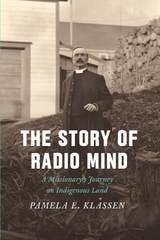
Following Du Vernet’s journey westward from Toronto to Ojibwe territory and across the young nation of Canada, Pamela Klassen examines how contests over the mediation of stories—via photography, maps, printing presses, and radio—lucidly reveal the spiritual work of colonial settlement. A city builder who bargained away Indigenous land to make way for the railroad, Du Vernet knew that he lived on the territory of Ts’msyen, Nisga’a, and Haida nations who had never ceded their land to the onrush of Canadian settlers. He condemned the devastating effects on Indigenous families of the residential schools run by his church while still serving that church. Testifying to the power of radio mind with evidence from the apostle Paul and the philosopher Henri Bergson, Du Vernet found a way to explain the world that he, his church and his country made.
Expanding approaches to religion and media studies to ask how sovereignty is made through stories, Klassen shows how the spiritual invention of colonial nations takes place at the same time that Indigenous peoples—including Indigenous Christians—resist colonial dispossession through stories and spirits of their own.
The Stranger, the Tears, the Photograph, the Touch
Divine Presence in Spain and Europe since 1500William A. Christian Jr.
Central European University Press, 2017
The Theater of Devotion
East Anglian Drama and Society in the Late Middle AgesGail McMurray Gibson
University of Chicago Press, 1989
The Times Were Strange and Stirring
Methodist Preachers and the Crisis of EmancipationReginald F. Hildebrand
Duke University Press, 1995
Hildebrand explores the ideas and ideals of missionaries from several branches of Methodism—the African Methodist Episcopal Church, the Colored Methodist Episcopal Church, and the northern-based Methodist Episcopal Church—and the significant and highly charged battle waged between them over the challenge and meaning of freedom. He traces the various strategies and goals pursued by these competing visions and develops a typology of some of the ways in which emancipation was approached and understood.
Focusing on individual church leaders such as Lucius H. Holsey, Richard Harvey Cain, and Gilbert Haven, and with the benefit of extensive research in church archives and newspapers, Hildebrand tells the dramatic and sometimes moving story of how missionaries labored to organize their denominations in the black South, and of how they were overwhelmed at times by the struggles of freedom.

The Victoria History of Middlesex
St Clement Danes, 1660-1900Edited by Francis Boorman
University of London Press, 2018
The Victoria History of Middlesex
St George Hanover SquareFrancis Calvert Boorman
University of London Press, 2024
The parish of St George Hanover Square encompasses the wealthy London neighborhoods of Mayfair, Belgravia, and Pimlico, as well as part of Hyde Park. This book relates the history of the parish, from its inception in 1725 to its abolition with the establishment of the London County Council in 1900. The area was transformed through rapid urbanization from largely undeveloped fields on the western fringe of London into one of the most affluent parts of the metropolis, with developments centered on a series of grand squares, including Hanover, Grosvenor, and Belgrave Squares. Through detailed thematic treatments, the book explores the local government of the vestry, as well as institutions such as schools and charities and St George’s Hospital, which is now based in South London. The wider political culture and the economy of the parish are also given their due, from the aristocrats and servants of Mayfair to the industries on the bank of the Thames, including factories and a distillery. Finally, it covers the religious life of the parish, the erection of new churches and chapels, and its division into ecclesiastical parishes and subdistricts as its population boomed in the nineteenth century.
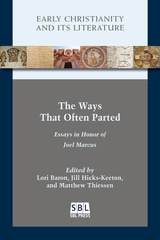
The Ways That Often Parted
Essays in Honor of Joel MarcusLori Baron
SBL Press, 2018
Focused studies on the historical interactions and formations of Judaism and Christianity
This volume of essays, from an internationally renowned group of scholars, challenges popular ways of understanding how Judaism and Christianity came to be separate religions in antiquity. Essays in the volume reject the belief that there was one parting at an early point in time and contest the argument that there was no parting until a very late date. The resulting volume presents a complex account of the numerous ways partings occurred across the ancient Mediterranean spanning the first four centuries CE.
Features:
- Case studies that explore how Jews and Christians engaged in interaction, conflict, and collaboration
- Examinations of the gospels, Paul’s letters, the book of James, as well as rabbinic and noncanonical Christian texts
- New evidence for historical reconstructions of how Christianity came on the world scene
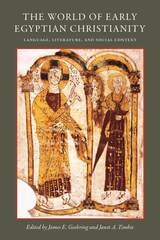
The World of Early Egyptian Christianity
Language, Literature, and Social Context (CUA Studies in Early Christianity)James E. Goehring
Catholic University of America Press, 2007
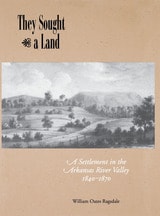
They Sought a Land
A Settlement in the Arkansas River Valley, 1840–1870William Oates Ragsdale
University of Arkansas Press, 1997
Pisgah grew and prospered, developing increasingly successful farming practices, landholding patterns, and trading strategies. But the Civil War took a heavy toll, taking workers away from farms, subjecting those left on the home front to deprivation and violence, and creating division in the community. By 1870, the people of Pisgah had dispersed into Arkansas’s larger developing society.
Absorbing to read and rich with colorful detail, They Sought a Land is an important story of the westward expansion of the United States and the settling of the American South during the nineteenth century.
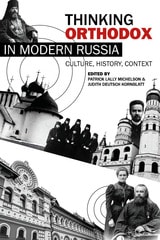
Thinking Orthodox in Modern Russia
Culture, History, ContextEdited by Patrick Lally Michelson and Judith Deutsch Kornblatt
University of Wisconsin Press, 2014
Volume editors Patrick Lally Michelson and Judith Deutsch Kornblatt provide a historical overview of Russian Orthodox thought and a critical essay on the current state of scholarship about religious thought in modern Russia. The contributors explore a wide range of topics, including Orthodox claims to a unique religious Enlightenment, contests over authority within the Russian Church, tensions between faith and reason in academic Orthodoxy, the relationship between sacraments and the self, the religious foundations of philosophical and legal categories, and the effect of Orthodox categories in the formation of Russian literature.
Two Women of the Great Schism
The Revelations of Constance de Rabastens by Raymond de Sabanac and Life of the Blessed Ursulina of Parma by Simone ZanacchiRaymond de Sabanac and Simone Zanacchi
Iter Press, 2010