Results by title
617 books match the query 'Civil War Period (1850-1877)' and 146 start with t
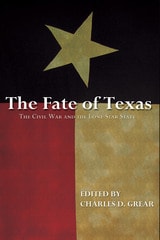
The Fate of Texas
The Civil War and the Lone Star StateCharles D. Grear
University of Arkansas Press, 2018
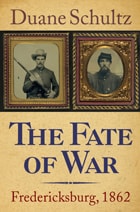
The Fate of War
Fredericksburg, 1862Duane Schultz
Westholme Publishing, 2011
An Exploration of the Human Experience in One of the Civil War’s Most Important and Devastating Battles
The Union assault on the critical Confederate stronghold of Fredericksburg, Virginia, along the Rappahannock River in December 1862 was one of the most significant and storied battles of the Civil War. It was fought in order to secure confidence in the North for Lincoln’s administration after 18 months of Confederate victories, Union setbacks, and directionless Northern leadership. The result was a complete and stunning Confederate victory and one of the bloodiest losses for the Union Army. Federal General Ambrose E. Burnside and his Army of the Potomac planned to overrun Fredericksburg and move on to Richmond, the Confederate capital. The opposing general, Robert E. Lee, and his Army of Northern Virginia prepared Fredericksburg’s defense. Thousands of Union troops were able to successfully cross the Rappahannock River despite withering small arms fire and proceeded to brutally sack the city, terrorizing its remaining civilian inhabitants while the Confederates fell back to a line of heights to the west. Burnside soon ordered his generals to attack with the intention of flanking the Confederate defenders. Unable to dislodge or go around the enemy, Burnside was forced to withdraw without a victory after suffering appalling casualties.
In The Fate of War: Fredericksburg, 1862, historian and professional psychologist Duane Schultz uses this key moment in Civil War history to address how soldiers and civilians react to the stress of war. Rather than a traditional military history—and there are a number of excellent accounts of troop movements and strategy at Fredericksburg—The Fate of War explores the human element in battle; the motivations, passions, and emotions of the people who fought on both sides. Using letters, diaries, and memoirs, including those of Clara Barton and Walt Whitman, Schultz reveals what individuals can force themselves to do in the name of duty, patriotism, and dedication to a cause, or the ultimate fear of letting down their friends. Schultz’s account, grounded in careful research, is a record of the triumph and failure, courage and cowardice, compassion and cruelty of the people—the ordinary and high-ranking, soldier and civilian, men and women—who came together one terrible day.
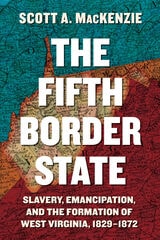
The Fifth Border State
Slavery, Emancipation, and the Formation of West Virginia, 1829–1872Scott A. MacKenzie
West Virginia University Press, 2023
One of the first new interpretations of West Virginia’s origins in over a century—and one that corrects previous histories’ tendency to minimize support for slavery in the state’s founding.
Every history of West Virginia’s creation in 1863 explains the event in similar ways: at the start of the Civil War, political, social, cultural, and economic differences with eastern Virginia motivated the northwestern counties to resist secession from the Union and seek their independence from the rest of the state. In The Fifth Border State, Scott A. MacKenzie offers the first new interpretation of the topic in over a century—one that corrects earlier histories’ tendency to minimize support for slavery in the state’s founding.
Employing previously unused sources and reexamining existing ones, MacKenzie argues that West Virginia experienced the Civil War in the same ways as the border states of Missouri, Kentucky, Maryland, and Delaware. Like these northernmost slave states, northwestern Virginia supported the institution of slavery out of proportion to the actual presence of enslavement there. The people who became West Virginians built a new state first to protect slavery, but radical Unionists and escaping slaves forced emancipation on the statehood movement. MacKenzie shows how conservatives and radicals clashed over Black freedom, correcting many myths about West Virginia’s origins and making The Fifth Border State an important addition to the literature in Appalachian and Civil War history.
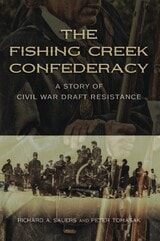
The Fishing Creek Confederacy
A Story of Civil War Draft ResistanceRichard A. Sauers and Peter Tomasak
University of Missouri Press, 2012
Governor Andrew Gregg Curtin of Pennsylvania was a staunch supporter of the Lincoln administration. The commonwealth supplied more than 360,000 white soldiers and 9,000 black soldiers during the conflict. However, there was sustained opposition to the war throughout the state, much of it fanned by the pens of Democratic newspaper editors. Though most opposition was disorganized and spontaneous, other aspects of the antiwar sentiment in the state occasionally erupted as major incidents.
In The Fishing Creek Confederacy, Richard A. Sauers and Peter Tomasak address the serious opposition to the draft in Columbia County, Pennsylvania, in 1864. Egged on by the anti-Lincoln newspaper editors, a number of men avoided the draft and formed ad hoc groups to protect themselves from arrest. The shooting of a Union lieutenant confronting draft evaders in July 1864 resulted in military intervention in the northern townships of the county. The troops arrested more than one hundred men, sending about half of them to a prison fort near Philadelphia. Some of these men were subjected to military trials in Harrisburg, the state capital, that fall and winter. The arrests led to bitter feelings that were slow to die. The military intervention eventually impacted a Pennsylvania gubernatorial election and led to a murder trial.
Sauers and Tomasak describe the draft in Pennsylvania and consider how Columbia County fit into the overall draft process. Subsequent chapters take the reader through the events of the summer of 1864, including the interaction of soldiers and civilians in the county, the prison experiences of the men, and the trials. Later chapters cover the August 1865 Democratic rally at Nob Mountain and the effects of the draft episode after the war was over, including its influence on the 1872 election for governor, the 1891 murder trial, and the formation of the official Democratic version of the events, which has been used by historians ever since.
The Fishing Creek Confederacy is the first book to address this episode and its aftermath in their entirety. Sauers and Tomasak present the story and try to disentangle the often contradictory nature of the sources and how both amateur and professional historians have used them.
The Flag on the Hilltop
Mary Tracy Earle
Southern Illinois University Press, 1989
Early in the Civil War, two young brothers boldly flew the Union flag from a tree atop a hill between Makanda and Cobden. This was a towering act of courage in an area teeming with Copperheads.
Theodore and Al Thompson, 18 and 20 years old at the time, raised the flag in defiance of the Knights of the Golden Circle, a secessionist group that operated throughout the Midwest. Controlling its membership through terror, this secret society condemned betrayers to death by torture. The Knights, whose goals included capturing a Union prison and liberating the rebels, triggered the Civil War riot in Charleston, instigated anti-draft movements, and aided Northern deserters.
Theodore Thompson, who later owned much of Makanda, Giant City, and the land that became Southern Illinois University describes the tree as a "tall tulip poplar between 3 and 4 feet in diameter at the trunk and some 60 feet to the first limbs. This noted tree could be seen in some directions 15 or 20 miles away."
The Forts Henry and Donelson Campaign
February 6–16, 1862Edited by Steven E. Woodworth and Charles D. Grear
Southern Illinois University Press, 2026
New perspectives on the battles that opened the Confederacy to invasion
In early 1862, the Civil War had been raging for almost ten months, and the Confederacy had enjoyed virtually uninterrupted success. From seizing federal property to early battlefield victories, Southern forces had effectively expelled Union authority from nearly all of the Confederacy’s eleven states. The Union suffered repeated setbacks, while modest victories in western Virginia and Kentucky had little strategic impact. By the end of February, however, much had changed.
On February 6, Union gunboats under the joint command of Brigadier General Ulysses S. Grant and Flag Officer Andrew H. Foote captured Fort Henry on the Tennessee River, opening a crucial waterway into the Confederacy. Just days later, Grant moved against Fort Donelson on the Cumberland River. After several days of fighting, the fort surrendered on the 16th, along with more than 13,000 Confederate troops—the largest surrender in US history to that point. These twin victories shattered Confederate control of Kentucky and western Tennessee, allowing Federal soldiers and sailors to use the rivers to threaten the Confederacy’s interior. This first major strategic breakthrough of the war signaled a dramatic shift in momentum and elevated Grant’s national profile.
In this essay collection, leading and emerging scholars provide in-depth analyses of previously overlooked aspects of the Forts Henry and Donelson campaign. Contributors examine how ecological forces influenced the campaign, the effectiveness of the joint command between the Union army and navy, and Union brigadier general Charles F. Smith’s assault that doomed Fort Donelson. They also explore the battle’s impact on the military career of Nathan Bedford Forrest, the effects of surprise during the Confederate breakout attempt from Fort Donelson, Confederate colonel Gabriel Wharton’s memoir, and how the loss of the forts showed Texans that the fight to preserve the enslaved South would cost them more than they had imagined.
In the aftermath of the Forts Henry and Donelson campaign, most of the Civil War still lay ahead. The Confederacy would have many opportunities to regain its momentum and exhaust the Union will to prevail. However, with a few key exceptions, for the rest of the war, the Confederacy fought to defend itself rather than to take new territory. It was in this massive shift of momentum during ten days in 1862 that the war’s military outcome was foreshadowed.
The Fugitive’s Gibraltar
Escaping Slaves and Abolitionism in New Bedford, MassachusettsKathryn Grover
University of Massachusetts Press, 2001
The Fugitive's Gibraltar is a richly researched work of social and cultural history that examines the city of New Bedford, Massachusetts as one of the most important and welcoming refuges for freedom-seeking enslaved people in antebellum America. The book's title derives from the phrase used by Frederick Douglass—himself among the most famous of New Bedford's many fugitive residents—to describe the city's reputation as a place of relative safety and freedom for Black Americans fleeing enslavement in the South.
Grover draws on an extraordinary breadth of primary sources to reconstruct the lives of fugitive slaves who came to New Bedford before the Civil War, as well as the city's larger African American community and the white and Black abolitionists who worked alongside them. The book explores how New Bedford's booming whaling economy—which depended heavily on Black labor and offered Black sailors wages equal to those of white sailors—created economic and social conditions unusually hospitable to free and freedom-seeking Black people. New Bedford's maritime character is thus deeply intertwined with its abolitionist identity.
The work examines the networks of people and organizations that sheltered, employed, and advocated for fugitives; traces individual stories of escape and resettlement; and situates New Bedford's experience within the broader national struggle over slavery, the Fugitive Slave Acts, and the abolitionist movement. Notable figures discussed include Frederick Douglass and Henry "Box" Brown. The book also sheds light on the daily lives, livelihoods, and community institutions of New Bedford's African American population—their churches, mutual aid societies, and social networks—providing a nuanced portrait of Black life in a northern city during this turbulent era.
The Good Men Who Won the War
Army of the Cumberland Veterans and Emancipation MemoryRobert E. Hunt
University of Alabama Press, 2010
Robert Hunt examines how Union veterans of the Army of the Cumberland employed the extinction of slavery in the trans-Appalachian South in their memory of the Civil War. Hunt argues that rather than ignoring or belittling emancipation, it became central to veterans’ retrospective understanding of what the war, and their service in it, was all about. The Army of the Cumberland is particularly useful as a subject for this examination because it invaded the South deeply, encountering numerous ex-slaves as fugitives, refugees, laborers on military projects, and new recruits. At the same time, the Cumberlanders were mostly Illinoisans, Ohioans, Indianans, and, significantly, Kentucky Unionists, all from areas suspicious of abolition before the war.
Hunt argues that the collapse of slavery in the trans-Appalachian theater of the Civil War can be usefully understood by exploring the post-war memories of this group of Union veterans. He contends that rather than remembering the war as a crusade against the evils of slavery, the veterans of the Army of the Cumberland saw the end of slavery as a by-product of the necessary defeat of the planter aristocracy that had sundered the Union; a good and necessary outcome, but not necessarily an assertion of equality between the races.
Some of the most provocative discussions about the Civil War in current scholarship are concerned with how memory of the war was used by both the North and the South in Reconstruction, redeemer politics, the imposition of segregation, and the Spanish-American War. This work demonstrates that both the collapse of slavery and the economic and social post-War experience convinced these veterans that they had participated in the construction of the United States as a world power, built on the victory won against corrupt Southern plutocrats who had impeded the rightful development of the country.
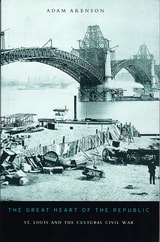
The Great Heart of the Republic
St. Louis and the Cultural Civil WarAdam Arenson
University of Missouri Press, 2011
The Civil War revealed what united as well as what divided Americans in the nineteenth century—not only in its deadly military conflict, but also in the broader battle of ideas, dueling moral systems, and competing national visions. Adam Arenson focuses this cultural civil war in St. Louis, the largest city along the border of slavery and freedom. From this vantage point, the Civil War era looks less like a fight between North and South over slavery or the West as a prize, and more like a messy struggle between northerners, southerners, and westerners, a clash among three incompatible regional visions, whose leaders argued about the definition and importance of Manifest Destiny and slavery politics. Arenson weaves this political history with analyses of paintings, architecture, and other cultural products, paying particular attention to institutions such as universities and railroads. The result is a vibrant history of the Civil War era from the heart of the Republic that enriches our understanding of America at a crossroads.
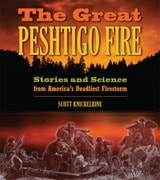
The Great Peshtigo Fire
Stories and Science from America’s Deadliest FireScott Knickelbine
Wisconsin Historical Society Press, 2012
On the night of October 8, 1871, a whirlwind of fire swept through northeastern Wisconsin, destroying the bustling frontier town of Peshtigo. Trees, buildings, and people burst into flames. Metal melted. Sand turned into glass. People thought the end of the world had come. When the “tornado of fire” was over, 2,500 people were dead, and Peshtigo was nothing but a smoking ruin. It was the deadliest wildfire in U.S. history.
The Great Peshtigo Fire: Stories and Science from America’s Deadliest Firestorm explores the history, science, and legacy of the 1871 Peshtigo Fire at a fourth-grade reading level. Readers will learn about the history of settlement, agriculture, and forestry in 19th-century Wisconsin. This illuminating text covers a diverse range of topics that will enrich the reader’s understanding of the Peshtigo Fire, including the building and land-use practices of the time that made the area ripe for such a fire, the weather patterns that fostered widespread fires throughout the upper Midwest in the summer and fall of 1871, and exciting first-person accounts that vividly bring the `victims’ stories to life. Connections made between the Peshtigo Fire and the history of fire prevention in the United States encourage critical thinking about issues that remain controversial to this day, such as planned burns and housing development restrictions near forested areas. The Great Peshtigo Fire: Stories and Science from America’s Deadliest Firestorm will inform and captivate its readers as it journeys through the horrifying history of the Peshtigo Fire.
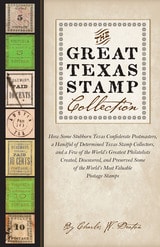
The Great Texas Stamp Collection
How Some Stubborn Texas Confederate Postmasters, a Handful of Determined Texas Stamp Collectors, and a Few of the World's Greatest Philatelists Created, Discovered, and Preserved Some of the World's Most Valuable Postage StampsBy Charles W. Deaton
University of Texas Press, 2012
Among the many difficulties the newly formed Confederate States of America endured in the summer of 1861 was the failure of its post office department to provide sufficient numbers of that item most crucial to its service: the postage stamp. Faced with the resulting din of customer complaints, a handful of industrious Texas postmasters solved the problem by simply making their own homemade stamps.
In this thoroughly researched history of these rare and highly coveted stamps, The Great Texas Stamp Collection traces their journey from creation through their rediscovery years later by local, and then international, stamp collectors—a journey that culminated in the sale of a few pieces at a recent auction in New York that fetched more than $250,000. Weaving the larger contexts of Texas and U.S. postal history together with individual tales of greed, intrigue, forgery, and discovery, Deaton’s book is rich with characters from European royalty to early stamp dealers to common criminals, while also providing detailed examinations of the stamps themselves, including a complete census of the stamps now known as the Texas Confederate Postmasters’ Provisionals.
Appealing at once to devoted philatelists, Texas and U.S. history buffs, and amateur collectors of all kinds, The Great Texas Stamp Collection offers a unique vantage point from which to view our history as well as the very nature of collecting.
The Greatest and the Grandest Act
The Civil Rights Act of 1866 from Reconstruction to TodayEdited by Christian G. Samito
Southern Illinois University Press, 2018
Essays examine the history and legal ramifications of the act and highlight competing impulses within it, including the often-neglected Section 9, which allows the president to use the nation’s military in its enforcement; an investigation of how the Thirteenth Amendment operated to overturn the Dred Scott case; and New England’s role in the passage of the act. The act is analyzed as it operated in several states such as Kentucky, Missouri, and South Carolina during Reconstruction. There is also a consideration of the act and its interpretation by the Supreme Court in its first decades. Other essays include a discussion of the act in terms of contract rights and in the context of the post–World War II civil rights era as well as an analysis of the act’s backward-looking and forward-looking nature.

The Historian's Lincoln
Pseudohistory, Psychohistory, and HistoryEdited by Gabor S. Boritt
University of Illinois Press, 1988
Winner of the Barondess/Lincoln Award of the Civil War Round Table of New York, 1989
"For Lincoln specialists, The Historian's Lincoln deepens and sharpens familiar arguments. For nonspecialists, it is the most efficient and enjoyable way to 'get right' with Lincoln." -- Robert E. McGlone, Pennsylvania Magazine of History and Biography
"Provides an excursion to the frontiers of Lincoln scholarship, and insight into the passions of those who labor there. . . . Rarely do the products of a scholarly symposium so richly deserve placement on public and academic library shelves." -- John Y. Simon, Choice
"Authoritative, well written, and spiced by informed debate. In short, Lincoln's depth and height as a figure in history are well measured by this distinguished volume, not only in its several parts and authors, but also as a whole." -- Robert V. Bruce, author of Lincoln and the Tools of War
The History of Wisconsin, Volume II
Civil War Era, 1848-1873Richard N. Current
Wisconsin Historical Society Press, 1976
This second volume in the History of Wisconsin series introduces us to the first generation of statehood, from the conversion of prairie and forests into farmland to the development of cities and industry. In addition, this volume presents a synthesis of the Civil War and Reconstruction era in Wisconsin. Scarcely a decade after entering the Union, the state was plunged into the nationwide debate over slavery, the secession crisis, and a war in which 11,000 "Badger Boys in Blue" gave their lives. Wisconsin's role in the Civil War is chronicled, along with the post-war years. Complete with photographs from the Historical Society's collections, as well as many pertinent maps, this book is a must-have for anyone interested in this era of Wisconsin's history.
The Impact of the Civil War and Reconstruction on Arkansas
Persistence in the Midst of RuinCarl H. Moneyhon
University of Arkansas Press, 2002
The Impulse of Victory
Ulysses S. Grant at ChattanoogaDavid A. Powell
Southern Illinois University Press, 2020
Union soldiers in the Army of the Cumberland, who were trapped and facing starvation or surrender in the fall of 1863, saw the arrival of Major General Ulysses S. Grant in Tennessee as an impetus to reverse the tides of war. David A. Powell’s sophisticated strategic and operational analysis of Grant’s command decisions and actions shows how his determined leadership relieved the siege and shattered the enemy, resulting in the creation of a new strategic base of Union operations and Grant’s elevation to commander of all the Federal armies the following year.
Powell’s detailed exploration of the Union Army of the Cumberland’s six-week-long campaign for Chattanooga is complemented by his careful attention to the personal issues Grant faced at the time and his relationships with his superiors and subordinates. Though unfamiliar with the tactical situation, the army, and its officers, Grant delivered another resounding victory. His success, explains Powell, was due to his tactical flexibility, communication with his superiors, perseverance despite setbacks, and dogged determination to win the campaign. Through attention to postwar accounts, Powell reconciles the differences between what happened and the participants’ memories of the events. He focuses throughout on Grant’s controversial decisions, showing how they were made and their impact on the campaign. As Powell shows, Grant’s choices demonstrate how he managed to be a thoughtful, deliberate commander despite the fog of war.
The Insanity File
The Case of Mary Todd LincolnMark E. Neely Jr. and R. Gerald McMurtry
Southern Illinois University Press, 1993
In 1875 Robert Todd Lincoln caused his mother, Mary Todd Lincoln, to be committed to an insane asylum. Based on newly discovered manuscript materials, this book seeks to explain how and why.
In these documents—marked by Robert Todd Lincoln as the "MTL Insanity File"—exists the only definitive record of the tragic story of Mary Todd Lincoln’s insanity trial. The book that results from these letters and documents addresses several areas of controversy in the life of the widow of Abraham Lincoln: the extent of her illness, the fairness of her trial, and the motives of those who had her committed for treatment. Related issues include the status of women under the law as well as the legal and medical treatment of insanity.
Speculating on the reasons for her mental condition, the authors note that Mrs. Lincoln suffered an extraordinary amount of tragedy in a relatively few years. Three of her four sons died very young, and Abraham Lincoln was assassinated. After the death of her son Willie she maintained a darkly rigorous mourning for nearly three years, prompting the president to warn her that excessive woe might force him to send her to "that large white house on the hill yonder," the government hospital for the insane.
Mrs. Lincoln also suffered anxiety about money, charting an exceptionally erratic financial course. She had spent lavishly during her husband’s presidency and at his death found herself deeply in debt. She had purchased trunkfuls of drapes to hang over phantom windows. 84 pairs of kid gloves in less than a month, and $3,200 worth of jewelry in the three months preceding Lincoln’s assassination. She followed the same erratic course for the rest of her life, creating in herself a tremendous anxiety. She occasionally feared that people were trying to kill her, and in 1873 she told her doctor that an Indian spirit was removing wires from her eyes and bones from her cheeks.
Her son assembled an army of lawyers and medical experts who would swear in court that Mrs. Lincoln was insane. The jury found her insane and in need of treatment in an asylum. Whether the verdict was correct or not, the trial made Mary Lincoln desperate. Within hours of the verdict she would attempt suicide. In a few months she would contemplate murder. Since then every aspect of the trial has been criticized—from the defense attorney to the laws in force at the time. Neely and McMurtry deal with the trial, the commitment of Mary Todd Lincoln, her release, and her second trial. An appendix features letters and fragments by Mrs. Lincoln from the "Insanity File." The book is illustrated by 25 photographs.
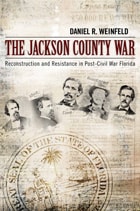
The Jackson County War
Reconstruction and Resistance in Post–Civil War FloridaDaniel R. Weinfeld
University of Alabama Press, 2023
Offers original conclusions explaining why Jackson County became the bloodiest region in Reconstruction Florida
From early 1869 through the end of 1871, citizens of Jackson County, Florida, slaughtered their neighbors by the score. The nearly three year frenzy of bloodshed became known as the Jackson County War. The killings, close to one hundred and by some estimates twice that number, brought Jackson County the notoriety of being the most violent county in Florida during the Reconstruction era. Daniel R. Weinfeld has made a thorough investigation of contemporary accounts. He adds an assessment of recently discovered information, and presents a critical evaluation of the standard secondary sources.
The Jackson County War focuses on the role of the Freedmen’s Bureau, the emergence of white “Regulators,” and the development of African American political consciousness and leadership. It follows the community’s descent after the Civil War into disorder punctuated by furious outbursts of violence until the county settled into uneasy stability seven years later. The Jackson County War emerges as an emblem of all that could and did go wrong in the uneasy years after Appomattox and that left a residue of hatred and fear that endured for generations.
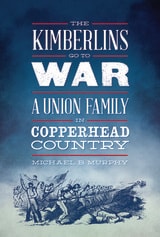
The Kimberlins Go to War
A Union Family in Copperhead CountryMichael B. Murphy
Indiana Historical Society Press, 2016
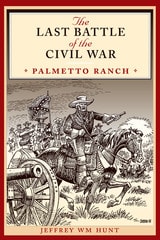
The Last Battle of the Civil War
Palmetto RanchBy Jeffrey Wm Hunt
University of Texas Press, 2002
More than two months after Robert E. Lee surrendered the Army of Northern Virginia on April 9, 1865, the New York Times reported a most surprising piece of news. On May 12-13, the last battle of the Civil War had been fought at the southernmost tip of Texas—resulting in a Confederate victory. Although Palmetto Ranch did nothing to change the war's outcome, it added the final irony to a conflict replete with ironies, unexpected successes, and lost opportunities. For these reasons, it has become both one of the most forgotten and most mythologized battles of the Civil War.
In this book, Jeffrey Hunt draws on previously unstudied letters and court martial records to offer a full and accurate account of the battle of Palmetto Ranch. As he recreates the events of the fighting that pitted the United States' 62nd Colored Troops and the 34th Indiana Veteran Volunteer Infantry against Texas cavalry and artillery battalions commanded by Colonel John S. "Rip" Ford, Hunt lays to rest many misconceptions about the battle. In particular, he reveals that the Texans were fully aware of events in the East—and still willing to fight for Southern independence. He also demonstrates that, far from fleeing the battle in a panic as some have asserted, the African American troops played a vital role in preventing the Union defeat from becoming a rout.
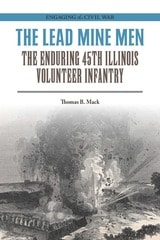
The Lead Mine Men
The Enduring 45th Illinois Volunteer InfantryThomas B. Mack
Southern Illinois University Press, 2023
WINNER, Certificate of Excellence in “Scholarly Publications” from the Illinois State Historical Society’s 2025 Best of Illinois History Awards!
The regiment that never ran
To destroy Confederate infrastructure, avenge the horrors of slavery, and shorten the war, the 45th Illinois Volunteer Infantry imposed the pillaging of hard-war philosophy upon Confederate lands. This comprehensive and engaging narrative explores the Civil War ordeals and triumphs of the “Lead Mine men” who hailed from eleven counties in northern Illinois. Thomas B. Mack uncovers the history on this unit of resilient midwesterners and how they brought hard-war to the Confederacy in 1862, earlier than other historians have previously suggested.
During their service the regiment compiled an exceptional record. The 45th fought under General Ulysses S. Grant in the war’s western theater, earning honors at Vicksburg and in Tennessee. The men later reenlisted as veterans and served in General William T. Sherman’s Atlanta, Savannah, and Carolina campaigns. Mack considers the soldiers’ community, discipline, and faith in Providence during their service in the Union Army of the Tennessee and how, despite the unit’s high casualties, they upheld the lowest rate of desertion due to their fervent patriotism.
Throughout The Lead Mine Men, Mack’s focus remains on the soldiers—their extensive training in Galena and Chicago and their time in camp and in combat. He follows their experiences from recruitment to their celebratory march in the 1865 Grand Review to their postwar lives in which many struggled to adjust, receive their government pensions, and protect the unit’s legacy. In this book, Mack broadens our understanding of the Union soldiers who saved their republic and ended slavery within its borders.
The Life and Death of Gus Reed
A Story of Race and Justice in Illinois during the Civil War and ReconstructionThomas Bahde
Ohio University Press, 2014
Gus Reed was a freed slave who traveled north as Sherman’s March was sweeping through Georgia in 1864. His journey ended in Springfield, Illinois, a city undergoing fundamental changes as its white citizens struggled to understand the political, legal, and cultural consequences of emancipation and black citizenship. Reed became known as a petty thief, appearing time and again in the records of the state’s courts and prisons. In late 1877, he burglarized the home of a well-known Springfield attorney—and brother of Abraham Lincoln’s former law partner—a crime for which he was convicted and sentenced to the Illinois State Penitentiary.
Reed died at the penitentiary in 1878, shackled to the door of his cell for days with a gag strapped in his mouth. An investigation established that two guards were responsible for the prisoner’s death, but neither they nor the prison warden suffered any penalty. The guards were dismissed, the investigation was closed, and Reed was forgotten.
Gus Reed’s story connects the political and legal cultures of white supremacy, black migration and black communities, the Midwest’s experience with the Civil War and Reconstruction, and the resurgence of nationwide opposition to African American civil rights in the late nineteenth century. These experiences shaped a nation with deep and unresolved misgivings about race, as well as distinctive and conflicting ideas about justice and how to achieve it.
The Limits of Sovereignty
Property Confiscation in the Union and the Confederacy during the Civil WarDaniel W. Hamilton
University of Chicago Press, 2006
Americans take for granted that government does not have the right to permanently seize private property without just compensation. Yet for much of American history, such a view constituted the weaker side of an ongoing argument about government sovereignty and individual rights. What brought about this drastic shift in legal and political thought?
Daniel W. Hamilton locates that change in the crucible of the Civil War. In the early days of the war, Congress passed the First and Second Confiscation Acts, authorizing the Union to seize private property in the rebellious states of the Confederacy, and the Confederate Congress responded with the broader Sequestration Act. The competing acts fueled a fierce, sustained debate among legislators and lawyers about the principles underlying alternative ideas of private property and state power, a debate which by 1870 was increasingly dominated by today’s view of more limited government power.
Through its exploration of this little-studied consequence of the debates over confiscation during the Civil War, The Limits of Sovereignty will be essential to an understanding of the place of private property in American law and legal history.
The Lincoln Assassination
The EvidenceEdited by William C. Edwards and Edward Steers
University of Illinois Press, 2008
On April 22, 1865, Brevet Colonel H. L. Burnett was assigned to head the investigation into the murder of President Abraham Lincoln and the attempted murder of Secretary of State William H. Seward. Burnett orchestrated the collection of thousands of documents for the Military Commission’s trial of the conspirators. This deep archive of documentary evidence--consisting of letters, depositions, eyewitness accounts, investigative reports, and other documents--provides invaluable insight into the historical, cultural, and judicial context of the investigation. Only a fraction of the information presented in these documents ever made its way into the trial, and most of it has never been readily accessible. By presenting an annotated and indexed transcription of these documents, this volume offers significant new access to information on the events surrounding the assassination and a vast new store of social and political history of the Civil War era.
“With tears in my eyes I think it your duty to hang every rebel caught. I feel as bad as if was my own mother or father & will be one to volunteer to try & shoot every Southern man. May God have mercy on the man’s soul that done such a deed.
With much Respect for our Country,
I remain
Weeping”
--Anonymous letter, New York, April 15, 1865
“I know Booth. He was in the habit of coming to my place to shoot. . . . He shot well, and practiced to shoot with accuracy in every possible position. . . . He was a quick shot; always silent, reticent.”
--Deposition of Benjamin Barker, Pistol Gallery proprietor
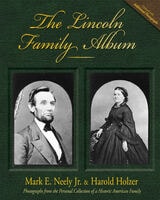
The Lincoln Family Album
Mark E. Neely Jr. and Harold Holzer
Southern Illinois University Press, 2006
Chronicling the private lives of the Lincolns through their personal photographic collection
The Lincoln Family Album offers a rare and revealing glimpse into the private life of Abraham Lincoln and the first family. Showcasing original and previously unpublished photographs collected and preserved by Mary Todd Lincoln and four generations of descendants, the volume includes pictures displayed in a family album when the Lincolns lived in the White House. Chronicled are the lives of the Lincolns’ three sons, including the tragic death of Willie in 1862, the rapid change of Tad during the war, and Robert’s marriage, children, and political career. Soldiers and statesmen of the Civil War, period figures such as Tom Thumb and Henry Ward Beecher, and even the family dog also graced the album that became the nucleus of the Lincolns’ personal collection.
This updated edition, which provides both additional pictures and new introductory materials by renowned Lincoln scholars Mark E. Neely Jr. and Harold Holzer, paints a portrait of the Lincolns’ rise to prominence and the exclusion of poorer relations after the family moved to the nation’s capital. With 150 illustrations and detailed captions, this authoritative and enlightening nineteenth-century history also includes capsule biographies of the Lincolns’ friends and relatives.
In such images as the First Lady in mourning or the assassin John Wilkes Booth, the pictures cannot disguise the painful truth about a family that suffered as many tragedies as triumphs. Willie’s death at the age of eleven abruptly ended Mary and Abraham’s personal collecting, but Lincoln descendants continued the tradition. The last pages of The Lincoln Family Album conclude with the death of Robert Lincoln’s last grandchild, Robert Todd Lincoln Beckwith, in 1985, ending the direct line of Abraham and Mary Lincoln.
The Lincoln Image
ABRAHAM LINCOLN AND THE POPULAR PRINTHarold Holzer, Gabor S. Boritt, and Mark E . Neely Jr.
University of Illinois Press, 1984
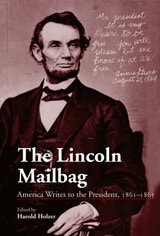
The Lincoln Mailbag
America Writes to the President, 1861-1865Edited by Harold Holzer
Southern Illinois University Press, 2006
As president, Abraham Lincoln received between two hundred and five hundred letters a day—correspondence from public officials, political allies, and military leaders, as well as letters from ordinary Americans of all races who wanted to share their views with him. Here, and in his critically acclaimed volume Dear Mr. Lincoln, editor Harold Holzer has rescued these voices—sometimes eloquent, occasionally angry, at times poetic—from the obscurity of the archives of the Civil War. The Lincoln Mailbag includes letters written by African Americans, which Lincoln never saw, revealing to readers a more accurate representation of the nation’s mood than even the president knew. This first paperback edition of The Lincoln Mailbag includes a new index and fourteen illustrations, and Holzer’s introduction and annotations provide historical context for the events described and the people who wrote so passionately to their president in Lincoln's America.
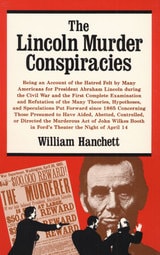
The Lincoln Murder Conspiracies
William Hanchett
University of Illinois Press, 1983
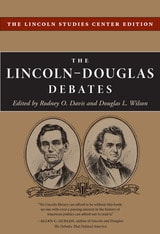
The Lincoln-Douglas Debates
The Lincoln Studies Center EditionEdited by Rodney O. Davis and Douglas L. Wilson
University of Illinois Press, 2014
While the debates between Abraham Lincoln and Stephen A. Douglas are undoubtedly the most celebrated in American history, they may also be the most consequential as well. For the issues so fiercely debated in 1858 were about various interrelated aspects of one momentous, nation-threatening issue: slavery. The contest between Lincoln and Douglas became a testing ground for the viability of conflicting ideals in a nation deeply divided. One of the most colorful and engaging episodes in American history, this series of debates is of enduring interest as an illuminating instance of the ever-recurring dilemma of self-government: what happens when the guiding principle of democracy, "popular sovereignty," confronts a principled stand against a "moral, social, and political evil"? The tragic answer in this case came three years later: civil war.
Important as they are, the Lincoln-Douglas debates have long since ceased to be self-explanatory. This edition is the first to provide a text founded on all known records, rather than following one or another of the partisan and sometimes widely-varying newspaper accounts. Meticulously edited and annotated, it provides numerous aids to help the modern reader understand the debates, including extensive introductory material, commentary, and a glossary. The fullest and most dependable edition of the Lincoln-Douglas debates ever prepared, this edition brings readers as close as possible to the original words of these two remarkable men.
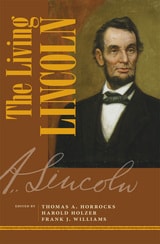
The Living Lincoln
Edited by Thomas A. Horrocks, Harold Holzer, and Frank J. Williams
Southern Illinois University Press, 2011
In an opening section focusing largely on Lincoln's formative years, insightful explorations into his early self-education and the era before his presidency come from editors Frank J. Williams and Harold Holzer, respectively. Readers will also glimpse a Lincoln rarely discerned in books: calculating politician, revealed in Matthew Pinsker's illuminating essay, and shrewd military strategist, as demonstrated by Craig L. Symonds. Stimulating discussions from Edna Greene Medford, John Stauffer, and Michael Vorenberg tell of Lincoln's friendship with Frederick Douglass, his gradualism on abolition, and his evolving thoughts on race and the Constitution to round out part two. Part three features reflections on his martyrdom and memory, including a counterfactual history from Gerald J. Prokopowicz that imagines a hypothetical second term for the president, emphasizing the differences between Lincoln and his successor, Andrew Johnson. Barry Schwartz's contribution presents original research that yields fresh insight into Lincoln's evolving legacy in the South, while Richard Wightman Fox dissects Lincoln's 1865 visit to Richmond, and Orville Vernon Burton surveys and analyzes recent Lincoln scholarship.
This thought-provoking new anthology, introduced at a major bicentennial symposium at Harvard University, offers a wide range of ideas and interpretations by some of the best-known and most widely respected historians of our time. The Living Lincoln is essential reading for those seeking a better understanding of this nation's greatest president and how his actions resonate today.
The Long Shadow of Lincoln's Gettysburg Address
Jared Peatman
Southern Illinois University Press, 2013
The Lost Cause
The Trials of Frank and Jesse JamesJames P. Muehlberger
Westholme Publishing, 2013
On a dreary December 7, 1869, two strangers entered the Daviess County Savings and Loan in Gallatin, Missouri. One of the men asked the cashier for change and then unexpectedly raised a revolver and shot him at point-blank range. Until now, this crime has been considered the first of a string of bank and train robberies committed by Jesse James, his brother Frank, and other gang members. But a story has circulated for more than a century that the case was actually brought to trial by a young Missouri lawyer—and it was through this case that twenty-two-year-old Jesse was first identified as a criminal to the country. But until recently no evidence for such an action could be found. After years of painstaking searches through dusty court archives across Missouri, defense attorney James P. Muehlberger finally discovered the historic documents in 2007. These fascinating and important records reveal that the gunmen were forced to leave behind a magnificent thoroughbred that linked James to the murder and, more intriguing, that the attack was not a bank robbery at all, but a calculated assassination in retribution for a Civil War killing.
The Lost Cause: The Trials of Frank and Jesse James is a thoroughly researched, thrilling account of the rise, pursuit, and prosecution of the legendary outlaw gang. Beginning with the newfound evidence of the Gallatin bank teller murder, the author explains how Jesse James attempted to avenge the death of his Confederate partisan leader, “Bloody Bill” Anderson, but shot the wrong man. Having lost his thoroughbred, Jesse stole another horse. Newly minted lawyer Henry McDougal brashly sued Jesse and Frank James for the loss of property, which would hang the murder on their heads. While Jesse professed his innocence and remained at large, his case was taken up by John Newman Edwards, editor of the Kansas City Times. Through Edwards’s pen, the James brothers were transformed from petty criminals to noble outlaws still fighting for Southern honor—the “Lost Cause.” Not fooled by Edwards’s rhetoric and populist appeal, McDougal and others, including Pinkerton detectives and the governor of Missouri, led a behind-the-scenes fight to bring down the gang. As the author explains, they first prosecuted lesser gang members, and by infiltrating the group, the authorities slowly unraveled the gang, with Jesse being shot by a paid informant in 1882. Frank James gave himself up, and in what was called the “trial of the century,” he was exonerated on all charges and retired to become a notable horse racing official until his death in 1915. Combining true crime, western adventure, and the transformation of America into a modern nation, The Lost Cause is engaging, entertaining history.
The Loyal West
Civil War and Reunion in Middle AmericaMatthew E. Stanley
University of Illinois Press, 2017
Matthew E. Stanley's intimate study explores the Civil War, Reconstruction, and sectional reunion in this bellwether region. Using the lives of area soldiers and officers as a lens, Stanley reveals a place and a strain of collective memory that was anti-rebel, anti-eastern, and anti-black in its attitudes--one that came to be at the forefront of the northern retreat from Reconstruction and toward white reunion. The Lower Middle West's embrace of black exclusion laws, origination of the Copperhead movement, backlash against liberalizing war measures, and rejection of Reconstruction were all pivotal to broader American politics. And the region's legacies of white supremacy--from racialized labor violence to sundown towns to lynching--found malignant expression nationwide, intersecting with how Loyal Westerners remembered the war.
A daring challenge to traditional narratives of section and commemoration, The Loyal West taps into a powerful and fascinating wellspring of Civil War identity and memory.
The Madness of Mary Lincoln
Jason Emerson
Southern Illinois University Press, 2007
WINNER, Russell P. Strange Memorial Book of the Year Award from the Illinois State Historical Society, 2007!
University Press Books for Public and Secondary Schools 2013 edition
In 2005, historian Jason Emerson discovered a steamer trunk formerly owned by Robert Todd Lincoln's lawyer and stowed in an attic for forty years. The trunk contained a rare find: twenty-five letters pertaining to Mary Todd Lincoln's life and insanity case, letters assumed long destroyed by the Lincoln family. Mary wrote twenty of the letters herself, more than half from the insane asylum to which her son Robert had her committed, and many in the months and years after.
The Madness of Mary Lincoln is the first examination of Mary Lincoln’s mental illness based on the lost letters, and the first new interpretation of the insanity case in twenty years. This compelling story of the purported insanity of one of America’s most tragic first ladies provides new and previously unpublished materials, including the psychiatric diagnosis of Mary’s mental illness and her lost will.
Emerson charts Mary Lincoln’s mental illness throughout her life and describes how a predisposition to psychiatric illness and a life of mental and emotional trauma led to her commitment to the asylum. The first to state unequivocally that Mary Lincoln suffered from bipolar disorder, Emerson offers a psychiatric perspective on the insanity case based on consultations with psychiatrist experts.
This book reveals Abraham Lincoln’s understanding of his wife’s mental illness and the degree to which he helped keep her stable. It also traces Mary’s life after her husband’s assassination, including her severe depression and physical ailments, the harsh public criticism she endured, the Old Clothes Scandal, and the death of her son Tad.
The Madness of Mary Lincoln is the story not only of Mary, but also of Robert. It details how he dealt with his mother’s increasing irrationality and why it embarrassed his Victorian sensibilities; it explains the reasons he had his mother committed, his response to her suicide attempt, and her plot to murder him. It also shows why and how he ultimately agreed to her release from the asylum eight months early, and what their relationship was like until Mary’s death.
This historical page-turner provides readers for the first time with the lost letters that historians had been in search of for eighty years.
The Making of a Southerner
William Barclay Napton's Private Civil WarChristopher Phillips
University of Missouri Press, 2008
The Man with the Branded Hand
The Life of Jonathan Walker, AbolitionistAlvin F. Oickle
Westholme Publishing, 2011
Captured While Attempting to Smuggle Slaves to Freedom in 1844, the Only Man Branded in a Courtroom by a United States Marshal
Sailing around the Florida Keys in 1844, forty-five-year-old Jonathan Walker had a price on his head. On board the small boat he had built that winter in Alabama were seven fugitives from slavery. The Cape Cod sailor and abolitionist was wanted in Pensacola, Florida, for his crime: stealing slaves. The slaves’ owners had posted $100 each as reward money for their property and $1,000 for Walker’s apprehension. Only a day’s sail from their goal of freedom in British-controlled Bahamas, Walker and the slaves were stopped and seized by bounty hunters and taken to a Key West court. Ordered back to Pensacola for trial, Walker ended up spending a year in jail. He was fined and sentenced to stand in the pillory; in addition, he was to suffer a unique punishment in American history: while a packed courtroom watched, a United States marshal was ordered to use a hot branding iron to burn the letters SS, for “slave stealer,” into Walker’s right hand.
Walker survived his ordeal, spending much of his incarceration in isolation. Once released, he remained active in the antislavery movement even while he and his devoted wife Jane raised their nine children. His attempt to help form a new colony in Mexico for runaway American slaves also led to punishing experiences for Walker and one of his sons. Living later with his family in Plymouth, Massachusetts, in the years before the Civil War, Walker made room in his crowded house to shelter runaway slaves along the Underground Railroad. He participated in abolitionist lecture tours across the North where he would be urged to reveal his branded hand—made famous by John Greenleaf Whittier’s poem “The Branded Hand”—to astonished audiences. Too old to enlist in the Civil War, Walker instead headed to Virginia in the war’s final year to help educate African Americans fleeing Confederate forces. In The Man With the Branded Hand: The Life of Jonathan Walker, Abolitionist, distinguished journalist Alvin F. Oickle relates this entire remarkable story of a life devoted to the supposition that “all men are created equal.”
The Mark of Slavery
Disability, Race, and Gender in Antebellum AmericaJenifer L. Barclay
University of Illinois Press, 2021
Time and again, antebellum Americans justified slavery and white supremacy by linking blackness to disability, defectiveness, and dependency. Jenifer L. Barclay examines the ubiquitous narratives that depicted black people with disabilities as pitiable, monstrous, or comical, narratives used not only to defend slavery but argue against it. As she shows, this relationship between ableism and racism impacted racial identities during the antebellum period and played an overlooked role in shaping American history afterward. Barclay also illuminates the everyday lives of the ten percent of enslaved people who lived with disabilities. Devalued by slaveholders as unsound and therefore worthless, these individuals nonetheless carved out an unusual autonomy. Their roles as caregivers, healers, and keepers of memory made them esteemed within their own communities and celebrated figures in song and folklore.
Prescient in its analysis and rich in detail, The Mark of Slavery is a powerful addition to the intertwined histories of disability, slavery, and race.
The Mary Lincoln Enigma
Historians on America's Most Controversial First LadyEdited by Frank J. Williams and Michael Burkhimer, with an Epilogue by Catherine Clinton
Southern Illinois University Press, 2012
Mary Lincoln is a lightning rod for controversy. Stories reveal widely different interpretations, and it is impossible to write a definitive version of her life that will suit everyone. The thirteen engaging essays in this collection introduce Mary Lincoln’s complex nature and show how she is viewed today.
The authors’ explanations of her personal and private image stem from a variety of backgrounds, and through these lenses—history, theater, graphic arts, and psychiatry—they present their latest research and assessments. Here they reveal the effects of familial culture and society on her life and give a broader assessment of Mary Lincoln as a woman, wife, and mother. Topics include Mary’s childhood in Kentucky, the early years of her marriage to Abraham, Mary’s love of travel and fashion, the presidential couple’s political partnership, and Mary’s relationship with her son Robert.
The fascinating epilogue meditates on Mary Lincoln’s universal appeal and her enigmatic personality, showcasing the dramatic differences in interpretations. With gripping prose and in-depth documentation, this anthology will capture the imagination of all readers.
University Press Books for Public and Secondary Schools 2013 edition
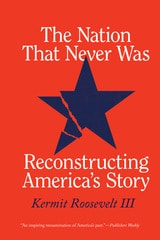
The Nation That Never Was
Reconstructing America's StoryKermit Roosevelt III
University of Chicago Press, 2022
There’s a common story we tell about America: that our fundamental values as a country were stated in the Declaration of Independence, fought for in the Revolution, and made law in the Constitution. But, with the country increasingly divided, this story isn’t working for us anymore—what’s more, it’s not even true. As Kermit Roosevelt argues in this eye-opening reinterpretation of the American story, our fundamental values, particularly equality, are not part of the vision of the Founders. Instead, they were stated in Lincoln’s Gettysburg Address and were the hope of Reconstruction, when it was possible to envision the emergence of the nation committed to liberty and equality.
We face a dilemma these days. We want to be honest about our history and the racism and oppression that Americans have both inflicted and endured. But we want to be proud of our country, too. In The Nation That Never Was, Roosevelt shows how we can do both those things by realizing we’re not the country we thought we were. Reconstruction, Roosevelt argues, was not a fulfillment of the ideals of the Founding but rather a repudiation: we modern Americans are not the heirs of the Founders but of the people who overthrew and destroyed that political order. This alternate understanding of American identity opens the door to a new understanding of ourselves and our story, and ultimately to a better America.
America today is not the Founders’ America, but it can be Lincoln’s America. Roosevelt offers a powerful and inspirational rethinking of our country’s history and uncovers a shared past that we can be proud to claim and use as a foundation to work toward a country that fully embodies equality for all.
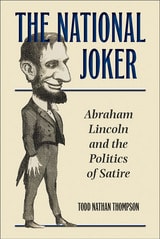
The National Joker
Abraham Lincoln and the Politics of SatireTodd Nathan Thompson
Southern Illinois University Press, 2015
In his speeches, writings, and public persona, Lincoln combined modesty and attack, engaging in strategic self-deprecation while denouncing his opponents, their policies, and their arguments, thus refiguring satiric discourse as political discourse and vice versa. At the same time, he astutely deflected his opponents’ criticisms of him by embracing and sometimes preemptively initiating those criticisms. Thompson traces Lincoln’s comic sources and explains how, in reapplying others’ jokes and stories to political circumstances, he transformed humor into satire. Time and time again, Thompson shows, Lincoln engaged in self-mockery, turning negative assumptions or depictions of him—as ugly, cowardly, jocular, inexperienced—into positive traits that identified him as an everyman while attacking his opponents’ claims to greatness, heroism, and experience as aristocratic or demagogic. Thompson also considers how Lincoln took advantage of political cartoons and other media to help proliferate the particular Lincoln image of the “self-made man”; underscores exceptions to Lincoln’s ability to mitigate negative, satiric depictions of him; and closely examines political cartoons from both the 1860 and 1864 elections. Throughout, Thompson’s deft analysis brings to life Lincoln’s popular humor.
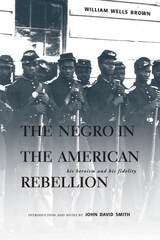
The Negro in the American Rebellion
His Heroism and His FidelityWilliam Wells Brown
Ohio University Press, 1997
In 1863, as the Civil War raged, the escaped slave, abolitionist, and novelist William Wells Brown identified two groups most harmful to his race. “The first and most relentless,” he explained, “are those who have done them the greatest injury, by being instrumental in their enslavement and consequent degradation. They delight to descant upon the ‘natural inferiority’ of the blacks, and claim that we were destined only for a servile condition, entitled neither to liberty nor the legitimate pursuit of happiness.”
“The second class,” Brown concluded, “are those who are ignorant of the characteristics of the race, and are the mere echoes of the first.” Four years later, Brown wrote the first military history of African Americans, The Negro in the American Rebellion. This text assailed those whose hatred and ignorance inclined them to keep blacks oppressed after Appomattox.
This critical edition of The Negro in the American Rebellion, one of Brown’s least-analyzed texts, is the first to appear in more than three decades. In his introduction, historian John David Smith identifies the text’s Anglo-American abolitionist roots, sets it in the context of Brown’s other writings, appraises it as military history, analyzes its interpretation of black masculinity and honor, and focuses closely on Brown’s assessment of contemporary racial tensions.
Largely ignored by scholars, The Negro in the American Rebellion, Smith argues, is a powerful transitional text, one that confronted squarely the neo-slavery of the Reconstruction era.
“Whites,” Brown wrote, “appear determined to reduce the blacks to a state of serfdom if they cannot have them as slaves.” His important text was a call to arms in the ongoing race struggle. Smith’s analysis, framed within recent scholarship on slavery, emancipation, and African American participation in the U.S. army, is long overdue.
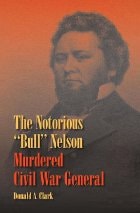
The Notorious "Bull" Nelson
Murdered Civil War GeneralDonald A. Clark
Southern Illinois University Press, 2011
A dynamic figure in the pages of history, Major General William “Bull” Nelson played a formative role in the Union’s success in Kentucky and the Western theater of the Civil War. Now, Donald A. Clark presents a long-overdue examination of this irascible officer, his numerous accomplishments, and his grim fate. More popularly known for his temper than his intrepid endeavors on behalf of the North, Nelson nevertheless dedicated much of his life to his nation and the preservation of the Union.
The child of a privileged family, Nelson was one of the first officers to graduate from the newly formed U.S. Naval Academy. His years in the Navy imbued in him the qualities of bravery, loyalty, and fortitude; however, his term of service also seemed to breed an intolerance of others for which he became infamous, and that ultimately led to his violent downfall. Clark sheds new light upon Nelson’s pre–Civil War years as a naval officer, when he became a hardened veteran of battle, fighting at the siege of Veracruz and the capture of Tabasco during the Mexican War in the 1840s. On the basis of Nelson’s military experience, in 1861 President Lincoln sent him to Kentucky—which was considering secession—and Nelson rallied loyalists and helped the Union prepare to maintain control of the state during the next several years of war.
Nelson went on to prove instrumental in blocking Confederate attempts to subdue Kentucky and the West, serving important roles in the battle of Shiloh, General Henry W. Halleck’s advance against Corinth, and Brigadier General Don Carlos Buell’s movement toward Chattanooga. But while some viewed his bold maneuvers as the saving of the state, many others, including such notables as Ulysses S. Grant and William Tecumseh Sherman, argued that Nelson’s actions merited no praise. Unfortunately for the general, the question of his value to the Union abruptly became moot, as his achievements were shortly overshadowed by ignominious rumors of scandal and abuse.
His involvement in the defense of Louisville gave Nelson a chance to redeem himself and restore his military reputation, but the general’s famous temper soon robbed him of any potential glory. During September of 1862, in a crime that was never prosecuted, fellow Union general Jefferson C. Davis shot and killed Nelson after an argument. Clark explores this remarkable exception in military law, arguing that while the fact of the murder was indisputable, many considered Davis a hero for having dispatched the so-called tyrant. Although Nelson eventually received many posthumous honors for his indispensable role in the war, justice was never sought for his murder.
A comprehensive study of this well-known, yet misunderstood American figure, The Notorious “Bull” Nelson: Murdered Civil War General is an illuminating addition to the history of the Civil War. Through Clark’s impeccable research and richly layered narrative, William “Bull” Nelson springs from the pages as large and volatile as he was in life.
The Ongoing Civil War
New Versions of Old StoriesEdited & Intro by Herman Hattaway & Ethan S. Rafuse
University of Missouri Press, 2004
In 1997, John Stanchak, an editor at Cowles Enthusiast Media (now part of Primedia), realized his vision of “a publication that contained the best, most up-to-date scholarship on the [Civil] war, but was edited with the amateur historian in mind,” with the publication of Columbiad: A Quarterly Review of the War between the States. In the four years the journal was published, it strived to lessen the rift between the scholarly world of professional historians and the “popular” history with which the general reader is more familiar. Now, a selection of the essays that best represent the successful balance between “serious scholarship” and a narrative reading style preferred by the educated layman has been collected in The Ongoing Civil War.
The Parker Sisters
A Border KidnappingLucy Maddox
Temple University Press, 2016
In The Parker Sisters, Lucy Maddox gives an eloquent, urgent account of the tragic kidnapping of these young women. Using archival news and courtroom reports, Maddox tells the larger story of the disastrous effect of the Fugitive Slave Act on the small farming communities of Chester County and the significant, widening consequences for the state and the nation.
The Parker Sisters is also a story about families whose lives and fates were deeply embedded in both the daily rounds of their community and the madness and violence consuming all of antebellum America. Maddox’s account of this horrific and startling crime reveals the strength and vulnerability of the Parker sisters and the African American population.
The Perfect Lion
The Life and Death of Confederate Artillerist John PelhamJerry H. Maxwell
University of Alabama Press, 2011
The Perfect Scout
A Soldier’s Memoir of the Great March to the Sea and the Campaign of the CarolinasGeorge W. Quimby, edited by Anne Sarah Rubin and Stephen Murphy
University of Alabama Press, 2018
After his father-in-law passed away, Stephen Murphy found, among the voluminous papers left behind, an ancestral memoir. Murphy quickly became fascinated with the recollections of George W. Quimby (1842–1926), a Union soldier and scout for General William Tecumseh Sherman.
Before Quimby became a part of Sherman’s March, he was held captive by Nathan Bedford Forrest’s troops in western Tennessee. He joined Sherman’s Army in Vicksburg, destroying railroads and bridges across Mississippi and Alabama on the way to Georgia. As the notorious march began, Quimby became a scout and no longer experienced war as his fellow soldiers did. Scouts moved ahead of the troops to anticipate opportunities and dangers. The rank and file were instructed to be seen and feared, while scouts were required to be invisible and stealthy. This memoir offers the rare perspective of a Union soldier who ventured into Confederate territory and sent intelligence to Sherman.
Written around 1901 in the wake of the Spanish American War, Quimby’s memoir shows no desire to settle old scores. He’s a natural storyteller, keeping his audience’s attention with tales of drunken frolics and narrow escapes, providing a memoir that reads more like an adventure novel. He gives a new twist to the familiar stories of Sherman’s March, reminding readers that while the Union soldiers faced few full-scale battles, the campaign was still quite dangerous.
More than a chronicle of day-to-day battles and marches, The Perfect Scout is more episodic and includes such additional elements as the story of how he met his wife and close encounters with the enemy. Offering a full picture of the war, Quimby writes not only about his adventures as one of Sherman’s scouts, but also about the suffering of the civilians caught in the war. He provides personal insight into some of the war’s historic events and paints a vivid picture of the devastation wreaked upon the South that includes destroyed crops and homes and a shattered economy. He also tells of the many acts of kindness he received from Southerners, including women and African Americans, who helped him and his fellow scouts by providing food, shelter, or information.
The Poetry of the American Civil War
Lee Steinmetz
Michigan State University Press, 2013
Deeply affecting and diverse in perspective, The Poetry of the American Civil War is the first comprehensive volume to focus entirely on poetry written and published during the Civil War. Of the nearly one thousand books of poetry published in the 1860s, some two hundred addressed the war in some way, and these collectively present a textured portrait of life during the conflict. The poets represented here hail from the North and the South, and at times mirror each other uncannily. Among them are housewives, doctors, preachers, bankers, journalists, and teachers. Their verse reflects the day-to-day reality of war, death, and destruction, and it contemplates questions of faith, slavery, society, patriotism, and politics. This is an essential volume for poetry lovers, historians, and Civil War enthusiasts alike.
The Power to Die
Slavery and Suicide in British North AmericaTerri L. Snyder
University of Chicago Press, 2015
In The Power to Die, Terri L. Snyder excavates the history of slave suicide, returning it to its central place in early American history. How did people—traders, plantation owners, and, most importantly, enslaved men and women themselves—view and understand these deaths, and how did they affect understandings of the institution of slavery then and now? Snyder draws on ships’ logs, surgeons' journals, judicial and legislative records, newspaper accounts, abolitionist propaganda and slave narratives, and many other sources to build a grim picture of slavery’s toll and detail the ways in which suicide exposed the contradictions of slavery, serving as a powerful indictment that resonated throughout the Anglo-Atlantic world and continues to speak to historians today.
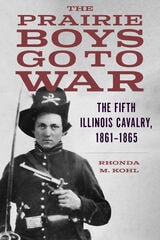
The Prairie Boys Go to War
The Fifth Illinois Cavalry, 1861-1865Rhonda M. Kohl
Southern Illinois University Press, 2013
The regiment’s history unfolds around major events in the Western Theater from 1861 to September 1865, including campaigns at Helena, Vicksburg, Jackson, and Meridian, as well as numerous little-known skirmishes. Although they were led almost exclusively by Northern-born Republicans, the majority of the soldiers in the Fifth Illinois remained Democrats. As Kohl demonstrates, politics, economics, education, social values, and racism separated the line officers from the common soldiers, and the internal friction caused by these cultural disparities led to poor leadership, low morale, disciplinary problems, and rampant alcoholism.
The narrative pulls the Fifth Illinois out of historical oblivion, elucidating the highs and lows of the soldiers’ service as well as their changing attitudes toward war goals, religion, liberty, commanding generals, Copperheads, and alcoholism. By reconstructing the cultural context of Fifth Illinois soldiers, Prairie Boys Go to War reveals how social and economic traditions can shape the wartime experience.
The Preacher's Tale
The Civil War Journal of Rev. Francis Springer, Chaplain, U.S. Army of the FrontierWilliam Furry
University of Arkansas Press, 2001
In the fall of 1861, fifty-one-year-old Rev. Francis Springer enlisted in the Union army. The following spring, Springer, a friend and one-time neighbor to Abraham Lincoln, rode away with the 10th Illinois Cavalry. A witness to the Battle of Prairie Grove (December 1862), Springer was later named post chaplain at Fort Smith, where, in additon to preaching and ministering to the troops, he was placed in charge of refugees—widows, orphans, and contrabands—the displaced victims of virulent guerrilla warfare in Northwest Arkansas. Springer also wrote articles and columns in the Fort Smith New Era under the pseudonym, “Thrifton.” Springer’s honest appraisals of life in the Army of the Frontier make for fascinating reading, and his unique perspective as moralist, educator, and journalist provide new insight into the Civil War and how it was fought in the West. The book includes several never-before published photographs and appendixes which feature accounts of six military executions that Springer participated in as a Union Army chaplain, the hitherto unpublished last letters home of two rebel soldiers condemned and executed at Fort Smith, as well as a eulogy for Abraham Lincoln.
The Preacher’s Tale includes several never before published photographs, and appendixes that contain accounts of six military executions that Springer participated in as a Union Army chaplain, the last letters home of two rebel soldiers condemned and executed at Fort Smith, as well as a eulogy written for Abraham Lincoln.