Results by title
240 books match the query 'Diaries' and 78 start with t
The News at the Ends of the Earth
The Print Culture of Polar ExplorationHester Blum
Duke University Press, 2019
The Picshuas of H. G. Wells
A Burlesque DiaryGene K. Rinkel and Margaret E. Rinkel
University of Illinois Press, 2000
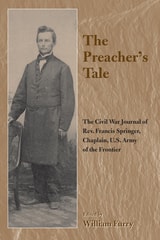
The Preacher's Tale
The Civil War Journal of Rev. Francis Springer, Chaplain, U.S. Army of the FrontierWilliam Furry
University of Arkansas Press, 2001
In the fall of 1861, fifty-one-year-old Rev. Francis Springer enlisted in the Union army. The following spring, Springer, a friend and one-time neighbor to Abraham Lincoln, rode away with the 10th Illinois Cavalry. A witness to the Battle of Prairie Grove (December 1862), Springer was later named post chaplain at Fort Smith, where, in additon to preaching and ministering to the troops, he was placed in charge of refugees—widows, orphans, and contrabands—the displaced victims of virulent guerrilla warfare in Northwest Arkansas. Springer also wrote articles and columns in the Fort Smith New Era under the pseudonym, “Thrifton.” Springer’s honest appraisals of life in the Army of the Frontier make for fascinating reading, and his unique perspective as moralist, educator, and journalist provide new insight into the Civil War and how it was fought in the West. The book includes several never-before published photographs and appendixes which feature accounts of six military executions that Springer participated in as a Union Army chaplain, the hitherto unpublished last letters home of two rebel soldiers condemned and executed at Fort Smith, as well as a eulogy for Abraham Lincoln.
The Preacher’s Tale includes several never before published photographs, and appendixes that contain accounts of six military executions that Springer participated in as a Union Army chaplain, the last letters home of two rebel soldiers condemned and executed at Fort Smith, as well as a eulogy written for Abraham Lincoln.
The Private Journals of Edvard Munch
We Are Flames Which Pour Out of the EarthEdvard Munch, edited and translated by J. Gill Holland
University of Wisconsin Press, 2005
This English translation of Edvard Munch's private diaries, the most extensive edition to appear in any language, captures the eloquent lyricism of the original Norwegian text. The journal entries in this volume span the period from the 1880s, when Munch was in his twenties, until the 1930s, reflecting the changes in his life and his work. The book is illustrated with fifteen of Munch's drawings, many of them rarely seen before. While these diaries have been excerpted before, no translation has captured the real passion and poetry of Munch's voice. This is a translation that lets Munch speak for himself and evokes the primal passion of his diaries. J. Gill Holland's exceptional work adds a whole new level to our understanding of the artist and the depth of his scream.
The Pãltinis Diary
A Paideic Model in Humanist CultureGabriel Liiceanu
Central European University Press, 2000
The intellectual resistance to totalitarian regimes can take many forms. This remarkable volume portrays one such story of resistance in Romania during the reign of Ceauşescu: that of Constantin Noica, one of the country’s foremost intellectuals.
Noica was an original thinker belonging to the remarkable intellectual generation of important figures such as Mircea Eliade, E. M. Cioran and Eugene Ionescu, but he chose to stay in Romania after the communist takeover when many others fled. Harassed and jailed for six years, Noica retreated to the mountains and gathered around him some brilliant young minds and future talent to challenge and nurture them in a time when communism denied them the materials of true intellectual importance.
This group of students withdrew to Noica’s retreat for intensive philosophical sessions to debate the works of Kant, Plato, Heidegger and discuss humanistic values. The author of this volume Liiceanu, himself a brilliant philosopher, was Noica’s closest disciple and during every meeting he noted every conversation in a diary which came to be known as The Păltiniş Diary. These conversations were secretly published and quickly devoured by intellectuals in Romania who were prepared to sacrifice part of their food provisions to acquire the book. The Păltiniş Diary sold out within a matter of days and because of Secret Police censorship, was not published again in Romania until 1991 by which time Noica had died and the group had disbanded to help with the reconstruction of post-Ceauşescu Romania.
The Păltiniş Diary is a wonderful homage to an intellectual master and to the power of intellect and freedom. The book will be of interest to philosophers, non-philosophers alike, and to anyone who seeks to grasp the true meaning of survival under totalitarian conditions.
The Rhetoric of Rebel Women
Civil War Diaries and Confederate PersuasionKimberly Harrison
Southern Illinois University Press, 2013
Informed by more than one hundred diaries, this study provides insight into how women cultivated rhetorical agency, challenging traditional gender expectations while also upholding a cultural status quo. Author Kimberly Harrison analyzes the rhetorical choices these women made and valued in wartime and postwar interactions with Union officers and soldiers, slaves and former slaves, local community members, and even their God. In their intimate accounts of everyday war, these diarists discussed rhetorical strategies that could impact their safety, their livelihoods, and those of their families. As they faced Union soldiers in attempts to protect their homes and property, diarists saw their actions as not only having local, immediate impact on their well-being but also as reflecting upon their cause and the character of the southern people as a whole. They instructed themselves through their personal writing, allowing insight into how southern women prepared themselves to speak and act in new and contested contexts.
The Rhetoric of Rebel Women highlights the contributions of privileged white southern women in the development of the Confederate national identity, presenting them not as passive observers but as active participants in the war effort.

The Salt Lake Papers
From the Years in the Earthscapes of UtahEd Lueders
University of Utah Press, 2018
The Salt Lake Papers is divided into two sections by location and time. Book One reflects the central geophysical presence of the Great Salt Lake, in view from Leuders’s home and the University of Utah campus where he studied and taught. Researched and composed during the 1980s, it is published here for the first time. Book Two begins with his retirement to the “earthscapes” of the Torrey–Capitol Reef area of southern Utah and contemplates the Colorado River system. Hydrology thus provides both the physical and the metaphysical basis for the author’s reflective insights and for the natural flow of his advancing thought.
Beautifully written, The Salt Lake Papers, in varied ways, speaks to the necessity of the humanities in the modern age. At its heart, Lueders’s small book of intellectual musings explores place and the ways landscape shapes what is observant in each of us.
Hear Ed Lueders talk about his book on Utah Conversations with Ted Capener on KUED
The Southern Journey of a Civil War Marine
The Illustrated Note-Book of Henry O. GusleyEdited and annotated by Edward T. Cotham, Jr.
University of Texas Press, 2006
On September 28, 1863, the Galveston Tri-Weekly News caught its readers' attention with an item headlined "A Yankee Note-Book." It was the first installment of a diary confiscated from U.S. Marine Henry O. Gusley, who had been captured at the Battle of Sabine Pass. Gusley's diary proved so popular with readers that they clamored for more, causing the newspaper to run each excerpt twice until the whole diary was published. For many in Gusley's Confederate readership, his diary provided a rare glimpse into the opinions and feelings of an ordinary Yankee—an enemy whom, they quickly discovered, it would be easy to regard as a friend.
This book contains the complete text of Henry Gusley's Civil War diary, expertly annotated and introduced by Edward Cotham. One of the few journals that have survived from U.S. Marines who served along the Gulf Coast, it records some of the most important naval campaigns of the Civil War, including the spectacular Union success at New Orleans and the embarrassing defeats at Galveston and Sabine Pass. It also offers an unmatched portrait of daily life aboard ship. Accompanying the diary entries are previously unpublished drawings by Daniel Nestell, a doctor who served in the same flotilla and eventually on the same ship as Gusley, which depict many of the locales and events that Gusley describes.
Together, Gusley's diary and Nestell's drawings are like picture postcards from the Civil War—vivid, literary, often moving dispatches from one of "Uncle Sam's nephews in the Gulf."
The Spirits of Bad Men Made Perfect
The Life and Diary of Confederate Artillerist William Ellis JonesConstance Hall Jones
Southern Illinois University Press, 2020
In 1865 Jones returned to his prewar printing trade in Richmond, and his lasting reputation stems from his namesake publishing company’s role in the creation and dissemination of much of the Lost Cause ideology. Unlike the pro-Confederate books and pamphlets Jones published—primary among them the Southern Historical Society Papers—his diary shows the mindset of an unenthusiastic soldier. In a model of contextualization, Constance Hall Jones shows how her ancestor came to embrace an uncritical veneration of the army’s leadership and to promulgate a mythology created by veterans and their descendants who refused to face the amorality of their cause.
Jones brackets the soldier’s diary with rich, biographical detail, profiling his friends and relatives and providing insight into his childhood and post-war years. In doing so, she offers one of the first serious investigations into the experience of a Welsh immigrant family loyal to the Confederacy and makes a significant contribution to our understanding of Civil War–era Richmond and the nineteenth-century publishing industry. Invitingly written, The Spirits of Bad Men Made Perfect is an engaging life-and-times story that will appeal to historians and general readers alike.
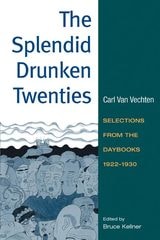
The Splendid Drunken Twenties
Selections from the Daybooks, 1922 - 30Carl Van Vechten
University of Illinois Press, 2002
Between 1922 and 1930, Carl Van Vechten--one of the most significant figures of the Harlem Renaissance--kept a daily record of his activities. The records recount his day-to-day life, as well as the alliances, drinking habits, feuds, and affairs of a wide number of the period's luminaries, providing a rich resource for reconstructing the culture of 1920s New York and the social milieu during Prohibition. Bruce Kellner has provided copious informative notes identifying central figures and clarifying details.
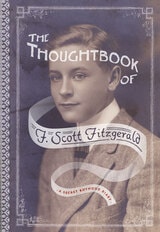
The Thoughtbook of F. Scott Fitzgerald
A Secret Boyhood DiaryF. Scott Fitzgerald
University of Minnesota Press, 2013
When F. Scott Fitzgerald was fourteen and living in the Crocus Hill neighborhood of St. Paul, he began keeping a short diary of his exploits among his friends, friendly rivals, and crushes. He gave the journal a title page—Thoughtbook of Francis Scott Key Fitzgerald of St. Paul Minn. U.S.A.—and kept it securely locked in a box under his bed. He would later use The Thoughtbook as the basis for “The Book of Scandal” in his Basil Lee Duke stories, and brief sections were copied over the years for use by scholars and even published in Life magazine.“Are you going to the Ordways’? the Herseys’? the Schultzes’?” Here, for the first time, is a complete transcription of this charming, twenty-seven-page diary highlighting Fitzgerald’s escapades among the children of some of St. Paul’s most influential families—models for the families described in The Great Gatsby. Presented in a simple format for both scholars and general readers alike, The Thoughtbook of F. Scott Fitzgerald includes a new introduction by Dave Page that covers the history and provenance of the diary, its place and meaning in Fitzgerald’s literary development, and its revelations about his life and writing process.
One of the earliest known works by F. Scott Fitzgerald, The Thoughtbook provides a unique glimpse of Fitzgerald as a young boy and his social circle as they played among the grand homes of Summit Avenue, making up games, starting secret societies, competing with rivals, and (at all times) staying up-to-date on who exactly is vying for whose attention.
The Uncaring, Intricate World
A Field Diary, Zambezi Valley, 1984-1985Pamela Reynolds
Duke University Press, 2019
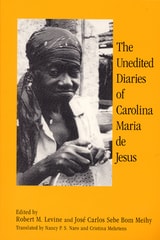
The Unedited Diaries of Carolina Maria De Jesus
Levine, Robert M
Rutgers University Press, 1998
Carolina Maria de Jesus' book, Quarto de Despejo (The Trash Room), depicted the harsh life of the slums, but it also spoke of the author's pride in her blackness, her high moral standards, and her patriotism. More than a million copies of her diary are believed to have been sold worldwide. Yet many Brazilians refused to believe that someone like de Jesus could have written such a diary, with its complicated words (some of them misused) and often lyrical phrasing as she discussed world events. Doubters prefer to believe the book was either written by Audáulio Dantas, the enterprising newspaper reporter who discovered her, or that Dantas rewrote it so substantially that her book is a fraud. With the cooperation of de Jesus' daughter, recent research shows that although Dantas deleted considerable portions of the diary (as well as a second one), every word was de Jesus'.
But Dantas did "create" a different Carolina from the woman who coped with her harsh life by putting things down on paper. This book sets the record straight by providing detailed translations of de Jesus' unedited diaries and explains why Brazilian elites were motivated to obscure her true personality and present her as something she was not. It is not only about the writer but about Brazil as recorded by her sarcastic pen. The diary entries in this book span from 1958 to 1966, five years beyond text previously known to exist. They show de Jesus as she was, preserving her Joycean stream-of-consciousness language and her pithy characterizations.
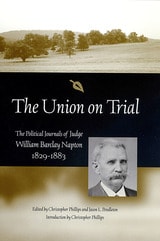
The Union on Trial
The Political Journals of Judge William Barclay Napton, 1829-1883Edited by Christopher Phillips & Jason L. Pendleton. Introduction by Christopher Phillips
University of Missouri Press, 2005
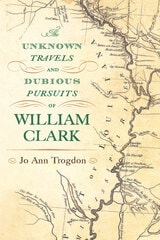
The Unknown Travels and Dubious Pursuits of William Clark
Jo Ann Trogdon
University of Missouri Press, 2023
In this vivid history, Jo Ann Trogdon reveals William Clark’s highly questionable activities during the years before his famous journey west of the Mississippi. Delving into the details of Clark’s diary and ledger entries, Trogdon investigates evidence linking Clark to a series of plots—often called the Spanish Conspiracy—in which corrupt officials sought to line their pockets with Spanish money and to separate Kentucky from the United States. The Unknown Travels and Dubious Pursuits of William Clark gives readers a more complex portrait of the American icon than has been previously written.
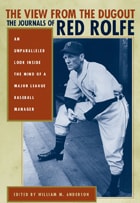
The View from the Dugout
The Journals of Red RolfeEdited by William M. Anderson
University of Michigan Press, 2006
-Bill James, in The New Bill James Historical Baseball Abstract, on the journals of Red Rolfe
"Red Rolfe's journal for his years as manager of the Detroit Tigers is the kind of precious source researchers yearn for. In combination with William M. Anderson's well-done text, The View from the Dugout will be of great interest to general readers and of immense value to students of baseball history."
-Charles C. Alexander, author of Breaking the Slump: Baseball in the Depression Era
"Red Rolfe was one of baseball's most astute observers. This is 'inside' baseball from the inside."
-Donald Honig, author of Baseball America, Baseball When the Grass Was Real, and other books in the Donald Honig Best Players of All Time series
"In his lucid journals Red Rolfe has provided an inside look at how an intelligent baseball manager thinks and prepares."
-Ray Robinson, Yankee historian and author of Iron Horse: Lou Gehrig in His Time
Baseball players as a rule aren't known for documenting their experiences on the diamond. Red Rolfe, however, during his time as manager of the Detroit Tigers from 1949 to 1952, recorded daily accounts of each game, including candid observations about his team's performance. He used these observations to coach his players and to gain an advantage by recording strengths, weaknesses, and tendencies of opposing players and managers. Rolfe's journals carry added value considering his own career as an All-Star Yankee third baseman on numerous world champion teams, where he was a teammate of Lou Gehrig and Joe DiMaggio.
Today, in the era of televised broadcasts, networks often wire a manager so that viewers can listen to his spontaneous comments throughout the game. Red Rolfe's journals offer an opportunity to find out what a manager is thinking when no one is around to hear.
William M. Anderson is Director of the Department of History, Arts and Libraries for the State of Michigan. His books include The Detroit Tigers: A Pictorial Celebration of the Greatest Players and Moments in Tigers' History.
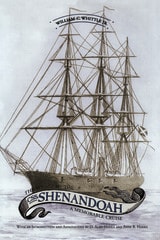
The Voyage of the CSS Shenandoah
A Memorable CruiseWilliam C. Whittle
University of Alabama Press, 2005
The only Confederate ship to circumnavigate the globe
The Confederate cruiser Shenandoah was the last of a group of commerce raiders deployed to prey on Union merchant ships. Ordered to the Pacific Ocean to “greatly damage and disperse” the Yankee whaling fleet in those waters, the Shenandoah’s successful pursuit of her quarry compared favorably with the exploits of the more celebrated Alabama and Florida but has never been as well known because it coincided with the war’s end and the Confederacy’s downfall. It was, however, one of the best documented naval expeditions—from England to the Indian Ocean, Australia and the South Pacific, the Bering Sea, San Francisco, and finally to port in Liverpool—during the Civil War.
The ship’s log and Captain James Waddell’s notes are well preserved, and a number of the Shenandoah’s officers kept detailed journals of the entire voyage. One of the most significant journals, by Lieutenant William Whittle, is presented here, with annotations from other journals, the official records and logs, and newspaper accounts of the Shenandoah’s activities, together bringing to life the history of this remarkable voyage.
The Western Journals of Nehemiah and Henry Sanford, 1839–1846
Kenneth E. Lewis
Michigan State University Press, 2019
The Whiskey Merchant’s Diary
An Urban Life in the Emerging MidwestJoseph J. Mersman
Ohio University Press, 2007
Joseph J. Mersman was a liquor merchant, a German American immigrant who aspired—successfully—to become a self-made man. Hundreds of the residents of Mersman’s hometown in Germany immigrated to Cincinnati in the 1830s, joining many thousands of other German immigrants. In 1847, at the age of twenty-three, Mersman began recording his activities in a bound volume, small enough to fit into his coat pocket. His diary, filled with work and play, eating and drinking, flirting and dancing, provides a unique picture of everyday life, first in Cincinnati and then in St. Louis, the new urban centers of the emerging Midwest.
Outside of Gold Rush diaries and emigration journals, few narrative records of the antebellum period have been published. Illustrated with photographs, maps, and period advertisements, the diary reveals how a young man worked to establish himself during an era that was rich in opportunity.
As a whiskey rectifier, Mersman bought distilled spirits, redistilled or reprocessed them to remove contaminants or increase the alcohol content, and added various flavorings before selling his product to liquor retailers. In his diary, he describes scrambling for capital, marketing his wares, and arranging transportation by steamboat, omnibus, and train. Although the business that he sought to master was eliminated by the passage of the Pure Food Law of 1906, Mersman, like most rectifiers, was a reputable wholesaler. Merchants like him played an important role in distributing liquor in nineteenth-century America.
Mersman confronted serious disease, both as a sufferer from syphilis and as a witness to two devastating cholera epidemics. Unlike other residents of St. Louis, who fled the relative safety of the countryside, he remained in the city and saw the impact of the epidemics on the community.
Linda A. Fisher’s extensive, insightful, and highly readable annotations add a wealth of background information to Mersman’s story. Her professional training and career as a physician give her a particularly valuable perspective on the public health aspects of Mersman’s life and times.
This Soldier Life
The Diaries of Romine H. Ostrander, 1863 and 1865, in Colorado TerritoryPaul A. Malkoski
University Press of Colorado, 2006
Jan. 24, 1865:
"I have had pretty spirited arguments with these third reg't ducks sometimes about the barbarity of indiscriminately murdering defenseless women and children of the Indians at sand creek. Some of them deny that any thing of the kind was done except in the general action when there was no telling the difference; and some acknowledge that there were women and children killed after the general action was over; but argue that it was right because Indians have done the same."
Oct. 17, 1863:
"I know that I have written a great many foolish - yes silly things in this book, and - well, what of it? What if I have? Who's business is it? Who's going to read them? I am!"
Published by the Colorado Historical Society
This War So Horrible
The Civil War Diary of Hiram Smith Williams, 40th Alabama Confederate PioneerHiram Smith Williams
University of Alabama Press, 1993
The Civil War diary of Hiram Smith Williams is extremely unusual. A carriage maker and native of New Jersey, Williams only arrived in the Deep South in 1959 and yet enlisted in the Confederate Army. As a middle-class craftsman, he represented neither wealthy Southern planters nor yeoman farmers. Part of the 40th Alabama Volunteer Regiment, he was first in Mobile, where he attempted to transfer to the CSA Navy. Failing that, he went with his regiment to Atlanta to engage in the great battle there.
A careful writer, Williams paid the same attention to his composition as he did to his carriages. Unlike many Civil War veterans, he never revised his diary to embellish his record or heroism. Prized by historians both for providing an unique point of view as well as an exceptionally articulate narrative, Williams' diary is an important addition to any Civil War library.
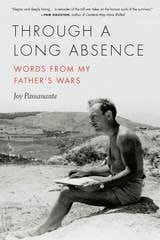
Through a Long Absence
Words from My Father's WarsJoy Passanante
The Ohio State University Press, 2017
Against the backdrop of World War II, Joy Passanante’s touching new book, Through a Long Absence: Words from My Father’s Wars, is the saga of a wartime medical unit, a passionate long-distance love, the making of a surgeon, and two first-generation American families. Told through her father’s eyes—drawing on hundreds of his letters to his beloved wife, his four-volume wartime diary, and his paintings—Passanante masterfully recreates his wartime journey and physically retraces his steps more than sixty years later in an attempt to understand a time in her parents’ lives that they’d spoken about very little.
More than just a World War II story, Through a Long Absence delves into one man’s past to explore his personal wars: a stint as a child bootlegger, a marriage between newlyweds separated by continents and strained by years apart, and his struggle late in life with his own mind. The narrative propels readers to surprising places—from a freight train through North Africa to an underground St. Louis distillery during Prohibition, from a young couple’s forbidden courtship to the chaos of surgical tents under fire in Normandy, from an underground trove of priceless artwork hidden by the Nazis to Jewish New Year services in Paris a week after its liberation. Through a Long Absence is a love story, an honest look into one man’s life, and a daughter’s moving quest to rediscover her father years later through his own words.
Time within Time
The Diaries, 1970–1986Andrey Tarkovsky
Seagull Books, 2019
Time within Time is both a diary and a notebook, maintained by Tarkovsky from 1970 until his death. Intense and intimate, it offers reflections on Dostoyevsky, Tolstoy, Hermann Hesse, Thomas Mann, and others. He writes movingly of his family, especially his father, Arseniy Tarkovsky, whose poems appear in his films. He records haunting dreams in detail and speaks of the state of society and the future of art, noting significant world events and purely personal dramas along with fascinating accounts of his own filmmaking. Rounding out this volume are Tarkovsky’s plans and notes for his stage version of Hamlet; a detailed proposal for a film adaptation of Dostoyevsky’s The Idiot; and a glimpse of the more public Tarkovsky answering questions put to him by interviewers.
Town
Prints & Drawings of Britain before 1800Bernard Nurse
Bodleian Library Publishing, 2020
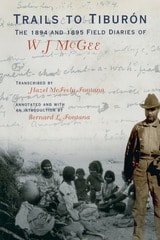
Trails to Tiburón
The 1894 and 1895 Field Diaries of W J McGeeW. J. McGee; Transcribed by Hazel McFeely Fontana; Annotated and with an Introduction by Bernard L. Fontana
University of Arizona Press, 2000
A self-taught scientist in the newly forming field of anthropology, McGee led two expeditions through southern Arizona and northern Sonora for the Bureau of American Ethnology. There he conducted ethnographic research among the Papagos (Tohono O'odham) and the Seris, and his subsequent publication The Seri Indians helped secure his place in the anthropological community.
McGee's complete journals of the expeditions, kept in small field notebooks and preserved in the Library of Congress, are published here for the first time. These journals contain detailed descriptions of the country and people McGee encountered and convey the adventure of traveling through wild and unfamiliar places—including a voyage to Isla Tiburón, or Shark Island, in the Gulf of California—and being plagued by foul weather, a shortage of supplies, and fear of attack from hostile Indians.
Trails to Tiburón features 57 historical photographs taken on the expedition, capturing the places McGee saw and the people he encountered. Fontana's notes to the diary provide useful botanical, geological, and ethnographic information, while his introduction places McGee and his field work in the context of late-nineteenth-century anthropology and science.
Trails to Tiburón reveals McGee's versatility as a field worker and shows his methods, often questioned today, to be the reasonable response of a man caught up in the intellectual fervor of his time. For anyone wanting to share in the spirit of adventure, these journals are a landmark in the annals of exploration.
Trapeze
The Unexpurgated Diary of Anaïs Nin, 1947–1955Anaïs Nin
Ohio University Press, 2017
Anaïs Nin made her reputation through publication of her edited diaries and the carefully constructed persona they presented. It was not until decades later, when the diaries were published in their unexpurgated form, that the world began to learn the full details of Nin’s fascinating life and the emotional and literary high-wire acts she committed both in documenting it and in defying the mores of 1950s America. Trapeze begins where the previous volume, Mirages, left off: when Nin met Rupert Pole, the young man who became not only her lover but later her husband in a bigamous marriage.
It marks the start of what Nin came to call her “trapeze life,” swinging between her longtime husband, Hugh Guiler, in New York and her lover, Pole, in California, a perilous lifestyle she continued until her death in 1977. Today what Nin did seems impossible, and what she sought perhaps was impossible: to find harmony and completeness within a split existence. It is a story of daring and genius, love and pain, largely unknown until now.
Troubadour on the Road to Gold
William B. Lorton's 1849 Journal to CaliforniaEdited by LeRoy Johnson and Jean Johnson, Foreword by Richard Saunders
University of Utah Press, 2020
Lorton’s work is revealing and entertaining. It captures glimpses of a growing Salt Lake City, the hardships of Death Valley, and the extraordinary and mundane aspects of daily life on the road to gold. With resilience and a droll sense of humor, Lorton shares accounts of life-threatening stampedes, dangerous hailstorms, mysteriously moving rocks, and slithering sidewinders. The inclusion of images, maps, and the editors’ detailed notes make this a volume that will entertain and inform.
Truman in the White House
The Diary of Eben A. AyersEdited & Commentaries by Robert H. Ferrell
University of Missouri Press, 1991
As assistant press secretary to President Harry S. Truman, Eben A. Ayers brought with him twenty-six years of experience as a newspaperman. He knew when he had a good story and knew how to record it. His private diary, which he kept unbeknownst to his associates, tells the inside story of the Truman White House clearly, colorfully, and with an acute sense of history.