Results by title
436 books match the query 'Disability' and 67 start with t
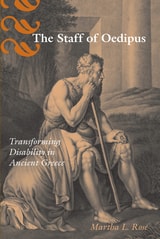
The Staff of Oedipus
Transforming Disability in Ancient GreeceMartha L. Rose
University of Michigan Press, 2013
Ancient Greek images of disability permeate the Western consciousness: Homer, Teiresias, and Oedipus immediately come to mind. But The Staff of Oedipus looks at disability in the ancient world through the lens of disability studies, and reveals that our interpretations of disability in the ancient world are often skewed. These false assumptions in turn lend weight to modern-day discriminatory attitudes toward disability.
Martha L. Rose considers a range of disabilities and the narratives surrounding them. She examines not only ancient literature, but also papyrus, skeletal material, inscriptions, sculpture, and painting, and draws upon modern work, including autobiographies of people with disabilities, medical research, and theoretical work in disability studies. Her study uncovers the realities of daily life for people with disabilities in ancient Greece and challenges the translation of the term adunatos (unable) as "disabled," with all its modern associations.
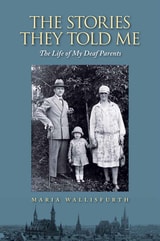
The Stories They Told Me
The Life of My Deaf ParentsMaria Wallisfurth
Gallaudet University Press, 2017
Despite their dissimilar backgrounds and the political circumstances that roiled their lives, the author’s parents showed great love for each other and their only daughter. The Stories They Told Me is a richly detailed document of time and place and a rare account of deaf lives during this era.
The Story of What Is Broken Is Whole
An Aurora Levins Morales ReaderAurora Levins Morales
Duke University Press, 2024
The Terrible We
Thinking with Trans MaladjustmentCameron Awkward-Rich
Duke University Press, 2022
Duke University Press Scholars of Color First Book Award recipient
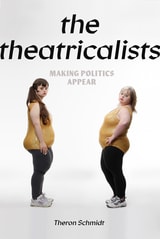
The Theatricalists
Making Politics AppearTheron Schmidt
Northwestern University Press, 2024
Examines how the politics of the theater can illuminate the theatricality of politics
Theatricality is often dismissed as a distraction from “real” politics, as when cynical political gestures are derided as “pure theater” or “only theater.” But the artists and theater companies discussed in this book, including Back to Back Theatre, Tim Crouch, Rabih Mroué, Nature Theater of Oklahoma, and Christoph Schlingensief, take a different approach. Theron Schmidt argues that they represent a “theatricalist turn” that explores and tests the conditions of the theater itself. Across diverse contexts of political engagement, ranging from disability rights to representations of violence, these theatrical conditions are interconnected with political struggles, such as those over who is seen and heard, how labor is valued, and what counts as “political” in the first place. In a so-called post-political era, The Theatricalists argues that an examination of theater’s internal politics can expand our understanding of the theatricality of politics more broadly.
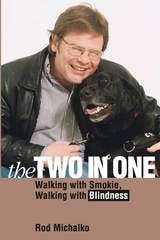
The Two-in-One
Rod Michalko
Temple University Press, 1998
Few people who regularly encountered Michalko in his neighborhood shops and cafes realized that he was technically blind; like many people with physical disabilities, he had found ways of compensating for his impairment. Those who knew about his condition thought of him as a fully realized person who just happened to be blind. He thought so himself. Until Smokie changed all that.
In this often moving, always compelling meditations on his relationship with Smokie, Michalko probes into what it means to be at home with blindness. Smokie makes no judgment about Michalko's lack of sight; it simply is the condition within which they work together. Their partnership thus allows Michalko to step outside of the conventional -- and even "enlightened" -- understanding of blindness; he becomes not simply resigned to it but able to embrace it as an essential part of his being in the world. Drawing on his training as a sociologist and his experience as a disabled person, Michalko joins a still small circle of scholars who examine disability from the inside.
More rare still -- and what will resonate with most readers -- is Michalko's remarkable portrayal of Smokie; avoiding sentimentality and pathos, it is a deeply affectionate yet restrained and nuanced appreciation of his behavior and personality. From their first meeting at the dog guide training school, Smokie springs to life in these pages as a highly competent, sure-footed, take-charge, full-speed-ahead, indispensable partner. "Sighties" are always in awe watching them work; Michalko has even persuaded some of them that the Smokester can locate street addresses -- but has a little difficulty with the odd numbers! Readers of The Two-in-One can easily imagine Rod and Smokie sharing the joke as they continue on their way.
The Voices of Need
From Petition to Patient in Early Massachusetts, 1730–1820Angela M. Keysor
University of Massachusetts Press, 2027
Revealing how people in need advocated for and negotiated their own care until the development of standardized medicine
The Voices of Need uncovers how men and women in Charlestown, Massachusetts, who turned to municipal authorities for aid, actively shaped how their need was understood and addressed. Through a close examination of Charlestown’s care networks, Angela Keysor shows how town selectmen relied on sufferers themselves to articulate what would relieve their distress, while local women—paid by town authorities—provided hands-on care in homes and neighborhoods. These networks flourished in the early and mid-eighteenth century, but their flexibility and responsiveness were increasingly strained by crisis and change. A devastating smallpox epidemic in 1763, followed by racialized debates over belonging after the legal end of enslavement in Massachusetts in 1783, exposed the limits of community-based care.
After the American Revolution, rising numbers of aid requests prompted town officials to reorganize care through a contract system in which paid caregivers attended to multiple dependents at once. As care became centralized and standardized, the space for individuals to define their own needs—and to influence how those needs were met—steadily narrowed. By 1819, with the founding of Massachusetts General Hospital, sufferers were fully redefined as patients, expected to submit to professional authority rather than participate in decisions about their own care.
Tracing this transition from negotiated assistance to institutional medicine, The Voices of Need illuminates a largely forgotten history of agency among the poor and infirm. In doing so, Keysor challenges conventional narratives of early American health care and shows how the rise of standardized medicine fundamentally reshaped the meaning of need, care, and authority.
The Wounds That Bind Us
Kelley Shinn
West Virginia University Press, 2023
The improbable and powerful true story of a single mother with prosthetics for both legs who travels the globe with her young daughter in a Land Rover.
“A harrowing memoir. . . . Readers may not want to follow in [Shinn’s] footsteps, but they will never be bored with her as a companion.” —Kirkus Reviews
The Wounds That Bind Us is the improbable true story of Kelley Shinn, an orphan at birth who loses her legs at the age of sixteen to a rare bacterial pathogen. She becomes an avid off-road racer and, as a single mother, attempts to drive around the globe in a Land Rover with her three-year-old daughter in tow to bring light to the plight of land mine survivors. With unflinching honesty, exceptional lyricism, and biting humor, Shinn (“that’s two Ns and no shins”) takes readers on a wild journey—literal and emotional—filled with striking characters and landscapes, heartbreaks, and hard-won insights, ultimately arriving at a place of profound redemption.
Told with the energy and intensity of the adventure story it is, this terrifically rich and nuanced examination of a life is also a careful meditation on renewal—a remapping of the world. Guided by the narrator’s keen introspection and her ability to look resolutely at harrowing sorrows and still find hope, joy, and meaning, The Wounds That Bind Us will resonate deeply, long after the last page.
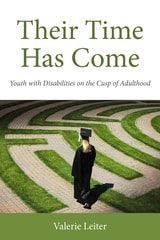
Their Time Has Come
Youth with Disabilities on the Cusp of AdulthoodLeiter, Valerie
Rutgers University Press, 2012
In Their Time Has Come, Valerie Leiter argues that there are crucial missing links between federal disability policies and the lives of young people. Youth and their parents struggle to gather information about the resources that disability policies have created, and youth are not typically prepared to use their disability rights effectively. Her argument is based on thorough examination of federal disability policy and interviews with young people with disabilities, their parents, and rehabilitation professionals. Attention is given to the diversity of expectations, the resources available to them, and the impact of federal policy and public and private attitudes on their transition to adulthood.
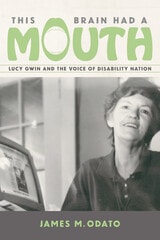
This Brain Had a Mouth
Lucy Gwin and the Voice of Disability NationJames M. Odato
University of Massachusetts Press, 2021
In this engrossing biography, James M. Odato provides an intimate portrait of Gwin, detailing how she forged her own path into activism. After an automobile accident left her with a brain injury, Gwin became a tireless advocate for the equal rights of people she termed "dislabled." More than just a publisher, she fought against corruption in the rehabilitation industry, organized for the group Not Dead Yet, and much more. With Gwin's story at the center, Odato introduces readers to other key disability rights activists and organizations, and supplies context on current contentious topics such as physician-assisted suicide. Gwin's impact on disability rights was monumental, and it is time her story is widely known.
This Is a Place We Made
Disability History and Public LandEdited by Kathleen M. Brian
University of Illinois Press, 2027
Disability and place constitute one another. Disabled people make worlds through creativity, adaptability, and reciprocal care, while disability offers distinctive routes to understanding present, past, and future worlds. At the same time, places evoke memory, story, and meaning—however contested—and influence how people understand and live disability. Informed by cutting-edge theories and inventive methods, the contributors’ brief studies of particular places highlight this mutuality. Framing the essays are open-ended questions and abundant resources that invite specialist and non-specialist readers alike to join ongoing conversations.
Innovative and world-making, This Is a Place We Made models what is possible when historical practice is guided by an ethics of access, collaboration, and proximity.
Translating Human Rights in Education
The Influence of Article 24 UN CRPD in Nigeria and GermanyJulia Biermann
University of Michigan Press, 2022
The 2006 United Nations Convention on the Rights of Persons with Disabilities (UN CRPD) is the first human rights treaty to explicitly acknowledge the right to education for persons with disabilities. In order to realize this right, the convention’s Article 24 mandates state parties to ensure inclusive education systems that overcome outright exclusion as well as segregation in special education settings. Despite this major global policy change to tackle the discriminations persons with disabilities face in education, this has yet to take effect in most school systems worldwide.
Focusing on the factors undermining the realization of disability rights in education, Julia Biermann probes current meanings of inclusive education in two contrasting yet equally challenged state parties to the UN CRPD: Nigeria, whose school system overtly excludes disabled children, and Germany, where this group primarily learns in special schools. In both countries, policy actors aim to realize the right to inclusive education by segregating students with disabilities into special education settings. In Nigeria, this demand arises from the glaring lack of such a system. In Germany, conversely, from its extraordinary long-term institutionalization. This act of diverting from the principles embodied in Article 24 is based on the steadfast and shared belief that school systems, which place students into special education, have an innate advantage in realizing the right to education for persons with disabilities. Accordingly, inclusion emerges to be an evolutionary and linear process of educational expansion that depends on institutionalized special education, not a right of persons with disabilities to be realized in local schools on an equal basis with others. This book proposes a refined human rights model of disability in education that shifts the analytical focus toward the global politics of formal mass schooling as a space where discrimination is sustained.
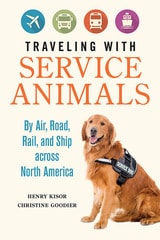
Traveling with Service Animals
By Air, Road, Rail, and Ship across North AmericaHenry Kisor and Christine Goodier
University of Illinois Press, 2019
Treehab
Tales from My Natural, Wild LifeBob Smith
University of Wisconsin Press, 2016
In Treehab—named after a retreat cabin in rural Ontario—Smith muses how he has “always sought the path less traveled.” He rebuffs his diagnosis of ALS as only an unflappable stand-up comic could (“Lou Gehrig’s Disease? But I don’t even like baseball!”) and explores his complex, fulfilling experience of fatherhood, both before and after the onset of the disease.
Stories of his writing and performing life—punctuated by hilariously cutting jokes that comedians tell only to each other—are interspersed with tales of Smith’s enduring relationship with nature: boyhood sojourns in the woods of upstate New York and adult explorations of the remote Alaskan wilderness; snakes and turtles, rocks and minerals; open sky and forest canopy; God and friendship—all recurring touchstones that inspire him to fight for his survival and for the future of his two children.
Aiming his potent, unflinching wit at global warming, equal rights, sex, dogs, Thoreau, and more, Smith demonstrates here the inimitable insight that has made him a beloved voice of a generation. He reminds us that life is perplexing, beautiful, strange, and entirely worth celebrating.
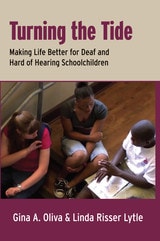
Turning the Tide
Making Life Better for Deaf and Hard of Hearing SchoolchildrenGina A. Oliva
Gallaudet University Press, 2014
Turning the Tide presents a qualitative study of deaf and hard of hearing students who attended mainstream schools. The authors conducted three focus groups in different regions in the country, enlisting six to eight participants with diverse backgrounds for each session. They also gathered information from 113 online respondents who answered the same questions used in the focus groups. The respondents discussed many issues, including the difficulties of finding friends and social access, the struggle to establish an identity, the challenges of K-12 interpreting and class placement, and the vast potential of summer and weekend programs for deaf students. Their empowering stories clearly demonstrate that no deaf or hard of hearing student should be educated alone. The authors also elicited comments on other changes that parents, advocates, and other allies could work toward to improve further the educational environment of deaf children.
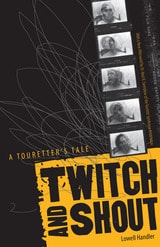
Twitch And Shout
A Touretter’s TaleLowell Handler
University of Minnesota Press, 2004
The remarkable memoir of a Touretter’s journey of self-discovery—now back in print!
Lowell Handler has Tourette’s syndrome, a disorder characterized by exaggerated facial tics, sudden jerking movements of the body and limbs, and explosive public outbursts, usually in the form of expletives and racial epithets. Although he is a successful and acclaimed photojournalist, Handler has often seen himself as an outsider—a social outcast. With courage and candor, he recalls the difficulties he suffered growing up, the confusion he experienced when doctors misdiagnosed his bizarre behavior as a psychological aberration, and finally how, restless and despairing, he embarked on a quest for answers.In Twitch and Shout, Handler sets out, camera in hand, on a journey through less than savory parts of America. From a transvestite bar in Tampa to a flophouse in New Orleans to a community health center in New York, he meets a variety of people who, like himself, don’t conform to the standards of conventional society. With a keen eye for detail and an acute sense of humor, this memoir perfectly captures the unique and unforgettable life of a Touretter.