Results by title
374 books match the query 'Economic History' and 111 start with t
The Institutional Revolution
Measurement and the Economic Emergence of the Modern WorldDouglas W. Allen
University of Chicago Press, 2011
Few events in the history of humanity rival the Industrial Revolution. Following its onset in eighteenth-century Britain, sweeping changes in agriculture, manufacturing, transportation, and technology began to gain unstoppable momentum throughout Europe, North America, and eventually much of the world—with profound effects on socioeconomic and cultural conditions.
The Invention of Infinite Growth
How Economists Came to Believe a Dangerous DelusionChristopher F. Jones
University of Chicago Press, 2025
Most economists believe that growth is the surest path to better lives. This has proven to be one of humanity’s most powerful and dangerous ideas. It shapes policy across the globe, but it fatally undermines the natural ecosystems necessary to sustain human life. How did we get here? In The Invention of Infinite Growth, environmental historian Christopher F. Jones takes us through two hundred and fifty years of economic thinking to examine the ideal of growth, its powerful influence, and the crippling burdens many decisions made in its name have placed on us all. Jones argues that the pursuit of growth has never reflected its costs, because economists downplay environmental degradation. What’s worse, skyrocketing inequality and diminishing improvements in most people’s well-being mean growth too often delivers too little for too many. Jones urges economists to engage more broadly with other ways of thinking, as well as with citizens and governments to recognize and slow infinite growth’s impact on the real world.
Both accessible and eye-opening, The Invention of Infinite Growth offers hope for the future. Humans have not always believed that economic growth could or should continue, and so it is possible for us to change course. We can still create new ideas about how to promote environmental sustainability, human welfare, and even responsible growth, without killing the planet and ourselves.

The Life and Death of Texas German
Eileen Boris, ed.
Duke University Press, 0
By comparing and contrasting present-day data with data from the German dialects brought to Texas since the 1840s, the volume offers an in-depth analysis of mutual interaction between the German-speaking community and English-speaking Texans, long-term accommodation of Texas German speakers in this new community, and language hybridization on the Texas frontier. The volume also analyzes a number of phonological, syntactic, and morphological changes in Texas German over the past century and examines sociolinguistic aspects of the Texas German community from its foundation to today, providing insight into the dynamics underlying new-dialect formation, diglossia, language shift, language maintenance, and language death. Finally, the volume investigates the rapid disappearance of languages, which has global social and cultural implications for areas beyond linguistics.
The Life and Political Economy of Lauchlin Currie
New Dealer, Presidential Advisor, and Development EconomistRoger J. Sandilands
Duke University Press, 1990
His involvement in U.S. policymaking in China, where he directed Lend-Lease operations from 1941-1943, was one of the factors leading to his confrontation with Senator Joseph McCarthy. In 1949 he directed the first World Bank mission to Colombia.
Roger Sandilands had access to Currie’s own papers and to previously unpublished material. In this biography he provides the reader with a critical evaluation of Currie’s contribution to the literature on the theory and practice of economic development in general, together with an analysis of how his concepts were shaped during the New Deal and in post-World War II Colombia.
The Logistics Counterrevolution
Supply Chain Imperialism and Anticolonial StruggleCharmaine Chua
University of Minnesota Press, 2027
How the global supply chain developed in response to postcolonial struggles for independence
No part of the global economy today remains untouched by the logistics sector. Each time we make a purchase online, buy a car, or shop for groceries, we interact with planetary supply chains that connect industrial, transport, and service workers across vast distances. The Logistics Counterrevolution critically reexamines the history of global logistics from the perspective of anticolonial struggles that coincided with its emergence. Positioning this history as a counterrevolution on behalf of powerful state and capitalist interests, Charmaine Chua underscores how subaltern resistance shaped the development of the supply chains, containerization, and maritime logistics that underpin our daily lives.
This book charts how the logistics economy emerged after World War II as a response to the perceived threat of national liberation and economic autonomy among developing nations. Drawing from case studies in Indonesia, Singapore, the Philippines, and in international institutions, Chua demonstrates how the global supply chain not only sped up the international circulation of goods but also enacted new forms of imperialism leveled against the emerging nations of the Global South.
With insights from Filipino seafarers, Amazon warehouse workers, postcolonial leaders, and shipping executives, The Logistics Counterrevolution uncovers the enormous infrastructures and economic mechanisms that sustain capital distribution systems across the world. Combining ethnography with historical research from company and colonial archives, this book offers a necessary reconsideration of the logistics industry by illuminating the internationalist struggles that precipitated its rise.
Retail e-book files for this title are screen-reader friendly with images accompanied by short alt text and/or extended descriptions.
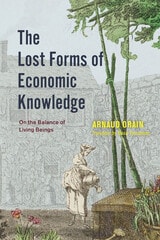
The Lost Forms of Economic Knowledge
On the Balance of Living BeingsArnaud Orain
University of Chicago Press, 2026
Traces the early history of economic knowledge developed by thinkers between the sixteenth and eighteenth centuries.
Starting with the sixteenth century, The Lost Forms of Economic Knowledge investigates the origins and prehistory of economic thought before the emergence of political economy as an autonomous discipline in the late eighteenth century. In this book, the celebrated French historian Arnaud Orain argues that these “lost forms” of economic knowledge represent an important alternative to our modern system of numerical abstraction and market manipulation.
As Orain shows, older approaches to the economy defined it as a relationship between humans and their specific environment. These earlier mindsets sought to advance vernacular knowledge by turning to a variety of figures—naturalists, artisans, farmers, and merchants—to learn how to take advantage of the environment without depleting it. The goal of these inquiries was not to maximize profit but to determine how to allow humans to satisfy basic needs and live in harmony with nature. Now, at a time in which natural resources are fast depleting, Orain argues that we could do worse than consider the alternative approaches to “economics” that lie in our past, and that might still be available in the future.
The Market and Other Orders
F. A. Hayek
University of Chicago Press, 2013
The Market and Other Orders brings together more than twenty works spanning almost forty years that consider this question. Consisting of speeches, essays, and lectures, including Hayek’s 1974 Nobel lecture, “The Pretense of Knowledge,” the works in this volume draw on a broad range of perspectives, including the philosophy of science, the physiology of the brain, legal theory, and political philosophy. Taking readers from Hayek’s early development of the idea of spontaneous order in economics through his integration of this insight into political theory and other disciplines, the book culminates with Hayek’s integration of his work on these topics into an overarching social theory that accounts for spontaneous order in the variety of complex systems that Hayek studied throughout his career.
Edited by renowned Hayek scholar Bruce Caldwell, who also contributes a masterly introduction that provides biographical and historical context, The Market and Other Orders forms the definitive compilation of Hayek’s work on spontaneous order.
The Market and Other Orders
F. A. Hayek
University of Chicago Press, 2013
In addition to his groundbreaking contributions to pure economic theory, F. A. Hayek also closely examined the ways in which the knowledge of many individual market participants could culminate in an overall order of economic activity. His attempts to come to terms with the “knowledge problem” thread through his career and comprise the writings collected in the fifteenth volume of the University of Chicago Press’s Collected Works of F. A. Hayek series.
The Market and Other Orders brings together more than twenty works spanning almost forty years that consider this question. Consisting of speeches, essays, and lectures, including Hayek’s 1974 Nobel lecture, “The Pretense of Knowledge,” the works in this volume draw on a broad range of perspectives, including the philosophy of science, the physiology of the brain, legal theory, and political philosophy. Taking readers from Hayek’s early development of the idea of spontaneous order in economics through his integration of this insight into political theory and other disciplines, the book culminates with Hayek’s integration of his work on these topics into an overarching social theory that accounts for spontaneous order in the variety of complex systems that Hayek studied throughout his career.
Edited by renowned Hayek scholar Bruce Caldwell, who also contributes a masterly introduction that provides biographical and historical context, The Market and Other Orders forms the definitive compilation of Hayek’s work on spontaneous order.
The Measure of Economies
Measuring Productivity in an Age of Technological ChangeEdited by Marshall B. Reinsdorf and Louise Sheiner
University of Chicago Press, 2024
Innovative new approaches for improving GDP measurement to better gauge economic productivity.
Official measures of gross domestic product (GDP) indicate that productivity growth has declined in the United States over the last two decades. This has led to calls for policy changes from pro-business tax reform to stronger antitrust measures. But are our twentieth-century economic methods actually measuring our twenty-first-century productivity?
The Measure of Economies offers a synthesis of the state of knowledge in productivity measurement at a time when many question the accuracy and scope of GDP. With chapters authored by leading economic experts on topics such as the digital economy, health care, and the environment, it highlights the inadequacies of current practices and discusses cutting-edge alternatives.
Pragmatic and forward-facing, The Measure of Economies is an essential resource not only for social scientists, but also for policymakers and business leaders seeking to understand the complexities of economic growth in a time of rapidly evolving technology.

The Memory of Trade
Modernity's Entanglements on an Eastern Indonesian IslandPatricia Spyer
Duke University Press, 2000
Drawing on more than two years of archival and ethnographic research, Spyer examines the dynamics of contact with the Dutch and Europeans, Suharto’s postcolonial regime, and with the competing religions of Islam, Protestantism, and Catholicism in the context of the recent conversion of pagan Aruese. While arguing that Aru identity and community are defined largely in terms of absence, longing, memory, and desire, she also incorporates present-day realities—such as the ecological destruction wrought by the Aru trade in such luxury goods as pearls and shark fins—without overlooking the mystique and ritual surrounding these activities. Imprinted on the one hand by the archipelago’s long engagement with extended networks of commerce and communication and, on the other, by modernity’s characteristic repressions and displacements, Aruese make and manage their lives somewhat precariously within what they often seem to construe as a dangerously expanding—if still enticing—world. By documenting not only the particular expectations and strategies Aruese have developed in dealing with this larger world but also the price they pay for participation therein, The Memory of Trade speaks to problems commonly faced elsewhere in the frontier spaces of modern nation-states.
Balancing particularly astute analysis with classic ethnography, The Memory of Trade will appeal not only to anthropologists and historians but also to students and specialists of Southeast Asia, modernity, and globalization.
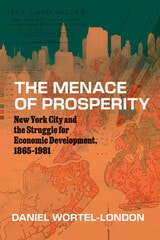
The Menace of Prosperity
New York City and the Struggle for Economic Development, 1865–1981Daniel Wortel-London
University of Chicago Press, 2025
Many local policymakers make decisions based on a deep-seated belief: what’s good for the rich is good for cities. Convinced that local finances depend on attracting wealthy firms and residents, municipal governments lavish public subsidies on their behalf. Whatever form this strategy takes—tax-exempt apartments, corporate incentives, debt-financed mega projects—its rationale remains consistent and assumed to be true. But this wasn’t always the case. Between the 1870s and the 1970s, a wide range of activists, citizens, and intellectuals in New York City connected local fiscal crises to the greed and waste of the rich. These figures saw other routes to development, possibilities rooted in alternate ideas about what was fiscally viable.
In The Menace of Prosperity, Daniel Wortel-London argues that urban economics and politics are shaped by what he terms the “fiscal imagination” of policymakers, activists, advocates, and other figures. His survey of New York City during a period of explosive growth shows how residents went beyond the limits of redistributive liberalism to imagine how their communities could become economically viable without the largesse of the wealthy. Their strategies—which included cooperatives, public housing, land-value taxation, public utilities, and more—centered the needs and capabilities of ordinary residents as the basis for local economies that were both prosperous and just.
Overturning stale axioms about economic policy, The Menace of Prosperity shows that not all growth is productive for cities. Wortel-London’s ambitious history demonstrates the range of options we’ve abandoned and hints at the economic frameworks we could still realize—and the more democratic cities that might result.
The Menace of Prosperity
New York City and the Struggle for Economic Development, 1865–1981Daniel Wortel-London
University of Chicago Press, 2025
Upends entrenched thinking about cities, demonstrating how urban economies are defined—or constrained—by the fiscal imagination of policymakers, activists, and residents.
Many local policymakers make decisions based on a deep-seated belief: what’s good for the rich is good for cities. Convinced that local finances depend on attracting wealthy firms and residents, municipal governments lavish public subsidies on their behalf. Whatever form this strategy takes—tax-exempt apartments, corporate incentives, debt-financed mega projects—its rationale remains consistent and assumed to be true. But this wasn’t always the case. Between the 1870s and the 1970s, a wide range of activists, citizens, and intellectuals in New York City connected local fiscal crises to the greed and waste of the rich. These figures saw other routes to development, possibilities rooted in alternate ideas about what was fiscally viable.
In The Menace of Prosperity, Daniel Wortel-London argues that urban economics and politics are shaped by what he terms the “fiscal imagination” of policymakers, activists, advocates, and other figures. His survey of New York City during a period of explosive growth shows how residents went beyond the limits of redistributive liberalism to imagine how their communities could become economically viable without the largesse of the wealthy. Their strategies—which included cooperatives, public housing, land-value taxation, public utilities, and more—centered the needs and capabilities of ordinary residents as the basis for local economies that were both prosperous and just.
Overturning stale axioms about economic policy, The Menace of Prosperity shows that not all growth is productive for cities. Wortel-London’s ambitious history demonstrates the range of options we’ve abandoned and hints at the economic frameworks we could still realize—and the more democratic cities that might result.
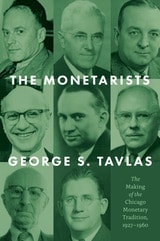
The Monetarists
The Making of the Chicago Monetary Tradition, 1927–1960George S. Tavlas
University of Chicago Press, 2023
The Chicago School of economic thought has been subject to endless generalizations—and mischaracterizations—in contemporary debate. What is often portrayed as a monolithic obsession with markets is, in fact, a nuanced set of economic theories born from decades of research and debate. The Monetarists is a deeply researched history of the monetary policies—and personalities—that codified the Chicago School of monetary thought from the 1930s through the 1960s. These policies can be characterized broadly as monetarism: the belief that prices and interest rates can be kept stable by controlling the amount of money in circulation.
As economist George S. Tavlas makes clear, these ideas were more than just the legacy of Milton Friedman; they were a tradition in theory brought forth by a crucible of minds and debates throughout campus. Through unprecedented mining of archival material, The Monetarists offers the first complete history of one of the twentieth century’s most formative intellectual periods and places. It promises to elevate our understanding of this doctrine and its origins for generations to come.
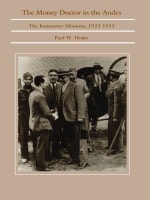
The Money Doctor in the Andes
U.S. Advisors, Investors, and Economic Reform in Latin America from World War I to the Great DepressionPaul W. Drake
Duke University Press, 1988
Drake links the Kemmerer missions to vital developments in the political economic history of the Andean republics in the interwar period. He analyzes the domestic interest groups and political forces whose convergent strategies gave the Kemmerer missions their remarkable record in achieving local success for the reforms proposed. Second, Drake situates the Kemmerer missions at the center of a process of political modernization that created new institutions and policy agencies in each of the five countries; the missions thereby contributed to the expansion of the central government as an agent of development in ways that later differed sharply from Kemmerer's orthodox policies. Finally, The Money Doctor in the Andes regards developments in the Andean countries in the context of the region's developing economic ties to the United States. Expectations that Kemmerer's plans would simultaneously attract foreign capital and control inflation drew support from sectors as diverse as trade unions and landowners. When the Depression deepened, Kemmerer's policies proved counterproductive and the fragile consensus that had installed them fell apart, but the political and administrative reforms endured—with far-reaching consequences.
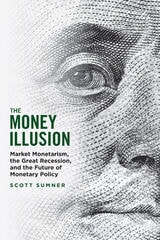
The Money Illusion
Market Monetarism, the Great Recession, and the Future of Monetary PolicyScott Sumner
University of Chicago Press, 2021
Is it possible that the consensus around what caused the 2008 Great Recession is almost entirely wrong? It’s happened before. Just as Milton Friedman and Anna Schwartz led the economics community in the 1960s to reevaluate its view of what caused the Great Depression, the same may be happening now to our understanding of the first economic crisis of the 21st century.
Forgoing the usual relitigating of problems such as housing markets and banking crises, renowned monetary economist Scott Sumner argues that the Great Recession came down to one thing: nominal GDP, the sum of all nominal spending in the economy, which the Federal Reserve erred in allowing to plummet. The Money Illusion is an end-to-end case for this school of thought, known as market monetarism, written by its leading voice in economics. Based almost entirely on standard macroeconomic concepts, this highly accessible text lays the groundwork for a simple yet fundamentally radical understanding of how monetary policy can work best: providing a stable environment for a market economy to flourish.

The Natural Origins of Economics
Margaret Schabas
University of Chicago Press, 2005
In The Natural Origins of Economics, Margaret Schabas traces the emergence and transformation of economics in the eighteenth and nineteenth centuries from a natural to a social science. Focusing on the works of several prominent economists—David Hume, Adam Smith, Thomas Malthus, David Ricardo, and John Stuart Mill—Schabas examines their conceptual debt to natural science and thus locates the evolution of economic ideas within the history of science. An ambitious study, The Natural Origins of Economics will be of interest to economists, historians, and philosophers alike.
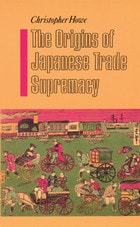
The Origins of Japanese Trade Supremacy
Development and Technology in Asia from 1540 to the Pacific WarChristopher Howe
University of Chicago Press, 1996
"Thoughtful, well-organized, and lucidly written and reflects many years of painstaking research in different literatures."—Business Horizons
"The best analysis yet in English of the role of technology in Japan's emergence as a global economic power."—David J. Jeremy, Technology and Culture
"An important addition to Japanese economic history and the concept of creating relative advantage in trade."—Richard Rice, Journal of Asian Studies
"No other work in English approaches Christopher Howe's combination of a sweeping historical perspective with a comprehensive yet in-depth analysis of factors underlying Japan's pre-1940 economic 'miracle.' . . . [An] illuminating study."—Steven J. Ericson, American Historical Review
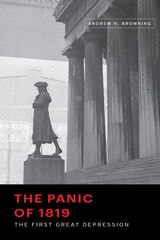
The Panic of 1819
The First Great DepressionAndrew H. Browning
University of Missouri Press, 2024
The Panic introduced Americans to the new phenomenon of boom and bust, changed the country's attitudes towards wealth and poverty, spurred the political movement that became Jacksonian Democracy, and helped create the sectional divide that would lead to the Civil War. Although it stands as one of the turning points of American history, few Americans today have heard of the Panic of 1819, with the result that we continue to ignore its lessons—and repeat its mistakes.

The Paradoxes of Unintended Consequences
István Rév
Central European University Press, 2000
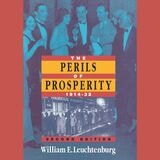
The Perils of Prosperity, 1914-1932
William E. Leuchtenburg
University of Chicago Press, 1993
Beginning with Woodrow Wilson and U.S. entry into World War I and closing with the Great Depression, The Perils of Prosperity traces the transformation of America from an agrarian, moralistic, isolationist nation into a liberal, industrialized power involved in foreign affairs in spite of itself.
William E. Leuchtenburg's lively yet balanced account of this hotly debated era in American history has been a standard text for many years. This substantial revision gives greater weight to the roles of women and minorities in the great changes of the era and adds new insights into literature, the arts, and technology in daily life. He has also updated the lists of important dates and resources for further reading.
“This book gives us a rare opportunity to enjoy the matured interpretation of an American Historian who has returned to the story and seen how recent decades have added meaning and vividness to this epoch of our history.”—Daniel J. Boorstin, from the Preface

The Plow, the Hammer, and the Knout
An Economic History of Eighteenth-Century RussiaArcadius Kahan
University of Chicago Press, 1985
The Political Economy of Pipelines
A Century of Comparative Institutional DevelopmentJeff D. Makholm
University of Chicago Press, 2012
The Political Origins of Inequality
Why a More Equal World Is Better for Us AllSimon Reid-Henry
University of Chicago Press, 2015
The problem of inequality, Reid-Henry argues, is a problem that manifests between places as well as over time. This is one reason why it cannot be resolved by the usual arguments of left versus right, bound as they are to the national scale alone. Most of all, however, it is why the level of inequality that confronts us today is indicative of a more general crisis in political thought. Modern political discourse has no place for public reason or the common good. Equality is yesterday’s dream. Yet the fact that we now accept such a world—a world that values security over freedom, special treatment over universal opportunity, and efficiency over fairness—is ultimately because we have stopped even trying in recent decades to build the political architecture the world actually requires.
Our politics has fallen out of step with the world, then, and at the every moment it is needed more than ever. Yet it is within our power to address this. Doing so involves identifying and then meeting our political responsibilities to others, not just offering them the selective charity of the rich. It means looking beyond issues of economics and outside our national borders. But above all it demands of us that we reinvent the language of equality for a modern, global world: and then institute this. The world is not falling apart. Different worlds, we all can see, are colliding together. It is our capacity to act in concert that is falling apart. It is this that needs restoring most of all.
The Politics of Utopia
A New History of John Law's System, 1695–1795Arnaud Orain
University of Chicago Press, 2024
The Scottish economist John Law has been described as the architect of modern central banking. His “System,” established in Regency France between 1716 and 1720, saw the founding of a bank issuing paper money and the establishment of state commercial and colonial enterprises aimed at consolidating public debt. What at first seemed like financial wizardry, however, resulted in rampant speculation and, ultimately, economic collapse. In The Politics of Utopia, historian Arnaud Orain offers a provocative rereading of this well-known episode.
Starting his story in the seventeenth century, Orain reconstructs the figures and ideas, long predating Law, that anticipated and laid the groundwork for the System, which, he argues, is best understood as a failed social utopia aimed at the total transformation of society. Overturning familiar narratives of this seismic event, this book rewrites a stunning chapter in economic history by dealing with the cultural, colonial, religious, and political dimensions of the (in)famous System up to the French Revolution, revealing new lessons for today’s fraught financial landscape.

The Post-1945 Internationalization of Economics, Volume 28
A. W. Coats
Duke University Press, 0
Contributors. S. Ambirajan, William Ascher, William J. Barber, Young Back Choi, A. W. Coats, Barend de Vries, Margaret Garrison de Vries, Peter Groenewegen, Arnold Harberger, Aiko Ikeo, Maria Rita Loureiro, Ivo Maes, Veronica Montecinos, Jacques J. Polak, Pier Luigi Porta, Bo Sandelin, Ann Veiderpass, John Williamson
The Post-Cold War Trading System
Who's on First?Sylvia Ostry
University of Chicago Press, 1997
With keen historical awareness, Ostry examines the role of key economic power brokers, particularly the United States, in the reconstruction and reconfiguration of an international economy after World War II. She argues that U.S. policy efforts were so successful that they led to an unprecedented renewal of economic growth, living standards, and education levels in postwar Europe and Japan. Ironically, those same policy successes unintentionally fostered the relative decline of U.S. dominance on the world trade scene as the reduction of trade and investment barriers prompted friction and conflict between different kinds of capitalist systems.
Identifying the historical and legal issues key to postwar trade policy, Ostry has commandingly charted our economic course through the last half of this century and, perhaps, into the next.
"Sylvia Ostry knows this subject as few others do, both as a scholar of international trade issues and a major player in the ongoing negotiations that have created the rules of the trade game. The Post-Cold War Trading System is a fine summary of where we've been and where we ought to be going."—Peter Passell, economic scene columnist for The New York Times
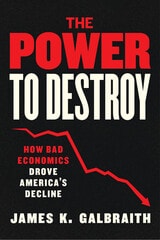
The Power to Destroy
How Bad Economics Drove America’s DeclineJames K. Galbraith
University of Chicago Press, 2026
Acclaimed economist James K. Galbraith sounds an urgent alarm: how conventional economic ideas and policies are unequipped to account for the most daunting challenges of our geopolitical moment.
Amid a mounting sense of American decline, Americans live with a new kind of dissonance: economists announcing that everything is fundamentally fine. Where growth is steady, unemployment is low, prices are (somewhat) stable, and stocks are high—what’s there to worry about?
The Power to Destroy shows that this dissonance reflects a failure to evolve. James K. Galbraith’s incisive history of economic policy in this century is grounded in the fundamental problem that today’s experts are still deploying tools from all yesterday’s wars: obsolete economic ideas, measures, and doctrines focused on market functioning and crude economic indicators like output and prices. These methods, many of them honed a century ago against a vastly different social landscape, offer little hope in the face of today’s more existential threats.
Such conventional policies, Galbraith argues, are increasingly ill-equipped to counter the daunting challenges of our moment—from inflation to trade sanctions, industrial cold wars, and climate change—and, left unacknowledged, are accelerating the end of the US economy as we know it. Shortcomings include the weak responses to the inflation of 2021-2022; the sanctions war against Russia; the rise of China; the weak and ineffective attempt at industrial revival; and the impending demographic crisis. All have roots in a flawed body of outdated economic thought that has been sustained for ideological rather than practical reasons. They now promise to hinder the United States in the emerging multipolar world.
As Galbraith makes plain, for all the virtues of the market system, governments and their policies make markets possible. The ideas behind the policies—for better or worse—will determine the fate of the US economy—and new and better ideas are urgently needed. The alternative—sticking with economic ideas and policies we know and currently use—brings the power to destroy us all.

The Pox of Liberty
How the Constitution Left Americans Rich, Free, and Prone to InfectionWerner Troesken
University of Chicago Press, 2015
Werner Troesken looks at the history of the United States with a focus on three diseases—smallpox, typhoid fever, and yellow fever—to show how constitutional rules and provisions that promoted individual liberty and economic prosperity also influenced, for good and for bad, the country’s ability to eradicate infectious disease. Ranging from federalism under the Commerce Clause to the Contract Clause and the Fourteenth Amendment, Troesken argues persuasively that many institutions intended to promote desirable political or economic outcomes also hindered the provision of public health. We are unhealthy, in other words, at least in part because our political and legal institutions function well. Offering a compelling new perspective, The Pox of Liberty challenges many traditional claims that infectious diseases are inexorable forces in human history, beyond the control of individual actors or the state, revealing them instead to be the result of public and private choices.
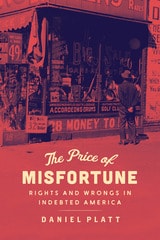
The Price of Misfortune
Rights and Wrongs in Indebted AmericaDaniel Platt
University of Chicago Press, 2023
What can be taken from someone who has borrowed money and cannot repay? What do the victims of misfortune owe to their lenders, and what can they keep for themselves? The answers to those questions, immensely important for debtors, creditors, and society at large, have changed over time. The Price of Misfortune examines the cause of debtors’ rights in the modern United States and the struggles of reformers who fought to establish financial freedoms in law.
Daniel Platt shows how, in the wake of the Civil War, a range of advocates drew potent analogies between slavery, imprisonment for debt, and the experiences of wage garnishment and property foreclosure. He traces the ways those analogies were used to campaign for bold new protections for debtors, keeping them secure in their labor, property, and personhood. Yet, as Platt demonstrates, those reforms tended to assume as their ideal borrower someone who was white, propertied, and male. In subsequent decades, the emancipatory promise of debtors’ rights would be tested as women, wage earners, and African Americans seized on their language to challenge other structural inequalities: the dependency of marriage, the exploitation of industrial capitalism, and the oppression of Jim Crow. By reconstructing these forgotten developments—and recovering the experiences of indebted farmwives, sharecroppers, and wage workers—The Price of Misfortune narrates a new history of inequality, coercion, and law amid the early financialization of American capitalism.
The Price of Misfortune
Rights and Wrongs in Indebted AmericaDaniel Platt
University of Chicago Press, 2023
A history of the struggle for debtors’ rights from the Civil War to the Great Depression
What can be taken from someone who has borrowed money and cannot repay? What do the victims of misfortune owe to their lenders, and what can they keep for themselves? The answers to those questions, immensely important for debtors, creditors, and society at large, have changed over time. The Price of Misfortune examines the cause of debtors’ rights in the modern United States and the struggles of reformers who fought to establish financial freedoms in law.
Daniel Platt shows how, in the wake of the Civil War, a range of advocates drew potent analogies between slavery, imprisonment for debt, and the experiences of wage garnishment and property foreclosure. He traces the ways those analogies were used to campaign for bold new protections for debtors, keeping them secure in their labor, property, and personhood. Yet, as Platt demonstrates, those reforms tended to assume as their ideal borrower someone who was white, propertied, and male. In subsequent decades, the emancipatory promise of debtors’ rights would be tested as women, wage earners, and African Americans seized on their language to challenge other structural inequalities: the dependency of marriage, the exploitation of industrial capitalism, and the oppression of Jim Crow. By reconstructing these forgotten developments—and recovering the experiences of indebted farmwives, sharecroppers, and wage workers—The Price of Misfortune narrates a new history of inequality, coercion, and law amid the early financialization of American capitalism.
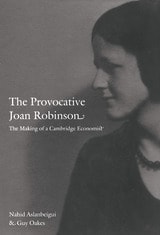
The Provocative Joan Robinson
The Making of a Cambridge EconomistNahid Aslanbeigui and Guy Oakes
Duke University Press, 2009
Aslanbeigui and Oakes demonstrate that Robinson’s professional identity was thoroughly embedded in a local scientific culture in which the Cambridge economists A. C. Pigou, John Maynard Keynes, Dennis Robertson, Piero Sraffa, Richard Kahn (Robinson’s closest friend on the Cambridge faculty), and her husband Austin Robinson were important figures. Although the economists Joan Robinson most admired—Pigou, Keynes, and their mentor Alfred Marshall—had discovered ideas of singular greatness, she was convinced that each had failed to grasp the essential theoretical significance of his own work. She made it her mission to recast their work both to illuminate their major contributions and to redefine a Cambridge tradition of economic thought. Based on the extensive correspondence of Robinson and her colleagues, The Provocative Joan Robinson is the story of a remarkable woman, the intellectual and social world of a legendary group of economists, and the interplay between ideas, ambitions, and disciplinary communities.
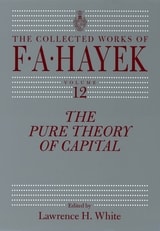
The Pure Theory of Capital
F. A. Hayek
University of Chicago Press, 2007
The Pure Theory of Capital, F. A. Hayek’s long-overlooked, little-understood volume, was his most detailed work in economic theory. Originally published in 1941 when fashionable economic thought had shifted to John Maynard Keynes, Hayek’s manifesto of capital theory is now available again for today’s students and economists to discover.
With a new introduction by Hayek expert Lawrence H. White, who firmly situates the book not only in historical and theoretical context but within Hayek’s own life and his struggle to complete the manuscript, this edition commemorates the celebrated scholar’s last major work in economics. Offering a detailed account of the equilibrium relationships between inputs and outputs in an economy, Hayek’s stated objective was to make capital theory—which had previously been devoted almost entirely to the explanation of interest rates—“useful for the analysis of the monetary phenomena of the real world.” His ambitious goal was nothing less than to develop a capital theory that could be fully integrated into the business cycle theory.
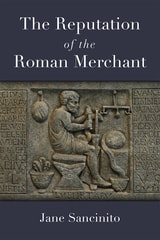
The Reputation of the Roman Merchant
Jane Sancinito
University of Michigan Press, 2024
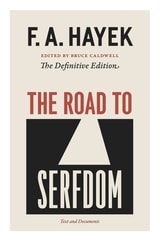
The Road to Serfdom
Text and Documents--The Definitive EditionF. A. Hayek
University of Chicago Press, 2007
First published by the University of Chicago Press on September 18, 1944, The Road to Serfdom garnered immediate, widespread attention. The first printing of 2,000 copies was exhausted instantly, and within six months more than 30,000 books were sold. In April 1945, Reader’s Digest published a condensed version of the book, and soon thereafter the Book-of-the-Month Club distributed this edition to more than 600,000 readers. A perennial best seller, the book has sold 400,000 copies in the United States alone and has been translated into more than twenty languages, along the way becoming one of the most important and influential books of the century.
With this new edition, The Road to Serfdom takes its place in the series The Collected Works of F. A. Hayek. The volume includes a foreword by series editor and leading Hayek scholar Bruce Caldwell explaining the book's origins and publishing history and assessing common misinterpretations of Hayek's thought. Caldwell has also standardized and corrected Hayek's references and added helpful new explanatory notes. Supplemented with an appendix of related materials ranging from prepublication reports on the initial manuscript to forewords to earlier editions by John Chamberlain, Milton Friedman, and Hayek himself, this new edition of The Road to Serfdom will be the definitive version of Hayek's enduring masterwork.

The Sensory Order and Other Writings on the Foundations of Theoretical Psychology
F. A. Hayek
University of Chicago Press, 2017
The latest addition to the University of Chicago Press’s Collected Works of F. A. Hayek series, The Sensory Order and Other Writings on the Foundations of Theoretical Psychology pairs the book, originally published in 1952, with additional essays related to The Sensory Order’s key themes, including a student paper from 1920 in which Hayek outlined the basic ideas he fully developed in the 1952 book. Rounding out the volume is an insightful introduction by editor Viktor Vanberg that sketches out the central problems Hayek was grappling with when he wrote The Sensory Order and the influential role this early thinking on theoretical psychology would play over the next six decades of his career. The book also features ample footnotes and citations for further reading, making this an essential contribution to the series.
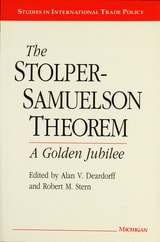
The Stolper-Samuelson Theorem
A Golden JubileeAlan V. Deardorff and Robert M. Stern, Editors
University of Michigan Press, 1994
The Two-Parent Privilege
How Americans Stopped Getting Married and Started Falling BehindMelissa S. Kearney
University of Chicago Press, 2023
In The Two-Parent Privilege, Melissa S. Kearney makes a provocative, data-driven case for marriage by showing how the institution’s decline has led to a host of economic woes—problems that have fractured American society and rendered vulnerable populations even more vulnerable. Eschewing the religious and values-based arguments that have long dominated this conversation, Kearney shows how the greatest impacts of marriage are, in fact, economic: when two adults marry, their economic and household lives improve, offering a host of benefits not only for the married adults but for their children. Studies show that these effects are today starker, and more unevenly distributed, than ever before. Kearney examines the underlying causes of the marriage decline in the US and draws lessons for how the US can reverse this trend to ensure the country’s future prosperity.
Based on more than a decade of economic research, including her original work, Kearney shows that a household that includes two married parents—holding steady among upper-class adults, increasingly rare among most everyone else—functions as an economic vehicle that advantages some children over others. As these trends of marriage and class continue, the compounding effects on inequality and opportunity grow increasingly dire. Their effects include not just children’s behavioral and educational outcomes, but a surprisingly devastating effect on adult men, whose role in the workforce and society appears intractably damaged by the emerging economics of America’s new social norms.
For many, the two-parent home may be an old-fashioned symbol of the idyllic American dream. But The Two-Parent Privilege makes it clear that marriage, for all its challenges and faults, may be our best path to a more equitable future. By confronting the critical role that family makeup plays in shaping children’s lives and futures, Kearney offers a critical assessment of what a decline in marriage means for an economy and a society—and what we must do to change course.
The Undevelopment of Capitalism
Sectors and Markets in Fifteenth-Century TuscanyRebecca Jean Emigh
Temple University Press, 2008
As a lucid explanation of capitalism that turns back the clock even further on its birth, The Undevelopment of Capitalism makes a significant contribution to the studies of capitalism, historical sociology, and theories of markets as economic and cultural institutions.
The Value of Labor
The Science of Commodification in Hungary, 1920-1956Martha Lampland
University of Chicago Press, 2016
Lampland trains her eye on the scientific claims of modern economic modeling, using Hungary’s unique vantage point to show how theories, policies, and techniques for commodifying agrarian labor that were born in the capitalist era were adopted by the socialist regime as a scientifically designed wage system on cooperative farms. Paying attention to the specific historical circumstances of Hungary, she explores the ways economists and the abstract notions they traffic in can both shape and be shaped by local conditions, and she compellingly shows how labor can be commodified in the absence of a labor market. The result is a unique account of economic thought that unveils hidden but necessary continuities running through the turbulent twentieth century.
The Welfare State in Transition
Reforming the Swedish ModelEdited by Richard B. Freeman, Robert H. Topel, and Birgitta Swedenborg
University of Chicago Press, 1997
This volume presents ten essays that examine Sweden's economic problems from a U.S. perspective. Exploring such diverse topics as income equalization and efficiency, welfare and tax policy, wage determination and unemployment, and international competitiveness and growth, they consider how Sweden's welfare state succeeded in eliminating poverty and became a role model for other countries. They then reflect on Sweden's past economic problems, such as the increase in government spending and the fall in industrial productivity, warning of problems to come. Finally they review the consequences of the collapse of Sweden's economy in the early 1990s, exploring the implications of its efforts to reform its welfare state and reestablish a healthy economy.
This volume will be of interest to policymakers and analysts, social scientists, and economists interested in welfare states.
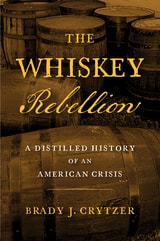
The Whiskey Rebellion
A Distilled History of an American CrisisBrady J. Crytzer
Westholme Publishing, 2024
As the months passed however the people of Western Pennsylvania grew restless with the inadequacy of the government’s response and they soon turned to more violent means of political expression. Treasury officers across the west were targeted for their involvement in the tax collection, and they were brutally attacked by armed bands of disgruntled locals. They were tarred and feathered, burned with hot irons, and whipped; their homes were ransacked and burned. Extralegal courts were established in a direct challenge to federal authority, and the frontier slowly drifted toward a state of rebellion.
In response President George Washington raised an army of 13,000 men, one of the largest forces he ever commanded, to suppress the rebellion. No major battle ever occurred, but weeks of arrests, illegal detentions, and civil rights violations rocked the west. The event polarized the nation, and highlighted the dramatic differences between Washington’s Federalist perspective and Jefferson’s emerging Democratic-Republican Party. Two centuries later the Whiskey Rebellion stands as the second largest domestic rebellion in American History, only outdone by the Confederate States of America in 1861.
In The Whiskey Rebellion: A Distilled History of an American Crisis, historian Brady J. Crytzer takes the reader on a journey through Western Pennsylvania following the routes of both the rebels and the United States Army to place this important event into context for the reader. Complete with images and maps, the author illuminates what visitors can still see from the period while providing a cogent and engrossing account of this crisis unfolded and how it was resolved.
The World Economy
History & ProspectBy W. W. Rostow
University of Texas Press, 1978
This monumental study is an account of the world economy from the eighteenth century to the twentieth, an analysis and prescription for the future, and a challenge to the neo-Keynesian theories of income determination and growth. It is based on some forty years of research and teaching.
Originally published in 1978, the volume looks back over the nineteenth and twentieth centuries. It includes an analysis of how the world's population expanded from about 1 billion in 1800 to 4 billion in 1976, with some 6.5 billion in sight for the year 2000; an account of the expansion and distribution of industrial production and trade during this period; and an analysis of price and relative price movements since the eighteenth century. Rostow gives a detailed description of the Kondratieff long cycles in the relative scarcity and abundance of food and raw materials and reasons that the world economy entered the fifth Kondratieff upswing at the close of 1972. He also examines the changing pattern of business cycles over the whole sweep of modern economic growth and the failure of the post-1945 world economy to control inflation. The volume also includes short economic histories of twenty national economies responsible for 80 percent of the world's production, based on a collection of computerized aggregate and sectoral data.
Each historical section leads naturally into one or more of the major problems dealt with in the final portion of the book, which looks to the future of the world economy: food, population, energy, raw materials, the environment, and the tasks of national and international policy. Rostow argued, counter to the Limits to Growth doctrine, that the critical period for industrial civilization lay in the last twenty-five years of the twentieth century, rather than in the twenty-first century, and that what we did or failed to do in that generation would determine the shape of the longer future.
No other economic history of this depth and breadth exists. It is a reference for economists, economic historians, and other social scientists as well as the informed lay reader.
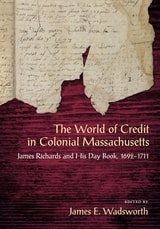
The World of Credit in Colonial Massachusetts
James Richards and His Daybook, 1692-1711James E. Wadsworth
University of Massachusetts Press, 2017
For years, James Richards, a prosperous and typical colonial farmer, tracked nearly five thousand transactions, involving more than six hundred individuals and stretching from Charlestown to Barnstable. Richards and his neighbors were bound together in a heterogeneous economy, reliant on networks of credit, barter, and sometimes cash. Richards practiced mixed husbandry farming, shipped goods by cart and by sloop, and produced and sold malt, salt, wool, and timber. The day book also reveals significant social details of Richards and his household, including his diverse trading partners, his extensive family connections, an Indian slave girl, and a well-dressed female servant. Available in both print and electronic editions, fully transcribed, annotated, and introduced by the editor, this record of economic life reinforces and challenges our understanding of colonial America.

The World the Game Theorists Made
Paul Erickson
University of Chicago Press, 2015
The World the Game Theorists Made seeks to explain the ascendency of game theory, focusing on the poorly understood period between the publication of John von Neumann and Oscar Morgenstern’s seminal Theory of Games and Economic Behavior in 1944 and the theory’s revival in economics in the 1980s. Drawing on a diverse collection of institutional archives, personal correspondence and papers, and interviews, Paul Erickson shows how game theory offered social scientists, biologists, military strategists, and others a common, flexible language that could facilitate wide-ranging thought and debate on some of the most critical issues of the day.
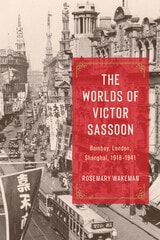
The Worlds of Victor Sassoon
Bombay, London, Shanghai, 1918–1941Rosemary Wakeman
University of Chicago Press, 2024
In this book, historian Rosemary Wakeman brings to life the frenzied, crowded streets, markets, ports, and banks of Bombay, London, and Shanghai. In the early twentieth century, these cities were at the forefront of the sweeping changes taking the world by storm as it entered an era of globalized commerce and the unprecedented circulation of goods, people, and ideas. Wakeman explores these cities and the world they helped transform through the life of Victor Sassoon, who in 1924 gained control of his powerful family’s trading and banking empire. She tracks his movements between these three cities as he grows his family’s fortune and transforms its holdings into a global juggernaut. Using his life as its point of entry, The Worlds of Victor Sassoon paints a broad portrait not just of wealth, cosmopolitanism, and leisure but also of the discrimination, exploitation, and violence wreaked by a world increasingly driven by the demands of capital.
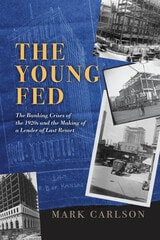
The Young Fed
The Banking Crises of the 1920s and the Making of a Lender of Last ResortMark Carlson
University of Chicago Press, 2025
A new history of crisis responses in the central bank’s formative years.
The long-standing description of the Federal Reserve as a “lender of last resort” refers to the central bank’s emergency liquidity provision for financial entities in periods of crisis. As Mark Carlson shows, this function was foundational to how the Fed was designed but has, at times, proven challenging to implement. The Young Fed examines the origins of the Federal Reserve’s emergency liquidity provision which, along with the setting of monetary policy, has become a critical responsibility.
Focusing on the Fed’s response to the financial crises of the 1920s, Carlson documents the formative deliberations of central bank policymakers regarding how to assist banks experiencing distress; the lessons that were learned; and how those lessons shaped subsequent policies. Carlson depicts an early Fed that experimented with a variety of approaches to crises, ranging from bold spectacles featuring cash-filled armored cars to behind-the-scenes interventions to prevent inducing panics or bank runs. The Young Fed weaves previously unpublished material from the Fed archives into a watershed work in American economic history: a deeply sourced account of how the world’s most important central bank became a lender of last resort.
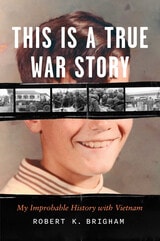
This Is a True War Story
My Improbable History with VietnamRobert K. Brigham
University of Chicago Press, 2026
Robert K. Brigham has had a substantial career as a historian of the Vietnam War, with a hand in nine books, a documentary, public history projects, and more. While many a historian has felt compelled at some point to write about a subject close to them personally, Brigham did not think he was doing that. But, at age fifty-eight, Brigham, who had long known he was adopted, discovered that he’d improbably and unknowingly been studying and talking about his biological father for decades. That man, Bruce Atwell, was a Marine Corps photographer who took some of that war’s most indelible and widely reproduced pictures. Brigham had used those images over and over again in decades’ worth of classes and public lectures, never knowing the truth.
Both Brigham and Atwell were products of the American foster care and adoption system, and both were defined professionally by Vietnam. In a story shot through with echoes and shadows, Brigham not only reveals his own history as an adoptee but opens a startlingly fresh vantage on the fragility of American families; the power of social norms and taboos to shape lives; and the forces that inequitably disrupt families, not least of them war. The result is an accessible and moving book that is at once both a powerful personal story and an illuminating social critique.
This Is a True War Story
My Improbable History with VietnamRobert K. Brigham
University of Chicago Press, 2026
A personal account by a war historian and adoptee who discovers his biological father was a famous Marine combat photographer in Vietnam.
Robert K. Brigham has had a substantial career as a historian of the Vietnam War, with a hand in nine books, a documentary, public history projects, and more. While many a historian has felt compelled at some point to write about a subject close to them personally, Brigham did not think he was doing that. But, at age 58, Brigham, who had long known he was adopted, discovered that he’d improbably and unknowingly been studying and talking about his real father for decades. That man, Bruce Atwell, was a Marine Corps photographer who took some of that war’s most indelible and widely reproduced pictures. Brigham had used those images over and over again in decades’ worth of classes and public lectures, never knowing the truth.
Both Brigham and Atwell were products of the American foster care and adoption system, and both were defined professionally by Vietnam. In a story shot through with echoes and shadows, Brigham not only reveals his own history as an adoptee but opens a startlingly fresh vantage on the fragility of American families; the power of social norms and taboos to shape lives; and the forces that inequitably disrupt families, not least of them war. The result is an accessible and moving book that is at once both a powerful personal story and an illuminating social critique.
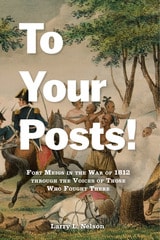
To Your Posts!
Fort Meigs in the War of 1812 through the Voices of Those Who Fought ThereLarry L. Nelson
Michigan State University Press, 2025
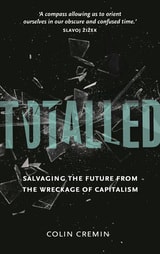
Totalled
Salvaging the Future from the Wreckage of CapitalismColin Cremin
Pluto Press, 2015
Totalled maps the deteriorating socio-economic, political, and ecological conditions in which we live. Yet Cremin asks how a utopian possibility discernable in the power of human creation can be realized even though as a society we are bound up materially, ideologically, libidinally—totally—to the capitalist machine of destruction. Totalled concludes with a politically and economically grounded set of propositions on how we might begin to imagine such a possibility.