Results by title
338 books match the query 'Ethnology' and 55 start with t
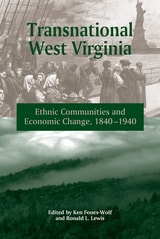
Transnational West Virginia
Ethnic Communities and Economic Change, 1840 - 1940KEN FONES-WOLF
West Virginia University Press, 2002
West Virginia is one of the most homogeneous states in the nation, with among the lowest ratios of foreign-born and minority populations among the states. But as this collection of historical studies demonstrates, this state was built by successive waves of immigrant labors, from the antebellum railroad builders to the twentieth-century coal miners. Transnational West Virginia offers a new understanding of how laborers and their communities shape a region's history. Transnational West Virginia includes essays and studies on immigrant networks, such as Irish workers along the B&O Railroad, Wheeling Germans in the Civil War era, Swiss immigration to West Virginia, and European Jews in Southern West Virginia. This work also covers Belgian glassworkers in West Virginia, black migration to Southern West Virginia, Italians in the Upper Kanawha Valley, Italian immigration to Marion County, Wheeling Iron and the Welsh, West Virginia and immigrant labor to 1920, Monongalia miners between the World Wars, and West Virginia rubber workers in Akron. Transnational West Virginia is the first volume in the West Virginia and Appalachia series, which is under the general editorship of West Virginia University Stuart and Joyce Robbins Chair of History Ronald L. Lewis. Kenneth Fones-Wolf, Associate Professor of History at WVU, also helped edit this collection of essays by ten distinguished scholars.
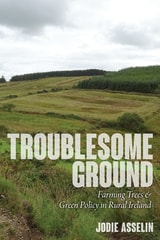
Troublesome Ground
Farming Trees and Green Policy in Rural IrelandJodie Asselin
University Press of Colorado, 2025
Through ethnographic description, Asselin illuminates how ephemeral worlds of green discourse and development plans manifest in rural areas, demonstrating the lived consequences of today’s competing demands on marginal regions. Troublesome Ground is a significant contribution to the anthropology of rural Ireland while offering insights into the wider realities of conflicting development and conservation strategies in global contemporary rural landscapes.
Trouillot Remixed
The Michel-Rolph Trouillot ReaderMichel-Rolph Trouillot. Edited by Yarimar Bonilla, Greg Beckett, and Mayanthi L. Fernando
Duke University Press, 2021
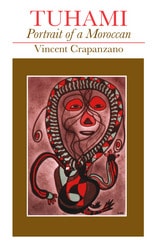
Tuhami
Portrait of a MoroccanVincent Crapanzano
University of Chicago Press, 1980
In a sensitive and bold experiment in interpretive ethnography, Crapanzano presents Tuhami's bizarre account of himself and his world. In so doing, Crapanzano draws on phenomenology, psychoanalysis, and symbolism to reflect upon the nature of reality and truth and to probe the limits of anthropology itself. Tuhami has become one of the most important and widely cited representatives of a new understanding of the whole discipline of anthropology.

Twins Talk
What Twins Tell Us about Person, Self, and SocietyDona Lee Davis
Ohio University Press, 2015
Twins Talk is an ethnographic study of identical twins in the United States, a study unique in that it considers what twins have to say about themselves, instead of what researchers have written about them. It presents, in the first person, the grounded and practical experiences of twins as they engage, both individually and together, the “who am I” and “who are we” questions of life. Here, the twins themselves are the stars.
Dona Lee Davis conducted conversational interviews with twenty-two sets of identical twins attending the Twins Days Festival in Twinsburg, Ohio, the largest such gathering in the world. Lively and often opinionated, each twin comes through as a whole person who at the same time maintains a special bond that the vast majority of people will never experience.
The study provides a distinctive and enlightening insider’s challenge to the nature/nurture debates that dominate contemporary research on twins. The author, herself an identical twin, draws on aspects of her own life to inform her analysis of the data throughout the text. Each chapter addresses a different theme from multiple viewpoints, including those of popular science writers, scientific researchers, and singletons, as well as those of the twins themselves.