Results by title
3745 books match the query 'Europe' and 973 start with t

The Apocalypse in Reformation Nuremberg
Jews and Turks in Andreas Osiander’s WorldAndrew L. Thomas
University of Michigan Press, 2022
The Apostolic Penitentiary in Local Contexts
Gerhard Jaritz
Central European University Press, 2007
The Appian Way
Ghost Road, Queen of RoadsRobert A. Kaster
University of Chicago Press, 2012
The Roman poet Statius called the via Appia “the Queen of Roads,” and for nearly a thousand years that description held true, as countless travelers trod its path from the center of Rome to the heel of Italy. Today, the road is all but gone, destroyed by time, neglect, and the incursions of modernity; to travel the Appian Way today is to be a seeker, and to walk in the footsteps of ghosts.
Our guide to those ghosts—and the layers of history they represent—is Robert A. Kaster. In The Appian Way, he brings a lifetime of studying Roman literature and history to his adventures along the ancient highway. A footsore Roman soldier pushing the imperial power south; craftsmen and farmers bringing their goods to the towns that lined the road; pious pilgrims headed to Jerusalem, using stage-by-stage directions we can still follow—all come to life once more as Kaster walks (and drives—and suffers car trouble) on what’s left of the Appian Way. Other voices help him tell the story: Cicero, Goethe, Hawthorne, Dickens, James, and even Monty Python offer commentary, insight, and curmudgeonly grumbles, their voices blending like the ages of the road to create a telescopic, perhaps kaleidoscopic, view of present and past.
To stand on the remnants of the Via Appia today is to stand in the pathway of history. With The Appian Way, Kaster invites us to close our eyes and walk with him back in time, to the campaigns of Garibaldi, the revolt of Spartacus, and the glory days of Imperial Rome. No traveler will want to miss this fascinating journey.
The Arcadia of Jacopo Sannazaro
A New Translation with CommentaryNicholas R. Jones
University of Michigan Press, 2025
Sannazaro’s Arcadia is widely recognized as a foundational text of pastoral poetry, humanism, and Italian literature. But the book itself has been largely inaccessible to English-language students and readers. This new translation uses contemporary American English to convey Arcadia’s youthful vigor, narrative energy, and poetic inventiveness. The extensive introduction and commentaries place Arcadia in the context of late fifteenth-century humanist thought and writing, as well as the complicated crisis of Naples in the years just before 1500. This translation is designed to facilitate the re-entry of Arcadia into scholarly discourse and general readership while outlining its lasting cultural influence on poetry, drama, art and music.
The Architecture of the Italian Renaissance
Jacob Burckhardt
University of Chicago Press, 1984

The Army of Truth
Selected PoemsHenrik Wergeland
University of Wisconsin Press, 2003
One of Norway’s most celebrated literary figures of the nineteenth century, Henrik Wergeland worked tirelessly for the civil rights of Jews in Norway. He used the words and structure of his poetry to enliven the ideals of truth, freedom, and equality. This translated volume, containing several of Wergeland’s most prominent poems, beautifully encapsulates the compelling force of his message, allowing its enduring influence to benefit a wider contemporary audience.
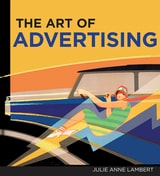
The Art of Advertising, The
Julie Anne Lambert
Bodleian Library Publishing, 2020

The Art of Describing
Dutch Art in the Seventeenth CenturySvetlana Alpers
University of Chicago Press, 1984
"There is no doubt that thanks to Alpers's highly original book the study of the Dutch masters of the seventeenth century will be thoroughly reformed and rejuvenated. . . . She herself has the verve, the knowledge, and the sensitivity to make us see familiar sights in a new light."—E. H. Gombrich, New York Review of Books
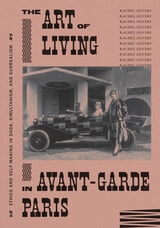
The Art of Living in Avant-Garde Paris
Ethics and Self-Making in Dada, Simultanism, and SurrealismRachel Silveri
University of Chicago Press, 2026
With The Art of Living in Avant-Garde Paris, Rachel Silveri takes a fresh look at the desire to unify art and life, an ambition long regarded as foundational to the European historical avant-gardes. She reveals how many early twentieth-century artists saw their own everyday lives—their bodies, identities, and relationships—as a type of creative material and a central component to their avant-garde practice. These artists abandoned traditional forms of artmaking and venues of art viewing, instead aspiring to integrate art with everyday life, creating an “art of living.”
Considering Tristan Tzara’s performances of Dadaist identity, Sonia Delaunay’s simultaneous fashions and self-branding, and the collective endeavor to open and operate the Surrealist Research Bureau, Silveri offers a new narrative about how the artists of interwar Paris developed experiential life practices that resisted dominant forms of “lifestyle” and normative discourses surrounding gender, ethnicity, and office work. This book argues that ethical questions of “How should I live?” and “How should I relate to others?” were as important to the avant-garde as politics, and that aspirations to change the world played out in daily practices of self-making.

The Art of Memory
Frances A. Yates
University of Chicago Press, 1974
In The Art of Memory Yates traces this technique of memorization from its treatment by Greek orators through its Gothic transformations in the Middle Ages to the occult forms it took in the Renaissance, and finally to its use in the seventeenth century. This book, the first to relate the art of memory to the history of culture as a whole, was revolutionary when it first appeared and continues to mesmerize readers with its lucid and revelatory insights.
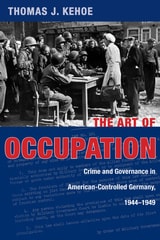
The Art of Occupation
Crime and Governance in American-Controlled Germany, 1944–1949Thomas J. Kehoe
Ohio University Press, 2019
The literature describing social conditions during the post–World War II Allied occupation of Germany has been divided between seemingly irreconcilable assertions of prolonged criminal chaos and narratives of strict martial rule that precluded crime. In The Art of Occupation, Thomas J. Kehoe takes a different view on this history, addressing this divergence through an extensive, interdisciplinary analysis of the interaction between military government and social order.
Focusing on the American Zone and using previously unexamined American and German military reports, court records, and case files, Kehoe assesses crime rates and the psychology surrounding criminality. He thereby offers the first comprehensive exploration of criminality, policing, and both German and American fears around the realities of conquest and potential resistance, social and societal integrity, national futures, and a looming threat from communism in an emergent Cold War. The Art of Occupation is the fullest study of crime and governance during the five years from the first Allied incursions into Germany from the West in September 1944 through the end of the military occupation in 1949. It is an important contribution to American and German social, military, and police histories, as well as historical criminology.
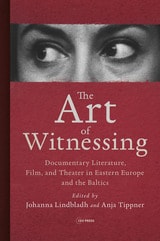
The Art of Witnessing
Documentary Literature, Film and Theater in Eastern Europe and the BalticsJohanna Lindbladh
Central European University Press, 2026
The Art of the Network
Strategic Interaction and Patronage in Renaissance FlorencePaul D. McLean
Duke University Press, 2007
McLean scrutinized thousands of letters to and from Renaissance Florentines. He describes the social protocols the letters reveal, paying particular attention to the means by which Florentines crafted credible presentations of themselves. The letters, McLean contends, testify to the development not only of new forms of self-presentation but also of a new kind of self to be presented: an emergent, “modern” conception of self as an autonomous agent. They also bring to the fore the importance that their writers attached to concepts of honor, and the ways that they perceived themselves in relation to the Florentine state.

The Arts of Democratization
Styling Political Sensibilities in Postwar West GermanyJennifer M. Kapczynski and Caroline A. Kita, Editors
University of Michigan Press, 2022
These essays highlight the contradictory and competing impulses that ran through the project to democratize postwar society and cast a critical eye toward the internal biases that shaped the model of Western democracy. In so doing, the contributions probe critical questions that we continue to grapple with today. How did postwar thinkers understand what it meant to be democratic? Did they conceive of democratic subjectivity in terms of acts of participation, a set of beliefs or principles, or perhaps in terms of particular feelings or emotions? How did the work to define democracy and its subjects deploy notions of nation, race and gender or sexuality? As this book demonstrates, the case of West Germany offers compelling ways to think more broadly about the emergence of democracy. The Arts of Democratization offers lessons that resonate with the current moment as we consider what interventions may be necessary to resuscitate democracy today.
The Asian Trade Revolution
The East India Companies and the Decline of the Caravan TradeNiels Steensgaard
University of Chicago Press, 1975
In this work Neils Steensgaard combines an analytical economic approach with detailed historic scholarship to provide an imaginitive and important analysis of a central incident in modern world history. The event is the breaking of the Portuguese monopoly on Asian trade in the seventeenth century by English and Dutch mercantile interests. This change the author demonstrates, was not simply the triumph of the new powers over the old. Rather, the Dutch--English victory heralded a structural change in international trade: the triumph of entrepreneurial capitalism over the older economic mode of the "peddler-merchant."
Professor Steensgaard's study is divided into two major parts. The first examines the economic and political structure of the seventeenth century institutions in the Near East, Portugal, England, and the Netherlands. The author demonstrates that the rise to preeminence of the English and Dutch East India Companies over the Portuguese "State of India" was the result of the superior economic and bureaucratic organization of the former. The eclipse of Portuguese power in general, the author argues, is best understood as an institutional failure–an inability to adapt to changing patterns and demands of economic life.
The second part of Professor Steensgaard's study provides a detailed historical account of an important event in the fall of the Portuguese trading empire–the loss of the city of Hormuz in 1622. Hormuz, located at a strategic point at the entrance of the Persian Gulf, was a central port city on the Asian trade route. It fell to an English and Persian force. The author demonstrates why this event exemplifies the Portuguese institutional weaknesses that are discussed in the first part of the book.
The Assassination of Paris
Louis Chevalier
University of Chicago Press, 1994
He describes an almost continual parade of garish and grandiose plans: some, like the destruction of the glorious marketplace of les Halles for him the heart of the city, were realized; others, like the superhighway along the left bank of the Seine, were bitterly and successfully resisted.
Almost twenty years later, we find it difficult to remember the city as it was. And while Paris looks to many much the way it always has, behind the carefully sandblasted stone and restored shop fronts is a city radically transformed—emptied of centuries of popular life; of entire neighborhoods and the communities they housed engineered out to desolate suburban slums. The battle over the soul and spirit of the city continues.
This book is not entirely about the loss of physical places. Or a romance about a world that never really was. It is a cautionary tale filled with lessons for all who struggle to protect the human scale, the diversity, and the welcoming public life that are the threatened gifts of all great cities.
The Assassination of Theo van Gogh
From Social Drama to Cultural TraumaRon Eyerman
Duke University Press, 2008
Eyerman utilizes theories of social drama and cultural trauma to evaluate the reactions to and effects of the murder. A social drama is triggered by a public transgression of taken-for-granted norms; one that threatens the collective identity of a society may develop into a cultural trauma. Eyerman contends that the assassination of Theo van Gogh quickly became a cultural trauma because it resonated powerfully with the postwar psyche of the Netherlands. As part of his analysis of the murder and reactions to it, he discusses significant aspects of twentieth-century Dutch history, including the country’s treatment of Jews during the German occupation, the loss of its colonies in the wake of World War II, its recruitment of immigrant workers, and the failure of Dutch troops to protect Muslims in Srebrenica in 1995.
The Assembly Line
Robert Linhart
University of Massachusetts Press, 1981

The Atheist's Bible
The Most Dangerous Book That Never ExistedGeorges Minois
University of Chicago Press, 2012
A comprehensive biography of the Treatise of the Three Impostors, a controversial nonexistent medieval book.
The Autumn of the Middle Ages
Johan Huizinga
University of Chicago Press, 1996
The Autumn of the Middle Ages is Johan Huizinga's classic portrait of life, thought, and art in fourteenth- and fifteenth-century France and the Netherlands. Few who have read this book in English realize that The Waning of the Middle Ages, the only previous translation, is vastly different from the original Dutch, and incompatible will all other European-language translations.
For Huizinga, the fourteenth- and fifteenth-century marked not the birth of a dramatically new era in history—the Renaissance—but the fullest, ripest phase of medieval life and thought. However, his work was criticized both at home and in Europe for being "old-fashioned" and "too literary" when The Waning of the Middle Ages was first published in 1919. In the 1924 translation, Fritz Hopman adapted, reduced and altered the Dutch edition—softening Huizinga's passionate arguments, dulling his nuances, and eliminating theoretical passages. He dropped many passages Huizinga had quoted in their original old French. Additionally, chapters were rearranged, all references were dropped, and mistranslations were introduced.
This translation corrects such errors, recreating the second Dutch edition which represents Huizinga's thinking at its most important stage. Everything that was dropped or rearranged has been restored. Prose quotations appear in French, with translations preprinted at the bottom of the page, mistranslations have been corrected.
"The advantages of the new translation are so many. . . . It is one of the greatest, as well as one of the most enthralling, historical classics of the twentieth century, and everyone will surely want to read it in the form that was obviously intended by the author." —Francis Haskell, New York Review of Books
"A once pathbreaking piece of historical interpretation. . . . This new translation will no doubt bring Huizinga and his pioneering work back into the discussion of historical interpretation." —Rosamond McKitterick, New York Times Book Review
The Baker Who Pretended to Be King of Portugal
Ruth MacKay
University of Chicago Press, 2012
On August 4, 1578, in an ill-conceived attempt to wrest Morocco back from the hands of the infidel Moors, King Sebastian of Portugal led his troops to slaughter and was himself slain. Sixteen years later, King Sebastian rose again. In one of the most famous of European impostures, Gabriel de Espinosa, an ex-soldier and baker by trade—and most likely under the guidance of a distinguished Portuguese friar—appeared in a Spanish convent town passing himself off as the lost monarch. The principals, along with a large cast of nuns, monks, and servants, were confined and questioned for nearly a year as a crew of judges tried to unravel the story, but the culprits went to their deaths with many questions left unanswered.
The Bakers of Paris and the Bread Question, 1700-1775
Steven Laurence Kaplan
Duke University Press, 1996
Despite the overpowering salience of bread in public and private life, Kaplan’s is the first inquiry into the ways bread exercised its vast and significant empire. Bread framed dreams as well as nightmares. It was the staff of life, the medium of communion, a topic of common discourse, and a mark of tradition as well as transcendence. In his exploration of bread’s materiality and cultural meaning, Kaplan looks at bread’s fashioning of identity and examines the conditions of supply and demand in the marketplace. He also sets forth a complete history of the bakers and their guild, and unmasks the methods used by the authorities in their efforts to regulate trade.
Because the bakers and their bread were central to Parisian daily life, Kaplan’s study is also a comprehensive meditation on an entire society, its government, and its capacity to endure. Long-awaited by French history scholars, The Bakers of Paris and the Bread Question, 1700–1775 is a landmark in eighteenth-century historiography, a book that deeply contextualizes, and thus enriches our understanding of one of the most important eras in European history.
The Balkans
Mission PossibleMaria Todorova
Central European University Press, 2026
The Banquet
Dining in the Great Courts of Late Renaissance EuropeKen Albala
University of Illinois Press, 2017
In The Banquet, Ken Albala covers the transitional period between the heavily spiced and colored cuisine of the Middle Ages and classical French haute cuisine. This development involved increasing use of dairy products, a move toward lighter meats such as veal and chicken, increasing identification of national food customs, more sweetness and aromatics, and a refined aesthetic sense, surprisingly in line with the late-Renaissance styles found in other arts.

The Basque Insurgents
ETA, 1952–1980Robert P. Clark
University of Wisconsin Press, 1984
Blamed, at first, by the Spanish government for the recent Madrid train bombings, ETA (Euzkadi ta Askatasuna), the Basque nationalist organization, has been perhaps the most violent insurgent group on the European continent. Yet little is known about it outside of Spain. This book, now back in print, offers a full analytical study of ETA.
The Basques, the Catalans, and Spain
Alternative Routes to Nationalist MobilisationDaniele Conversi
University of Nevada Press, 2000
The Basques
The Franco Years and BeyondRobert P. Clark
University of Nevada Press, 1979
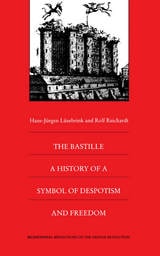
The Bastille
A History of a Symbol of Despotism and FreedomHans-Jürgen Lüsebrink and Rolf Reichardt
Duke University Press, 1997
To facilitate the symbolic nature of the investigation, this analysis of the evolving signification of the Bastille moves from the French Revolution to the nineteenth century to contemporary history. The narrative also shifts from France to other cultural arenas, like the modern European colonial sphere, where the overthrow of the Bastille acquired radical new signification in the decolonization period of the 1940s and 1950s. The Bastille demonstrates the potency of the interdisciplinary historical research that has characterized the end of this century, combining quantitative and qualitative approaches, and taking its methodological tools from history, sociology, linguistics, and cultural and literary studies.
The Battle for the Mind
War and Peace in the Era of Mass CommunicationGary S. Messinger
University of Massachusetts Press, 2011
Most people typically think of armed conflict in physical terms, involving guns and bombs, ships and planes, tanks and missiles. But today, because of mass communication, war and the effort to prevent it are increasingly dependent on non-physical factors—the capacity to persuade combatants and citizens to engage in violence or avoid it, and the packaging of the information on which decision making is based. This book explores the many ways that mass communication has revolutionized international relations, whether the aim is to make war effectively or to prevent it.
Gary Messinger shows that over the last 150 years a succession of breakthroughs in the realm of media has reshaped the making of war and peace. Along with mass newspapers, magazines, books, motion pictures, radio, television, computer software, and telecommunication satellites comes an array of strategies for exploiting these media to control popular beliefs and emotions. Images of war now arrive in many forms and reach billions of people simultaneously. Political and military leaders must react to crowd impulses that sweep around the globe. Nation-states and nongovernmental groups, including terrorists, use mass communication to spread their portrayals of reality.
Drawing on a wide range of media products, from books and articles to films and television programs, as well as his own research in the field of propaganda studies, Messinger offers a fresh and comprehensive overview. He skillfully charts the path that has led us to our current situation and suggests where we might go next.
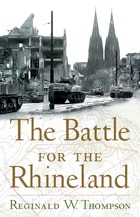
The Battle for the Rhineland
Reginald W. Thompson
Westholme Publishing, 2012
In this fascinating account of the critical final campaign against Nazi Germany on the western front, Reginald W. Thompson focuses on both the command decisions by the British and American generals and the performance of the enlisted men in order to explain the complex series of events that led to the German defeat in World War II. During the planning and run-up to what was intended to be a massive joint British and American push across the Rhine River and into the heart of Germany, the Allies encountered unexpected setbacks. Operation Market-Garden, the Allied aerial assault of the Low Countries, ended in disaster, while the attack through the Hu¨rtgen Forest was met by unexpected heavy resistance due to the build-up for the German surprise counterstrike planned for December 1944, what would become known as the Battle of the Bulge. The author identifies the attack on the town of Schmidt in the Hu¨rtgen Forest as the key battle that set in motion a series of events that both prolonged the war and shaped Allied strategy in their effort to cross the Rhine. Here the reader will learn the chain of decisions that allowed the Allies to pressure German forces between the Roer and Rhine rivers and move on Cologne, Dusseldorf, and other key points, including the famous bridge over the Rhine at Remagen, near Bonn. Based on both American and British official reports and the author’s independent research and originally published in 1958, The Battle for the Rhineland is a lucid, balanced, and engaging account of a critical period in Western Europe during the Second World War.
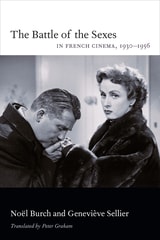
The Battle of the Sexes in French Cinema, 1930–1956
Noël Burch and Geneviève Sellier
Duke University Press, 2013
Citing more than 300 films and providing many in-depth interpretations, Burch and Sellier argue that films made in France between 1930 and 1956 created a national imaginary that equated masculinity with French identity. They track the changing representations of masculinity, explaining how the strong patriarch who saved fallen or troubled women from themselves in prewar films gave way to the impotent, unworthy, or incapable father figure of the Occupation. After the Liberation, the patriarch reemerged as protector and provider alongside assertive women who figured as threats not only to themselves but to society as a whole.
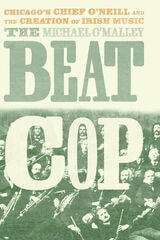
The Beat Cop
Chicago's Chief O'Neill and the Creation of Irish MusicMichael O'Malley
University of Chicago Press, 2022
The remarkable story of how modern Irish music was shaped and spread through the brash efforts of a Chicago police chief.
Irish music as we know it today was invented not just in the cobbled lanes of Dublin or the green fields of County Kerry, but also in the burgeoning metropolis of early-twentieth-century Chicago. The genre’s history combines a long folk tradition with the curatorial quirks of a single person: Francis O’Neill, a larger-than-life Chicago police chief and an Irish immigrant with a fervent interest in his home country’s music.
Michael O’Malley’s The Beat Cop tells the story of this singular figure, from his birth in Ireland in 1865 to his rough-and-tumble early life in the United States. By 1901, O’Neill had worked his way up to become Chicago’s chief of police, where he developed new methods of tracking criminals and recording their identities. At the same time, he also obsessively tracked and recorded the music he heard from local Irish immigrants, enforcing a strict view of what he felt was and wasn’t authentic. Chief O’Neill’s police work and his musical work were flip sides of the same coin, and O’Malley delves deep into how this brash immigrant harnessed his connections and policing skills to become the foremost shaper of how Americans see, and hear, the music of Ireland.
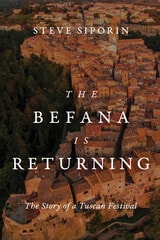
The Befana Is Returning
The Story of a Tuscan FestivalSteve Siporin
University of Wisconsin Press, 2022
The Pigitliano Befanata is distinct in its emphasis on song and strong in its richly symbolic use of food, which is not only consumed at each home but is also carried away as a gift. The characters who make up the squad are unique to the Italian practice. They always include the Befana and her husband, the Befano, but other members of the befanotti vary from place to place over time. Siporin combines fieldwork and archival evidence to introduce the Befanata and its historical and social contexts: what it is, what it means, and how it feels. The Befana Is Returning is a deeply researched, deftly insightful presentation of this living tradition that adds a large missing piece to the array of contemporary ethnographic scholarship on mumming.
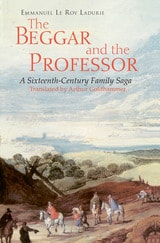
The Beggar and the Professor
A Sixteenth-Century Family SagaEmmanuel Le Roy Ladurie
University of Chicago Press, 1997
"Le Roy Ladurie paints a remarkably contemporary picture of life in the sixteenth century. . . . It's a good story, told with a deft narrative touch."—Michael S. Kimmel, The Nation
"Le Roy Ladurie is a master of the representative detail and uses the Platters' lives as a means to see a whole century 'through a glass, darkly'."—The Independent
"Le Roy Ladurie has not only thoroughly sketched out the Platters' particular brand of gusto, he has also made it seem a defining characteristic of the sixteenth century."—The New Republic
"All [of] the drama and pathos of a Disney film."—Emily Eakin, Lingua Franca
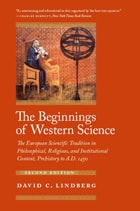
The Beginnings of Western Science
The European Scientific Tradition in Philosophical, Religious, and Institutional Context, Prehistory to A.D. 1450, Second EditionDavid C. Lindberg
University of Chicago Press, 2008
The Beginnings of Western Science is a landmark, the best book to ever to present a unified account of both ancient and medieval science in a single volume. Chronicling the development of scientific ideas, practices, and institutions from pre-Socratic Greek philosophy to late-Medieval scholasticism, David C. Lindberg surveys all the most important themes in the history of science, including developments in cosmology, astronomy, mechanics, optics, alchemy, natural history, and medicine. In addition, he offers an illuminating account of the transmission of Greek science to medieval Islam and subsequently to medieval Europe.
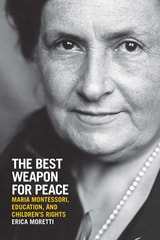
The Best Weapon for Peace
Maria Montessori, Education, and Children's RightsErica Moretti
University of Wisconsin Press, 2022
Using newly discovered primary sources, Moretti examines Montessori’s lifelong pacifist work, including her ultimately unsuccessful push for the creation of the White Cross, a humanitarian organization for war-affected children. Moretti shows that Montessori’s educational theories and practices would come to define chilren’s rights once adopted by influential international organizations, including the United Nations. She uncovers the significance of Montessori’s evolving philosophy of peace and early childhood education within broader conversations about internationalism and humanitarianism.

The Birth of Capitalism
A 21st Century PerspectiveHenry Heller
Pluto Press, 2011
In the light of the deepening crisis of capitalism and continued non-Western capitalist accumulation, Henry Heller re-examines the debates surrounding the transition from feudalism to capitalism in Europe and elsewhere.
Focusing on arguments about the origin, nature and sustainability of capitalism, Heller offers a new reading of the historical evidence and a critical interrogation of the transition debate. He advances the idea that capitalism must be understood as a political as well as an economic entity. This book breathes new life into the scholarship, taking issue with the excessively economistic approach of Robert Brenner, which has gained increasing support over the last ten years. It concludes that the future of capitalism is more threatened than ever before.
The new insights in this book make it essential reading for engaged students and scholars of political economy and history.
The Birth of Purgatory
Jacques Le Goff
University of Chicago Press, 1984

The Birth of Solidarity
The History of the French Welfare StateFrançois Ewald
Duke University Press, 2020
The Birth of the Archive
A History of KnowledgeMarkus Friedrich, translated by John Noël Dillon
University of Michigan Press, 2018
Friedrich provides an essential background to the history of archives over the centuries and enriches the story of their evolution with chapters on key sociocultural aspects of European archival culture. He discusses their meaning and symbolism in European thought, early modern conceptions of the archive’s function, and questions of access and usability. Exploring the close, often vexed relationship between archives and political power, Friedrich illustrates the vulnerability of archives to political upheaval and war. He concludes with an introspective look at how historians used their knowledge of and work with archives to create distinct representations of themselves and their craft.
The Birth of the Archive engages with scholarship in political history, the history of mentalities, conceptions of space, historiography, and the history of everyday life in early modern Europe. It has much to offer for specialists and scholars, while the jargon-free prose of this translation is also accessible to the general reader.
The Bishop's Burden
Reforming the Catholic Church in Early Modern ItalyCeleste McNamara
Catholic University of America Press, 2020
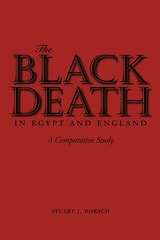
The Black Death in Egypt and England
A Comparative StudyBy Stuart J. Borsch
University of Texas Press, 2005
Throughout the fourteenth century AD/eighth century H, waves of plague swept out of Central Asia and decimated populations from China to Iceland. So devastating was the Black Death across the Old World that some historians have compared its effects to those of a nuclear holocaust. As countries began to recover from the plague during the following century, sharp contrasts arose between the East, where societies slumped into long-term economic and social decline, and the West, where technological and social innovation set the stage for Europe's dominance into the twentieth century. Why were there such opposite outcomes from the same catastrophic event?
In contrast to previous studies that have looked to differences between Islam and Christianity for the solution to the puzzle, this pioneering work proposes that a country's system of landholding primarily determined how successfully it recovered from the calamity of the Black Death. Stuart Borsch compares the specific cases of Egypt and England, countries whose economies were based in agriculture and whose pre-plague levels of total and agrarian gross domestic product were roughly equivalent. Undertaking a thorough analysis of medieval economic data, he cogently explains why Egypt's centralized and urban landholding system was unable to adapt to massive depopulation, while England's localized and rural landholding system had fully recovered by the year 1500.
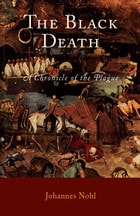
The Black Death
A Chronicle of the PlagueJohannes Nohl
Westholme Publishing, 2005
A History of the Most Catastrophic Plague Through Contemporary Accounts and How Humans Reacted
Hailed by the New York Times as "unusually interesting both as history and sociological study," The Black Death: A Chronicle of the Plague traces the ebb and flow of European pandemics over the course of centuries through translations of contemporary accounts. Originally published in 1926 and now in paperback for the first time, Nohl's volume is unique for its geographical and historical scope as well as its combination of detailed accounts and overarching contemporary views of the history of the plague in Europe, a disease that claimed nearly 40 million people during the fourteenth century alone. With current concerns about pandemics, The Black Death provides lessons on how humans reacted to and survived catastrophic loss of life to disease.
Contents
Preface
1. The Aspect of the Plague
2. The Precursors of the Plague
3. The Medical Profession and the Plague
4. Plague Remedies
5. Administrative Precautions
6. Attitude of the Church
7. The Diabolical Element of the Plague
8. Persecutions of the Jews
9. The Erotic Element of the Plague
10. The Flagellants
11. Choreomania and Children's Pilgrimages
12. Life Victorious
Bibliography
Geographical Index
Index of Persons
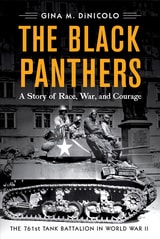
The Black Panthers
A Story of Race, War, and Courage—the 761st Tank Battalion in World War IIGina M. DiNicolo
Westholme Publishing, 2014
Known primarily for being the first African American armored unit to see combat in World War II and as future baseball star Jackie Robinson’s onetime outfit, the 761st Tank Battalion was forged in a devil’s cauldron of heat and prejudice at Camp Claiborne, Louisiana. Here, most viewed the tankers as tokens in a racial experiment, rather than as fellow American soldiers who would actually be deployed to fight a common enemy. Led by a small cadre of white and black officers, the 761st trained to the pinnacle of its craft. The Black Panthers, as they soon were called, proved their battle prowess against other units bound for combat on the parched Texas training fields. For this, they earned a coveted assignment to fight under General George S. Patton and go head-to-head with the best of Hitler’s arsenal. Moving to the front in November 1944, trial by fire soon shook the unit to its core. Ambushed by a veteran German force, the 761st suffered heavy casualties in the confusion as they cut their way out of the trap. But the men rallied to overcome self-doubt and vindicate their losses. Quickly battle hardened, the tankers saw intense combat through November and when Germany launched its last-ditch offensive through the Ardennes in December, the 761st fought side-by-side with Patton’s Third Army. Moving swiftly, the unit helped check the German advance, cut resupply routes to the forces surrounding beleaguered Bastogne, and drove the enemy back, recapturing towns crucial to the final defeat of Germany.
In The Black Panthers: A Story of Race, War, and Courage—the 761st Tank Battalion in World War II, historian Gina M. DiNicolo tells the full and unvarnished history of this important American fighting force. Relying on extensive archival research, including documents that had not been consulted in previous accounts, and interviews with surviving soldiers and family members, the author describes the unit’s training, deployment, combat, and individuals, such as Sgt. Ruben Rivers, one of only seven African American men awarded the Medal of Honor for World War II heroism. The professionalism, dedication, and courage of the 761st and other non-white units made clear that the strength of the American army in the future lay with integration—one of the enduring accomplishments of these servicemen.
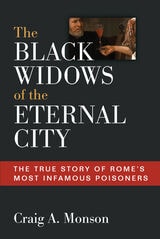
The Black Widows of the Eternal City
The True Story of Rome's Most Infamous PoisonersCraig A. Monson
University of Michigan Press, 2020
In the present study, Craig A. Monson takes advantage of a recent discovery—the 1,450-page notary’s transcript of the 1659 investigation. It is supplemented here by many ancillary archival sources, unknown to all previous writers. Since the story of Gironima Spana and the would-be widows is partially about what people believed to be true, however, this investigation also juxtaposes some of the “alternative facts” from earlier, sensational accounts with what the notary’s transcript and other, more reliable archival documents reveal.
Written in a style that avoids arcane idioms and specialist jargon, the book can potentially speak to students and general readers interested in seventeenth-century social history and gender issues. It rewrites the life story of Gironima Spana (largely unknown until now), who has dominated all earlier accounts, usually in caricatures that reiterate the tropes of witchcraft. It also concentrates on the dozen other widows whose stories could be the most recovered from archival sources and whom Spana had totally eclipsed in earlier accounts. Most were women “of a very ordinary sort” (prostitutes; beggars; wives of butchers, barbers, dyers, lineners, innkeepers), the kinds of women commonly lost to history. The book seeks to explain why some women were hanged (only six, in fact, most of whom may not have directly poisoned anyone), while dozens of others who did poison their husbands escaped the gallows and, in some cases, were not even interrogated. It also reveals what happened to these other alleged perpetrators, whose fates have remained unknown until now. Other purported culprits, about whom less complete pictures emerge, are briefly discussed in an appendix.
The study incorporates illustrations of archival manuscripts to demonstrate the challenges of deciphering them and illustrates “scenes of the crime” and other important locations, identified on seventeenth-century, bird’s eye-perspective views of Rome and in modern photographs. It also includes GPS coordinates for any who might wish to revisit the sites.
The Blitz Companion
Aerial Warfare, Civilians and the City since 1911Mark Clapson
University of Westminster Press, 2019

The Bloodless Revolution
England, 1688Stuart E. Prall
University of Wisconsin Press, 1985
The Glorious Revolution of 1688 represented a crucial turning point in modern British history by decisively shifting political power from the monarchy to Parliament. In this cogent study, first published in 1972, Stuart Prall offers a well-balanced account of the Revolution, its roots, and its consequences. The events of 1688, Prall argues, cannot be viewed in isolation. Examining the tempestuous half-century that preceded and precipitated William and Mary’s accession, he provides a comprehensive overview of the Revolution’s context and of its historical meaning.
“[Prall] insists that the Revolution of 1688 was the culmination of a long crisis begun back in 1640, and the revolution settlement was the resolution of problems which the Puritan Revolution and the Restoration had left unsolved. This is an admirable combination of analysis, commentary upon views of historians, and chronological narrative, starting with the Restoration in 1660 and continuing through the Act of Settlement in 1701.”—Choice
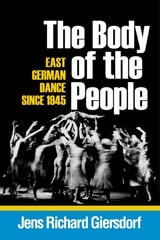
The Body of the People
East German Dance since 1945Jens Richard Giersdorf
University of Wisconsin Press, 2013
Giersdorf looks closely at uniquely East German dance forms—including mass exercise events, national folk dances, Marxist-Leninist visions staged by the dance ensemble of the armed forces, the vast amateur dance culture, East Germany’s version of Tanztheater, and socialist alternatives to rock ‘n’ roll—to demonstrate how dance was used both as a form of corporeal utopia and of embodied socialist propaganda and indoctrination. The Body of the People also explores the artists working in the shadow of official culture who used dance and movement to critique and resist state power, notably Charlotte von Mahlsdorf, Arila Siegert, and Fine Kwiatkowski. Giersdorf considers a myriad of embodied responses to the Communist state even after reunification, analyzing the embodiment of the fall of the Berlin Wall in the works of Jo Fabian and Sasha Waltz, and the diasporic traces of East German culture abroad, exemplified by the Chilean choreographer Patricio Bunster.
The Book Smugglers
Partisans, Poets, and the Race to Save Jewish Treasures from the NazisDavid E. Fishman
University Press of New England, 2018
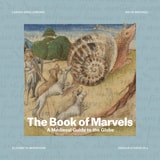
The Book of Marvels
A Medieval Guide to the GlobeLarisa Grollemond
J. Paul Getty Trust, The, 2024
From the classical encyclopedias of Pliny to famous tales such as The Travels of Marco Polo, historical travel writing has had a lasting impact, despite the fact that it was based on a curious mixture of truth, legend, and outright superstition. One foundational medieval source that expands on the ancient idea of the “wonders of the world” is the fifteenth-century French Book of the Marvels of the World, an illustrated guide to the globe filled with oddities, curiosities, and wonders—tales of fantasy and reality intended for the medieval armchair traveler. The fifty-six locales featured in the manuscript are presented in a manner that suggests authority and objectivity but are rife with stereotypes and mischaracterizations, meant to simultaneously instill a sense of wonder and fear in readers.
In The Book of Marvels, the authors explore the tradition of encyclopedias and travel writing, examining the various sources for geographic knowledge in the Middle Ages. They look closely at the manuscript copies of the French text and its complex images, delving into their origins, style, content, and meaning. Ultimately, this volume seeks to unpack how medieval white Christian Europeans saw their world and how the fear of difference—so pervasive in society today—is part of a long tradition stretching back millennia.
This volume is published to accompany an exhibition on view at the J. Paul Getty Museum at the Getty Center from June 11 to September 1, 2024, and at the Morgan Library & Museum from January 24 to May 25, 2025.