Results by title
1441 books match the query 'Great Britain' and 342 start with t

The Complete Works of Robert Browning, Volume IX
With Variant Readings and AnnotationsRobert Browning
Ohio University Press, 1990
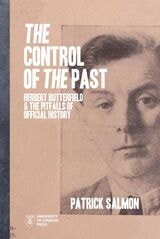
The Control of the Past
Herbert Butterfield and the Pitfalls of Official HistoryPatrick Salmon
University of London Press, 2021
In 1949, English historian Herbert Butterfield published “Official History: Its Pitfalls and Its Criteria,” a now-famous diatribe against the practice of publishing official history. Butterfield was one of the earliest and strongest critics of what he saw as the British government’s attempts to control the past through the writing of history. But why was Butterfield so hostile to state-sanctioned history, and why do his views still matter today?
This important new book details how successive governments have applied a selective approach to the past in order to tell or retell Britain’s national history. Providing a unique overview of the main trends of official history in Britain since World War II, the book details how Butterfield came to suspect that the British government was trying to suppress vital documents revealing the Duke of Windsor’s dealings with Nazi Germany. This seemed to confirm his long-held belief that all governments would seek to manipulate history if they could and conceal the truth if they could not.
At the beginning of the twenty-first century, official history is still being written. The Control of the Past concludes with an insider’s perspective on the many issues it faces today—on freedom of information, social media, and reengaging with our nation’s colonial legacy. Governments have recently been given many reminders that history matters, and Butterfield’s work reminds us that we must remain vigilant in monitoring how they respond to the challenge.
The Converse of the Pen
Acts of Intimacy in the Eighteenth-Century Familiar LetterBruce Redford
University of Chicago Press, 1987
Redford examines six masters of the "talking letter": Lady Mary Wortley Montagu, William Cowper, Thomas Gray, Horace Walpole, James Boswell, and Samuel Johnson. All seek the paradoxical goal of artful spontaneity. Each exploits the distinctive resources of the eighteenth-century letter writer: a flexible conversational manner, a repertoire of literary and social allusion, a flair for dramatic impersonation. The voices of these letter writers "make distance, presence," in Samuel Richardson's phrase, by devising substitutes for gesture, vocal inflection, and physical context, turning each letter into a performance—an act. The resulting verbal constructs create a mysterious tension between the claims of fact and the possibilities of art. Redford recovers a neglected literary form and makes possible a deeper understanding of major eighteenth-century writers who devoted much of their talent and time to "the converse of the pen."
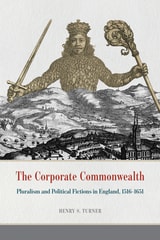
The Corporate Commonwealth
Pluralism and Political Fictions in England, 1516-1651Henry S. Turner
University of Chicago Press, 2016
Henry S. Turner uses the resources of economic and political history, literary analysis, and political philosophy to demonstrate how a number of English institutions with corporate associations—including universities, guilds, towns and cities, and religious groups—were gradually narrowed to the commercial, for-profit corporation we know today, and how the joint-stock corporation, in turn, became both a template for the modern state and a political force that the state could no longer contain. Through innovative readings of works by Thomas More, William Shakespeare, Francis Bacon, and Thomas Hobbes, among others, Turner tracks the corporation from the courts to the stage, from commonwealth to colony, and from the object of utopian fiction to the subject of tragic violence. A provocative look at the corporation’s peculiar character as both an institution and a person, The Corporate Commonwealth uses the past to suggest ways in which today’s corporations might be refashioned into a source of progressive and collective public action.

The Corporation That Changed the World
How the East India Company Shaped the Modern MultinationalNick Robins
Pluto Press, 2012
"Elegantly written and sharply argued, Nick Robins' gripping account of the rise and fall of the English East India Company brings to life a crucial episode in the history of globalization."—Sankar Muthu, University of Chicago
The English East India Company was the mother of the modern multinational. Its trading empire encircled the globe, importing Asian luxuries such as spices, textiles, and teas. But it also conquered much of India with its private army and broke open China's markets with opium. The Company's practices shocked its contemporaries and still reverberate today, offering lessons about unfettered capitalism, corporate responsibility, and the legacy of colonialism.
The Corporation That Changed the World is the first book to reveal the Company's enduring legacy as a corporation. This expanded edition explores how the four forces of scale, technology, finance, and regulation drove its spectacular rise and fall. For decades, the Company was simply too big to fail, and stock market bubbles, famines, drug-running, and even duels between rival executives are to be found in this new account.
Table of Contents:
Introduction
Chronology
1 The Hidden Wound
2 The Imperious Company
3 Out of the Shadows
4 The Bengal Revolution
5 The Great East Indian Crash
6 Regulating the Company
7 Justice Will Be Done
8 The Toxic Exchange
10 The Unfettered Business
Epilogue
For Robins, the Company's story provides vital lessons on both the role of corporations in world history and the steps required to make global business accountable today.
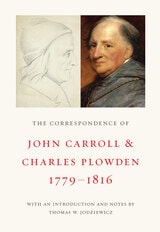
The Correspondence of John Carroll and Charles Plowden, 1779-1816
Thomas W. Jodziewicz
Catholic University of America Press, 2025
The Correspondence of Michael Faraday
1811-1831, Volume 1Frank A.J.L. James
The Institution of Engineering and Technology, 1991
The Correspondence of Michael Faraday
1832-1840, Volume 2Frank A.J.L. James
The Institution of Engineering and Technology, 1993
The Correspondence of Michael Faraday
1841-1848, Volume 3Frank A.J.L. James
The Institution of Engineering and Technology, 1996
The Correspondence of Michael Faraday
1849-1855, Volume 4Frank A.J.L. James
The Institution of Engineering and Technology, 1999
The Correspondence of Michael Faraday
1855-1860, Volume 5Frank A.J.L. James
The Institution of Engineering and Technology, 2008
The Correspondence of Michael Faraday
1860-1867, Volume 6Frank A.J.L. James
The Institution of Engineering and Technology, 2011

The Correspondence of Richard Price, Volume II
March 1778–February 1786D. O. Thomas, ed.
Duke University Press, 1983
The Correspondence of Richard Price, Volume III
February 1786–February 1791William Bernard Peach, editor
Duke University Press, 1983
Price's correspondence with Adams, Franklin, Jefferson, Rush, and other Americans concern the issues of slavery, the rebellion in Massachusetts, use of paper money, opposition to the establishment of religion, and the status of the federal government. Letters to Priestly, Lansdowne, and others in Britain are about science and technology, the crisis in the United Provinces, armed neutrality, the national debt, revolution, religious sects, and foreign relations. In his correspondence with French leaders following the fall of the Bastille, particularly with le Duc del la Rochefoucauld, Price expresses his high hopes for the growth of civil and religious freedom in France.
Indispensable for an understanding of the work of one of the best known and most distinguished Welshmen of the eighteenth century, this book—and the series—will also be of interest to those who study the history of ideas.

The Crisis of Action in Nineteenth-Century English Literature
Stefanie Markovits
The Ohio State University Press, 2006
The Crooked Stick
A History of the LongbowHugh D. H. Soar
Westholme Publishing, 2004
The Complete Story of a Legendary Weapon
"Spendidly enthusiastic. . . . Soar's book is indispensable."—Bernard Cornwell
"A fascinating study of a forgotten weapon. . . . For centuries the longbow dominated battle, affecting the fates of nations" —Wall Street Journal
"Bowyers, bowhunters, target archers and students of archery history should all find cause for celebration with Hugh Soar's concise but authoritative text." —Traditional BowhunterOn a clear July morning in 1346, a small force approached the walls of Caen for battle. The attackers rode to the field on horseback, banners and pennants fluttering in the light breeze. Behind them marched bowmen in tightly ranked units. At the sound of a crisp battle horn, they halted. A twinge of apprehension rippled through the thousands of Norman defenders as they looked down at the opposing army, for precision archery formation had long since disappeared as a military concept in medieval France. Here was not the expected rabble of unrated bucolics cowed by the might of France; confronting them was a quietly determined group of trained soldiers armed not with the familiar arbalest but with a new and strange weapon of great length. The defenders of Caen were about to meet the English war bow and its deadly battle shaft. For the next 100 years, this weapon, the "crooked stick," would command continental battlefields, etching its fearsome reputation at Crécy, Poitiers, Agincourt, and Verneuil, while establishing England as an international power for the first time.
Although the longbow is best known for its deployment during the Hundred Years' War, its origins lie with ancient Saxon seafighters and Welsh craftsmen, while today the bow is a vibrant part of the traditional archery scene. In The Crooked Stick: A History of the Longbow, historian Hugh D. H. Soar pulls together all of these strings, presenting the engaging story of this most charismatic standoff weapon. After a careful consideration of Neolithic bows and arrows, the author describes the bow's use in the medieval hunt and its associated customs. The longbow made its deepest mark in warfare, however, and the author follows the weapon's development and tactical deployment from the hand-bow of William the Conqueror's campaigns to the continental set-piece battles between England and France. Although soldiers reluctantly gave up the longbow for firearms, its recreational use became immensely popular, particularly during the Regency and Victorian periods. In the twentieth century it appeared as if the longbow would disappear into the fog of legend, but a new interest in traditional craft and expertise gained hold, and the pleasure of using this ancient instrument is now firmly part of archery around the world.
Through a remarkable command of manuscript and printed sources and a judicious use of material evidence, including his own important collection of rare longbows, Hugh Soar establishes the deep connections of this bow to England, Scotland, and Wales. Figures in the past like William Wallace, Edward III, and Henry V appear alongside detailed descriptions of bows, strings, arrows, and arrowheads, while the rise of institutions and craftsmen devoted to the longbow are presented to show how knowledge of this weapon was carried forward across the centuries. Today, those in the sport of archery and military historians will find that The Crooked Stick will enhance their own interests in a weapon of legendary status.
In addition to the illustrated text, the book contains appendices detailing the history and design of bracers, tabs and tips, quivers, and arrowheads associated with the longbow.
The Culture and Commerce of Texts
Scribal Publication in Seventeenth-Century EnglandHarold Love
University of Massachusetts Press, 1998
Long after the establishment of printing in England, many writers and composers still preferred to publish their work through handwritten copies. Texts so transmitted included some of the most distinguished poetry and music of the seventeenth century, along with a rich variety of political, scientific, antiquarian, and philosophical writings. While censorship was one reason for this persistence of the older practice, scribal publication remained the norm for texts that were required only in small numbers, or whose authors wished to avoid the “stigma” of print.
This is the first book to consider the trade in manuscripts as an important supplement to that in printed books, and to describe the agencies that met the need for rapid duplication of key texts.

The Culture of Control
Crime and Social Order in Contemporary SocietyDavid Garland
University of Chicago Press, 2001
Garland explains how the new policies of crime and punishment, welfare and security—and the changing class, race, and gender relations that underpin them—are linked to the fundamental problems of governing contemporary societies, as states, corporations, and private citizens grapple with a volatile economy and a culture that combines expanded personal freedom with relaxed social controls. It is the risky, unfixed character of modern life that underlies our accelerating concern with control and crime control in particular. It is not just crime that has changed; society has changed as well, and this transformation has reshaped criminological thought, public policy, and the cultural meaning of crime and criminals. David Garland's The Culture of Control offers a brilliant guide to this process and its still-reverberating consequences.
The Culture of Male Beauty in Britain
From the First Photographs to David BeckhamPaul R. Deslandes
University of Chicago Press, 2021
Spanning the decades from the rise of photography to the age of the selfie, this book traces the complex visual and consumer cultures that shaped masculine beauty in Britain, examining the realms of advertising, health, pornography, psychology, sport, and celebrity culture. Paul R. Deslandes chronicles the shifting standards of male beauty in British culture—from the rising cult of the athlete to changing views on hairlessness—while connecting discussions of youth, fitness, and beauty to growing concerns about race, empire, and degeneracy. From earlier beauty show contestants and youth-obsessed artists, the book moves through the decades into considerations of disfigured soldiers, physique models, body-conscious gay men, and celebrities such as David Beckham and David Gandy who populate the worlds of television and social media.
Deslandes calls on historians to take beauty and gendered aesthetics seriously while recasting how we think about the place of physical appearance in historical study, the intersection of different forms of high and popular culture, and what has been at stake for men in “looking good.”

The Culture of Property
The Crisis of Liberalism in Modern BritainJordanna Bailkin
University of Chicago Press, 2004
Drawing on court transcripts, gallery archives, exhibition reviews, private correspondence—and a striking series of cartoons and photographs—The Culture of Property traverses the history of gender, material culture, urban life, colonialism, Irish and Scottish nationalism, and British citizenship. This fascinating book challenges recent scholarship in museum studies in light of ongoing culture wars. It should be required reading for cultural policy makers, museum professionals, and anyone interested in the history of art and Britain.
The Culture of Sensibility
Sex and Society in Eighteenth-Century BritainG. J. Barker-Benfield
University of Chicago Press, 1992
The Curious World of Dickens
Clive Hurst and Violet Moller
Bodleian Library Publishing, 2012
Published to celebrate the twohundredth anniversary of Dickens’s birth, this book brings together quotations from Dickens’s novels and letters with photographs of their original covers and Victorian-era images—among them, prints, posters, and newspaper pieces—that shed light on the topics about which Dickens writes. Ordered by theme, the book covers such topics as schools in Victorian England, domestic entertainment, the introduction of the railroad, and the poor conditions in prisons and workhouses, which loom large in Dickens’s novels—and, indeed, his own childhood. Dickens was also an avid theater enthusiast who arranged productions and public readings of many of his works, and this book explores his role throughout his later years in adroitly adapting his novels for the stage.
The Curious World of Dickens breathes new life on this momentous occasion into the vibrant world inhabited by Dickens and his characters.
The Cut of His Coat
Men, Dress, and Consumer Culture in Britain, 1860–1914Brent Shannon
Ohio University Press, 2006
The English middle class in the late nineteenth century enjoyed an increase in the availability and variety of material goods. With that, the visual markers of class membership and manly behavior underwent a radical change. In The Cut of His Coat: Men, Dress, and Consumer Culture in Britain, 1860–1914, Brent Shannon examines familiar novels by authors such as George Eliot, Anthony Trollope, Thomas Hughes, and H. G. Wells, as well as previously unexamined etiquette manuals, period advertisements, and fashion monthlies, to trace how new ideologies emerged as mass-produced clothes, sartorial markers, and consumer culture began to change.
While Victorian literature traditionally portrayed women as having sole control of class representations through dress and manners, Shannon argues that middle-class men participated vigorously in fashion. Public displays of their newly acquired mannerisms, hairstyles, clothing, and consumer goods redefined masculinity and class status for the Victorian era and beyond.
The Cut of His Coat probes the Victorian disavowal of men’s interest in fashion and shopping to recover men’s significant role in the representation of class through self-presentation and consumer practices.
The Cybernetic Brain
Sketches of Another FutureAndrew Pickering
University of Chicago Press, 2010
The Cybernetic Brain explores a largely forgotten group of British thinkers, including Grey Walter, Ross Ashby, Gregory Bateson, R. D. Laing, Stafford Beer, and Gordon Pask, and their singular work in a dazzling array of fields. Psychiatry, engineering, management, politics, music, architecture, education, tantric yoga, the Beats, and the sixties counterculture all come into play as Pickering follows the history of cybernetics’ impact on the world, from contemporary robotics and complexity theory to the Chilean economy under Salvador Allende. What underpins this fascinating history, Pickering contends, is a shared but unconventional vision of the world as ultimately unknowable, a place where genuine novelty is always emerging. And thus, Pickering avers, the history of cybernetics provides us with an imaginative model of open-ended experimentation in stark opposition to the modern urge to achieve domination over nature and each other.
The Darkened Room
Women, Power, and Spiritualism in Late Victorian EnglandAlex Owen
University of Chicago Press, 2004
The hugely popular spiritualist movement, which maintained that women were uniquely qualified to commune with spirits of the dead, offered female mediums a new independence, authority, and potential to undermine conventional class and gender relations in the home and in society.
Using previously unexamined sources and an innovative approach, Alex Owen invokes the Victorian world of darkened séance rooms, theatrical apparitions, and moving episodes of happiness lost and regained. She charts the struggles between spiritualists and the medical and legal establishments over the issue of female mediumship, and provides new insights into the gendered dynamics of Victorian society.
The Daughter's Dilemma
Family Process and the Nineteenth-Century Domestic NovelPaula Marantz Cohen
University of Michigan Press, 1993

The Dawn of Green
Manchester, Thirlmere, and Modern EnvironmentalismHarriet Ritvo
University of Chicago Press, 2009
The Deadly Politics of Giving
Exchange and Violence at Ajacan, Roanoke, and JamestownSeth Mallios
University of Alabama Press, 2006
The Devonshire Manuscript
A Women's Book of Courtly PoetryLady Margaret Douglas and Others
Iter Press, 2012
—Jennifer Summit
Professor of English, Stanford University
The Dictionary of Nineteenth-Century British Scientists
Edited by Bernard Lightman
University of Chicago Press, 2004
While the Dictionary of Nineteenth-Century British Scientists covers those working in traditional scientific areas such as physics, astronomy, chemistry, mathematics, and biology, it also acknowledges those working in the human sciences such as anthropology, sociology, psychology, and medicine. In addition, areas often overlooked by historians of science—such as phrenology, mesmerism, spiritualism, scientific illustration, scientific journalism and publishing, instrument making, and government policy—are included here, as are the important roles of neglected "amateurs," such as women and members of the working class. By including those who worked in nontraditional areas and by considering the social and cultural context in which they lived, the dictionary reflects a richer picture of nineteenth-century science than has ever been seen before.
The Diffident Naturalist
Robert Boyle and the Philosophy of ExperimentRose-Mary Sargent
University of Chicago Press, 1995
Sargent examines the philosophical, legal, experimental, and religious traditions—among them English common law, alchemy, medicine, and Christianity—that played a part in shaping Boyle's experimental thought and practice. The roots of his philosophy in his early life and education, in his religious ideals, and in the work of his predecessors—particularly Bacon, Descartes, and Galileo—are fully explored, as are the possible influences of his social and intellectual circle. Drawing on the full range of Boyle's published works, as well as on his unpublished notebooks and manuscripts, Sargent shows how these diverse influences were transformed and incorporated into Boyle's views on and practice of experiment.
The Domestic Herbal
Plants for the Home in the Seventeenth CenturyMargaret Willes
Bodleian Library Publishing, 2020
In the seventeenth century most English households had gardens. These gardens were not merely ornamental; even the most elaborate and fashionable gardens had areas set aside for growing herbs, fruit, vegetables, and flowers for domestic use. Meanwhile, more modest households considered a functional garden to be a vital tool for the survival of the house and family. The seventeenth century was also a period of exciting introductions of plants from overseas, which could be used in all manner of recipes.
Using manuscript household manuals, recipe books, and printed herbals, The Domestic Herbal takes the reader on a tour of the productive garden and of the various parts of the house—kitchens and service rooms, living rooms and bedrooms—to show how these plants were used for cooking and brewing, medicines and cosmetics, in the making and care of clothes, and to keep rooms fresh, fragrant, and decorated. Recipes used by seventeenth-century households for preparations such as flower syrups, snail water, and wormwood ale are also included. A brief herbal gives descriptions of plants both familiar and less known to today’s readers, including the herbs used for common tasks like dyeing and brewing, and those that held a particular cultural importance in the seventeenth century. Featuring exquisite colored illustrations from John Gerard’s herbal book of 1597 as well as prints, archival material, and manuscripts, this book provides an intriguing and original focus on the domestic history of Stuart England.
The Dons
Mentors, Eccentrics and GeniusesNoel Annan
University of Chicago Press, 1999
In this entertaining, informative book, Noel Annan is at his incisive best. Displaying his customary mastery of his subject, he describes the great dons in all their glory and eccentricities: who they were, what they were like, why they mattered, and what their legacy is. Written with love and wisdom, the great minds of the past—figures such as John Henry Newman, John Sparrrow, and Isaiah Berlin—are brought alive. In addition, Annan's often quoted article "The Intellectual Aristocracy" is included in this book.
No other work has ever explained so precisely and so intimately the significance of the dons and their important role in shaping higher education—at a time when the nature of learning is ever more the subject of dissension and uncertainty.
"With a charming mixture of analyses and anecdotes, Annan builds up a picture of the changing Oxbridge scene that keeps a reader's imagination. . . . [T]he comical-satirical narrative of which he was a master is a joy to read, and The Dons will deservedly be enjoyed as a bedside book by those who treasure English eccentricity."—Stephen Toulmin, Los Angeles Times Book Review
"[A]n affectionate elegy for a class that has largely expired."—Robert Fulford, National & Financial Post
"[A] wonderfully gifted and energetic writer. . . . Noel was one of the few figures in English public life known simply by his first name. There was no mistaking him for anyone else."—Jonathan Mirsky, New Yorker
"A sparkling collection of essays."—Michael Davie, Times Literary Supplement
"[A] highly affectionate . . . look at some of the more remarkable academic personages to distinguish-and sometimes dumbfound-Oxford and Cambridge over the last two centuries. . . . For all that it cherishes eccentricity and abounds in Oxbridge gossip, The Dons is at heart a deeply serious book, one dedicated to a conception of learning and culture that is at once increasingly rare . . . yet very far from being outmoded."—Mark Feeney, Boston Globe
"Annan writes elegantly and winningly throughout his book. . . . Leaving arguably the best for last, Annan ends The Dons with a reprinting of his celebrated essay 'The Intellectual Aristocracy,' . . . [B]oth a dazzling tour de force and a clever jeu d'esprit."—Michael Dirda, Washington Post Book World
"A witty, erudite, insider account-exactly what one would expect from the best of their type."—Andrew Lycett, Sunday Times
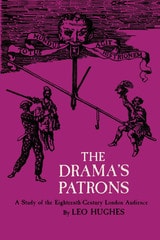
The Drama's Patrons
A Study of the Eighteenth-Century London AudienceBy Leo Hughes
University of Texas Press, 1971
The drama's laws,
the drama's patrons give,
For we that live to please,
must please to live.
—Samuel Johnson, 1747
Democratic ferment, responsible for political explosions in the seventeenth century and expanded power in the eighteenth, affected all phases of English life. The theatre reflected these forces in the content of the plays of the period and in an increased awareness among playgoers that the theatre "must please to live."
Drawing from a wealth of amusing and informative contemporary accounts, Leo Hughes presents abundant evidence that the theatre-going public proved zealous, and sometimes even unruly, in asserting its role and rights. He describes numerous species of individual pest—the box-lobby saunterers, the vizard masks (ladies of uncertain virtue), the catcallers, and the weeping sentimentalists. Protest demonstrations of various interest groups, such as footmen asserting their rights to sit in the upper gallery, reflect the behavior of the audience as a whole—an audience that Alexander Pope described as "the manyheaded monster of the pit."
Hughes analyzes the changes in the audience's taste through the long span from Dryden's day to Sheridan's. He illustrates the decline in taste from the sophisticated, if bawdy, comedy of the Restoration Period to the sentimentalism and empty show of later decades. He attributes the increased emphasis on sentiment and spectacle to audience influence and describes the effects of audience demands on managers, playwrights, and players. He describes in detail the mixed assembly that frequented the theatre during this period and the greatly enlarged theatres that were built to accommodate it.
Hughes concludes that it was the English people's basic love of liberty that allowed them to accept audience disruptions considered intolerable by foreign visitors and that the drama's patrons greatly influenced the quality of theatrical production during this long period.
The Dramatic Imagination of Robert Browning
A Literary LifeRichard S. Kennedy & Donald S. Hair
University of Missouri Press, 2007
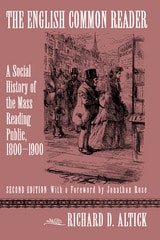
The ENGLISH COMMON READER
A Social History of the Mass Reading Public, 1800–1900, Second EditionRichard D. Altick
The Ohio State University Press, 1998
The Early Poetry of Robert Graves
The Goddess BeckonsBy Frank L. Kersnowski
University of Texas Press, 2002
Like many men of his generation, poet Robert Graves was indelibly marked by his experience of trench warfare in World War I. The horrific battles in which he fought and his guilt over surviving when so many perished left Graves shell-shocked and disoriented, desperately seeking a way to bridge the rupture between his conventional upbringing and the uncertainties of postwar British society.
In this study of Graves's early poetry, Frank Kersnowski explores how his war neurosis opened a door into the unconscious for Graves and led him to reject the essential components of the Western idea of reality—reason and predictability. In particular, Kersnowski traces the emergence in Graves's early poems of a figure he later called "The White Goddess," a being at once terrifying and glorious, who sustains life and inspires poetry. Drawing on interviews with Graves's family, as well as unpublished correspondence and drafts of poems, Kersnowski argues that Graves actually experienced the White Goddess as a real being and that his life as a poet was driven by the purpose of celebrating and explaining this deity and her matriarchy.
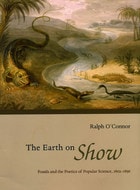
The Earth on Show
Fossils and the Poetics of Popular Science, 1802-1856Ralph O'Connor
University of Chicago Press, 2007
Shrewd science-writers, O’Connor shows, marketed spectacular visions of past worlds, piquing the public imagination with glimpses of man-eating mammoths, talking dinosaurs, and sea-dragons spawned by Satan himself. These authors—including men of science, women, clergymen, biblical literalists, hack writers, blackmailers, and prophets—borrowed freely from the Bible, modern poetry, and the urban entertainment industry, creating new forms of literature in order to transport their readers into a vanished and alien past.
In exploring the use of poetry and spectacle in the promotion of popular science, O’Connor proves that geology’s success owed much to the literary techniques of its authors. An innovative blend of the history of science, literary criticism, book history, and visual culture, The Earth on Show rethinks the relationship between science and literature in the nineteenth century.
The Economy of Character
Novels, Market Culture, and the Business of Inner MeaningDeidre Shauna Lynch
University of Chicago Press, 1998
Although the story of this shift is usually told in terms of the "rise of the individual," Deidre Shauna Lynch proposes an ingenious alternative interpretation. Elaborating a "pragmatics of character," Lynch shows how readers used transactions with characters to accommodate themselves to newly commercialized social relations. Searching for the inner meanings of characters allowed readers both to plumb their own inwardness and to distinguish themselves from others. In a culture of mass consumption, argues Lynch, possessing a belief in the inexpressible interior life of a character rendered one's property truly private.
Ranging from Defoe and Smollett to Burney and Austen, Lynch's account will interest students of the novel, literary historians, and anyone concerned with the inner workings of consumer culture and the history of emotions.
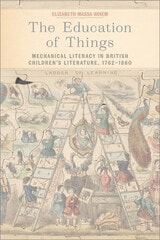
The Education of Things
Mechanical Literacy in British Children's Literature, 1762–1860Elizabeth Massa Hoiem
University of Massachusetts Press, 2023
Finalist for the 2025 SHARP Book History Book Prize
Winner of the 2025 Justin G. Schiller Prize for Bibliographical Work on Children’s Books from The Bibliographical Society of America
By the close of the eighteenth century, learning to read and write became closely associated with learning about the material world, and a vast array of games and books from the era taught children how to comprehend the physical world of “things.” Examining a diverse archive of popular science books, primers, grammars, toys, manufacturing books, automata, and literature from Maria Edgeworth, Jean-Jacques Rousseau, and Anna Letitia Barbauld, The Education of Things attests that material culture has long been central to children’s literature.
Elizabeth Massa Hoiem argues that the combination of reading and writing with manual tinkering and scientific observation promoted in late eighteenth- and early nineteenth-century Britain produced new forms of “mechanical literacy,” competencies that were essential in an industrial era. As work was repositioned as play, wealthy children were encouraged to do tasks in the classroom that poor children performed for wages, while working-class children honed skills that would be crucial to their social advancement as adults.

The Emigrants
George Lamming
University of Michigan Press, 1994
This is the epic journey of a group of West Indians who emigrate to Great Britain in the 1950s in search of educational opportunities unattainable at home. Seeking to redefine themselves in the "mother country," an idealized landscape that they have been taught to revere, the emigrants settle uncomfortably in England's industrial cities. Within two years, ghettoization is firmly in place. The emigrants discover the meaning of their marginality in the British Empire in an environment that is unexpectedly hostile and strange. For some, alienation prompts a new sense of community, a new sense of identity as West Indians. For others, alienation leads to a crisis of confrontation with the law and fugitive status.
There is a wealth of information here about the genesis of the black British community and about the cultural differences between the black British and West Indian/Caribbean.
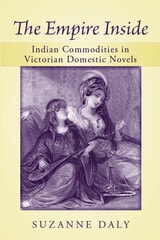
The Empire Inside
Indian Commodities in Victorian Domestic NovelsSuzanne Daly
University of Michigan Press, 2011
"The Empire Inside is unique in its tight focus on the objects from one geographical location, and their deployment in one genre of fiction. This combination results in a powerful study with a wealth of fine formal analyses of literary texts and a similar trove of marvelous historical data."
---Elaine Freedgood, New York University
"In The Empire Inside, Suzanne Daly does a wonderful job integrating an array of primary materials, especially novels and journal essays, to show the extent to which these ‘foreign’ colonial products of India represented absolutely central aspects of domestic life, at once part of the unremarkable everyday experience of Victorians and rich with meanings."
---Timothy Carens, College of Charleston
By the early nineteenth century, imperial commodities had become commonplace in middle-class English homes. Such Indian goods as tea, textiles, and gemstones led double lives, functioning at once as exotic foreign artifacts and as markers of proper Englishness. The Empire Inside: Indian Commodities in Victorian Domestic Novels reveals how Indian imports encapsulated new ideas about both the home and the world in Victorian literature and culture. In novels by Charlotte Brontë, Charles Dickens, and Anthony Trollope, the regularity with which Indian commodities appear bespeaks their burgeoning importance both ideologically and commercially. Such domestic details as the drinking of tea and the giving of shawls as gifts point us toward suppressed connections between the feminized realm of private life and the militarized realm of foreign commerce.
Tracing the history of Indian imports yields a record of the struggles for territory and political power that marked the coming-into-being of British India; reading the novels of the period for the ways in which they infuse meaning into these imports demonstrates how imperialism was written into the fabric of everyday life in nineteenth-century England. Situated at the intersection of Victorian studies, material cultural studies, gender studies, and British Empire studies, The Empire Inside is written for academics, graduate students, and advanced undergraduates in all of these fields.
Suzanne Daly is Associate Professor of English, University of Massachusetts Amherst.
The Empire at Home
Internal Colonies and the End of BritainJames Trafford
Pluto Press, 2021
The End of Tolerance
Racism in 21st Century BritainArun Kundnani
Pluto Press, 2007
Exacerbated by the attacks of 9/11 and 7/7, Kundnani argues that a new form of racism is emerging that is based on a systematic failure to understand the causes of forced migration, global terrorism and social segregation. The result is a climate of hatred, especially against Muslims and asylum seekers, and the erosion of the human rights of those whose cultures and values are perceived as 'alien'.
Communities are more divided than ever. Yet the government presses ahead with flawed immigration and 'integration' policies and anti-terrorist legislation that creates further resentment, alienation and criminalisation. Behind it all lies a refusal to grasp the ways in which the world has been changed by neoliberal globalisation.
What can be done? This timely and precise analysis is a useful account of why racism is now thriving -- and what can be done to stop it. It will be of interest to anyone who is appalled by the current state of race relations in Britain and it should be required reading for all policy-makers.
The English Civil Wars in the Literary Imagination
Edited by Claude J. Summers & Ted-Larry Pebworth
University of Missouri Press, 1999
The English civil wars loom large in seventeenth-century history and literature. This period, which culminated in the execution of a king, the dismantling of the Established Church, the inauguration of a commonwealth, and the assumption of rule by a lord protector, was one of profound change and disequilibrium. Focusing on writers as major as Milton, Marvell, Herrick, and Vaughan, and as misunderstood as Fane, Overton, and the poet Eliza, the fifteen essays in this collection discuss not only the representation of the civil wars but also the ways in which the civil wars were anticipated, refigured, and refracted in the century's literary imagination.
Although all of the essays are historically grounded and critically based, they vary widely in their historical perspectives and critical techniques, as well as in their scope and area of concentration. Six of the essays are on Royalist literary figures, six are on figures traditionally associated with the Parliamentarian side of the civil wars, two consider both, and the remaining essay examines how Royalist writers refashioned a puritan literary trope.
Unified through the contributors' concentration on "moderate" voices and their recurrent concerns with the ambiguities of literary response, The English Civil Wars in the Literary Imagination provides an important understanding of the English civil wars' manifold and sometimes indirect presence in the literature of the period.
The English Virtuoso
Art, Medicine, and Antiquarianism in the Age of EmpiricismCraig Ashley Hanson
University of Chicago Press, 2009
At the heart of this profoundly interdisciplinary study lies the Royal Society of London for the Improvement of Natural Knowledge, which from its founding in 1660 served as the major professional organization for London’s leading physicians, many of them prominent virtuosi. Craig Ashley Hanson reveals that a vital art audience emerged from the Royal Society—whose members assembled many of the period’s most important nonaristocratic collections—a century before most accounts date the establishment of an institutional base for the arts in England. Unearthing the fascinating stories of an impressive cast of characters, Hanson establishes a new foundation for understanding both the relationship between British art and science and the artistic accomplishments of the late eighteenth and nineteenth centuries.
The Enigma of the Aerofoil
Rival Theories in Aerodynamics, 1909-1930David Bloor
University of Chicago Press, 2011
The Enlightenment and the Book
Scottish Authors and Their Publishers in Eighteenth-Century Britain, Ireland, and AmericaRichard B. Sher
University of Chicago Press, 2007
The late eighteenth century witnessed an explosion of intellectual activity in Scotland by such luminaries as David Hume, Adam Smith, Hugh Blair, William Robertson, Adam Ferguson, James Boswell, and Robert Burns. And the books written by these seminal thinkers made a significant mark during their time in almost every field of polite literature and higher learning throughout Britain, Europe, and the Americas.
In this magisterial history, Richard B. Sher breaks new ground for our understanding of the Enlightenment and the forgotten role of publishing during that period. The Enlightenment and the Book seeks to remedy the common misperception that such classics as The Wealth of Nations and The Life of Samuel Johnson were written by authors who eyed their publishers as minor functionaries in their profession. To the contrary, Sher shows how the process of bookmaking during the late eighteenth-century involved a deeply complex partnership between authors and their publishers, one in which writers saw the book industry not only as pivotal in the dissemination of their ideas, but also as crucial to their dreams of fame and monetary gain. Similarly, Sher demonstrates that publishers were involved in the project of bookmaking in order to advance human knowledge as well as to accumulate profits.
The Enlightenment and the Book explores this tension between creativity and commerce that still exists in scholarly publishing today. Lavishly illustrated and elegantly conceived, it will be must reading for anyone interested in the history of the book or the production and diffusion of Enlightenment thought.
The Eternal Paddy
Irish Identity and the British Press, 1798–1882Michael de Nie
University of Wisconsin Press, 2004
In The Eternal Paddy, Michael de Nie examines anti-Irish prejudice, Anglo-Irish relations, and the construction of Irish and British identities in nineteenth-century Britain. This book provides a new, more inclusive approach to the study of Irish identity as perceived by Britons and demonstrates that ideas of race were inextricably connected with class concerns and religious prejudice in popular views of both peoples. De Nie suggests that while traditional anti-Irish stereotypes were fundamental to British views of Ireland, equally important were a collection of sympathetic discourses and a self-awareness of British prejudice. In the pages of the British newspaper press, this dialogue created a deep ambivalence about the Irish people, an ambivalence that allowed most Britons to assume that the root of Ireland’s difficulties lay in its Irishness.
Drawing on more than ninety newspapers published in England, Scotland, and Wales, The Eternal Paddy offers the first major detailed analysis of British press coverage of Ireland over the course of the nineteenth century. This book traces the evolution of popular understandings and proposed solutions to the "Irish question," focusing particularly on the interrelationship between the press, the public, and the politicians. The work also engages with ongoing studies of imperialism and British identity, exploring the role of Catholic Ireland in British perceptions of their own identity and their empire.
The Experimental Fire
Inventing English Alchemy, 1300–1700Jennifer M. Rampling
University of Chicago Press, 2020
In medieval and early modern Europe, the practice of alchemy promised extraordinary physical transformations. Who would not be amazed to see base metals turned into silver and gold, hard iron into soft water, and deadly poison into elixirs that could heal the human body? To defend such claims, alchemists turned to the past, scouring ancient books for evidence of a lost alchemical heritage and seeking to translate their secret language and obscure imagery into replicable, practical effects.
Tracing the development of alchemy in England over four hundred years, from the beginning of the fourteenth century to the end of the seventeenth, Jennifer M. Rampling illuminates the role of alchemical reading and experimental practice in the broader context of national and scientific history. Using new manuscript sources, she shows how practitioners like George Ripley, John Dee, and Edward Kelley, as well as many previously unknown alchemists, devised new practical approaches to alchemy while seeking the support of English monarchs. By reconstructing their alchemical ideas, practices, and disputes, Rampling reveals how English alchemy was continually reinvented over the space of four centuries, resulting in changes to the science itself. In so doing, The Experimental Fire bridges the intellectual history of chemistry and the wider worlds of early modern patronage, medicine, and science.