Results by title
884 books match the query 'Historical' and 243 start with t
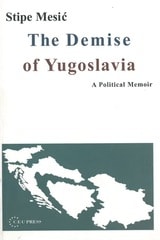
The Demise of Yugoslavia
A Political MemoirStipe Mesic
Central European University Press, 2004

The Dervish Bowl
The Many Lives of Arminius VambéryAnabel Loyd
Haus Publishing, 2025
Who was Arminius Vámbéry? A poverty-stricken, Jewish autodidact; a linguist, traveler, and writer—or a sometime Zionist, inspiration for Dracula’s nemesis, and British secret agent? Vámbéry wrote his own story many times over, and it was these often highly embroidered accounts of journeys through Persia and Central Asia that saw him acclaimed in Victorian England as an intrepid explorer and daring adventurer. Against the backdrop of the “Great Game,” in which Russia and Britain jostled for territory, influence, and control of the borders and gateways to India and its wealth, Vámbéry played the roles of hero and double-dealer, of fascinated witness and imperialist charlatan.
The Dervish Bowl is the story of these competing narratives and a compelling investigation of both the ever-changing persona Vámbéry created for himself and the man who emerges from his private correspondence and the accounts of both his friends and his enemies, many of whom were themselves major players in the geopolitical adventures of the volatile nineteenth century—a time when Britain’s ambitions for her empire were at their height, yet nothing and no one was quite as they seemed.
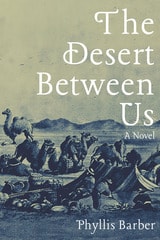
The Desert Between Us
A NovelPhyllis Barber
University of Nevada Press, 2020
2020 Reading the West Book Awards, Longlist for Fiction
2020 Association for Morman Letters Finalist, Fiction
The Desert Between Us is a sweeping, multi-layered novel based on the U.S. government’s decision to open more routes to California during the Gold Rush. To help navigate this waterless, largely unexplored territory, the War Department imported seventy-five camels from the Middle East to help traverse the brutal terrain that was murderous on other livestock.
Geoffrey Scott, one of the roadbuilders, decides to venture north to discover new opportunities in the opening of the American West when he—and the camels—are no longer needed. Geoffrey arrives in St. Thomas, Nevada, a polygamous settlement caught up in territorial fights over boundaries and new taxation. There, he falls in love with Sophia Hughes, a hatmaker obsessed with beauty and the third wife of a polygamist. Geoffrey believes Sophia wants to be free of polygamy and go away with him to a better life, but Sophia’s motivations are not so easily understood. She had become committed to Mormon beliefs in England and had moved to Utah Territory to assuage her spiritual needs.
The death of Sophia’s child and her illicit relationship with Geoffrey generate a complex nexus where her new love for Geoffrey competes with societal expectations and a rugged West seeking domesticity. When faced with the opportunity to move away from her polygamist husband and her tumultuous life in St. Thomas, Sophia becomes tormented by a life-changing decision she must face alone.
The Desert Between Us
A NovelPhyllis Barber
University of Nevada Press, 2020
2020 Reading the West Book Awards, Longlist for Fiction
2020 Association for Morman Letters Finalist, Fiction
The Desert Between Us is a sweeping, multi-layered novel based on the U.S. government’s decision to open more routes to California during the Gold Rush. To help navigate this waterless, largely unexplored territory, the War Department imported seventy-five camels from the Middle East to help traverse the brutal terrain that was murderous on other livestock.
Geoffrey Scott, one of the roadbuilders, decides to venture north to discover new opportunities in the opening of the American West when he—and the camels—are no longer needed. Geoffrey arrives in St. Thomas, Nevada, a polygamous settlement caught up in territorial fights over boundaries and new taxation. There, he falls in love with Sophia Hughes, a hatmaker obsessed with beauty and the third wife of a polygamist. Geoffrey believes Sophia wants to be free of polygamy and go away with him to a better life, but Sophia’s motivations are not so easily understood. She had become committed to Mormon beliefs in England and had moved to Utah Territory to assuage her spiritual needs.
The death of Sophia’s child and her illicit relationship with Geoffrey generate a complex nexus where her new love for Geoffrey competes with societal expectations and a rugged West seeking domesticity. When faced with the opportunity to move away from her polygamist husband and her tumultuous life in St. Thomas, Sophia becomes tormented by a life-changing decision she must face alone.
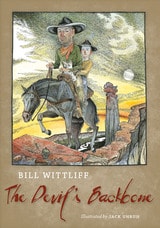
The Devil's Backbone
By Bill Wittliff, illustrated by Jack Unruh
University of Texas Press, 2014
The last the boy Papa saw of his Momma, she was galloping away on her horse Precious in the saddle her father took from a dead Mexican officer after the Battle of San Jacinto, fleeing from his Daddy, Old Karl, a vicious, tight-fisted horse trader. Momma’s flight sets Papa on a relentless quest to find her that thrusts him and his scrappy little dog Fritz into adventures all across the wild and woolly Hill Country of Central Texas, down to Mexico, and even into the realm of the ghostly “Shimmery People.” In The Devil’s Backbone, master storyteller Bill Wittliff takes readers on an exciting journey through a rough 1880s frontier as full of colorful characters and unexpected turns of events as the great American quest novel Adventures of Huckleberry Finn.
Wittliff grew up listening to stories and memories like these in his own family, and in this imaginative novel, they come to vivid life, creating an engrossing story of a Texas Huck Finn that brims with folk wisdom and sly humor. A rogue’s gallery of characters thwart and aid Papa’s path—Old Karl, hell-bent on bringing the boy back to servitude on his farm, and Herman, Papa’s brother who’s got Old Karl’s horse-trading instincts and greed; Calley Pearsall, an enigmatic cowboy with “other Fish to Fry” who might be an outlaw or a trustworthy “o’Amigo”; o’Jeffey, a black seer who talks to the spirits but won’t tell Papa what she has divined about his Momma; Mister Pegleg, a three-legged coyote with whom Papa forms a poignant, nearly tragic friendship; the “Mexkins” Pepe and Peto and their father Old Crecencio, whose longing for his lost family is as strong as Papa’s; and blind Bird, a magical “blue baby” who can’t see with his eyes but who helps other people see what they hold in their hearts. Papa’s adventures draw him ever nearer to a mysterious cave that haunts his dreams—an actual cave that he discovers at last in the canyons of the Devil’s Backbone—but will he find Momma before Old Karl finds him?
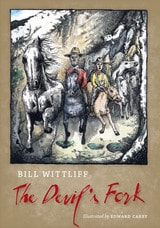
The Devil's Fork
By Bill Wittliff
University of Texas Press, 2018
The Devil’s Fork opens with the boy Papa exclaiming, “They was gonna hang my o’Amigo Calley Pearsall out there in front a’the Alamo down in San Antoneya come Saturday Noon and if I was gonna stop it I better Light a Shuck and Get on with it. And I mean Right Now.” And so Papa and his sweetheart Annie Oster set off to rescue Calley, thereby launching themselves into another series of hair-raising adventures.
The Devil’s Fork concludes the enthralling journey through wild and woolly Central Texas in the 1880s that began in The Devil’s Backbone and The Devil’s Sinkhole. Papa springs Calley from jail, but their troubles are far from over. Framed for murder, the two amigos have to flee for their lives. Joining their flight this time is o’Johnny, the evil Sheriff Pugh’s disabled little brother, who has uncanny abilities. Escaping danger for a while, Papa and Calley try to start a new life as horse traders, only to find themselves branded as horse thieves when o’Johnny and a mysterious white ghost horse begin rescuing abused horses from their masters. Can Papa and Calley escape the noose and save all the horses that Johnny and the White Horse liberate? Or will their own hot tempers send them down the Devil’s Fork, from which no one ever returns?
Proving himself a master storyteller once again, Bill Wittliff spins a yarn as engrossing as the stories his own Papa told him long ago, stories that inspired The Devil’s Backbone, The Devil’s Sinkhole, and The Devil’s Fork.
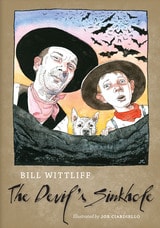
The Devil's Sinkhole
By Bill Wittliff; illustrated by Joe Ciardiello
University of Texas Press, 2016
When last we saw the boy Papa in The Devil’s Backbone, he had finally learned the fate of his missing Momma and his vicious daddy, Old Karl. But hardly has he concluded that quest before another one is upon him. Now a white-haired man with a hangman’s noose around his neck and death in his eye—o’Pelo Blanco—is coming. And he means to hang Papa.
In The Devil’s Sinkhole, the master storyteller Bill Wittliff takes us on another enthralling journey through wild and woolly Central Texas in the 1880s. When Papa and his o’amigo Calley Pearsall confront Pelo Blanco before he can ambush Papa, the encounter sets them on a pursuit with a promise of true love at the end, if only they can stay alive long enough for Calley to win the beautiful Pela Rosa, the captive/companion of Pelo Blanco. But before they can even hope to be united with Pela and Annie Oster, Papa’s plucky sweetheart, Papa and Calley have to defeat not only Pelo Blanco but also the evil, murdering Arlon Clavic and deliver Little Missey, the mysterious Wild Woman a’the Navidad, to the safe haven of the Choat farm. With dangers and emergencies around every bend, it’s a rough ride to the Devil’s Sinkhole, where this world and the next come together, bringing Papa and Calley, Pelo Blanco and Arlon to a climax that will leave readers clamoring for the next adventure.

The Devil’s Own Luck
From Hell to HappinessLadislav Grosman
Karolinum Press, 2026
Ladislav Grosman's powerful story of a twelve-year-old Jewish boy in wartime Slovakia smuggled into Hungary to escape deportation.
In The Devil's Own Luck, readers experience the horrors of war and the Holocaust through the lens of the young boy's obsessive reading of pulp fiction, imposing a layer of adventure on the bleak landscape of his experience. This simultaneously tragic, humorous, and poetic novel by Ladislav Grosman was published posthumously.

The Devourer of Gods
Viking Magic in the New WorldThomas Benjamin De Mayo
Arizona Center for Medieval and Renaissance Studies, 2000
The Disappearance of Sherlock Holmes
Larry Millett
University of Minnesota Press, 2012
SHERLOCK HOLMES DISAPPEARS, POLICE SUSPECT FAMED DETECTIVE IN KIDNAPPING AND MURDER reads a New York headline. So begins the fifth mystery in Larry Millett’s series.
A letter, written in a secret cipher he recognizes all too well, reveals that an old foe of Holmes—a murderer he once captured after an incredible duel of wits—is back, has kidnapped his previous victim’s widow, and is now impersonating Holmes himself. Holmes must once again match wits with a particularly cunning adversary, one whose hatred of Holmes has seemingly become the killer’s single greatest obsession.
Chasing the kidnapper from London to New York to Chicago, Holmes and Watson race to keep up. Every move Holmes makes is expected; every trap proves elusive. Only with the assistance of his American cohort, the saloonkeeper Shadwell Rafferty, can Holmes hope to settle the score once and for all—or be framed for the crime himself.
The Disenchanted
Budd Schulberg
University of Minnesota Press, 2012
Considered by some to be Budd Schulberg’s masterpiece, The Disenchanted tells the tragic story of Manley Halliday, a fabulously successful writer during the 1920s—a golden figure in a golden age—who by the late 1930s is forgotten by the literary establishment, living in Hollywood and writing for the film industry. Halliday is hired to work on a screenplay with a young writer in his twenties named Shep, who is desperate for success and idolizes Halliday. The two are sent to New York City, where a few drinks on the plane begin an epic disintegration on the part of Halliday due to the forces of alcoholism he is heroically fighting against and the powerful draw of memory and happier times. Based in part on a real-life and ill-fated writing assignment between the author and F. Scott Fitzgerald in 1939, Schulberg’s novel is at its heart a masterful depiction of Manley Halliday—at times bitter, at others sympathetic and utterly sorrowful—and The Disenchanted stands as one of the most compelling and emotional evocations of generational disillusionment and fallen American stardom.
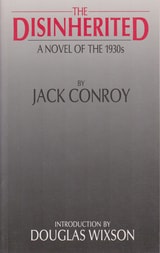
The Disinherited
A Novel of the 1930s by Jack ConroyJack Conroy & Intro by Douglas Wixson
University of Missouri Press, 1991
Douglas Wixson's introduction to this new edition of Conroy's classic provides biographical information on the aspects of Conroy's life that influenced his writings, explores the socialist movement of the 1930s, and examines the critical reaction to the novel, showing why The Disinherited has endured both as historical document and as fiction.
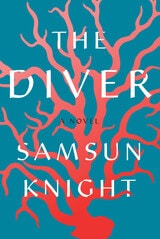
The Diver
Samsun Knight
University of Iowa Press, 2023
Peter is a young paralegal at the firm hired to investigate Marta’s role in her husband’s death, who is grappling with the recent suicide of his brother and the subsequent distance that seems to have opened between himself and the rest of the world. After learning about Marta’s case, he finds himself haunted by her story and enthralled by her. On an outing to interview her neighbors, he instead warns her that a company of private detectives is preparing to make trouble. Marta slams the door on him, but later sets up a time to hear him out. Neither Marta nor Peter could predict the consequences of their meeting.
A genre-bending story of heartache and devotion that questions where the boundaries begin and end in our closest relationships, The Diver explores the risks and rewards of intimacy, and offers a portrait of love as a catastrophic event.

The Division of the World
On Archives, Empires and the Vanity of BordersMartin Zimmerman
Haus Publishing, 2021
At a time when Western nations are being urged to confront their colonial past, this book examines a major archive, revealing the scale of the Spanish colonial enterprise in South and Central America.
Established in 1785, the Archivo General de Indias in Seville holds roughly three hundred years of Spanish colonial history in the Americas. It houses 8,000 charts and around ninety million documents—among them Christopher Columbus’s logbook and the famous Treaty of Tordesillas which, mediated by the Pope and signed in 1494, entitled the Spanish and Portuguese kings to divide the world between them. With this treaty as a starting point, the historian Martin Zimmermann journeys into the age of discovery and recounts stories of dangerous passages, encounters with the unknown, colonial brutality, and the power of cartographers, illustrating the insatiable lust of colonialists to conquer, exploit, and own the world. Ursula Schulz-Dornburg’s photographs show the archive before its redevelopment in 2002, offering a unique view into one of Europe’s most significant archives.

The Dred Scott Case
Historical and Contemporary Perspectives on Race and LawDavid Thomas Konig
Ohio University Press, 2010
In 1846 two slaves, Dred and Harriet Scott, filed petitions for their freedom in the Old Courthouse in St. Louis, Missouri. As the first true civil rights case decided by the U.S. Supreme Court, Dred Scott v. Sandford raised issues that have not been fully resolved despite three amendments to the Constitution and more than a century and a half of litigation.
The Dred Scott Case: Historical and Contemporary Perspectives on Race and Law presents original research and the reflections of the nation’s leading scholars who gathered in St. Louis to mark the 150th anniversary of what was arguably the most infamous decision of the U.S. Supreme Court. The decision, which held that African Americans “had no rights” under the Constitution and that Congress had no authority to alter that, galvanized Americans and thrust the issue of race and law to the center of American politics. This collection of essays revisits the history of the case and its aftermath in American life and law. In a final section, the present-day justices of the Missouri Supreme Court offer their reflections on the process of judging and provide perspective on the misdeeds of their nineteenth-century predecessors who denied the Scotts their freedom.
Contributors: Austin Allen, Adam Arenson, John Baugh, Hon. Duane Benton, Christopher Alan Bracey, Alfred L. Brophy, Paul Finkelman, Louis Gerteis, Mark Graber, Daniel W. Hamilton, Cecil J. Hunt II, David Thomas Konig, Leland Ware, Hon. Michael A. Wolff

The Dukes of Durham, 1865-1929
Robert F. Durden
Duke University Press, 1987
In the years after the Civil War, Washington Duke proved to be an unusually able industrialist and a conscientious, Methodist philanthropist. He was, in fact, a major Southern pioneer in both industry and philanthropy. His two sons by a second marriage were remarkably devoted to each other as well as to their father. Both sons also reflected traits of thier father. While Benjamin N. Duke and James B. Duke had life-long involvement with the business world—first in tobacco, then textiles, and finally electric power—as well as with philanthropy, they actually developed complementary specializations. Benjamin N. Duke, the older of the two, served as the family's primary agent for philanthropy from his early manhood in the late 1800's until he gradually became semi-invalid after 1915. James B. Duke, on the other hand, early displayed a marked talent, even a genius, for business. Toward the end of his life, with the establishment of The Duke Endowment late in 1924, he emerged as one of the nation's major philanthropists, ranking alongside Andrew Carnegie and John D. Rockefeller. A central theme of this book is, however, that the Endowment, despite its magnitude and far-reaching scope, was essentially the institutionalization and culmination of a pattern of family philanthropy that emerged in the 1890's and for which the older brother, Benjamin N. Duke, had always been the primary agent. Thus, the story of James B. Duke, who was and has remained much the more well-known of the two brothers, cannot properly be told out of the family context from which he emerged and in which occurred most of the important phases of his life.
Washington Duke, as a small, land-owning yeoman farmer, was typical of the great majority class not only in antebellum North Carolina but in the South as a whole. Only after the war, when he and his sons emerged as large-scale industrialists and philanthropists, did the Dukes become atypical. Their story is, then, both agricultural and industrial, both Southern and national. Born North Carolinians, they moved onto a national, even global, stage. Yet all the while they kept deep roots, as well as vast investments of capital, in the Old North State, and they poured many millions into philanthropy, largely in the two Carolinas. Based largely on manuscript sources, many of them hitherto unused, this is the first study of the Duke family. The "New South," as recent historians have told us, may not have been so new—but it was certainly different in important ways, and the Dukes loomed large among those who helped to make it so.

The Edge of the Storm
A NovelBy Agustín Yáñez
University of Texas Press, 1963
This tale of a repressive priest and his small Mexican village during the eighteen months preceding the Revolution of 1910 is a great novel, one that exposes the struggle between human desire and paralyzing fear—fear of humanity, fear of nature, fear of the wrath of God. Agustín Yáñez probes the actions of people caught in life’s currents, enthralling his readers with mounting dramatic tension as he shows that no power can forge saints from the human masses, that any attempt to do so, in fact, often has exactly the opposite result.
Yáñez brings to his work a deep understanding of people—his people—and he illuminates a great truth—that no one, anywhere, seems very strange when we understand the environment that has produced him or her.
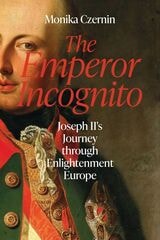
The Emperor Incognito
Joseph II's Journey through Enlightenment EuropeMonika Czernin
Haus Publishing, 2027
An emperor meets his people: the extraordinary journeys of Joseph II.
It is the end of the eighteenth century, and the European royal houses are beginning to falter. The young Habsburg emperor Joseph II realizes that reform is inevitable, and he eagerly soaks up Enlightenment ideas. Incognito, and without the usual pomp and entourage, he travels through his vast empire to see with his own eyes how his subjects live, suffer, and starve.
Along with princes and kings, he meets ordinary people and visits hospitals and factories in his search for new insights that will help him build a modern state. When he visits his sister Marie Antoinette in Versailles, he can see the French Revolution looming on the horizon. By the end of his journey, he had spent a quarter of his twenty-five-year reign on the road. With an introduction by Dominic Lieven and based on countless sources, Monika Czernin’s The Emperor Incognito tells the story of an extraordinary man in an age of great upheaval, who was far ahead of his time.

The European Identity
Historical and Cultural Realities We Cannot DenyStephen Green
Haus Publishing, 2015
Green points out that Europeans can readily define the differences that separate them from others around the globe, but they have yet to clearly define their own similarities across member states. He argues that Europe has something distinctive and vitally important to offer: the experience of a unique journey through centuries of exploration and conflict, errors and lessons, soul-searching and rebuilding—an evolution of universal significance.
Coming at a time when the divisions in European culture have been laid bare by recent financial crises and calls for independence, The European Identity identifies one of the biggest challenges for all of the member states of the European Union.
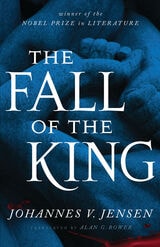
The Fall of the King
Johannes V. Jensen
University of Minnesota Press, 2011
Taking place during the first half of the sixteenth century, The Fall of the King tells the story of dreamy, slacking student Mikkel Thøgersen and the entanglements that ultimately bring him into service as a mercenary under King Christian II of Denmark. Moving from the Danish countryside to Stockholm during the execution of Swedish nobility and finally to the imprisonment of Mikkel and Christian, the narrative is a lyrical encapsulation of “the fall”—the fall of country, history, individuals, and nature.
Twice voted as the most important Danish novel of the twentieth century, The Fall of the King is both an epic depiction of real events and a complex psychological novel. Half pure narration, half prose poem, its scenes of brute realism mixed with rhapsodical passages make it a work of artistic genius.
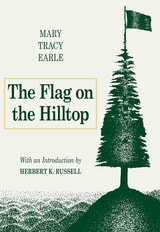
The Flag on the Hilltop
Mary Tracy Earle
Southern Illinois University Press, 1989
Early in the Civil War, two young brothers boldly flew the Union flag from a tree atop a hill between Makanda and Cobden. This was a towering act of courage in an area teeming with Copperheads.
Theodore and Al Thompson, 18 and 20 years old at the time, raised the flag in defiance of the Knights of the Golden Circle, a secessionist group that operated throughout the Midwest. Controlling its membership through terror, this secret society condemned betrayers to death by torture. The Knights, whose goals included capturing a Union prison and liberating the rebels, triggered the Civil War riot in Charleston, instigated anti-draft movements, and aided Northern deserters.
Theodore Thompson, who later owned much of Makanda, Giant City, and the land that became Southern Illinois University describes the tree as a "tall tulip poplar between 3 and 4 feet in diameter at the trunk and some 60 feet to the first limbs. This noted tree could be seen in some directions 15 or 20 miles away."
The Flock
Mary Austin
University of Nevada Press, 2001
The Forayers
or The Raid of the Dog DaysWilliam Gilmore Simms
University of Arkansas Press, 2003
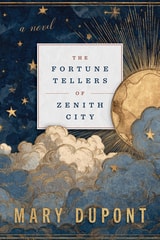
The Fortune Tellers of Zenith City
A NovelMary Dupont
University of Minnesota Press, 2027
A fraudulent fortune teller, a society divorcee, and a spirited prostitute caught up in a story of insanity, ambition, and murder in turn-of-the-century Duluth
Please don’t mistake this story for a murder mystery, May Martin warns us as she settles in to tell her tale. The mystery, she says, is that only one of us ended up dead.
The Fortune Tellers of Zenith City plunges readers into the shadows of Gilded Age Duluth, where the rising walls of Glensheen Mansion mask a city built on industry and rife with sin. May Martin, a dubious clairvoyant haunted by her past, finds her survival tethered to Agnes Petre, a true seer and wealthy divorcee. As May and Agnes forge a partnership in fortune telling to weather the conditions of the gritty port city, their malicious ex-husbands, John and Douglas, start romantic affairs with the carefree Ethelwynne Dean. These tangled relationships clash with brothel owner Madame Gain, a notorious criminal with debts to collect, the ruthless tycoons who rule the iron mines, and the working-class residents struggling beneath them. Beside the icy, foreboding depths of Lake Superior, these denizens must navigate a maze of lies, ambition, and even murder while keeping their own secrets hidden. And the greatest mystery isn’t the spirits they summon—it’s who will escape the impending storm.
With scrupulous attention to historical detail, Mary Dupont recreates the lost world of Duluth at the turn of the twentieth century, delivering chicanery, suspense, drama, and humor through May’s wary, witty perspective—with a thrilling twist at the end.
Retail e-book files for this title are screen-reader friendly with image accompanied by short alt text and/or extended description.
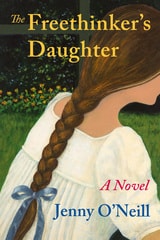
The Freethinker’s Daughter
A NovelJenny O'Neill
Ohio University Press, 2022
This historical and inspiring coming-of-age novel for young readers explores topics of both historical and contemporary relevance as it follows a harrowing year in the life of its intrepid teenaged narrator.
Lexington, Kentucky, 1833: Calendula “Cal” Farmer, a thirteen-year-old white girl, has been raised by her abolitionist, freethinking mother to reason for herself, consult her inner wisdom, and come to her own conclusions. But when a flash flood devastates her family’s home, Cal is unexpectedly thrust into domestic service in a wealthy family’s mansion. There, she encounters firsthand the physical, intellectual, and emotional brutalities of slavery. Later, a cholera outbreak kills a quarter of the population, including Cal’s mother, and Cal enters an orphanage, where she bravely begins another chapter in her young life.
Cal’s story is sure to captivate readers as she confronts the injustices and uncertainties of racism, class consciousness, epidemic disease, and personal loss with independent thinking, perseverance, and love.
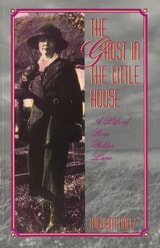
The Ghost in the Little House
A Life of Rose Wilder LaneWilliam Holtz
University of Missouri Press, 1995
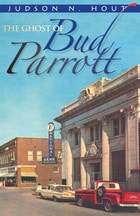
The Ghost of Bud Parrott
a novelJudson N Hout
Parkhurst Brothers, Inc., 2010
A teen’s life is complicated. Add an overworked dad, a distraught mom.
Enter an old man from the wrong side of the tracks.
He knows things. He’s there when you need him.
This happens to someone; it’s not a maybe thing. People get hurt. People die. There’s a dad who loves his kid but works all the time. When he doesn’t work, he drinks. When he drinks he’s out of control.
There’s a mom. She knows dad is overworked, a good man carrying too much responsibility.
The kid turns to the handy man to learn a man’s skills. In the old man from the wrong side of the tracks, the kid finds unusual skills and terrible—but true—lessons. He finds that his own safety comes at a cost to his unfortunate friend. He finds growing up comes at a cost to himself. This is the story of such a kid, told by himself after he has lived much of his life, come to terms with his parents’ weaknesses, and learned that seemingly insignificant people carry more pain than he can imagine, though he has already seen plenty.
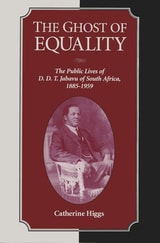
The Ghost of Equality
The Public Lives of D. D. T. Jabavu of South Africa, 1885–1959Catherine Higgs
Ohio University Press, 1996
Davidson Don Tengo Jabavu was born in the Cape Colony in British southern Africa on October 20, 1885, when a few African men could vote and the prospects for black equality with the ruling whites seemed promising. He died on August 3, 1959, in the Cape Province of the Union of South Africa, eleven years after the apartheid state had begun stripping blacks of their rights and exorcising the ‘ghost of equality’ with a completeness unparalleled in the country’s history. The ‘ghost of equality was the last vestige of the Cape liberal tradition — itself best summed up by the dictum ’equal rights for all civilized men‘ — finally erased in 1959 with the passage of legislation that would, the following year, remove from parliament the last elected white representatives of Africans.…
If D.D.T. Jabavu’s life reveals anything about South Africa’s political history, it is that this history was not monolithic. It was not simply a lengthly confrontation between a black elite represented by the African National Congress and the white segregationist state. Rather, there was a range of black political opinion and activity, of which Jabavu, an active participant in virtually every government-sponsored and every major extraparliamentary conference between 1920 and the late 1940s, represented one prominent historical strain.
This book, however, is about more than D.D.T. Javavu’s politics; it is about his public life, or perhaps more accurately, his public lives. The book is arranged thematically, divided according to the parts Jabavu played: student, teacher, Methodist, and politician.
— from the introduction by the author
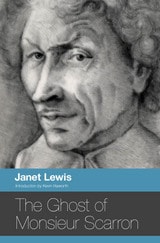
The Ghost of Monsieur Scarron
Janet Lewis
Ohio University Press, 2013
This historical novel is the third and final book in American poet and fiction writer Janet Lewis’s Cases of Circumstantial Evidence series, based on legal case studies compiled in the nineteenth century. In The Ghost of Monsieur Scarron, Lewis returns to her beloved France, the setting of The Wife of Martin Guerre, her best-known novel and the first in the series. As Swallow Press executive editor Kevin Haworth relates in a new introduction, Monsieur Scarron shifts the reader into the center of Paris in 1694, during the turbulent reign of the Sun King, Louis XIV. The junction of this time and place gives Monsieur Scarron an intriguing political element not apparent in either The Wife of Martin Guerre or The Trial of Sören Qvist.
The Ghost of Monsieur Scarron begins in a small bookbinder’s shop on a modest Paris street, but inexorably expands to encompass a tumultuous affair, growing social unrest, and the conflicts between a legal system based on oppressive order and a society about to undergo harsh changes. With its domestic drama set against a larger political and historical backdrop, Monsieur Scarron is considered by some critics and readers to be the most intricately layered and fully realized book of Lewis’s long career. Originally published in 1959, Monsieur Scarron has remained in print almost continuously ever since.

The Golden Step
A Walk Through the Heart of CreteChristopher Somerville
Haus Publishing, 2012
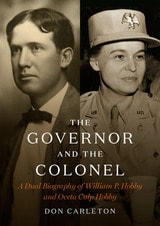
The Governor and the Colonel
A Dual Biography of William P. Hobby and Oveta Culp HobbyBy Don Carleton
University of Texas Press, 2020
William P. “Will” Hobby Sr. and Oveta Culp Hobby were one of the most influential couples in Texas history. Both were major public figures, with Will serving as governor of Texas and Oveta as the first commander of the Women’s Army Corps and later as the second woman to serve in a presidential cabinet. Together, they built a pioneering media empire centered on the Houston Post and their broadcast properties, and they played a significant role in the transformation of Houston into the fourth largest city in the United States. Don Carleton’s dual biography details their personal and professional relationship—defined by a shared dedication to public service—and the important roles they each played in local, state, and national events throughout the twentieth century.
This deeply researched book not only details this historically significant partnership, but also explores the close relationships between the Hobbys and key figures in twentieth-century history, from Texas legends such as LBJ, Sam Rayburn, and Jesse Jones, to national icons, including the Roosevelts, President Eisenhower, and the Rockefellers. Carleton's chronicle reveals the undeniable impact of the Hobbys on journalistic and political history in the United States.
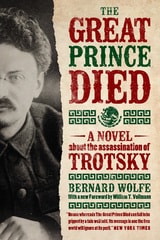
The Great Prince Died
A Novel about the Assassination of TrotskyBernard Wolfe
University of Chicago Press, 2015
In The Great Prince Died, Bernard Wolfe offers his lyrical, fictionalized account of Trotsky’s assassination as witnessed through the eyes of an array of characters: the young American student helping to translate the exiled Trotsky’s work (and to guard him), the Mexican police chief, a Rumanian revolutionary, the assassin and his handlers, a poor Mexican “peón,” and Trotsky himself. Drawing on his own experiences working as the exiled Trotsky’s secretary and bodyguard and mixing in digressions on Mexican culture, Stalinist tactics, and Bolshevik history, Wolfe interweaves fantasy and fact, delusion and journalistic reporting to create one of the great political novels of the past century.

The Hidden Hand
Or, Capitola the Madcap by E. D. E. N. SouthworthDobson, Joanne
Rutgers University Press, 1988
E.D.E.N. Southworth was one of the most popular and prolific writers of the nineteenth century and her Capitola Black, or Black Cap - a cross-dressing, adventure-seeking girl-woman - was so well-loved that the book was serialized three times between 1859 and 1888 and was dramatized in forty different versions.
When we first meet sharp and witty Capitola she is living among beggars and street urchins, and dressed as a boy because a boy can get work and be safe, whereas a girl is left to starve for want of "proper" employment. Unknown to her, Capitola has a very rich elderly guardian who finds her at a providential moment and takes her back to his palatial mansion where she finds herself "decomposing above ground for want of having my blood stirred." But not to fear. There are bandits, true-loves, evil men, long-lost mothers, and sweet women friends in Capitola's future - not to mention thunder storms, kidnap attempts, and duels.
The pace is fast, the action wonderfully unbelievable. This is escape literature at its nineteenth-century best, with a woman at its center who makes you feel strong, daring, and reckless.
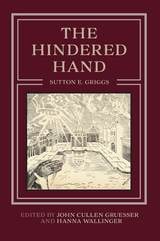
The Hindered Hand
Sutton E. Griggs
West Virginia University Press, 2017
Written in response to Thomas Dixon’s recently published race-baiting novel The Leopard’s Spots, Griggs’s book depicts the remnants of the old Southern planter class, the racial crisis threatening the South and the North, the social ferment of the time, the changing roles of women, and the thwarted aspirations of a trio of African American veterans following the war against Spain. This scholarly edition of the novel, providing newly discovered biographical information and copious historical context, makes a significant contribution to African American literary scholarship.

The Holocaust Odyssey of Daniel Bennahmias, Sonderkommando
Rebecca Fromer
University of Alabama Press, 1993
A poignant reminder of the ways enslaved Jews and others were forced to destroy their families and fellow prisoners.
The Holocaust Odyssey of Daniel Bennahmias, Sonderkommando presents the extraordinary testimony of Daniel Bennahmias, a Greek Jew whose life was forever altered by the Holocaust. Deported to Auschwitz-Birkenau as a teenager, Bennahmias was separated from his family and forced into the Sonderkommando, the prisoner unit compelled to work in the crematoria and gas chamber complex. Through painstaking collaboration with survivor and author Rebecca Fromer, this powerful narrative documents his struggle to endure unimaginable brutality while preserving his humanity. Bennahmias's account sheds rare light on the inner workings of Auschwitz, the Sonderkommando revolt, the death marches, and the difficult path toward liberation and recovery. More than a historical record, the book is a testament to courage, memory, and resilience in the face of systematic dehumanization. An essential contribution to Holocaust literature, it preserves the voice of a survivor whose experiences deepen our understanding of one of history's darkest chapters.
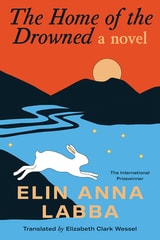
The Home of the Drowned
A NovelElin Anna Labba
University of Minnesota Press, 2026
The haunting, multigenerational saga of a family of Sámi women fighting the devastation of their way of life
Nothing is true, and everything is true; poetry will never hurt more than what has happened. Every summer, Iŋgá, her mother Rávdná, and her Aunt Ánne travel west to their village on the lake. But the summer Iŋgá is thirteen, they arrive to find their home and possessions have disappeared under water, the land flooded by a dam built to supply hydropower to a society that has continually stolen from them.
The Home of the Drowned follows these women’s fortunes over forty years—from 1942 to 1982—as the water their people have lived near for centuries is transformed into a menacing force that threatens all they hold dear. Defying the authorities, Rávdná decides to build a proper house on the lake to replace what was lost, becoming an unlikely activist even as her actions isolate her family from the rest of the community. Meanwhile, Ánne’s health is in decline, and a concerned Iŋgá merely longs to live like everyone else—an impossible wish when the Swedish state is relentlessly drowning her world.
Drawing on her own family’s history of forced relocation and violent colonial dispossession, Elin Anna Labba’s debut novel brings Sámi history to the fore through this intimate story. In poetic prose deftly translated by Elizabeth Clark Wessel, she reveals connections between land, water, and people that hauntingly reverberate with the question: what is it that makes a home?
Retail e-book files for this title are screen-reader friendly.
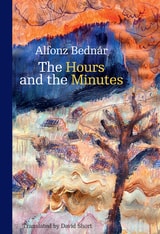
The Hours and the Minutes
Alfonz Bednár
Karolinum Press, 2025
The Hours and The Minutes was first published in Bratislava in 1956, the year of Nikita Khrushchev’s “secret speech,” in which the Soviet leader formally acknowledged Stalin’s tyranny and opened the way for political reform throughout the Eastern Bloc. Alfonz Bednár’s writing was one of the first free of nationalist and communist propaganda, rejecting earlier ideologization of life by both the fascist right and Stalinist left and finding more empathetic ways to explore the complexity of human experience. His novellas defy traditional heroic depictions and portray the human individual, his relations, and morality as the subject of history rather than a utopian, collectivist ideology.
In these five novellas, Bednár is preoccupied with the insensitive, even inhuman, rootless, and amoral modernity that the war and Communist Party import into traditional Slovak life. The destruction of the traditional Slovak countryside during the twentieth century through modernization and urbanization, and with it a particular approach to life, forms his central theme. His spare, epic style and devotion to plot and dynamic narration render The Hours and The Minutes a genuine and gripping read.
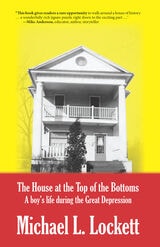
The House at the Top of the Bottoms
A Depression-Era StoryMichael L. Lockett
Parkhurst Brothers, Inc., 2021
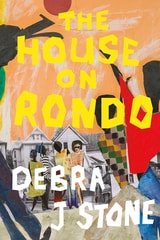
The House on Rondo
Debra J Stone
University of Minnesota Press, 2025
A young girl reckons with the demolition of a Black Saint Paul neighborhood to make way for the Interstate in the early 1960s
When thirteen-year-old Zenobia has to leave her friends and spend the summer at Grandma’s while Mama recovers from a stroke, life seems so unfair. But then the eviction letters start arriving throughout her grandparents’ neighborhood, and white men chalk arrows to mark the gas and water lines, and a new world of unfairness unfolds before her. It’s 1963, and Zenobia’s grandparents’ house on Rondo Avenue in Saint Paul—like all the homes in this thriving Black community—is targeted for demolition to make way for the new Interstate Highway 94.
As Zenobia gradually learns about what’s planned for the Rondo neighborhood and what this means for everyone who lives there, she discovers how her story is intertwined with the history of her family, all the way back to Great Grandma Zenobia and the secrets Grandma Essie held close about the reason for her light skin. With the destruction of the neighborhood looming, Zenobia takes a stand on behalf of her community, joining her no-nonsense neighbor, onetime cowgirl Mrs. Ruby Pearl, in a protest and ultimately getting arrested. Though Zenobia is grounded for a month, her punishment seems of little consequence in comparison to what is happening all around her. Even though the demolition continues, she is proud to discover the power and connection in protesting injustice.
The House on Rondo captures the heartbreak, resistance, and resilience that marks a community sacrificed in the name of progress—a “progress” that never seems to favor Black families and neighborhoods and that haunts cities like Saint Paul to this day. As Zenobia learns what can be destroyed and what cannot, her story teaches us that joy, community, and love persist, even amid violence and loss.
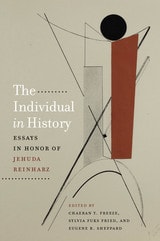
The Individual in History
Essays in Honor of Jehuda ReinharzEdited by ChaeRan Y. Freeze, Sylvia Fuks Fried, and Eugene R. Sheppard
Brandeis University Press, 2015
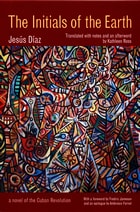
The Initials of the Earth
Jesús Díaz
Duke University Press, 2006
Originally written in the 1970s, then rewritten and published simultaneously in Havana and Madrid in 1987, The Initials of the Earth spans the tumultuous years from the 1950s until the 1970s, encompassing the Revolution and its immediate aftermath. The novel opens as the protagonist, Carlos Pérez Cifredo, sits down to fill out a questionnaire for readmission to the Cuban Communist Party. It closes with Carlos standing before a panel of Party members charged with assessing his merit as an “exemplary worker.” The chapters between relate Carlos’s experiences of the pre- and postrevolutionary era. His family is torn apart as some members reject the Revolution and flee the country while others, including Carlos, choose to stay. He witnesses key events including the Bay of Pigs invasion, the Cuban missile crisis, and the economically disastrous sugar harvest of 1970. Throughout the novel, Díaz vividly renders Cuban culture through humor, slogans, and slang; Afro-Cuban religion; and references to popular music, movies, and comics.
This edition of The Initials of the Earth includes a bibliography and filmography of Diaz’s works and a timeline of the major events of the Cuban revolutionary period. In his epilogue, the Cuban writer Ambrosio Fornet reflects on Díaz’s surprising 1992 renunciation of the Revolution, their decades-long friendship, and the novel’s reception, structure, and place within Cuban literary history.
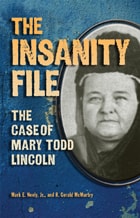
The Insanity File
The Case of Mary Todd LincolnMark E. Neely Jr. and R. Gerald McMurtry
Southern Illinois University Press, 1993
In 1875 Robert Todd Lincoln caused his mother, Mary Todd Lincoln, to be committed to an insane asylum. Based on newly discovered manuscript materials, this book seeks to explain how and why.
In these documents—marked by Robert Todd Lincoln as the "MTL Insanity File"—exists the only definitive record of the tragic story of Mary Todd Lincoln’s insanity trial. The book that results from these letters and documents addresses several areas of controversy in the life of the widow of Abraham Lincoln: the extent of her illness, the fairness of her trial, and the motives of those who had her committed for treatment. Related issues include the status of women under the law as well as the legal and medical treatment of insanity.
Speculating on the reasons for her mental condition, the authors note that Mrs. Lincoln suffered an extraordinary amount of tragedy in a relatively few years. Three of her four sons died very young, and Abraham Lincoln was assassinated. After the death of her son Willie she maintained a darkly rigorous mourning for nearly three years, prompting the president to warn her that excessive woe might force him to send her to "that large white house on the hill yonder," the government hospital for the insane.
Mrs. Lincoln also suffered anxiety about money, charting an exceptionally erratic financial course. She had spent lavishly during her husband’s presidency and at his death found herself deeply in debt. She had purchased trunkfuls of drapes to hang over phantom windows. 84 pairs of kid gloves in less than a month, and $3,200 worth of jewelry in the three months preceding Lincoln’s assassination. She followed the same erratic course for the rest of her life, creating in herself a tremendous anxiety. She occasionally feared that people were trying to kill her, and in 1873 she told her doctor that an Indian spirit was removing wires from her eyes and bones from her cheeks.
Her son assembled an army of lawyers and medical experts who would swear in court that Mrs. Lincoln was insane. The jury found her insane and in need of treatment in an asylum. Whether the verdict was correct or not, the trial made Mary Lincoln desperate. Within hours of the verdict she would attempt suicide. In a few months she would contemplate murder. Since then every aspect of the trial has been criticized—from the defense attorney to the laws in force at the time. Neely and McMurtry deal with the trial, the commitment of Mary Todd Lincoln, her release, and her second trial. An appendix features letters and fragments by Mrs. Lincoln from the "Insanity File." The book is illustrated by 25 photographs.
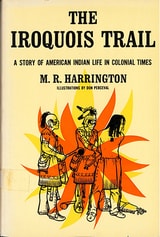
The Iroquois Trail
Dickon among the Onondagas and SenecasM. R. Harrington
Rutgers University Press, 1965
As Dickon and his companions travel the Iroquois Trail in search of his Lenape brother, Little-Bear, they learn the ways of the Onondagas, Senecas, Mohawks, Oneidas, and Cayugas. Dickon tells his own story, describing the day-to-day activities in the villages along the trail—their ways of making clothing, weapons, household articles, and ornaments, and how they hunt, cook, travel, and worship. He meets Hiawatha, Deganawide, Jigonsasay, and other Indian leaders. His tale is accompanied by line drawings that vividly portray the art of making baskets, moccasins, bows and arrows, clothing, and other everday articles. These illustrations are done by Don Perceval, a renowned artist and specialist on Indians.
The Island of Hermaphrodites
Translated by Kathleen Perry Long
Arizona Center for Medieval and Renaissance Studies, 2025
A scandalous and subversive satire, Island of Hermaphrodites skewers the decadence and corruption of early seventeenth-century French society with razor-sharp wit. Published anonymously in 1605, this daring Menippean satire created an uproar for its irreverent portrayal of the French court, critique of absolute monarchy, and radical questioning of gender and power. A blend of political critique and biting humor, the novel follows an imagined land of aristocratic excess, where opulent feasts, elaborate fashion, and absurd rituals mask the deeper instability of a society built on privilege and deception.
Republished throughout the eighteenth century and connected to the intellectual ferment leading up to the French Revolution, Island of Hermaphrodites remains a strikingly modern indictment of unchecked power and economic exploitation. In its first full English translation, Kathleen P. Long offers new audiences a satirical romp through a world of absurdist power—one that feels politically salient today.
The Itineraries of William Wey
Translated and Edited by Francis Davey
Bodleian Library Publishing, 2010
In 1456 and again in 1458, William Wey (1405/6–76) set out on journeys across a Europe in turmoil from local conflicts and cross-border expansions. Wey, a Devon priest and bursar of Eton College, had been granted special dispensation by Henry VI to undertake pilgrimages, and he was prompted by his friends to write an account of his itinerant adventures. He collected his stories from his travels to the Cathedral of Santiago de Compostela in Spain and later Jerusalem in the fifteen chapters that comprise The Itineraries.
The Itineraries contains practical travel advice for the period on conduct and currency, alongside comparative English, Latin, Greek and Hebrew vocabularies, in addition to a remarkable scrapbook compendium of places, roads, and distances. Originally written in English and Latin, Wey’s fascinating observations of a changing Europe are for for first time available in a modern English edition. The pilgrimage was an idea essential to medieval and early modern Christianity, and Wey’s work adds a new dimension to our understanding of its importance and practice. Wey is at once adventurous and highly observant, and The Itineraries will be of interest to scholars of early modern history and armchair pilgrims alike.
The Journal of Otto Peltonen
A Finnish Immigrant StoryWilliam Durbin
University of Minnesota Press, 2020
A portrait of the Finnish immigrant experience in Minnesota during the early twentieth century—now in paperback
After journeying across the Atlantic with his mother and two sisters, young Otto Peltonen joins his father in the iron ore mines of northern Minnesota, experiencing the harsh labor conditions that were common at the time, as mining companies cared more about making a profit than for their workers’ safety. Writing in his journal about his family’s struggles and the hard life Finnish immigrants endured in the early twentieth century, Otto ultimately strengthens his resolve to find the freedom his family had first sought in America.
The Journals of Charles W. Chesnutt
Charles W. Chesnutt
Duke University Press, 1993
Though he achieved literary success in his time, Chesnutt has only recently been rediscovered and his contribution to American literature given its due. The only known private diary from a nineteenth-century African American author, these pages offer a fascinating glimpse into Chesnutt's everyday experience as he struggled to win the goods of education in the world of the post-Civil War South. An extraordinary portrait of the self-made man beset by the urgencies and difficulties of self-improvement in a racially discriminatory society, Chesnutt's journals unfold a richly detailed local history of postwar North Carolina. They also show with great force how the world of the postwar South obstructed--and, unexpectedly, assisted--a black man of driving intellectual ambitions.
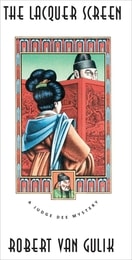
The Lacquer Screen
A Chinese Detective StoryRobert van Gulik
University of Chicago Press, 1962
Early in his career, Judge Dee visits a senior magistrate who shows him a beautiful lacquer screen on which a scene of lovers has been mysteriously altered to show the man stabbing his lover. The magistrate fears he is losing his mind and will murder his own wife. Meanwhile, a banker has inexplicably killed himself, and a lovely lady has allowed Dee's lieutenant, Chiao Tai, to believe she is a courtesan. Dee and Chiao Tai go incognito among a gang of robbers to solve this mystery, and find the leader of the robbers is more honorable than the magistrate.
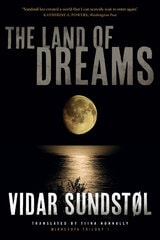
The Land of Dreams
Vidar Sundstøl
University of Minnesota Press, 2014
Winner of the Riverton Prize for best Norwegian crime novel and named by Dagbladet as one of the top twenty-five Norwegian crime novels of all time, The Land of Dreams is the chilling first installment in Vidar Sundstøl’s critically acclaimed Minnesota Trilogy, set on the rugged north shore of Lake Superior and in the region’s small towns and deep forests.
The grandson of Norwegian immigrants, Lance Hansen is a U.S. Forest Service officer and has a nearly all-consuming passion for local genealogy and history. But his quiet routines are shattered one morning when he comes upon a Norwegian tourist brutally murdered near a stone cross on the shore of Lake Superior. Another Norwegian man is nearby; covered in blood and staring out across the lake, he can only utter the word kjærlighet. Love.
FBI agent Bob Lecuyer is assigned to the case, as is Norwegian detective Eirik Nyland, who is immediately flown in from Oslo. As the investigation progresses, Lance begins to make shocking discoveries—including one that involves the murder of an Ojibwe man on the very same site more than one hundred years ago. As Lance digs into two murders separated by a century, he finds the clues may in fact lead toward someone much closer to home than he could have imagined.
The Land of Dreams is the opening chapter in a sweeping chronicle from one of Norway’s leading crime writers—a portrait of an extraordinary landscape, an exploration of hidden traumas and paths of silence that trouble history, and a haunting study in guilt and the bonds of blood.

The Languages of Native America
Historical and Comparative AssessmentEdited by Lyle Campbell and Marianne Mithun
University of Texas Press, 1979
These essays were drawn from the papers presented at the Linguistic Society of America's Summer Institute at the State University of New York at Oswego in 1976. The contents are as follows:
- Lyle Campbell and Marianne Mithun, "Introduction: North American Indian Historical Linguistics in Current Perspective"
- Ives Goddard, "Comparative Algonquian"
- Marianne Mithun, "Iroquoian"
- Wallace L. Chafe, "Caddoan"
- David S. Rood, "Siouan"
- Mary R. Haas, "Southeastern Languages"
- James M. Crawford, "Timucua and Yuchi: Two Language Isolates of the Southeast"
- Ives Goddard, "The Languages of South Texas and the Lower Rio Grande"
- Irvine Davis, "The Kiowa-Tanoan, Keresan, and Zuni Languages"
- Susan Steele, "Uto-Aztecan: An Assessment for Historical and Comparative Linguistics"
- William H. Jacobsen, Jr., "Hokan lnter-Branch Comparisons"
- Margaret Langdon, "Some Thoughts on Hokan with Particular Reference to Pomoan and Yuman"
- Michael Silverstein, "Penutian: An Assessment"
- Laurence C. Thompson, "Salishan and the Northwest"
- William H. Jacobsen, Jr., "Wakashan Comparative Studies"
- William H. Jacobsen, Jr., "Chimakuan Comparative Studies"
- Michael E. Krauss, "Na-Dene and Eskimo-Aleut"
- Lyle Campbell, "Middle American Languages"
- Eric S. Hamp, "A Glance from Now On"