Results by title
679 books match the query 'Historiography' and 151 start with t
The Great Enterprise
Sovereignty and Historiography in Modern KoreaHenry H. Em
Duke University Press, 2013
Surveying historical works written over the course of the twentieth century, Em elucidates the influence of Christian missionaries, as well as the role that Japan's colonial policy played in determining the narrative framework for defining Korea's national past. Em goes on to analyze postcolonial works in which South Korean historians promoted national narratives appropriate for South Korea's place in the U.S.-led Cold War system. Throughout, Em highlights equal sovereignty's creative and productive potential to generate oppositional subjectivities and vital political alternatives.
The Haunted West
Memory and Commemoration at the Buffalo Bill Center of the WestGreg Dickinson, Eric Aoki, and Brian L. Ott
University of Alabama Press, 2024
Through incisive analysis of the museum’s five institutions, Greg Dickinson and his coauthors reveal how narratives of Native American heritage, violent colonial settlement, Western art, natural history, and ever‑present gun culture collide to shape a haunted sense of American identity. By tracing the tensions between what is memorialized, what is mythologized, and what is suppressed, the authors expose the ghosts that linger in contemporary understandings of the West and offer a compelling rethinking of how memory and commemoration continue to influence the nation’s cultural imagination.
The Historian behind the History
Conversations with Southern HistoriansMegan L. Bever
University of Alabama Press, 2014
The historians and their main topics include:
Richard J. M. Blackett on antebellum and African American history
Dan T. Carter on Reconstruction, Civil Rights, and George Wallace
Pete Daniel on the New Deal and the Cold War South
Laura F. Edwards on the Early Republic, the Civil War, Reconstruction, and women’s history
William W. Freehling on the antebellum South
Gary W. Gallagher on the Civil War
Glenda Elizabeth Gilmore on Jim Crow
James M. McPherson on the Civil War
Theodore Rosengarten on the Depression
J. Mills Thornton III on the antebellum South
In his introduction, award-winning author and historian George C. Rable draws together the multifaceted themes of these interviews, offering a compelling overview of the nature of the field. Edited by Megan L. Bever and Scott A. Suarez, The Historian behind the History offers critical insights about the craft and professional life of the historian.
The Historical Construction of National Consciousness
Selected WritingsJeno Szucs
Central European University Press, 2022
A long essay entitled Three Historical Regions of Europe, appearing first in a samizdat volume in Budapest in 1980, instantly put its author into the forefront of the transnational debate on Central Europe, alongside such intellectual luminaries as Milan Kundera and Czesław Miłosz. The present volume offers English-language readers a rich selection of the depth and breadth of the legacy of Jenő Szűcs (1928–1988).
The selection documents Szűcs’s seminal contribution to many contemporary debates in historical anthropology, nationalism studies, and conceptual history. It contains his key texts on the history of national consciousness and patterns of collective identity, as well as medieval and early modern political thought. The works published here, most of them previously unavailable in English, provide a sophisticated analysis of a wide range of subjects from the myths of origins of Hungarians before Christianization to the political and religious ideology of the Dózsa peasant uprising in 1514, the medieval roots of civil society, or the revival of ethnic nationalism during the communist era. The volume, with an introduction by the editors locating Szűcs in a transnational context, offers a unique insight into the complex and sensitive debate on national identity in post-1945 East Central Europe.
The Historiography of Communism
Michael E. Brown
Temple University Press, 2008
The Holocaust and the West German Historians
Historical Interpretation and Autobiographical MemoryNicolas Berg, Translated and edited by Joel Golb
University of Wisconsin Press, 2015
This English-language translation is also a shortened and reorganized edition, which includes a new introduction by Berg reviewing and commenting on the response to the German editions. Notably, in this American edition, discussion of historian Joseph Wulf and his colleague and fellow Holocaust survivor Léon Poliakov has been united in one chapter. And special care has been taken to make clear to English speakers the questions raised about German historiographical writing. Translator Joel Golb comments, "From 1945 to the present, the way historians have approached the Holocaust has posed deep-reaching problems regarding choice of language. . . . This book is consequently as much about language as it is about facts."
The Holocaust in Hungary
Seventy Years LaterRandolph L. Braham
Central European University Press, 2016
The Holocaust
Theoretical ReadingsLevi, Neil
Rutgers University Press, 2003
This agenda-setting reader brings together both classic and new writings to demonstrate how concerns arising from the Nazi genocide shaped contemporary literary and cultural theory. Wide in its thematic scope, it covers such vital questions as:
- Authenticity and experience
- Memory and trauma
- Historiography and the philosophy of history
- Fascism and Nazi anti-Semitism
- Representation and identity formation
- Race, gender, and genocide
- Implications of the Holocaust for theories of the unconscious, ethics, politics, and aesthetics
The readings, which are fully contextualized by a general introduction, section introductions, and bibliographical notes, represent the work of many influential writers and theorists, including Theodor Adorno, Giorgio Agamben, Hannah Arendt, Jean Baudrillard, Zygmunt Bauman, Walter Benjamin, Cathy Caruth, Jacques Derrida, Shoshana Felman, Saul Friedlander, Paul Gilroy, Lawrence Langer, Emmanuel Levinas, Primo Levi, Jean-François Lyotard, Hayden White, and James E. Young. This multidisciplinary anthology will be welcomed by students and scholars of the Holocaust.
The Idea of the Sciences in the French Enlightenment
A ReinterpretationG. Matthew Adkins
University of Delaware Press, 2014
Published by University of Delaware Press. Distributed worldwide by Rutgers University Press.
The Idea of the Theater in Latin Christian Thought
Augustine to the Fourteenth CenturyDonnalee Dox
University of Michigan Press, 2004
---Margaret Knapp, Arizona State University
"...an elegantly concise survey of the way classical notions of theater have been interpreted in the Latin Middle Ages. Dox convincingly demonstrates that far from there being a single 'medieval' attitude towards theater, there was in fact much debate about how theater could be understood to function within Christian tradition, even in the so-called 'dark ages' of Western culture. This book makes an innovative contribution to studies of the history of the theater, seen in terms of the history of ideas, rather than of practice."
---Constant Mews, Director, Centre for the Study of Religion & Theology, University of Monash, Australia
"In the centuries between St. Augustine and Bartholomew of Bruges, Christian thought gradually moved from a brusque rejection of classical theater to a progressively nuanced and positive assessment of its value. In this lucidly written study, Donnalee Dox adds an important facet to our understanding of the Christian reaction to, and adaptation of, classical culture in the centuries between the Church Fathers and the rediscovery of Aristotle."
---Philipp W. Rosemann, University of Dallas
This book considers medieval texts that deal with ancient theater as documents of Latin Christianity's intellectual history. As an exercise in medieval historiography, this study also examines biases in modern scholarship that seek links between these texts and performance practices. The effort to bring these texts together and place them in their intellectual contexts reveals a much more nuanced and contested discourse on Greco-Roman theater and medieval theatrical practice than has been acknowledged. The book is arranged chronologically and shows the medieval foundations for the Early Modern integration of dramatic theory and theatrical performance.
The Idea of the Theater in Latin Christian Thought will be of interest to theater historians, intellectual historians, and those who work on points of contact between the European Middle Ages and Renaissance. The broad range of documents discussed (liturgical treatises, scholastic commentaries, philosophical tracts, and letters spanning many centuries) renders individual chapters useful to philosophers, aestheticians, and liturgists as well as to historians and historiographers. For theater historians, this study offers an alternative reading of familiar texts which may alter our understanding of the emergence of dramatic and theatrical traditions in the West. Because theater is rarely considered as a component of intellectual projects in the Middle Ages, this study opens a new topic in the writing of medieval intellectual history.
The Illuminated Chronicle
Chronicle of the Deeds of the Hungarians from the Fourteenth-Century Illuminated CodexJános M. Bak
Central European University Press, 2018
The Illuminated Chronicle was composed in 1358 in the international artistic style at the royal court of Louis I of Hungary. Its text, presented here in a new edition and translation, is the most complete record of Hungary's medieval historical tradition, going back to the eleventh century and including the mythical past of its people. The pictures in this manuscript—formerly known as the Vienna Chronicle—are not merely occasional illustrations added to some exemplars, but text and image are closely connected and mutually related to each other, to qualify it as a proper “illuminated chronicle”. The artistic value of the miniatures is quite high, and the characters are drawn with detail and with a knowledge of anatomy. Forty-two of the miniatures are included in the present volume. A full color facsimile will be accessible online.
The 147 pictures are an invaluable source of information on late medieval cultural history, costume, and court life. In a historiographical context, The Illuminated Chronicle is an attempt at the popularization of the national history and a systematic appeal to circles beyond the old monastic-clerical audience.
The Illuminated Chronicle (Chronica de gestis Hungarorum e codice picto saec. xiv.) is the ninth volume in the Central European Medieval Texts, a Latin–English bilingual series.
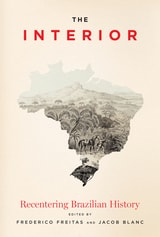
The Interior
Recentering Brazilian HistoryFrederico Freitas and Jacob Blanc
University of Texas Press, 2024
A new history of Brazil told through the lens of the often-overlooked interior regions.
In colonial Brazil, observers frequently complained that Portuguese settlers appeared content to remain “clinging to the coastline, like crabs.” From their perspective, the vast Brazilian interior seemed like an untapped expanse waiting to be explored and colonized. This divide between a thriving coastal area and a less-developed hinterland has become deeply ingrained in the nation’s collective imagination, perpetuating the notion of the interior as a homogeneous, stagnant periphery awaiting the dynamic influence of coastal Brazil.
The Interior challenges these narratives and reexamines the history of Brazil using an “interior history” perspective. This approach aims to reverse the conventional conceptual and geographical boundaries often employed to study Brazilian history, and, by extension, Latin America as a whole. Through the work of twelve leading scholars, the volume highlights how the people and spaces within the interior have played a pivotal role in shaping national identities, politics, the economy, and culture. The Interior goes beyond the traditional boundaries of borderland and frontier history, expands on the current wave of scholarship on regionalism in Brazil, and, by asking new questions about space and nation, provides a fresh perspective on Brazil’s history.
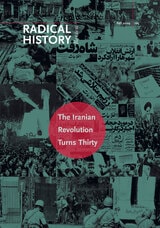
The Iranian Revolution Turns Thirty, Volume 2009
Behrooz Ghamari-Tabrizi, Mansour Bonakdarian, Nasrin Rahimieh, Ahmad Sadri, and Ervand Abrahamian, eds.
Duke University Press, 0
The articles in this interdisciplinary issue take up the legacy of the revolution within and outside the borders of Iran and offer critical evaluation and new insights into the transformations that Iran experienced as a result of the revolution. One essay discusses the role of the crowd in the revolution, while another traces the genealogy of the discourse of anti-Zionism in Iranian circles. Other articles explore the treatment of the revolution in the Egyptian press and illustrate how the trauma of the revolution is portrayed in diasporic Iranian women’s biographies. The issue also features a “Reflections” section, which includes eight short essays that provide snapshots of postrevolutionary politics, economics, literature, cinema, and visual arts, demonstrating both radical changes and continuities in Iranian society.
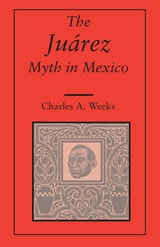
The Juarez Myth In Mexico
Charles A. Weeks
University of Alabama Press, 1987
Like many capitals the city of Mexico is a place of monuments-large monuments, small, ancient monuments, and new, representational monuments, and allegorical monuments—each bearing a message from the past. Among them is the Hemiciclo. It stands in a spacious, old, beautiful park, the Alameda Central, where the young and old of the city still promenade on Sundays and holidays as people do in the plazas throughout the country and, indeed, as people do in many parts of the world. Amid green trees and a great variety of flowers and shrubs and flanked by a semicircle of twelve doric columns of white Carrara marble stands the central pedestal of the Hemiciclo supporting the statues of three figures. One statue represents a former president of the republic, Benito Juarez, who appears solemn and grim as a Roman proconsul administering justice. Juarez the Lawgiver is seated, and surrounding him are two allegorical figures, also of marble, one representing Glory, who is placing a crown on Juarez’s head, and the other, the Republic, who stands behind, resting her sword on the ground to signify the end of a gigantic struggle. The letters of the pedestal read: “Al Benemerito Benito Juarez. La Patria.” Many years have passed since 1910, when the Mexican government built and dedicated the Hemiciclo after a design by the architect Guillermo Heredia.
Like many other such monuments it is the embodiment of a myth. In life Juarez offered little to the mythologizers-he was never able to boast a military career, he often impressed people as reserved or even impassive. he stood a little over five feet; with small hands and feet and dark staring eyes, a coppery complexion that helped disguise a large scar across his face, of Zapotec Indian parentage, he was no striking figure. He did, however, lead Mexican liberals in the I 850s and 1860s in their titanic struggle against formidable opposition, both foreign and domestic, and in the years since his death his worshipers have gathered at the Hemiciclo, at his tomb, or in many other places in Mexico sacred to his memory, usually on anniversaries of his birth or death. For them Juarez is, in agreement with the golden inscription on the central pedestal of the Hemiciclo, “Benemerito de la Patria” or even “Benemerito de las Americas.”
Development of a Juarez myth has had all the classic characteristics of myths and mythmaking, especially the subjective view or image of a reality, whether it be of an historical figure, as in the case of Juarez, an event, an institution, or even a geographical region. Image or meaning ascribed to what is assumed to be a reality constitutes one of the main elements of myth and when manipulated to promote a cause assumes a reality of its own. The apotheosis of Juarez projected a subjective view or image of the historical reality. In all myths, to be sure, the assumed reality is a feature useful to an individual or a group.
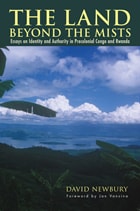
The Land beyond the Mists
Essays on Identity and Authority in Precolonial Congo and RwandaDavid Newbury
Ohio University Press, 2009
The horrific tragedies of Central Africa in the 1990s riveted the attention of the world. But these crises did not occur in a historical vacuum. By peering through the mists of the past, the case studies presented in The Land Beyond the Mists illustrate the significant advances to have taken place since decolonization in our understanding of the pre-colonial histories of Rwanda, Burundi, and eastern Congo.
Based on both oral and written sources, these essays are important both for their methods—viewing history from the perspective of local actors—and for their conclusions, which seriously challenge colonial myths about the area.
The Latest Catastrophe
History, the Present, the ContemporaryHenry Rousso
University of Chicago Press, 2016
Henry Rousso addresses the rise of contemporary history and the relations of present-day societies to their past, especially their legacies of political violence. Focusing on France, Germany, the United Kingdom, and the United States, he shows that for contemporary historians, the recent past has become a problem to be solved. No longer unfolding as a series of traditions to be respected or a set of knowledge to be transmitted and built upon, history today is treated as a constant act of mourning or memory, an attempt to atone. Historians must also negotiate with strife within this field, as older scholars who may have lived through events clash with younger historians who also claim to understand the experiences. Ultimately, The Latest Catastrophe shows how historians, at times against their will, have themselves become actors in a history still being made.
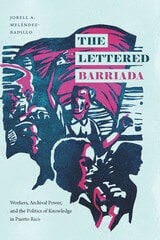
The Lettered Barriada
Workers, Archival Power, and the Politics of Knowledge in Puerto RicoJorell A. Meléndez-Badillo
Duke University Press, 2021
Duke University Press Scholars of Color First Book Award recipient
The Limits of History
Constantin Fasolt
University of Chicago Press, 2003
So argues Constantin Fasolt in The Limits of History, an ambitious and pathbreaking study that conquers history's power by carrying the fight into the center of its domain. Fasolt considers the work of Hermann Conring (1606-81) and Bartolus of Sassoferrato (1313/14-57), two antipodes in early modern battles over the principles of European thought and action that ended with the triumph of historical consciousness. Proceeding according to the rules of normal historical analysis—gathering evidence, putting it in context, and analyzing its meaning—Fasolt uncovers limits that no kind of history can cross. He concludes that history is a ritual designed to maintain the modern faith in the autonomy of states and individuals. God wants it, the old crusaders would have said. The truth, Fasolt insists, only begins where that illusion ends.
With its probing look at the ideological underpinnings of historical practice, The Limits of History demonstrates that history presupposes highly political assumptions about free will, responsibility, and the relationship between the past and the present. A work of both intellectual history and historiography, it will prove invaluable to students of historical method, philosophy, political theory, and early modern European culture.

The Lion and the Cross
Early Christianity in Victorian NovelsRoyal W. Rhodes
The Ohio State University Press, 1900

The Lion's Historian
Africa's Animal PastSandra Swart
Ohio University Press, 2025
“Until the lion has a historian of his own, the tale of the hunt will always glorify the hunter.” Sandra Swart takes up the challenge of that African proverb and, with this book, becomes the lion’s historian. As a species, humans are not alone; but our history has been written as though we were. Swart insists on a multispecies retelling of our more-than-human past as she reconstructs a shifting series of significant interspecies relationships, from quirky, idiosyncratic connections to others that triggered major changes. Embracing a radical interdisciplinarity informed by a background in history and environmental studies, Swart combines the natural sciences with the social sciences, oral history, indigenous knowledge, and archival research. She blends current thinking about animal sentience, agency, cognition, and emotion to offer a new way to understand animals’ role in our shared history. The animals in this book—baboons, cows, elephants, hippos, horses, jackals, lions, Nazi cattle, okapi, police dogs, quagga, sheep, and white ants—exemplify different facets of our shared past. With this animal-centric lens, decades of research are brought together in a collection that takes animals seriously. It is a book with claws and fangs, tearing through conventional narratives to ask, Are we prepared to move beyond the convention that “history” is the story of only our own species? The entanglements between humans and other animals have shaped our past, but they suggest something more. The possibility of our shared future pivots on a reckoning with our shared pasts. Swart shows what human-animal history can do, not only to understand our place in the world better but to make our world—however slightly—a better place.
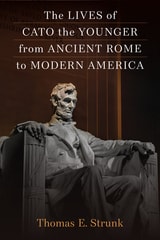
The Lives of Cato the Younger from Ancient Rome to Modern America
Thomas E. Strunk
University of Michigan Press, 2026
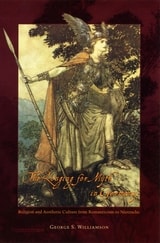
The Longing for Myth in Germany
Religion and Aesthetic Culture from Romanticism to NietzscheGeorge S. Williamson
University of Chicago Press, 2004
Through readings of key intellectuals ranging from Herder and Schelling to Wagner and Nietzsche, Williamson highlights three crucial factors in the emergence of the German engagement with myth: the tradition of Philhellenist neohumanism, a critique of contemporary aesthetic and public life as dominated by private interests, and a rejection of the Bible by many Protestant scholars as the product of a foreign, "Oriental" culture. According to Williamson, the discourse on myth in Germany remained bound up with problems of Protestant theology and confessional conflict through the nineteenth century and beyond.
A compelling adventure in intellectual history, this study uncovers the foundations of Germany's fascination with myth and its enduring cultural legacy.
The Lost Book of Alexander the Great
Andrew Young
Westholme Publishing, 2022
Alexander the Great is well known as one of the first great empire builders of the ancient world. Among those fellow Macedonian officers who accompanied Alexander in his epic conquests from Greece to India was Ptolemy Lagides. Ptolemy served alongside Alexander from the Persian defeat at the Battle of Issus in modern-day Turkey and the journey to find the oracle that proclaimed Alexander to be Zeus incarnate, to the Battle of the Hydaspes River in 326 BC that opened India to the West. Following Alexander’s death, Ptolemy gained control of Egypt where he founded the dynasty in his name, created the great library of Alexandria, and was patron of the mathematician Euclid. Sometime during his rule in Egypt, Ptolemy wrote a history of Alexander’s conquests. Although it is probable that Ptolemy enhanced his own importance, sources indicate that it was regarded as an accurate and even-handed account of the campaigns of Alexander. However, Ptolemy’s book was lost—perhaps with the destruction of the library he founded—and not even an original fragment has survived. His book, however, was acknowledged as a primary source of information for later Roman historians.
In The Lost Book of Alexander the Great, Andrew Young explores the world of ancient writings about the Macedonian leader in order to determine whether any of Ptolemy’s writings can be recovered. Inspired by Stephen Greenblatt’s distinguished biography of Shakespeare, Will in the World, and written for the general reader, the author uses literary forensics to suggest which parts of later books about Alexander the Great, most notably the account by Arrian of Nicomedia, might be the words of Ptolemy. In addition to separating later Roman sensibilities from the original Greek of Ptolemy, the author re-creates the famous library of Alexandria, and takes the reader along on Alexander’s conquests as closely as we can to how Ptolemy may have recounted them.
The Maghrib in Question
Essays in History and HistoriographyEdited by Michel Le Gall and Kenneth Perkins
University of Texas Press, 1997
A wealth of historical writing dealing with the Maghrib (Morocco, Algeria, Tunisia, and Libya) has been published during the roughly forty years since European colonial control ended in the region. This book provides a "state of the field" survey of this postcolonial Maghribi historiography.
The book contains thirteen essays by leading Maghribi and North American scholars. The first section surveys the Maghrib as a whole; the second focuses on individual countries of the Maghrib; and the third explores theoretical issues and case studies. Cutting across chronological categories, the book encompasses historiographical writing dealing with all eras, from the ancient Maghrib to the contemporary period.
The Magic of Concepts
History and the Economic in Twentieth-Century ChinaRebecca E. Karl
Duke University Press, 2017
The Making of Measure and the Promise of Sameness
Emanuele Lugli
University of Chicago Press, 2019
Measurement is all around us—from the circumference of a pizza to the square footage of an apartment, from the length of a newborn baby to the number of miles between neighboring towns. Whether inches or miles, centimeters or kilometers, measures of distance stand at the very foundation of everything we do, so much so that we take them for granted. Yet, this has not always been the case.
This book reaches back to medieval Italy to speak of a time when measurements were displayed in the open, showing how such a deceptively simple innovation triggered a chain of cultural transformations whose consequences are visible today on a global scale. Drawing from literary works and frescoes, architectural surveys, and legal compilations, Emanuele Lugli offers a history of material practices widely overlooked by historians. He argues that the public display of measurements in Italy’s newly formed city republics not only laid the foundation for now centuries-old practices of making, but also helped to legitimize local governments and shore up church power, buttressing fantasies of exactitude and certainty that linger to this day.
This ambitious, truly interdisciplinary book explains how measurements, rather than being mere descriptors of the real, themselves work as powerful molds of ideas, affecting our notions of what we consider similar, accurate, and truthful.
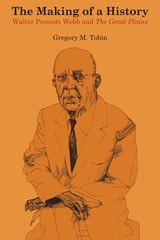
The Making of a History
Walter Prescott Webb and The Great PlainsBy Gregory M. Tobin
University of Texas Press, 1976
Walter Prescott Webb became one of the best known interpreters of the American West following the publication of The Great Plains in 1931. That book remained one of the outstanding studies of the region for decades and attracted considerable attention over the years for its unusual emphasis on the impact of geographic factors on the process of settlement. Using manuscript sources, some of which had not previously been available, Gregory M. Tobin has traced the elements that went into the planning and writing of The Great Plains and that account for its distinctive approach to the writing of a regional history.
Tobin emphasizes two aspects of Webb's life that molded the historian's outlook: his early family life and community connections in West Texas and his admiration for the ideas of scholar Lindley Miller Keasbey. Webb reacted strongly against the assumption that the only cultural values of any real worth emanated from the urban and sophisticated East; he was determined to write the history of his own people in a way that would reveal the scale of their anonymous contribution to American civilization. By reverting to Keasbey's stress on the relationship between natural environment and social institutions, Webb broadened his study to take in what he believed to be a distinct geographic environment. The result was The Great Plains, an assertion of individual and regional identity by a man with a personal stake in establishing the image of a distinctive Plains civilization.
Although The Making of a History is not a full biography of Walter Prescott Webb, it is the first biographically oriented study of a man regarded as one of the twentieth century's major western historians. It places his development within the framework of his intellectual and social setting and, in a sense, subjects his career to the same type of scrutiny that he advocated as the basis of the study of evolving cultures.
The Making of a Nation in the Balkans
Roumen Daskalov
Central European University Press, 2004
The Man of Many Devices, Who Wandered Full Many Ways
Festschrift in Honor of János M. BakBalázs Nagy
Central European University Press, 1999
The Measure of Times Past
Pre-Newtonian Chronologies and the Rhetoric of Relative TimeDonald J. Wilcox
University of Chicago Press, 1987
The Middle East Remembered
Forged Identities, Competing Narratives, Contested SpacesJacob Lassner
University of Michigan Press, 2000
In the first of the book's three parts, Lassner examines what he calls the stratigraphy of the text--he makes sense of the unusual organization of medieval Islamic narrative. The second section investigates issues such as work on city planning and on the creation of imperial centers. The last portion studies the interplay between Jewish and Muslim memory and the trading of themes and ideas between the cultures.
Shorter studies in the volume have been revised, and the author weaves new and complementary essays around them. Earlier work has been transformed and made more available to the general public. The style is accessible, and technical and arcane usages have been kept to a minimum. Throughout there are flashes of the author's wry humor.
Jacob Lassner is Philip M. and Ethel Klutsnick Professor of Jewish Civilization, Northwestern University, and Professor of Middle East History, Tel Aviv University.

The Miracles of St. John of Capistran
Stanko Andric
Central European University Press, 2000
Religious history and, in particular, the history of the cult of saints and their miracles has recently become one of the most popular fields of historical investigation. Together with continuing interest in the related ecclesiastic motivations and the well organized craft of hagiography, this new interest might be explained by the marvellously rich details of thousands of witness accounts testifying to the miraculous help they received from the saint in times of desparate need. These accounts provide an unparalleled insight into the history of everyday life and into the various hardships, illnesses, hopes dreams and anxieties during the late medieval and early modern period.
Only two records exist on the history of the medieval Hungarian kingdom- the thirteenth century canonization trial of St. Margaret of Hungary and the miracle collections promoting the canonization of St. John of Capistran, the victorious Crusader at Belgrade in 1456, who died thereafter in Ilok (a city located on the periphery of western Christianity in Croatia). Based on a careful study of the widely scattered manuscripts on Capistranean miracles and with the help of a microscopic philological analysis, the author has managed to reconstruct, for the first time, one of the most complex miracle collections in the history of medieval hagiography.
Covering the recording of the first miracle series by the urban notaries of Ilok, the local hagiographer of Ilok Franciscans (John Geszti), the vicar general of the Hungarian province (Stephen Varsányi), and a number of subsequent editions and amplifications of this material recycling into the canonization campaign of St. John of Capistran and the miracles he himself recorded, The Miracles of St. John of Capistran, is an outstanding debut by a representative of a new generation of Central European medievalists.
The Names of Minimalism
Authorship, Art Music, and Historiography in DisputePatrick Nickleson
University of Michigan Press, 2023
Expanding the place of Jacques Rancière’s philosophy within musicology, Nickleson draws attention to disciplinary practices of guarding compositional authority against artists who set out to undermine it. The book reimagines the canonic artists and works of minimalism as “(early) minimalism,” to show that art music histories refuse to take seriously challenges to conventional authorship as a means of defending the very category “art music.” Ultimately, Nickleson asks where we end up if we imagine the early minimalist project—artists forming bands to perform their own music, rejecting the score in favor of recording, making extensive use of magnetic type as compositional and archival medium, hosting performances in lofts and art galleries rather than concert halls—not as a utopian moment within a 1960s counterculture doomed to fail, but as the beginning of a process with a long and influential afterlife.
The Nation in History
Historiographical Debates about Ethnicity and NationalismAnthony D. Smith
Brandeis University Press, 2000
The Nature of Truth
Sergio Troncoso
Northwestern University Press, 2003
Helmut Sanchez is a young researcher in the employ of the renowned scholar Werner Hopfgartner. By chance Sanchez discovers a letter written in the 1950s by Hopfgartner mocking feelings of guilt over the Holocaust. Appalled, he digs into the scholar's life, determined to find the truth and finally uncovering the evidence of Hopfgartner's sordid past. Sure of his conclusions, Helmut decides that only one shocking act is morally correct. When he does, the consequences are immense, and the toll taken on his mind and conscience is amplified when one of his friends is wrongly accused of the crime-and is wrongly left to pay for it.
Intelligent and literate, The Nature of Truth breaks new ground in Latino literature, focusing on how a contemporary man of unique heritage--a Mexican-German who has come to America by way of Germany--navigates a complex moral universe and how his journey reflects the tension between justice and righteousness in American life.
Further information about the author can be found at his web site: <A HREF="http://sergiotroncoso.com">http://sergiotroncoso.com.</A>
The New American History
Eric Foner
Temple University Press, 1997

The New American Sport History
Recent Approaches and PerspectivesEdited by S. W. Pope
University of Illinois Press, 1996
In this collection, sixteen scholars explore topics as diverse as the historical debate over black athletic superiority, the selling of sport in society, the eroticism of athletic activity, sexual fears of women athletes, and the marketing of the marathon.
In line with the changing nature of sport history as a field of study, the essays focus less on traditional topics and more on themes of class, gender, race, ethnicity, and national identity, which also define the larger parameters of social and cultural history. It is the first anthology to situation sport history within the broader fields of social history and cultural studies.
Contributors are Melvin L. Adelman, William J. Baker, Pamela L. Cooper, Mark Dyreson, Gerald R. Gems, Elliott J. Gorn, Allen Guttmann, Stephen H. Hardy, Peter Levine, Donald J. Mrozek, Michael Oriard, S. W. Pope, Benjamin G. Rader, Steven A. Riess, Nancy L. Struna, and David K. Wiggins.
The New Mormon History
Revisionist Essays on the PastD. Michael Quinn
Signature Books, 1992
In this collection, D. Michael Quinn has selected fifteen essays which demonstrate the methods of this new history. Contributors include Thomas G. Alexander, James B. Allen, Leonard J. Arrington, Maureen Ursenbach Beecher, Eugene E. Campbell, Kenneth L. Cannon II, Mario S. DePillis, Robert B. Flanders, Klaus J. Hansen, William G. Hartley, Stanley S. Ivins, Dean L. May, Linda King Newell, B. H. Roberts, Jan Shipps, and Ronald W. Walker. Participants offer new ideas and give readers the opportunity to determine for themselves the relative success of these approaches by presenting examples. The collection demonstrates areas of interpretation that may be considered revisionist as well.
The New Western History
The Territory AheadForrest G. Robinson
University of Arizona Press, 1998
Introduction / Jerome Frisk and Forrest G. Robinson
The Theoretical (Re)Positions of the New Western History / Jerome Frisk
Clio Bereft of Calliope: Literature and the New Western History / Forrest G. Robinson
Literature, Gender Studies, and the New Western History / Krista Comer
Haunting Presences and the New Western History: Reading Repetition, Negotiating Trauma / Carl Gutiérrez Jones
The Problem of the "Popular" in the New Western History / Stephen Tatum
The New Western History: An Essay from the Woods (and Rangelands) / Sally K. Fairfax and Lynn Huntsinger
The Ongoing Civil War
New Versions of Old StoriesEdited & Intro by Herman Hattaway & Ethan S. Rafuse
University of Missouri Press, 2004
In 1997, John Stanchak, an editor at Cowles Enthusiast Media (now part of Primedia), realized his vision of “a publication that contained the best, most up-to-date scholarship on the [Civil] war, but was edited with the amateur historian in mind,” with the publication of Columbiad: A Quarterly Review of the War between the States. In the four years the journal was published, it strived to lessen the rift between the scholarly world of professional historians and the “popular” history with which the general reader is more familiar. Now, a selection of the essays that best represent the successful balance between “serious scholarship” and a narrative reading style preferred by the educated layman has been collected in The Ongoing Civil War.
The People and the Word
Reading Native NonfictionRobert Warrior
University of Minnesota Press, 2005
Focusing on autobiographical writings and critical essays, as well as communally authored and political documents, The People and the Word explores how the Native tradition of nonfiction has both encompassed and dissected Native experiences. Warrior begins by tracing a history of American Indian writing from the eighteenth century to the late twentieth century, then considers four particular moments: Pequot intellectual William Apess’s autobiographical writings from the 1820s and 1830s; the Osage Constitution of 1881; narratives from American Indian student experiences, including accounts of boarding school in the late 1880s; and modern Kiowa writer N. Scott Momaday’s essay “The Man Made of Words,” penned during the politically charged 1970s. Warrior’s discussion of Apess’s work looks unflinchingly at his unconventional life and death; he recognizes resistance to assimilation in the products of the student print shop at the Santee Normal Training School; and in the Osage Constitution, as well as in Momaday’s writing, Warrior sees reflections of their turbulent times as well as guidance for our own.
Taking a cue from Momaday’s essay, which gives voice to an imaginary female ancestor, Ko-Sahn, Warrior applies both critical skills and literary imagination to the texts. In doing so, The People and the Word provides a rich foundation for Native intellectuals’ critical work, deeply entwined with their unique experiences.
Robert Warrior is professor of English and Native American studies at the University of Oklahoma. He is author of Tribal Secrets: Recovering American Indian Intellectual Traditions (Minnesota, 1994) and coauthor, with Paul Chaat Smith, of Like a Hurricane: The Indian Movement from Alcatraz to Wounded Knee.
The Perils of Normalcy
George L. Mosse and the Remaking of Cultural HistoryKarel Plessini
University of Wisconsin Press, 2014
In this intellectual biography of George Mosse, Karel Plessini draws on all of Mosse's published and unpublished work to illuminate the origins and development of his groundbreaking methods of historical analysis and the close link between his life and work. He redefined the understanding of modern mass society and politics, masterfully revealing the powerful influence of conformity and political liturgies on twentieth-century history. Mosse warned against the dangers inherent in acquiescence, showing how identity creation and ideological fervor can climax in intolerance and mass murder—a message of continuing relevance.
The Philosophical Structure of Historical Explanation
Paul A. Roth
Northwestern University Press, 2019
In The Philosophical Structure of Historical Explanation, Paul A. Roth resolves disputes persisting since the nineteenth century about the scientific status of history. He does this by showing why historical explanations must take the form of a narrative, making their logic explicit, and revealing how the rational evaluation of narrative explanation becomes possible. Roth situates narrative explanations within a naturalistic framework and develops a nonrealist (irrealist) metaphysics and epistemology of history—arguing that there exists no one fixed past, but many pasts. The book includes a novel reading of Thomas S. Kuhn’s The Structure of Scientific Revolutions, showing how it offers a narrative explanation of theory change in science. This book will be of interest to researchers in historiography, philosophy of history, philosophy of science, philosophy of social science, and epistemology.
The Politics of Memory
Native Historical Interpretation in the Colombian AndesJoanne Rappaport
Duke University Press, 1997
Reconsidering the predominantly mythic status of non-Western historical narrative, Rappaport identifies the political realities that influenced the form and content of Andean history, revealing the distinct historical vision of these stories. Because of her examination of the influences of literacy in the creation of history, Rappaport’s analysis makes a special contribution to Latin American and Andean studies, solidly grounding subaltern texts in their sociopolitical contexts.
The Politics of Research
Edited by E. Ann Kaplan and George Levine
Rutgers University Press, 1997
The Practical Past
Hayden White
Northwestern University Press, 2014
Hayden White borrows the title for The Practical Past from philosopher Michael Oakeshott, who used the term to describe the accessible material and literary-artistic artifacts that individuals and institutions draw on for guidance in quotidian affairs. The Practical Past, then, forms both a summa of White’s work to be drawn upon and a new direction in his thinking about the writing of history.
White’s monumental Metahistory: The Historical Imagination in Nineteenth-Century Europe (1973) challenged many of the commonplaces of professional historical writing and wider assumptions about the ontology of history itself. It formed the basis of his argument that we can never recover “what actually happened”in the past and cannot really access even material culture in context. Forty years on, White sees “professional history" as falling prey to narrow specialization, and he calls upon historians to take seriously the practical past of explicitly “artistic” works, such as novels and dramas, and literary theorists likewise to engage historians.
The Present Colonizes the Past
The Future Forsaken?Romila Thapar
Seagull Books, 2026
Short, rigorous intervention on history-writing in public life.
How does the present reshape what a society chooses to remember as its past? Recent interpretations of India's history have replaced careful inquiry with narratives that mirror contemporary anxieties and ambitions, sidelining the evidence, debate, and plurality that once characterized India’s long intellectual tradition. At stake is a shift from understanding history as a method to treating it as a tool of identity and authority. In The Present Colonizes the Past, Romila Thapar asks: How have cultural and religious identities evolved through interaction rather than isolation? How have dissent and accommodation shaped social change? How have education and public discourse influenced what is accepted as knowledge? And, most urgently, how might weakened institutions and selective pasts redefine our heritage and citizenship?
The Present State of Scholarship in the History of Rhetoric
A Twenty-First Century GuideEdited by Lynée Lewis Gaillet & Winifred Bryan Horner
University of Missouri Press, 2010
Adopting research methodologies of revision and recovery, this latest edition includes all new material while still following the format of the original and is constructed around bibliographical surveys of both primary and secondary works addressing the Classical, Medieval, Renaissance, and eighteenth through twentieth century periods within the history of rhetoric. The Present State of Scholarship in the History of Rhetoric doesn’t simply update but rather recasts study in the history of rhetoric.
The authors—experienced and well-known scholars in their respective fields—redefine existing strands of rhetorical study within the periods, expand the scope of rhetorical engagement, and include additional figures and their works. The globalization and expansion of rhetoric are demonstrated in each of these parts and seen clearly in the inclusion of more female rhetors, discussions of historical and contemporary electronic resources, and examinations of rhetorical practices falling outside the academy and the traditional canon.
As programs incorporating rhetorical studies continue to expand at the university level, students and researchers are in need of up-to-date bibliographical resources. No other work matches the scope and approach of The Present State of Scholarship in the History of Rhetoric, which carries scholarship on rhetoric into the twenty-first century.
The Production of Modernization
Daniel Lerner, Mass Media, and The Passing of Traditional SocietyAuthored by Hemant Shah
Temple University Press, 2011
Daniel Lerner's 1958 book The Passing of Traditional Society was central in shaping Cold War–era ideas about the use of mass media and culture to promote social and economic progress in postcolonial nations. Based on a study of the effectiveness of propaganda in the Middle East, Lerner’s book claimed that exposure to American media messages could motivate “traditional” people in the postcolonial nations to become “modern” by cultivating empathy for American ideas, goods, and ways of life.
The Production of Modernization examines Lerner’s writings to construct the intellectual trajectory of his thinking about mass media and modernization up to and beyond the publication of his famous book. Shah has written not just an intellectual biography of Lerner but also a history of the discipline he shaped.
The Queer Art of History
Queer Kinship after FascismJennifer V. Evans
Duke University Press, 2023