Results by title
468 books match the query 'Identity' and 68 start with t
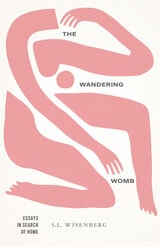
The Wandering Womb
Essays in Search of HomeS. L. Wisenberg
University of Massachusetts Press, 2023
Even as a fourth-generation Jewish Texan, S. L. Wisenberg has always felt the ghost of Europe dogging her steps, making her feel uneasy in her body and in the world. At age six, she’s sure that she hears Nazis at her bedroom window and knows that after they take her away, she’ll die without her asthma meds. In her late twenties, she infiltrates sorority rush at her alma mater, curious about whether she’ll get a bid now. Later in life, she makes her first and only trip to the mikvah while healing from a breast biopsy (benign this time), prompting an exploration of misogyny, shame, and woman-fear in rabbinical tradition.
With wit, verve, blood, scars, and a solid dose of self-deprecation, Wisenberg wanders across the expanse of continents and combs through history books and family records in her search for home and meaning. Her travels take her from Selma, Alabama, where her Eastern European Jewish ancestors once settled, to Vienna, where she tours Freud’s home and figures out what women really want, and she visits Auschwitz, which—disappointingly—leaves no emotional mark.

The Zionist Paradox
Hebrew Literature and Israeli IdentityYigal Schwartz
Brandeis University Press, 2014
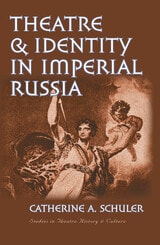
Theatre and Identity in Imperial Russia
Catherine A. Schuler
University of Iowa Press, 2009
Schuler draws upon contemporary journals written and published by the educated nobility and the intelligentsia—who represented the intellectual, aesthetic, and cultural groups of the day—as well as upon the laws of the Russian empire and upon theatrical memoirs. With fascinating detail, she spotlights the ideologically charged binaries ascribed to prominent actors—authentic/performed, primitive/civilized, Russian/Western—that mirrored the volatility of national identity from the Napoleonic Wars through the reign of Alexander II.
If the path traveled by Russian artists and audiences from the turn of the nineteenth century to the era of the Great Reforms reveals anything about Russian culture and society, it may be that there is nothing more difficult than being Russian in Russia. By exploring the ways in which theatrical administrators, playwrights, and actors responded to three tsars, two wars, and a major revolt, this carefully crafted book demonstrates the battle for the hearts and minds of the Russian people.

These Dark Skies
Reckoning with Identity, Violence, and Power from AbroadArianne Zwartjes
University of Iowa Press, 2022
The essays investigate and meditate on a broad array of related topics, including drone strikes, tear gas, and military intervention; the sugar trade, the Dutch blackface celebration of Zwarte Piet, and constructions of whiteness in Europe and the U.S.; and visual arts of Russian avant-garde painters, an Iraqi choreographer living in Belgium, and German choreographer Pina Bausch.
This is a lyrical, timely book deeply salient to the political moment we continue to find ourselves in: a moment of incredible anti-refugee and anti-immigrant sentiment, a moment of xenophobic and misogynistic violence.
These Kids
Identity, Agency, and Social Justice at a Last Chance High SchoolKysa Nygreen
University of Chicago Press, 2013
Thinking in Jewish
Jonathan Boyarin
University of Chicago Press, 1996
A fascination with this question prompted Jonathan Boyarin, one of America's most original thinkers in critical theory and Jewish ethnography, to offer the unexpected Jewish perspective on the vexed issue of identity politics presented here. Boyarin's essays explore the ways in which a Jewish—or, more particularly, Yiddish—idiom complicates the question of identity. Ranging from explorations of a Lower East Side synagogue to Fichte's and Derrida's contrasting notions of the relation between the Jews and the idea of Europe, from the Lubavitch Hasidim to accounts of self-making by Judith Butler and Charles Taylor, Thinking in Jewish will be indispensable reading for students of critical theory, cultural studies, and Jewish studies.
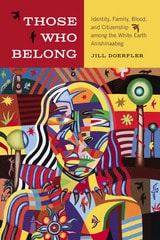
Those Who Belong
Identity, Family, Blood, and Citizenship among the White Earth AnishinaabegJill Doerfler
Michigan State University Press, 2015
Thriving as a Mid-Career Librarian
Identity, Advocacy, and PathwaysBrandon West
Assoc of College & Research Libraries, 2023
In four sections, Thriving as a Mid-Career Librarian collects the experiences of mid-career librarians as they grapple with these questions and the roles that marginalized perspectives, intersectionality, and privilege have played in their careers:
- Section 1: Staying Engaged in Your Career
- Section 2: The Role of Identity in Shaping Mid-career Librarianship
- Section 3: Being Your Own Advocate
- Section 4: To Lead or Not to Lead?
It can feel like everything gets harder, more political, and further under-resourced with each passing year. Thriving as a Mid-Career Librarian offers strategies of community, support, and advocacy that can help make it possible for us to thrive and help others to thrive. At mid-career, we may not have the same bright-eyed enthusiasm we possessed as new information professionals, but we have other things: the contributions we make to our communities and the wealth of experience we have built up since those days.
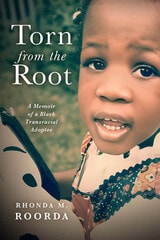
Torn from the Root
A Memoir of a Black Transracial AdopteeRhonda M. Roorda
Temple University Press, 2026
As a Black child adopted out of the New York foster care system as a toddler and raised by white evangelical parents, Rhonda Roorda had to learn how to walk in two different worlds. She often questioned “whether my skin was too dark” and if she “acted too white.” She recalls being haunted by feelings of shame and not being enough. Torn from the Root is her illuminating story of identity, belonging, and purpose and lays bare the deep pain she felt navigating life as a vulnerable Black girl and how she healed herself.
Roorda suffered trauma and abuse in her youth, but she also developed resilience. Eventually, she resolves to find her birth family and takes readers on her exciting and agonizing journey.
Torn from the Root thinks critically about the child welfare system and the long-term impacts of transracial adoption. Roorda helps readers understand her experience, posing necessary questions about the challenges of transracial adoption. Her emotional story, full of wisdom and reflection, recounts how she accepted the truth of her adoption and found balance, not discomfort, in her own skin.
Tracing the Impact of First-Year Writing
Identity, Process, and Transfer at a Public UniversityLaura Wilder
Utah State University Press, 2024
In contrast to previous longitudinal studies of college writers undertaken at institutions with high prestige and resources, Tracing the Impact of First-Year Writing explores the role of writing at a regional public university and documents how students’ experiences with writing can be highly divergent across the curriculum and unequal across campuses. Additionally, this book includes the voices of students who do not identify as capable writers and have strongly negative emotional reactions to writing and writing instruction and adds empirical support to innovative calls in the field to transform the first-year writing course into one that inspires students to reflectively consider writing itself.

Transmen and FTMs
Identities, Bodies, Genders, and SexualitiesJason Cromwell
University of Illinois Press, 1999
In clarifying how transmen and FTMs define and validate their lives, as opposed to how society attempts to pigeonhole and belittle them, Cromwell shows how female-to-male transpeople have been made virtually invisible by male-dominated discourses. He considers cross-cultural data on female gender diversity, historical evidence of female-bodied people who have lived as men, and contemporary transmen and FTMs. He also addresses how FTMs and transmen are working to challenge the mental illness model of transness as well as other misconceptions.
Transmen and FTMs seeks to reframe the dialogue about gender identity and move away from regarding fixed gender categories as normative. By redefining gender diversity from a manifestation of pathology to a human condition Transmen and FTMs promotes a fuller understanding of these individuals as persons in their own right.
Transnational Desires
Brazilian Erotic Dancers in New YorkSuzana Maia
Vanderbilt University Press, 2012
Their motivation to migrate and to work as erotic dancers can also be understood in the context of a representational system, inaugurated in colonial times, that emphasizes the exoticism of Brazilian womentheir bodies, their skin tone, their sexuality. These stereotypes are the props that Brazilian women use to construct their performances in Manhattan and Queens gentlemen's bars and the language through which they negotiate their relationships to society at large.
Transnational Desires focuses on the lives of nine Brazilian dancers with whom the author, herself a middleclass Brazilian, developed close relationships over the years. Maia examines their social relations both in the bar scene and with family, friends, and lovers outside. She shows that for these women erotic dancing is part of a life trajectory that involves negotiating their social position and life prospects in a fundamentally transnational social universe.
Trust beyond Borders
Immigration, the Welfare State, and Identity in Modern SocietiesMarkus M.L. Crepaz
University of Michigan Press, 2010
Will immigration undermine the welfare state? Trust beyond Borders draws on public opinion data and case studies of Germany, Sweden, and the United States to document the influence of immigration and diversity on trust, reciprocity, and public support for welfare programs. Markus M. L. Crepaz demonstrates that we are, at least in some cases, capable of trusting beyond borders: of expressing faith in our fellow humans and extending help without regard for political classifications.
In Europe, the welfare state developed under conditions of relative homogeneity that fostered high levels of trust among citizens, while in America anxiety about immigration and diversity predated the emergence of a social safety net. Looking at our new era of global migration, Crepaz traces the renewed debate about "us" versus "them" on both sides of the Atlantic and asks how it will affect the public commitment to social welfare. Drawing on the literatures on immigration, identity, social trust, and the welfare state, Trust beyond Borders presents a novel analysis of immigration's challenge to the welfare state and a persuasive exploration of the policies that may yet preserve it.
"Crepaz contributes much to our knowledge about the link between immigration and social welfare, certainly one of the central issues in current national and international politics."
---Stuart Soroka, Associate Professor of Political Science and William Dawson Scholar, McGill University
"Finally! A book that challenges the growing view that ethnic diversity is the enemy of social solidarity. It addresses an issue of intense debate in Western nations; it takes dead aim at the theoretical issues at the center of the controversy; it deploys an impressive array of empirical evidence; and its conclusions represent a powerful corrective to the current drift of opinion. Trust beyond Borders will rank among the very best books in the field."
---Keith Banting, Queen's Research Chair in Public Policy, Queen's University
"Do mass immigration and ethnic diversity threaten popular support for the welfare state? Trust beyond Borders answers no. Marshaling an impressive array of comparative opinion data, Crepaz shows that countries with high levels of social trust and universal welfare state arrangements can avoid the development of the welfare chauvinism that typically accompanies diversity."
---Gary Freeman, Professor and Department Chair, Department of Government, University of Texas at Austin
Markus M. L. Crepaz is Professor in the Department of International Affairs at the University of Georgia and Associate Director of the Center for the Study of Global Issues (GLOBIS).

Trust, Ethnicity, and Identity
Beyond the New Institutional Economics of Ethnic Trading Networks, Contract Law, and Gift-ExchangeJanet Tai Landa
University of Michigan Press, 1995
Trust, Ethnicity, and Identity deals with the economic role of laws and institutions in achieving social order in a decentralized economy. Specifically, this book considers the coordinating role of three major nonprice institutions--ethnic trading networks, contract law, and gift-exchange--in economizing on transaction costs and thus facilitating the process of exchange in decentralized economies in different historical contexts.
The major unifying theme of the book is this: identity matters when traders operate in an environment characterized by contract uncertainty, where the legal framework for the enforcement of contracts is not well developed. This in turn points out the importance of trust embedded in particularistic exchange relations such as kinship or ethnicity.
One unique facet of this book is that the author uses a property rights--public choice approach--part of the New Institutional Economics--to provide a unifying theoretical framework to explain such diverse exchange institutions as contract law, ethnic trading networks, and gift-exchange, In addition, it goes beyond the New Institutional Economics paradigm by incorporating some crucial concepts from sociology, anthropology, and bioeconomics, such as social structure, social norms, culture, reciprocity, and kin-related altruism. This broad interdisciplinary framework gives Landa's work a relevance beyond economics to law, political science, sociology, anthropology, and bioeconomics.

Twilight of Torment
II. HeritageLéonora Miano
Seagull Books, 2023
After beating his girlfriend and leaving her for dead on the street, Amok retraces his steps. Frightened by his act, which reproduces the violence of his father, he hopes to save the woman. But it is too late when he arrives at the scene; two women are already carrying the injured woman. Overwhelmed and not daring to reveal himself, he decides to find his father in order to learn how to rid himself of the dark force that he believes runs through the men of his lineage. He embarks on a journey that will be, more than anything, an inner one, forcing him to understand his story and choose a healthier way of being in the world. This second volume of Twilight of Torment is both intimate and political. Through the story of a man and his family, we discover an African bourgeoisie and its many social wanderings in a contemporary Africa whose future seems nebulous.
Twilight of Torment
MelancholyLéonora Miano
Seagull Books, 2022
Four women speak. They speak to the same man, who is not there. He is the son of the first, the great-yet-impossible love of the second, the platonic companion of the third, the older brother of the last. Speaking to him in his absence, it is to themselves that these women turn, examining their own stories to make sense of their journey, from twilight to twilight, through a mysterious stormy night in the middle of the dry season.
Together, the voices in Twilight of Torment: Melancholy, the first volume of a two-volume novel, perform a powerful and sometimes discordant jazz-inspired chorus about issues such as femininity, sexuality, self-love, and the intrusion of history into the intimate lives of people of African descent. Blackness confronts African-ness, love is sometimes discovered in the arms of another woman, the African renaissance tries to establish itself on the rubble of self-esteem damaged by history. Each of these women, with her own language and rhythm, ultimately represents a specific aspect of the tormented history of Africans in today’s world, and at the end of the night, they will each arrive at a dawn of hope.

Two Vermonts
Geography and Identity, 1865-1910Paul Searls
University of New Hampshire Press, 2006
Two Vermonts establishes a little-known fact about Vermont: that the state's fascination with tourism as a savior for a suffering economy is more than a century old, and that this interest in tourism has always been dogged by controversy. Through this lens, the book is poised to take its place as the standard work on Vermont in the Gilded Age and the Progressive Era. Searls examines the origins of Vermont's contemporary identity and some reasons why that identity ("Who is a Vermonter?") is to this day so hotly contested.
Searls divides nineteenth-century Vermonters into conceptually “uphill,” or rural/parochial, and “downhill,” or urban/cosmopolitan, elements. These two groups, he says, negotiated modernity in distinct and contrary ways. The dissonance between their opposing tactical approaches to progress and change belied the pastoral ideal that contemporary urban Americans had come to associate with the romantic notion of “Vermont.” Downhill Vermonters, espousing a vision of a mutually reinforcing relationship between tradition and progress, unilaterally endeavored to foster the pastoral ideal as a means of stimulating economic development. The hostile uphill resistance to this strategy engendered intense social conflict over issues including education, religion, and prohibition in the late nineteenth and early twentieth centuries. The story of Vermont's vigorous nineteenth-century quest for a unified identity bears witness to the stirring and convoluted forging of today's “Vermont.”
Searls's engaging exploration of this period of Vermont's history advances our understanding of the political, economic, and cultural transformation of all of rural America as industrial capitalism and modernity revolutionized the United States between 1865 and 1910. By the late Progressive Era, Vermont's reputation was rooted in the national yearning to keep society civil, personal, and meaningful in a world growing more informal, bureaucratic, and difficult to navigate. The fundamental ideological differences among Vermont communities are indicative of how elusive and frustrating efforts to balance progress and tradition were in the context of effectively negotiating capitalist transformation in contemporary America.
Two-Spirit People
Native American Gender Identity, Sexuality, and SpiritualityEdited by Sue-Ellen Jacobs; Wesley Thomas; and Sabine Lang
University of Illinois Press, 1997
1997 Winner of the Ruth Benedict Prize for an edited book given by the Society of Lesbian and Gay Anthropologists.