Results by title
3 books match the query 'Luxury'

Global Fashion Brands
Style, Luxury and HistoryEdited by Joseph H. Hancock II, Gjoko Muratovski, Veronica Manlow, and Anne Peirson-Smith
Intellect Books, 2014
In this collection, the contributors explore the meaning behind fashion branding in the context of the contested power relations underpinning the production, marketing, and consumption of style and fashion as part of our global culture.
Pleasures in Socialism
Leisure and Luxury in the Eastern BlocDavid Crowley
Northwestern University Press, 2012
Much has been written about the workings of communist governments in the USSR and the Soviet bloc, yet there is still a great deal to explore regarding their relationship to the everyday lives of the citizens living under them. This third volume builds on the editors’ Style and Socialism and Socialist Spaces, showing how the rise of consumer culture took a unique form in these countries.
Essays from top scholars address topics ranging from fashion and game shows to smoking and camping. The authors of the essays in this collection investigate the ways in which pleasurable activities, like many other facets of daily life, were both a space in which these communist governments tried to insinuate themselves and thereby further expand the reach of their authority,
and also an opportunity for people to assert their individuality.
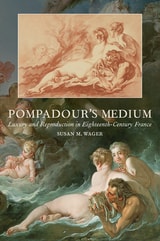
Pompadour's Medium
Luxury and Reproduction in Eighteenth-Century FranceSusan M. Wager
University of Delaware Press, 2027
Pompadour's Medium reveals the depth of patron, amateur artist, and royal mistress Madame de Pompadour's contributions to the visual arts, long dismissed as superficial and trivial. Her artistic activities centered on an innovative exploration of the relationships between painting, sculpture, and the decorative arts at a moment when advances in reproductive printmaking threatened to flatten the differences between individual mediums. Eighteenth-century France experienced an unprecedented surge in the circulation of images. Increasingly faithful and affordable reproductive prints introduced works of art to ever-widening audiences, while a culture of reproduction was simultaneously thriving at the highest end of the artistic and economic spectrum—in luxury media, such as ceramics, textiles, and metalwork. This book recovers the pivotal role of luxury reproduction in Pompadour’s artistic endeavors, and her essential role in cultivating the intermedial approach of her frequent collaborator, painter François Boucher, who tended to think between media. It is only by restoring the centrality of reproductive media in this artist-patron relationship that we can understand the magnitude of Pompadour’s and Boucher’s contributions to the history of modern art.