Results by title
24 books match the query 'Possibility'
A Pedagogy of Possibility
Bakhtinian Perspectives on Composition StudiesKay Halasek
Southern Illinois University Press, 1999
In a book that itself exemplifies the dialogic scholarship it proposes, Kay Halasek reconceives composition studies from a Bakhtinian perspective, focusing on both the discipline's theoretical assumptions and its pedagogies.
Framing her discussions at every level of the discipline—theoretical, historical, pedagogical—Halasek provides an overview of portions of the Bakhtinian canon relevant to composition studies, explores the implications of Mikhail Bakhtin's work in the teaching of writing and for current debates about the role of theory in composition studies, and provides a model of scholarship that strives to maintain dialogic balance between practice and theory, between composition studies and Bakhtinian thought.
Halasek's study ranges broadly across the field of composition, painting in wide strokes a new picture of the discipline, focusing on the finer details of the rhetorical situation, and teasing out the implications of Bakhtinian thought for classroom practice by examining the nature of critical reading and writing, the efficacy and ethics of academic discourse, student resistance, and critical and conflict pedagogy. The book ends by setting out a pedagogy of possibility, what Halasek terms elsewhere a "post-critical pedagogy" that redefines and redirects current discussions of home versus academic literacies and discourses.
Affective Crisis and the Possibility of Attachment
A Comparative Study of Contemporary Fiction in Neoliberal RuinsHans Demeyer and Sven Vitse
University College London, 2026
An in-depth study of contemporary novels through the lens of affect theory and ideology critique.
Affective Crisis and the Possibility of Attachment offers a comparative critical study of contemporary fiction. It intervenes in discussions about contemporary fiction in its literary-historical relationship to postmodernism and in its socio-historical relationship to neoliberalism, arguing that contemporary literature is dominated by affective questions that are rooted in neoliberalism. Whereas previous research focused on either a literary-historical or a socio-historical approach, this study examines eighteen novels from various parts of the world in both their diachronic relation to postmodernism and in their synchronic relation to neoliberal society.
African Futures
Essays on Crisis, Emergence, and PossibilityEdited by Brian Goldstone and Juan Obarrio
University of Chicago Press, 2017
The experts in this book address Africa’s future as it is embedded within various social and cultural forms emerging on the continent today: the reconfiguration of the urban, the efflorescence of signs and wonders and gospels of prosperity, the assorted techniques of legality and illegality, lotteries and Ponzi schemes, apocalyptic visions, a yearning for exile, and many other phenomena. Bringing together social, political, religious, and economic viewpoints, the book reveals not one but multiple prospects for the future of Africa. In doing so, it offers a pathbreaking model of pluralistic and open-ended thinking and a powerful tool for addressing the vexing uncertainties that underlie so many futures around the world.
After Live
Possibility, Potentiality, and the Future of PerformanceDaniel Sack
University of Michigan Press, 2015
Aquinas and Sartre
On Freedom, Personal Identity, and the Possibility of HappinessStephen Wang
Catholic University of America Press, 2009
Beyond Gated Politics
Reflections for the Possibility of DemocracyRomand Coles
University of Minnesota Press, 2005
In Beyond Gated Politics, political theorist and grassroots activist Romand Coles argues that the survival of democracy depends on recognizing the failings of disengaged liberal democracy—the exclusions and subjugations that accompany every democratic “we,” for example—and experimenting with more radical modes of democratic theory and action. Among those brought into the conversation are John Howard Yoder, John Rawls, Alisdair MacIntyre, Jacques Derrida, Jean-Luc Nancy, Gloria Anzaldúa, and Audre Lorde.
Coles, whose work is deeply informed by his own experiences as an activist, pays close attention to the actual practice of democracy with particular interest in emerging social movements. In doing so, he not only moves beyond the paradigms of political liberalism, deliberative democracy, and communitarian republicanism, but also cultivates multidimensional modes of public discourse that reflect and sustain the creative tension at the heart of democratic life and responsibility.
Romand Coles is professor of political theory at Duke University. His previous books include Rethinking Generosity: Critical Theory and the Politics of Caritas and Self/Power/Other: Political Theory and Dialogical Ethics.
Freedom Regained
The Possibility of Free WillJulian Baggini
University of Chicago Press, 2015
Freedom Regained brings the issues raised by the possibilities—and denials—of free will to thought-provoking life, drawing on scientific research and fascinating encounters with everyone from artists to prisoners to dissidents. He looks at what it means for us to be material beings in a universe of natural laws. He asks if there is any difference between ourselves and the brains from which we seem never able to escape. He throws down the wildcards and plays them to the fullest: What about art? What about addiction? What about twins? And he asks, of course, what this all means for politics.
Ultimately, Baggini challenges those who think free will is an illusion. Moving from doubt to optimism to a hedged acceptance of free will, he ultimately lands on a satisfying conclusion: it is something we earn. The result is a highly engaging, new, and more positive understanding of our sense of personal freedom, a freedom that is definitely worth having.
Growing Old on the Margins
Abandonment, Care, Death, Intimacy, and Possibility in Lima, PeruMagdalena Zegarra Chiappori
Rutgers University Press, 2027
Growing Old on the Margins is a moving portrait of aging at the edge of social life. Set in a state-run shelter for older adults in urban Lima, Peru, the book traces the everyday lives of men and women who have been left behind by family, institutions, and the promises of care. Based on more than two years of close ethnographic engagement, it follows residents as they navigate loneliness, illness, intimacy, and the quiet anticipation of death. Through small gestures—shared silences, requests for affection, moments of tenderness and conflict—the book reveals how people strive to remain present in a world that offers them little reason to hope. Care appears here not as a simple act of kindness, but as a fragile and uneven practice, shaped by scarcity, power, and moral ambiguity. Attentive to suffering without romanticizing it, Growing Old on the Margins reflects on what it means to age, endure, and remain human when one’s life is no longer considered worthy of attention.
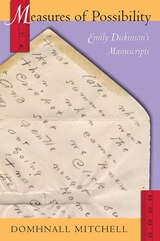
Measures of Possibility
Emily Dickinson's ManuscriptsDomhnall Mitchell
University of Massachusetts Press, 2005
In Measures of Possibility, Domhnall Mitchell sets out to test the hypothesis of Dickinson's textual radicalism, and its consequences for readers, students, and teachers, by looking closely at features such as spacing, the physical direction of the writing, and letter-shapes in handwritten lyric and epistolary texts. Through systematic contextualization and cross-referencing, Mitchell provides the reader with a critical apparatus by which to measure the extent to which contemporary approaches to Dickinson's autograph procedures can reasonably be formulated as corresponding to the poet's own purposes.
Necessity and Possibility
The Logical Strategy of Kant's Critique of Pure ReasonKurt Mosser
Catholic University of America Press, 2008
Nowhere Near the Line
Pain and Possibility in Teaching and WritingElizabeth H. Boquet
Utah State University Press, 2016
In this short work, Elizabeth Boquet explores the line Lawrence Schall describes above, tracing the overlaps and intersections of a lifelong education around guns and violence, as a student, a teacher, a feminist, a daughter, a wife, a citizen and across the dislocations and relocations that are part of a life lived in and around school. Weaving narratives of family, the university classroom and administration, her husband’s work as a police officer, and her work with students and the Poetry for Peace effort that her writing center sponsors in the local schools, she recounts her efforts to respond to moments of violence with a pedagogy of peace. “Can we not acknowledge that our experiences with pain anywhere should render us more, not less, capable of responding to it everywhere?” she asks. “Compassion, it seems to me, is an infinitely renewable resource.”
Possibility Necessity and Existence
Abbagnano and His PredecessorsNino Langiulli
Temple University Press, 1992
In this systematic historical analysis, Nino Langiulli focuses on a key philosophical issue, possibility, as it is refracted through the thought of the Italian philosopher Nicola Abbagnano. Langiulli examines Abbagnano's attempt to raise possibility to a level of prime importance and investigates his understanding of existence. In so doing, the author offers a sustained exposition of and argument with the account of possibility in the major thinkers of the Western tradition—Plato, Aristotle, Kant, and Kierkegaard. He also makes pertinent comments on such philosophers as Diodorus Cronus, William of Ockham, Spinoza, Hobbes, and Hegel, as well as such logicians as DeMorgan and Boole.
Nicola Abbagnano, who died in 1990, recently came to the attention of the general public as an influential teacher of author Umberto Eco. Creator of a dictionary of philosophy and author of a multiple-volume history of Western philosophy, Abbagnano was the only philosopher, according to Langiulli, to argue that "to be is to be possible."
Even though the concept of probability and the discipline of statistics are grounded in the concept of possibility, philosophers throughout history have grappled with the problem of defining it. Possibility has been viewed by some as an empty concept, devoid of reality, and by others as reducible to actuality or necessity—concepts which are opposite to it. Langiulli analyzes and debates Abbagnano's treatment of necessity as secondary to possibility, and he addresses the philosopher's conversation with his predecessors as well as his European and American contemporaries.
In the series Themes in the History of Philosophy, edited by Edith Wyschogrod.

Possibility and Necessity
Volume 1Jean PiagetTranslated by Helga Feider
University of Minnesota Press, 1987
Possibility and Necessity was first published in 1987. Minnesota Archive Editions uses digital technology to make long-unavailable books once again accessible, and are published unaltered from the original University of Minnesota Press editions.
Jean Piaget was preoccupied, later in life, with the developing child's understanding of possibility—how the child becomes aware of the potentially unlimited scope of possible actions and learns to choose among them. Piaget's approach to this question took on a new openness to real-life situations, less deterministic than his earlier, ground-breaking work in cognitive development. The resulting two-volume work—his last—was published in France in 1981 and 1983 and is not available for the first time in English translation. Possibility and Necessity combines theoretical interpretation with detailed summaries of the experiments that Piaget and his colleagues used to test their hypotheses.
Piaget's intent, in Volume 1, is to explore the process whereby possibilities are formed. He chooses to understand "the possible" not as something predetermined by initial conditions; rather, in his use of the term, possibilities are constantly coming into being, and have no static characteristics—each arises from an event which has produced an opening onto it, and its actualization will in turn give rise to other openings. In perceiving that a possibility can be realized, and in acting upon it, the child creates something that did not exist before.
To observe this process, Piaget and his associates devised a series of thirteen problems appropriate for children ranging in age from four or five to eleven or twelve; they were asked to name all possible ways three dice might be arranged, for example, or a square of paper sectioned. The experimenters had two primary aims—to discover to what extent the child's capacity to see possibilities develops with age, and to determine the place in cognitive development of this capacity—does it precede or follow the advent of operational thought structures? In charting this process, Piaget discerns a growing interaction between possibility and necessity. How the child comes to understand necessity and achieves a dynamic synthesis—or equilibrium — between the possible and the necessary is discussed by Piaget and his colleagues in Volume 2, The Role of Necessity in Cognitive Development, also published by Minnesota.
Possibility and Necessity
Volume 2Jean PiagetTranslated by Helga Feider
University of Minnesota Press, 1987
Possibility and Necessity was first published in 1987. Minnesota Archive Editions uses digital technology to make long-unavailable books once again accessible, and are published unaltered from the original University of Minnesota Press editions.
This two-volume work—Jean Piaget's last—was published in France in 1981 and 1983 and is available now for the first time in English translation. Reflecting the preoccupations and methodologies of his later years, Possibility and Necessity combines theoretical interpretation with detailed summaries of the experiments Piaget and his colleagues used to test their hypotheses.
Volume 2 presents a series of experiments documenting the way children between the ages of four or five and eleven to thirteen come to develop a grasp of necessity and its role in understanding the world about them. The experiments show how children proceed from an initial level (at four or five years) of pseudo-necessities, where they see the world as necessarily what it appears to be without the existence of other possibilities, to an intermediate level (at six to ten years), where pseudo-necessities give way to increasingly rich arrays of possibilities, and a final stage (at eleven to thirteen years), where children are able to select among these multiple possibilities the one that fits all the data. This stage represents the optimal level of understanding reality, which is now seen by the child as infinitely variable yet coherent and lawful. Psychologically, this lawfulness corresponds to a sense of necessity, or certainty.
Volume 2 thus completes the theory presented in Volume 1 (The Role of Possibility in Cognitive Development) by showing how cognitive development is mediated on the one hand by a dialectical process of ever-expanding possibilities and, on the other, by increasingly delimiting necessities. In demonstrating how this process operates in psychological development—and in pointing out analogies in the history of science — Piaget gave his genetic epistemology its final and most accomplished form. The acquisition of knowledge is thus shown to be the result of two complementary processes: the formation of possibilities and the grasping of necessary laws and constraints in the construction of a reasoned representation of the external world.
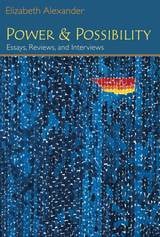
Power and Possibility
Essays, Reviews, and InterviewsElizabeth Alexander
University of Michigan Press, 2007
A volume in the Poets on Poetry series, which collects critical works by contemporary poets, gathering together the articles, interviews, and book reviews by which they have articulated the poetics of a new generation.
Elizabeth Alexander is considered one of the country's most gifted contemporary poets, and the publication of her essays in The Black Interior in 2004 established her as an astute critic and cultural commentator as well. Arnold Rampersad has called Alexander "one of the brightest stars in our literary sky . . . a superb, invaluable commentator on the American scene." In this new collection of her essays, reviews, and interviews, Alexander again focuses on African American artistic production, particularly poetry, and the cultural contexts in which it is created and experienced.
The book's first section, "Black Arts 101," takes up the poetry of Paul Laurence Dunbar, Sterling Brown, Lucille Clifton, Gwendolyn Brooks, and Rita Dove (among others); artist Romare Bearden; dancer Bill T. Jones; and dramatist August Wilson. A second section, "Black Feminist Thinking," provides engaging meditations ranging from "My Grandmother's Hair" and "A Very Short History of Black Women and Food" to essays on the legacies of Toni Cade, Audre Lorde, and June Jordan. The collection's final section, "Talking," includes interviews, a commencement address---"Black Graduation"---and the essay "Africa and the World."
Elizabeth Alexander received a B.A. from Yale University, an M.A. from Boston University, and a Ph.D. in English from the University of Pennsylvania. She has published four books of poems: The Venus Hottentot (1990); Body of Life (1996); Antebellum Dream Book (2001); and, most recently, American Sublime (2005), which was one of three finalists for the Pulitzer Prize. Her play, Diva Studies, was produced at the Yale School of Drama. She is presently Professor of American and African American Studies at Yale University.
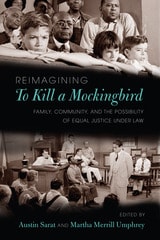
Reimagining "To Kill a Mockingbird"
Family, Community, and the Possibility of Equal Justice under LawAustin Sarat
University of Massachusetts Press, 2013
The readings in this volume peel back the film's visual representation of the many-layered social world of Maycomb, Alabama, offering sometimes counterintuitive insights through the prism of a number of provocative contemporary theoretical and interpretive questions. What, they ask, is the relationship between the subversion of social norms and the doing of justice or injustice? Through what narrative and visual devices are some social hierarchies destabilized while others remain hegemonic? How should we understand the sacrifices characters make in the name of justice, and comprehend their failures in achieving it?
Asking such questions casts light on the film's eccentricities and internal contradictions and suggests the possibility of new interpretations of a culturally iconic text. The book examines the context that gave meaning to the film's representation of race and how debates about family, community, and race are played out and reframed in law.
Contributors include Colin Dayan, Thomas L. Dumm, Susan Sage Heinzelman, Linda Ross Meyer, Naomi Mezey, Imani Perry, and Ravit Reichman.
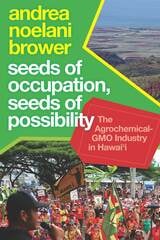
Seeds of Occupation, Seeds of Possibility
The Agrochemical-GMO Industry in Hawai‘iAndrea Noelani Brower
West Virginia University Press, 2022
Hawaiʻi is a primary site for development of herbicide-resistant corn seed and, until recently, was host to more experimental field trials of genetically engineered crops than anywhere else in the world. It is also a node of powerful resistance. While documentaries and popular news stories have profiled the biotech seed industry in Hawaiʻi, Seeds of Occupation, Seeds of Possibility is the first book to detail the social and historical conditions by which the chemical-seed oligopoly came to occupy the most geographically isolated islands in the world and made the soils of Hawaiʻi the epicenter of agrochemical and agricultural biotechnology testing.
Andrea Brower, an activist-scholar from Hawaiʻi, examines the consequences related to genetically engineered seed development for Hawaiʻi’s people and the social movement that has risen in response. With insights beyond the islands, Seeds of Occupation, Seeds of Possibility illuminates why visions for a radically better world must be expanded by intersectional and systemically oriented movements.
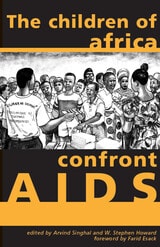
The Children Of Africa Confront AIDS
From Vulnerability To PossibilityArvind Singhal
Ohio University Press, 2003
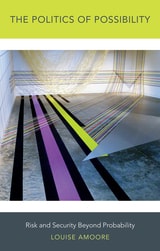
The Politics of Possibility
Risk and Security Beyond ProbabilityLouise Amoore
Duke University Press, 2013
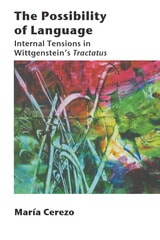
The Possibility of Language
Internal Tensions in Wittgenstein's TractatusMaria Cerezo
CSLI, 2003
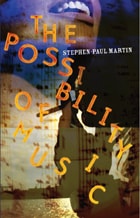
The Possibility of Music
Stephen-Paul Martin
University of Alabama Press, 2007
The Possibility of Music is an imaginative reconstruction of America in the early 21st century. What would our post-9/11 society look like if it were viewed through a series of funhouse mirrors?
Each of Stephen-Paul Martin’s stories is a response to this question, a prose exploration that redefines what it means to write fiction in a world in which the Sistein Chapel has become the Mall of America. Nightmarish at times, playfully amusing at others, Martin’s prose is relentlessly inventive and challenging, relocating the experimental tradition of Joyce, Kafka, Borges, and Marquez in a contemporary context in which intelligent communication has become both impossible and increasingly necessary.
"I’d always told myself that if I ever wrote my own music," the narrator of one story says, "every composition would become its own distinct struggle with aesthetic questions that emerged as the process unfolded." In good part, that’s what animates The Possibility of Music, a book in which John Coltrane’s "Love Supreme" moves through characters and stories like a soundtrack.
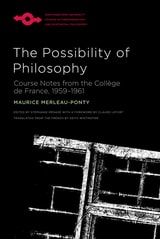
The Possibility of Philosophy
Course Notes from the Collège de France, 1959–1961Maurice Merleau-Ponty, Edited by Stéphanie Ménasé with a foreword by Claude Lefort, Translated from the French by Keith Whitmoyer
Northwestern University Press, 2022
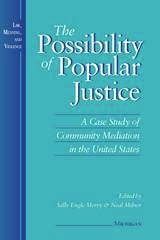
The Possibility of Popular Justice
A Case Study of Community Mediation in the United StatesSally Engle Merry and Neal Milner, Editors
University of Michigan Press, 1995
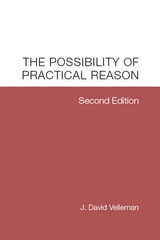
The Possibility of Practical Reason
J. David Velleman
Michigan Publishing Services, 2015