Results by title
944 books match the query 'Indians of North America' and 180 start with t
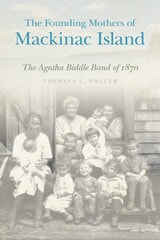
The Founding Mothers of Mackinac Island
The Agatha Biddle Band of 1870Theresa L. Weller
Michigan State University Press, 2021
The Foxie Otter Site
A Multicomponent Occupation North of Lake HuronChristopher C. Hanks
University of Michigan Press, 1988
The Garnsey Spring Campsite
Late Prehistoric Occupation in Southeastern New MexicoWilliam J. Parry and John D. Speth
University of Michigan Press, 1984
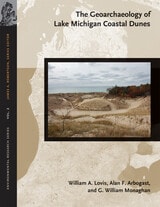
The Geoarchaeology of Lake Michigan Coastal Dunes
William A. Lovis, Alan F. Arbogast, and G. William Monaghan
Michigan State University Press, 2012
Complex sets of environmental factors have interacted over the past 5,000 years to affect how changes in climate, temperature, relative precipitation, and the levels of Lake Michigan influence the preservation of archaeological sites in coastal sand dunes along Lake Michigan. As a collaboration between earth scientists, archaeologists, and geoarchaeologists, this study draws on a wealth of research and multidisciplinary insights to explore the conditions necessary to safeguard ancient human settlements in these landscapes. A variety of contemporary and innovative techniques, including numerous dating methods and approaches, were employed to determine when and for how long sand dunes were active and when and for how long archaeological sites were occupied. Knowledge of dune processes and settlement patterns not only affects archaeological interpretations, but it is also consummately important to land planners responsible for managing heritage archaeological sites in the Lake Michigan coastal zone.
The Geoarchaeology of Whitewater Draw, Arizona
Michael R. Waters
University of Arizona Press, 1986
The Georgia and South Carolina Coastal Expeditions of Clarence Bloomfield Moore
Clarence Bloomfield Moore, edited by Lewis Larson
University of Alabama Press, 1998
A Dan Josselyn Memorial Publication
This facsimile edition of Moore's Georgia and South Carolina expeditions includes an extensive new introduction from Georgia's senior archaeologist.
This compilation of Clarence Bloomfield Moore's investigations along the rich coastal and river drainages of Georgia and South Carolina makes
available in a single volume valuable works published a century ago. By modern standards Moore's excavation techniques were crude, but his results were nothing less than spectacular. He recorded data with care, and much information can be learned from his works. In some cases his publications are the only documentation extant for sites that have since been destroyed. In one case, relic collectors had destroyed six mounds at Mason's Plantation—the largest Mississippian center in the Savannah River valley—by the time Moore visited the site in 1897.
Moore also documented prehistoric urn burials, a ritual widely practiced in eastern North America but more frequently on the Gulf Coastal Plain
of Alabama and coastal sites in Georgia and South Carolina. In the introduction, Lewis Larson discusses Moore's investigations within the framework of the current understanding of Georgia and South Carolina coastal archaeological chronology.

The German Texas Frontier
Ferdinand Lindheimer’s Newspaper Accounts of the Environment, Gold, and IndiansDaniel J. Gelo
University of North Texas Press, 2024

The Ghost Dancers
A NovelAdrian C. Louis
University of Nevada Press, 2021
The Glacier Park Reader
David Stanley
University of Utah Press, 2017
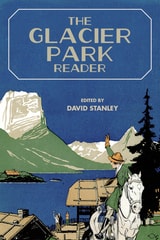
Soon after the park was established in 1910, visitors began to arrive, often with pen in hand. They included such well-known authors as mystery writer Mary Roberts Rinehart, historian Agnes C. Laut, fiction writer Dorothy Johnson, humorist Irvin S. Cobb, poet Vachel Lindsay, and artist Maynard Dixon—all featured in the book. Readers will encounter colorful characters who lived in and around the park in its early days, including railroad magnate and conservationist Louis Hill, renegade ranger and poacher Joe Cosley, bootlegger Josephine Doody, and old-time cowboy guide Jim Whilt. Blackfeet and Kalispel myths, politically charged descriptions by early explorers such as John Muir and George Bird Grinnell, and full-color reproductions of the illustrated letters of cowboy artist and Glacier resident Charles M. Russell are also included.
Copublished with the Glacier National Park Conservancy.
The Glacier National Park Conservancy preserves the Park for generations to come. Learn more about our work at www.glacier.org
Part of the National Park Reader series, edited by Lance Newman and David Stanley
The Good Rainbow Road
Simon J. Ortiz; Illustrations by Michael Lacapa
University of Arizona Press, 2004
Their village is called Haapaahnitse, Oak Place, and it lies at the foot of a mountain. Once there was a lake and a stream nearby, but they have dried up. Once rain and snow came, but no more. Not only did the crops wither and die, even the hardy oak trees have become brittle sticks. The land has become barren and dry.
Two brothers, Tsaiyah-dzehshi, whose name means First One, and Hamahshu-dzehshi, Next One, are chosen for an important mission. They are sent on a westward trek to the home of the Shiwana, the Rain and Snow Spirits, to ask them to bring the gift of water to the village again. The brothers cross deserts and mountains on an arduous journey until they are finally stopped short by a treacherous canyon filled with molten lava.
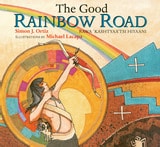
The Good Rainbow Road tells how the brothers overcome this last challenge and continue on to their destination. Written in the tradition of Native American oral storytelling and accompanied by colorful illustrations from celebrated Native artist Michael Lacapa, it brings the powers of language, memory, and imagery to a tale that will captivate children ages seven and up.
As Simon Ortiz writes, "The Good Rainbow Road is located in the Native American world, but it is not limited to that world. Even considering humankind's many ethnic and racial differences, we are all part of each other as people and the rest of all Creation, and our stories join us together." This is the foundation of The Good Rainbow Road, and on that road young readers will broaden their understanding of humanity's common bonds.
The Good Rainbow Road is presented in Keres, the language of Acoma Pueblo and six other Pueblo communities in New Mexico, and in English, with an additional Spanish translation in the back of the book.
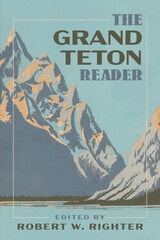
The Grand Teton Reader
Robert W. Righter
University of Utah Press, 2021
Editor Robert Righter has selected thirty-five contributors whose work takes readers from the Tetons’ geological origins to the time of Euro-American encroachment and the park’s politically tumultuous creation. Selections range from Laine Thom’s Shoshone legend of the Snake River and Owen Wister’s essay “Great God! I’ve Just Killed a Bear,” to Grace Gallatin Seton-Thompson’s humorous yet fearful account of crossing the Snake River, and William Owen’s first attempt to climb the Grand Teton. Conservationists, naturalists, and environmentalists are also represented: Terry Tempest Williams chronicles her multiyear encounter with her “Range of Memory,” and Olaus and Mardy Murie recount the difficulties of “park-making” in an often-hostile human environment.
Anyone seeking a deeper understanding of the park’s wild beauty and controversial past will want to read these stories by people who lived it.
The Great Confusion in Indian Affairs
Native Americans and Whites in the Progressive EraBy Tom Holm
University of Texas Press, 2005
The United States government thought it could make Indians "vanish." After the Indian Wars ended in the 1880s, the government gave allotments of land to individual Native Americans in order to turn them into farmers and sent their children to boarding schools for indoctrination into the English language, Christianity, and the ways of white people. Federal officials believed that these policies would assimilate Native Americans into white society within a generation or two. But even after decades of governmental efforts to obliterate Indian culture, Native Americans refused to vanish into the mainstream, and tribal identities remained intact.
This revisionist history reveals how Native Americans' sense of identity and "peoplehood" helped them resist and eventually defeat the U.S. government's attempts to assimilate them into white society during the Progressive Era (1890s-1920s). Tom Holm discusses how Native Americans, though effectively colonial subjects without political power, nonetheless maintained their group identity through their native languages, religious practices, works of art, and sense of homeland and sacred history. He also describes how Euro-Americans became increasingly fascinated by and supportive of Native American culture, spirituality, and environmental consciousness. In the face of such Native resiliency and non-Native advocacy, the government's assimilation policy became irrelevant and inevitably collapsed. The great confusion in Indian affairs during the Progressive Era, Holm concludes, ultimately paved the way for Native American tribes to be recognized as nations with certain sovereign rights.

The Hawk Is Hungry and Other Stories
D'Arcy McNickle; Edited by Birgit Hans
University of Arizona Press, 1992
CONTENTS
The Reservation
Hard Riding
En roulant ma boule, roulant...
Meat for God
Snowfall
Train Time
Montana
The Hawk Is Hungry
Debt of Gratitude
Newcomers
Man's Work
Going to School
The City
Manhattan Wedlock
Let the War Be Fought
In the Alien Corn
Six Beautiful in Paris
The Silver Locket
The Heart as a Drum
Continuance and Resistance in American Indian PoetryRobin Riley Fast
University of Michigan Press, 2000
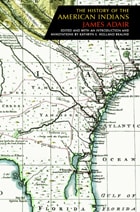
The History of the American Indians
A Critical EditionJames Adair; edited, introduced, and annotated by Kathryn E. Holland Braund
University of Alabama Press, 2009
A fully annotated edition of a classic work detailing the cultures of five southeastern American Indian tribes during the Contact Period
James Adair was an Englishman who lived and traded among the southeastern Indians for more than 30 years, from 1735 to 1768. During that time he covered the territory from the Appalachian Mountains to the Mississippi River. He encountered and lived among Indians, advised governors, spent time with settlers, and worked tirelessly for the expansion of British interests against the French and the Spanish. Adair’s acceptance by the Creeks, Choctaws, Cherokees, and Chickasaws provided him the opportunity to record, compare, and analyze their cultures and traditions.Adair’s written work, first published in England in 1775, is considered one of the finest histories of the Native Americans. His observations provide one of the earliest and what many modern scholars regard as the best account of southeastern Indian cultures. This edition adheres to current standards of literary editing, following the original closely, and provides fully annotated and indexed critical apparatus.
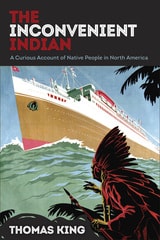
The Inconvenient Indian
A Curious Account of Native People in North AmericaThomas King
University of Minnesota Press, 2013
In The Inconvenient Indian, Thomas King offers a deeply knowing, darkly funny, unabashedly opinionated, and utterly unconventional account of Indian–White relations in North America since initial contact. Ranging freely across the centuries and the Canada–U.S. border, King debunks fabricated stories of Indian savagery and White heroism, takes an oblique look at Indians (and cowboys) in film and popular culture, wrestles with the history of Native American resistance and his own experiences as a Native rights activist, and articulates a profound, revolutionary understanding of the cumulative effects of ever-shifting laws and treaties on Native peoples and lands.
Suffused with wit, anger, perception, and wisdom, The Inconvenient Indian is at once an engaging chronicle and a devastating subversion of history, insightfully distilling what it means to be “Indian” in North America. It is a critical and personal meditation that sees Native American history not as a straight line but rather as a circle in which the same absurd, tragic dynamics are played out over and over again. At the heart of the dysfunctional relationship between Indians and Whites, King writes, is land: “The issue has always been land.” With that insight, the history inflicted on the indigenous peoples of North America—broken treaties, forced removals, genocidal violence, and racist stereotypes—sharpens into focus. Both timeless and timely, The Inconvenient Indian ultimately rejects the pessimism and cynicism with which Natives and Whites regard one another to chart a new and just way forward for Indians and non-Indians alike.
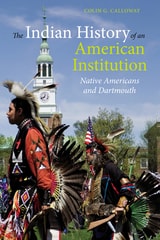
The Indian History of an American Institution
Native Americans and DartmouthColin G. Calloway
Dartmouth College Press, 2010
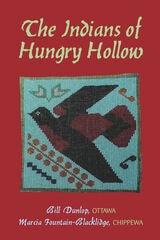
The Indians of Hungry Hollow
Bill Dunlop and Marcia Fountain-Blacklidge
University of Michigan Press, 2004
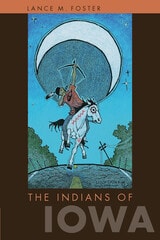
The Indians of Iowa
Foster, Lance M.
University of Iowa Press, 2009
Foster begins with a history of Lewis and Clark’s travels along the Missouri River adjacent to western Iowa. Next, he focuses on the tribes most connected to Iowa from prehistoric times to the present day: the Ioway, Meskwaki, Sauk, Omaha and Ponca, Otoe and Missouria, Pawnee and Arikara, Potawatomi, Illinois Confederacy, Santee and Yankton Sioux, and Winnebago. In between each tribal account, “closer look” essays provide details on Indian women in Iowa, traditional ways of life, Indian history and spirituality, languages and place-names, archaeology, arts and crafts, and houses and landscapes. Finally, Foster brings readers into the present with chapters called “Going to a Powwow,” “Do You Have Indian Blood?” and “Indians in Iowa Today.” The book ends with information about visiting Native American museums, historic sites, and communities in Iowa as well as tribal contacts and a selection of published and online resources.
The story of the Indians of Iowa is long and complicated. Illustrated with maps and stunning original art, Lance Foster’s absorbing, accessible overview of Iowa’s Indian tribes celebrates the rich native legacy of the Hawkeye State. It is essential reading for students, teachers, and everyone who calls Iowa home.
The Indians of Point of Pines, Arizona
A Comparative Study of Their Physical CharacteristicsKenneth A. Bennett
University of Arizona Press, 1973
The Invasion
Janet Lewis
Michigan State University Press, 2000
The Invasion, a novel originally published in 1932, marked the debut of historical novelist Janet Lewis, who went on to write numerous poems and short stories as well as the novels The Wife of Martin Guerre and The Trial of Soren Quist. Lewis grew up in the Lake country of the Old Northwest and The Invasion is based on family stories she heard as a child.The Invasion displays well-researched historical accuracy, an innate understanding of and feeling for Native American culture enhanced by the author's fluency in the Ojibway language, and an economy of style that is remarkable for a first novel.
In 1790, John Johnston, a cultivated young Irishman, came to the far corner of the Northwest Territory to make his fortune intending to spend only a year. Instead he married Ozhah-guscoday- wayquay (The Woman of the Glade), daughter of the Ojibway chief Waub- ojeeg, and settled on the St. Mary's River. Together they founded a family that was loved, respected, and famous throughout the region for honesty, fairness, and hospitality. Their home was the center of culture for the area and for every visiting traveler, Native American or white. The Invasion chronicles a time when one culture violently supplanted another even as it depicts a family that blends two cultures together.
Henry Rowe Schoolcraft considered the Johnston family his most valued connection to the Native American population. He eventually married Jane Johnston, daughter of John and The Woman of the Glade, and remain close to her entire family. In his diary, Schoolcraft wrote of the Johnstons, "I have in fact stumbled, as it were, on the only family in Northwest America who could in Indian lore have acted as my guide, philosopher, and friend."
The Land between the Rivers
Thomas Nuttall's Ascent of the Arkansas, 1819Russell M. Lawson
University of Michigan Press, 2004
During the early nineteenth century, Nuttall explored the waters, valleys, plains, and mountains of the Great Lakes, Ohio River, Mississippi River, as well as the Missouri, Arkansas, Red, and Canadian river valleys of the former Louisiana Territory.
In this fascinating account of Nuttall's travels through the wilderness of the middle west, author Russell Lawson-using Nuttall's own journal-captures the sense of excitement of the early wanderer. As much a delight for the mind as the senses, The Land between the Rivers details the unremitting weather and rugged geography of uncharted lands within the Louisiana Territory. A sense of discovery pervades the narrative as Nuttall's odyssey builds to its climax in the prairie wilderness of what is now Oklahoma. Sickened by "ague"-in his case, malaria-Nuttall at times was barely able to go on; yet he continued to search for and catalog plants and animals.
The Land between the Rivers expands our knowledge of the work of one of the country's earliest botanists. We also learn a great deal about the early explorers, the inhabitants of the unsettled land, and about the land and culture of the times.
The Land of Journeys' Ending
Mary Austin
University of Illinois Press, 2003
When The Land of Journeys' Ending was first published in 1924, The Literary Reviewwarned, "This book is treacherous, waiting to overwhelm you with its abundant poetry." In it, successful New York author Mary Austin describes the epic journey she undertook in 1923, when left her East Coast home at the age of fifty-five to travel through the southwestern United States, the area where she lived as a child and where she would later retire.
The journey the book describes is a double one. Austin describes her transition from the cosmopolitan North East to the arid and largely unfamiliar land between the Colorado River and the Rio Grande. In telling her own story, Austin also tells the story of those who journeyed there before her-–Native American tribes, Spanish conquistadores, miners, adventurers, and California-bound migrants. The result is both an homage to the magnificence of the desert, mountains, rivers, canyons, plants, and animals of the Southwest and a history of the waves of people who inhabited the region.
Part memoir, part travel narrative, part historical investigation, and part ecological study, The Land of Journeys' Ending is a moving account of a woman coming full circle, finding solace in the broad landscape of her youth.
The Languages of Native America
Historical and Comparative AssessmentEdited by Lyle Campbell and Marianne Mithun
University of Texas Press, 1979
These essays were drawn from the papers presented at the Linguistic Society of America's Summer Institute at the State University of New York at Oswego in 1976. The contents are as follows:
- Lyle Campbell and Marianne Mithun, "Introduction: North American Indian Historical Linguistics in Current Perspective"
- Ives Goddard, "Comparative Algonquian"
- Marianne Mithun, "Iroquoian"
- Wallace L. Chafe, "Caddoan"
- David S. Rood, "Siouan"
- Mary R. Haas, "Southeastern Languages"
- James M. Crawford, "Timucua and Yuchi: Two Language Isolates of the Southeast"
- Ives Goddard, "The Languages of South Texas and the Lower Rio Grande"
- Irvine Davis, "The Kiowa-Tanoan, Keresan, and Zuni Languages"
- Susan Steele, "Uto-Aztecan: An Assessment for Historical and Comparative Linguistics"
- William H. Jacobsen, Jr., "Hokan lnter-Branch Comparisons"
- Margaret Langdon, "Some Thoughts on Hokan with Particular Reference to Pomoan and Yuman"
- Michael Silverstein, "Penutian: An Assessment"
- Laurence C. Thompson, "Salishan and the Northwest"
- William H. Jacobsen, Jr., "Wakashan Comparative Studies"
- William H. Jacobsen, Jr., "Chimakuan Comparative Studies"
- Michael E. Krauss, "Na-Dene and Eskimo-Aleut"
- Lyle Campbell, "Middle American Languages"
- Eric S. Hamp, "A Glance from Now On"
The Last of the Ofos
Geary Hobson
University of Arizona Press, 2000
In this subtle but inventive novel, presented as Thomas's memoirs, Geary Hobson offers us a glimpse into a life filled with simple joys and sorrows. In relating his Louisiana childhood, Thomas recalls not just school-learning but being taught Indian ways by the small Ofo community. He tells of his life as a roustabout in the oil fields, of his courtship of the rambunctious Sally Fachette, and of his career as a bootlegger, which landed him in prison. We share Thomas's wartime stint with the Marines—where "for the first time in my life I was treated like a equal"—and his life as a farm laborer and a Hollywood extra portraying warbonneted Cheyennes. Then in his later years, when he truly has become the last of his kind, we find Thomas recruited by an anthropologist from the Smithsonian Institution to preserve his people's culture. In Washington, he is exposed to the vagaries of Indian policy and the emerging Native American movement.
Throughout Thomas's story, readers are introduced to a wide-ranging cast of characters, from the outlaws Bonnie and Clyde to a fellow Marine who is wary of Indians, to an uppity anthropologist who doesn't consider Thomas "expert" enough to handle an Ofo flute. Always poor in material wealth but rich in heritage, Thomas Darko is a Native American Everyman whose identity is shaped by family and homeland. His "autobiography" paints a realistic portrait of an Indian confronting the obstacles in his life and the dilemmas of his age as his story reveals the painful legacy of being the last of one's kind.
The Late Archaic across the Borderlands
From Foraging to FarmingEdited by Bradley J. Vierra
University of Texas Press, 2005
Why and when human societies shifted from nomadic hunting and gathering to settled agriculture engages the interest of scholars around the world. One of the most fruitful areas in which to study this issue is the North American Southwest, where Late Archaic inhabitants of the Sonoran and Chihuahuan Deserts of Mexico, Arizona, and New Mexico turned to farming while their counterparts in Trans-Pecos and South Texas continued to forage. By investigating the environmental, biological, and cultural factors that led to these differing patterns of development, we can identify some of the necessary conditions for the rise of agriculture and the corresponding evolution of village life.
The twelve papers in this volume synthesize previous and ongoing research and offer new theoretical models to provide the most up-to-date picture of life during the Late Archaic (from 3,000 to 1,500 years ago) across the entire North American Borderlands. Some of the papers focus on specific research topics such as stone tool technology and mobility patterns. Others study the development of agriculture across whole regions within the Borderlands. The two concluding papers trace pan-regional patterns in the adoption of farming and also link them to the growth of agriculture in other parts of the world.

The Light People
A NovelGordon Henry
Michigan State University Press, 1994
The Light People is a multi-genre novel that includes a series of nested stories about a tribal community in Northern Minnesota. Major themes include Oskinaway’s search for his parents and the legal wrangling over the possession of a leg that has been removed from a tribal elder. Each story is linked to previous and successive stories to form a discourse on identity and cultural appropriation, all told with humor and wisdom.
Taking inspiration from traditional Anishinabe stories and drawing from his own family's storytelling tradition, Gordon Henry, Jr., has woven a tapestry of interlocking narratives in The Light People, a novel of surpassing emotional strength. His characters tell of their experiences, dreams, and visions in a multitude of literary styles and genres. Poetry, drama, legal testimony, letters, and essays combine with more conventional narrative techniques to create a multifaceted, deeply rooted, and vibrant portrait of the author's own tribal culture. Keenly aware of Eurocentric views of that culture, Henry offers a "corrective history" where humor and wisdom transcend the political.
In the contemporary Minnesota village of Four Bears, on the mythical Fineday Reservation, a young Chippewa boy named Oskinaway is trying to learn the whereabouts of his parents. His grandparents turn for help to a tribal elder, one of the light people, Jake Seed. Seed's assistant, a magician who performs at children's birthday parties, tells Oskinaway's family his story, which gives way to the stories of those he encounters. Narratives unfold into earlier narratives, spinning back in time and encompassing the intertwined lives of the Fineday Chippewas, eventually revealing the place of Oskinaway and his parents in a complex web of human relationships.
The Louisiana and Arkansas Expeditions of Clarence Bloomfield Moore
Clarence Bloomfield Moore
University of Alabama Press, 2004
A Dan Josselyn Memorial Publication
The ninth and final volume in the C.B. Moore reprint series that covers archaeological discoveries along North American Waterways.
Clarence B. Moore (1852-1936), a wealthy Philadelphia socialite, paper company heir, and photographer, made the archaeology of the Southeast his passion. Beginning in the 1870s, Moore systematically explored prehistoric sites along the major waterways of the region, from the Ohio River south to Florida and as far west as Texas, publishing his findings, at his own expense, with the Academy of Natural Sciences of Philadelphia.
This volume, the final in a series of nine, includes Moore’s investigations along waterways of Arkansas and Louisiana—the Ouachita, Red, Saline, Black, Tensas, and Atchafalaya Rivers—in three complete field sessions ending in 1909, 1912, and 1913. He located and mapped more than 185 mounds and cemeteries. Artifacts recovered in this territory, such as ceramic effigy pots, earthenware pipes, arrowheads, celts, and projectile points, include some of the most important ones discovered by Moore in his 47 years of excavating. Included in this volume is a CD containing the 69 color illustrations from all the original expedition volumes.
The elaborate earthwork of Poverty Point, located in West Carroll Parish, Louisiana, is perhaps the most remarkable archaeological site presented in the volume. In some cases, Moore documented sites along the tributaries that have since been destroyed by river action or looters. In other cases, the National Register of Historic Sites and concerned landowners in Arkansas and Louisiana have preserved the record of aboriginal peoples and their life ways that was first illuminated by Moore's sophisticated study.
The Lower Mississippi Valley Expeditions of Clarence Bloomfield Moore
Clarence Bloomfield Moore
University of Alabama Press, 1998
A Dan Josselyn Memorial Publication
C. B. Moore's investigations of the Lower Mississippi Valley are here collected in a one-volume facsimile edition.
Like many other natural scientists from the Victorian era, Clarence Bloomfield Moore (1852-1917) lived several lives—adventurer, paper company executive, archaeologist; however, Moore is chiefly remembered for the twenty-five years he spent investigating and documenting archaeological sites along every navigable waterway in the southeastern United States.
Moore's surveys were and are impressive, and he earned lasting respect from archaeological researchers in the South by publishing, mostly at his own expense, all of the data he recovered. This volume includes works that describe data from Moore's expeditions that were key to the early recognition and preservation of major archaeological sites—Toltec, Parkin, Mound City, and Wicklife, among them—in the lower Mississippi River Valley. This and companion volumes stand today as the defining database for every area in which he worked.
The Militarization of Indian Country
Winona LaDuke
Michigan State University Press, 2013
When it became public that Osama bin Laden’s death was announced with the phrase “Geronimo, EKIA!” many Native people, including Geronimo’s descendants, were insulted to discover that the name of a Native patriot was used as a code name for a world-class terrorist. Geronimo descendant Harlyn Geronimo explained, “Obviously to equate Geronimo with Osama bin Laden is an unpardonable slander of Native America and its most famous leader.” The Militarization of Indian Country illuminates the historical context of these negative stereotypes, the long political and economic relationship between the military and Native America, and the environmental and social consequences. This book addresses the impact that the U.S. military has had on Native peoples, lands, and cultures. From the use of Native names to the outright poisoning of Native peoples for testing, the U.S. military’s exploitation of Indian country is unparalleled and ongoing.
The Mississippian Emergence
Bruce D. Smith
University of Alabama Press, 2007
The Mound Builders
Robert Silverberg
Ohio University Press, 1986
In Illinois, the one-hundred-foot Cahokia Mound spreads impressively across sixteen acres, and as many as ten thousand more mounds dot the Ohio River Valley alone. The Mound Builders traces the speculation surrounding these monuments and the scientific excavations which uncovered the history and culture of the ancient Americans who built them.
The mounds were constructed for religious and secular purposes some time between 1000 B.C. and 1000 A.D., and they have prompted curiosity and speculation from very early times. European settlers found them evidence of some ancient and glorious people. Even as eminent an American as Thomas Jefferson joined the controversy, though his conclusions—that the mounds were actually cemeteries of ancient Indians—remained unpopular for nearly a century.
Only in the late 19th century, as Smithsonian Institution investigators developed careful methodologies and reliable records, did the period of scientific investigation of the mounds and their builders begin. Silverberg follows these excavations and then recounts the story they revealed of the origins, development, and demise of the mound builder culture.
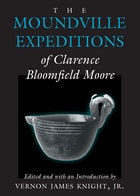
The Moundville Expeditions of Clarence Bloomfield Moore
Clarence Bloomfield MooreClarence Bloomfield Moore, edited and introduced by Vernon James Knight, Jr.
University of Alabama Press, 1996
The two works reprinted in this volume represent the pinnacle of the career of one of the most remarkable American archaeologists of the early 20th century, Clarence Bloomfield Moore.
Moore's Certain Aboriginal Remains of the Black Warrior River (1905) and Moundville Revisited (1907) brought the Moundville site in Alabama to the attention of the scholarly world in dramatic fashion by offering a splendid photographic display and expert commentary on its artifactual richness. Moore was the leading southeastern specialist of his day and the most prolific excavator of southern sites during the early part of the 20th century. Today Moore gives the impression of having been everywhere, having excavated everything, and having published on all of it. Moundville Expeditions contains facsimile reprints of these two classic works, along with a new scholarly introduction by one of the leading authorities on the Moundville archaeological site. Once again these rare materials on Moundville are available both for scholars and for a general audience.
The Multicultural Southwest
A ReaderEdited by A. Gabriel Meléndez, M. Jane Young, Patricia Moore, and Patrick Pynes
University of Arizona Press, 2001
As Americans debate what it means to be a multicultural society, one need only turn for lessons to the Southwest, where distinct peoples have coexisted over centuries. Here difference has not only survived but thrived in a melting pot of races and customs.
This book presents a montage of differing perspectives demonstrating that there is no single, definitive description of the Southwest. It brings together a host of writers, from early travelers and historians to contemporary commentators, who explore a region diverse in its people and ecology and show it to be not just a segment of the nation, but rather a border contact zone.
The editors have assembled an interdisciplinary composite, drawing on history, sociology, anthropology, and geography. Fiction, essays, poetry, newspaper articles, and interviews with local inhabitants add a colorful dimension to the coverage. All of the contributions reveal the tremendous impact that everyday occurrences can have and show how life in the Southwest is affected by the interweaving of social, cultural, and ecological forces. Together they demonstrate the role played by personal and cultural memory in creating alternative views of environment, landscape, human social interaction, conquest, dispossession, technological change, and the survival of cultures.
The Multicultural Southwest is a multifaceted work that shows the many ways in which the past continues to affect the present. It will create in readers an awareness of the phenomena that fuel human imagination and creativity as it opens their eyes to the possibilities of the future.
The Naked Man
Mythologiques, Volume 4Claude Lévi-Strauss
University of Chicago Press, 1990
"Lévi-Strauss uses the structural method he developed to analyze and 'decode' the mythology of native North Americans, focusing on the area west of the Rockies. . . . [The author] takes the opportunity to refute arguments against his method; his chapter 'Finale' is a defense of structural analysis as well as the closing statement of this four-volume opus which started with an 'Ouverture' in The Raw and the Cooked."—Library Journal
"The culmination of one of the major intellectual feats of our time."—Paul Stuewe, Quill and Quire
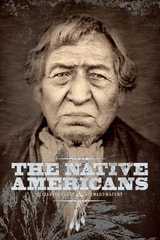
The Native Americans
Elizabeth Glenn and Stewart Rafert
Indiana Historical Society Press, 2009
The Native Americans of the Texas Edwards Plateau, 1582-1799
By Maria F. Wade
University of Texas Press, 2003
2003 – Texas Old Missions and Forts Restoration Association Book Award Winner – Texas Catholic Historical Society
2004 – Finalist: Friends of the Dallas Public Library Award for Book Making the Most Significant Contribution to Knowledge – Texas Institute of Letters
The region that now encompasses Central Texas and northern Coahuila, Mexico, was once inhabited by numerous Native hunter-gather groups whose identities and lifeways we are only now learning through archaeological discoveries and painstaking research into Spanish and French colonial records. From these key sources, Maria F. Wade has compiled this first comprehensive ethnohistory of the Native groups that inhabited the Texas Edwards Plateau and surrounding areas during most of the Spanish colonial era.
Much of the book deals with events that took place late in the seventeenth century, when Native groups and Europeans began to have their first sustained contact in the region. Wade identifies twenty-one Native groups, including the Jumano, who inhabited the Edwards Plateau at that time. She offers evidence that the groups had sophisticated social and cultural mechanisms, including extensive information networks, ladino cultural brokers, broad-based coalitions, and individuals with dual-ethnic status. She also tracks the eastern movement of Spanish colonizers into the Edwards Plateau region, explores the relationships among Native groups and between those groups and European colonizers, and develops a timeline that places isolated events and singular individuals within broad historical processes.
The Native Peoples of North America
A HistoryJohansen, Bruce
Rutgers University Press, 2007
From the earliest traces of first arrivals to the present, Native Americans represent a diverse and colorful array of cultures. Ranging North America and topics as diverse as archaeological discoveries from thousands of years ago and accounts of reservation life today, this study draws on traditional records as well as oral histories and biographical sketches to bring the history of these varied peoples to life.
Johansen’s account, now available for the first time in one comprehensive volume, tackles the various theories that date Native Americans’ first probable appearance perhaps 30,000 years before Columbus’s arrival. Chapters trace the explosion of westward expansion and include personal sketches of some of those famous for native resistance such as Tecumseh’s six-nation alliance, among many others. The book also explores the new wave of Native American activism that began in the 1960s, reservation life today, the repatriation of artifacts, and the current and widespread revival of native language studies.
Written in a compelling and accessible style, this book not only provides a comprehensive introduction to the history of North American Indians, but also offers an uncommonly rich description of the material and intellectual ways that Native American cultures have influenced the life and institutions of people across the globe.
The Networked Wilderness
Communicating in Early New EnglandMatt Cohen
University of Minnesota Press, 2009
In The Networked Wilderness, Matt Cohen examines communications systems in early New England and finds that, surprisingly, struggles over information technology were as important as theology, guns, germs, or steel in shaping the early colonization of North America. Colonists in New England have generally been viewed as immersed in a Protestant culture of piety and alphabetic literacy. At the same time, many scholars have insisted that the culture of the indigenous peoples of the region was a predominantly oral culture. But what if, Cohen posits, we thought about media and technology beyond the terms of orality and literacy?
Reconceptualizing aural and inscribed communication as a spectrum, The Networked Wilderness bridges the gap between the history of the book and Native American systems of communication. Cohen reveals that books, paths, recipes, totems, and animals and their sounds all took on new interactive powers as the English negotiated the well-developed informational trails of the Algonquian East Coast and reported their experiences back to Europe. Native and English encounters forced all parties to think of each other as audiences for any event that might become a kind of "publication."
Using sources ranging from Thomas Morton's Maypole festival to the architecture of today's Mashantucket Pequot Museum and Research Center, Cohen shows that the era before the printing press came to New England was one of extraordinary fertility for communications systems in America.
The New Buffalo
The Struggle for Aboriginal Post-Secondary Education in CanadaBlair Stonechild
University of Manitoba Press, 2006
The New Politics of Indian Gaming
The Rise of Reservation Interest GroupsKenneth N. Hansen
University of Nevada Press, 2015
The Northwest Florida Expeditions of Clarence Bloomfield Moore
Clarence Bloomfield Moore
University of Alabama Press, 1999
A Dan Josselyn Memorial Publication
This comprehensive compilation of Moore's archaeological reports on northwest Florida and southern Alabama and Georgia presents the earliest documented investigations of this region.
When Clarence Bloomfield Moore cruised the rivers of Florida in search of prehistoric artifacts a century ago, he laid the groundwork for archaeological investigations to follow. This volume reflects Moore's fieldwork along the northwest Florida coast, the most archaeologically rich area of the state, as well as Southern Alabama and Georgia.
Here readers will share Moore's first look at the area in 1901-1903 and additional observations made in 1918 during what was to be his last field season. Moore's works reveal ceramics, tools, skeletal remains, and exotic artifacts excavated from the earthen mounds and shell middens built by native peoples over the last two millennia.
In the introduction to this edition, David Brose and Nancy Marie White place Moore's investigations within the context of the science, natural history, and antiquarianism of his day. They document what happened to the sites he explored, tell how his findings fit into the body of his research, and explain how those findings should be interpreted in the context of Southeastern culture history and modern archaeological theory.
Moore was the most knowledgeable Southeastern archaeologist of his time; his writings are a benchmark for anyone studying those areas today.
The Old Beloved Path
Daily Life amond the Indians of the Chattahooche River ValleyWilliam W. Winn
University of Alabama Press, 2008
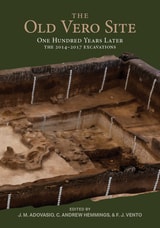
The Old Vero Site (8IR009)
One Hundred Years Later, The 2014 - 2017 ExcavationsJames M. Adovasio, C. Andrew Hemmings, and F. J. Vento
University of Utah Press, 2023
The Old Vero Site details the course of the recent re-excavations of the site while also summarizing the original excavations from a century ago. The volume lays out the sequence and results of the recent project, using new data to conclude that Sellards’s claims are not supported by the evidence. Adovasio, Hemmings, and Vento provide the data to settle the matter definitively: human remains at the site were intrusive from a later time horizon, as critics of the original work had vociferously argued.

The Opium Debate and Chinese Exclusion Laws in the Nineteenth-Century American West
Diana L. Ahmad
University of Nevada Press, 2011
America’s current "war on drugs" is not the nation’s first. In the mid-nineteenth century, opium-smoking was decried as a major social and public health problem, especially in the West. Although China faced its own epidemic of opium addiction, only a very small minority of Chinese immigrants in America were actually involved in the opium business. It was in Anglo communities that the use of opium soon spread and this growing use was deemed a threat to the nation’s entrepreneurial spirit and to its growing mportance as a world economic and military power. The Opium Debate examines how the spread of opium-smoking fueled racism and created demands for the removal of the Chinese from American life. This meticulously researched study of the nineteenth-century drug-abuse crisis reveals the ways moral crusaders linked their antiopium rhetoric to already active demands for Chinese exclusion. Until this time, anti-Chinese propaganda had been dominated by protests against the economic and political impact of Chinese workers and the alleged role of Chinese women as prostitutes. The use of the drug by Anglos added another reason for demonizing Chinese immigrants. Ahmad describes the disparities between Anglo-American perceptions of Chinese immigrants and the somber realities of these people’s lives, especially the role that opium-smoking came to play in the Anglo-American community, mostly among middle- and upper-class women. The book offers a brilliant analysis of the evolution of the Chinese Exclusion Act of 1882, plus important insights into the social history of the nineteenth-century West, the culture of American Victorianism, and the rhetoric of racism in American politics.
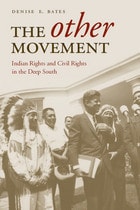
The Other Movement
Indian Rights and Civil Rights in the Deep SouthDenise E. Bates
University of Alabama Press, 2022
Examines the most visible outcome of the Southern Indian Rights Movement: state Indian affairs commissions
In recalling political activism in the post-World War II South, rarely does one consider the political activities of American Indians as they responded to desegregation, the passing of the Civil Rights Acts, and the restructuring of the American political party system. Native leaders and activists across the South created a social and political movement all their own, which drew public attention to the problems of discrimination, poverty, unemployment, low educational attainment, and poor living conditions in tribal communities.
While tribal-state relationships have historically been characterized as tense, most southern tribes—particularly non-federally recognized ones—found that Indian affairs commissions offered them a unique position in which to negotiate power. Although individual tribal leaders experienced isolated victories and generated some support through the 1950s and 1960s, the creation of the inter-tribal state commissions in the 1970s and 1980s elevated the movement to a more prominent political level. Through the formalization of tribal-state relationships, Indian communities forged strong networks with local, state, and national agencies while advocating for cultural preservation and revitalization, economic development, and the implementation of community services.
This book looks specifically at Alabama and Louisiana, places of intensive political activity during the civil rights era and increasing Indian visibility and tribal reorganization in the decades that followed. Between 1960 and 1990, U.S. census records show that Alabama’s Indian population swelled by a factor of twelve and Louisiana’s by a factor of five. Thus, in addition to serving as excellent examples of the national trend of a rising Indian population, the two states make interesting case studies because their Indian commissions brought formerly disconnected groups, each with different goals and needs, together for the first time, creating an assortment of alliances and divisions.
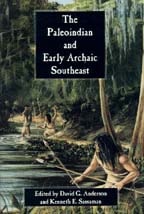
The Paleoindian and Early Archaic Southeast
Edited by David G. Anderson and Kenneth E. Sassaman
University of Alabama Press, 1996
The southeastern United States has one of the richest records of early human settlement of any area of North America. This book provides the first state-by-state summary of Paleoindian and Early Archaic research from the region, together with an appraisal of models developed to interpret the data. It summarizes what we know of the peoples who lived in the Southeast more than 8,000 years ago—when giant ice sheets covered the northern part of the continent, and such mammals as elephants, saber-toothed tigers, and ground sloths roamed the landscape. Extensively illustrated, this benchmark collection of essays on the state of Paleoindian and Early Archaic research in the Southeast will guide future studies on the subject of the region's first inhabitants for years to come.
Divided in three parts, the volume includes:
Part I: Modeling Paleoindian and Early Archaic Lifeways in the Southeast
Environmental and Chronological Considerations, David G. Anderson, Lisa D. O'Steen, and Kenneth E. Sassaman
Modeling Paleoindian and Early Archaic Settlement in the Southeast: A Historical Perspective, David G. Anderson and Kenneth E. Sassaman
Models of Paleoindian and Early Archaic Settlement in the Lower Southeast, David G. Anderson
Early Archaic Settlement in the South Carolina Coastal Plain, Kenneth E. Sassaman
Raw Material Availability and Early Archaic Settlement in the Southeast, I. Randolph Daniel Jr.
Paleoindian and Early Archaic Settlement along the Oconee Drainage, Lisa D. O'Steen
Haw River Revisited: Implications for Modeling Terminal Late Glacial and Early Holocene Hunter-Gatherer Settlement Systems in the Southeast, John S. Cable
Early Archiac Settlement and Technology: Lessons from Tellico, Larry R. Kimball
Paleoindians Near the Edge: A Virginia Perspective, Michael F. Johnson
Part II: The Regional Record
The Need for a Regional Perspective, Kenneth E. Sassaman and David G. Anderson
Paleoindian and Early Archaic Research in the South Carolina Area, David G. Anderson and Kenneth E. Sassaman
The Taylor Site: An Early Occupation in Central South Carolina, James L. Michie
Paleoindian and Early Archaic Research in Tennessee, John B. Boster and Mark R. Norton
A Synopsis of Paleoindian and Early Archaic Research in Alabama, Eugene M. Futato
Statified Late Pleistocene and Early Holocene Deposits at Dust Cave, Northwestern Alabama, Boyce N. Driskell
Bone and Ivory Tools from Submerged Paleoindian Sites in Florida, James S. Dunbar and S. David Webb
Paleoindian and Early Archaic Data from Mississippi, Samuel O. McGahey
Early and Middle Paleoindian Sites in the Northeastern Arkansas Region, J. Christopher Gillam
Part III: Commentary
A Framework for the Paleoindian/Early Archaic Transition, Joel Gunn
Modeling Communities and Other Thankless Tasks, Dena F. Dincauze
An Arkansas View, Dan F. Morse
Comments, Henry T. Wright
The People and the Word
Reading Native NonfictionRobert Warrior
University of Minnesota Press, 2005
Focusing on autobiographical writings and critical essays, as well as communally authored and political documents, The People and the Word explores how the Native tradition of nonfiction has both encompassed and dissected Native experiences. Warrior begins by tracing a history of American Indian writing from the eighteenth century to the late twentieth century, then considers four particular moments: Pequot intellectual William Apess’s autobiographical writings from the 1820s and 1830s; the Osage Constitution of 1881; narratives from American Indian student experiences, including accounts of boarding school in the late 1880s; and modern Kiowa writer N. Scott Momaday’s essay “The Man Made of Words,” penned during the politically charged 1970s. Warrior’s discussion of Apess’s work looks unflinchingly at his unconventional life and death; he recognizes resistance to assimilation in the products of the student print shop at the Santee Normal Training School; and in the Osage Constitution, as well as in Momaday’s writing, Warrior sees reflections of their turbulent times as well as guidance for our own.
Taking a cue from Momaday’s essay, which gives voice to an imaginary female ancestor, Ko-Sahn, Warrior applies both critical skills and literary imagination to the texts. In doing so, The People and the Word provides a rich foundation for Native intellectuals’ critical work, deeply entwined with their unique experiences.
Robert Warrior is professor of English and Native American studies at the University of Oklahoma. He is author of Tribal Secrets: Recovering American Indian Intellectual Traditions (Minnesota, 1994) and coauthor, with Paul Chaat Smith, of Like a Hurricane: The Indian Movement from Alcatraz to Wounded Knee.
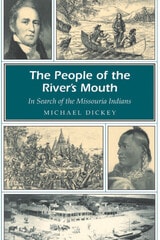
The People of the River's Mouth
In Search of the Missouria IndiansMichael E. Dickey
University of Missouri Press, 2011
The Missouria people were the first American Indians encountered by European explorers venturing up the Pekitanoui River—the waterway we know as the Missouri. This Indian nation called itself the Nyut^achi, which translates to “People of the River Mouth,” and had been a dominant force in the Louisiana Territory of the pre-colonial era. When first described by the Europeans in 1673, they numbered in the thousands. But by 1804, when William Clark referred to them as “once the most powerful nation on the Missouri River,” fewer than 400 Missouria remained. The state and Missouri River are namesakes of these historic Indians, but little of the tribe’s history is known today. Michael Dickey tells the story of these indigenous Americans in The People of the River’s Mouth.
Accessible to general readers, this book recovers the lost history of an important people. The People of the River’s Mouth sheds light on an overlooked aspect of Missouri’s past and pieces together the history of these influential Native Americans in an engaging, readable volume.
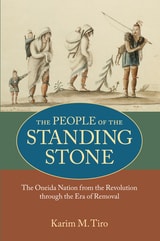
The People of the Standing Stone
The Oneida Nation from the Revolution through the Era of RemovalKarim M. Tiro
University of Massachusetts Press, 2011
The Oneidas' physical, political, and emotional division persists to this day. Even for those who stayed put, their world changed more in cultural, ecological, and demographic terms than at any time before or since. Oneidas of the post-Revolutionary decades were reluctant pioneers, undertaking more of the adaptations to colonized life than any other generation. Amid such wrenching change, maintaining continuity was itself a creative challenge. The story of that extraordinary endurance lies at the heart of this book.