Results by title
358 books match the query 'Labor & Industrial Relations' and 66 start with t
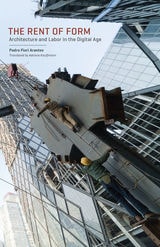
The Rent of Form
Architecture and Labor in the Digital AgePedro Fiori Arantes
University of Minnesota Press, 2019
A critique of prominent architects’ approach to digitally driven design and labor practices over the past two decades
With the advent of revolutionary digital design and production technologies, contemporary architects and their clients developed a taste for dramatic, unconventional forms. Seeking to amaze their audiences and promote their global brands, “starchitects” like Herzog & de Meuron and Frank Gehry have reaped substantial rewards through the pursuit of spectacle enabled by these new technologies. This process reached a climax in projects like Gehry’s Guggenheim Bilbao and the “Bilbao effect,” in which spectacular architectural designs became increasingly sought by municipal and institutional clients for their perceived capacity to enhance property values, which author Pedro Fiori Arantes calls the “rent of form.”
Analyzing many major international architectural projects of the past twenty years, Arantes provides an in-depth account of how this “architecture of exception” has come to dominate today’s industry. Articulating an original, compelling critique of the capital and labor practices that enable many contemporary projects, Arantes explains how circulation (via image culture), consumption (particularly through tourism), the division of labor, and the distribution of wealth came to fix a certain notion of starchitecture at the center of the industry.
Significantly, Arantes’s viewpoint is not that of Euro-American capitalism. Writing from the Global South, this Brazilian theorist offers a fresh perspective that advances ideas less commonly circulated in dominant, English-language academic and popular discourse. Asking key questions about the prevailing logics of finance capital, and revealing inconvenient truths about the changing labor of design and the treatment of construction workers around the world, The Rent of Form delivers a much-needed reevaluation of the astonishing buildings that have increasingly come to define world cities.

The Republic Shall Be Kept Clean
How Settler Colonial Violence Shaped Antileft RepressionTariq D. Khan
University of Illinois Press, 2023
The colonizing wars against Native Americans created the template for anticommunist repression in the United States. Tariq D. Khan’s analysis reveals bloodshed and class war as foundational aspects of capitalist domination and vital elements of the nation’s long history of internal repression and social control. Khan shows how the state wielded the tactics, weapons, myths, and ideology refined in America’s colonizing wars to repress anarchists, labor unions, and a host of others labeled as alien, multi-racial, multi-ethnic urban rabble. The ruling classes considered radicals of all stripes to be anticolonial insurgents. As Khan charts the decades of red scares that began in the 1840s, he reveals how capitalists and government used much-practiced counterinsurgency rhetoric and tactics against the movements they perceived and vilified as “anarchist.”
Original and boldly argued, The Republic Shall Be Kept Clean offers an enlightening new history with relevance for our own time.
The Revival of Labor Liberalism
Andrew Battista
University of Illinois Press, 2008
The Revival of Labor Liberalism is a careful analysis of the twentieth-century decline of the labor-liberal coalition and the important efforts to revive their political fortunes. Andrew Battista chronicles the efforts of several new political organizations that arose in the 1970s and 1980s with the goal of reuniting unions and liberals. Drawing from extensive documentary research and in-depth interviews with union leaders and political activists, Battista shows that the new organizations such as the Progressive Alliance, Citizen Labor Energy Coalition, and National Labor Committee made limited but real progress in reconstructing and strengthening the labor-liberal coalition. Although the labor-liberal alliance remained far weaker than the rival business-conservative alliance, Battista illuminates that it held a crucial role in labor and political history after 1968. Focuses on a fraught but evolving partnership, Battista provides a broad analysis of factional divisions among both unions and liberals and considers the future of unionism and the labor-liberal coalition in America.
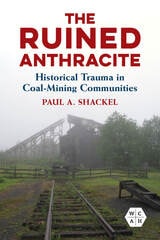
The Ruined Anthracite
Historical Trauma in Coal-Mining CommunitiesPaul A. Shackel
University of Illinois Press, 2023
Insightful and dramatic, The Ruined Anthracite combines archaeology, documentary research, and oral history to render the ongoing human cost of environmental devastation and unchecked capitalism.
The Solidarity Economy
Jean-Louis Laville
University of Minnesota Press, 2023
Questioning the boundaries between politics and economics
Jean-Louis Laville’s large body of work has focused on an intellectual history of the concept of solidarity since the Industrial Revolution. In The Solidarity Economy, his most famous distillation of this work, Laville establishes how the formations of economic solidarities (unions, activism, and other forms of associationalism) reveal that the boundaries between politics and economics are porous and structured such that politics, ideally a pure expression of ethics and values, is instead integrated with economic concerns.
Exploring the possibilities and long histories of association, The Solidarity Economy identifies the power of contemporary social and solidarity movements and examines the history of postcapitalist practices in which democratic demands invade the heart of the economy. The Solidarity Economy ranges in focus from workers associations in France dating back to the nineteenth century, to associations of African Americans and feminists in the United States in the late nineteenth and early twentieth centuries, to a Brazilian landless-worker coalition in the twentieth century.
Studying solidarity associations over time allows us to examine how we can recombine the economic and political spheres to address dependencies and inequalities. Ultimately, The Solidarity Economy has global scope and inspiring examples of associations that deepen democracy.
The Ukrainian Challenge
Reforming Labour Market and Social PolicyILO-CEET ILO-CEET
Central European University Press, 1995
The University Against Itself
The NYU Strike and the Future of the Academic Workplaceedited by Monika Krause, Mary Nolan, Michael Palm and Andrew Ross
Temple University Press, 2008
All of the contributors were either participants in the NYU strike -- graduate students, faculty, and organizers -- or are nationally recognized as writers on academic labor. They are deeply troubled by the ramifications of corporatizing universities. Here they spell out their concerns, offering lessons from one historic strike as well as cautions about the future of all universities.
Contributors include: Stanley Aronowitz, Barbara Bowen, Andrew Cornell, Ashley Dawson, Stephen Duncombe, Steve Fletcher, Greg Grandin, Adam Green, Kitty Krupat, Gordon Lafer, Micki McGee, Sarah Nash, Cary Nelson, Matthew Osypowski, Ed Ott, Ellen Schrecker, Susan Valentine, and the editors.
The Wages of History
Emotional Labor on Public History's Front LinesAmy M. Tyson
University of Massachusetts Press, 2013
Although many who are drawn to such work initially see it as a privilege—an opportunity to connect with the public in meaningful ways through the medium of history—the realities of the job almost inevitably alter that view. Not only do interpreters make considerable sacrifices, both emotional and financial, in order to pursue their work, but their sense of special status can lead them to avoid confronting troubling conditions on the job, at times fueling tensions in the workplace.
This case study also offers insights—many drawn from the author's seven years of working as an interpreter at Fort Snelling—into the way gendered roles and behaviors from the past play out among the workers, the importance of creative autonomy to historical interpreters, and the ways those on public history's front lines both resist and embrace the site's more difficult and painful histories relating to slavery and American Indian genocide.
The Way We Build
Restoring Dignity to Construction WorkMark Erlich
University of Illinois Press, 2023
Mark Erlich blends long-view history with his personal experience inside the building trades to explain one of our economy’s least understood sectors. Erlich’s multifaceted account includes the dynamics of the industry, the backdrop of union policies, and powerful stories of everyday life inside the trades. He offers a much-needed overview of construction’s past and present while exploring roads to the future.

The Work of Music
Labor and Creativity in Germany's Long Nineteenth CenturyCelia Applegate
University of Wisconsin Press, 2025
The Worker
Dominion and FormErnst Jünger, Edited by Laurence Paul Hemming, Translated from the German by Bogdan Costea and Laurence Paul Hemming
Northwestern University Press, 2018
Martin Heidegger considered Jünger “the only genuine follower of Nietzsche,” singularly providing “an interpretation which took shape in the domain of that metaphysics which already determines our epoch, even against our knowledge; this metaphysics is Nietzsche's doctrine of the ‘will to power.’” In The Worker, Jünger examines some of the defining questions of that epoch: the nature of individuality, society, and the state; morality, justice, and law; and the relationships between freedom and power and between technology and nature.
This work, appearing in its entirety in English translation for the first time, is an important contribution to debates on work, technology, and politics by one of the most controversial German intellectuals of the twentieth century. Not merely of historical interest, The Worker carries a vital message for contemporary debates about world economy, political stability, and equality in our own age, one marked by unsettling parallels to the 1930s.
The World Wide Web of Work
A History in the MakingMarcel van der Linden
University College London, 2023
Global labor history is one of the fastest-growing fields of study worldwide today. This volume assembles a group of contributors from around the world to discuss the core concepts “capitalism” and “workers,” and to refine notions such as “coerced labor,” “household strategies,” and “labor markets.” It explores in new ways the connections between laborers in different parts of the world, arguing that both globalization and modern labor management originated in agriculture in the Global South and were only later introduced in Northern industrial settings. It reveals that nineteenth-century chattel slavery was frequently replaced by other forms of coerced labor, and it reconstructs the twentieth-century attempts of the International Labor Organisation to regulate work standards internationally. The book also pays attention to the relational inequality through which workers in wealthy countries benefit from the exploitation of those in poor countries. The final part addresses workers’ resistance and acquiescence: why collective actions often have unanticipated consequences, why and how workers sometimes organize massive flights from exploitation and oppression, and why proletarian revolutions took place in pre-industrial or industrializing countries but never in fully developed capitalist societies.
The Youth Labor Market Problem
Its Nature, Causes, and ConsequencesEdited by Richard B. Freeman and David A. Wise
University of Chicago Press, 1982
To Live Here, You Have to Fight
How Women Led Appalachian Movements for Social JusticeJessica Wilkerson
University of Illinois Press, 2019
Jessica Wilkerson tells their stories within the larger drama of efforts to enact change in the 1960s and 1970s. She shows white Appalachian women acting as leaders and soldiers in a grassroots war on poverty--shaping and sustaining programs, engaging in ideological debates, offering fresh visions of democratic participation, and facing personal political struggles. Their insistence that caregiving was valuable labor clashed with entrenched attitudes and rising criticisms of welfare. Their persistence, meanwhile, brought them into unlikely coalitions with black women, disabled miners, and others to fight for causes that ranged from poor people's rights to community health to unionization.
Inspiring yet sobering, To Live Here, You Have to Fight reveals Appalachian women as the indomitable caregivers of a region--and overlooked actors in the movements that defined their time.
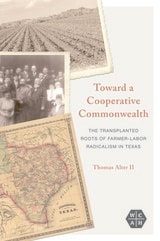
Toward a Cooperative Commonwealth
The Transplanted Roots of Farmer-Labor Radicalism in TexasThomas Alter II
University of Illinois Press, 2022
A rare look at the German roots of radicalism in Texas, Toward a Cooperative Commonwealth illuminates the labor movements and populist ideas that changed the nation’s course at a pivotal time in its history.
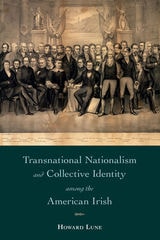
Transnational Nationalism and Collective Identity among the American Irish
Howard Lune
Temple University Press, 2020
In Transnational Nationalism and Collective Identity among the American Irish, Howard Lune considers the development and mobilization of different nationalisms over 125 years of Irish diasporic history (1791–1920) and how these campaigns defined the Irish nation and Irish citizenship.
Lune takes a collective approach to exploring identity, concentrating on social identities in which organizations are the primary creative agent to understand who we are and how we come to define ourselves. As exiled Irishmen moved to the United States, they sought to create a new Irish republic following the American model. Lune traces the construction of Irish American identity through the establishment and development of Irish nationalist organizations in the United States. He looks at how networks—such as societies, clubs, and private organizations—can influence and foster diaspora, nationalism, and nationalist movements.
By separating nationalism from the physical nation, Transnational Nationalism and Collective Identity among the American Irish uniquely captures the processes and mechanisms by which collective identities are constructed, negotiated, and disseminated. Inevitably, this work tackles the question of what it means to be Irish—to have a nationality, a community, or a shared history.