Results by title
1917 books match the query 'Law' and 526 start with t
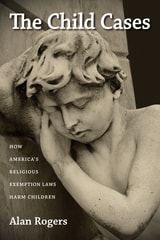
The Child Cases
How America's Religious Exemption Laws Harm ChildrenAlan Rogers
University of Massachusetts Press, 2014
When a four-year-old California girl died on March 9, 1984, the state charged her mother with involuntary manslaughter because she failed to provide her daughter with medical care, choosing instead to rely on spiritual healing. During the next few years, a half dozen other children of Christian Science parents died under similar circumstances. The children's deaths and the parents' trials drew national attention, highlighting a deeply rooted, legal/political struggle to define religious freedom.
Through close analysis of these seven cases, legal historian Alan Rogers explores the conflict between religious principles and secular laws that seek to protect children from abuse and neglect. Christian Scientists argued—often with the support of mainline religious groups—that the First Amendment's “free exercise” clause protected religious belief and behavior. Insisting that their spiritual care was at least as effective as medical treatment, they thus maintained that parents of seriously ill children had a constitutional right to reject medical care.
Congress and state legislatures confirmed this interpretation by inserting religious exemption provisos into child abuse laws. Yet when parental prayer failed and a child died, prosecutors were able to win manslaughter convictions by arguing—as the U.S. Supreme Court had held for more than a century—that religious belief could not trump a neutral, generally applicable law. Children's advocates then carried this message to state legislatures, eventually winning repeal of religious exemption provisions in a handful of states.
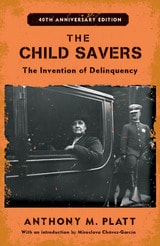
The Child Savers
The Invention of DelinquencyPlatt, Anthony M
Rutgers University Press, 2009
Focusing on social reformers of the late nineteenth and early twentieth centuries, Platt's principal argument is that the "child savers" movement was not an effort to liberate and dignify youth but, instead, a punitive and intrusive attempt to control the lives of working-class urban adolescents. This expanded edition provides a renewed and distinguished contribution by placing it in historical context through insightful commentaries from cross-disciplinary academics, along with an essay by Miroslava Chávez-García examining how Platt's influential study has impacted many of the central arguments social scientists and historians face today.
The Child before the Court
Judgment, Citizenship, and the ConstitutionTimothy Barouch
University of Alabama Press, 2021
A study that challenges our notions about citizenship and judgment by considering the place of children in historical and contemporary legal discourse.
Many of the most controversial political issues of our time focus on the actions and well-being of children such as Greta Thunberg’s climate movement; youth activists standing up for racial justice, safe schools, and an equitable economy; and the furor over separating migrant children from their families. When do we treat children as competent citizens, when do we treat them as dependents in need of protection, and why?
The Child before the Court: Judgment, Citizenship, and the Constitution provides answers to these foundational questions. It analyzes landmark US Supreme Court cases involving children’s free speech and due process rights and argues that our ideas about civic and legal judgment are deeply contested concepts instead of simple character traits. These cases serve as analytic touchstones for these problems, and the Court’s opinions seemingly articulate clear rules through a pragmatic balancing of interests.
Timothy Barouch shows how these cases continually reshape constitutional thought, breaking from a vocabulary of wardship and recasting the child as a liberal individual. He analyzes these legal opinions as judicial novelizations and focuses on their rhetorical markers: the range of tropes, idioms, figures, and arguments that emerge across nearly two centuries of jurisprudence in this important but oft-neglected area. The careful and subtle readings of these cases demonstrate how judicial representations of the child provide key resources for thinking about the child as citizen and, more broadly, citizenship itself. It serves as a bold call to think through the relationship between the liberal individual and the problem of civic judgment as it manifests in public culture in a wide array of contexts at a time when liberal democracy is under siege.

The Climate Trial
Law and Justice on a Melting PlanetNoah Walker-Crawford
Duke University Press, 2026
The Clinical Legal Education Handbook
Edited by Linden Thomas and Nicholas Johnson
University of London Press, 2020
CLE has become an increasingly popular method of legal education in recent years. By the end of 2013 at least 70% of all law schools in the United Kingdom were delivering some type of CLE, and 25% of these offered credit-bearing CLE programs. It is almost certain that this number will increase in the years to come with the advent of the forthcoming Solicitors’ Qualifying Examination, which will allow time spent volunteering in a student law clinic to count as “qualifying work experience.” However, despite the popularity of CLE, there is currently very little information available about the best practices for setting up and delivering these programs.
The Handbook seeks to remedy this gap, offering an invaluable resource to staff involved in running law clinics, both as a practical guide to establishing and running their programs and as a teaching resource and recommended text on clinical programs. It will also act as a resource for clinical legal education researchers who wish to engage in regulatory, pedagogic, and legal service delivery research in this area.
The Cloaking of Power
Montesquieu, Blackstone, and the Rise of Judicial ActivismPaul O. Carrese
University of Chicago Press, 2003

The Collected Works of William Howard Taft, Volume VIII
“Liberty under Law” and Selected Supreme Court OpinionsFrancis Graham Lee
Ohio University Press, 2004
William Howard Taft’s presidency (1909-1913), succeeding Theodore Roosevelt’s, was mired in bitter partisan fighting, and Taft sometimes blundered politically. However, this son of Cincinnati assumed his true calling when President Warren G. Harding appointed him to the U.S. Supreme Court in 1921. Taft remains the only person to have served both as president of the United States and as chief justice of the Supreme Court.
The Collected Works of William Howard Taft, Volume VIII, consists of “Liberty under Law” and selected Supreme Court opinions, among the most instructive accomplishments of Taft’s ten years at the helm of the court. The writings reveal the sober judgments of a federalist who viewed state regulation with suspicion, championed national government, and saw an independent and powerful judiciary as the bulwark protecting the “vested rights” that the framers of the U.S. Constitution sought to guarantee.
Whatever his failings as a politician, Taft was an intellectual powerhouse who knew how to use the law as a lever to encourage society to move toward more stable and productive ends. Although Taft is considered an average president at best, historians and political scientists rank him among fifteen “near greats” who have served on the high court. His ability and his love for the law shine through in Volume VIII, the concluding volume of The Collected Works of William Howard Taft. As Taft reportedly said to President Harding upon his appointment as chief justice, “I love judges and I love courts. They are my ideals on earth of what we shall meet afterward in heaven under a just God.”
The Collision of Political and Legal Time
Foreign Affairs and the Supreme Court's Transformation of Executive AuthorityKimberley L. Fletcher
Temple University Press, 2018
How does the U.S. Supreme Court shape constitutional and political development? In The Collision of Political and Legal Time, Kimberley Fletcher answers this question by analyzing the key role the Court has played in interpreting presidential decision-making in the area of foreign affairs since 1936. She reconsiders the Curtiss-WrightCourt, which instituted a new constitutional order that established plenary powers independent of congressional delegation. Fletcher also reexamines Japanese internment and detainee cases, demonstrating the entrenchment of the new constitutional order and how presidential ascendency becomes institutionalized. Other cases, such as Youngstown, illustrate how the Court, during a time of war, will check Executive power and authority.
The Collision of Political and Legal Time examines these cases and controversies in foreign policymaking through the twentieth and into the twenty-first centuries to show that the Court is not passive or constrained; it does not merely follow politics or the majority coalition. Through her nuanced analysis, Fletcher makes a larger argument about the role of the U.S. Supreme Court as an agent of change, which ultimately transforms power, shapes politics, and redirects history.
The Colonial Construction of Indian Country
Native American Literatures and Federal Indian LawEric Cheyfitz
University of Minnesota Press, 2024
A guide to the colonization and projected decolonization of Native America
In The Colonial Construction of Indian Country, Eric Cheyfitz mounts a pointed historical critique of colonialism through careful analysis of the dialogue between Native American literatures and federal Indian law. Illuminating how these literatures indict colonial practices, he argues that if the decolonization of Indian country is to be achieved, then federal Indian law must be erased and replaced with independent Native nation sovereignty—because subordinate sovereignty, the historical regime, is not sovereignty at all.
At the same time, Cheyfitz argues that Native American literatures, specifically U.S. American Indian literatures, cannot be fully understood without a knowledge of U.S. federal Indian law: the matrix of colonialism in Indian country. Providing intersectional readings of a range of literary and legal texts, he discusses such authors as Louise Erdrich, Frances Washburn, James Welch, Gerald Vizenor, Simon Ortiz, Leslie Marmon Silko, and others. Cheyfitz examines how American Indian writers and critics have responded to the impact of law on Native life, revealing recent trends in Native writing that build upon traditional modes of storytelling and governance.
With a focus on resistance to the colonial regime of federal Indian law, The Colonial Construction of Indian Country not only elucidates how Native American literatures and federal Indian law are each crucial to any reading of the other, it also guides readers to better understand the genocidal assault on Indigenous peoples by Western structures of literacy, politics, and law.

The Columbia River Treaty Revisited
Transboundary River Governance in the Face of UncertaintyEdited by Barbara Cosens
Oregon State University Press, 2012
The Columbia River Treaty Revisited, with contributions from historians, geographers, environmental scientists, and other experts, is intended to facilitate conversation about the impending expiration. It allows the reader, through the close inspection of the Columbia River Basin, to better grasp the uncertainty of water governance. It aids efforts, already underway, to understand changes in the basin since the treaty was passed, to predict future changes, and to determine whether alteration of the treaty is ultimately advisable.
The Columbia River Treaty Revisited will appeal to those interested in water basin management–scholars, stakeholders, and residents of the Columbia River basin alike.
A Project of the Universities Consoritum on Columbia River Governance
The Universities Consortium on Columbia River Governance, with representatives from universities in the U.S. and Canada, formed to offer a nonpartisan platform to facilitate an informed, inclusive, international dialogue among key decision-makers and other interested people and organizations; to connect university research to problems faced within the basin; and to expose students to a complex water resources problem. The Consortium organized the symposium on which this volume is based.
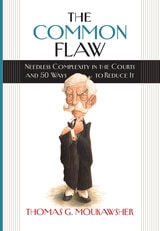
The Common Flaw
Needless Complexity in the Courts and 50 Ways to Reduce ItThomas Moukawsher
Brandeis University Press, 2023
Americans are losing faith in their courts. After long delays, judges often get rid of cases for technical reasons, or force litigants to settle rather than issue a decision. When they do decide cases, we can't understand why.
The Common Flaw seeks to rid the American lawsuit of this needless complexity. The book proposes fifty changes from the filing of a complaint in court to the drafting of appellate decisions to replace the legal system’s formalism with a kind of humanism. Thomas G. Moukawsher calls for courts that decide cases promptly based more on the facts than the law, that prioritize the parties involved over lawyers, that consider the consequences for the people and the public, and that use words we can all understand. Sure to spark an important conversation about court reform, The Common Flaw makes the case for a more effective and credible legal system with warmth and humor, incorporating cartoons alongside insightful reflection.
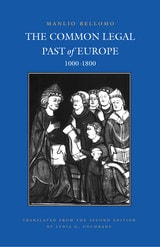
The Common Legal Past of Europe, 1000–1800
Manlio Bellomo
Catholic University of America Press, 1995
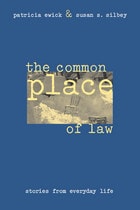
The Common Place of Law
Stories from Everyday LifePatricia Ewick and Susan S. Silbey
University of Chicago Press, 1998
One narrative is based on an idea of the law as magisterial and remote. Another views the law as a game with rules that can be manipulated to one's advantage. A third narrative describes the law as an arbitrary power that is actively resisted. Drawing on these extensive case studies, Ewick and Silbey present individual experiences interwoven with an analysis that charts a coherent and compelling theory of legality. A groundbreaking study of law and narrative, The Common Place of Law depicts the institution as it is lived: strange and familiar, imperfect and ordinary, and at the center of daily life.
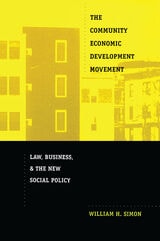
The Community Economic Development Movement
Law, Business, and the New Social PolicyWilliam H. Simon
Duke University Press, 2001
In this book William H. Simon provides the first comprehensive examination of the evolution of Community Economic Development, complete with an analysis of its operating premises and strategies. He describes the profusion of new institutional forms that have arisen from the movement, amalgamations that cut across conventional distinctions—such as those between private and public—and that encompass the efforts of nonprofits, cooperatives, churches, business corporations, and public agencies. Combining local political mobilization with entrepreneurial initiative and electoral accountability with market competition, this phenomenon has catalyzed new forms of property rights designed to motivate investment and civic participation while curbing the dangers of speculation and middle-class flight.
With its examination of many localities and its appraisal of the strengths and weaknesses of the prevailing approach to Community Economic Development, this book will be a valuable resource for local housing, job, and business development officials; community activists; and students of law, business, and social policy.
The Complete Anti-Federalist
Edited by Herbert J. Storing
University of Chicago Press, 2007
The Complete Anti-Federalist, first published in 1981, contains an unprecedented collection of all the significant pamphlets, newspaper articles and letters, essays, and speeches that were written in opposition to the Constitution during the ratification debate. Storing’s work includes introductions to each entry, along with his own consideration of the Anti-Federalist thought.
This new three-volume set includes all the contents of the original seven-volume publication in a convenient, manageable format.
“A work of magnificent scholarship. Publication of these volumes is a civic event of enduring importance.”—Leonard W. Levy, New York Times Book Review
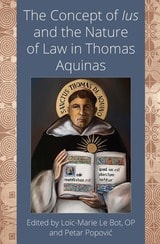
The Concept of <i>Ius</i> and the Nature of Law in Thomas Aquinas
Loic-Marie Le Bot, OP
Catholic University of America Press, 2025

The Concept of Representation in the Age of the American Revolution
John Phillip Reid
University of Chicago Press, 1989
John Phillip Reid goes on to argue that it was generally the application, not the definition, of these rights that was disputed. The sole—and critical—exception concerned the right of representation. American perceptions of the responsibility of representatives to their constituents, the necessity of equal representation, and the constitutional function of consent had diverged gradually, but significantly, from British tradition. Drawing on his mastery of eighteenth-century legal thought, Reid explores the origins and shifting meanings of representation, consent, arbitrary rule, and constitution. He demonstrates that the controversy which led to the American Revolution had more to do with jurisprudential and constitutional principles than with democracy and equality. This book will interest legal historians, Constitutional scholars, and political theorists.
The Congressional Black Caucus, Minority Voting Rights, and the U.S. Supreme Court
Christina R. Rivers
University of Michigan Press, 2014
Both the U.S. Supreme Court and the Congressional Black Caucus (CBC) claim to advocate minority political interests, yet they disagree over the intent and scope of the Voting Rights Act (VRA), as well as the interpretation of the equal protection clause of the 14th Amendment. Whereas the Court promotes color-blind policies, the CBC advocates race-based remedies. Setting this debate in the context of the history of black political thought, Rivers examines a series of high-profile districting cases, from Rodgers v. Lodge (1982) through NAMUDNO v. Holder (2009). She evaluates the competing approaches to racial equality and concludes, surprisingly, that an originalist, race-conscious interpretation of the 14th Amendment, along with a revised states' rights position regarding electoral districting, may better serve minority political interests.
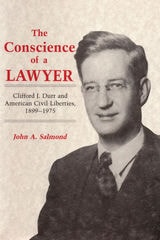
The Conscience of a Lawyer
Clifford J. Durr and American Civil Liberties, 1899–1975John A. Salmond
University of Alabama Press, 1990
A powerful portrait of principle and protest in the life of a Southern lawyer who stood for civil liberties.
Clifford Judkins Durr was an Alabama lawyer who played an important role in defending activists and other accused of disloyalty during the New Deal and McCarthy eras. His uncompromising commitment to civil liberties and civic decency caused him to often take unpopular positions.
In 1933, Durr moved to Washington to work as a lawyer for the Reconstruction Finance Corporation, a creation of Roosevelt’s new Democratic administration, becoming a dedicated New Dealer in the process. He was then appointed by President Franklin D. Roosevelt to the Federal Communications Commission (FCC), a politically sensitive position as FDR sought to counter the increasing power and concentration of broadcasters, many of whom were opponents of the New Deal. Durr resigned from the FCC in 1948 and after brief employment with the National Farmers Union in Colorado, the Durrs eventually returned to Montgomery, Alabama in the hope of returning to a more prosperous, less controversial life.
Durr continued to practice in Montgomery as counsel for black citizens whose rights had been violated and ultimately, in December, 1955, when police arrested Rosa Parks for refusing to give her bus seat to a white man he stepped in and lent his extensive legal prowess to her case and the continuing quest for civil rights. Closing his firm in 1964 Durr began to lecture in the United States and abroad. He died at his grandfather's farm in 1975.
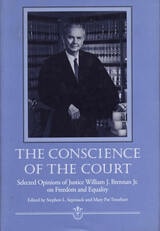
The Conscience of the Court
Selected Opinions of Justice William J. Brennan Jr. on Freedom and EqualityEdited by Stephen L. Sepinuck and Mary Pat Treuthart
Southern Illinois University Press, 1999
The Conscience of the Court celebrates the work of Justice William J. Brennan Jr., who served on the United States Supreme Court for thirty-four years (1956–1990).
Stephen L. Sepinuck and Mary Pat Treuthart introduce and present selected judicial opinions written by Justice Brennan on issues involving personal freedom, civil liberties, and equality. Brennan is ranked by many as the best writer ever to have served on the Supreme Court, and his written opinions depict real people, often in desperate, emotional situations. Remarkable for their clarity of analysis, for their eloquence, and for their forcefulness and persuasiveness, his opinions demonstrate that judicial thought need not be a proprietary enclave of lawyers or the intellectual elite.
The extended excerpts selected by Sepinuck and Treuthart highlight Brennan's approach to judicial decision making. Concerned always with how each decision would actually affect people's lives, Brennan possessed a rare quality of empathy. In Brennan, the editors note, "people and groups who lacked influence in society—Communists and flag burners, children and foreigners, criminal defendants and racial minorities"—found a champion they could count on "to listen to their causes and judge them unmoved by the passions of the politically powerful."
In their introduction to each opinion, the editors provide background facts, discuss how the excerpted opinion transformed the law or otherwise fit into the realm of constitutional jurisprudence, and delve into Justice Brennan's judicial philosophy, his method of constitutional interpretation, and the language he used.
The Consciousness of the Litigator
Duffy Graham
University of Michigan Press, 2005
---Kimberly Kirkland, Franklin Pierce Law Center
The Consciousness of the Litigator investigates the role of the lawyer in modern American political and social life and in the judicial process, and plumbs lawyers' perceptions of themselves, their work, and, especially, their sense of right and wrong.
In so doing, the book sheds light on the unique and little-examined subject of the moral mind of the litigator, whose work extends to all corners of society and whose primary expertise---making legal arguments---is the fundamental skill of all lawyers.
The Consciousness of the Litigator stands with Michael Kelly's Lives of Lawyers as a must-read for the many law students, scholars, and practicing litigators who struggle to balance ethical questions with the dictates of their highly commercialized profession.
The Conservative Case for Class Actions
Brian T. Fitzpatrick
University of Chicago Press, 2019
Conservatives have opposed class actions in recent years, but Fitzpatrick argues that they should see such litigation not as a danger to the economy, but as a form of private enforcement of the law. He starts from the premise that all of us, conservatives and libertarians included, believe that markets need at least some rules to thrive, from laws that enforce contracts to laws that prevent companies from committing fraud. He also reminds us that conservatives consider the private sector to be superior to the government in most areas. And the relatively little-discussed intersection of those two beliefs is where the benefits of class action lawsuits become clear: when corporations commit misdeeds, class action lawsuits enlist the private sector to intervene, resulting in a smaller role for the government, lower taxes, and, ultimately, more effective solutions.
Offering a novel argument that will surprise partisans on all sides, The Conservative Case for Class Actions is sure to breathe new life into this long-running debate.

The Conspiracy Trial of the Chicago Seven
John Schultz
University of Chicago Press, 2009
In 1969, the Chicago Seven were charged with intent to "incite, organize, promote, and encourage" antiwar riots during the chaotic 1968 Democratic National Convention in Chicago. The defendants included major figures of the antiwar and racial justice movements: Abbie Hoffman and Jerry Rubin, the madcap founders of the Yippies; Tom Hayden and Rennie Davis, founders of Students for a Democratic Society and longtime antiwar organizers; David Dellinger, a pacifist and chair of the National Mobilization Committee to End the War in Vietnam; and Bobby Seale, co-founder of the Black Panther Party, who would be bound and gagged in the courtroom before his case was severed from the rest.
The Conspiracy Trial of the Chicago Seven is an electrifying account of the months-long trial that commanded the attention of a divided nation. John Schultz, on assignment for The Evergreen Review, witnessed the whole trial of the Chicago Seven, from the jury selection to the aftermath of the verdict. In his vivid account, Schultz exposes the raw emotions, surreal testimony, and judicial prejudice that came to define one of the most significant legal events in American history.
In October 2020, Aaron Sorkin's film, The Trial of the Chicago Seven, will bring this iconic trial to the screen.
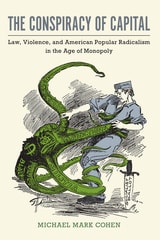
The Conspiracy of Capital
Law, Violence, and American Popular Radicalism in the Age of MonopolyMichael Mark Cohen
University of Massachusetts Press, 2019
In this detailed cultural history, Michael Mark Cohen argues that a legal, ideological, and representational politics of conspiracy contributed to the formation of a genuinely revolutionary mass culture in the United States, starting with the 1886 Haymarket bombing. Drawing on a wealth of primary sources, The Conspiracy of Capital offers a new history of American radicalism and the alliance between the modern business corporation and national security state through a comprehensive reassessment of the role of conspiracy laws and conspiracy theories in American social movements.
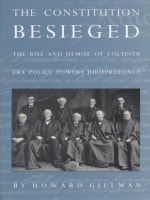
The Constitution Besieged
The Rise & Demise of Lochner Era Police Powers JurisprudenceHoward Gillman
Duke University Press, 1993
The Constitution in Congress
Democrats and Whigs, 1829-1861David P. Currie
University of Chicago Press, 2005
Like its predecessors, The Constitution in Congress: Democrats and Whigs will be an invaluable reference for legal scholars and constitutional historians alike.
The Constitution in Congress
Descent into the Maelstrom, 1829-1861David P. Currie
University of Chicago Press, 2005
This acclaimed series serves as a biography of the U.S. Constitution, offering an indispensable survey of the congressional history behind its development. In a rare examination of the role that both the legislative and executive branches have played in the development of constitutional interpretation, The Constitution in Congress shows how the actions and proceedings of these branches reveal perhaps even more about constitutional disputes than Supreme Court decisions of the time.
The centerpiece for the fourth volume in this series is the great debate over slavery and how this divisive issue led the country into the maelstrom of the Civil War. From the Jacksonian revolution of 1829 to the secession of Southern states from the Union, legal scholar David P. Currie provides an unrivaled analysis of the significant constitutional events—the Wilmot Proviso, the Compromise of 1850, the Kansas-Nebraska Act, the Lincoln-Douglas Debates, and "Bleeding Kansas"—that led up to the war. Exploring how slavery was addressed in presidential speeches and debated in Congress, Currie shows how the Southern Democrats dangerously diminished federal authority and expanded states' rights, threatening the nation's very survival.
Like its predecessors, this fourth volume of The Constitution in Congress will be an invaluable reference for legal scholars and constitutional historians alike.
The Constitution in Congress
The Federalist Period, 1789-1801David P. Currie
University of Chicago Press, 1997
"A joy to read."—Appellate Practive Journal and Update
"[A] patient and exemplary analysis of the work of the first six Congresses."—Geoffrey Marshall, Times Literary Supplement
The Constitution in Congress
The Jeffersonians, 1801-1829David P. Currie
University of Chicago Press, 2001
legislative and executive action in the United States, legal scholars
have traditionally looked only to the courts for guidance in
interpreting the Constitution. This, the second book in David P.
Currie's multivolume series, looks to the legislative and executive
branches for insights into the development of constitutional
interpretation.
Currie examines the period of Republican hegemony from the
inauguration of Thomas Jefferson in 1801 to the election of Andrew
Jackson in 1829. During this time of great leadership and
controversy, many benchmark issues—the abolition of the new Circuit
Courts, the Louisiana Purchase, the Burr conspiracy, the War of 1812,
the Monroe Doctrine, and the Missouri Compromise, among others—were
debated and decided almost exclusively in the legislative and
executive arenas. With its uniquely legal perspective and
comprehensive coverage, The Constitution in Congress
illustrates how the executive and legislative branches matched the
Supreme Court in putting flesh and blood onto the skeleton of the
Constitution.
The Constitution in Wartime
Beyond Alarmism and ComplacencyMark Tushnet, ed.
Duke University Press, 2005
Some of the essays are broad in scope, reflecting on national character, patriotism, and political theory; exploring whether war and republican government are compatible; and considering in what sense we can be said to be in wartime circumstances today. Others are more specific, examining the roles of Congress, the presidency, the courts, and the international legal community. Throughout the collection, balanced, unbiased analysis leads to some surprising conclusions, one of which is that wartime conditions have sometimes increased, rather than curtailed, civil rights and civil liberties. For instance, during the cold war, government officials regarded measures aimed at expanding African Americans’ freedom at home as crucial to improving America’s image abroad.
Contributors. Sotirios Barber, Mark Brandon, James E. Fleming, Mark Graber, Samuel Issacharoff, David Luban, Richard H. Pildes, Eric Posner, Peter Spiro, William Michael Treanor, Mark Tushnet, Adrian Vermeule
The Constitution in the Supreme Court
The First Hundred Years, 1789-1888David P. Currie
University of Chicago Press, 1985
"A thorough, systematic, and careful assessment. . . . As a reference work for constitutional teachers, it is a gold mine."—Charles A. Lofgren, Constitutional Commentary
The Constitution in the Supreme Court
The Second Century, 1888-1986David P. Currie
University of Chicago Press, 1990
"Elegant and readable. Whether you are in favor of judicial restraint or judicial activism, whatever your feelings about the Warren Court, or the Renquist Court, this is a book that justifies serious study."—Robert Stevens, New York Times Book Review
The Constitution of the Federal Republic of Germany
David P. Currie
University of Chicago Press, 1994
Beginning with an overview of the essential features of the Basic Law of Germany, Currie then elucidates those features by analyzing a number of decisions of the German Constitutional Court. Contrasting German constitutional law with the American model, Currie further illuminates the German system and provides an invaluable comparative perspective on American institutions, judicial methods, and constitutional principles.
The German constitutional court recently has become the object of international attention as it has grappled with controversies involving abortion, ratification of the Maastricht Treaty, and the reunification of East and West. Currie examines these issues and their impact on the German constitution.
An appendix includes (in English translation) the complete Basic Law for the Federal Republic of Germany of May 23, 1949 as amended to December 1, 1993.
The Constitution of the United States
A Primer for the PeopleDavid P. Currie
University of Chicago Press, 2000
A masterly introduction to the United States Constitution, this slim book leads the reader through a concise overview of the document's individual articles and amendments. With clear and accessible language, Currie then examines each of the three branches of the federal government and explains the relation between the federal and state governments. He analyzes those constitutional provisions that are designed to protect citizens from governmental interference, such as the due process and equal protection clauses and the confusing first amendment provisions respecting the separation of church and state, and includes discussions of judicial review and freedom of speech and of the press.
A sympathetic yet critical guide, Currie's book enables students and laypersons to understand one of the cornerstones of the Western political tradition. The second edition, along with an updated chronology and bibliography, incorporates the Supreme Court decisions over the past decade that have affected constitutional interpretation.
The Constitution of the United States
A Primer for the PeopleDavid P. Currie
University of Chicago Press, 2000
A masterly introduction to the United States Constitution, this slim book leads the reader through a concise overview of the document's individual articles and amendments. With clear and accessible language, Currie then examines each of the three branches of the federal government and explains the relation between the federal and state governments. He analyzes those constitutional provisions that are designed to protect citizens from governmental interference, such as the due process and equal protection clauses and the confusing first amendment provisions respecting the separation of church and state, and includes discussions of judicial review and freedom of speech and of the press.
A sympathetic yet critical guide, Currie's book enables students and laypersons to understand one of the cornerstones of the Western political tradition. The second edition, along with an updated chronology and bibliography, incorporates the Supreme Court decisions over the past decade that have affected constitutional interpretation.
"Superb . . . highly recommended for those seeking a reliable, understandable, and useful introduction to our constitution."—Appellate Practice Journal and Update

The Constitution, the Law, and Freedom of Expression
1787-1987James Brewer Stewart
Southern Illinois University Press, 1987
In recognition of the bicentennial of the Constitution of the United States, former chief justice Warren E. Burger, Justice Antonin Scalia, ACLU president Norman Dorsen, and others delivered papers at the first annual DeWitt Wallace Conference on the Liberal Arts, held at Macalester College, St. Paul.
Joining some of the best legal minds in America were novelist John Edgar Wideman, chemist Harry B. Gray, historian Mary Beth Norton, and psychiatrist and social psychologist Robert Jay Lifton.
Opening the conference and this book, former chief Justice Burger emphasizes the daring of those who drafted the Constitution. Justice Scalia, noting the great reduction in curbs to freedom of expression since World War I, points out that the proliferation of freedom has forced courts to distinguish between types of expression.
Although the views expressed in these essays differ widely, opinion concerning the major issue falls into two definite camps: Burger, Scalia, and Dorsen contend that freedom of expression depends on the legal structure for survival; Wideman, Gray, Lifton, and Norton maintain that social forces determine freedom of expression.

The Constitutional Jurisprudence of the Federal Republic of Germany, 2nd ed.
Donald P. Kommers
Duke University Press, 0
The Constitutional Jurisprudence of the Federal Republic of Germany, 2nd ed.
Donald P. Kommers
Duke University Press, 0
The Constitutional Jurisprudence of the Federal Republic of Germany
Third edition, Revised and ExpandedDonald P. Kommers and Russell A. Miller
Duke University Press, 2012
Compared to previous editions of The Constitutional Jurisprudence of the Federal Republic of Germany, this third edition more closely tracks Germany's Basic Law and, therefore, the systematic approach reflected in the most-respected German constitutional law commentaries. Entirely new chapters address the relationship between German law and European and international law; social and economic rights, including the property and occupational rights cases that have emerged from Reunification; jurisprudence related to issues of equality, particularly gender equality; and the tension between Germany's counterterrorism efforts and its constitutional guarantees of liberty. Kommers and Miller have also updated existing chapters to address recent decisions involving human rights, federalism, European integration, and religious liberty.
The Constitutional Logic of Affirmative Action
Ronald J. Fiscus
Duke University Press, 1992
Beginning with a distinction drawn between principles of compensatory and distributive justice, Fiscus argues that the former, although often the basis for judgments made in individual discrimination cases, cannot sufficiently justify broad programs of affirmative action. Only a theory of distributive justice, one that assumes minorities have a right to what they would have gained proportionally in a nonracist society, can persuasively provide that justification. On this basis, the author argues in favor of proportional racial quotas—and challenges the charge of “reverse discrimination” raised in protest in the name of the “innocent victims” of affirmative action—as an action necessary to approach the goals of fairness and equality.
The Constitutional Logic of Affirmative Action focuses on Supreme Court affirmative action rulings from Bakke (1976) to Croson (1989) and includes an epilogue by editor Stephen L. Wasby that considers developments through 1995. General readers concerned with racial justice, affirmative action, and public policy, as well as legal specialists and constitutional scholars will find Fiscus’s argument passionate, balanced, and persuasive.
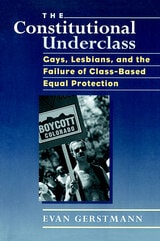
The Constitutional Underclass
Gays, Lesbians, and the Failure of Class-Based Equal ProtectionEvan Gerstmann
University of Chicago Press, 1999
The Court divides people into legal classes that receive varying levels of protection; gays and lesbians and other groups, such as the elderly and the poor, receive the least. Gerstmann reveals how these standards are used to favor certain groups over others, and also how Amendment 2 advocates used the Court's doctrine to convince voters that gays and lesbians were seeking "special rights" in Colorado.
Concluding with a call for wholesale reform of equal-protection jurisprudence, this book is essential reading for anyone interested in fair, coherent, and truly equal protection under the law.
The Construction of Authorship
Textual Appropriation in Law and LiteratureMartha Woodmansee and Peter Jaszi, eds.
Duke University Press, 1994
These essays, illustrating cultural studies in action, are aggressively interdisciplinary and wide-ranging in topic and approach. Questions of collective and collaborative authorship in both contemporary and early modern contexts are addressed. Other topics include moral theory and authorship; copyright and the balance between competing interests of authors and the public; problems of international copyright; musical sampling and its impact on "fair use" doctrine; cinematic authorship; quotation and libel; alternative views of authorship as exemplified by nineteenth-century women's clubs and by the Renaissance commonplace book; authorship in relation to broadcast media and to the teaching of writing; and the material dimension of authorship as demonstrated by Milton's publishing contract.
Contributors. Rosemary J. Coombe, Margreta de Grazia, Marvin D'Lugo, John Feather, N. N. Feltes, Ann Ruggles Gere, Peter Jaszi, Gerhard Joseph, Peter Lindenbaum, Andrea A. Lunsford and Lisa Ede, Jeffrey A. Masten, Thomas Pfau, Monroe E. Price and Malla Pollack, Mark Rose, Marlon B. Ross, David Sanjek, Thomas Streeter, Jim Swan, Max W. Thomas, Martha Woodmansee, Alfred C. Yen
The Corporate Contract in Changing Times
Is the Law Keeping Up?Edited by Steven Davidoff Solomon and Randall Stuart Thomas
University of Chicago Press, 2019
With The Corporate Contract in Changing Times, Steven Davidoff Solomon and Randall Stuart Thomas bring together leading corporate law scholars, judges, and lawyers from top corporate law firms to explore what needs to change and what has prevented reform thus far. Among the topics addressed are how the law could be adapted to the reality that activist hedge funds pose a more serious threat to corporations than the hostile takeovers and how statutory laws, such as the rules governing appraisal rights, could be reviewed in the wake of appraisal arbitrage. Together, the contributors surface promising paths forward for future corporate law and public policy.
The Correspondence of Jeremy Bentham, Volume 14
Supplementary LettersEdited by Philip Schofield, Tim Causer, and Chris Riley
University College London, 2026
Over 250 letters and other materials by the philosopher and reformer Jeremy Bentham, published in full and in authoritative form for the first time.
This volume is a supplement to the chronological series The Correspondence of Jeremy Bentham. It contains over 250 letters offering new biographical information and deepens our knowledge of Bentham’s relationship with his family, with the panopticon penitentiary scheme, and with notable “disciples” such as Étienne Dumont, Henry Bickersteth, and Leicester Stanhope. Additionally, this volume deepens our understanding of Bentham’s relationship with his younger brother, Samuel Bentham, and provides a detailed account of Samuel's journey to and sojourn in the Russian Empire.
The Court vs. Congress
Prayer, Busing, and AbortionEdward Keynes and Randall Miller
Duke University Press, 1989
Edward Keynes and Randall Miller argue that Congress lacks the constitutional power to legislate away the powers of the federal courts and to prevent individuals from seeking redress for presumed infringements of their constitutional rights in these areas. They demonstrate that neither the framers nor ratifiers of the Constitution intended the Congress to exercise plenary power over the appellate jurisdiction of the Supreme Court. Throughout its history the Court has never conceded unlimited powers to Congress; and until the late 1950s Congress had not attempted to gerrymander the Court’s jurisdiction in response to specific decisions. But the authors contend this is just what the sponsors of recent legislative attacks on the Court intend, and they see such efforts as threatening the Court’s independence and authority as defined in the separation of powers clauses of the Constitution.

The Courts of International Trade
Judicial Specialization, Expertise, and Bureaucratic PolicymakingIsaac Unah
University of Michigan Press, 1998
This book will be of interest to scholars studying the judiciary, bureaucracies, and international trade law and administration.
Isaac Unah is Assistant Professor of Political Science, University of North Carolina.
The Coveted Westside
How the Black Homeowners' Rights Movement Shaped Modern Los AngelesJennifer Mandel
University of Nevada Press, 2022
Mandel exposes the enduring struggle between Whites determined to establish their hegemony and create residential heterogeneity in the growing city, and people of color equally determined to obtain full access to the city and the opportunities, including residential, that it offered. Not only does this book document the Black homeowners’ fight against housing discrimination, it shares personal accounts of Blacks’ efforts to settle in the highly desirable Westside of Los Angeles. Mandel explores the White-derived social and legal mechanisms that created this segregated city and the African American-led movement that challenged efforts to block access to fair housing.
The Crimes of Womanhood
Defining Femininity in a Court of LawA. Cheree Carlson
University of Illinois Press, 2014
Carlson analyzes the situations of several women of varying historical stature, from the insanity trials of Mary Todd Lincoln and Lizzie Borden's trial for the brutal slaying of her father and stepmother, to lesser-known trials involving insanity, infidelity, murder, abortion, and interracial marriage. The insanity trial of Elizabeth Parsons Ware Packard, the wife of a minister, resulted from her attempts to change her own religion, while a jury acquitted Mary Harris for killing her married lover, suggesting that loss of virginity to an adulterous man was justifiable grounds for homicide. The popular conception of abortion as a "woman's crime" came to the fore in the case of Ann Loman (also known as Madame Restell), who performed abortions in New York both before and after it became a crime. Finally, Alice Rhinelander was sued for fraud by her new husband Leonard for "passing" as white, but the jury was more moved by the notion of Alice being betrayed as a woman by her litigious husband than by the supposed defrauding of Leonard as a white male. Alice won the case, but the image of womanhood as in need of sympathy and protection won out as well.
At the heart of these cases, Carlson reveals clearly just how narrow was the line that women had to walk, since the same womanly virtues that were expected of them--passivity, frailty, and purity--could be turned against them at any time. These trials of popular status are especially significant because they reflect the attitudes of the broad audience, indicate which forms of knowledge are easily manipulated, and allow us to analyze how the verdict is argued outside the courtroom in the public and press. With gripping retellings and incisive analysis of these scandalous criminal and civil cases, this book will appeal to historians, rhetoricians, feminist researchers, and anyone who enjoys courtroom drama.
The Cultural Life of Intellectual Properties
Authorship, Appropriation, and the LawRosemary J. Coombe
Duke University Press, 1998
Although such artifacts are ubiquitous in contemporary culture, little attention has been paid to the impact of intellectual property law in everyday life or to how ownership of specific intellectual properties is determined and exercised. Drawing on a wide range of cases, disputes, and local struggles, Coombe examines these issues and dismantles the legal assumption that the meaning and value of a text or image is produced exclusively by an individual author or that authorship has a single point of origin. In the process, she examines controversies that include the service of turbanned Sikhs in the Royal Canadian Mounted Police and the use of the term Olympic in reference to the proposed gay Olympic Games. Other chapters discuss the appropriation of such celebrity images as the Marx brothers, Judy Garland, Dolly Parton, James Dean, and Luke Skywalker; the conflict over team names such as the Washington Redskins; and the opposition of indigenous peoples to stereotypical Native American insignia proffered by the entertainment industry. Ultimately, she makes a case for redefining the political in commodified cultural environments.
Significant for its insights into the political significance of current intellectual property law, this book also provides new perspectives on debates in cultural anthropology, cultural studies, and political theory. It will therefore interest both a wide scholarly and a general audience.
The Cultural Production of Intellectual Property Rights
Law, Labor, and the Persistence of Primitive AccumulationSean Johnson Andrews
Temple University Press, 2019
The protection and accumulation of intellectual property rights—like property rights in general—is one of the most important contemporary American values. In his cogent book, The Cultural Production of Intellectual Property Rights, Sean Johnson Andrews shows that the meaning, power, and value of intellectual properties are the consequence of an extended process of cultural production.
Johnson Andrews argues that it is deeper ideological and historical roots which demand that, in the contemporary global, digital economy, all property rights be held sacrosanct and all value must flow back to the legal owner.
Johnson Andrews explains that if we want to rebalance the protection of copyrights and trademarks, we should focus on undermining the reified culture of property that underpins capitalism as a whole. He outlines a framework for analyzing culture; situates intellectual property rights in the history of capitalist property relations; synthesizes key theories of media, politics, and law; and ultimately provides scholars and activists a path to imagining a different future where we prioritize our collective production of value in the commons.