1445 books match the query 'Life Sciences' and 386 start with t
cover of The American Naturalist, volume 206 number 4 (October 2025)

The American Naturalist, volume 206 number 4 (October 2025)

The University of Chicago Press

University of Chicago Press Journals, 2025
This is volume 206 issue 4 of The American Naturalist. Since its inception in 1867, The American Naturalist has maintained its position as one of the world’s premier peer-reviewed publications in ecology, evolution, and behavior research. Its goals are to publish articles that are of broad interest to the readership, pose new and significant problems, introduce novel subjects, develop conceptual unification, and change the way people think. The American Naturalist emphasizes sophisticated methodologies and innovative theoretical syntheses — all in an effort to advance the knowledge of organic evolution and other broad biological principles.
[more]
cover of The American Naturalist, volume 206 number 5 (November 2025)

The American Naturalist, volume 206 number 5 (November 2025)

The University of Chicago Press

University of Chicago Press Journals, 2025
This is volume 206 issue 5 of The American Naturalist. Since its inception in 1867, The American Naturalist has maintained its position as one of the world’s premier peer-reviewed publications in ecology, evolution, and behavior research. Its goals are to publish articles that are of broad interest to the readership, pose new and significant problems, introduce novel subjects, develop conceptual unification, and change the way people think. The American Naturalist emphasizes sophisticated methodologies and innovative theoretical syntheses — all in an effort to advance the knowledge of organic evolution and other broad biological principles.
[more]
cover of The American Naturalist, volume 206 number 6 (December 2025)

The American Naturalist, volume 206 number 6 (December 2025)

The University of Chicago Press

University of Chicago Press Journals, 2025
This is volume 206 issue 6 of The American Naturalist. Since its inception in 1867, The American Naturalist has maintained its position as one of the world’s premier peer-reviewed publications in ecology, evolution, and behavior research. Its goals are to publish articles that are of broad interest to the readership, pose new and significant problems, introduce novel subjects, develop conceptual unification, and change the way people think. The American Naturalist emphasizes sophisticated methodologies and innovative theoretical syntheses — all in an effort to advance the knowledge of organic evolution and other broad biological principles.
[more]
cover of The American Naturalist, volume 207 number 1 (January 2026)

The American Naturalist, volume 207 number 1 (January 2026)

The University of Chicago Press

University of Chicago Press Journals, 2026
This is volume 207 issue 1 of The American Naturalist. Since its inception in 1867, The American Naturalist has maintained its position as one of the world’s premier peer-reviewed publications in ecology, evolution, and behavior research. Its goals are to publish articles that are of broad interest to the readership, pose new and significant problems, introduce novel subjects, develop conceptual unification, and change the way people think. The American Naturalist emphasizes sophisticated methodologies and innovative theoretical syntheses — all in an effort to advance the knowledge of organic evolution and other broad biological principles.
[more]
cover of The American Naturalist, volume 207 number 2 (February 2026)

The American Naturalist, volume 207 number 2 (February 2026)

The University of Chicago Press

University of Chicago Press Journals, 2026
This is volume 207 issue 2 of The American Naturalist. Since its inception in 1867, The American Naturalist has maintained its position as one of the world’s premier peer-reviewed publications in ecology, evolution, and behavior research. Its goals are to publish articles that are of broad interest to the readership, pose new and significant problems, introduce novel subjects, develop conceptual unification, and change the way people think. The American Naturalist emphasizes sophisticated methodologies and innovative theoretical syntheses — all in an effort to advance the knowledge of organic evolution and other broad biological principles.
[more]
cover of The American Naturalist, volume 207 number 3 (March 2026)

The American Naturalist, volume 207 number 3 (March 2026)

The University of Chicago Press

University of Chicago Press Journals, 2026
This is volume 207 issue 3 of The American Naturalist. Since its inception in 1867, The American Naturalist has maintained its position as one of the world’s premier peer-reviewed publications in ecology, evolution, and behavior research. Its goals are to publish articles that are of broad interest to the readership, pose new and significant problems, introduce novel subjects, develop conceptual unification, and change the way people think. The American Naturalist emphasizes sophisticated methodologies and innovative theoretical syntheses — all in an effort to advance the knowledge of organic evolution and other broad biological principles.
[more]
cover of The American Naturalist, volume 207 number 4 (April 2026)

The American Naturalist, volume 207 number 4 (April 2026)

The University of Chicago Press

University of Chicago Press Journals, 2026
This is volume 207 issue 4 of The American Naturalist. Since its inception in 1867, The American Naturalist has maintained its position as one of the world’s premier peer-reviewed publications in ecology, evolution, and behavior research. Its goals are to publish articles that are of broad interest to the readership, pose new and significant problems, introduce novel subjects, develop conceptual unification, and change the way people think. The American Naturalist emphasizes sophisticated methodologies and innovative theoretical syntheses — all in an effort to advance the knowledge of organic evolution and other broad biological principles.
[more]
cover of The American Naturalist, volume 207 number 5 (May 2026)

The American Naturalist, volume 207 number 5 (May 2026)

The University of Chicago Press

University of Chicago Press Journals, 2026
This is volume 207 issue 5 of The American Naturalist. Since its inception in 1867, The American Naturalist has maintained its position as one of the world’s premier peer-reviewed publications in ecology, evolution, and behavior research. Its goals are to publish articles that are of broad interest to the readership, pose new and significant problems, introduce novel subjects, develop conceptual unification, and change the way people think. The American Naturalist emphasizes sophisticated methodologies and innovative theoretical syntheses — all in an effort to advance the knowledge of organic evolution and other broad biological principles.
[more]
cover of The American Naturalist, volume 207 number 6 (June 2026)

The American Naturalist, volume 207 number 6 (June 2026)

The University of Chicago Press

University of Chicago Press Journals, 2026
This is volume 207 issue 6 of The American Naturalist. Since its inception in 1867, The American Naturalist has maintained its position as one of the world’s premier peer-reviewed publications in ecology, evolution, and behavior research. Its goals are to publish articles that are of broad interest to the readership, pose new and significant problems, introduce novel subjects, develop conceptual unification, and change the way people think. The American Naturalist emphasizes sophisticated methodologies and innovative theoretical syntheses — all in an effort to advance the knowledge of organic evolution and other broad biological principles.
[more]
cover of The American Naturalist, volume 208 number 1 (July 2026)

The American Naturalist, volume 208 number 1 (July 2026)

The University of Chicago Press

University of Chicago Press Journals, 2026
This is volume 208 issue 1 of The American Naturalist. Since its inception in 1867, The American Naturalist has maintained its position as one of the world’s premier peer-reviewed publications in ecology, evolution, and behavior research. Its goals are to publish articles that are of broad interest to the readership, pose new and significant problems, introduce novel subjects, develop conceptual unification, and change the way people think. The American Naturalist emphasizes sophisticated methodologies and innovative theoretical syntheses — all in an effort to advance the knowledge of organic evolution and other broad biological principles.
[more]
cover of The American Naturalist, volume 208 number 2 (August 2026)

The American Naturalist, volume 208 number 2 (August 2026)

The University of Chicago Press

University of Chicago Press Journals, 2026
This is volume 208 issue 2 of The American Naturalist. Since its inception in 1867, The American Naturalist has maintained its position as one of the world’s premier peer-reviewed publications in ecology, evolution, and behavior research. Its goals are to publish articles that are of broad interest to the readership, pose new and significant problems, introduce novel subjects, develop conceptual unification, and change the way people think. The American Naturalist emphasizes sophisticated methodologies and innovative theoretical syntheses — all in an effort to advance the knowledge of organic evolution and other broad biological principles.
[more]
cover of The American Naturalist, volume 208 number 3 (September 2026)

The American Naturalist, volume 208 number 3 (September 2026)

The University of Chicago Press

University of Chicago Press Journals, 2026
This is volume 208 issue 3 of The American Naturalist. Since its inception in 1867, The American Naturalist has maintained its position as one of the world’s premier peer-reviewed publications in ecology, evolution, and behavior research. Its goals are to publish articles that are of broad interest to the readership, pose new and significant problems, introduce novel subjects, develop conceptual unification, and change the way people think. The American Naturalist emphasizes sophisticated methodologies and innovative theoretical syntheses — all in an effort to advance the knowledge of organic evolution and other broad biological principles.
[more]
cover of The American Naturalist, volume 208 number 4 (October 2026)

The American Naturalist, volume 208 number 4 (October 2026)

The University of Chicago Press

University of Chicago Press Journals, 2026
This is volume 208 issue 4 of The American Naturalist. Since its inception in 1867, The American Naturalist has maintained its position as one of the world’s premier peer-reviewed publications in ecology, evolution, and behavior research. Its goals are to publish articles that are of broad interest to the readership, pose new and significant problems, introduce novel subjects, develop conceptual unification, and change the way people think. The American Naturalist emphasizes sophisticated methodologies and innovative theoretical syntheses — all in an effort to advance the knowledge of organic evolution and other broad biological principles.
[more]
cover of The Amphibians and Reptiles of Arkansas

The Amphibians and Reptiles of Arkansas

Stanley E. Trauth

University of Arkansas Press, 2004

The product of fifteen years of work by top herpetologists, this book is a comprehensive examination of the amphibians and reptiles of Arkansas, featuring over 136 species and subspecies. With over five hundred four-color photos, line drawings, and over one hundred maps, this user-friendly book will become the definitive text on the subject.
[more]
cover of The Amphibians and Reptiles of Costa Rica: A Herpetofauna between Two Continents, between Two Seas

The Amphibians and Reptiles of Costa Rica

A Herpetofauna between Two Continents, between Two Seas

Jay M. Savage

University of Chicago Press, 2006

World-renowned for its biological diversity and model conservation system, Costa Rica is home to a wide variety of amphibians and reptiles, from the golden toad to the scorpion lizard to the black-headed bushmaster. Jay M. Savage has studied these fascinating creatures for more than forty years, and in The Amphibians and Reptiles of Costa Rica he provides the most comprehensive, up-to-date treatment of their biology and evolution ever produced.

Costa Rica has played, and continues to play, a pivotal role in the study of tropical biology as well as the development of ecotourism and ecoprospecting, in part because more than half of the amphibians and reptiles in Costa Rica are also found elsewhere in Central America. The Amphibians and Reptiles of Costa Rica will be an essential book for a wide audience of nature lovers, naturalists, ecotourists, field biologists, conservationists, government planners, and those interested in Central America more generally.

"Written for the enthusiast as well as for the field researcher, this work is an excellent reference source for each of the 396 species of amphibians and reptiles that can be found in Costa Rica. Includes complete full-color photographs of all known species in the region, as well as maps showing their distribution patterns. . . . A must-have book for any library with interests in this subject area."—J. Elliott, Southeastern Naturalist
[more]
cover of The Ark and Beyond: The Evolution of Zoo and Aquarium Conservation

The Ark and Beyond

The Evolution of Zoo and Aquarium Conservation

Edited by Ben A. Minteer, Jane Maienschein, and James P. Collins

University of Chicago Press, 2018

Scores of wild species and ecosystems around the world face a variety of human-caused threats, from habitat destruction and fragmentation to rapid climate change. But there is hope, and it, too, comes in a most human form: zoos and aquariums. Gathering a diverse, multi-institutional collection of leading zoo and aquarium scientists as well as historians, philosophers, biologists, and social scientists, The Ark and Beyond traces the history and underscores the present role of these organizations as essential conservation actors. It also offers a framework for their future course, reaffirming that if zoos and aquariums make biodiversity conservation a top priority, these institutions can play a vital role in tackling conservation challenges of global magnitude.

While early menageries were anything but the centers of conservation that many zoos are today, a concern with wildlife preservation has been an integral component of the modern, professionally run zoo since the nineteenth century. From captive breeding initiatives to rewilding programs, zoos and aquariums have long been at the cutting edge of research and conservation science, sites of impressive new genetic and reproductive techniques. Today, their efforts reach even further beyond recreation, with educational programs, community-based conservation initiatives, and international, collaborative programs designed to combat species extinction and protect habitats at a range of scales. Addressing related topics as diverse as zoo animal welfare, species reintroductions, amphibian extinctions, and whether zoos can truly be “wild,” this book explores the whole range of research and conservation practices that spring from zoos and aquariums while emphasizing the historical, scientific, and ethical traditions that shape these efforts. Also featuring an inspiring foreword by the late George Rabb, president emeritus of the Chicago Zoological Society / Brookfield Zoo, The Ark and Beyond illuminates these institutions’ growing significance to the preservation of global biodiversity in this century.

[more]
cover of The Arrival of the Fittest: Biology's Imaginary Futures, 1900–1935

The Arrival of the Fittest

Biology's Imaginary Futures, 1900–1935

Jim Endersby

University of Chicago Press, 2025

In the early twentieth century, varied audiences took biology out of the hands of specialists and transformed it into mass culture, transforming our understanding of heredity in the process.
 
In the early twentieth century communities made creative use of the new theories of heredity in circulation at the time, including the now largely forgotten mutation theory of Hugo de Vries. Science fiction writers, socialists, feminists, and utopians are among those who seized on the amazing possibilities of rapid and potentially controllable evolution. De Vries’s highly respected scientific theory only briefly captured the attention of the scientific community, but its many fans appropriated it for their own wildly imaginative ends. Writers from H.G. Wells and Edith Wharton to Charlotte Perkins Gilman, J.B.S. Haldane, and Aldous Huxley created a new kind of imaginary future, which Jim Endersby calls the biotopia. It took the ambiguous possibilities of biology—utopian and dystopian—and reimagined them in ways that still influence the public’s understanding of the life sciences. The Arrival of the Fittest recovers the fascinating, long-forgotten origins of ideas that have informed works of fiction from Brave New World to the X-Men movies, all while reflecting on the lessons—positive and negative—that this period might offer us.
[more]
cover of The Art of Being a Parasite

The Art of Being a Parasite

Claude Combes

University of Chicago Press, 2005

Parasites are a masterful work of evolutionary art. The tiny mite Histiostoma laboratorium, a parasite of Drosophila, launches itself, in an incredible display of evolutionary engineering, like a surface-to-air missile at a fruit fly far above its head. Gravid mussels such as Lampsilis ventricosa undulate excitedly as they release their parasitic larval offspring, conning greedy predators in search of a tasty meal into hosting the parasite.

The Art of Being a Parasite is an extensive collection of these and other wonderful and weird stories that illuminate the ecology and evolution of interactions between species. Claude Combes illustrates what it means to be a parasite by considering every stage of its interactions, from invading to reproducing and leaving the host. An accessible and engaging follow-up to Combes's Parasitism, this book will be of interest to both scholars and nonspecialists in the fields of biodiversity, natural history, ecology, public health, and evolution.
[more]
cover of The Art of the Bird: The History of Ornithological Art through Forty Artists

The Art of the Bird

The History of Ornithological Art through Forty Artists

Roger J. Lederer

University of Chicago Press, 2019

The human history of depicting birds dates to as many as 40,000 years ago, when Paleolithic artists took to cave walls to capture winged and other beasts. But the art form has reached its peak in the last four hundred years. In The Art of the Bird, devout birder and ornithologist Roger J. Lederer celebrates this heyday of avian illustration in forty artists’ profiles, beginning with the work of Flemish painter Frans Snyders in the early 1600s and continuing through to contemporary artists like Elizabeth Butterworth, famed for her portraits of macaws. Stretching its wings across time, taxa, geography, and artistic style—from the celebrated realism of American conservation icon John James Audubon, to Elizabeth Gould’s nineteenth-century renderings of museum specimens from the Himalayas, to Swedish artist and ornithologist Lars Jonsson’s ethereal watercolors—this book is feathered with art and artists as diverse and beautiful as their subjects. A soaring exploration of our fascination with the avian form, The Art of the Bird is a testament to the ways in which the intense observation inherent in both art and science reveals the mysteries of the natural world.
[more]
cover of The Arts of the Microbial World: Fermentation Science in Twentieth-Century Japan

The Arts of the Microbial World

Fermentation Science in Twentieth-Century Japan

Victoria Lee

University of Chicago Press, 2021

The first in-depth study of Japanese fermentation science in the twentieth century.

The Arts of the Microbial World explores the significance of fermentation phenomena, both as life processes and as technologies, in Japanese scientific culture. Victoria Lee’s careful study documents how Japanese scientists and skilled workers sought to use the microbe’s natural processes to create new products, from soy-sauce mold starters to MSG, vitamins to statins. In traditional brewing houses as well as in the food, fine chemical, and pharmaceutical industries across Japan, they showcased their ability to deal with the enormous sensitivity and variety of the microbial world. 

Charting developments in fermentation science from the turn of the twentieth century, when Japan was an industrializing country on the periphery of the world economy, to 1980 when it had emerged as a global technological and economic power, Lee highlights the role of indigenous techniques in modern science as it took shape in Japan. In doing so, she reveals how knowledge of microbes lay at the heart of some of Japan’s most prominent technological breakthroughs in the global economy.

At a moment when twenty-first-century developments in the fields of antibiotic resistance, the microbiome, and green chemistry suggest that the traditional eradication-based approach to the microbial world is unsustainable, twentieth-century Japanese microbiology provides a new, broader vantage for understanding and managing microbial interactions with society.
[more]
cover of The Assemblage Brain: Sense Making in Neuroculture

The Assemblage Brain

Sense Making in Neuroculture

Tony D. Sampson

University of Minnesota Press, 2016

Once upon a time, neuroscience was born. A dazzling array of neurotechnologies emerged that, according to popular belief, have finally begun to unlock the secrets of the brain. But as the brain sciences now extend into all corners of cultural, social, political, and economic life, a yet newer world has taken shape: “neuroculture,” which goes further than ever before to tackle the profound ethical implications we face in consequence.

The Assemblage Brain unveils a major new concept of sense making, one that challenges conventional scientific and philosophical understandings of the brain. Drawing on Deleuze and Guattari, Tony D. Sampson calls for a radical critical theory that operates in the interferences between philosophy, science, art, and politics. From this novel perspective the book is structured around two questions: “What can be done to a brain?” and “What can a brain do?” Sampson examines the rise of neuroeconomics in informing significant developments in computer work, marketing, and the neuropharmaceutical control of inattentiveness in the classroom. Moving beyond the neurocapitalist framework, he then reestablishes a place for proto-subjectivity in which biological and cultural distinctions are reintegrated in an understanding of the brain as an assemblage. 

The Assemblage Brain unravels the conventional image of thought that underpins many scientific and philosophical accounts of how sense is produced, providing a new view of our current time in which capitalism and the neurosciences endeavor to colonize the brain. 
[more]
cover of The Attention of a Traveller: Essays on William Bartram's "Travels" and Legacy

The Attention of a Traveller

Essays on William Bartram's "Travels" and Legacy

Edited by Kathryn H. Braund

University of Alabama Press, 2022

An interdisciplinary reevaluation of William Bartram’s Travels, illuminating the natural, cultural, and intellectual landscapes of the eighteenth‑century Southeast through diverse scholarly lenses.

William Bartram, author of Travels through North and South Carolina, Georgia, East and West Florida, the Cherokee Country, the Extensive Territories of the Muscogulees, or Creek Confederacy, and the Country of the Chactaws, was colonial America’s first native born naturalist and artist, and the first author in the modern genre of writers who portrayed nature through personal experience as well as scientific observation. His book, first published in 1791, was based on his journeys through southern Indian nations and Britain’s southern colonies in the years just prior to the American Revolution and provides descriptions of the natural and cultural environments of what would soon become the American South. Scholars and general readers alike have long appreciated Bartram’s lush, vivid prose, his clarity of observation and evident wonder at the landscapes he traversed, and his engagement with the native nations whose lands he traveled through.

The Attention of a Traveller: Essays on William Bartram’s “Travels” and Legacy offers an interdisciplinary assessment of Bartram’s influence and evolving legacy, opening new avenues of research concerning the flora, fauna, and people connected to Bartram and his writings. Featuring 13 essays divided into five sections, contributors to the volume weave together scholarly perspectives from geology, art history, literary criticism, geography, and philosophy, alongside the more traditional Bartram-affiliated disciplines of biology and history. The collection concludes with a comprehensive treatment of the book as a material historical artifact.
 

[more]
cover of The Balance of Nature?: Ecological Issues in the Conservation of Species and Communities

The Balance of Nature?

Ecological Issues in the Conservation of Species and Communities

Stuart L. Pimm

University of Chicago Press, 1991

Ecologists, although they acknowledge the problems involved, generally conduct their research on too few species, in too small an area, over too short a period of time. In The Balance of Nature?, a work sure to stir controversy, the distinguished theoretical ecologist Stuart L. Pimm argues that ecology therefore fails in many ways to address the enormous ecological problems now facing our planet.

Ecologists describing phenomena on larger scales often use terms like "stability," "balance of nature," and "fragility," and Pimm begins by considering the various specific meanings of these terms. He addresses five kinds of ecological stability—stability in the strict sense, resilience, variability, persistence, and resistance—and shows how they provide ways of comparing natural populations and communities as well as theories about them. Each type of stability depends on characteristics of the species studied and also on the structure of the food web in which the species is embedded and the physical features of the environment.

The Balance of Nature? provides theoretical ecology with a rich array of questions—questions that also underpin pressing problems in practical conservation biology. Pimm calls for nothing less than new approaches to ecology and a new alliance between theoretical and empirical studies.

[more]
cover of The Beautiful Cure: The Revolution in Immunology and What It Means for Your Health

The Beautiful Cure

The Revolution in Immunology and What It Means for Your Health

Daniel M. Davis

University of Chicago Press, 2018

“Visceral.”—Wall Street Journal     “Illuminating.”—Publishers Weekly     “Heroic.”—Science

The immune system holds the key to human health. In The Beautiful Cure, leading immunologist Daniel M. Davis describes how the scientific quest to understand how the immune system works—and how it is affected by stress, sleep, age, and our state of mind—is now unlocking a revolutionary new approach to medicine and well-being.

The body’s ability to fight disease and heal itself is one of the great mysteries and marvels of nature. But in recent years, painstaking research has resulted in major advances in our grasp of this breathtakingly beautiful inner world: a vast and intricate network of specialist cells, regulatory proteins, and dedicated genes that are continually protecting our bodies. Far more powerful than any medicine ever invented, the immune system plays a crucial role in our daily lives. We have found ways to harness these natural defenses to create breakthrough drugs and so-called immunotherapies that help us fight cancer, diabetes, arthritis, and many age-related diseases, and we are starting to understand whether activities such as mindfulness might play a role in enhancing our physical resilience.

Written by a researcher at the forefront of this adventure, The Beautiful Cure tells a dramatic story of scientific detective work and discovery, of puzzles solved and mysteries that linger, of lives sacrificed and saved. With expertise and eloquence, Davis introduces us to this revelatory new understanding of the human body and what it takes to be healthy.

[more]
cover of The Better to Eat You With: Fear in the Animal World

The Better to Eat You With

Fear in the Animal World

Joel Berger

University of Chicago Press, 2008

At dawn on a brutally cold January morning, Joel Berger crouched in the icy grandeur of the Teton Range.  It had been three years since wolves were reintroduced to Yellowstone after a sixty-year absence, and members of a wolf pack were approaching a herd of elk. To Berger’s utter shock, the elk ignored the wolves as they went in for the kill. The brutal attack that followed—swift and bloody—led Berger to hypothesize that after only six decades, the elk had forgotten to fear a species that had survived by eating them for hundreds of millennia.

Berger’s fieldwork that frigid day raised important questions that would require years of travel and research to answer: Can naive animals avoid extinction when they encounter reintroduced carnivores? To what extent is fear culturally transmitted? And how can a better understanding of current predator-prey behavior help demystify past extinctions and inform future conservation?

The Better to Eat You With is the chronicle of Berger’s search for answers.  From Yellowstone’s elk and wolves to rhinos living with African lions and moose coexisting with tigers and bears in Asia, Berger tracks cultures of fear in animals across continents and climates, engaging readers with a stimulating combination of natural history, personal experience, and conservation. Whether battling bureaucracy in the statehouse or fighting subzero wind chills in the field, Berger puts himself in the middle of the action.  The Better to Eat You With invites readers to join him there. The thrilling tales he tells reveal a great deal not only about survival in the animal kingdom but also the process of doing science in foreboding conditions and hostile environments.
[more]
cover of The Biological Bulletin, volume 241 number 2 (October 2021)

The Biological Bulletin, volume 241 number 2 (October 2021)

The University of Chicago Press

University of Chicago Press Journals, 2021
This is volume 241 issue 2 of The Biological Bulletin. The Biological Bulletin disseminates novel scientific results in broadly related fields of biology in keeping with more than 100 years of a tradition of excellence. The Bulletin publishes outstanding original research with an overarching goal of explaining how organisms develop, function, and evolve in their natural environments. To that end, the journal publishes papers in the fields of Neurobiology and Behavior, Physiology and Biomechanics, Ecology and Evolution, Development and Reproduction, Cell Biology, Symbiosis and Systematics. The Bulletin emphasizes basic research, including articles on marine model systems and those of an interdisciplinary nature.
[more]
cover of The Biological Bulletin, volume 241 number 3 (December 2021)

The Biological Bulletin, volume 241 number 3 (December 2021)

The University of Chicago Press

University of Chicago Press Journals, 2021
This is volume 241 issue 3 of The Biological Bulletin. The Biological Bulletin disseminates novel scientific results in broadly related fields of biology in keeping with more than 100 years of a tradition of excellence. The Bulletin publishes outstanding original research with an overarching goal of explaining how organisms develop, function, and evolve in their natural environments. To that end, the journal publishes papers in the fields of Neurobiology and Behavior, Physiology and Biomechanics, Ecology and Evolution, Development and Reproduction, Cell Biology, Symbiosis and Systematics. The Bulletin emphasizes basic research, including articles on marine model systems and those of an interdisciplinary nature.
[more]
cover of The Biological Bulletin, volume 242 number 1 (February 2022)

The Biological Bulletin, volume 242 number 1 (February 2022)

The University of Chicago Press

University of Chicago Press Journals, 2022

This is volume 242 issue 1 of The Biological Bulletin. The Biological Bulletin disseminates novel scientific results in broadly related fields of biology in keeping with more than 100 years of a tradition of excellence. The Bulletin publishes outstanding original research with an overarching goal of explaining how organisms develop, function, and evolve in their natural environments. To that end, the journal publishes papers in the fields of Neurobiology and Behavior, Physiology and Biomechanics, Ecology and Evolution, Development and Reproduction, Cell Biology, Symbiosis and Systematics. The Bulletin emphasizes basic research, including articles on marine model systems and those of an interdisciplinary nature.
[more]
cover of The Biological Bulletin, volume 242 number 2 (April 2022)

The Biological Bulletin, volume 242 number 2 (April 2022)

The University of Chicago Press

University of Chicago Press Journals, 2022
This is volume 242 issue 2 of The Biological Bulletin. The Biological Bulletin disseminates novel scientific results in broadly related fields of biology in keeping with more than 100 years of a tradition of excellence. The Bulletin publishes outstanding original research with an overarching goal of explaining how organisms develop, function, and evolve in their natural environments. To that end, the journal publishes papers in the fields of Neurobiology and Behavior, Physiology and Biomechanics, Ecology and Evolution, Development and Reproduction, Cell Biology, Symbiosis and Systematics. The Bulletin emphasizes basic research, including articles on marine model systems and those of an interdisciplinary nature.
[more]
cover of The Biological Bulletin, volume 242 number 3 (June 2022)

The Biological Bulletin, volume 242 number 3 (June 2022)

The University of Chicago Press

University of Chicago Press Journals, 2022
This is volume 242 issue 3 of The Biological Bulletin. The Biological Bulletin disseminates novel scientific results in broadly related fields of biology in keeping with more than 100 years of a tradition of excellence. The Bulletin publishes outstanding original research with an overarching goal of explaining how organisms develop, function, and evolve in their natural environments. To that end, the journal publishes papers in the fields of Neurobiology and Behavior, Physiology and Biomechanics, Ecology and Evolution, Development and Reproduction, Cell Biology, Symbiosis and Systematics. The Bulletin emphasizes basic research, including articles on marine model systems and those of an interdisciplinary nature.
[more]
cover of The Biological Bulletin, volume 243 number 1 (August 2022)

The Biological Bulletin, volume 243 number 1 (August 2022)

The University of Chicago Press

University of Chicago Press Journals, 2022
This is volume 243 issue 1 of The Biological Bulletin. The Biological Bulletin disseminates novel scientific results in broadly related fields of biology in keeping with more than 100 years of a tradition of excellence. The Bulletin publishes outstanding original research with an overarching goal of explaining how organisms develop, function, and evolve in their natural environments. To that end, the journal publishes papers in the fields of Neurobiology and Behavior, Physiology and Biomechanics, Ecology and Evolution, Development and Reproduction, Cell Biology, Symbiosis and Systematics. The Bulletin emphasizes basic research, including articles on marine model systems and those of an interdisciplinary nature.
[more]
cover of The Biological Bulletin, volume 243 number 2 (October 2022)

The Biological Bulletin, volume 243 number 2 (October 2022)

The University of Chicago Press

University of Chicago Press Journals, 2022
This is volume 243 issue 2 of The Biological Bulletin. The Biological Bulletin disseminates novel scientific results in broadly related fields of biology in keeping with more than 100 years of a tradition of excellence. The Bulletin publishes outstanding original research with an overarching goal of explaining how organisms develop, function, and evolve in their natural environments. To that end, the journal publishes papers in the fields of Neurobiology and Behavior, Physiology and Biomechanics, Ecology and Evolution, Development and Reproduction, Cell Biology, Symbiosis and Systematics. The Bulletin emphasizes basic research, including articles on marine model systems and those of an interdisciplinary nature.
[more]
cover of The Biological Bulletin, volume 243 number 3 (December 2022)

The Biological Bulletin, volume 243 number 3 (December 2022)

The University of Chicago Press

University of Chicago Press Journals, 2022
This is volume 243 issue 3 of The Biological Bulletin. The Biological Bulletin disseminates novel scientific results in broadly related fields of biology in keeping with more than 100 years of a tradition of excellence. The Bulletin publishes outstanding original research with an overarching goal of explaining how organisms develop, function, and evolve in their natural environments. To that end, the journal publishes papers in the fields of Neurobiology and Behavior, Physiology and Biomechanics, Ecology and Evolution, Development and Reproduction, Cell Biology, Symbiosis and Systematics. The Bulletin emphasizes basic research, including articles on marine model systems and those of an interdisciplinary nature.
[more]
cover of The Biological Bulletin, volume 244 number 1 (February 2023)

The Biological Bulletin, volume 244 number 1 (February 2023)

The University of Chicago Press

University of Chicago Press Journals, 2023
This is volume 244 issue 1 of The Biological Bulletin. The Biological Bulletin disseminates novel scientific results in broadly related fields of biology in keeping with more than 100 years of a tradition of excellence. The Bulletin publishes outstanding original research with an overarching goal of explaining how organisms develop, function, and evolve in their natural environments. To that end, the journal publishes papers in the fields of Neurobiology and Behavior, Physiology and Biomechanics, Ecology and Evolution, Development and Reproduction, Cell Biology, Symbiosis and Systematics. The Bulletin emphasizes basic research, including articles on marine model systems and those of an interdisciplinary nature.
[more]
cover of The Biological Bulletin, volume 244 number 2 (April 2023)

The Biological Bulletin, volume 244 number 2 (April 2023)

The University of Chicago Press

University of Chicago Press Journals, 2023
This is volume 244 issue 2 of The Biological Bulletin. The Biological Bulletin disseminates novel scientific results in broadly related fields of biology in keeping with more than 100 years of a tradition of excellence. The Bulletin publishes outstanding original research with an overarching goal of explaining how organisms develop, function, and evolve in their natural environments. To that end, the journal publishes papers in the fields of Neurobiology and Behavior, Physiology and Biomechanics, Ecology and Evolution, Development and Reproduction, Cell Biology, Symbiosis and Systematics. The Bulletin emphasizes basic research, including articles on marine model systems and those of an interdisciplinary nature.
[more]
cover of The Biological Bulletin, volume 244 number 3 (June 2023)

The Biological Bulletin, volume 244 number 3 (June 2023)

The University of Chicago Press

University of Chicago Press Journals, 2023
This is volume 244 issue 3 of The Biological Bulletin. The Biological Bulletin disseminates novel scientific results in broadly related fields of biology in keeping with more than 100 years of a tradition of excellence. The Bulletin publishes outstanding original research with an overarching goal of explaining how organisms develop, function, and evolve in their natural environments. To that end, the journal publishes papers in the fields of Neurobiology and Behavior, Physiology and Biomechanics, Ecology and Evolution, Development and Reproduction, Cell Biology, Symbiosis and Systematics. The Bulletin emphasizes basic research, including articles on marine model systems and those of an interdisciplinary nature.
[more]
cover of The Biological Bulletin, volume 245 number 1 (August 2023)

The Biological Bulletin, volume 245 number 1 (August 2023)

The University of Chicago Press

University of Chicago Press Journals, 2023
This is volume 245 issue 1 of The Biological Bulletin. The Biological Bulletin disseminates novel scientific results in broadly related fields of biology in keeping with more than 100 years of a tradition of excellence. The Bulletin publishes outstanding original research with an overarching goal of explaining how organisms develop, function, and evolve in their natural environments. To that end, the journal publishes papers in the fields of Neurobiology and Behavior, Physiology and Biomechanics, Ecology and Evolution, Development and Reproduction, Cell Biology, Symbiosis and Systematics. The Bulletin emphasizes basic research, including articles on marine model systems and those of an interdisciplinary nature.
[more]
cover of The Biological Bulletin, volume 245 number 2 (October 2023)

The Biological Bulletin, volume 245 number 2 (October 2023)

The University of Chicago Press

University of Chicago Press Journals, 2023
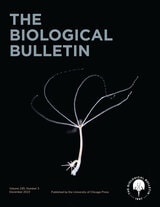
This is volume 245 issue 2 of The Biological Bulletin. The Biological Bulletin disseminates novel scientific results in broadly related fields of biology in keeping with more than 100 years of a tradition of excellence. The Bulletin publishes outstanding original research with an overarching goal of explaining how organisms develop, function, and evolve in their natural environments. To that end, the journal publishes papers in the fields of Neurobiology and Behavior, Physiology and Biomechanics, Ecology and Evolution, Development and Reproduction, Cell Biology, Symbiosis and Systematics. The Bulletin emphasizes basic research, including articles on marine model systems and those of an interdisciplinary nature.
[more]
cover of The Biological Bulletin, volume 245 number 3 (December 2023)

The Biological Bulletin, volume 245 number 3 (December 2023)

The University of Chicago Press

University of Chicago Press Journals, 2023
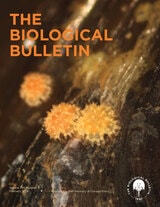
This is volume 245 issue 3 of The Biological Bulletin. The Biological Bulletin disseminates novel scientific results in broadly related fields of biology in keeping with more than 100 years of a tradition of excellence. The Bulletin publishes outstanding original research with an overarching goal of explaining how organisms develop, function, and evolve in their natural environments. To that end, the journal publishes papers in the fields of Neurobiology and Behavior, Physiology and Biomechanics, Ecology and Evolution, Development and Reproduction, Cell Biology, Symbiosis and Systematics. The Bulletin emphasizes basic research, including articles on marine model systems and those of an interdisciplinary nature.
[more]
cover of The Biological Bulletin, volume 246 number 1 (February 2024)

The Biological Bulletin, volume 246 number 1 (February 2024)

The University of Chicago Press

University of Chicago Press Journals, 2024
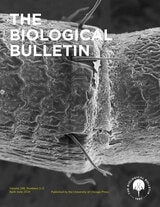
This is volume 246 issue 1 of The Biological Bulletin. The Biological Bulletin disseminates novel scientific results in broadly related fields of biology in keeping with more than 100 years of a tradition of excellence. The Bulletin publishes outstanding original research with an overarching goal of explaining how organisms develop, function, and evolve in their natural environments. To that end, the journal publishes papers in the fields of Neurobiology and Behavior, Physiology and Biomechanics, Ecology and Evolution, Development and Reproduction, Cell Biology, Symbiosis and Systematics. The Bulletin emphasizes basic research, including articles on marine model systems and those of an interdisciplinary nature.
[more]
cover of The Biological Bulletin, volume 246 number 2-3 (April 2024)

The Biological Bulletin, volume 246 number 2-3 (April 2024)

The University of Chicago Press

University of Chicago Press Journals, 2024
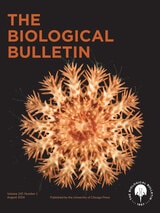
This is volume 246 issue 2-3 of The Biological Bulletin. The Biological Bulletin disseminates novel scientific results in broadly related fields of biology in keeping with more than 100 years of a tradition of excellence. The Bulletin publishes outstanding original research with an overarching goal of explaining how organisms develop, function, and evolve in their natural environments. To that end, the journal publishes papers in the fields of Neurobiology and Behavior, Physiology and Biomechanics, Ecology and Evolution, Development and Reproduction, Cell Biology, Symbiosis and Systematics. The Bulletin emphasizes basic research, including articles on marine model systems and those of an interdisciplinary nature.
[more]
cover of The Biological Bulletin, volume 247 number 1 (August 2024)

The Biological Bulletin, volume 247 number 1 (August 2024)

The University of Chicago Press

University of Chicago Press Journals, 2024
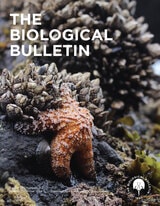
This is volume 247 issue 1 of The Biological Bulletin. The Biological Bulletin disseminates novel scientific results in broadly related fields of biology in keeping with more than 100 years of a tradition of excellence. The Bulletin publishes outstanding original research with an overarching goal of explaining how organisms develop, function, and evolve in their natural environments. To that end, the journal publishes papers in the fields of Neurobiology and Behavior, Physiology and Biomechanics, Ecology and Evolution, Development and Reproduction, Cell Biology, Symbiosis and Systematics. The Bulletin emphasizes basic research, including articles on marine model systems and those of an interdisciplinary nature.
[more]
cover of The Biological Bulletin, volume 247 number 2-3 (October 2024)

The Biological Bulletin, volume 247 number 2-3 (October 2024)

The University of Chicago Press

University of Chicago Press Journals, 2024
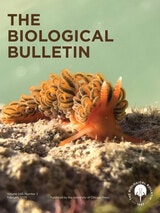
This is volume 247 issue 2-3 of The Biological Bulletin. The Biological Bulletin disseminates novel scientific results in broadly related fields of biology in keeping with more than 100 years of a tradition of excellence. The Bulletin publishes outstanding original research with an overarching goal of explaining how organisms develop, function, and evolve in their natural environments. To that end, the journal publishes papers in the fields of Neurobiology and Behavior, Physiology and Biomechanics, Ecology and Evolution, Development and Reproduction, Cell Biology, Symbiosis and Systematics. The Bulletin emphasizes basic research, including articles on marine model systems and those of an interdisciplinary nature.
[more]
cover of The Biological Bulletin, volume 248 number 1 (February 2025)

The Biological Bulletin, volume 248 number 1 (February 2025)

The University of Chicago Press

University of Chicago Press Journals, 2025
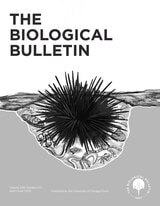
This is volume 248 issue 1 of The Biological Bulletin. The Biological Bulletin disseminates novel scientific results in broadly related fields of biology in keeping with more than 100 years of a tradition of excellence. The Bulletin publishes outstanding original research with an overarching goal of explaining how organisms develop, function, and evolve in their natural environments. To that end, the journal publishes papers in the fields of Neurobiology and Behavior, Physiology and Biomechanics, Ecology and Evolution, Development and Reproduction, Cell Biology, Symbiosis and Systematics. The Bulletin emphasizes basic research, including articles on marine model systems and those of an interdisciplinary nature.
[more]
cover of The Biological Bulletin, volume 248 number 2-3 (April 2025)

The Biological Bulletin, volume 248 number 2-3 (April 2025)

The University of Chicago Press

University of Chicago Press Journals, 2025
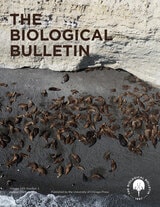
This is volume 248 issue 2-3 of The Biological Bulletin. The Biological Bulletin disseminates novel scientific results in broadly related fields of biology in keeping with more than 100 years of a tradition of excellence. The Bulletin publishes outstanding original research with an overarching goal of explaining how organisms develop, function, and evolve in their natural environments. To that end, the journal publishes papers in the fields of Neurobiology and Behavior, Physiology and Biomechanics, Ecology and Evolution, Development and Reproduction, Cell Biology, Symbiosis and Systematics. The Bulletin emphasizes basic research, including articles on marine model systems and those of an interdisciplinary nature.
[more]
cover of The Biological Bulletin, volume 249 number 1 (August 2025)

The Biological Bulletin, volume 249 number 1 (August 2025)

The University of Chicago Press

University of Chicago Press Journals, 2025
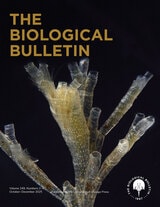
This is volume 249 issue 1 of The Biological Bulletin. The Biological Bulletin disseminates novel scientific results in broadly related fields of biology in keeping with more than 100 years of a tradition of excellence. The Bulletin publishes outstanding original research with an overarching goal of explaining how organisms develop, function, and evolve in their natural environments. To that end, the journal publishes papers in the fields of Neurobiology and Behavior, Physiology and Biomechanics, Ecology and Evolution, Development and Reproduction, Cell Biology, Symbiosis and Systematics. The Bulletin emphasizes basic research, including articles on marine model systems and those of an interdisciplinary nature.
[more]
cover of The Biological Bulletin, volume 249 number 2-3 (October 2025)

The Biological Bulletin, volume 249 number 2-3 (October 2025)

The University of Chicago Press

University of Chicago Press Journals, 2025

This is volume 249 issue 2-3 of The Biological Bulletin. The Biological Bulletin disseminates novel scientific results in broadly related fields of biology in keeping with more than 100 years of a tradition of excellence. The Bulletin publishes outstanding original research with an overarching goal of explaining how organisms develop, function, and evolve in their natural environments. To that end, the journal publishes papers in the fields of Neurobiology and Behavior, Physiology and Biomechanics, Ecology and Evolution, Development and Reproduction, Cell Biology, Symbiosis and Systematics. The Bulletin emphasizes basic research, including articles on marine model systems and those of an interdisciplinary nature.
[more]
cover of The Biology of Human Starvation: Volume II

The Biology of Human Starvation

Volume II

Ancel Keys

University of Minnesota Press, 1950

The Biology of Human Starvation was first published in 1950. Minnesota Archive Editions uses digital technology to make long-unavailable books once again accessible, and are published unaltered from the original University of Minnesota Press editions.

With great areas of the world battling the persistent and basic problem of hunger, this work constitutes a major contribution to needed scientific knowledge. The publication is a definitive treatise on the morphology, biochemistry, physcology, psychology, and medical aspects of calorie undernutrition, cachexia, starvation, and rehabilitation in man. 

Presented critically and systematically are the fact and theory from the world literature, including the evidence from World War II and the finding of the Minnesota Starvation Experiment (1944*1946). Pertinent experiments and field and clinical observations to 1949 are covered. 

The extensive original research involved was conducted at the University of Minnesota Laboratory of Physiological Hygiene, which Dr. Keys heads. The authors, all of the laboratory staff, were assisted in preparation of the work by Ernst Simonson, Samuel Wells and Angie Sturgeon Skinner.
[more]
cover of The Biology of Reefs and Reef Organisms

The Biology of Reefs and Reef Organisms

Walter M. Goldberg

University of Chicago Press, 2013

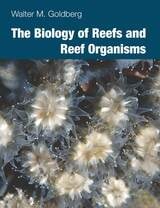
Reefs provide a wealth of opportunity for learning about biological and ecosystem processes, and reef biology courses are among the most popular in marine biology and zoology departments the world over. Walter M. Goldberg has taught one such course for years, and he marshals that experience in the pages of The Biology of Reefs and Reef Organisms.

Goldberg examines the nature not only of coral reefs—the best known among types of reefs—but also of sponge reefs, worm reefs, and oyster reefs, explaining the factors that influence their growth, distribution, and structure. A central focus of the book is reef construction, and Goldberg details the plants and animals that form the scaffold of the reef system and allow for the attachment and growth of other organisms, including those that function as bafflers, binders, and cementing agents. He also tours readers through reef ecology, paleontology, and biogeography, all of which serve as background for the problems reefs face today and the challenge of their conservation.
 
Visually impressive, profusely illustrated, and easy to read, The Biology of Reefs and Reef Organisms offers a fascinating introduction to reef science and will appeal to students and instructors of marine biology, comparative zoology, and oceanography.

[more]
cover of The Biology of Sharks and Rays

The Biology of Sharks and Rays

A. Peter Klimley

University of Chicago Press, 2013

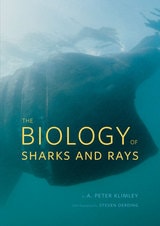
The Biology of Sharks and Rays is a comprehensive resource on the biological and physiological characteristics of the cartilaginous fishes: sharks, rays, and chimaeras. In sixteen chapters, organized by theme, A. Peter Klimley covers a broad spectrum of topics, including taxonomy, morphology, ecology, and physiology. For example, he explains the body design of sharks and why the ridged, toothlike denticles that cover their entire bodies are present on only part of the rays’ bodies and are absent from those of chimaeras. Another chapter explores the anatomy of the jaws and the role of the muscles and teeth in jaw extension, seizure, and handling of prey. The chapters are richly illustrated with pictures of sharks, diagrams of sensory organs, drawings of the body postures of sharks during threat and reproductive displays, and maps showing the extent of the species’ foraging range and long-distance migrations. Each chapter commences with an anecdote from the author about his own personal experience with the topic, followed by thought-provoking questions and a list of recommended readings in the scientific literature. 

The book will be a useful textbook for advanced ichthyology students as well as an encyclopedic source for those seeking a greater understanding of these fascinating creatures.
[more]