Results by title
1947 books match the query 'Music' and 315 start with t
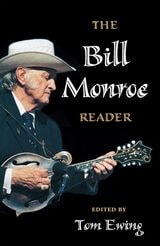
The Bill Monroe Reader
Edited by Tom Ewing
University of Illinois Press, 2000
"Tell 'em I'm a farmer with a mandolin and a high tenor voice," Bill Monroe said. Known as the Father of Bluegrass Music, Monroe pioneered a whole new category of music and inspired generations of musicians and fans. Yet from his founding of the original bluegrass band through six decades of performing, he remained an enigmatic figure, a compelling mixture of fierce intensity, homespun modesty, and musical integrity.
Determined to play the mandolin in a way it had never been played before, Monroe distinguished himself in the mid-1930s with the Monroe Brothers then began forming his own band, the Blue Grass Boys, in 1938. By the mid-1940s other bands were copying his sound, and a new style, bluegrass music, was born. While country music moved toward electrification, Monroe maintained his acoustic ensemble and developed his "high, lonesome sound," performing nearly up to his death in 1996.
In this eclectic, richly illustrated reader, former Blue Grass Boy Tom Ewing gathers the most significant and illuminating of the many articles that have been written about Monroe. Through the writings of nearly sixty observers, interviewers, admirers, folklorists, and other scholars, along with Ewing's astute commentary, The Bill Monroe Reader offers a multifaceted view of one of the most influential country musicians of the twentieth century.
Lively, heartfelt, and informative, The Bill Monroe Reader is a fitting tribute to the man and the musician who transformed the traditional music of western Kentucky into an international sensation.
The Black Body
Anna Maria Gehnyei (Karima 2G)
Rutgers University Press, 2025
Best Translation of a Literary Work Published in 2025 from the American Association of Italian Studies
In her memoir, Anna Maria Gehnyei, better known as singer, rapper, and producer Karima 2G, reveals the challenges she faced as the child of Liberian immigrants, born and raised in Rome but perpetually viewed by her fellow Italians as a foreigner.
The daughter of the first Kpelle man to ever leave his native village and emigrate to Europe, Anna is proud of her heritage but only knows Liberia as a mystical, faraway land that appears in her parents’ stories. Though Italy is the only homeland she knows, she is merely classed as a resident, not a permanent citizen. At school and in the streets of Rome, she is treated to a mixture of patronizing condescension and xenophobic hostility. But Anna refuses to be bullied into mute submission, finding her voice as a performer and activist who demands recognition for Italy’s growing immigrant population.

The Black Cow's Footprint
Time, Space and Music in the Lives of the Kotas of South IndiaRichard K. Wolf
University of Illinois Press, 2006
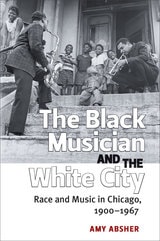
The Black Musician and the White City
Race and Music in Chicago, 1900-1967Amy Absher
University of Michigan Press, 2014
Absher’s work diverges from existing studies in three ways: First, she takes the history beyond the study of jazz and blues by examining the significant role that classically trained black musicians played in building the Chicago South Side community. By acknowledging the presence and importance of classical musicians, Absher argues that black migrants in Chicago had diverse education and economic backgrounds but found common cause in the city’s music community. Second, Absher brings numerous maps to the history, illustrating the relationship between Chicago’s physical lines of segregation and the geography of black music in the city over the years. Third, Absher’s use of archival sources is both extensive and original, drawing on manuscript and oral history collections at the Center for Black Music Research in Chicago, Columbia University, Rutgers’s Institute of Jazz Studies, and Tulane’s Hogan Jazz Archive. By approaching the Chicago black musical community from these previously untapped angles, Absher offers a history that goes beyond the retelling of the achievements of the famous musicians by discussing musicians as a group. In The Black Musician and the White City, black musicians are the leading actors, thinkers, organizers, and critics of their own story.
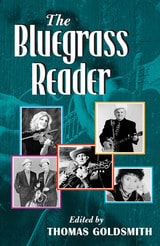
The Bluegrass Reader
Edited by Thomas Goldsmith
University of Illinois Press, 2004
Goldsmith’s substantial introduction describes and traces the development of the music from its origins in Anglo-American folk tradition, overlaid with African American influences, to the breakout popularity of Ralph Stanley, Alison Krauss, and the O Brother, Where Art Thou? soundtrack. He introduces each selection offering a wealth of additional information, making The Bluegrass Reader both enjoyable and invaluable for new fans of the music as well as for its lifetime devotees.
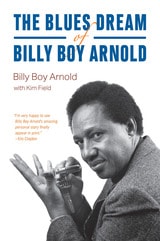
The Blues Dream of Billy Boy Arnold
Billy Boy Arnold with Kim Field
University of Chicago Press, 2021
Simply put, Billy Boy Arnold is one of the last men standing from the Chicago blues scene’s raucous heyday. What’s more, unlike most artists in this electrifying melting pot, who were Southern transplants, Arnold—a harmonica master who shared stages with Bo Diddley, Muddy Waters, and Howlin’ Wolf, plus a singer and hitmaker in his own right who first recorded the standards “I Wish You Would” and “I Ain’t Got You”—was born right here and has lived nowhere else. This makes his perspective on Chicago blues, its players, and its locales all the rarer and all the more valuable. Arnold has witnessed musical generations come and go, from the decline of prewar country blues to the birth of the electric blues and the worldwide spread of rock and roll. Working here in collaboration with writer and fellow musician Kim Field, he gets it all down. The Blues Dream of Billy Boy Arnold is a remarkably clear-eyed testament to more than eighty years of musical love and creation, from Arnold’s adolescent quest to locate the legendary Sonny Boy Williamson, the story of how he named Bo Diddley Bo Diddley, and the ups and downs of his seven-decade recording career. Arnold’s tale—candidly told with humor, insight, and grit—is one that no fan of modern American music can afford to miss.
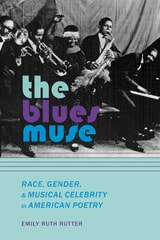
The Blues Muse
Race, Gender, and Musical Celebrity in American PoetryEmily Ruth Rutter
University of Alabama Press, 2018
A critical analysis of the poetic representations and legacies of five landmark blues artists
The Blues Muse: Race, Gender, and Musical Celebrity in American Poetry focuses on five key blues musicians and singers—Gertrude “Ma” Rainey, Bessie Smith, Billie Holiday, Robert Johnson, and Lead Belly—and traces the ways in which these artists and their personas have been invoked and developed throughout American poetry. This study spans nearly one hundred years of literary and musical history, from the New Negro Renaissance to the present.
Emily Ruth Rutter not only examines blues musicians as literary touchstones or poetic devices, but also investigates the relationship between poetic constructions of blues icons and shifting discourses of race and gender. Rutter’s nuanced analysis is clear, compelling, and rich in critical assessments of these writers’ portraits of the musical artists, attending to their strategies and oversights.
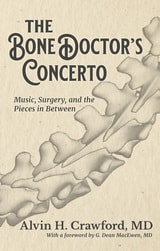
The Bone Doctor's Concerto
Music, Surgery, and the Pieces in BetweenAlvin H. Crawford, MD
Ohio University Press, 2023
Published by the University of Cincinnati Press
Born in Memphis, Tennessee in 1939, Dr. Alvin Crawford grew up and attended medical school in a segregated world. Beginning with his early life in Orange Mound—a self-contained community for freed slaves established in the 1890s—Crawford’s autobiography describes his flirtation with a music degree and time spent playing in jazz bands through the segregated South. In 1960, Crawford began his ground-breaking medical career with his entrance into the University of Tennessee College of Medicine, becoming the school’s first African American student. After completing his medical training and traveling the world as a surgeon for the Navy, Crawford found himself in Cincinnati, where he established the Comprehensive Pediatric Orthopedic Clinic at Cincinnati Children’s Hospital, the first in the region.
Underlying this story are the systemic and very personal incidents of racism Crawford experienced throughout his career. His autobiography is a personal account of segregation, integration, ambition, hard work, and taking risks.
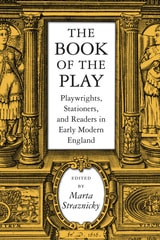
The Book of the Play
Playwrights, Stationers, and Readers in Early Modern EnglandMarta Straznicky
University of Massachusetts Press, 2006
The Book of the Play is a collection of essays that examines early modern drama in the context of book history. Focusing on the publication, marketing, and readership of plays opens fresh perspectives on the relationship between the cultures of print and performance and more broadly between drama and the public sphere. Marta Straznicky's introduction offers a survey of approaches to the history of play reading in this period, and the collection as a whole consolidates recent work in textual, bibliographic, and cultural studies of printed drama.
Individually, the essays advance our understanding of play reading as a practice with distinct material forms, discourses, social settings, and institutional affiliation. Part One, “Real and Imagined Communities,” includes four essays on play-reading communities and the terms in which they are distinguished from the reading public at large. Cyndia Clegg surveys the construction of readers in prefaces to published plays; Lucy Munro traces three separate readings of a single play, Edward Sharpham's The Fleer; Marta Straznicky studies women as readers of printed drama; and Elizabeth Sauer describes how play reading was mobilized for political purposes in the period of the Civil War.
In Part Two, “Play Reading and the Book Trade,” five essays consider the impact of play reading on the public sphere through the lens of publishing practices. Zachary Lesser offers a revisionist account of black-letter typeface and the extent to which it may be understood as an index of popular culture; Alan Farmer examines how the emerging news trade of the 1620s and 1630s affected the marketing of printed drama; Peter Berek traces the use of generic terms on title pages of plays to reveal their intersection with the broader culture of reading; Lauren Shohet demonstrates that the Stuart masque had a parallel existence in the culture of print; and Douglas Brooks traces the impact print had on eclipsing performance as the medium in which the dramatist could legitimately lay claim to having authored his text.
The individual essays focus on selected communities of readers, publication histories, and ideologies and practices of reading; the collection as a whole demonstrates the importance of textual production and reception to understanding the place of drama in the early modern public sphere.
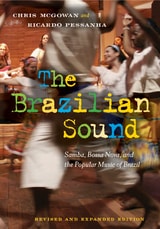
The Brazilian Sound
Samba, Bossa Nova, and the Popular Music of BrazilChris McGowan
Temple University Press, 2008
Here is an illustrated guide to the rich music of Brazil—its history, styles, performers, instruments, and impact on musicians around the globe. From the boisterous rhythms of samba to the cool elegance of bossa nova to the hot percussion of Bahian axé music, The Brazilian Sound celebrates a world music phenomenon. This revised and expanded edition includes discussions of developments in samba and other key genres, the rise of female singer-songwriters in recent years, new works by established artists like Milton Nascimento and Marisa Monte, and the mixing of bossa with electronica. This clearly written and lavishly illustrated encyclopedic survey features new entries and photographs, an extensive glossary of Brazilian music terms and more.
This edition of The Brazilian Sound contains new discussions of:
· música sertaneja and música caipira
· Brazilian funk, rap/hip-hop, and electronic dance music
· important new samba and MPB artists
· Plus! An updated bibliography and glossary, and a list of Web resources
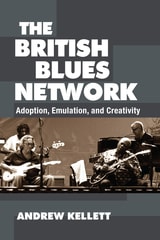
The British Blues Network
Adoption, Emulation, and CreativityAndrew Kellett
University of Michigan Press, 2017

The Capitalist Imaginaries of Popular Music
Charles Fairchild
Intellect Books, 2027
Traditionally, popular music has long been said to intrinsically contest, resist, and defy the powers that be. This new book challenges this long-standing orthodoxy, arguing that popular music is not so much a form of resistance to authority, but it often perpetuates the very power it is supposed to be raging against: neoliberal capitalism.
This misconception of popular music came to dominance in the mid-1980s and persists today, even when the vast majority of people have been disempowered, impoverished, and marginalized at home, at work, and in politics. This book explains why such a robust, pervasive, and persistent set of ideas about popular music has taken such a tenacious hold despite substantive evidence to the contrary.
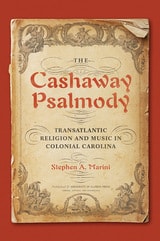
The Cashaway Psalmody
Transatlantic Religion and Music in Colonial CarolinaStephen A. Marini
University of Illinois Press, 2019
Stephen A. Marini, discoverer of The Cashaway Psalmody, offers the fascinating story of the tunebook and its many meanings. From its musical, literary, and religious origins in England, he moves on to the life of Durham Hills; how Carolina communities used the book; and the Psalmody's significance in understanding how ritual song—transmitted via transatlantic music, lyrics, and sacred singing—shaped the era's development. Marini also uses close musical and textual analyses to provide a critical study that offers music historians and musicologists valuable insights on the Pslamody and its period.
Meticulous in presentation and interdisciplinary in scope, The Cashaway Psalmody unlocks an important source for understanding life in the Lower South in the eighteenth century.
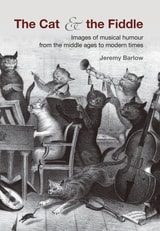
The Cat and the Fiddle
Images of Musical Humour from the Middle Ages to Modern TimesJeremy Barlow
Bodleian Library Publishing, 2005
In The Cat and the Fiddle, Jeremy Barlow explores 700 years of musical humor, a topsy-turvy world in which monkeys fiddle and pigs play the bagpipes. It is a vision of chaos and devilry as depicted in a variety of sources—the illuminated borders of medieval manuscripts, eighteenth-century prints of urban life, and even the illustrations of children's books.
Barlow reveals the shifting meanings behind such images, as they were often symptomatic of larger cultural trend such as rapid industrialization and urbanization, an emerging class system, and the moral movements of the late nineteenth century. As he compellingly argues, the development of the printing press, the popular spectacle of public concerts, and the rise of new political uses for music all played a critical role in musical history and were distinctly evident in images of musical humor.
The archives of Oxford's Bodleian Library provided a rich supply of previously unpublished material for Barlow's research. With full-color images throughout, The Cat and the Fiddle will be a delight for scholars of art and political history as well as lovers of music everywhere.
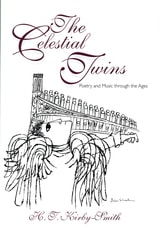
The Celestial Twins
Poetry and Music through the AgesH.T. Kirby-Smith
University of Massachusetts Press, 2000
H. T. Kirby-Smith makes his case with wit and erudition, proceeding chronologically and citing numerous examples of specific poems—from Latin, Old French, Italian, Anglo-Saxon, modern French, and English. He points out that ancient Greek poetry, including the epics, was part of a musical context. By contrast, almost no surviving Latin poetry was written for musical performance, but the meters of Latin poetry were borrowed from Greek musical meters. Similarly, in their own ways, Thomas Hardy, T. S. Eliot, and Langston Hughes all wrote out of musical contexts: Hardy from west-of-England songs and dances; Eliot from Wagnerian opera and late Beethoven chamber music; and Hughes from blues, jazz, and spirituals.
Although poets from Horace to Shakespeare to Dickinson have instinctively recognized the separation of music and poetry, there have also been well-meaning attempts to bring these allied arts back into close association with each other. But in Kirby-Smith's view, poetry of the highest order has always maintained a respectful distance from music, even while retaining some memory of musical rhythms and organization.
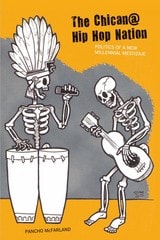
The Chican@ Hip Hop Nation
Politics of a New Millennial MestizajePancho McFarland
Michigan State University Press, 2013

The Chigi Codex
Sacred Music from Burgundy and France; Vatican City, Biblioteca Apostolica Vaticana, MS Chigi C VIII 234Edited by Edward F. Houghton
University of Chicago Press, 2027
Compiled between 1500 and 1504, The Chigi Codex contains the complete contents of an extraordinary illuminated manuscript, an anthology of forty polyphonic masses and motets associated with the royal courts of France and Burgundy. This edition includes nearly the complete oeuvre of Johannes Ockeghem, five motets by Johannes Regis, and compositions by Josquin des Prez, Henricus Isaac, Antoine Busnoys, Pierre de la Rue, Jean Mouton, Alexander Agricola, and others. Twelve works are unique to The Chigi Codex; seven motets were added by a Spanish scribe after 1515. The complete contents are presented here with transcriptions of the music accessible to musicians today, with a critical commentary on the music and concordant sources. The Codex transmits works that were copied in manuscripts and prints throughout Europe later in the sixteenth century.
In addition to its monumental repertory, The Chigi Codex includes notable works of visual art in the double-folio openings of thirty-six works with miniature paintings, coats of arms, inhabited capitals, family mottos, bizarre creatures, and colorful borders, all in the famed Ghent-Bruges style. Herbert Kellman discusses these as well as the history of the Codex and its long journey from its original patron, the Burgundian seigneur Philippe Bouton, to the Spanish families Folch de Cardona and Fernández de Córdoba, and finally to Rome and to the library of Fabio Chigi, Pope Alexander VII. The Chigi library is now an important part of the Vatican Library.
Making the manuscript accessible to the public and musicians, this edition of The Chigi Codex supports the study, performance, and understanding of its music and art in the musical, cultural, and historical contexts of its creation.
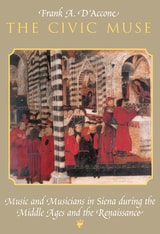
The Civic Muse
Music and Musicians in Siena during the Middle Ages and the RenaissanceFrank A. D'Accone
University of Chicago Press, 1997
Based on decades of research in the town's archives, D'Accone's The Civic Muse brilliantly illuminates both the sacred and the secular aspects of more than three centuries of music and music-making in Siena. After detailing the history of music and liturgy at Siena's famous cathedral and of civic music at the Palazzo Pubblico, D'Accone describes the crucial role that music played in the daily life of the town, from public festivities for foreign dignitaries to private musical instruction. Putting Siena squarely on the Renaissance musical map, D'Accone's monumental study will interest both musicologists and historians of the Italian Renaissance.
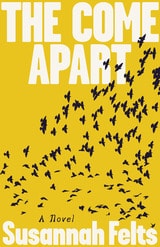
The Come Apart
A NovelSusannah Felts
Northwestern University Press, 2026
An authentic rock band story from Chicago to Nashville and, just maybe, back again
On the cusp of turning thirty, Chicago indie musician Maggie Corbin has hustled for a decade, set on making her rock and roll dreams come true. Her band, Spinning Birds, fronted by Maggie and her romantic partner Matt Turkish, releases a debut record to critical acclaim, hits the road, and begins working on a follow-up. From the outside, her path looks like success—but as streaming deconstructs the industry and Maggie’s relationships shift and slip, the question remains: Can you live for art alone?
When a sudden move back to the South forces Maggie to reframe her dreams and reckon with familial rifts and her past—while still fighting to reimagine what her future could be—a natural disaster in Nashville and a surprise encounter with a character from her childhood shift her perspective on healing, community, and the ties that bind. Drifting in and out of songwriting sessions, cozy kitchens, and moments of bearing witness to the curious power of the natural world, The Come Apart celebrates the times when we must come fully undone in order to put ourselves back together.
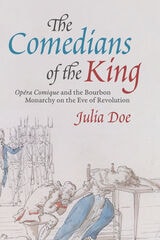
The Comedians of the King
"Opéra Comique" and the Bourbon Monarchy on the Eve of RevolutionJulia Doe
University of Chicago Press, 2021
Lyric theater in ancien régime France was an eminently political art, tied to the demands of court spectacle. This was true not only of tragic opera (tragédie lyrique) but also its comic counterpart, opéra comique, a form tracing its roots to the seasonal trade fairs of Paris. While historians have long privileged the genre’s popular origins, opéra comique was brought under the protection of the French crown in 1762, thus consolidating a new venue where national music might be debated and defined.
In The Comedians of the King, Julia Doe traces the impact of Bourbon patronage on the development of opéra comique in the turbulent prerevolutionary years. Drawing on both musical and archival evidence, the book presents the history of this understudied genre and unpacks the material structures that supported its rapid evolution at the royally sponsored Comédie-Italienne. Doe demonstrates how comic theater was exploited in, and worked against, the monarchy’s carefully cultivated public image—a negotiation that became especially fraught after the accession of the music-loving queen, Marie Antoinette. The Comedians of the King examines the aesthetic and political tensions that arose when a genre with popular foundations was folded into the Bourbon propaganda machine, and when a group of actors trained at the Parisian fairs became official representatives of the sovereign, or comédiens ordinaires du roi.
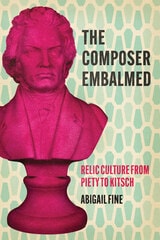
The Composer Embalmed
Relic Culture from Piety to KitschAbigail Fine
University of Chicago Press, 2025
During the nineteenth century, music institutions promoted artworks they deemed timeless and made composers into figureheads of a lasting Western canon. Alongside this institutional face of the canon was a more intimate impulse to preserve, touch, and embrace the residues of the dead. In Germany and Austria between 1870 and 1930, music lovers venerated the bodies, houses, and belongings of composers as relics, shrines, and talismans. In The Composer Embalmed, Abigail Fine documents the vernacular and eccentric ways that composers have been remembered.
Fine navigates a wealth of unknown archival material to recover the stories of devotees: from pilgrims who felt time stop in historic houses to music-loving doctors who made skulls into sacred specimens, dilettantes who displayed Beethoven’s mask as a relic of the “beautiful death,” and interwar critics of those dilettantes who disparaged piety as a false religion, a kitsch replica. In isolation, these practices may look like simple acts of affection. But in the aggregate, Fine asserts, acts of devotion constituted what we might broadly understand as relic culture—a culture that sought to possess the body of the departed genius, and that superimposed habits of anthropological collecting onto artifacts of Austro-German heritage. By excavating objects, ephemera, amateur lyric, visitors’ books, letters, and travelogues, The Composer Embalmed reveals the underbelly of the canon, where guilty pleasures blur the boundary between sanctity and desecration.
The Costs of the Gig Economy
Musical Entrepreneurs and the Cultural Politics of Inequality in Northeastern BrazilFalina Enriquez
University of Illinois Press, 2022
Drawing on years of fieldwork, Enriquez shows how forcing artists to adopt “neutral” market solutions reinforces, and generates, overlapping racial and class-based inequalities. Lacking the social and financial resources of their middle-class peers, working-class musicians find it difficult to uphold institutional goals of connecting the city’s cultural roots to global markets and consumers. Enriquez also links the artists’ situation to that of cultural and creative workers around the world. As she shows, musical sponsorship in Recife and the contemporary gig economy elsewhere employ processes that, far from being neutral, uphold governmental and corporate ideologies that produce social stratification.
Rich and vibrant, The Costs of the Gig Economy offers a rare English-language portrait of the changing musical culture in Recife.
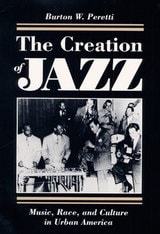
The Creation of Jazz
Music, Race, and Culture in Urban AmericaBurton W. Peretti
University of Illinois Press, 1992
The story of jazz is more than a history of the music. The racial and cultural dynamics of American cities created the music, life, and business that was jazz.
Burton W. Peretti's classic study charts the life of jazz culture from its origins in the jook joints of sharecroppers and the streets and dance halls of 1890s New Orleans to the eve of bebop and World War II. As Perett shows, jazz was the epic story of players who transitioned from childhood spasm bands to Carnegie Hall and worldwide touring and fame. It became the music of the Twenties, a decade of Prohibition, of adolescent discontent, of Harlem pride, and of Americans hoping to preserve cultural traditions in an urban, commercial age. Finally, jazz was where black and white musicians performed together, as uneasy partners, in the big bands of Artie Shaw and Benny Goodman.
Drawing on archives and the firsthand testimony of more than seventy musicians and singers (among them Benny Carter, Bud Freeman, Kid Ory, and Mary Lou Williams), The Creation of Jazz offers a comprehensive analysis of the role of early jazz in American social history.
The Creative Process in Music from Mozart to Kurtag
William Kinderman
University of Illinois Press, 2012
Great music arouses wonder: how did the composer create such an original work of art? What was the artist's inspiration, and how did that idea become a reality? Cultural products inevitably arise from a context, a submerged landscape that is often not easily accessible. To bring such things to light, studies of the creative process find their cutting edge by probing beyond the surface, opening new perspectives on the apparently familiar.
The Creolization of American Culture
William Sidney Mount and the Roots of Blackface MinstrelsyChristopher J. Smith
University of Illinois Press, 2014
The Crooked Stovepipe
Athapaskan Fiddle Music and Square Dancing in Northeast Alaska and Northwest CanadaCraig Mishler
University of Illinois Press, 1993
The Cuban Hustle
Culture, Politics, Everyday LifeSujatha Fernandes
Duke University Press, 2020
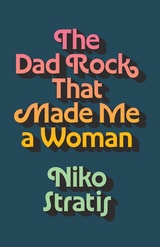
The Dad Rock That Made Me a Woman
Niko Stratis
University of Texas Press, 2025
A memoir-in-essays on transness, dad rock, and the music that saves us.
When Wilco’s 2007 album Sky Blue Sky was infamously criticized as “dad rock,” Niko Stratis was a twenty-five-year-old closeted trans woman working in her dad’s glass shop in the Yukon Territory. As she sought escape from her hypermasculine environment, Stratis found an unlikely lifeline amid dad rock’s emotionally open and honest music. Listening to dad rock, Stratis could access worlds beyond her own and imagine a path forward.
In taut, searing essays rendered in propulsive and unguarded prose, Stratis delves into the emotional core of bands like Wilco and The National, telling her story through the dad rock that accompanied her along the way. She found footing in Michael Stipe’s allusions to queer longing, Radiohead’s embrace of unknowability, and Bruce Springsteen’s very trans desire to “change my clothes my hair my face”—and she found in artists like Neko Case and Sharon Van Etten that the label transcends gender. A love letter to the music that saves us and a tribute to dads like Stratis’s own who embody the tenderness at the genre’s heart, The Dad Rock That Made Me a Woman rejoices in music unafraid to bare its soul.
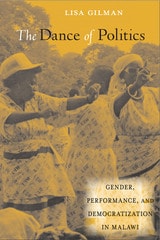
The Dance of Politics
Gender, Performance, and Democratization in MalawiLisa Gilman
Temple University Press, 2011
Election campaigns, political events, and national celebration days in Malawi usually feature groups of women who dance and perform songs of praise for politicians and political parties. These lively performances help to attract and energize throngs of prospective voters. However, as Lisa Gilman explains, “praise performing” is one of the only ways that women are allowed to participate in a male-dominated political system.
Although political performances by women are not unique to Malawi, the case in Malawi is complicated by the fact that until 1994 all Malawianwomen were required to perform on behalf of the long-reigning political party and its self-declared “President for Life,” Dr. Hastings Kamuzu Banda+. This is the first book to examine the present-day situation, where issues of gender, economics and politics collide in surprising ways. Along with its solid grounding in the relevant literature, The Dance of Politics draws strength from Gilman’s first-hand observations and her interviews with a range of participants in the political process, from dancers to politicians.
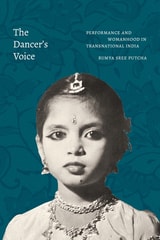
The Dancer's Voice
Performance and Womanhood in Transnational IndiaRumya Sree Putcha
Duke University Press, 2023
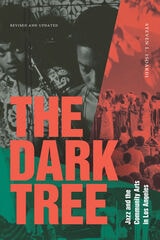
The Dark Tree
Jazz and the Community Arts in Los AngelesSteven L. Isoardi
Duke University Press, 2023

The Darker Side of Genius
Richard Wagner’s Anti-SemitismJacob. Katz
University Press of New England, 2002
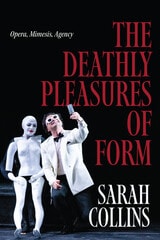
The Deathly Pleasures of Form
Opera, Mimesis, AgencySarah Collins
University of Chicago Press, 0
Opera offers a rich space in which to think about problems of mimesis—how artworks imitate ideal forms, how humans imitate the things around us, and how words attempt to represent reality.
In this book, musicologist and cultural historian Sarah Collins shows how the strange, exhilarating, and uniquely self-conscious art form of opera opens itself to such contemporary, theoretical questions. The Deathly Pleasures of Form is especially concerned with the links between linguistic and bodily signification in opera through the genre’s use of figures of partial agency—disembodied voices, enchanted objects, puppets, mechanical devices. The book is structured around four emblematic figures (Faust, Don Juan, Papageno, and Hoffmann) who are paired with four objects of variable animacy (puppet, stone, silhouette, and mirror, respectively). Across these chapters, Collins develops an expanded notion of mimesis that illuminates opera’s material and mechanical investments, its filmic and other adaptations, its explicit negotiation between vocal utterance and bodily gesture, and the epistemological significance of opera’s excesses. Ultimately, Collins claims that opera performs a type of compromised agency that can offer new critical insight into the self-limiting nature of both freedom and representation.

The Decibel Diaries
A Journey through Rock in 50 ConcertsCarter Alan
University Press of New England, 2017
The Devil Is in It
A History of the American Acoustic GuitarJohn Stubbings
University of Texas Press, 2025
The rich history of the acoustic guitar and its impact on the music world.
In 2020, guitar expert John Stubbings released a limited-edition book on the American acoustic guitar that sold out in days. Now, The Devil Is in It returns with additional research and subject matter for a new generation of readers. Stubbings traveled the country and met with guitar makers, players, collectors, and historians to unravel the long and rich history of the acoustic guitar, its evolution, and the music it has made over the last hundred years.
Starting with the eighteenth-century European classical guitar, luthiers altered the instrument, changing the way musicians played them, and in turn the music they made. This slow but steady transformation created the iconic American flat-top that became influential across genres and rooted itself in cultural significance. The guitar developed from an obscure instrument into a superstar of the musical world, rivaling then overshadowing its competition. Tied to artists from Gillian Welch and Tracy Chapman to Taylor Swift and Ed Sheeran, the acoustic guitar maintains its eminence in American music and culture. The story of an alluring instrument that shaped the music of the twentieth century, The Devil Is in It is a must-read for lovers of the acoustic guitar and the music it has made.
The Disturbing Profane
Hip Hop, Blackness, and the SacredJoseph R. Winters
Duke University Press, 2025
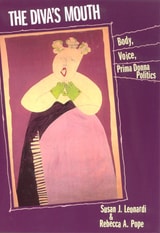
The Diva's Mouth
Body, Voice, and Prima Donna PoliticsLeonardi, Susan J.
Rutgers University Press, 1996
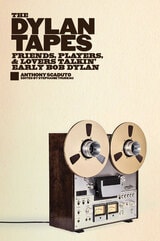
The Dylan Tapes
Friends, Players, and Lovers Talkin’ Early Bob DylanAnthony Scaduto
University of Minnesota Press, 2021
The raw material and interviews behind Anthony Scaduto’s iconic biography of Bob Dylan draw an intimate and multifaceted portrait of the singer-songwriter who defined his era
When Anthony Scaduto’s Bob Dylan: An Intimate Biography was first published in 1971, the Nobel Prize–winning songwriter, at thirty, had already released some of the most iconic albums of the 1960s, including Highway 61 Revisited and Blonde on Blonde. Scaduto’s book was one of the first to take an investigative journalist’s approach to its subject and set the standard for rock music biography. The Dylan Tapes, compiled from thirty-six hours of interviews, is a behind-the-scenes look at the making of Scaduto’s landmark book—and a close-up encounter with pivotal figures in Dylan’s life. These reel-to-reel tapes, found in a box in Scaduto’s basement, are a never-bootlegged trove of archival material about Dylan, drawn from conversations with those closest to him during the early years of his career.
In the era of ten-second takes, these interviews offer uncommon depth and immediacy as we listen to friends and lovers recall the Dylan they knew as he created his professional persona and perfected his craft—from folk music, protest songs, and electric rock through the traumatic impact of a motorcycle crash to his later, more self-reflecting songwriting. Echo Helstrom, Dylan’s “Girl from the North Country,” is here, as are Suze Rotolo, who graced the cover of the Freewheelin’ album, and Joan Baez, remembering her relationship “to Bobby.” We hear from Mike Porco, who gave Dylan his first gig in New York City; Sid and Bob Gleason, who introduced him to his hero Woody Guthrie; folk artists from Greenwich Village, like Phil Ochs and Ramblin’ Jack Eliot; John Hammond Sr., who gave him his first record contract; plus a host of musicians, activists, folk historians, and archivists—and, of course, Dylan himself.
From these reflections and frank conversations, many published here for the first time, a complex, finely observed picture emerges of one of the best known yet most enigmatic musicians of our time.
The Eighth
Mahler and the World in 1910Stephen Johnson
University of Chicago Press, 2020
September 12, 1910: The world premiere of Gustav Mahler’s Eighth Symphony and the artistic breakthrough for which the composer had yearned all his life. Munich’s new Musik Festhalle was filled to capacity on two successive evenings for the performances, which were received with rapturous applause. Representatives of many European royal houses were in attendance, along with an array of stars from the musical and literary world, including Thomas Mann and the young Arnold Schoenberg. Also present were Alma Mahler, the composer’s wife, and Alma’s longtime lover, the architect Walter Gropius. Knowledge of their relationship would precipitate an emotional crisis in Mahler that, compounded with his heart condition and the loss of his young daughter Maria, would lead to his premature death the next year.
In The Eighth, Stephen Johnson provides a masterful account of the symphony’s far-reaching consequences and its effect on composers, conductors, and writers of the time. The Eighth looks behind the scenes at the demanding one-week rehearsal period leading up to the premiere—something unheard of at the time—and provides fascinating insight into Mahler’s compositional habits, his busy life as a conductor, his philosophical and literary interests, and his personal and professional relationships. Johnson expertly contextualizes Mahler’s work among the prevailing attitudes and political climate of his age, considering the art, science, technology, and mass entertainment that informed the world in 1910. The Eighth is an absorbing history of a musical masterpiece and the troubled man who created it.
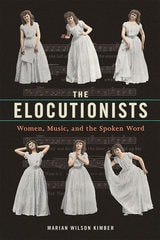
The Elocutionists
Women, Music, and the Spoken WordMarian Wilson Kimber
University of Illinois Press, 2017
Marian Wilson Kimber restores elocution with music to its rightful place in performance history. Gazing through the lenses of gender and genre, Wilson Kimber argues that these female artists transgressed the previous boundaries between private and public domains. Their performances advocated for female agency while also contributing to a new social construction of gender. Elocutionists, proud purveyors of wholesome entertainment, pointedly contrasted their "acceptable" feminine attributes against those of morally suspect actresses. As Wilson Kimber shows, their influence far outlived their heyday. Women, the primary composers of melodramatic compositions, did nothing less than create a tradition that helped shape the history of American music.
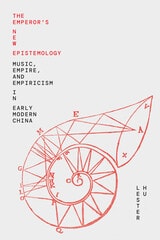
The Emperor’s New Epistemology
Music, Empire, and Empiricism in Early Modern ChinaLester Hu
University of Chicago Press, 2027
An innovative account of listening and empire-building in 17th- and 18th-century China.
The Emperor’s New Epistemology explores how listening shaped knowledge and empire-building in seventeenth- and eighteenth-century China. As the Manchu dynasty expanded deep into Inner Asian territories deemed foreign by the majority-Han population, the Qing Empire’s musical culture encompassed the sounds of Mongols, Uyghurs, and Tibetans, as well as Western music brought by Jesuit and other Christian missionaries. Lester Hu reveals that this diversity transformed not only Qing court culture but the very grounds on which knowledge and power could be established.
In one revealing episode from 1692, the Kangxi Emperor (1654–1722) misinterpreted a key term of Classical Chinese music after studying European music with the Jesuits. Hu situates this anecdote within the political, social, and epistemic shifts that transformed late-imperial China. As Hu shows, listening was an instrument of Qing imperial authority: Knowledge about music, language, and even the universe could only be verified through the emperor’s ears. Furthermore, listening facilitated new theories of empirical knowledge, which both lent themselves to Qing-imperial ideology and generated new epistemic tensions. By exploring their echoes in similar shifts in early modern Europe, Hu’s book brings a global perspective to the study of music in the early modern world and reconsiders the transcendental ground on which such comparative and intercultural knowledge is possible.
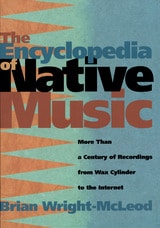
The Encyclopedia of Native Music
More Than a Century of Recordings from Wax Cylinder to the InternetBrian Wright-McLeod
University of Arizona Press, 2005
In addition to the widely heard sounds of Carlos Nakai’s flute, Native music embraces a wide range of forms: country and folk, jazz and swing, reggae and rap. Brian Wright-McLeod, producer/host of Canada’s longest-running Native radio program, has gathered the musicians and their music into this comprehensive reference, an authoritative source for biographies and discographies of hundreds of Native artists.
The Encyclopedia of Native Music recognizes the multifaceted contributions made by Native recording artists by tracing the history of their commercially released music. It provides an overview of the surprising abundance of recorded Native music while underlining its historical value.
With almost 1,800 entries spanning more than 100 years, this book leads readers from early performers of traditional songs like William Horncloud to artists of the new millennium such as Zotigh. Along the way, it includes entries for jazz and blues artists never widely acknowledged for their Native roots—Oscar Pettiford, Mildred Bailey, and Keely Smith—and traces the recording histories of contemporary performers like Rita Coolidge and Jimmy Carl Black, “the Indian of the group” in the original Mothers of Invention. It also includes film soundtracks and compilation albums that have been instrumental in bringing many artists to popular attention. In addition to music, it lists spoken-word recordings, including audio books, comedy, interviews, poetry, and more.
With this unprecedented breadth of coverage and extensively cross-referenced, The Encyclopedia of Native Music is an essential guide for enthusiasts and collectors. More than that, it is a gateway to the authentic music of North America—music of the people who have known this land from time immemorial and continue to celebrate it in sound.
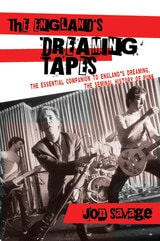
The England’s Dreaming Tapes
Jon Savage
University of Minnesota Press, 2010
Here is the story of a generation that changed the world in just a few months in 1976, as told by the scene's major figures: all four original Sex Pistols as well as Joe Strummer, Chrissie Hynde, Jordan, Siouxsie Sioux, Viv Albertine, Adam Ant, Lee Black Childers, Howard Devoto, Pete Shelley, Syl Sylvain, Debbie Wilson, Tony Wilson, Jah Wobble, and many others. Together, they offer a sweeping history of the late 1960s and the 1970s-not just the era's music, but also its radical politics, social issues, fashion, and culture.
An invaluable source of information about a movement that has become obscured by myth, these vivid, unvarnished interviews were conducted when punk was only a decade old. In many cases, this was the first time that the subjects had talked about the period. The interviews describe the founding of the Sex Pistols; 430 King's Road, site of the legendary boutique Sex, which helped establish the punk aesthetic; punk rock New York; the cultural landscapes of London and its suburbs; the writers who covered punk; and the Manchester music scene centered around Factory Records.
With The England's Dreaming Tapes, Savage gives us the first and final word on the music, fashion, and attitude that defined this influential and incendiary era.

The Erotic Muse
American Bawdy SongsEd Cray
University of Illinois Press, 1992
Ever wanted to know the "correct" words to "Roll Me Over?" Wondered where the melody of "Sweet Betsy from Pike" came from? Ed Cray ranges from "The Cod Fish Song" to "Hallelujah I'm a Bum" in a tireless quest to answer such questions and restore bawdy to an esteemed place in our folk music canon.
Extensively revised and including forty more songs than its predecessor, the second edition of The Erotic Muse is a unique collection of bawdy and even forbidden American folksongs. Cray presents the full texts of some 125 works with melodies for most and detailed annotations for all. In addition, he adds lively commentary that places the songs in historical, social, and, where appropriate, psychological context.
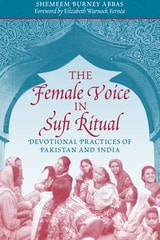
The Female Voice in Sufi Ritual
Devotional Practices of Pakistan and IndiaBy Shemeem Burney Abbas
University of Texas Press, 2002
The female voice plays a more central role in Sufi ritual, especially in the singing of devotional poetry, than in almost any other area of Muslim culture. Female singers perform sufiana-kalam, or mystical poetry, at Sufi shrines and in concerts, folk festivals, and domestic life, while male singers assume the female voice when singing the myths of heroines in qawwali and sufiana-kalam. Yet, despite the centrality of the female voice in Sufi practice throughout South Asia and the Middle East, it has received little scholarly attention and is largely unknown in the West.
This book presents the first in-depth study of the female voice in Sufi practice in the subcontinent of Pakistan and India. Shemeem Burney Abbas investigates the rituals at the Sufi shrines and looks at women's participation in them, as well as male performers' use of the female voice. The strengths of the book are her use of interviews with both prominent and grassroots female and male musicians and her transliteration of audio- and videotaped performances. Through them, she draws vital connections between oral culture and the written Sufi poetry that the musicians sing for their audiences. This research clarifies why the female voice is so important in Sufi practice and underscores the many contributions of women to Sufism and its rituals.
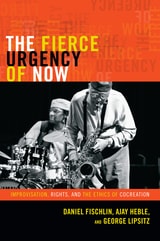
The Fierce Urgency of Now
Improvisation, Rights, and the Ethics of CocreationDaniel Fischlin, Ajay Heble, and George Lipsitz
Duke University Press, 2013
Improvisation is the creation and development of new, unexpected, and productive cocreative relations among people. It cultivates the capacity to discern elements of possibility, potential, hope, and promise where none are readily apparent. Improvisers work with the tools they have in the arenas that are open to them. Proceeding without a written score or script, they collaborate to envision and enact something new, to enrich their experience in the world by acting on it and changing it. By analyzing the dynamics of particular artistic improvisations, mostly by contemporary American jazz musicians, the authors reveal improvisation as a viable and urgently needed model for social change. In the process, they rethink politics, music, and the connections between them.

The Film Music of John Williams
Reviving Hollywood's Classical StyleEmilio Audissino
University of Wisconsin Press, 2021
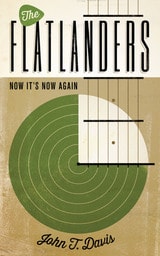
The Flatlanders
Now It's Now AgainBy John T. Davis
University of Texas Press, 2014
A group of three friends who made music in a house in Lubbock, Texas, recorded an album that wasn’t released and went their separate ways into solo careers. That group became a legend and then—twenty years later—a band. The Flatlanders—Joe Ely, Jimmie Dale Gilmore, and Butch Hancock—are icons in American music, with songs blending country, folk, and rock that have influenced a long list of performers, including Robert Earl Keen, the Cowboy Junkies, Ryan Bingham, Terry Allen, John Hiatt, Hayes Carll, Lucinda Williams, Steve Earle, and Lyle Lovett.
In The Flatlanders: Now It’s Now Again, Austin author and music journalist John T. Davis traces the band’s musical journey from the house on 14th Street in Lubbock to their 2013 sold-out concert at Carnegie Hall. He explores why music was, and is, so important in Lubbock and how earlier West Texas musicians such as Buddy Holly and Roy Orbison, as well as a touring Elvis Presley, inspired the young Ely, Gilmore, and Hancock. Davis vividly recreates the Lubbock countercultural scene that brought the Flatlanders together and recounts their first year (1972–1973) as a band, during which they recorded the songs that, decades later, were released as the albums More a Legend Than a Band and The Odessa Tapes. He follows the three musicians through their solo careers and into their first decade as a (re)united band, in which they cowrote songs for the first time on the albums Now Again and Hills and Valleys and recovered their extraordinary original demo tape, lost for forty years. Many roads later, the Flatlanders are finally both a legend and a band.

The Florida Room
Alexandra T. Vazquez
Duke University Press, 2022

The Frank C. Brown Collection of NC Folklore
Vol. II: Folk Ballads from North CarolinaFrank C. Brown
Duke University Press, 0