Results by title
344 books match the query 'Nationalism' and 61 start with t
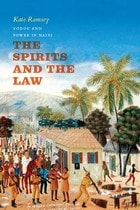
The Spirits and the Law
Vodou and Power in HaitiKate Ramsey
University of Chicago Press, 2011
Vodou has often served as a scapegoat for Haiti’s problems, from political upheavals to natural disasters. This tradition of scapegoating stretches back to the nation’s founding and forms part of a contest over the legitimacy of the religion, both beyond and within Haiti’s borders. The Spirits and the Law examines that vexed history, asking why, from 1835 to 1987, Haiti banned many popular ritual practices.
To find out, Kate Ramsey begins with the Haitian Revolution and its aftermath. Fearful of an independent black nation inspiring similar revolts, the United States, France, and the rest of Europe ostracized Haiti. Successive Haitian governments, seeking to counter the image of Haiti as primitive as well as contain popular organization and leadership, outlawed “spells” and, later, “superstitious practices.” While not often strictly enforced, these laws were at times the basis for attacks on Vodou by the Haitian state, the Catholic Church, and occupying U.S. forces. Beyond such offensives, Ramsey argues that in prohibiting practices considered essential for maintaining relations with the spirits, anti-Vodou laws reinforced the political marginalization, social stigmatization, and economic exploitation of the Haitian majority. At the same time, she examines the ways communities across Haiti evaded, subverted, redirected, and shaped enforcement of the laws. Analyzing the long genealogy of anti-Vodou rhetoric, Ramsey thoroughly dissects claims that the religion has impeded Haiti’s development.
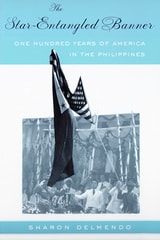
The Star-Entangled Banner
One Hundred Years of America in the PhilippinesDelmendo, Sharon
Rutgers University Press, 2004
During a ceremony held in 1996 to commemorate the fiftieth anniversary of formal Philippine independence, the U.S. flag was being lowered while the Philippine flag was being raised, and the two became entangled. In The Star-Entangled Banner, Sharon Delmendo demonstrates that this incident is indicative of the longstanding problematic relationship between the two countries. When faced with a national crisis or a compelling need to reestablish its autonomy, each nation paradoxically turns to its history with the other to define its place in the world.
Each chapter of the book deals with a separate issue in this linked history: the influence of Buffalo Bill’s show on the proto-nationalism of José Rizal, who is often described as the “First Filipino”; the portrayal of the Philippines in American children’s books; Back to Bataan, a World War II movie starring John Wayne; the post-independence fiction of F. Sionil José; and the refusal of the U..S military to return the Balangiga Bells, which were taken as war booty during the Philippine-American War. Ultimately, Delmendo demonstrates how the effects of U.S. imperialism in the Philippines continue to resonate in U.S. foreign policy in the post cold war era and the war on terrorism.
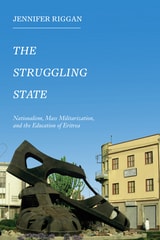
The Struggling State
Nationalism, Mass Militarization, and the Education of EritreaJennifer Riggan
Temple University Press, 2016
In her provocative ethnography, The Struggling State, Jennifer Riggan examines the contradictions of state power as simultaneously oppressive to and enacted by teachers. Riggan, who conducted participant observation with teachers in and out of schools, explores the tenuous hyphen between nation and state under lived conditions of everyday authoritarianism.
The Struggling State shows how the hopes of Eritrean teachers and students for the future of their nation have turned to a hopelessness in which they cannot imagine a future at all.
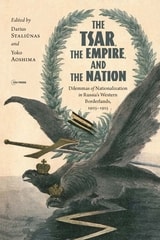
The Tsar, The Empire, and The Nation
Dilemmas of Nationalization in Russia's Western Borderlands, 1905-1915Darius Staliunas
Central European University Press, 2021
This collection of essays addresses the challenge of modern nationalism to the tsarist Russian Empire. First appearing on the empire’s western periphery this challenge, was most prevalent in twelve provinces extending from Ukrainian lands in the south to the Baltic provinces in the north, as well as to the Kingdom of Poland.
At issue is whether the late Russian Empire entered World War I as a multiethnic state with many of its age-old mechanisms run by a multiethnic elite, or as a Russian state predominantly managed by ethnic Russians. The tsarist vision of prioritizing loyalty among all subjects over privileging ethnic Russians and discriminating against non-Russians faced a fundamental problem: as soon as the opportunity presented itself, non-Russians would increase their demands and become increasingly separatist.
The authors found that although the imperial government did not really identify with popular Russian nationalism, it sometimes ended up implementing policies promoted by Russian nationalist proponents. Matters addressed include native language education, interconfessional rivalry, the “Jewish question,” the origins of mass tourism in the western provinces, as well as the emergence of Russian nationalist attitudes in the aftermath of the first Russian revolution.

The Ukrainian Question
Russian Empire and Nationalism in the 19th CenturyAlexei Miller
Central European University Press, 2003
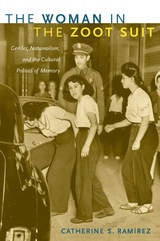
The Woman in the Zoot Suit
Gender, Nationalism, and the Cultural Politics of MemoryCatherine S. Ramírez
Duke University Press, 2009
Two events in wartime Los Angeles thrust young Mexican American zoot suiters into the media spotlight. In the Sleepy Lagoon incident, a man was murdered during a mass brawl in August 1942. Twenty-two young men, all but one of Mexican descent, were tried and convicted of the crime. In the Zoot Suit Riots of June 1943, white servicemen attacked young zoot suiters, particularly Mexican Americans, throughout Los Angeles. The Chicano movement of the 1960s–1980s cast these events as key moments in the political awakening of Mexican Americans and pachucos as exemplars of Chicano identity, resistance, and style. While pachucas and other Mexican American women figured in the two incidents, they were barely acknowledged in later Chicano movement narratives. Catherine S. Ramírez draws on interviews she conducted with Mexican American women who came of age in Los Angeles in the late 1930s, 1940s, and 1950s as she recovers the neglected stories of pachucas. Investigating their relative absence in scholarly and artistic works, she argues that both wartime U.S. culture and the Chicano movement rejected pachucas because they threatened traditional gender roles. Ramírez reveals how pachucas challenged dominant notions of Mexican American and Chicano identity, how feminists have reinterpreted la pachuca, and how attention to an overlooked figure can disclose much about history making, nationalism, and resistant identities.
The Work of Mothering
Globalization and the Filipino DiasporaHarrod Suarez
University of Illinois Press, 2017
Harrod J. Suarez's innovative readings of this cultural production explores issues of diaspora, gender, and labor. He details the ways literature and cinema play critical roles in encountering, addressing, and problematizing what we think we know about overseas Filipina workers. Though often seen as compliant subjects, the Filipina mother can also destabilize knowledge production that serves the interests of global empire, capitalism, and Philippine nationalism. Suarez examines canonical writers like Nick Joaquín, Carlos Bulosan, and Jessica Hagedorn to explore this disruption and understand the maternal specificity of the construction of overseas Filipina workers. The result is a series of readings that develop new ways of thinking through diasporic maternal labor that engages with the sociological imaginary.
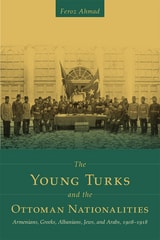
The Young Turks and the Ottoman Nationalities
Armenians, Greeks, Albanians, Jews, and Arabs, 1908–1918Feroz Ahmad
University of Utah Press, 2014
Ahmad holds that nationalism was introduced into the Ottoman Empire during the French Revolution, providing kindling for the struggles that later emerged. Setting the stage with this nineteenth-century background, Ahmad then examines each Ottoman nationality in the wake of the restoration of the Ottoman constitution in 1908. Officially known as the Committee of Union and Progress (CUP), the Young Turks made up a nationalist political party that ruled the Ottoman Empire from 1908 until the end of World War I. Ahmad illuminates the relationships and conflicts between the Young Turks and the Greek, Armenian, Albanian, Jewish, and Arab ethnic groups during this period. Placing these nationalities in their historical context, he shows their relationships not only to the Young Turks but also to one anotherno other single book has attempted to look closely at all of these connections.
Anyone interested in understanding the roots of current-day relations in the Balkans and Middle East will find this book very informative. Clearly organized and written, the book will enlighten both readers and scholars.
Threatening Others
Nicaraguans and the Formation of National Identities in Costa RicaCarlos Sandoval-Garcia
Ohio University Press, 2004
During the last two decades, a decline in public investment has undermined some of the national values and institutions of Costa Rica. The resulting sense of dislocation and loss is usually projected onto Nicaraguan “immigrants.”
Threatening Others: Nicaraguans and the Formation of National Identities in Costa Rica explores the representation of the Nicaraguan “other” in the Costa Rican imagery. It also seeks to address more generally why the sense of national belonging constitutes a crucial identification in contemporary societies. Interdisciplinary and based on extensive fieldwork, it looks critically at the “exceptionalism” that Costa Ricans take for granted and view as a part of their national identity.
Carlos Sandoval-García argues that Nicaraguan immigrants, once perceived as a “communist threat,” are now victims of an invigorated, racialized politics in which the Nicaraguan nationality has become an offense in itself.
Threatening Others is a deeply searching book that will interest scholars and students in Latin American studies and politics, cultural studies, and ethnic studies.

Toward Nationalism's End
An Intellectual Biography of Hans KohnAdi Gordon
Brandeis University Press, 2017
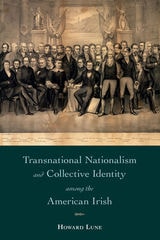
Transnational Nationalism and Collective Identity among the American Irish
Howard Lune
Temple University Press, 2020
In Transnational Nationalism and Collective Identity among the American Irish, Howard Lune considers the development and mobilization of different nationalisms over 125 years of Irish diasporic history (1791–1920) and how these campaigns defined the Irish nation and Irish citizenship.
Lune takes a collective approach to exploring identity, concentrating on social identities in which organizations are the primary creative agent to understand who we are and how we come to define ourselves. As exiled Irishmen moved to the United States, they sought to create a new Irish republic following the American model. Lune traces the construction of Irish American identity through the establishment and development of Irish nationalist organizations in the United States. He looks at how networks—such as societies, clubs, and private organizations—can influence and foster diaspora, nationalism, and nationalist movements.
By separating nationalism from the physical nation, Transnational Nationalism and Collective Identity among the American Irish uniquely captures the processes and mechanisms by which collective identities are constructed, negotiated, and disseminated. Inevitably, this work tackles the question of what it means to be Irish—to have a nationality, a community, or a shared history.