Results by title
479 books match the query 'New York (State)' and 83 start with t
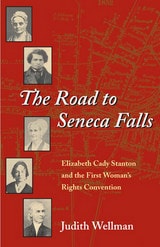
The Road to Seneca Falls
Elizabeth Cady Stanton and the First Woman's Rights ConventionJudith Wellman
University of Illinois Press, 2004
The convention succeeded by uniting powerful elements of the antislavery movement, radical Quakers, and the campaign for legal reform under a common cause. Wellman shows that these three strands converged not only in Seneca Falls, but also in the life of women's rights pioneer Elizabeth Cady Stanton. It is this convergence, she argues, that foments one of the greatest rebellions of modern times.
Rather than working heavy-handedly downward from their official "Declaration of Sentiments," Wellman works upward from richly detailed documentary evidence to construct a complex tapestry of causes that lay behind the convention, bringing the struggle to life. Her approach results in a satisfying combination of social, community, and reform history with individual and collective biographical elements.
The Road to Seneca Falls challenges all of us to reflect on what it means to be an American trying to implement the belief that "all men and women are created equal," both then and now. A fascinating story in its own right, it is also a seminal piece of scholarship for anyone interested in history, politics, or gender.

The Saratoga Campaign
Uncovering an Embattled LandscapeEdited by William A. Griswold and Donald W. Linebaugh
University Press of New England, 2016
The Scandal of Reform
The Grand Failures of New York's Political Crusaders and the Death of NonpartisanshipBarry, Francis S
Rutgers University Press, 2009
The Scandal of Reform pulls the curtain back on New York's reformers past and present, revealing the bonds they have always shared with the bosses they disdain, the policy failures they still refuse to recognize, and the transition they have made from nonpartisan outsiders to ideological insiders.
Francis S. Barry examines the evolution of political reform from the frontlines of New York City's recent reform wars. He offers an insider's account and analysis of the controversial 2003 referendum debate on nonpartisan elections, and he challenges reformersùand members of both partiesùto reconsider their faith in reforms that are no longer serving the public interest.
The Scarcity Loop
How School Choice Reshapes the Rationing of Public Educationjennings
Russell Sage Foundation, 2026
School choice promises to free families from the limits of where they live. The Scarcity Loop asks what happens when that promise is made in school systems where more children seek desirable schools than those schools can serve. Focused on New York City’s high school admissions system, sociologist Jennifer L. Jennings argues that choice becomes another way to ration scarce educational opportunity, shifting where rationing happens, who must manage it, and how families understand the outcomes that follow.
Jennings begins with the admissions process itself. New York City asks every eighth grader to choose from hundreds of options. On paper, the system offers extraordinary possibility. But that possibility still has to be converted into a seat. Someone has to learn the rules, compare schools, manage deadlines, make trips, and decide how much risk a thirteen-year-old can bear. Jennings calls this the work of getting in and shows that the capacity to do that work is not evenly distributed. Some families enter choice systems with the fluency and flexibility to turn options into opportunity. Others confront it with fewer supports and far less room for error. Some teenagers shoulder decisions with little adult help. Counselors translate complicated rules under impossible constraints. Principals are not passive actors. Jennings shows how they recruit and adapt as they try to build schools families will choose while managing demand and reputation.
Jennings contends that reforms meant to expand access can reorganize the very competition they aim to resolve. As one barrier recedes, another becomes more consequential. Residence matters less, but advantage does not disappear; it travels through information, timing, and familiarity with the rules. Inequality persists not because nothing changes, but because advantage finds new points of entry as reforms change rules. As the work of securing opportunity shifts, so do understandings of inequality. Unequal outcomes can come to look less like consequences of how educational opportunities are organized and more like reflections of how families navigate the system.
Drawing on more than 450 interviews, participant observation, administrative data, and archival research, The Scarcity Loop follows students, parents, counselors, and principals as they navigate school choice at scale. Jennings traces who must do the work of making choice real, clarifying what is at stake when public education becomes something families must know how to secure.
The Scarcity Loop skillfully shows the consequences of scarcity in public education on schools and families, and reveals how scarcity reproduces itself, even when reforms are sincere.
JENNIFER L. JENNINGS is the Class of 1988 Professor in Domestic Policy and Professor of Sociology and Public Affairs, Princeton University
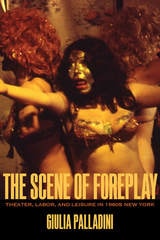
The Scene of Foreplay
Theater, Labor, and Leisure in 1960s New YorkGiulia Palladini
Northwestern University Press, 2017
Matching an original approach to historical materials and theoretical reflection, Palladini addresses the peculiar forms of production, reproduction, and consumption developed in the 1960s as labors of love, creating for artists a condition of “preliminarity” toward professional work and also functioning as a counterforce within productive economy, as a prelude where value is not yet assigned to labor.
The Scene of Foreplay proposes that such labors of love can be considered both as paradigmatic for contemporary forms of precarious labor and also resonating with echoes from marginal histories of the performing arts, in a nonlinear genealogy of queer resistance to ideas of capitalist productivity and professionalism. The book offers much for those interested in performance theory as well asin the history of theater and performance arts in the 1960s.
The Scene of Harlem Cabaret
Race, Sexuality, PerformanceShane Vogel
University of Chicago Press, 2009
Harlem’s nightclubs in the 1920s and ’30s were a crucible for testing society’s racial and sexual limits. Normally tacit divisions were there made spectacularly public in the vibrant, but often fraught, relationship between performer and audience. The cabaret scene, Shane Vogel contends, also played a key role in the Harlem Renaissance by offering an alternative to the politics of sexual respectability and racial uplift that sought to dictate the proper subject matter for black arts and letters. Individually and collectively, luminaries such as Duke Ellington, Lena Horne, Langston Hughes, Claude McKay, Wallace Thurman, and Ethel Waters expanded the possibilities of blackness and sexuality in America, resulting in a queer nightlife that flourished in music, in print, and on stage.
Deftly combining performance theory, literary criticism, historical research, and biographical study, The Scene of Harlem Cabaret brings this rich moment in history to life, while exploring the role of nightlife performance as a definitive touchstone for understanding the racial and sexual politics of the early twentieth century.
The Secret Lives of Teachers
Anonymous
University of Chicago Press, 2015
This is not a how-to manual. Rather, the author explores the dimensions of teaching that no one else has, those private thoughts few would dare put into a book but that form an important part of the day-to-day experience of a teacher. We see him ponder the clothes that people wear, think frankly about money (and the imbalance of its distribution), get wrangled by parents, provide on-the-fly psychotherapy, drape niceties over conversations that are actually all-out warfare, drop an f-bomb or two, and deal with students who are just plain unlikeable. We also see him envy, admire, fear, and hope; we see him in adulation and uncertainty, and in energy and exhaustion. We see him as teachers really are: human beings with a complex, rewarding, and very important job.
There has been no shortage of commentary on the teaching profession over the decades, but none quite like this. Unflinching, wry, and at times laugh-out-loud funny, it’s written for every teacher out there who has ever scrambled, smirked, or sighed—and toughed it out nonetheless.
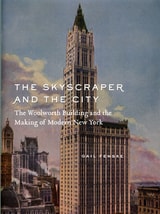
The Skyscraper and the City
The Woolworth Building and the Making of Modern New YorkGail Fenske
University of Chicago Press, 2008
Fenske shows here that the building’s multiplicity of meanings reflected the cultural contradictions that defined New York City’s modernity. For Frank Woolworth—founder of the famous five-and-dime store chain—the building served as a towering trademark, for advocates of the City Beautiful movement it suggested a majestic hotel de ville, for technological enthusiasts it represented the boldest of experiments in vertical construction, and for tenants it provided an evocative setting for high-style consumption. Tourists, meanwhile, experienced a spectacular sightseeing destination and avant-garde artists discovered a twentieth-century future. In emphasizing this faceted significance, Fenske illuminates the process of conceiving, financing, and constructing skyscrapers as well as the mass phenomena of consumerism, marketing, news media, and urban spectatorship that surround them.
As the representative example of the skyscraper as a “cathedral of commerce,” the Woolworth Building remains a commanding presence in the skyline of lower Manhattan, and the generously illustrated Skyscraper and the City is a worthy testament to its importance in American culture.
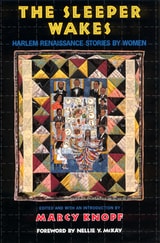
The Sleeper Wakes
Harlem Renaissance Stories by WomenKnopf-Newman, Marcy
Rutgers University Press, 1993
In recent years there has been an explosion of interest in the art and culture of the Harlem Renaissance. Yet this significant collection is the first definitive edition of Harlem Renaissance stories by women. The writers include Gwendolyn Bennett, Jessie Redmon Fauset, Angelina Weld Grimké, Zora Neale Hurston, Nella Larsen, Alice Dunbar-Nelson, and Dorothy West.
Published originally in periodicals such as The Crisis, Fire!!, and Opportunity, these twenty-seven stories have until now been virtually unavailable to readers. These stories are as compelling today as they were in the 1920s and 1930s. In them, we find the themes of black and white racial tension and misunderstanding, economic deprivation, passing, love across and within racial lines, and the attempt to maintain community and uplift the race.
Marcy Knopf's introduction surveys the history of the Harlem Renaissance, the periodicals and books it generated, and describes the rise to prominence of these women writers and their later fall from fame. She also includes a brief biography of each of the writers. Nellie Y. McKay's foreword analyzes the themes and concerns of the stories.
The Sleeper Wakes
Harlem Renaissance Stories by WomenKnopf-Newman, Marcy
Rutgers University Press, 1993
In recent years there has been an explosion of interest in the art and culture of the Harlem Renaissance. Yet this significant collection is the first definitive edition of Harlem Renaissance stories by women. The writers include Gwendolyn Bennett, Jessie Redmon Fauset, Angelina Weld Grimké, Zora Neale Hurston, Nella Larsen, Alice Dunbar-Nelson, and Dorothy West.
Published originally in periodicals such as The Crisis, Fire!!, and Opportunity, these twenty-seven stories have until now been virtually unavailable to readers. These stories are as compelling today as they were in the 1920s and 1930s. In them, we find the themes of black and white racial tension and misunderstanding, economic deprivation, passing, love across and within racial lines, and the attempt to maintain community and uplift the race.
Marcy Knopf's introduction surveys the history of the Harlem Renaissance, the periodicals and books it generated, and describes the rise to prominence of these women writers and their later fall from fame. She also includes a brief biography of each of the writers. Nellie Y. McKay's foreword analyzes the themes and concerns of the stories.
The Song Is You
Musical Theatre and the Politics of Bursting into Song and DanceBradley Rogers
University of Iowa Press, 2020
Musicals, it is often said, burst into song and dance when mere words can no longer convey the emotion. This book argues that musicals burst into song and dance when one body can no longer convey the emotion. Rogers shows how the musical’s episodes of burlesque and minstrelsy model the kinds of radical relationships that the genre works to create across the different bodies of its performers, spectators, and creators every time the musical bursts into song. These radical relationships—borne of the musical’s obsessions with “bad” performances of gender and race—are the root of the genre’s progressive play with identity, and thus the source of its subcultural power. However, this leads to an ethical dilemma: Are the musical’s progressive politics thus rooted in its embrace of regressive entertainments like burlesque and minstrelsy?
The Song Is You shows how musicals return again and again to this question, and grapple with a guilt that its joyous pleasures are based on exploiting the laboring bodies of its performers. Rogers argues that the discourse of “integration”—which claims that songs should advance the plot—has functioned to deny the radical work that the musical undertakes every time it transitions into song and dance. Looking at musicals from The Black Crook to Hamilton, Rogers confronts the gendered and racial dynamics that have always under-girded the genre, and asks how we move forward.

The Sturdy Oak
A Composite Novel of American PoliticsElizabeth Jordan
Ohio University Press, 1998
In the spring of 1916, as the workers for woman suffrage were laying plans for another attack on the bastions of male supremacy, the idea for The Sturdy Oak was born. Based on the rules of an old parlor game, wherein one person begins a narrative, another continues it, and another follows, this collaborative effort by the leading writers of the day, such as Fannie Hurst, Dorothy Canfield, and Kathleen Norris, is a satiric look at the gender roles of the time.
There is much in The Sturdy Oak that reflects the New York campaign for suffrage of 1916–1917. The setting is the fictional city of Whitewater in upstate New York. Idealistic reformers are pitted against a ruthless political machine, and the traditional picture of man as “the sturdy oak” supporting woman, “the clinging vine,” is ridiculed in the portrayal of an engaging couple, George and Genevieve Remington. Nonetheless, the purpose of the book is not primarily ridicule but reform, and the reader is taken through the steps by which a confirmed anti-suffragist is gradually transformed into a supporter of the suffrage cause.
Beyond its historical interest, The Sturdy Oak is imbued with a political and social currency that makes it applicable even today. And because of the skill of the writers of this composite novel, even eight decades after its initial publication The Sturdy Oak is still, as the New York Times said in 1917, “irresistibly readable.”
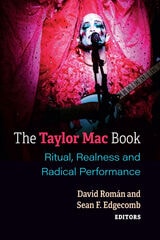
The Taylor Mac Book
Ritual, Realness and Radical PerformanceDavid Román and Sean F. Edgecomb, Editors
University of Michigan Press, 2023
Featuring essays, interviews, and commentaries by noted critics and artists, the volume examines the vastness of Mac’s theatrical imagination, the singularity of their voice, the inclusiveness of their cultural insights and critiques, and the creativity they display through stylistic and formal qualities and the unorthodoxies of their personal and professional trajectories. Contributors consider the range of Mac’s career as a playwright, performer, actor, and singer, expanding and enriching the conversation on this much-celebrated and deeply resonant body of work.
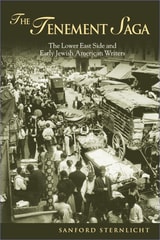
The Tenement Saga
The Lower East Side and Early Jewish American WritersSanford Sternlicht
University of Wisconsin Press, 2004
Sternlicht discusses the role of women, the Yiddish Theater, secular values, the struggle between generations, street crime, politics, labor unions, and the importance of newspapers and periodicals. He documents the decline of Yiddish culture as these immigrants blended into what they called "The Golden Land."
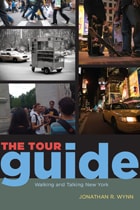
The Tour Guide
Walking and Talking New YorkJonathan R. Wynn
University of Chicago Press, 2011
Everyone wants to visit New York at least once. The Big Apple is a global tourist destination with a dizzying array of attractions throughout the five boroughs. The only problem is figuring out where to start—and that’s where the city’s tour guides come in.
These guides are a vital part of New York’s raucous sidewalk culture, and, as The Tour Guide reveals, the tours they offer are as fascinatingly diverse—and eccentric—as the city itself. Visitors can take tours that cover Manhattan before the arrival of European settlers, the nineteenth-century Irish gangs of Five Points, the culinary traditions of Queens, the culture of Harlem, or even the surveillance cameras of Chelsea—in short, there are tours to satisfy anyone’s curiosity about the city’s past or present. And the guides are as intriguing as the subjects, we learn, as Jonathan R. Wynn explores the lives of the people behind the tours, introducing us to office workers looking for a diversion from their desk jobs, unemployed actors honing their vocal skills, and struggling retirees searching for a second calling. Matching years of research with his own experiences as a guide, Wynn also lays bare the grueling process of acquiring an official license and offers a how-to guide to designing and leading a tour.
Touching on the long history of tour-giving across the globe as well as the ups and downs of New York’s tour guide industry in the wake of 9/11, The Tour Guide is as informative and insightful as the chatty, charming, and colorful characters at its heart.
The Transformation of the Avant-Garde
The New York Art World, 1940-1985Diana Crane
University of Chicago Press, 1989
Crane's account is built around discussions of seven styles: Abstract Expressionism in the forties; Pop art and Minimalism in the sixties; Figurative painting, Photorealism, and Pattern painting in the early seventies; and Neo-Expressionism in the early eighties. Demonstrating that the New York art world moved toward increasing acceptance of dominant American cultural trends, Crane offers a fascinating look not only at the intricacies of New York's artistic inner circle but also at the sociology of work and professions, the economics of culture markets such as "dealing art," and the sociology of culture.
The Triangle Fire, Protocols Of Peace
And Industrial Democracy In ProgressiveRichard A. Greenwald
Temple University Press, 2005
The Two New Yorks
State-City Relations in the Changing Federal SystemGerald Benjamin
Russell Sage Foundation, 1988
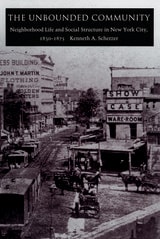
The Unbounded Community
Neighborhood Life and Social Structure in New York City, 1830–1875Kenneth A. Scherzer
Duke University Press, 1992
After a critical examination of recent historical renderings of neighborhood life, Scherzer focuses on the ecological, symbolic, and social aspects of nineteenth-century community life in New York City. Employing a wide array of sources, from census reports and church records to police blotters and brothel guides, he documents the complex composition of neighborhoods that defy simple categorization by class or ethnicity. From his account, the New York City neighborhood emerges as a community in flux, born out of the chaos of May Day, the traditional moving day. The fluid geography and heterogeneity of these neighborhoods kept most city residents from developing strong local attachments. Scherzer shows how such weak spatial consciousness, along with the fast pace of residential change, diminished the community function of the neighborhood. New Yorkers, he suggests, relied instead upon the "unbounded community," a collection of friends and social relations that extended throughout the city.
With pointed argument and weighty evidence, The Unbounded Community replaces the neighborhood of nostalgia with a broader, multifaceted conception of community life. Depicting the neighborhood in its full scope and diversity, the book will enhance future forays into urban history.
The University Against Itself
The NYU Strike and the Future of the Academic Workplaceedited by Monika Krause, Mary Nolan, Michael Palm and Andrew Ross
Temple University Press, 2008
All of the contributors were either participants in the NYU strike -- graduate students, faculty, and organizers -- or are nationally recognized as writers on academic labor. They are deeply troubled by the ramifications of corporatizing universities. Here they spell out their concerns, offering lessons from one historic strike as well as cautions about the future of all universities.
Contributors include: Stanley Aronowitz, Barbara Bowen, Andrew Cornell, Ashley Dawson, Stephen Duncombe, Steve Fletcher, Greg Grandin, Adam Green, Kitty Krupat, Gordon Lafer, Micki McGee, Sarah Nash, Cary Nelson, Matthew Osypowski, Ed Ott, Ellen Schrecker, Susan Valentine, and the editors.
The Urban Voter
Group Conflict and Mayoral Voting Behavior in American CitiesKaren M. Kaufmann
University of Michigan Press, 2004
The Williamsburg Avant-Garde
Experimental Music and Sound on the Brooklyn WaterfrontCisco Bradley
Duke University Press, 2023
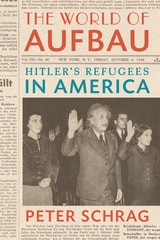
The World of Aufbau
Hitler's Refugees in AmericaPeter Schrag
University of Wisconsin Press, 2019
The book examines the columns and advertisements that chronicled the social and cultural life of that generation and maintained a detailed account of German-speaking cultures in exile. Peter Schrag is the first to present a definitive account of the influential publication that brought postwar refugees together and into the American mainstream.
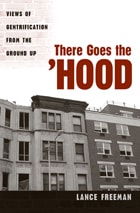
There Goes the Hood
Views of Gentrification from the Ground UpLance Freeman
Temple University Press, 2006

Through Japanese Eyes
Thirty Years of Studying Aging in AmericaYohko Tsuji
Rutgers University Press, 2021
Through Japanese Eyes offers an ethnography of aging in America from a cross-cultural perspective based on a lengthy period of research. It illustrates how older Americans cope with the gap between the ideal (e.g., independence) and the real (e.g., needing assistance) of growing older, and the changes the author observed over thirty years of research.
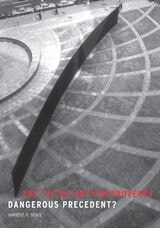
Tilted Arc Controversy
Dangerous PrecedentHarriet F. Senie
University of Minnesota Press, 2001
A comprehensive look at a controversy that continues to fuel debates about the role of public art in America.
Since its installation at and subsequent removal from New York City’s Federal Plaza, noted sculptor Richard Serra’s Tilted Arc has been a touchstone for debates over the role of public art. Installed in 1981, the 10-foot-high, 120-foot-long curved wall of Cor-Ten self-rusting steel instantly became a magnet for criticism. Art critics in the New York Times and the Village Voice labeled it the city’s worst public sculpture, and many denounced it as an example of the elitism associated with art and as an obstacle to the use and enjoyment of the plaza.
Harriet F. Senie explores the history of Tilted Arc, including its 1979 commission and the heated public hearings that eventually led to its removal in 1989 (it was dismantled and is currently stored in a government warehouse in Maryland). Analyzing the archive of popular opinion, Senie shows how the sculpture was caught in an avalanche of shifting local and national discussions about public funding for the arts. She examines the tactics of those opposed to the sculpture and the media’s superficial and sensational coverage of the controversy, reframing the dialogue in terms of public art, public space, and public policy instead of the question of whether the removal of Tilted Arc was poetic justice or a dangerous precedent. Senie provides an enlightening history and analysis of a controversy that will continue to inform our discussions about public art for years to come.
Timber Rattlesnakes in Vermont & New York
Biology, History, and the Fate of an Endangered SpeciesJon Furman
University Press of New England, 2007
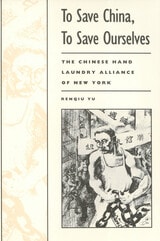
To Save China, To Save Ourselves
The Chinese Hand Laundry Alliance of New YorkRenqiu Yu
Temple University Press, 1995
Combining archival research in Chinese language sources with oral history interviews, Renqiu Yu examines the Chinese Hand Laundry Alliance (CHLA), an organization that originated in 1933 to help Chinese laundry workers break their isolation in American society. Yu brings to life the men who labored in New York laundries, depicting their meager existence, their struggles against discrimination and exploitation, and their dreams of returning to China. The persistent efforts of the CHLA succeeded in changing the workers' status in American society and improving the image of the Chinese among the American public.
Yu is especially concerned with the political activities of the CHLA, which was founded in reaction to proposed New York City legislation that would have put the Chinese laundries out of business. When the conservative Chinese social organization could not help the launderers, they broke with tradition and created their own organization. Not only did the CHLA defeat the legislative requirements that would have closed them down, but their "people's diplomacy" won American support for China during its war with Japan. The CHLA staged a campaign in the 1930s and 40s which took as its slogan, "To Save China, To Save Ourselves." Focusing on this campaign, Yu also examines the complex relationship between the democratically oriented CHLA and the Chinese American left in the 1930s.
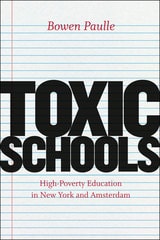
Toxic Schools
High-Poverty Education in New York and AmsterdamBowen Paulle
University of Chicago Press, 2013
When Bowen Paulle speaks of toxicity, he speaks of educational worlds dominated by intimidation and anxiety, by ambivalence, degradation, and shame. Based on six years of teaching and research in the South Bronx and in Southeast Amsterdam, Toxic Schools is the first fully participatory ethnographic study of its kind and a searing examination of daily life in two radically different settings. What these schools have in common, however, are not the predictable ideas about race and educational achievement but the tragically similar habituated stress responses of students forced to endure the experience of constant vulnerability. From both sides of the Atlantic Ocean, Paulle paints an intimate portrait of how students and teachers actually cope, in real time, with the chronic stress, peer group dynamics, and subtle power politics of urban educational spaces in the perpetual shadow of aggression.
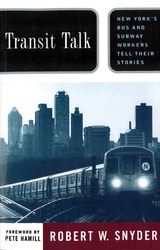
Transit Talk
New York's Bus and Subway Workers Tell Their StoriesRobert W. Snyder
Rutgers University Press, 1998
There are nearly 44,000 transit workers like those you will meet in Transit Talk , and every day they help five million of us travel to work, to school, to weddings, to funerals, to hospitals, to vacations. These workers labor daily on subway tracks inches from high-voltage powerlines, risking their lives for passengers they'U never know. The city can feel large and fragmented, but the transportation system and its workers create common threads in the lives of all New Yorkers, threads we take for granted.
Together, their stories create a human tableau of life and labor in the city within a city that is the MTA New York City Transit. Transit workers find satisfaction in fixing a damaged subway car, gain wisdom from mastering a dangerous workplace, nurse emotional wounds from tending to someone injured in an accident, battle frustration from difficulties with management, and express satisfaction when reflecting on a productive career. They tell of how years spent in the same shop create bonds between workers. They talk of the burden of laboring in a twenty-four-hour system with night shifts and weekend workdays that take them away from families. You'U hear painful tales of informing next-of-kin of a death on the tracks as well as joyous anecdotes of workers delivering a baby in a subway car.
Transnational Desires
Brazilian Erotic Dancers in New YorkSuzana Maia
Vanderbilt University Press, 2012
Their motivation to migrate and to work as erotic dancers can also be understood in the context of a representational system, inaugurated in colonial times, that emphasizes the exoticism of Brazilian womentheir bodies, their skin tone, their sexuality. These stereotypes are the props that Brazilian women use to construct their performances in Manhattan and Queens gentlemen's bars and the language through which they negotiate their relationships to society at large.
Transnational Desires focuses on the lives of nine Brazilian dancers with whom the author, herself a middleclass Brazilian, developed close relationships over the years. Maia examines their social relations both in the bar scene and with family, friends, and lovers outside. She shows that for these women erotic dancing is part of a life trajectory that involves negotiating their social position and life prospects in a fundamentally transnational social universe.

Trials of Intimacy
Love and Loss in the Beecher-Tilton ScandalRichard Wightman Fox
University of Chicago Press, 1999
Henry Ward Beecher was pastor of Brooklyn's Plymouth Church and for many the "representative man" of mid-nineteenth century America. Elizabeth Tilton was the wife of Beecher's longtime intimate friend Theodore. His accusation of "criminal conversation" between Henry and Elizabeth confronted the American public with entirely new dilemmas about religion and intimacy, privacy and publicity, reputation and celebrity. The scandal spotlighted a series of comic and tragic loves and betrayals among these three figures, with a supporting cast that included Victoria Woodhull, Susan B. Anthony, and Elizabeth Cady Stanton.
To readers at the time, the Beecher-Tilton Scandal was an irresistible mystery. Richard Fox puts his readers into that same reverberating story, while offering it as a timeless tale of love, deception, faith, and the confounding indeterminacy of truth. Trials of Intimacy revises our conception of nineteenth-century morals and passions. And it is an American history richly resonant with present-day dramas.
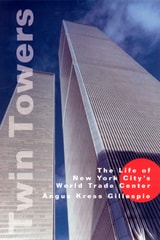
Twin Towers
Gillespie, Angus K
Rutgers University Press, 1999
A readable account of both the history of the construction of the Twin Towers and the life of the people who work there.
The Twin Towers of the World Trade Center are more than office buildings. They are symbols of America, just as the Eiffel Tower and Big Ben represent their countries. Commissioned in 1962 and completed in 1976, these edifices are still the tallest man-made structures in New York City. Indeed, the builders intended the towers to make a statement about the importance of the Port of New York and New Jersey. The complex rises like Emerald City, with fountains and sculpture from what was once a dilapidated area of half-abandoned stores.
Folklorist Angus Gillespie takes us on a tour that goes back in time and continues to the present day. He recounts the political maneuvering necessary to get the State of New Jersey to agree to situate the project at its present location. Deftly presenting portraits of the men responsible for mooring the World Trade Center at its present location, Gillespie provides ample evidence that the World Trade Center backers were “second to none in self promotion.”
Twin Towers also demonstrates how engineers prepared the site and solved complex problems (wind patterns, elevator placement, ground-water complications) in order to erect the towers, each with 110 stories. And he discusses the contrast between the architectural community’s almost universal disdain for the towers’ design and the public’s enthusiastic acceptance of the buildings as a symbol of New York.
There is more to the Twin Towers than its architecture, however. People give this complex life, purpose, vibrancy, Gillespie points out. The World Trade Center houses more than 400 businesses and organizations from some 60 different countries engaged in a broad range of international business activities. Through his numerous first-hand interviews conducted with the people who daily work there, Gillespie vividly portrays the world of bankers, shippers, freight forwarders, and traders. With skill and insight, he captures what happens during a normal 24-hour day in the Twin Towers, starting with early morning food deliveries and ending with the patrols of nighttime security guards.
Twin Towers is both a fitting tribute and careful analysis of one of the most resonating symbols in American culture.