Results by title
210 books match the query 'Philosophy, Theory & Social Aspects' and 60 start with t
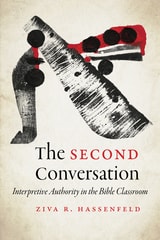
The Second Conversation
Interpretive Authority in the Bible ClassroomZiva R. Hassenfeld
Brandeis University Press, 2024
In The Second Conversation, university professor Ziva R. Hassenfeld returns to the middle school classroom to study her own seventh grade Bible class. The book explores dilemmas of practice she encountered around interpretive authority in the classroom. She analyzes the questions that came up in her teaching within the context of the most influential religious education scholarship, literacy scholarship, sociocultural theory and literary theory. She highlights the importance of two conversations about interpretive rules within the classroom, the first about the text’s meaning, and the second about competing conventions for determining its meaning. Instructors of any type of literature will benefit from Hassenfeld’s study, which offers rich ideas about when and how teachers enforce a classroom’s way of reading or follow a student’s line of inquiry toward more flexible interpretation.
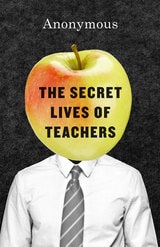
The Secret Lives of Teachers
Anonymous
University of Chicago Press, 2015
This is not a how-to manual. Rather, the author explores the dimensions of teaching that no one else has, those private thoughts few would dare put into a book but that form an important part of the day-to-day experience of a teacher. We see him ponder the clothes that people wear, think frankly about money (and the imbalance of its distribution), get wrangled by parents, provide on-the-fly psychotherapy, drape niceties over conversations that are actually all-out warfare, drop an f-bomb or two, and deal with students who are just plain unlikeable. We also see him envy, admire, fear, and hope; we see him in adulation and uncertainty, and in energy and exhaustion. We see him as teachers really are: human beings with a complex, rewarding, and very important job.
There has been no shortage of commentary on the teaching profession over the decades, but none quite like this. Unflinching, wry, and at times laugh-out-loud funny, it’s written for every teacher out there who has ever scrambled, smirked, or sighed—and toughed it out nonetheless.
The Social Organization of Schooling
Larry V. Hedges
Russell Sage Foundation, 2005

The Swindle of Innovative Educational Finance
Kenneth J. Saltman
University of Minnesota Press, 2018
How “innovative” finance schemes skim public wealth while hijacking public governance
Charter school expansion. Vouchers. Scholarship tax credit programs. The Swindle of Innovative Educational Finance offers a new social theory to explain why these and other privatization policies and programs win support despite being unsupported by empirical evidence. Kenneth J. Saltman details how, under the guise of innovation, cost savings, and corporate social responsibility, new and massive neoliberal educational privatization schemes have been widely adopted in the United States. From a trillion-dollar charter school bubble to the Chan Zuckerberg Initiative to celebrities branding private schools, Saltman ultimately connects such schemes to the country’s current crisis of truth and offers advice for resistance.
Forerunners is a thought-in-process series of breakthrough digital works. Written between fresh ideas and finished books, Forerunners draws on scholarly work initiated in notable blogs, social media, conference plenaries, journal articles, and the synergy of academic exchange. This is gray literature publishing: where intense thinking, change, and speculation take place in scholarship.

The Tolerance Generation
Growing Up Online in the Anti-Bullying EraSarah Miller
University of Chicago Press, 2026
Draws directly on insights from teens to reframe our understanding of bullying in the age of social media and why anti-bullying campaigns have been unsuccessful in combating it.
Fitting in and standing out is an eternal rite of passage for teenagers. Increasingly, their struggles to establish hierarchies and regulate social norms are labeled under the umbrella of “bullying.” This phenomenon is considered such a significant problem that all fifty states have passed anti-bullying legislation, and many schools now engage prevention programs that promote tolerance, kindness, and active bystander interventions. Despite these efforts, bullying remains as widespread as ever. Why is that? The answer lies in a unique challenge faced by teens today: social media.
In The Tolerance Generation, sociologist Sarah Miller explores how youth grapple with bullying in the digital age alongside the anti-bullying industry. Drawing on two school years with students at a Northeastern high school, Miller reveals how institutional efforts to curb bullying are no match for the many online interactions in which bullying thrives. She charts teens’ experiences as they confront not only bullying, but also sexting exposures, school shooting threats, and viral cancel culture, illustrating the escalating pressures social media places on youth. Yet the school’s anti-bullying campaigns are a mismatch. They are engineered to address individual instances of explicit conflict, not to change the culture that contributes to bullying, nor to help marginalized students who are most likely to be targeted. Miller captures how exclusion and harm spread through the interplay of teens’ on and offline lives and shows how this is due, in part, to school practices that both reinforce—and fail to address—bullying as a systemic problem.
But while social media can foster conflict, it can also be a tool for building a youth culture of care. Miller shows how many teens harness digital culture to develop their own prevention strategies, going beyond tolerance to use social media as a site for education, conflict resolution, and resistance. Ultimately, Miller argues that the anti-bullying movement is an inadequate training ground for youth to learn how to deal with American inequalities. However, by addressing the structural factors that produce bullying, and by listening to teens’ wisdom on how best to handle it, schools can create a more effective curriculum.
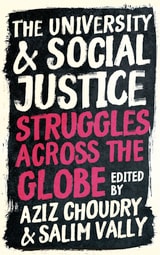
The University and Social Justice
Struggles Across the GlobeAziz Choudry
Pluto Press, 2020
Whether calling for the decommodification or the decolonization of education, many of these struggles have attempted to draw on (and in turn, resonate with) longer histories of popular resistance, broader social movements and radical visions of a fairer world. In this critical collection, Aziz Choudry, Salim Vally and a host of international contributors bring grounded, analytical accounts of diverse struggles relating to higher education into conversation with each other.
Featuring contributions written by students and staff members on the frontline of struggles from 12 different countries, including Canada, Chile, France, India, Mexico, Nigeria, Occupied Palestine, the Philippines, South Africa, Turkey, the UK and the USA, the book asks what can be learned from these movements' strategies, demands and visions.
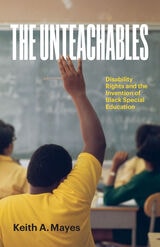
The Unteachables
Disability Rights and the Invention of Black Special EducationKeith A. Mayes
University of Minnesota Press, 2023
How special education used disability labels to marginalize Black students in public schools
The Unteachables examines the overrepresentation of Black students in special education over the course of the twentieth century. As African American children integrated predominantly white schools, many were disproportionately labeled educable mentally retarded (EMR), learning disabled (LD), and emotionally behavioral disordered (EBD). Keith A. Mayes charts the evolution of disability categories and how these labels kept Black learners segregated in American classrooms.
The civil rights and the educational disability rights movements, Mayes shows, have both collaborated and worked at cross-purposes since the beginning of school desegregation. Disability rights advocates built upon the opportunity provided by the civil rights movement to make claims about student invisibility at the level of intellectual and cognitive disabilities. Although special education ostensibly included children from all racial groups, educational disability rights advocates focused on the needs of white disabled students, while school systems used disability discourses to malign and marginalize Black students.
From the 1940s to the present, social science researchers, policymakers, school administrators, and teachers have each contributed to the overrepresentation of Black students in special education. Excavating the deep-seated racism embedded in both the public school system and public policy, The Unteachables explores the discriminatory labeling of Black students, and how it indelibly contributed to special education disproportionality, to student discipline and push-out practices, and to the school-to-prison pipeline effect.

Touchy Subject
The History and Philosophy of Sex EducationLauren Bialystok and Lisa M. F. Andersen
University of Chicago Press, 2022
In the United States, sex education is more than just an uncomfortable rite of passage: it's a political hobby horse that is increasingly out of touch with young people’s needs. In Touchy Subject, philosopher Lauren Bialystok and historian Lisa M. F. Andersen unpack debates over sex education, explaining why it’s worth fighting for, what points of consensus we can build upon, and what sort of sex education schools should pursue in the future.
Andersen surveys the history of school-based sex education in the United States, describing the key question driving reform in each era. In turn, Bialystok analyzes the controversies over sex education to make sense of the arguments and offer advice about how to make educational choices today. Together, Bialystok and Andersen argue for a novel framework, Democratic Humanistic Sexuality Education, which exceeds the current conception of “comprehensive sex education” while making room for contextual variation. More than giving an honest run-down of the birds and the bees, sex education should respond to the features of young people’s evolving worlds, especially the digital world, and the inequities that put some students at much higher risk of sexual harm than others. Throughout the book, the authors show how sex education has progressed and how the very concept of “progress” remains contestable.
Touchy Subject
The History and Philosophy of Sex EducationLauren Bialystok and Lisa M. F. Andersen
University of Chicago Press, 2022
A case for sex education that puts it in historical and philosophical context.
In the United States, sex education is more than just an uncomfortable rite of passage: it's a political hobby horse that is increasingly out of touch with young people’s needs. In Touchy Subject, philosopher Lauren Bialystok and historian Lisa M. F. Andersen unpack debates over sex education, explaining why it’s worth fighting for, what points of consensus we can build upon, and what sort of sex education schools should pursue in the future.
Andersen surveys the history of school-based sex education in the United States, describing the key question driving reform in each era. In turn, Bialystok analyzes the controversies over sex education to make sense of the arguments and offer advice about how to make educational choices today. Together, Bialystok and Andersen argue for a novel framework, Democratic Humanistic Sexuality Education, which exceeds the current conception of “comprehensive sex education” while making room for contextual variation. More than giving an honest run-down of the birds and the bees, sex education should respond to the features of young people’s evolving worlds, especially the digital world, and the inequities that put some students at much higher risk of sexual harm than others. Throughout the book, the authors show how sex education has progressed and how the very concept of “progress” remains contestable.

Trigger Warnings
Teaching Through TraumaEdited by Ian Barnard, Ryan Ashley Caldwell, Jada Patchigondla, Aneil Rallin, Morgan Read-Davidson, Ethan Trejo, and Kristi Wilson
Lever Press, 2026
Trigger Warnings: Teaching Through Trauma brings theory and praxis to examine the ideological underpinnings and pedagogy around trigger warnings and trauma, offering multiple heuristics for classroom implementation. The ongoing interest in trigger warnings is partly a result of trigger warnings and trauma becoming more inextricably interwoven in the past few years in the wake of COVID-19, mental health crises, right-wing attacks on educational institutions, climate change, and attempts at political redress and educational equity. Critiques of trigger warnings come from all sides of the political and pedagogical spectra, and even scholars and practitioners who offer a trauma-informed approach to the topic are not unified in their view of the benefits or drawbacks of trigger warnings.
Trigger Warnings: Teaching Through Trauma provides insights through a range of forms: research articles, personal essays, long and short teaching narratives, student perspectives, memoirs, vignettes, autoethnographies, reflections, case studies, manifesto, theory, and history. Not only does this collection create a more varied engagement experience for readers, but, in line with recent scholarship in “counterstory,” it also allows for a wider variety of voices to be heard and for the articulation of experiences that might not be well accommodated by traditional scholarly essays.