Results by title
572 books match the query 'Photography' and 95 start with t
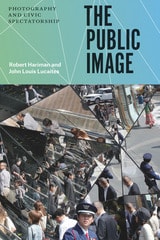
The Public Image
Photography and Civic SpectatorshipRobert Hariman and John Louis Lucaites
University of Chicago Press, 2016
By confronting these conflicted reactions to photography, Robert Hariman and John Louis Lucaites make the case for a fundamental shift in understanding photography and public culture. In place of suspicions about the medium’s capacity for distraction, deception, and manipulation, they suggest how it can provide resources for democratic communication and thoughtful reflection about contemporary social problems.
The key to living well in the image world is to unlock photography from viewing habits that inhibit robust civic spectatorship. Through insightful interpretations of dozens of news images, The Public Image reveals how the artistry of the still image can inform, challenge, and guide reflection regarding endemic violence, environmental degradation, income inequity, and other chronic problems that will define the twenty-first century.
By shifting from conventional suspicions to a renewed encounter with the image, we are challenged to see more deeply on behalf of a richer life for all, and to acknowledge our obligations as spectators who are, crucially, also citizens.
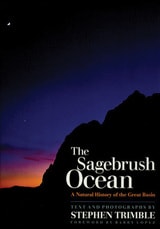
The Sagebrush Ocean, Tenth Anniversary Edition
A Natural History Of The Great BasinStephen Trimble
University of Nevada Press, 1999
This is the best general introduction to the ecology and spirit of the Great Basin, a place where "the desert almost seems to mirror the sky in size," where mountains hold "ravens, bristlecone pines, winter stillness—and unseen, but satisfying, the possibility of bighorn sheep." Trimble's photographs come from the backcountry of this rugged land, from months of exploring and hiking the Great Basin wilderness in all seasons; and his well-chosen words come from a rare intimacy with the West.
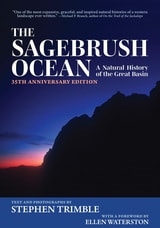
The Sagebrush Ocean
35th Anniversary EditionStephen Trimble
University of Nevada Press, 2026
The Sagebrush Ocean, the essential introduction to the ecology and spirit of the Great Basin Desert, returns in this richly updated 35th anniversary edition. Winner of the Ansel Adams Award for Photography and Conservation, Stephen Trimble’s authoritative voice and evocative photographs illuminate this landscape of sun-struck playas, surprising wetlands, remote canyons, and wind-swept tundra.
Today, the once-vast “sagebrush ocean” is an endangered sea, as environmental changes and human development have diminished it by half. This heartbreaking decline drives Trimble’s updated text, but he blends loss with reverence for what remains—and urgent insight into what’s at stake. Striking color photographs, many newly added, illuminate some of the continent’s most spectacular but little known scenery. For anyone curious about the Great Basin or concerned for its future, this timely edition is indispensable.

The Second Half
Forty Women Reveal Life After FiftyEllen Warner
Brandeis University Press, 2022
A frank, honest, and insightful look into the lives of women over fifty.
The Second Half explores, in photographic portraits and interviews, how the second half of life is experienced by women from many different cultures. From a French actress to a British novelist, from an Algerian nomad to a Saudi Arabian doctor, and an American politician, Ellen Warner traveled all over the world to interview women about their lives. She asked them what they learned in the first half that was helpful in the second, and what advice they would give to younger women. Their revealing and inspiring stories are enlightening for all readers, and are illustrated by Warner’s stunning portraits which tell their own story.
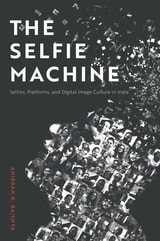
The Selfie Machine
Selfies, Platforms, and Digital Image Culture in IndiaAnirban K. Baishya
Rutgers University Press, 2027
The Selfie Machine offers novel insight into personalized communication practices in the digital age through the medium of the selfie. While the selfie has achieved notoriety due to pop-psychology accounts of Narcissism-related selfie "disorders," this book examines the selfie as a mode of meaning making and self-presentation that includes not just still images, but also short videos, hashtag practices and economies of liking and following. In taking India as the starting point of its investigation, The Selfie Machine inverts the "West-then-the-rest" model of understanding global digital media practices. The book considers selfie culture’s impact on personal and public digital practices and trends—ranging from cellphone markets, to influencer entrepreneurship and microcelebrity, to the conduct of politics and protest. In doing so, it not only offers an expanded definition of selfies in digital media culture, but also demonstrates how “global” digital media (including selfies) cannot be understood as a monolith.
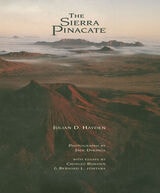
The Sierra Pinacate
Julian D. Hayden; Photographs by Jack Dykinga; With Essays by Charles Bowden and Bernard L. Fontana
University of Arizona Press, 1998
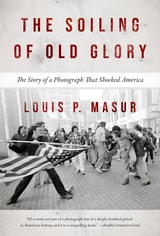
The Soiling of Old Glory
The Story of a Photograph That Shocked AmericaLouis P. Masur
Brandeis University Press, 2024
In 1976, Boston was bitterly divided over a court order to desegregate its public schools. Plans to bus students between predominantly white and Black neighborhoods stoked backlash and heated protests. Photojournalist Stanley Forman was covering one such demonstration at City Hall when he captured an indelible image: a white protester attacking a Black attorney with the American flag. A second white man grabs at the victim, appearing to assist the assailant.
The photo appeared in newspapers across the nation and went on to win the Pulitzer Prize. In The Soiling of Old Glory, esteemed historian Louis P. Masur reveals what happened the day of the assault and the ways these events reverberated long afterward. He interviews the men involved: Forman, who took the photo; Ted Landsmark, a Black, Yale-educated attorney and an activist; Joseph Rakes, the white protester lunging with the flag, a disaffected student; and Jim Kelly, a local politician who opposed busing, but who helped Landsmark to his feet after protesters knocked him to the ground. The photo, Masur discovers, holds more complexities than initially meet the eye. The flag never made contact with the victim, for example, and Kelly was attempting to protect Landsmark, not hurt him.
Masur delves into the history behind Boston’s efforts to desegregate the schools and the anti-busing protests that shook the city. He examines photography’s power to move, inform, and persuade us, as well as the assumptions we each bring to an image as viewers. And he delves into the flag, to explore how other artists and photographers have shaped, bolstered, or challenged its patriotic significance.
Gripping and deeply researched, The Soiling of Old Glory shows how a disturbing event, frozen on a film, impacted Boston and the nation. In an age of renewed calls for visual literacy and disagreements about the flag’s meaning, Masur’s history, now updated with a new foreword by Ted Landsmark and a new preface by the author, is as relevant as ever.
The State Park Movement in America
A Critical ReviewNey C. Landrum
University of Missouri Press, 2013
The State of Southern Illinois
An Illustrated HistoryHerbert K. Russell
Southern Illinois University Press, 2012
Superior Achievement, Illinois State Historical Society, 2013
In The State of Southern Illinois: An Illustrated History, Herbert K. Russell offers fresh interpretations of a number of important aspects of Southern Illinois history. Focusing on the area known as “Egypt,” the region south of U.S. Route 50 from Salem south to Cairo, he begins his book with the earliest geologic formations and follows Southern Illinois’s history into the twenty-first century. The volume is richly illustrated with maps and photographs, mostly in color, that highlight the informative and straightforward text.
Perhaps most notable is the author’s use of dozens of heretofore neglected sources to dispel the myth that Southern Illinois is merely an extension of Dixie. He corrects the popular impressions that slavery was introduced by early settlers from the South and that a majority of Southern Illinoisans wished to secede. Furthermore, he presents the first in-depth discussion of twelve pre–Civil War, free black communities located in the region. He also identifies the roles coal mining, labor violence, gangsters, and the media played in establishing the area’s image. He concludes optimistically, unveiling a twenty-first-century Southern Illinois filled with myriad attractions and opportunities for citizens and tourists alike.
The State of Southern Illinois is the most accurate all-encompassing volume of history on this unique area that often regards itself as a state within a state. It offers an entirely new perspective on race relations, provides insightful information on the cultural divide between north and south in Illinois, and pays tribute to an often neglected and misunderstood region of this multidimensional state, all against a stunning visual backdrop.
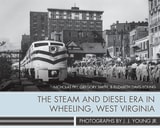
The Steam and Diesel Era in Wheeling, West Virginia
Photographs by J. J. Young Jr.Nicholas Fry
West Virginia University Press, 2016
For nearly seventy years, John J. Young Jr. photographed railroads. With unparalleled scope and span, he documented the impact and beauty of railways in American life from 1936 to 2004.
As a child during the Great Depression, J. J. Young Jr. began to photograph railroads in Wheeling, West Virginia. This book collects over one hundred fifty of those images—some unpublished until now—documenting the railroads of Wheeling and the surrounding area from the 1930s until the 1960s.
The photographs within this book highlight the major railroads of Wheeling: the Baltimore & Ohio, the Pennsylvania, the Wheeling & Lake Erie, the Pittsburgh & West Virginia, the New York Central, and the industrial and interurban rail lines that crisscrossed the region. These images capture the routine activities of trains that carried passengers and freight to and from the city and its industries, as well as more unusual traffic, such as a circus-advertising car, the General Motors Train of Tomorrow, and the 1947 American Freedom Train.
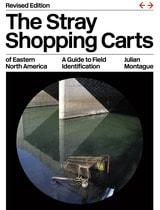
The Stray Shopping Carts of Eastern North America
A Guide to Field IdentificationJulian Montague
University of Chicago Press, 2023
Abandoned shopping carts are everywhere, and yet we know so little about them. Where do they come from? Why are they there? Their complexity and history baffle even the most careful urban explorer.
Thankfully, artist Julian Montague has created a comprehensive and well-documented taxonomy with The Stray Shopping Carts of Eastern North America. Spanning thirty-three categories from damaged, fragment, and plow crush to plaza drift and bus stop discard, it is a tonic for times defined increasingly by rhetoric and media and less by the plain objects and facts of the real world. Montague’s incomparable documentation of this common feature of the urban landscape helps us see the natural and man-made worlds—and perhaps even ourselves—anew.
First published in 2006 to great perplexity and acclaim alike, Montague’s book now appears in refreshed and expanded form. Told in an exceedingly dry voice, with full-color illustrations and photographs throughout, it is both rigorous and absurd, offering a strangely compelling vision of how we approach, classify, and understand the environments around us. A new afterword sheds light on the origins of the project.
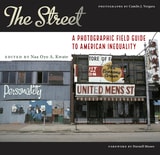
The Street
A Photographic Field Guide to American InequalityNaa Oyo A. Kwate
Rutgers University Press, 2021
Using MacArthur fellow Camilo José Vergara’s intimate street photographs of Camden, New Jersey as reference points, the essays in this collection analyze these images within the context of troubled histories and misguided policies that have exacerbated racial and economic inequalities. Rather than blaming Camden’s residents for the blighted urban landscape, the multidisciplinary array of scholars contributing to this guide reveal the oppressive structures and institutional failures that have led the city to this condition. Tackling topics such as race and law enforcement, gentrification, food deserts, urban aesthetics, credit markets, health care, childcare, and schooling, the contributors challenge conventional thinking about what we should observe when looking at neighborhoods.
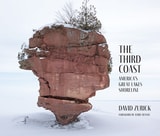
The Third Coast
America’s Great Lakes ShorelineZurick, David
Northwestern University Press, 2025
A full-color photographic journey around the Great Lakes
Locals affectionately call the Great Lakes the “third coast”—though at 4,500 miles, this beloved freshwater shoreline is the nation’s longest, covering more distance than the country’s Atlantic and Pacific coasts combined.
Divided into four galleries by lake and season, David Zurick’s award-winning photographs spotlight the distinct personality of each coastline and the people who call its shores home. We visit windswept Lake Superior in winter, Lake Michigan bursting into spring, Lakes Erie and Ontario under the summer sun, and Lake Huron in the changing palette of autumn, with an additional gallery devoted to the straits and rivers that connect them. An evocative foreword from award-winning nature writer Jerry Dennis sets the stage for this sweeping visual tour.
In Zurick’s photographs, lifelong lovers of the Great Lakes will find the familiar shorelines of coastal hometowns, summer refuges, and secret fishing spots—as well as images that reawaken us to the majesty and mystery of North America’s “freshwater seas.”

The Ultimate Guide to the Jersey Shore
Where to Eat, What to Do, and so Much MorePeter Genovese
Rutgers University Press, 2023
The Visual Elements—Photography
A Handbook for Communicating Science and EngineeringFelice C. Frankel
University of Chicago Press, 2023
Award-winning photographer Felice C. Frankel, whose work has graced the covers of Science, Nature, and Scientific American, among other publications, offers a quick guide for scientists and engineers who want to communicate—and better understand—their research by creating compelling photographs. Like all the books in the Visual Elements series, this short guide uses engaging examples to train researchers to learn visual communication. Distilling her celebrated books and courses to the essentials, Frankel shows scientists and engineers the importance of thinking visually. When she creates stunning images of scientific phenomena, she is not only interested in helping researchers to convey understanding to others in their research community or to gain media attention, but also in making these experts themselves “look longer” to understand more fully. Ideal for researchers who want a foothold for presenting and preparing their work for conferences, journal publications, and funding agencies, the book explains four tools that all readers can use—a phone, a camera, a scanner, and a microscope—and then offers important advice on composition and image manipulation ethics. The Visual Elements—Photography is an essential element in any scientist’s, engineer’s, or photographer’s library.
The Visual Is Political
Feminist Photography and Countercultural Activity in 1970s BritainNa'ama Klorman-Eraqi
Rutgers University Press, 2019

The Weather and a Place to Live
Photographs of the Suburban WestSteven B. Smith
Duke University Press, 2005
The power of these photographs lies in part in Smith’s unusual knowledge of the places he portrays. Raised in Utah, Smith has worked on construction crews, and he was a contractor in California after living on the East Coast for a few years. When he moved to Los Angeles in 1991, he writes, “I was so astounded by what I saw happening to the landscape as it was being developed that I started photographing it immediately. The landscapes I saw were scraped bare, re-sculpted, sealed, and then covered so as not to erode away before the building process could be completed.”
Smith’s photographs offer a disturbing vision of the future of our planet, where the desire for home ownership is pitted against the costs of development in epic proportions. These altered landscapes force us to consider the consequences of human design battling natural forces across great expanses, a fragile balancing act and a contorted equation in which nature becomes both inspiration and invisible adversary. Smith’s elegant photographs of this constructed universe confront us with the beauty of images as images, yet push us to reflect on the devastation possible in the simple act of choosing a place to live.

Theater of War
Edited by Meredith Davenport
Intellect Books, 2015
Bringing together a series of two dozen photographs with essays discussing and analyzing the influence of the media, particularly photographs and video, on the culture at large and how conflict is "discussed" in the visual realm, Theater of War is a unique look at the influence of contemporary conflict, and their omni-presence in the media on popular culture. Written by an experienced photojournalist who has covered a variety of human rights issues worldwide, this book is an essential addition to the library of anyone interested in the confluence of war and media.
Theatre in Passing 2
Searching for New Amsterdam(E)lena K. Siemens
Intellect Books, 2015
Theatre in Passing
A Moscow Photo-Diary(E)lena K. Siemens
Intellect Books, 2011
Theatre in Passing explores spaces of performance in contemporary Moscow. Inspired by French philosopher Michel de Certeau’s model of a "second, poetic geography" in which the walker—the everyday practitioner—invents the space observed by the voyeur, this book takes the reader on a tour of spaces of performance in contemporary Moscow. Through text and photography, the city’s "theatrical geography" is uncovered, from the Bolshoi Theater in Theater Square to hidden gems like the recently restored Kuskovo estate. With additional sections on street theater and other public gatherings, Theatre in Passing is a must-read book for anyone curious about the theatrical architecture and geography of Russia’s capital.
This Far and No Further
Photographs Inspired by the Voting Rights MovementBy William Abranowicz; foreword by Nikole Hannah-Jones
University of Texas Press, 2021
Standing on the Edmund Pettus Bridge in Selma, Alabama, in 2017, photographer William Abranowicz was struck by the weight of historical memory at this hallowed site of one of the civil rights movement's defining episodes: 1965's “Bloody Sunday,” when Alabama police officers attacked peaceful marchers. To Abranowicz’s eye, Selma seemed relatively unchanged from its apperance in the photographs Walker Evans made there in the 1930s. That, coupled with an awareness of renewed voter suppression efforts at state and federal levels, inspired Abranowicz to explore the living legacy of the civil and voting rights movement through photographing locations, landscapes, and individuals associated with the struggle, from Rosa Parks and Harry Belafonte to the barn where Emmett Till was murdered.
The result is This Far and No Further, a collection of photographs from Abranowicz's journey through the American South. Through symbolism, metaphor, and history, he unearths extraordinary stories of brutality, heroism, sacrifice, and redemption hidden within ordinary American landscapes, underscoring the crucial necessity of defending—and exercising—our right to vote at this tenuous moment for American democracy.
This Place of Silence
Ohio's Cemeteries and Burial GroundsIan Adams; Randall Lee Schieber; Robin L. Smith
Ohio University Press, 2024
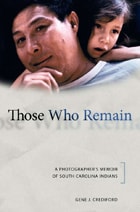
Those Who Remain
A Photographer's Memoir of South Carolina IndiansGene J. Crediford
University of Alabama Press, 2009
Through interviews and a generous photograph montage stretching over two decades, reveals the commonality and diversity among these people of Indian identity
When DeSoto (in 1540) and later Juan Pardo (in 1567) marched through what was known as the province of Cofitachequi (which covered the southern part of today’s North Carolina and most of South Carolina), the native population was estimated at well over 18,000. Most shared a common Catawba language, enabling this confederation of tribes to practice advanced political and social methods, cooperate and support each other, and meet their common enemy. The footprint of the Cofitachequi is the footprint of this book.
The contemporary Catawba, Midland, Santee, Natchez-Kusso, Varnertown, Waccamaw, Pee Dee, and Lumbee Indians of North and South Carolina, have roots in pre-contact Cofitachequi. Names have changed through the years; tribes split and blended as the forces of nature, the influx of Europeans, and the imposition of federal government authority altered their lives. For a few of these tribes, the system has worked well—or is working well now. For others, the challenge continues to try to work with and within the federal government’s system for tribal recognition—a system governing Indians but not created by them. Through interviews and a generous photograph montage stretching over two decades, Gene Crediford reveals the commonality and diversity among these people of Indian identity; their heritage, culture, frustrations with the system, joys in success of the younger generation, and hope for the future of those who come after them. This book is the story of those who remain.
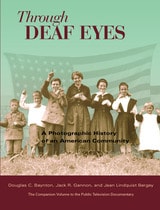
Through Deaf Eyes
A Photographic History of an American CommunityDouglas Baynton
Gallaudet University Press, 2007
In 2001, the Smithsonian Institution presented the landmark photographic exhibition History Through Deaf Eyes, representing nearly 200 years of United States deaf history. Drawing heavily on the extensive archives at Gallaudet University, the curators created an exhibition that drew more than 400,000 people viewed at the Smithsonian and in 12 cities during a five-year national tour. Its popularity prompted the production of a documentary film for national broadcast on the Public Broadcasting System. Now, the photographs, quotes, and stories from this remarkable exhibit and documentary have been assembled in a book of stunning beauty and poignant images, Through Deaf Eyes: A Photographic History of an American Community.
Featuring more than 200 full-color photographs, Through Deaf Eyes depicts the story of Deaf America and also affords readers the opportunity to learn about the nation’s broader history. The values and judgments of society have had an impact on the education, employment, and family life of deaf people, while historical eras often can be illuminated by examination through a Deaf lens. Photographs reveal the character of Deaf people in school settings, the workplace, during wartime, and using their cultural signature, American Sign Language. For both deaf and hearing readers, the Deaf community portrayed in Through Deaf Eyes offers a unique and fascinating perspective on the value of human difference.
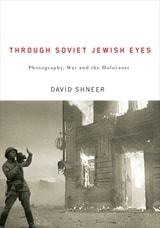
Through Soviet Jewish Eyes
Photography, War, and the HolocaustShneer, David
Rutgers University Press, 2012
These wartime photographers were the first liberators to bear witness with cameras to Nazi atrocities, three years before Americans arrived at Buchenwald and Dachau. In this passionate work, David Shneer tells their stories and highlights their work through their very own images-he has amassed never-before-published photographs from families, collectors, and private archives.
Through Soviet Jewish Eyes helps us understand why so many Jews flocked to Soviet photography; what their lives and work looked like during the rise of Stalinism, during and then after the war; and why Jews were the ones charged with documenting the Soviet experiment and then its near destruction at the hands of the Nazis.
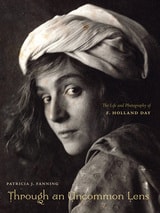
Through an Uncommon Lens
The Life and Photography of F. Holland DayPatricia J. Fanning
University of Massachusetts Press, 2008

Through the Lens of Janet Stone
Portraits, 1953-1979Ian Archie Beck
Bodleian Library Publishing, 2018
Included between these pages are portraits of the composers, actors, novelists, poets, and philosophers in the Stones’ milieu—from Benjamin Britten to Siegfried Sassoon and Frances Partridge—as well as members of the Stone family. Although not a trained photographer, Janet instinctively knew to click the shutter when her subjects were off-guard and at their most informal, capturing an array of candid shots—like one of John Bayley trying on a headscarf and a young Daniel Day-Lewis dressed up as a knight.
These unique portraits offer beguiling insight into a special set of circumstances: an idyllic place and time and a group of people drawn together by two contrasting but complimentary personalities, the shy genius of Reynolds met by the outgoing style and glamour of Janet Stone.

Tierra Santa
Sacred Beauty in the AmericasCarolyn Brown
Bridwell Press, 2026
Tierra Santa follows photographer Carolyn Brown into the Americas, from the temple mountains of the Maya and the kivas of the Pueblo Southwest to the candlelit churches of colonial Mexico and Guatemala. Over decades of travel, Brown has photographed wherever people have recognized something holy, whether an ancient plaza open to the sky or a village chapel at the end of a dirt road.
The photographs do more than document. In a bank of flickering candles and a hillside terraced into a pyramid, Brown finds the vitality that many cultures have felt in these places—the sense that earth and sky were already sacred and that human beings have only answered its call. Essays by leading scholars of archaeology, anthropology, and colonial history trace how successive peoples made room for the divine. Brown's own reflections close the book with a pilgrimage through the Sierra Gorda.
Together, the images and essays offer an invitation to look slowly and to notice. Stay with them long enough and these places begin to stir memory and awe, along with a profound sense that the sacred was here long before we arrived and remains, patiently, wherever we're willing to see it.
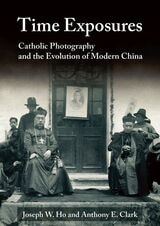
Time Exposures
Catholic Photography and the Evolution of Modern ChinaJoseph W. Ho and Anthony E. Clark
Hong Kong University Press, 2026
A history of China’s transition from empire to modern nation, told through photographs by and of Chinese Catholic communities.
Time Exposures explores how historical photographs created by and of Chinese Catholic communities illuminate the vicissitudes of China’s transition from empire to modern nation. Relying on an expansive worldwide network of Catholic photographic archives, this book examines largely unseen and unpublished images related to Catholicism in China. These images, made from the 1870s through the 1990s, were central to visual practices and afterlives that represent, recover, and reenvision diverse Chinese experiences. This volume provides insight into the lives of women and men behind and in front of the camera who were important documentarians of China’s local and national changes over time, shaping ways of seeing and belonging to the country’s many cultural evolutions.
Time and Change
150 Years of The Ohio State UniversityTamar Chute with a Letter by President Michael V. Drake and an Afterword by Provost Bruce A. McPheron
The Ohio State University Press, 2019
Gain a visually stunning new perspective on iconic landmarks such as Mirror Lake, the Oval, Ohio Stadium, and the neighborhoods surrounding the Columbus and regional campuses. From beloved teams, symbols, and traditions to scenes from academic and campus life, reflect on time and change and rediscover the extraordinary connection that unites generations of Buckeyes.
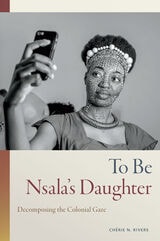
To Be Nsala's Daughter
Decomposing the Colonial GazeChérie N. Rivers
Duke University Press, 2023
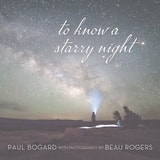
To Know a Starry Night
Paul Bogard
University of Nevada Press, 2021
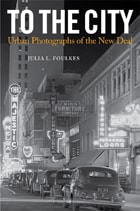
To The City
Urban Photographs of the New DealAuthored by Julia L. Foulkes
Temple University Press, 2011
In the 1930s and 1940s, as the United States moved from a rural to an urban nation, the pull of the city was irrepressible. It was so strong that even a photographic mission designed to record the essence of rural America could not help but capture the energy of urbanization too. To the City showcases over 100 photographs from the Farm Security Administration (FSA) project along with extracts from the Works Progress Administration (WPA) guidebooks and oral histories, to convey the detail and dimensions of that transformation.
This artfully grouped collection of photographs includes magnificent images by notable photographers Dorothea Lange, Walker Evans and Gordon Parks, among many others. Foulkes organizes this history of Americana into five themes: Intersection; Traffic; High Life and Low Life; The City in the Country; and Citizens to illuminate the changes in habits, landscapes, and aspirations that the march to cities encompassed.
As the rural past holds symbolic sway and the suburb presents demographic force, the urban portion of our history—why and how cities have been a destination for hope—recedes from view. To the City is a thoughtful, engaging reminder.
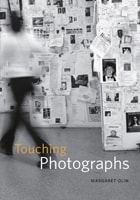
Touching Photographs
Margaret Olin
University of Chicago Press, 2012
Photography does more than simply represent the world. It acts in the world, connecting people to form relationships and shaping relationships to create communities. In this beautiful book, Margaret Olin explores photography’s ability to “touch” us through a series of essays that shed new light on photography’s role in the world.
Tough Enough
Arbus, Arendt, Didion, McCarthy, Sontag, WeilDeborah Nelson
University of Chicago Press, 2017
Tough Enough traces the careers of these women and their challenges to the pre-eminence of empathy as the ethical posture from which to examine pain. Their writing and art reveal an adamant belief that the hurts of the world must be treated concretely, directly, and realistically, without recourse to either melodrama or callousness. As Deborah Nelson shows, this stance offers an important counter-tradition to the familiar postwar poles of emotional expressivity on the one hand and cool irony on the other. Ultimately, in its insistence on facing reality without consolation or compensation, this austere “school of the unsentimental” offers new ways to approach suffering in both its spectacular forms and all of its ordinariness.
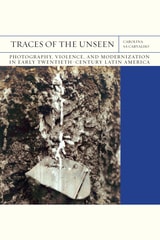
Traces of the Unseen
Photography, Violence, and Modernization in Early Twentieth-Century Latin AmericaCarolina Sá Carvalho
Northwestern University Press, 2023
Winner of the 2024 Roberto Reis Book Award
Winner of the LASA Environment Section Best Book of 2023
Winner of the LASA Amazonian Studies Section Best Book of 2024
Co-Winner of the LASA Book Award for the Visual Culture Studies 2024
A richly illustrated examination of photography as a technology for documenting, creating, and understanding the processes of modernization in turn-of-the-century Brazil and the Amazon
Photography at the turn of the twentieth century was not only a product of modernity but also an increasingly available medium to chronicle the processes of modernization. Traces of the Unseen: Photography, Violence, and Modernization in Early Twentieth-Century Latin America situates photography’s role in documenting the destruction wrought by infrastructure development and extractive capitalist expansion in the Amazon and outside the Brazilian metropole. Combining formal analysis of individual photographs with their inclusion in larger multimedia assemblages, Carolina Sá Carvalho explores how this visual evidence of violence was framed, captioned, cropped, and circulated. As she explains, this photographic creation and circulation generated a pedagogy of the gaze with which increasingly connected urban audiences were taught what and how to see: viewers learned to interpret the traces of violence captured in these images within the larger context of modernization.
Traces of the Unseen draws on works by Flavio de Barros, Euclides da Cunha, Roger Casement, Claude Lévi-Strauss, and Mario de Andrade to situate an unruly photographic body at the center of modernity, in all its disputed meanings. Moreover, Sá Carvalho locates historically specific practices of seeing within the geopolitical peripheries of capitalism. What emerges is a consideration of photography as a technology through which modern aspirations, moral inclinations, imagined futures, and lost pasts were represented, critiqued, and mourned.
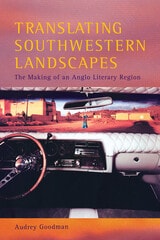
Translating Southwestern Landscapes
The Making of an Anglo Literary RegionAudrey Goodman
University of Arizona Press, 2002
Whether as tourist's paradise, countercultural destination, or site of native resistance, the American Southwest has functioned as an Anglo cultural fantasy for more than a century. In Translating Southwestern Landscapes, Audrey Goodman excavates this fantasy to show how the Southwest emerged as a symbolic space from 1880 through the early decades of the twentieth century.
Drawing on sources as diverse as regional magazines and modernist novels, Pueblo portraits and New York exhibits, Goodman has crafted a wide-ranging history that explores the invention, translation, and representation of the Southwest. Its principal players include amateur ethnographer Charles Lummis, who conflated the critical work of cultural translation; pulp novelist Zane Grey, whose bestselling novels defined the social meanings of the modern West; fashionable translator Mary Austin, whose "re-expressions" of Indian song are contrasted with recent examples of ethnopoetics; and modernist author Willa Cather, who demonstrated an immaterial feeling for landscape from the Nebraska Plains to Acoma Pueblo.
Goodman shows how these writers—as well as photographers such as Paul Strand, Ansel Adams, and Alex Harris—exhibit different phases of the struggle between an Anglo calling to document Native and Hispanic difference and America's larger drive toward imperial mastery. In critiquing photographic representations of the Southwest, she argues that commercial interests and eastern prejudices boiled down the experimental images of the late nineteenth century to a few visual myths: the persistence of wilderness, the innocence of early portraiture, and the purity of empty space.
An ambitious synthesis of criticism and anthropology, art history and geopolitical theory, Translating Southwestern Landscapes names the defining contradictions of America's most recently invented cultural space. It shows us that the Southwest of these early visitors is the only Southwest most of us have ever known.
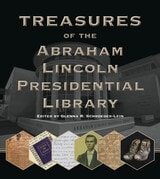
Treasures of the Abraham Lincoln Presidential Library
Edited by Glenna R. Schroeder-Lein
Southern Illinois University Press, 2014
Illinois State Historical Society Superior Achievement Award 2015
The Abraham Lincoln Presidential Library in Springfield, Illinois, houses a trove of invaluable historical resources concerning all aspects of the Prairie State’s past. Treasures of the Abraham Lincoln Presidential Library commemorates the institution’s 125-year history, as well as its contributions to scholarship and education by highlighting a selection of eighty-five treasures from among more than twelve million items in the library’s collections.
After opening with a historical overview and extensive chronology of the Library, the volume organizes the treasures by various topics, including items that illustrate various locations and materials relating to business, the mid-nineteenth century and the Civil War, World Wars I and II, the oldest items, unusual treasures, ethnicity, and art. From the Gettysburg Address, Abraham and Mary Lincoln’s letters, and Governor Dan Walker’s boots to a Deering Harvester Company catalog, WPA publications, and an Adlai Stevenson I campaign hat, each entry includes a thorough description of the item, one or more images, and a discussion of its history and how the library acquired it, if known. Other treasures include the Thomas Yates General Store daybook, Dubin Pullman car materials, Civil War newspapers, a Lincoln coffin photograph, the Mary Lincoln insanity verdict, the Directory of Sangamon County’s Colored Citizens, andLincoln’s stovepipe hat.
To highlight the academic importance of the Library, nineteen researchers share how study in the Library’s collections proved essential to their projects. Although these treasures only scrape the surface of the vast holdings of the Abraham Lincoln Presidential Library, together they epitomize the rich, varied, and sometimes quirky resources available to both serious scholars and curious tourists alike at this valuable cultural institution.

Trinity
An Illustrated History of the World's First Atomic TestEmily Seyl
University of Chicago Press, 2026
Explore the scientific crescendo of the Manhattan Project through newly contextualized and never-before-seen photographs from Los Alamos National Laboratory’s legacy collections—some just declassified.
Twenty-one days before the world learned of the atomic bomb through its wartime use against Japan, a team of scientists led by J. Robert Oppenheimer detonated the first nuclear device on a remote stretch of New Mexico desert, in an operation codenamed Trinity. Both a military proof test and an elaborate, well-documented scientific experiment, the Trinity shot on July 16, 1945, brought under the control of humankind a new fire: the energy of the atom.
In this expertly curated journey through the beginning of the atomic age, hundreds of carefully restored photographs, still frames, and once-secret documents bring new and vivid focus to a watershed moment in science and history. Written for all to understand, Trinity weaves steadily through subplots and surprises set against the evolving, looming backdrop of a world at war. It shadows the humans and hardware at work in the rugged landscape of the test operation; dissects a fiery mushroom cloud unfurling frame by frame, frozen in time; and follows soldiers, scientists, and two atomic bombs across the Pacific Ocean to Tinian Island, onto the strike planes Enola Gay and Bockscar, and to Hiroshima and Nagasaki, the two Japanese cities devastated on August 6 and 9, 1945.
Inviting readers into the clandestine spaces where a new era began—behind the cameras, the bunker doors, the gates and guard posts—Trinity strives, grieves, celebrates, and ponders. It artfully captures that extraordinary summer when scientists invented urgently in the waning months of the “before”—and the tension between violence and progress, hope and fear, that persists into the after.
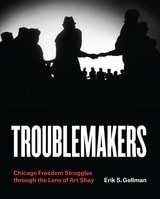
Troublemakers
Chicago Freedom Struggles through the Lens of Art ShayErik S. Gellman
University of Chicago Press, 2019
Troublemakers fuses photography and history to demonstrate how racial and economic inequality gave rise to a decades-long struggle for justice in one American city.
In dialogue with 275 of Art Shay’s photographs, Erik S. Gellman takes a new look at major developments in postwar US history: the Second Great Migration, “white flight,” and neighborhood and street conflicts, as well as shifting party politics and the growth of the carceral state. The result is a visual and written history that complicates—and even upends—the morality tales and popular memory of postwar freedom struggles.
Shay himself was a “troublemaker,” seeking to unsettle society by illuminating truths that many middle-class, white, media, political, and businesspeople pretended did not exist. Shay served as a navigator in the US Army Air Forces during World War II, then took a position as a writer for Life Magazine. But soon after his 1948 move to Chicago, he decided to become a freelance photographer. Shay wandered the city photographing whatever caught his eye—and much did. His lens captured everything from private moments of rebellion to era-defining public movements, as he sought to understand the creative and destructive energies that propelled freedom struggles in the Windy City.
Shay illuminated the pain and ecstasy that sprung up from the streets of Chicago, while Gellman reveals their collective impact on the urban fabric and on our national narrative. This collaboration offers a fresh and timely look at how social conflict can shape a city—and may even inspire us to make trouble today.
Truth Needs No Ally
Inside PhotojournalismHoward Chapnick
University of Missouri Press, 1994
The man called "Mr. Photojournalism" by the Washington Post here offers the most comprehensive book available on documentary photography, covering the history and ethics of the craft as well as practical issues for anyone with a serious interest in photography.

Tséyi' / Deep in the Rock
Reflections on Canyon de ChellyText by Laura Tohe; photographs by Stephen E. Strom
University of Arizona Press, 2005
Diné poet Laura Tohe draws deeply on her heritage to create lyrical writings that are rooted in the canyon but universal in spirit, while photographer Stephen Strom captures images that reveal the very soul of this ancient place. Tohe’s words take readers on a journey from the canyon rim down sheer sandstone walls to its rich bottomlands; from the memory of Kit Carson’s rifle shots and the forced march of the Navajo people to the longings of modern lovers. Her poems view the land through Diné eyes, blending history, tradition, and personal reflection while remaining grounded in Strom’s delicate yet striking images. These photographs are not typical of most southwestern landscapes. Strom’s eye for the subtleties and mysticism of the canyon creates powerful images that linger in the mind long after the pages are turned, compelling us to look at the earth in new ways.
Tséyi' / Deep in the Rock is a unique evocation of Canyon de Chelly and the people whose lives and spirits are connected to it. It is a collaboration that conjures the power of stories and images, inviting us to enter a world of harmony and be touched by its singularly haunting beauty.
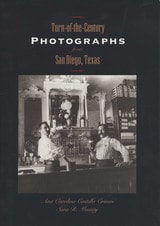
Turn-of-the-Century Photographs from San Diego, Texas
By Ana Carolina Castillo Crimm and Sara R. Massey
University of Texas Press, 2003
Situated in the South Texas borderlands some fifty miles west of Corpus Christi, San Diego was a thriving town already a hundred years old at the turn of the twentieth century. With a population that was 90 percent Mexican or Mexican American and 10 percent Anglo, the bicultural community was the seat of Duval County and a prosperous town of lumberyards, banks, mercantile stores, and cotton gins, which also supplied the needs of area ranchers and farmers. Though Anglos dominated its economic and political life, San Diego was culturally Mexican, and Mexican Americans as well as Anglos built successful businesses and made fortunes.
This collection of nearly one hundred photographs from the estate of amateur photographer William Hoffman captures the cosmopolitan town of San Diego at a vibrant moment in its history between 1898 and 1909. Grouped into the categories women and their jobs, local homes, men and their businesses, children at school and church, families and friends, and entertainment about town, the photos offer an immediate visual understanding of the cultural and economic life of the community, enhanced by detailed captions that identify the subjects and circumstances of the photos. An introductory historical chapter constitutes the first published history of Duval County, which was one of the most important areas of South Texas in the early twentieth century.

Turner and the Sublime
Andrew Wilton
University of Chicago Press, 1981
The 140 illustrations, which include 32 in color, reproduce watercolors and prints that demonstrate the development of Turner's response to the sublime in areas as various as architecture, the picturesque, the "terrific," the sea, cities, mountains, and lakes. Many of the subjects have not previously been published.
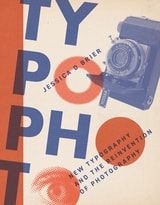
Typophoto
New Typography and the Reinvention of Photographybrier
University of Minnesota Press, 2025
Unveiling the avant-garde fusion of photography and modern graphic design
The concept Typophoto, the synthesis of photography and typography, was coined by renowned Bauhaus artist and theorist László Moholy-Nagy and played a foundational role in the modernist graphic design movement known as the New Typography. Jessica D. Brier examines how Typophoto was embraced by early graphic designers—a group who ultimately reinvented photography as a tool of modern consumerism.
Typophoto embodied designers’ belief in photography as an efficient form of visual communication, merging the material and the visual by abstracting both typographic and photographic form and transmuting photography into graphic material through the halftone process. Uniquely situating 1920s advertising discourse alongside avant-garde theory and significant interwar photographic concepts, Brier positions Typophoto as an analytical framework for considering how photography—as process, image, material, and metaphor—was effectively reconceived through the professionalization of graphic design in Europe and the United States. This was particularly true in Germany, where the capitalist ethos driving the country’s economic recovery bolstered the belief that graphics could create ideal reader-consumers.
Tracing Typophoto from its inception through New Typography’s experiments with the medium, Brier demonstrates how photography was used as a tool for manipulating perception as it became a visual language of modern life.