Results by title
471 books match the query 'Power' and 110 start with t

The Power of Genre
Adena Rosmarin
University of Minnesota Press, 1986
The Power of Genre was first published in 1986. Minnesota Archive Editions uses digital technology to make long-unavailable books once again accessible, and are published unaltered from the original University of Minnesota Press editions.
The Power of Genre is a radical and systematic rethinking of the relationship between literary genre and critical explanation. Adene Rosmarin shows how traditional theories of genre—whether called "historical," "intrinsic," or "theoretical"—are necessarily undone by their attempts to define genre representationally. Rather, Rosmarin argues, the opening premise of critical argument is always critical purpose or, as E. H. Gombrich has said, function, and the genre or "form" follows the reform. The goal is a relational model that works.
Rosemarin analyzes existing theories of genre — those of Hirsch, Crane, Frye, Todorov, Jauss, and Rader are given particular attention—before proposing her own. These analyses uncover the illogic that plagues even sophisticated attempts to treat genre as a preexistent entity. Rosmarin shows how defining genre pragmatically – as explicitly chosen or devised to serve explicitly critical purposes – solves this problem: a pragmatic theory of genre builds analysis of its metaphors and motives into its program, thereby eliminating theory's traditional need to deny the invented and rhetorical nature of its schemes. A pragmatic theory, however, must be tested not only by its internal cohesion but also by its power to enable practice, and Rosmarin chooses the dramatic monologue, an infamously problematic genre, and its recent relative, the mask lyric, as testing grounds. Both genres—variously exemplified by poems of Browning, Thennyson, Eliot, and Pound—are ex post facto critical constructs that, when defined as such, make closely reasoned sense not only of particular poems but also of their perplexed interpretive histories. Moreover, both genres dwell on the historicity, textuality, and redemptive imperfection of the speaking self. This generic obsession ties the poems to their reception and, finally, to the openended, processes of hermeneutic question-and-answer stressed in Rosmarin's framing theory.
The Power of God
Dynamis in Gregory of Nyssa's Trinitarian TheologyMichel René Barnes
Catholic University of America Press, 2001
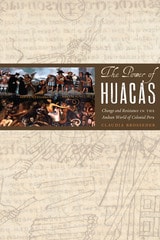
The Power of Huacas
Change and Resistance in the Andean World of Colonial PeruBy Claudia Brosseder
University of Texas Press, 2014
Based on extensive archival research, The Power of Huacas is the first book to take account of the reciprocal effects of religious colonization as they impacted Andean populations and, simultaneously, dramatically changed the culture and beliefs of Spanish Christians.
Winner, Award for Excellence in the Study of Religion in the category of Historical Studies, American Academy of Religion, 2015
The role of the religious specialist in Andean cultures of the sixteenth, seventeenth, and eighteenth centuries was a complicated one, balanced between local traditions and the culture of the Spanish. In The Power of Huacas, Claudia Brosseder reconstructs the dynamic interaction between religious specialists and the colonial world that unfolded around them, considering how the discourse about religion shifted on both sides of the Spanish and Andean relationship in complex and unexpected ways. In The Power of Huacas, Brosseder examines evidence of transcultural exchange through religious history, anthropology, and cultural studies. Taking Andean religious specialists—or hechizeros (sorcerers) in colonial Spanish terminology—as a starting point, she considers the different ways in which Andeans and Spaniards thought about key cultural and religious concepts. Unlike previous studies, this important book fully outlines both sides of the colonial relationship; Brosseder uses extensive archival research in Bolivia, Chile, Ecuador, Peru, Spain, Italy, and the United States, as well as careful analysis of archaeological and art historical objects, to present the Andean religious worldview of the period on equal footing with that of the Spanish. Throughout the colonial period, she argues, Andean religious specialists retained their own unique logic, which encompassed specific ideas about holiness, nature, sickness, and social harmony. The Power of Huacas deepens our understanding of the complexities of assimilation, showing that, within the maelstrom of transcultural exchange in the Spanish Americas, European paradigms ultimately changed more than Andean ones.
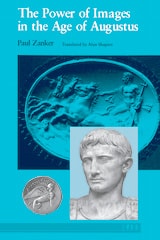
The Power of Images in the Age of Augustus
Paul Zanker; translated by Alan Shapiro
University of Michigan Press, 1990
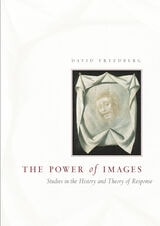
The Power of Images
Studies in the History and Theory of ResponseDavid Freedberg
University of Chicago Press, 1989
"This is an engaged and passionate work by a writer with powerful convictions about art, images, aesthetics, the art establishment, and especially the discipline of art history. It is animated by an extraordinary erudition."—Arthur C. Danto, The Art Bulletin
"Freedberg's ethnographic and historical range is simply stunning. . . . The Power of Images is an extraordinary critical achievement, exhilarating in its polemic against aesthetic orthodoxy, endlessly fascinating in its details. . . . This is a powerful, disturbing book."—T. J. Jackson Lears, Wilson Quarterly
"Freedberg helps us to see that one cannot do justice to the images of art unless one recognizes in them the entire range of human responses, from the lowly impulses prevailing in popular imagery to their refinement in the great visions of the ages."—Rudolf Arnheim, Times Literary Supplement

The Power of Intellectuals in Contemporary Germany
Edited by Michael Geyer
University of Chicago Press, 2001
This new collection of essays considers the demise of the GDR and its impact on the place of intellectuals in Germany today. Distinguished contributors from Germany, Austria, and the United States survey aspects of high and low culture, including the current nostalgia for East German film, the demise of the GDR rock scene, the pivotal role of East German poets, the consolidation and privatization of German media, and the frightening new resurgence of right-wing violence. The result is a timely volume that charts Germany's rocky transition from one world to another.
Contributors:
Mitchell G. Ash
Simone Barck
David Bathrick
John Borneman
Dorothea Dornhof
Michael Geyer
Andreas Graf
Dietrich Hohmann
Andreas Huyssen
Konrad Jarausch
Alexander Kluge
Loren Kruger
Martina Langermann
Siegfried Lokatis
Patricia Anne Simpson
Frank Trommler
Katie Trumpener
The Power of Journalists
Nick Robinson, Gary Gibbon, Barbara Speed, and Charlie Beckett
Haus Publishing, 2018
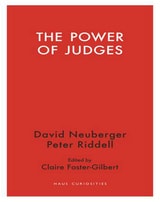
The Power of Judges
David Neuberger and Peter Riddell
Haus Publishing, 2018
In this lucid account of the judiciary, David Neuberger and Peter Riddell lead us through an array of topics both philosophical and logistical, including the relationships between morality and law and between Parliament and the judiciary. They explain the effects of cuts in legal aid and shed light on complex and controversial subjects like assisted dying and the complexities of combating mass terrorism while protecting personal liberty. Given that many of these issues span national borders, the book also compares the United Kingdom’s legal system with its counterparts in the United States and Germany.
Full of insights, The Power of Judges is an informative and accessible account of the United Kingdom’s judicial system, its contribution to running the country, and the challenges it faces—including the many threats to its effectiveness.
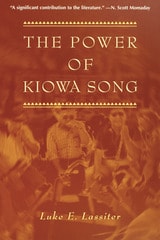
The Power of Kiowa Song
A Collaborative EthnographyLuke E. Lassiter
University of Arizona Press, 1998
Hear the Power of Kiowa Song
The Power of Large Language Models and AI in the Digital Age
Technologies, applications, security and ethicsNeha Sharma
The Institution of Engineering and Technology, 2026
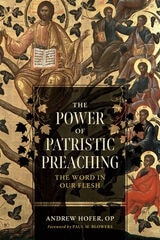
The Power of Patristic Preaching
The Word in Our FleshAndrew Hofer, OP
Catholic University of America Press, 2023

The Power of Play
Designing Early Learning SpacesDorothy Stoltz
American Library Association, 2015
The Power of Politicians
Tessa Jowell and Frances D’Souza
Haus Publishing, 2018
With former Lord Speaker Frances D’Souza serving as Jowell’s interlocutor, this book provides a passionate and inspiring interpretation on moral duty. Ultimately, The Power of Politicians offers not just a case study of the life and everyday work of a politician, but also attends to deeper questions about what is demanded from the political class. The overall result is a nothing less than a master class in how to be a good politician.
The Power of Productivity
Wealth, Poverty, and the Threat to Global StabilityWilliam W. Lewis
University of Chicago Press, 2004
The Power of Productivity provides powerful and controversial answers to these questions. William W. Lewis, the director emeritus of the McKinsey Global Institute, here draws on extensive microeconomic studies of thirteen nations over twelve years—conducted by the Institute itself—to counter virtually all prevailing wisdom about how best to ameliorate economic disparity. Lewis's research, which included studying everything from state-of-the-art auto makers to black-market street vendors and mom-and-pop stores, conclusively demonstrates that, contrary to popular belief, providing more capital to poor nations is not the best way to help them. Nor is improving levels of education, exchange-rate flexibility, or government solvency enough. Rather, the key to improving economic conditions in poor countries, argues Lewis, is increasing productivity through intense, fair competition and protecting consumer rights.
As The Power of Productivity explains, this sweeping solution affects the economies of poor nations at all levels—from the viability of major industries to how the average consumer thinks about his or her purchases. Policies must be enacted in developing nations that reflect a consumer rather than a producer mindset and an attendant sense of consumer rights. Only one force, Lewis claims, can stand up to producer special privileges—consumer interests.
The Institute's unprecedented research method and Lewis's years of experience with economic policy combine to make The Power of Productivity the most authoritative and compelling view of the global economy today, one that will inform political and economic debate throughout the world for years to come.
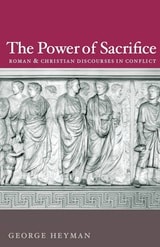
The Power of Sacrifice
Roman and Christian Discourses in ConflictGeorge Heyman
Catholic University of America Press, 2007

The Power of Signed Songs
Deaf Artists, Intercultural Reach, and the Politics of Music MakingJoana Morêdo Pereira
Gallaudet University Press, 2026
The first of its kind, The Power of Signed Songs: Deaf Artists, Intercultural Reach, and the Politics of Music Making analyzes musical performances that were translated or created in signed languages. Written by an international team of Deaf community researchers, The Power of Signed Songs explores the politics of music making in the form of signed songs, an often controversial art form in Deaf communities.
While raising questions about culture, translation, and authorship, signed songs demonstrate forms of Deaf cultural resistance, defy traditional conceptions of music, and draw attention to language diversity and intersectionality within Deaf communities in varied European settings. Drawing on both signed music performances and field research, the authors highlight the unique contributions of signing musical artists from both the UK and Portugal. Signed songs and translations illustrate a wide range of creative performance strategies, linguistic word and sign play across languages, and sociolinguistic variation.
By analyzing how translated songs created by Deaf artists serve as cultural products, translations, and performance, The Power of Signed Songs provides a glimpse into how translations of music can be a form of both transnational and localized cultural resistance. Ultimately, Deaf-centered signed songs are not just artistic expressions but also political statements, challenging the idea that music belongs exclusively to the hearing world.

The Power of Small States
Diplomacy in World War IIAnnette Baker Fox
University of Chicago Press, 1959
As World War II ravaged Europe and Asia, smaller nations such as Turkey, Spain, Finland, and Portugal emerged virtually unscathed. How did these smaller powers, which most wrongly viewed as mere political pawns, survive one of the bloodiest conflicts of the 20th century?
From the World War II diplomatic history of Turkey, Finland, Norway, Sweden, and Spain, Annette Baker Fox walks us through backrooms and intense negotiations to illustrate how smaller nations balanced an ever-shifting political landscape to maintain their neutrality. Heavily researched and well-wrought, this book draws upon primary material and interviews with public figures and scholars to give a new historical dimension into lesser-known nations during a time of great political upheaval.

The Power of Sympathy
William Hill Brown, Edited by William S. Kable
The Ohio State University Press, 1900
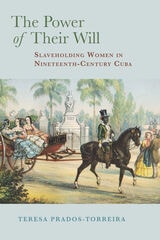
The Power of Their Will
Slaveholding Women in Nineteenth-Century CubaTeresa Prados-Torreira
University of Alabama Press, 2021
CHOICE OUTSTANDING ACADEMIC TITLE, 2022
“This fascinating book explores the unique circumstances of white slaveholding women in 19th-century Cuba and the enslaved peoples they controlled . . .This is a must read for scholars of the Caribbean and the African diaspora. Essential.” —CHOICE
In the early nineteenth century, while abolitionism was rising and the slave trade was declining in the Atlantic world, Spain used this opportunity to massively expand plantation slavery in Cuba. Between 1501 and 1866, more than 778,000 Africans were torn from their homelands and brought to work for the Cuban slaveholding class.
An understudied aspect of Cuban slaveholding society is the role of the white Cuban slave mistress (amas). The Power of Their Will: Slaveholding Women in Nineteenth-Century Cuba illuminates the interaction of female slaveholders and the enslaved during this time. Teresa Prados-Torreira shows, despite the lack of political power in a highly patriarchal society, Cuban women as property owners were instrumental in supporting the long duration of slavery, whether by enforcing the disciplining of the enslaved in the domestic sphere or helping to create the illusion of slavery as a humane institution. Thousands of Creole slaveholding women relied on slaves to lead a comfortable life. Even the subsistence of many poor women depended on the income derived from the hiring out of their enslaved.
In this accessible cultural history, culled from government documents, fiction, newspaper articles, traveler’s accounts, women’s wills, and archival research, Prados-Torreira coalesces a valuable narrative out of the often paradoxical and conflicting stories of the human bonds between the female owner and the enslaved. Narrative chapters, enlivened by vignettes, describe the daily life of slave mistresses in the main cities of Havana and Santiago and other towns, workings of sugar mills and coffee plantations, how slaveholding women coping with slave rebellions and wartime during the Ten Years’ War, and how personal relationships could occasionally affect the balance of power.
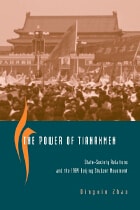
The Power of Tiananmen
State-Society Relations and the 1989 Beijing Student MovementDingxin Zhao
University of Chicago Press, 2001
Dingxin Zhao's award-winning The Power of Tiananmen is the definitive treatment of these historic events. Along with grassroots tales and interviews with the young men and women who launched the demonstrations, Zhao carries out a penetrating analysis of the many parallel changes in China's state-society relations during the 1980s. Such changes prepared an alienated academy, gave rise to ecology-based student mobilization, restricted government policy choices, and shaped student emotions and public opinion, all of which, Zhao argues, account for the tragic events in Tiananmen.

The Power of Two
A Twin Triumph Over Cystic FibrosisIsabel Byrnes and Anabel Stenzel
University of Missouri Press, 2007
For most people, a diagnosis of cystic fibrosis means the certainty of a life ended too soon. But for twin girls with the disease, what began as a family’s stubborn determination grew into a miracle.
The tragedy of CF has been touchingly recounted in such books as Frank Deford’s Alex: The Life of a Child, but The Power of Two is the first book to portray the symbiotic relationship between twins who share this life-threatening disease through adulthood. Isabel Stenzel Byrnes and Anabel Stenzel tell of their lifelong struggle to pursue normal lives with cystic fibrosis while grappling with the realization that they will die young. Their story reflects the physical and emotional challenges of a particularly aggressive form of CF and tells how the twins’ bicultural heritage—Japanese and German—influenced the way they coped with these challenges.
Born in 1972, seventeen years before scientists discovered the genetic mutation that causes CF, Isabel and Anabel endured the daily regimen of chest percussion, frequent doctor visits, and lengthy hospitalizations. But they tell how, in the face of innumerable setbacks, their deep-seated dependence on each other allowed them to survive long enough to reap the benefits of the miraculous lung transplants that marked a crossroads in their lives: “We have an old life—one of growing up with chronic illness—and a new life—one of opportunities and gifts we have never imagined before.” In this memoir, they pay tribute to the people who shaped their experience.
The Power of Two is an honest and gripping portrayal of day-to-day health care, the impact of chronic illness on marriage and family, and the importance of a support network to continuing survival. It conveys an important message to both popular and professional readers as it addresses key psychosocial issues in chronic illness throughout the sufferer’s lifespan and illuminates the human side of advances in biotechnology.
Even as gene therapy and stem cell research increase the chances for eradicating CF, this stirring account portrays its effects on one family that refused to give up. These two remarkable sisters have much to teach about the power of perseverance—and about the ultimate power of hope.

The Power of Two
A Twin Triumph over Cystic Fibrosis, Updated and Expanded EditionIsabel Stenzel Byrnes and Anabel Stenzel
University of Missouri Press, 2014
For most people, a diagnosis of cystic fibrosis means the certainty of a life ended too soon. But for Isabel Stenzel Byrnes and Anabel Stenzel, twin girls with the disease, what began as a family’s stubborn determination grew into a miracle.
The Power of Words
Anglo-Saxon Studies Presented to Donald G. Scragg on his Seventieth BirthdayANGLO-SAXON STUDIES PRESENTED TO DONALD G. SCRAGG ON HIS SEVENTIETH BIRTHDAYHugh Magennis
West Virginia University Press, 2006
The Power of Words: Anglo-Saxon Studies Presented to Donald G. Scragg on his Seventieth Birthday edited by Jonathan Wilcox and Hugh Magennis will find its place on the same shelf with these and other such valuable tomes in the discipline. This is a complex and carefully edited book, that showcases the work of some of Professor Scragg’s best students and most admiring professional friends. The contents range from several studies in homiletic literature, one of Professor Scragg’s own passions, to other of his pursuits, including editing theory and orthography. These are not, however, derivative essays that recommend a single adjustment in a reading or to a source study; instead, they are studies that do what Professor Scragg himself did: they observe clues to larger realities, and they point the way to a broader comprehension of our discipline and its several methodologies.
The Power of Words
Studies on Charms and Charming in EuropeJames Kapalo
Central European University Press, 2013
The Power of Writing
Dartmouth '66 in the Twenty-First CenturyEdited by Christiane Donahue and Kelly Blewett
Dartmouth College Press, 2015

The Power of the Badge
Sheriffs and Inequality in the United StatesEmily M. Farris and Mirya R. Holman
University of Chicago Press, 2024
A sobering exploration of the near unchecked power of sheriffs in the United States.
Across the United States, more than 3,000 sheriffs occupy a unique position in the US political and legal systems. Elected by voters—usually in low-visibility, noncompetitive elections—sheriffs oversee more than a third of law enforcement employees and control almost all local jails. They have the power to both set and administer policies, and they can imprison, harm, and even kill members of their communities. Yet, they enjoy a degree of autonomy not seen by other political officeholders.
The Power of the Badge offers an unprecedented, data-rich look into the politics of the office and its effects on local communities. Emily M. Farris and Mirya R. Holman draw on two surveys of sheriffs taken nearly a decade apart, as well as election data, case studies, and administrative data to show how a volatile combination of authority and autonomy has created an environment where sheriffs rarely change; elections seldom create meaningful accountability; employees, budgets, and jails can be used for political gains; marginalized populations can be punished; and reforms fail. Farris and Holman also track the increasingly close linkages between sheriffs and right-wing radical groups in an era of high partisanship and intra-federal conflict.
The Power of the Between
An Anthropological OdysseyPaul Stoller
University of Chicago Press, 2008
Beginning with his early days with the Peace Corps in Africa and culminating with a recent bout with cancer, The Power of the Between is an evocative account of the circuitous path Stoller’s life has taken, offering a fascinating depiction of how a career is shaped over decades of reading and research. Stoller imparts his accumulated wisdom not through grandiose pronouncements but by drawing on his gift for storytelling. Tales of his apprenticeship to a sorcerer in Niger, his studies with Claude Lévi-Strauss in Paris, and his friendships with West African street vendors in New York City accompany philosophical reflections on love, memory, power, courage, health, and illness.
Graced with Stoller’s trademark humor and narrative elegance, The Power of the Between is both the story of a distinguished career and a profound meditation on coming to terms with the impermanence of all things.
The Power of the Steel-tipped Pen
Reconstructing Native Hawaiian Intellectual HistoryNoenoe K. Silva
Duke University Press, 2017
The Power of the Texas Governor
Connally to BushBy Brian McCall
University of Texas Press, 2009
George W. Bush called it "the best job in the world," yet many would argue that the Texas governorship is a weak office. Given few enumerated powers by the Texas Constitution, the governor must build a successful relationship with the state legislature—sometimes led by a powerful lieutenant governor or speaker of the opposing party—to advance his or her policy agenda. Yet despite the limitations on the office and the power of the legislative branch, many governors have had a significant impact on major aspects of Texas's public life—government, economic development, education, and insurance reform among them. How do Texas governors gain the power to govern effectively?
The Power of the Texas Governor takes a fresh look at the state's chief executives, from John Connally to George W. Bush, to discover how various governors have overcome the institutional limitations of the office. Delving into the governors' election campaigns and successes and failures in office, Brian McCall makes a convincing case that the strength of a governor's personality—in particular, his or her highly developed social skills—can translate into real political power. He shows, for example, how governors such as Ann Richards and George W. Bush forged personal relationships with individual legislators to achieve their policy goals. Filled with revealing insights and anecdotes from key players in each administration, The Power of the Texas Governor offers new perspectives on leadership and valuable lessons on the use of power.
The Power to Destroy
How Bad Economics Drove America’s DeclineJames K. Galbraith
University of Chicago Press, 2026
Acclaimed economist James K. Galbraith sounds an urgent alarm: how conventional economic ideas and policies are unequipped to account for the most daunting challenges of our geopolitical moment.
Amid a mounting sense of American decline, Americans live with a new kind of dissonance: economists announcing that everything is fundamentally fine. Where growth is steady, unemployment is low, prices are (somewhat) stable, and stocks are high—what’s there to worry about?
The Power to Destroy shows that this dissonance reflects a failure to evolve. James K. Galbraith’s incisive history of economic policy in this century is grounded in the fundamental problem that today’s experts are still deploying tools from all yesterday’s wars: obsolete economic ideas, measures, and doctrines focused on market functioning and crude economic indicators like output and prices. These methods, many of them honed a century ago against a vastly different social landscape, offer little hope in the face of today’s more existential threats.
Such conventional policies, Galbraith argues, are increasingly ill-equipped to counter the daunting challenges of our moment—from inflation to trade sanctions, industrial cold wars, and climate change—and, left unacknowledged, are accelerating the end of the US economy as we know it. Shortcomings include the weak responses to the inflation of 2021-2022; the sanctions war against Russia; the rise of China; the weak and ineffective attempt at industrial revival; and the impending demographic crisis. All have roots in a flawed body of outdated economic thought that has been sustained for ideological rather than practical reasons. They now promise to hinder the United States in the emerging multipolar world.
As Galbraith makes plain, for all the virtues of the market system, governments and their policies make markets possible. The ideas behind the policies—for better or worse—will determine the fate of the US economy—and new and better ideas are urgently needed. The alternative—sticking with economic ideas and policies we know and currently use—brings the power to destroy us all.
The Power to Die
Slavery and Suicide in British North AmericaTerri L. Snyder
University of Chicago Press, 2015
In The Power to Die, Terri L. Snyder excavates the history of slave suicide, returning it to its central place in early American history. How did people—traders, plantation owners, and, most importantly, enslaved men and women themselves—view and understand these deaths, and how did they affect understandings of the institution of slavery then and now? Snyder draws on ships’ logs, surgeons' journals, judicial and legislative records, newspaper accounts, abolitionist propaganda and slave narratives, and many other sources to build a grim picture of slavery’s toll and detail the ways in which suicide exposed the contradictions of slavery, serving as a powerful indictment that resonated throughout the Anglo-Atlantic world and continues to speak to historians today.

The Power to Heal
Civil Rights, Medicare, and the Struggle to Transform America's Health Care SystemDavid Barton Smith
Vanderbilt University Press, 2016
The book draws the reader into the struggles of the unsung heroes of the transformation, black medical leaders whose stubborn courage helped shape the larger civil rights movement. They demanded an end to federal subsidization of discrimination in the form of Medicare payments to hospitals that embraced the "separate but equal" creed that shaped American life during the Jim Crow era. Faced with this pressure, the Kennedy and Johnson Administrations tried to play a cautious chess game, but that game led to perhaps the biggest gamble in the history of domestic policy. Leaders secretly recruited volunteer federal employees to serve as inspectors, and an invisible army of hospital workers and civil rights activists to work as agents, making it impossible for hospitals to get Medicare dollars with mere paper compliance. These triumphs did not come without casualties, yet the story offers lessons and hope for realizing this transformational dream.
This book is the recipient of the Norman L. and Roselea J. Goldberg Prize from Vanderbilt University Press for the best book in the area of medicine.
The Power to Name
A History of Anonymity in Colonial West AfricaStephanie Newell
Ohio University Press, 2013
Between the 1880s and the 1940s, the region known as British West Africa became a dynamic zone of literary creativity and textual experimentation. African-owned newspapers offered local writers numerous opportunities to contribute material for publication, and editors repeatedly defined the press as a vehicle to host public debates rather than simply as an organ to disseminate news or editorial ideology. Literate locals responded with great zeal, and in increasing numbers as the twentieth century progressed, they sent in letters, articles, fiction, and poetry for publication in English- and African-language newspapers.
The Power to Name offers a rich cultural history of this phenomenon, examining the wide array of anonymous and pseudonymous writing practices to be found in African-owned newspapers between the 1880s and the 1940s, and the rise of celebrity journalism in the period of anticolonial nationalism. Stephanie Newell has produced an account of colonial West Africa that skillfully shows the ways in which colonized subjects used pseudonyms and anonymity to alter and play with colonial power and constructions of African identity.
The Price of Power
America Since 1945Herbert Agar
University of Chicago Press, 1957
The Pursuit of Power
Technology, Armed Force, and Society since A.D. 1000William H. McNeill
University of Chicago Press, 1982
The Real Hiphop
Battling for Knowledge, Power, and Respect in the LA UndergroundMarcyliena Morgan
Duke University Press, 2009
Morgan intersperses her observations with excerpts from interviews and transcripts of freestyle lyrics. Providing a thorough linguistic interpretation of the music, she teases out the cultural antecedents and ideologies embedded in the language, emphases, and wordplay. She discusses the artistic skills and cultural knowledge MCs must acquire to rock the mic, the socialization of hiphop culture’s core and long-term members, and the persistent focus on skills, competition, and evaluation. She brings attention to adults who provided material and moral support to sustain underground hiphop, identifies the ways that women choose to participate in Project Blowed, and vividly renders the dynamics of the workshop’s famous lyrical battles.

The Rise of the American Conservation Movement
Power, Privilege, and Environmental ProtectionDorceta E. Taylor
Duke University Press, 2016
The Servant Leader
Unleashing the Power of Your PeopleRobert P. Neuschel
Northwestern University Press, 2005
He asks: what steps might we take to revitalize the quality and strength of our leadership? He then forcefully and straightforwardly gives an outline of what he believes are the major changes in leadership we must bring about. As a professor of management and strategy, and earlier, as a director and senior partner at a major consulting firm, and as a captain in the U. S. Army, Neuschel observed the best of leadership, and practiced it. He shares his insights with us in The Servant Leader.

The Sign of the Burger
Mcdonald'S And The Culture Of PowerJoe Kincheloe
Temple University Press, 2002
"I didn't want to remain a hick from the mountains... In my cultural naivete I saw McDonald's as a place somehow where modern culture capital could be dispensed. Keeping these memories in mind as years later I monitored scores of conversations about the Golden Arches in the late 1990's, it became apparent that McDonald's is still considered a marker of a modern identity."
So begins a complicated journey into the power of one of the most recognizable signs of American capitalism: The Golden Arches. The Sign of the Burger examines how McDonald's captures our imagination: as a shorthand for explaining the power of American culture; as a symbol of the strength of consumerism; as a bellwether for the condition of labor in a globalized economy; and often, for better or worse, a powerful educational tool that often defines the nature of culture for hundreds of millions the world over.
While many books have offered simple complaints of the power of McDonald's, Joe Kincheloe explores the real ways McDonald's affects us. We see him as a young boy in Appalachia, watching the Golden Arches going up as the—hopeful—arrival of the modern into his rural world. And we travel with him around the world to see how this approach of the modern affects other people, either through excitement or through attempts at resisting McDonald's power, often in unfortunate ways. Through it all, Kincheloe makes clear, with lucidity and depth, the fact that McDonald's growth will in many ways determine both the nature of accepting and protesting its ever-expanding presence in our global world.
postamble();
The St. Louis Veiled Prophet Celebration
Power on Parade, 1877-1995Thomas M. Spencer
University of Missouri Press, 2021
The Veiled Prophet organization has been a vital institution in St. Louis for more than a century. Founded in March 1878 by a group of prominent St. Louis businessmen, the organization was fashioned after the New Orleans Carnival society the Mystick Krewe of Comus. In The St. Louis Veiled Prophet Celebration, Thomas Spencer explores the social and cultural functions of the organization's annual celebration—the Veiled Prophet parade and ball—and traces the shifts that occurred over the years in its cultural meaning and importance. Although scholars have researched the more pluralistic parades of the eighteenth and early nineteenth centuries, very little has been done to examine the elite-dominated parades of the late nineteenth and twentieth centuries. This study shows how pluralistic parades ceased to exist in St. Louis and why the upper echelon felt it was so important to end them.
Spencer shows that the celebration originated as the business elite's response to the St. Louis general strike of 1877. Symbolically gaining control of the streets, the elites presented St. Louis history and American history by tracing the triumphs of great men—men who happened to be the Veiled Prophet members' ancestors. The parade, therefore, was intended to awe the masses toward passivity with its symbolic show of power. The members believed that they were helping to boost St. Louis economically and culturally by enticing visitors from the surrounding communities. They also felt that the parades provided the spectators with advice on morals and social issues and distracted them from less desirable behavior like drinking and carousing.
From 1900 to 1965 the celebration continued to include educational and historical elements; thereafter, it began to resemble the commercialized leisure that was increasingly becoming a part of everyday life. The biggest change occurred in the period from 1965 to 1980, when the protests of civil rights groups led many St. Louisans to view the parade and ball as wasteful conspicuous consumption that was often subsidized with taxpayers' money. With membership dropping and the news media giving the organization little notice, it soon began to wither. In response, the leaders of the Veiled Prophet organization decided to have a "VP Fair" over the Fourth of July weekend. The 1990s brought even more changes, and the members began to view the celebration as a way to unite the St. Louis community, with all of its diversity, rather than as a chance to boost the city or teach cultural values. The St. Louis Veiled Prophet Celebration is a valuable addition not only to the cultural history of Missouri and St. Louis but also to recent scholarship on urban culture, city politics, and the history of public celebrations in America.

The Syntax of Sports, Class 2
The Power of the ParticularPatrick Barry
Michigan Publishing Services, 2020
What can we learn from baseball great Ted Williams about how to improve our writing? What can we learn we from the iconic ESPN show SportsCenter about how to manage information? And are you sure you really know what the word “peruse” means?
Explore these and other questions in the second volume of The Syntax of Sports, a series designed to recreate a popular course at the University of Michigan. Here are a few things students have said about the experience of taking it.
-
“Patrick Barry is the best teacher I have ever had. I have never learned so much in a class. I hated English my whole life until I took this course.”
-
“I feel like this is and always will be the most valuable class I've ever taken here.”
-
“I genuinely wanted to show up to this class due to the amount I knew I would learn.”
-
“I'm going to severely SEVERELY miss this course.”
-
“Every student should try to take one of Prof. Barry’s classes if he or she wants to become a better writer.”
-
“My writing is now 113x better.”
The Tocco of the Greek Realm
Nobility, Power and Migration in Latin Greece (14th – 15th centuries)Nada Zečević
Central European University Press, 2015
The Tree That Bends
Discourse, Power, and the Survival of Maskoki PeoplePatricia Riles Wickman
University of Alabama Press, 1999
In her compelling and controversial arguments, Wickman rejects the myths that erase Native Americans from Florida through the agency of Spaniards and diseases and make the area an empty frontier awaiting American expansion. Through research on both sides of the Atlantic and extensive oral history interviews among the Seminoles of Florida and Oklahoma, Wickman shatters current theories about the origins of the people encountered by the Spaniards and presents, for the first time ever, the Native American perspective. She describes the genesis of the groups known today as Creek, Seminole, and Miccosukee—the Maskoki peoples—and traces their common Mississippian heritage, affirming their claims to continuous habitation of the Southeast and Florida. Her work exposes the rhetoric of conquest and replaces it with the rhetoric of survival.
An important cross-disciplinary work, The Tree That Bends reveals the flexibility of the Maskoki people and the sociocultural mechanisms that allowed them to survive the pressures introduced at contact. Their world was capable of incorporating the New without destroying the Old, and their descendants not only survive today but also succeed as a discrete culture as a result.
The Trouble with Men
Reflections on Sex, Love, Marriage, Porn, and PowerDavid Shields
The Ohio State University Press, 2019
The Visions of Sor María de Agreda
Writing Knowledge and PowerClark Colahan
University of Arizona Press, 1994
The X Club
Power and Authority in Victorian ScienceRuth Barton
University of Chicago Press, 2018
These six ambitious professionals and three wealthy amateurs—J. D. Hooker, T. H. Huxley, John Tyndall, John Lubbock, William Spottiswoode, Edward Frankland, George Busk, T. A. Hirst, and Herbert Spencer—wanted to guide the development of science and public opinion on issues where science impinged on daily life, religious belief, and politics. They formed a private dining club, which they named the X Club, to discuss and further their plans. As Ruth Barton shows, they had a clear objective: they wanted to promote “scientific habits of mind,” which they sought to do through lectures, journalism, and science education. They devoted enormous effort to the expansion of science education, with real, but mixed, success.
For twenty years, the X Club was the most powerful network in Victorian science—the men succeeded each other in the presidency of the Royal Society for a dozen years. Barton’s group biography traces the roots of their success and the lasting effects of their championing of science against those who attempted to limit or control it, along the way shedding light on the social organization of science, the interactions of science and the state, and the places of science and scientific men in elite culture in the Victorian era.
Theatre and Cartographies of Power
Repositioning the Latina/o AmericasEdited by Jimmy A. Noriega and Analola Santana
Southern Illinois University Press, 2018
Building on hemispheric and transnational models, this book demonstrates the capacity of theatre studies to challenge the up-down/North-South approach that dominates scholarship in the United States and presents a strong case for a repositioning of the Latina/o Americas in theatrical histories and practices.
Theatrical Jazz
Performance, À??, and the Power of the Present MomentOmi Osun Joni L. Jones
The Ohio State University Press, 2015
Theatrical Jazz examines how artists are made and how artists make art. In charting their overlapping artistic genealogies, the book also discusses the work of veteran artists Aishah Rahman, Robbie McCauley, Sekou Sundiata, Ntozake Shange, and Erik Ehn, as well as the next generation of theatrical jazz innovators, Grisha Coleman, Walter Kitundu, Florinda Bryant, and Zell Miller III. Using autocritography as a primary methodology, the author draws on her role as performer, collaborator, audience/witness, and dramaturg in theatrical jazz, and her experiences with Yoruba spiritual traditions, to excavate the layers and nuances of this performance form. Jones’s use of performative writing, a blend of intellectual, artistic, and sensory experiences, allows scholars and students not only to read but also to “hear” the principles of theatrical jazz on the page.
Theories Of The New Class
Intellectuals And PowerLawrence Peter King
University of Minnesota Press, 2004
Demonstrates the centrality of thinking about intellectual class formation to social theory
Old as the notion of the “New Class” is (the term was coined by anarchist Mikhail Bakunin around 1870), the idea of the ascendancy of an intellectual elite continues to engage, and perplex, social theorists. In Theories of the New Class, Iván Szelényi, one of the most incisive and respected analysts of the intellectual class, and his colleague Lawrence King put New Class theories into a broad historical framework for the first time.
Addressing the intellectual history of Marxism and socialism, theories of the increasing role of the state and technocratic elites in capitalism, and theories of contemporary social change, King and Szelényi’s work clearly links the centrality of thinking about intellectual class formation to a variety of theoretical and political projects that have shaped social theory and influenced political realities over the past century.King and Szelényi show that the idea of the New Class has stubbornly entered and reentered the agenda of critical social theorizing throughout the last century. Indeed, they interpret that the last century as a history of projects by different groups of the highly educated—factions of intellectuals, bureaucrats, technocrats, managers, and the left-wing humanistic intelligentsia—to gain ultimate power. A rare empirical discussion of theory, Theories of the New Class invigorates class theories by grounding them in contemporary issues; at the same time, it uses modern polemics to revitalize historical debates on the origins of capitalism.
There She Goes Again
Gender, Power, and Knowledge in Contemporary Film and Television FranchisesAviva Dove-Viebahn
Rutgers University Press, 2024