Results by title
1325 books match the query 'Psychology' and 295 start with t
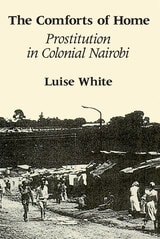
The Comforts of Home
Prostitution in Colonial NairobiLuise White
University of Chicago Press, 1990
"White's book . . . takes a unique approach to a largely unexplored aspect of African History. It enhances our understanding of African social history, political economy, and gender studies. It is a book that deserves to be widely read."—Elizabeth Schmidt, American Historical Review

The Common Pot
The Recovery of Native Space in the NortheastLisa Brooks
University of Minnesota Press, 2008
Illuminates the significance of writing to colonial-era Native American resistance
Literary critics frequently portray early Native American writers either as individuals caught between two worlds or as subjects who, even as they defied the colonial world, struggled to exist within it. In striking counterpoint to these analyses, Lisa Brooks demonstrates the ways in which Native leaders—including Samson Occom, Joseph Brant, Hendrick Aupaumut, and William Apess—adopted writing as a tool to reclaim rights and land in the Native networks of what is now the northeastern United States.
“The Common Pot,” a metaphor that appears in Native writings during the eighteenth and nineteenth centuries, embodies land, community, and the shared space of sustenance among relations. Far from being corrupted by forms of writing introduced by European colonizers, Brooks contends, Native people frequently rejected the roles intended for them by their missionary teachers and used the skills they acquired to compose petitions, political tracts, and speeches; to record community councils and histories; and most important, to imagine collectively the routes through which the Common Pot could survive.Reframing the historical landscape of the region, Brooks constructs a provocative new picture of Native space before and after colonization. By recovering and reexamining Algonquian and Iroquoian texts, she shows that writing was not a foreign technology but rather a crucial weapon in the Native Americans’ arsenal as they resisted—and today continue to oppose—colonial domination.
The Companion Species Manifesto
Dogs, People, and Significant OthernessDonna J. Haraway
Prickly Paradigm Press, 2003
The Concept of Development
An Issue in the Study of Human BehaviorDale Harris
University of Minnesota Press, 1967
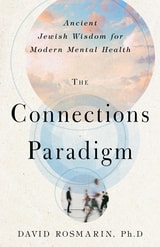
The Connections Paradigm
Ancient Jewish Wisdom for Modern Mental HealthDavid H. Rosmarin
Templeton Press, 2021
The idea behind the paradigm is that at any given moment, human beings are either “connected” or “disconnected” across three key relationships. To be “connected” means to be in a loving, harmonious, and fulfilling relationship; to be “disconnected” means, of course, the opposite. The three relationships are those between our souls and our bodies, ourselves and others, and ourselves and God.
These relationships are hierarchal; each depends on the one that precedes it. This means that we can only connect with God to the extent that we associate with others, and we cannot connect with others if we don’t connect with ourselves. The author, Dr. David H. Rosmarin, devotes a section to each relationship and describes techniques and practices to become a more connected individual. He also brings in compelling stories from his clinical practice to show the process in action.
Whether you’re a clinician working with clients, or a person seeking the healing balm of wisdom; whether you’re a member of the Jewish faith, or a person open to new spiritual perspectives, you will find this book sensible, practical, and timely because, for all of us, connection leads to mental health.
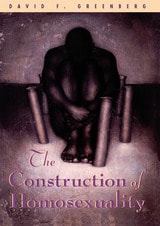
The Construction of Homosexuality
David F. Greenberg
University of Chicago Press, 1990
The Courage to Suffer
A New Clinical Framework for Life's Greatest CrisesDaryl R. Van Tongeren
Templeton Press, 2020
Suffering is an inescapable part of life. Some suffering is so profound, so violating, or so dogged that it fundamentally changes people in indelible ways. Many existing therapeutic approaches, from a medical model, treat suffering as mental illness and seek a curative solution. However, such approaches often fail to examine the deep questions that suffering elicits (e.g., existential themes of death, isolation, freedom, identity, and meaninglessness) and the far-reaching ways in which suffering affects the lived experience of each individual.
In The Courage to Suffer, Daryl and Sara Van Tongeren introduce a new therapeutic framework that helps people flourish in the midst of suffering by cultivating meaning.
Drawing from scientific research, clinical examples, existential and positive psychology, and their own personal stories of loss and sorrow, Daryl and Sara’s integrative model blends the rich depth of existential clinical approaches with the growth focus of strengths-based approaches.Through cutting edge-research and clinical case examples, they detail five “phases of suffering” and how to work with a client's existential concerns at each phase to develop meaning. They also discuss how current research suggests to build a flourishing life, especially for those who have endured, and are enduring, suffering.
Daryl and Sara show how those afflicted with suffering, while acknowledging the reality of their pain, can still choose to live with hope.
The Creative Journal
The Art of Finding Yourself: 35th Anniversary EditionLucia Capacchione
Ohio University Press, 2015
Originally released in 1980, Lucia Capacchione’s The Creative Journal has become a classic in the fields of art therapy, memoir and creative writing, art journaling, and creativity development. Using more than fifty prompts and vibrantly illustrated examples, Capacchione guides readers through drawing and writing exercises to release feelings, explore dreams, and solve problems creatively. Topics include emotional expression, healing the past, exploring relationships, self-inventory, health, life goals, and more. The Creative Journal introduced the world to Capacchione’s groundbreaking technique of writing with the nondominant hand for brain balancing, finding innate wisdom, and developing creative potential.
This thirty-fifth anniversary edition includes a new introduction and an appendix listing the many venues that have adopted Capacchione’s methods, including public schools, recovery programs, illness support groups, spiritual retreats, and prisons. The Creative Journal has become a mainstay text for college courses in psychology, art therapy, and creative writing. It has proven useful for journal keepers, counselors, and teachers. Through doodles, scribbles, written inner dialogues, and letters, people of all ages have discovered vast inner resources.
The Creativity Question
Albert Rothenberg and Carl Hausman, eds.
Duke University Press, 1976
The organization of The Creativity Question is unique: it illustrates the various approaches and basic assumptions underlying studies of creativity throughout the course of history up to the present time. The main body of selections appears under the categories of descriptions, attempts at explanation, and alternate approaches. As specific orientations to creativity can be traced to particular initiating thinkers and investigators, there is a special chapter on seminal accounts containing selections from the works of Plato, Aristotle, Kant, Galton, and Freud. Another chapter includes recent illustrations of special types of exploratory trends: creativity of women, brain research, synectics, extrasensory perception, behaviorism, and creativity computer programming. This organization highlights the tension between strictly scientific accounts and alternative approaches offering new ways of understanding. The editors have provided for the books as a whole and for each chapter explanation and discussion of the basic issues raised by the various approaches to creativity.
The Crime of Jean Genet
Dominique Eddé
Seagull Books, 2016
Dominique Eddé met novelist and playwright Jean Genet in the 1970s. And she never forgot him. “His presence,” she writes, “gave me the sensation of icy fire. Like his words, his gestures were full, calculated, and precise. . . . Genet’s movements mimicked the movement of time, accumulating rather than passing.”
This book is Eddé’s account of that meeting and its ripples through her years of engaging with Genet’s life and work. Rooted in personal reminiscences, it is nonetheless much broader, offering a subtle analysis of Genet’s work and teasing out largely unconsidered themes, like the absence of the father, which becomes a metaphor for Genet’s perpetual attack on the law. Tying Genet to Dostoevsky through their shared fascination with crime, Eddé helps us more clearly understand Genet’s relationship to France and Palestine, Judaism, Christianity, Islam, the theater, and even death. A powerful personal account of the influence of one writer on another, The Crime of Jean Genet is also one of the most penetrating explorations yet of Genet’s work and achievement.

The Criminally Insane
A Community Follow-up of Mentally Ill OffendersTerence Thornberry and Joseph E. Jacoby
University of Chicago Press, 1979
In 1971, 586 patients were released from a Pennsylvania maximum-security hospital for the criminally insane. They were not considered officially "cured," but a federal court held that their commitments had been unconstitutional. Through exhaustive examination of hospital and police records and interviews with hospital administrators and the subjects themselves, Thornberry and Jacoby assess the processes by which the patients had been retained in confinement, the impact of their release upon their communities, and their ability to adjust to the freedom of community life.
The authors demonstrate that the patients did not display a significant level of violent behavior during confinement, nor did they pose a major threat to society after release. In fact, their social and psychological adjustment to community life is shown to have been comparable to that of non-criminal mental patients. Yet despite these findings the subjects had been retained in maximum-security confinement for an average of fourteen years because they were predicted to be violent and "dangerous" to society. The authors explain this inaccuracy by a process called "political prediction," in which clinicians avoid any potential risks to the community, the reputation of their hospitals, and their careers by consistently overpredicting dangerous behavior.
The Criminally Insane will stimulate response from professionals in a wide variety of fields, including law, criminology, psychiatry, and sociology, and from anyone concerned with society's responsibility to the mentally ill offender.
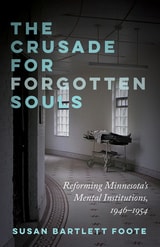
The Crusade for Forgotten Souls
Reforming Minnesota's Mental Institutions, 1946–1954Susan Bartlett Foote
University of Minnesota Press, 2018
Winner of the 2019 Minnesota Book Award for Minnesota Nonfiction
The stirring story of the reform movement that laid the groundwork for a modern mental health system in Minnesota
In 1940 Engla Schey, the daughter of Norwegian immigrants, took a job as a low-paid attendant at Anoka State Hospital, one of Minnesota’s seven asylums. She would work among people who were locked away under the shameful label “insane,” called inmates—and numbered more than 12,000 throughout the state. She acquired the knowledge and passion that would lead to “The Crusade for Forgotten Souls,” a campaign to reform the deplorable condition of mental institutions in Minnesota. This book chronicles that remarkable undertaking inspired and carried forward by ordinary people under the political leadership of Luther Youngdahl, a Swedish Republican who was the state’s governor from 1946 to 1951.
Susan Bartlett Foote tells the story of those who made the crusade a success: Engla Schey, the catalyst; Reverend Arthur Foote, a modest visionary who guided Unitarians to constructive advocacy; Genevieve Steefel, an inveterate patient activist; and Geri Hoffner, an intrepid reporter whose twelve-part series for the Minneapolis Tribune galvanized the public. These reformers overcame barriers of class, ethnicity, and gender to stand behind the governor, who, at a turbulent moment in Minnesota politics, challenged his own party’s resistance to reform. The Crusade for Forgotten Souls recounts how these efforts broke the stigma of shame and silence surrounding mental illness, publicized the painful truth about the state’s asylums, built support among citizens, and resulted in the first legislative steps toward a modern mental health system that catapulted Minnesota to national leadership and empowered families of the mentally ill and disabled. Though their vision met resistance, the accomplishments of these early advocates for compassionate care of the mentally ill hold many lessons that resonate to this day, as this book makes compellingly clear.
The Cultural Dialectics of Knowledge and Desire
Charles W. Nuckolls
University of Wisconsin Press, 1996
Why is culture a problem that can never be solved? Charles W. Nuckolls poses this question to his readers, and offers a genuinely synthetic approach to culture that is both cognitive and psychoanalytic. He develops a theory of cultural dialectics based on the concept of paradox, in which he shows how ambivalence and conflicts, and the desire to resolve them, are at the heart of all cultural knowledge systems.
Nuckolls combines and synthesizes the ideas of Max Weber and Sigmund Freud—major influences in the cognitive and psychoanalytic paradigms—and develops the concept basic to both: the dialectic. He recovers the legacy of Gregory Bateson, who provided the foundation for a theory of paradox in culture. With his integrated theory, Nuckolls explains the conflicts of knowledge and desire in a South Asian knowledge system, in particular the religious mythology and divinatory system of the Jalaris, a Telugu-speaking fishing caste on the southeastern coast of India.
This provocative book allows us to rethink the relationship between the currently competing discourses in psychological and cultural anthropology, and at the same time offers a general synthetic theory of cultural dynamics.
The Culture of Sensibility
Sex and Society in Eighteenth-Century BritainG. J. Barker-Benfield
University of Chicago Press, 1992
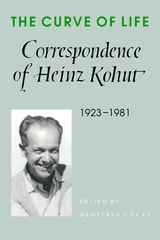
The Curve of Life
Correspondence of Heinz Kohut, 1923-1981Heinz Kohut
University of Chicago Press, 1994
The Curve of Life reveals Kohut's private and public life through a unique collection of lively and thoughtful correspondence with colleagues, public figures, family, and close friends. Over 300 never-before-published letters, drawn from Kohut's private files and from colleagues, cover Kohut's life from his native Austria in the 1930s until his death in 1981. Because many of his letters were so substantive, this rich collection clarifies Kohut's landmark published works. In letters to such diverse personalities as Anna Freud and Bruno Walter, Kohut meditated on some of the most intriguing psychoanalytic questions of the day—the nature of psychological cure, the relationship between doctor and patient, and the role of the Oedipus complex in psychoanalysis. The correspondence also reveals Kohut's lively interest in literature, music, history, and culture, as well as his deep and often contentious involvement in the politics of the psychoanalytic movement.
Kohut discussed his theories in letters to August Aichhorn, Heinz Hartmann, the Surgeon General, and even Jacqueline Kennedy, and the responses, some published here for the first time, prompted him to explore his ideas from a variety of perspectives. A letter from Anna Freud provoked Kohut to respond this way:
"What you had to say gave me great pleasure, and your approval was a welcome support amidst the inescapable insecurities under pressure to which we are all exposed. Strangely enough, it was not the discussion of scientific contributions and other statements that I had sent to you but the very last, parting sentence of your letter which gave me the most food for thought. You sent me your best wishes for the presidency of the American Psychoanalytic Association, and expressed the hope that '...this office permits opportunity for some revolutionary moves.'"
The Curve of Life illuminates the evolution of Kohut's theory of the psychology of the self, and provides a rare glimpse into the institutional and intellectual history of psychoanalysis in the last half of this century. These letters will fascinate not only scholars in psychoanalysis, but also those in the humanities, social sciences, and even theology, as well as general readers curious about the private thoughts of a towering figure in intellectual life.
The Dark Eclipse
Reflections on Suicide and AbsenceA.W. Barnes
Bucknell University Press, 2019
Published by Bucknell University Press. Distributed worldwide by Rutgers University Press.

The Daughter's Dilemma
Family Process and the Nineteenth-Century Domestic NovelPaula Marantz Cohen
University of Michigan Press, 1993
The Demon and the Damozel
Dynamics of Desire in the Works of Christina Rossetti and Dante Gabriel RossettiSuzanne M. Waldman
Ohio University Press, 2008
The Desire of Psychoanalysis
Exercises in Lacanian ThinkingGabriel Tupinambá; With a foreword by Slavoj Žižek
Northwestern University Press, 2021
The Desire of Psychoanalysis proposes that recognizing how certain theoretical and institutional problems in Lacanian psychoanalysis are grounded in the historical conditions of Lacan’s own thinking might allow us to overcome these impasses. In order to accomplish this, Gabriel Tupinambá analyzes the socioeconomic practices that underlie the current institutional existence of the Lacanian community—its political position as well as its institutional history—in relation to theoretical production.
By focusing on the underlying dynamic that binds clinical practice, theoretical work, and institutional security in Lacanian psychoanalysis today, Tupinambá is able to locate sites for conceptual innovation that have been ignored by the discipline, such as the understanding of the role of money in clinical practice, the place of analysands in the transformation of psychoanalytic theory, and ideological dead-ends that have become common sense in the Lacanian field. The Desire of Psychoanalysis thus suggests ways of opening up psychoanalysis to new concepts and clinical practices and calls for a transformation of how psychoanalysis is understood as an institution.
The Development of Behavioral States and the Expression of Emotions in Early Infancy
New Proposals for InvestigationPeter H. Wolff
University of Chicago Press, 1987
Wolff argues that a coherent psychobiological theory of early human development must begin with knowledge about the infant's behavioral repertory under free field conditions. Many current theories of human development begin instead with assumptions about the organization of behavior derived from studies of psychological function in the adult; moreover, they appeal to instincts, maturational programs, or genomes to explain the apparent lawfulness in the development of these behavioral categories. Such a priori explanations, Wolff contends, beg the whole question of development. As an alternative to theoretical metaphors that portray the infant as a closed system and suggests that development is controlled by prescient programs that anticipate the mature steady state, Wolff proposes a metaphor of the infant as an open, self-organizing system with partial, mutative mechanisms of development. Applying this metaphor, he addresses the essentially unsolved problem of how novel behavioral forms are induced during ontogenesis.
Wolff presents a study of twenty-two infants who were observed for thirty hours each week in their homes during the first months after birth. He builds a week-by-week description of changes in behavioral states of wakefulness and examines how reversible state changes influence developmental transformations in social-affective behavior and sensori-motor intelligence. The observations and informal experiments emphasize expressions of emotion and the infant's changing relations to persons and things. Pointing out that movements are our only clue to what infants "feel" or "think," Wolff gives special emphasis to the systematic variations in spontaneous and environmentally evoked patterns of motor coordination as a function of behavioral state transitions.
Of great importance to psychologists, psychiatrists, pediatricians, and students of development in general, The Development of Behavioral States and the Expression of Emotions in Early Infancy offers a major empirical, methodological, and theoretical rethinking of the subject to which Wolff has made outstanding contributions.

The Development of Children’s Concepts of Causal Relations
Jean Deutsche
University of Minnesota Press, 1937
The Development of Future-Oriented Processes
Edited by Marshall M. Haith, Janette B. Benson, Ralph J. Roberts Jr., and Bruce
University of Chicago Press, 1994
Following Marshall Haith's seminal studies on early infant anticipation, this collection begins with a survey of current knowledge about the early development of expectations. Addressing both the state of neural research in this field and the role of language and social context in the development of future orientation, the authors discuss the nature of planning in action, future orientation in humans and in nonhuman primates, and the development of intermediate and long-term expectations with regard to cognitive skills and scientific activity.
Combining developmental and cognitive perspectives, this volume will interest professionals in developmental psychology, child development, and neuropsychology.
The Development of Reasoning in Children with Normal and Defective Hearing
Mildred Templin
University of Minnesota Press, 1950
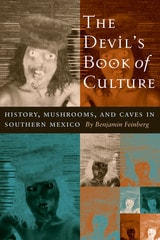
The Devil's Book of Culture
History, Mushrooms, and Caves in Southern MexicoBy Benjamin Feinberg
University of Texas Press, 2003
Since the 1950s, the Sierra Mazateca of Oaxaca, Mexico, has drawn a strange assortment of visitors and pilgrims—schoolteachers and government workers, North American and European spelunkers exploring the region's vast cave system, and counterculturalists from hippies (John Lennon and other celebrities supposedly among them) to New Age seekers, all chasing a firsthand experience of transcendence and otherness through the ingestion of psychedelic mushrooms "in context" with a Mazatec shaman. Over time, this steady incursion of the outside world has significantly influenced the Mazatec sense of identity, giving rise to an ongoing discourse about what it means to be "us" and "them."
In this highly original ethnography, Benjamin Feinberg investigates how different understandings of Mazatec identity and culture emerge through talk that circulates within and among various groups, including Mazatec-speaking businessmen, curers, peasants, intellectuals, anthropologists, bureaucrats, cavers, and mushroom-seeking tourists. Specifically, he traces how these groups express their sense of culture and identity through narratives about three nearby yet strange discursive "worlds"—the "magic world" of psychedelic mushrooms and shamanic practices, the underground world of caves and its associated folklore of supernatural beings and magical wealth, and the world of the past or the past/present relationship. Feinberg's research refutes the notion of a static Mazatec identity now changed by contact with the outside world, showing instead that identity forms at the intersection of multiple transnational discourses.

The Diversity Challenge
Social Identity and Intergroup Relations on the College CampusJames Sidanius
Russell Sage Foundation, 2008

The Drama Therapy Decision Tree, 2nd Edition
Connecting Drama Therapy Interventions to TreatmentEdited by Paige Dickinson and Sally Bailey
Intellect Books, 2024
The Drama Therapy Decision Tree unites therapy interventions with diagnostic information, individual and group processes, psychological distance, the drama therapy pie, and global outcomes. Rather than using a standardized protocol that makes the decisions for the therapist, drama therapy is based on dynamic, embodied, creative action with participants in the here and now. Conscious planning on the part of the drama therapist before the session supports spontaneity and creativity, preparing them to make good therapeutic decisions in the moment during the session.
The authors strive to provide a common language for communicating what drama therapists do and how they do it in order to demystify drama therapy for other mental health and medical professionals. Using the decision tree as a guide, early career drama therapists can move forward confidently and ground their work with participants in an integrated system.
The Drama Therapy Decision Tree
Connecting Drama Therapy Interventions to TreatmentEdited by Paige Dickinson and Sally Bailey
Intellect Books, 2020
The Drama Therapy Decision Tree provides an integrated model for therapeutic decision-making by deconstructing the processes of choosing drama therapy interventions. The authors strive to provide a common language for communicating what drama therapists do in terms of diagnoses and interventions, especially for students and early career professionals in the field.
The book provides a systematic method for drama therapists and drama therapy students to use to determine the most appropriate therapy technique for clients. Paige Dickinson and Sally Bailey have identified and analyzed their own experiences with the task, and here they explain how to put learned theory into practice. In doing so, they provide early career drama therapy professionals a reliable and effective tool for making clinical decisions and offer practitioners a point of reference in addressing the socio-emotional needs of their clients.
The authors explain the basic tools drama therapists use in therapy situations, identify the core healing concepts of the practice, discuss the basic treatment planning process, and explain how these components are used together to identify an appropriate type of intervention for the client. They also offer examples of how this system can be applied to a variety of common diagnoses, and the appendices provide resources to connect drama therapy interventions to global treatment outcomes.
The Dreams of Interpretation
A Century down the Royal RoadCatherine Liu
University of Minnesota Press, 2007
Rethinking the importance of Sigmund Freud’s landmark book The Interpretation of Dreams a century after its publication in 1900, this work brings together psychoanalysts, philosophers, cultural theorists, film and visual theorists, and literary critics from several continents in a compilation of the best clinical and theoretical work being done in psychoanalysis today. It is unique in convening both theory and practice in productive dialogue, reflecting on the encounter between psychoanalysis and the tradition of hermeneutics. Collectively the essays argue that Freud’s legacy has shaped the way we think about not only psychology and the nature of the self but also our understanding of politics, culture, and even thought itself.
Contributors: Willy Apollon, Gifric; Karyn Ball, U of Alberta, Edmonton; Raymond Bellour, Centre National de la Recherche Scientifique; Patricia Gherovici, Philadelphia Lacan Study Group and Seminar; Judith Feher-Gurewich, New York U; Jonathan Kahana, New York U; A. Kiarina Kordela, Macalester College; Pablo Kovalovsky, Clinica de Borde; Jean Laplanche, U of Lausanne; Laura Marcus, U of Sussex; Andrew McNamara, Queensland U of Technology; Claire Nahon; Yun Peng, U of Minnesota; Gerard Pommier, Nantes U; Jean-Michel Rabaté, Princeton U; Laurence A. Rickels, U of California, Santa Barbara; Avital Ronell, New York U; Elke Siegel, Yale U; Rei Terada, U of California, Irvine; Klaus Theweleit, U of Freiburg-im-Breisgau; Paul Verhaege, U of Ghent, Belgium; Silke-Maria Weineck, U of Michigan.
Catherine Liu is associate professor of comparative literature and film and media studies at the University of California, Irvine. John Mowitt is professor and chair of cultural studies and comparative literature at the University of Minnesota. Thomas Pepper is associate professor of cultural studies and comparative literature at the University of Minnesota. Jakki Spicer received her Ph.D. in cultural studies and comparative literature from the University of Minnesota.
The Drug, the Soul, and God
A Catholic Moral Perspective on AntidepressantsJohn-Mark Miravalle
University of Scranton Press, 2010
With The Drug, the Soul, and God, John-Mark Miravelle examines the stance of the Catholic Church regarding the prescription and consumption of antidepressants. After a careful investigation of Catholic moral theology and philosophy, Miravelle argues that treating depression with medication alone fails to address the underlying causes of the depression and does not facilitate the cognitive, interpersonal, and environmental changes necessary for a patient’s long-term health. In addition, he suggests that such medication may deprive sufferers of providential opportunities for personal and communal conversion and sanctification. This controversial volume will engage theologians and medical professionals alike.
The Dysfunctional Library
Challenges and Solutions to Workplace RelationshipsJo Henry
American Library Association, 2017
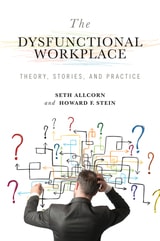
The Dysfunctional Workplace
Theory, Stories, and PracticeSeth Allcorn and Howard F. Stein
University of Missouri Press, 2015
This book explores an aspect of organizational life that is at times difficult to acknowledge and often painful to recall. Stories invite reflection and the development of greater understanding of organizational dynamics. This fresh scholarship provides a theoretical framework for discussion. Throughout this book, Allcorn and Stein utilize a psychoanalytically informed perspective to help readers understand why a leader, colleague or friend behaves in ways that are destructive of others and the organization and provides a basis for organizations to survive and thrive in a dysfunctional workplace.
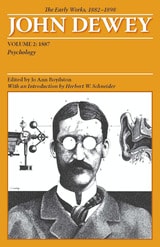
The Early Works of John Dewey, Volume 2, 1882 - 1898
Psychology, 1887John Dewey. Edited by Jo Ann Boydston
Southern Illinois University Press, 2008
With an original publication date of 1887, Psychology us Volume 2 of "The Early Works." It appears first in the series to introduce scholars and general readers to the use of modern textual criticism in a work outside the literary field. Designed as a "scholar's reading edition," the volumes presents the text of Dewey's work as the author intended, clear of editorial footnotes. All apparatus is conveniently arranged in appendix form. As evidence of its wide adoption and use as a college textbook, Psychology had a publishing history of twenty-six printings. For two of the reprintings, Dewey made extensive revisions in content to incorporate developments in the field of psychology as well as in his own thinking. The textual appendices include a thorough tabulation of these changes and detailed evidence for editorial decisions.
In recognition of the high quality and scholarly standards of the textual editing, this edition of Psychology is the first nonliterary work awarded the Seal of the Modern Language Association Center for Editions of American Authors. By applying to the work of a philosopher the procedures used in modern textual editions of American writers such as Hawthorne, the Southern Illinois University Dewey edition is establishing a pattern for future collected editions of the writings of American philosophers.
At the time Dewey wrote Psychology, the relation between psychology and philosophy was in dispute, and he attempted to incorporate the new physiological psychology represented by G. Stanley Hall into the philosophical system and ethics of George Sylvester Morris. He wrote in May, 1886, that he wanted his textbook in psychology to be one "with the greatest possible unity of principle, so that without ceasing to be a psychology, it shall be an introduction to philosophy in general." His goal, expressed in these terms, foreshadowed the direction of his work in the years that followed, with its continuing emphasis on the interrelations among the various disciplines rather than on separate specializations. In his long and fruitful professional career, this was to be his only attempt to treat the whole field of psychology systematically. Although he maintained a lively interest in psychology, that interest was expressed in connection with his writing in other areas such as ethics, education, logic, social philosophy and aesthetics.
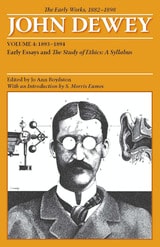
The Early Works of John Dewey, Volume 4, 1882 - 1898
Early Essays and The Study of Ethics, A Syllabus, 1893-1894John Dewey. Edited by Jo Ann Boydston
Southern Illinois University Press, 2008
Volume 4 of’ “The Early Works” series covers the period of Dewey’s last year and one-half at the University of Michigan and his first half-year at the University of Chicago. In addition to sixteen articles the present volume contains Dewey’s reviews of six books and three articles, verbatim reports of three oral statements made by Dewey, and a full-length book, The Study of Ethics.
Like its predecessors in this series, this volume presents a “clear text,” free of interpretive or reference material. Apparatus, including references, corrections, and emendations, is confined to appendix material. Fredson Bowers, the Consulting Textual Editor, has provided an essay on the textual principles and procedures, and Wayne A. R. Leys, Professor of Philosophy at Southern Illinois University, has written an Introduction discussing the relationship between Dewey’s writings of this period and his later work. That Dewey’s scholarship and writing was at an especially high level during 1893 and 1894 may be considered an index to the significance of this two-year period.
The Effect of Praise and Competition on the Persisting Behavior of Kindergarten Children
Theta Wolf
University of Minnesota Press, 1939
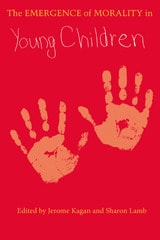
The Emergence of Morality in Young Children
Edited by Jerome Kagan and Sharon Lamb
University of Chicago Press, 1987
"This is a welcome and immensely provocative book. For those of us who favor ethical theorizing done in close proximity to psychology and anthropology, it provides new and illuminating theory and research relevant to perennial debates about the origins of moral sense, its psychological organization, and the objectivity and unity of the moral."—Owen Flanagan, Ethics
The contributors are Augusto Blasi, Lawrence Blum, Judy Dunn, M. Ann Easterbrooks, Carolyn Pope Edwards, Robert Emde, Carol Gilligan, Charles C. Helwig, William F. Johnson, Jerome Kagan, Melanie Killen, Sharon Lamb, Manamohan Mahapatra, Joan G. Miller, Edward Mueller, Richard A. Shweder, Catherine Snow, Elliot Turiel, and Grant Wiggins.

The Emergence of a Euro-American Radical Right
Kaplan, Jeffrey
Rutgers University Press, 1998
The United States and Western Europe are experiencing a new and important cultural and political development: the appearance of a right wing extremist movement that crosses the Atlantic Ocean and transcends national boundaries with as much ease as do e-mail messages on the Internet. In this book, Jeffrey Kaplan and Leonard Weinberg argue that there now exists a set of conditions common to the United States and Western Europe that draws right wing radicals on both sides of the Atlantic closer together. These conditions, based on demographic pressures, social dislocation, economic changes, and technological advances, have set the stage for the formation of a new Euro-American radical right movement whose motives and characteristics differ from the right wing groups of the early twentieth century.
During the first thirty years of this century, radical right wing ideas and material support flowed primarily from Europe to the United States. In recent years, the inspiration for the movement has tended to flow in the opposite direction, with the establishment of various American-based groups, like the Ku Klux Klan and the White Aryan Resistance, on European soil. Kaplan and Weinberg contend that unlike their predecessors contemporary Western right wing groups develop a common identity based more on racial solidarity than on national identity. To support their argument, the authors provide a history of extreme right wing activity in the West and a comprehensive, detailed overview of major figures, groups, and characteristics that comprise the Euro-American radical right. They discuss the role of the Internet in facilitating the transatlantic community and offer personal, inside accounts of people involved in the various movements.
The Emotional Journey of the Alzheimer's Family
Robert B. Santulli and Kesstan Blandin
Dartmouth College Press, 2015
The Emotions of Protest
James M. Jasper
University of Chicago Press, 2018
There is an extensive body of research on protest, but the focus has mostly been on the calculating brain—a byproduct of structuralism and cognitive studies—and less on the feeling brain. James M. Jasper’s work changes that, as he pushes the boundaries of our present understanding of the social world. In The Emotions of Protest, Jasper lays out his argument, showing that it is impossible to separate cognition and emotion. At a minimum, he says, we cannot understand the Tea Party or Occupy Wall Street or pro- and anti-Trump rallies without first studying the fears and anger, moral outrage, and patterns of hate and love that their members feel.
This is a book centered on protest, but Jasper also points toward broader paths of inquiry that have the power to transform the way social scientists picture social life and action. Through emotions, he says, we are embedded in a variety of environmental, bodily, social, moral, and temporal contexts, as we feel our way both consciously and unconsciously toward some things and away from others. Politics and collective action have always been a kind of laboratory for working out models of human action more generally, and emotions are no exception. Both hearts and minds rely on the same feelings racing through our central nervous systems. Protestors have emotions, like everyone else, but theirs are thinking hearts, not bleeding hearts. Brains can feel, and hearts can think.
The Empire of Love
Toward a Theory of Intimacy, Genealogy, and CarnalityElizabeth A. Povinelli
Duke University Press, 2006
For more than twenty years, Povinelli has traveled to the social worlds of indigenous men and women living at Belyuen, a small community in the Northern Territory of Australia. More recently she has moved across communities of alternative progressive queer movements in the United States, particularly those who identify as radical faeries. In this book she traces how liberal binary concepts of individual freedom and social constraint influence understandings of intimacy in these two worlds. At the same time, she describes alternative models of social relations within each group in order to highlight modes of intimacy that transcend a reductive choice between freedom and constraint.
Shifting focus away from identities toward the social matrices out of which identities and divisions emerge, Povinelli offers a framework for thinking through such issues as what counts as sexuality and which forms of intimate social relations result in the distribution of rights, recognition, and resources, and which do not. In The Empire of Love Povinelli calls for, and begins to formulate, a politics of “thick life,” a way of representing social life nuanced enough to meet the density and variation of actual social worlds.

The Enduring Shadow of Racism
Race-Based Trauma in African American PoliticsJas M. Sullivan
University of Michigan Press, 2027
In 1961, James Baldwin was asked about being Black in America. He replied, “to be Black in this country and to be relatively conscious is to be in a rage almost all the time.” His words capture the emotional toll of living in a society where racial discrimination persists. More than six decades later, that toll can now be measured. The Enduring Shadow of Racism seeks to illuminate the deep psychological impact of these experiences, going beyond emotional responses like rage to reveal how race-based trauma symptoms shape the ways African Americans navigate the political world.
Rather than counting how frequently racism occurs or focusing on general emotional states, the book examines the trauma-like symptoms that emerge from those experiences. While political science often measures feelings like anger or fear as short-term reactions to specific events, social issues, or candidates, this book instead uses clinical indicators of trauma to assess the lasting psychological effects of racism, including intrusion, avoidance, and hypervigilance. This distinction highlights the difference between fleeting emotional responses and enduring trauma symptoms, revealing racism’s deeper psychological impact on individuals. In doing so, the book introduces a trauma-based framework for understanding the psychological consequences of racism, specifically the ways race-based trauma shapes political beliefs and behavior.
The Environment for Aging
Interpersonal, Social, and Spatial ContextsRussell A. Ward
University of Alabama Press, 1988
- Despite objective neighborhood problems, older persons express high neighborhood satisfaction. This partly reflects limited residential options, as well as a passive and vicarious spatial experience. The environment is experienced in diverse ways; however, urbanism and personal competence shape the nature and outcomes of person-environment interaction.
- Older persons have relatively robust interpersonal support networks. Perceived sufficiency of contact and support are more salient to morale than are more objective measures of interpersonal support.
- Although attitudes toward other older people are generally favorable, patterns of age identity reflect a detrimental view of aging. There is little evidence that socialization for aging or age-group solidarity make aging “easier” in this regard.
- Older persons exhibit moderate age homogeneity within their interpersonal networks, partly reflecting neighborhood age concentration. Contrary to the apparent benefits of planned age-segregated housing, age homogeneity in neighborhoods and networks does not contribute to well-being.
The Erosion of Childhood
Valerie Polakow
University of Chicago Press, 1992
The Evolution of Imagination
Stephen T. Asma
University of Chicago Press, 2017
Guided by neuroscience, animal behavior, evolution, philosophy, and psychology, Asma burrows deep into the human psyche to look right at the enigmatic but powerful engine that is our improvisational creativity—the source, he argues, of our remarkable imaginational capacity. How is it, he asks, that a story can evoke a whole world inside of us? How are we able to rehearse a skill, a speech, or even an entire scenario simply by thinking about it? How does creativity go beyond experience and help us make something completely new? And how does our moral imagination help us sculpt a better society? As he shows, we live in a world that is only partly happening in reality. Huge swaths of our cognitive experiences are made up by “what-ifs,” “almosts,” and “maybes,” an imagined terrain that churns out one of the most overlooked but necessary resources for our flourishing: possibilities. Considering everything from how imagination works in our physical bodies to the ways we make images, from the mechanics of language and our ability to tell stories to the creative composition of self-consciousness, Asma expands our personal and day-to-day forms of imagination into a grand scale: as one of the decisive evolutionary forces that has guided human development from the Paleolithic era to today. The result is an inspiring look at the rich relationships among improvisation, imagination, and culture, and a privileged glimpse into the unique nature of our evolved minds.
The Exceptional Woman
Elisabeth Vigee-Lebrun and the Cultural Politics of ArtMary D. Sheriff
University of Chicago Press, 1996
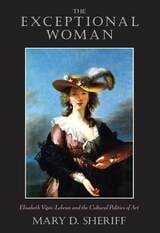
In The Exceptional Woman, Mary D. Sheriff uses Vigée-Lebrun's career to explore the contradictory position of "woman-artist" in the moral, philosophical, professional, and medical debates about women in eighteenth-century France. Paying particular attention to painted and textual self-portraits, Sheriff shows how Vigée-Lebrun's images and memoirs undermined the assumptions about "woman" and the strictures imposed on women.
Engaging ancien-régime philosophy, as well as modern feminism, psychoanalysis, literary theory, and art criticism, Sheriff's interpretations of Vigée-Lebrun's paintings challenge us to rethink the work and the world of this controversial woman artist.
The Expression of the Emotions in Man and Animals
Charles Darwin
University of Chicago Press, 1965
The Fear of Child Sexuality
Young People, Sex, and AgencySteven Angelides
University of Chicago Press, 2019
The Female Complaint
The Unfinished Business of Sentimentality in American CultureLauren Berlant
Duke University Press, 2008
Pairing literary criticism and historical analysis, Berlant explores the territory of this intimate public sphere through close readings of U.S. women’s literary works and their stage and film adaptations. Her interpretation of Uncle Tom’s Cabin and its literary descendants reaches from Harriet Beecher Stowe to Toni Morrison’s Beloved, touching on Shirley Temple, James Baldwin, and The Bridges of Madison County along the way. Berlant illuminates different permutations of the women’s intimate public through her readings of Edna Ferber’s Show Boat; Fannie Hurst’s Imitation of Life; Olive Higgins Prouty’s feminist melodrama Now, Voyager; Dorothy Parker’s poetry, prose, and Academy Award–winning screenplay for A Star Is Born; the Fay Weldon novel and Roseanne Barr film The Life and Loves of a She-Devil; and the queer, avant-garde film Showboat 1988–The Remake. The Female Complaint is a major contribution from a leading Americanist.

The Feminine in Jungian Psychology and in Christian Theology
Ann Belford Ulanov
Northwestern University Press, 1971
Jung focuses on the human person and sees as central its mixture of masculine and feminine elements. In a time when so much is asserted and written about women in society—their rights, roles, identities, needs, and contributions—it is especially significant that Jung asserts the existence of the feminine as a key element, not only in women but in men as well. No less contested are the roles and identities of Christians. Ulanov brings into focus the deep and fascinating connections between theology and psychology.
The Fifth Dimension
An After-School Program Built on DiversityMichael Cole
Russell Sage Foundation, 2006
The First Year Out
Understanding American Teens after High SchoolTim Clydesdale
University of Chicago Press, 2007
Wild parties, late nights, and lots of sex, drugs, and alcohol. Many assume these are the things that define an American teenager’s first year after high school. But the reality is really quite different. As Tim Clydesdale reports in The First Year Out, teenagers generally manage the increased responsibilities of everyday life immediately after graduation effectively. But, like many good things, this comes at a cost.
Tracking the daily lives of fifty young people making the transition to life after high school, Clydesdale reveals how teens settle into manageable patterns of substance use and sexual activity; how they meet the requirements of postsecondary education; and how they cope with new financial expectations. Most of them, we learn, handle the changes well because they make a priority of everyday life. But Clydesdale finds that teens also stow away their identities—religious, racial, political, or otherwise—during this period in exchange for acceptance into mainstream culture. This results in the absence of a long-range purpose for their lives and imposes limits on their desire to understand national politics and global issues, sometimes even affecting the ability to reconstruct their lives when tragedies occur.
The First Year Out is an invaluable resource for anyone caught up in the storm and stress of working with these young adults.