Results by title
1017 books match the query 'Reference' and 221 start with t
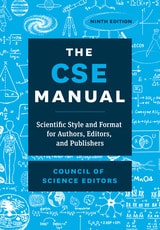
The CSE Manual, Ninth Edition
Scientific Style and Format for Authors, Editors, and PublishersCouncil of Science Editors
University of Chicago Press, 2024
The CSE Manual: Scientific Style and Format for Authors, Editors, and Publishers delivers complete coverage of rules and best practices in scientific publishing. Since 1960, the esteemed Council of Science Editors has offered authoritative guidance on presenting scientific writing more clearly and effectively. In the ninth edition of The CSE Manual, this leading international association offers its most comprehensive recommendations yet, continuing to guide writers and editors through the ever-evolving world of scientific publishing. Available in print and by subscription online.
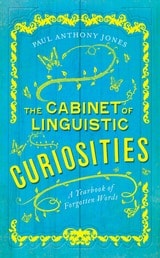
The Cabinet of Linguistic Curiosities
A Yearbook of Forgotten WordsPaul Anthony Jones
University of Chicago Press, 2019
On the day on which flirting was banned in New York City, for instance, you’ll discover why to “sheep’s-eye” someone once meant to look at them amorously. On the day on which a disillusioned San Franciscan declared himself Emperor of the United States, you’ll find the word “mamamouchi,” a term for people who consider themselves more important than they truly are. And on the day on which George Frideric Handel completed his 259-page Messiah after twenty-four days of frenzied work, you’ll see why a French loanword, literally meaning “a small wooden barrow,” is used to refer to an intense period of work undertaken to meet a deadline.
The English language is vast enough to supply us with a word for every occasion—and this linguistic “wunderkammer” is here to prove precisely that. So whatever date this book has found its way into your hands, there’s an entire year’s worth of linguistic curiosities waiting to be found.
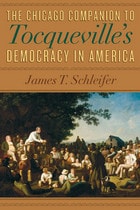
The Chicago Companion to Tocqueville's Democracy in America
James T. Schleifer
University of Chicago Press, 2012
An compact, accessible, authoritative companion to Tocqueville's classic work
One of the greatest books ever to be written on the United States, Democracy in America continues to find new readers who marvel at the lasting insights Alexis de Tocqueville had into our nation and its political culture. The work is, however, as challenging as it is important; its arguments can be complex and subtle, and its sheer length can make it difficult for any reader, especially one coming to it for the first time, to grasp Tocqueville’s meaning. The Chicago Companion to Tocqueville’s “Democracy in America” is the first book written expressly to help general readers and students alike get the most out of this seminal work.
Now James T. Schleifer, an expert on Tocqueville, has provided the background and information readers need in order to understand Tocqueville’s masterwork. In clear and engaging prose, Schleifer explains why Democracy in America is so important, how it came to be written, and how different generations of Americans have interpreted it since its publication. He also presents indispensable insight on who Tocqueville was, his trip to America, and what he meant by equality, democracy, and liberty.
Drawing upon his intimate knowledge of Tocqueville’s papers and manuscripts, Schleifer reveals how Tocqueville’s ideas took shape and changed even in the course of writing the book. At the same time, Schleifer provides a detailed glossary of key terms and key passages, all accompanied by generous citations to the relevant pages in the University of Chicago Press Mansfield/Winthrop translation. The Chicago Companion will serve generations of readers as an essential guide to both the man and his work.
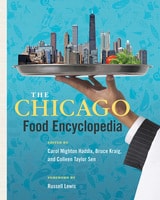
The Chicago Food Encyclopedia
Edited by Carol Mighton Haddix, Bruce Kraig, and Colleen Taylor Sen: Foreword by Russell Lewis
University of Illinois Press, 2017
The Chicago Guide for Freelance Editors
How to Take Care of Your Business, Your Clients, and Yourself from Start-Up to SustainabilityErin Brenner
University of Chicago Press, 2024
You’ve been thinking about shifting into the world of freelance editing, but you don’t know where to start. In a time when editors are seeking greater flexibility in their work arrangements and schedules, freelancing is an increasingly common career option. But deciding to go it alone means balancing the risks with the rewards. From the publisher of The Chicago Manual of Style comes The Chicago Guide for Freelance Editors, the definitive guide to running your business and finding greater control and freedom in your work life.
In this book, Erin Brenner—an industry leader and expert on the business of editorial freelancing—gathers everything you need to know into a single resource. Brenner has run her own successful editing business for over two decades and has helped hundreds of editors launch or improve their businesses through her teaching, blog writing, and coaching.
The Chicago Guide for Freelance Editors will walk you through the entire process of conceiving, launching, and working in a freelance editing business, from deciding on services and rates to choosing the best business structure to thinking through branding and marketing strategies and beyond. This book is ideal for beginning freelancers looking to get set up and land their first clients, but it’s equally valuable to those who have already been freelancing, with detailed coverage of such issues as handling difficult clients and continuing professional development. You’ll find a collection of advice from other successful freelance editors in this guide, as well as an extensive list of resources and tools. In the final and perhaps most important chapter, Brenner teaches you how to care for the key component of the business: yourself.
The Chicago Guide to Collaborative Ethnography
Luke Eric Lassiter
University of Chicago Press, 2005
The Chicago Guide to Collaborative Ethnography presents a historical, theoretical, and practice-oriented road map for this shift from incidental collaboration to a more conscious and explicit collaborative strategy. Luke Eric Lassiter charts the history of collaborative ethnography from its earliest implementation to its contemporary emergence in fields such as feminism, humanistic anthropology, and critical ethnography. On this historical and theoretical base, Lassiter outlines concrete steps for achieving a more deliberate and overt collaborative practice throughout the processes of fieldwork and writing. As a participatory action situated in the ethical commitments between ethnographers and consultants and focused on the co-construction of texts, collaborative ethnography, argues Lassiter, is among the most powerful ways to press ethnographic fieldwork and writing into the service of an applied and public scholarship.
A comprehensive and highly accessible handbook for ethnographers of all stripes, The Chicago Guide to Collaborative Ethnography will become a fixture in the development of a critical practice of anthropology, invaluable to both undergraduates, graduate students, and faculty alike.
The Chicago Guide to College Science Teaching
Terry McGlynn
University of Chicago Press, 2020
For years, McGlynn has been addressing the need for practical and accessible advice for college science teachers through his popular blog Small Pond Science. Now he has gathered this advice as an easy read—one that can be ingested and put to use on short deadline. Readers will learn about topics ranging from creating a syllabus and developing grading rubrics to mastering online teaching and ensuring safety during lab and fieldwork. The book also offers advice on cultivating productive relationships with students, teaching assistants, and colleagues.
The Chicago Guide to Communicating Science
Second EditionScott L. Montgomery
University of Chicago Press, 2017
For more than a decade, The Chicago Guide to Communicating Science has been the go-to reference for anyone who needs to write or speak about their research. Whether a student writing a thesis, a faculty member composing a grant proposal, or a public information officer crafting a press release, Scott Montgomery’s advice is perfectly adaptable to any scientific writer’s needs.
This new edition has been thoroughly revised to address crucial issues in the changing landscape of scientific communication, with an increased focus on those writers working in corporate settings, government, and nonprofit organizations as well as academia. Half a dozen new chapters tackle the evolving needs and paths of scientific writers. These sections address plagiarism and fraud, writing graduate theses, translating scientific material, communicating science to the public, and the increasing globalization of research.
The Chicago Guide to Communicating Science recognizes that writers come to the table with different needs and audiences. Through solid examples and concrete advice, Montgomery sets out to help scientists develop their own voice and become stronger communicators. He also teaches readers to think about their work in the larger context of communication about science, addressing the roles of media and the public in scientific attitudes as well as offering advice for those whose research concerns controversial issues such as climate change or emerging viruses.
More than ever, communicators need to be able to move seamlessly among platforms and styles. The Chicago Guide to Communicating Science’s comprehensive coverage means that scientists and researchers will be able to expertly connect with their audiences, no matter the medium.
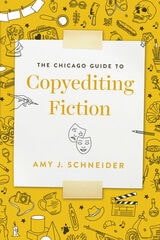
The Chicago Guide to Copyediting Fiction
Amy J. Schneider
University of Chicago Press, 2023
Although The Chicago Manual of Style is widely used by writers and editors of all stripes, it is primarily concerned with nonfiction, a fact long lamented by the fiction community. In this long-awaited book from the publisher of the Manual, Amy J. Schneider, a veteran copyeditor who’s worked on bestsellers across a wide swath of genres, delivers a companionable editing guide geared specifically toward fiction copyeditors—the first book of its type.
In a series of approachable thematic chapters, Schneider offers cogent advice on how to deal with dialogue, voice, grammar, conscious language, and other significant issues in fiction. She focuses on the copyediting tasks specific to fiction—such as tracking the details of fictional characters, places, and events to ensure continuity across the work—and provides a slew of sharp, practicable solutions drawn from her twenty-five years of experience working for publishers both large and small. The Chicago Guide to Copyediting Fiction is sure to prove an indispensable companion to The Chicago Manual of Style and a versatile tool for copyeditors working in the multifaceted landscape of contemporary fiction.
The Chicago Guide to Fact-Checking
Brooke Borel
University of Chicago Press, 2016
Corrections such as this one from the Miami Herald have become a familiar sight for readers, especially as news cycles demand faster and faster publication. While some factual errors can be humorous, they nonetheless erode the credibility of the writer and the organization. And the pressure for accuracy and accountability is increasing at the same time as in-house resources for fact-checking are dwindling. Anyone who needs or wants to learn how to verify names, numbers, quotations, and facts is largely on their own.
Enter The Chicago Guide to Fact-Checking, an accessible, one-stop guide to the why, what, and how of contemporary fact-checking. Brooke Borel, an experienced fact-checker, draws on the expertise of more than 200 writers, editors, and fellow checkers representing the New Yorker, Popular Science, This American Life, Vogue, and many other outlets. She covers best practices for fact-checking in a variety of media—from magazine articles, both print and online, to books and documentaries—and from the perspective of both in-house and freelance checkers. She also offers advice on navigating relationships with writers, editors, and sources; considers the realities of fact-checking on a budget and checking one’s own work; and reflects on the place of fact-checking in today’s media landscape.
“If journalism is a cornerstone of democracy, then fact-checking is its building inspector,” Borel writes. The Chicago Guide to Fact-Checking is the practical—and thoroughly vetted—guide that writers, editors, and publishers need to maintain their credibility and solidify their readers’ trust.
The Chicago Guide to Fact-Checking, Second Edition
Brooke Borel
University of Chicago Press, 2023
- Recognize what information to fact-check
- Identify the quality and ranking of source materials
- Learn to fact-check a variety of media types: newspaper; magazine; social media; public and commercial radio and television, books, films, etc.
- Navigate relationships with editors, writers, and producers
- Recognize plagiarism and fabrication
- Discern conflicting facts, gray areas, and litigious materials
- Learn record keeping best practices for tracking sources
- Test your own fact-checking skills
Over the past few years, fact-checking has been widely touted as a corrective to the spread of misinformation, disinformation, conspiracy theories, and propaganda through the media. “If journalism is a cornerstone of democracy,” says author Brooke Borel, “then fact-checking is its building inspector.”
In The Chicago Guide to Fact-Checking, Borel, an experienced fact-checker, draws on the expertise of more than 200 writers, editors, and fellow checkers representing the New Yorker, Popular Science, This American Life, Vogue, and many other outlets. She covers best practices for editorial fact-checking in a variety of media—from magazine and news articles, both print and online, to books and podcasts—and the perspectives of both in-house and freelance checkers.
In this second edition, Borel covers the evolving media landscape, with new guidance on checking audio and video sources, polling data, and sensitive subjects such as trauma and abuse. The sections on working with writers, editors, and producers have been expanded, and new material includes fresh exercises and advice on getting fact-checking gigs. Borel also addresses the challenges of fact-checking in a world where social media, artificial intelligence, and the metaverse may make it increasingly difficult for everyone—including fact-checkers—to identify false information. The answer, she says, is for everyone to approach information with skepticism—to learn to think like a fact-checker.
The Chicago Guide to Fact-Checking is the practical—and thoroughly vetted—guide that writers, editors, and publishers continue to consult to maintain their credibility and solidify their readers’ trust.
The Chicago Guide to Grammar, Usage, and Punctuation
Bryan A. Garner
University of Chicago Press, 2016
Throughout the book Garner describes standard literary English—the forms that mark writers and speakers as educated users of the language. He also offers historical context for understanding the development of these forms. The section on grammar explains how the canonical parts of speech came to be identified, while the section on syntax covers the nuances of sentence patterns as well as both traditional sentence diagramming and transformational grammar. The usage section provides an unprecedented trove of empirical evidence in the form of Google Ngrams, diagrams that illustrate the changing prevalence of specific terms over decades and even centuries of English literature. Garner also treats punctuation and word formation, and concludes the book with an exhaustive glossary of grammatical terms and a bibliography of suggested further reading and references.
The Chicago Guide to Grammar, Usage, and Punctuation is a magisterial work, the culmination of Garner’s lifelong study of the English language. The result is a landmark resource that will offer clear guidelines to students, writers, and editors alike.
The Chicago Guide to Landing a Job in Academic Biology
C. Ray Chandler, Lorne M. Wolfe, and Daniel E. L. Promislow
University of Chicago Press, 2007
An academic career in the biological sciences typically demands well over a decade of technical training. So it’s ironic that when a scholar reaches the most critical stage in that career—the search for a job following graduate work—he or she receives little or no formal preparation. Instead, students are thrown into the job market with only cursory guidance on how to search for and land a position.
Now there’s help. Carefully, clearly, and with a welcome sense of humor, The Chicago Guide to Landing a Job in Academic Biology leads graduate students and postdoctoral fellows through the perils and rewards of their first job search. The authors—who collectively have for decades mentored students and served on hiring committees—have honed their advice in workshops at biology meetings across the country. The resulting guide covers everything from how to pack an overnight bag without wrinkling a suit to selecting the right job to apply for in the first place. The authors have taken care to make their advice useful to all areas of academic biology—from cell biology and molecular genetics to evolution and ecology—and they give tips on how applicants can tailor their approaches to different institutions from major research universities to small private colleges.
With jobs in the sciences ever more difficult to come by, The Chicago Guide to Landing a Job in Academic Biology is designed to help students and post-docs navigate the tricky terrain of an academic job search—from the first year of a graduate program to the final negotiations of a job offer.
The Chicago Guide to Writing about Multivariate Analysis
Jane E. Miller
University of Chicago Press, 2005
Here, Jane Miller offers much-needed help to academic researchers as well as to analysts who write for general audiences. The Chicago Guide to Writing about Multivariate Analysis brings together advanced statistical methods with good expository writing. Starting with twelve core principles for writing about numbers, Miller goes on to discuss how to use tables, charts, examples, and analogies to write a clear, compelling argument using multivariate results as evidence.
Writers will repeatedly look to this book for guidance on how to express their ideas in scientific papers, grant proposals, speeches, issue briefs, chartbooks, posters, and other documents. Communicating with multivariate models need never appear so complicated again.
The Chicago Guide to Writing about Multivariate Analysis, Second Edition
Jane E. Miller
University of Chicago Press, 2013
The Chicago Guide to Writing about Multivariate Analysis is the book researchers turn to when looking for guidance on how to clearly present statistical results and break through the jargon that often clouds writing about applications of statistical analysis. This new edition features even more topics and real-world examples, making it the must-have resource for anyone who needs to communicate complex research results.
For this second edition, Jane E. Miller includes four new chapters that cover writing about interactions, writing about event history analysis, writing about multilevel models, and the “Goldilocks principle” for choosing the right size contrast for interpreting results for different variables. In addition, she has updated or added numerous examples, while retaining her clear voice and focus on writers thinking critically about their intended audience and objective. Online podcasts, templates, and an updated study guide will help readers apply skills from the book to their own projects and courses.
This continues to be the only book that brings together all of the steps involved in communicating findings based on multivariate analysis—finding data, creating variables, estimating statistical models, calculating overall effects, organizing ideas, designing tables and charts, and writing prose—in a single volume. When aligned with Miller’s twelve fundamental principles for quantitative writing, this approach will empower readers—whether students or experienced researchers—to communicate their findings clearly and effectively.
The Chicago Guide to Writing about Numbers
Jane E. Miller
University of Chicago Press, 2004
Until now. Here, Jane Miller, an experienced research methods and statistics teacher, gives writers the assistance they need. The Chicago Guide to Writing about Numbers helps bridge the gap between good quantitative analysis and good expository writing. Field-tested with students and professionals alike, this book shows writers how to think about numbers during the writing process.
Miller begins with twelve principles that lay the foundation for good writing about numbers. Conveyed with real-world examples, these principles help writers assess and evaluate the best strategy for representing numbers. She next discusses the fundamental tools for presenting numbers—tables, charts, examples, and analogies—and shows how to use these tools within the framework of the twelve principles to organize and write a complete paper.
By providing basic guidelines for successfully using numbers in prose, The Chicago Guide to Writing about Numbers will help writers of all kinds clearly and effectively tell a story with numbers as evidence. Readers and writers everywhere will be grateful for this much-needed mentor.
The Chicago Guide to Writing about Numbers, Second Edition
Jane E. Miller
University of Chicago Press, 2015
Miller, an experienced teacher of research methods, statistics, and research writing, opens by introducing a set of basic principles for writing about numbers, then presents a toolkit of techniques that can be applied to prose, tables, charts, and presentations. Throughout the book, she emphasizes flexibility, showing writers that different approaches work for different kinds of data and different types of audiences.
The second edition adds a chapter on writing about numbers for lay audiences, explaining how to avoid overwhelming readers with jargon and technical issues. Also new is an appendix comparing the contents and formats of speeches, research posters, and papers, to teach writers how to create all three types of communication without starting each from scratch. An expanded companion website includes new multimedia resources such as slide shows and podcasts that illustrate the concepts and techniques, along with an updated study guide of problem sets and suggested course extensions.
This continues to be the only book that brings together all the tasks that go into writing about numbers, integrating advice on finding data, calculating statistics, organizing ideas, designing tables and charts, and writing prose all in one volume. Field-tested with students and professionals alike, this holistic book is the go-to guide for everyone who writes or speaks about numbers.
The Chicago Guide to Your Career in Science
A Toolkit for Students and PostdocsVictor A. Bloomfield and Esam E. El-Fakahany
University of Chicago Press, 2008
Victor A. Bloomfield and Esam E. El-Fakahany, both well-known scientists with extensive experience as teachers, mentors, and administrators, have combined their knowledge to create a guidebook that addresses all of the challenges that today’s scientists-in-training face. They begin by considering the early stages of a career in science: deciding whether or not to pursue a PhD, choosing advisors and mentors, and learning how to teach effectively. Bloomfield and El-Fakahany then explore the skills essential to conducting and presenting research. The Chicago Guide to Your Career in Science offers detailed advice on how to pursue research ethically, manage time, and communicate effectively, especially at academic conferences and with students and peers. Bloomfield and El-Fakahany write in accessible, straightforward language and include a synopsis of key points at the end of each chapter, so that readers can dip into relevant sections with ease.
From students prepping for the GRE to postdocs developing professional contacts to faculty advisors and managers of corporate labs, scientists at every level will find The Chicago Guide to Your Career in Science an unparalleled resource.
The Chicago Handbook for Teachers, Second Edition
A Practical Guide to the College ClassroomAlan Brinkley, Esam El-Fakahany, Betty Dessants, Michael Flamm, Charles B. Forcey, Jr., Mathew L. Ouellett, and Eric Rothschild
University of Chicago Press, 2011
Those who teach college students have extensive training in their disciplines, but unlike their counterparts at the high school or elementary school level, they often have surprisingly little instruction in the craft of teaching itself. The Chicago Handbook for Teachers, Second Edition, is an extraordinarily helpful guide for anyone facing the daunting challenge of putting together a course and delivering it successfully.
Representing teachers at all stages of their careers, the authors, including distinguished historian Alan Brinkley, offer practical advice for almost any situation a new teacher might face, from preparing a syllabus to managing classroom dynamics. Beginning with a nuts and bolts plan for designing a course, the handbook also explains how to lead a discussion, evaluate your own teaching, give an effective lecture, supervise students' writing and research, create and grade exams, and more.
This new edition is thoroughly revised for contemporary concerns, with updated coverage on the use of electronic resources and on the challenge of creating and sustaining an inclusive classroom. A new chapter on science education and new coverage of the distinctive issues faced by adjunct faculty broaden the book’s audience considerably. The addition of sample teaching materials in the appendixes enhances the practical, hands-on focus of the second edition. Its broad scope and wealth of specific tips will make The Chicago Handbook for Teachers useful both as a comprehensive guide for beginning educators and a reference manual for experienced instructors.
The Chicago Manual of Style, 15th Edition
Edited by University of Chicago Press Staff
University of Chicago Press, 2003
In the 1890s, a proofreader at the University of Chicago Press prepared a single sheet of typographic fundamentals intended as a guide for the University community. That sheet grew into a pamphlet, and the pamphlet grew into a book—the first edition of the Manual of Style, published in 1906. Now in its fifteenth edition, The Chicago Manual of Style—the essential reference for authors, editors, proofreaders, indexers, copywriters, designers, and publishers in any field—is more comprehensive and easier to use than ever before.
Those who work with words know how dramatically publishing has changed in the past decade, with technology now informing and influencing every stage of the writing and publishing process. In creating the fifteenth edition of the Manual, Chicago's renowned editorial staff drew on direct experience of these changes, as well as on the recommendations of the Manual's first advisory board, composed of a distinguished group of scholars, authors, and professionals from a wide range of publishing and business environments.
Every aspect of coverage has been examined and brought up to date—from publishing formats to editorial style and method, from documentation of electronic sources to book design and production, and everything in between. In addition to books, the Manual now also treats journals and electronic publications. All chapters are written for the electronic age, with advice on how to prepare and edit manuscripts online, handle copyright and permissions issues raised by technology, use new methods of preparing mathematical copy, and cite electronic and online sources.
A new chapter covers American English grammar and usage, outlining the grammatical structure of English, showing how to put words and phrases together to achieve clarity, and identifying common errors. The two chapters on documentation have been reorganized and updated: the first now describes the two main systems preferred by Chicago, and the second discusses specific elements and subject matter, with examples of both systems. Coverage of design and manufacturing has been streamlined to reflect what writers and editors need to know about current procedures. And, to make it easier to search for information, each numbered paragraph throughout the Manual is now introduced by a descriptive heading.
Clear, concise, and replete with commonsense advice, The Chicago Manual of Style, fifteenth edition, offers the wisdom of a hundred years of editorial practice while including a wealth of new topics and updated perspectives. For anyone who works with words, whether on a page or computer screen, this continues to be the one reference book you simply must have.
What's new in the Fifteenth Edition:
* Updated material throughout to reflect current style, technology, and professional practice
* Scope expanded to include journals and electronic publications
* Comprehensive new chapter on American English grammar and usage by Bryan A. Garner (author of A Dictionary of Modern American Usage)
* Updated and rewritten chapter on preparing mathematical copy
* Reorganized and updated chapters on documentation, including guidance on citing electronic sources
* Streamlined coverage of current design and production processes, with a glossary of key terms
* Descriptive headings on all numbered paragraphs for ease of reference
* New diagrams of the editing and production processes for both books and journals, keyed to chapter discussions
* New, expanded Web site with special tools and features for Manual users at www.chicagomanualofstyle.org.
The Chicago Manual of Style, 16th Edition
Edited by University of Chicago Press Staff
University of Chicago Press, 2010
**The 16th edition of The Chicago Manual of Style has been superseded by the 17th edition.**
While digital technologies have revolutionized the publishing world in the twenty-first century, one thing still remains true: The Chicago Manual of Style is the authoritative, trusted source that writers, editors, and publishers turn to for guidance on style and process. For the sixteenth edition, every aspect of coverage has been reconsidered to reflect how publishing professionals work today. Though processes may change, the Manual continues to offer the clear, well-considered style and usage advice it has for more than a century.
The sixteenth edition offers expanded information on producing electronic publications, including web-based content and e-books. An updated appendix on production and digital technology demystifies the process of electronic workflow and offers a primer on the use of XML markup, and a revised glossary includes a host of terms associated with electronic as well as print publishing. The Chicago system of documentation has been streamlined and adapted for a variety of online and digital sources. Figures and tables are updated throughout the book—including a return to the Manual’s popular hyphenation table and new, comprehensive listings of Unicode numbers for special characters.
The Chicago Manual of Style, 17th Edition
The University of Chicago Press Editorial Staff
University of Chicago Press, 2017
In the seven years since the previous edition debuted, we have seen an extraordinary evolution in the way we create and share knowledge. This seventeenth edition of The Chicago Manual of Style has been prepared with an eye toward how we find, create, and cite information that readers are as likely to access from their pockets as from a bookshelf. It offers updated guidelines on electronic workflows and publication formats, tools for PDF annotation and citation management, web accessibility standards, and effective use of metadata, abstracts, and keywords. It recognizes the needs of those who are self-publishing or following open access or Creative Commons publishing models. The citation chapters reflect the ever-expanding universe of electronic sources—including social media posts and comments, private messages, and app content—and also offer updated guidelines on such issues as DOIs, time stamps, and e-book locators.
Other improvements are independent of technological change. The chapter on grammar and usage includes an expanded glossary of problematic words and phrases and a new section on syntax as well as updated guidance on gender-neutral pronouns and bias-free language. Key sections on punctuation and basic citation style have been reorganized and clarified. To facilitate navigation, headings and paragraph titles have been revised and clarified throughout. And the bibliography has been updated and expanded to include the latest and best resources available.
This edition continues to reflect expert insights gathered from Chicago’s own staff and from an advisory board of publishing experts from across the profession. It also includes suggestions inspired by emails, calls, and even tweets from readers. No matter how much the means of communication change, The Chicago Manual of Style remains the ultimate resource for those who care about getting the details right.
The Child
An Encyclopedic CompanionRichard A. Shweder, Editor in Chief
University of Chicago Press, 2009
The Child: An Encyclopedic Companion offers both parents and professionals access to the best scholarship from all areas of child studies in a remarkable one-volume reference.
Bringing together contemporary research on children and childhood from pediatrics, child psychology, childhood studies, education, sociology, history, law, anthropology, and other related areas, The Child contains more than 500 articles—all written by experts in their fields and overseen by a panel of distinguished editors led by anthropologist Richard A. Shweder. Each entry provides a concise and accessible synopsis of the topic at hand. For example, the entry “Adoption” begins with a general definition, followed by a detailed look at adoption in different cultures and at different times, a summary of the associated mental and developmental issues that can arise, and an overview of applicable legal and public policy.
While presenting certain universal facts about children’s development from birth through adolescence, the entries also address the many worlds of childhood both within the United States and around the globe. They consider the ways that in which race, ethnicity, gender, socioeconomic status, and cultural traditions of child rearing can affect children’s experiences of physical and mental health, education, and family. Alongside the topical entries, The Child includes more than forty “Imagining Each Other” essays, which focus on the particular experiences of children in different cultures. In “Work before Play for Yucatec Maya Children,” for example, readers learn of the work responsibilities of some modern-day Mexican children, while in “A Hindu Brahman Boy Is Born Again,” they witness a coming-of-age ritual in contemporary India.
Compiled by some of the most distinguished child development researchers in the world, The Child will broaden the current scope of knowledge on children and childhood. It is an unparalleled resource for parents, social workers, researchers, educators, and others who work with children.

The Collected Letters of Thomas and Jane Welsh Carlyle
April–December 1849: April–December 1849, Volume 24Clyde de L. Ryals and Kenneth J. Fielding
Duke University Press, 0
The Collected Letters of Thomas and Jane Welsh Carlyle
July 1847–March 1848, Volume 22Clyde de L. Ryals and Kenneth J. Fielding
Duke University Press, 0
The Collected Works of John Dewey, Index
1882 - 1953John Dewey. Edited by Jo Ann Boydston
Southern Illinois University Press, 1991
This cumulative index to the thirty-seven volumes of The Collected Works of John Dewey, 1882–1953, is an invaluable guide to The Collected Works.
The Collected Works Contents incorporates all the tables of contents of Dewey’s individual volumes, providing a chronological, volume-by-volume overview of every item in The Early Works, The Middle Works, and The Later Works.
The Title Index lists alphabetically by shortened titles and by key words all items in The Collected Works. Articles republished in the collections listed above are also grouped under the titles of those books.
The Subject Index, which includes all information in the original volume indexes, expands that information by adding the authors of introductions to each volume, authors and titles of books Dewey reviewed or introduced, authors of appendix items, and relevant details from the source notes.
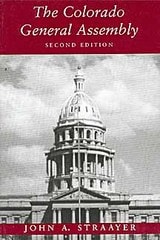
The Colorado General Assembly, Second Edition
John A. Straayer
University Press of Colorado, 2000
The Colorado General Assembly is based on years of author John Straayer's first-hand observations, his review of original documents and secondary sources, and hundred of conversations with lawmakers, lobbyists, members of the legislative staff, executive branch personnel, and journalists.
In this lively, informative book, Straayer describes the formal structure of the Legislature, as well as the all-important process by which bills become or do not become law, and how the power center within the institution can move or kill legislative initiatives. He also examines the clout of the lobby corps, which outnumbers the elected lawmakers five to one; the way the Legislature dominates the budget process; and the manner by which divisions between the two parties, the two houses, and the legislative and executive branches impact the conduct of the public's business under Colorado's gold dome.
The Colorado General Assembly fills a major gap in our knowledge of state government. It will appeal to students and practitioners of politics as well as to those with general interest in civic life.
The Community College Library
Reference and InstructionJanet Pinkley
American Library Association, 2022
Community college librarians are engaged in meaningful work designing and delivering library programs and services that meet the needs of their diverse populations and support student learning. The Community College Library series is meant to lift the voices of community college librarians and highlight their creativity, tenacity, and commitment to students.
The Community College Library: Reference and Instruction collects research, programs, and new approaches to reference and instruction implemented by community college librarians around the U.S. Chapters include sample activities and materials and cover topics including using race-centered and trauma-informed practices in the reference interview; incorporating online workshops into an existing information literacy program; and using student-driven pedagogy to navigate the early stages of research.
This book demonstrates the innovative and replicable ways community college librarians are meeting the information and research needs of their college population both in person and remotely, all while providing a safe, inclusive space for students to explore and learn.
The Complete Anti-Federalist
Edited by Herbert J. Storing
University of Chicago Press, 2007
The Complete Anti-Federalist, first published in 1981, contains an unprecedented collection of all the significant pamphlets, newspaper articles and letters, essays, and speeches that were written in opposition to the Constitution during the ratification debate. Storing’s work includes introductions to each entry, along with his own consideration of the Anti-Federalist thought.
This new three-volume set includes all the contents of the original seven-volume publication in a convenient, manageable format.
“A work of magnificent scholarship. Publication of these volumes is a civic event of enduring importance.”—Leonard W. Levy, New York Times Book Review

The Complete Works of Robert Browning, Volume IX
With Variant Readings and AnnotationsRobert Browning
Ohio University Press, 1990
The Concise Greek-English Lexicon of the New Testament
Frederick William Danker
University of Chicago Press, 2009
Frederick William Danker, a world-renowned scholar of New Testament Greek, is widely acclaimed for his 2000 revision of Walter Bauer’s A Greek-English Lexicon of the New Testament and Other Early Christian Literature. With more than a quarter of a million copies in print, it is considered the finest dictionary of its kind.
Danker’s Concise Greek-English Lexicon of the New Testament will prove to be similarly invaluable to ministers, seminarians, translators, and students of biblical Greek. Unlike other lexica of the Greek New Testament, which give only brief glosses for headwords, The Concise Greek-English Lexicon offers extended definitions or explanations in idiomatic English for all Greek terms.
Each entry includes basic etymological information, short renderings, information on usage, and plentiful biblical references. Greek terms that could have different English definitions, depending on context, are thoughtfully keyed to the appropriate passages. An overarching aim of The Concise Greek-English Lexicon is to assist the reader in recognizing the broad linguistic and cultural context for New Testament usage of words.
The Concise Greek-English Lexicon retains all the acclaimed features of A Greek-English Lexicon in a succinct and affordable handbook, perfect for specialists and nonspecialists alike.
The Condensed ESL Writer's Handbook, 2nd Ed.
Janine Carlock, Maeve Eberhardt, Jaime Horst, and Lionel Menasche
University of Michigan Press, 2018
The Condensed version is concise and easily navigated; is accessible with clear and direct explanatory language; and limits its focus to the grammatical and style aspects of writing and reference material.
The 2nd Edition of The Condensed ESL Writer’s Handbook has been revised to better align with the exercises in Workbook for The ESL Writer’s Handbook, 2nd Ed.(978-0-472-03726-1). It also features an expanded Section 1 (to include more on pre-writing, drafting, revising, and editing), updated exercise items, and completely revised APA and MLA style guides (featuring MLA, 8th Edition). Overall, this handbook has these special features:
- The topic selection is based on ESL writers’ needs as observed by the authors over many years.
- The coverage of topics is more complete than the limited amount usually provided for ESL writers in first language or L1 handbooks.
- The explanatory language is appropriate for ESL students, in contrast to the more complex and idiomatic language of other English handbooks.
- Many of the text examples and exercise sentences were written by ESL students to help users realize that they too can become effective writers.
The Craft of Research
Wayne C. Booth, Gregory G. Colomb, and Joseph M. Williams
University of Chicago Press, 1995
This book is organized into four parts. Part One is a spirited introduction to the distinctive nature, values, and protocols of research. Part Two demystifies the art of discovering a topic. It outlines a wide range of sources, among them personal interests and passions. Parts Three and Four cover the essentials of argument—how to make a claim and support it—and ways to outline, draft, revise, rewrite, and polish the final report. Part Three is a short course in the logic, structure, uses, and common pitfalls of argumentation. The writing chapters in Part Four show how to present verbal and visual information effectively and how to shape sentences and paragraphs that communicate with power and precision.
"A well-constructed, articulate reminder of how important fundamental questions of style and approach, such as clarity and precision, are to all research."—Times Literary Supplement
The Craft of Research, 2nd edition
Wayne C. Booth, Gregory G. Colomb, and Joseph M. Williams
University of Chicago Press, 2003
Like its predecessor, this new edition reflects the way researchers actually work: in a complex circuit of thinking, writing, revising, and rethinking. It shows how each part of this process influences the others and how a successful research report is an orchestrated conversation between a researcher and a reader. Along with many other topics, The Craft of Research explains how to build an argument that motivates readers to accept a claim; how to anticipate the reservations of thoughtful yet critical readers and to respond to them appropriately; and how to create introductions and conclusions that answer that most demanding question, "So what?"
Celebrated by reviewers for its logic and clarity, this popular book retains its five-part structure. Part 1 provides an orientation to the research process and begins the discussion of what motivates researchers and their readers. Part 2 focuses on finding a topic, planning the project, and locating appropriate sources. This section is brought up to date with new information on the role of the Internet in research, including how to find and evaluate sources, avoid their misuse, and test their reliability.
Part 3 explains the art of making an argument and supporting it. The authors have extensively revised this section to present the structure of an argument in clearer and more accessible terms than in the first edition. New distinctions are made among reasons, evidence, and reports of evidence. The concepts of qualifications and rebuttals are recast as acknowledgment and response. Part 4 covers drafting and revising, and offers new information on the visual representation of data. Part 5 concludes the book with an updated discussion of the ethics of research, as well as an expanded bibliography that includes many electronic sources.
The new edition retains the accessibility, insights, and directness that have made The Craft of Research an indispensable guide for anyone doing research, from students in high school through advanced graduate study to businesspeople and government employees. The authors demonstrate convincingly that researching and reporting skills can be learned and used by all who undertake research projects.
New to this edition:
Extensive coverage of how to do research on the internet, including how to evaluate and test the reliability of sources
New information on the visual representation of data
Expanded bibliography with many electronic sources
The Craft of Research, Fifth Edition
Wayne C. Booth, Gregory G. Colomb, Joseph M. Williams, Joseph Bizup, and William T. FitzGerald
University of Chicago Press, 2024
With more than a million copies sold since its first publication, The Craft of Research has helped generations of researchers at every level—from high-school students and first-year undergraduates to advanced graduate students to researchers in business and government. Conceived by seasoned researchers and educators Wayne C. Booth, Gregory G. Colomb, and Joseph M. Williams, this fundamental work explains how to choose significant topics, pose genuine and productive questions, find and evaluate sources, build sound and compelling arguments, and convey those arguments effectively to others.
While preserving the book’s proven approach to the research process, as well as its general structure and accessible voice, this new edition acknowledges the many ways research is conducted and communicated today. Thoroughly revised by Joseph Bizup and William T. FitzGerald, it recognizes that research may lead to a product other than a paper—or no product at all—and includes a new chapter about effective presentations. It features fresh examples from a variety of fields that will appeal to today’s students and other readers. It also accounts for new technologies used in research and offers basic guidelines for the appropriate use of generative AI. And it ends with an expanded chapter on ethics that addresses researchers’ broader obligations to their research communities and audiences as well as systemic questions about ethical research practices.
This new edition will be welcomed by a new and more diverse generation of researchers.
The Craft of Research, Fourth Edition
Wayne C. Booth, Gregory G. Colomb, Joseph M. Williams, Joseph Bizup and William T. FitzGerald
University of Chicago Press, 2016
With more than three-quarters of a million copies sold since its first publication, The Craft of Research has helped generations of researchers at every level—from first-year undergraduates to advanced graduate students to research reporters in business and government—learn how to conduct effective and meaningful research. Conceived by seasoned researchers and educators Wayne C. Booth, Gregory G. Colomb, and Joseph M. Williams, this fundamental work explains how to find and evaluate sources, anticipate and respond to reader reservations, and integrate these pieces into an argument that stands up to reader critique.
The fourth edition has been thoroughly but respectfully revised by Joseph Bizup and William T. FitzGerald. It retains the original five-part structure, as well as the sound advice of earlier editions, but reflects the way research and writing are taught and practiced today. Its chapters on finding and engaging sources now incorporate recent developments in library and Internet research, emphasizing new techniques made possible by online databases and search engines. Bizup and FitzGerald provide fresh examples and standardized terminology to clarify concepts like argument, warrant, and problem.
Following the same guiding principle as earlier editions—that the skills of doing and reporting research are not just for elite students but for everyone—this new edition retains the accessible voice and direct approach that have made The Craft of Research a leader in the field of research reference. With updated examples and information on evaluation and using contemporary sources, this beloved classic is ready for the next generation of researchers.
- Over 700,000 copies sold
- Every step of the academic research process, from the “why” of research through forming the research question, formulating an argument, and revision
- Helpful chapters on research ethics, formulation of writing assignments for teachers, and an appendix of research tools for both off and online
- Clear advice on building a strong argument in an age of false claims
- Careful attention to both the how and why of objective research-based writing
- Easy to follow, time-tested advice
- A must-have for any college or graduate student
The Craft of Research, Third Edition
Wayne C. Booth, Gregory G. Colomb, and Joseph M. Williams
University of Chicago Press, 2008
The Craft of Science Writing
Selections from “The Open Notebook,” Expanded EditionEdited by Siri Carpenter
University of Chicago Press, 2024
Science writing has never been so critical to our world, and the demands on writers have never been greater. On any given day, a writer might need to explain the details of AI, analyze developments in climate change research, or serve as a watchdog helping to ensure the integrity of the scientific enterprise. At the same time, writers must spin tales that hook and keep readers, despite the endless other demands on their attention. How does one do it? The Craft of Science Writing is the authoritative guide.
With pieces curated from the archives of science writers’ go-to online resource, The Open Notebook, this book explores strategies for finding and shaping story ideas, pitching editors, and building a specialty in science writing. It delves into fundamental skills that every science writer must learn, including planning their reporting; identifying, interviewing, and quoting sources; organizing interview notes; and crafting stories that engage and inform audiences. This expanded edition includes new introductory material and nine new essays focusing on such topics as how to establish a science beat, how to find and use quotes, how to critically evaluate scientific claims, how to use social media for reporting, and how to do data-driven reporting. In addition, there are essays on inclusivity in science writing, offering strategies for eradicating ableist language from stories, working with sensitivity readers, and breaking into English-language media for speakers of other languages.
Through interviews with leading journalists offering behind-the-scenes inspiration as well as in-depth essays on the craft offering practical advice, readers will learn how the best science stories get made, from conception to completion.
Contributors:
Humberto Basilio, Siri Carpenter, Jeanne Erdmann, Dan Ferber, Tina Casagrand Foss, Geoffrey Giller, Laura Helmuth, Jane C. Hu, Alla Katsnelson, Roxanne Khamsi, Betsy Ladyzhets, Jyoti Madhusoodanan, Amanda Mascarelli, Robin Meadows, Kate Morgan, Tiên Nguyễn, Michelle Nijhuis, Aneri Pattani, Rodrigo Pérez Ortega, Mallory Pickett, Kendall Powell, Tasneem Raja, Sandeep Ravindran, Marion Renault, Julia Rosen, Megha Satyanarayana, Christina Selby, Knvul Sheikh, Abdullahi Tsanni, Alexandra Witze, Katherine J. Wu, Wudan Yan, Ed Yong, Rachel Zamzow, Sarah Zhang, and Carl Zimmer
The Creative Writer's Survival Guide
Advice from an Unrepentant NovelistJohn McNally
University of Iowa Press, 2010
Beginning with “The Writer’s Wonderland—Or: A Warning” and ending with “You’ve Published a Book—Now What?” The Creative Writer’s Survival Guide is a must-read for creative-writing students and teachers, conference participants, and aspiring writers of every stamp. Directed primarily at fiction writers but suitable for writers of all genres, John McNally’s guide is a comprehensive, take-no-prisoners blunt, highly idiosyncratic, and delightfully subjective take on the writing life.
McNally has earned the right to dispense advice on this subject. He has published three novels, two collections of short fiction, and hundreds of individual stories and essays. He has edited six anthologies and worked with editors at university presses, commercial houses, and small presses. He has earned three degrees, including an MFA from the Iowa Writers’ Workshop, and taught writing to thousands of students at nine different universities. But he has received far more rejections than acceptances, has endured years of underpaid adjunct work, and is presently hard at work on a novel for which he has no guarantee of publication. In other words, he’s been at the writing game long enough to rack up plenty of the highs and lows that translate into an invaluable guide for anyone who wants to become a writer or anyone who is already a writer but doesn’t know how to take the next step toward the writing life.
In the sections The Decision to Become a Writer, Education and the Writer, Getting Published, Publicity, Employment for Writers, and The Writer’s Life, McNally wrestles with writing degrees and graduate programs, the nuts and bolts of agents and query letters and critics, book signings and other ways to promote your book, alcohol and other home remedies, and jobs for writers from adjunct to tenure-track. Chapters such as “What Have You Ever Done That’s Worth Writing About?” “Can Writing Be Taught?” “Rejection: Putting It in Perspective,” “Writing as a Competitive Sport,” “Seven Types of MLA Interview Committees,” “Money and the Writer,” and the all-important “Talking about Writing vs. Writing” cover a vast range of writerly topics from learning your craft to making a living at it. McNally acts as the writer’s friendly drill sergeant, relentlessly honest but bracingly cheerful as he issues his curmudgeonly marching orders. Alternately cranky and philosophical, full of to-the-point anecdotes and honest advice instead of wonkish facts and figures, The Creative Writer’s Survival Guide is a snarky, truthful, and immensely helpful map to being a writer in today’s complex world.
The Curious Map Book
Ashley Baynton-Williams
University of Chicago Press, 2015
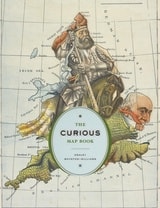
Over the centuries, maps have served many varied purposes; far from mere guides for reaching a destination, they are unique artistic forms, aides in planning commercial routes, literary devices for illuminating a story. Accuracy—or inaccuracy—of maps has been the make-or-break factor in countless military battles throughout history. They have graced the walls of homes, bringing prestige and elegance to their owners. They track the mountains, oceans, and stars of our existence. Maps help us make sense of our worlds both real and imaginary—they bring order to the seeming chaos of our surroundings.
With The Curious Map Book, Ashley Baynton-Williams gathers an amazing, chronologically ordered variety of cartographic gems, mainly from the vast collection of the British Library. He has unearthed a wide array of the whimsical and fantastic, from maps of board games to political ones, maps of the Holy Land to maps of the human soul. In his illuminating introduction, Baynton-Williams also identifies and expounds upon key themes of map production, peculiar styles, and the commerce and collection of unique maps. This incredible volume offers a wealth of gorgeous illustrations for anyone who is cartographically curious.
The Daily Sherlock Holmes
A Year of Quotes from the Case-Book of the World’s Greatest DetectiveArthur Conan Doyle
University of Chicago Press, 2019
“Dr. Watson, Mr. Sherlock Holmes,” said Stamford, introducing us.
“How are you?” he said cordially, gripping my hand with a strength for which I should hardly have given him credit. “You have been in Afghanistan, I perceive.”
“How on earth did you know that?” I asked in astonishment.
“Never mind,” said he, chuckling to himself.
At that first sight of Watson, Sherlock Holmes made brilliant deductions. But even he couldn’t know that their meeting was inaugurating a friendship that would make himself and the good Doctor cultural icons, as popular as ever more than a century after their 1887 debut. Through four novels and fifty-six stories, Arthur Conan Doyle led the pair through dramatic adventures that continue to thrill readers today, offering an unmatched combination of skillful plotting, period detail, humor, and distinctive characters. For a Holmes fan, there are few pleasures comparable to returning to his richly imagined world—the gaslit streets of Victorian London, the companionable clutter of 221B Baker Street, the reliable fuddlement (and nerves of steel) of Watson, the perverse genius of Holmes himself.
It’s all there in The Daily Sherlock Holmes, the perfect bedside companion for fans of the world’s only consulting detective. Within these pages readers will find a quotation for every day of the year, drawn from across the Conan Doyle canon. Beloved characters and familiar lines recall favorite stories and scenes, while other passages remind us that Conan Doyle had a way with description and a ready wit. Moriarty and Mycroft, Lestrade and Mrs. Hudson; the Hound, the Red-Headed League, the Speckled Band, and the dread Reichenbach Falls—it’s all here, anchored, of course, in that unforgettable duo of Holmes and Watson. No book published this year will bring a Holmes fan more pleasure. Come, readers. The game is afoot.
The Dance of Everyday Movement
A Developmental Framework for Whole-Body IntegrationLuc Vanier, Rebecca Nettl-Fiol, and Elizabeth Johnson
University of Illinois Press, 2026
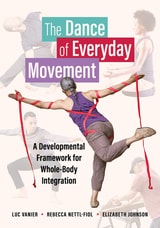
Everyone can have their own movement practice. Building on Dance and the Alexander Technique, Luc Vanier, Rebecca Nettl-Fiol, and Elizabeth Johnson present an innovative method for observing and analyzing movement in daily life, the performing arts, and therapeutic contexts.
The authors’ Framework for Integration is a multifaceted approach to understanding and refining human movement. Core principles—such as psychophysical unity, developmental movement, and attention to breath—reveal how small changes in awareness and intent transform activities ranging from yoga and Tai Chi to sitting meditation, from gardening and sports to playing a musical instrument. Real-world applications highlight how individuals of all abilities and ages can reduce pain, improve coordination, and discover more efficient, joyful movement. Guest contributors detail how these concepts enhance artistic expression, interventions for trauma or chronic pain, and everyday tasks like driving and housework.
Engaging and aimed at non-specialists, The Dance of Everyday Movement invites practitioners from all walks of life to embrace ongoing development, resilience, and a more embodied way of living.
The Design of Books
An Explainer for Authors, Editors, Agents, and Other Curious ReadersDebbie Berne
University of Chicago Press, 2024
Design is central to the appeal, messaging, and usefulness of books, but to most readers, it’s mysterious or even invisible. Through interiors as well as covers, designers provide structure and information that shape the meaning and experience of books. In The Design of Books, Debbie Berne shines a light on the conventions and processes of her profession, revealing both the aesthetic and market-driven decisions designers consider to make books readable and beautiful. In clear, unstuffy language, Berne reveals how books are put together, with discussions of production considerations, typography and fonts, page layouts, use of images and color, special issues for ebooks, and the very face of each book: the cover.
The Design of Books speaks to readers and directly to books’ creators—authors, editors, and other publishing professionals—helping them to become more informed partners in the design of their projects. Berne lays out the practical steps at each stage of the design process, providing insight into who does what when and offering advice for authors on how to be effective advocates for their ideas while also letting go and trusting their manuscripts with teams of professionals. She includes guidance as well for self-publishing authors, including where to find a designer, what to expect from that relationship, and how to art direct your own book.
Throughout, Berne teaches how understanding the whats, hows, and whys of book design heightens our appreciation of these cherished objects and helps everyone involved in the process to create more functional, desirable, and wonderful books.
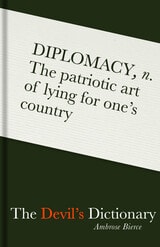
The Devil's Dictionary
Ambrose Bierce
Bodleian Library Publishing, 2018
A contemporary of Mark Twain, Bierce brought his biting humor to bear on spoof definitions of everyday words, writing deliberate mistranslations of the vocabulary of the establishment, the church, and the politics of his day, and shining a sardonic light on hypocrisy and deception. These columns formed the beginnings of a dictionary, first published in 1906 as The Cynic’s Word Book, which stopped at the letter L, and five years later as a full A–Z text known as The Devil's Dictionary. More than one hundred years later, Bierce’s redefinitions still give us pause for thought: interpreting reporter, for example, as “a writer who guesses his way to the truth and dispels it with a tempest of words”; un-american as “wicked, intolerable, heathenish”; and politics as “the conduct of public affairs for private advantage.” This timely new edition of Bierce’s irreverent and provocative dictionary is the perfect gift for misanthropes and word lovers alike.
The Dissertation-to-Book Workbook
Exercises for Developing and Revising Your Book ManuscriptKatelyn E. Knox and Allison Van Deventer
University of Chicago Press, 2023
So, you’ve written a dissertation. Congratulations! But how do you turn it into a book? Even if you know what to do when revising your dissertation, do you know how to do those things? This workbook by Katelyn E. Knox and Allison Van Deventer, creators of the successful online Dissertation-to-Book Boot Camp, offers a series of manageable, concrete steps with exercises to help you revise your academic manuscript into publishable book form.
The Dissertation-to-Book Workbook uses targeted exercises and prompts to take the guesswork out of writing a book. You’ll clarify your book’s core priorities, pinpoint your organizing principle, polish your narrative arc, evaluate your evidence, and much more. Using what this workbook calls “book questions and chapter answers,” you’ll figure out how to thread your book’s main ideas through its chapters. Then, you’ll assemble an argument, and finally, you’ll draft any remaining material and revise the manuscript. And most important, by the time you complete the workbook, you’ll have confidence that your book works as a book—that it’s a cohesive, focused manuscript that tells the story you want to tell.
Indispensible to anyone with an academic manuscript in progress, the prompts, examples, checklists, and activities will give you confidence about all aspects of your project—that it is structurally sound, coherent, free of the hallmarks of “dissertationese," and ready for submission to an academic publisher.
The Dramatic Writer's Companion, Second Edition
Tools to Develop Characters, Cause Scenes, and Build StoriesWill Dunne
University of Chicago Press, 2017
Having spent decades working with dramatists to refine and expand their existing plays and screenplays, Dunne effortlessly blends condensed dramatic theory with specific action steps—over sixty workshop-tested exercises that can be adapted to virtually any individual writing process and dramatic script. Dunne’s in-depth method is both instinctual and intellectual, allowing writers to discover new actions for their characters and new directions for their stories. The exercises can be used by those just starting the writing process and by those who have scripts already in development. With each exercise rooted in real-life issues from Dunne’s workshops, readers of this companion will find the combined experiences of more than fifteen hundred workshops in a single guide.
This second edition is fully aligned with a brand-new companion book, Character, Scene, and Story, which offers forty-two additional activities to help writers more fully develop their scripts. The two books include cross-references between related exercises, though each volume can also stand alone.
No ordinary guide to plotting, this handbook centers on the principle that character is key. “The character is not something added to the scene or to the story,” writes Dunne. “Rather, the character is the scene. The character is the story.” With this new edition, Dunne’s remarkable creative method will continue to be the go-to source for anyone hoping to take their story to the stage.
The Dramatic Writer's Companion
Tools to Develop Characters, Cause Scenes, and Build StoriesWill Dunne
University of Chicago Press, 2009
Moss Hart once said that you never really learn how to write a play; you only learn how to write this play. Crafted with that adage in mind, The Dramatic Writer’s Companion is designed to help writers explore their own ideas in order to develop the script in front of them. No ordinary guide to plotting, this handbook starts with the principle that character is key. “The character is not something added to the scene or to the story,” writes author Will Dunne. “Rather, the character is the scene. The character is the story.”
Having spent decades working with dramatists to refine and expand their existing plays and screenplays, Dunne effortlessly blends condensed dramatic theory with specific action steps—over sixty workshop-tested exercises that can be adapted to virtually any individual writing process and dramatic script. Dunne’s in-depth method is both instinctual and intellectual, allowing writers to discover new actions for their characters and new directions for their stories.
Dunne’s own experience is a crucial element of this guide. His plays have been selected by the Eugene O’Neill Theatre Center for three U.S. National Playwrights Conferences and have earned numerous honors, including a Charles MacArthur Fellowship, four Bay Area Theatre Critics Circle Awards, and two Drama-Logue Playwriting Awards. Thousands of individuals have already benefited from his workshops, and The Dramatic Writer’s Companion promises to bring his remarkable creative method to an even wider audience.
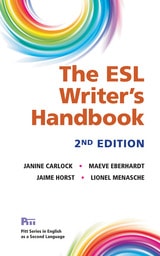
The ESL Writer's Handbook, 2nd Ed.
Janine Carlock, Maeve Eberhardt, Jaime Horst, Lionel Menasche
University of Michigan Press, 2018
The spiral-bound Handbook complements a student writer’s dictionary, thesaurus, and grammar reference book. It would be suitable as a text for an advanced ESL writing course when used together with the companion Workbook (978-0-472-03726-1).
The new edition features significant revisions to Sections 3 and 4; in particular, both APA and MLA style guides have been updated and new sample papers for each are included. The new edition includes new and revised exercises and many new samples of student writing.
Like its predecessor, the 2nd Edition has these special features:
- The topic selection is based on ESL writers’ needs as observed by the authors over many years.
- The coverage of topics is more complete than the limited amount usually provided for ESL writers in first language or L1 handbooks.
- The explanatory language is appropriate for ESL students, in contrast to the more complex and idiomatic language of other English handbooks.
- Many of the examples of paragraphs, essays, research papers, and exercise sentences were written by ESL students to help users realize that they too can become effective writers.
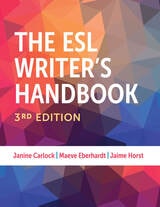
The ESL Writer's Handbook, 3rd Edition
Janine Carlock, Maeve Eberhardt, Jaime Horst
University of Michigan Press, 2025
In addition to updated style guides, sample student papers, writing examples, and exercises, the 3rd edition highlights “tech tips” on different technologies that may be useful to students, explains inclusive language, and expands the section on taking notes as a research tool.
With this handbook, students will learn:
- The concept of genre and apply it to unpacking assignments and writing effectively.
- The process for generating ideas, structuring those ideas into a paper, and checking over a paper before turning it in.
- Five common patterns for organizing an academic essay: narrative, process, comparison/contrast, cause and effect, and argument.
- Different steps for creating a good research paper, including major citation styles.
- Guidance for addressing the grammar, punctuation, and style issues most often encountered by international students writing in English.
- How to differentiate between other types of writing U.S. undergraduate students are expected to complete, such as emails, resumes, cover letters, and personal statements.
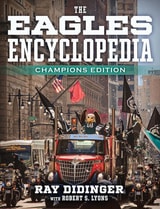
The Eagles Encyclopedia
Champions EditionRay Didinger
Temple University Press, 2018
Ray Didinger, like every die-hard Eagles fan, has been waiting since the 1960 NFL Title for the Birds to win the Super Bowl. In this “Champions Edition” of The Eagles Encyclopedia, beloved Eagles commentator Didinger celebrates his team and their remarkable, against-all-odds season that ended at Super Bowl LII, where they claimed victory over the Patriots in Minnesota.
Didinger updates his best-selling book The Eagles Encyclopedia with the departure of Coach Chip Kelly and the dawn of the Doug Pederson era. He provides a new chapter on the 2017–18 season and postseason. And he includes dozens of new player, coach, and front-office profiles as well as Hall of Fame updates on 2018 inductees Brian Dawkins and Terrell Owens.
But wait, there’s more!
- An all-new 16-page color insert highlights key moments on the road to the Super Bowl
- Iconic photos old and new, from Concrete Charlie Bednarik’s tackle of Frank Gifford to Nick Foles and the Philly Special
- More than 100 new photos from the recent season as well as from earlier periods in the Eagles’ storied history
TheEagles Encyclopedia: Champions Edition is more than a keepsake of a championship season. It is a book about a city and a team and the emotion that binds them.