Results by title
260 books match the query 'Soviet Union' and 65 start with t
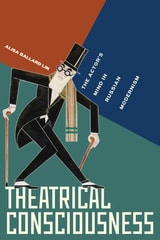
Theatrical Consciousness
The Actor’s Mind in Russian ModernismAlisa Ballard Lin
Northwestern University Press, 2025
Investigating late imperial Russian and early Soviet modernism’s reinvention of the actor
In this wide-ranging study, Alisa Ballard Lin argues that Russian theatrical theory and practice contributed to a broad pre- and postrevolutionary discourse about the mind, profoundly reshaping concepts of consciousness, perception, identity, and the constitution of the subject. Theatrical Consciousness: The Actor’s Mind in Russian Modernism examines efforts in Russian theater—from around the turn of the century through the mid-1930s—to stimulate, train, imagine, and ultimately understand the actor’s, as well as the spectator’s, mind. Discussing key figures of the period, including Nikolai Evreinov, Konstantin Stanislavsky, Vsevolod Meyerhold, and Alexander Tairov, Lin identifies an underappreciated dimension of humanism within Russian modernism: a humanism that resisted the pressures of an increasingly technologized, industrialized, and politicized modernity that challenged the place of the human within it.
Theory and History of Folklore
Vladimir Propp
University of Minnesota Press, 1984
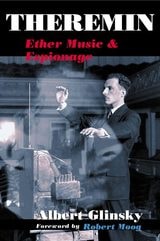
Theremin
Ether Music and EspionageAlbert Glinsky
University of Illinois Press, 2000
A creative genius and prolific inventor, Leon Theremin almost single-handedly launched the field of electronic music in 1920. The theremin--the only musical instrument that is played without being touched--created a sensation worldwide and paved the way for the modern synthesizer. But the otherworldly sound that entranced millions was only part of Theremin's epic life.
As a Soviet scientist, Theremin surrendered his life and work to the service of State espionage. On assignment in Depression-era America, he worked the engines of capitalist commerce while passing data on US industrial technology to the Soviet apparat. Following his sudden disappearance in 1938, Theremin vanished into the top-secret Soviet intelligence machine and was presumed dead for nearly thirty years. Using the same technology that spawned the theremin, he designed bugging devices and a host of other electronic wonders, including an early television and multimedia devices that anticipated performance art and virtual reality by decades.
Albert Glinsky's biography places the inventor at world events stretching from the Russian Revolution through the Cold War to perestroika. Throughout, he spins whimsy and treachery into an astonishing drama of one man's hidden loyalties, mixed motivations, and irrepressibly creative spirit.
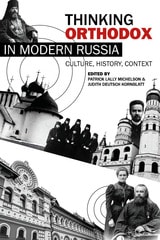
Thinking Orthodox in Modern Russia
Culture, History, ContextEdited by Patrick Lally Michelson and Judith Deutsch Kornblatt
University of Wisconsin Press, 2014
Volume editors Patrick Lally Michelson and Judith Deutsch Kornblatt provide a historical overview of Russian Orthodox thought and a critical essay on the current state of scholarship about religious thought in modern Russia. The contributors explore a wide range of topics, including Orthodox claims to a unique religious Enlightenment, contests over authority within the Russian Church, tensions between faith and reason in academic Orthodoxy, the relationship between sacraments and the self, the religious foundations of philosophical and legal categories, and the effect of Orthodox categories in the formation of Russian literature.

Three-Way Street
Strategic Reciprocity in World PoliticsJoshua S. Goldstein and John R. Freeman
University of Chicago Press, 1990
The authors demonstrate that three major schools of international relations theory—all game-theoretic, psychological, and quantitative-empirical approaches—have all advocated a strategy that employs cooperative initiatives and reciprocal responses in order to elicit cooperation from other countries. Critics have questioned whether such approaches can model how countries actually behave, but Goldstein and Freeman provide a wealth of detailed empirical evidence showing the existence and effectiveness of strategic reciprocity among the three countries between 1948 and 1989. Specifically, they establish that relations among the three countries have improved in recent decades through a "two steps forward, one step back" pattern. Their innovative and remarkably accessible synthesis of leading theoretical perspectives brilliantly illuminates the nature and workings of international cooperation.
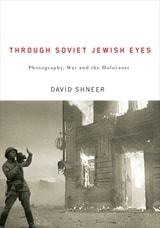
Through Soviet Jewish Eyes
Photography, War, and the HolocaustShneer, David
Rutgers University Press, 2012
These wartime photographers were the first liberators to bear witness with cameras to Nazi atrocities, three years before Americans arrived at Buchenwald and Dachau. In this passionate work, David Shneer tells their stories and highlights their work through their very own images-he has amassed never-before-published photographs from families, collectors, and private archives.
Through Soviet Jewish Eyes helps us understand why so many Jews flocked to Soviet photography; what their lives and work looked like during the rise of Stalinism, during and then after the war; and why Jews were the ones charged with documenting the Soviet experiment and then its near destruction at the hands of the Nazis.
Times of Trouble
Violence in Russian Literature and CultureEdited by Marcus C. Levitt and Tatyana Novikov
University of Wisconsin Press, 2007
From the country that has added to our vocabulary such colorful terms as "purges," "pogroms," and "gulag," this collection investigates the conspicuous marks of violence in Russian history and culture.
Russians and non-Russians alike have long debated the reasons for this endemic violence. Some have cited Russia's huge size, unforgiving climate, and exposed geographical position as formative in its national character, making invasion easy and order difficult. Others have fixed the blame on cultural and religious traditions that spurred internecine violence or on despotic rulers or unfortunate episodes in the nation's history, such as the Mongol invasion, the rule of Ivan the Terrible, or the "Red Terror" of the revolution. Even in contemporary Russia, the specter of violence continues, from widespread mistreatment of women to racial antagonism, the product of a frustrated nationalism that manifests itself in such phenomena as the wars in Chechnya.
Times of Trouble is the first in English to explore the problem of violence in Russia. From a variety of perspectives, essays investigate Russian history as well as depictions of violence in the visual arts and in literature, including the works of Fyodor Dostoevsky, Isaac Babel, Mikhail Lermontov, and Nina Sadur. From the Mongol invasion to the present day, topics include the gulag, genocide, violence against women, anti-Semitism, and terrorism as a tool of revolution.
To Russia with Love
An Alaskan's JourneyVictor Fischer with Charles Wohlforth
University of Alaska Press, 2012
Son of the famous American journalist Louis Fischer, who corresponded from Germany and then Moscow, and the Russian writer Markoosha Fischer, Victor Fischer grew up in the shadow of Hitler and Stalin, watching his friends’ parents disappear after political arrests. Eleanor Roosevelt personally engineered the Fischer family’s escape from Russia, and soon after Victor was serving in the United States Army in World War II and fighting opposite his childhood friends in the Russian and German armies.
Totalitarian Societies and Democratic Transition
Essays in Memory of Victor ZaslavskyRiccardo James Vargiu
Central European University Press, 2017
Travesty Actors
Self and Theater in Stalinist CultureBoris Wolfson, edited by Simon Morrison
Northwestern University Press, 2026
Talk of Joseph Stalin’s “show trials,” the public prosecutions in Moscow’s Hall of Columns in the late 1930s, is so familiar as to obscure the relationship between actual shows—in the Soviet Union’s major theaters—and politics. Travesty Actors: Self and Theater in Stalinist Culture examines theatrical performance within the context of the Soviet cultural establishment’s fashioning of a “genuine Soviet person.” Boris Wolfson focuses on prominent and controversial plays by artists including Aleksandr Afinogenov, Mikhail Bulgakov, Yuri Olesha, and Natalia Sats and the efforts of theater companies, like the Moscow Arts Theater, the Meyerhold Theater, and the Central Children’s Theater, to adhere to this cultural mandate while grappling with repression, censorship, and conflicting interpretations of its aims. Drawing on archival materials, diaries and memoirs and eyewitness accounts, Wolfson greatly illuminates the achievements of Soviet theater during this harsh period and the cultural significance of artistic theories and practices for articulating and enacting ideological programs.
True Songs of Freedom
Uncle Tom’s Cabin in Russian Culture and SocietyJohn MacKay
University of Wisconsin Press, 2013
Truman and the Hiroshima Cult
Robert P. Newman
Michigan State University Press, 1995
The United States dropped atomic bombs on Japan in 1945 to end World War II as quickly and with as few casualties as possible. That is the compelling and elegantly simple argument Newman puts forward in his new study of World War II's end, Truman and the Hiroshima Cult. According to Newman: (1) The U.S. Strategic Bombing Survey conclusions that Japan was ready to surrender without "the Bomb" are fraudulent; (2) America’s "unconditional surrender" doctrine did not significantly prolong the war; and (3) President Harry S. Truman’s decision to use atomic weapons on Japanese cities was not a "racist act," nor was it a calculated political maneuver to threaten Joseph Stalin’s Eastern hegemony. Simply stated, Newman argues that Truman made a sensible military decision. As commander in chief, he was concerned with ending a devastating and costly war as quickly as possible and with saving millions of lives.
Yet, Newman goes further in his discussion, seeking the reasons why so much hostility has been generated by what happened in the skies over Hiroshima and Nagasaki in early August, 1945. The source of discontent, he concludes, is a "cult" that has grown up in the United States since the 1960s. It was weaned on the disillusionment spawned by concerns about a military industrial complex, American duplicity and failure in the Vietnam War, and a mistrust of government following Watergate. The cult has a shrine, a holy day, a distinctive rhetoric of victimization, various items of scripture, and, in Japan, support from a powerful Marxist constituency. "As with other cults, it is ahistorical," Newman declares. "Its devotees elevate fugitive and unrepresentative events to cosmic status. And most of all, they believe." Newman’s analysis goes to the heart of the process by which scholars interpret historical events and raises disturbing issues about the way historians select and distort evidence about the past to suit special political agendas.
Trying to Make Law Matter
Legal Reform and Labor Law in the Soviet UnionKathryn Hendley
University of Michigan Press, 1996
Trying to Make Law Matter provides unique insight into the possibility of creating the rule of law. It is based on Kathryn Hendley's pathbreaking field research into the actual practices of Russian trial courts, lawyers, factory managers, and labor unions, contrasting the idealistic legal pronouncements of workers' rights during the Gorbachev era with tawdry reality of inadequate courts and dispirited workers.
Hendley frames her study of Russian law in action with a lively theoretical analysis of the fundamental prerequisites of the rule of law not only as a set of ideals but as a legal system that rests on the participation of rights-bearing citizens. This work will appeal to law, political science, and sociology scholars as well as area specialists and those who study transitions to market democracy.
Kathryn Hendley is Professor, Law and Political Science, University of Wisconsin, Madison.
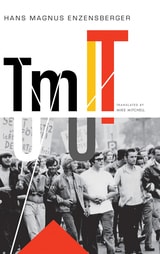
Tumult
Hans Magnus Enzensberger
Seagull Books, 2016
Hans Magnus Enzensberger, widely regarded as Germany’s greatest living poet, was already well known in the 1960s, the tempestuous decade of which Tumult is an autobiographical record. Derived from old papers, notes, jottings, photos, and letters that the poet stumbled upon years later in his attic, the volume is not so much about the man, but rather the many places he visited and people whom he met on his travels through the Soviet Union and Cuba during the 1960s. The book is made up of four long-form pieces written from 1963 to 1970, each episode concluding with a poem and postscript written in 2014. Translated by Mike Mitchell, the book is a lively and deftly written travelogue offering a glimpse into the history of leftist thought. Dedicated to “those who disappeared,” Tumult is a document of that which remains one of humanity’s headiest times.
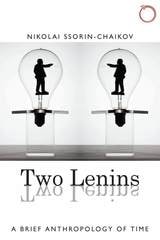
Two Lenins
A Brief Anthropology of TimeNikolai Ssorin-Chaikov
HAU, 2017
Nikolai Ssorin-Chaikov grounds his theoretical exploration in fascinating ethnographic and historical material on two Lenins: the first is the famed Soviet leader of the early twentieth century, and the second is a Siberian Evenki hunter—nicknamed “Lenin”—who experienced the collapse of the USSR during the 1990s. Through their intertwined stories, Ssorin-Chaikov unveils new dimensions of ethnographic reality by multiplying our notions of time.
Ssorin-Chaikov examines Vladimir Lenin at the height of his reign in 1920s Soviet Russia, focusing especially on his relationship with American businessperson Armand Hammer. He casts this scene against the second Lenin—the hunter on the far end of the country, in Siberia, at the far end of the century, the 1990s, who is tasked with improvising postsocialism in the economic and political uncertainties of post-Soviet transition. Moving from Moscow to Siberia to New York, and traveling form the 1920s to the 1960s to the 1990’s, Ssorin-Chaikov takes readers beyond a simple global history or cross-temporal comparison, instead using these two figures to enact an ethnographic study of the very category of time that we use to bridge different historical contexts.