Results by title
428 books match the query 'Stories' and 87 start with t
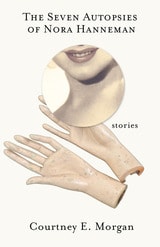
The Seven Autopsies of Nora Hanneman
StoriesCourtney E. Morgan
University of Alabama Press, 2017
In unfamiliar and sometimes bizarre narrative turns, the stories in Courtney E. Morgan’s The Seven Autopsies of Nora Hanneman traverse the gamut of female/human experience, both grounded in reality and in the irreal. Two schoolgirls culminate their sexual exploration in a surreal act of cannibalism. A sister molds her dead brother’s body into a bird. A woman gives birth to balls of twine and fur (among other things). A sex worker engages a version of herself in a brothel of prostituted body parts.
Morgan tears apart a host of archetypes and tropes of femininity—dismembering them, skinning them, and then draping them one by one over her characters like fur coats—revealing them as ill-fitting, sometimes comedic, sometimes monstrous, and always insufficient, masks. Along with these skins of the cultural “feminine,” the collection tries on an array of genres—dissecting, mutating, and breeding them together—from fairy tale to horror, surrealism to confessional (non)fiction, and erotica to (un)creation myth.
The book weaves around questions of sexuality, identity, and subjectivity. Mutability, instability, and liminality are foregrounded, both in content and form, character and language—blurring the lines between birth and death, death and sex, tugging at the transitional spaces of adolescence and gestation. Even as its treatment is essentialized, gender is muddied and obscured. Morgan shows off her linguistic range in this collection, from sharp-as-nails prose to lyrical moments of poetic reach—probing the extremes of the human condition through both narrative line and language itself.
The Shapes of Memory Loss
Stories, Poems and Essays from the University of Michigan Medical School and Health SystemMichigan Publishing Services, 2013
The Stone Child
StoriesStories by Gary Fincke
University of Missouri Press, 2003

The Stories of Hans Christian Andersen
A New Translation from the DanishHans Christian Andersen
Duke University Press, 2005
In this collection are twenty-two tales that best represent Andersen’s literary legacy, including such classics as “The Little Mermaid,” “The Ugly Duckling,” “Thumbelisa,” and “The Emperor’s New Clothes,” as well as largely unfamiliar stories like “By the Outermost Sea.” Illuminating notes clarify references in the tales. And in an introductory essay, the Franks explore the writer and his times, placing the enigmatic and often bizarre figure of Andersen among his literary contemporaries, such as Charles Dickens and Søren Kierkegaard, with whom he crossed paths; and they bring to life Andersen’s fascinating relationship with the United States. Illustrated with the delicate and beautiful drawings that accompanied the original Danish publication, The Stories of Hans Christian Andersen will delight readers of all ages.
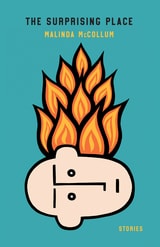
The Surprising Place
StoriesMalinda McCollum
University of Massachusetts Press, 2018

The TESTED WOMAN PLOT
Women’s Choices, Men’s Judgments, and the Shaping of StoriesLois E. Bueler
The Ohio State University Press, 2001
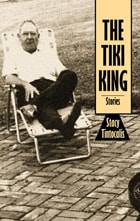
The Tiki King
StoriesStacy Tintocalis
Ohio University Press, 2010
A Lebanese housewife, a former horror-film maker, and a cantankerous Russian librarian are among the inhabitants of the offbeat world found in this impressive debut collection. Stacy Tintocalis’s stories take us from a defunct women’s shelter off a Missouri country road to the streets of low-income Hollywood, where her characters yearn for the love that is always just out of reach.
The title story explores the conflicted emotions an adolescent boy feels toward a father who obsessively returns to his childhood home. In “Too Bad about Howie,” a divorced poet finds comfort in stolen moments with his ex-wife’s dog. Despite their longing for connection, these characters are victims of their own foibles, trapped in terrifying moments of psychic violence that risk driving away the very people they love.
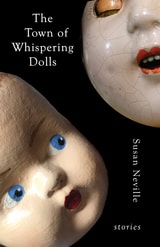
The Town of Whispering Dolls
StoriesSusan Neville, Foreword by Shelley Jackson
University of Alabama Press, 2020
WINNER OF FC2’S CATHERINE DOCTOROW INNOVATIVE FICTION PRIZE
Stories haunted by the remains of the industrial Midwest, the opioid epidemic, and the technology of war
Located somewhere in the rust belt in the early twenty-first century, residents of the town of Whispering Dolls dream of a fabled and illusory past, even as new technologies reshape their world into something different and deeply strange. Dolls walk down the streets, cradling their empty heads and letting the wind turn them into flutes. A politician heads to Washington, DC, and leaves a toxic underground plume in his wake. A woman eats car parts instead of confronting the children who have forgotten her. A young woman falls in love with the robot who took her job at the candy factory.
In The Town of Whispering Dolls, it is usually the grandmothers and the children who grieve. Feeling invisible, in the story “Here,” a woman who has buried her children looks up at the sky where commercial and military jets fly overhead and tries to express her rage to the rich and powerful: “Keep flying above us in your planes. From one coast to the other, keep right on flying over us! We test your bombs and your beloved warriors. Here. Right here. Look down.”
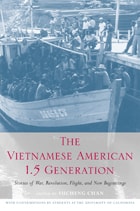
The Vietnamese American 1.5 Generation
Stories of War, Revolution, Flight and New Beginningsedited by Sucheng Chan
Temple University Press, 2006
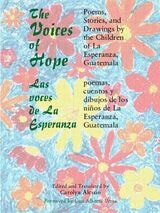
The Voices of Hope
Poems, Stories, and Drawings by the Children of La Esperanza, GuatemalaEdited and Translated by Carolyn Alessio. Foreword by Luis Alberto Urrea
Southern Illinois University Press, 2003
Collected and translated by Carolyn Alessio, this bilingual anthology of poems, stories, memories, and philosophies was written and illustrated by the children of La Esperanza, Guatemala. Drawing upon the fortitude of their mothers, who began hand-sewing crafts to sell in the United States in order to survive the hardships of this war-torn impoverished country, Alessio’s students, aged four to sixteen, reveal amazing survival skills, fertile imaginations, and dreams of attaining better lives. The resulting work is a collection of poems and drawings that are terse, funny, sometimes sad, but always humanly, gloriously alive.
As Alessio explains, “At first, I thought I might be imagining the echoes of magical realism, but as I continued to read the students’ writing and study their drawings, I found similar themes. Witches killed children who didn’t respect the spirits; women abused by their husbands sought refuge in trees with magical doors. People who didn’t have money or jobs lived on the road and in forests, where they alternately fought and partied with the animals.”
The volume features a foreword from Luis Alberto Urrea,author of Across the Wire: Life and Hard Times on the Mexican Border and By the Lake of Sleeping Children: The Secret Life of the Mexican Border.
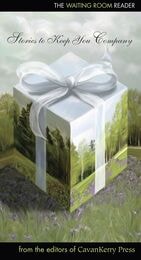
The Waiting Room Reader
Stories to Keep You CompanyJoan Cusack Handler
CavanKerry Press, 2010
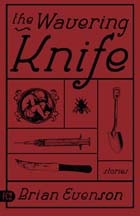
The Wavering Knife
StoriesBrian Evenson
University of Alabama Press, 2004
Where reality fractures and darkness takes shape.
Replete with the brutality, primordial waste, and savage blankness familiar to readers of his earlier works, Evenson's Kafkaesque allegories entice the mind while stubbornly disordering it. In the title story an obsessive consciousness folds back on itself, creating a vertiginous mélange of Poe and Borges, both horrific and metaphysical. Here, as in "Moran's Mexico," and "Greenhouse," the solitary nature of reading and writing leads characters beyond human limits, making the act of putting words to paper a monstrous violation opening onto madness. In "White Square" the representation of humans by dimly colored shapes confirms our feeling that something lies behind these words, while seeming to mock us with the futility of seeking it. Evenson's enigmatic names-Thurm, Bein, Hatcher, Burlun-placeable landscapes, and barren rooms all combine to create a semblance of conceptual abstraction, as though the material universe had come to exist inside someone's head.
Small wonder that Evenson's work has attracted so much attention among philosophers, literary critics, and other speculative intelligences, for it continuously projects a tantalizing absence, as though there were some key or code that, if only we knew it, would illuminate everything. However, the blade of discernment wavers, and we are left to our own groping interpretations.
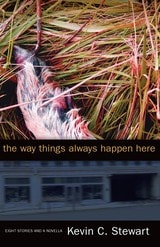
The Way Things Always Happen Here
StoriesEight Stories and a Novella by Kevin C. Stewart
West Virginia University Press, 2007
In his debut short-fiction collection, The Way Things Always Happen Here, Kevin C. Stewart takes his readers to the scene of a heinous murder, to the home of an alcoholic single mother, to the 1960s election campaign of JFK through West Virginia, and off the side of the New River Gorge Bridge. In these eight stories set in fictional Oak County in southern West Virginia, and one novella set in the Arkansas Ozarks, Stewart gives us characters who all love and hate where they’re from.
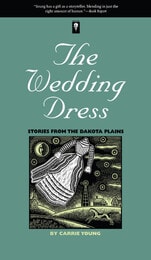
The Wedding Dress
Stories From The Dakota PlainsCarrie Young
University of Iowa Press, 1992
These finely wrought stories unfold in the Dakotas during the struggling pioneer days and bone-dry landscape of the thirties as well as the verdant years that followed, where the nighttime plains are bathed by softly radiant harvest moons shining down from dazzling northern skies. Young's absorbing narratives begin with the pleasant sense of “Once upon a time…” anticipation, but the firmly sketched details, warm humor, and vivid characterizations reveal an unanticipated and satisfying realism.
The haunting title story is about a beautiful and tragic pioneer woman and her wedding dress; her gown takes on a life of its own and turns into an enduring symbol for the grace and compassion of homesteading women on the plains. In “Bank Night,” a hired hand working during the midst of the Depression wins $250 at the movies, careening him into a single night of notoriety that becomes a legend in its time. “The Nights of Ragna Rundhaug” tells the tale of a woman who wants only to be left alone with her white dog, Vittehund, and her crocheting but instead is propelled into a life of midwifery “because there was no one else to do it.” The babies have predilection for arriving during blizzards and always at night, when she must be transported across the dark plains by frantic husbands who have fortified themselves with strong drink and headstrong horses.
All the stories in The Wedding Dress are linked by the enigmatic Nordic characters who people them and by the skill with which Young draws them. Emotions run so deep that they are seldom able to surface; when they do the interaction is extraordinarily luminous, both for the characters themselves and for the fortunate reader. The Wedding Dress is for all readers, young and old.
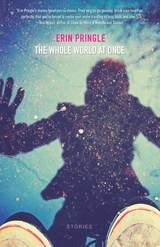
The Whole World at Once
StoriesErin Pringle
West Virginia University Press, 2017
Dark, strange beauties, all of the stories in The Whole World at Once follow the lives of people grappling with what it means to live in a world with death.
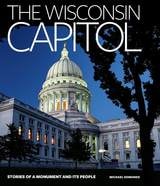
The Wisconsin Capitol
Stories of a Monument and Its PeopleMichael Edmonds
Wisconsin Historical Society Press, 2017
On the occasion of the Capitol’s centennial in 2017, this book tells the remarkable story of the building—in all its incarnations—and the people who made history beneath its dome. The book covers the creation of the territorial capitol in 1837, the construction of the second capitol in the 1860s (and the fire that almost completely destroyed it in 1904), the eleven-year construction project that completed the third capitol in 1917, and the extensive conservation project of the 1990s that restored the building to its grandeur. Supporting the framework of this architectural history are colorful stories about the people who shaped Wisconsin from within the Capitol—attorneys, senators, and governors (from Henry Dodge to Scott Walker), as well as protesters, reformers, secretaries, tour guides, custodians, and even Old Abe, the Capitol’s resident eagle. Combining historical photographs with modern, full-color architectural photos, The Wisconsin Capitol provides fascinating details about the building, while also emphasizing the importance of the Capitol in Wisconsin’s storied history.
The Woods
StoriesJanice Obuchowski
University of Iowa Press, 2022
What do we find in the woods? An uplifting of spirit or a quieting of sorrow. A sense of being haunted by the past. Sometimes rougher, more violent things: abandoned quarries and feral cats, black bears, brothers caught up in an escalating war, a ghost who wishes to pass on her despair, monsters who boom with hollow ecstatic laughter. But also songbirds: the hermit thrush and the winter wren. Rushing rivers glossy with froth. A nineteenth-century inn that’s somehow gotten by all these years. And far within, a vegetal twilight and constant dusk that feels outside of time. This remarkable debut illuminates the ways we all carry within ourselves aspects stark, beautiful, wild, and unknowable.
The World Doesn't Work That Way, but It Could
StoriesYxta Maya Murray
University of Nevada Press, 2025
The Millions' Most Anticipated: The Great Second-Half of 2020 Book Preview
The gripping, thought-provoking stories in Yxta Maya Murray’s latest collection find their inspiration in the headlines. Here, ordinary people negotiate tentative paths through wildfire, mass shootings, bureaucratic incompetence, and heedless government policies with vicious impacts on the innocent and helpless. A nurse volunteers to serve in catastrophe-stricken Puerto Rico after Hurricane Maria and discovers that her skill and compassion are useless in the face of stubborn governmental inertia. An Environmental Protection Agency employee, whose agricultural-worker parents died after long exposure to a deadly pesticide, finds herself forced to find justifications for reversing regulations that had earlier banned the chemical. A Department of Education employee in a dystopic future America visits a highly praised charter school and discovers the horrific consequences of academic failure. A transgender trainer of beauty pageant contestants takes on a beautiful Latina for the Miss USA pageant and brings her to perfection and the brink of victory, only to discover that she has a fatal secret.
The characters in these stories grapple with the consequences of frightening attitudes and policies pervasive in the United States today. The stories explore not only our distressing human capacity for moral numbness in the face of evil, but also reveal our surprising stores of compassion and forgiveness. These brilliantly conceived and beautifully written stories are troubling yet irresistible mirrors of our time.
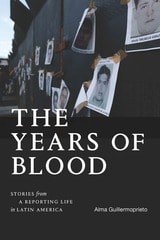
The Years of Blood
Stories from a Reporting Life in Latin AmericaAlma Guillermoprieto
Duke University Press, 2025
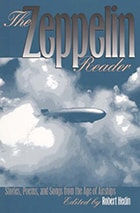
The Zeppelin Reader
Stories, Poems, and Songs from the Age Of AirshipsRobert Hedin
University of Iowa Press, 1998
Size is usually the first thing that comes to mind when we ponder the great airships. In war and peace, to most people they seem bigger than life itself, bright, wondrous, sometimes dangerous apparitions that engender a religious awe. They remain the largest crafts that have ever been launched into the sky. Tracing the history of the airship from its beginning in the nineteenth century to its fiery conclusion in 1937, Robert Hedin has gathered the finest stories, descriptions, poems, music, and illustrations about what the era was like in fact and in spirit.
Included are vivid accounts by such legendary figures as Count Ferdinand von Zeppelin, Hugo Eckener, and Alberto Santos-Dumont as well as memoirs, logs, journals, and diaries by Zeppelin commanders, crew, explorers, journalists, and survivors of ill-fated flights. The great airships inspired poets and writers old and new; here are works by such diverse writers as Robinson Jeffers, Kay Boyle, Bernard Shaw, D. H. Lawrence, Rita Dove, Richard Brautigan, and many others. There is a rich sampling of airship musical scores and lyrics; the music constitutes a kind of recovered history and helps recapture the emotional range of the era. Rounding out the gathering, The Zeppelin Reader is illustrated with stunning photographs, advertisements, drawings, and cartoons from the glorious age of airships.
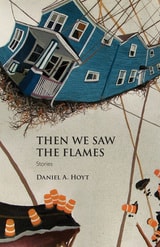
Then We Saw the Flames
StoriesDaniel A. Hoyt
University of Massachusetts Press, 2009
In this freewheeling debut collection, Daniel A. Hoyt takes us from the swamps of Florida to the streets of Dresden, to the skies above America, to the tourist hotels of Acapulco, to the southwest corner of Nebraska. Along the way, we encounter a remarkable group of characters all struggling to find their footing in an unsettling world.
Sometimes magical, sometimes realistic, sometimes absurd, these stories reveal people teetering on the dangerous edge of their lives. In “Amar,” a Turkish restaurant owner deals with skinheads and the specter of violence that haunts his family. In “Boy, Sea, Boy,” a shipwrecked sailor receives a surreal visitor, a version of himself as a child. In “The Collection,” a father and son squander a trove of bizarre and fanciful objects. And in “The Kids,” a suburban couple grasp for meaning after discovering children eating from their trash.
In each of these stories, characters find themselves challenged by the political, cultural, and spiritual forces that define their lives. With a clear eye and a steady hand, Hoyt explores a fragile balance: the flames—fueled by love, loss, hope, and family—shed new light on us. Sometimes we feel warmth, and sometimes we simply burn.
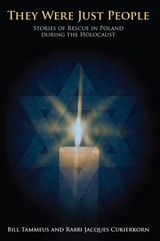
They Were Just People
Stories of Rescue in Poland During the HolocaustBill Tammeus & Rabbi Jacques Cukierkorn
University of Missouri Press, 2009
Think of Me and I'll Know
StoriesAnthony Varallo
Northwestern University Press, 2013
This Bright Light of Ours
Stories from the Voting Rights FightMaria Gitin
University of Alabama Press, 2014
Combining memoir with oral history, creates a vivid and searing portrait of the Freedom Summer of 1965.
This Bright Light of Ours offers a tightly focused insider’s view of the community-based activism that was the heart of the civil rights movement. A celebration of grassroots heroes, this book details through first-person accounts the contributions of ordinary people who formed the nonviolent army that won the fight for voting rights.
Combining memoir and oral history, Maria Gitin fills a vital gap in civil rights history by focusing on the neglected Freedom Summer of 1965 when hundreds of college students joined forces with local black leaders to register thousands of new black voters in the rural South. Gitin was an idealistic nineteen-year-old college freshman from a small farming community north of San Francisco who felt called to action when she saw televised images of brutal attacks on peaceful demonstrators during Bloody Sunday, in Selma, Alabama.
Atypical among white civil rights volunteers, Gitin came from a rural low-income family. She raised funds to attend an intensive orientation in Atlanta featuring now-legendary civil rights leaders. Her detailed letters include the first narrative account of this orientation and the only in-depth field report from a teenage Summer Community Organization and Political Education (SCOPE) project participant.
Gitin details the dangerous life of civil rights activists in Wilcox County, Alabama, where she was assigned. She tells of threats and arrests, but also of forming deep friendships and of falling in love. More than four decades later, Gitin returned to Wilcox County to revisit the people and places that she could never forget and to discover their views of the “outside agitators” who had come to their community. Through conversational interviews with more than fifty Wilcox County residents and former civil rights workers, she has created a channel for the voices of these unheralded heroes who formed the backbone of the civil rights movement.
This Is Not Your Country
StoriesAmin Ahmad
BkMk Press, 2021
Stories in This Is Not Your Country have appeared in such places as The Missouri Review, Slice, and Asian American Literary Review.
This Is Not the Tropics
StoriesLadette Randolph
University of Wisconsin Press, 2005
The stories collected in This Is Not the Tropics come from the geographic center of a divided nation, and its protagonists evoke a split personality—one half submerged in America’s own diehard mythology, the other half searching to escape tradition. Together they form a portrait of the Plains that is both quirky and poignant. While the themes in this collection are familiar—love and betrayal, loneliness and regret, the needs of the individual versus the needs of the community—the tales themselves are startling and new. Whether it is the story of an eccentric out-of-work accordion player; a woman ending a long marriage against the backdrop of a visit from her failing mother; a young girl who wishes to solve a mystery until real mystery enters her life; or all of the men in a small Nebraska town who annually compete in a hilariously earnest beauty pageant, these are tales that speak of the lives lived in the small towns, the prairie cities, and on the dirt roads off blue highways in the middle of nowhere and everywhere.

This Superior Place
Stories of Bayfield and the Apostle IslandsDennis McCann
Wisconsin Historical Society Press, 2013
Picturesque little Bayfield on Lake Superior is Wisconsin’s smallest city by population but one of its most popular visitor destinations. This book captures those unique qualities that keep tourists coming back year after year and offers a historically reliable look at the community as it is today and how it came to be. Abundantly illustrated with both historical and contemporary images, This Superior Place showcases, as author Dennis McCann writes, “a community where the past was layered with good times and down times, where natural beauty was the one resource that could not be exhausted by the hand of man, and where history is ever present.”
Because Bayfield serves as “the gateway to the Apostle Islands,” the book also includes chapters on the Apostle Islands National Lakeshore, Madeline Island, and the nearby Red Cliff Ojibwe community. It also covers the significant eras in the city’s history: lumbering, quarrying, commercial fishing, and the advent of the orchards visitors see today. It is not a guidebook as such but more of a visual and written tour of the city and the major elements that came together to make it what it is. Colorful stories from the past, written in Dennis McCann’s casual, humorous style, give a sense of the unique characters and events that have shaped this charming city on the lake.
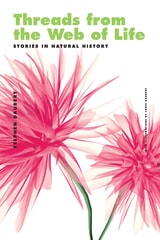
Threads from the Web of Life & The Shark and the Jellyfish
Stories in Natural HistoryStephen Daubert
Vanderbilt University Press, 2019
One niche moves across a world of flowers that reaches its earliest peak bloom in the low valleys and then peaks later among the slopes of the foothills—a rolling habitat. Another hop-scotches across the ocean floor, compelling its occupants to migrate from the fallen body of one dead whale to the next. Yet another appears in the aftermath of typhoons, requiring its inhabitants to search the tropical coastline for the latest storm landfall.
These tales are filled with no less intrigue than other literary works, but they transpire out of the sight of most readers. Once known only to ecologists, in Threads from the Web of Life and The Shark and the Jellyfish, available for the first time in a single deluxe paperback, these stories become accessible to everyone with an interest in natural history.
Threads from the Web of Life
Stories in Natural HistoryStephen Daubert
Vanderbilt University Press, 2006
In sixteen stories Steve Daubert pulls the reader into the mystery and immediacy of ecological processes spanning a range from microscopic to tectonic, from microscopic to cosmic forces. Each tale brings the reader into the moment to witness an episode of survival in the wild first-hand. The material is presented on a level of intimacy and detail not usually encountered in other styles of natural history writing.
These creative non-fiction stories provide not just a bird's eye view (though that's true for the owls, warblers, condors, and hummingbirds in the book), but a wasp's eye view, a mouse's, a sea turtle's, a squid's. Sometimes the focus is as small as the detritus on the forest floor, or a single beat of the wing of a gull. Other stories range across evolutionary time. From whales and dinosaurs to creatures invisible to the naked eye, author and illustrator bring to life the dynamic interplay of living, evolving creatures and the natural forces that have shaped their worlds.
The book includes chapter notes that document the scientific basis for each story and describe the controversies still surrounding some of them -- a splendid resource for families to read and share.
Through Animals' Eyes, Again
Stories of Wildlife RescueLynn Marie Cuny
University of North Texas Press, 2006
Ticket to Minto
Stories of India and AmericaHomi Sohrab Fracis
University of Iowa Press, 2001
Ticket to Minto, Sohrab Homi Fracis's premier fiction collection, offers readers a passage to an unfamiliar destination-a world suspended between East and West, India and America, home and away.
With piercing insight, Fracis expertly reveals the underlying differences between immersion in India's culture-Hindu, Muslim, or Parsi-and life as an Indian in America. Alternating between East and West, the stories in Ticket to Minto serve as companion pieces, interrelated across continents in both theme and content. A middle-aged man's search for love in Bombay is contrasted with an Indian American family's hopes for the marriage of their westernized daughter. A university student rushes to save the life of a servant in his homeland only to find his own life threatened while attending graduate school in America.
Poignant and daring, Ticket to Minto underlines the harsh realization that the immigrant never truly arrives but is in constant limbo between two worlds. As one character relates, "There's a part of me that's American and a part that's Indian. I'm clear about that and comfortable with it, except that sometimes people want me to be just the one or the other."
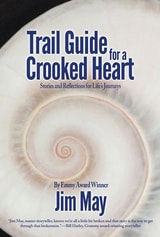
Trail Guide for a Crooked Heart
Stories and Reflections for Life's JourneyJim May
Parkhurst Brothers, Inc., 2016
"A brilliant mixture of story, philosophy, humor and wisdom, this book reminds us that---if we are open to story, dreams, imagination, and myth---we can open doors within our soul."
—Jay O’Callahan, author, storyteller, and NPR commentator
A lifetime collection of stories, wise words, assembled musings and quotations about overcoming hurdles, elusive enlightenment, personal evolution, persistence in the face of discouragement, this pastiche is designed to encourage the downhearted, lift up the strivers, and add wings to the heels of spiritual seekers.
Trance-Migrations
Stories of India, Tales of HypnosisLee Siegel
University of Chicago Press, 2014
Even if you can’t read this with a partner—and I stress that you certainly ought to—you will still be in rich company. There is Shambaraswami, an itinerant magician, hypnotist, and storyteller to whom villagers turn for spells that will bring them wealth or love; José-Custodio de Faria, a Goan priest hypnotizing young and beautiful women in nineteenth-century Parisian salons; James Esdaile, a Scottish physician for the East India Company in Calcutta, experimenting on abject Bengalis with mesmerism as a surgical anesthetic; and Lee Siegel, a writer traveling in India to learn all that he can about hypnosis, yoga, past life regressions, colonialism, orientalism, magic spells, and, above all, the power of story. And then there is you: descending through these histories—these tales within tales, trances within trances, dreams within dreams—toward a place where the distinctions between reverie and reality dissolve.
Here the world within the book and that in which the book is read come startlingly together. It’s one of the most creative works we have ever published, a dazzling combination of literary prowess, scholarly erudition, and psychological exploration—all tempered by warm humor and a sharp wit. It is informing, entertaining, and, above all, mesmerizing.

Trappings
Stories of Women, Power, and ClothingLudwig, Tiffany
Rutgers University Press, 2007
What do you wear that makes you feel powerful? How about the woman next to you at the bank? In line with you at the store? Think about your mother. What would she put on to reveal her power source to the world? These are the questions that inspired Tiffany Ludwig and Renee Piechocki to embark on an interview journey across the United States. Over a period of six years, they talked with more than 500 women and girls, ages four through ninety-two, who ranged from office workers to drag-kings, stay-at-home moms to attorneys, fashion industry executives to elected officials, students to cowgirls.
It is these women’s sensitive, funny, and always revealing thoughts that are at the heart of Trappings—a book that although it begins with a question about clothing is not about fashion at all. Here, clothing is simply a vehicle to access a larger dialogue about a diverse range of issues women face related to power and identity, including what expectations and limitations are placed upon them by their affiliation with a specific gender, culture, race, class, or profession. A complex spectrum of responses include discussions about the importance of clothing’s comfort and practicality, how clothing can facilitate women’s movement through class and social strata, how sex is used strategically in business and social settings, and how clothing can be used to empower women by connecting them with cultural or personal history.
Complimented by 148 color and black-and-white photographs, the visual and written portraits in this book reveal much more than the contents of women’s closets. Through the intimate lens of clothing, Ludwig and Piechocki expose the very personal ways that power is sought, experienced, and projected by women.
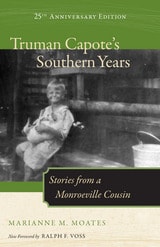
Truman Capote's Southern Years, 25th Anniversary Edition
Stories from a Monroeville CousinMarianne M. Moates, Foreword by Ralph F. Voss
University of Alabama Press, 2014
Readers are well acquainted with Truman Capote’s meteoric rise to fame and his metamorphosis from literary enfant terrible to literary genius, celebrity author, and dispenser of venomously comic witticisms. It is also well-known that he spent his formative years in the south Alabama hamlet of Monroeville, and that he was abandoned there by his mother to be cared for and then to care for elderly relatives. Yet details of those years have remained sketchy and vague.
In Monroeville young Capote formed significant bonds and played childhood games with his cousin, Jennings Faulk Carter, and next door neighbor, Nelle Harper Lee, author of "To Kill a Mockingbird" and "Go Set a Watchman." Through the tales told by Carter and spun into a fascinating and revealing narrative by Marianne M. Moates readers discover in Truman Capote's Southern Years the lively imagination and the early tragedies of a brilliant child.
A new foreword by Ralph F. Voss underscores the enduring relevance of Truman Capote’s work and the influence his Alabama childhood had on his work.
Truman Capote's Southern Years
Stories from a Monroeville CousinMarianne M. Moates
University of Alabama Press, 2008
Although much is known about the mature Truman Capote--his literary genius and flamboyant life-style--details of his childhood years spent in Monroeville, Alabama, have remained a mystery. Truman Capote's Southern Years explores Capote's formative years, the abandonment by his mother, and his early life in the care of elderly relatives. In Monroeville young Capote formed significant bonds and played childhood games with his cousin, Jennings Faulk Carter, and next door neighbor, Nelle Harper Lee. Through the tales told here by Carter, readers discover the lively imagination and the early tragedies of a brilliant child.
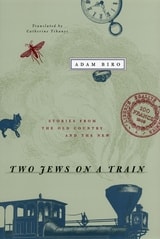
Two Jews on a Train
Stories from the Old Country and the NewAdam Biro
University of Chicago Press, 2001
As Biro recounts these tales, we hear not only his voice and the voice of his father, but those of generations of storytellers who have used humor to teach about the truly important issues in life—the delicacy of love, the fragility of friendship, the pitfalls of self-righteousness, the costs of narrow-mindedness, and the unpredictability of life itself. Biro artfully spins each story, lingering on the details, guiding the reader to the inevitable—yet always unexpected—punchline.
Taken individually, these stories will make you laugh out loud; taken as a whole, they form an invaluable record of the sensibilities of an entire people. Biro writes: "These Jewish stories of which not a single one happened to me, and of which I did not invent a single one, do describe me, do characterize me, do explain me. They are always my own story. And yours."