Results by title
308 books match the query 'Story' and 85 start with t

The Story of Jane
The Legendary Underground Feminist Abortion ServiceLaura Kaplan
University of Chicago Press, 1997
"The Story of Jane is a piece of women's history in step with feminist theory demanding that women tell their own stories. It serves to remind people of an important and often overlooked moment in the women's rights movement."—Seattle Weekly
"Laura Kaplan's The Story of Jane is the first book to chronicle this controversial sliver of history, and it is a fascinating, if partisan, close-up of the group."—Newsday
"[Kaplan] draws on her personal recollections and interviews with Jane members and clients and the doctors who performed the abortions to provide a well-written, detailed history of this radical group."—Publisher's Weekly
"Weaving together the voices and memories of her former co-workers, Kaplan recounts how the group initially focused on counseling women and helping them find reliable, reasonably priced doctors....Kaplan's account of this remarkable story recaptures the political idealism of the early '70s...23 years after Roe vs. Wade, the issues and memories raised by the books are close and all too relevant."—K Kaufmann, San Francisco Chronicle
"Laura Kaplan's The Story of Jane is the first book to chronicle this controversial sliver of history, and it is a fascinating, if partisan, close-up of the group....The Story of Jane succeeds on the steam of Kaplan's gripping subject and her moving belief in the power of small-scale change."—Cynthia Leive, New York Newsday
"During the four years before the Supreme Court's Roe v. Wade decision legalized abortion in 1973, the 100 members of Jane helped some 11,000 women end their pregnancies....There is more in this remarkable book that will further raise eyebrows....Kaplan's engrossing tales of the quiet courage of the women who risked their reputations and freedom to help others may remind many readers of other kinds of outlaws who have resisted tyranny throughout history."—Chicago Sun-Times
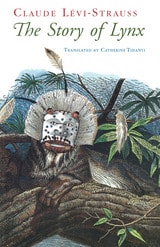
The Story of Lynx
Claude Lévi-Strauss
University of Chicago Press, 1995
So begins the Nez Percé myth that lies at the heart of The Story of Lynx, Claude Lévi-Strauss's most accessible examination of the rich mythology of American Indians. In this wide-ranging work, the master of structural anthropology considers the many variations in a story that occurs in both North and South America, but especially among the Salish-speaking peoples of the Northwest Coast. He also shows how centuries of contact with Europeans have altered the tales.
Lévi-Strauss focuses on the opposition between Wild Cat and Coyote to explore the meaning and uses of gemellarity, or twinness, in Native American culture. The concept of dual organization that these tales exemplify is one of non-equivalence: everything has an opposite or other, with which it coexists in unstable tension. In contrast, Lévi-Strauss argues, European notions of twinness—as in the myth of Castor and Pollux—stress the essential sameness of the twins. This fundamental cultural difference lay behind the fatal clash of European and Native American peoples.
The Story of Lynx addresses and clarifies all the major issues that have occupied Lévi-Strauss for decades, and is the only one of his books in which he explicitly connects history and structuralism. The result is a work that will appeal to those interested in American Indian mythology.
The Story of Modern Skiing
John Fry
University Press of New England, 2010
The Story of My Boyhood and Youth
John Muir
University of Wisconsin Press, 1965
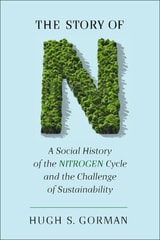
The Story of N
A Social History of the Nitrogen Cycle and the Challenge of SustainabilityGorman, Hugh S.
Rutgers University Press, 2013
In The Story of N, Hugh S. Gorman analyzes the notion of sustainability from a fresh perspective—the integration of human activities with the biogeochemical cycling of nitrogen—and provides a supportive alternative to studying sustainability through the lens of climate change and the cycling of carbon. It is the first book to examine the social processes by which industrial societies learned to bypass a fundamental ecological limit and, later, began addressing the resulting concerns by establishing limits of their own
The book is organized into three parts. Part I, “The Knowledge of Nature,” explores the emergence of the nitrogen cycle before humans arrived on the scene and the changes that occurred as stationary agricultural societies took root. Part II, “Learning to Bypass an Ecological Limit,” examines the role of science and market capitalism in accelerating the pace of innovation, eventually allowing humans to bypass the activity of nitrogen-fixing bacteria. Part III, “Learning to Establish Human-Defined Limits,” covers the twentieth-century response to the nitrogen-related concerns that emerged as more nitrogenous compounds flowed into the environment. A concluding chapter, “The Challenge of Sustainability,” places the entire story in the context of constructing an ecological economy in which innovations that contribute to sustainable practices are rewarded.
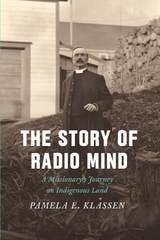
The Story of Radio Mind
A Missionary's Journey on Indigenous LandPamela E. Klassen
University of Chicago Press, 2018
Following Du Vernet’s journey westward from Toronto to Ojibwe territory and across the young nation of Canada, Pamela Klassen examines how contests over the mediation of stories—via photography, maps, printing presses, and radio—lucidly reveal the spiritual work of colonial settlement. A city builder who bargained away Indigenous land to make way for the railroad, Du Vernet knew that he lived on the territory of Ts’msyen, Nisga’a, and Haida nations who had never ceded their land to the onrush of Canadian settlers. He condemned the devastating effects on Indigenous families of the residential schools run by his church while still serving that church. Testifying to the power of radio mind with evidence from the apostle Paul and the philosopher Henri Bergson, Du Vernet found a way to explain the world that he, his church and his country made.
Expanding approaches to religion and media studies to ask how sovereignty is made through stories, Klassen shows how the spiritual invention of colonial nations takes place at the same time that Indigenous peoples—including Indigenous Christians—resist colonial dispossession through stories and spirits of their own.
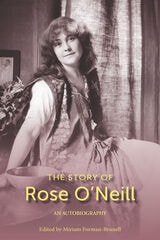
The Story of Rose O'Neill
An AutobiographyEdited by Miriam Forman-Brunell
University of Missouri Press, 2022
To most of us, Rose O'Neill is best known as the creator of the Kewpie doll, perhaps the most widely known character in American culture until Mickey Mouse. Prior to O'Neill's success as a doll designer, however, she already had earned a reputation as one of the best-known female commercial illustrators. Her numerous illustrations appeared in America's leading periodicals, including Life, Harper's Bazaar, and Cosmopolitan. While highly successful in the commercial world, Rose O'Neill was also known among intellectuals and artists for her contributions to the fine arts and humanities. In the early 1920s, her more serious works of art were exhibited in galleries in Paris and New York City. In addition, she published a book of poetry and four novels.
Yet, who was Rose Cecil O'Neill? Over the course of the twentieth century, Rose O'Neill has captured the attention of journalists, collectors, fans, and scholars who have disagreed over whether she was a sentimentalist or a cultural critic. Although biographers of Rose O'Neill have drawn heavily on portions of her previously unpublished autobiography, O'Neill's own voice--richly revealed in her well-written manuscript--has remained largely unheard until now.
In these memoirs, O'Neill reveals herself as a woman who preferred art, activism, and adventure to motherhood and marriage. Featuring photographs from the O'Neill family collection, The Story of Rose O'Neill fully reveals the ways in which she pushed at the boundaries of her generation's definitions of gender in an effort to create new liberating forms.
The Story of Sapho
Madeleine de Scudery
University of Chicago Press, 2003
The Story of Sapho makes available for the first time in modern English a self-contained section from Scudéry's novel Artamène ou le Grand Cyrus, best known today as the favored reading material of the would-be salonnières that Molière satirized in Les précieuses ridicules. The Story tells of Sapho, a woman writer modeled on the Greek Sappho, who deems marriage slavery. Interspersed in the love story of Sapho and Phaon are a series of conversations like those that took place in Scudéry's own salon in which Sapho and her circle discuss the nature of love, the education of women, writing, and right conduct. This edition also includes a translation of an oration, or harangue, of Scudéry's in which Sapho extols the talents and abilities of women in order to persuade them to write.
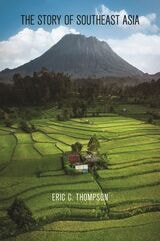
The Story of Southeast Asia
Edited by Eric Thompson
National University of Singapore Press, 2024
The oldest figurative cave paintings in the world are found on the island of Sulawesi in Indonesia. Hand stencils and animals painted some 45,000 years ago attest to a long history of human creativity. The Story of Southeast Asia tells how the peoples of the region have crafted their diverse societies and cultures over thousands of years. Southeast Asia has been a remarkable crossroads of global connections for millennia. Whereas other regions have been defined by centralizing forces, Southeast Asia’s story is one of complex networks of trade, ideas, and social relationships. Southeast Asians have created, localized, and remade their own cultural values by drawing on influences from around the world.
Marshalling the latest literature from anthropology, archaeology, history, and other disciplines, Eric C. Thompson highlights broad themes that cut across history: including the making—and evasion—of states, adoption of diverse religious practices, tolerance and flexibility regarding gender, processes of forging modern identities, struggles over sovereignty, and the making of modern nations in a postcolonial world. This readable, single-volume history reckons with the narrative pull of familiar colonial and national perspectives but maintains a regional and deep-historical focus. It will be a stimulating read for scholars as well as students and newcomers to Southeast Asian history.
The Story of Spin
Sin-itiro Tomonaga
University of Chicago Press, 1998
"This piece of the history of physics will provide excellent and exciting reading. . . . It also provides the personal touch of an expert in the field that is so often lacking in the physics literature. I recommend it very highly."—Fritz Rohrlich, Physics Today
Sin-itiro Tomonaga was awarded the Nobel Prize for Physics in 1965.
The Story of Stone
Intertextuality, Ancient Chinese Stone Lore, and the Stone Symbolism in <i>Dream of the Red Chamber</i>, <i>Water Margin</i>, and <i>The Journey to the West</i>Jing Wang
Duke University Press, 1992
Bringing together Chinese myth, religion, folklore, art, and literature, this book is the first in any language to amass the sources of stone myth and stone lore in Chinese culture. Uniting classical Chinese studies with contemporary Western theoretical concerns, Wang examines these stone narratives by analyzing intertextuality within Chinese traditions. She offers revelatory interpretations to long-standing critical issues, such as the paradoxical character of the monkey in The Journey to the West, the circularity of narrative logic in The Dream of the Red Chamber, and the structural necessity of the stone tablet in Water Margin.
By both challenging and incorporating traditional sinological scholarship, Wang’s The Story of Stone reveals the ideological ramifications of these three literary works on Chinese cultural history and makes the past relevant to contemporary intellectual discourse. Specialists in Chinese literature and culture, comparative literature, literary theory, and religious studies will find much of interest in this outstanding work, which is sure to become a standard reference on the subject.
The Story of Swahili
John M. Mugane
Ohio University Press, 2015
Swahili was once an obscure dialect of an East African Bantu language. Today more than one hundred million people use it: Swahili is to eastern and central Africa what English is to the world. From its embrace in the 1960s by the black freedom movement in the United States to its adoption in 2004 as the African Union’s official language, Swahili has become a truly international language. How this came about and why, of all African languages, it happened only to Swahili is the story that John M. Mugane sets out to explore.
The remarkable adaptability of Swahili has allowed Africans and others to tailor the language to their needs, extending its influence far beyond its place of origin. Its symbolic as well as its practical power has evolved from its status as a language of contact among diverse cultures, even as it embodies the history of communities in eastern and central Africa and throughout the Indian Ocean world.
The Story of Swahili calls for a reevaluation of the widespread assumption that cultural superiority, military conquest, and economic dominance determine a language’s prosperity. This sweeping history gives a vibrant, living language its due, highlighting its nimbleness from its beginnings to its place today in the fast-changing world of global communication.
The Story of Tonle
Mario Rigoni Stern
Northwestern University Press, 1998
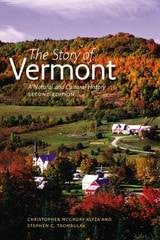
The Story of Vermont
A Natural and Cultural History, Second EditionChristopher McGrory Klyza and Stephen C. Trombulak
University Press of New England, 2015
The Story of Wamba
Julian of Toledo's Historia Wambae regisJoaquín Martínez Julian of Toledo
Catholic University of America Press, 2005
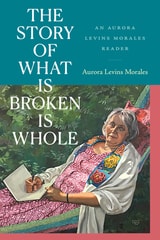
The Story of What Is Broken Is Whole
An Aurora Levins Morales ReaderAurora Levins Morales
Duke University Press, 2024
The Story of Your Obstinate Survival
Daniel Khalastchi
University of Wisconsin Press, 2024
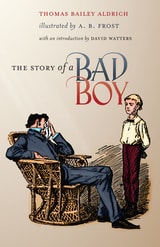
The Story of a Bad Boy
Thomas Bailey Aldrich
University Press of New England, 1996
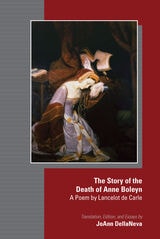
The Story of the Death of Anne Boleyn
A Poem by Lancelot de CarleEdited, Translated, and with Essays by JoAnn DellaNeva
Arizona Center for Medieval and Renaissance Studies, 2021
The Story of the Death of Anne Boleyn is a critical edition and translation of a long narrative poem written by the secretary to the French ambassador in London within two weeks of Anne Boleyn’s execution. It was intended as a diplomatic dispatch, relating the astonishing news of the queen’s demise (along with that of five alleged lovers). Uniquely among diplomatic correspondence, this dispatch was written in verse form. It thus straddles the domains of literature and history, of chronicle and fiction.
The base text for this edition is a previously unstudied manuscript housed at the British Library. Variants are given from all other known manuscripts found in Europe, including several key verses that were previously unpublished and that shed new light on the interpretation of the poem. The book features a sense-for-sense translation into modern English in free verse form, along with extensive explanatory notes. It also provides a study focusing on the historical background to the poem, an essay on the poet and the reception of his work, and a literary analysis of the poem.

The Story of the First Pawpsicle
Ariel Ojibway
Fifth Avenue Press, 2025
Did you ever wonder who made the first popsicles? Or if your ancestors made snow cones with maple syrup?
Me too!
I guess we'll never know who made the first frozen treat because the evidence was eaten long ago, but it's always fun to imagine new stories...
Wabooz has a brand new idea for a delicious treat, but will everything turn out as he hoped? Travel with him through the lands where the pawpaws grow in search of the perfect fruit!
The Story of the Sacred Harp, 1844-1944
George Pullen Jackson
Vanderbilt University Press, 1944
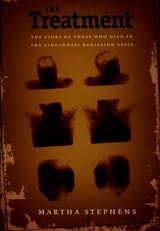
The Treatment
The Story of Those Who Died in the Cincinnati Radiation TestsMartha Stephens
Duke University Press, 2002
Martha Stephens’s report on these deaths led to the halting of the tests, but local papers did not print her charges, and for many years people in Cincinnati had no way of knowing that lethal experiments had taken place there. In 1994 other military tests were brought to light, and a yellowed copy of Stephens’s original report was delivered to a television newsroom. In Ohio, major publicity ensued—at long last—and reached around the world. Stephens uncovered the names of the victims, and a legal action was filed against thirteen researchers and their institutions. A federal judge compared the deeds of the doctors to the medical crimes of the Nazis during World War II and refused to dismiss the researchers from the suit. After many bitter disputes in court, they agreed to settle the case with the families of those they had afflicted. In 1999 a memorial plaque was raised in a yard of the hospital.
Who were these doctors and why had they done as they did? Who were the people whose lives they took? Who was the reporter who could not forget the story, the young attorney who first developed the case, the judge who issued the historic ruling against the doctors? This is Stephens’s moving account of all that transpired in these lives and her own during this epic battle between medicine and human rights.
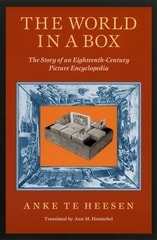
The World in a Box
The Story of an Eighteenth-Century Picture EncyclopediaAnke te Heesen
University of Chicago Press, 2002
As Anke te Heesen demonstrates, Stoy and his world in a box epitomized the Enlightenment concern with the creation and maintenance of an appropriate moral, intellectual, and social order. The box, and its images from nature, myth, and biblical history, were intended to teach children how to collect, store, and order knowledge. te Heesen compares the Academy with other aspects of Enlightenment material culture, such as commercial warehouses and natural history cabinets, to show how the kinds of collecting and ordering practices taught by the Academy shaped both the developing middle class in Germany and Enlightenment thought. The World in a Box, illustrated with a multitude of images of and from Stoy's Academy, offers a glimpse into a time when it was believed that knowledge could be contained and controlled.
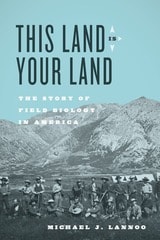
This Land Is Your Land
The Story of Field Biology in AmericaMichael J. Lannoo
University of Chicago Press, 2018
Lannoo illuminates characters such as John Wesley Powell, William Temple Hornaday, and Olaus and Adolph Murie—homegrown midwestern field biologists who either headed east to populate major research centers or went west to conduct their fieldwork along the frontier. From the pioneering work of Victor Shelford, Henry Chandler Cowles, and Aldo Leopold to contemporary insights from biologists such as Jim Furnish and historians such as William Cronon, Lannoo’s unearthing of American—and particularly midwestern—field biologists reveals how these scientists influenced American ecology, conservation biology, and restoration ecology, and in turn drove global conservation efforts through environmental legislation and land set-asides. This Land Is Your Land reveals the little-known legacy of midwestern field biologists, whose ethos and discoveries have enabled us to preserve and understand not just their land, but all lands.
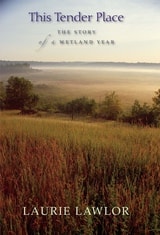
This Tender Place
The Story of a Wetland YearLaurie Lawlor
University of Wisconsin Press, 2007
After the deaths of her father and father-in-law, Laurie Lawlor discovers an unlikely place for healing and transformation in a wetland in southeastern Wisconsin—a landscape of abundant and sometimes inaccessible beauty that has often been ignored, misunderstood, and threatened by human destruction. In her decade-long personal wetland journey, she examines the sky, delves underwater, and peers between sedges in all seasons and all times of day.
This Tender Place is a celebration of nature, the elements, and humanity. From the wetland’s genesis during the ice age to its survival in the twenty-first century, Lawlor chronicles the universal ties among people, wild places, and healthy wetlands.
An engaging and deeply intimate record, This Tender Place is at its heart a story of refuge and renewal refracted through the lens of life within the wetlands—one of the most productive, yet most endangered, ecosystems in the world.
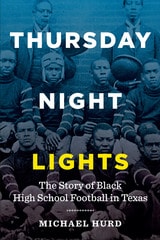
Thursday Night Lights
The Story of Black High School Football in TexasBy Michael Hurd
University of Texas Press, 2019
At a time when “Friday night lights” shone only on white high school football games, African American teams across Texas burned up the gridiron on Wednesday and Thursday nights. The segregated high schools in the Prairie View Interscholastic League (the African American counterpart of the University Interscholastic League, which excluded black schools from membership until 1967) created an exciting brand of football that produced hundreds of outstanding players, many of whom became college All-Americans, All-Pros, and Pro Football Hall of Famers, including NFL greats such as “Mean” Joe Green (Temple Dunbar), Otis Taylor (Houston Worthing), Dick “Night Train” Lane (Austin Anderson), Ken Houston (Lufkin Dunbar), and Bubba Smith (Beaumont Charlton-Pollard).
Thursday Night Lights tells the inspiring, largely unknown story of African American high school football in Texas. Drawing on interviews, newspaper stories, and memorabilia, Michael Hurd introduces the players, coaches, schools, and towns where African Americans built powerhouse football programs under the PVIL leadership. He covers fifty years (1920–1970) of high school football history, including championship seasons and legendary rivalries such as the annual Turkey Day Classic game between Houston schools Jack Yates and Phillis Wheatley, which drew standing-room-only crowds of up to 40,000, making it the largest prep sports event in postwar America. In telling this story, Hurd explains why the PVIL was necessary, traces its development, and shows how football offered a potent source of pride and ambition in the black community, helping black kids succeed both athletically and educationally in a racist society.
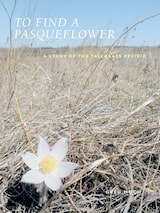
To Find a Pasqueflower
A Story of the Tallgrass PrairieGreg Hoch
University of Iowa Press, 2022
Hoch blends history, culture, and science into a unified narrative of the tallgrass prairie, with an emphasis on humans’ participation in its development and destruction. Hoch also demonstrates how variable and dynamic the prairie is, creating both challenges and opportunities for those who manage and restore and appreciate it.
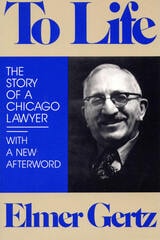
To Life
The Story of a Chicago LawyerElmer Gertz
Southern Illinois University Press, 1990
Elmer Gertz has defended famous people—including Henry Miller, Nathan Leopold, and Jack Ruby—and he has become famous in his own right through his struggle for civil liberties and personal rights.
Gertz has taken on a lengthy list of cases and causes over the six decades of his legal career. He fought successfully against the censorship of Henry Miller’s book Tropic of Cancer,which had been banned in Chicago for obscenity. He got Nathan Leopold released from prison after Leopold had served 34 years for his part in the death of 14-year-old Bobby Franks. An ardent foe of the death penalty, Gertz labored for years as part of a national team of lawyers that was finally able to overturn Jack Ruby’s death sentence for the murder of Lee Harvey Oswald. Gertz’s cases have helped make libel law in the nation.
For this edition, Gertz adds an afterword that covers the 15 years since the book’s first publication. Gertz talks of Henry Miller’s last days and his travels to the USSR on behalf of the Refuseniks.

To the Arctic!
The Story of Northern Exploration from Earliest TimesJeannette Mirsky
University of Chicago Press, 1970
"Excellent. . . . This is a book which anyone interested in almost any facet of the north will find of value."—William Cody, Canadian Field Naturalist
"A book filled with adventure."—Daily News Journal
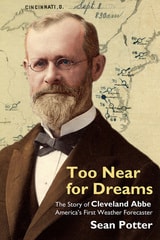
Too Near for Dreams
The Story of Cleveland Abbe, America's First Weather ForecasterSean Potter
American Meteorological Society, 2020
As director of the Cincinnati Observatory and, later, a civilian in the newly established forecast and storm warning division of the U.S. Army Signal Service, Cleveland Abbe was the first person to issue official, regularly scheduled weather forecasts, or “probabilities,” in the United States. Abbe began his work in forecasting in 1869, earning the nickname “Old Probabilities” and gaining recognition for the reliability of his reports. He would go on to become a leader of the US Weather Bureau—which we know today as the National Weather Service. In establishing a system for creating daily weather forecasts and more, this humble pioneer helped lay the foundation for modern meteorology in the United States.
Set against the backdrop of nineteenth and early twentieth-century international events and scientific advancements, this biography of Abbe explores both his personal life and his scientific career. It illuminates his time spent in Russia in the mid-1860s—as the Civil War was waged and a president was assassinated back home—in part through letters with his mother. Decades of diaries and correspondence from the Cleveland Abbe Papers at the Library of Congress, as well as first-person accounts, illuminate this biography of a mild-mannered family man whose thirst for knowledge drove him to become a giant in an emerging scientific field.
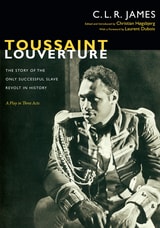
Toussaint Louverture
The Story of the Only Successful Slave Revolt in History; A Play in Three ActsC. L. R. James Edited and Introduced by Christian Høgsbjerg
Duke University Press, 2013

Toxic War
The Story of Agent OrangePeter Sills
Vanderbilt University Press, 2014
Originally introduced by Dow and other chemical companies as a herbicide in the United States and adopted by the military as a method of deforesting the war zone of Vietnam, in order to deny the enemy cover, Agent Orange also found its way into the systems of numerous active-duty soldiers. Sills argues that manufacturers understood the dangers of this compound and did nothing to protect American soldiers.
Toxic War takes the reader behind the scenes into the halls of political power and industry, where the debates about the use of Agent Orange and its potential side effects raged. In the end, the only way these veterans could seek justice was in the court of law and public opinion. Unprecedented in its access to legal, medical, and government documentation, as well as to the personal testimonies of veterans, Toxic War endeavors to explore all sides of this epic battle.
Tree Day
A Story of 24 Hours and 24 Arboreal LivesMeg Lowman
University of Chicago Press, 2025
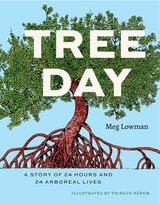
In this short book, treetop explorer Meg Lowman guides us through a global forest. Each chapter of Tree Day introduces a single tree during a single hour, highlighting twenty-four species from around the world.
In the dark of Yemen’s night, it is too early to see the red sap from which the dragon’s blood tree gets its name. But if we watch closely, we will see nocturnal geckos carry the trees’ pollen in their snouts. Later, in the Pacific Northwest, we climb the world’s tallest species, the coastal redwood. The morning fog is a reminder that redwoods absorb water through their roots and canopies, helping them survive such heights. The sun is already low in the sky on an autumn afternoon. Given the darkness of this New England forest, the sugar maple’s leaves have stopped producing chlorophyll that converts light into energy—and green gives way to vivid crimson foliage. After many hours of boiling, the maple sap makes delicious maple syrup. As the sun sets in Mexico, we observe the origin of another treat, chocolate. The cocoa tree’s flowers sprout along its trunk and branches, allowing easy access for tiny insects like midges that pollinate the tree and start the process of making delicious food for humans, monkeys, bats, and squirrels. By the end of our tree day, we will understand that trees are the silent caretakers of our planet, providing us with medicines, foods, machinery for making fresh water and oxygen, and more.
For each hour, celebrated artist Thibaud Hérem has depicted these trees with gorgeous pen and ink illustrations. Working together to narrate and illustrate these unique moments in time, Lowman and Hérem have created an engaging read that is a perfect way to spend an hour or two—and a true gift for anyone who has ever looked up at a tree in wonder.
Trying to Give Ease
Tommie Bass and the Story of Herbal MedicineJohn K. Crellin and Jane Philpott
Duke University Press, 1997
Type is Beautiful
The Story of Fifty Remarkable FontsSimon Loxley
Bodleian Library Publishing, 2016
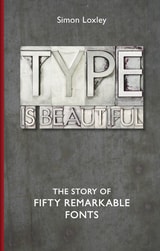
Type is Beautiful traces the history of fifty remarkable fonts. Thoroughly researched and visually exciting, it takes readers through the story of each font’s creation and distinct characteristics, as well as why it succeeded or failed. Some of the fonts were commissioned for major commercial or cultural projects. Edward Johnston’s iconic Johnston Sans, for instance, was created for the London Underground and remained there exclusively until a redesign in the 1980s. Other fonts became culturally significant unintentionally. The designer of the controversial Comic Sans created the typeface to fill the need for a font to fit the speech bubbles for a Microsoft program, never expecting it to become one of the world’s favorite—and most-maligned—fonts. Along the way, Loxley gives readers an unforgettable cast of characters, including Johannes Gutenberg, William Caslon, Nicolas Jenson, Stanley Morison, William Morris, and Thomas Cobden-Sanderson, the English artist and bookbinder who famously “bequeathed” the unique metal type created for his failed Doves Press to the Thames, casting the type into the river to prevent its future use.
Brimming with fascinating facts, Type is Beautiful is a highly informative and entertaining trip through a lesser-known aspect of history that turns out to have major significance for print and design culture. From Blackletter to Baskerville and Bodoni, you will find yourself looking at fonts with a newfound appreciation.