Results by title
1214 books match the query 'Subjects & Themes' and 227 start with t

The Drake Relays
America's Athletic ClassicDavid Peterson
University of Iowa Press, 2014
Pulitzer Prize–winning photographer David Peterson has been covering the Drake Relays for nearly forty years, but his love affair with the meet started earlier, when he ran on three winning relay teams there for Kansas State University. Now, drawing upon an unmatched personal archive, he offers the pictures of a lifetime spent on the Blue Oval. He captures on camera athletes of all levels in triumph and defeat, in mid-stride or leap, embracing their fans, their moms and dads, and their kids. In addition to the stars of the past, such as Carl Lewis, Suzy Favor Hamilton, and Herschel Walker, and those of the ’00s, like Lolo Jones and Jeremy Wariner, we see teenagers who may be the stars of the future, as well as the many athletes who will never be famous but nonetheless show themselves—and their sport—at their best.
A beautiful celebration of the Drake Relays and the diverse sports that make up “track and field,” this book will evoke memories and inspire runners, throwers, and jumpers everywhere.
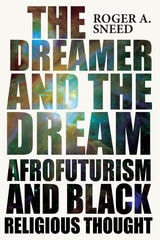
The Dreamer and the Dream
Afrofuturism and Black Religious ThoughtRoger A. Sneed
The Ohio State University Press, 2021
In The Dreamer and the Dream: Afrofuturism and Black Religious Thought, Roger A. Sneed illuminates the interplay of Black religious thought with science fiction narratives to present a bold case for Afrofuturism as an important channel for Black spirituality. In the process, he challenges the assumed primacy of the Black church as the arbiter of Black religious life. Incorporating analyses of Octavia Butler’s Parable books, Janelle Monáe’s Afrofuturistic saga, Star Trek’s Captain Benjamin Sisko, Marvel’s Black Panther, and Sun Ra and the Nation of Islam, Sneed demonstrates how Afrofuturism has contributed to Black visions of the future. He also investigates how Afrofuturism has influenced religious scholarship that looks to Black cultural production as a means of reimagining Blackness in the light of the sacred. The result is an expansive new look at the power of science fiction and Afrofuturism to center the diversity of Black spirituality.
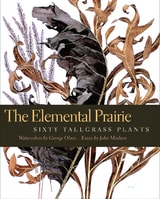
The Elemental Prairie
Sixty Tallgrass PlantsOlson, George
University of Iowa Press, 2005
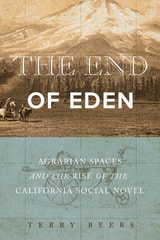
The End of Eden
Agrarian Spaces and the Rise of the California Social NovelTerry Beers
University of Nevada Press, 2018
Drawing on history and cultural theory, The End of Eden traces the rise of the California social novel, its embrace of the agrarian dream, and its ambivalence about technology and the development it enables. It relies on various cultural conceptions of space, among them, the American Public Land Survey (the source of the “grid” allotments shaping homestead claims), Mexican-era diseños, and Native American traditions that defined a fluid relationship between human beings and the land.
This animation of four California social novels of the late eighteenth and early nineteenth centuries demonstrates how conflicts over space and place signify cultural conflict. It is deeply informed by the author’s understanding of historical land issues. The works include Joaquin Miller’s Unwritten History: Life Amongst the Modocs, Helen Hunt Jackson’s Ramona, Frank Norris’ The Octopus, and Mary Austin’s The Ford.
Miller’s Unwritten History: Life Amongst the Modocs and Jackson’s Ramona examine the tragic but inevitable consequences for native people of making space—inhabited already by Native American and Hispanic populations—safe for Americans who pursue the agrarian dream without regard to its effects upon those who claim prior tenure on the land. Norris’ The Octopus and Austin’s The Ford examine the murkier story of trying to preserve or to reclaim the agrarian dream when confronted by the unchecked materialist interests of American capitalism.
A wide-reaching interdisciplinary approach to various cultural conceptions of space, The End of Eden provides a crucial understanding of the conflicts depicted in social novels that lament the ways in which land is allocated and developed, the ways in which American agrarianism—and its promise of local, sustainable land use—is undermined, and how it applies to contemporary California. In an era where California confronts, yet again, the complicated patterns of land use: fracking, water use and water rights, coastal regulation and management, and agribusiness, this groundbreaking work provides an ever-relevant context.
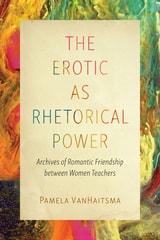
The Erotic as Rhetorical Power
Archives of Romantic Friendship between Women TeachersPamela VanHaitsma
The Ohio State University Press, 2024
Winner, 2025 Marie Hochmuth Nichols Award from the National Communication Association’s Public Address Division
The Erotic as Rhetorical Power offers a queer feminist history of rhetoric that recovers the civic contributions of women teachers in same-sex romantic friendships. Extending perspectives from ancient rhetoric to nineteenth-century progressivism, from Audre Lorde’s Black lesbian feminist theory to its present-day uptakes, Pamela VanHaitsma conceives of the erotic as an interanimation of desires that, in being passionately shared, becomes imbued with the power to forge connection and foment change.
VanHaitsma’s theory of the erotic as rhetorical power emerges from both historiographic and imaginative engagements with more than twenty archives of romantic friendships between women: Sallie Holley and Caroline Putnam, Irene Leache and Anna Wood, Gertrude Buck and Laura Wylie, and Rebecca Primus and Addie Brown. VanHaitsma considers how even as the erotic in these romantic friendships fueled the women’s rhetorical activities toward transformational ends—whether working toward the abolition of slavery, greater educational access, or voting rights—it also energized rhetorical activities that sometimes challenged but also reinforced troubling power dynamics. The Erotic as Rhetorical Power uncovers the erotic’s significance as a conflicted site of power that is central to rhetorical theory and history as well as feminist and LGBTQ+ studies.
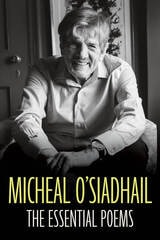
The Essential Poems
Micheal O'Siadhail
Northwestern University Press, 2026
The essential selected works of Ireland’s leading poet, Micheal O’Siadhail
With an illustrious literary career that has spanned over fifty years, renowned poet Micheal O’Siadhail has cemented his place on the international stage. From his debut collection, The Leap Year (1978), to his latest collection, Desire (2023), O’Siadhail captures evolving struggles with love, faith, and humanity. Here, spanning the entirety of his outstanding career, is the essence of his masterful body of work.
The Essential Poems voyages through traditional and innovative poetic forms, investigating love and passion, joy and loss, world-shaping events and personal experiences. O’Siadhail sounds the depths of meaning and evokes wonder, surprise, anguish, and delight. A lyrical meditation on the relationships between humanity and nature, despair and faith, and the richness of courage in the acts of healing completes what proves to be this unforgettable and necessary collection of the inimitable Irish poet.
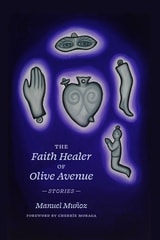
The Faith Healer of Olive Avenue
StoriesManuel Muñoz and Cherríe Moraga
Northwestern University Press, 2025
From the divergent paths of triplet brothers to a grieving father confronting his mistreatment of his son, these stories interweave a recurring cast of neighborhood characters, many of them in search of escape or release. Lauded for its empathetic portrayals of communities often ignored, The Faith Healer of Olive Avenue won a Whiting Award and an O. Henry Award; it was shortlisted for the Frank O’Connor International Short Story Award as one of the best collections published in English worldwide. A new foreword by author and activist Cherríe Moraga gives testament to Muñoz’s status as “the cartographer of a people.”
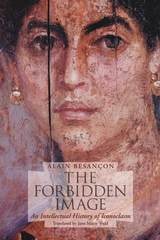
The Forbidden Image
An Intellectual History of IconoclasmAlain Besançon
University of Chicago Press, 2001
Philosophers and theologians have long engaged in intense debate and introspection over the representation of the deity, its possibilities and its proscriptions. The Forbidden Image traces the dual strains of “iconophilia” and iconoclasm, the privileging and prohibition of religious images, over a span of two and a half millennia in the West.
Alain Besançon’s work begins with a comprehensive examination of the status of the image in Greek, Judaic, Islamic, and Christian thought. The author then addresses arguments regarding the moral authority of the image in European Christianity from the medieval through the early modern periods. Besançon completes The Forbidden Image with an examination of how iconophilia and iconoclasm have been debated in the modern period.
“Even the reader who has heard something of the Byzantine quarrels about images and their theological background will be surprised by a learned and convincing interpretation of the works of Mondrian, Kandinsky, and Malevich in terms of religiously inspired iconoclasm. . . . This is an immensely rich and powerful masterpiece.”—Leszek Kolakowski, Times Literary Supplement
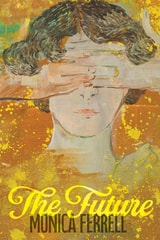
The Future
Monica Ferrell
Four Way Books, 2026
The Future is a book about time. The tender, vulnerable, and bitingly funny poems of Monica Ferrell's third collection confront the hours as they stream by, our relatively brief lives that feel so long while we are living them, successive generations and the unwinding story of our species, and the bewilderingly vast geological age of the planet. Traveling across eras, through ice ages to the eighteenth century and the modern day of Ozempic and chatbots, these poems also square up to the obscurity of what comes next as they peer forward into time still to come.
At once irreverent yet elegant, sophisticated yet conversational, these poems capture what it means to get by day to day in a 21st century destabilized by ecological collapse, political havoc, and the incursion of technology into our most private and intimate spaces. “Every day I wake up,” Ferrell writes, “and ask, is it today? The volcano?” Restless in their imaginative scope, these poems leap across the world, from the enduring statues at Angkor Wat and Hampi to Alpine meadows contaminated with plastic to a supermarket in Vermont. Without papering over any of the difficulties we face today, Ferrell nonetheless expands our capacity to wonder, especially about the experience of motherhood, how the future keeps finding a way of breaking through.
This book manifests as that impossible, unimaginable collision that annihilates the world as we thought it was and sees it emerge as pure energy. Ferrell includes us in “the bequest of this battered planet, this sweetly belabored thing,” from one generation to the next, reminding us of the genesis contained inside obliteration: “one November night I too once opened my eyes to the bright.”
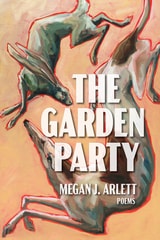
The Garden Party
PoemsMegan J. Arlett
Northwestern University Press, 2027
A stroll through deceptively tranquil spaces and the restlessness of social convention
Depicting the uneasy performance of class and femininity in the stilted, suffocating spaces of a social life suffused with English propriety, Megan J. Arlett’s The Garden Party is a poetic meditation on desire and agency. From the imagined space of the titular garden party to the interior of an art gallery, from the rolling hills of Sussex to Trinidad under British colonial rule, Arlett paints the conventions of polite society as both strange and arbitrary, allowing the restlessness of the poems’ speakers to rise to the surface. Through free verse, received forms, and ekphrasis, these poems stage a conversation with other artists, eras, and art media, moving through natural and constructed locations that are sometimes historical and often imagined. This collection considers what it means to love a place despite its histories and flaws and offers ways of navigating this tension through art. The Garden Party is a striking yet quiet rebellion against order and expectation.
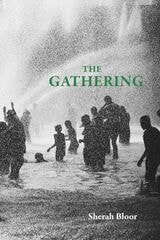
The Gathering
Sherah Bloor
Omnidawn, 2026
Poetry that serves as a broad collection of historical incidents and considers how we weigh and value events.
Named for a sura of the Quran, The Gathering is an epic in cantos that indiscriminately records deeds and events that have taken place on this earth. Its speaker—a nearly omniscient archivist—is propelled by a force more elemental than causation to visit moments and subjects, moving swiftly through thoughts, physiologies, and environments. Under an imperative to record everything encountered—however small, cruel, or sad—the archivist must grant radically equal weight to each thing. Yet as these entries accumulate, a strange significance accrues, and the negligible seems necessary. Each mundane fragment of life finds consolation. What was, was; what happened, got to happen.
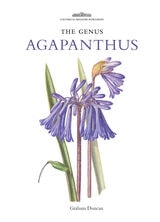
The Genus Agapanthus
Graham Duncan
Royal Botanic Gardens, Kew, 2021
Renowned for its stunning blue flowers, agapanthus—sometimes known as the blue lily or lily of the Nile—is a group of rhizomatous plants native to southern Africa. First cultivated in the Netherlands in the late seventeenth century, it rose to prominence as a conservatory plant in England during the eighteenth and nineteenth centuries after certain varieties were found to be hardy enough to withstand the colder climate of the British Isles. Graham Duncan’s The Genus Agapanthus provides both a revised classification of this plant group and a superbly illustrated celebration of their unique beauty. Featuring new watercolors from South African artist Elbe Joubert and color photographs showing the species in their spectacular and varied natural habitats, the book also highlights a selection of more than 150 of the most notable agapanthus cultivars from growers across Europe, Africa, and Oceania. The agapanthus’s natural history is spotlighted as well, with comprehensive descriptions of each species, maps of their global distribution, and information on how to successfully cultivate, propagate, and care for them. This book’s blend of science, horticulture, and art makes it essential for all varieties of plant lovers.
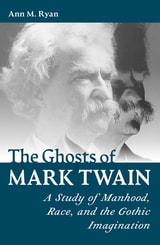
The Ghosts of Mark Twain
A Study of Manhood, Race, and the Gothic ImaginationAnn M Ryan
University of Missouri Press, 2025
Ann M. Ryan maps Twain’s resistance to ideals of white masculinity and his occasional capitulation to them. While Twain reflects upon the history of White men—including the intimate memory of his father’s failures and abuses—he also imagines a future in which Black men will gain an authentic voice and agency. Preferring the messy humanity of Mark Twain, Ryan calls into question the “St. Mark” school of criticism, which glosses—among other themes—Twain’s uneasy relation to Black culture. In unpublished works and excised material, Twain conjures memories and specters of Black men that are far from comforting. No longer “friends and allies” like fictive Ol’ Uncle Dan’l; these Black ghosts will settle for revenge if they can’t get justice.
Some of the works considered in The Ghosts of Mark Twain are not widely known: “Which Was It?,” “The United States of Lyncherdom,” No. 44: The Mysterious Stranger, and the Morgan manuscript of Pudd’nhead Wilson. Written into the record of these fragments is Twain’s desire to be a different kind of White man, just as their incomplete nature demonstrates how often he stumbled in that effort. When Jim describes the White and Black spirits hovering over Pap Finn, Twain reveals his own conflicted position in America’s racial history. And as Jim declares to Huck, “A body can’t tell yit which one gwyne to fetch him at de las.’”
The Global Frontier
Postwar Travel in American LiteratureEric Strand
University of Iowa Press, 2023
After World War II, the Western frontier of self-reinvention and spatial expansion opened up through the explosion of the global travel industry. The Global Frontier shows that a variety of postwar literary travelers sought personal freedom and cultural enrichment outside their nation’s borders, including Black, female, and queer writers. But the price of incorporation into a transnational leisure class was complicity in postwar American imperialism and the rejection of 1930s social commitments. Eric Strand argues that capitalist globalization has enabled creative expression for marginalized identities, and that present-day humanists are the descendants of writers such as William S. Burroughs, Saul Bellow, Richard Wright, and Elizabeth Bishop. Yet this personal liberation has accompanied a vast growth of social inequality, which can only be addressed by reorienting toward progressive nationalism and an activist state.
The Granite Pail
The Selected Poems of Lorine NiedeckerLorine Niedecker
Ohio University Press, 1996
This edition was published in 1996 by Gnomon Press.
The Granite Pail is a masterful collection that showcases the poetic brilliance of one of America’s most underappreciated modernist poets. Known for its minimalist style and deep connection to the natural world, Niedecker’s work combines precision with emotional depth in poems that resonate long after they are read.
This volume brings together some of Niedecker’s finest poetry, illustrating her gift for capturing profound truths in the simplest of forms. With themes ranging from the intimate and domestic to the universal and ecological, her poems reflect a life deeply rooted in the landscapes of rural Wisconsin. From meditations on the passage of time to lyrical explorations of nature, The Granite Pail reveals the interplay between solitude, creativity, and the human condition.
Edited and introduced by Cid Corman, a champion of Niedecker’s work, the collection highlights her unique voice within the Objectivist tradition and her ability to create moments of beauty and insight with remarkable economy. This edition also provides context for her life and influences, shedding light on her artistic evolution and the lasting significance of her poetry.
For both longtime admirers and those new to Niedecker’s work, The Granite Pail offers an essential glimpse into the mind of a poet whose quiet brilliance continues to inspire readers and writers alike.
The Great Hummingbird Chase
John P. Schaefer and Ken Lamberton
University of Arizona Press, 2027
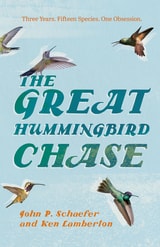
Southern Arizona is a world-renown hummingbird destination. The Great Hummingbird Chase chronicles John P. Schaefer and Ken Lamberton’s passionate quest to photograph all fifteen of Arizona’s hummingbird species.
The Great Zoo
A Bilingual EditionNicolás Guillén
University of Chicago Press, 2024
Born in Cuba to parents of African and European ancestry, Nicolás Guillén worked in printing presses and studied law before moving into Havana’s literary scene. A virtuosic maker and breaker of forms, Guillén rose to fame by transforming a popular form of Cuban music into poetry that called attention to the experience of Afro-Cuban people, and he continued to interweave his artistic and political commitments as he traveled the world.
Originally published in Spanish in 1967, The Great Zoo is a humorous and biting collection of poems that presents a fantastical bestiary of ideas, social concerns, landscapes, phenomena, and more. The “animals” on view in this menagerie include the Mississippi and Amazon Rivers, clouds from different countries, a singing guitar, a temperamental atomic bomb, blue-pelted police, a hurricane, the KKK, and the North Star, among many others. Translated by Aaron Coleman with a keen understanding of the contexts of colonial racialization, oppression, and exoticism, this bilingual edition stands as a testament to Guillén’s carnivalesque vision.

The Hajj and the Arts of Pilgrimage
Essays in Honour of Nasser David KhaliliEdited by Qaisra M. Khan and Nahla Nassar
Gingko, 2023
Hajj and the Arts of Pilgrimage consists of twenty-seven essays addressing objects in the remarkable collection of Nasser David Khalili. The collection features more than five thousand objects relating to the arts of pilgrimage, from the eighth century to today, and includes Qur’ans, illustrated manuscripts, rare books, scientific instruments, textiles, coins, paintings, prints, and photo-postcards, as well as archival material, unique historical documents, and examples of the work of some of the earliest Muslim photographers of Hajj. Together the essays collected in Hajj and the Arts of Pilgrimage provide a comprehensive overview of Hajj, illustrating the religious, spiritual, cultural, and artistic aspects of pilgrimage to the Holy Sanctuaries of Islam and the cosmopolitan nature of Hajj itself. Each essay is written by a prominent specialist in the field and beautifully illustrated with full-color images of objects from the collection, some of which have never been seen in print before. Taking readers from the early history of Islam to the fascinating story of the Western view of Muslim pilgrimage, these essays will transform our perception of Hajj.
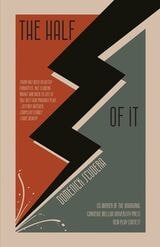
The Half of It
Domenick Scudera
Carnegie Mellon University Press, 2026
A play that explores the influence of pioneer drag artist Bert Savoy.
The Half of It is inspired by the life and work of Bert Savoy, a Vaudeville drag artist who was active in the 1910s and early 1920s. Savoy was at the height of his career when he was tragically killed by lightning in 1923. The play highlights the groundbreaking and inspirational work of this important, yet largely forgotten, pioneer. Characters include some of Savoy’s famous friends, such as Klondike Kate and Mae West (who many believe borrowed her sassy stage persona from Savoy’s drag act). The play explores themes of gender identity, gender expression, celebrity in the modern era, the LGBTQ community of the early twentieth century, and the origins of contemporary drag performance.
The Haunting
Cate Peebles
Tupelo Press, 2025
The Haunting is a book of feminist-horror visitations, incantations, and possessions embodied in unruly forms that subvert genre and generic definitions of poetry and prose. This is a collection that is concerned with how the living and the dead coexist, how to survive trauma, and the power of persistence. Drawing from a variety of texts including Mary Shelley’s Frankenstein, Emily Bronte’s Wuthering Heights, twentieth-century horror films, the Velvet Underground, and Ovid, The Haunting explores the anxieties of ancestral and artistic inheritance, rage, transformation, motherhood, maternal ambivalence, and the drive to create.

The History Of Breathing
Alison Grimaldi Donahue
Diaphanes, 2025
The Etruscan language knew no blank spaces, no breaks between words. Its texture resembled an uninterrupted flow of speech—more singing than speaking, more form than content. Only in the dictum of the pause and the meaningful fragmentation of the breath does language become comprehensible rhythmic expression. In a world full of slogans and catchphrases, Allison Grimaldi Donahue defends the poetological demand of sound over content. The History of Breathing weaves linguistics and poetry, verse and song, meaning and sound into a dense narrative about breathing, rhythm, and the gaps in language that allow words to take on meaning in the first place.
In the tradition of such poets as Charles Olsen, Alice Notley, and Sappho, Grimaldi Donahue’s poetry connects the history of breath and language with narratives about the discovery and loss of our own voice.
The Holocaust
Theoretical ReadingsLevi, Neil
Rutgers University Press, 2003
This agenda-setting reader brings together both classic and new writings to demonstrate how concerns arising from the Nazi genocide shaped contemporary literary and cultural theory. Wide in its thematic scope, it covers such vital questions as:
- Authenticity and experience
- Memory and trauma
- Historiography and the philosophy of history
- Fascism and Nazi anti-Semitism
- Representation and identity formation
- Race, gender, and genocide
- Implications of the Holocaust for theories of the unconscious, ethics, politics, and aesthetics
The readings, which are fully contextualized by a general introduction, section introductions, and bibliographical notes, represent the work of many influential writers and theorists, including Theodor Adorno, Giorgio Agamben, Hannah Arendt, Jean Baudrillard, Zygmunt Bauman, Walter Benjamin, Cathy Caruth, Jacques Derrida, Shoshana Felman, Saul Friedlander, Paul Gilroy, Lawrence Langer, Emmanuel Levinas, Primo Levi, Jean-François Lyotard, Hayden White, and James E. Young. This multidisciplinary anthology will be welcomed by students and scholars of the Holocaust.
The Hours of Marie de Medici
A FacsimileMarie de Medici
Bodleian Library Publishing, 2016
At the turn of the fifteenth century, private devotionals became a specialty of the renowned Ghent–Bruges illuminators. Wealthy patrons who commissioned work from these artists often spared no expense in the presentation of their personal prayer books, or “books of hours,” from detailed decoration to luxurious bindings and embroidery.
This manuscript owes its name to the French queen, Marie de Medici, widow of King Henri IV. The manuscript was painted by an artist known as the David Master, one of the renowned Flemish illuminators of the sixteenth century. Fine architectural interiors, gorgeous landscapes, and detailed city scenes form the subjects of three full-size illuminations and forty-two full-page miniatures. It is one of the finest examples of medieval illumination in a personal prayer book and the most copiously illustrated work of the David Master to survive.
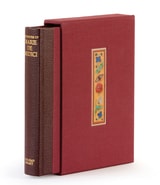
Together with a scholarly introduction that gives an overview of Flemish illumination and examines each of the illustrations in detail, this full-color facsimile limited edition, bound in linen with a leather quarter binding and beautifully presented in a slipcase, faithfully reproduces all 176 leaves of the original manuscript.
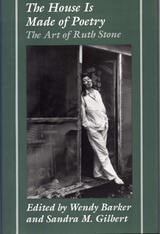
The House is Made of Poetry
The Art of Ruth StoneEdited by Wendy Barker and Sandra M. Gilbert
Southern Illinois University Press, 1996
Ruth Stone has always eschewed self-promotion and, in the words of Leslie Fiedler, "has never been a member of any school or clique or gaggle of mutual admirers." But her poems speak so vibrantly for her that she cannot be ignored.
In her preface to this volume, Sandra M. Gilbert declares that Stone’s "intense attention to the ordinary transforms it into (or reveals it as) the extraordinary. Her passionate verses evoke impassioned responses." At the same time, Gilbert continues, the essays collected here "consistently testify to Stone’s radical unworldliness, in particular her insouciant contempt for the ‘floor walkers and straw bosses’ who sometimes seem to control the poetry ‘factory’ both inside and outside the university."
Wendy Barker and Sandra Gilbert have organized the book into three sections: "Knowing Ruth Stone," "A Life of Art," and "Reading Ruth Stone." In "Knowing Ruth Stone," writers of different generations who have known the poet over the years provide memoirs. Noting Stone’s singularity, Fiedler points out that "she resists all labels" and is "one of the few contemporaries whom it is possible to think of simply as a ‘poet.’" Sharon Olds defines her vitality ("A Ruth Stone poem feels alive in the hands"), and Jan Freeman praises her aesthetic intensity ("Everything in the life of Ruth Stone is integrated with poetry").
"A Life of Art" sketches the outlines of Stone’s career and traces her evolution as a poet. Barker and Norman Friedman, for example, trace her development from the "high spirits and elegant craft" of her first volume—Inan Iridescent Time— through the "deepening shadows," "poignant wit," and "bittersweet meditations" of her later work. In interviews separated by decades (one in the 1970s and one in the 1990s), Sandra Gilbert and Robert Bradley discuss with Stone her own sense of her aesthetic origins and literary growth.
"Reading Ruth Stone" is an examination of Stone’s key themes and modes. Diane Wakoski and Diana O’Hehir focus on the tragicomic vision that colors much of her work; Kevin Clark and Elyse Blankley explore the political aspects of her poetry; Roger Gilbert analyzes her "often uncannily astute insights into the ‘otherness’ of other lives"; Janet Lowery and Kandace Brill Lombart draw on the biographical background of Stone’s "grief work"; and Sandra Gilbert studies her caritas, her empathic love that redeems pain.
The Humanities in the Age of Information and Post-Truth
Edited by Ignacio López-Calvo and Christina Lux
Northwestern University Press, 2019
While the reader may suspect that these types of lucubration are a desperate reaction to decreased public funding for the humanities worldwide, a decreased enrollment of students, or anxiety over the future of our profession, there is in this volume a coherent argument for the continued need, perhaps more now than ever, to invest in humanities education if we are to have informed and socially conscious citizens rather than just willing consumers and obedient workers. Furthermore, the essays prove that the humanities and the arts are, after all, not a luxury but an integral part of a complete scholarly education.
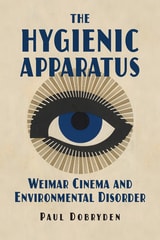
The Hygienic Apparatus
Weimar Cinema and Environmental DisorderPaul Dobryden
Northwestern University Press, 2022
Framing hygiene within the project of national reconstruction after World War I, The Hygienic Apparatus explores cinema’s material contexts alongside its representations of housework, urban space, traffic, pollution, disability, aging, and labor. Reformers worried about the health risks associated with moviegoing but later used film to popularize hygienic ideas, encouraging viewers to see the world and themselves in relation to public health objectives. Modernist architecture and design fashioned theaters into regenerative environments for fatigued spectators. Filmmakers like F. W. Murnau and Slatan Dudow, meanwhile, explored the aesthetic and political possibilities of dirt, contagion, intoxication, and disorder. Dobryden recovers a set of ecological and biopolitical concerns to show how the problem of environmental disorder fundamentally shaped cinema’s relationship to modernity. As accessible as it is persuasive, the book adds to a growing body of scholarship on biopolitics within German studies and reveals fresh ways of understanding the apparatus of Weimar cinema.
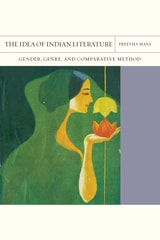
The Idea of Indian Literature
Gender, Genre, and Comparative MethodPreetha Mani
Northwestern University Press, 2022
Indian literature is not a corpus of texts or literary concepts from India, argues Preetha Mani, but a provocation that seeks to resolve the relationship between language and literature, written in as well as against English. Examining canonical Hindi and Tamil short stories from the crucial decades surrounding decolonization, Mani contends that Indian literature must be understood as indeterminate, propositional, and reflective of changing dynamics between local, regional, national, and global readerships. In The Idea of Indian Literature, she explores the paradox that a single canon can be written in multiple languages, each with their own evolving relationships to one another and to English.
Hindi, representing national aspirations, and Tamil, epitomizing the secessionist propensities of the region, are conventionally viewed as poles of the multilingual continuum within Indian literature. Mani shows, however, that during the twentieth century, these literatures were coconstitutive of one another and of the idea of Indian literature itself. The writers discussed here—from short-story forefathers Premchand and Pudumaippittan to women trailblazers Mannu Bhandari and R. Chudamani—imagined a pan-Indian literature based on literary, rather than linguistic, norms, even as their aims were profoundly shaped by discussions of belonging unique to regional identity. Tracing representations of gender and the uses of genre in the shifting thematic and aesthetic practices of short vernacular prose writing, the book offers a view of the Indian literary landscape as itself a field for comparative literature.
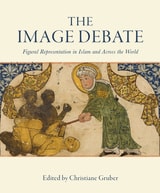
The Image Debate
Figural Representation in Islam and Across the WorldEdited by Christiane Gruber
Gingko, 2019
The Image Debate is a collection of thirteen essays which examine the controversy surrounding the use of images in Islamic and other religious cultures and seek to redress some of the misunderstandings that have arisen. Written by leading academics from the United States, Australia, Turkey, Israel and the United Kingdom, the book has a foreword by Stefano Carboni, Director of the Art Gallery of Western Australia, followed by an introduction by the editor Christiane Gruber, who sets the subject in context with a detailed examination of the debates over idols and the production of figural images in Islamic traditions.
Twelve further articles are divided into three sections: the first deals with pre-modern Islam: Mika Natif looks at tensions between the Hadith prohibition on images and the praxis of image-making under the Umayyad dynasty and argues that the Umayyad rulers used imagery to establish their political and religious authority; Finbarr Barry Flood examines the practice of epigraphic erasure, i.e., the removal of names of rulers and patrons from historical inscriptions from the medieval Islamic world; and Oya Pancaroğlu focuses on the figural conventions of an illustrated manuscript of Varqa and Gulshah, a medieval Persian romance composed in the masnavi (rhyming couplet) form by the 11th-century poet ‘Ayyuqi.
The second section addresses the situation outside Islam: Alicia Walker surveys attitudes toward the production and veneration of religious images in Byzantium from the earliest years of the Christian Roman Empire (early 4th century) to the aftermath of the Iconoclast controversy (late 9th century); Steven Fine explores the history of Jewish engagement with ‘art’ from Roman antiquity through the high middle ages through a detailed exploration of the 3rd-century Dura Europos synagogue and its wall paintings; Michael Shenkar examines evidence for the employment of figural images in the cultic practices of some of the major ancient Iranian cultural and political entities, offering a broad perspective on perceptions of images in ancient Iranian worship; and Robert DeCaroli delves into the question of why no image of the Buddha was made during the first five hundred years of Buddhism.
The third section brings the reader back to Islamic lands with five articles examining aspects of the issue in the modern and contemporary periods: Yousuf Saaed investigates South Asian mass-produced images, especially posters that include illustrations of local Sufi shrines, portraits of saints and Shi‘i iconography; James Bennett explores the visual depiction of Javanese shadow puppets (wayang kulit), including the sage Begawan Abiyasa, whose narratives convey key elements of Sufi mystical philosophy; Allen and Mary Roberts consider images of Cheikh Amadu Bamba, the founding Sufi saint of the Senegalese Mouride order; Rose Issa addresses how the term ‘Islamic’ relates to contemporary art, how artists manage to create work in countries in constant turmoil and to what extent such works reflect their conceptual, aesthetic, and socio-political concerns; and finally Shiva Balaghi traces the use of the figure, along its symbolic shadows and silhouettes, in works by notable Iranian artists living in Iran and in diaspora.
The Image and the Fire
The Subversive Anthology in the Twentieth CenturyWhit Frazier Peterson
University of Massachusetts Press, 2026
Racial identity and literary form in the modernist anthology
The Image and the Fire examines the coterie anthology—a small, outsider literary collection—as a key, yet understudied, instrument of literary intervention within American modernism. Whit Frazier Peterson argues that these anthologies, produced outside of institutional or canonical frameworks, served as deliberate challenges to dominant literary paradigms. Distinct from academic anthologies that helped codify the American literary canon, coterie anthologies were used by both white and Black avant-garde movements to disrupt prevailing cultural narratives and assert alternative literary visions.
Through close analysis of three seminal case studies—Des Imagistes, edited by Ezra Pound; Fire!!, a short-lived but groundbreaking magazine from the Harlem Renaissance, co-edited by Wallace Thurman; and Black Fire, compiled by Amiri Baraka and Larry Neal during the Black Arts Movement—Peterson traces a genealogy of the coterie anthology as a politically charged genre. He reveals how Black American writers and editors, particularly during the Harlem Renaissance and the Black Arts Movement, reappropriated and reconfigured this type of anthology format from white modernists.
Ultimately, The Image and the Fire positions the coterie anthology as a site of aesthetic and ideological contestation, one through which marginalized literary communities engaged in acts of cultural self-definition, canon revision, and formal innovation. By foregrounding the coterie anthology’s role in shaping a hybrid American modernism, Peterson contributes to ongoing conversations in literary studies around race, authorship, and the politics of literary form.

The Iowa State Fair
Kurt Ullrich
University of Iowa Press, 2014
In 2013, Kurt Ullrich set out to chronicle the magic of the Iowa State Fair in words and photographs. Join him as August days and nights blow warm and easy over the fairgrounds, brushing lightly against fellow travelers on this earth, both human and not. He captures precious moments of extreme joy and unbridled delight in these beautiful black-and-white images, celebrating the brash rural energy of the fair, from Big Wheel races to people-watching goats, fair queen contestants to arm wrestlers, Percherons to ponies. Prize pigs, prize sheep, prize apples, and the famous butter cow all have their moment in the limelight. Iowa’s very best ear of corn and old friends reminiscing outside their RVs draw the photographer’s fond eye, as do brightly lit beer stands and the brilliant arc of the Ferris wheel against the night sky.
If you always go to the Iowa State Fair, this book is for you. If you’ve never been, it will show you what you’re missing—and you’ll understand why it’s well past time you dropped by.
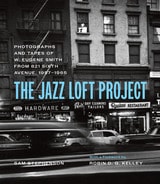
The Jazz Loft Project
Photographs and Tapes of W. Eugene Smith from 821 Sixth Avenue, 1957–1965W. Eugene Smith and Sam Stephenson
University of Chicago Press, 2023
In 1957, Eugene Smith walked away from his longtime job at Life and the home he shared with his wife and four children to move into a dilapidated, five-story loft building at 821 Sixth Avenue in New York City’s wholesale flower district. The loft was the late-night haunt of musicians, including some of the biggest names in jazz—Charles Mingus, Zoot Sims, Bill Evans, and Thelonious Monk among them. Here, from 1957 to 1965, he made nearly 40,000 photographs and approximately 4,000 hours of recordings of musicians. Smith found solace in the chaotic, somnambulistic world of the loft and its artists, and he turned his documentary impulses away from work on his major Pittsburg photo essay and toward his new surroundings.
Smith’s Jazz Loft Project has been legendary in the worlds of art, photography, and music for more than forty years, but until the publication of this book, no one had seen his extraordinary photographs or read any of the firsthand accounts of those who were there and lived to tell the tales.
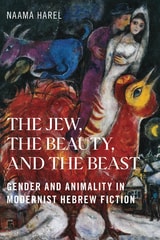
The Jew, the Beauty, and the Beast
Gender and Animality in Modernist Hebrew FictionNaama Harel
Rutgers University Press, 2026
The Jew, the Beauty, and the Beast critically explores the tangled interplay between Jewishness, gender, and animality and its manifestation in modernist Hebrew fiction. Through interdiscursive analysis and close readings, the effeminate Jew is examined vis-à-vis the animalized woman. Intertwining cutting-edge theoretical frameworks of posthumanism and animal studies with established scholarship of Hebrew literature, Jewish studies, and gender studies, Naama Harel offers new Hebrew literary historiography and innovative perspectives on canonical works by Shmuel Yosef Agnon, Devorah Baron, Micha Yosef Berdichevsky, Yosef Haim Brenner, Uri Nissan Gnessin, and David Vogel.
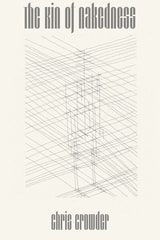
The Kin of Nakedness
Chris Crowder
Four Way Books, 2026
The debut collection from Adroit Managing Editor Chris Crowder, The Kin of Nakedness interrogates the ethics of complaining and self-work beginning with a lens focused on body image. Structured by sections that complicate the biblical definitions of servitude—being Christ’s hands and feet—and a long ars poetica, the speaker risks toward honesty as he explores his struggles and privileges as a Black and biracial man. “Digging for everything I have to write into my flesh,” Crowder works to witness the harm done to himself and others who are competing for recognition. Seeking to understand these internal and external struggles, he embodies characters, including benched quarterbacks and Jimmy Fallon, while reckoning with fractured subjects like greedy pastors and alternate universes.
In wrestling with despair, Crowder neither refuses reality nor surrenders to nihilism. The speaker of “I’m Not Always Sulking, Resting My Elbow on a Well” admits to the temptation to surrender, saying, “I can’t trick my anxious ass into thinking that things aren’t better than this,” but the elaboration of “this” becomes a litany that contradicts the insufficiency of this life: “My corgi, Eden. My parents’ garden of beans, collard greens, and spicy peppers. Reacting to heat: it’s actually got good flavor to it. So do the worst days.” Crowder has a signature gift for distilling the bizarre beauty of this existential maelstrom, the succor beside the suffering. He achieves an astonishing inverse transmogrification that shows man capable of God’s metamorphosis: not the body into bread, but the abyss into being. “Before I had skin, I hated it. / The idea.” But, though our nakedness terrifies us, the mortification of the flesh is its capacity to feel every excruciating and ecstatic thing. “Lord, // you asked me what sense / could you not bear / to lose? My answer, now, is touch.”
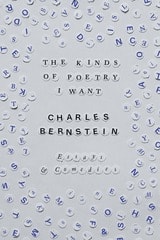
The Kinds of Poetry I Want
Essays & ComediesCharles Bernstein
University of Chicago Press, 2024
For more than four decades, Charles Bernstein has been at the forefront of experimental poetry, ever reaching for a radical poetics that defies schools, periods, and cultural institutions. The Kinds of Poetry I Want is a celebration of invention and includes not only poetry but also essays on aesthetics and literary studies, interviews with other poets, autobiographical sketches, and more.
At once a dialogic novel, long poem, and grand opera, The Kinds of Poetry I Want arrives amid renewed attacks on humanistic expression. In his polemical, humorous style, Bernstein faces these challenges head-on and affirms the enduring vitality and attraction of poetry, poetics, and literary criticism.

The Land of the Dead Is Open for Business
Jacob Strautmann
Four Way Books, 2020
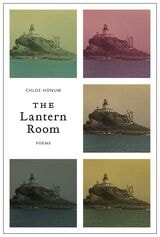
The Lantern Room
Chloe Honum
Tupelo Press, 2021
—Allison Benis Whit

The Last River
Life Along Arkansas's Lower WhiteTurner Browne
University of Arkansas Press, 1993
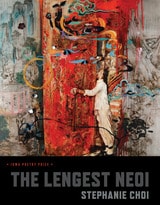
The Lengest Neoi
Stephanie Choi
University of Iowa Press, 2024
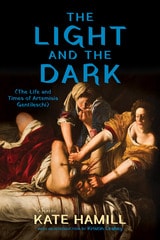
The Light and the Dark
(The Life and Times of Artemisia Gentileschi)Kate Hamill, Kristin Leahey
Northwestern University Press, 2026
A play from the inimitable Kate Hamill, based on the true story of the groundbreaking Italian painter Artemisia Gentileschi
During the seventeenth century, Italian artists strove to reshape the very image of humanity. Artemisia Gentileschi—the daughter of a painter—dreams of making her mark at a time when a woman is not thought capable of being an artist, let alone one of the greats. Just as her career begins to gain unexpected momentum, a series of devastating betrayals crack the foundation of her work—and her life. In electrifying verse and gorgeous artwork, The Light and The Dark depicts the deeply moving true story of a young woman who changed the very image of women in society . . . weaving a magnetic and empowering tapestry of ambition, rage, and resilience across the ages.
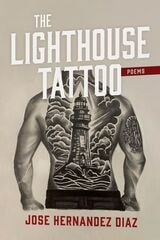
The Lighthouse Tattoo
PoemsJose Hernandez Diaz
Acre Books, 2026
In his fourth full-length collection, Jose Hernandez Diaz explores the first-generation Mexican American experience in nuanced linear verse, avant-garde offerings, and deadpan absurdist prose poems.
The Lighthouse Tattoo features plainspoken pieces that reveal the Latinx experience through the lens of a socially conscious contrarian in work that melds the quotidian and the profound. Also included, of course, are experimental prose poems in the signature style and voice that contributed to the meteoric rise of this unique artist. Invoking James Tate, Gabriel García Márquez, Salvador Dalí, Pablo Picasso, Albert Camus, Marosa di Giorgio, and others, Hernandez Diaz cements his place in both the poetic and surrealist traditions.
Even as it unravels mysteries and explores the strange—zebras in a zoo on the moon or English dragons on the Pacific Coast Highway—The Lighthouse Tattoo shines its light on the complex emotions of a seasoned Latinx poet. In this extraordinary volume, the titular tattoo itself becomes evidence of a trauma survived, an apt metaphor for the book as a whole. As one speaker says, “I’m trapped inside of this prose poem, but I don’t want to get out. It's nice and cozy in here. I’m invincible.”
The Listening Chamber
PoemsWilliam Aberg
University of Arkansas Press, 1997
The Listening Skin
Glenis Redmond
Four Way Books, 2022
The Literary Animal
Evolution and the Nature of NarrativeJonathan Gottschall and David Sloan Wilson
Northwestern University Press, 2005
The goal of this book is to overcome some of the widespread misunderstandings about the meaning of a Darwinian approach to the human mind generally, and literature specifically. The volume brings together scholars from the forefront of the new field of evolutionary literary analysis-both literary analysts who have made evolution their explanatory framework and evolutionist scientists who have taken a serious interest in literature-to show how the human propensity for literature and art can be properly framed as a true evolutionary problem. Their work is an important step toward the long-prophesied synthesis of the humanities and what Steven Pinker calls "the new sciences of human nature."
The Long Hallway
Richard Scott Larson
University of Wisconsin Press, 2024
Larson was only nine years old when he recognized something of his own experience in how Michael Myers hid his true face from the world. This spark of recognition ignited his imagination while he searched for clues to what the future might hold for boys like him, all the while being made to understand his nascent sexuality as deviant and punishable. Like in the movies, his superficially safe suburban childhood was in fact filled with threat: a classmate’s murder, his father’s alcoholism and death, and his own sexual assault by a much older man. The figurative mask Larson learned to wear could not contain his yearning to be seen and desired. In the aftermath of this violence, his boyhood self came to believe that fear and desire would be forever intertwined.
This lyrical memoir expresses a boy’s search for identity while navigating the darkness and isolation of a deeply private inner world. With introspection and tenderness, Larson reflects on how little we understand in the moment about the experiences that mark us forever.
The Long Now Conditions Permit
PoemsJami Macarty
University of Nevada Press, 2025
With ethical attention, Jami Macarty’s collection engages the political, ecological, and personal forces that shape and mark our lives, offering an ecofeminist ethic of care as an antidote to extractive capitalism and patriarchal norms. Each poem meditates on power, insists on articulating what is being lost—and what must be saved and reclaimed.
Amid the exploitation and violence, these poems find moments of grace: the scent of a sea rose, a desert walk in spring, the company of birds, Earth entire. The Long Now Conditions Permit is both tender elegy and urgent call, exhorting readers to grapple with the devastating failings of humanity and the saving possibilities of love.
The Lost Book of Life
New and Selected PoemsCharles Ghigna, Foreword by Jennifer Horne
University of Alabama Press, 2026
A poetic journey through five decades of wonder, memory, and love, where the ordinary becomes sacred and every line leads home
Spanning five decades of poetic mastery, The Lost Book of Life: New and Selected Poems is the definitive collection from Charles Ghigna, a beloved and influential voice in contemporary Southern poetry. Drawing from fourteen previous volumes and featuring thirty-seven new poems, this landmark collection captures the full arc of Ghigna’s creative evolution, from his early meditations on nature and family to his later reflections on memory, mortality, and the enduring power of love.
With graceful shifts between free verse and traditional forms, Ghigna’s voice is both intimate and expansive—clear as spring water, alive with wit, and steeped in feeling. His poems open doorways into childhood’s bright dreaming, the quiet complexities of fatherhood, and the sacred hush of daily life. Ghigna invites readers to see the world anew, to find beauty in the familiar, and to embrace the sacred in the ordinary. For longtime admirers and new readers alike, The Lost Book of Life is a luminous testament to a life devoted to poetry. It is both compass and keepsake: a celebration of poetry’s enduring light, and a lasting gift to the literature of the American South.

The Mahabharata, Volume 8
Book 12, The Book of Peace, Part 2Translated and Edited by James L. Fitzgerald
University of Chicago Press, 2026
A remarkable composition of 100,000 couplets, The Mahābhārata is the second-longest poem in world literature. In this volume, James L. Fitzgerald completes his translation of the twelfth of The Mahābhārata’s eighteen books, the vast Shanti Parvan, or The Book of Peace. Covering a wide range of ancient Indian intellectual history, The Book of Peace was intended to serve as a comprehensive, brahmin-inspired basis for living a Good Life in a Good Society in a Good Polity and is one of the most important and complex books of the poem.
Fitzgerald’s previous contribution to the Chicago edition of The Mahābhārata, volume 7, opened with Book 11, The Book of the Women, which movingly portrayed the grief of the wives, mothers, and sisters of the many warriors slain in the epic’s central war narrative. The crises of grief presented in The Book of the Women give particular poignancy and depth to the shanti, or pacification, that is the theme of Book 12, The Book of Peace. Volume 7 included the first half of The Book of Peace, and volume 8 now completes it with the second half, which is focused particularly on the ways people can escape the cycle of rebirth and realize sublime beatitude by way of saving knowledge or yoga meditation or devotion to God Viṣṇu-Nārāyaṇa. Supported by an extensive introduction and notes, this publication will be greeted as a major event in Sanskrit studies.
The Mansions
Daniel Tobin
Four Way Books, 0

The Many Deaths of Inocencio Rodriguez
Iliana Rocha
Tupelo Press, 2022
The Marvels
David Orr
Four Way Books, 2026
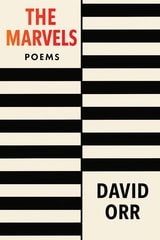
In his second collection, The Marvels, David Orr writes from the conviction that the available world is enough: its worn shirts, coffee cups, rainbows, buses, obsolete machines, failed plans, neighborly borders, and minor acts of courtesy. These poems are clear-eyed without being cold, comic without being merely light. They attend to ordinary things not as symbols waiting to be elevated, but as the actual substance of our shared existence.
Praised by The Washington Post for his “quirky, engaging poetry,” Orr brings formal control, wry wit, whimsy, and an exacting intelligence to the relentless dailiness of life. In “Coffee Cups,” two mugs have been scoured blank by the dishwasher: “Nothing makes them special now. / What they do is all they are.” Yet the household still reaches for them first, “hoping to save the others.” In “Decency,” a nearly useless blue shirt becomes kin to the small social gestures that certify “this shared space as shared”: a held door, a blessing after a sneeze, the habitual signs by which strangers acknowledge one another. And in the title poem, marvels are planted along a property line, where two neighbors meet to prune, argue, trade tools, and admire what grows between them.
Unillusioned but not disenchanted, The Marvels finds its force in persistence, use, courtesy, memory, and care. The poems do not look past the real for consolation. They look steadily at the world we have — its comedy, damage, repetition, and thin but durable fabrics of connection — until its sufficiency comes into view.