Results by title
333 books match the query 'Television' and 83 start with t
The Mouse Machine
Disney and TechnologyJ. P. Telotte
University of Illinois Press, 2007
The New Female Antihero
The Disruptive Women of Twenty-First-Century US TelevisionSarah Hagelin and Gillian Silverman
University of Chicago Press, 2022
The last ten years have seen a shift in television storytelling toward increasingly complex storylines and characters. In this study, Sarah Hagelin and Gillian Silverman zoom in on a key figure in this transformation: the archetype of the female antihero. Far from the sunny, sincere, plucky persona once demanded of female characters, the new female antihero is often selfish and deeply unlikeable.
In this entertaining and insightful study, Hagelin and Silverman explore the meanings of this profound change in the role of women characters. In the dramas of the new millennium, they show, the female antihero is ambitious, conniving, even murderous; in comedies, she is self-centered, self-sabotaging, and anti-aspirational. Across genres, these female protagonists eschew the part of good girl or role model. In their rejection of social responsibility, female antiheroes thus represent a more profound threat to the status quo than do their male counterparts. From the devious schemers of Game of Thrones, The Americans, Scandal, and Homeland, to the joyful failures of Girls, Broad City, Insecure, and SMILF, female antiheroes register a deep ambivalence about the promises of liberal feminism. They push back against the myth of the modern-day super-woman—she who “has it all”—and in so doing, they give us new ways of imagining women’s lives in contemporary America.
The New Female Antihero
The Disruptive Women of Twenty-First-Century US TelevisionSarah Hagelin and Gillian Silverman
University of Chicago Press, 2022
The New Female Antihero examines the hard-edged spies, ruthless queens, and entitled slackers of twenty-first-century television.
The last ten years have seen a shift in television storytelling toward increasingly complex storylines and characters. In this study, Sarah Hagelin and Gillian Silverman zoom in on a key figure in this transformation: the archetype of the female antihero. Far from the sunny, sincere, plucky persona once demanded of female characters, the new female antihero is often selfish and deeply unlikeable.
In this entertaining and insightful study, Hagelin and Silverman explore the meanings of this profound change in the role of women characters. In the dramas of the new millennium, they show, the female antihero is ambitious, conniving, even murderous; in comedies, she is self-centered, self-sabotaging, and anti-aspirational. Across genres, these female protagonists eschew the part of good girl or role model. In their rejection of social responsibility, female antiheroes thus represent a more profound threat to the status quo than do their male counterparts. From the devious schemers of Game of Thrones, The Americans, Scandal, and Homeland, to the joyful failures of Girls, Broad City, Insecure, and SMILF, female antiheroes register a deep ambivalence about the promises of liberal feminism. They push back against the myth of the modern-day super-woman—she who “has it all”—and in so doing, they give us new ways of imagining women’s lives in contemporary America.
The New Gay for Pay
The Sexual Politics of American Television ProductionBy Julia Himberg
University of Texas Press, 2017
Television conveys powerful messages about sexual identities, and popular shows such as Will & Grace, Ellen, Glee, Modern Family, and The Fosters are often credited with building support for gay rights, including marriage equality. At the same time, however, many dismiss TV’s portrayal of LGBT characters and issues as “gay for pay”—that is, apolitical and exploitative programming created simply for profit. In The New Gay for Pay, Julia Himberg moves beyond both of these positions to investigate the complex and multifaceted ways that television production participates in constructing sexuality, sexual identities and communities, and sexual politics.
Himberg examines the production stories behind explicitly LGBT narratives and characters, studying how industry workers themselves negotiate processes of TV development, production, marketing, and distribution. She interviews workers whose views are rarely heard, including market researchers, public relations experts, media advocacy workers, political campaigners designing strategies for TV messaging, and corporate social responsibility department officers, as well as network executives and producers. Thoroughly analyzing their comments in the light of four key issues—visibility, advocacy, diversity, and equality—Himberg reveals how the practices and belief systems of industry workers generate the conceptions of LGBT sexuality and political change that are portrayed on television. This original approach complicates and broadens our notions about who makes media; how those practitioners operate within media conglomerates; and, perhaps most important, how they contribute to commonsense ideas about sexuality.
The Prime-Time Presidency
The West Wing and U.S. NationalismTrevor Parry-Giles and Shawn J. Parry-Giles
University of Illinois Press, 2010
The Queer Fantasies of the American Family Sitcom
Pugh, Tison
Rutgers University Press, 2018
The Queer Fantasies of the American Family Sitcom examines the evasive depictions of sexuality in domestic and family-friendly sitcoms. Tison Pugh charts the history of increasing sexual depiction in this genre while also unpacking how sitcoms use sexuality as a source of power, as a kind of camouflage, and as a foundation for family building. The book examines how queerness, at first latent, became a vibrant yet continually conflicted part of the family-sitcom tradition.
Taking into account elements such as the casting of child actors, the use of and experimentation with plot traditions, the contradictory interpretive valences of comedy, and the subtle subversions of moral standards by writers and directors, Pugh points out how innocence and sexuality conflict on television. As older sitcoms often sit on a pedestal of nostalgia as representative of the Golden Age of the American Family, television history reveals a deeper, queerer vision of family bonds.
Download open access ebook here.
The Queer Revolution Was Televised
How the Gay Rights Movement Liberated TV NewsMartin Padgett
Rutgers University Press, 2027
This book demonstrates, in part through a history of emotions, how assumptions and prejudices about queer lives were challenged throughout the decade through the deceptively prosaic medium of television. Passion and disgust neatly outline the contours of the gay community’s press for equal rights at the dawn of the 1980s, just as fear and anxiety encapsulate the inchoate reactions to the emerging epidemic and the simultaneous explorations of privacy that were initiated by the onslaught of television as technology. While queer people anguished over their very survival and over the indifference of many to their situation, hope surfaced as a cause and potential treatments for HIV emerged and as the Supreme Court decided to make its first direct ruling on gay rights in a generation. When that latter hope was dashed by the Hardwick decision, the anger of gay rights advocates was trebled as they massed for the national March on Washington in homage to the 1963 March on Washington for Jobs and Freedom that lent its key political organizing and messaging tactics to it. With the realization that progress would then be slow and all-consuming, a desperation to change queer lives was enjoined by a determination to do so in the most visible ways possible, through television.
The Reflective Age
Nostalgia at the End of HistoryZachary Griffith
Rutgers University Press, 2026
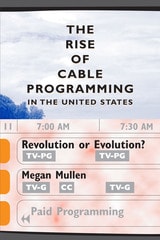
The Rise of Cable Programming in the United States
Revolution or Evolution?By Megan Mullen
University of Texas Press, 2003
Winner, McGannon Communications Research Award, 2004
In 1971, the Sloan Commission on Cable Communications likened the ongoing developments in cable television to the first uses of movable type and the invention of the telephone. Cable's proponents in the late 1960s and early 1970s hoped it would eventually remedy all the perceived ills of broadcast television, including lowest-common-denominator programming, inability to serve the needs of local audiences, and failure to recognize the needs of cultural minorities. Yet a quarter century after the "blue sky" era, cable television programming closely resembled, and indeed depended upon, broadcast television programming. Whatever happened to the Sloan Commission's "revolution now in sight"?
In this book, Megan Mullen examines the first half-century of cable television to understand why cable never achieved its promise as a radically different means of communication. Using textual analysis and oral, archival, and regulatory history, she chronicles and analyzes cable programming developments in the United States during three critical stages of the medium's history: the early community antenna (CATV) years (1948-1967), the optimistic "blue sky" years (1968-1975), and the early satellite years (1976-1995). This history clearly reveals how cable's roots as a retransmitter of broadcast signals, the regulatory constraints that stymied innovation, and the economic success of cable as an outlet for broadcast or broadcast-type programs all combined to defeat most utopian visions for cable programming.
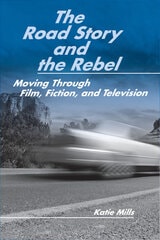
The Road Story and the Rebel
Moving Through Film, Fiction, and TelevisionKatie Mills
Southern Illinois University Press, 2006
In The Road Story and the Rebel: Moving Through Film, Fiction, and Television, Beat studies scholar Katie Mills examines how road stories, which have offered declarations of independence to generations of rebellious Americans, have been transformed by media, technology, and social movements. The genre, which includes literature, films, television shows, and several types of digital media, has evolved, says Mills, as each new generation questions its own identity and embraces the thrill of “automobility” (autonomy and mobility) thus providing audiences a means to consider radically altered notions of independence, even as the genre cycles between innovation and commodification.
This cultural history reveals the unique qualities of road stories and follows the evolution from the Beats’ postwar literary adventures to today’s postmodern reality television shows. Tracing the road story as it moves to both LeRoi Jones’s critique of the Beats’ romanticization of blacks as well as to the mainstream in the 1960s with CBS’s Route 66, Mills also documents the rebel subcultures of novelist Ken Kesey and the Merry Pranksters, who used film and LSD as inspiration on a cross-country bus trip, and she examines the sexualization of male mobility and biker mythology in the films Scorpio Rising,The Wild Angels, and Easy Rider. Mills addresses how the filmmakers of the 1970s—Coppola, Scorsese, and Bogdanovich—flourished in New Hollywood with road films that reflected mainstream audiences and how feminists Joan Didion and Betty Friedan subsequently critiqued them. A new generation of women and minority storytellers gain clout and bring genre remapping to the national consciousness, Mills explains, as the road story evolves from such novels as Song of Solomon to films like Thelma and Louise and television’s Road Rules 2.
The Road Story and the Rebel, which includes twenty illustrations, effectively explores the cultural significance of sixty years of rebellion in film, literature, television, and digital media. Spanning media platforms and marginalized communities, the text offers new interpretations of canonical works and reintroduces forgotten works, revealing the genre to be more political and philosophical than previously understood.
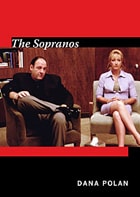
The Sopranos
Dana Polan
Duke University Press, 2009
A show about corrupt figures who parasitically try to squeeze illicit profit from the system, The Sopranos itself seems a target of attempts to glom on to its fame as a successful TV series: attempts by media executives, marketers, critics and writers, and even presidential candidates. “Everyone wants a piece of Sopranos action,” says Polan, and he traces the marketing of the series across both official and unauthorized media platforms, including cookbooks, games, DVDs, and the kitschy Sopranos bus tour. Critiquing previous books on The Sopranos, Polan suggests that in their quest to find deep meaning, many of the authors missed the show’s ironic and comedic side.

The Spectacle of Democracy
Spanish Television, Nationalism, and Political TransitionRichard Maxwell
University of Minnesota Press, 1994
The Spectacle of Democracy was first published in 1994. Minnesota Archive Editions uses digital technology to make long-unavailable books once again accessible, and are published unaltered from the original University of Minnesota Press editions.
In this age of increased global communication the media seem like juggernauts paving the way from dictatorship to democracy. Richard Maxwell's study of television in Spain overturns this myth of technological power. He shows us how transitions themselves have a profound impact on the media, as controllers of national television clash with commercial media promoters and with regionalists who want television to extend their nationalist politics and collective identity.
Maxwell's sophisticated analysis of the many variables shaping communication policy within the nation-state draws on a decade of research into Spanish culture, mass media, and political economy. Although focused on Spain, his work provides general insight into the nature of communication policy debates in today's globalized economy. A study of the transformation of television in Spain following the end of Franco's dictatorship, Maxwell's book examines the politics of the privatization of television, the rise of regional television, and the transnational realignment of national media space.Richard Maxwell is assistant professor in the department of radio, television, and film in the School of Speech at Northwestern University.
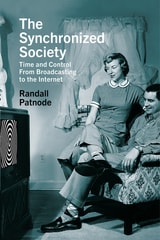
The Synchronized Society
Time and Control From Broadcasting to the InternetRandall Patnode
Rutgers University Press, 2023
The Synchronized Society traces the history of the synchronous broadcast experience of the twentieth century and the transition to the asynchronous media that dominate today. Broadcasting grew out of the latent desire by nineteenth-century industrialists, political thinkers, and social reformers to tame an unruly society by controlling how people used their time. The idea manifested itself in the form of the broadcast schedule, a managed flow of information and entertainment that required audiences to be in a particular place – usually the home – at a particular time and helped to create “water cooler” moments, as audiences reflected on their shared media texts. Audiences began disconnecting from the broadcast schedule at the end of the twentieth century, but promoters of social media and television services still kept audiences under control, replacing the schedule with surveillance of media use. Author Randall Patnode offers compelling new insights into the intermingled roles of broadcasting and industrial/post-industrial work and how Americans spend their time.
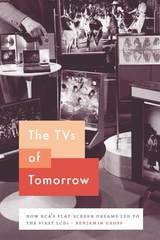
The TVs of Tomorrow
How RCA’s Flat-Screen Dreams Led to the First LCDsBenjamin Gross
University of Chicago Press, 2018
Half a century later, RCA’s dreams have become a reality, and liquid crystals are the basis of a multibillion-dollar global industry. Yet the company responsible for producing the first LCDs was unable to capitalize upon its invention. In The TVs of Tomorrow, Benjamin Gross explains this contradiction by examining the history of flat-panel display research at RCA from the perspective of the chemists, physicists, electrical engineers, and technicians at the company’s central laboratory in Princeton, New Jersey.
Drawing upon laboratory notebooks, internal reports, and interviews with key participants, Gross reconstructs the development of the LCD and situates it alongside other efforts to create a thin, lightweight replacement for the television picture tube. He shows how RCA researchers mobilized their technical expertise to secure support for their projects. He also highlights the challenges associated with the commercialization of liquid crystals at RCA and Optel—the RCA spin-off that ultimately manufactured the first LCD wristwatch. The TVs of Tomorrow is a detailed portrait of American innovation during the Cold War, which confirms that success in the electronics industry hinges upon input from both the laboratory and the boardroom.
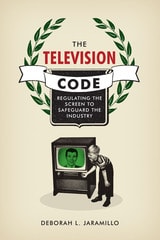
The Television Code
Regulating the Screen to Safeguard the IndustryBy Deborah L. Jaramillo
University of Texas Press, 2018
The broadcasting industry’s trade association, the National Association of Broadcasters (NAB), sought to sanitize television content via its self-regulatory document, the Television Code. The Code covered everything from the stories, images, and sounds of TV programs (no profanity, illicit sex and drinking, negative portrayals of family life and law enforcement officials, or irreverence for God and religion) to the allowable number of commercial minutes per hour of programming. It mandated that broadcasters make time for religious programming and discouraged them from charging for it. And it called for tasteful and accurate coverage of news, public events, and controversial issues.
Using archival documents from the Federal Communications Commission, NBC, the NAB, and a television reformer, Senator William Benton, this book explores the run-up to the adoption of the 1952 Television Code from the perspectives of the government, TV viewers, local broadcasters, national networks, and the industry’s trade association. Deborah L. Jaramillo analyzes the competing motives and agendas of each of these groups as she builds a convincing case that the NAB actually developed the Television Code to protect commercial television from reformers who wanted more educational programming, as well as from advocates of subscription television, an alternative distribution model to the commercial system. By agreeing to self-censor content that viewers, local stations, and politicians found objectionable, Jaramillo concludes, the NAB helped to ensure that commercial broadcast television would remain the dominant model for decades to come.
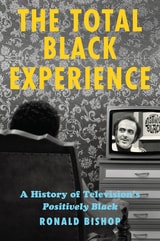
The Total Black Experience
A History of Television’s Positively BlackRonald Bishop
Rutgers University Press, 2026
The Total Black Experience is the first book to chronicle the history and social significance of Positively Black, one of the longest-running public affairs shows in the history of television. Spurred on by the findings of the Kerner Commission, executives at WNBC-TV greenlit the show and turned production over to a small but dedicated team of storytellers who quickly made it their mission to carve out a space for serious and nuanced discussion of issues important to the Black community and to celebrate all aspects of Black culture. They believed that accurate representation of their experiences was a right, not a privilege. The show’s first cohosts included the well-known Harlem-based activist Rev. Eugene Callender and Gus Heningburg, activist, successful consultant and mediator, and advocate for organized labor. Callender had founded Harlem Prep to equip young Black people for college, while Heningburg played a key role in stabilizing life in Newark following the rebellion there in the late 1960s. Both were adept at using the media to reach their constituencies. Combining in-depth interviews with painstaking archival research, The Total Black Experience introduces readers to key members of the Positively Black production team and analyzes thematic shifts in the show’s content. The book celebrates Positively Black’s longevity and challenges readers to explore the current state of Black representation on television.
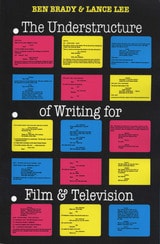
The Understructure of Writing for Film and Television
By Ben Brady and Lance Lee
University of Texas Press, 1988
This unique, comprehensive introduction to screenwriting offers practical advice for the beginning writer, whether college student or freelancer. Based on their experience as professional writers and as teachers in a large, successful screenwriting program at California State University, Northridge, the authors provide a progression of assignments at manageable screenwriting lengths for beginners. They lead students through development of a premise, treatment, stepsheet, and, finally, miniscreenplay—essential elements in writing a longer script.
A major feature of the text is the use of many example scenes from contemporary and classic American films, such as On the Waterfront, Kramer vs. Kramer, The Godfather, The Graduate, Tootsie, and more. Other scenes are drawn from international films and dramatic literature. The criticism of these scenes invites students to develop their own comparative models, while simultaneously providing exposure to the central analytical terms of good dramatic writing.
The authors also place screenwriting within the larger tradition of dramatic writing in order to put the beginning writer in touch with the wealth of art, experience, and practical ideas the drama contains. They provide an up-to-date, practical discussion of marketing and copywriting a screenplay, with addresses of relevant professional societies. Most importantly, they never offer an ill-advised shortcut or restrict students to only one way of thinking about a character, situation, or scene. In The Understructure of Writing for Film & Television, the student's thought and creativity are central.
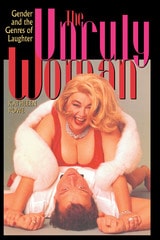
The Unruly Woman
Gender and the Genres of LaughterBy Kathleen Rowe
University of Texas Press, 1995
Unruly women have been making a spectacle of themselves in film and on television from Mae West to Roseanne Arnold. In this groundbreaking work, Kathleen Rowe explores how the unruly woman—often a voluptuous, noisy, joke-making rebel or "woman on top"—uses humor and excess to undermine patriarchal norms and authority.
At the heart of the book are detailed analyses of two highly successful unruly women—the comedian Roseanne Arnold and the Muppet Miss Piggy. Putting these two figures in a deeper cultural perspective, Rowe also examines the evolution of romantic film comedy from the classical Hollywood period to the present, showing how the comedic roles of actresses such as Katharine Hepburn, Barbara Stanwyck, and Marilyn Monroe offered an alternative, empowered image of women that differed sharply from the "suffering heroine" portrayed in classical melodramas.
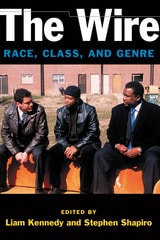
The Wire
Race, Class, and GenreEdited by Liam Kennedy and Stephen Shapiro
University of Michigan Press, 2012
Few other television series have received as much academic, media, and fan celebration as The Wire, which has been called the best dramatic series ever created. The show depicts the conflict between Baltimore's police and criminals to raise a warning about race; drug war policing; deindustrialization; and the inadequacies of America’s civic, educational, and political institutions. The show's unflinching explorations of a city in crisis and its nuanced portrayals of those affected make it a show all about race and class in America.
The essays in this volume offer a range of astute critical responses to this television phenomenon. More consistently than any other crime show of its generation, The Wire challenges viewers' perceptions of the racialization of urban space and the media conventions that support this. The Wire reminds us of just how remarkably restricted the grammar of race is on American television and related media, and of the normative codings of race---as identity, as landscape---across urban narratives, from documentary to entertainment media.
The Writers
A History of American Screenwriters and Their GuildBanks, Miranda J
Rutgers University Press, 2016
The Zoom
Drama at the Touch of a LeverHall, Nick
Rutgers University Press, 2018
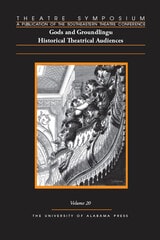
Theatre Symposium, Vol. 20
Gods and Groundlings: Historical Theatrical AudiencesEdward Bert Wallace
University of Alabama Press, 2012
transvestite theatre, Annie Oakley and the disruption of Victorian audiences, and historical attempts to create ideal audiences. Edited by E. Bert Wallace, this latest publication from the largest regional theatre organization in the United States collects the most current scholarship on theatre history and theory.
Contributors To Volume 20
Susan Bennett / Jane Barnette / Becky Becker / Lisa Bernd / Evan
Bridenstine / Michael Jaros / Robert I. Lublin / Paulette Marty
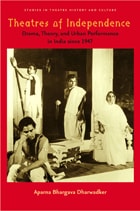
Theatres of Independence
Drama, Theory, and Urban Performance in India since 1947Aparna Bhargava Dharwadker
University of Iowa Press, 2005
The first part of Dharwadker’s study deals with the new dramatic canon that emerged after 1950 and the variety of ways in which plays are written, produced, translated, circulated, and received in a multilingual national culture. The second part traces the formation of significant postcolonial dramatic genres from their origins in myth, history, folk narrative, sociopolitical experience, and the intertextual connections between Indian, European, British, and American drama. The book’s ten appendixes collect extensive documentation of the work of leading playwrights and directors, as well as a record of the contemporary multilingual performance histories of major Indian, Western, and non-Western plays from all periods and genres. Treating drama and theatre as strategically interrelated activities, the study makes post-independence Indian theatre visible as a multifaceted critical subject to scholars of modern drama, comparative theatre, theatre history, and the new national and postcolonial literatures.
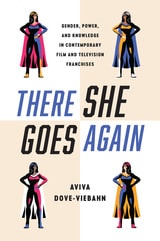
There She Goes Again
Gender, Power, and Knowledge in Contemporary Film and Television FranchisesAviva Dove-Viebahn
Rutgers University Press, 2024
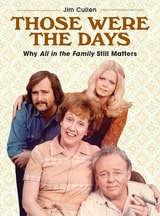
Those Were the Days
Why All in the Family Still MattersJim Cullen
Rutgers University Press, 2020
Between 1971 and 1979, All in the Family was more than just a wildly popular television sitcom that routinely drew 50 million viewers weekly. It was also a touchstone of American life, so much so that the living room chairs of the two main characters have spent the last 40 years on display at the Smithsonian. How did a show this controversial and boundary-breaking manage to become so widely beloved?
Those Were the Days is the first full-length study of this remarkable television program. Created by Norman Lear and produced by Bud Yorkin, All in the Family dared to address such taboo topics as rape, abortion, menopause, homosexuality, and racial prejudice in a way that no other sitcom had before. Through a close analysis of the sitcom’s four main characters—boorish bigot Archie Bunker, his devoted wife Edith, their feminist daughter Gloria, and her outspoken liberal husband Mike—Jim Cullen demonstrates how All in the Family was able to bridge the generation gap and appeal to a broad spectrum of American viewers in an age when a network broadcast model of television created a shared national culture.
Locating All in the Family within the larger history of American television, this book shows how it transformed the medium, not only spawning spinoffs like Maude and The Jeffersons, but also helping to inspire programs like Roseanne, Married... with Children, and The Simpsons. And it raises the question: could a show this edgy ever air on broadcast television today?
Through the Crosshairs
War, Visual Culture, and the Weaponized GazeStahl, Roger
Rutgers University Press, 2018
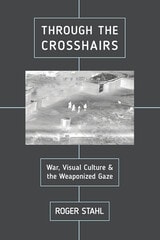
Through the Crosshairs traces the genealogy of this weapon’s-eye view across a wide range of genres, including news reports, military public relations images, action movies, video games, and social media posts. As he tracks how gun-camera footage has spilled from the battlefield onto the screens of everyday civilian life, Roger Stahl exposes how this raw video is carefully curated and edited to promote identification with military weaponry, rather than with the targeted victims. He reveals how the weaponized gaze is not only a powerful propagandistic frame, but also a prime site of struggle over the representation of state violence.
Tomboys, Pretty Boys, and Outspoken Women
The Media Revolution of 1973Edward D. Miller
University of Michigan Press, 2011
“Edward Miller has written a sharply observant, often revelatory, and stimulating book that explores the 1970s with gusto, showing all the intimacy and pleasure and startling richness of observation with which a scholar may sometimes approach a period in which he lived.”
—Martin Harries, New York University
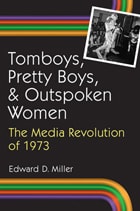
Contemporary American media is awash with reality programs, faux documentaries, and user generated content. When did this fixation on real or feigned nonfictionality begin? Tomboys, Pretty Boys, and Outspoken Women argues that its origins can be found in the early 1970s, when American media discovered the entertainment value of documentaries, news programming, and other nonfiction forms. Edward D. Miller challenges preconceptions of the ’60s and ’70s through close readings of key events and important figures in the early 1970s: John Dean’s performance in front of the Senate during the Watergate Hearings; Billie Jean King popularizing tennis by taking on Bobby Riggs in a prime-time match; David Bowie experiencing “outer space” in his tours across America; An American Family and their gay son facing the public’s consternation; and Alison Steele, a female DJ who invited listeners to fly with her at night. Miller explores the early 1970s as a turning point in American culture, with nonfiction media of the time creating new possibilities for expressions of gender and sexuality, and argues that we are living in its aftermath.
In addition to readers attracted to media studies, this book will be of great interest to those involved in LGBT studies, feminism, and queer studies as well as students of contemporary media culture. The aim of the book is to demystify current media trends by providing an analysis of the recent past. Tomboys, Pretty Boys, and Outspoken Women is written for a large audience that extends beyond academia and embraces readers who have an interest in American pop culture and, in particular, the '70s.
Tragedy Plus Time
National Trauma and Television ComedyBy Philip Scepanski
University of Texas Press, 2021
Following the most solemn moments in recent American history, comedians have tested the limits of how soon is “too soon” to joke about tragedy. Comics confront the horrifying events and shocking moments that capture national attention and probe the acceptable, or “sayable,” boundaries of expression that shape our cultural memory. In Tragedy Plus Time, Philip Scepanski examines the role of humor, particularly televised comedy, in constructing and policing group identity and memory in the wake of large-scale events.
Tragedy Plus Time is the first comprehensive work to investigate tragedy-driven comedy in the aftermaths of such traumas as the JFK assassination and 9/11, as well as during the administration of Donald Trump. Focusing on the mass publicization of television comedy, Scepanski considers issues of censorship and memory construction in the ways comedians negotiate emotions, politics, war, race, and Islamophobia. Amid the media frenzy and conflicting expressions of grief following a public tragedy, comedians provoke or risk controversy to grapple publicly with national traumas that all Americans are trying to understand for themselves.
Transgenerational Media Industries
Adults, Children, and the Reproduction of CultureDerek Johnson
University of Michigan Press, 2019
Derek Johnson presents an innovative perspective that looks beyond the simple category of “kids’ media” to consider how entertainment industry strategies invite producers and consumers alike to cross boundaries between adulthood and childhood, professional and amateur, new media and old. Revealing the social norms, reproductive ideals, and labor hierarchies on which such transformations depend, he identifies the lines of authority and power around which legacy media institutions like television, comics, and toys imagine their futures in a digital age. Johnson proposes that it is not strategies of media production, but of media reproduction, that are most essential in this context. To understand these critical intersections, he investigates transgenerational industry practice in television co-viewing, recruitment of adult comic readers as youth outreach ambassadors, media professionals’ identification with childhood, the branded management of adult fans of LEGO, and the labor of child YouTube video creators. These dynamic relationships may appear to disrupt generational and industry boundaries alike. However, by considering who media industries empower when generating the future in these reproductive terms and who they leave out, Johnson ultimately demonstrates how their strategies reinforce existing power structures.
This book makes vital contributions to media studies in its fresh approach to the intersections of adulthood and childhood, its attention to the relationship between legacy and digital media industries, and its advancement of dialogue between media production and consumption researchers. It will interest scholars in media industry studies and across media studies more broadly, with particular appeal to those concerned about the current and future reach of media industries into our lives.
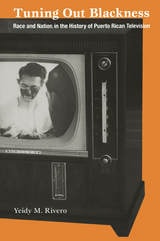
Tuning Out Blackness
Race and Nation in the History of Puerto Rican TelevisionYeidy M. Rivero
Duke University Press, 2005
Drawing on interviews, participant observation, archival research, and textual analysis, Rivero considers representations of race in Puerto Rico, taking into account how they are intertwined with the island’s status as a U.S. commonwealth, its national culture, its relationship with Cuba before the Cuban Revolution in 1959, and the massive influx of Cuban migrants after 1960. She focuses on locally produced radio and television shows, particular television events, and characters that became popular media icons—from the performer Ramón Rivero’s use of blackface and “black” voice in the 1940s and 1950s, to the battle between black actors and television industry officials over racism in the 1970s, to the creation, in the 1990s, of the first Puerto Rican situation comedy featuring a black family. As the twentieth century drew to a close, multinational corporations had purchased all Puerto Rican stations and threatened to wipe out locally produced programs. Tuning Out Blackness brings to the forefront the marginalization of nonwhite citizens in Puerto Rico’s media culture and raises important questions about the significance of local sites of television production.
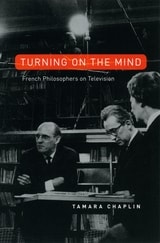
Turning On the Mind
French Philosophers on TelevisionTamara Chaplin
University of Chicago Press, 2007
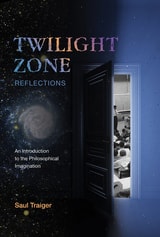
Twilight Zone Reflections
An Introduction to the Philosophical ImaginationSaul Traiger
Lever Press, 2024
Each short chapter dives into a single episode and concludes with helpful cross-references to other episodes that explore similar philosophical problems and subjects. For example, a reader may be interested in questions about the nature of the mind and whether machines can think. By referencing this book, they could easily discover the thematic connections between episodes like “I Sing the Body Electric” or “The Lateness of the Hour,” and learn how both episodes introduce the viewer to possible worlds that challenge us to consider whether our idea of the mind, and even our very personhood, extends beyond the human to robots and other artificial intelligences. Each chapter introduces fundamental philosophical questions such as these through the lens of The Twilight Zone and inspires additional exploration. Further readings are suggested for all episodes, making this volume indispensable to academics, students, and fans of the show. Each chapter is short and accessible, ensuring that this book is the perfect resource to accompany a complete series re-watch.
The Twilight Zone considered questions that strike at the heart of philosophical inquiry, such as the nature of self, the existence of god, the possibility of an afterlife, the relationship between knowledge and mental illness, the nature of possibility, even the nature of imagination itself, and so much more. Traiger argues that each episode can serve as an entry point for philosophical reflection. Twilight Zone Reflections is a valuable reference for anyone interested in exploring a well-known slice of popular culture history that doubles as a vast store of philosophical ideas.
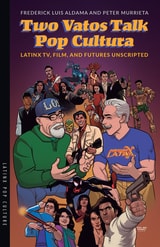
Two Vatos Talk Pop Cultura
Latinx TV, Film, and Futures UnscriptedFrederick Luis Aldama and Peter Murrieta
University of Arizona Press, 2026
Two Vatos Talk Pop Cultura brings a leading Latinx media studies scholar, Frederick Luis Aldama, together with an award-winning television writer and producer, Peter Murrieta, to examine how Latinx representation has evolved—and stagnated—across seven decades of American TV, film, and pop culture.