Results by title
1185 books match the query 'Travel' and 292 start with t

The Cuba Reader
History, Culture, PoliticsAviva Chomsky, Barry Carr, Alfredo Prieto, and Pamela Maria Smorkaloff, editors
Duke University Press, 2019
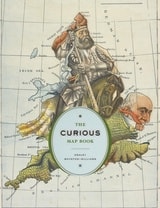
The Curious Map Book
Ashley Baynton-Williams
University of Chicago Press, 2015
Over the centuries, maps have served many varied purposes; far from mere guides for reaching a destination, they are unique artistic forms, aides in planning commercial routes, literary devices for illuminating a story. Accuracy—or inaccuracy—of maps has been the make-or-break factor in countless military battles throughout history. They have graced the walls of homes, bringing prestige and elegance to their owners. They track the mountains, oceans, and stars of our existence. Maps help us make sense of our worlds both real and imaginary—they bring order to the seeming chaos of our surroundings.
With The Curious Map Book, Ashley Baynton-Williams gathers an amazing, chronologically ordered variety of cartographic gems, mainly from the vast collection of the British Library. He has unearthed a wide array of the whimsical and fantastic, from maps of board games to political ones, maps of the Holy Land to maps of the human soul. In his illuminating introduction, Baynton-Williams also identifies and expounds upon key themes of map production, peculiar styles, and the commerce and collection of unique maps. This incredible volume offers a wealth of gorgeous illustrations for anyone who is cartographically curious.
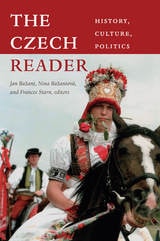
The Czech Reader
History, Culture, PoliticsJan Bazant, Nina Bazantová, and Frances Starn, eds.
Duke University Press, 2010
The Darién Gap
A Reporter's Journey through the Deadly Crossroads of the AmericasBelén Fernández
Rutgers University Press, 2025
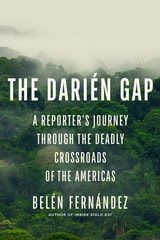
The narrow Darién Gap, the only land bridge connecting South and Central America, encompasses a spectacularly hostile jungle, covered in steep mountains, dense rainforests, and flood-prone marshes. Known in Spanish as el infierno verde, or “the green hell,” it is one of the most inhospitable places in the world. Its terrain is too treacherous for roads, yet hundreds of thousands of refuge seekers contend with its horrors every year in the hopes of reaching the United States, still some three thousand miles away. And of the countless who set out for the border, an untold number never arrive.
In this book, journalist Belén Fernández travels through the Darién Gap to report on the dehumanizing and deadly stretch of land that has become a mass graveyard for migrants. Fernández’s journey brings her into contact with refuge seekers, people smugglers, law enforcement officials, and many more whose stories bring life to a place overwhelmingly associated with death. Combining history, on-the-ground reporting, travelogue, memoir, and searing politico-economic analysis, she shines light on a largely made-in-the-USA crisis that has come to define our modern era.
Engrossing and heartrending, The Darién Gap is a poignant and compassionate indictment of structural inequality and institutionalized inhumanity in a world where the have-nots must risk death for a chance at a better life—or any life at all.
The Dead Ladies Project
Exiles, Expats, and Ex-CountriesJessa Crispin
University of Chicago Press, 2015
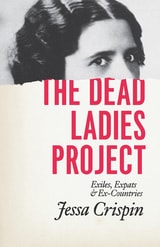
The Dead Ladies Project is an account of that journey—but it’s also much, much more. Fascinated by exile, Crispin travels an itinerary of key locations in its literary map, of places that have drawn writers who needed to break free from their origins and start afresh. As she reflects on William James struggling through despair in Berlin, Nora Barnacle dependant on and dependable for James Joyce in Trieste, Maud Gonne fomenting revolution and fostering myth in Dublin, or Igor Stravinsky starting over from nothing in Switzerland, Crispin interweaves biography, incisive literary analysis, and personal experience into a rich meditation on the complicated interactions of place, personality, and society that can make escape and reinvention such an attractive, even intoxicating proposition.
Personal and profane, funny and fervent, The Dead Ladies Project ranges from the nineteenth century to the present, from historical figures to brand-new hangovers, in search, ultimately, of an answer to a bedrock question: How does a person decide how to live their life?

The Deaf-Mute Boy
Joseph Geraci
University of Wisconsin Press, 2006
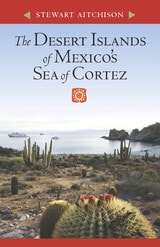
The Desert Islands of Mexico’s Sea of Cortez
Stewart Aitchison
University of Arizona Press, 2010
The Desert Islands of Mexico’s Sea of Cortez is one of the few books devoted to the biogeography of this remarkable part of the world. The book explores the geologic origin of the gulf and its islands, presents some of the basics of island biogeography, details insular life—including residents of the intertidal zone —and provides a brief outlook for preserving this area. More than a simple guidebook, Aitchison’s writing will take both actual and armchair travelers through a gripping tale of natural history.
Like the rest of our fragile planet, the Sea of Cortez and its islands are threatened by humans. Overfishing has eliminated or greatly diminished many fish stocks, and dams on rivers that once flowed into the gulf prevent certain nutrients from reaching the sea. The tenuousness of this area makes the book’s extraordinary photographs and the firsthand descriptions by a well-known teacher, writer, and photographer all the more compelling.

The Dominican Republic Reader
History, Culture, PoliticsEric Paul Roorda, Lauren Derby, and Raymundo González , eds.
Duke University Press, 2014
The Driftless Reader
Edited by Curt Meine and Keefe Keeley
University of Wisconsin Press, 2017
The Driftless Reader gathers writings that highlight the unique natural and cultural history, landscape, and literature of this region that encompasses southwestern Wisconsin and adjacent Minnesota, Iowa, and Illinois. The more than eighty selected texts include writings by Black Hawk, Mark Twain, Laura Ingalls Wilder, Frank Lloyd Wright, Aldo Leopold, David Rhodes, and many other Native people, explorers, scientists, historians, farmers, songwriters, journalists, and poets. Paintings, photographs, maps, and other images complement the texts, providing a deeper appreciation of this region's layered natural and human history.
Highlights include excerpts and art from:
Carol Ryrie Brink
William Cronon
John T. Curtis
August Derleth
Richard Eberhart
Fabu
Hamlin Garland
Pedro Guerrero
Hoowaneka (Little Elk)
Juliet Kinzie
Patty Loew
Ben Logan
Truman Lowe
Jacques Marquette
Ken McCullough
Edna Meudt
Mountain Wolf Woman
Zebulon Pike
Henry Schoolcraft
Clifford D. Simak
Wallace Stegner
Pearl Swiggum
Frank Utpatel
Mark Wunderlich
The Dune's Twisted Edge
Journeys in the LevantGabriel Levin
University of Chicago Press, 2012
The East Florida Expeditions of Clarence Bloomfield Moore
Clarence Bloomfield Moore, edited by Jeffrey M. Mitchem
University of Alabama Press, 1999
A Dan Josselyn Memorial Publication
This comprehensive compilation of Moore's archaeological publications on eastern Florida will prove an invaluable primary resource for Florida archaeologists.
Clarence B. Moore (1852-1936), a wealthy Philadelphia socialite, paper company heir, and photographer made the archaeology of the Southeast his passion beginning in the 1870s. This volume collects 17 of Moore's publications on East Florida, originally published between 1892 and 1903. These invaluable and copiously illustrated works document the results of Moore's numerous archaeological expeditions along Florida's eastern coastline from the Georgia border to Lake Okeechobee and focus primarily on sites along the St. Johns River and its tributaries. Moore's archaeological work in East Florida was arguably his best and most thorough research from a modern perspective.
Jeffrey Mitchem's introduction to this volume describes and analyzes Moore's work in East Florida, summarizes what we know about the sites Moore investigated, and surveys subsequent archaeological work conducted in this area since Moore's expeditions. Mitchem's introduction highlights the significance of Moore's work on the shell heaps along the St. Johns River. It led to the earliest recorded instance of a researcher noting the changes in pottery styles in the region, a major key to establishing chronologies.In 1894, Moore wrote of his hope "that the archaeology of Florida may be redeemed from the obscurity that has hitherto characterized it." Over a century later, this Press has aimed to fulfill Moore's wish by reprinting this and other collections of his archaeological publications.
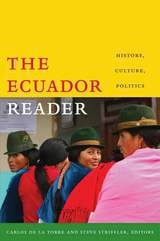
The Ecuador Reader
History, Culture, PoliticsCarlos de la Torre and Steve Striffler, eds.
Duke University Press, 2008
The voices and creations of Ecuadorian politicians, writers, artists, scholars, activists, and journalists fill the Reader, from José María Velasco Ibarra, the nation’s ultimate populist and five-time president, to Pancho Jaime, a political satirist; from Julio Jaramillo, a popular twentieth-century singer, to anonymous indigenous women artists who produced ceramics in the 1500s; and from the poems of Afro-Ecuadorians, to the fiction of the vanguardist Pablo Palacio, to a recipe for traditional Quiteño-style shrimp. The Reader includes an interview with Nina Pacari, the first indigenous woman elected to Ecuador’s national assembly, and a reflection on how to balance tourism with the protection of the Galápagos Islands’ magnificent ecosystem. Complementing selections by Ecuadorians, many never published in English, are samples of some of the best writing on Ecuador by outsiders, including an account of how an indigenous group with non-Inca origins came to see themselves as definitively Incan, an exploration of the fascination with the Andes from the 1700s to the present, chronicles of the less-than-exemplary behavior of U.S. corporations in Ecuador, an examination of Ecuadorians’ overseas migration, and a look at the controversy surrounding the selection of the first black Miss Ecuador.
The Ends of the Earth
Roger Willemsen
Haus Publishing, 2010
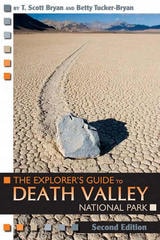
The Explorer's Guide to Death Valley National Park, Second Edition
T. Scott Bryan
University Press of Colorado, 2009
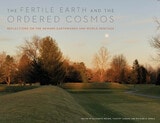
The Fertile Earth and the Ordered Cosmos
Reflections on the Newark Earthworks and World HeritageEdited by M. Elizabeth Weiser, Timothy R. W. Jordan, and Richard D. Shiels
The Ohio State University Press, 2023
The lush photos and wide-ranging essays of The Fertile Earth and the Ordered Cosmos honor this significance, not only to the global community but to local individuals and scholars who have developed intimate connections to the Earthworks. In sharing their experiences with this ancient site, public historians, archaeologists, physicists, architects, and others—including local and Indigenous voices—continue the work of nearly two hundred years of citizen efforts to protect and make accessible the Newark Earthworks after centuries of stewardship by Indigenous people. The resulting volume serves as a rich primer on the site for those unfamiliar with its history and a beautifully produced tribute for those who are already acquainted with its wonders.
The Forgotten Peninsula
A Naturalist in Baja CaliforniaJoseph Wood Krutch
University of Arizona Press, 1986
"His superb writing style and the timelessness of his subject (the natural world and the interaction of human beings with it) make this every bit as enjoyable today as it was in the 1960's."—Books of the Southwest
"Well-written and fascinating."—Journal of Arid Environments
The Gap Years
Climbing, Skiing, and the Journey BackTom French
Brandeis University Press, 2026
At the end of 2019, Tom French retired from a four-decade career in business, determined to return to interests that had defined his youth and see what meaning they still held. One of these interests was mountaineering. Another was adventure travel, with a particular focus on Nepal. A third was cross-country ski racing. Having taken “gap years” between school and university, and again before he started work, he decided to take a gap year before settling into the expectations of retirement. One year turned into three as he rebuilt his athletic strength, competed in cross-country ski marathons, and climbed some of the world’s highest mountains, including two expeditions to Mount Everest. On the first Everest climb, a cyclone forced him to turn around high on the mountain and descend the treacherous Lhotse Face in a blizzard. On the second, he approached the mountain through the remote Makalu Barun region, the first climber ever to do so, and climbed to the summit on a moonlit night.
But this is a book about much more than Everest. It is about beauty and joy found in wild places, about cross-country ski racing and mountaineering more broadly, and—most of all—about a journey to find meaning in life and reconnect with the passions of youth.
The Geckos of Bellapais
Memories of CyprusJoachim Sartorius
Haus Publishing, 2013
In The Geckos of Bellapais, Joachim Sartorius shares the cultures and legends, colors and lights of the Levant. He explores the island’s history—including its division after the Turkish invasion of 1974 and the difficulties that followed. A revealing exploration of Cyprus after the Turkish partition and an evocative account of one poet’s life on one of the most beautiful islands in the Mediterranean, this book belongs among the world’s best travel writing.
The Genealogical Imagination
Two Studies of Life over TimeMichael Jackson
Duke University Press, 2021

The George Washington Bridge
Poetry in SteelMichael Aaron Rockland
Rutgers University Press, 2008
Intimate and engaging, Michael Rockland's rich narrative presents perspectives on the GWB, as it is often called, that span history, architecture, engineering, transportation, design, the arts, politics, and even post-9/11 mentality. Stunning archival photos, from the late 1920s when the bridge was built through the present, are a powerful complement to the bridge's history. Rockland covers the competition between the GWB and the Brooklyn Bridge that parallels the rivalry between New Jersey and New York City. Readers will learn about the Swiss immigrant Othmar Ammann, an unsung hero who designed and built the GWB, and how a lack of funding during the Depression dictated the iconic, uncovered steel beams of its towers, which we admire today. There are chapters discussing accidents on the bridge, such as an airplane crash landing in the westbound lanes and the sad story of suicides off its span; the appearance of the bridge in media and the arts; and Rockland's personal adventures on the bridge, including scaling its massive towers on a cable.
Movies, television shows, songs, novels, countless images, and even PlayStation 2 games have aided the GWB in becoming a part of the global popular culture. This tribute will captivate residents living in the shadow of the GWB, the millions who walk, jog, bike, skate, or drive across it, as well as tourists and those who will visit it some day.
- First major book on the George Washington Bridge
- Full of amazing facts about the GWB that will surprise even bridge historians
- Includes over 30 spectacular illustrations, ranging from archival photographs of the building of the bridge to those that show it draped in an enormous flag after 9/11
- Includes personal accounts of the author's adventures on the bridge
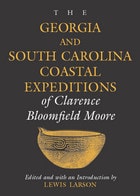
The Georgia and South Carolina Coastal Expeditions of Clarence Bloomfield Moore
Clarence Bloomfield Moore, edited by Lewis Larson
University of Alabama Press, 1998
A Dan Josselyn Memorial Publication
This facsimile edition of Moore's Georgia and South Carolina expeditions includes an extensive new introduction from Georgia's senior archaeologist.
This compilation of Clarence Bloomfield Moore's investigations along the rich coastal and river drainages of Georgia and South Carolina makes
available in a single volume valuable works published a century ago. By modern standards Moore's excavation techniques were crude, but his results were nothing less than spectacular. He recorded data with care, and much information can be learned from his works. In some cases his publications are the only documentation extant for sites that have since been destroyed. In one case, relic collectors had destroyed six mounds at Mason's Plantation—the largest Mississippian center in the Savannah River valley—by the time Moore visited the site in 1897.
Moore also documented prehistoric urn burials, a ritual widely practiced in eastern North America but more frequently on the Gulf Coastal Plain
of Alabama and coastal sites in Georgia and South Carolina. In the introduction, Lewis Larson discusses Moore's investigations within the framework of the current understanding of Georgia and South Carolina coastal archaeological chronology.
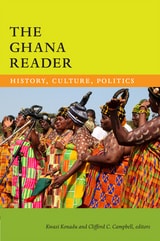
The Ghana Reader
History, Culture, PoliticsKwasi Konadu and Clifford C. Campbell, editors
Duke University Press, 2016

The Ghosts of Berlin
Confronting German History in the Urban LandscapeBrian Ladd
University of Chicago Press, 2018
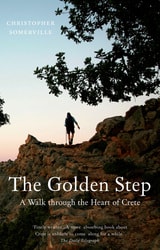
The Golden Step
A Walk Through the Heart of CreteChristopher Somerville
Haus Publishing, 2012
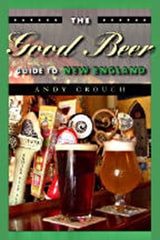
The Good Beer Guide to New England
Andy Crouch
University Press of New England, 2006
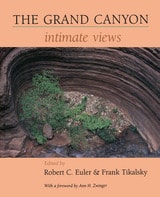
The Grand Canyon
Intimate ViewsEdited by Robert C. Euler and Frank Tikalsky; Foreword by Ann H. Zwinger
University of Arizona Press, 1992
Contents
Foreword, by Ann H. Zwinger
1. The Geologic Record, by Stanley S. Beus
2. The Living Canyon, by Steven W. Carothers
3. Grand Canyon Indians, by Robert C. Euler
4. Historical Explorations, by Robert C. Euler
5. The Canyon by River, by Kim Crumbo
6. Hiking the Canyon, by Frank Tikalsky
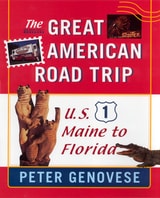
The Great American Road Trip
U.S. 1, Maine to FloridaGenovese, Peter
Rutgers University Press, 1999
Take an unforgettable road trip down one of America’s most fascinating highways, U.S.
On what highway can you find the headquarters of the FBI, Dow Jones Interactive, and the National Enquirer? What road is home to the Bronx Zoo, the Okefenokee Swamp, and Flipper? On the side of what freeway can you find the Super Duper Weenie Wagon, Larry’s Redneck Bar, and the Big Chicken Barn? Peter Genovese found them all, along with about a million other fascinating and bizarre attractions, on U.S. 1, ‘the best damn highway in America,” as he calls it. Join him for the road trip of a lifetime The Great American Road Trip: A Journey Down U.S. 1.
U.S. 1 may not be America’s scenic highway, but it’s certainly the most colorful. It runs through Boston, New York, Baltimore, Washington, D.C., and Miami, in addition to Caribou, Maine, Quonochontaug, Rhode Island, and Alma, Georgia. It zig-zags along the wild and beautiful Maine coast and soars over the Atlantic Ocean as the Overseas Highway, one of the most spectacular stretches of road anywhere. The Star-Spangled Banner is on U.S. 1. Madonna lived on U.S. 1 (until she sold her house to Rosie O'Donnell). U.S. 1 is Main Street and the Miracle Mile, two-lane blacktop and six-lane expressway, straight as an arrow in some places and twistier than a Philadelphia soft pretzel in others.
Genovese spent two years on U.S. 1, talking to everyone from doughnut makers, dolphin trainers, and swamp guides to real Miami vice cops and the keeper of the national parasite collection. His resulting book is the most complete portrait of an American highway ever written. With his unerring eye for detail, sense of humor, and understanding of human nature, Genovese takes readers on a sometimes funny, sometimes sad, always illuminating 2,450-mile journey from Fort Kent, Maine to Key West, Florida.
Ride along with Genovese and grab a drink at the Last Resort Bar or the Last Chance Saloon, then pick up a paperback at the Banned Bookstore. Visit Oscar, the biggest gator in the Okefenokee Swamp, have dinner at Hog Heaven, and take in a Portland Seadogs baseball game. Tour a Budweiser brewery and go into the pit at a NASCAR race. Looking for someplace to stay? How about the world’s only underwater hotel, the Jules’ Undersea Lodge, or in a cabin made entirely from one pine tree at the Maine Idyll Motor Court? If it’s culture you seek, the highway boasts dozens of museums. While you may have heard of the Museum of Natural History and the National Museum of American Art, how about the Blacks in Wax Museum, Tragedy in the United States Museum, and the Mushroom Museum? There’s something for everyone on U.S. 1, and Genovese has written about it all in The Great American Road Trip.
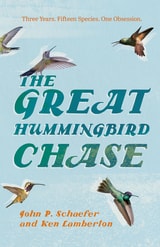
The Great Hummingbird Chase
John P. Schaefer and Ken Lamberton
University of Arizona Press, 2027
Southern Arizona is a world-renown hummingbird destination. The Great Hummingbird Chase chronicles John P. Schaefer and Ken Lamberton’s passionate quest to photograph all fifteen of Arizona’s hummingbird species.

The Greatest Ballpark Ever
Ebbets Field and the Story of the Brooklyn DodgersMcGee, Bob
Rutgers University Press, 2005
In this lively story of sports, politics, and the talented, hilarious, and charming characters associated with the Brooklyn Dodgers, Bob McGee chronicles the ballpark's vibrant history from the drawing board to the wrecking ball, beginning with Charley Ebbets and the heralded opening in 1913, on through the eras that followed. McGee weaves a story about how Ebbets Field's architectural details, notable flaws, and striking facade brought Brooklyn and its team together in ways that allowed each to define the other.
Drawing on original interviews and letters, as well as published and archival sources, The Greatest Ballpark Ever explores the struggle of Charley Ebbets to build Ebbets Field, the days of Wilbert Robinson's early pennant winners, the eras of the Daffiness Boys, Larry MacPhail, and Branch Rickey, the tumultuous field leadership of Leo the Lip, the fiery triumph of Jackie Robinson, the golden days of the Boys of Summer, and Walter O'Malley's ignominious departure.
With humor and passion, The Greatest Ballpark Ever lets readers relive a day in the raucous ballpark with its quirky angles and its bent right-field wall, with the characters and events that have become part of the nation's folklore.
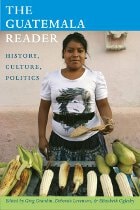
The Guatemala Reader
History, Culture, PoliticsGreg Grandin, Deborah T. Levenson, and Elizabeth Oglesby, eds.
Duke University Press, 2011
The Guide to Iowa's State Preserves
Herzberg, Ruth & John A. Pearson
University of Iowa Press, 2001
The Iowa state preserves system was created in 1965; a decade later, thirty preserves had been dedicated, including “six native prairies, a native White Pine stand, the state's only Sphagnum bog, a Balsam Fir stand, some of the oldest exposed rock outcrops in the world, an ancient fort, a fen, several Indian mound groups and a historical cemetery.” This new guide to all ninety Iowa state preserves—biological, geological, archaeological, historical, and scenic—describes the state's most treasured prairies and forests, quartzite outcrops and ice caves, and Indian mounds and wetlands as well as such historic sites as Fort Atkinson and Montauk.
Each entry includes two-color, progressively scaled maps giving the location of the preserve within the state, within its county, relative to a nearby town (with a recommended driving route), and on the local landscape (using USGS 7.5-minute topo maps). Also included are written directions (using 911 street names and signs); a description of the preserve's size, features, and history; a list of nearby or similar preserves, parks, natural areas, and other attractions; recommended readings; and contact information. (There are a few exceptions for privately owned or fragile preserves.) For travelers, a map in the introduction numbers all the preserves both geographically and alphabetically by name.
Although the preserves system emphasizes preservation rather than recreation, some preserves do have formal trails; some allow hunting, horseback riding, and canoeing; a few have museums or nature centers. This comprehensive guide allows visitors to plan active and informative visits to sites that highlight Iowa's natural and cultural heritage.
The Haiti Reader
History, Culture, PoliticsLaurent Dubois, Kaiama L. Glover, Nadève Ménard, Millery Polyné, and Chantalle F. Verna, editors
Duke University Press, 2020
The Hanford Reach
A Land of ContrastsText by Susan Zwinger; Photographs by Skip Smith
University of Arizona Press, 2004
The Haydn Economy
Music, Aesthetics, and Commerce in the Late Eighteenth CenturyNicholas Mathew
University of Chicago Press, 2022
In this far-reaching work of music history and criticism, Nicholas Mathew reimagines the world of Joseph Haydn and his contemporaries, with its catastrophic upheavals and thrilling sense of potential. In the process, Mathew tackles critical questions of particular moment: how we tell the history of the European Enlightenment and Romanticism; the relation of late eighteenth-century culture to incipient capitalism and European colonialism; and how the modern market and modern aesthetic values were—and remain—inextricably entwined.
The Haydn Economy weaves a vibrant material history of Haydn’s career, extending from the sphere of the ancient Esterházy court to his frenetic years as an entrepreneur plying between London and Vienna to his final decade as a venerable musical celebrity, during which he witnessed the transformation of his legacy by a new generation of students and acolytes, Beethoven foremost among them. Ultimately, Mathew asserts, Haydn’s historical trajectory compels us to ask what we might retain from the cultural and political practices of European modernity—whether we can extract and preserve its moral promise from its moral failures. And it demands that we confront the deep histories of capitalism that continue to shape our beliefs about music, sound, and material culture.
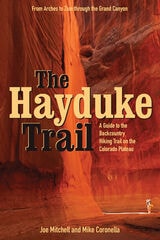
The Hayduke Trail
A Guide to the Backcountry Hiking Trail on the Colorado PlateauJoe Mitchell
University of Utah Press, 2005
Joe Mitchell and Mike Coronella pioneered Hayduke after concluding that a long trail—such as the Appalachian or Pacific Crest— was possible on the Plateau, thus introducing more people to these unique and threatened public lands. The Hayduke Trail includes detailed maps of the entire route, suggested cache points, and a wealth of description and tips for tackling this intense undertaking.
Hiking the entire route requires at least three months, though like other long trails it can be broken into smaller segments. The guide, featured in the March 2005 issue of National Geographic Adventure Magazine, is designed for experienced desert trekkers seeking a thorough-hiking experience on a well-tested route.
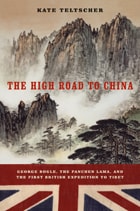
The High Road to China
George Bogle, the Panchen Lama, and the First British Expedition to TibetKate Teltscher
Northwestern University Press, 2008
Bogle was able to gain an audience with the Panchen Lama, and in him he found much more than a business partner; the Incarnate Lama was a friendly man who loved to discuss politics, science, art, and culture. Bogle gradually became less of a tourist and less of a colonist, growing comfortable and happy the longer he spent in Tibet even as his mission to open China failed. All the while, he kept a detailed journal—his prose by turn playful, self-deprecating, grandiose, and shrewd—and this revelatory document gives readers an exhilarating front seat to the beginnings of international relationships that exert their effects even now.
Teltscher’s portrayal of Bogle’s unique diplomatic relationship with the holy man is an admission that history is made by people—and people have emotions, flaws, and feelings that enrich and affect history.
The History of Cartography, Volume 3 (Replacement Volume)
Cartography in the European Renaissance, Part 1Edited by David Woodward
University of Chicago Press, 2007
Cartography in the European Renaissance treats the period from 1450 to 1650, long considered the most important in the history of European mapping. This period witnessed a flowering in the production of maps comparable to that in the fields of literature and fine arts. Scientific advances, appropriations of classical mapping techniques, burgeoning trade routes—all such massive changes drove an explosion in the making and using of maps. While this volume presents detailed histories of mapping in such well-documented regions as Italy and Spain, it also breaks significant new ground by treating Renaissance Europe in its most expansive geographical sense, giving careful attention to often-neglected regions like Scandinavia, East-Central Europe, and Russia, and by providing innovative interpretive essays on the technological, scientific, cultural, and social aspects of cartography.
Lavishly illustrated with more than a thousand maps, many in color, the two volumes of Cartography in the European Renaissance will be the unsurpassable standard in its field, both defining it and propelling it forward.
The History of Cartography, Volume 3 (Replacement Volume)
Cartography in the European Renaissance, Part 2Edited by David Woodward
University of Chicago Press, 2007
Cartography in the European Renaissance treats the period from 1450 to 1650, long considered the most important in the history of European mapping. This period witnessed a flowering in the production of maps comparable to that in the fields of literature and fine arts. Scientific advances, appropriations of classical mapping techniques, burgeoning trade routes—all such massive changes drove an explosion in the making and using of maps. While this volume presents detailed histories of mapping in such well-documented regions as Italy and Spain, it also breaks significant new ground by treating Renaissance Europe in its most expansive geographical sense, giving careful attention to often-neglected regions like Scandinavia, East-Central Europe, and Russia, and by providing innovative interpretive essays on the technological, scientific, cultural, and social aspects of cartography.
Lavishly illustrated with more than a thousand maps, many in color, the two volumes of Cartography in the European Renaissance will be the unsurpassable standard in its field, both defining it and propelling it forward.
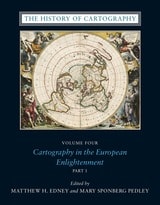
The History of Cartography, Volume Four
Cartography in the European EnlightenmentEdited by Matthew H. Edney and Mary Sponberg Pedley
University of Chicago Press, 2020
The social and intellectual changes that swept Enlightenment Europe also transformed many of its mapmaking practices. A new emphasis on geometric principles gave rise to improved tools for measuring and mapping the world, even as large-scale cartographic projects became possible under the aegis of powerful states. Yet older mapping practices persisted: Enlightenment cartography encompassed a wide variety of processes for making, circulating, and using maps of different types. The volume’s more than four hundred encyclopedic articles explore the era’s mapping, covering topics both detailed—such as geodetic surveying, thematic mapping, and map collecting—and broad, such as women and cartography, cartography and the economy, and the art and design of maps. Copious bibliographical references and nearly one thousand full-color illustrations complement the detailed entries.
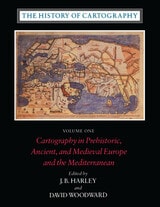
The History of Cartography, Volume One
Cartography in Prehistoric, Ancient, and Medieval Europe and the MediterraneanEdited by J. B. Harley and David Woodward
University of Chicago Press, 1987
Volume One addresses the prehistorical and historical mapping traditions of premodern Europe and the Mediterranean world. A substantial introductory essay surveys the historiography and theoretical development of the history of cartography and situates the work of the multi-volume series within this scholarly tradition. Cartographic themes include an emphasis on the spatial-cognitive abilities of Europe's prehistoric peoples and their transmission of cartographic concepts through media such as rock art; the emphasis on mensuration, land surveys, and architectural plans in the cartography of Ancient Egypt and the Near East; the emergence of both theoretical and practical cartographic knowledge in the Greco-Roman world; and the parallel existence of diverse mapping traditions (mappaemundi, portolan charts, local and regional cartography) in the Medieval period.
Throughout the volume, a commitment to include cosmographical and celestial maps underscores the inclusive definition of "map" and sets the tone for the breadth of scholarship found in later volumes of the series.
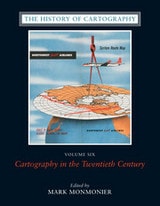
The History of Cartography, Volume Six
Cartography in the Twentieth CenturyEdited by Mark Monmonier
University of Chicago Press, 2015
The twentieth century is a pivotal period in map history. The transition from paper to digital formats led to previously unimaginable dynamic and interactive maps. Geographic information systems radically altered cartographic institutions and reduced the skill required to create maps. Satellite positioning and mobile communications revolutionized wayfinding. Mapping evolved as an important tool for coping with complexity, organizing knowledge, and influencing public opinion in all parts of the globe and at all levels of society. Volume 6 covers these changes comprehensively, while thoroughly demonstrating the far-reaching effects of maps on science, technology, and society—and vice versa.
The lavishly produced volume includes more than five hundred articles accompanied by more than a thousand images. Hundreds of expert contributors provide both original research, often based on their own participation in the developments they describe, and interpretations of larger trends in cartography. Designed for use by both scholars and the general public, this definitive volume is a reference work of first resort for all who study and love maps.
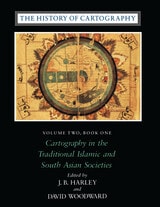
The History of Cartography, Volume Two, Book One
Cartography in the Traditional Islamic and South Asian SocietiesEdited by J. B. Harley and David Woodward
University of Chicago Press, 1992
"[The six-volume set] is certain to be the standard reference for all subsequent scholarship. The editors . . . have assembled and analyzed a vast collection of knowledge. . . . If the first volume is an indication, the complete set will be comprehensive and judicious." —John Noble Wilford, New York Times Book Review
"As well as enlarging the mind and lifting the spirits through the sheer magnitude of its endeavor, the collection delights the senses. The illustrations are exquisite: browsing fingers will instinctively alight on the sheaf of maps reproduced on stock slightly thicker than that of the text. The maps are so beguiling in the tantalizing glimpses they offer of other, seemingly incomprehensible, worlds, that the sight of them will stir the connoisseur in even the most-guarded scholar." —Ronald Rees, Geographical Review
"The corpus it brings to light, along with the extensive references, bibliography, and exhaustive appendices containing valuable comments about many of the pieces discussed, together make this book an important resource for the scholar."—Robert Provin, Professional Geographer
"This volume is a landmark of new research and will certainly contribute to further discoveries, translations, interpretations, inventories, more precise dating and the construction of stemmata." —Christian Jacob, Cartographica
"In seeking to characterize the cartography of premodern Islamic and south Asian societies, the editors offer the image of an archipelago of cartographically conscious islands in a silent sea. The research potential which they have revealed is clearly vast and underappreciated, with many islands still to be discovered or enlarged. This important book, does more, therefore, than plug a huge gap in cartographic historiography. It provides the foundation for crosscultural cartographic research in two major world regions."-Jeffrey Stone, Ecumene
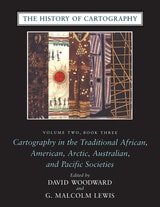
The History of Cartography, Volume Two, Book Three
Cartography in the Traditional African, American, Arctic, Australian, and Pacific SocietiesEdited by David Woodward and G. Malcolm Lewis
University of Chicago Press, 1998
"The maps in this book provide an evocative picture of how indigenous peoples view and represent their worlds. They illuminate not only questions of material culture but also the cognitive systems and social motivations that underpin them" (from the introduction).
Although they are often rendered in forms unfamiliar to Western eyes, maps have existed in most cultures. In this latest book of the acclaimed History of Cartography, contributors from a broad variety of disciplines collaborate to describe and address the significance of traditional cartographies. Whether painted on rock walls in South Africa, chanted in a Melanesian ritual, or fashioned from palm fronds and shells in the Marshall Islands, all indigenous maps share a crucial role in representing and codifying the spatial knowledge of their various cultures. Some also serve as repositories of a group's sacred or historical traditions, while others are exquisite art objects.
The indigenous maps discussed in this book offer a rich resource for disciplines such as anthropology, archaeology, art history, ethnology, geography, history, psychology, and sociology. Copious illustrations and carefully researched bibliographies enhance the scholarly value of this definitive reference.
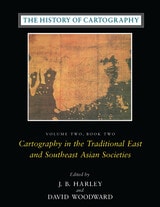
The History of Cartography, Volume Two, Book Two
Cartography in the Traditional East and Southeast Asian SocietiesEdited by J. B. Harley and David Woodward
University of Chicago Press, 1994
Volume 2, book 2, considers the cartographic traditions of China, Korea, Japan, Vietnam, Tibet, Burma, Thailand, Laos, Malaysia, Indonesia, Brunei, and the Philippines, presenting significant new research and interpretation of archaeological, literary, and graphic sources. Richly illustrated with forty color plates and over five hundred black and white illustrations, the book includes a number of rare and elaborate maps, many previously unpublished.
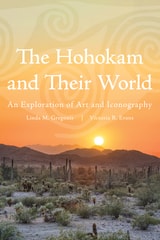
The Hohokam and Their World
An Exploration of Art and IconographyLinda M. Gregonis and Victoria R. Evans
University of Arizona Press, 2025
Southwest Books of the Year Pick
People traveling around the Sonoran Desert will see the traces of an ancient society, the Hohokam, through the material that they left behind—pottery, shell ornaments, carved stone, and rock imagery.
The Hohokam and Their World offers readers the opportunity to explore how these various images and objects may have been used by the Hohokam, and what the icons and objects may have meant, including how the Hohokam conveyed ideas about water, the Sonoran Desert, the ocean, travel, ancestors, and the cosmos.
Authors Linda M. Gregonis and Victoria R. Evans discuss how artists drew inspiration from their Sonoran Desert homeland and were also influenced by the cultures of western Mexico, the hunter-gatherers of the western desert, the Mogollon to the east, and the Pueblo cultures of the northern Southwest. Unlike traditional archaeological texts, this book takes a holistic approach by examining a diverse range of artistic expressions used by the Hohokam. From intricately crafted pottery to mesmerizing carvings in rock, each medium offers a unique glimpse into the Hohokam’s relationship with their environment and the wider world.
Whether you’re planning a visit to national parks or museums in the Southwest or simply intrigued by ancient civilizations, The Hohokam and Their World is a must-read. The work includes a glossary of key archaeological and anthropological terms, as well as endnotes and an extensive list of references for those who want to dig deeper.
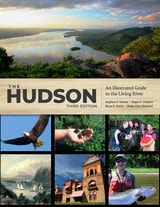
The Hudson
An Illustrated Guide to the Living RiverStephen P. Stanne
Rutgers University Press, 2021
This volume gives a detailed account of the Hudson River’s history, including the geological forces that created it, the various peoples who have lived on its banks, and the great works of art it has inspired. It also showcases the many species making a home on this waterway, including the Atlantic sturgeon, the bald eagle, the invasive zebra mussel, and the herons of New York Harbor. Combining both scientific and historical perspectives, this book demonstrates why the Hudson and its valley have been so central to the environmental movement.
As it charts the progress made towards restoring the river ecosystem and the effects of emerging threats like climate change, The Hudson identifies concrete ways that readers can help. To that end, royalties from the sale of this book will go to the non-profit environmental advocacy group Hudson River Sloop Clearwater, Inc.
The Ice Cave
A Woman’s Adventures from the Mojave to the AntarcticLucy Jane Bledsoe
University of Wisconsin Press, 2006
These are Bledsoe’s gripping tales of fending off wolves in Alaska, encountering UFOs in the Colorado Desert, and searching for mountain lions in Berkeley. Her memorable story “The Breath of Seals” takes readers to Antarctica, the wildest continent on earth, where she camped out with geologists, biologists, and astrophysicists. These fresh and deeply personal narratives remind us what it means to be simply one member of one species, trying to find food and shelter—and moments of grace—on our planet.

The Importance of Elsewhere
The Globalist Humanist TouristRandy Malamud
Intellect Books, 2018
The Important Plant Areas of Mozambique
Edited by Iain Darbyshire, Sophie Richards, and Jo Osborne
Royal Botanic Gardens, Kew, 2023
The Important Plant Areas of Mozambique is based on the Mozambique TIPAs project run in collaboration between Royal Botanic Gardens, Kew, Mozambique’s Agricultural Research Institute (Instituto de Investigação Agrária de Moçambique – IIAM), and the University Eduardo Mondlane. Drawing on information from the TIPAs database, The Important Plant Areas of Mozambique includes color maps and photographs, site descriptions, and tables to present information on the botanical significance, habitat, and geology of the region. The book will also address conservation issues and ecosystem services to promote Mozambique’s critical plant sites and inform conservation leaders in government, NGOs, universities, and local communities about Mozambique’s threatened habitats.
The Imprisoned Traveler
Joseph Forsyth and Napoleon's ItalyKeith Crook
Bucknell University Press, 2020
Published by Bucknell University Press. Distributed worldwide by Rutgers University Press.