Results by title
331 books match the query 'World Literature' and 118 start with t
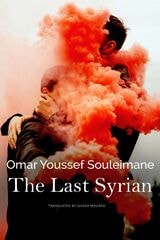
The Last Syrian
Omar Youssef Souleimane
Seagull Books, 2024
Youssef’s mother has always told him that he is named after the biblical prophet Joseph who had the power of foresight. But when Youssef participated in the first demonstration in Damascus in 2011, he felt that the uprising against the Bashar al-Assad regime after forty years of silence and fear was “a miracle more powerful than that of the prophet.”
While Josephine, a charming young Alawite, gathers in her home a group of youth to fight for their visions of a promising future, a forbidden love story unfolds between two men, Youssef and Mohammad. Meanwhile, young Khalid’s love for Josephine is brutally interrupted by the agents of the oppressive regime. Homosexuality clashes with tradition, emancipation with persecution, and feelings with loyalties, leading to an upheaval that sweeps away the destinies of the young as well as that of an entire nation.
Omar Youssef Souleimane’s eloquent novel is not only a narrative of the Syrian Revolution; it is also a story about inter-generational conflicts, rebellion, and liberation. With intense, poetic prose, he brilliantly captures the indomitable yearning for freedom that, despite all obstacles and setbacks, always survives in a hopeful person’s heart until it’s attained.
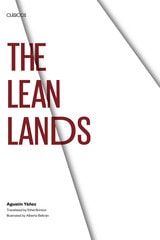
The Lean Lands
By Agustin Yáñez
University of Texas Press, 1968
What was it that flew over with such a terrifying roar? Was it, as many said, the devil, or was it that thing a few had heard of, a flying machine? And those electric lights at Jacob Gallo’s farm, were they witchcraft or were they science?
The theme of this harshly powerful novel is the impact of modern technology and ideas on a few isolated, tradition-bound hamlets in the aftermath of the Mexican Revolution of 1910. The old ways are represented by Epifanio Trujillo, the cacique of the region, now ailing and losing his grip on things; by ancient Madre Matiana, the region’s midwife, healer, counselor, and oracle; by penniless Rómulo and his wife Merced. “Progress” is represented by Don Epifanio’s bastard son Jacob, who acquired money and influence elsewhere during the Revolution and who now, against his father’s will, brings electricity, irrigation, fertilizers, and other modernities to the lean lands—together with armed henchmen. The conflict between the old and the new builds slowly and inexorably to a violent climax that will long remain in the reader’s memory.
The author has given psychological and historical depth to his story by alternating the passages of narrative and dialogue with others in which several of the major characters brood on the past, the present, and the future. For instance, Matiana, now in her eighties, touchingly remembers how she was married and widowed before she had reached her seventeenth birthday. This dual technique is superbly handled, so that people and events have both a vivid actuality and an inner richness of meaning. The impact of the narrative is intensified by the twenty-one striking illustrations by Alberto Beltrán.
The Life and Strange Surprizing Adventures of Robinson Crusoe
The Stoke Newington EditionDaniel Defoe
Bucknell University Press, 2019
Published by Bucknell University Press. Distributed worldwide by Rutgers University Press.
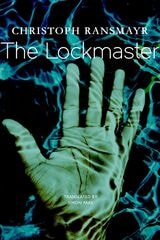
The Lockmaster
Christoph Ransmayr
Seagull Books, 2024
A longboat plummets over the Great Falls, drowning the five passengers on board. The Lockmaster, the heir to an ancient title and responsible for guiding river traffic safely around this natural barrier on the White River, ought to have prevented this tragedy. His son is convinced that it was not an accident. Is his irascible father a murderer? A hydraulic engineer all too familiar with the brute force of rivers, he sets out to discover the truth and find his missing father.
The Lockmaster is a dramatic tale set in a world where water has become a precious commodity and Europe has fractured into warring ethno-nationalist entities desperate to uphold the traditions and insignia of a so-called glorious bygone era. Christoph Ransmayr recounts this story in his trademark style, its epic force shot through with visions of future technology and reactionary politics amid a climate breakdown. At heart, though, this novel is the story of a father–son relationship straddling the fault lines between past and present, and an exploration of timeless questions of guilt and forgiveness.
The Loss
A Novella and Two Short StoriesVladimir Makanin
Northwestern University Press, 1998
In his celebrated short story "The Prisoner of the Caucasus," two Russian soldiers take a Chechen prisoner during the war, and as events unfold, Makanin reveals the casual brutality of the war but also the secret truths of the character's lives. In the novella The Loss, Pekalov, a drunkard and dreamer obsessed with the idea of building a tunnel under the Ural River, disappears in a ditch while working and is made a saint by the people of his village. "Klyucharyov and Alimushkin" tells the story of what happens when one man becomes remarkably lucky while the other loses all his luck.
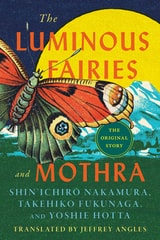
The Luminous Fairies and Mothra
Takehiko Fukunaga
University of Minnesota Press, 2026
The original story that hatched Mothra, one of the most beloved monsters in the “kaijuverse”—available in English for the first time
Mystical and benevolent, the colossal lepidopteran Mothra has been one of the most beloved kaiju since 1961, when The Luminous Fairies and Mothra was originally published in Japanese. Commissioned by Tōhō Studios from three of Japan’s most prominent postwar literary writers (Shin’ichirō Nakamura, Takehiko Fukunaga, and Yoshie Hotta), the novella formed the basis for the now-classic monster film Mothra, with a protagonist second only to Godzilla in number of film appearances by a kaiju. Finally available in its first official English translation, The Luminous Fairies and Mothra will captivate ardent, longtime fans of the films as well as newcomers.
Written just months after the largest political demonstrations Japan had ever seen, The Luminous Fairies and Mothra reflects the rebellious spirit of the time. In this original story, explorers visit a South Pacific island and capture a group of fairies, inciting the fury of the goddess Mothra, who sets out for Japan on a mission of rescue and revenge. Expressing a powerful social stance about Japan’s need to chart its own foreign policy during the Cold War, the novella’s political message was ultimately toned down in the Tōhō Studios film. Through this translation, Anglophone audiences will discover Mothra as a figure of protest fiction intricately reflecting the complex geopolitical situation in early 1960s Japan.
The Luminous Fairies and Mothra is translated into lively prose by Jeffrey Angles, who also wrote an extensive afterword about the novella’s cultural context, the unusual story of its composition, and the development of the 1961 film. Following Angles’s best-selling translation of the original Godzilla novellas, this new work will once again delight kaiju fans everywhere.
Retail e-book files for this title are screen-reader friendly with images accompanied by short alt text and/or extended descriptions.
The Mosquito Bite Author
Baris Biçakçi, Translated by Matthew Chovanec
University of Texas Press, 2020
Originally published in 2011, The Mosquito Bite Author is the seventh novel by the acclaimed Turkish author Barış Bıçakçı. It follows the daily life of an aspiring novelist, Cemil, in the months after he submits his manuscript to a publisher in Istanbul. Living in an unremarkable apartment complex in the outskirts of Ankara, Cemil spends his days going on walks, cooking for his wife, repairing leaks in his neighbor’s bathroom, and having elaborate imaginary conversations in his head with his potential editor about the meaning of life and art. Uncertain of whether his manuscript will be accepted, Cemil wavers between thoughtful meditations on the origin of the universe and the trajectory of political literature in Turkey, panic over his own worth as a writer, and incredulity toward the objects that make up his quiet world in the Ankara suburbs.
The Mushroom Gatherer
Viktorie Hanišová
Seagull Books, 2025
Nestled deep in the Bohemian Forest, Sára’s world is quiet and bound to the rhythms of nature. She has wandered the same wooded trails for seven years, filling her basket with mushrooms, her pockets with memories, and her thoughts with the past she cannot quite escape. The solitude suits her—until the death of her mother forces her to confront the tangled roots of family and the wounds that never fully healed. As Sára meticulously sorts through chanterelles and boletes, she also sorts through childhood recollections and the uneasy inheritance of trauma. The forest offers refuge, but it also holds secrets, and as the seasons shift, so does Sára’s understanding of herself and the complicated bonds that tether her to the world.
With melodic prose and an acute sensitivity to how landscapes shape lives, Viktorie Hanišová crafts a novel of quiet intensity and deep introspection. The Mushroom Gatherer is a haunting meditation on loss and the delicate balance between isolation and connection, perfect for readers drawn to atmospheric fiction.
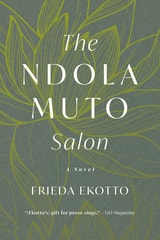
The Ndola Muto Salon
A NovelFrieda Ekotto
Bucknell University Press, 2027
At the Ndola Muto Salon Douala, Cameroon, women slip behind closed doors to seek pleasure, refuge, and one another. When young Violette begins work there as a courtesan for women to support her family, she enters a world her mother cannot accept, where desire moves quietly but powerfully. Part sanctuary, part hidden house of pleasure, the salon becomes a mirror of empowerment, longing, and possibility beyond the restrictions of Cameroonian society. Within its walls, Violette encounters a constellation of women who shape her awakening: Lady Budu, the formidable owner; Caroline, who first opens her to joy; and the enigmatic Lady with Sexy Toes, who urges her to imagine a life of her own making. As these lives intertwine in this evocative novel, the salon reveals how tenderness between women can become an act of resistance, defying patriarchy, class, and convention in small but profound revolutions.
Published by Bucknell University Press. Distributed worldwide by Rutgers University Press.
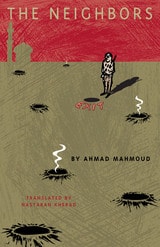
The Neighbors
By Ahmad Mahmoud
University of Texas Press, 2013
Ahmad Mahmoud sets The Neighbors against the backdrop of the oil nationalization crisis that gripped Iran in the early 1950s. His protagonist, Khaled, a young man from a rundown neighborhood in Ahvaz, a city in southern Iran, becomes involved in the struggle to wrest Iran’s oil industry from the British and, as the result of his political activities, comes to realize that there is more to life than the drudgery and poverty his parents and neighbors have experienced.
The Neighbors, published in 1974, cemented Mahmoud’s reputation as a novelist and captured the ethos of a generation—the generation that laid the groundwork for those who continue to struggle for democracy in Iran today. Though the novel received considerable praise and was read widely, its political nature earned the ire of Mohammad Reza Shah’s regime, and the Islamic Republic has objected to its sexually explicit content. This is the first time one of Ahmad Mahmoud’s novels has appeared in English translation.
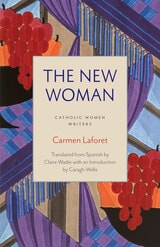
The New Woman
Carmen Laforet
Catholic University of America Press, 2025
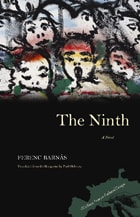
The Ninth
A NovelFerenc Barnas
Northwestern University Press, 2009
Set in a sleepy village north of Budapest in 1968, this touching, unsettling novel paints a richly wrought portrait of mid-twentieth-century Hungary. The narrator is the ninth child of a family distinguished by its size, poverty, faith, and abundance of physical and psychological disabilities. His confusion is exacerbated by the strict, secretive Catholic household his parents keep in the face of a Communist system. These dual oppressions propel him toward an inevitable realization of his guilt and desire that speaks to his struggle with a fateful, seamless beauty.
The Norther
By Emilio Carballido
University of Texas Press, 1968
Recognized in Mexico as one of the country's most important contemporary dramatists, Emilio Carballido has only recently become known in other countries through his plays and short stories. This translation introduces Carballido as a novelist. In The Norther what makes and breaks human relationships is his central interest as he traces the course of a relationship between a widow and a young man. The characters are created as their emotional and psychological outlines are drawn, and it is in the characterization that the hand of the dramatist is revealed. But it is Carballido's novelistic talent that has made The Norther the object of widely divergent interpretations. The critical conflict aroused by this novel is discussed in an Introduction by the translator, Margaret Sayers Peden.
The Outcast
A NovelLuigi Pirandello
Rutgers University Press, 2023
The Outcast is an early masterwork from Nobel Prize–winning Italian author Luigi Pirandello that combines elements of Zolaesque naturalism with emerging modernist aesthetics. This fresh English translation, the first in nearly one hundred years, showcases Pirandello’s deft play with language and his use of irony.
This book was translated thanks to a grant awarded by the Italian Ministry of Foreign Affairs and International Cooperation.
The Paradisiacs
Last Kingdom IVPascal Quignard
Seagull Books, 2025
What if paradise was not a place we lost, but one we never truly knew? In Paradisiacs, the fourth volume of the Last Kingdom series, Pascal Quignard meditates on the nature of paradise—not as an Eden to which we might return, but as a place of origin that lingers in myth. Through his signature blend of ancient texts, Paleolithic art, psychoanalysis, and personal reflection, Quignard explores our primal longing for recognition. He traces this yearning back to the erstwhile, a prenatal paradise from which we are expelled at birth, and examines how resemblance and recognition shape our identities.
At once poetic and philosophical, Paradisiacs invites readers into Quignard’s singular world, where language and history coalesce into a profound rumination on the origins of selfhood. With John Taylor’s masterly translation, this latest installment of Last Kingdom is a hypnotic and revelatory reading experience for those drawn to the intersections of philosophy and the ineffable.
The Poet and the Idiot
Friedebert Tuglas
Central European University Press, 2007
The Potbellied Virgin
By Alicia Yánez Cossío
University of Texas Press, 2006
In an unnamed town in the Ecuadorian Andes, a small wooden icon—La Virgen Pipona (the Potbellied Virgin)—conceals the documents that define the town's social history. That history recently has been dominated by the women of the Benavides family, a conservative clan and, not coincidentally, the caretakers of the Virgin. Their rivals are the Pandos, a family led by four old men who spend their days smoking in the park across from the Virgin's cathedral and offering revisionist versions of local and national events. When a military skirmish threatens the Virgin (and the secret in her famous belly), the Benavides women must scramble to preserve their place as local matriarchs—without alerting the old Pandos to the opportunity that might enable them to finally supplant their rivals.
One of Ecuador's foremost contemporary writers, Alicia Yánez Cossío illuminates the complexity of Andean society by placing disenfranchised players such as women and Amerindians onstage with traditional powers such as the military and the church. Folk wisdom, exemplified in The Potbellied Virgin by the beautifully translated proverbs so popular with the Benavideses and the Pandos alike, stands up to historical record. Such inclusiveness ultimately allows the whole truths of Yánez Cossío's subjects to emerge. Only the second of her novels to be translated into English, The Potbellied Virgin (La cofradía del mullo del vestido de la Virgen Pipona) is a funny, focused portrait of Ecuadorian life in the twentieth century.
The Prophecy and Other Stories
Drago Jancar
Northwestern University Press, 2009
These newly collected short stories reveal a master at the top of his game. Drago Jancar possesses an acute understanding of the human psyche, enabling his stories to resonate beyond their particular milieu. This collection features seven pieces, drawn from four different collections, that together present the struggle of individuals against powerful forces. The characters try to make sense of a world of shifting borders and changing names that make the idea of a "homeland"—either literal or figurative—a dream rather than a reality.
The Prose of the Mountains
Three Tales of the CaucasusAleksandre Qazbegi
Central European University Press, 2015
The Prose of the Mountains contains three tales of the Caucasus by Aleksandre Qazbegi, one of the most prescient and gifted chroniclers of the Georgian encounter with colonial modernity. His stories offer an invaluable counterpoint to the predominantly Russian narratives that have hitherto shaped scholarly accounts of the nineteenth-century Caucasus. “Memoirs of a Shepherd” poignantly chronicles the young author’s decision to pass seven years of his life as a shepherd with Georgian mountaineers. “Eliso” (the name of a Chechen girl) offers one of the most searing accounts on record of the forced migration of this people from their homeland to Ottoman lands. Set in the sixteenth century, “Khevis Beri Gocha” (the name of a Georgian village chief) classically chronicles a tragic misunderstanding between a severe father and his loving son.
The Puppet
By Ibrahim al-Koni
University of Texas Press, 2010
The Puppet, a mythic tale of greed and political corruption, traces the rise, flourishing, and demise of a Saharan oasis community. Aghulli, a noble if obtuse man who has been chosen leader of the oasis, hankers after the traditional nomadic pastoralist life of the Tuareg. He sees commerce (understood as including trade in gold, marriage, agriculture, and even recreation) as the prime culprit in the loss of the nomadic ethos. Thus he is devastated to learn that his supporters are hoarding gold.
The novel's title notwithstanding, the author has stressed repeatedly that he is not a political author. He says that The Puppet portrays a good man who has been asked to lead a corrupt society. The subplot about star-crossed young lovers introduces a Sufi theme of the possibility of transforming carnal into mystical love. The Puppet, though, is first and foremost a gripping, expertly crafted tale of bloody betrayal and revenge inspired by gold lust and an ancient love affair.
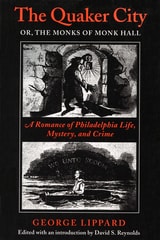
The Quaker City, or The Monks of Monk Hall
A Romance of Philadelphia Life, Mystery, and CrimeGeorge Lippard
University of Massachusetts Press, 1995
The Raj Quartet, Volume 1
The Jewel in the CrownPaul Scott
University of Chicago Press, 1976
No set of novels so richly recreates the last days of India under British rule—"two nations locked in an imperial embrace"—as Paul Scott's historical tour de force, The Raj Quartet. The Jewel in the Crown opens in 1942 as the British fear both Japanese invasion and Indian demands for independence. On the night after the Indian Congress Party votes to support Ghandi, riots break out and an ambitious police sergeant arrests a young Indian for the alleged rape of the woman they both love.
The Raj Quartet, Volume 2
The Day of the ScorpionPaul Scott
University of Chicago Press, 1998
In The Day of the Scorpion, Scott draws us deeper in to his epic of India at the close of World War II. With force and subtlety, he recreates both private ambition and perversity, and the politics of an entire subcontinent at a turning point in history.
As the scorpion, encircled by a ring of fire, will sting itself to death, so does the British raj hasten its own destruction when threatened by the flames of Indian independence. Brutal repression and imprisonment of India's leaders cannot still the cry for home rule. And in the midst of chaos, the English Laytons withdraw from a world they no longer know to seek solace in denial, drink, and madness.
The Raj Quartet, Volume 3
The Towers of SilencePaul Scott
University of Chicago Press, 1998
India, 1943: In a regimental hill station, the ladies of Pankot struggle to preserve the genteel façade of British society amid the debris of a vanishing empire and World War II. A retired missionary, Barbara Batchelor, bears witness to the connections between many human dramas; the love between Daphne Manner and Hari Kumar; the desperate grief an old teacher feels for an India she cannot rescue; and the cruelty of Captain Ronald Merrick, Susan Layton's future husband.
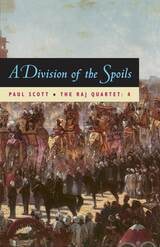
The Raj Quartet, Volume 4
A Division of SpoilsPaul Scott
University of Chicago Press, 1998
After exploiting India's divisions for years, the British depart in such haste that no one is prepared for the Hindu-Muslim riots of 1947. The twilight of the raj turns bloody. Against the backdrop of the violent partition of India and Pakistan, A Division of the Spoils illuminates one last bittersweet romance, revealing the divided loyalties of the British as they flee, retreat from, or cling to India.
The Registry of Forgotten Objects
StoriesMiles Harvey
The Ohio State University Press, 2024
The Relic
Jose Maria Eca de Queiros
Catholic University of America Press, 2023
The Relic
A NovelJosé Maria De Eça De Queirós
Tagus Press, 2012
The Relic is an irreverent fictional autobiography narrating the picaresque adventures of Teodorico, a Portuguese playboy determined to be the sole heir of his absurdly pious, sexually repressed, and tyrannical Auntie. Sent to the Holy Land, he returns with what he presumes is the “relic of relics” in hopes of persuading Auntie to bequeath her vast fortune to him. While in Jerusalem, Teodorico has a vision in which he witnesses Christ's trial and crucifixion and the founding of Christianity—with a twist.
The Rest Is Slander
Five StoriesThomas Bernhard
Seagull Books, 2022
“The cold increases with the clarity,” said Thomas Bernhard while accepting a major literary prize in 1965. That clarity was the postwar realization that the West’s last remaining cultural reference points were being swept away by the ever-greater commodification of humankind. Collecting five stylistically transitional tales by Bernhard, all of which take place in sites of extreme cold, this volume extends that bleak vision of the master Austrian storyteller.
In “Ungenach,” the reluctant heir of an enormous estate chooses to give away his legacy to an assortment of oddballs as he discovers the past of his older brother, who was murdered during a career in futile colonialist philanthropy. In “The Weatherproof Cape,” a lawyer tries to maintain a sense of familial solidarity with a now-dead client with the help of an unremarkable piece of clothing. “Midland in Stilfs” casts a jaundiced eye on the laughable efforts of a cosmopolitan foreigner to attain local authenticity on a moribund Alpine farmstead. In “At the Ortler,” two middle-aged brothers—one a scientist, the other an acrobat—meditate on their unusual career paths while they climb a mountain to reclaim a long-abandoned family property. And in “At the Timberline,” the unexpected arrival of a young couple in a mountain village leads to the discovery of a scandalous crime that casts a shadow on the personal life of the policeman investigating it.
The Round Dance
A NovelCarmine Abate
Rutgers University Press, 2024
The Scarecrow
By Ibrahim al-Koni, translated by William M. Hutchins
University of Texas Press, 2015
The Scarecrow is the final volume of Ibrahim al-Koni’s Oasis trilogy, which chronicles the founding, flourishing, and decline of a Saharan oasis. Fittingly, this continuation of a tale of greed and corruption opens with a meeting of the conspirators who assassinated the community’s leader at the end of the previous novel, The Puppet. They punished him for opposing the use of gold in business transactions—a symptom of a critical break with their nomadic past—and now they must search for a leader who shares their fetishistic love of gold. A desert retreat inspires the group to select a leader at random, but their “choice,” it appears, is not entirely human. This interloper from the spirit world proves a self-righteous despot, whose intolerance of humanity presages disaster for an oasis besieged by an international alliance. Though al-Koni has repeatedly stressed that he is not a political author, readers may see parallels not only to a former Libyan ruler but to other tyrants—past and present—who appear as hollow as a scarecrow.
The Second Book
Muharem Bazdulj
Northwestern University Press, 2005
Muharem Bazdulj has broken from the pack of new Eastern European writers influenced by innovators such as Danilo Kiš, Milan Kundera, and Jorge Luis Borges. Employing a light touch, a daring anti-nationalist tone, and the kind of ambition that inspires nothing less than a rewriting of Bosnian and Yugoslavian history, Bazdulj weaves the imagined realities of history into fiction and fiction into history. To quote one critic, for Bazdulj history "is the sum of interpretations while imagination is the sum of facts."

The Selected Stories of Ann Scott-Moncrief
Ann Scott-Moncrief
Catholic University of America Press, 2026
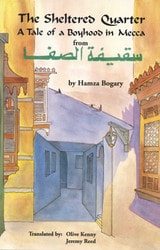
The Sheltered Quarter
A Tale of a Boyhood in MeccaBy Hamza Bogary
University of Texas Press, 1991
Hamza Bogary describes a bygone way of life that has now irreversibly disappeared. He speaks of life in Mecca before the advent of oil. Only partly autobiographical, the memoir is nevertheless rich in remembered detail based on Bogary's early observations of life in Mecca. He has transformed his knowledge into art through his sense of humor, empathy, and remarkable understanding of human nature. This work not only entertains; it also informs its readers about the Arabia of the first half of the twentieth century in a graphic and fascinating way. The narrator, young Muhaisin, deals with various aspects of Arabian culture, including education, pilgrimages, styles of clothing, slavery, public executions, the status of women, and religion. Muhaisin is frank in his language and vivid in his humor. The reader quickly comes to love the charming and mischievous boy in this universal tale.
The Silent Years
Alena Mornštajnová
Seagull Books, 2026
Bohdana is an introverted young woman grappling with tensions in her family and a lingering question she can’t quite shake: on her last visit to the hospital, why did her gravely ill grandmother call her “Blanka,” and what potential hidden past is her family keeping from her? As Bohdana struggles to piece together the truth, another story unfolds alongside hers—that of Svatopluk Žák, a devoted builder of socialist society who hopes his beloved family’s future will be as brilliant as the star on the Soviet flag. When their two stories collide, hidden histories come to light.
In The Silent Years, Czech author Alena Mornštajnová weaves a rich, intimate family drama that reveals how easily a carefully constructed world can shatter and transform in an instant. Set in postwar Czechoslovakia, the novel follows a human story against a larger backdrop of a society in upheaval.
The Silk, the Shears and Marina; or, About Biography
Irena Vrkljan
Northwestern University Press, 1999
These are the first two volumes of the Croatian poet and novelist Irena Vrkljan's lyrical autobiography. Although each novel illuminates the other, they also stand alone as original and independent works of art. In The Silk, the Shears, Vrkljan traces the symbolic and moral significance of her life, and her vision of the fate of women in her mother's time and in her own. Marina continues the intense analysis of the poetic self, using the life of Marina Tsvetaeva to meditate on the processes behind biography.

The Sorrowful Eyes Of Hannah Karajich
Ivan Olbracht
Central European University Press, 1999
The Sorrowful Eyes of Hannah Karajich is a lyrical, deeply moving story of love and the pain of emancipation, set in the now vanished world of rural East European Jewish village life. Hanna is the most beautiful girl in all Polona, a Hasidic community in the remote province of Sub-Carpathian Ruthenia. Involvement in the exciting new movement of Zionism takes her away to a commune in a nearby town. But there she meets and falls in love with the strangely named Ivo Karajich: a Jew, yet not a Jew. The agonizing drama that follows, plants into her beautiful almond-shaped eyes the hard grain of sorrow that her children, too, will inherit.
Olbracht's novella is both a great love story and a marvellous portrait of a world that modernity threatened and Hitler destroyed.
The Soul of a Patriot
Evgeny Popov, translated from the Russian by Robert Porter
Northwestern University Press, 1994
Freely parodying conformist Russian writing, this novel takes its lead as much from Sterne and Diderot as from the brilliant Russian satirist Mikhail Zoshchenko. In the offhand witticisms and jaunty humor speaks the spirit that survived the "era of stagnation" of Soviet literature.
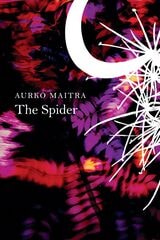
The Spider
Aurko Maitra
Seagull Books, 2025
In the largely undocumented sphere of political violence in eastern India, Qadir the Spider is a mythological killer and casanova, known for the various assassinations and liaisons he carries out across the region. His oldest son Rahim is the latest entry to the field. A 13-year-old killer, the boy bides his time like his father—killing, farming, and getting high as the battles go on around him. In this world where they only follow orders, mutilation becomes their only expression, the nature of violence their only meaningful form of autonomy in the various power struggles of interior Bengal.
After his first year in the field, as the child is groomed by his father to carry on the ways of their mercenary clan, he begins to confront the various legends surrounding the Spider. However, while roaming the strange, spectral forests surrounding the town, his chance encounter with a pair of wandering musicians leads him to question the killings that pattern his life. As he searches for the answers around him, he is slowly led to confront the man his father truly is, as well as the man he knows he will become.
A gripping tale of inherited violence and identity in politically volatile Bengal, Aurko Maitra’s The Spider contains powerful, disturbing parallels to modern-day conflicts. Boldly interrogating our concepts of autonomy and survival in chaos, this revelatory novel explores the impact of political violence and timeless issues of legacy and intergenerational violence.
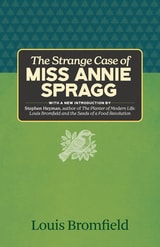
The Strange Case of Miss Annie Spragg
Louis BromfieldWith a new introduction by Stephen Heyman, author of The Planter of Modern Life: Louis Bromfield and the Seeds of a Food Revolution
The Ohio State University Press, 2026
A revived work of twentieth-century fiction that spans years and continents to satirize and explore religious fanaticism and expat life.
First published in 1928, Louis Bromfield’s The Strange Case of Miss Annie Spragg is a haunting and genre-defying tale—a thoughtful reflection on religion and human nature with the propulsion of a mystery. Set in Italy and the American Midwest, this surprisingly modern novel now has a new introduction by Bromfield biographer Stephen Heyman.
The novel opens on a ragtag community of American expats in rural Italy. When Annie Spragg, a local eccentric, dies with stigmata on her body, the diocese tasks the skeptical Mr. Winnery with investigating whether actual miracles occurred at her deathbed. From there, the novel brings us back to Annie’s origins as the child of a cult-leader and prophet on the American frontier. As the story unfolds, Bromfield traverses time and continents as he weaves together satire, mysticism, and psychological insight to explore themes of religious fanaticism, repression, and redemption.
Heyman’s new introduction situates Annie Spragg within Bromfield’s literary evolution—from chronicler of liberated women to environmental visionary—and reintroduces readers to a writer whose influence shaped both American letters and sustainable agriculture. This edition invites fans of twentieth-century fiction to rediscover a novel that remains provocative and poignant today.
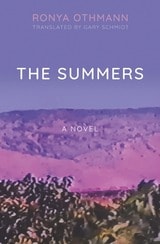
The Summers
Ronya Othmann, translated by Gary Schmidt
University of Wisconsin Press, 2023
Leyla’s sexual awakening proves far less traumatic than her growing disenchantment with her German classmates and friends, who appear completely indifferent to the fate of her Yazidi community. Thoughtful and poignant, The Summers addresses issues of gender, sexuality, cultural difference, politics, and identity. Othmann draws readers into multiple worlds, ultimately revealing the hopes and dreams that bind us all together when forces threaten to tear us apart.
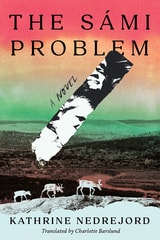
The Sámi Problem
A NovelKathrine Nedrejord
University of Minnesota Press, 2027
An incisive novel illuminating a young mother’s reckoning with her own identity and Sámi lineage through the lives and struggles of her ancestors
As a freelance journalist living in France, Marie Engmo has traveled far and wide to write about languages and local cultures threatened with extinction. But when she returns home to Norway for her áhkku’s (grandmother’s) funeral, she recognizes how far she has strayed from her own sense of self and her Sámi identity. Kathrine Nedrejord’s acclaimed novel—winner of Norway’s national book award—is the lucid and compelling story of Marie’s emotional search through her family’s past for a history and legacy that she might bequeath to her own infant daughter.
In spare and elegant prose, Nedrejord illuminates a young woman’s fierce and clear-eyed reckoning with the sacrifice and oppression that has marked the women and men in her family and generations of Indigenous Sámi communities in the northern reaches of Norway. As Marie awakens to the lengths her mother, grandmother, and great-grandmother traversed to survive discrimination and displacement, she uncovers and embodies their strength and dignity that are her—and her daughter’s—inheritance. What emerges is an unflinching examination of belonging to a minority that can never dominate, that will always have to negotiate and compromise its place in the world. As stirring as it is troubling, The Sámi Problem is itself an awakening and a literary triumph.
Retail e-book files for this title are screen-reader friendly.
The Tango Player
Christoph Hein
Northwestern University Press, 1994
The Thickets
Józef Lobodowski
Central European University Press, 2026
In The Thickets, Lobodowski paints a stark, unforgettable portrait of the turmoil that engulfed the former Russian Empire after the fall of the Tsar and Kerensky’s government. For Stas, once a student at a classical gymnasium, survival now means peddling contraband on the black market. Through his eyes, the reader is plunged into the chaos of war, revolution, and occupation—rendered with visceral power and human urgency.
The Third Bank of the Jordan River
Hussein Barghouthi
Seagull Books, 2026
In this profound and evocative novel, acclaimed Palestinian author Hussein Barghouthi invites readers on an extraordinary, youthful journey through a landscape of memory, longing, alienation, and exile. Translated with great sensitivity by his son, Áthar Barghouthi, this deeply personal narrative unfurls as a stream-of-consciousness odyssey, blurring the lines between reality and dream. Haunted by a pervasive sense of loss, the prose, rich with poetic imagery, explores themes of displacement, identity, and the enduring shadows of a contested homeland.
The Third Bank of the Jordan River is a powerful, meditative work that defies conventional boundaries. With unflinching honesty, Barghouthi confronts the political through deeply human stories, capturing the restless search for meaning and the enduring human hunger for connection and freedom.
The Third Shore
Women's Fiction from East Central EuropeAgatha Schwartz
Northwestern University Press, 2006
A rich compendium of fiction by twenty-five women from eighteen different nations ranging from Lithuania to Ukraine to Poland, the Czech Republic, Romania, Albania, and Slovenia, The Third Shore brings to light a whole spectrum of women's literary accomplishment and experience virtually unknown in the West. Gracefully translated, and with an introduction that establishes their political, historical, and literary context, these stories written in the decade after the fall of the Iron Curtain are tales of the familiar-of illness and death, love and desire, motherhood and war, feminism, and patriarchy-reconceived and turned into something altogether new by the distinctive experience they reflect.
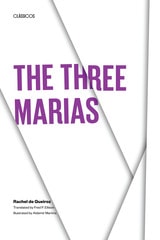
The Three Marias
By Rachel de Queiroz
University of Texas Press, 1963
Through this translation of As Três Marias the literary achievements of Rachel de Queiroz may at last be judged and appreciated by the English-reading public. Since none of her four novels has previously been translated into English, The Three Marias will be, for many non-Brazilians, an introduction to this nationally known South American author whose books have been widely praised for their artistic merits. Her literary works are colored by her projected personality, by an intense feeling for her own people, by an omnipresent social consciousness, and by personal experiences in the arid backlands of her native state of Ceará.
Basing this story on certain of her own recollections from the nineteen-twenties, Rachel de Queiroz tells of a girl growing up in the seaport town of Fortaleza, in northeastern Brazil. Fred P. Ellison, whose special field is Brazilian and Spanish-American literature, has captured in his translation the author's graceful style and simplicity of language, and has successfully retained the perspective of an idealistic and gradually maturing girl.
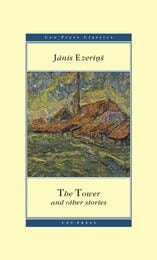
The Tower
and other storiesJanis Ezerins
Central European University Press, 2012
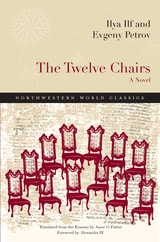
The Twelve Chairs
A NovelIlya Ilf and Evgeny Petrov, Translated from the Russian by Anne O. Fisher with a Foreword by Alexander Ilf
Northwestern University Press, 2011
Winner, 2012 Northern California Book Award for Fiction in Translation
More faithful to the original text and its deeply resonant humor, this new translation of The Twelve Chairs brings Ilf and Petrov’s Russian classic fully to life. The novel’s iconic hero, Ostap Bender, an unemployed con artist living by his wits, joins forces with Ippolit Matveyevich Vorobyaninov, a former nobleman who has returned to his hometown to look for a cache of missing jewels hidden in chairs that have been appropriated by the Soviet authorities. The search for the chairs takes them from the provinces of Moscow to the wilds of the Transcaucasus mountains. On their quest they encounter a variety of characters, from opportunistic Soviet bureaucrats to aging survivors of the old propertied classes, each one more selfish, venal, and bungling than the last. A brilliant satire of the early years of the Soviet Union, as well as the inspiration for a Mel Brooks film, The Twelve Chairs retains its universal appeal.

The Undiscovered Island
Darrell Kastin, Introduction by Katherine Vaz
Tagus Press, 2023
Winner of the Independent Publishers Book Awards’ Silver Prize for Multicultural Fiction
Alarmed by her father’s unexplained disappearance, Julia Castro travels from California to her family’s ancestral home in the Azores to find the islands abuzz with tales of ghost ships, seductive sirens, and witchcraft. The mystery deepens when a drowned man’s body is discovered on a mountainside and an unknown island emerges from the sea. While she is on the hunt for her father, Julia succumbs to the bewitching allure of the islands—and to Nicolau, a fellow musician. History, legend, poetry, and myth are seamlessly interwoven as the novel explores relationships between personal and cultural identity, fate and self-determination, reality and illusion. This revised edition of The Undiscovered Island features a new introduction from Katherine Vaz.