Results by title
353 books match the query 'World War II' and 89 start with t
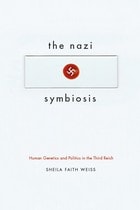
The Nazi Symbiosis
Human Genetics and Politics in the Third ReichSheila Faith Weiss
University of Chicago Press, 2010
The Faustian bargain—in which an individual or group collaborates with an evil entity in order to obtain knowledge, power, or material gain—is perhaps best exemplified by the alliance between world-renowned human geneticists and the Nazi state. Under the swastika, German scientists descended into the moral abyss, perpetrating heinous medical crimes at Auschwitz and at euthanasia hospitals. But why did biomedical researchers accept such a bargain?
The Nazi Symbiosis offers a nuanced account of the myriad ways human heredity and Nazi politics reinforced each other before and during the Third Reich. Exploring the ethical and professional consequences for the scientists involved as well as the political ramifications for Nazi racial policies, Sheila Faith Weiss places genetics and eugenics in their larger international context. In questioning whether the motives that propelled German geneticists were different from the compromises that researchers from other countries and eras face, Weiss extends her argument into our modern moment, as we confront the promises and perils of genomic medicine today.
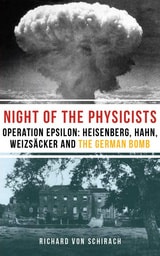
The Night of the Physicists
Operation Epsilon: Heisenberg, Hahn, Weizsäcker and the German BombRichard von Schirach
Haus Publishing, 2015
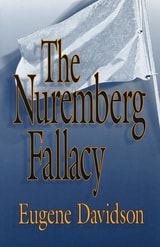
The Nuremberg Fallacy
Eugene Davidson
University of Missouri Press, 1998
Available for the first time in paperback, The Nuremberg Fallacy examines the inherent shortcomings of the Nuremberg "rules of war" and the War Crimes Tribunal's impossible expectations. In 1946, the Tribunal declared all aggressive war, war crimes, and crimes against humanity illegal. Yet the period since World War II has witnessed an unprecedented number of armed conflicts. In light of recent crises, including those in Rwanda, Bosnia and Serbia, and the Middle East, it is clear that the issues explored in The Nuremberg Fallacy are as relevant today as they were at the time of the book's first publication a quarter century ago.
In this volume, Eugene Davidson continues his investigations begun in The Trial of the Germans (University of Missouri Press), which studied the Nuremberg trials themselves, by focusing on five major conflicts since the end of World War II: the Suez crisis of 1956; Algeria's war of independence; Israel's recurring (and ongoing) battles with its Arab neighbors, complicated and worsened by intervention of the superpowers; the wars in Southeast Asia; and the Soviet Union's suppression of Czechoslovakia and other border states of Eastern Europe.
By exploring the roots and ramifications of these five conflicts, Davidson is able to chart the crosscurrents between large and small states, between individual nations and the United Nations, between the rules of Nuremberg and the significantly older rules of self- interest. The result is a thoughtful and thought-provoking study of the dynamics of war and peace in the post-Nuremberg world.
The rules of war proclaimed at Nuremberg—observing the flag of truce, prohibiting attacks on surrendered enemies, treating prisoners of war and civilian populations humanely—have become virtually irrelevant in modern guerrilla warfare. If anything, Davidson suggests, conditions have actually become worse than they were before the Nuremberg War Crimes Tribunal.
The continuing importance and relevance of The Nuremberg Fallacy is best summarized in the final sentences of Davidson's text: "The survival of a nation cannot be successfully entrusted to simplistic formulae or to principles that reflect unworkable doctrines. No computers have been programmed for the wisdom that remains essential for survival. People still have to provide that from their own inner and outer resources, no matter how far the weapons may seem to have outdistanced them."
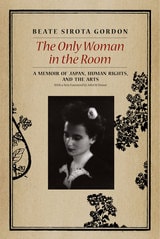
The Only Woman in the Room
A Memoir of Japan, Human Rights, and the ArtsBeate Sirota Gordon
University of Chicago Press, 2014
Sirota was born in Vienna, but in 1929 her family moved to Japan so that her father, a noted pianist, could teach, and she grew up speaking German, English, and Japanese. Russian, French, Italian, Latin, and Hebrew followed, and at fifteen Sirota was sent to complete her education at Mills College in California. The formal declaration of World War II cut Gordon off from her parents, and she supported herself by working for a CBS listening post in San Francisco that would eventually become part of the FCC. Translating was one of Sirota’s many talents, and when the war ended, she was sent to Japan as a language expert to help the American occupation forces. When General MacArthur suddenly created a team that included Sirota to draft the new Japanese Constitution, he gave them just eight days to accomplish the task. Colonel Roest said to Beate Sirota, “You’re a woman, why don’t you write the women’s rights section?”; and she seized the opportunity to write into law guarantees of equality unparalleled in the US Constitution to this day.
But this was only one episode in an extraordinary life, and when Gordon died in December 2012, words of grief and praise poured from artists, humanitarians, and thinkers the world over. Illustrated with forty-seven photographs, The Only Woman in the Room captures two cultures at a critical moment in history and recounts, after a fifty-year silence, a life lived with purpose and courage. This edition contains a new afterword by Nicole A. Gordon and an elegy by Geoffrey Paul Gordon.
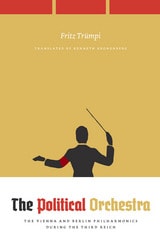
The Political Orchestra
The Vienna and Berlin Philharmonics during the Third ReichFritz Trümpi
University of Chicago Press, 2016
Trümpi looks first at the decades preceding National Socialist rule, when the competing orchestras, whose rivalry mirrored a larger rivalry between Berlin and Vienna, were called on to represent “superior” Austro-German music and were integrated into the administrative and social structures of their respective cities—becoming vulnerable to political manipulation in the process. He then turns to the Nazi period, when the orchestras came to play a major role in cultural policies. As he shows, the philharmonics, in their own unique ways, strengthened National Socialist dominance through their showcasing of Germanic culture in the mass media, performances for troops and the general public, and fictional representations in literature and film. Accompanying these propaganda efforts was an increasing politicization of the orchestras, which ranged from the dismissal of Jewish members to the programming of ideologically appropriate repertory—all in the name of racial and cultural purity.
Richly documented and refreshingly nuanced, The Political Orchestra is a bold exploration of the ties between music and politics under fascism.
The Politics of Memory in Postwar Europe
Richard Ned Lebow, Wulf Kansteiner and Claudio Fogu, eds.
Duke University Press, 2006
An extensive introduction contains reflections on the significance of Europeans’ memories of World War II and a conclusion provides an analysis of the implications of the contributors’ findings for memory studies. These two pieces tease out some of the findings common to all seven countries: for instance, in each nation, the decade and a half between the late 1960s and the mid-1980s was the period of most profound change in the politics of memory. At the same time, the contributors demonstrate that Europeans understand World War II primarily through national frames of reference, which are surprisingly varied. Memories of the war have important ramifications for the democratization of Central and Eastern Europe and the consolidation of the European Union. This volume clarifies how those memories are formed and institutionalized.
Contributors. Claudio Fogu, Richard J. Golsan, Wulf Kansteiner, Richard Ned Lebow, Regula Ludi, Annamaria Orla-Bukowska, Heidemarie Uhl, Thomas C. Wolfe
The Power of Small States
Diplomacy in World War IIAnnette Baker Fox
University of Chicago Press, 1959
As World War II ravaged Europe and Asia, smaller nations such as Turkey, Spain, Finland, and Portugal emerged virtually unscathed. How did these smaller powers, which most wrongly viewed as mere political pawns, survive one of the bloodiest conflicts of the 20th century?
From the World War II diplomatic history of Turkey, Finland, Norway, Sweden, and Spain, Annette Baker Fox walks us through backrooms and intense negotiations to illustrate how smaller nations balanced an ever-shifting political landscape to maintain their neutrality. Heavily researched and well-wrought, this book draws upon primary material and interviews with public figures and scholars to give a new historical dimension into lesser-known nations during a time of great political upheaval.
The River of Angry Dogs
A MemoirMira Hamermesh
Pluto Press, 2004
As a young Jewish teenager Hamermesh escaped the horrors of German-occupied Poland and was spared the experience of the ghetto and the concentration camp that claimed most of her family. Mira shows how her status as a refugee has continued to influence her throughout her life. The journey led her across Europe and eventually to Palestine in 1941; her account of that region, before the establishment of Israel, provides a fascinating insight into the historical setting for today's conflict.
Having settled in London where she studied art and married, she eventually won a place at the celebrated Polish Film School in Lodz. At the height of the Cold War Mira Hamermesh commuted across the Iron Curtain – her experience of a divided Europe offers many insights into the political factors that affected people's everyday lives. Mira's theme of political conflict, so often explored in her films, is brought to life here in an intimate account that will live long in the memory.
The Road to September 1939
Polish Jews, Zionists, and the Yishuv on the Eve of World War IIJehuda Reinharz and Yaacov Shavit
Brandeis University Press, 2018

The Second World War
A Marxist HistoryChris Bambery
Pluto Press, 2014
The Second World War casts a long shadow, portrayed as a necessary and paradigmatic war that defeated fascism. During recent wars in Iraq, Afghanistan and elsewhere, US presidents and British prime ministers have tried to claim they were following in the footsteps of Winston Churchill by standing up to dictators.
In The Second World War Chris Bambery tests this position in a thorough account of the war and tries to understand why it still dominates TV history channels and school history books.
Bambery argues that the conflict ultimately was about a division of the world between the great powers, as well as a rising of ordinary people against fascism. He offers a complex and radical analysis, that is unique when compared to many modern and conventional histories of the war.
The Secret Protocol
The Molotov-Ribbentrop Pact and the Falsification of HistoryAntonella Salomoni, Translated by Antony Shugaar
University of Wisconsin Press, 2025
From the moment of the secret protocol’s inception—and the near-instantaneous rumors of its existence—it generated friction and competing narratives. The document became public during the Nuremberg trials, but the USSR declared it a fabrication evidencing the West’s willingness to falsify history. It continues to be relevant to the reconfiguration of history currently advanced by Vladimir Putin. By centering the rumors, accusations, and propaganda the pact precipitated, Salomoni illuminates how political actors can use and abuse history, how they create and disseminate truths and falsehoods, and how they can blur the boundary between facts and fictions even in the glaring face of black-and-white documentation.
The Sephardim in the Holocaust
A Forgotten PeopleIsaac Jack Lévy with Rosemary Lévy Zumwalt
University of Alabama Press, 2020
A Powerful History of Sephardic Life, Loss, and Resilience During the Holocaust
The Sephardim suffered devastation during the Holocaust, but this facet of history is poorly documented. What literature exists on the Sephardim in the Holocaust focuses on specific countries, such as Yugoslavia and Greece, or on specific cities, such as Salonika, and many of these works are not available in English.
The Sephardim in the Holocaust: A Forgotten People embraces the Sephardim of all the countries shattered by the Holocaust and pays tribute to the memory of the more than 160,000 Sephardim who perished. Isaac Jack Lévy and Rosemary Lévy Zumwalt draw on a wealth of archival sources, family history (Isaac and his family were expelled from Rhodes in 1938), and more than 150 interviews conducted with survivors during research trips to Belgium, Canada, France, Greece, Israel, Mexico, the Netherlands, the former Yugoslavia, and the United States. Lévy follows the Sephardim from Athens, Corfu, Cos, Macedonia, Rhodes, Salonika, and the former Yugoslavia to Auschwitz.
The authors chronicle the interminable cruelty of the camps, from the initial selections to the grisly work of the Sonderkommandos inside the crematoria, detailing the distinctive challenges the Sephardim faced, with their differences in language, physical appearance, and pronunciation of Hebrew, all of which set them apart from the Ashkenazim. They document courageous Sephardic revolts, especially those by Greek Jews, which involved intricate planning, sequestering of gunpowder, and complex coordination and communication between Ashkenazi and Sephardic inmates—all done in the strictest of secrecy. And they follow a number of Sephardic survivors who took refuge in Albania with the benevolent assistance of Muslims and Christians who opened their doors to give sanctuary, and traces the fate of the approximately 430,000 Jews from Morocco, Algiers, Tunisia, and Libya from 1939 through the end of the war.
The author’s intention is to include the Sephardim in the shared tragedy with the Ashkenazim and others. The result is a much needed, accessible, and viscerally moving account of the Sephardim’s unique experience of the Holocaust.
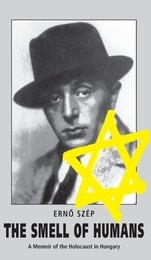
The Smell of Humans
A Memoir of the Holocaust in HungaryErno Szép
Central European University Press, 1994
The Tizard Mission
The Top-Secret Operation That Changed the Course of World War IIStephen Phelps
Westholme Publishing, 2010
Alone Against Germany, Britain Gave America Its Most Astonishing Secrets
In August 1940, a German invasion of Britain looked inevitable. Luftwaffe bombers were pounding British cities, France had surrendered, and the Low Countries were under German control. Although sympathetic to Britain’s plight, the United States remained staunchly neutral. Unknown to the rest of the world, Britain’s brightest scientific and military minds had been working on futuristic technology for a decade, including radar and jet propulsion. While the great value of radar to locate and identify objects at long distance and at night or in bad weather was appreciated, at the time it was thought that practical radar required a room-sized device for generating an effective signal. Now, suddenly, British scientists had something extraordinary—the cavity magnetron, a generator hundreds of times more powerful than any other in use and small enough to be held in the hand. With the British economy and industry reeling from the war, Winston Churchill gambled on an unorthodox plan: a team of scientists and engineers would travel under cover to the United States and give the still-neutral Americans the best of Britain’s military secrets. It was hoped that in exchange the United States would provide financial and manufacturing support—which might even lead to their official entry into the war.
The Tizard Mission, named for its leader Sir Henry Tizard, steamed across the Atlantic carrying a suitcase-sized metal deed box. Designed to sink in the event the ship was torpedoed by a U-boat, the box contained details of the Whittle jet engine, research for an atomic bomb, and a precious cavity magnetron. The Americans proved to be astonished, receptive, and efficient: Bell Telephone produced the first thirty magnetrons in October 1940, and over a million by the end of the war. With this device, both warships and aircraft could carry war-winning radar. But Britain did not only give America military secrets, these same technologies would produce a fortune for postwar commercial industries, with the magnetron being the key component to the microwave oven. In The Tizard Mission: The Top-Secret Operation That Changed the Course of World War II, Stephen Phelps reveals how the Tizard Mission was the turning point in the technological war, giving Britain the weapons it desperately needed and laying the groundwork for both the Special Relationship and much of the United States’s postwar economic boom, an effect that still resonates today.
The Toughest Fighting in the World
The Australian and American Campaign for New Guinea in World War IIGeorge H. Johnston
Westholme Publishing, 2011
A Classic Firsthand Account of the Struggle to Stop the Japanese Advance Toward Australia in 1942
Following their attacks on Pearl Harbor, the Dutch East Indies, and the Philippines, the Japanese invaded New Guinea in early 1942 as part of their attempt to create a Pacific empire. Control of New Guinea would enable Japan to establish large army, air force, and naval bases in close proximity to Australia. The Australians, with American cooperation, began a counterattack in earnest. The mountainous terrain covered with nearly impenetrable tropical forest and full of natural hazards resulted in an exceedingly grueling battleground. The struggle for New Guinea, one of the major campaigns of World War II, lasted the entire war, with the crucial fighting occurring in the first year. In The Toughest Fighting in the World, first published in 1943, Australian war correspondent George H. Johnston recorded the efforts of both the Australian and American troops, aided by the New Guinea native people, throughout 1942 as they fought a series of vicious and bitter battles against a determined foe. In one of the classic accounts of combat in World War II, the author makes a compelling case that the hardships endured by the soldiers in New Guinea from both nature and the enemy were among the most severe in the war.

The US Eighth Air Force in World War II
Ira Eaker, Hap Arnold, and Building American Air Power, 1942–1943William J. Daugherty
University of North Texas Press, 2024
The War Complex
World War II in Our TimeMarianna Torgovnick
University of Chicago Press, 2005
Marianna Torgovnick argues that we have lived, since the end of World War II, under the power of a war complex—a set of repressed ideas and impulses that stems from our unresolved attitudes toward the technological acceleration of mass death. This complex has led to gaps and hesitations in public discourse about atrocities committed during the war itself. And it remains an enduring wartime consciousness, one most recently animated on September 11.
Showing how different events from World War II became prominent in American cultural memory while others went forgotten or remain hidden in plain sight, The War Complex moves deftly from war films and historical works to television specials and popular magazines to define the image and influence of World War II in our time. Torgovnick also explores the 1961 trial of Adolf Eichmann, the emotional legacy of the Holocaust, and the treatment of World War II's missing history by writers such as W. G. Sebald to reveal the unease we feel at our dependence on those who hold the power of total war. Thinking anew, then, about how we account for war to each other and ourselves, Torgovnick ultimately, and movingly, shows how these anxieties and fears have prepared us to think about September 11 and our current war in Iraq.
The War in American Culture
Society and Consciousness during World War IIEdited by Lewis A. Erenberg and Susan E. Hirsch
University of Chicago Press, 1996
World War II posed a crisis for American culture: to defeat the enemy, Americans had to unite across the class, racial and ethnic boundaries that had long divided them. Exploring government censorship of war photography, the revision of immigration laws, Hollywood moviemaking, swing music, and popular magazines, these essays reveal the creation of a new national identity that was pluralistic, but also controlled and sanitized. Concentrating on the home front and the impact of the war on the lives of ordinary Americans, the contributors give us a rich portrayal of family life, sexuality, cultural images, and working-class life in addition to detailed consideration of African Americans, Latinos, and women who lived through the unsettling and rapidly altered circumstances of wartime America.
The War in Their Minds
German Soldiers and Their Violent Pasts in West GermanySvenja Goltermann
University of Michigan Press, 2017
Originally published in German as Die Gesellschaft der Uberlebenden, The War in Their Minds examines hitherto unused source material—psychiatric medical files of soldiers—to make clear how difficult it was for the soldiers and their families to readjust to normal, everyday life. Goltermann allows these testimonies of violence, guilt, justification, and helplessness speak for themselves and sensitively explores how the pension claims of returning soldiers were to compete with the claims of the Holocaust victims to compensation.
The Warsaw Uprising of 1944
Wlodzimierz Borodziej
University of Wisconsin Press, 2006
The Warsaw Uprising of 1944 dramatically tells the largely unknown story of the Warsaw resistance movement during World War II. Desperate to free themselves from German military oppression but also hoping to show the advancing Soviets that they could not impose easy rule upon the citizens of Warsaw, the Poles launched an almost hopeless attack against the Germans on August 1, 1944.
Wlodzimierz Borodziej presents an evenhanded account of what is commonly considered the darkest chapter in Polish history during World War II. In only sixty-three days, the Germans razed Warsaw to the ground and 200,000 people, mostly civilians, lost their lives. The result—a heroic and historically pivotal turning point—meant that the Poles would lose both their capital and an entire generation. This concise account of the trauma—little known to English-speaking readers—will appeal to anyone interested in the history of World War II in general and is a must-read for students of Polish history in particular.
The Western Hemisphere
Its Influence on United States Policies to the End of World War IIBy Wilfrid Hardy Callcott
University of Texas Press, 1968
The Monroe Doctrine, "dollar diplomacy," the policy of the Good Neighbor—these well-known terms indicate the spectrum of the United States's relationships with its neighbors of the Western Hemisphere. Hemisphere thinking in the "Yankee" nation, founded on economic, political, and strategic needs, has come to encompass an appreciation of social and intellectual aspects as a vital part of a unified international unit.
In The Western Hemisphere: Its Influence on United States Policies to the End of World War II, Wilfrid Hardy Callcott traces the rise of this awareness of the essential unity of the Western Hemisphere in international affairs. Although Callcott concentrates on the United States, he discusses all hemisphere countries, and his inclusion of Canada adds an additional dimension to previous studies on the subject.
From the early days of the Republic to the end of World War I, the relations of the United Stales with its neighbors gradually developed from mere curiosity and from on-the-spot decision-making into policy. During the eighteenth century the persons entrusted with United States foreign policy pressed forward with their own country's westward expansion, while they expressed only an academic interest in the affairs of other Western Hemisphere nations from Canada to Brazil.
By the end of the nineteenth century the United States had enthusiastically joined the imperialist nations. Although it soon replaced the use of force with economic controls, its military and economic manipulations naturally generated more fear and antagonism in the neighboring nations than cooperation and sympathy.
After World War I, attention to the hemisphere was fostered by the need for strategic raw materials that were to be found from Canada to South America, and by Old World rivalries and needs that endangered New World interests. Canadian and Latin American views of Europe and the League of Nations became much like those of the United States. The new conditions that arose called forth the Good Neighbor policy to combine economic and strategic values in a complex program that included intellectual, social, and cultural elements. World War II accentuated the new consciousness and compelled recognition of the significance of hemisphere relationships in all of the New World nations.
The Williwaw War
The Arkansas National Guard in the Aleutians in World War IIDonald Goldstein
University of Arkansas Press, 1992
When the 206th Coast Artillery Regiment of the Arkansas National Guard was called into federal service in January of 1941, few of the soldiers saw this action as anything more than a temporary detour in their lives. The war, after all, was in Europe and Asia and did not seem to involve them; many of the men thought they would serve their one-year enlistment and go home. The Japanese attack on Pearl Harbor changed all that.
The Williwaw War highlights the event sthat shaped the service of Arkansas’s 206th in the Aleutian Islands, including the Japanese strikes on Dutch Harbor on the third and fourth of June 1942, as well as the naval battle of the Komandorski Islands and the recapture of Attu and Kiska.
Written by the noted co-authors of the best-welling books on World War II, The Williwaw War chronicles the efforts of the men of the 206th as they battled terrible weather, overwhelming boredome and deprivation, and the Japanese, who were succesfully attempting to distract the Americans from the main Japanese assault on Midway Island.
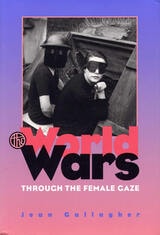
The World Wars Through the Female Gaze
Jean Gallagher
Southern Illinois University Press, 1998
For some women writers and photographers during the two world wars—Edith Wharton, Mildred Aldrich, Martha Gellhorn, Lee Miller, H.D., and Gertrude Stein—the construction of the female subject as an observer of combat became a vital concern. Their explorations of vision took place against the backdrop of a larger shift in Western culture's understanding of what "seeing" meant in common practice and philosophical discourse alike. The role of visuality in their lives was massively transformed not only by the rigid gender roles of war but by the introduction of new combat practices and technologies such as aerial surveillance, trench warfare, and civilian bombardment.
In The World Wars Through the Female Gaze, Jean Gallagher maps one portion of the historicized, gendered territory of what Nancy K. Miller calls the "gaze in representation." Expanding the notion of the gaze in critical discourse, Gallagher situates a number of visual acts within specific historic contexts to reconstruct the wartime female subject. She looks at both the female observer's physical act of seeing—and the refusal to see—for example, a battlefield, a wounded soldier, a torture victim, a national flag, a fashion model, a bombed city, or a wartime hallucination.
The book begins with two instances of wartime propaganda written by American women in France in 1915. Both Edith Wharton's Fighting France and Mildred Aldrich's A Hilltop on the Marne offer a complex and often contradictory sense of a woman writer's struggles with authority, resistance, and killing. In the process, Gallagher teases out the role of specular vision and the impossibility of "directly" seeing the war.
Gallagher then turns to literary and visual texts produced by two female journalists between 1940 and 1945. Martha Gellhorn's 1940 novel A Stricken Field exhibits a range of gendered seeing positions within and in opposition to the visual ideologies of fascism during the Nazi occupation of Czechoslovakia. Lee Miller's war correspondence and photography for Vogue show how Miller constructed herself and her predominantly female American audience as antifascist observers of war by working with and against some of the conventions of surrealist fashion photography.
Gallagher concludes by focusing on the experimental autobiographical prose of H.D. and Gertrude Stein to explore the functions of vision on two World War II "homefronts"—London during the Blitz and Vichy France.
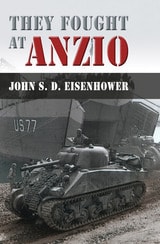
They Fought at Anzio
John S. D. Eisenhower
University of Missouri Press, 2025
Italy, from the toe to the Alps, was the scene of the longest, bloodiest, most frustrating, and least understood series of battles fought by the Western Allies during World War II. Now, John S. D. Eisenhower offers a new look at the Italian campaign, emphasizing the Anzio offensive—an operation pushed by Winston Churchill that fell largely to American troops to carry out. It was visualized as an amphibious landing of two Allied divisions behind German lines that would force the Wehrmacht to evacuate all of Italy. But the Germans held on and, with the arrival of reinforcements, nearly wiped out the Allied troops pinned down at Anzio Beach.
By portraying that struggle from the perspectives of both commanders and foot soldiers, this prominent military historian focuses on the experiences of the individuals who fought in the Italian campaign to reveal what the battle at Anzio was all about. But more than the account of one operation, They Fought at Anzio covers the entire Italian campaign, from the landings at Salerno to the capture of Rome.
Eisenhower brings a trained eye to reconstructing the difficult terrain of battle, approaching the Anzio campaign as a contest between opposing commands striving to anticipate and counter the opponent’s moves—not as a field exercise but as a deadly struggle for survival. He analyzes the command decisions that brought about the Anzio stalemate, interspersing his account with personal experiences of the men in the trenches, the nurses of the 56th Evacuation Hospital, and the young officers witnessing the horrors of war for the first time.
As a study in command, Eisenhower’s narrative gives new credit to generals Lucian Truscott and Fred Walker and assesses both the strengths and weaknesses of General Mark Clark, allowing us to grasp the situation as it appeared to those in command. He also offers compelling portraits of German commanders Field Marshal Albert Kesselring and General Frido von Senger und Etterlin.
It has been said that Anzio was a soldier’s battle, remembered more for blood shed than for military objectives achieved. By focusing on the experiences of the soldiers who fought there and the decisions of commanders in perilous circumstances, They Fought at Anzio offers a new appreciation of the contributions of both and a new understanding of this unheralded theater of the war.
They Thought They Were Free
The Germans, 1933-45Milton Mayer
University of Chicago Press, 1966
“What happened here was the gradual habituation of the people, little by little, to being governed by surprise; to receiving decisions deliberated in secret; to believing that the situation was so complicated that the government had to act on information which the people could not understand, or so dangerous that, even if the people could not understand it, it could not be released because of national security. And their sense of identification with Hitler, their trust in him, made it easier to widen this gap and reassured those who would otherwise have worried about it.”--from Chapter 13, “But Then It Was Too Late”
They Thought They Were Free
The Germans, 1933–45Milton Mayer
University of Chicago Press, 2017
“When this book was first published it received some attention from the critics but none at all from the public. Nazism was finished in the bunker in Berlin and its death warrant signed on the bench at Nuremberg.”
That’s Milton Mayer, writing in a foreword to the 1966 edition of They Thought They Were Free. He’s right about the critics: the book was a finalist for the National Book Award in 1956. General readers may have been slower to take notice, but over time they did—what we’ve seen over decades is that any time people, across the political spectrum, start to feel that freedom is threatened, the book experiences a ripple of word-of-mouth interest.
They Thought They Were Free is an eloquent and provocative examination of the development of fascism in Germany. Mayer’s book is a study of ten Germans and their lives from 1933-45, based on interviews he conducted after the war when he lived in Germany. Mayer had a position as a research professor at the University of Frankfurt and lived in a nearby small Hessian town which he disguised with the name “Kronenberg.” “These ten men were not men of distinction,” Mayer noted, but they had been members of the Nazi Party; Mayer wanted to discover what had made them Nazis. His discussions with them of Nazism, the rise of the Reich, and mass complicity with evil became the backbone of this book, an indictment of the ordinary German that is all the more powerful for its refusal to let the rest of us pretend that our moment, our society, our country are fundamentally immune.
A new foreword to this edition by eminent historian of the Reich Richard J. Evans puts the book in historical and contemporary context. We live in an age of fervid politics and hyperbolic rhetoric. They Thought They Were Free cuts through that, revealing instead the slow, quiet accretions of change, complicity, and abdication of moral authority that quietly mark the rise of evil.
They Were Just People
Stories of Rescue in Poland During the HolocaustBill Tammeus & Rabbi Jacques Cukierkorn
University of Missouri Press, 2009
Thousand-Mile War
World War II in Alaska and the AleutiansBrian Garfield
University of Alaska Press, 1995
The war in the Aleutians was fought in some of the worst climatic conditions on earth for men, ships, and airplanes. The sea was rough, the islands craggy and unwelcoming, but the most fearful enemy was the weather—the savage wind, fog, and rain of the Aleutian chain. The fog seemed to reach even into the minds of the military commanders on both sides, as they directed their men into situations with often had tragic results. Frustrating, befuddling, and still the subject of debate, the Aleutian campaign nevertheless marked an important turn of the war in favor of the United States.
More than half a century after the war ended, more of the fog has been lifted. In this updated edition, Garfield supplements his original account drawn from statistics, personal interviews, letters, and diaries, with more recently declassified photographs and significant additional illustrations.
Through the Day, through the Night
A Flemish Belgian Boyhood and World War IIJan Vansina
University of Wisconsin Press, 2014
Within the vast literature on World War II, a much smaller body of work treats the everyday experiences of civilians, particularly in smaller countries drawn into the conflict. Recalling the war in Belgium from a child’s-eye perspective, Vansina describes pangs of hunger so great as to make him crave the bitter taste of cod-liver oil. He vividly remembers the shock of seeing severely wounded men on the grounds of a field hospital, the dangers of crossing fields and swimming in ponds strafed by planes, and his family’s interactions with occupying and escaping soldiers from both sides. After the war he recalls emerging numb from the cinema where he first saw the footage of the Nazi death camps, and he describes a new phase of unrest marked by looting, vigilante justice, and the country’s efforts at reunification.
Vansina, a historian and anthropologist best known for his insights into oral tradition and social memory, draws on his own memories and those of his siblings to reconstruct daily life in Belgium during a tumultuous era.
Best Special Interest Books, selected by the American Association of School Librarians
Best Books for General Audiences, selected by the Public Library Reviewers
Thunder Below!
The USS *Barb* Revolutionizes Submarine Warfare in World War IIAdmiral Eugene B. Fluckey
University of Illinois Press, 1992
Under the leadership of her fearless skipper, Captain Gene Fluckey, the Barb sank the greatest tonnage of any American sub in World War II. At the same time, the Barb did far more than merely sink ships-she changed forever the way submarines stalk and kill their prey.
This is a gripping adventure chock-full of "you-are-there" moments. Fluckey has drawn on logs, reports, letters, interviews, and a recently discovered illegal diary kept by one of his torpedomen. And in a fascinating twist, he uses archival documents from the Japanese Navy to give its version of events.
The unique story of the Barb begins with its men, who had the confidence to become unbeatable. Each team helped develop innovative ideas, new tactics, and new strategies. All strove for personal excellence, and success became contagious. Instead of lying in wait under the waves, the USS Barb pursued enemy ships on the surface, attacking in the swift and precise style of torpedo boats. She was the first sub to use rocket missiles and to creep up on enemy convoys at night, joining the flank escort line from astern, darting in and out as she sank ships up the column.
Surface-cruising, diving only to escape, "Luckey Fluckey" relentlessly patrolled the Pacific, driving his boat and crew to their limits. There can be no greater contrast to modern warfare's long-distance, videogame style of battle than the exploits of the captain and crew of the USS Barb, where they sub, out of ammunition, actually rammed an enemy ship until it sank.
Thunder Below! is a first-rate, true-life, inspirational story of the courage and heroism of ordinary men under fire.
A Main Selection of the Military Book Club. Winner of the Rear Admiral Samuel Eliot Morison Award for Naval Literature given by the Naval Order of the United States, New York Commandery.
Tito, Mihailovic, and the Allies
Walter R. Roberts
Duke University Press, 1987
To Command the Sky
The Battle for Air Superiority Over Germany, 1942-1944Stephen L. McFarland and Wesley Phillips Newton
University of Alabama Press, 2006
To Command the Sky is a scholarly record of the fight for domination of the skies over western Europe during World War II. It also explains the technical details of the tactics used to defeat the Luftwaffe. This book is important for serious students of World War II or military aviation.

To Lose a War
Memories of a German GirlRegina Maria Shelton
Southern Illinois University Press, 1982
Martin Blumenson refers to this book as a “sensitive, beautifully written personal memoir,” and calls it a contribution to understanding, “particularly to Americans who know little of how World War II and its immediate aftermath disrupted the lives of those who survived the defeat of Germany.”
Vividly, humanly, Shelton tells her story from the point of view of a teen-age German girl, one who witnessed her country’s surge to power and who felt the ignominy of both Germany and Germans after the fall. She reaches a point during the war when “Sometimes the way we now live seems unreal, as if we were marionettes, with orders and permits and schedules attached to us instead of strings.”
But after the defeat of Germany life gets considerably worse. The victorious Russians evict the natives from their homes. They sneer and leer at the women who must venture forth for food. In this defeated land “the nights become unbearably long; without any physical activity by day, sleep refuses to come. I yearn for sleep, be it temporary or eternal. Death is becoming a friend; the enemy has a new name now: Rape.”
Then comes the dreaded order to evacuate all Germans from Lower Silesia: “How can a whole people be uprooted, disowned, tossed aside like useless flotsam—how? With the stroke of a pen, with a new line drawn on a map, we are sentenced to homelessness.” Not knowing where they will be sent, they plod out into darkness and cold with the other Germans, their worldly goods reduced to what they can carry. Embittered, they are herded into vermin-infested freight cars, still unaware of their destination.
Total Mobilization
World War II and American LiteratureRoy Scranton
University of Chicago Press, 2019
Since World War II, the story of the trauma hero—the noble white man psychologically wounded by his encounter with violence—has become omnipresent in America’s narratives of war, an imaginary solution to the contradictions of American political hegemony. In Total Mobilization, Roy Scranton cuts through the fog of trauma that obscures World War II, uncovering a lost history and reframing the way we talk about war today.
Considering often overlooked works by James Jones, Wallace Stevens, Martha Gellhorn, and others, alongside cartoons and films, Scranton investigates the role of the hero in industrial wartime, showing how such writers struggled to make sense of problems that continue to plague us today: the limits of American power, the dangers of political polarization, and the conflicts between nationalism and liberalism. By turning our attention to the ways we make war meaningful—and by excavating the politics implicit within the myth of the traumatized hero—Total Mobilization revises the way we understand not only World War II, but all of postwar American culture.
Toxic Exposures
Mustard Gas and the Health Consequences of World War II in the United StatesSmith, Susan L.
Rutgers University Press, 2019
Trading in Lives?
Operations of the Jewish Relief and Rescue Committee in Budapest, 1944-1945Szabolcs Szita
Central European University Press, 2005
Travels in the Reich, 1933-1945
Foreign Authors Report from GermanyEdited by Oliver Lubrich
University of Chicago Press, 2010
“Even now,” wrote Christopher Isherwood in his Berlin Diary of 1933, “I can’t altogether believe that any of this has really happened.” Three years later, W. E. B. DuBois described Germany as “silent, nervous, suppressed; it speaks in whispers.” In contrast, a young John F. Kennedy, in the journal he kept on a German tour in 1937, wrote, “The Germans really are too good—it makes people gang against them for protection.”
Drawing on such published and unpublished accounts from writers and public figures visiting Germany, Travels in the Reich creates a chilling composite portrait of the reality of life under Hitler. Written in the moment by writers such as Virginia Woolf, Isak Dinesen, Samuel Beckett, Jean-Paul Sartre, William Shirer, Georges Simenon, and Albert Camus, the essays, letters, and articles gathered here offer fascinating insight into the range of responses to Nazi Germany. While some accounts betray a distressing naivete, overall what is striking is just how clearly many of the travelers understood the true situation—and the terrors to come.
Through the eyes of these visitors, Travels in the Reich offers a new perspective on the quotidian—yet so often horrifying—details of German life under Nazism, in accounts as gripping and well-written as a novel, but bearing all the weight of historical witness.
Triumph of the Dead
American World War II Cemeteries, Monuments, and Diplomacy in FranceKate Clarke Lemay
University of Alabama Press, 2018
Between 1948 and 1956, the United States government planned an enormous project to build fourteen permanent overseas military cemeteries in Europe. These park-like burial grounds eventually would hold the graves of approximately 80,000 American soldiers and nurses who died during or immediately after World War II. Five of these cemeteries are located in France, more than any other nation: two in Normandy; one in Provence; and two in Lorraine.
In Triumph of the Dead: American World War II Cemeteries, Monuments, and Diplomacy in France, Kate Clarke Lemay explores the relationship between art, architecture, war memory, and Franco-American relations. She addresses the many functions, both original and more recent, that the American war cemeteries have performed, such as: war memorials, diplomatic gestures, Cold War political statements, prompts for debate about Franco-American relations, and the nature of French identity itself. Located on or near former battlefields, the American war cemeteries are at once history lessons, sites of memory, and commemorative monuments. As places of mourning, war cemeteries are considerably different than civic cemeteries in their rituals, designs, and influences on collective memory. As transatlantic sites, the cemeteries both construct and sustain an American memory of World War II for a Francophile and European audience.
The book features ten color photographs, fifty black and white photographs, and four maps. Scholars as well as enthusiasts of World War II history, mid-century art and architecture, and cultural diplomacy will be interested in reading this richly researched book, the first in-depth history of some of the most important sites of American World War II remembrance.
Twenty-Three Minutes to Eternity
The Final Voyage of the Escort Carrier USS Liscome BayJames L. Noles
University of Alabama Press, 2004