Results by title
28167 books match the query 'History' and 6372 start with t

The Catholics and German Unity
1866-1871George G. Windell
University of Minnesota Press, 1954
The Catholics and German Unity was first published in 1954. Minnesota Archive Editions uses digital technology to make long-unavailable books once again accessible, and are published unaltered from the original University of Minnesota Press editions.
The period of German history between the overthrow of the old German Confederation in 1866 and the establishment of the Second Reich in 1871 was critical and far-reaching in its influence upon subsequent events in Germany and in Europe. It is, therefore, a period that still merits close scrutiny and analysis in all its aspects by historians.
In this detailed study, Professor Windell traces the development of political movements among German Catholics during those years and explores the relationship of the various streams of Catholic political action to the larger questions of German history. The War of 1866, which ended Austrian predominance in Germany, was a shattering blow to German Catholics. During the next five years they gradually adjusted to the new situations and were responsible for a series of political movements which exerted a powerful and generally underestimated effects on state governments, on other political parties, and on the domestic and foreign policy of Bismarck.
Although a substantial amount of material was available on Catholic political activity in the individual German states, it had not, until now, been synthesized into a comprehensive, single work placing these events in proper perspective against the broader canvas of history.
Of this book Hans Rothfels, professor of history at the University of Chicago and the University of Tubingen, Germany, says: "Without being partial to any side, in fact with considerable circumspection, the author analyzes and interprets a great nineteenth century dilemma to which the foundation of the German Reich adds only a specific issue."
The Cattell Controversy
Race, Science, and IdeologyWilliam H. Tucker
University of Illinois Press, 2008
In addition to his mainstream research, Cattell had also authored a series of publications that posited evolutionary progress as the ultimate goal of human existence and argued that scientifically measurable criteria should be used to distinguish "successful" from "failing" racial groups so that the latter might be gradually "phased out" by non-violent methods such as regulation of birth control. Derived from science, Cattell's evolutionary philosophy was intended to be the basis of a full-blown religion. Although the earliest of these works had been published in the 1930s, near the end of an era in which eugenically based policies for human improvement were much more acceptable, Cattell promoted similar ideas well into the 1980s and '90s.
The Cattell Controversy describes Cattell's socio-religious beliefs in detail and analyzes their relationship to his scientific contributions. William H. Tucker discusses the controversy that arose within the field in response to the award's postponement, after which Cattell withdrew his name from consideration for the award but insisted that his position had been distorted by taking statements out of context. Reflecting on these events, Tucker concludes with a discussion of the complex question of whether and how a scientist's ideological views should ever be a relevant factor in determining the value of his or her contributions to the field.
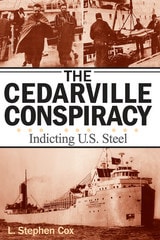
The Cedarville Conspiracy
Indicting U.S. SteelL. Stephen Cox
University of Michigan Press, 2005
The Cedarville Conspiracy is the story of that doomed ship and its crew. It is also the first Great Lakes history to expose the heroism, villainy, courage, and confusion surrounding the Cedarville disaster.
In atmospheric, cinematic style, L. Stephen Cox's gripping page-turner dramatizes the events surrounding the collision between the Norwegian and American freighters. As the mortally wounded Cedarville began to list and sink, U.S. Steel refused to allow the crew to escape to safety, while the captain secretly donned his life jacket and abandoned the sinking ship. Ten seamen died in the frigid waters that morning as the captain and survivors swam to safety.
Researching the story, author L. Stephen Cox interviewed the surviving crew and their rescuers and attorneys, examined more than 20,000 pages of Coast Guard reports, and discovered deposition transcripts and other documentary evidence that detailed the deterioration of the ship, the captain's disregard of Great Lakes navigational rules, the company's participation in the decision to confine the men aboard the sinking vessel, and the subsequent efforts by U.S. Steel to manipulate the evidence.

The Centenary Edition of the Works of Nathaniel Hawthorne
VOL. V, OUR OLD HOMENathaniel Hawthorne
The Ohio State University Press, 1970
The Centenary Edition of the Works of Nathaniel Hawthorne
Vol. VI, True Stories From History and BiographyNathaniel Hawthorne
The Ohio State University Press, 1972
The Centenary Edition of the Works of Nathaniel Hawthorne
Vol. XIV, The French and Italian NotebooksNathaniel Hawthorne
The Ohio State University Press, 1980
The Centenary Edition of the Works of Nathaniel Hawthorne
Vol. XXI, the English Notebooks, 1853–1856Nathaniel Hawthorne
The Ohio State University Press, 1997
The Centenary Edition of the Works of Nathaniel Hawthorne
Vol. XXII, The English Notebooks, 1856–1860Nathaniel Hawthorne
The Ohio State University Press, 1997
The Center Cannot Hold
Decolonial Possibility in the Collapse of a Tanzanian NGOJenna N. Hanchey
Duke University Press, 2023
The Center of a Great Empire
The Ohio Country in the Early RepublicAndrew R. L. Cayton
Ohio University Press, 2005
“The people who lived in what became the seventeenth state in the American Union in 1803 were not only at the center of a great empire, they were at the center of the most important historical developments in the revolutionary Atlantic World.”
—From the introduction
Nowhere did the revolutions in politics, commerce, and society in the late eighteenth and early nineteenth centuries occur more quickly or more thoroughly than in the Ohio country. A forested borderland dominated by American Indians in 1780, Ohio was a landscape of farms and towns inhabited by people from all over the world by 1830. The Center of a Great Empire: The Ohio Country in the Early Republic chronicles this dramatic and all-encompassing change.
Andrew R. L. Cayton and Stuart D. Hobbs have assembled an impressive collection of articles by established and rising scholars. They address the conquest of Native Americans, the emergence of a democratic political culture, the origins of capitalism, the formation of public culture, the growth of evangelical Protestantism, the ambiguous status of African Americans, and social life in a place that most regarded as the cutting edge of human history.
For The Center of a Great Empire, distinguished historians of the American nation in its first decades question conventional wisdom. They emphasize contingency rather than inevitability and contention rather than progress. Downplaying the frontier character of Ohio, they offer new interpretations and open new paths of inquiry through investigations of race, education, politics, religion, family, commerce, colonialism, and conquest. As it underscores key themes in the history of the United States, The Center of a Great Empire pursues issues that have fascinated people for two centuries.

The Central Asian Arabs of Afghanistan
Pastoral Nomadism in TransitionBy Thomas J. Barfield
University of Texas Press, 1981
The Central Intelligence Agency
History and DocumentsWilliam M. Leary
University of Alabama Press, 1984
In late 1974 the U.S. Senate Select Committee on the CIA, headed by Frank Church of Idaho, began collecting documents and materials to buttress the committee hearings on the CIA’s role and activities that were to begin in the fall of 1975. Among the materials prepared for the Church Committee is History of the Central Intelligence Agency, which was written by committee staff member Anne Karalekas.
This book reproduces the History, with an introduction by Leary that establishes the historical framework for the Church Committee hearings, and also includes ten relevant documents covering events from 1944 to 1981.

The Ceramic Career of M. Louise McLaughlin
Anita J. Ellis
Ohio University Press, 2003
In 1877 the thirty-year-old artist Mary Louise McLaughlin wrote China Painting, the first manual on the subject in the United States written by a woman for women. Extremely successful, it is now accepted as the book that launched the china painting movement in America.
When in 1898 McLaughlin decided to produce porcelain, the most difficult of ceramics, she showed the determination and exactitude that were her trademarks. Already renowned as a ceramicist, she became the first to produce studio porcelain in America and the first to discover the technique for decorating under the glaze. Her work was welcomed with enthusiasm in New York and Paris.
Despite the enormous influence of Mary Louise McLaughlin on the history of American ceramics, Anita Ellis’s The Ceramic Career of M. Louise McLaughlin is the first definitive study dedicated to her accomplishments.
Anita Ellis depicts the many challenges McLaughlin encountered in pursuit of her ultimately successful career. Not the least of these was her rivalry with the formidable Maria Longworth Nichols, fellow Cincinnatian and founder of the Rookwood Pottery Company. Another was that of being a woman in the arts: her primary goal had been to paint portraits on canvas, but Victorian society did not afford opportunities in what was considered a male sphere.
Replete with historic photos and color illustrations of many of McLaughlin’s works, The Ceramic Career of M. Louise McLaughlin is a tribute to a woman artist who rose to one of the most esteemed positions in her field.
The Chaco Mission Frontier
The Guaycuruan ExperienceJames Schofield Saeger
University of Arizona Press, 2000
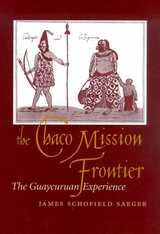
Spanish missions in the New World usually pacified sedentary peoples accustomed to the agricultural mode of mission life, prompting many scholars to generalize about mission history. James Saeger now reconsiders the effectiveness of the missions by examining how Guaycuruan peoples of South America's Gran Chaco adapted to them during the eighteenth century. Because the Guaycuruans were hunter-gatherers less suited to an agricultural lifestyle, their attitudes and behaviors can provide new insight about the impact of missions on native peoples.
Responding to recent syntheses of the mission system, Saeger proposes that missions in the Gran Chaco did not fit the usual pattern. Through research in colonial documents, he reveals the Guaycuruan perspective on the missions, thereby presenting an alternative view of Guaycuruan history and the development of the mission system. He investigates Guaycuruan social, economic, political, and religious life before the missions and analyzes subsequent changes; he then traces Guaycuruan history into the modern era and offers an assessment of what Catholic missions meant to these peoples.
Saeger's research into Spanish documents is unique for its elicitation of the Indian point of view. He not only reconstructs Guaycuruan life independent of Spanish contact but also shows how these Indians negotiated the conditions under which they would adapt to the mission way of life, thereby retaining much of their independence.
By showing that the Guaycuruans were not as restricted in missions as has been assumed, Saeger demonstrates that there is a distinct difference between the establishment of missions and conquest. The Chaco Mission Frontier helps redefine mission studies by correcting overgeneralization about their role in Latin America.

The Challenge of Modernity
German Social and Cultural Studies, 1890-1960Adelheid von Saldern
University of Michigan Press, 2002
The essays contained in The Challenge of Modernity cover three distinct subject areas: the history of the Social Democratic labor movement, housing, and popular and mass culture. More specifically, von Saldern addresses the self-modernizing Social Democratic Party; Social Democrats' and Communists' opposing views of modernization; social rationalization in the private sphere (particularly with regard to women and hygiene); sport; the arrival of "trashy" literature, movies, and radio in Germany; and cultural conservatives' attempts to enhance a national and Volks-culture in opposition to mass-culture, Americanization, and the avant-garde. The variety of responses to the modernization process, as well as von Saldern's focus on social agents, makes this book unique.
Required reading for scholars of social, cultural, and gender history, The Challenge of Modernity will also find an audience among urban anthropologists, political scientists, and sociologists. Von Saldern's ability to combine a strong theoretical framework with concrete historical examples will also make this outstanding reading for undergraduate and graduate students seeking to familiarize themselves with the history of German society and culture.
Adelheid von Saldern is Professor of Modern History and Director, Historisches Seminar, Universität Hanover.

The Challenger Launch Decision
Risky Technology, Culture, and Deviance at NASADiane Vaughan
University of Chicago Press, 1995
Journalists and investigators have historically cited production problems and managerial wrong-doing as the reasons behind the disaster. The Presidential Commission uncovered a flawed decision-making process at the space agency as well, citing a well-documented history of problems with the O-ring and a dramatic last-minute protest by engineers over the Solid Rocket Boosters as evidence of managerial neglect.
Why did NASA managers, who not only had all the information prior to the launch but also were warned against it, decide to proceed? In retelling how the decision unfolded through the eyes of the managers and the engineers, Vaughan uncovers an incremental descent into poor judgment, supported by a culture of high-risk technology. She reveals how and why NASA insiders, when repeatedly faced with evidence that something was wrong, normalized the deviance so that it became acceptable to them.
No safety rules were broken. No single individual was at fault. Instead, the cause of the disaster is a story not of evil but of the banality of organizational life. This powerful work explains why the Challenger tragedy must be reexamined and offers an unexpected warning about the hidden hazards of living in this technological age.
The Challenger Launch Decision
Risky Technology, Culture, and Deviance at NASA, Enlarged EditionDiane Vaughan
University of Chicago Press, 2015
When the Space Shuttle Challenger exploded on January 28, 1986, millions of Americans became bound together in a single, historic moment. Many still vividly remember exactly where they were and what they were doing when they heard about the tragedy. Diane Vaughan recreates the steps leading up to that fateful decision, contradicting conventional interpretations to prove that what occurred at NASA was not skullduggery or misconduct but a disastrous mistake.
Why did NASA managers, who not only had all the information prior to the launch but also were warned against it, decide to proceed? In retelling how the decision unfolded through the eyes of the managers and the engineers, Vaughan uncovers an incremental descent into poor judgment, supported by a culture of high-risk technology. She reveals how and why NASA insiders, when repeatedly faced with evidence that something was wrong, normalized the deviance so that it became acceptable to them. In a new preface, Vaughan reveals the ramifications for this book and for her when a similar decision-making process brought down NASA's Space Shuttle Columbia in 2003.

The Challenges of Sovereignty
Essays on Israel and ZionismDavid Ellenson
Brandeis University Press, 2026
Key essays by a notable scholar address some of the most pressing questions facing Israel today.
Over the course of his rich career, David Ellenson—one of the most outstanding Jewish scholars, intellectuals, and thinkers of our time—probed the tension between tradition and modernity, especially as reflected in the ceaseless reinterpretation of liturgical and halakhic texts. Alongside that scholarly interest, largely centered on European Jewry, Ellenson produced an impressive body of work on Zionism and Israel.
This volume follows the arc of this body of work from Ellenson’s early articles on the Zionism of American rabbis to his last essay on the struggle between Jewish and democratic impulses in Israeli society. He draws on familiar sources of inquiry—Jewish prayers and legal sources—to chart changes in Israeli religious life and to excavate its theological-political foundation. What emerges is a profound meditation on some of the most important questions that Israel faces today: what does it mean to be Jewish in the state? What role should Halakhah play in a self-defined Jewish state? How should the state treat its non-Jewish minority? How deeply rooted is democracy in the state and its foundational texts? And can the state ever escape seemingly irrepressible internal and external conflict?
The Challenges of Sustained Development
The Role of Socio-cultural Factors in East-central EuropeBorut Roncevic
Central European University Press, 2004
The Cham of Vietnam
History, Society and ArtEdited by Bruce Lockhart and Tran Ky Phuong
National University of Singapore Press, 2011
The Changing American Mind
How and Why American Public Opinion Changed Between 1960 and 1988William G. Mayer
University of Michigan Press, 1992
Have Americans become more or less tolerant of racial discrimination? More or less supportive of abortion? Is a new tax revolt underway? Did a "new conservative mood" dominate elections and policy discussions in the early 1980s? Popular and academic discussions about the past and future of American politics often turn on the question of whether and how public opinion has changed. Yet for all the talk about such matters, observes political scientist William G. Mayer, there is surprisingly little hard evidence on many of these questions. The Changing American Mind is designed to fill that gap, by presenting a comprehensive history of American public opinion over the last three decades: how it changed, why it changed, and what difference that makes for American politics. The Changing American Mind is important reading for all who are interested in American politics and public opinion. Its appendices, which include the results of more than 250 survey questions that have been asked regularly of national samples over the last three decades, make it an indispensable reference source for everyone who studies or participates in American politics.

The Changing Environment of Northern Michigan
A Century of Science and Nature at the University of Michigan Biological StationKnute J. Nadelhoffer, Alan J. Hogg, Jr., Brian A. Hazlett, editors
University of Michigan Press, 2009
Northern Michigan is undergoing unprecedented changes in land use, climate, resource extraction, and species distributions. For the last hundred years, the University of Michigan Biological Station has monitored these environmental transformations. Stretching 10,000 acres along Burt and Douglas Lakes in the northern Lower Peninsula and 3,200 acres on Sugar Island near Sault Ste. Marie, Michigan, the station has played host to nearly 10,000 students and a steady stream of top scientists in the fields of biology, ecology, geology, archeology, and climatology.
The Changing Environment of Northern Michigan collects essays by some of these scientists, who lead readers on virtual field trips exploring the history of people and science at the station itself, the relations of indigenous people to the land, the geophysical history of the region, characteristics of terrestrial and aquatic ecosystems, key groups of organisms and their relations to local habitats, and perspectives on critical environmental challenges of today and their effects on the region. Accompanying the chapters are color illustrations and photographs that bring the station's pristine setting to life.
Like the station itself, the book provides a solid background for better appreciating the relationships among living and nonliving parts of northern Michigan, for anyone interested in exploring the region's forests, fields, and wetlands; wading or paddling down its rivers; or swimming or floating across its lakes.
Knute J. Nadelhoffer is Director of the University of Michigan Biological Station and Professor of Ecology and Evolutionary Biology at the University of Michigan.
Alan J. Hogg, Jr., teaches science writing at the University of Michigan as a faculty member of the Sweetland Writing Center. His Ph.D. research explored the effects of ozone and nitrogen oxides on University of Michigan Biological Station forests.
Brian A. Hazlett is Professor Emeritus of Zoology at the University of Michigan.
The Changing Face of Inequality
Urbanization, Industrial Development, and Immigrants in Detroit, 1880-1920Olivier Zunz
University of Chicago Press, 1983

The Changing Nature of the Maine Woods
Andrew M. Barton
University of New Hampshire Press, 2012
The Changing Nature of the Maine Woods is both a fascinating introduction to the forests of Maine and a detailed but accessible narrative of the dynamism of these ecosystems. This is natural history with a long view, starting with an overview of the state's geological history, the reemergence of the forest after glacial retreat, and the surprising changes right up to European arrival. The authors create a vivid picture of Maine forests just before the impact of Euro-Americans and trace the profound transformations since settlement.
Ambitious in its geographic range, this book explores how and why Maine forests differ across the state, from the top of Mount Katahdin to the coast. Through groundbreaking research and engaging narratives, the authors assess key ecological forces such as climate change, insects and disease, nonnative organisms, natural disturbance, and changing land use to create a dramatic portrait of Maine forests—past, present, and future.
This book both synthesizes the latest scientific discoveries regarding the changing forest and relates the findings to an educated lay and academic audience.
The Changing Past
Trends in South African Historical WritingKen Smith
Ohio University Press, 1989
E.H. Carr said: “Before you study the history, study the historian.” Written history often tells us more about the historian’s own times than it does of the times about which he is writing. The historians and the way in which each generation has rewritten history in the light of its own preoccupations is the subject of The Changing Past. This is the first book-length survey in English that covers all the main trends in South African historiography. Starting with the first documents and histories, it goes on to trace the 19th century. British and settler “schools,” Afrikaans historiography from its pre-academic 19th century phase to the present, and the liberal historians who struck out in a new direction from the 1920s. The book highlights the break with the past that historians of the “new radical school” have made in the last 15 years, and surveys the position of historical writing to the present.
The canvas is delineated in bold strokes that sketch in the main outlines rather than seek an exhaustive treatment of all existing literature. This, together with a conscious effort to minimize theoretical discussion, makes it a highly readable text.

The Changing Pattern of Black Politics in Britain
Kalbir Shukra
Pluto Press, 1998
The Changing Structure of Europe
Economic, Social, and Political TrendsRobert Beck
University of Minnesota Press, 1970

The Changs Next Door to the Díazes
Remapping Race in Suburban CaliforniaWendy Cheng
University of Minnesota Press, 2013
U.S. suburbs are typically imagined to be predominantly white communities, but this is increasingly untrue in many parts of the country. Examining a multiracial suburb that is decidedly nonwhite, Wendy Cheng unpacks questions of how identity—especially racial identity—is shaped by place. She offers an in-depth portrait, enriched by nearly seventy interviews, of the San Gabriel Valley, not far from downtown Los Angeles, where approximately 60 percent of residents are Asian American and more than 30 percent are Latino. At first glance, the cities of the San Gabriel Valley look like stereotypical suburbs, but almost no one who lives there is white.
The Changs Next Door to the Díazes reveals how a distinct culture is being fashioned in, and simultaneously reshaping, an environment of strip malls, multifamily housing, and faux Mediterranean tract homes. Informed by her interviews as well as extensive analysis of three episodic case studies, Cheng argues that people’s daily experiences—in neighborhoods, schools, civic organizations, and public space—deeply influence their racial consciousness. In the San Gabriel Valley, racial ideologies are being reformulated by these encounters. Cheng views everyday landscapes as crucial terrains through which racial hierarchies are learned, instantiated, and transformed. She terms the process “regional racial formation,” through which locally accepted racial orders and hierarchies complicate and often challenge prevailing notions of race.
There is a place-specific state of mind here, Cheng finds. Understanding the processes of racial formation in the San Gabriel Valley in the contemporary moment is important in itself but also has larger value as a model for considering the spatial dimensions of racial formation and the significant demographic shifts taking place across the national landscape.
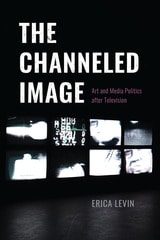
The Channeled Image
Art and Media Politics after TelevisionErica Levin
University of Chicago Press, 2022
Following the integration of television into the fabric of American life in the 1950s, experimental artists of the 1960s began to appropriate this novel medium toward new aesthetic and political ends. As Erica Levin details in The Channeled Image, groundbreaking artists like Carolee Schneemann, Bruce Conner, Stan VanDerBeek, and Aldo Tambellini developed a new formal language that foregrounded television’s mediation of a social order defined by the interests of the state, capital, and cultural elites. The resulting works introduced immersive projection environments, live screening events, videographic distortion, and televised happenings, among other forms. For Levin, “the channeled image” names a constellation of practices that mimic, simulate, or disrupt the appearance of televised images. This formal experimentation influenced new modes of installation, which took shape as multi-channel displays and mobile or split-screen projections, or in some cases, experimental work produced for broadcast. Above all, this book asks how artistic experimentation with televisual forms was shaped by events that challenged television broadcasters’ claims to authority, events that set the stage for struggles over how access to the airwaves would be negotiated in the future.
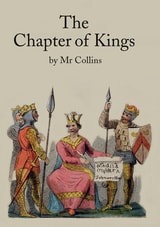
The Chapter of Kings
Mr. Collins
Bodleian Library Publishing, 2005
Poor Edward the Fifth was young killed in his bed
By his uncle, Richard, who was knocked on the head
By Henry the Seventh, who in fame grew big
And Henry the Eighth, who was fat as a pig!
By the time "Mr. Collins" had written this verse, George III, the King of England, had been noticeably missing for seven years—having spent much of the time in his final period of illness at Windsor Castle—and the country had forever lost its American colonies. For many English citizens this dismal period was considered to be the beginning of the end for the British monarchy. The Chapter of Kings, offered here in a facsimile edition, provides a good deal of illustration to that effect.
For the first time since 1818, these charming verses, which were written for children but remain a biting satire ofthe British monarchy, are available for our edification and amusement, each accompanied by hand-drawn "portraits" of England's kings, from Caesar through George, the prince and future king.
Written and illustrated with a keen sense of irony, The Chapter of Kings is a fascinating peek, both for children and parents, into nineteenth-century attitudes toward the royals.
The Charismatic Gymnasium
Breath, Media, and Religious Revivalism in Contemporary BrazilMaria José de Abreu
Duke University Press, 2020
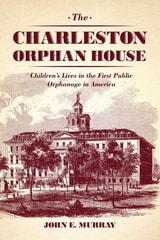
The Charleston Orphan House
Children's Lives in the First Public Orphanage in AmericaJohn E. Murray
University of Chicago Press, 2012
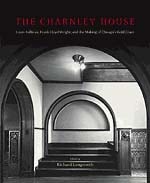
The Charnley House
Louis Sullivan, Frank Lloyd Wright, and the Making of Chicago's Gold CoastEdited by Richard Longstreth
University of Chicago Press, 2004
In this collection of original essays, six well-known architectural historians illuminate various aspects of the house, both inside and out, as they consider its remarkable formal and spatial qualities, its historical significance in the development of Chicago's elite residential neighborhood, and its place in the context of American domestic architecture. Equally important, the contributors tackle the knotty, decades-old issue concerning the building's designer. While many have ascribed the scheme to Frank Lloyd Wright, Louis Sullivan's chief assistant at the time, this book sheds new light on how the house relates significantly to the work of both master and apprentice.
The continuing debate over the house's "authorship" highlights the importance of the Charnley house in the history of modern architecture as the seminal work of residential design in the United States. These thoroughly researched interpretations, supplemented by an abundance of never before published illustrations, analyze this house of distinction with the care and detail it deserves. Beautifully restored in late 1980s, the Charnley house now has a book worthy of it.
The Chartist Imaginary
Literary Form in Working-Class Political Theory and PracticeMargaret A. Loose
The Ohio State University Press, 2014
The Chartist Imaginary offers close readings of poems and fiction by Chartist figures from Ernest Jones and Thomas Cooper to W. J. Linton, Thomas Martin Wheeler, and Gerald Massey. It also draws on extensive archival research to examine, for the first time, working-class female Chartist poets Mary Hutton, E. L. E., and Elizabeth La Mont. Focusing on the literary form of these works, Loose strongly argues for the political power of the aesthetic in working-class literature.
The Chastity Plot
Lisabeth During
University of Chicago Press, 2021
Examining literature, religion, psychoanalysis, and cultural history from antiquity through the middle ages and into modernity, During provides a sweeping history of chastity and insight into its subversive potential. Instead of simply asking what chastity is, During considers what chastity can do, why we should care, and how it might provide a productive disruption, generating new ways of thinking about sex, integrity, and freedom.
The Chattanooga Campaign
Steven E. Woodworth and Charles D. Grear
Southern Illinois University Press, 2012
When the Confederates emerged as victors in the Chickamauga Campaign, the Union Army of the Cumberland lay under siege in Chattanooga, with Braxton Bragg’s Army of Tennessee on nearby high ground at Missionary Ridge and Lookout Mountain. A win at Chattanooga was essential for the Confederates, both to capitalize on the victory at Chickamauga and to keep control of the gateway to the lower South. Should the Federal troops wrest control of that linchpin, they would cement their control of eastern Tennessee and gain access to the Deep South. In the fall 1863 Chattanooga Campaign, the new head of the western Union armies, Ulysses S. Grant, sought to break the Confederate siege. His success created the opportunity for the Union to start a campaign to capture Atlanta the following spring.
Woodworth’s introduction sets the stage for ten insightful essays that provide new analysis of this crucial campaign. From the Battle of Wauhatchie to the Battle of Chattanooga, the contributors’ well-researched and vividly written assessments of both Union and Confederate actions offer a balanced discussion of the complex nature of the campaign and its aftermath. Other essays give fascinating examinations of the reactions to the campaign in northern newspapers and by Confederate soldiers from west of the Mississippi River.
Complete with maps and photos, The Chattanooga Campaign contains a wealth of detailed information about the military, social, and political aspects of the campaign and contributes significantly to our understanding of the Civil War’s western theater.
Univeristy Press Books for Public and Secondary Schools 2013 edition
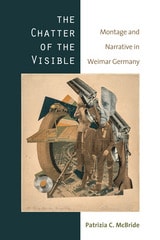
The Chatter of the Visible
Montage and Narrative in Weimar GermanyPatrizia C. McBride
University of Michigan Press, 2016
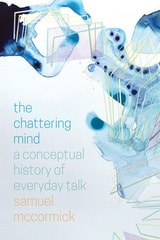
The Chattering Mind
A Conceptual History of Everyday TalkSamuel McCormick
University of Chicago Press, 2020
From Plato’s contempt for “the madness of the multitude” to Kant’s lament for “the great unthinking mass,” the history of Western thought is riddled with disdain for ordinary collective life. But it was not until Kierkegaard developed the term chatter that this disdain began to focus on the ordinary communicative practices that sustain this form of human togetherness.
The Chattering Mind explores the intellectual tradition inaugurated by Kierkegaard’s work, tracing the conceptual history of everyday talk from his formative account of chatter to Heidegger’s recuperative discussion of “idle talk” to Lacan’s culminating treatment of “empty speech”—and ultimately into our digital present, where small talk on various social media platforms now yields big data for tech-savvy entrepreneurs.
In this sense, The Chattering Mind is less a history of ideas than a book in search of a usable past. It is a study of how the modern world became anxious about everyday talk, figured in terms of the intellectual elites who piqued this anxiety, and written with an eye toward recent dilemmas of digital communication and culture. By explaining how a quintessentially unproblematic form of human communication became a communication problem in itself, McCormick shows how its conceptual history is essential to our understanding of media and communication today.
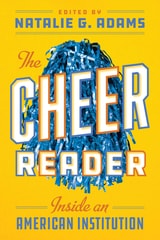
The Cheer Reader
Inside an American InstitutionNatalie G. Adams
University of Texas Press, 2026
Wide-ranging essays on cheerleading, from the pep rally to the NFL sidelines to All-Star competitions, and why it matters.
Cheer is deeply associated with a wholesome, simple Americana. Yet this often clichéd image belies its complex history and current status as a global industry made up of diverse participants and forms. Indeed, cheerleading—its culture, controversies, and evolution—has always offered a revealing lens on race, class, gender, and sexuality in American society..
Cheerleading was born in 1869 as a diversion for Ivy League men. The Cheer Reader collects fourteen wide-ranging essays on what happened next and why it matters: how cheer became feminized, sexualized, professionalized, even radicalized. Contributors examine the role of cheer in the Civil Rights Movement, a landmark student free-speech case, and the emergence of competitive-only and queer cheer teams. Other essays consider cheer’s quest for sport legitimacy, social media “cheerlebrities” and eating disorders, and the working conditions of NFL and NBA cheerleaders. Amid these tensions between empowerment and objectification, cheer is only getting more popular, with some seven million participants worldwide. The Cheer Reader is a nuanced account of the activity they share and what it means today.
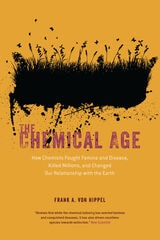
The Chemical Age
How Chemists Fought Famine and Disease, Killed Millions, and Changed Our Relationship with the EarthFrank A. von Hippel
University of Chicago Press, 2020
For thousands of years, we’ve found ways to scorch, scour, and sterilize our surroundings to make them safer. Sometimes these methods are wonderfully effective. Often, however, they come with catastrophic consequences—consequences that aren’t typically understood for generations.
The Chemical Age tells the captivating story of the scientists who waged war on famine and disease with chemistry. With depth and verve, Frank A. von Hippel explores humanity’s uneasy coexistence with pests, and how their existence, and the battles to exterminate them, have shaped our modern world. Beginning with the potato blight tragedy of the 1840s, which led scientists on an urgent mission to prevent famine using pesticides, von Hippel traces the history of pesticide use to the 1960s, when Rachel Carson’s Silent Spring revealed that those same chemicals were insidiously damaging our health and driving species toward extinction. Telling the story of these pesticides in vivid detail, von Hippel showcases the thrills and complex consequences of scientific discovery. He describes the invention of substances that could protect crops, the emergence of our understanding of the way diseases spread, the creation of chemicals used to kill pests and people, and, finally, how scientists turned those wartime chemicals on the landscape at a massive scale, prompting the vital environmental movement that continues today.
The Chemical Age is a dynamic, sweeping history that exposes how humankind’s affinity for pesticides made the modern world possible—while also threatening its essential fabric.
The Cherokees and Their Chiefs
In the Wake of EmpireStan Hoig
University of Arkansas Press, 1999
The Cherokees of Tuckaleechee Cove
Jon Marcoux
University of Michigan Press, 2012
The Chiapas Rebellion
The Struggle for Land and DemocracyNeil Harvey
Duke University Press, 1998
Beginning with an exploration of the history of ethnic and class conflict in Chiapas since the Conquest, Harvey moves specifically to trace the development of peasant and indigenous organizations in Chiapas since the early 1970s. He compares the struggles for agrarian rights of three grassroots movements facing hostility from both local elites and federal bureaucrats. His examination of the complexities of political change in Chiapas includes the impact of neoliberal economic policies, the origins of the Zapatista army of National Liberation (EZLN), and the political impact of the rebellion itself. Engaging with current theoretical debates on the role and significance of social movements in Mexico and Latin America, Harvey focuses on the primacy of political struggle and on the importance of these movements in the construction and meaning of citizenship. While suggesting that the Zapatista revolution has heightened awareness among the people of Chiapas of such democratic issues as ethnicity, gender, and land distribution, he concludes with an analysis of the obstacles to peace in the region today.
This unprecedented study of the Zapatista rebellion will provoke discussion among students and scholars of contemporary Mexico, political science, Latin American studies, history, sociology, and anthropology.
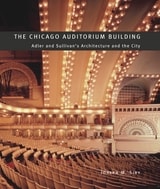
The Chicago Auditorium Building
Adler and Sullivan's Architecture and the CityJoseph M. Siry
University of Chicago Press, 2002
When the magnificent Auditorium Building opened on Chicago's Michigan Avenue in December 1889, it marked Chicago's emergence both as the leading city of the Midwest and as a metropolis of international stature. In this lavishly illustrated book, Joseph M. Siry explores not just the architectural history of the Auditorium Building but also the crucial role it played in Chicago's social history. Covering the Auditorium from the early design stage to its opening, its later renovations, its links to culture and politics in Chicago, and its influence on later Adler and Sullivan works (including the Schiller Building and the Chicago Stock Exchange Building), this volume recounts the fascinating tale of a building that helped to define a city and an era.
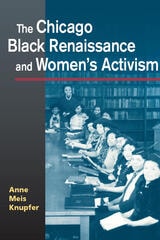
The Chicago Black Renaissance and Women's Activism
Anne Meis Knupfer
University of Illinois Press, 2006
The book examines various groups of black female activists, including writers and actresses, social workers, artists, school teachers, and women's club members to document the impact of social class, gender, nativity, educational attainment, and professional affiliations on their activism. Together, these women worked to sponsor black history and literature, to protest overcrowded schools, and to act as a force for improved South Side housing and employment opportunities. Knupfer also reveals the crucial role these women played in founding and sustaining black cultural institutions, such as the first African American art museum in the country; the first African American library in Chicago; and various African American literary journals and newspapers. As a point of contrast, Knupfer also examines the overlooked activism of working-class and poor women in the Ida B. Wells and Altgeld Gardens housing projects.
The Chicago Companion to Tocqueville's Democracy in America
James T. Schleifer
University of Chicago Press, 2012
An compact, accessible, authoritative companion to Tocqueville's classic work
One of the greatest books ever to be written on the United States, Democracy in America continues to find new readers who marvel at the lasting insights Alexis de Tocqueville had into our nation and its political culture. The work is, however, as challenging as it is important; its arguments can be complex and subtle, and its sheer length can make it difficult for any reader, especially one coming to it for the first time, to grasp Tocqueville’s meaning. The Chicago Companion to Tocqueville’s “Democracy in America” is the first book written expressly to help general readers and students alike get the most out of this seminal work.
Now James T. Schleifer, an expert on Tocqueville, has provided the background and information readers need in order to understand Tocqueville’s masterwork. In clear and engaging prose, Schleifer explains why Democracy in America is so important, how it came to be written, and how different generations of Americans have interpreted it since its publication. He also presents indispensable insight on who Tocqueville was, his trip to America, and what he meant by equality, democracy, and liberty.
Drawing upon his intimate knowledge of Tocqueville’s papers and manuscripts, Schleifer reveals how Tocqueville’s ideas took shape and changed even in the course of writing the book. At the same time, Schleifer provides a detailed glossary of key terms and key passages, all accompanied by generous citations to the relevant pages in the University of Chicago Press Mansfield/Winthrop translation. The Chicago Companion will serve generations of readers as an essential guide to both the man and his work.

The Chicago Conspiracy Trial
Revised EditionJohn Schultz
University of Chicago Press, 2009
In 1969, the Chicago Seven were charged with intent to "incite, organize, promote, and encourage" antiwar riots during the chaotic 1968 Democratic National Convention in Chicago. The defendants included major figures of the antiwar and racial justice movements: Abbie Hoffman and Jerry Rubin, the madcap founders of the Yippies; Tom Hayden and Rennie Davis, longtime antiwar organizers; David Dellinger, a pacifist and chair of the National Mobilization Committee to End the War in Vietnam; and Bobby Seale, co-founder of the Black Panther Party, who would be bound and gagged in the courtroom before his case was severed from the rest.
The Chicago Conspiracy Trial is an electrifying account of the months-long trial that commanded the attention of a divided nation. John Schultz, on assignment for The Evergreen Review, witnessed the whole trial of the Chicago Seven, from the jury selection to the aftermath of the verdict. In his vivid account, Schultz exposes the raw emotions, surreal testimony, and judicial prejudice that came to define one of the most significant legal events in American history.
In October 2020, Aaron Sorkin's film, The Trial of the Chicago Seven, will bring this iconic trial to the screen.
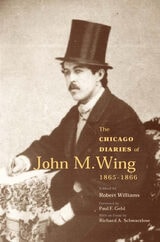
The Chicago Diaries of John M. Wing 1865-1866
Transcribed and Edited by Robert Williams. Foreword by Paul F. Gehl. With an Essay by Richard A. Schwarzlose
Southern Illinois University Press, 2002
The personal—and often intimate—diaries of fledgling journalist and entrepreneur John Mansir Wing create a unique portrait of a rough-and-tumble Chicago in the first few years following the Civil War. Wing writes of a city filled with new immigrants, ex-soldiers, and the thriving merchant class making its fortunes from both before the great fire of 1871 left much of the city in ashes.
Transcribed and edited by noted Chicago bibliophile and historian Robert Williams, and published in cooperation with the Caxton Club, this volume also details the early adventures of a rural Eastern who came to the “Metropolis of the West” in his early twenties and worked for some of the most influential journalists of his day. Wing shared cigars and conversation with notable politicians, businessmen, and war heroes including Sherman and Grant, all the while conducting an active romantic life with members of his own sex in boarding houses and barrooms.
Wing’s greatest passion was for book collecting. Following a successful later career in trade journal publishing and investing, he provided an endowment to create the John M. Wing Foundation at Chicago’s famed Newberry Library. The Wing Foundation became the first American public collection devoted to the history of printing; it remains today among the nation’s best resources for the study of the bibliographic arts.
Despite his lasting importance in publishing and philanthropy, and the fact that no serious history of Chicago can be written without reference to many of his publications, John M. Wing has been largely absent from most histories of the city’s movers and shakers. Complete with historical annotations and a bibliography of Wing’s writings for the press, this fascinating personal account reclaims his deserved place in Chicago life and lore.

The Chicago Food Encyclopedia
Edited by Carol Mighton Haddix, Bruce Kraig, and Colleen Taylor Sen: Foreword by Russell Lewis
University of Illinois Press, 2017