Results by title
4917 books match the query 'Philosophy' and 1267 start with t
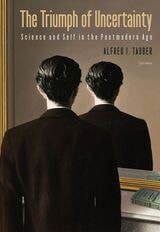
The Triumph of Uncertainty
Science and Self in the Postmodern AgeAlfred I. Tauber
Central European University Press, 2022
Tauber, a leading figure in history and philosophy of science, offers a unique autobiographical overview of how science as a discipline of thought has been characterized by philosophers and historians over the past century. He frames his account through science’s – and his own personal – quest for explanatory certainty.
During the 20th century, that goal was displaced by the probabilistic epistemologies required to characterize complex systems, whether in physics, biology, economics, or the social sciences. This “triumph of uncertainty” is the inevitable outcome of irreducible chance and indeterminate causality. And beyond these epistemological limits, the interpretative faculties of the individual scientist (what Michael Polanyi called the “personal” and the “tacit”) invariably affects how data are understood. Whereas positivism had claimed radical objectivity, post-positivists have identified how a web of non-epistemic values and social forces profoundly influence the production of knowledge.
Tauber presents a case study of these claims by showing how immunology has incorporated extra-curricular social elements in its theoretical development and how these in turn have influenced interpretive problems swirling around biological identity, individuality, and cognition. The correspondence between contemporary immunology and cultural notions of selfhood are strong and striking. Just as uncertainty haunts science, so too does it hover over current constructions of personal identity, self knowledge, and moral agency. Across the chasm of uncertainty, science and selfhood speak.
The Troubadour of Knowledge
Michel Serres
University of Michigan Press, 1997
The Truth about Language
What It Is and Where It Came FromMichael C. Corballis
University of Chicago Press, 2017
But as Michael C. Corballis shows in The Truth about Language, it’s time to reconsider those assumptions. Language, he argues, is not the product of some “big bang” 60,000 years ago, but rather the result of a typically slow process of evolution with roots in elements of grammatical language found much farther back in our evolutionary history. Language, Corballis explains, evolved as a way to share thoughts—and, crucially for human development, to connect our own “mental time travel,” our imagining of events and people that are not right in front of us, to that of other people. We share that ability with other animals, but it was the development of language that made it powerful: it led to our ability to imagine other perspectives, to imagine ourselves in the minds of others, a development that, by easing social interaction, proved to be an extraordinary evolutionary advantage.
Even as his thesis challenges such giants as Chomsky and Stephen Jay Gould, Corballis writes accessibly and wittily, filling his account with unforgettable anecdotes and fascinating historical examples. The result is a book that’s perfect both for deep engagement and as brilliant fodder for that lightest of all forms of language, cocktail party chatter.
The Truth about Leo Strauss
Political Philosophy and American DemocracyCatherine H. Zuckert and Michael P. Zuckert
University of Chicago Press, 2006
Is Leo Strauss truly an intellectual forebear of neoconservatism and a powerful force in shaping Bush administration foreign policy? The Truth about Leo Strauss puts this question to rest, revealing for the first time how the popular media came to perpetuate such an oversimplified view of such a complex and wide-ranging philosopher. More important, it corrects our perception of Strauss, providing the best general introduction available to the political thought of this misunderstood figure.
Catherine and Michael Zuckert—both former students of Strauss—guide readers here to a nuanced understanding of how Strauss’s political thought fits into his broader philosophy. Challenging the ideas that Strauss was an inflexible conservative who followed in the footsteps of Nietzsche, Heidegger, and Carl Schmitt, the Zuckerts contend that Strauss’s signature idea was the need for a return to the ancients. This idea, they show, stemmed from Strauss’s belief that modern thought, with its relativism and nihilism, undermines healthy politics and even the possibility of real philosophy. Identifying this view as one of Strauss’s three core propositions—America is modern, modernity is bad, and America is good—they conclude that Strauss was a sober defender of liberal democracy, aware of both its strengths and its weaknesses.
The Zuckerts finish, appropriately, by examining the varied work of Strauss’s numerous students and followers, revealing the origins—rooted in the tensions within his own thought—oftheir split into opposing camps. Balanced and accessible, The Truth about Leo Strauss is a must-read for anyone who wants to more fully comprehend this enigmatic philosopher and his much-disputed legacy.
The Truth in Painting
Jacques Derrida
University of Chicago Press, 1987
The Truth in Painting
Jacques Derrida
University of Chicago Press, 1987
The Truth of Uncertainty
Beyond Ideology in Science and LiteratureEdward L. Galligan
University of Missouri Press, 1998
In the last chapter of Walden, Henry David Thoreau proclaims a simple yet profound conviction: "Any truth is better than make- believe." Edward Galligan shares this conviction. In The Truth of Uncertainty: Beyond Ideology in Science and Literature, he argues that contemporary American critics should embrace literary truths with all of their ardent uncertainties rather than cling to the make-believe certainties of ideologies.
Postmodern critics fail to ask the truth-seeker's essential question, What does the evidence prove? and instead trust the generalizations and slogans of ideologies to guide their interpretations. Attempting to be up-to-date and profound, these critics lose sight of the literature they are supposed to explore.
The Truth of Uncertainty celebrates values commonly associated with modern, not postmodern criticism, applying them to contemporary works in a series of fresh and unusual inquiries. Galligan finds important implications for criticism in work from the physical sciences that are rarely touched on by American intellectuals, such as Gerald M. Edelman's Bright Air, Brilliant Fire: On the Matter of the Mind and Roger Penrose's The Emperor's New Mind: Concerning Computers, Minds, and the Laws of Physics. Likewise, he finds illumination in the works of novelists that American critics have largely ignored—Josef Skvorecky, George V. Higgins, Mary Lee Settle, Robertson Davies.
As a consequence of dealing with these "unusual" texts, Galligan presents a refreshing interpretation of a number of important concepts: language is grounded in talk; all literary criticism is subjective and tentative because reading is a highly subjective enterprise; and, most important, the world is real and any truth is indeed better than make-believe. He moves from a rejection of criticism in the service of ideology to an affirmation of criticism in the service of truthfulness.
The ideas celebrated in The Truth of Uncertainty are timeless and valuable. Galligan returns to the text and provides a penetrating critique of the state of contemporary criticism, which has abandoned truth for ideology. The result is an eloquent salute to literature itself.
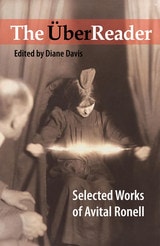
The UberReader
SELECTED WORKS OF AVITAL RONELLEdited by Diane Davis
University of Illinois Press, 2007
For twenty years Avital Ronell has stood at the forefront of the confrontation between literary study and European philosophy. She has tirelessly investigated the impact of technology on thinking and writing, with groundbreaking work on Heidegger, dependency and drug rhetoric, intelligence and artificial intelligence, and the obsession with testing. Admired for her insights and breadth of field, she has attracted a wide readership by writing with guts, candor, and wit.
Coyly alluding to Nietzsche’s “gay science,” The ÜberReader presents a solid introduction to Avital Ronell’s later oeuvre. It includes at least one selection from each of her books, two classic selections from a collection of her early essays (Finitude’s Score), previously uncollected interviews and essays, and some of her most powerful published and unpublished talks. An introduction by Diane Davis surveys Ronell’s career and the critical response to it thus far.
With its combination of brevity and power, this Ronell “primer” will be immensely useful to scholars, students, and teachers throughout the humanities, but particularly to graduate and undergraduate courses in contemporary theory.
The Ultimate Why Question
Why Is There Nothing at All Rather than Nothing Whatsoever?John F. Wippel
Catholic University of America Press, 2011
The Unchanging Truth of God? Crucial Philosophical Issues for Theology
Thomas G. Guarino
Catholic University of America Press, 2021
The Underclass Question
Bill Lawson
Temple University Press, 1992
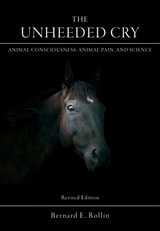
The Unheeded Cry
Animal Consciousness, Animal Pain, and ScienceBernard Rollin
University of Missouri Press, 2017
Bernard Rollin offers welcome insight into questions like this in his ground-breaking account of the difficult and controversial issues surrounding the use of animals. He demonstrates that the denial of animal consciousness and animal suffering is not an essential feature of a scientific approach, but rather a contingent, historical aberration that can and must be changed if science is to be both coherent and morally responsible. Widely hailed by advocates of animal welfare and scientists alike on its first appearance, the book now includes an epilogue by the author describing what has changed, and what hasn’t, in this use of animals in scientific research and food production.
The Unity of Hegel's "Phenomenology of Spirit"
A Systematic InterpretationJon Stewart
Northwestern University Press, 2011
In The Unity of Hegel's "Phenomenology of Spirit", Jon Stewart interprets Hegel's work as a dialectical transformation of Kantian transcendental philosophy, providing from this unified standpoint a case for Hegel's own conception of philosophy as a system. In restoring them to their larger systematic contexts, Stewart clarifies Hegel's individual analyses, as well as indicating the meaning and significance of the transitions and illustrating the parallelisms between the respective analyses. Many of Hegel's main themes-
universal-particular, mediacy-immediacy-are traced through the text, demonstrating Hegel's formal continuity.
By examining at the microlevel the particulars of the dialectical movement, and by analyzing at the macrolevel the role of the argument in question in the context of the work as a whole, Stewart provides a detailed analysis of the Phenomenology and a significant scholarly demonstration of Hegel's own conception of the Phenomenology as a part of a systematic philosophy.
The Unity of William James's Thought
Wesley Cooper
Vanderbilt University Press, 2002
The Universal Machine
Fred Moten
Duke University Press, 2018
In The Universal Machine—the concluding volume to his landmark trilogy consent not to be a single being—Fred Moten presents a suite of three essays on Emmanuel Levinas, Hannah Arendt, and Frantz Fanon, in which he explores questions of freedom, capture, and selfhood. In trademark style, Moten considers these thinkers alongside artists and musicians such as William Kentridge and Curtis Mayfield while interrogating the relation between blackness and phenomenology. Whether using Levinas's idea of escape in unintended ways, examining Arendt's antiblackness through Mayfield's virtuosic falsetto and Anthony Braxton's musical language, or showing how Fanon's form of phenomenology enables black social life, Moten formulates blackness as a way of being in the world that evades regulation. Throughout The Universal Machine—and the trilogy as a whole—Moten's theorizations of blackness will have a lasting and profound impact.
The Universe We Think In
James V. Schall
Catholic University of America Press, 2018
The Universe of Things
On Speculative RealismSteven Shaviro
University of Minnesota Press, 2014
From the rediscovery of Alfred North Whitehead’s work to the rise of new materialist thought, including object-oriented ontology, there has been a rapid turn toward speculation in philosophy as a way of moving beyond solely human perceptions of nature and existence. Now Steven Shaviro maps this quickly emerging speculative realism, which is already dramatically influencing how we interpret reality and our place in a universe in which humans are not the measure of all things.
The Universe of Things explores the common insistence of speculative realism on a noncorrelationist thought: that things or objects exist apart from how our own human minds relate to and comprehend them. Shaviro focuses on how Whitehead both anticipates and offers challenges to prevailing speculative realist thought, moving between Whitehead’s own panpsychism, Harman’s object-oriented ontology, and the reductionist eliminativism of Quentin Meillassoux and Ray Brassier.
The stakes of this recent speculative realist thought—of the effort to develop new ways of grasping the world—are enormous as it becomes clear that our inherited assumptions are no longer adequate to describe, much less understand, the reality we experience around us. As Shaviro acknowledges, speculative realist thought has its dangers, but it also, like the best speculative fiction, holds the potential to liberate us from confining views of what is outside ourselves and, he believes, to reclaim aesthetics and beauty as a principle of life itself.
Bringing together a wide array of contemporary thought, and evenhandedly assessing its current debates, The Universe of Things is an invaluable guide to the evolution of speculative realism and the provocation of Alfred North Whitehead’s pathbreaking work.
The University in the Twenty-first Century
Teaching the New Enlightenment in the Digital AgeHannes Klöpper
Central European University Press, 2016
The Unnatural Lottery
Character and Moral LuckClaudia Card
Temple University Press, 1996
The opportunities to become a good person are not the same for everyone. Modern European ethical theory, especially Kantian ethics, assumes the same virtues are accessible to all who are capable of rational choice. Character development, however, is affected by circumstances, such as those of wealth and socially constructed categories of gender, race, and sexual orientation, which introduce factors beyond the control of individuals. Implications of these influences for morality have, since the work of Williams and Nagel in the seventies, raised questions in philosophy about the concept of moral luck. In The Unnatural Lottery, Claudia Card examines how luck enters into moral character and considers how some of those who are oppressed can develop responsibility.
Luck is often best appreciated by those who have known relatively bad luck and have been unable to escape steady comparison of their lot with those of others. The author takes as her paradigms the luck of middle and lower classes of women who face violence and exploitation, of lesbians who face continuing pressure to hide or self-destruct, of culturally Christian whites who have ethnic privilege, and of adult survivors of child abuse. How have such people been affected by luck in who they are and can become, the good lives available to them, the evils they may be liable to embody? Other philosophers have explored the luck of those who begin from privileged positions and then suffer reversals of fortune. Claudia Card focuses on the more common cases of those who begin from socially disadvantaged positions, and she considers some who find their good luck troubling when its source is the unnatural lottery of social injustice.
The Unrealizable
Towards a Politics of OntologyGiorgio Agamben
Seagull Books, 2024
We are so used to distinguishing between the possible and the real, between essence and existence that we do not realize that these distinctions, which seem so obvious to us, are the result of a long and laborious process that has led to the splitting of being—the “matter” of thought—into two fragments that are both conflicting and intimately intertwined.
This book argues that the ontological-political machine of the West is based on the splitting of this “matter,” without which neither science nor politics would be possible. Without the partition of reality into essence and existence and into possibility and actuality, neither scientific knowledge nor the ability to control human action—which characterizes the historical power of the West—would have been possible.
If we could not suspend the exclusive concentration of our attention on what immediately exists (as animals seem to do), to think and define its essence, Western science and technology would not have experienced the advances that characterize them. And if the dimension of possibility disappeared entirely, neither plans nor projects would be thinkable, and human actions could be neither directed nor controlled. The incomparable power of the West has one of its essential presuppositions in this ontological machine.
The Urban Condition
Olivier Mongin
Karolinum Press, 2016
In the past, we were accustomed to seeing the city as a circumscribed space, the setting for cultural, social, and political life that enabled the civic integration of individuals. Now we find ourselves confronted by both seemingly limitless, gigantic megalopolises and the emergence of global networks of entities cut off from a physical environment. The current reconfiguration is cause for concern: Are we witnessing the terminal decline of the urban values that have been a concomitant part of recent human history? Will fragmentation and chaotic urban sprawl inevitably prevail? Are we doomed to lament the lost legacies of the Greek polis, the Renaissance city, Enlightenment Paris, and the great industrial cities of the nineteenth century?
The Urgings of Conscience
A Theory of PunishmentJacob Adler
Temple University Press, 1992
While most philosophers who write about punishment ask, "Why may we punish the guilty?" Jacob Adler asks, "To what extent does a guilty person have a duty to submit to punishment?" He maintains that if we are to justify any system of punishment by the state, we must explain why persons guilty of an offense are morally bound to submit to punitive treatment, or to undertake it on their own. Using Rawls's theory of social contract as a framework, the author presents what he calls the rectification theory of punishment.
After examining punishment from two points of view—that of the punisher and that of the offender who is to be punished—Adler proposes the Paradigm of the Conscientious Punishee: a repentant wrongdoer who views punishment as not necessarily unpleasant, but as something it is morally incumbent upon one to undertake. The author argues that this paradigm must play a central role in the theory of punishment. Citing community service projects and penances for sin (as required by some religions), Adler argues that punishment need not involve pain or any other disvalue. Instead he defines it in terms of its justificatiory connection with wrongdoing: punishment is that which is justified by the prior commission of an offense and generally not justified without the prior commission of an offense.
The rectification theory applies particularly to offenses involving basic liberties. It is based on the assumption that each person is guaranteed the right to an inviolable sphere of liberty. Someone who commits an offense has expanded his or her sphere by arrogating excess liberties. In order to maintain the equality on which this theory rests, an equivalent body of liberties must be given up. In discussing applications of the theory, Adler demonstrates that active service (as punishment) is more effective in safeguarding important rights and interests and maintaining the social contract than is afflictive punishment.
The User Unconscious
On Affect, Media, and MeasurePatricia Ticineto Clough
University of Minnesota Press, 2018
Wide-ranging essays and experimental prose forcefully demonstrate how digital media and computational technologies have redefined what it is to be human
Over the past decade, digital media has expanded exponentially, becoming an essential part of daily life. The stimulating essays and experimental compositions in The User Unconscious delve into the ways digital media and computational technologies fundamentally affect our sense of self and the world we live in, from both human and other-than-human perspectives.
Critical theorist Patricia Ticineto Clough’s provocative essays center around the motif of the “user unconscious” to advance the challenging thesis that that we are both human and other-than-human: we now live, think, and dream within multiple layers of computational networks that are constantly present, radically transforming subjectivity, sociality, and unconscious processes.
Drawing together rising strains of philosophy, critical theory, and media studies, as well as the political, social, and economic transformations that are shaping the twenty-first-century world, The User Unconscious points toward emergent crises and potentialities in both human subjectivity and sociality. Moving from affect to data, Clough forces us to see that digital media and computational technologies are not merely controlling us—they have already altered what it means to be human.
The Value of Critique
Exploring the Interrelations of Value, Critique, and Artistic LabourEdited by Isabelle Graw and Christoph Menke
Campus Verlag, 2019
The Varieties of Atheism
Connecting Religion and Its CriticsEdited by David Newheiser
University of Chicago Press, 2022
The Varieties of Atheism reveals the diverse nonreligious experiences obscured by the combative intellectualism of Sam Harris, Richard Dawkins, and Christopher Hitchens. In fact, contributors contend that narrowly defining atheism as the belief that there is no god misunderstands religious and nonreligious persons altogether. The essays show that, just as religion exceeds doctrine, atheism also encompasses every dimension of human life: from imagination and feeling to community and ethics. Contributors offer new, expansive perspectives on atheism’s diverse history and possible futures. By recovering lines of affinity and tension between particular atheists and particular religious traditions, this book paves the way for fruitful conversation between religious and non-religious people in our secular age.
The Varnished Truth
Truth Telling and Deceiving in Ordinary LifeDavid Nyberg
University of Chicago Press, 1993
The Varnished Truth takes us beyond philosophical speculation and clinical analysis to give us a sense of what it really means to tell the truth. As Nyberg lays out the complexities involved in leading a morally decent life, he compels us to see the spectrum of alternatives to telling the truth and telling a clear-cut lie.
The Verge of Philosophy
John Sallis
University of Chicago Press, 2007
The Verge of Philosophy is both an exploration of the limits of philosophy and a memorial for John Sallis’s longtime friend and interlocutor Jacques Derrida. The centerpiece of the book is an extended examination of three sites in Derrida’s thought: his interpretation of Heidegger regarding the privileging of the question; his account of the Platonic figure of the good; and his interpretation of Plato’s discourse on the crucial notion of the chora, the originating space of the universe.
Sallis’s reflections are given added weight—even poignancy—by his discussion of his many public and private philosophical conversations with Derrida over the decades of their friendship. This volume thus simultaneously serves to mourn and remember a friend and to push forward the deeply searching discussions that lie at the very heart of that friendship.
“All of John Sallis’s work is essential, but [this book] in particular is remarkable. . . . Sallis shows better than anyone I have ever read what it means to practice philosophy on the verge.”—Walter Brogan, Villanova University
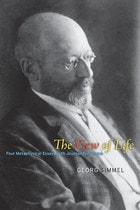
The View of Life
Four Metaphysical Essays with Journal AphorismsGeorg Simmel
University of Chicago Press, 2010
Published in 1918, The View of Life is Georg Simmel’s final work. Famously deemed “the brightest man in Europe” by George Santayana, Simmel addressed diverse topics across his essayistic writings, which influenced scholars in aesthetics, epistemology, and sociology. Nevertheless, certain core issues emerged over the course of his career—the genesis, structure, and transcendence of social and cultural forms, and the nature and conditions of authentic individuality, including the role of mindfulness regarding mortality. Composed not long before his death, The View of Life was, Simmel wrote, his “testament,” a capstone work of profound metaphysical inquiry intended to formulate his conception of life in its entirety.
Now Anglophone readers can at last read in full the work that shaped the argument of Heidegger’s Being and Time and whose extraordinary impact on European intellectual life between the wars was extolled by Jürgen Habermas. Presented alongside these seminal essays are aphoristic fragments from Simmel’s last journal, providing a beguiling look into the mind of one of the twentieth century’s greatest thinkers.
The Violence of the Letter
Toward a Theory of WritingMelanie McMahon
University of Michigan Press, 2023
Co-Winner of the 2024 ACLA Renè Wellek Prize for Monograph
The emergence of the alphabet in ancient Greece, usually heralded as the first step in the inexorable march toward reason and progress, in fact signaled the introduction of a chance technology that hijacked the future, with devastating consequences for humanity. By investigating an array of cultural artifacts, ranging from Kubrick's 2001: A Space Odyssey to the Oracle at Delphi to Luther's challenge to the Church, this book demonstrates how the apparently benign emergence of writing made possible far-ranging systems of organized domination and unprecedented levels of violence. The Violence of the Letter considers how a twenty-six-letter code changed the face of the world, and not always for the better.
The Virtual Point of Freedom
Essays on Politics, Aesthetics, and ReligionLorenzo Chiesa
Northwestern University Press, 2016
The Visible and the Invisible
Maurice Merleau-Ponty
Northwestern University Press, 1968
The Vision of the Soul
James Matthew Wilson
Catholic University of America Press, 2017
Story-telling is foundational to the forms of the fine arts, but it is no less foundational to human reason. Human life in turn constitutes a specific kind of form—a story form. The ancient conception of human life as a pilgrimage to beauty itself is one that we can fully embrace only if we see the essential correlation between reason and story and the essential convertibility of truth, goodness and beauty in beauty. By turns a study in fundamental ontology, aesthetics, and political philosophy, Wilson’s book invites its readers to a renewal of the West’s intellectual tradition.
The Vital Lie
Reality and Illusion in Modern DramaAnthony S. Abbott
University of Alabama Press, 1988
The Vital Lie: Reality and Illusion in Modern Drama is a sweeping inquiry into the stories people tell themselves in order to endure, survive, and belong. Moving from Ibsen and Strindberg to Beckett, Pinter, and beyond, Anthony S. Abbott traces the uneasy traffic between actuality and self-invention that animates modern theater. Rather than offering a simple survey, he uncovers a recurring dramatic predicament: the cognitive dissonance that afflict people when the beliefs they hold about themselves collide with reality.
Anthony S. Abbott writes with the erudite observation of a critic and the curiosity of a participant. His book explores illusion, meaning, and human resilience, a perspective that lends unusual urgency to its readings of canonical playwrights. Abbott's scholarship is expansive without becoming academic in the pejorative sense; his arguments remain animated by large questions about purpose, dignity, and the imaginative structures that sustain ordinary lives.
Ideal for theater devotees, literary historians, students of modernism, philosophy-minded readers, directors, dramaturgs, and anyone fascinated by self-deception, mythmaking, and identity. Admirers of intellectual biography, cultural criticism, existential inquiry, and ambitious cross-author interpretation will find this volume especially rewarding. Those who relish fresh angles on familiar classics will discover a study that is probing, elegant, and unexpectedly memorable.
The Voiding of Being
The Doing and Undoing of Metaphysics in ModernityWilliam Desmond
Catholic University of America Press, 2020
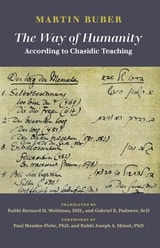
The Way of Humanity
According to Chasidic TeachingMartin Buber, translated by Rabbi Bernard H. Mehlman, DHL and GabrielE. Padawer, ScD
Central Conference of American Rabbis, 2023
Martin Buber (1878–1965) was one of the most influential Jewish thinkers of the twentieth century. A philosopher, seeker, and nurturer of dialogue, he responded to the complexities of his times by affirming the fullness of interpersonal encounter and the spiritual everyday. In 1947, Buber delivered lectures interpreting six traditional Chasidic stories to a German-speaking audience, published as The Way of Humanity. In the first new English translation in over half a century, Rabbi Bernard H. Mehlman, DHL, and Gabriel E. Padawer, ScD, z"l, bring the work to contemporary readers in a clear, accessible voice. The teachings within highlight the subversion and innovation of the early Chasidic masters of the eighteenth and nineteenth centuries, while providing meaningful spiritual guidance and insight for any seeker today. Scholarly forewords by Paul Mendes-Flohr, PhD, and Rabbi Joseph A. Skloot, PhD, as well as an introduction, epilogue, and notes from the translators, place Buber’s work in historical context. Timeless and enlightening, The Way of Humanity guides us to inner meaning and highlights our human wholeness.
The Way of Nature and the Way of Grace
Philosophical Footholds on Terrence Malick's "The Tree of Life"Jonathan Beever and Vernon W. Cisney
Northwestern University Press, 2016
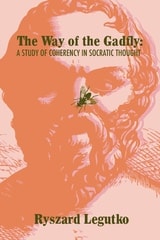
The Way of the Gadfly
A Study of Coherency in Socratic ThoughtRyszard Legutko
St. Augustine's Press, 2024
This new series of scholarly reflections on the interpretation of Socratic philosophy is an inviting combination of intuition and meticulous analysis. Ryszard Legutko provides the reader a monumental service in his confrontation of the most important and influential literature written on the subject to date. He likewise opens the conversation to European contributions and renders Socrates truly a figurehead of future philosophy far beyond being a pillar in ancient thought.
Legutko argues that Socrates was systematic, and his moral views were ultimately grounded in his theory of knowledge that was composed of logically connected propositions (logoi). Reading Plato, Legutko's intuition that Socrates was quite the opposite of the quirky, ironic, and enigmatic character is supported by his demonstration of Socrates' consistency, unity, and hierarchy of thought. He extends Socrates' coherency to a criticism of the democratic mind, framing him even less as a random spit-fire and more the grounded observer. Socrates, argues Letgutko, is well aware of the importance of general concepts and he intended to free these concepts from democratic distortions and give them firm and independent foundations.
In short, 'the way of the gadfly' is a beautiful and precise exploration of order that seeks to be changed by the awareness of this order, and how to wield concepts apart from the motives of arrogance and chaos––neither of which represent nature, and therefore are foreign to the way of the gadfly.
The Way to Hell
Machiavelli for Catastrophic TimesNathan Crick
University of Alabama Press, 2024
An incisive and erudite survey of Machiavelli, the catastrophes of his times and ours, and his counsel for responding to an era of constant crises.
Catastrophe looms. Political, environmental, epidemic, and military crises arrive with increasing frequency. In The Way to Hell, Nathan Crick argues that our perilous times call for the strongest medicine in the Western canon: Machiavelli. Crick reminds contemporary readers about the Florentine master’s advice—that one must learn the road to Hell precisely to avoid taking it.
Like a knowledgeable friend, Crick offers contemporary readers a guide to Machiavelli’s world, work, and warnings. He takes in the sweep of Western history, comparing Machiavelli’s work with ancient sources such as Cicero and Thucydides. And as Machiavelli has never stopped provoking comment, Crick treats readers to a feast of responses to Machiavelli’s work—caustic, learned, and humorous—in the five centuries since he lived.
Including both Machiavelli’s best-known works, The Prince and Discourses on Livy, as well as his personal correspondence and comic plays, Crick asks anew the questions that bedeviled Machiavelli’s beloved Florentine republic: When is force necessary? When are lies justified? Is cruelty defensible? When does social protest slip into violent revolution? What is the correct response to catastrophe?
Like Machiavelli himself, The Way to Hell is witty, stimulating, and challenging. In a world seemingly on the road to Hell, Machiavelli offers an alternative route. His bracing vision exhorts readers to see the dangers in their path and to take action with vigor and determination. Far from a vision of cynicism, Machiavelli offers a beacon of hope for a world that seems on the brink.
The Weimar Origins of Rhetorical Inquiry
David L. Marshall
University of Chicago Press, 2020
The Whale and the Reactor
A Search for Limits in an Age of High TechnologyLangdon Winner
University of Chicago Press, 1988
"The Whale and the Reactor is the philosopher's equivalent of superb public history. In its pages an analytically trained mind confronts some of the most pressing political issues of our day."—Ruth Schwartz Cowan, Isis
The Whale and the Reactor
A Search for Limits in an Age of High Technology, Second EditionLangdon Winner
University of Chicago Press, 2020
First published to great acclaim in 1988, Langdon Winner’s groundbreaking exploration of the political, social, and philosophical implications of technology is timelier than ever. He demonstrates that choices about the kinds of technical systems we build and use are actually choices about who we want to be and what kind of world we want to create—technical decisions are political decisions, and they involve profound choices about power, liberty, order, and justice. A seminal text in the history and philosophy of science, this new edition includes a new chapter, preface, and postscript by the author.
The Wild Region in Life-History
Laszlo Tengelyi
Northwestern University Press, 2004
The Wildest Place on Earth
Italian Gardens and the Invention of WildernessJohn Hanson Mitchell
University Press of New England, 2015
The Wisdom of the World
The Human Experience of the Universe in Western ThoughtRémi Brague
University of Chicago Press, 2003
Before the Greeks, people thought human action was required to maintain the order of the universe and so conducted rituals and sacrifices to renew and restore it. But beginning with the Hellenic Age, the universe came to be seen as existing quite apart from human action and possessing, therefore, a kind of wisdom that humanity did not. Wearing his remarkable erudition lightly, Brague traces the many ways this universal wisdom has been interpreted over the centuries, from the time of ancient Egypt to the modern era. Socratic and Muslim philosophers, Christian theologians and Jewish Kabbalists all believed that questions about the workings of the world and the meaning of life were closely intertwined and that an understanding of cosmology was crucial to making sense of human ethics. Exploring the fate of this concept in the modern day, Brague shows how modernity stripped the universe of its sacred and philosophical wisdom, transforming it into an ethically indifferent entity that no longer serves as a model for human morality.
Encyclopedic and yet intimate, The Wisdom of the World offers the best sort of history: broad, learned, and completely compelling. Brague opens a window onto systems of thought radically different from our own.
The Wolf Man's Magic Word
A CryptonymyNicolas Abraham
University of Minnesota Press, 2005
The Word and the Spiritual Realities (the I and the Thou)
Ferdinand Ebner
Catholic University of America Press, 2021
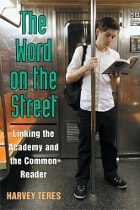
The Word on the Street
Linking the Academy and the Common ReaderHarvey Michael Teres
University of Michigan Press, 2010
"The Word On the Street invites humanities scholars to move beyond the classroom and the monograph to share the pleasures of art in ways that engage the intelligence of the common reader, cultivating the critical imagination so vital to American cultural democracy. Lively and thought-provoking, Teres lays out contemporary debates and wades into them with gusto."
---Nancy Cantor, Syracuse University
"At a moment when questions about the literary, 'bookishness,' and the future of print are being urgently raised, with incessant national attention to the perceived crises of literacy and reading, Teres' thoughtful, broadly democratic, but also tough-minded examination of both 'common readers' and academic readers makes a real contribution to the debate."
---Julie Ellison, University of Michigan
Despite significant changes since the mid-twentieth century in American critical culture---the culture emanating from the serious review of books, ideas, and the arts---it attracts only a small and declining minority of Americans. However productive this culture has been, American society has not approached the realization of Emerson's or Dewey's vision of a highly participatory American cultural democracy. Such a culture requires critics who are read by the average citizen, but the migration of critics and intellectuals from the public to the academy has resulted in fewer efforts to engage with ordinary citizens. The Word on the Street investigates this disjunction between the study of literature in the academy and the interests of the common reader and society at large, arguing the vital importance of publicly engaged scholarship in the humanities. Teres chronicles how the once central function of the humanities professorate---to teach students to appreciate and be inspired by literature---has increasingly been lost to literary and cultural studies in the last thirty years.
The Word on the Street argues for a return to an earlier model of the public intellectual and a literary and cultural criticism that is accessible to ordinary citizens. Along the way, Teres offers an illuminating account of the current problem and potential solutions, with the goal of prompting a future vision of publicly engaged scholarship that resonates with the common reader and promotes an informed citizenry.
Harvey Teres is Associate Professor of English at Syracuse University.
Cover image: Ruth Fremson/The New York Times/Redux
The New Public Scholarship
The Work and the Gift
Scott Cutler Shershow
University of Chicago Press, 2005
Ranging from Marx and Derrida to Friedrich Hayek and Alvin Toffler, Scott Cutler Shershow here explores the predictions of political thinkers on both the left and the right that work is fundamentally changing, or even disappearing; the debates among anthropologists and historians about an archaic gift-economy that preceded capitalism and might reemerge in its wake; contemporary political battles over charity and social welfare; and attempts by modern and postmodern artists to destabilize the work of art as we know it.
Ultimately, Shershow joins other contemporary thinkers in envisioning a community of unworking, grounded neither in ideals of production and progress, nor in an ethic of liberal generosity, but simply in our fundamental being-in-common. What results is a brilliant intervention in critical theory and social thought that will be of enormous value to students of literary criticism, anthropology, and philosophy alike.
The Work of Kings
H. L. Seneviratne
University of Chicago Press, 2000
Beginning with Anagarika Dharmapala's "rationalization" of Buddhism in the early twentieth century, which called for monks to take on a more activist role in the community, Seneviratne shows how the monks have gradually revised their role to include involvement in political and economic spheres. The altruistic, morally pure monks of Dharamapala's dreams have become, Seneviratne trenchantly argues, self-centered and arrogant, concealing self-aggrandizement behind a façade of "social service."
A compelling call for reform and a forceful analysis, The Work of Kings is essential to anthropologists, historians of religion, and those interested in colonialism, nationalism, and postcolonial politics.
The Work of Mourning
Jacques Derrida
University of Chicago Press, 2001
Gathered here are texts—letters of condolence, memorial essays, eulogies, funeral orations—written after the deaths of well-known figures: Roland Barthes, Paul de Man, Michel Foucault, Louis Althusser, Edmond Jabès, Louis Marin, Sarah Kofman, Gilles Deleuze, Emmanuel Levinas, Jean-François Lyotard, Max Loreau, Jean-Marie Benoist, Joseph Riddel, and Michel Servière.
With his words, Derrida bears witness to the singularity of a friendship and to the absolute uniqueness of each relationship. In each case, he is acutely aware of the questions of tact, taste, and ethical responsibility involved in speaking of the dead—the risks of using the occasion for one's own purposes, political calculation, personal vendetta, and the expiation of guilt. More than a collection of memorial addresses, this volume sheds light not only on Derrida's relation to some of the most prominent French thinkers of the past quarter century but also on some of the most important themes of Derrida's entire oeuvre-mourning, the "gift of death," time, memory, and friendship itself.
"In his rapt attention to his subjects' work and their influence upon him, the book also offers a hesitant and tangential retelling of Derrida's own life in French philosophical history. There are illuminating and playful anecdotes—how Lyotard led Derrida to begin using a word-processor; how Paul de Man talked knowledgeably of jazz with Derrida's son. Anyone who still thinks that Derrida is a facetious punster will find such resentful prejudice unable to survive a reading of this beautiful work."—Steven Poole, Guardian
"Strikingly simpa meditations on friendship, on shared vocations and avocations and on philosophy and history."—Publishers Weekly