Results by title
4743 books match the query 'Religion' and 1168 start with t

Thinking with St. John Paul II
Vol. 3 (2022-2023)Dariusz Karlowicz
Angelicum University Press Fundacja Swietego Mik, 2025
This Grateful Heart
Psalms and Prayers for a New DayAlden Solovy
Central Conference of American Rabbis, 2017
This Grateful Heart offers an anthology of modern day psalms and prayers to lift us up, inspire our days, and mark our milestones. Written by Jewish poet and liturgist Alden Solovy, the collection provides nearly 100 readings, spanning topics from the simple delights of daily living to the complexities of grief; from the celebration of major turning points like bar and bat mitzvah to the more solemn commemoration of lost lives and ended relationships; and from the awe-filled moments of the High Holy Days to the observance of secular holidays. For clergy, this collection offers supplementary material for use in services and life cycle rituals; for the individual, this collection can serve as a way to give voice to the joys and sorrows of everyday life.

This Insatiable August
Clark, Maureen
Signature Books, 2024
This Joyous Soul
A New Voice for Ancient YearningsAlden Solovy
Central Conference of American Rabbis, 2019
Like its predecessor, This Grateful Heart, this volume of creative liturgy opens a door into the transformative power of prayer. Structured to reflect the morning service found within Mishkan T'filah, this collection invites a deeply personal prayer experience that will strengthen our connection to Judaism and to the Reform siddur.
This Precious Life
Encountering the Divine with Poetry and PrayerAlden Solovy
Central Conference of American Rabbis, 2021
In This Precious Life, liturgist Alden Solovy presents prayers, poetry, and meditations inspired by encounters with God. The first part draws from divine moments in our sacred texts, mostly the Torah but also the Prophets and the Writings. Using a contemporary voice, Solovy imagines these holy moments as experienced by our biblical ancestors so we can reclaim them as our own. The second part focuses on sacred moments in our daily lives, connections with the Divine that occur simply because we are human beings created in God's image. Equally suited to individual reflection and group prayer, the book completes a trilogy with This Grateful Heart and This Joyous Soul.

Thomas Aquinas Today
Still the Common Doctor?Andrew Hofer
Catholic University of America Press, 2026
Thomas Aquinas and Medieval Canon Law
Justin M. Anderson
Catholic University of America Press, 2025
Thomas Aquinas and the Philosophy of Punishment
Peter Karl Koritansky
Catholic University of America Press, 2012

Thomas Aquinas as Spiritual Teacher
Michael A. Dauphinais
Sapientia Press of Ave Maria University, 2023
Thomas Aquinas on Faith, Hope, and Love
A Summa of the Summa on the Theological VirtuesChristopher Kaczor
Catholic University of America Press, 2020
Thomas Aquinas on the Cardinal Virtues
A Summa of the Summa on Prudence, Justice, Temperance, and CourageChristopher Kaczor
Catholic University of America Press, 2020
Thomas Aquinas' Trinitarian Theology
A Study in Theological MethodTimothy L Smith
Catholic University of America Press, 2003
Thomas More's Vocation
Frank Mitjans
Catholic University of America Press, 2022
Thomas Shields and the Renewal of Catholic Education
Leonardo Franchi
Catholic University of America Press, 2023
Thoreau's God
Richard Higgins
University of Chicago Press, 2024
Henry David Thoreau’s spiritual life is a riddle. Thoreau’s passionate critique of formal religion is matched only by his rapturous descriptions of encounters with the divine in nature. He fled the church only to pursue a deeper communion with a presence he felt at the heart of the universe. He called this illimitable presence many names, but he often called it God.
In Thoreau’s God, Richard Higgins invites seekers—religious or otherwise—to walk with the great Transcendentalist through a series of meditations on his spiritual life. Thoreau offers us no creed, but his writings encourage reflection on how to live, what to notice, and what to love. Though his quest was deeply personal, Thoreau devoted his life to communicating his experience of an infinite, wild, life-giving God. By recovering this vital thread in Thoreau’s life and work, Thoreau’s God opens the door to a new understanding of an original voice in American religion that speaks to spiritual seekers today.
Thornton Wilder and the Puritan Narrative Tradition
Lincoln Konkle
University of Missouri Press, 2005

Thou Shall Not Die
Gabriel Marcel
St. Augustine's Press, 2009
Three Christological Treatises
Catholic University of America Press, 2014
Three Poems
Concerning His Own Affairs, Concerning Himself and the Bishops, and Concerning His Own LifeSaint Gregory of Nazianzus
Catholic University of America Press, 1987
Thrift & Generosity
Joy Of GivingJohn M. Templeton
Templeton Press, 2004
In these difficult economic times, thrift may seem like a necessity, rather than a route to joy. But in this handbook, the reader learns about the virtue of thrift, and how, in combination with gratitude and generosity, it can lead to deep, lasting contentment.
Through a Glass Darkly
Contested Notions of Baptist IdentityKeith Harper
University of Alabama Press, 2012
Rethinking what it means to be Baptist through four centuries of debate, belief, and identity.Normal0falsefalsefalseMicrosoftInternetExplorer4
Through a Glass Darkly is a collection of essays by scholars who argue that Baptists are frequently misrepresented, by outsiders as well as insiders, as members of an unchanging monolithic sect. In contemporary discussions of religious denominations, it is often fashionable and easy to make bold claims regarding the history, beliefs, and practices of certain groups. Select versions of Baptist history have been used to vindicate incomplete or inaccurate assertions, attitudes, and features of Baptist life and thought. Historical figures quickly become saints, and overarching value systems can minimize the unsavory realities that would contribute to a truer interpretation of Baptist life.
The essays in this volume use the term Baptist in the broadest sense to refer to those Christians who identify themselves as Baptists and who baptize by immersion as a non-sacramental church rite. Over the past four hundred years, Baptists have grown from a persecuted minority to a significant portion of America’s religious population. They have produced their fair share of controversies and colorful characters that have, in turn, contributed to a multifaceted history.
But what does it mean to be a “real Baptist”? Some look to historical figures as heroic exemplars of Baptist core values. Others consider cultural, social, or political issues to be guideposts for Baptist identity. Through a Glass Darkly dives deeper into history for answers, revealing a more complete version of the expansive and nuanced history of one of America’s most influential religious groups.
Normal0falsefalsefalseMicrosoftInternetExplorer4
Contributors:
James P. Byrd / John G. Crowley / Edward R. Crowther / Christopher H. Evans / Elizabeth H. Flowers / Curtis W. Freeman / Barry G. Hankins / Paul Harvey / Bill J. Leonard / James A. Patterson / Jewel L. Spangler / Alan Scot Willis
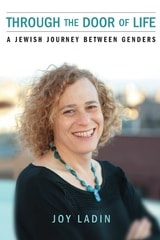
Through the Door of Life
A Jewish Journey between GendersJoy Ladin
University of Wisconsin Press, 2012
Professor Jay Ladin made headlines around the world when, after years of teaching literature at Yeshiva University, he returned to the Orthodox Jewish campus as a woman—Joy Ladin. In Through the Door of Life, Joy Ladin takes readers inside her transition as she changed genders and, in the process, created a new self.
With unsparing honesty and surprising humor, Ladin wrestles with both the practical problems of gender transition and the larger moral, spiritual, and philosophical questions that arise. Ladin recounts her struggle to reconcile the pain of her experience living as the “wrong” gender with the pain of her children in losing the father they love. We eavesdrop on her lifelong conversations with the God whom she sees both as the source of her agony and as her hope for transcending it. We look over her shoulder as she learns to walk and talk as a woman after forty-plus years of walking and talking as a man. We stare with her into the mirror as she asks herself how the new self she is creating will ever become real.
Ladin’s poignant memoir takes us from the death of living as the man she knew she wasn’t, to the shattering of family and career that accompanied her transition, to the new self, relationships, and love she finds when she opens the door of life.
2012 Finalist for the National Jewish Book Award for Biography, Autobiography, or Memoir
“Given her high-profile academic position, Ladin’s transition was a major news story in Israel and even internationally. But behind the public story was a private struggle and learning experience, and Ladin pulls no punches in telling that story. She offers a peek into how daunting it was to learn, with little support from others, how to dress as a middle-aged woman, to mu on make-up, to walk and talk like a female. She provides a front-row seat for observing how one person confronted a seemingly impossible situation and how she triumphed, however shakingly, over the many adversities, both societal and psychological, that stood in the way.”—The Gay and Lesbian Review Worldwide

Through the Open Door
A New Look at C.S. LewisDabney Adams Hart
University of Alabama Press, 1984
Unlocking the imagination, language, and vision that shaped C. S. Lewis's enduring legacy.
Through the Open Door: A New Look at C. S. Lewis offers a fresh and illuminating examination of one of the twentieth century's most beloved writers, scholars, and Christian thinkers. In this insightful study, Dabney Adams Hart moves beyond familiar assessments of C. S. Lewis as the creator of The Chronicles of Narnia to explore the intellectual foundations that shaped his work as a literary critic, educator, and defender of the Christian faith. Drawing on Lewis's essays, criticism, fiction, and apologetic writings, Hart reveals the central importance of imagination, language, myth, and meaning in Lewis's understanding of literature and human experience.
Rather than treating Lewis's diverse writings as separate endeavors, Hart demonstrates how they reflect a coherent and unified vision of truth, beauty, and morality. The book shows how Lewis used story and symbolism to address enduring questions about faith, reason, and the search for purpose in a modern world. Accessible to general readers while engaging for scholars, this volume provides valuable insight into the ideas that continue to make Lewis a significant figure in literary and religious studies. An important contribution to Lewis scholarship, Through the Open Door invites readers to discover anew the imagination and intellect behind one of the most influential Christian authors of the modern era.
Throughout Your Generations Forever
Sacrifice, Religion, and PaternityNancy Jay
University of Chicago Press, 1992
Thunder from the Right
Ezra Taft Benson in Mormonism and PoliticsEdited by Matthew L. Harris
University of Illinois Press, 2019
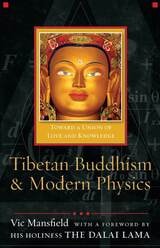
Tibetan Buddhism and Modern Physics
Toward a Union of Love and KnowledgeVic Mansfield
Templeton Press, 2008
Tibetan Buddhism and Modern Physics: Toward a Union of Love and Knowledge addresses the complex issues of dialogue and collaboration between Buddhism and science, revealing connections and differences between the two. While assuming no technical background in Buddhism or physics, this book strongly responds to the Dalai Lama’s “heartfelt plea” for genuine collaboration between science and Buddhism. The Dalai Lama has written a foreword to the book and the Office of His Holiness will translate it into both Chinese and Tibetan.

Tierra Santa
Sacred Beauty in the AmericasCarolyn Brown
Bridwell Press, 2026
Tierra Santa follows photographer Carolyn Brown into the Americas, from the temple mountains of the Maya and the kivas of the Pueblo Southwest to the candlelit churches of colonial Mexico and Guatemala. Over decades of travel, Brown has photographed wherever people have recognized something holy, whether an ancient plaza open to the sky or a village chapel at the end of a dirt road.
The photographs do more than document. In a bank of flickering candles and a hillside terraced into a pyramid, Brown finds the vitality that many cultures have felt in these places—the sense that earth and sky were already sacred and that human beings have only answered its call. Essays by leading scholars of archaeology, anthropology, and colonial history trace how successive peoples made room for the divine. Brown's own reflections close the book with a pilgrimage through the Sierra Gorda.
Together, the images and essays offer an invitation to look slowly and to notice. Stay with them long enough and these places begin to stir memory and awe, along with a profound sense that the sacred was here long before we arrived and remains, patiently, wherever we're willing to see it.
Ties That Enable
Community Solidarity for People Living with Serious Mental Health ProblemsTeresa L. Scheid
Rutgers University Press, 2021
Tiglath-pileser III, Founder of the Assyrian Empire
Josette Elayi
SBL Press, 2022
Time & Eternity
The Question of Time in Church, Science and TheologyAntje Jackelen
Templeton Press, 2005
What is time? Is there a link between objective knowledge about time and subjective experience of time? And what is eternity? Does religion have the answer? Does science?
•Theological approaches to time and eternity, as well as a look at Trinitarian theology and its relation to time
•The discussion of scientific theories of time, including Newtonian, relativistic, quantum, and chaos theories
•The formulation of a "theology of time," a theological-mathematical model incorporating relational thinking oriented toward the future, the doctrine of trinity, and the notion of eschatology
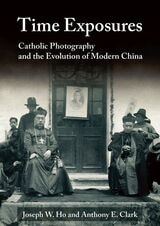
Time Exposures
Catholic Photography and the Evolution of Modern ChinaJoseph W. Ho and Anthony E. Clark
Hong Kong University Press, 2026
A history of China’s transition from empire to modern nation, told through photographs by and of Chinese Catholic communities.
Time Exposures explores how historical photographs created by and of Chinese Catholic communities illuminate the vicissitudes of China’s transition from empire to modern nation. Relying on an expansive worldwide network of Catholic photographic archives, this book examines largely unseen and unpublished images related to Catholicism in China. These images, made from the 1870s through the 1990s, were central to visual practices and afterlives that represent, recover, and reenvision diverse Chinese experiences. This volume provides insight into the lives of women and men behind and in front of the camera who were important documentarians of China’s local and national changes over time, shaping ways of seeing and belonging to the country’s many cultural evolutions.
Times of History
Universal Topics in Islamic HistoriographyAziz Al-Azmeh
Central European University Press, 2007
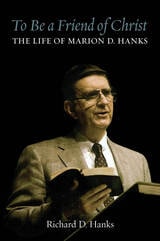
To Be a Friend of Christ
The Life of Marion D. HanksHanks, Richard D.
Signature Books, 2024
Marion Duff Hanks (1921–2011) was one of the most beloved and influential leaders of the Church of Jesus Christ of Latter-day Saints in the twentieth century, serving as a General Authority (senior leader) for forty years. He was also a leader of national import. As a recognized expert on youth, five US presidents appointed him to their President’s Council on Physical Fitness and Sports. Hanks also served as an executive leader of Rotary International and the Boy Scouts of America.
Author Richard Hanks draws on previously unavailable primary sources—journals, correspondence, notebooks, and recordings—to share this first and only authorized biography of his father. Hanks traces his father’s influence as he advocated for numerous changes in the institutional church, including humanitarian efforts, refugee relief services, missionary community service, a focus on mercy for the sinner, and a churchwide emphasis on “coming unto Christ.” A Renaissance man, Duff Hanks felt comfortable mingling with presidents and world leaders and speaking from pulpits and podiums to huge audiences and on television. But he found his greatest joy in assisting the individual, encouraging each in their personal search for happiness. Once, when asked about his goals, he replied, “My strongest desire is to qualify to be a friend of Christ.”
To Be a Friend of Christ
The Life of Marion D. HanksHanks, Richard D.
Signature Books, 2025
Marion Duff Hanks (1921–2011) was one of the most beloved and influential leaders of the Church of Jesus Christ of Latter-day Saints in the twentieth century, serving as a General Authority (senior leader) for forty years. He was also a leader of national import. As a recognized expert on youth, five US presidents appointed him to their President’s Council on Physical Fitness and Sports. Hanks also served as an executive leader of Rotary International and the Boy Scouts of America.
Author Richard Hanks draws on previously unavailable primary sources—journals, correspondence, notebooks, and recordings—to share this first and only authorized biography of his father. Hanks traces his father’s influence as he advocated for numerous changes in the institutional church, including humanitarian efforts, refugee relief services, missionary community service, a focus on mercy for the sinner, and a churchwide emphasis on “coming unto Christ.” A Renaissance man, Duff Hanks felt comfortable mingling with presidents and world leaders and speaking from pulpits and podiums to huge audiences and on television. But he found his greatest joy in assisting the individual, encouraging each in their personal search for happiness. Once, when asked about his goals, he replied, “My strongest desire is to qualify to be a friend of Christ.”
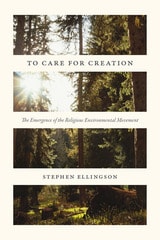
To Care for Creation
The Emergence of the Religious Environmental MovementStephen Ellingson
University of Chicago Press, 2016
To Care for Creation chronicles this movement and explains how it has emerged despite institutional and cultural barriers, as well as the hurdles posed by logic and practices that set religious environmental organizations apart from the secular movement. Ellingson takes a deep dive into the ways entrepreneurial activists tap into and improvise on a variety of theological, ethical, and symbolic traditions in order to issue a compelling call to arms that mobilizes religious audiences. Drawing on interviews with the leaders of more than sixty of these organizations, Ellingson deftly illustrates how activists borrow and rework resources from various traditions to create new meanings for religion, nature, and the religious person’s duty to the natural world.
To Do Justice
The Civil Rights Ministry of Reverend Robert E. HughesRandall C. Jimerson
University of Alabama Press, 2022
A minister’s call to justice in the struggle for civil rights.
A native Alabamian, Reverend Robert E. Hughes worked full-time in the civil rights movement as executive director of the Alabama Council of Human Relations, where he developed a close relationship with Dr. Martin Luther King Jr. After facing backlash from the Ku Klux Klan, spending four days in jail for refusing to disclose ACHR membership lists, and ultimately being forced to leave the state of Alabama, he served as a Methodist missionary in Southern Rhodesia (now part of Zimbabwe). After two years of organizing Black liberation groups, he was banned as a “prohibited immigrant” by the Ian Smith government. His lifelong commitment to social justice, racial equality, and peaceful resolution of conflicts marks a fascinating career richly documented in this comprehensive biography.
To Do Justice: The Civil Rights Ministry of Reverend Robert E. Hughes traces the life and career of an admirable and lesser-known civil rights figure who fought injustice on two continents. This account presents valuable new evidence about the civil rights movement in the United States as well as human rights and liberation issues in colonial Southern Rhodesia in the years leading up to independence and self-rule. It provides an intimate portrait of a courageous individual who worked outside of the public spotlight but provided essential support and informational resources to public activists and news reporters
Randall C. Jimerson explores the interwoven threads of race relations and religious beliefs on two continents, focusing on the dual themes of the American civil rights movement and the African struggles for decolonization and majority rule. The life and career of Robert Hughes provide insight into the international dimensions of racial prejudice and discrimination that can be viewed in comparative context to similar oppressions in other colonial lands.
To Flourish or Destruct
A Personalist Theory of Human Goods, Motivations, Failure, and EvilChristian Smith
University of Chicago Press, 2015
In his 2010 book What Is a Person?, Christian Smith argued that sociology had for too long neglected this fundamental question. Prevailing social theories, he wrote, do not adequately “capture our deep subjective experience as persons, crucial dimensions of the richness of our own lived lives, what thinkers in previous ages might have called our ‘souls’ or ‘hearts.’” Building on Smith’s previous work, To Flourish or Destruct examines the motivations intrinsic to this subjective experience: Why do people do what they do? How can we explain the activity that gives rise to all human social life and social structures?
Smith argues that our actions stem from a motivation to realize what he calls natural human goods: ends that are, by nature, constitutionally good for all human beings. He goes on to explore the ways we can and do fail to realize these ends—a failure that can result in varying gradations of evil. Rooted in critical realism and informed by work in philosophy, psychology, and other fields, Smith’s ambitious book situates the idea of personhood at the center of our attempts to understand how we might shape good human lives and societies.
To Know God and the Soul
Essays on the Thought of Saint AugustineRoland J. Teske
Catholic University of America Press, 2008
To Live Peaceably Together
The American Friends Service Committee's Campaign for Open HousingTracy E. K'Meyer
University of Chicago Press, 2022
The bitterly tangled webs of race and housing in the postwar United States hardly suffer from a lack of scholarly attention. But Tracy K’Meyer’s To Live Peaceably Together delivers something truly new to the field: a lively examination of a predominantly white faith-based group—the Quaker-aligned American Friends Service Committee (AFSC)—that took a unique and ultimately influential approach to cultivating wider acceptance of residential integration. Built upon detailed stories of AFSC activists and the obstacles they encountered in their work in Chicago, Philadelphia, and Richmond, California, To Live Peaceably Together is an engaging and timely account of how the organization allied itself to a cause that demanded constant learning, reassessment, and self-critique. K’Meyer details the spiritual and humanist motivations behind the AFSC, its members’ shifting strategies as they came to better understand structural inequality, and how those strategies were eventually adopted by a variety of other groups. Her fine-grained investigation of the cultural ramifications of housing struggles provides a fresh look at the last seventy years of racial activism.
To Live Peaceably Together
The American Friends Service Committee's Campaign for Open HousingTracy E. K'Meyer
University of Chicago Press, 2022
This is an auto-narrated audiobook edition of this book.
A groundbreaking look at how a predominantly white faith-based group reset the terms of the fight to integrate US cities.
The bitterly tangled webs of race and housing in the postwar United States hardly suffer from a lack of scholarly attention. But Tracy K’Meyer’s To Live Peaceably Together delivers something truly new to the field: a lively examination of a predominantly white faith-based group—the Quaker-aligned American Friends Service Committee (AFSC)—that took a unique and ultimately influential approach to cultivating wider acceptance of residential integration. Built upon detailed stories of AFSC activists and the obstacles they encountered in their work in Chicago, Philadelphia, and Richmond, California, To Live Peaceably Together is an engaging and timely account of how the organization allied itself to a cause that demanded constant learning, reassessment, and self-critique. K’Meyer details the spiritual and humanist motivations behind the AFSC, its members’ shifting strategies as they came to better understand structural inequality, and how those strategies were eventually adopted by a variety of other groups. Her fine-grained investigation of the cultural ramifications of housing struggles provides a fresh look at the last seventy years of racial activism.
To Offer Compassion
A History of the Clergy Consultation Service on AbortionDoris Andrea Dirks and Patricia A. Relf
University of Wisconsin Press, 2019
As religious leaders spoke out on issues of civil rights, peace, or poverty, CCS members were also called to action by the suffering of women who had approached them for help. Overwhelmingly male, white, affluent, and middle-aged, these mainline Protestant and Jewish clergy were nonetheless outspoken advocates for the rights of women, particularly poor women. To Offer Compassion is a detailed history of this unique and largely forgotten movement, drawing on extensive interviews with original participants and on primary documents from the CCS's operations.
To Save My Race from Abuse
The Life of Samuel Robert CassiusEdward J. Robinson
University of Alabama Press, 2009
Samuel Robert Cassius was born to a slave mother and a white father in Virginia in 1853 and became a member of the Restorationist Movement (Disciples of Christ) while a coal miner in Indiana. For the rest of his long life (he died in 1931 at age 78), Cassius was an active evangelist, prolific publicist, dedicated leader of black Disciples, and an outspoken and uncompromising opponent of racism in religion and society.
An indefatigable preacher, Cassius ranged throughout the Midwest, California, and the southwestern states, founding and encouraging black Stone-Campbell Restorationist congregations. After entering the Oklahoma Territory in 1891, he worked for three decades as an educator, newspaper editor, social activist, postmaster, and Justice of the Peace. Because he consistently incorporated social and racial issues into his religious writings, Cassius often found himself at odds with whites in the Stone-Campbell Movement, the very people he relied on for monetary support. He advocated a Booker T. Washington-style self-help ethos while at the same time firmly resisting racism wherever he encountered it. Largely invisible in a world dominated by such towering figures as Washington, Frederick Douglass, Ida B. Wells, and W. E. B. DuBois, Cassius lived a life of virtual obscurity beyond the circle of the Stone-Campbell Movement. His story is important because, as a racial militant and separatist, he presaged the schism that would engulf and fracture the Churches of Christ in the 1960s, when blacks and whites went their separate ways and formed two distinct groups in one religious fellowship.
By combing through a plethora of primary sources that Cassius left behind in both religious and nonreligious journals, Edward J. Robinson has successfully reconstructed and recaptured the essence of Cassius’ complex and extraordinary life. This book offers the first full-length study of a man of remarkable attainment despite daily obstacles and resistance.
To Stand Aside or Stand Alone
Southern Reform Rabbis and the Civil Rights MovementP. Allen Krause, Edited by Mark K. Bauman with Stephen Krause
University of Alabama Press, 2016
In 1966, a young rabbinical student named P. Allen Krause conducted interviews with twelve Reform rabbis from southern congregations concerning their thoughts, principles, and activities as they related to the civil rights movement. Perhaps because he was a young seminary student or more likely because the interviewees were promised an embargo of twenty-five years before the interviews would be released to the public, the rabbis were extremely candid about their opinions on and their own involvement with what was still an incendiary subject. Now, in To Stand Aside or Stand Alone: Southern Reform Rabbis and the Civil Rights Movement, their stories help elucidate a pivotal moment in time.
After a distinguished rabbinical career, Krause wrote introductions to and annotated the interviews. When Krause succumbed to cancer in 2012, Mark K. Bauman edited the manuscripts further and wrote additional introductions with the assistance of Stephen Krause, the rabbi’s son. The result is a unique volume offering insights into these rabbis’ perceptions and roles in their own words and with more depth and nuance than hitherto available. This exploration into the lives of these teachers and civic leaders is supported by important contextual information on the local communities and other rabbis, with such background information forming the basis of a demographic profile of the Reform rabbis working in the South.
The twelve rabbis whom Krause interviewed served in Alabama, Georgia, Louisiana, Mississippi, Tennessee, and Virginia, and the substance and scope of their discussions cover some of the most crucial periods in the civil rights movement. Although some have provided accounts that appeared elsewhere or have written about their experiences themselves, several new voices appear here, suggesting that more southern rabbis were active than previously thought. These men functioned within a harsh environment: rabbis’ homes, synagogues, and Jewish community centers were bombed; one rabbi, who had been beaten and threatened, carried a pistol to protect himself and his family. The views and actions of these men followed a spectrum from gradualism to activism; while several of the rabbis opposed the evils of the separate and unequal system, others made peace with it or found reasons to justify inaction. Additionally, their approaches differed from their activist colleagues in the North even more than from each other.
Within these pages, readers learn about the attitudes of the rabbis toward each other, toward their congregants, toward national Jewish organizations, and toward local leaders of black and white and Protestant and Catholic groups. Theirs are dramatic stories of frustration, cooperation, and conflict.
To Stir a Restless Heart
Jacob W. Wood
Catholic University of America Press, 2019
To Take Place
Toward Theory in RitualJonathan Z. Smith
University of Chicago Press, 1987
Smith stresses the importance of place—in particular, constructed ritual environments—to a proper understanding of the ways in which "empty" actions become rituals. He structures his argument around the territories of the Tjilpa aborigines in Australia and two sites in Jerusalem—the temple envisioned by Ezekiel and the Church of the Holy Sepulchre. The first of these locales—the focus of one of the more important contemporary theories of religious ritual—allows Smith to raise questions concerning the enterprise of comparison. His close examination of Eliade's influential interpretation of the Tjilpa tradition leads to a powerful critique of the approach to religion, myth, and ritual that begins with cosmology and the category of "The Sacred."
In substance and in method, To Take Place represents a significant advance toward a theory of ritual. It is of great value not only to historians of religion and students of ritual, but to all, whether social scientists or humanists, who are concerned with the nature of place.
"This book is extraordinarily stimulating in prompting one to think about the ways in which space, or place, is perceived, marked, and utilized religiously. . . . A provocative example of the application of humanistic geography to our understanding of what takes place in religion."—Dale Goldsmith, Interpretation
To Train His Soul in Books
Syriac Asceticism in Early ChristianityRobin Darling Young
Catholic University of America Press, 2011
To You I Call
Psalms Throughout Our LivesRabbi Jade Sank Ross
Central Conference of American Rabbis, 2024
To the Ends of the Earth
The Necropolitics of the Acts of the ApostlesEric C. Smith
SBL Press, 2026
Today's Reform Responsa - PDF Electronic Version
Rabbi Solomon B. Freehof
Central Conference of American Rabbis, 1990
The questions dealt with in this collection of Responsa from 1990 include: Can the Shofar be blown on Shabbat? Can you say kaddish when worshiping alone? Can a Jew join a Unitarian Church? Is abortion warranted in the case of mother who contracted German measles? What to do when the deceased has specified that there be no funeral and no mourning? Is it acceptable to get married with a borrowed ring? Can unpaid synagogue pledges be taken to civil court? Is there any Jewish objection to the choice to bottlefeed and not breastfeed?

Tokyo Boogie-woogie and D.T. Suzuki
Shoji Yamada
University of Michigan Press, 2022
Against this famous figure, however, is a largely unknown or forgotten shape: Suzuki Alan Masaru. Alan was D.T. Suzuki’s adopted son and, though he remained within his father’s shadow, is mostly known as the lyricist of the iconic pop hit “Tokyo Boogie-woogie.” Perhaps due to his frequent scandals and the fraught nature of the relationship, Alan remains unmentioned and unstudied by scholars and historians. Yet by exploring the nature of the relationship between these two, Shoji Yamada digs into the conflicting memories and experiences of these generations in Japan.