Results by title
8642 books match the query '20th century' and 1764 start with t
The Riot Report and the News
How the Kerner Commission Changed Media Coverage of Black AmericaThomas J. Hrach
University of Massachusetts Press, 2016
On July 28, 1967, President Lyndon B. Johnson established the National Advisory Commission on Civil Disorders to investigate the causes of unrest in urban black communities during the 1960s. Chaired by Illinois governor Otto Kerner Jr., the commission ominously warned, “Our nation is moving toward two societies, one black, one white—separate and unequal.” And it aimed its sharpest criticism at the mainstream media, concluding: “The press has too long basked in a white world, looking out of it, if at all, with white men's eyes and a white perspective.” Major news media responded by expanding and diversifying their coverage of black communities and increasing the number of African Americans in their newsrooms.
Although much has been written about the Kerner Commission, the analysis has focused primarily on its affect on the American press. In The Riot Report and the News, Thomas J. Hrach instead explores how the commission came to its conclusions, in order to understand why and how its report served as a catalyst for change. Hrach finds that such government criticism of the media can have a long-term and positive influence on the nation, an insight that remains important as the news continues to struggle with how to cover issues of race.
The Rise and Decline of Communist Czechoslovakia´s Railway Sector
Tomáš Nigrin
Central European University Press, 2022
Once the pride of interwar Czechoslovakia, and key during the forced industrialization of the Stalinist period, during the 1970s and 1980s the Czechoslovak railway sector showed the symptoms of the political tiredness and economic exhaustion of the Soviet Bloc. This book examines the failure of central economic planning through the lens of this national transport system.
Based on the presentation of its history and on the detailed scrutiny of the actors, institutions, internal mechanisms, and conditions of the railway sector, the analysis reveals the identities of the real stakeholders in the state administration. This case shows how the country was governed by Communist Party institutions and government ministries, and how developments in the transportation sector—like in every sector—reflected their priorities. Numerous tables with selected statistics underscore the economic analysis and black and white photos offer a glimpse on the technical base of the railway sector.
The book is filled with enlightening comparisons of the Czechoslovak transportation industry with its counterparts in the whole Eastern Bloc. Integration into the Council for Mutual Economic Assistance (Comecon) of the Bloc could have been an asset, yet the records have more to say about conflicts than cooperation.
The Rise and Fall of America's Concentration Camp Law
Civil Liberties Debates from the Internment to McCarthyism and the Radical 1960sMasumi Izumi
Temple University Press, 2019
The Emergency Detention Act, Title II of the Internal Security Act of 1950, is the only law in American history to legalize preventive detention. It restricted the freedom of a certain individual or a group of individuals based on actions that may be taken that would threaten the security of a nation or of a particular area. Yet the Act was never enforced before it was repealed in 1971.
Masumi Izumi links the Emergency Detention Act with Japanese American wartime incarceration in her cogent study, The Rise and Fall of America’s Concentration Camp Law. She dissects the entangled discourses of race, national security, and civil liberties between 1941 and 1971 by examining how this historical precedent generated “the concentration camp law” and expanded a ubiquitous regime of surveillance in McCarthyist America.
Izumi also shows how political radicalism grew as a result of these laws. Japanese Americas were instrumental in forming grassroots social movements that worked to repeal Title II. The Rise and Fall of America’s Concentration Camp Law is a timely study in this age of insecurity where issues of immigration, race, and exclusion persist.

The Rise and Fall of Modern Japanese Literature
John Whittier Treat
University of Chicago Press, 2018
Beginning with journalistic accounts of female criminals in the aftermath of the Meiji civil war, Treat moves on to explore how woman novelist Higuchi Ichiyō’s stories engaged with modern liberal economics, sex work, and marriage; credits Natsume Sōseki’s satire I Am a Cat with the triumph of print over orality in the early twentieth century; and links narcissism in the visual arts with that of the Japanese I-novel on the eve of the country’s turn to militarism in the 1930s. From imperialism to Americanization and the new media of television and manga, from boogie-woogie music to Yoshimoto Banana and Murakami Haruki, Treat traces the stories Japanese audiences expected literature to tell and those they did not. The book concludes with a classic of Japanese science fiction a description of present-day crises writers face in a Japan hobbled by a changing economy and unprecedented natural and manmade catastrophes. The Rise and Fall of Japanese Literature reinterprets the “end of literature”—a phrase heard often in Japan—as a clarion call to understand how literary culture worldwide now teeters on a historic precipice, one at which Japan’s writers may have arrived just a moment before the rest of us.
The Rise and Fall of Morris Ernst, Free Speech Renegade
Samantha Barbas
University of Chicago Press, 2021
In the 1930s and ’40s, Morris Ernst was one of America’s best-known liberal lawyers. The ACLU’s general counsel for decades, Ernst was renowned for his audacious fights against artistic censorship. He successfully defended Ulysses against obscenity charges, litigated groundbreaking reproductive rights cases, and supported the widespread expansion of protections for sexual expression, union organizing, and public speech. Yet Ernst was also a man of stark contradictions, waging a personal battle against Communism, defending an autocrat, and aligning himself with J. Edgar Hoover’s inflammatory crusades.
Arriving at a moment when issues of privacy, artistic freedom, and personal expression are freshly relevant, The Rise and Fall of Morris Ernst, Free Speech Renegade brings this singularly complex figure into a timely new light. As Samantha Barbas’s eloquent and compelling biography makes ironically clear, Ernst both transformed free speech in America and inflicted damage to the cause of civil liberties. Drawing on Ernst’s voluminous cache of publications and papers, Barbas follows the life of this singular idealist from his pugnacious early career to his legal triumphs of the 1930s and ’40s and his later idiosyncratic zealotry. As she shows, today’s challenges to free speech and the exercise of political power make Morris Ernst’s battles as pertinent as ever.
The Rise and Fall of an Urban School System
Detroit, 1907-81, Second EditionJeffrey Mirel
University of Michigan Press, 1999
Detroit's public school system, lauded as a model for the nation in the 1920s and 1930s, has become one of the city's most conspicuous failures. Jeffrey Mirel draws on Detroit's experience to offer a new interpretation of urban educational decline in the twentieth century, suggesting specific answers to what ails America's public schools and how public education can be improved.
Jeffrey Mirel has won two prestigious book awards for The Rise and Fall of an Urban School System. Stanford University and the American Educational Research Association awarded the book the 1994-95 "Outstanding Book Award" stating, "Mirel's documentation and interpretations serve as valuable and refreshing commentary on the current status of urban education, and by extension, all American education and society. . . . The book is admirably written with touches of drama, pathos, and hope." The American Educational Studies Association awarded Mirel the 1994 "Critics' Choice Award" for his outstanding contribution to Educational Studies.
This paperback edition includes a comprehensive epilogue focusing on recent events in Detroit educational reform. Detailing the formation and rapid collapse of a campaign in the late 1980s and early 1990s to radically restructure the Detroit public schools, Mirel's new analysis of this experiment illuminates both the persistence of historical trends in the school district and the possibilities for change.
The Rise and Fall of the International Organization of Journalists Based in Prague 1946–2016
Useful Recollections Part IIIKaarle Nordenstreng
Karolinum Press, 2021
The Rise of Chicago's Black Metropolis, 1920-1929
Christopher Robert Reed
University of Illinois Press, 2014
The Rise of Common-Sense Conservatism
The American Right and the Reinvention of the Scottish EnlightenmentAntti Lepistö
University of Chicago Press, 2021
In considering the luminaries of American neoconservative thought—among them Irving Kristol, Gertrude Himmelfarb, James Q. Wilson, and Francis Fukuyama—Lepistö argues that the centrality of their conception of the common man accounts for the enduring power and influence of their thought. Intriguingly, Lepistö locates the roots of this conception in the eighteenth-century Scottish Enlightenment, revealing how leading neoconservatives weaponized the ideas of Adam Smith, Thomas Reid, and David Hume to denounce postwar liberal elites, educational authorities, and social reformers. Their reconfiguration of Scottish Enlightenment ideas ultimately gave rise to a defining force in modern conservative politics: the common sense of the common man. Whether twenty-first-century politicians who invoke the grievances of “the people” are conscious of this unusual lineage or not, Lepistö explains both the persistence of the trope and the complicity of some conservative thinkers with the Trump regime.
The Rise of Comparative History
Balázs Trencsényi
Central European University Press, 2021
The Rise of Spanish-Language Filmmaking
Out from Hollywood's Shadow, 1929-1939Jarvinen, Lisa
Rutgers University Press, 2012
Silent film was universally understood and could be exported anywhere. But when “talkies” arrived, the industry began experimenting with dubbing, subtitling, and dual track productions in more than one language. Where language fractured the European film market, for Spanish-speaking countries and communities, it created new opportunities. In The Rise of Spanish-Language Filmmaking, Lisa Jarvinen focuses specifically on how Hollywood lost ground in the lucrative international Spanish-speaking audience between 1929 and 1939.
Hollywood studios initially trained cadres of Spanish-speaking film professionals, created networks among them, and demonstrated the viability of a broadly conceived, transnational, Spanish-speaking film market in an attempt to forestall the competition from other national film industries. By the late 1930s, these efforts led to unintended consequences and helped to foster the growth of remarkably robust film industries in Mexico, Spain, and Argentina. Using studio records, Jarvinen examines the lasting effects of the transition to sound on both Hollywood practices and cultural politics in the Spanish-speaking world. She shows through case studies based on archival research in the United States, Spain, and Mexico how language, as a key marker of cultural identity, led to new expectations from audiences and new possibilities for film producers.

The Rise of West Coast Philanthropy
A History of the Hewlett and Packard FoundationsAsher Orkaby and Tim Mueller
University of Chicago Press, 0
The first full-length history of the Hewlett and Packard foundations and how they were at the forefront of the emergence of a distinctive West Coast approach toward giving.
A new generation of mega-wealthy tech tycoons purported to upend the twenty-first-century practice of philanthropy, but pioneering tech entrepreneurs William Hewlett and David Packard, the co-founders of the Hewlett-Packard Company, had already begun the process four decades earlier. The Rise of West Coast Philanthropy follows Silicon Valley’s first generation of philanthropists and how their work helped establish West Coast philanthropy as a major global force.
Drawing on unprecedented access to archival records and interviews with over 115 philanthropy leaders and insiders around the world, authors Asher Orkaby and Tim Mueller uncover the previously untold histories of the foundations established by William and Flora Hewlett and David and Lucile Packard, two of America’s most famous power couples. Through their foundations, these two families introduced philanthropic trends later echoed by philanthropies on both the West and East Coasts, demonstrating a successful adaptation of the management principles that first made HP a model company. The Rise of West Coast Philanthropy explores more than sixty years of Hewlett and Packard grant-making, from early family enterprises with local ambitions to major regional, national, and international powerhouses.
In telling this story, Orkaby and Mueller offer a fresh perspective on the distinctive model of West Coast philanthropy, which has been crucial in shaping the twenty-first-century global philanthropic landscape.
The Rise of the African Novel
Politics of Language, Identity, and OwnershipMukoma Wa Ngugi
University of Michigan Press, 2018
Calling it a major crisis in African literary criticism, Mukoma Wa Ngugi considers key questions around the misreading of African literature: Why did Chinua Achebe’s generation privilege African literature in English despite the early South African example? What are the costs of locating the start of Africa’s literary tradition in the wrong literary and historical period? What does it mean for the current generation of writers and scholars of African literature not to have an imaginative consciousness of their literary past?
This book will become a foundational text in African literary studies, as it raises questions about the very nature of African literature and criticism. It will be essential reading for scholars of African literary studies as well as general readers seeking a greater understanding of African literary history and the ways in which critical consensus can be manufactured and rewarded at the expense of a larger and historical literary tradition.
The Rise of the American Conservation Movement
Power, Privilege, and Environmental ProtectionDorceta E. Taylor
Duke University Press, 2016
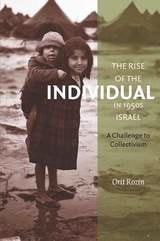
The Rise of the Individual in 1950s Israel
A Challenge to CollectivismOrit Rozin
Brandeis University Press, 2011
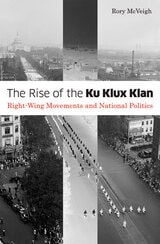
The Rise of the Ku Klux Klan
Right-Wing Movements and National PoliticsRory McVeigh
University of Minnesota Press, 2009
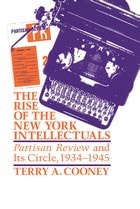
The Rise of the New York Intellectuals
Partisan Review and Its Circle, 1934–1945Terry A. Cooney
University of Wisconsin Press, 1986
Cosmopolitan visions
Terry A. Cooney traces the evolution of the Partisan Review—often considered to be the most influential little magazine ever published in America—during its formative years, giving a lucid and dispassionate view of the magazine and its luminaries who played a leading role in shaping the public discourse of American intellectuals. Included are Lionel Trilling, Philip Rahv, William Phillips, Dwight Macdonald, F. W. Dupee, Mary McCarthy, Sidney Hook, Harold Rosenberg, and Delmore Schwartz, among others.
“An excellent book, which works at each level on which it operates. It succeeds as a straightforward narrative account of the Partisan Review in the 1930s and 1940s. The magazine’s leading voices—William Phillips, Philip Rahv, Dwight MacDonald, Lionel Trilling, and all the rest—receive their due. . . . Among the themes that engage Cooney. . . . are: how they dealt with ‘modernism’ in culture and radicalism in politics, each on its own and in combination; how Jewishness played a complex and fascinating role in many of the thinkers’ lives; and, especially, how ‘cosmopolitanism’ best explains what the Partisan Review was all about.”—Robert Booth Fowler, Journal of American History
The Rise of the Public Authority
Statebuilding and Economic Development in Twentieth-Century AmericaGail Radford
University of Chicago Press, 2013
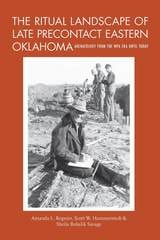
The Ritual Landscape of Late Precontact Eastern Oklahoma
Archaeology from the WPA Era until Todayby Amanda L. Regnier, Scott W. Hammerstedt, and Sheila Bobalik Savage
University of Alabama Press, 2019
As part of Great Depression relief projects started in the 1930s, the Works Progress Administration (WPA) sponsored massive archaeological projects across Oklahoma. The WPA crews excavated eight mound sites and dozens of nonmound residential sites in the Arkansas River Valley that date between AD 1000 and 1450. These sites are considered the westernmost representations of Mississippian culture in the Southeast.
The results of these excavations were documented in field journals and photographs prepared by the field supervisors and submitted in a series of quarterly reports to WPA headquarters. These reports contain a wealth of unpublished information summarizing excavations at the mound sites and residential sites, including mound profiles, burial descriptions, house maps, artifact tables, and artifact sketches. Of the excavated mound sites, results from only one, Spiro, have been extensively studied and synthesized in academic literature. The seven additional WPA-excavated mound sites—Norman, Hughes, Brackett, Eufaula, Skidgel, Reed, and Lillie Creek—are known to archaeologists outside of Oklahoma only as unlabeled points on maps of mound sites in the Southeast.
The Ritual Landscape of Late Precontact Eastern Oklahoma curates and contextualizes the results of the WPA excavations, showing how they inform archaeological understanding of Mississippian occupation in the Arkansas Valley. Regnier, Hammerstedt, and Savage also relate the history and experiences of practicing archaeology in the 1930s, incorporating colorful excerpts from field journals of the young, inexperienced archaeologists. Finally, the authors update current knowledge of mound and nonmound sites in the region, providing an excellent example of historical archaeology.
The River Home
A MemoirDorothy Weil
Ohio University Press, 2001
The death of her father begins Dorothy Weil’s search for what causes the family’s “spinning of in all directions like the pieces of Chaos.” She embarks on a river odyssey, traveling the Ohio, Missouri, and Mississippi Rivers by steamboat, towboat, and even an old-fashioned flatboat. The river brings her family back, as she records the stories of her fellow “river rats”: steamboat veterans, deckhands, captains, and cooks.
The River Home takes the reader into a world few ever glimpse, that of America’s riverboats. In the fast-paced narrative, with incisive characterizations and dialogue, the author introduces us to this vivid milieu and a gallery of fascinating people. We meet her father, a “wild river man from the Kentucky hills,” her mother, “a proper girl from a Cincinnati Dutch clan,” and her brother, a fourth-generation river man, as well as the artists and academics she meets in her adult life.
Weil’s voice is clear and wry, as well as poetic, bringing out both the sadness and joys of a family torn by mismatched backgrounds. Her themes speak to all: the confusion brought by family conflict, the strength of family love no matter how troubled the relationships, the mortality we all face, the importance of where we come from and where we go.
The Road
DePastino, Todd
Rutgers University Press, 2006
In 1894, an eighteen-year-old Jack London quit his job shoveling coal, hopped a freight train, and left California on the first leg of a ten thousand-mile odyssey. His adventure was an exaggerated version of the unemployed migrations made by millions of boys, men, and a few women during the original "great depression of the 1890s. By taking to the road, young wayfarers like London forged a vast hobo subculture that was both a product of the new urban industrial order and a challenge to it. As London's experience suggests, this hobo world was born of equal parts desperation and fascination. "I went on 'The Road,'" he writes, "because I couldn't keep away from it . . . Because I was so made that I couldn't work all my life on 'one same shift'; because-well, just because it was easier to than not to."
The best stories that London told about his hoboing days can be found in The Road, a collection of nine essays with accompanying illustrations, most of which originally appeared in Cosmopolitan magazine between 1907 and 1908. His virile persona spoke to white middle-class readers who vicariously escaped their desk-bound lives and followed London down the hobo trail. The zest and humor of his tales, as Todd DePastino explains in his lucid introduction, often obscure their depth and complexity. The Road is as much a commentary on London's disillusionment with wealth, celebrity, and the literary marketplace as it is a picaresque memoir of his youth.
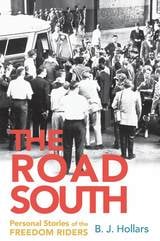
The Road South
Personal Stories of the Freedom RidersB. J. Hollars
University of Alabama Press, 2018
Revisits the inspiring and heroic stories of the Freedom Riders, through their own words.
In May 1961, despite multiple Supreme Court rulings, segregation remained alive and well within the system of interstate travel. All across the American South, interstate buses as well as their travel facilities were divided racially. This blatant disregard for law and morality spurred the Congress of Racial Equality to send thirteen individuals—seven black, six white—on a harrowing bus trip throughout the South as a sign of protest.
These original riders were met with disapproval, arrests and violence along the way, but that did not stop the movement. That summer, more than four hundred Freedom Riders continued their journey—many of them concluding their ride at Mississippi’s notorious Parchman Farm, where they endured further abuses and indignities. As a result of the riders sacrifice, by November of 1961, the Interstate Commerce Commission finally put an end to interstate commerce segregation, and in the process, elevated the riders to become a source of inspiration for other civil rights campaigns such as voter registration rights and school desegregation.
While much has been written on the Freedom Rides, far less has been published about the individual riders. Join award-winning author B. J. Hollars as he sets out on his own journey to meet them, retracing the historic route and learning the stories of as many surviving riders as he could. The Road South: Personal Stories of the Freedom Riders offers an intimate look into the lives and legacies of the riders. Throughout the book these civil rights veterans’ poignant, personal stories offer timely insights into America’s racial past and hopeful future.
Weaving the past with the present, Hollars aims to demystify the legendary journey, while also confronting more modern concerns related to race in America. The Road South is part memoir and part research-based journalism. It transcends the traditional textbook version of this historical journey to highlight the fascinating stories of the many riders—both black and white—who risked their lives to move the country forward.
The Road Washes Out in Spring
A Poet’s Memoir of Living Off the GridBaron Wormser
University Press of New England, 2008
The Road to Armageddon
The Martial Spirit in English Popular Literature, 1870–1914Cecil D. Eby
Duke University Press, 1988
In The Road to Armageddon Cecil Eby shows how the widely admired writers of English popular fiction and poetry contributed, at least in England, to a romantic militarism coupled with xenophobia that helped create the climate that made World War I seem almost inevitable.
Between the close of the Franco-Prussian War of 1871 and the opening guns of 1914, the works of such widely read and admired writers as H. G. Wells, Rudyard Kipling, J. M. Barrie, and Rupert Brooke, as well as a host of now almost forgotten contemporaries, bombarded their avid readers with strident warnings of imminent invasions and prophecies of the collapse of civilization under barbarian onslaught and internal moral collapse.
Eby seems these narratives as growing from and in turn fueling a collective neurosis in which dread of coming war coexisted with an almost loving infatuation with it. The author presents a vivid panorama of a militant mileau in which warfare on a scale hitherto unimaginable was largely coaxed into being by works of literary imagination. The role of covert propaganda, concealed in seemingly harmless literary texts, is memorably illustrated.

The Road to Love Canal
Managing Industrial Waste before EPABy Craig E. Colten and Peter N. Skinner
University of Texas Press, 1995
The toxic legacy of Love Canal vividly brought the crisis in industrial waste disposal to public awareness across the United States and led to the passage of the Superfund legislation in 1980. To discover why disasters like Love Canal have occurred and whether they could have been averted with knowledge available to waste managers of the time, this book examines industrial waste disposal before the formation of the Environmental Protection Agency in 1970.
Colten and Skinner build their study around three key questions. First, what was known before 1970 about the hazards of certain industrial wastes and their potential for causing public health problems? Second, what were the technical capabilities for treating or containing wastes during that time? And third, what factors other than technical knowledge guided the actions of waste managers before the enactment of explicit federal laws?
The authors find that significant information about the hazards of industrial wastes existed before 1970. Their explanations of why this knowledge did not prevent the toxic legacy now facing us will be essential reading for environmental historians and lawyers, public health personnel, and concerned citizens.
The Road to Mount Lemmon
A Father, A Family, and the Making of SummerhavenMary Ellen Barnes
University of Arizona Press, 2009
The Santa Catalina Mountains first captivated Tony Zimmerman on a 1937 hunting trip. Regard for the alpine beauty must have been in his genes—he was the son of Swiss German immigrants—and by 1940 the Tucson schoolteacher had begun taking his family to Mount Lemmon to spend the summer. Back then, the road up the mountain was a rough two-track dirt road from Oracle, and Summerhaven was nothing but a sleepy cluster of summer cabins. But Tony Zimmerman was to help change all of that.
The Road to Mount Lemmon is a beguiling memoir of the Catalina Mountains told by the daughter of one of the pioneers in the life and development of Mount Lemmon’s communities. Mary Ellen Barnes tells how her father Tony resigned from teaching in 1943 to devote his career to the development of this mountain oasis. He not only sold real estate for long time landowner Randolph Jenks, he even bought the village’s tiny two-room store, installing a sawmill to build a larger store, and built the Mount Lemmon Inn. And as she spins Tony’s personal saga, she also gives readers a glimpse of the Catalinas before Tucson became a boom town, recalling idyllic adventures in wild country and the cowboys, rangers, ranchers, and loggers who worked there.
Barnes tells Tony’s story as if sharing it with family, evoking her father’s personality on every page. The Road to Mount Lemmon is an intimate view of a mountain community over the course of nearly sixty years—a view that few people have shared but one all can appreciate.
The Road to OPEC
United States Relations with Venezuela, 1919-1976By Stephen G. Rabe
University of Texas Press, 1982
On September 10, 1960, Venezuela spearheaded the formation of the Organization of Petroleum Exporting Countries (other original members included Saudi Arabia, Iran, Iraq, and Kuwait). However, in a world abundantly supplied with oil, the United States could and did ignore Venezuelan suggestions that OPEC and the consuming nations work together to control production and to increase prices. Then, in late 1973, OPEC sent shudders throughout the world economy, and an energy crisis struck with full force. Emboldened by the power of their oil cartel, Venezuelan leaders denounced the old economic relationship with the United States, nationalized U.S. oil and steel holdings, and fashioned a foreign economic policy that differed sharply from Washington's.
The Road to OPEC is the story of the fiery debates among U.S. oil companies, the Department of State, and the Venezuelan government over oil policies—clashes that led Venezuela to establish OPEC and to nationalize U.S.-owned properties. In addition, this is the first study of twentieth-century Venezuelan-U.S. relations. Its focus on oil diplomacy is placed within the context of key U.S. policies toward Latin America and such programs as the Open Door, the Good Neighbor, and the Alliance for Progress. The author also provides insight into both the politics of the contemporary energy crisis and the growing split between raw-material producers and their industrial customers.
The Road to OPEC is based on extensive archival research, as well as the author's successful use of the Freedom of Information Act to declassify files of such agencies as the National Security Council and the CIA.
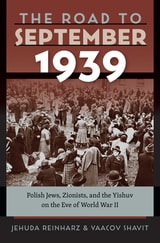
The Road to September 1939
Polish Jews, Zionists, and the Yishuv on the Eve of World War IIJehuda Reinharz and Yaacov Shavit
Brandeis University Press, 2018
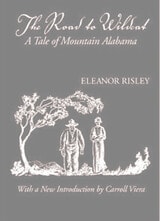
The Road to Wildcat
A Tale of Mountain AlabamaEleanor Risley
University of Alabama Press, 2004
A remarkable chronicle of southern mountain life in the early 20th century
The Road to Wildcat recounts the travels in North Alabama in the mid-1920s of Eleanor Risley (suffering from diabetes), her asthmatic husband, Pierre, their dog, John, and a Chinese wheelbarrow named Sisyphus that held their travel goods. Advised to make the walking tour for improvement of their health, the group left Fairhope in south Alabama and walked hundreds of miles in the southern Appalachians for months, sleeping out under the stars at night, or in a canvas tent or an abandoned building, cooking their fresh-caught foods over campfires, and accepting the generosity and advice of the mountain people they met, some of them moonshiners and outlaws.
During their sojourn across the rural wilderness, they enjoyed fiddlin’ dances in rickety halls, joined Sacred Harp singers, learned about the grapevine telegraph, saw the dreadful effects of inbreeding, and attended “Snake Night” at Posey Holler (a religious revival that included snake handling). Published in segments in the Atlantic Monthly in 1928 and 1929 and then reorganized into book form, the travelogue is a colorful record of the culture, customs, and dialect of the southern mountaineers of that era.
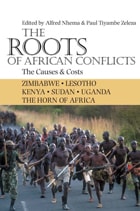
The Roots of African Conflicts
The Causes and CostsAlfred Nhema
Ohio University Press, 2007
“Africa is no more prone to violent conflicts than other regions. Indeed, Africa’s share of the more than 180 million people who died from conflicts and atrocities in the twentieth century is relatively modest.… This is not to underestimate the immense impact of violent conflicts on Africa; it is merely to emphasize the need for more balanced debate and commentary.”
—From the introduction by Paul Tiyambe Zeleza
Violent conflicts have exacted a heavy toll on Africa’s societies, polities, and economies. This book presents African scholars’ views of why conflicts start in their continent. The causes of conflict are too often examined by scholars from the countries that run the proxy wars and sell the arms to fuel them. This volume offers theoretically sophisticated, empirically grounded, and compelling analyses of the roots of African conflicts.
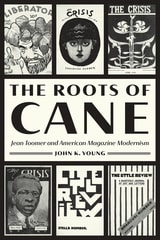
The Roots of Cane
Jean Toomer and American Magazine ModernismJohn K. Young
University of Iowa Press, 2024
Young interweaves a periodical-studies approach to modernism with book history and critical race theory, resituating Toomer’s uneasy place within Black modernism by asking how original readers would have encountered his work. The different contexts in which those audiences were engaging with Toomer’s portraits of racialized identity in the Jim Crow United States, yield often surprising results.
The Roots of Polarization
From the Racial Realignment to the Culture WarsNeil A. O'Brian
University of Chicago Press, 2024
A deeply researched account of how battles over civil rights in the 1960s shaped today’s partisan culture wars.
In the late twentieth century, gay rights, immigration, gun control, and abortion debates all burst onto the political scene, scrambling the parties and polarizing the electorate. Neil A. O’Brian traces the origins of today’s political divide on these issues to the 1960s when Democrats and Republicans split over civil rights. It was this partisan polarization over race, he argues, that subsequently shaped partisan fault lines on other culture war issues that persist to this day.
Using public opinion data dating to the 1930s, O’Brian shows that attitudes about civil rights were already linked with a range of other culture war beliefs decades before the parties split on these issues—and much earlier than previous scholarship realized. Challenging a common understanding of partisan polarization as an elite-led phenomenon, The Roots of Polarization argues politicians and interest groups, jockeying for power in the changing party system, seized on these preexisting connections in the mass public to build the parties’ contemporary coalitions.

The Roots of Things
EssaysMaxine Kumin
Northwestern University Press, 2010
Throughout her career, Pulitzer Prize–winning poet Maxine Kumin has been at the vanguard of discussions about feminism and sexism, the state of poetry, and our place in the natural world. The Roots of Things gathers into one volume her best essays on the issues that have been closest to her throughout her storied career.
Divided into sections on "Taking Root," "Poets and Poetry," and "Country Living," these pieces reveal Kumin honing her views within a variety of forms, including speeches, critical essays, and introductions of other writers’ work. Whether she is recollecting scenes from her childhood, ruminating on the ups and downs of what she calls "pobiz" (for "poetry business"), describing the battles she’s fought on behalf of women, or illuminating the lives of animals, Kumin offers insight that can only be born of long and closely observed experience.
The Route as Briefed
James Tate
University of Michigan Press, 1999
In typical Tate style, the book continually straddles the line between fiction and autobiography, entertaining readers with amusing accounts of the poet's own experiences while drawing on these to narrate the fictional stories as well.
James Tate is Professor of Poetry, University of Massachusetts. He is the author of a number of books of poetry, including Worshipful Company of Fletchers: Poems, 1994; Selected Poems, 1991; Distance from Loved Ones, 1990. He has received several awards for his work, including the Pulitzer Prize for poetry in 1992.

The Royal Air Force in American Skies
The Seven British Flight Schools in the United States during World War IITom Killebrew
University of North Texas Press, 2015
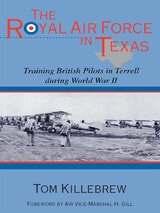
The Royal Air Force in Texas
Training British Pilots in Terrell during World War IITom Killebrew
University of North Texas Press, 2003
The Royal Baker's Daughter
Royal Baker's DaughterBarbara Goldberg
University of Wisconsin Press, 2008
The Ruin Dwellers
Progress and Its Discontents in the West German CountercultureJake P. Smith
University of Chicago Press, 2025
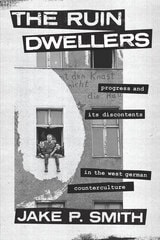
The Ruin Dwellers takes readers into the urban spaces of youth revolts during the 1970s and ’80s in West Germany and elsewhere in western and central Europe. Whereas earlier generations of leftist activists were primarily oriented toward the utopian future, participants in the youth movements of the 1970s and ’80s developed a more complex set of temporal practices that sought to scramble the borders between the past, present, and future.
Examining a rich corpus of radical texts and practices, historian Jake P. Smith shows that squatters and their leftist allies in this period engaged in social, cultural, and aesthetic experiments with modes of autonomous living. Smith brings to life the real and imagined landscapes conjured in squatted houses and street protests; in art, dress, music, graffiti, and film; and in philosophical, poetic, and political texts. In so doing, he offers an eye-opening look at anarchic world-making practices that found new ways of imagining an emancipated future through inhabiting the fractured past.
The Ruins of the New Argentina
Peronism and the Remaking of San Juan after the 1944 EarthquakeMark A. Healey
Duke University Press, 2011
The Ruling Passion
British Colonial Allegory and the Paradox of Homosexual DesireChristopher Lane
Duke University Press, 1995
Through attentive readings of sexual and political allegory in the work of Kipling, Forster, James, Beerbohm, Firbank, and others—and deft use of psychoanalytic theory—The Ruling Passion interprets turbulent scenes of masculine identification and pleasure, power and mastery, intimacy and antagonism. By foregrounding the shattering effects of male homosexuality and interracial desire, and by insisting on the centrality of unconscious fantasy and the death drive, The Ruling Passion examines the startling recurrence of colonial failure in narratives of symbolic doubt and ontological crisis. Lane argues compellingly that Britain can progress culturally and politically only when it has relinquished its residual fantasies of global mastery.
The Rumble in the Jungle
Muhammad Ali and George Foreman on the Global StageLewis A. Erenberg
University of Chicago Press, 2019
TheRumble in the Jungle orbits around Ali and Foreman, placing them at the convergence of the American Civil Rights movement and the Great Society, the rise of Islamic and African liberation efforts, and the ongoing quest to cast off the shackles of colonialism. With his far-reaching take on sports, music, marketing, and mass communications, Erenberg shows how one boxing match became nothing less than a turning point in 1970s culture.
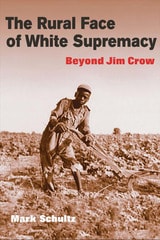
The Rural Face of White Supremacy
BEYOND JIM CROWMark Schultz
University of Illinois Press, 2007
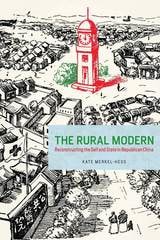
The Rural Modern
Reconstructing the Self and State in Republican ChinaKate Merkel-Hess
University of Chicago Press, 2016
In The Rural Modern, Merkel-Hess shows that Chinese reformers and intellectuals created an idea of modernity that was not simply about what was foreign and new, as in Shanghai and other cities, but instead captured the Chinese people’s desire for social and political change rooted in rural traditions and institutions. She traces efforts to remake village education, economics, and politics, analyzing how these efforts contributed to a new, inclusive vision of rural Chinese life. Merkel-Hess argues that as China sought to redefine itself, such rural reform efforts played a major role, and tensions that emerged between rural and urban ways deeply informed social relations, government policies, and subsequent efforts to create a modern nation during the communist period.
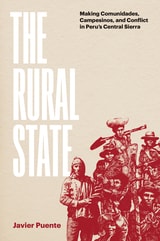
The Rural State
Making Comunidades, Campesinos, and Conflict in Peru's Central SierraJavier Puente
University of Texas Press, 2022
2023 Marysa Navarro Best Book Prize, New England Council of Latin American Studies (NECLAS)
A study of the intersection of rural populations, state formation, and the origins of political conflict in Peru.
On the eve of the twentieth century, Peru seemed like a profitable and yet fairly unexploited country. Both foreign capitalists and local state makers envisioned how remote highland areas were essential to a sustainable national economy. Mobilizing Andean populations lay at the core of this endeavor. In his groundbreaking book, The Rural State, Javier Puente uncovers the surprising and overlooked ways that Peru’s rural communities formed the political nation-state that still exists today.
Puente documents how people living in the Peruvian central sierra in the twentieth century confronted emerging and consolidating powers of state and capital and engaged in an ongoing struggle over increasingly elusive subsistence and autonomies. Over the years, policy, politics, and social turmoil shaped the rural, mountainous regions of Peru until violent unrest, perpetrated by the Shining Path and other revolutionary groups, unveiled the extent, limits, and fractures of a century-long process of rural state formation. Examining the conflicts between one rural community and the many iterations of statehood in the central sierra of Peru, The Rural State offers a fresh perspective on how the Andes became la sierra, how pueblos became comunidades, and how indígenas became campesinos.
The Ruse of Repair
US Neoliberal Empire and the Turn from CritiquePatricia Stuelke
Duke University Press, 2021
The Russian Revival of the Dithyramb
A Modernist Use of AntiquityKatherine Lahti
Northwestern University Press, 2018
Nietzsche’s The Birth of Tragedy and Viacheslav Ivanov’s treatise in response, “The Hellenic Religion of the Suffering God,” have been considered the foundation of the dithyramb revival, but Katherine Lahti shows Erwin Rohde’s Psyche: The Cult of Souls and the Belief in Immortality among the Greeks also to have played a significant role.
Lahti’s wide-ranging and expertly curated survey of art, music, and letters includes the poetry and plays of the Symbolists and Futurists, with special attention to The Fairground Booth and Vladimir Mayakovsky: A Tragedy; the theater of Ozarovsky, Meyerhold, and Evreinov; dancing by Isadora Duncan, Nijinsky, and Fokine; and Matisse’s canvas The Dance.
Lahti follows the persistence of the dithyramb’s popularity after 1917, when it enjoyed a special place in Russian culture during the first years after the Bolshevik Revolution. Demonstrating the influence of the dithyramb on the development of Russian avant-garde culture, this book reshapes our understanding of an extraordinarily dynamic period in Russian art and thought.
The Safe House
A NovelChristophe Boltanski
University of Chicago Press, 2017
When the Nazis came, Étienne Boltanski divorced his wife and walked out the front door, never to be seen again during the war. So far as the outside world knew, the Jewish doctor had fled. The truth was that he had sneaked back to hide in a secret crawl space at the heart of the house. There he lived for the duration of the war. With the Liberation, Étienne finally emerged, but he and his family were changed forever—anxious, reclusive, yet proudly eccentric. Their lives were spent, amid Bohemian disarray and lingering wartime fears, in the mansion’s recesses or packed comically into the protective cocoon of a Fiat.
That house (and its vehicular appendage) is at the heart of Christophe Boltanski’s ingeniously structured, lightly fictionalized account of his grandparents and their extended family. The novel unfolds room by room—each chapter opening with a floorplan—introducing us to the characters who occupy each room, including the narrator’s grandmother—a woman of “savage appetites”—and his uncle Christian, whose haunted artworks would one day make him famous. “The house was a palace,” Boltanski writes, “and they lived like hobos.” Rejecting convention as they’d rejected the outside world, the family never celebrated birthdays or even marked the passage of time, living instead in permanent stasis, ever more closely bonded to the house itself.
The Safe House was a literary sensation when published in France in 2015 and won the Prix de Prix, France’s most prestigious book prize. A French-language film adaptation, La cache, was released in 2025 from director Lionel Baier. With hints of Oulipian playfulness and an atmosphere of dark humor, The Safe House is an unforgettable portrait of a self-imprisoned family.
The Saloon and the Mission
Addiction, Conversion, and the Politics of Redemption in American CultureEoin F. Cannon
University of Massachusetts Press, 2013
In this book Eoin Cannon illuminates the role that sobriety movements have played in placing notions of personal and societal redemption at the heart of modern American culture. He argues against the dominant scholarly perception that recovery narratives are private and apolitical, showing that in fact the genre's conventions turn private experience to public political purpose. His analysis ranges from neglected social reformer Helen Stuart Campbell's embrace of the "gospel rescue missions" of postbellum New York City to William James's use of recovery stories to consider the regenerative capabilities of the mind, to writers such as Upton Sinclair and Djuna Barnes, who used this narrative form in much different ways.
Cannon argues that rather than isolating recovery from these realms of wider application, the New Deal–era Alcoholics Anonymous refitted the "drunkard's conversion" as a model of selfhood for the liberal era, allowing for a spiritual redemption story that could accommodate a variety of identities and compulsions. He concludes by considering how contemporary recovery narratives represent both a crisis in liberal democracy and a potential for redemptive social progress.

The Saloon
Public Drinking in Chicago and Boston, 1880-1920Perry R. Duis
University of Illinois Press, 1983
The Salt House
A Summer on the Dunes of Cape CodCynthia Huntington
Dartmouth College Press, 2003