Results by title
4917 books match the query 'Philosophy' and 1267 start with t

Through a Vegan Studies Lens
Textual Ethics and Lived ActivismLaura Wright
University of Nevada Press, 2019
Veganism is a practice that allows for environmentally responsible consumer choices that are viewed, particularly in the West, as oppositional to an economy that is largely dependent upon big agriculture. This groundbreaking collection exposes this disruption, critiques it, and offers a new roadmap for navigating and reimaging popular culture representations on veganism. These essays engage a wide variety of political, historical, and cultural issues, including contemporary political and social circumstances, emergent veganism in Eastern Europe, climate change, and the Syrian refugee crisis, among other topics.
Through a Vegan Studies Lens significantly furthers the conversation of what a vegan studies perspective can be and illustrates why it should be an integral part of cultural studies and critical theory. Vegan studies is inclusive, refusing to ignore the displacement, abuse, and mistreatment of nonhuman animals. It also looks to ignite conversations about cultural oppression.
Through the Archival Looking Glass
A Reader on Diversity and InclusionMary A. Caldera
Society of American Archivists, 2014
Through the Crosshairs
War, Visual Culture, and the Weaponized GazeStahl, Roger
Rutgers University Press, 2018
Through the Crosshairs traces the genealogy of this weapon’s-eye view across a wide range of genres, including news reports, military public relations images, action movies, video games, and social media posts. As he tracks how gun-camera footage has spilled from the battlefield onto the screens of everyday civilian life, Roger Stahl exposes how this raw video is carefully curated and edited to promote identification with military weaponry, rather than with the targeted victims. He reveals how the weaponized gaze is not only a powerful propagandistic frame, but also a prime site of struggle over the representation of state violence.

Through the Open Door
A New Look at C.S. LewisDabney Adams Hart
University of Alabama Press, 1984
Unlocking the imagination, language, and vision that shaped C. S. Lewis's enduring legacy.
Through the Open Door: A New Look at C. S. Lewis offers a fresh and illuminating examination of one of the twentieth century's most beloved writers, scholars, and Christian thinkers. In this insightful study, Dabney Adams Hart moves beyond familiar assessments of C. S. Lewis as the creator of The Chronicles of Narnia to explore the intellectual foundations that shaped his work as a literary critic, educator, and defender of the Christian faith. Drawing on Lewis's essays, criticism, fiction, and apologetic writings, Hart reveals the central importance of imagination, language, myth, and meaning in Lewis's understanding of literature and human experience.
Rather than treating Lewis's diverse writings as separate endeavors, Hart demonstrates how they reflect a coherent and unified vision of truth, beauty, and morality. The book shows how Lewis used story and symbolism to address enduring questions about faith, reason, and the search for purpose in a modern world. Accessible to general readers while engaging for scholars, this volume provides valuable insight into the ideas that continue to make Lewis a significant figure in literary and religious studies. An important contribution to Lewis scholarship, Through the Open Door invites readers to discover anew the imagination and intellect behind one of the most influential Christian authors of the modern era.
Time Driven
Metapsychology and the Splitting of the DriveAdrian Johnston
Northwestern University Press, 2005
Johnston draws on Jacques Lacan's oeuvre in conjunction with certain philosophical resources-elements from transcendental philosophy, structuralism, and phenomenology-to rectify the inconsistencies within the Freudian metapsychological model of drive. In doing so, he helps to answer a question haunting Freud at the end of his career: Why is humanity plagued by a perpetual margin of discontent, despite technological and cultural progress?
In Time Driven, Johnston is able to make sense of Freud's metapsychology both as a whole and in its historical development of Lacan's reinterpretation of Freud, and of the place of both Freud and Lacan in modern philosophy.

Time Maps
Collective Memory and the Social Shape of the PastEviatar Zerubavel
University of Chicago Press, 2003
Who were the first people to inhabit North America? Does the West Bank belong to the Arabs or the Jews? Why are racists so obsessed with origins? Is a seventh cousin still a cousin? Why do some societies name their children after dead ancestors?
As Eviatar Zerubavel demonstrates in Time Maps, we cannot answer burning questions such as these without a deeper understanding of how we envision the past. In a pioneering attempt to map the structure of our collective memory, Zerubavel considers the cognitive patterns we use to organize the past in our minds and the mental strategies that help us string together unrelated events into coherent and meaningful narratives, as well as the social grammar of battles over conflicting interpretations of history. Drawing on fascinating examples that range from Hiroshima to the Holocaust, from Columbus to Lucy, and from ancient Egypt to the former Yugoslavia, Zerubavel shows how we construct historical origins; how we tie discontinuous events together into stories; how we link families and entire nations through genealogies; and how we separate distinct historical periods from one another through watersheds, such as the invention of fire or the fall of the Berlin Wall.
Most people think the Roman Empire ended in 476, even though it lasted another 977 years in Byzantium. Challenging such conventional wisdom, Time Maps will be must reading for anyone interested in how the history of our world takes shape.
Time Matters
On Theory and MethodAndrew Abbott
University of Chicago Press, 2001
Time Matters focuses particularly on questions of time, events, and causality. Abbott grounds each essay in straightforward examinations of actual social scientific analyses. Throughout, he demonstrates the crucial assumptions we make about causes and events, about actors and interaction and about time and meaning every time we employ methods of social analysis, whether in academic disciplines, market research, public opinion polling, or even evaluation research. Turning current assumptions on their heads, Abbott not only outlines the theoretical orthodoxies of empirical social science, he sketches new alternatives, laying down foundations for a new body of social theory.
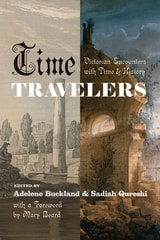
Time Travelers
Victorian Encounters with Time and HistoryEdited by Adelene Buckland and Sadiah Qureshi
University of Chicago Press, 2020
Out of their discoveries, new histories emerged, giving rise to fresh debates, while seemingly well-known histories were thrown into confusion by novel tools and methods of scrutiny. If in the eighteenth century the study of the past had been the province of a handful of elites, new technologies and economic development in the nineteenth century meant that the past, in all its brilliant detail, was for the first time the property of the many, not the few. Time Travelers is a book about the myriad ways in which Victorians approached the past, offering a vivid picture of the Victorian world and its historical obsessions.

Time Travels
Feminism, Nature, PowerElizabeth Grosz
Duke University Press, 2005
Grosz’s reflections on how rethinking time might generate new understandings of nature, culture, subjectivity, and politics are wide ranging. She moves from a compelling argument that Charles Darwin’s notion of biological and cultural evolution can potentially benefit feminist, queer, and antiracist agendas to an exploration of modern jurisprudence’s reliance on the notion that justice is only immanent in the future and thus is always beyond reach. She examines Henri Bergson’s philosophy of duration in light of the writings of Gilles Deleuze, Maurice Merleau-Ponty, and William James, and she discusses issues of sexual difference, identity, pleasure, and desire in relation to the thought of Deleuze, Friedrich Nietzsche, Michel Foucault, and Luce Irigaray. Together these essays demonstrate the broad scope and applicability of Grosz’s thinking about time as an undertheorized but uniquely productive force.
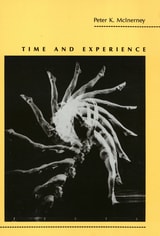
Time and Experience
Peter K. McInerney
Temple University Press, 1992
This book is the only contemporary, systematic study of the relationship of time and conscious experience. Peter K. Mclnerney examines three tightly interconnected issues: how we are able to be conscious of time and temporal entities, whether time exists independently of conscious experience, and whether the conscious experiencer exists in time in the same way that ordinary natural objects are thought to exist in time. Insight is drawn from the views of major phenomenological and existential thinkers on these issues.
Building on a detailed explication and critique of the views of Kant, Husserl, Heidegger, and Sartre, Mclnerney develops and defends his own positions. He argues that a revised version of Husserl’s three-feature theory of time-consciousness provides the best explanation of our awareness of temporal features, but that an independently real time is necessary to explain our experience of temporal passage. He also shows that human existence has some special temporal features in addition to those it shares with other entities. Time-consciousness, the conscious exercise of powers, and personal identity through time require that any temporal part of human existence be defined by and "reach across" to earlier and later parts.
Time and Freedom
Christophe Bouton
Northwestern University Press, 2014
Time and Imagination
Chronotopes in Western Narrative CultureBart Keunen
Northwestern University Press, 2011
After constructing an archeology of the chronotope, Keunen proposes a remarkably original description of the various types of chronotopes. Chronotypes that emphasize conflict are using Greek mythological names to explain equilibrium, or reconciliation, and conflict chronotopes. He then develops a plot typology that covers the whole history of Western narrative culture. With examples and resonances both ancient and modern, Keunen’s Time and Imagination will equip theorists in a wide range of fields with powerful tools for years to come.
Time and Narrative, Volume 1
Paul Ricoeur
University of Chicago Press, 1990
Ricoeur finds a "healthy circle" between time and narrative: time is humanized to the extent that it portrays temporal experience. Ricoeur proposes a theoretical model of this circle using Augustine's theory of time and Aristotle's theory of plot and, further, develops an original thesis of the mimetic function of narrative. He concludes with a comprehensive survey and critique of modern discussions of historical knowledge, understanding, and writing from Aron and Mandelbaum in the late 1930s to the work of the Annales school and that of Anglophone philosophers of history of the 1960s and 1970s.
"This work, in my view, puts the whole problem of narrative, not to mention philosophy of history, on a new and higher plane of discussion."—Hayden White, History and Theory
"Superb. . . . A fine point of entrance into the work of one of the eminent thinkers of the present intellectual age."—Joseph R. Gusfield, Contemporary Sociology
Time and Narrative, Volume 2
Paul Ricoeur
University of Chicago Press, 1990
Ricoeur treats the question of just how far the Aristotelian concept of "plot" in narrative fiction can be expanded and whether there is a point at which narrative fiction as a literary form not only blurs at the edges but ceases to exist at all. Though some semiotic theorists have proposed all fiction can be reduced to an atemporal structure, Ricoeur argues that fiction depends on the reader's understanding of narrative traditions, which do evolve but necessarily include a temporal dimension. He looks at how time is actually expressed in narrative fiction, particularly through use of tenses, point of view, and voice. He applies this approach to three books that are, in a sense, tales about time: Virgina Woolf's Mrs. Dalloway; Thomas Mann's Magic Mountain; and Marcel Proust's Remembrance of Things Past.
"Ricoeur writes the best kind of philosophy—critical, economical, and clear."—Eugen Weber, New York Times Book Review
"A major work of literary theory and criticism under the aegis of philosophical hermenutics. I believe that . . . it will come to have an impact greater than that of Gadamer's Truth and Method—a work it both supplements and transcends in its contribution to our understanding of the meaning of texts and their relationship to the world."—Robert Detweiler, Religion and Literature
"One cannot fail to be impressed by Ricoeur's encyclopedic knowledge of the subject under consideration. . . . To students of rhetoric, the importance of Time and Narrative . . . is all too evident to require extensive elaboration."—Dilip Parameshwar Gaonkar, Quarterly Journal of Speech
Time and Narrative, Volume 3
Paul Ricoeur
University of Chicago Press, 1990
Ricoeur's aim here is to explicate as fully as possible the hypothesis that has governed his inquiry, namely, that the effort of thinking at work in every narrative configuration is completed in a refiguration of temporal experience. To this end, he sets himself the central task of determing how far a poetics of narrative can be said to resolve the "aporias"—the doubtful or problematic elements—of time. Chief among these aporias are the conflicts between the phenomenological sense of time (that experienced or lived by the individual) and the cosmological sense (that described by history and physics) on the one hand and the oneness or unitary nature of time on the other. In conclusion, Ricoeur reflects upon the inscrutability of time itself and attempts to discern the limits of his own examination of narrative discourse.
"As in his previous works, Ricoeur labors as an imcomparable mediator of often estranged philosophical approaches, always in a manner that compromises neither rigor nor creativity."—Mark Kline Taylor, Christian Century
"In the midst of two opposing contemporary options—either to flee into ever more precious readings . . . or to retreat into ever more safe readings . . . —Ricoeur's work offers an alternative option that is critical, wide-ranging, and conducive to new applications."—Mary Gerhart, Journal of Religion
Time and the Digital
Connecting Technology, Aesthetics, and a Process Philosophy of TimeTimothy Scott Barker
Dartmouth College Press, 2012
Time and the Shared World
Heidegger on Social RelationsIrene McMullin
Northwestern University Press, 2013
In doing so, McMullin argues that Heidegger’s work on the social nature of the self must be located within a philosophical continuum that builds on Kant and Husserl’s work regarding the nature of the a priori and the fundamental structures of human temporality, while also pointing forward to developments of these themes to be found in Heidegger’s later work and in such thinkers as Sartre and Levinas. By developing unrecognized resources in Heidegger’s work, Time and the Shared World is able to provide a Heidegger-inspired account of respect and the intersubjective origins of normativity.
Time in Archaeology
Time Perspectivism RevisitedSimon Holdaway
University of Utah Press, 2011
The point of departure for this volume lies in the post-tumultuous times of processual archaeology, in the 1970s and 1980s, when Geoff Bailey, Lewis Binford, David Clarke, Robert Dunnell, Robert Foley, and Michael Schiffer, among others, initiated a deconstruction of time as used in archaeology. Here, the authors further this deconstruction.
Time in Archaeology was originally convened as an electronic symposium held at the Society of American Archaeology meetings in 2003. The result is a tightly focused group of papers that provide both a historical background to the development of the ideas of time perspectivism as well as a range of case studies that illustrate where scholars have taken the ideas. This book demonstrates the importance of concepts of time with excellent discussions and perspectives from twelve scholars working in vastly different arenas. It is a rigorous examination of the assumptions we make and the impacts of those assumptions. After reading this you may never think about time in quite the same way.
Time in the Ditch
American Philosophy and the McCarthy EraJohn McCumber
Northwestern University Press, 2023
Time's Reasons
Philosophies of History Old and NewLeonard Krieger
University of Chicago Press, 1989
The heart of Krieger's narrative is an insightful analysis of theories of history from the classical period to the present, with a principal focus on the modern period. Krieger's exposition covers such figures as Ranke, Hegel, Comte, Marx, Acton, Troeltsch, Spengler, Braudel, and Foucault, among others, and his discussion involves him in subtle distinctions among terms such as historism, historicism, and historicity. He points to the impact on history of academic political radicalism and its results: the new social history. Krieger argues for the autonomy of historical principles and methods while tracing the importation in the modern period of external principles for historical coherence.
Time's Reasons is a profound attempt to rejuvenate and restore integrity to the discipline of history by one of the leading masters of nineteenth- and twentieth-century historiography. As such, it will be required reading for all historiographers and intellectual historians of the modern period.
Time, Creation and the Continuum
Theories in Antiquity and the Early Middle AgesRichard Sorabji
University of Chicago Press, 2006
“Splendid. . . . The canvas is vast, the picture animated, the painter nonpareil. . . . Sorabji’s work will encourage more adventurers to follow him to this fascinating new-found land.”—Jonathan Barnes, Times Literary Supplement
“One of the most important works in the history of metaphysics to appear in English for a considerable time. No one concerned with the problems with which it deals either as a historian of ideas or as a philosopher can afford to neglect it.”—Donald MacKinnon, Scottish Journal of Theology
“Unusually readable for such scholarly content, the book provides in rich and cogent terms a lively and well-balanced discussion of matters of concern to a wide academic audience.”—Choice

Time, Duration and Change in Contemporary Art
Beyond the ClockKate Bretkelly-Chalmers
Intellect Books, 2018
This book examines alternative frameworks of time, duration, and change in prominent philosophical, scientific, and technological traditions, including physics, psychology, phenomenology, neuroscience, media theory, and selected environmental sciences. It suggests that art makes a crucial contribution to these discourses not by “visualizing” time, but by entangling viewers in different sensory, material, and imaginary temporalities.
Time, Memory, Institution
Merleau-Ponty's New Ontology of SelfDavid Morris
Ohio University Press, 2015
This collection is the first extended investigation of the relation between time and memory in Maurice Merleau-Ponty’s thought as a whole and the first to explore in depth the significance of his concept of institution. It brings the French phenomenologist’s views on the self and ontology into contemporary focus. Time, Memory, Institution argues that the self is not a self-contained or self-determining identity, as such; it is gathered out of a radical openness to what is not self, and that it gathers itself in a time that is not merely a given dimension, but folds back upon, gathers, and institutes itself.
Access to previously unavailable texts, in particular Merleau-Ponty’s lectures on institution and expression, has presented scholars with new resources for thinking about time, memory, and history. These essays represent the best of this new direction in scholarship; they deepen our understanding of self and world in relation to time and memory; and they give occasion to reexamine Merleau-Ponty’s contribution and relevance to contemporary Continental philosophy.
This volume is essential reading for scholars of phenomenology and French philosophy, as well as for the many readers across the arts, humanities, and social sciences who continue to draw insight and inspiration from Merleau-Ponty.
Contributors: Elizabeth Behnke, Edward Casey, Véronique Fóti, Donald Landes, Kirsten Jacobson, Galen Johnson, Michael Kelly, Scott Marratto, Glen Mazis, Caterina Rea, John Russon, Robert Vallier, and Bernhard Waldenfels
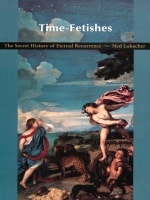
Time-Fetishes
The Secret History of Eternal RecurrenceNed Lukacher
Duke University Press, 1999
The thinkers in this counter-history of the eternal return lingered long enough on the question of time to learn how to resist separating eternity from time, and how to reflect on the possible identity of time and eternity as a way of resisting all prior metaphysical determinations. Drawing out the implications of Nietzsche’s reinvention of the doctrine of return, Lukacher ranges across a broad spectrum of ancient and modern thinkers. Shakespeare’s role in this history as the “poet of time” is particularly significant, for not only does Shakespeare reactivate the pre-Christian arguments of eternal return, he regards them, and all arguments and images concerning the essence of time and Being, from an inimitably ironic perspective.
As he makes transitions from literature to philosophy and psychoanalysis, Lukacher displays a theoretical imagination and historical vision that bring to the forefront a host of pre- and post-Christian texts in order to decipher in them an encounter with the thought of eternal recurrence that has been too long buried under layers of rigid metaphysical interpretation.
Times of History
Universal Topics in Islamic HistoriographyAziz Al-Azmeh
Central European University Press, 2007

Tissue of the World
The Nature of Ancient SympathyBrooke Holmes
University of Chicago Press, 0
A multidisciplinary account showing how ancient notions of sympathy changed ways of thinking about interconnectedness.
When we hear the word sympathy today, we tend to imagine the emotional bond between people. But for centuries, sympathy just as commonly brought to mind interdependencies between plants, rocks, and celestial bodies. It explained why magnets attract iron, how the stars influence human destiny, and why one trembles when one is afraid. It implicated human beings in a complex network of loves (sympathies) and hates (antipathies). The ancient notion of sympathy led to ways of thinking about community even beyond the boundaries of the human that continue to influence how we think about life, society, and Nature today.
This book offers the first comprehensive account of ancient sympathy, spanning the fifth century BCE to the third century CE. Tracing connections across works of philosophy, natural history, cosmology, medicine, and literature, Brooke Holmes argues that how people thought about sympathetic communities played a crucial role in shaping the idea of Nature as a webbed, well-ordered whole in the Hellenistic and Roman Imperial Mediterranean. From the scale of the organism to that of the cosmos, this book interrogates the ancient history of a protoecological, antimechanistic conception of Nature, proposing the richly textured thought-world of sympathy as a resource for rethinking and reimagining human and nonhuman communities, the stories we tell about the classical world, and the political and theoretical stakes of vital materialisms.
To Act, To Do, To Perform
Drama and the Phenomenology of ActionAlice Rayner
University of Michigan Press, 1994

To Destroy Painting
Louis Marin
University of Chicago Press, 1994
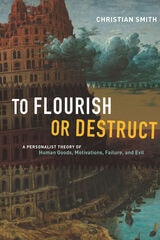
To Flourish or Destruct
A Personalist Theory of Human Goods, Motivations, Failure, and EvilChristian Smith
University of Chicago Press, 2015
In his 2010 book What Is a Person?, Christian Smith argued that sociology had for too long neglected this fundamental question. Prevailing social theories, he wrote, do not adequately “capture our deep subjective experience as persons, crucial dimensions of the richness of our own lived lives, what thinkers in previous ages might have called our ‘souls’ or ‘hearts.’” Building on Smith’s previous work, To Flourish or Destruct examines the motivations intrinsic to this subjective experience: Why do people do what they do? How can we explain the activity that gives rise to all human social life and social structures?
Smith argues that our actions stem from a motivation to realize what he calls natural human goods: ends that are, by nature, constitutionally good for all human beings. He goes on to explore the ways we can and do fail to realize these ends—a failure that can result in varying gradations of evil. Rooted in critical realism and informed by work in philosophy, psychology, and other fields, Smith’s ambitious book situates the idea of personhood at the center of our attempts to understand how we might shape good human lives and societies.
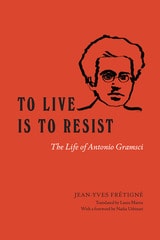
To Live Is to Resist
The Life of Antonio GramsciJean-Yves Frétigné
University of Chicago Press, 2021
One of the most influential political thinkers of the twentieth century, Antonio Gramsci (1891–1937) has left an indelible mark on philosophy and critical theory. His innovative work on history, society, power, and the state has influenced several generations of readers and political activists, and even shaped important developments in postcolonial thought. But Gramsci’s thinking is scattered across the thousands of notebook pages he wrote while he was imprisoned by Italy’s fascist government from 1926 until shortly before his death.
To guide readers through Gramsci’s life and works, historian Jean-Yves Frétigné offers To Live Is to Resist, an accessible, compelling, and deeply researched portrait of an extraordinary figure. Throughout the book, Frétigné emphasizes Gramsci’s quiet heroism and his unwavering commitment to political practice and resistance. Most powerfully, he shows how Gramsci never surrendered, even in conditions that stripped him of all power—except, of course, the power to think.
To Save the Phenomena
An Essay on the Idea of Physical Theory from Plato to GalileoPierre Duhem
University of Chicago Press, 1969
Duhem's 1908 essay questions the relation between physical theory and metaphysics and, more specifically, between astronomy and physics–an issue still of importance today. He critiques the answers given by Greek thought, Arabic science, medieval Christian scholasticism, and, finally, the astronomers of the Renaissance.
To Taste
On Cooking and the Good LifeScott Samuelson
University of Chicago Press, 2026
A philosopher-chef’s moving meditation on the pleasures of our shared humanity and how it can be most fully experienced in making and sharing food.
Our daily rhythms and most meaningful relationships center on the dining table, and so nothing is more essential to a good life than satisfying meals with friends and family. In To Taste, philosopher and sous-chef Scott Samuelson invites us into his kitchen, where he blends moving personal stories with insights from some of the world’s greatest thinkers into a rich but simple argument: our daily labor, in making food or otherwise, should connect us with other people.
For Samuelson, the pleasures of excellent cooking illuminate this value in particularly compelling ways. When we embrace the work required to prepare and share a good meal, we learn to honor tradition, practice hospitality, respect nature, cherish festivity, and nurture skill—all ethics that resist our increasingly dehumanized world. Ultimately, Samuelson argues that cooking, especially the elusive decision to season a dish “to taste,” contains the full mystery of human life.
Whether you’re a professional chef or your best culinary feat involves a can opener, To Taste can help you cook up a life that elicits a glorious mmm.
Tocqueville in Arabia
Dilemmas in a Democratic AgeJoshua Mitchell
University of Chicago Press, 2013
In America, more than a half century of scholarship has explored and chronicled our growing isolation and loneliness. What of the Middle East? Does Tocqueville prediction—confirmed already by the American experience—hold true there as well? Americans look to the Middle East and see a rich network of familial and tribal linkages that seem to suggest that Tocqueville’s analysis does not apply. A closer look reveals that this is not true. In the Middle East today, citizens and subjects live amidst a profound tension: familial and tribal linkages hold them fast, and at the same time rapid modernization has left them as isolated and lonely as so many Americans are today. The looming question, anticipated so long ago by Tocqueville, is how they will respond to this isolation and loneliness.
Joshua Mitchell has spent years teaching Tocqueville’s classic account, Democracy in America, in America and the Arab Gulf and, with Tocqueville in Arabia, he offers a profound account of how the crisis of isolation and loneliness is playing out in similar and in different ways, in America and in the Middle East. While American students tend to value individualism and commercial self-interest, Middle Eastern students have grave doubts about individualism and a deep suspicion about capitalism, which they believe risks the destruction of long-held loyalties and obligations. Where American students, in their more reflective moments, long for more durable links than they currently have, the bonds that constrain the freedoms Middle Eastern students imagine the modern world offers at once frighten them and enkindle their imagination. When pondering suffering, American students tend to believe its causes can be engineered away, through better education and the advances of science. Middle Eastern students tend still to offer religious accounts, but are also enticed by the answers Americans give―and wonder if the two accounts can coexist at all. Moving back and forth between self-understandings in America and in the Middle East, Mitchell offers a framework for understanding the common challenges in both regions, and highlights the great temptation both will have to overcome—rejecting the seeming incoherence of the democratic age, and opting for one or another scheme to re-enchant the world. Whether these schemes take the form of various purported Islamic movements in the Middle East, or the form of enchanted nationalism in American and in Europe, the remedy sought will not cure the ailment of the democratic age. About this, Mitchell comes to the defense Tocqueville long ago offered: the dilemmas of the democratic age can be courageously endured, but they cannot resolved.
We live in a time rife with mutual misunderstandings between America and the Middle East. Tocqueville in Arabia offers a guide to the present, troubled times, leavened by the author’s hopes about the future.

Tokyo Boogie-woogie and D.T. Suzuki
Shoji Yamada
University of Michigan Press, 2022
Against this famous figure, however, is a largely unknown or forgotten shape: Suzuki Alan Masaru. Alan was D.T. Suzuki’s adopted son and, though he remained within his father’s shadow, is mostly known as the lyricist of the iconic pop hit “Tokyo Boogie-woogie.” Perhaps due to his frequent scandals and the fraught nature of the relationship, Alan remains unmentioned and unstudied by scholars and historians. Yet by exploring the nature of the relationship between these two, Shoji Yamada digs into the conflicting memories and experiences of these generations in Japan.
Toleration
Nicholas G. Fotion
University of Alabama Press, 1992
A compelling exploration of the idea that enables diverse people to live together with respect, dignity, and understanding.
Most regard toleration as an unattractive fallback position of compromise and so tend to overlook it in favor of such active concepts as freedom, equality, and justice. Fotion and Elfstrom argue that toleration offers us the useful possibility of responding to a difficult situation with a degree of flexibility not possible with the dichotomous concepts of good-bad, right-wrong, ethical-unethical, Right-Left.
Tolerating saturates ordinary human life and infuses public discussions of religion, morality, and politics. It forms a major strand in the history of Western European thought. Yet the word “toleration” and similar terms are rarely used. Unnoticed and unremarked, they are like the air that surrounds us, vitally important yet invisible.The authors seek to address this oversight in several ways. They begin with a thorough conceptual analysis of toleration and its kindred concepts. They are convinced that an appreciation of the importance of the family of toleration concepts must be founded on an understanding of the various ways in which they function in our language and our lives. In addition, they examine the historical development of the concept of toleration and canvass the major arguments people have employed either to urge toleration or to disparage it. They examine the role of toleration in liberal political philosophy and respond to the major critics of liberal toleration.
The authors also discuss a number of factors that cause toleration to be overlooked in political debate and personal reflection and offer evidence to support the view that this omission is unfortunate. In particular, they argue that toleration has the crucial role of helping people live with one another with respect and dignity in the fractious and contentious world we inhabit. With the rise of racism and other forms of religious, political, and social intolerance, people on all sides of the present debates concerning multi-culturalism and diversity will benefit from this timely and lucidly argued philosophical discussion of the concepts of toleration and its possible application in a less-than-perfect world.
Tolkien, Philosopher of War
Graham McAleer
Catholic University of America Press, 2024
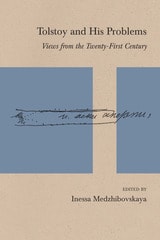
Tolstoy and His Problems
Views from the Twenty-First CenturyEdited by Inessa Medzhibovskaya
Northwestern University Press, 2019
In the broadest sense—with essays on a variety of issues that occupied Tolstoy, such as nihilism, mysticism, social theory, religion, Judaism, education, opera, and Shakespeare—the volume offers a fresh evaluation of Tolstoy's program to reform the ways we live, work, commune with nature and art, practice spirituality, exchange ideas and knowledge, become educated, and speak and think about history and social change.
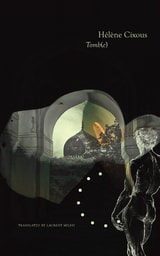
Tomb(e)
Hélène Cixous
Seagull Books, 2014
Tomorrow the Manifold
Essays on Foucault, Anarchy, and the Singularization to ComeReiner Schürmann
Diaphanes, 2018
Taken together, these pivotal essays introduce the reader to Schürmann’s most urgent concerns and assemble the conceptual tools that go on to lay the groundwork for his final work, Broken Hegemonies, which offers a subversive re-reading of the history of Western metaphysics outside of Foucault’s genealogical approach. To the reader unfamiliar with Schürmann’s work, these texts establish him as one of the most radical thinkers of the late 20th century, whose work might eventually become legible in our present.
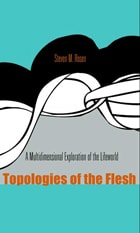
Topologies of the Flesh
A Multidimensional Exploration of the LifeworldSteven M. Rosen
Ohio University Press, 2006
The concept of “flesh” in philosophical terms derives from the writings of Maurice Merleau-Ponty. This was the word he used to name the concrete realm of sentient bodies and life processes that has been eclipsed by the abstractions of science, technology, and modern culture. Topology, to conventional understanding, is the branch of mathematics that concerns itself with the properties of geometric figures that stay the same when the figures are stretched or deformed.
Topologies of the Flesh is an original blend of continental thought and mathematical imagination. Steven M. Rosen opens up a new area of philosophical inquiry: topological phenomenology. Through his unique application of qualitative mathematics, he extends the approaches of Merleau-Ponty and Heidegger so as to offer a detailed exploration of previously uncharted dimensions of human experience and the natural world.
Rosen’s unprecedented marriage of topology and phenomenology is motivated by the desire to help overcome the pervasive dualism of contemporary philosophy and Western culture at large. To carry this to completion, he must address his own dualistic stance as author. Challenging the author’s traditional posture of detachment and anonymity, Rosen makes his presence vividly felt in his final chapter, and his philosophical analysis is transformed into a living reality.
Torture and Dignity
An Essay on Moral InjuryJ. M. Bernstein
University of Chicago Press, 2015
Beginning with the attempts to abolish torture in the eighteenth century, and then sensitively examining what is suffered in torture and related transgressions, such as rape, Bernstein elaborates a powerful new conception of moral injury. Crucially, he shows, moral injury always involves an injury to the status of an individual as a person—it is a violent assault against his or her dignity. Elaborating on this critical element of moral injury, he demonstrates that the mutual recognitions of trust form the invisible substance of our moral lives, that dignity is a fragile social possession, and that the perspective of ourselves as potential victims is an ineliminable feature of everyday moral experience.

Torture and the War on Terror
Tzvetan Todorov
Seagull Books, 2009
One of the world's leading intellectuals dismantles the political and ethical justifications for institutional torture.
In the aftermath of 9/11, the US government approved interrogation tactics for enemy combatant detainees that could be defined as torture, which was outlawed in Europe in the eighteenth century and forbidden by the Geneva Conventions and the United Nations Convention Against Torture. In conjunction with these policies, the Bush administration vocally defended torture as a necessary tool in its Global War on Terror. Though the election of Barack Obama and his signing of the executive order to close the prison at Guantanamo Bay signaled a considerable shift away from the policies of the Bush era, the lessons to be learned from the Global War on Terror will remain relevant and necessary for many years to come.
In Torture and the War on Terror, Tzvetan Todorov argues that the use of the terms “war” and “terror” dehumanizes the enemy and permits treatment that would otherwise be impermissible. He examines the implications and corrupting impact of the attempt to impose “good” through violence and spread democratic values by unethical means. Todorov asks: Can violence overcome violence? Does the need to protect one’s own country justify violating human rights? Challenging one by one the political and ethical arguments in favor of torture, Todorov likens institutional torture to a cancer that is eroding our society and undermining the very fundamental democratic ideas of justice and right.
Total Speech
An Integrational Linguistic Approach to LanguageMichael Toolan
Duke University Press, 1996
In every foundational area of linguistics—from literal meaning and metaphor to the nature of repetition to the status of linguistic rules—Toolan advances fascinating and provocative criticisms of received linguistic assumptions. Drawing inspiration from the writings of language theorist Roy Harris, Toolan brings the integrationalist perspective to bear on legal cases, the reception of Salman Rushdie, poetry, and the language of children. Toolan demonstrates that the embeddedness of language and the situation-sensitive mutability of meaning reveal language as a tool for re-fashioning and renewal.
Total Speech breaks free of standard linguistics’ fascinated attraction with “cognitive blueprints” and quasi-algorithmic processing to characterize language anew. Toolan’s reflections on the essence of language, including his important discussion of intention, have strong implications for students and scholars of discourse analysis, literature, the law, anthropology, philosophy of language, communication theory, and cognitive science, as well as linguistics.
Totalitarian Societies and Democratic Transition
Essays in Memory of Victor ZaslavskyRiccardo James Vargiu
Central European University Press, 2017
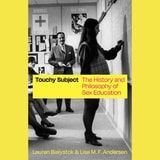
Touchy Subject
The History and Philosophy of Sex EducationLauren Bialystok and Lisa M. F. Andersen
University of Chicago Press, 2022
In the United States, sex education is more than just an uncomfortable rite of passage: it's a political hobby horse that is increasingly out of touch with young people’s needs. In Touchy Subject, philosopher Lauren Bialystok and historian Lisa M. F. Andersen unpack debates over sex education, explaining why it’s worth fighting for, what points of consensus we can build upon, and what sort of sex education schools should pursue in the future.
Andersen surveys the history of school-based sex education in the United States, describing the key question driving reform in each era. In turn, Bialystok analyzes the controversies over sex education to make sense of the arguments and offer advice about how to make educational choices today. Together, Bialystok and Andersen argue for a novel framework, Democratic Humanistic Sexuality Education, which exceeds the current conception of “comprehensive sex education” while making room for contextual variation. More than giving an honest run-down of the birds and the bees, sex education should respond to the features of young people’s evolving worlds, especially the digital world, and the inequities that put some students at much higher risk of sexual harm than others. Throughout the book, the authors show how sex education has progressed and how the very concept of “progress” remains contestable.
Touchy Subject
The History and Philosophy of Sex EducationLauren Bialystok and Lisa M. F. Andersen
University of Chicago Press, 2022
A case for sex education that puts it in historical and philosophical context.
In the United States, sex education is more than just an uncomfortable rite of passage: it's a political hobby horse that is increasingly out of touch with young people’s needs. In Touchy Subject, philosopher Lauren Bialystok and historian Lisa M. F. Andersen unpack debates over sex education, explaining why it’s worth fighting for, what points of consensus we can build upon, and what sort of sex education schools should pursue in the future.
Andersen surveys the history of school-based sex education in the United States, describing the key question driving reform in each era. In turn, Bialystok analyzes the controversies over sex education to make sense of the arguments and offer advice about how to make educational choices today. Together, Bialystok and Andersen argue for a novel framework, Democratic Humanistic Sexuality Education, which exceeds the current conception of “comprehensive sex education” while making room for contextual variation. More than giving an honest run-down of the birds and the bees, sex education should respond to the features of young people’s evolving worlds, especially the digital world, and the inequities that put some students at much higher risk of sexual harm than others. Throughout the book, the authors show how sex education has progressed and how the very concept of “progress” remains contestable.
Toward "Natural Right and History"
Lectures and Essays by Leo Strauss, 1937–1946Leo Strauss
University of Chicago Press, 2018
Previously unpublished in book form, Strauss’s lectures are presented here in a thematic order that mirrors Natural Right and History and with interpretive essays by J. A. Colen, Christopher Lynch, Svetozar Minkov, Daniel Tanguay, Nathan Tarcov, and Michael Zuckert that establish their relation to the work. Rounding out the book are copious annotations and notes to facilitate further study.
Toward Another Kingdom
Two Dramas of the Darker Yearstraub
St. Augustine's Press, 2022
Marcel's dramas require characters to respond authentically and from their true selves. He thereby offers the vision of how individual compromises may build up to break the world and condemn, or, conversely, contribute to the discovery and meaning of relation and redemption. Traub's new translation will interest the player as much as the scholar, and Marcel's aptitude for theatrical writing is proven once again. His intellectual sensitivity creates characters that beckon performance, which is an added dimension to the presentation of the human condition.
Toward Better Problems
New Perspectives on Abortion, Animal Rights, the Environment, and JusticeAnthony Weston
Temple University Press, 1992
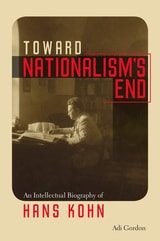
Toward Nationalism's End
An Intellectual Biography of Hans KohnAdi Gordon
Brandeis University Press, 2017