Results by title
8812 books match the query 'Political Science' and 1911 start with t

The Politics of Same-Sex Marriage
Edited by Craig A. Rimmerman and Clyde Wilcox
University of Chicago Press, 2007
Same-sex marriage emerged in 2004 as one of the hottest issues of the campaign season. But in a severe blow to gay rights advocates, all eleven states that had the issue on the ballot passed amendments banning the practice, and the subject soon dropped off the media’s radar. This pattern of waxing and waning in the public eye has characterized the debate over same-sex marriage since 1996 and the passing of the Defense of Marriage Act. Since then, court rulings and local legislatures have kept the issue alive in the political sphere, and conservatives and gay rights advocates have made the issue a key battlefield in the culture wars.
The Politics of Same-Sex Marriage brings together an esteemed list of scholars to explore all facets of this heated issue, including the ideologies and strategies on both sides of the argument, the public’s response, the use of the issue in political campaigns, and how same-sex marriage fits into the broad context of policy cycles and windows of political opportunity. With comprehensive coverage from a variety of different approaches, this volume will be a vital sourcebook for activists, politicians, and scholars alike.
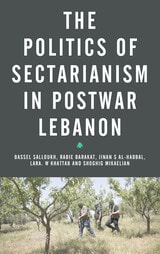
The Politics of Sectarianism in Postwar Lebanon
Bassel Salloukh, Rabie Barakat, Jinan S. Al-Habbal, Lara W. Khattab and Shoghig Mikaelian
Pluto Press, 2015
The Politics of Sectarianism in Postwar Lebanon builds on extensive field work to find the answers to those questions and more. Bassel Salloukh, Lebanon’s leading political scientist, analyses the mix of institutional, clientelist, and discursive practices that sustain the sectarian nature of Lebanon, revealing an expanding sectarian web that occupies ever-more-substantial areas of everyday life in Lebanon. It also highlights the struggles waged by opponents of the system, including women, public sector employees, teachers, students, and NGO-based coalitions, and how their efforts often fail to bear fruit because of sabotage by various systematic forces.
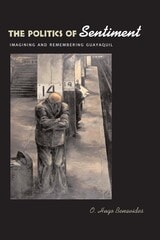
The Politics of Sentiment
Imagining and Remembering GuayaquilBy O. Hugo Benavides
University of Texas Press, 2006
Between 1890 and 1930, the port city of Guayaquil, Ecuador, experienced a liberal revolution and a worker's movement—key elements in shaping the Ecuadorian national identity. In this book, O. Hugo Benavides examines these and other pivotal features in shaping Guayaquilean identity and immigrant identity formation in general in transnational communities such as those found in New York City.
Turn-of-the-century Ecuador witnessed an intriguing combination of transformations: the formation of a national citizenship; extension of the popular vote to members of a traditional underclass of Indians and those of African descent; provisions for union organizing while entering into world market capitalist relations; and a separation of church and state that led to the legalization of secular divorces. Assessing how these phenomena created a unique cultural history for Guayaquileans, Benavides reveals not only a specific cultural history but also a process of developing ethnic attachment in general. He also incorporates a study of works by Medardo Angel Silva, the Afro-Ecuadorian poet whose singular literature embodies the effects of Modernism's arrival in a locale steeped in contradictions of race, class, and sexuality.
Also comprising one of the first case studies of Raymond Williams's hypothesis on the relationship between structures of feeling and hegemony, this is an illuminating illustration of the powerful relationships between historically informed memories and contemporary national life.
The Politics of Skin Tone
African American Experiences, Identity, and AttitudesNicole D. Yadon
University of Chicago Press, 2025
A nuanced examination of the salience of skin tone within African American politics.
Research shows that skin tone is associated with significant differences in life experiences. On average, African Americans with darker skin earn lower wages, suffer worse health outcomes, and endure more negative criminal justice experiences than lighter-skinned African Americans. Nicole D. Yadon conceptualizes skin tone as one facet of the multidimensional construct of race that powerfully influences racialized experiences which, in turn, can influence political identities and attitudes.
Drawing on evidence from one hundred in-depth interviews, multiple surveys, and a survey experiment, The Politics of Skin Tone investigates the political associations of skin tone. Yadon finds that skin tone correlates with political attitudes, particularly on issues where color-based disparities are especially pronounced such as criminal justice. Moreover, a sizable number of African Americans adopt a skin tone-based identity. In an era of shifting racial boundaries and growing color-based discrimination, The Politics of Skin Tone examines the implications for both scholars and policymakers.
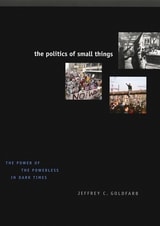
The Politics of Small Things
The Power of the Powerless in Dark TimesJeffrey C. Goldfarb
University of Chicago Press, 2006
In The Politics of Small Things, Jeffrey Goldfarb provides an innovative way for understanding politics, a way of appreciating the significance of politics at the micro level by comparatively analyzing key turning points and institutions in recent history. He presents a sociology of human interactions that lead from small to large: dissent around the old Soviet bloc; life on the streets in Warsaw, Prague, and Bucharest in 1989; the network of terror that spawned 9/11; and the religious and Internet mobilizations that transformed the 2004 presidential election, to name a few. In such pivotal moments, he masterfully shows, political autonomy can be generated, presenting alternatives to the big politics of the global stage and the dominant narratives of terrorism, antiterrorism, and globalization.
The Politics of Social Change
From the Sixties to the Present Through the Eyes of a GenerationLarry M. Bartels and Katherine J. Cramer
University of Chicago Press, 2026
How did we get to this point in American politics? Drawing on insights from an unprecedented decades-long study of ordinary Americans’ political lives, this book tells the story of how, why, and when our politics fractured.
Few time periods have been as defined by waves of monumental social change as the United States during the 1960s. Even today, almost sixty years later, the era is often depicted as a triumph of social progress. Yet, as Larry M. Bartels and Katherine J. Cramer show in The Politics of Social Change, it was Americans’ diverse reactions to the milestone events of the time—from the welcoming, to the fiercely resistant, to the largely oblivious—that planted the seeds of our current political turmoil.
Their masterful analysis draws on a unique historical resource: the longest-running systematic tracking of individual Americans’ political attitudes and behavior ever attempted. The study began in 1965 when researchers interviewed hundreds of high school students across the country and then periodically reinterviewed them over the next three decades. Bartels and Cramer supplement this historical record with in-depth interviews with dozens of the original students, painting a detailed picture of the generation’s individual and collective political development. By tracing the responses of the Class of ’65 to major events of their political lifetimes—including the Civil Rights and Women’s Rights movements, the Vietnam War, the shifting role of religion, escalating economic inequality, immigration, and the rise of Donald Trump—Bartels and Cramer shed new light on the evolution of public opinion and the unsteady progress of American democracy.

The Politics of Social Protest
Comparative Perspectives on States and Social MovementsJ. Craig Jenkins and Bert Klandermans, Editors
University of Minnesota Press, 1995
The Politics of Social Protest was first published in 1995. Minnesota Archive Editions uses digital technology to make long-unavailable books once again accessible, and are published unaltered from the original University of Minnesota Press editions.
Bringing together celebrated scholars from diverse traditions and backgrounds, The Politics of Social Protest focuses on the reciprocal relationships among social movements, states, and political parties. The volume is organized around three key questions: Why do citizens resort to the often risky and demanding strategy of using disruptive protest when other channels of political intervention appear to be available? What is the relationship between social protest movements and systems of political representation? And what is the impact of the structure and development of the state on social movements themselves?
Contributors include Ronald Aminzade, University of Minnesota; Paul Burstein, University of Washington; Russell J. Dalton, University of California, Irvine; Donatella della Porta, University of Florence; Henry Dietz, University of Texas, Austin; Rachel L. Einwohner, University of Washington; Steven E. Finkel, University of Virginia; Jerrold D. Green, University of Arizona; Jocelyn Hollander, University of Washington; Hanspeter Kriesi, University of Geneva; Diarmuid Maguire, University of Sydney; Bronislaw Misztal, Indiana University, Fort Wayne; Edward N. Muller, University of Arizona; Michael Nollert, University of Trier; Karl-Dieter Opp, University of Hamburg; Dieter Rucht, Wissenschaftszentrum Berlin; Michael Wallace, Indiana University; and Gadi Wolfsfeld, Hebrew University of Jerusalem.
J. Craig Jenkins is professor of sociology at The Ohio State University. He is the author of The Politics of Insurgency: The Farm Worker Movement of the 1960's (1985).
Bert Klandermans is professor of applied social psychology at Free University in Amsterdam, the Netherlands. He has published widely on social movements in journals such as the American Sociological Review, Sociological Forum, and the European Journal of Social Psychology. He is the editor of the Social Movements, Protest, and Contention series for the University of Minnesota Press.
Copublished with UCL Press, London.
The Politics of State Feminism
Innovation in Comparative ResearchAuthored by Dorothy E. McBride and Amy G. Mazur
Temple University Press, 2012
The Politics of State Feminism addresses essential questions of women's movement activism and political change in western democracies. The authors—top gender and politics scholars—provide a comparative analysis of the effectiveness of government agencies and women's movements regarding women’s policy issues—if, how, and why they form a kind of state feminism.
The central research questions are examined across five issue areas in thirteen postindustrial democracies in Europe and North America from the 1960s through the early 2000s. The authors explore a range of topics drawn from contemporary theory, interactions between descriptive and substantive representation, and the place of institutions in democratic change.
Using the innovative qualitative and quantitative methods employed by the Research Network on Gender Politics and the State, the authors have developed a new body of theories about the role of state feminism and how it can help further women’s rights.
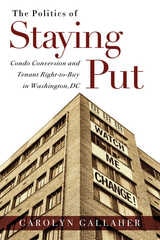
The Politics of Staying Put
Condo Conversion and Tenant Right-to-Buy in Washington, DCCarolyn Gallaher
Temple University Press, 2016
When cities gentrify, it can be hard for working-class and low-income residents to stay put. Rising rents and property taxes make buildings unaffordable, or landlords may sell buildings to investors interested in redeveloping them into luxury condos.
In her engaging study The Politics of Staying Put, Carolyn Gallaher focuses on a formal, city-sponsored initiative—The Tenant Opportunity to Purchase Act (TOPA)—that helps people keep their homes. This law, unique to the District of Columbia, allows tenants in apartment buildings contracted for sale the right to refuse the sale and purchase the building instead. In the hands of tenants, a process that would usually hurt them—conversion to a condominium or cooperative—can instead help them.
Taking a broad, city-wide assessment of TOPA, Gallaher follows seven buildings through the program’s process. She measures the law’s level of success and its constraints. Her findingshave relevance for debates in urban affairs about condo conversion, urban local autonomy, and displacement.
The Politics of Street Crime
Criminal Process and Cultural ObsessionStuart A. Scheingold
Temple University Press, 1992
Americans find street crime terrifying and repellent. Yet we vicariously seek it out in virtually all of our media: books, newspapers, television, films, and the theatre. Stuart Scheingold confronts this cultural contradiction and asks why street crime is generally regarded in the trivializing and punitive images of cops and robbers that attribute crime to the willful acts of flawed individuals rather than to the structural shortcomings of a flawed society. In his case study of the police and criminal courts in the community he calls "Cedar City," a medium-sized city in the Western United States, Scheingold examines the effects of this cultural contradiction and these punitive predispositions on politics and policy making.
The Politics of Subjectivity in American Foreign Policy Discourses
Ty Solomon
University of Michigan Press, 2015
The Politics of Survival
Marc Abélès
Duke University Press, 2010
Abélès examines the new global politics, which assumes many forms and is enacted by diverse figures with varied sympathies: the officials at meetings of the WTO and the demonstrators outside them, celebrity activists, and online contributors to international charities. He makes an impassioned case that our accounts of globalization need to reckon with the preoccupations and affiliations now driving global politics. The Politics of Survival was first published in France in 2006. This English-language edition has been revised and includes a new preface.
The Politics of Toleration in Modern Life
Susan Mendus, ed.
Duke University Press, 1999
How can toleration be fostered in a contentious and tightly populated world? What situations and fears have historically fed attitudes of intolerance? When and how should states intervene? The authors of these essays seek answers to such questions and examine topics such as why certain national groups are especially vulnerable to intolerance and narcissistic fantasies and how the colonial view of intolerant exploitation as an acceptable norm of behavior has been replaced by a drive toward international solidarity. The essays address religious tolerance, the role of toleration in legal contexts, the philosophical justification of tolerance, and the concept of solidarity. Ethnic identity, nationalism, the “goods of conflict,” and the treatment of refugees seeking asylum are discussed as well. While one contributor argues that a moment of genuine tolerance is achieved only when there is a cost involved in the act of tolerating another person’s way of living, another stresses that rational, communal dialogue can only take place if the state is excluded from the discussion, if conflict is recognized as valuable, and if local communities come to consensus about what behavior and discourse is intolerable.
Offering an accessible and engaging commentary on the concept of tolerance, The Politics of Toleration in Modern Life will interest a wide range of readers of philosophy, political science, religion, sociology, and history.
Contributors. George Carey, Christopher Hill, Michael Ignatieff, Helena Kennedy, Alasdair MacIntyre, Susan Mendus, Julia Neuberger, Bernard Williams
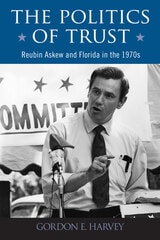
The Politics of Trust
Reubin Askew and Florida in the 1970sGordon E. Harvey
University of Alabama Press, 2015
Askew rose to power on a wave of “New South” leadership that hoped to advance the Democratic Party beyond the intransigent torpor of southern politics since the Civil War. He hoped to replace appeals to white supremacy with a vision of a more diverse and inclusive party. Following his election in Florida, other New South leaders such as Georgia’s Jimmy Carter, Arkansas’s Dale Bumpers, and South Carolina’s John C. West all came to power.
Audacious and gifted, Askew was one of six children raised by a single mother in Pensacola. As he worked his way up through the ranks of the state legislature, few in Florida except his constituents knew his name when he challenged Republic incumbent Claude R. Kirk Jr. on a populist platform promising higher corporate taxes. When he won, he inaugurated a series of reforms, including a new 5 percent corporate income tax; lower consumer, property, and school taxes; a review of penal statutes; environmental protections; higher welfare benefits; and workers’ compensation to previously uncovered migrant laborers.
Touting honesty, candor, and transparency, Askew dubbed his administration “government in the sunshine.” Harvey demonstrates that Askew’s success was not in spite of his penchant for bold, sometimes unpopular stances, but rather because his mix of unvarnished candor, sober ethics, and religious faith won the trust of the diverse peoples of his state.
The Politics of Truth and Other Timely Essays
The Crisis of Civic ConsciousnessEllis Sandoz
St. Augustine's Press, 2016

The Politics of Truth and Other Untimely Essays
The Crisis of Civic ConsciousnessEllis Sandoz
University of Missouri Press, 1999
A fascinating collection of studies, The Politics of Truth and Other Untimely Essays explores the historical and theoretical underpinnings of personal liberty and free government and provides a trenchant analysis of the crisis of civic consciousness endangering both of them today. The book addresses a range of issues in contemporary political philosophy and constitutional theory. These are seen to be all the more urgent in importance because of the surging aspirations for liberty in the wake of the collapse of the Soviet empire and the post-Cold War anomaly of crisis, malaise, and disarray in free government itself in America and in other bastions of modern democracy.
While each essay can stand alone, there is an underlying thematic unity to the collection. The fundamental problem considered throughout is whether and to what extent the fall of communism may mark an epoch in world history. These questions are applied to the East Central European nations struggling to achieve free government and personal liberty. The elements required to identify the preconditions of liberty are addressed and specific attention is given to the terms of institutionalization in the American founding.
Several essays focus on American political thought, with emphasis on the Declaration of Independence and the Constitution. Two elements, in particular, are treated: the jurisprudential and common law background to the American political tradition and the centrality of religion within the unfolding of the American political experiment. Sandoz explores the uncommon alliance of philosophers, statesmen, and evangelists during the nation's founding. This alliance, nurturing communities of persons bound together by their faith and a mutual regard for one another, played a vital role in the establishment of the system of freedom under law.
Sandoz sees the tension between religion and natural law as a constant in the human struggle for freedom. That the preservation of liberty under law is no easy task is acknowledged and addressed as it can be seen in the American founding, in the post-communist struggle of East Central Europe, and in the deepening contemporary crisis of American society. Anyone interested in the "politics" of "truth" will appreciate this volume.
The Politics of Value
Three Movements to Change How We Think about the EconomyJane L. Collins
University of Chicago Press, 2017
Each case shows how the concrete actions of a group of citizens can prompt us to reflect on what is needed for a just and sustainable economic system. In one case, activists raised questions about the responsibilities of business, in the second about the significance of local economies, and in the third about the contributions of the public sector. Through these movements, Jane L. Collins maps a set of cultural conversations about the types of investments and activities that contribute to the health of the economy. Compelling and persuasive, The Politics of Value offers a new framework for viewing economic value, one grounded in thoughtful assessment of the social division of labor and the relationship of the state and the market to civil society.
The Politics of Water in Arizona
Dean E. Mann
University of Arizona Press, 1963
The Politics of Western Water
The Congressional Career of Wayne AspinallStephen C. Sturgeon
University of Arizona Press, 2002
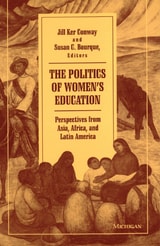
The Politics of Women's Education
Perspectives from Asia, Africa, and Latin AmericaJill Ker Conway and Susan C. Bourque, Editors
University of Michigan Press, 1995
The Politics of the Malayan Communist Party from 1930 to 1948
David Lockwood
National University of Singapore Press, 2024
By 1946, the Malayan Communist Party (MCP) had become one of the most successful communist parties in Asia. From its foundation in 1930, it had built up a membership in the thousands, mainly among Chinese and Indian workers in Malaya. When the Japanese arrived, the MCP organized the Malayan People’s Anti-Japanese Army (MPAJA), the only effective resistance force. After the War, when the British returned, the Party launched a legal campaign for independence, but by 1948, the MCP had surrendered its achievements and taken many members underground to launch a disastrous, failed insurrection against the British.
To understand these momentous turns of history, a fresh view is required of the Malayan Communist Party as a political actor. The Politics of the Malayan Communist Party from 1930 to 1948 gives a political history of the Party and explains why the MCP self-destructed in 1948. In particular, David Lockwood questions assumptions that post-war politics led inevitably to armed struggle and questions the accepted narrative of Party Chairman Lai Tek's treachery. This is a revisionist history of a period, and political force, that has left a lasting mark on the politics of Malaya and Singapore.

The Politics of the Minimum Wage
Jerold Waltman
University of Illinois Press, 2000
The minimum wage appears to be a standard economic regulatory measure, yet a politics of symbolism more than anything else defines the political contests that periodically erupt over it. Detractors abhor its corruption of market principles, while supporters see it as a measure of society's symbolic commitment to the poor.
Tracing the history of the minimum wage and exposing its inherent contradictions as a political issue, Jerold Waltman proposes an alternative to the economic arguments that now dominate debates over it. Citing overwhelming public support for the minimum wage as evidence of an enduring civic consciousness and humanitarianism, Waltman advocates recasting the discussion in terms of a political economy of citizenship. Such a perspective would focus on the communal value of work, the need for citizens to have a stake in the community, and the effects of economic inequality on the bonds of common citizenship.
Positioning the minimum wage as a fulcrum for the most basic conflict underlying America's unique combination of democracy and a market economy, The Politics of the Minimum Wage shows how a defense of the minimum wage built on a communal sense of responsibility rests on a strong tradition of civic republicanism and strengthens the hope for a truly democratic society.
The Politics of the Peace Corps and VISTA
T. Zane Reeves
University of Alabama Press, 1988
The author has taken the concept of organizational culture from corporate literature and applied it to two unique government programs the Peace Corps and VISTA. The book traces the ongoing conflict between partisan ideology and the organizational culture formulated during the Kennedy and Johnson years. It follows an often intense struggle between political appointees on one side and career employees, volunteers, and returned volunteers on the other. Political ideologies may vary depending upon which political party controls the presidency, but the contest for control of the agencies continues.
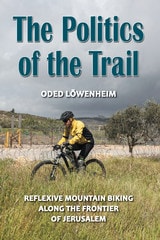
The Politics of the Trail
Reflexive Mountain Biking along the Frontier of JerusalemOded Löwenheim
University of Michigan Press, 2014
In The Politics of the Trail, Löwenheim confronts this tension by focusing on his encounters with three places along the trail: the separation fence between Israel and the Palestinians; the ruins of the Palestinian village Qalunya, demolished in 1948; and the trail connecting the largest 9/11 memorial site outside of the U.S. with a top-secret nuclear-proof bunker for the Israeli cabinet. He shares the stories of the people he meets along the way and considers how his own subjectivity is shaped by the landscape and culture of conflict. Moreover, he deconstructs, challenges, and resists the concepts and institutions that constitute such a culture and invites conversation about the idea of conflict as a culture.
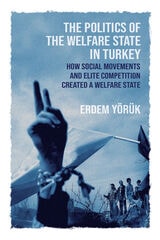
The Politics of the Welfare State in Turkey
How Social Movements and Elite Competition Created a Welfare StateErdem Yörük
University of Michigan Press, 2022

The Poor Are Not Us
Poverty and Pastoralism in Eastern AfricaDavid M. Anderson
Ohio University Press, 1999
Eastern African pastoralists often present themselves as being egalitarian, equating cattle ownership with wealth. By this definition “the poor are not us”, poverty is confined to non-pastoralist, socially excluded persons and groups.
Exploring this notion means discovering something about self-perceptions and community consciousness, how pastoralist identity has been made in opposition to other modes of production, how pastoralists want others to see them and how they see themselves.
This collection rejects the premise of pastoral egalitarianism and poses questions about the gradual creep of poverty, changing patterns of wealth and accumulation, the impact of diminishing resources on pastoral communities and the impact of external values of land, labor, and livestock.
The Positive Case for Negative Campaigning
Kyle Mattes and David P. Redlawsk
University of Chicago Press, 2015
The most comprehensive treatment of negative campaigning to date, The Positive Case for Negative Campaigning uses models, surveys, and experiments to show that much of the seeming dislike of negative campaigning can be explained by the way survey questions have been worded. By failing to distinguish between baseless and credible attacks, surveys fail to capture differences in voters’ receptivity. Voters’ responses, the authors argue, vary greatly and can be better explained by the content and believability of the ads than by whether the ads are negative. Mattes and Redlawsk continue on to establish how voters make use of negative information and why it is necessary. Many voters are politically naïve and unlikely to make inferences about candidates’ positions or traits, so the ability of candidates to go on the attack and focus explicitly on information that would not otherwise be available is crucial to voter education.
The Possibility of Popular Justice
A Case Study of Community Mediation in the United StatesSally Engle Merry and Neal Milner, Editors
University of Michigan Press, 1995

The Post-Cold War Trading System
Who's on First?Sylvia Ostry
University of Chicago Press, 1997
With keen historical awareness, Ostry examines the role of key economic power brokers, particularly the United States, in the reconstruction and reconfiguration of an international economy after World War II. She argues that U.S. policy efforts were so successful that they led to an unprecedented renewal of economic growth, living standards, and education levels in postwar Europe and Japan. Ironically, those same policy successes unintentionally fostered the relative decline of U.S. dominance on the world trade scene as the reduction of trade and investment barriers prompted friction and conflict between different kinds of capitalist systems.
Identifying the historical and legal issues key to postwar trade policy, Ostry has commandingly charted our economic course through the last half of this century and, perhaps, into the next.
"Sylvia Ostry knows this subject as few others do, both as a scholar of international trade issues and a major player in the ongoing negotiations that have created the rules of the trade game. The Post-Cold War Trading System is a fine summary of where we've been and where we ought to be going."—Peter Passell, economic scene columnist for The New York Times
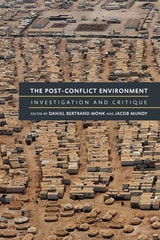
The Post-Conflict Environment
Investigation and CritiqueDaniel Bertrand Monk and Jacob Mundy, editors
University of Michigan Press, 2014
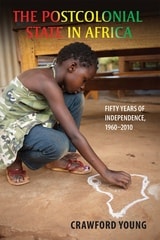
The Postcolonial State in Africa
Fifty Years of Independence, 1960–2010Crawford Young
University of Wisconsin Press, 2012
Young identifies three cycles of hope and disappointment common to many of the African states (including those in North Africa) over the last half-century: initial euphoria at independence in the 1960s followed by disillusionment with a lapse into single-party autocracies and military rule; a period of renewed confidence, radicalization, and ambitious state expansion in the 1970s preceding state crisis and even failure in the disastrous 1980s; and a phase of reborn optimism during the continental wave of democratization beginning around 1990. He explores in depth the many African civil wars—especially those since 1990—and three key tracks of identity: Africanism, territorial nationalism, and ethnicity.
Only more recently, Young argues, have the paths of the fifty-three African states begun to diverge more dramatically, with some leading to liberalization and others to political, social, and economic collapse—outcomes impossible to predict at the outset of independence.
“This book is the best volume to date on the politics of the last 50 years of African independence.”—International Affairs
“The book shares Young’s encyclopedic knowledge of African politics, providing in a single volume a comprehensive rendering of the first 50 years of independence. The book is sprinkled with anecdotes from his vast experience in Africa and that of his many students, and quotations from all of the relevant literature published over the past five decades. Students and scholars of African politics alike will benefit immensely from and enjoy reading The Postcolonial State in Africa.”—Political Science Quarterly
“The study of African politics will continue to be enriched if practitioners pay homage to the erudition and the nobility of spirit that has anchored the engagement of this most esteemed doyen of Africanists with the continent.”—African History Review
“The book’s strongest attribute is the careful way that comparative political theory is woven into historical storytelling throughout the text. . . . Written with great clarity even for all its detail, and its interwoven use of theory makes it a great choice for new students of African studies.”—Australasian Review of African Studies
The Postcolonial and the Global
Revathi Krishnaswamy
University of Minnesota Press, 2007
This interdisciplinary work brings the humanities and social sciences into dialogue by examining issues such as globalized capital, discourses of antiterrorism, and identity politics. Essayists from the fields of postcolonial studies and globalization theory address the ethical and pragmatic ramifications of opposing interpretations of these issues and, for the first time, seek common ground.
Contributors: Pal Ahluwalia, U of California, San Diego; Arjun Appadurai, New School U; Geoffrey Bowker, Santa Clara U; Timothy Brennan, U of Minnesota; Ruth Buchanan, U of British Columbia; Verity Burgmann, U of Melbourne; Pheng Cheah, U of California, Berkeley; Inderpal Grewal, U of California, Irvine; Ramon Grosfoguel, U of California, Berkeley; Barbara Harlow, U of Texas, Austin; Anouar Majid, U of New England; John McMurtry, U of Guelph; Walter D. Mignolo, Duke U; Sundhya Pahuja, U of Melbourne; R. Radhakrishnan, U of California, Irvine; Ileana Rodriguez, Ohio State U; E. San Juan, Philippine Forum, New York; Saskia Sassen, U of Chicago; Ella Shohat, New York U; Leslie Sklair, London School of Economics; Robert Stam, New York U; Madina Tlostanova, Russian Peoples’ Friendship U; Harish Trivedi, U of Delhi.
Revathi Krishnaswamy is associate professor of English at San Jose State University.
John C. Hawley is professor and chair of English at Santa Clara University.
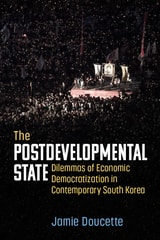
The Postdevelopmental State
Dilemmas of Economic Democratization in Contemporary South KoreaJamie Doucette
University of Michigan Press, 2024
Winner of the 2025 Association of Korean Studies in Europe Book Prize
Over the last 25 years, South Korea has witnessed growing inequality due to the proliferation of non-standard employment, ballooning household debt, deepening export-dependency, and the growth of super-conglomerates such as Samsung and Hyundai. Combined with declining rates of economic growth and turbulent political events, these processes mark a departure from Korea’s past recognition as a high growth “developmental state.”
The Postdevelopmental State radically reframes research into the South Korean economy by foregrounding the efforts of pro-democratic reformers and social movements in South Korea to create an alternative economic model—one that can address Korea’s legacy of authoritarian economic development during the Cold War and neoliberal restructuring since the Asian Financial Crisis of the late 1990s. Understanding these attempts offers insight into the types of economic reforms that have been enacted since the late 1990s as well as the continued legacy of dictatorship-era politics within the Korean political and legal system. By examining the dilemmas economic democracy has encountered over the past 25 years, from the IMF Crisis to the aftermath of the Candlelight Revolution, the book reveals the enormous and comprehensive challenges involved in addressing the legacy of authoritarian economic models and their neoliberal transformations.
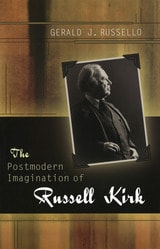
The Postmodern Imagination of Russell Kirk
Gerald J. Russello
University of Missouri Press, 2007
Author of The Conservative Mind, Russell Kirk (1918–1994) was a principal architect of the American intellectual conservative movement. This book takes a closer look at his works on such subjects as law, history, economics, and statesmanship to introduce a new generation of readers to the depth and range of his thought.
Kirk probed the very meaning of conservatism for modern intellectuals, and in The Postmodern Imagination of Russell Kirk, Gerald Russello examines such key concepts of his thought as imagination, historical consciousness, the interplay between the individual and tradition, and the role of narrative in constructing individual and societal identity. By stressing the importance of Kirk’s perception of imagination, he offers a new approach to understanding him, showing not only that Kirk laid the groundwork for the “new conservatism” of the 1950s and ’60s, but also that his work evolved into a sophisticated critique of modernity paralleled in the work of some postmodern critics of liberalism.
In order to reconstruct Kirk’s attack on modernity, Russello examines his textbook on economics, his fiction, his work on Robert Taft and Orestes Brownson, his writings on the role of the statesman, and his neglected essays such as “The Age of Discussion” and “The Age of Sentiments.” Russello shows that Kirk welcomed the rise of some form of postmodernism, seeing in it a new opportunity for conservatism to engage the wider culture. Through this analysis, he situates Kirk within wider currents of contemporary thought, connecting him not only with such major thinkers as Lyotard, Boorstin, and Koestler but also with such lesser-known figures as Bernard Iddings Bell, Charles Baudouin, and Christopher Dawson.
By examining Kirk’s development of the imagination as a tool of conservative discourse, Russello offers an alternative genealogy for conservative thought that melds its antimodernism with postmodern themes. He has forged a lively and provocative work that provides unusual perspectives on Kirk within the wider context of debate over the future of conservatism in a time of shifting alliances—a book that will be a valuable resource for anyone seeking to understand Kirk or conservative thought.
The Postwar Transformation of Germany
Democracy, Prosperity and NationhoodJohn S. Brady, Beverly Crawford, and Sarah Elise Wiliarty, Editors
University of Michigan Press, 1999

The Potential of a Middle Power
Romania's Foreign Policy in Central Asia within the Context of EU MembershipAna-Maria Anghelescu
Central European University Press, 0
The large member states of the European Union have clear priorities when it comes to EU-level decisions, while the small member states hold veto power when decisions need to be taken unanimously. This book focuses on the potential of middle powers in EU decision-making using the example of Romania's relations with Central Asia. The author examines how Romania's diplomatic activities as a medium-sized member state - and as a newer member - can affect EU foreign policy. Ana-Maria-Andreea Anghelescu conducted a quantitative study of three hard power indices, as well as the soft presence dimension of the Elcano Index of Global Presence. The latter includes tourism, sport, culture, science, education, information, and migration. The statistical results were complemented by qualitative field research in Kyrgyzstan involving all five Central Asian countries.
The volume’s analysis concludes that Romania underperforms in using its robust hard faculties to benefit the country's soft capabilities. Central Asia is a region where the EU must work hard to maintain its influence. By strengthening their presence in the region beyond bilateral partnerships, the EU's middle powers can play a key role in asserting Europe's pragmatic and normative interests.T
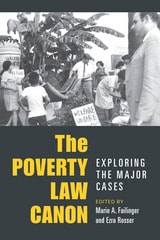
The Poverty Law Canon
Exploring the Major CasesMarie A. Failinger and Ezra Rosser, Editors
University of Michigan Press, 2016
Noted legal scholars explain the legal precedent created by each case and set the case within its historical and political context in a way that will assist students and advocates in poverty-related disciplines in their understanding of the implications of these cases for contemporary public policy decisions in poverty programs. Whether the focus is on the clients, on the lawyers, or on the justices, the stories in The Poverty Law Canon illuminate the central legal themes in federal poverty law of the late 20th century and the role that racial and economic stereotyping plays in shaping American law.

The Poverty of Capitalism
Economic Meltdown and the Struggle for What Comes NextJohn Hilary
Pluto Press, 2013
Capitalist growth is widely heralded as the only answer to the crisis still sweeping the global economy. Yet the era of corporate globalisation has been defined by unprecedented levels of inequality and environmental degradation. A return to capitalist growth threatens to exacerbate these problems, not solve them.
In The Poverty of Capitalism, John Hilary reveals the true face of transnational capital in its insatiable drive for expansion and accumulation. He exposes the myth of ‘corporate social responsibility’ (CSR), and highlights key areas of conflict over natural resources, labour rights and food sovereignty.
Hilary also describes the growing popular resistance to corporate power, as well as the new social movements seeking to develop alternatives to capitalism itself. This book will be essential reading for all those concerned with global justice, human rights and equity in the world order.
The Power of Civil Servants
David Normington and Peter Hennessy
Haus Publishing, 2018
Throughout Britain, Civil Servants are exposed to public scrutiny today in unprecedented ways. What does it mean that the political neutrality of the Civil Service has only been enshrined in law since 2010, nearly 150 years after it was first proposed? Why is it so important for politicians to trust Civil Servants (and what difficulties arise when they do not)?
Coauthored by former First Civil Service Commissioner David Normington and historian Peter Hennessy, The Power of Whitehall provides answers through rich observations about the nature of the British Civil Service, its values and effectiveness, and how it should continue to adapt to a changing world.
The Power of Dialogue between Israelis and Palestinians
Stories of Change from the School for PeaceSonnenschein, Nava
Rutgers University Press, 2019
The Power of Journalists
Nick Robinson, Gary Gibbon, Barbara Speed, and Charlie Beckett
Haus Publishing, 2018
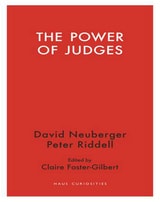
The Power of Judges
David Neuberger and Peter Riddell
Haus Publishing, 2018
In this lucid account of the judiciary, David Neuberger and Peter Riddell lead us through an array of topics both philosophical and logistical, including the relationships between morality and law and between Parliament and the judiciary. They explain the effects of cuts in legal aid and shed light on complex and controversial subjects like assisted dying and the complexities of combating mass terrorism while protecting personal liberty. Given that many of these issues span national borders, the book also compares the United Kingdom’s legal system with its counterparts in the United States and Germany.
Full of insights, The Power of Judges is an informative and accessible account of the United Kingdom’s judicial system, its contribution to running the country, and the challenges it faces—including the many threats to its effectiveness.
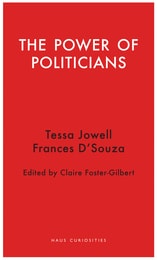
The Power of Politicians
Tessa Jowell and Frances D’Souza
Haus Publishing, 2018
With former Lord Speaker Frances D’Souza serving as Jowell’s interlocutor, this book provides a passionate and inspiring interpretation on moral duty. Ultimately, The Power of Politicians offers not just a case study of the life and everyday work of a politician, but also attends to deeper questions about what is demanded from the political class. The overall result is a nothing less than a master class in how to be a good politician.

The Power of Small States
Diplomacy in World War IIAnnette Baker Fox
University of Chicago Press, 1959
As World War II ravaged Europe and Asia, smaller nations such as Turkey, Spain, Finland, and Portugal emerged virtually unscathed. How did these smaller powers, which most wrongly viewed as mere political pawns, survive one of the bloodiest conflicts of the 20th century?
From the World War II diplomatic history of Turkey, Finland, Norway, Sweden, and Spain, Annette Baker Fox walks us through backrooms and intense negotiations to illustrate how smaller nations balanced an ever-shifting political landscape to maintain their neutrality. Heavily researched and well-wrought, this book draws upon primary material and interviews with public figures and scholars to give a new historical dimension into lesser-known nations during a time of great political upheaval.
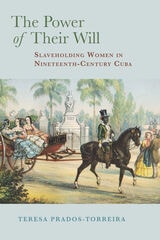
The Power of Their Will
Slaveholding Women in Nineteenth-Century CubaTeresa Prados-Torreira
University of Alabama Press, 2021
CHOICE OUTSTANDING ACADEMIC TITLE, 2022
“This fascinating book explores the unique circumstances of white slaveholding women in 19th-century Cuba and the enslaved peoples they controlled . . .This is a must read for scholars of the Caribbean and the African diaspora. Essential.” —CHOICE
In the early nineteenth century, while abolitionism was rising and the slave trade was declining in the Atlantic world, Spain used this opportunity to massively expand plantation slavery in Cuba. Between 1501 and 1866, more than 778,000 Africans were torn from their homelands and brought to work for the Cuban slaveholding class.
An understudied aspect of Cuban slaveholding society is the role of the white Cuban slave mistress (amas). The Power of Their Will: Slaveholding Women in Nineteenth-Century Cuba illuminates the interaction of female slaveholders and the enslaved during this time. Teresa Prados-Torreira shows, despite the lack of political power in a highly patriarchal society, Cuban women as property owners were instrumental in supporting the long duration of slavery, whether by enforcing the disciplining of the enslaved in the domestic sphere or helping to create the illusion of slavery as a humane institution. Thousands of Creole slaveholding women relied on slaves to lead a comfortable life. Even the subsistence of many poor women depended on the income derived from the hiring out of their enslaved.
In this accessible cultural history, culled from government documents, fiction, newspaper articles, traveler’s accounts, women’s wills, and archival research, Prados-Torreira coalesces a valuable narrative out of the often paradoxical and conflicting stories of the human bonds between the female owner and the enslaved. Narrative chapters, enlivened by vignettes, describe the daily life of slave mistresses in the main cities of Havana and Santiago and other towns, workings of sugar mills and coffee plantations, how slaveholding women coping with slave rebellions and wartime during the Ten Years’ War, and how personal relationships could occasionally affect the balance of power.
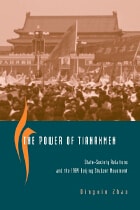
The Power of Tiananmen
State-Society Relations and the 1989 Beijing Student MovementDingxin Zhao
University of Chicago Press, 2001
Dingxin Zhao's award-winning The Power of Tiananmen is the definitive treatment of these historic events. Along with grassroots tales and interviews with the young men and women who launched the demonstrations, Zhao carries out a penetrating analysis of the many parallel changes in China's state-society relations during the 1980s. Such changes prepared an alienated academy, gave rise to ecology-based student mobilization, restricted government policy choices, and shaped student emotions and public opinion, all of which, Zhao argues, account for the tragic events in Tiananmen.

The Power of the Badge
Sheriffs and Inequality in the United StatesEmily M. Farris and Mirya R. Holman
University of Chicago Press, 2024
A sobering exploration of the near unchecked power of sheriffs in the United States.
Across the United States, more than 3,000 sheriffs occupy a unique position in the US political and legal systems. Elected by voters—usually in low-visibility, noncompetitive elections—sheriffs oversee more than a third of law enforcement employees and control almost all local jails. They have the power to both set and administer policies, and they can imprison, harm, and even kill members of their communities. Yet, they enjoy a degree of autonomy not seen by other political officeholders.
The Power of the Badge offers an unprecedented, data-rich look into the politics of the office and its effects on local communities. Emily M. Farris and Mirya R. Holman draw on two surveys of sheriffs taken nearly a decade apart, as well as election data, case studies, and administrative data to show how a volatile combination of authority and autonomy has created an environment where sheriffs rarely change; elections seldom create meaningful accountability; employees, budgets, and jails can be used for political gains; marginalized populations can be punished; and reforms fail. Farris and Holman also track the increasingly close linkages between sheriffs and right-wing radical groups in an era of high partisanship and intra-federal conflict.
The Power of the Steel-tipped Pen
Reconstructing Native Hawaiian Intellectual HistoryNoenoe K. Silva
Duke University Press, 2017
The Power of the Texas Governor
Connally to BushBy Brian McCall
University of Texas Press, 2009
George W. Bush called it "the best job in the world," yet many would argue that the Texas governorship is a weak office. Given few enumerated powers by the Texas Constitution, the governor must build a successful relationship with the state legislature—sometimes led by a powerful lieutenant governor or speaker of the opposing party—to advance his or her policy agenda. Yet despite the limitations on the office and the power of the legislative branch, many governors have had a significant impact on major aspects of Texas's public life—government, economic development, education, and insurance reform among them. How do Texas governors gain the power to govern effectively?
The Power of the Texas Governor takes a fresh look at the state's chief executives, from John Connally to George W. Bush, to discover how various governors have overcome the institutional limitations of the office. Delving into the governors' election campaigns and successes and failures in office, Brian McCall makes a convincing case that the strength of a governor's personality—in particular, his or her highly developed social skills—can translate into real political power. He shows, for example, how governors such as Ann Richards and George W. Bush forged personal relationships with individual legislators to achieve their policy goals. Filled with revealing insights and anecdotes from key players in each administration, The Power of the Texas Governor offers new perspectives on leadership and valuable lessons on the use of power.
The Power to Destroy
How Bad Economics Drove America’s DeclineJames K. Galbraith
University of Chicago Press, 2026
Acclaimed economist James K. Galbraith sounds an urgent alarm: how conventional economic ideas and policies are unequipped to account for the most daunting challenges of our geopolitical moment.
Amid a mounting sense of American decline, Americans live with a new kind of dissonance: economists announcing that everything is fundamentally fine. Where growth is steady, unemployment is low, prices are (somewhat) stable, and stocks are high—what’s there to worry about?
The Power to Destroy shows that this dissonance reflects a failure to evolve. James K. Galbraith’s incisive history of economic policy in this century is grounded in the fundamental problem that today’s experts are still deploying tools from all yesterday’s wars: obsolete economic ideas, measures, and doctrines focused on market functioning and crude economic indicators like output and prices. These methods, many of them honed a century ago against a vastly different social landscape, offer little hope in the face of today’s more existential threats.
Such conventional policies, Galbraith argues, are increasingly ill-equipped to counter the daunting challenges of our moment—from inflation to trade sanctions, industrial cold wars, and climate change—and, left unacknowledged, are accelerating the end of the US economy as we know it. Shortcomings include the weak responses to the inflation of 2021-2022; the sanctions war against Russia; the rise of China; the weak and ineffective attempt at industrial revival; and the impending demographic crisis. All have roots in a flawed body of outdated economic thought that has been sustained for ideological rather than practical reasons. They now promise to hinder the United States in the emerging multipolar world.
As Galbraith makes plain, for all the virtues of the market system, governments and their policies make markets possible. The ideas behind the policies—for better or worse—will determine the fate of the US economy—and new and better ideas are urgently needed. The alternative—sticking with economic ideas and policies we know and currently use—brings the power to destroy us all.