Results by title
22279 books match the query 'Social Science' and 4007 start with t
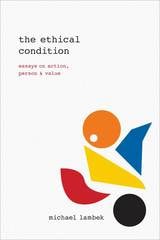
The Ethical Condition
Essays on Action, Person, and ValueMichael Lambek
University of Chicago Press, 2015
Organized chronologically, the essays begin among Malagasy speakers on the island of Mayotte and in northwest Madagascar. Building from ethnographic accounts there, they synthesize Aristotelian notions of practical judgment and virtuous action with Wittgensteinian notions of the ordinariness of ethical life and the importance of language, everyday speech, and ritual in order to understand how ethics are lived. They illustrate the multiple ways in which ethics informs personhood, character, and practice; explore the centrality of judgment, action, and irony to ethical life; and consider the relation of virtue to value. The result is a fully fleshed-out picture of ethics as a deeply rooted aspect of the human experience.
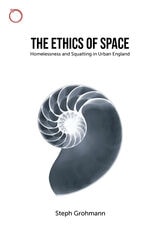
The Ethics of Space
Homelessness and Squatting in Urban EnglandSteph Grohmann
HAU, 2020
Set against the backdrop of economic crisis, austerity, and a disintegrating British state, Steph Grohmann tells the story of a flourishing squatter community in the city of Bristol and how it was eventually outlawed by the state. The first ethnography of homelessness done by a researcher who was formally homeless throughout fieldwork, this volume explores the intersection between spatial existence, subjectivity, and ethics. The result is a book that rethinks how ethical views are shaped and constructed through our own spatial existences.
The Ethnobotanical Laboratory at the University of Michigan
Melvin R. Gilmore
University of Michigan Press, 1932

The Ethnographer's Way
A Handbook for Multidimensional Research DesignKristin Peterson and Valerie Olson
Duke University Press, 2024
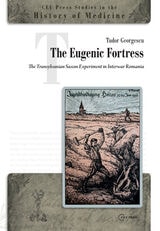
The Eugenic Fortress
The Transylvanian Saxon Experiment in Interwar RomaniaTudor Georgescu
Central European University Press, 2016
The Eurabia Myth
Countercolonization and Masculine Fragility in FranceMehammed Amadeus Mack
University of Minnesota Press, 2025
The roots—and reach—of “Great Replacement” theory in France and beyond
The Eurabia Myth delves into the origins and evolution of far-right anxieties about the future of a Europe that welcomes postcolonial migration, racial and ethnic diversity, and tolerance of Islam. Nationalists deploy the specter of “Eurabia”—an Arabized and Islamized Europe—as a doomsday scenario of demographic replacement that only they can avert. Mehammed Amadeus Mack traces this dark vision to a sociopolitical conspiracy theory that began in France, spread throughout Europe, and has become especially virulent in the United States: Great Replacement Theory.
Examining how the Eurabia narrative gained traction, Mack analyzes dystopian fiction that envisions how this Replacement will take place, the contemporary politicization of medieval history, and ecofascist rhetoric depicting immigrants as an “invasive” species. He also interviews prominent French activists of color about how they subvert being portrayed as Replacers and destroyers of European civilization, and he explores the American echoes of the Great Replacement Theory.
Innovatively deploying gender and sexuality theory to the concept of Eurabia, Mack demonstrates that the demographic and racial anxieties underlying Great Replacement Theory are intertwined with a more fundamental crisis of masculinity, evident in the far right’s accusations that feminists and the LGBT community are responsible for the decline in white birth rates. As it uncovers the deeper roots of this pervasive theory, The Eurabia Myth shows its insidious relevance to a rising tide of nativist fear, hatred, and violence.
Retail e-book files for this title are screen-reader friendly with images accompanied by short alt text and/or extended descriptions.

The Ever-Present Origin
Part One: Foundations Of The Aperspectival WorldJean Gebser
Ohio University Press, 1986
This English translation of Gebser’s major work, Ursprung und Gegenwart (Stuttgart, Deutsche Verlag, 1966), offers certain fundamental insights which should be beneficial to any sensitive scientist and makes it available to the English-speaking world for the recognition it deserves.
“The path which led Gebser to his new and universal perception of the world is, briefly, as follows. In the wake of materialism and social change, man had been described in the early years of our century as the “dead end” of nature. Freud had redefined culture as illness—a result of drive sublimation; Klages had called the spirit (and he was surely speaking of the hypertrophied intellect) the “adversary of the soul,” propounding a return to a life like that of the Pelasgi, the aboriginal inhabitants of Greece; and Spengler had declared the “Demise of the West” during the years following World War I. The consequences of such pessimism continued to proliferate long after its foundations had been superseded.
It was with these foundations—the natural sciences—that Gebser began. As early as Planck it was known that matter was not at all what materialists had believed it to be, and since 1943 Gebser has repeatedly emphasized that the so-called crisis of Western culture was in fact an essential restructuration.…
Gebser has noted two results that are of particular significance: first, the abandonment of materialistic determinism, of a one-sided mechanistic-causal mode of thought; and second, a manifest “urgency of attempts to discover a universal way of observing things, and to overcome the inner division of contemporary man who, as a result of his one-sided rational orientation, thinks only in dualisms.”
Against this background of recent discoveries and conclusions in the natural sciences Gebser discerned the outlines of a potential human universality. He also sensed the necessity to go beyond the confines of this first treatise so as to include the humanities (such as political economics and sociology) as well as the arts in a discussion along similar lines. This was the point of departure of The Ever-Present Origin.
From In memoriam Jean Gebser by Jean Keckeis
The Everest Effect
Nature, Culture, IdeologyElizabeth Mazzolini
University of Alabama Press, 2015
The Everest Effect is an accessibly written cultural history of how nature, technology, and culture have worked together to turn Mount Everest into a powerful and ubiquitous physical measure of Western values.
In The Everest Effect Elizabeth Mazzolini traces a series of ideological shifts in the status of Mount Everest in Western culture over the past century to the present day and links these shifts to technologies used in climbs. By highlighting the intersections of technology and cultural ideologies at this site of environmental extremity, she shows both how nature is shaped—physically and symbolically—by cultural values and how extreme natural phenomena shape culture.
Nostalgia, myth, and legend are intrinsic features of the conversations that surround discussions of historic and contemporary climbs of Everest, and those conversations themselves reflect changing relations between nature, technology, and ideology. Each of the book’s chapters links a particular value with a particular technology to show how technology is implicated in Mount Everest’s cultural standing and commodification: authenticity is linked with supplemental oxygen; utility with portable foodstuffs; individuality with communication technology; extremity with visual technology; and ability with money. These technologies, Mazzolini argues, are persuasive—and increasingly so as they work more quickly and with more intimacy on our bodies and in our daily lives.
As Mazzolini argues, the ideologies that situate Mount Everest in Western culture today are not debased and descended from a more noble time; rather, the material of the mountain and its surroundings and the technologies deployed to encounter it all work more immediately with the bodies and minds of actual and “armchair” mountaineers than ever before. By moving the analysis of a natural site and phenomenon away from the traditional labor of production and toward the symbolic labor of affective attachment, The Everest Effect shows that the body and nature have helped constitute the capitalization that is usually characterized as taking over Everest.
The Evidence Is Life
Deaf Pilgrimages to Language and Community in Mexico CityAnne E. Pfister
Gallaudet University Press, 2025
The Evil Eye
A CasebookAlan Dundes
University of Wisconsin Press, 1992
The evil eye—the power to inflict illness, damage to property, or even death simply by gazing at or praising someone—is among the most pervasive and powerful folk beliefs in the Indo-European and Semitic world. It is also one of the oldest, judging from its appearance in the Bible and in Sumerian texts five thousand years old. Remnants of the superstition persist today when we drink toasts, tip waiters, and bless sneezers. To avert the evil eye, Muslim women wear veils, baseball players avoid mentioning a no-hitter in progress, and traditional Jews say their business or health is "not bad" (rather than "good").
Though by no means universal, the evil eye continues to be a major factor in the behavior of millions of people living in the Mediterranean and Arab countries, as well as among immigrants to the Americas. This widespread superstition has attracted the attention of many scholars, and the twenty-one essays gathered in this book represent research from diverse perspectives: anthropology, classics, folklore studies, ophthalmology, psychiatry, psychoanalysis, sociology, and religious studies. Some essays are fascinating reports of beliefs about the evil eye, from India and Iran to Scotland and Slovak-American communities; others analyze the origin, function, and cultural significance of this folk belief from ancient times to the present day. Editor Alan Dundes concludes the volume by proffering a comprehensive theoretical explanation of the evil eye.
Anyone who has ever knocked on wood to ward off misfortune will enjoy this generous sampling of evil eye scholarship, and may never see the world through the same eyes again.
The Evolution of American Investigative Journalism
James L. Aucoin
University of Missouri Press, 2007
The Evolution of Calusa
A Nonagricultural Chiefdom of the Southwest Florida CoastRandolph J. Widmer
University of Alabama Press, 1988
The aims of this study are twofold: compile, for the first time, all the archaeological, environmental, and geological data pertinent to the evolution of the aboriginal inhabitants of southwest Florida; and, using this basis, develop a specific, integrated, and dynamic model of cultural adaptation that will serve as a stimulus for hypotheses that go beyond simple culture-historical concerns for future archaeological research in this region.
The Evolution of Settlement Systems in the Region of Vohémar, Northeast Madagascar
Henry T. Wright, Robert E. Dewar, Chantal Radimilahy, and Lucien Marie Aimé Rakotozafy
University of Michigan Press, 2021
The Evolution of a Cricket Fan
My Shapeshifting JourneySamir Chopra
Temple University Press, 2021
Samir Chopra is an immigrant, a “voluntary exile,” who discovers he can tell the story of his life through cricket, a game that has long been an influence—really, an obsession—for him. In so doing, he reveals how his changing views on the sport mirror his journey of self-discovery. In The Evolution of a Cricket Fan, Chopra is thus able to reflect on his changing perceptions of self, and of the nations and cultures that have shaped his identity, politics, displacement, and fandom.
Chopra’s passion for the sport began as a child, when he rooted for Pakistan and against his native India. When he migrated, he became a fan of the Indian team that gave him a sense of home among the various cultures he encountered in North America and Australia. This “shapeshifting” exposes the rift between the Old and the New world, which Chopra acknowledges is “cricket’s greatest modern crisis.” But it also illuminates the identity dilemmas of post-colonial immigrants in the Indian diaspora.
Chopra’s thoughts about the sport and its global influence are not those of a player. He provides access to the inner world of the global cricket fan navigating the world that colonial empire wrought and that cricket continues to connect and animate. He observes that the Indian cricket team carries many burdens—not only must they win cricket matches, but their style of play must generate a pride that assuages generations of wounds inflicted by history. And Chopra must navigate where he stands in that history.
The Evolution of a Cricket Fan shows Chopra’s own wins and losses as his life takes new directions and his fandom changes allegiances.

The Ex-Prisoner's Dilemma
How Women Negotiate Competing Narratives of Reentry and DesistanceLeverentz, Andrea M
Rutgers University Press, 2014
When a woman leaves prison, she enters a world of competing messages and conflicting advice. Staff from prison, friends, family members, workers at halfway houses and treatment programs all have something to say about who she is, who she should be, and what she should do. The Ex-Prisoner’s Dilemma offers an in-depth, firsthand look at how the former prisoner manages messages about returning to the community.
Over the course of a year, Andrea Leverentz conducted repeated interviews with forty-nine women as they adjusted to life outside of prison and worked to construct new ideas of themselves as former prisoners and as mothers, daughters, sisters, romantic partners, friends, students, and workers. Listening to these women, along with their family members, friends, and co-workers, Leverentz pieces together the narratives they have created to explain their past records and guide their future behavior. She traces where these narratives came from and how they were shaped by factors such as gender, race, maternal status, age, and experiences in prison, halfway houses, and twelve-step programs—factors that in turn shaped the women’s expectations for themselves, and others’ expectations of them. The women’s stories form a powerful picture of the complex, complicated human experience behind dry statistics and policy statements regarding prisoner reentry into society for women, how the experience is different for men and the influence society plays.
With its unique view of how society’s mixed messages play out in ex-prisoners’ lived realities, The Ex-Prisoner’s Dilemma shows the complexity of these women’s experiences within the broad context of the war on drugs and mass incarceration in America. It offers invaluable lessons for helping such women successfully rejoin society.

The Example of Edward Taylor
Karl Keller
University of Massachusetts Press, 1975
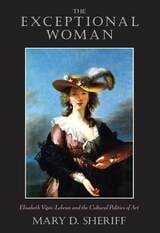
The Exceptional Woman
Elisabeth Vigee-Lebrun and the Cultural Politics of ArtMary D. Sheriff
University of Chicago Press, 1996
In The Exceptional Woman, Mary D. Sheriff uses Vigée-Lebrun's career to explore the contradictory position of "woman-artist" in the moral, philosophical, professional, and medical debates about women in eighteenth-century France. Paying particular attention to painted and textual self-portraits, Sheriff shows how Vigée-Lebrun's images and memoirs undermined the assumptions about "woman" and the strictures imposed on women.
Engaging ancien-régime philosophy, as well as modern feminism, psychoanalysis, literary theory, and art criticism, Sheriff's interpretations of Vigée-Lebrun's paintings challenge us to rethink the work and the world of this controversial woman artist.

The Exciting Life of Being a Woman
Amelia Lee
Intellect Books, 2012
The Exile of Britney Spears
A Tale of 21st-Century ConsumptionChristopher R. Smit
Intellect Books, 2011
As sustainability and eco-responsibility become a part of our everyday cultural conversation, we’re finally being forced to acknowledge that what we consume matters. What we fail to realize is that we unconsciously, continually, and at times violently consume much more than just food—including celebrities. The Exile of Britney Spears takes the ubiquitous pop star of its title as its primary example, explaining that we have consumed, digested, and eliminated Britney Spears in a process uniquely characteristic of American popular culture. In Christopher Smit’s provocative account of the sociological, aesthetic, and political outcomes of this new mediated cannibalism, he offers the idea of exile as a new metaphor for the outcome of popular consumption. By investigating the psychological, personal, and social matrix of Britney’s rise and fall, he outlines the process of her inevitable exile from global taste and favor.
The Existential Self in Society
Edited by Joseph A. Kotarba and Andrea Fontana
University of Chicago Press, 1984
The Expediency of Culture
Uses of Culture in the Global EraGeorge Yúdice
Duke University Press, 2003
Yúdice contends that a new international division of cultural labor has emerged, combining local difference with transnational administration and investment. This does not mean that today’s increasingly transnational culture—exemplified by the entertainment industries and the so-called global civil society of nongovernmental organizations—is necessarily homogenized. He demonstrates that national and regional differences are still functional, shaping the meaning of phenomena from pop songs to antiracist activism. Yúdice considers a range of sites where identity politics and cultural agency are negotiated in the face of powerful transnational forces. He analyzes appropriations of American funk music as well as a citizen action initiative in Rio de Janeiro to show how global notions such as cultural difference are deployed within specific social fields. He provides a political and cultural economy of a vast and increasingly influential art event— insite a triennial festival extending from San Diego to Tijuana. He also reflects on the city of Miami as one of a number of transnational “cultural corridors” and on the uses of culture in an unstable world where censorship and terrorist acts interrupt the usual channels of capitalist and artistic flows.
The Experience of Modernity
Chinese Autobiography of the Early Twentieth CenturyJanet Ng
University of Michigan Press, 2003
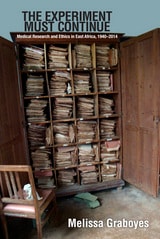
The Experiment Must Continue
Medical Research and Ethics in East Africa, 1940–2014Melissa Graboyes
Ohio University Press, 2015
The Experiment Must Continue is a beautifully articulated ethnographic history of medical experimentation in East Africa from 1940 through 2014. In it, Melissa Graboyes combines her training in public health and in history to treat her subject with the dual sensitivities of a medical ethicist and a fine historian. She breathes life into the fascinating histories of research on human subjects, elucidating the hopes of the interventionists and the experiences of the putative beneficiaries.
Historical case studies highlight failed attempts to eliminate tropical diseases, while modern examples delve into ongoing malaria and HIV/AIDS research. Collectively, these show how East Africans have perceived research differently than researchers do and that the active participation of subjects led to the creation of a hybrid ethical form.
By writing an ethnography of the past and a history of the present, Graboyes casts medical experimentation in a new light, and makes the resounding case that we must readjust our dominant ideas of consent, participation, and exploitation. With global implications, this lively book is as relevant for scholars as it is for anyone invested in the place of medicine in society.
The Extinction of Menai
A NovelChuma Nwokolo
Ohio University Press, 2017

The Extractive Zone
Social Ecologies and Decolonial PerspectivesMacarena Gómez-Barris
Duke University Press, 2017
The Extraordinary Image
Orson Welles, Alfred Hitchcock, Stanley Kubrick, and the Reimagining of CinemaKolker, Robert P
Rutgers University Press, 2016
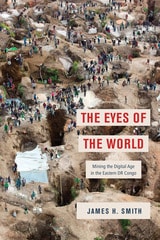
The Eyes of the World
Mining the Digital Age in the Eastern DR CongoJames H. Smith
University of Chicago Press, 2022
The digital devices that, many would argue, define this era exist not only because of Silicon Valley innovations but also because of a burgeoning trade in dense, artisanally mined substances like tantalum, tin, and tungsten. In the tentatively postwar Eastern DR Congo, where many lives have been reoriented around artisanal mining, these minerals are socially dense, fueling movement and innovative collaborations that encompass diverse actors, geographies, temporalities, and dimensions. Focusing on the miners and traders of some of these “digital minerals,” The Eyes of the World examines how Eastern Congolese understand the work in which they are engaged, the forces pitted against them, and the complicated process through which substances in the earth and forest are converted into commodified resources. Smith shows how violent dispossession has fueled a bottom-up social theory that valorizes movement and collaboration—one that directly confronts both private mining companies and the tracking initiatives implemented by international companies aspiring to ensure that the minerals in digital devices are purified of blood.
The Fables of Phaedrus
Translated by P. F. Widdows
University of Texas Press, 1992
Animal fables are said to have originated with Aesop, a semilegendary Samian slave, but the earliest surviving record of the fables comes from the Latin poet Phaedrus, who introduced the new genre to Latin literature. This verse translation of The Fables is the first in English in more than two hundred years.
In addition to the familiar animal fables, about a quarter of the book includes such diverse material as prologues and epilogues, historical anecdotes, short stories, enlarged proverbs and sayings, comic episodes and folk wisdom, and many incidental glimpses of Greek and Roman life in the classical period.
The Fables also sheds light on the personal history of Phaedrus, who seems to have been an educated slave, eventually granted his freedom by the emperor Augustus. Phaedrus' style is lively, clean, and sparse, though not at the cost of all detail and elaboration. It serves well as a vehicle for his two avowed purposes—to entertain and to give wise counsel for the conduct of life. Like all fabulists, Phaedrus was a moralist, albeit on a modest and popular level.
An excellent introduction by P. F. Widdows provides information about Phaedrus, the history of The Fables, the metric style of the original and of this translation, and something of the place of these fables in Western folklore. The translation is done in a free version of Anglo-Saxon alliterative verse, a form used by W. H. Auden and chosen here to match the popular tone of Phaedrus' Latin verse.
The Fabric of Resistance
Textile Workshops and the Rise of Rebellious Landscapes in Colonial PeruDi Hu
University of Alabama Press, 2022
Textiles as sites of power, production, and rebellion in the early modern Andes.
The Fabric of Resistance: Textile Workshops and the Rise of Rebellious Landscapes in Colonial Peru documents the impact of Spanish colonial institutions of labor on identity and social cohesion in Peru. Through archaeological and historical lines of evidence, Di Hu examines the long-term social conditions that enabled the large-scale rebellions in the late Spanish colonial period in Peru. Hu argues that ordinary people from different backgrounds pushed back against the top-down identity categories imposed by the Spanish colonial government and in the process created a cosmopolitan social landscape that later facilitated broader rebellion.
Hu’s case study is Pomacocha, the site of an important Spanish colonial hacienda (agricultural estate) and obraje (textile workshop). At its height, the latter had more than one hundred working families and sold textiles all over the Andes. Through analysis of this site, Hu explores three main long-term causes of rebellions against Spanish oppression. First, the Spanish colonial economy provided motivation and the social spaces for intercaste (indigenous, African, and mestizo) mixing at textile workshops. Second, new hybrid cultural practices and political solidarity arose there that facilitated the creation of new rebellious identities. Third, the maturation in the eighteenth century of popular folklore that reflected the harsh nature of Spanish labor institutions helped workers from diverse backgrounds gain a systemic understanding of exploitation.
This study provides a fresh archaeological and historical perspectives on the largest and most cosmopolitan indigenous-led rebellions of the Americas. Hu interweaves analyses of society at multiple scales including fine-grained perspectives of social networks, demography, and intimate details of material life in the textile workshop. She examines a wide range of data sources including artifacts, food remains, architectural plans, account books, censuses, court documents, contracts, maps, and land title disputes.

The Face in the Window and Other Alabama Ghostlore
Alan Brown
University of Alabama Press, 1996
True voices, real places, and unforgettable chills: Alabama’s ghost stories, gathered with scholarly care, reveal how memory, history, and belief linger—whispering from bridges, homes, cemeteries, and courthouses statewide today still.
The Face in the Window and Other Alabama Ghostlore is a landmark collection that preserves and brings to life Alabama’s rich tradition of supernatural storytelling. Rather than offering fictional retellings, this book presents ghost stories as they are told—by neighbors, families, students, and elders—rooted firmly in real places and lived experience. Alan Brown captures the voices of Alabamians across generations, revealing how belief, memory, humor, and fear continue to shape the state’s cultural landscape.
The collection is organized by geographic region, spiraling across the state so readers can explore local lore county by county and town by town. Many stories were gathered directly through fieldwork, lectures, and interviews, while others draw on previously unpublished Works Progress Administration materials from the 1930s. Dialect and storytelling style are preserved to maintain authenticity, and scholarly notes are placed at the back to keep the narratives accessible. Brown, a folklorist and former lecturer for the Alabama Humanities Foundation, brings both academic rigor and deep respect for oral tradition to the collection.
This collection will delight readers interested in folklore, Southern history, oral culture, and the supernatural. It is invaluable for scholars and students, irresistible to ghost-story enthusiasts, and especially meaningful for Alabamians eager to see their communities and traditions thoughtfully recorded and remembered.
The Face of Peace
Government Pedagogy amid Disinformation in ColombiaGwen Burnyeat
University of Chicago Press, 2022
Colombia’s 2016 peace agreement with the FARC guerrillas sought to end fifty years of war and won President Juan Manuel Santos the Nobel Peace Prize. Yet Colombian society rejected it in a polarizing referendum, amid an emotive disinformation campaign. Gwen Burnyeat joined the Office of the High Commissioner for Peace, the government institution responsible for peace negotiations, to observe and participate in an innovative “peace pedagogy” strategy to explain the agreement to Colombian society. Burnyeat’s multi-scale ethnography reveals the challenges government officials experienced communicating with skeptical audiences and translating the peace process for public opinion. She argues that the fatal flaw in the peace process lay in government-society relations, enmeshed in culturally liberal logics and shaped by the politics of international donors. The Face of Peace offers the Colombian case as a mirror to the global crisis of liberalism, shattering the fantasy of rationality that haunts liberal responses to “post-truth” politics.
The Failed Individual
Amid Exclusion, Resistance, and the Pleasure of Non-ConformityEdited by Katharina Motyl and Regina Schober
Campus Verlag, 2017
The Failure of Our Fathers
Family, Gender, and Power in Confederate AlabamaVictoria E. Ott
University of Alabama Press, 2023
An in-depth study of non-elite white families in Alabama—from the state’s creation through the end of the Civil War
The Failure of Our Fathers: Family, Gender, and Power in Confederate Alabama examines the evolving position of non-elite white families in Alabama during one of the most pivotal epochs in the state’s history. Drawing on a wide range of personal and public documents reflecting the state’s varied regions and economies, Victoria E. Ott uses gender and family as a lens to examine the yeomanry and poor whites, a constituency that she collectively defines as “common whites,” who identified with the Confederate cause.
Ott provides a nuanced examination of how these Alabamians fit within the antebellum era’s paternalistic social order, eventually identifying with and supporting the Confederate mission to leave the Union and create an independent, slaveholding state. But as the reality of the war slowly set in and the Confederacy began to fray, the increasing dangers families faced led Alabama’s common white men and women to find new avenues to power as a distinct socioeconomic class.
Ott argues that family provided the conceptual framework necessary to understand why common whites supported a war to protect slavery despite having little or no investment in the institution. Going to war meant protecting their families from outsiders who threatened to turn their worlds upside down. Despite class differences, common whites envisioned the Confederacy as a larger family and the state as paternal figures who promised to protect its loyal dependents throughout the conflict. Yet, as the war ravaged many Alabama communities, devotion to the Confederacy seemed less a priority as families faced continued separations, threats of death, and the potential for starvation. The construct of a familial structure that once created a sense of loyalty to the Confederacy now gave them cause to question its leadership. Ott shows how these domestic values rooted in highly gendered concepts ultimately redefined Alabama’s social structure and increased class distinctions after the war.

The Fair Trade Revolution
Edited by John Bowes
Pluto Press, 2011
Fair Trade is now mainstream, with large companies like Cadbury's and supermarkets such as Sainsbury's producing and stocking many Fair Trade products. The authors of this collection, many of whom were responsible for the initial success of Fair Trade, emphasise the importance of ensuring that farmers and other producers remain the main beneficiaries. Punchy chapters, illustrated with many real-world examples, cover all the important issues including the tensions between large and small operators, the impact of recession, environmental policy and the danger of large operators embracing Fair Trade more in word than in practice.
Written by the leading lights of the Fair Trade movement, including Harriet Lamb (Executive Director of the Fairtrade Foundation) and Bruce Crowther (Establisher of the world's first Fair Trade Town) this book will inspire activists and consumers to keep making the right choices.

The Fair Trade Scandal
Marketing Poverty to Benefit the RichNdongo Sylla
Ohio University Press, 2014
This critical account of the fair trade movement explores the vast gap between the rhetoric of fair trade and its practical results for poor countries, particularly those of Africa. In the Global North, fair trade often is described as a revolutionary tool for transforming the lives of millions across the globe. The growth in sales for fair trade products has been dramatic in recent years, but most of the benefit has accrued to the already wealthy merchandisers at the top of the value chain rather than to the poor producers at the bottom.
Ndongo Sylla has worked for Fairtrade International and offers an insider’s view of how fair trade improves—or doesn’t—the lot of the world’s poorest. His methodological framework first describes the hypotheses on which the fair trade movement is grounded before going on to examine critically the claims made by its proponents. By distinguishing local impact from global impact, Sylla exposes the inequity built into the system and the resulting misallocation of the fair trade premium paid by consumers. The Fair Trade Scandal is an empirically based critique of both fair trade and traditional free trade; it is the more important for exploring the problems of both from the perspective of the peoples of the Global South, the ostensible beneficiaries of the fair trade system.
The Fair Trade Scandal
Marketing Poverty to Benefit the RichNdongo Samba Sylla
Pluto Press, 2014
Sylla shows empirically that Fair Trade excludes those who need it the most and that its benefits are essentially captured by the wealthiest groups in the supply chain. Based on his experience of working for Fairtrade International, Sylla shows the flaws in the Fair Trade system which compromise its ethical mission.
The Fair Trade Scandal is both a provocative and deeply informative exploration of the Fair Trade phenomenon, suitable for specialists and non-specialists alike.

The Fairer Death
Executing Women in OhioVictor L. Streib
Ohio University Press, 2006
Women on death row are such a rarity that, once condemned, they may be ignored and forgotten. Ohio, a typical, middle-of-the-road death penalty state, provides a telling example of this phenomenon. The Fairer Death: Executing Women in Ohio explores Ohio’s experience with the death penalty for women and reflects on what this experience reveals about the death penalty for women throughout the nation.
Victor Streib’s analysis of two centuries of Ohio death penalty legislation and adjudication reveals no obvious exclusion of women or even any recognition of an issue of sex bias. In this respect, Ohio’s justice system exemplifies the subtle and insidious nature of this cultural disparity.
Professor Streib provides detailed descriptions of the cases of the four women actually executed by Ohio since its founding and of the cases of the eleven women sentenced to death in Ohio in the current death penalty era (1973–2005). Some of these cases had a profound impact on death penalty law, but most were routine and drew little attention. A generation later, reversals and commutations have left only one woman on Ohio’s death row.
Although Streib focuses specifically on Ohio, the underlying premise is that Ohio is, in many ways, a typical death penalty state. The Fairer Death provides insight into our national experience, provoking questions about the rationale for the death penalty and the many disparities in its administration.

The Faith of Fallen Jews
Yosef Hayim Yerushalmi and the Writing of Jewish HistoryEdited by David N. Myers and Alexander Kaye
Brandeis University Press, 2013

The Fallen Angel
Chastity, Class and Women's Reading, 1835–1880Sally Mitchell
University of Wisconsin Press, 1981
This book discusses the figure of the unchaste woman in a wide range of fiction written between 1835 and 1880; serious novels by Dickens, Mrs. Gaskell, Meredith, and George Eliot; popular novels that provided light reading for middle-class women (including books by Dinah Craik, Rhoda Broughton, and Ouida); sensational fiction; propaganda for social reform; and stories in cheap periodicals such as the Family Herald and the London Journal, which reached a different and far wider audience than either serious or popular novels.

The Falls Creek Rock Shelters
Reanalysis, Repatriation, and ReconciliationEdited by Dawn M. Mulhern and Mona C. Charles
University of Utah Press, 2026
A fresh look at an iconic Southwest archaeological site
Discovered in 1937 amid a surge of pothunting in the American Southwest, the Falls Creek Rock Shelters in Durango, Colorado, quickly became one of the most significant archaeological sites in the region. With its remarkable preservation of perishable materials, the site attracted both amateur and professional archaeologists, culminating in Earl Morris and Robert Burgh’s 1954 landmark study on the Eastern Basketmakers.
This volume brings together experts in chronometry, rock art, bioarchaeology, and material culture to reexamine the site with fresh perspectives, advanced methodologies, and crucial tribal consultation. By integrating twenty-first<n>century research with historical records, it sheds new light on the Eastern Basketmaker II Tradition—both as part of a broader cultural landscape and as a distinct regional identity. A must-read for archaeologists, institutions reconciling legacy collections, and those interested in collaborative research, this book offers a groundbreaking, holistic view of one of the Southwest’s most fascinating prehistoric communities.
The Fame of Gawa
A Symbolic Study of Value Transformation in a Massim SocietyNancy D. Munn
Duke University Press, 1992
The Family Ranch
Land, Children, and Tradition in the American WestLinda Hussa
University of Nevada Press, 2010
Ranch families in the twenty-first century face many challenges, from competition with government-subsidized agribusiness corporations to tax laws that encourage development over agriculture and prevent the smooth transfer of land from one generation to the next. As a stabilizing force in the American West, ranch families play a critical role in our country, perhaps more so today than ever before, yet their stories have rarely been told. They contribute to our nation with the food they raise, the environments they protect, and the resources they manage, and they preserve our western heritage while holding the West open for the rest of us. In The Family Ranch, award-winning author Linda Hussa offers readers a personal, inside view into the lives of six diverse ranching families and the land that shapes their days and nights. Photographer Madeleine Graham Blake provides engaging and often moving images that portray each family at work and at play. With chapters on the critical issues that face each of them—from grazing rights and water use, to children's education and the emerging rural marketplace—these family profiles are set in a larger context. This is family ranching as it is now, a tracing of how it always was, but made far more complex in modern times. By combining their traditions with the tools of modern technology, these people strengthen the ideal of family and give the business of ranching a vibrant and viable future.The Family Ranch is rich in remarkable stories of what happens when parents, children, work, and nature come together for a lifetime of commitment. It speaks to urban and rural people in important ways, illuminating the realities of the western ranch and the people who make their living, and their lives, on it. Essential reading for people who love the West and care about its future. The Family Ranch inspires thoughts about tradition, values, and responsibility that are applicable to all communities.
The Family and Inheritance
Marvin Sussman
Russell Sage Foundation, 1970
The Fan Fiction Studies Reader
Karen Hellekson and Kristina Busse
University of Iowa Press, 2014
Organized into four thematic sections, the essays address fan-created works as literary artifacts; the relationship between fandom, identity, and feminism; fandom and affect; and the role of creativity and performance in fan activities. Considered as literary artifacts, fan works pose important questions about the nature of authorship, the meaning of “originality,” and modes of transmission. Sociologically, fan fiction is and long has been a mostly female enterprise, from the fanzines of the 1960s to online forums today, and this fact has shaped its themes and its standing among fans. The questions of how and why people become fans, and what the difference is between liking something and being a fan of it, have also drawn considerable scholarly attention, as has the question of how fans perform their fannish identities for diverse audiences.
Thanks to the overlap between fan studies and other disciplines related to popular and cultural studies—including social, digital, and transmedia studies—an increasing number of scholars are turning to fan studies to engage their students. Fan fiction is the most extensively explored aspect of fan works and fan engagement, and so studies of it can often serve as a basis for addressing other aspects of fandom. These classic essays introduce the field’s key questions and some of its major figures. Those new to the field or in search of context for their own research will find this reader an invaluable resource.

The Fanfiction Reader
Folk Tales for the Digital AgeFrancesca Coppa
University of Michigan Press, 2017
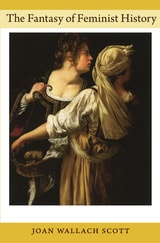
The Fantasy of Feminist History
Joan Wallach Scott
Duke University Press, 2012
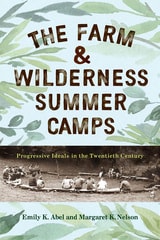
The Farm & Wilderness Summer Camps
Progressive Ideals in the Twentieth CenturyEmily K. Abel
Rutgers University Press, 2024

The Farm
Life Inside a Women's PrisonAndi Rierden
University of Massachusetts Press, 1997
Written by a journalist, this book depicts the day-to-day struggles and concerns of inmates a the Connecticut Correctional Institution in Niantic (renamed the Janet S. York correctional Institution), the state's only prison for women. Build in 1917 as a work farm for prostitutes, unwed mothers, and other women of allegedly immoral character, “the Farm,” as it is still called, has long served as a barometer of prevailing social attitudes toward women.
In the summer of 1992, Andi Rierden obtained permission from the warden at Niantic to conduct research on life inside the institution. During the next three and a half years, she spent more than fifteen hundred hours among the women, recording interviews, strolling the grounds with inmates and corrections officers, sharing meals, attending classes and group counseling sessions, and tracking former inmates after their release.
The stories these women tell shed light ton a wide range of issues, from the effects of more stringent drug laws and sentences to the rise of violence among inmates. In the process it becomes clear that the ideal of rehabilitation has been largely abandoned and replaced by a belief in punishment and retribution.

The Fast Track
Inside the Surging Business of Women's SportsJane McManus
Temple University Press, 2025
Veteran sports journalist and academic Jane McManus examines both this upward trend and the forces that have held women’s sports back since the early 1970s when Title IX became law (and Billie Jean King soundly defeated Bobby Riggs). As the fervor for Caitlin Clark during the 2024 NCAA Women’s Basketball championship illustrates, there is big money to be made from broadcasting, merchandising, and investing in women’s sports.
The Fast Track chronicles how pioneering sponsorships, broadcast opportunities, and surges in ratings contradict the myths about disinterest. Interviews counter the resistance toward women’s leagues, reveal how women are covered in the media, and consider the possibilities for further investment. McManus also addresses racial inclusivity, transgender athletes, women’s health issues, and equal pay.
An essential road map to capitalize on untapped potential, The Fast Track provides a snapshot of where women’s sports as an industry and investment stand at this moment in time.
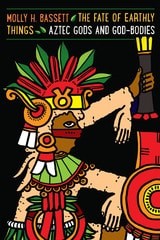
The Fate of Earthly Things
Aztec Gods and God-BodiesBy Molly H. Bassett
University of Texas Press, 2015
Following their first contact in 1519, accounts of Aztecs identifying Spaniards as gods proliferated. But what exactly did the Aztecs mean by a “god” (teotl), and how could human beings become gods or take on godlike properties? This sophisticated, interdisciplinary study analyzes three concepts that are foundational to Aztec religion—teotl (god), teixiptla (localized embodiment of a god), and tlaquimilolli (sacred bundles containing precious objects)—to shed new light on the Aztec understanding of how spiritual beings take on form and agency in the material world.
In The Fate of Earthly Things, Molly Bassett draws on ethnographic fieldwork, linguistic analyses, visual culture, and ritual studies to explore what ritual practices such as human sacrifice and the manufacture of deity embodiments (including humans who became gods), material effigies, and sacred bundles meant to the Aztecs. She analyzes the Aztec belief that wearing the flayed skin of a sacrificial victim during a sacred rite could transform a priest into an embodiment of a god or goddess, as well as how figurines and sacred bundles could become localized embodiments of gods. Without arguing for unbroken continuity between the Aztecs and modern speakers of Nahuatl, Bassett also describes contemporary rituals in which indigenous Mexicans who preserve costumbres (traditions) incorporate totiotzin (gods) made from paper into their daily lives. This research allows us to understand a religious imagination that found life in death and believed that deity embodiments became animate through the ritual binding of blood, skin, and bone.